
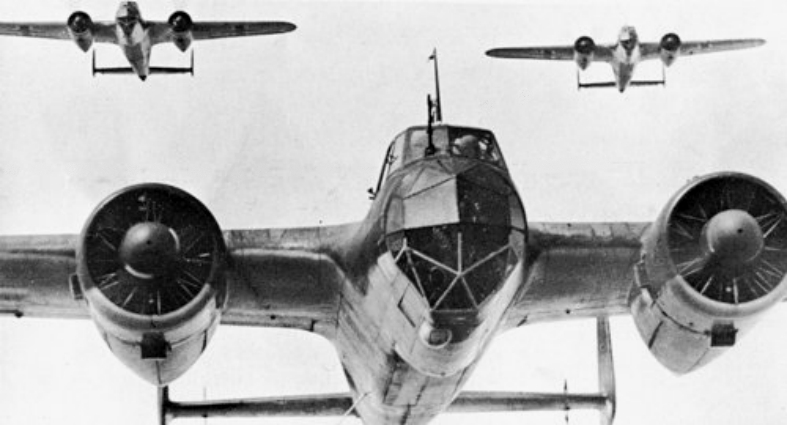
Dornier Do 17
The "Flying Pencil" — Germany's slim, fast twin-engine bomber that helped open the Second World War in Spain, Poland and the Battle of Britain, then quietly disappeared so completely that only one substantially complete example survives.
Want to fly a real military jet yourself?The Dornier Do 17 "Flying Pencil": the sleek bomber that started a war and then vanished
Few aircraft carry a nickname as vivid as the Dornier Do 17. German crews and their opponents alike called it the fliegender Bleistift — the "Flying Pencil" — for its extraordinarily slim, cigar-thin fuselage. Seen head-on it almost disappeared; seen from the side it looked like a drawing-office instrument given wings. That silhouette was not styling for its own sake. It was the visible signature of a design philosophy that briefly made the Do 17 one of the fastest bombers in the world, and then, just as quickly, left it behind.
The Do 17 grew out of the frantic, half-secret German rearmament of the early 1930s. It is often said that the aircraft began life as a fast mail-plane and six-passenger express transport offered to Deutsche Luft Hansa, and that the airline rejected it because the narrow fuselage was hopelessly impractical for paying passengers. There is real truth in that story — the early Dornier design genuinely was pitched as a high-speed civil "Schnellverkehrsflugzeug" — although the popular version, in which a finished airliner was forgotten in a hangar and then rediscovered as a bomber by accident, is embellished. What is not in doubt is that the slim, aerodynamically clean airframe was seized upon by the emerging Luftwaffe as the basis for a fast day bomber that could, in theory, outrun the fighters of the day.
It is worth pausing on how radical that slimness was. Most bombers of the early 1930s were slab-sided machines with deep fuselages built to swallow bombs, fuel and crew with room to spare. Dornier went the other way, wrapping the airframe as tightly as possible around its contents and betting everything on the speed that low drag would buy. It was a bold, coherent design philosophy — and, for a few short years, it worked spectacularly well, which is exactly what made the later reckoning so hard.
The first prototype, the Do 17 V1, took to the air in 1934. Early production bombers — the Do 17E — and their reconnaissance sisters, the Do 17F, entered Luftwaffe service from around 1937. That same year the type made its combat debut far from Germany, over the mountains and plains of Spain, where the Condor Legion flew it for Franco's Nationalists in the Spanish Civil War. For a while the Do 17 looked untouchable: at the 1937 International Military Aircraft Competition held near Zürich, a specially prepared Dornier reportedly outpaced the fighters sent to intercept it, and Nazi propaganda gleefully christened it a "wonder bomber."
Reality was more complicated. The definitive version, the Do 17Z, traded some of that raw speed for a deeper, glazed "beetle-eye" nose crew compartment that gathered all four airmen — pilot, bomb-aimer, radio operator and gunner — into one cramped, communal cockpit. Crews valued being close together under fire, but the Do 17Z's virtues came at a cost: its bomb load was modest, around 1,000 kilograms, far less than the heavier bombers that were already on the drawing board. It was fast and pleasant to fly, but it could not carry much, and it could not carry it far.
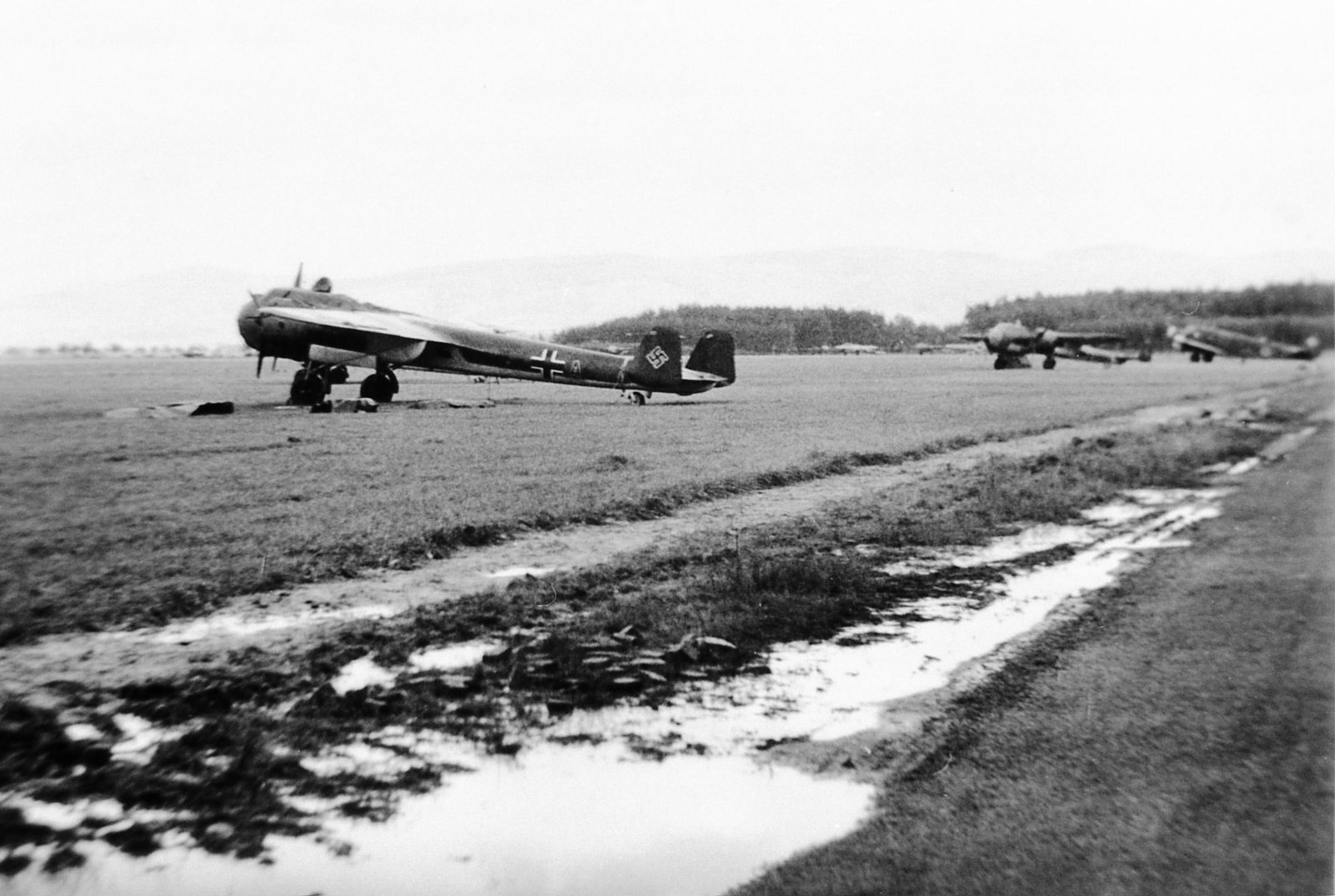
When the Second World War opened, the Do 17 was everywhere the German war machine went — Poland in 1939, Norway, the Low Countries and France in 1940, then across the Channel for the Battle of Britain. There, flying alongside the Heinkel He 111 and the newer Junkers Ju 88, the "Flying Pencil" met the Hurricane and the Spitfire and paid a heavy price. Slow, lightly armed with hand-aimed machine guns, and carrying only a light bomb load, the Do 17Z was already obsolescent by the summer of 1940. The Luftwaffe knew it. Even as its crews pressed home some of the most famous raids of the battle, production had ended and the type was being replaced by the faster, harder-hitting Ju 88.
By the middle of the war the Do 17 had largely faded from the front line, lingering on in training, glider-towing, night-fighting conversions and second-line duties, and serving with a handful of export and allied air forces. It was so thoroughly used up and scrapped that for decades not a single complete example existed anywhere in the world — an astonishing fate for an aircraft once paraded as a symbol of German air power.
The wider tragedy of the Do 17 is the tragedy of the whole Luftwaffe bomber arm. Germany went to war in 1939 with a fleet of fast, elegant medium bombers designed for short, sharp campaigns of the kind that had worked in Spain and Poland. They were never meant for a long war of attrition against a well-organised enemy with radar, a disciplined fighter force and deep reserves. The Do 17 embodied that mismatch perfectly: it was a beautiful answer to the wrong question. Its crews — brave, highly trained and often very young — paid for the gap between doctrine and reality over Kent and Sussex in 1940.
And yet the Flying Pencil refuses to be forgotten. Its distinctive shape, its evocative nickname, its starring role in the most famous air battle in history, and the extraordinary story of the one airframe pulled dripping from the English Channel have all kept it alive in memory long after the aircraft themselves turned to scrap and salt-scoured aluminium. This page tells that whole story — the design, the myths, the campaigns, the specifications, the people, and the wreck that became the last of its kind.
How the Dornier Do 17 was built: speed, slimness and a crew packed nose-to-tail
Three design decisions defined the Do 17 — and explain both why it began the war as a star and why it ended it as an also-ran.
The Do 17 is best understood not as a bad aircraft but as a superb answer to a question the war stopped asking. Everything about it — the slim fuselage, the twin engines, the tightly grouped crew — flowed logically from one mid-1930s assumption: that a bomber fast enough and clean enough could reach its target and return before the defenders could organise. For a few years, in Spain and Poland and France, that assumption held, and the Dornier looked like the future of air warfare.
When the assumption collapsed over Britain in 1940 — smashed by radar, ground control and modern fighters — the very features that had made the Do 17 excellent became the features that doomed it. That is the tension running through its whole design story, and it is worth keeping in mind as you read the three defining choices below.
The pencil fuselage
Dornier built the Do 17 around an unusually narrow, aerodynamically clean fuselage that minimised drag and frontal area. Early on it made the bomber genuinely fast — fast enough to embarrass contemporary fighters — but it also strictly limited internal volume, capping both the bomb load and the fuel the aircraft could carry. Every advantage the shape gave in 1937 became a liability once the war demanded payload and range the airframe could never provide.
Twin engines, many hearts
Over its life the Do 17 flew behind several different power plants depending on variant — early aircraft used liquid-cooled BMW VI inline engines, while the mass-produced Do 17Z switched to air-cooled Bramo 323 Fafnir radials of roughly 1,000 PS each. Export Do 17K aircraft used French Gnome-Rhône radials, and special versions even fitted Daimler-Benz DB 600 inlines. That the same airframe accepted such different installations speaks to the soundness of its basic structure.
The communal "beetle-eye" cockpit
The Do 17Z gathered its four-man crew into a single heavily glazed forward compartment. It aided morale and coordination under fire, but the hand-held 7.92 mm MG 15 machine guns that bristled from it were no match for eight-gun British fighters, and the concentrated crew meant a single well-aimed burst could disable the whole team. Comfort and communication, bought at the price of survivability — a bargain that looked very different in 1940 than it had on the drawing board.
The Dornier Do 17 in detail: origins, engines, variants and the raids that defined it
01The Dornier Do 17's origins: was it really a rejected airliner?+
The most repeated story about the Do 17 is that it started as a fast passenger and mail aircraft for Deutsche Luft Hansa, was rejected as impractical because its slim fuselage could seat only a handful of cramped passengers, and was then dusted off and turned into a bomber. The core of this is accurate: Dornier did design a high-speed civil transport in 1933–34, and the airline did find the narrow cabin unsuitable for commercial service.
But the romantic embellishments — that completed aircraft sat forgotten until a Luft Hansa pilot stumbled on them — are not well supported. In practice the German air ministry was closely involved from the start, and the "airliner" and "bomber" strands of the programme ran in parallel during a period when Germany was still concealing military aviation work behind civilian cover. The honest summary is that the Do 17 was a fast civil design rapidly and deliberately adapted into a bomber, not an accident of history.
02The Dornier Do 17's engines and variants: from BMW inlines to Bramo radials+
The Do 17 family spanned a bewildering set of sub-types. The Do 17E was the first bomber version and the Do 17F its reconnaissance counterpart, both using BMW VI liquid-cooled inline engines. The Do 17M and Do 17P followed with more powerful engines, the P again a reconnaissance machine. The Do 17S and Do 17U were small-run command and pathfinder variants.
The definitive Do 17Z, the version most people picture, adopted air-cooled Bramo 323 Fafnir radial engines and the deep, fully glazed nose. A night-fighter conversion, the Do 17Z-10 "Kauz", carried nose guns and early infrared sensing. The export Do 17K, built under licence in Yugoslavia, used Gnome-Rhône radials. The design also spawned two important developments: the Do 215 export bomber and the much larger, heavier Do 217, which effectively replaced it. Total Do 17 production is usually given as somewhat over 2,100 aircraft, though sources differ on the exact figure.
03The Dornier Do 17 in the Battle of Britain: the Kenley raid and a type past its prime+
By the summer of 1940 the Do 17Z was already being phased out, yet it flew some of the Battle of Britain's most storied missions. The most famous is the low-level attack on RAF Kenley on 18 August 1940 — "The Hardest Day" — when Do 17Z bombers of 9./KG 76 pressed home a rooftop-height raid straight into the airfield's defences. They caused real damage but were shot to pieces by fighters and ground fire, and the raid became a byword for the courage and the vulnerability of the "Flying Pencil."
The underlying problem was arithmetic. A Do 17Z carried perhaps 1,000 kg of bombs, defended itself with a few hand-aimed rifle-calibre machine guns, and cruised too slowly to escape modern fighters. Against RAF Fighter Command it could neither out-run nor out-shoot its opponents. The Luftwaffe's answer was already in production: the faster, longer-ranged Junkers Ju 88, into which Do 17 units were steadily converted.
04The Dornier Do 17's specifications and performance: what the numbers really mean+
Quoted Do 17Z figures — a top speed of around 410 km/h, a range of roughly 1,160 to 1,500 km depending on load, a service ceiling near 8,200 m and a crew of four — should be read as representative rather than absolute. Performance varied significantly between the many sub-types and with engine fit, weight and altitude. Where this page gives a single number, treat it as a commonly cited estimate for the Do 17Z; the full specification table below flags the values that are most often disputed.
The consistent theme across every version is the trade-off baked into that slim fuselage: excellent early speed and clean handling, bought at the price of a small bomb bay and limited range. It was a superb aircraft for the fast, unescorted daylight raid the Luftwaffe imagined in the mid-1930s, and a poor one for the attritional bomber war that actually came.
05The Dornier Do 17's operating costs and value: why the figures were never really recorded+
Unlike modern aircraft, wartime German bombers were not costed in the transparent, per-flight-hour terms used today. Unit prices were set inside a planned war economy, quoted in Reichsmarks, distorted by forced and slave labour and by wildly fluctuating material supply, and were never intended as commercial figures. As a result there is no reliable, comparable "unit cost" or "cost per flight hour" for the Do 17 in the sense the rest of this museum uses those terms.
And there is no operating cost today for the simplest possible reason: there is no airworthy Do 17 anywhere in the world, and there never will be from the surviving airframe. The one substantially complete example is a fragile conservation project, not a flyable aircraft. Any figure you see presented as the Do 17's "cost per hour to fly" is not grounded in reality.
06The Dornier Do 17 versus the He 111 and Ju 88: how the Pencil compared+
Through 1940 the Luftwaffe's medium-bomber force rested on three types: the Dornier Do 17, the Heinkel He 111 and the Junkers Ju 88. Each embodied a different compromise. The He 111 was larger and could carry a heavier load over a longer distance, but it was slow and its tightly grouped defensive guns left blind spots. The Do 17 was the fastest of the three in its early forms and the most agile, but carried the smallest bomb load and had the shortest range.
The Ju 88 was the future. Faster than the Do 17, able to dive-bomb, and capable of carrying more over greater distances, it steadily displaced the Dornier from front-line units through 1940 and 1941. In effect the Do 17 was the senior member of a family it would not outlive: by the time the He 111 was soldiering on as a transport and missile carrier late in the war, the Do 17 had all but vanished. Comparing the three explains why the Luftwaffe kept the He 111 and the Ju 88 in production for years but let the Do 17 lapse.
07The Dornier Do 17K: how Yugoslavia built and then fought with its own Pencils+
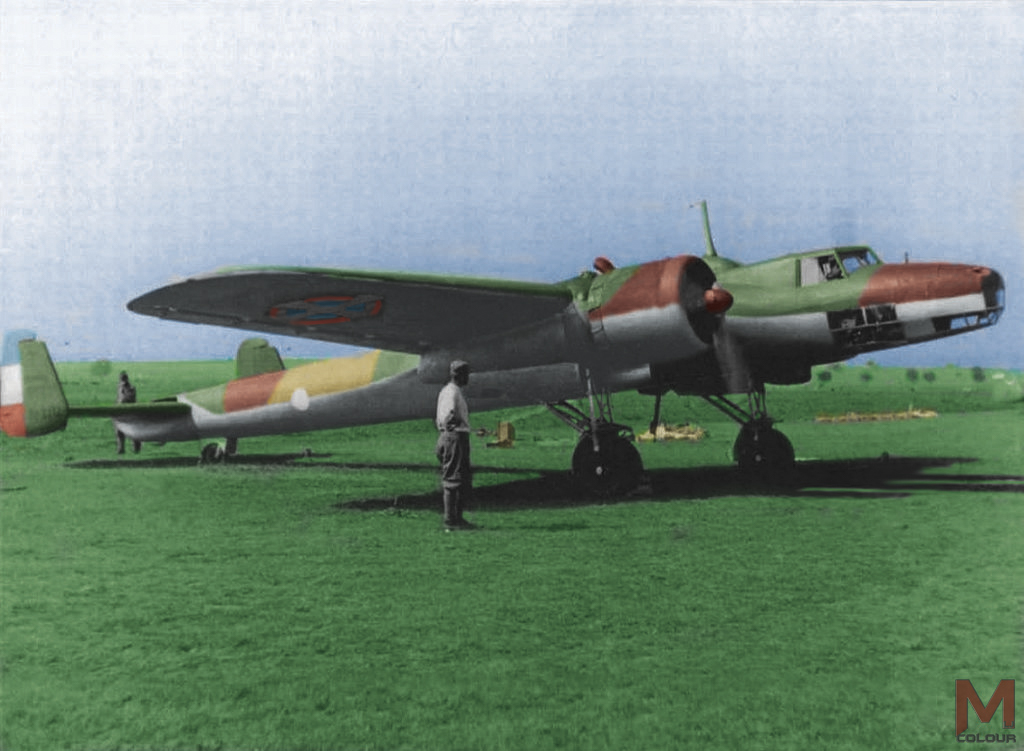
The most significant export version was the Do 17K, ordered by the Kingdom of Yugoslavia. Rather than German engines it used French Gnome-Rhône 14N radials, and it was built under licence in Yugoslavia in bomber and reconnaissance sub-types. Roughly seventy were produced domestically in addition to aircraft supplied from Germany, giving the Royal Yugoslav Air Force a substantial modern bomber for the late 1930s.
When Germany, Italy and their allies invaded Yugoslavia in April 1941, Do 17K crews flew combat missions against the Axis — an unusual case of a country using the enemy's own bomber design against him. In the chaos of a rapid defeat, a handful of Yugoslav Dorniers flew out carrying gold reserves and personnel to Allied-held territory in the Middle East, where some served on with the RAF. Captured airframes and further Dorniers later equipped the air force of the German-aligned Independent State of Croatia (NDH).
08The Dornier Do 17's second lives: reconnaissance, night-fighting, trainers and tugs+
As a day bomber the Do 17 was finished by 1941, but the airframe was too numerous simply to discard. Reconnaissance versions such as the Do 17P had served from the start, photographing targets ahead of the bombers. When the bombing role fell away, surviving aircraft were pressed into a variety of second careers.
The Do 17Z-10 "Kauz II" was rebuilt as a night-fighter, its glazed nose replaced by a solid one packed with cannon and machine guns and fitted with early Spanner-Anlage infrared detection gear. Other Do 17s became crew trainers, communications aircraft, and glider tugs — famously towing assault gliders such as those used in airborne operations. None of these roles restored the type's prestige, but together they kept the Flying Pencil in the air for years after it had ceased to matter as a bomber.
09The Dornier Do 17's descendants: the Do 215 and the Do 217+
The Do 17 did not end the Dornier bomber line — it began it. The Do 215 was essentially an improved, export-oriented Do 17 with more powerful engines; ironically, several ordered for foreign customers were taken over by the Luftwaffe itself and used for reconnaissance and night-fighting.
Far more important was the Do 217, a much larger and heavier aircraft that shared the Dornier design lineage but corrected the Do 17's central weakness — its tiny payload. The Do 217 could carry several times the bomb load, flew further, and even served as a launch platform for early guided weapons such as the Fritz X and Hs 293. In effect the Do 217 was the aircraft the Do 17 could never be, and its existence is one reason the older type was allowed to fade: Dornier's engineering effort had simply moved on to a bomber that could do the job the war actually demanded.
10The Goodwin Sands Do 17: recovering and conserving the last Flying Pencil+
The only substantially complete Do 17 in the world is a Do 17Z, Werknummer 1160, coded 5K+AR of 7. Staffel, Kampfgeschwader 3. It was shot down over the Thames Estuary on 26 August 1940 and ditched on the Goodwin Sands, a treacherous shoal off the Kent coast, coming to rest inverted on the seabed. Two of its four crew died; two were captured. Buried and protected by shifting sand, the aircraft lay undisturbed for decades.
Sonar surveys identified it in 2008, and after careful planning the RAF Museum raised it on 10 June 2013 in a delicate, closely watched salvage operation. Nearly seventy years of immersion in salt water had left the airframe extremely fragile. Rather than a conventional restoration, the museum embarked on a long conservation programme, including prolonged washing with citric-acid solutions to arrest chloride-driven corrosion. Crucially, the aircraft has not been rebuilt to display-perfect condition and is not — and will never be — airworthy. It survives as a corroded but genuine relic: the single most complete Dornier Do 17 left on Earth, and a direct physical link to the Battle of Britain.
11The Dornier Do 17's myths: separating the legend from the record+
Several persistent stories surround the Do 17, and it is worth being clear about which hold up. The "rejected airliner rediscovered by accident" tale is embellished — the civil and military designs ran together deliberately. The "wonder bomber no fighter can catch" claim was true only of a specially tuned demonstration aircraft at Zürich in 1937, not of ordinary Do 17Z bombers, which were comfortably caught and shot down over Britain in 1940.
Even simple numbers are contested: production totals are usually given as somewhat over 2,100 aircraft, but different sources count variants and prototypes differently, and figures for top speed, range and weights vary between sub-types. Throughout this page such values are presented as commonly cited estimates and flagged where they are disputed. The one thing beyond dispute is the aircraft's shape — and the fact that, of the thousands built, only a single substantially complete example now survives.
12The Dornier Do 17 in Spain: what the Condor Legion learned — and mislearned+
The Do 17's combat career began over Spain, where the German Condor Legion tested men, tactics and machines on behalf of Franco's Nationalists. Do 17E bombers and Do 17F reconnaissance aircraft operated with near impunity against a Republican air arm that was often outnumbered and flying older equipment. For the Luftwaffe's planners, the lesson seemed obvious: a fast, modern bomber could reach its target and get home before the defenders could react.
That lesson was dangerously incomplete. Spain lacked the two things that would break the Do 17 over England — an integrated radar early-warning network and a large, well-directed force of modern eight-gun fighters. The Condor Legion's easy successes helped entrench the belief that the fast unescorted day bomber was a war-winning weapon, a doctrine that would send Do 17Z crews into the teeth of RAF Fighter Command in 1940 with results that were anything but easy.
Spain also gave the Do 17 something less tangible: a reputation. By the time the wider war began, the Dornier arrived trailing propaganda images of an unstoppable modern bomber. Reputation, however, does not stop bullets, and the gap between the Spanish experience and the reality of 1940 is one of the recurring themes of the Flying Pencil's story.
13Flying and fighting the Dornier Do 17: life inside the glass nose+
To fly the Do 17Z was to share a single glazed compartment with three other men, packed into the nose ahead of the wing. The pilot sat high on the left; the bomb-aimer lay or crouched in the extreme nose over his sight; the radio operator and gunner worked the guns and equipment behind. In the cramped, cold, noisy space the crew could see and touch one another — a genuine comfort under fire, and a design feature crews often praised.
The price of that intimacy was terrible vulnerability. The Do 17's defensive armament was a scatter of hand-aimed 7.92 mm MG 15 machine guns firing rifle-calibre rounds — weapons that were slow to traverse, limited in field of fire, and hopelessly outclassed by the eight Browning guns of a Hurricane or Spitfire. Worse, because the whole crew sat together, a single well-aimed burst into the nose could kill or disable everyone at once. Many Do 17s came home with their entire forward crew dead or wounded; many more did not come home at all.
Pilots nonetheless generally liked the aircraft. It was pleasant and responsive to fly, honest in its handling, and steady as a bombing platform. Its failings were not failings of airmanship but of concept: no amount of skill could give it the speed, firepower or payload the 1940 battlefield demanded.
14The Dornier Do 17's minor operators: Finland, Bulgaria, Croatia and Spain+
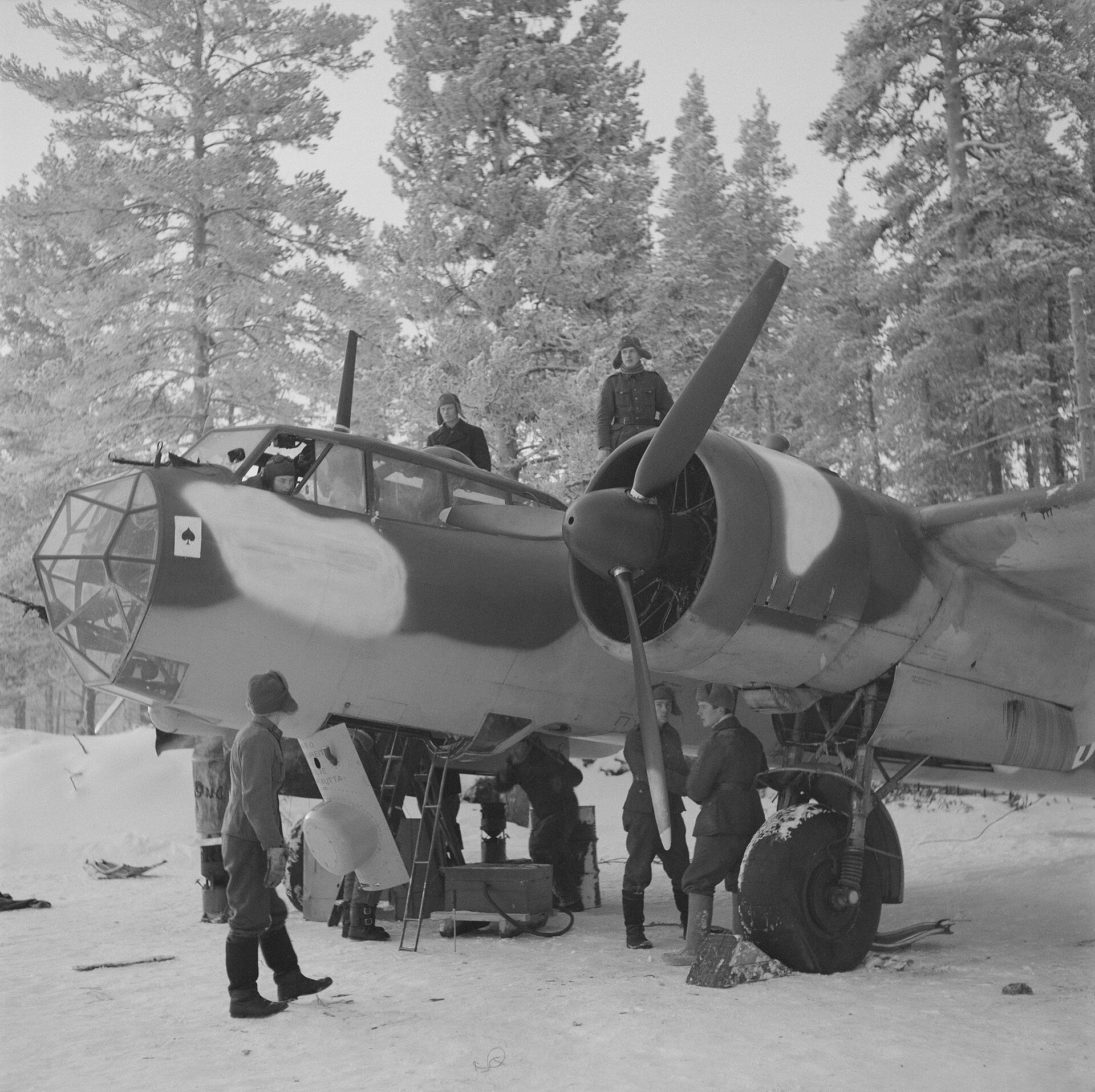
Beyond Germany and Yugoslavia, a scattering of smaller air forces flew the Do 17. Finland bought fifteen Do 17Z-2 and Z-3 bombers in 1942 and used them against the Soviet Union during the Continuation War, flying them into the mid-1940s. Bulgaria received a mixed batch of around a dozen Do 17K, Do 17M and Do 17P aircraft from Germany. The German-aligned Independent State of Croatia (NDH) operated ex-Yugoslav Do 17K and other Dorniers after 1941.
Spain, where the type had first seen combat, retained Condor Legion Do 17E and Do 17F aircraft that passed to the Spanish Nationalist air force and served for years after the civil war ended. For all of these operators the Do 17 filled a genuine need for a modern-enough medium bomber that Germany was willing to release precisely because it was re-equipping its own units with the Ju 88. Their aircraft flew on, in ever smaller numbers, until spares and airframes simply ran out.
15The Dornier Do 17 in the Blitzkrieg: Poland, Norway and the fall of the West+
Before Britain, the Do 17 enjoyed its most successful period. In September 1939 Do 17E, M and Z units struck Polish airfields, rail junctions and troop concentrations, helping the Luftwaffe seize the air superiority on which Blitzkrieg depended. The campaigns in Denmark and Norway in April 1940 saw Dorniers flying bombing and reconnaissance sorties in support of the German landings.
Then came the great offensive in the West in May 1940. Do 17Z formations ranged over the Netherlands, Belgium, Luxembourg and France, hammering airfields and communications ahead of the advancing panzers. Against defenders who were disorganised, outnumbered in the air, and lacking a mature warning system, the fast Dornier again performed well, and its crews gained confidence.
It was precisely this run of victories that set the trap. Every campaign from Spain to France had rewarded the fast day bomber; none had tested it against a prepared, radar-guided defence. When the Do 17Z crossed the Channel that summer, it met exactly that — and the run of easy successes ended abruptly and bloodily.
The Dornier Do 17's design in depth: aerodynamics, structure and the cost of being thin
To understand the Do 17 you have to understand the obsession that shaped it: speed through cleanliness. In the early 1930s the fastest way to make a bomber quick was not simply to fit bigger engines but to reduce drag, and the single biggest source of drag on a twin-engine aircraft of the era was the fuselage. Dornier's answer was to make that fuselage as slim as it could possibly be while still housing a crew, a bomb bay and fuel — hence the pencil.
The wing was a clean, tapered, mid-set structure carrying the two engine nacelles, and the tail evolved into the twin-fin arrangement that became a Dornier signature and gave the rear gunner a clearer field of fire. The all-metal, stressed-skin construction was modern for its day and relatively straightforward to build in quantity, which mattered to a Luftwaffe expanding at breakneck speed.
But every design is a set of compromises, and the Do 17's were unusually stark. A slim fuselage means a small bomb bay. A small bomb bay means a light bomb load. Light bomb load plus limited internal fuel means short range. None of this was an oversight — it was the direct, unavoidable consequence of the decision to prioritise speed and cleanliness above all else. The Do 17 was optimised, brilliantly, for a mission profile that assumed the enemy would not see it coming.
The powerplant story reflects the turbulence of the German aero-engine industry in the 1930s. Early Do 17s flew behind BMW VI liquid-cooled inline engines; the definitive Do 17Z used air-cooled Bramo 323 Fafnir radials; reconnaissance and special variants used BMW 132 radials or Daimler-Benz DB 600 inlines; and the Yugoslav Do 17K used French Gnome-Rhône radials. Switching between inline and radial engines changes an aircraft's cooling, weight distribution and frontal area profoundly, and the fact that the airframe accepted so many different installations speaks to the soundness of the basic structure.
Defensively, the design aged badly. The hand-aimed MG 15 machine guns were adequate against the lightly armed opposition of the mid-1930s but obsolete against the armoured, multi-gun fighters of 1940. Later German bombers moved toward heavier, better-protected gun positions, but the Do 17's layout — with its crew concentrated in a single glazed nose — offered little scope for meaningful improvement. In this sense the aircraft was a prisoner of its own elegant shape.
The twin-fin tail deserves a note of its own. Splitting the vertical stabiliser into two fins mounted on the tailplane cleared the rear gunner's field of fire and improved directional control with an engine out — a sensible touch for a twin. It also gave the Do 17, and later Dornier bombers, an instantly recognisable rear-end profile that helped observers pick the type out even at a distance, a small design decision that became part of the aircraft's visual identity.
The result was an aeroplane that was a delight in 1937 and a death-trap in 1940, without a single rivet having changed. Nothing illustrates more clearly how quickly aviation moved in those years, or how ruthlessly the pace of technological change punished designs that could not grow. The Do 17 was overtaken not because it was poorly made, but because the standard it was built to had simply moved on beneath it.
Dornier Do 17Z specifications: dimensions, performance and cost data
Representative figures for the mass-produced Do 17Z-2. Values marked "est." or "disputed" vary between sources and sub-variants — they are given here as commonly cited estimates and flagged for the fact-check pass.
Baseline: the Dornier Do 17Z-2 as it flew with KG 2, KG 3, KG 76 and KG 77 from May 1940 into the autumn of 1941 — two Bramo 323P radials, the deep glazed Kampfkopf nose with all four crew crammed into one compartment, six hand-held MG 15 machine guns and 1,000 kg of bombs — because that is the Dornier of the Battle of Britain and the mark on which the whole type's reputation stands or falls. Deltas for the slim-nosed Do 17E, M and P, the Yugoslav-built Do 17K, the Kauz night fighters and the DB 601-engined Do 215 are in grey. Two warnings before the figures. First, English-language Do 17 numbers descend from a thin pedigree — wartime Air Ministry intelligence summaries and a handful of postwar secondary works — and they disagree: maximum speed for the Z-2 appears as 410 and as 425 km/h, maximum weight as 8,590 and as 8,837 kg, and Do 17Z production totals published by reputable authors range from about 535 to about 880 aeroplanes. Second, and far more useful when reading any of it: nearly every performance figure quoted for the Z-2 is a clean, best-case, lightly loaded number. Bombed up, at operational weight, in the summer of 1940, the Do 17Z was a 300 km/h aeroplane with a practical ceiling under 6,000 m and a combat radius of about 330 km. That is the aircraft Fighter Command actually met, and the gap between the two sets of figures is the story of the type.
Dimensions & weights
- Crew
- 4 — pilot, bomb-aimer/navigator, radio operator/gunner and flight engineer/gunner, all four seated together in the glazed nose This was deliberate. Dornier called it the Kampfkopf, the battle-head: put the whole crew within touching distance so that nobody fought alone and every man could take over a gun or a wounded comrade's job. Crews genuinely liked it. It also meant that one well-aimed burst from astern could kill or disable four men at once, and in 1940 it frequently did. The Do 17E and M carried three, seated separately in the older slim nose
- Length
- 15.79 m (51 ft 10 in) Do 17E-1 and M-1: 16.25 m (53 ft 4 in). The Z is the shorter aeroplane, which surprises people: the deepened Kampfkopf nose was not an extension but a re-profiling, blunter and about half a metre shorter than the pencil-slim original. The nickname Fliegender Bleistift belongs to the E, M and P; the Z that fought the Battle of Britain had already lost the shape that earned it
- Wingspan
- 18.00 m (59 ft 1 in) Unchanged from the 1934 V1 to the last Do 215B of 1941. Every extra crewman, gun, bomb and litre of fuel the type acquired in seven years was hung on a wing drawn for a 1932 requirement
- Height
- 4.56 m (14 ft 11 in)
- Wing area
- 55.0 m² (592 sq ft) Also unchanged across the family, which is why the Do 215 and the Do 17Z share a wing loading despite quite different engines
- Empty weight
- 5,210 kg (11,486 lb) Do 17E-1: about 4,500 kg (9,920 lb). The Z put on roughly 700 kg of empty weight over the E for a fourth crewman, the new nose, armour and more guns
- Equipped empty weight
- 5,888 kg (12,981 lb) Figures up to 5,963 kg (13,146 lb) are published depending on whether the ventral Bola position, the beam guns and the full radio fit are counted
- Normal loaded weight
- 8,590 kg (18,940 lb)
- Maximum take-off weight
- 8,837 kg (19,482 lb) The Do 17Z-5 anti-shipping variant, with flotation bags packed into the rear of the engine nacelles and blisters beside the nose, went out at about 8,620 kg; the Z-9 low-level machine was cleared to 7,800 kg stripped
- Internal fuel
- 1,540 litres (339 imp gal; 407 US gal) in two wing tanks of 770 litres; a further 895-litre auxiliary tank could be fitted in the forward half of the bomb bay for a total of ~2,435 litres (536 imp gal; 643 US gal) This is the central compromise of the Do 17Z and the reason it was finished as a bomber by 1941. The tank and the bombs competed for the same box. Fill the forward bay with petrol and the offensive load halves to 500 kg; fill it with bombs and the aeroplane cannot reach much beyond the Thames estuary and get home
- Bomb load
- 1,000 kg (2,205 lb) internal, in a bay divided into forward and rear cells Do 17E-1 and Z-1: 500 kg (1,102 lb). The bay was long and shallow: 20 × SC 50 or 4 × SC 250 was the practical maximum, and the largest single bomb it would swallow was the 250 kg SC 250. No Do 17 of any mark ever carried an SC 500, let alone the 1,000 kg and 1,800 kg weapons a Ju 88 or a Do 217 handled as routine
- Wing loading
- 156 kg/m² (32 lb/sq ft) at normal loaded weight Low by 1940 standards, which is why the Do 17 had good short-field manners and a surprisingly light touch. Crews consistently rated it the pleasantest of the three German medium bombers to fly and the most willing to be thrown about. It was also the slowest of the three
- Structure
- all-metal stressed-skin light alloy; shoulder-mounted two-spar wing, slim monocoque fuselage of flattened oval section, twin fins and rudders; hydraulically retracted main gear folding rearwards into the engine nacelles, fixed tailwheel, hydraulic split flaps The twin tail was not there for style. Rechlin trials in June 1935 found the original single fin only marginally stable, and every Do 17 from the V2 onwards has two. It also gave the rear gunner a clear field of fire between them
- Protection
- pilot's back and head armour, armour for the ventral gunner, and partially protected wing tanks from 1940 Retrofitted, not designed in, and never sufficient. The four-man compartment had glazing on almost every surface and armour on very few of them. Rearward-firing protection improved steadily through 1940 and never caught up with the eight-gun Hurricane
Performance
- Maximum speed
- 410 km/h at 5,000 m (255 mph at 16,400 ft) 425 km/h (264 mph) is also published, and the Do 17M V1 on Daimler-Benz DB 600A engines managed 425 km/h in 1937. Production Do 17Zs never had DB 600s: every one was fitted with the less powerful Bramo 323 radial because Daimler-Benz output was reserved for fighters. The Do 17 the world admired at Zürich and the Do 17 that went to war were not the same aeroplane
- Maximum speed at sea level
- 350 km/h (220 mph)
- Speed with full bomb load
- 300–320 km/h (185–200 mph) The single most important number on this page. A Do 17Z at operational weight could not use its quoted maximum, could not climb away from trouble, and cruised more slowly than a Hurricane could patrol. Luftwaffe formation speeds over England were commonly quoted around 300 km/h
- Cruising speed
- 300 km/h at 4,000 m (190 mph at 13,100 ft)
- Rate of climb
- 3.5 m/s (690 ft/min) at sea level Adequate empty, dismal loaded. Getting a bombed-up Staffel to 5,000 m over the Pas de Calais took the better part of half an hour, which is why so many 1940 sorties were flown lower than doctrine wanted
- Service ceiling
- 8,200 m (26,900 ft) Clean and light. At operational weight with 1,000 kg of bombs the practical ceiling was nearer 6,000 m (19,700 ft), inside the comfortable working height of every RAF fighter it would meet
- Combat range, full bomb load
- 660 km (410 mi) With 1,000 kg internal and no auxiliary tank
- Combat radius
- ~330 km (~205 mi) This is the figure that decided where the Do 17 could and could not be used. From airfields in the Pas de Calais and Normandy it reached London, the Thames estuary airfields and the south coast ports, and essentially nothing beyond. Bomber Command targets in the Midlands and the north were flown against by He 111s and Ju 88s, not Dorniers
- Maximum range with auxiliary tank
- 1,010 km (630 mi) with 500 kg of bombs Some sources give up to 1,160 km. Reconnaissance Do 17P and Z-6 machines, stripped of bombs and filled with fuel, did rather better, which is why the type outlived its bomber career in the reconnaissance and weather roles
- Power loading
- 4.3 kg/PS (9.5 lb/hp) at normal loaded weight For comparison, a Ju 88A-4 at similar weight had roughly a third more installed power and carried two and a half times the bomb load
- Single-engine performance
- level flight sustainable lightly loaded; a bombed-up Z-2 on one engine went down A recurring theme in 1940 combat reports. Several of the Dorniers claimed by RAF fighters were not shot to pieces but simply lost one Bramo and could not hold height home across the Channel. The airframe was notably tough — RAF pilots complained repeatedly about how much rifle-calibre ammunition a Dornier absorbed — but toughness could not compensate for the missing power
Propulsion & systems
- Engines
- 2 × BMW Bramo 323P Fafnir, nine-cylinder air-cooled radial Do 17E and F: BMW VI 7.3 liquid-cooled V-12, 750 PS. Do 17M: Bramo 323A-1, 900 PS. Do 17P: BMW 132N, 865 PS. Do 17K (Yugoslavia): Gnome-Rhône 14N radials, about 1,000 PS. Do 215B: Daimler-Benz DB 601A inlines, 1,100 PS. The Do 17 changed engines more often than it changed anything else, and never got the one it was designed around
- Take-off power
- 1,000 PS (986 hp; 736 kW) each The 323P was a version tuned specifically for the Do 17Z, with supercharger output deliberately traded away at height to give better power low down — an admission that the aeroplane was going to be used at altitudes where its designers had not expected it to work
- Power at rated altitude
- about 940 PS at 4,000 m (927 hp at 13,100 ft) Two-speed supercharger. Figures vary between sources and between the 323A, P-1 and P-2 sub-types
- Engine displacement
- 26.8 litres (1,636 cu in) per engine The Bramo 323 descended directly from the Bramo 322, which was the Bristol Jupiter built under licence in Germany. The engines that carried the Do 17 over Kent in 1940 traced their ancestry to a British radial of the early 1920s
- Propellers
- VDM three-blade variable-pitch metal, 3.30 m (10 ft 10 in) diameter
- Fuel
- two 770-litre wing tanks; optional 895-litre auxiliary tank in the forward bomb-bay cell; B4 87-octane aviation spirit
- Defensive gun mountings
- A-Stand in the nose, B-Stand above and behind the cockpit, C-Stand in the ventral Bola gondola, plus two beam windows The Bola and the raised cockpit roof are the two visible consequences of the Spanish Civil War: Condor Legion crews had found that the slim-nosed E and F were blind and defenceless from below and behind, and the Z-series nose was drawn to fix exactly that
- Bombsight and aiming
- Lotfe tachometric sight in the bomb-aimer's position on high-level machines; the low-level Staffeln aimed by eye through the nose glazing Nine 9./KG 76 Dorniers put 50 kg bombs into RAF Kenley from 50 feet on 18 August 1940 without any sight worth the name. Accuracy at that height was a matter of the pilot flying at the hangar
- Radio and navigation
- FuG 10 HF/MF transmitter-receiver, Peil G IV direction-finding loop, FuBl blind-landing receiver The Do 17U-1 pathfinder of 1938 carried a fifth crewman purely to work the radio beam-navigation equipment for KG 100, which asked for it specifically. Fifteen were built, and the idea matured into the He 111-equipped pathfinder force of 1940–41
- Oxygen and crew systems
- 20 oxygen bottles (24 on the long-range Z-6); a single entry hatch under the nose serving all four crew The one hatch is the other half of the Kampfkopf bargain. Getting four men out of a burning, spinning Do 17 through a single ventral opening was, by every account, close to impossible, and Do 17 crew survival rates in 1940 reflected it
- Special equipment
- flotation bags in the nacelles and nose blisters on the Z-5; Rb 20/30 and Rb 50/30 cameras in the entry hatch on the Z-3 and P-series; a bomb dispenser for 16 SD 2 Schmetterling butterfly bombs on the Z-9; glider-towing gear on late-war survivors
Cost note: the Do 17 was produced within Germany's wartime command economy using forced labour and controlled prices, so no meaningful unit cost or cost-per-flight-hour figure survives in the commercial sense used elsewhere in this museum. There is likewise no operating cost today because no Do 17 is airworthy.
Armament & payload
The Do 17 carried a single-engined aeroplane's bomb load on two engines, and defended it with rifle-calibre guns held in men's hands
The Do 17 went to war carrying 1,000 kg of bombs and defended by hand-held rifle-calibre machine guns, and both figures were settled in 1935 by men who believed a fast bomber would not need much of either. The bomb bay was long, shallow and split in two, so the offensive load and the long-range fuel tank occupied the same volume and the crew had to choose between them before every sortie; the largest weapon it would take was a 250 kg SC 250. The defensive fit grew from one MG 15 on the Do 17E to six and occasionally eight on the Z-2, but every one of them was the same 7.92 mm gun firing from a hand-swung mounting with a 75-round saddle drum, served by men who also had to navigate, aim the bombs and work the radio. Against a Hurricane closing from astern with eight Brownings and armour behind the pilot, more MG 15s simply meant more men looking in the wrong direction at once. The offensive load never grew at all after the Z-2. Fits varied widely by mark, unit and date: a 1937 Do 17E over Spain, a Yugoslav Do 17K with Belgian FN guns, a 1940 Z-2 with improvised extra weapons taped into the beam windows and a Z-10 Kauz with a solid gun nose had almost nothing in common, and Staffel armourers improvised constantly through the autumn of 1940.
Gun
- Six 7.92 mm MG 15 machine guns on the Do 17Z-2: one in the nose A-Stand, one in the dorsal B-Stand, one in the ventral Bola C-Stand and one in each of the two beam windows, all hand-aimed on ball or pillar mountings and all fed from 75-round saddle drums
- Ammunition provision of 44 magazines on the Z-2, reduced to 42 on the camera-equipped Z-3 — roughly 3,300 rounds shared across six guns by four men who each had at least one other job
- Field additions through the summer of 1940 took some aircraft to seven and a very few to eight guns, including fixed forward-firing MG 15s worked by the pilot and extra weapons wedged into the nose glazing. Losses continued to mount regardless, and the Luftwaffe's own conclusion was that calibre, not quantity, was the problem
- The response was to replace the 20 mm MG FF with the higher-velocity MG 151/15 on the aircraft that could take it, but that programme belonged to the Do 217 and the Ju 88. No Do 17Z bomber ever carried a cannon in a defensive mounting
- Earlier marks were far worse: the Do 17E-1 entered service in 1936 with a single MG 15 in a dorsal opening and nothing whatever below or behind, which is precisely the fault that the Spanish Civil War exposed and the Z-series nose was drawn to correct.
Air-to-air
- No guided air-to-air weapon existed anywhere in the world during the Do 17's operational life. This card belongs to the Kauz night fighters, and their story matters more than their hardware
- Do 17Z-7 Kauz I: three Z-airframes fitted with the solid Ju 88C gun nose carrying one 20 mm MG FF and three 7.92 mm MG 17, with steel plate bolted to the nose bulkhead and about 3,000 rounds for the MG 17s
- Do 17Z-10 Kauz II: ten conversions with a heavier nose of four MG 17 above and two MG FF below, drum magazines reloadable in flight from inside the fuselage, and the Spanner Anlage infra-red detector — a lamp that illuminated the target and a screen on the windscreen that showed the reflection
- Spanner did not work. The returns were too faint and too easily confused by exhaust glow and ground heat, and many Z-10s flew with no detection equipment at all, hunting visually on searchlight cues. At least one aircraft, CD+PV, became a flying test bed for the early low-UHF Lichtenstein B/C radar in late 1941 and 1942
- The Kauz aircraft are a footnote of thirteen airframes, but they are the direct ancestors of German radar night fighting: the same solid nose, the same crew layout and the same aerial arrays reappeared on the Do 215B-5 and then on the Ju 88C and Bf 110 that fought Bomber Command.
Air-to-surface guided
- None. No guided air-to-surface weapon was ever carried, trialled or seriously proposed for any Do 17, Do 17K or Do 215
- The nearest the type came to a precision weapon was the Do 17Z-9, a low-level attack variant with a dispenser for 16 SD 2 Schmetterling butterfly bombs — an early cluster munition, area-effect and entirely unguided. It did not reach series production
- The Do 17's own answer to accuracy was to fly low enough that aiming became unnecessary: the Kenley raid of 18 August 1940 released 50 kg bombs from about 50 feet with fuses set for the purpose. It was accurate and it was expensive
- Germany's guided weapons arrived on the airframe that replaced the Do 17. The Do 217 carried the Fritz X armour-piercing glide bomb and the rocket-boosted Hs 293 in 1943, sinking the Italian battleship Roma with the first and opening the anti-shipping campaign in the Mediterranean and Biscay with the second
Bombs
- 1,000 kg (2,205 lb) internal on the Z-2: typically 20 × SC 50 or 4 × SC 250 general-purpose bombs, or mixed loads with AB-series containers of small incendiary and anti-personnel bomblets
- 500 kg (1,102 lb) on the Do 17E-1 and on the Do 17Z-1, whose new nose weighed enough to cost the aeroplane half its offensive load until the more powerful Bramo 323P engines of the Z-2 bought it back
- The bay was divided fore and aft. Bombs in both cells meant 1,000 kg and a combat radius of about 330 km; the auxiliary fuel tank in the forward cell meant 500 kg and roughly 1,010 km of range. There was never a configuration that offered both
- No external bomb racks on the standard Z-series bomber. The reconnaissance Do 17P-2 carried a single ETC 500 rack under the fuselage for flares and light bombs on night sorties, which is the only routine external ordnance the family carried
- Set the load against the contemporaries. A Ju 88A-4 lifted 2,500 kg internally and externally, a Heinkel He 111H about 2,000 kg, and the Do 217E-2 that replaced the Do 17 carried 4,000 kg. The Do 17 was carrying a single-engined aeroplane's bomb load on two engines, and it was doing so from 1936 to 1941 without improvement.
Rockets
- None. No Do 17 of any mark carried air-to-ground or air-to-air rockets operationally, and none was fitted for them
- The German unguided air-to-air rocket programme — the 21 cm Wfr. Gr. 21 mortar tube and the R4M — belongs to 1943 and later, by which time the Do 17 had been out of front-line bombing for two years
- Rocket-assisted take-off gear was fitted to some later Dornier types to lift heavier loads; the Do 17 never needed it, because its problem was not getting off the ground but staying above the fighters once it was
- This card is kept because a combat aeroplane's armament is defined as much by what it could not do as by what it could, and the Do 17 finished the war carrying gliders on a tow rope rather than weapons on a rail
Pods & other stores
- 895-litre auxiliary fuel tank in the forward bomb-bay cell — the single most consequential 'store' the aeroplane carried, and the one that halved its bomb load
- Rb 20/30 and Rb 50/30 vertical cameras built into the crew entry hatch on the Do 17Z-3, and a fuller reconnaissance fit with remote cockpit control on the Do 17P-1 and P-2, complete with flashlight cartridge ejectors for night photography
- Flotation bags on the Do 17Z-5, stowed in the rear of the engine nacelles and in blisters beside the nose, for the anti-shipping and over-water sorties that the Battle of Britain and the Norwegian campaign forced on the type
- Infra-red Spanner Anlage searchlight and receiver on the Z-10, and Lichtenstein B/C aerial arrays on the trials aircraft; extra oxygen bottles and additional fuel cells on the long-range Z-6
- Glider-towing gear on surviving airframes from 1942, and blind-flying instrumentation on the Z-4 trainer, which had a single control column with a jib protruding to the right so an instructor could take over. A dignified end for a bomber: the Do 17 spent its last years teaching, towing DFS 230 gliders, flying weather reconnaissance and being cannibalised.
Three typical loadouts
- Low-level airfield strike, 9./KG 76 over RAF Kenley, 18 August 1940
- 20 × SC 50 general-purpose bombs in both bay cells, no auxiliary tank, fuses set for release from about 50 feet; six MG 15 with full magazine stowage; nine aircraft in line abreast at wave height across the Channel, navigating on the Brighton–London railway. Four of the nine were destroyed and every survivor was damaged, but Kenley lost three hangars and eight Hurricanes on the ground. The high-level formation that was supposed to arrive first and draw the flak arrived afterwards
- Maximum-range daylight raid on London, September 1940
- 895-litre auxiliary tank in the forward cell, 500 kg in the rear cell as 2 × SC 250 or 10 × SC 50; six to eight MG 15; formation cruise around 300 km/h at 4,500–5,000 m with a close Bf 109 escort that had roughly ten minutes of fuel to spare over the target. This is the sortie that broke the type: half the bomb load, all the exposure
- Nachtjagd patrol, Do 17Z-10 Kauz II, winter 1940–41
- No bombs; solid nose with 4 × MG 17 above and 2 × MG FF below, drums reloadable in flight; Spanner Anlage infra-red lamp and screen; oxygen reduced to nine bottles and fuel in three cells including a bay tank; take-off weight about 7,300 kg stripped. Vectored by ground searchlight belts because the infra-red gear could not find anything on its own
Sourcing: German armament and ammunition figures here follow the standard Luftwaffe equipment lists as reproduced in the postwar literature, and the Z-2 magazine counts come from the type handbook figures of 44 magazines for the Z-2 and 42 for the Z-3. Claims that individual Do 17Zs carried eight or more guns in the autumn of 1940 are well attested in loss reports and in RAF combat claims but were never a standard fit, and no two sources agree on how many aircraft were so modified. Bomb designations use the German SC (Sprengbombe Cylindrisch) series; British and American accounts sometimes convert these to nominal pound weights, which introduces rounding errors of up to ten per cent.
Variants
The Do 17 was a bomber pretending to be a mail plane, and the mail plane was the cover story rather than the origin
Start with the myth, because it is the first thing anyone says about this aeroplane. The Do 17 is routinely described as a fast mail plane designed for Deutsche Luft Hansa, rejected as uneconomic, left to gather dust and then rescued by a Luft Hansa captain who flew one, declared it as nimble as a fighter and suggested it be turned into a bomber. Almost every element of that story is attested somewhere. The order in which it is told is wrong.
The design began on 1 August 1932 to a specification issued by the Heereswaffenamt, the Army Ordnance Office, which called for a freight aircraft for the German State Railways and a high-speed mail plane for Luft Hansa. Neither of those customers had asked for anything. The Reichsbahn ran no air freight service; a bomber was what the Army Ordnance Office bought. In the years before Germany publicly repudiated the Versailles limits in March 1935, Frachtflugzeug and Postflugzeug were the standard vocabulary of clandestine rearmament, and the identity of the issuing office is the decisive fact: the requirement was military from the first drawing. Erhard Milch authorised prototype construction on 17 March 1933, weeks after the Nazi seizure of power, and by the end of 1933 the new Air Ministry was ordering a "high-speed aircraft with twin tail" and a "freight aircraft with special equipment" — Sonderausrüstung being the contemporary euphemism for bomb racks.
What is true is that the three single-finned prototypes were genuinely offered to Luft Hansa as a six-passenger fast transport, and Luft Hansa genuinely turned them down: the cabin in that pencil-thin fuselage was intolerable and the operating economics were hopeless. That was a real episode and a real failure. It was also a secondary use of an aircraft already being built for another purpose, and the twin tail that supposedly resulted from Flugkapitän Untucht's enthusiastic aerobatics is more straightforwardly explained by Rechlin's stability trials in June 1935, which found the single fin marginally stable and condemned it. The airliner idea did not die either: the Do 17 V9 was completed as a genuine high-speed transport and was still flying in 1944. So the fast-airliner story is real, the mail-plane framing is a cover story that later hardened into history, and the bomber came first.
What follows is a family that changed engines constantly and airframe rarely. The E and F of 1936–37 were the slim Fliegender Bleistift on BMW VI inlines. Spain showed that they were neither fast enough nor defensible enough, and the answer was the Z-series Kampfkopf nose of 1939, which fixed the visibility and the ventral blind spot and cost the aeroplane the shape it was famous for. The Do 17 V8 and M V1 on Daimler-Benz DB 600 engines won the circuit of the Alps for military multi-seaters at the Zürich international meeting in the summer of 1937, faster than several of the fighters present, and the propaganda value was enormous. It was also misleading, because DB 600 production went to fighters and every Do 17Z that went to war did so on air-cooled radials. When Dornier finally did put DB 601 inlines into the airframe the result was the Do 215, some 60 km/h faster than the Z-2 — and by then it was 1940 and the airframe had run out of growth. The real successor, the much larger Do 217, was a new aeroplane wearing the family face.
- Do 17 V1 to V3 (1934–35, three built)
- The prototypes. Single fin on the V1, first flight 23 November 1934 on BMW VI 7.3 inlines; twin fins from the V2 of 18 May 1935 after Rechlin condemned the original tail. These are the machines Luft Hansa rejected as airliners, and the V1 was destroyed after an engine failure on 21 December 1935. Later prototypes diverged: the V8 explored long-range reconnaissance, the V9 became a genuine high-speed transport still flying in 1944.
- Do 17E-1 and E-2 (1936–38, about 328)
- The first production bomber. Slim nose, three crew, two BMW VI 7.3D inlines of 750 PS, 500 kg of bombs and originally a single MG 15. Entered production late 1936, fought in Spain with the Condor Legion from 1937, and was thoroughly obsolete by 1939. Thirty were handed to Croatia as late as 1943, which says a good deal about the state of Axis satellite air forces.
- Do 17F-1 (1937–38, about 77)
- Reconnaissance conversion of the E with fuselage cameras, flashlight cartridge ejectors and extra fuel, and MG 15s in the B and C positions. Flew alongside the E in Spain, and at least three E-2s and one E-3 had already been used for clandestine photographic sorties over neighbouring countries before the war.
- Do 17M-1 (1938, about 200)
- The engine fix. Designed around the Daimler-Benz DB 600A, built with the Bramo 323A-1 radial of 900 PS because the DB 600s went to fighters. Bomb load up to 1,000 kg, about 420 km/h at 3,500 m, ceiling 5,790 m. The M is the last of the slim-nosed bombers and the point at which the Do 17 permanently became a radial-engined aeroplane.
- Do 17P-1 and P-2 (1938–39, about 230)
- Long-range reconnaissance on BMW 132N radials of 865 PS, with Rb 20/30 and Rb 50/30 cameras controlled remotely from the cockpit and a bulbous enclosed rear gun position. The P-2 added an ETC 500 rack for night work. Built by Siebel at Halle and Henschel at Berlin-Schönefeld as well as by Dornier, and the variant that kept the type useful after the bombers were withdrawn.
- Do 17U-1 (1938, fifteen built)
- Pathfinder, requested by name by Kampfgeschwader 100. A fifth crewman was carried purely to work the radio and beam-navigation equipment. Three prototypes and twelve production aircraft. A tiny programme with an outsized legacy: it established the German pathfinder doctrine that KG 100 used over England in 1940 and 1941 with He 111s.
- Do 17K, Ka-2 and Ka-3 (Yugoslavia, 1937–41, about 70)
- The licence build, and the strangest aeroplane in the family: a German airframe with French Gnome-Rhône 14N radials, Belgian FN armament, Czechoslovak reconnaissance cameras and Yugoslav instruments, assembled at the state factory at Kraljevo. Sixty-nine were on strength in April 1941. Two flew King Peter II and part of the national gold reserve out to Greece and thence to Egypt, were taken onto RAF charge as AX706 and AX707, and were destroyed on the ground at Ismaïlia on 27 August 1941.
- Do 17Z-0 to Z-6 and Z-9 (1938–40, roughly 500 delivered as bombers)
- The definitive mark and the one that fought the Battle of Britain. Deepened glazed Kampfkopf nose with four crew together, ventral Bola gondola, Bramo 323 radials. The Z-1 was limited to 500 kg by the weight of the new nose; the Z-2 with 323P engines restored 1,000 kg and became the mass-production standard; the Z-3 added cameras, the Z-4 was a dual-control trainer, the Z-5 carried flotation gear for over-water work, the Z-6 was a stripped long-range reconnaissance machine, and the Z-9 with its butterfly-bomb dispenser and the armoured Z-8 ground-attack proposal never entered production.
- Do 17Z-7 Kauz I and Z-10 Kauz II (1940–41, three and ten conversions)
- Night fighters, converted from Z-series bombers with the solid Ju 88C gun nose. The Z-7 carried one MG FF and three MG 17; the Z-10 four MG 17 and two MG FF around an infra-red Spanner Anlage searchlight that did not work. Thirteen aeroplanes in total, but they carried the first German airborne interception equipment into the air and one of them flight-tested the Lichtenstein radar that made the night-fighter arm possible.
- Do 215 A-1, B-0, B-1, B-4 and B-5 (1939–41, about 105)
- The Do 17Z with Daimler-Benz DB 601A inlines, created as an export type after Yugoslav interest and first ordered by Sweden. Eighteen Swedish aircraft were embargoed on the outbreak of war and pressed into Luftwaffe service. Around 470 km/h and a ceiling near 9,000 m made it a far better reconnaissance aircraft than the Z-2 was a bomber, and the B-5 night fighter with infra-red and later Lichtenstein radar was the Kauz idea done properly.
Production and survivors, precisely. Total Do 17 output is usually given as about 2,100 aircraft of all marks, with about 105 Do 215s on top; the published works-by-works breakdown of German factory returns (Oberpfaffenhofen, Friedrichshafen, Henschel at Berlin-Schönefeld, HFB in Hamburg, Siebel at Halle) adds to roughly 1,800, so the round figure includes deliveries the surviving returns do not itemise, and Do 17Z totals in reputable print range from about 535 to about 880 depending on whether the sub-contract batches are counted. 579 Do 17s had been delivered to the Luftwaffe by 19 September 1938. Foreign users: Yugoslavia (about 70 built and bought), Croatia (roughly 41 across Do 17E, K and Z), Finland (15 Do 17Z from January 1942, flown by Lentolaivue 46 through the Continuation War and kept on for second-line work afterwards), Bulgaria, Romania, Spain, Hungary, Italy and one Z-2 interned in Switzerland after landing at Basel in April 1940. Now the survivors, because this is where secondary sources are consistently loose. There is no complete Do 17 anywhere in the world, no airworthy example and no reproduction; unlike the He 111, which lived on through Spanish CASA 2.111 licence production, the Do 17 line left nothing flying. Exactly one airframe is substantially complete: Do 17Z-2 Werknummer 1160, coded 5K+AR, built under licence by Henschel, of 7. Staffel, III./KG 3, attacked by Boulton Paul Defiants of No. 264 Squadron on 26 August 1940 and ditched by Feldwebel Willi Effmert on the Goodwin Sands off Kent, where it came to rest inverted in about 15 m of water. Effmert and Unteroffizier Hermann Ritzel were taken prisoner; the other two crew were killed. Divers relocated it in September 2008, the find was kept quiet, the RAF Museum announced it on 3 September 2010, and on 10 June 2013 a lifting frame raised it and brought it ashore at Ramsgate. It went to the Michael Beetham Conservation Centre at RAF Museum Cosford and spent years being sprayed inside sealed hydration tunnels with a dilute citric-acid solution to leach chlorides out of the corroded alloy, with metallurgists from Imperial College London advising and funding from the National Heritage Memorial Fund and Wargaming.net. What exists is a wreck stabilised, not an aeroplane restored: the port rudder, starboard tailplane, forward nose glazing, undercarriage doors and an engine cowling were already gone on the seabed, two MG 15s were removed by unauthorised divers between discovery and recovery, and the airframe has been kept dismantled. It has never been shown to the public as a complete aircraft, and the museum has been clear that it is too fragile to be rebuilt into one; visitors to the London site were offered an augmented-reality interpretation zone in its place. Beyond Cosford there are wreck sites and relics only: a Do 215B-5 lying largely intact and unrecovered in the Dutch Waddenzee, found in 2007; a Do 17M-1 still scattered on the hillside at Maridalen north of Oslo, where it crashed on 2 July 1942; and assorted noses, wings and Bramo engines in museums and private collections, the Kent Battle of Britain Museum at Hawkinge among them. Any statement that the Cosford Dornier is restored, rebuilt or on display should be treated with suspicion, and the museum's own published intentions for it have changed more than once.
Dornier Do 17 variants: from the Do 17E to the Kauz night-fighter
The Do 17 spawned an unusually large family of sub-types across bomber, reconnaissance, command, night-fighter and export roles. The main variants are summarised below; sources differ on some production details.
| Do 17 V1–V15 | Prototypes and pre-series aircraft, from the first 1934 flight through engine and configuration trials |
|---|---|
| Do 17E | First production bomber; BMW VI inline engines; short, stepped nose |
| Do 17F | Long-range photo-reconnaissance counterpart to the E |
| Do 17M | Bomber with more powerful Bramo 323 radial engines |
| Do 17P | Reconnaissance version with BMW 132 radials; widely used early-war |
| Do 17Z | Definitive mass-production bomber; Bramo 323 Fafnir radials; deep glazed "beetle-eye" nose; four-man crew |
| Do 17S / Do 17U | Small-run high-altitude reconnaissance and pathfinder / command aircraft with DB 600 engines |
|---|---|
| Do 17Z-10 "Kauz II" | Night-fighter conversion; solid gun nose; early infrared detection gear |
| Do 17K | Yugoslav licence-built bomber/recon version with Gnome-Rhône radial engines |
| Do 215 | Export-oriented development with more powerful engines; many taken up by the Luftwaffe for recon and night-fighting |
| Do 217 | Much larger, heavier successor sharing the Dornier lineage; far greater bomb load; guided-weapon carrier |
| Total built | ~2,100+ Do 17 of all variants (disputed; often quoted as ~2,139), plus separate Do 215/Do 217 production |
The Dornier Do 17 timeline: from fast civil design to the last Flying Pencil
Dornier Do 17 stories: the raids, the crews and the wreck that came home
Twelve short, expandable stories from the life of the Flying Pencil — tap any card to read the full account.
The nicknameWhy crews called it the Flying Pencil
The slim fuselage was so thin it barely looked like an aeroplane from the front.Read the full story
German and Allied airmen alike nicknamed the Do 17 the fliegender Bleistift — the Flying Pencil — because its narrow, tubular fuselage looked, head-on, almost impossibly slender.
That slimness was the whole point of the design: minimal frontal area meant minimal drag, and in the mid-1930s that translated into a bomber fast enough to embarrass fighters. The same slimness later doomed it, leaving too little room for a worthwhile bomb load or the fuel to reach distant targets.
The nickname stuck so firmly that it crossed the front line. British newspapers and recognition posters used it too, and to this day 'Flying Pencil' is the name most people reach for before they remember the words 'Dornier Do 17'. Few military aircraft have ever been so completely defined by a single visual quirk.
Spain, 1937Combat debut with the Condor Legion
The Do 17 first dropped bombs in anger over the mountains of Spain.Read the full story
The Do 17E and Do 17F entered combat with the German Condor Legion supporting Franco's Nationalists in the Spanish Civil War from 1937.
In Spanish skies, thinly defended by obsolete opposition, the fast Dornier seemed almost untouchable — an impression that would encourage the Luftwaffe to overrate the fast unescorted bomber concept, with painful consequences over Britain three years later.
Spain was a laboratory in every sense. The Legion refined formation flying, bombing techniques and reconnaissance methods that would shape Luftwaffe doctrine for years. But because the opposition never resembled a modern, radar-equipped air force, the lessons learned were dangerously optimistic — and the Do 17 carried that false confidence into a far deadlier war.
Zürich, 1937The 'wonder bomber' that outran fighters
A tuned Dornier reportedly left interceptors trailing at an international meet.Read the full story
At the 1937 International Military Aircraft Competition held near Zürich, a specially prepared high-powered Dornier reportedly outpaced the fighters sent up against it.
Nazi propaganda seized on the result, presenting the Do 17 as a 'wonder bomber' that no fighter could catch. Ordinary service Do 17Z bombers, heavier and less powerful, never matched that showpiece performance.
The gap between the demonstrator and the workhorse is one of the Do 17's defining ironies. The aircraft that dazzled the crowds at Zürich carried no bombs, no full defensive kit and specially uprated engines. The bombers that actually went to war were slower, heavier and far more vulnerable than the propaganda image suggested.
The cockpitFour men in one glass nose
The Do 17Z packed its whole crew into a single cramped compartment.Read the full story
The definitive Do 17Z gathered pilot, bomb-aimer, radio operator and gunner into one heavily glazed forward cabin — the so-called beetle-eye nose.
Crews often said they preferred being together, able to help one another and share the terror of a raid. But the concentration was a liability: a single accurate burst of fire into the nose could kill or wound the entire crew at once.
The glazing that gave the crew their superb view also gave enemy fighters a clear aiming point, and offered almost no protection. Combined with the feeble hand-aimed guns, it made the Do 17Z's cockpit one of the most dangerous places to sit in the summer skies of 1940.
Kenley, 18 Aug 1940The rooftop raid on 'The Hardest Day'
Do 17Zs of 9./KG 76 attacked a fighter airfield from just above the ground.Read the full story
On 18 August 1940 — remembered as 'The Hardest Day' — Do 17Z bombers of 9./KG 76 made a daring low-level attack on RAF Kenley, roaring in at rooftop height to bomb the fighter station.
They inflicted serious damage but flew straight into a storm of anti-aircraft fire and fighters. Several were destroyed and others limped home shattered. The raid became one of the enduring images of the Do 17 in the Battle of Britain: brave, skilful — and terribly exposed.
The low-level tactic was meant to slip beneath the radar and strike before the defenders could climb to meet them. It worked, briefly — but the price was fearsome. Flying at rooftop height meant every light gun on the airfield could fire on them, and there was no altitude in hand to trade for escape when the fighters arrived. The Kenley raid is remembered precisely because it shows both the daring of the Do 17 crews and the impossible position the type had been placed in.
OutclassedWhy the Pencil was already obsolete in 1940
Slow, lightly armed and short on bombs, it could not survive over Britain.Read the full story
By 1940 the Do 17Z was outmatched. Its top speed of around 410 km/h left it unable to escape Hurricanes and Spitfires, its hand-aimed rifle-calibre machine guns were feeble against eight-gun fighters, and its ~1,000 kg bomb load was small.
The Luftwaffe already knew this: production had ended and units were converting to the Junkers Ju 88. The Do 17 fought the Battle of Britain as a type living on borrowed time.
There is something poignant in that. The men who flew the Do 17 in the most famous air battle in history were, in effect, taking an obsolete aircraft into a fight their own high command had already conceded it could not win in the long run. Their courage was real; the tool they were handed was not equal to it.
YugoslaviaThe licence-built Do 17K
Yugoslavia built its own radial-engined Dorniers — then fought the Luftwaffe with them.Read the full story
Yugoslavia bought and then licence-built its own version, the Do 17K, powered by French Gnome-Rhône radial engines instead of German units.
When Germany invaded Yugoslavia in April 1941, Royal Yugoslav Air Force Do 17K crews flew combat missions against the Axis — Dorniers fighting Dorniers. A few Yugoslav aircraft even escaped to Allied territory, and captured airframes later served the German-aligned Croatian air force.
One famous episode saw a handful of Yugoslav Dorniers flown out to British-held territory in the Middle East carrying part of the national gold reserve, only for some to be destroyed on the ground soon afterwards. It is a fittingly tangled ending for an aircraft that spent its export career fighting on almost every side of a fracturing conflict.
FinlandThe Pencil in the far north
Finland flew a small batch of Do 17Z-2/Z-3 bombers against the Soviet Union.Read the full story
Finland purchased 15 Do 17Z-2 and Z-3 bombers in 1942 and operated them during the Continuation War against the Soviet Union.
The Finnish Dorniers served into the mid-1940s, one of several minor operators — alongside Croatia, Bulgaria and post-civil-war Spain — that kept the type flying after it had faded from German front-line service.
For these smaller air forces the Do 17 was a useful, modern-enough bomber that Germany was willing to part with as it re-equipped its own units with newer types. It is a reminder that an aircraft judged obsolete on the main front could still be a valuable front-line asset elsewhere.
The KauzWhen the bomber became a night-fighter
The Do 17Z-10 Kauz hunted RAF bombers in the dark.Read the full story
As it lost its place as a day bomber, the Do 17 found second careers. The Do 17Z-10 'Kauz II' was converted into a night-fighter, its glazed nose replaced by a solid one bristling with cannon and machine guns, and fitted with early infrared sensing gear.
It was a stop-gap, soon overtaken by purpose-built night-fighters, but it shows how thoroughly the Luftwaffe tried to wring value from an airframe it had otherwise outgrown.
One Kauz is even credited with an early radar-free night interception, groping toward the tactics that would later make the German night-fighter arm so formidable. The Do 17 thus had a modest hand in the birth of organised night air defence, a role utterly removed from the fast day bomber it had been designed to be.
Vanishing actHow every Do 17 disappeared
For decades not one complete example survived anywhere on Earth.Read the full story
The Do 17 was so completely used up — crashed, shot down, scrapped or simply worn out — that by the post-war years not a single complete example remained in any museum in the world.
For an aircraft once paraded as a symbol of German air power, this near-total erasure was remarkable. It made the eventual discovery of an intact wreck all the more extraordinary.
There is a simple reason so few German bombers survive: the defeated Luftwaffe left its aircraft scattered and abandoned, and post-war Europe had neither the resources nor, for a time, the appetite to preserve the machines of the Third Reich. Thousands were simply melted down. The Do 17 suffered this fate more completely than almost any other major type.
Goodwin SandsA wreck found beneath the sea
A Do 17Z lost in 1940 lay hidden in a sandbank off the English coast.Read the full story
In 2008 sonar surveys off the Kent coast revealed an aircraft lying on the Goodwin Sands, a notorious shoal in the English Channel. It proved to be a Do 17Z, Werknummer 1160, of 7./KG 3, shot down on 26 August 1940 and ditched, coming to rest inverted on the seabed.
Protected and buried by shifting sand for nearly seventy years, it was the most complete Do 17 known to exist anywhere — a time capsule from the Battle of Britain.
The aircraft had been attacked during a raid and ditched with its wheels up; remarkably, the airframe stayed largely intact as it settled. Of the four crew, two lost their lives and two were captured. The sand that claimed them also, in a sense, preserved their aircraft for a future that none of them could have imagined.
The raisingLifting the last Flying Pencil
In 2013 the RAF Museum raised the Dornier — and began a delicate rescue.Read the full story
On 10 June 2013 the RAF Museum lifted the Goodwin Sands Do 17Z from the seabed in a difficult, widely watched salvage operation. The corroded airframe was immediately placed under continuous conservation, including washing to arrest salt-driven corrosion.
The aircraft was never restored to display-perfect condition and is not — and will never be — airworthy. It survives as a fragile conservation project, the single substantially complete Do 17 on Earth.
Conservation of a seventy-year-old saltwater wreck is painstaking work measured in years, not months: chloride salts drawn deep into the aluminium have to be flushed out slowly with citric-acid solutions to stop the metal quietly destroying itself. The goal is not to make the Dornier look new, but to stabilise it as an authentic, if battered, survivor — the closest thing to a real Do 17 that anyone will ever see again.
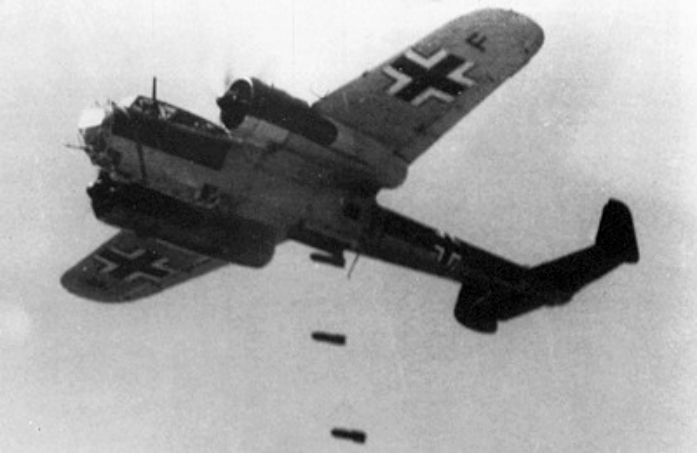
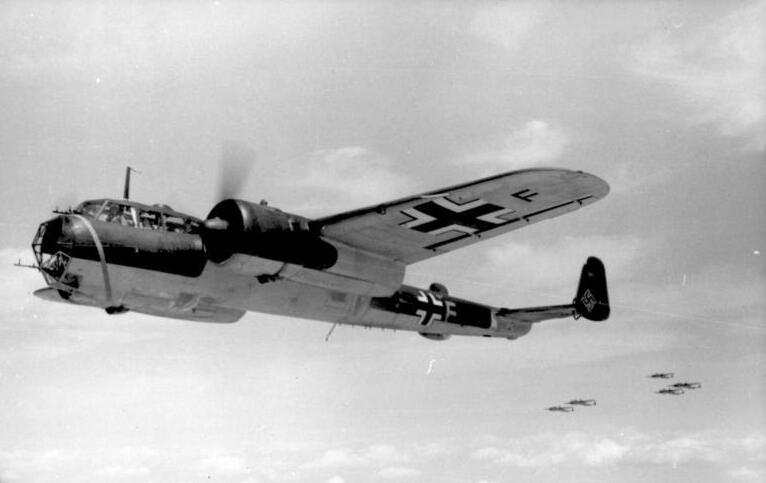
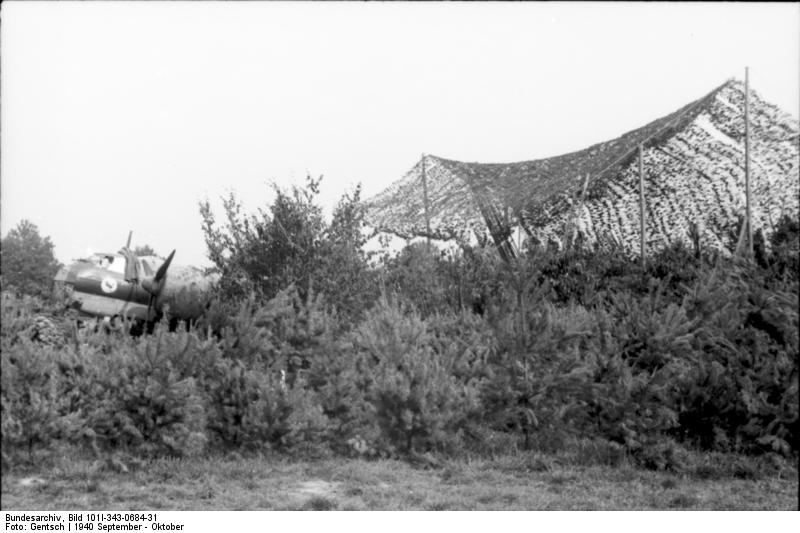
Dornier Do 17 photos: the Flying Pencil in service, 1937–1942
Genuine wartime photographs, each credited to its Wikimedia Commons source and licence. Scroll for more.
Dornier Do 17 documentary: the full story of the Flying Pencil
A feature-length history of the Do 17 from Rex's Hangar, a respected aviation-history channel.
"Why Everyone Feared The 'Flying Pencil' | Dornier Do 17" — Rex's Hangar (approx. 1.57 million views). A detailed, well-sourced documentary on the type's design, service and decline.
Where the Dornier Do 17 flew and fought: an operations overview
The Luftwaffe (blue) was the overwhelming operator; camouflage marks the combat theatres where Do 17s fought; grey shows export and other operators; light grey marks the single country with a surviving airframe. Hover or tap a country for detail. Note: "Russia" stands in for the wartime USSR, and Serbia/Croatia represent former Yugoslavia.
The Dornier Do 17's war record at a glance
Approximate, widely cited figures — the Do 17's story is one of early dominance giving way to obsolescence.
The Dornier Do 17's legacy: the human cost and the memory of the Flying Pencil
Behind every statistic about the Do 17 are the men who flew it. Luftwaffe bomber crews in 1940 were, on the whole, superbly trained and highly motivated, and they pressed home attacks in an aircraft they must have known was outmatched. Their losses over Britain were heavy, and because the crew sat together in the nose, those losses were often total — an entire four-man team gone in a single pass. The Do 17's story is, at heart, a story about the gap between the courage of aircrew and the limitations of their equipment.
The bald casualty arithmetic of the Battle of Britain tells the story. Bomber crews flew into a defence that was, for the first time in the war, ready and waiting: warned by radar, marshalled by ground controllers, and met by fighters with the height and speed advantage. For a slow, lightly armed Do 17Z, being intercepted in daylight often meant the difference between a damaged aircraft and a destroyed one, and the loss rates the type suffered in the late summer of 1940 were simply unsustainable for any air force.
It is also a story about the people on the ground beneath them. The Do 17 bombed cities, airfields and civilians across Europe, from Warsaw to Rotterdam to London. Any honest account of the aircraft has to hold both truths at once: admiration for the engineering and the airmanship, and clear sight of what those bombers were sent to do and the suffering they caused. Museums that display the type, including the RAF Museum with its Goodwin Sands airframe, are careful to present it as history, not glorification.
The Do 17's direct military legacy was short. Its descendants — the Do 215 and especially the much larger Do 217 — carried the Dornier bomber line forward, while the Junkers Ju 88 inherited the medium-bomber role the Do 17 had once filled. As a fighting machine, the Flying Pencil was effectively finished by 1942, and its influence on later designs was more cautionary than formative: it stood as a lesson in the dangers of optimising an aircraft too narrowly for one idea of war.
Its cultural legacy, though, has proved remarkably durable. The Do 17 is one of the most instantly recognisable aircraft of the Second World War, fixed in the public imagination by newsreels of the Battle of Britain, by its evocative nickname, and by that unmistakable slender shape. Model kits, paintings, films and books have kept it visible long after the last airworthy example was scrapped.
And then there is the wreck. When the RAF Museum raised the Goodwin Sands Do 17 in 2013, it did something no amount of restoration could achieve: it returned an actual Battle of Britain bomber, corroded and unrepeatable, to the public eye. Fragile, unrestored and permanently grounded, that single airframe now carries the entire memory of a type that once numbered in the thousands. It is, quite literally, the last of the Flying Pencils — and the reason the Do 17's story does not simply end in a scrapyard.
The Goodwin Sands airframe also changed how the type is studied. For the first time, historians and engineers could examine a real Do 17 in three dimensions rather than from photographs and drawings alone — the layout of the cockpit, the construction of the wing, the details of equipment and finish. In that sense the wreck is not only a memorial but a document, and its slow conservation continues to add to what we actually know about the aircraft rather than merely what we remember about it.
That is why the Do 17 earns its place in this museum. Not because it was a great bomber — it was not — but because its rise and fall capture, more sharply than almost any other aircraft, the moment when the fast, elegant ideas of the 1930s collided with the brutal arithmetic of a real, prolonged air war. The Flying Pencil began the Second World War as a symbol of what modern air power might be, and ended it as a lesson in the limits of a single good idea — a lesson written, finally, in the corroded aluminium of one aircraft raised from the sea.
Dornier Do 17: frequently asked questions
Can I fly in a Dornier Do 17?+
No. There is no airworthy Dornier Do 17 anywhere in the world, and there never will be. The only substantially complete survivor — the RAF Museum's Do 17Z raised from the Goodwin Sands in 2013 — is a fragile, unrestored conservation project. It is not restored to display-perfect condition and is emphatically not flyable.
However, you can fly in several genuine military jets today. MiGFlug offers flights in aircraft such as the L-39 Albatros, the Hawker Hunter and others, and has flown fighter jets including the MiG-29. Explore what is bookable right now at migflug.com/flights-prices.
Why was the Dornier Do 17 called the 'Flying Pencil'?+
The nickname — fliegender Bleistift in German — comes from the aircraft's extremely slim, cigar-thin fuselage. Seen from the front it was so narrow it barely looked like an aeroplane. That slenderness reduced drag and made the early Do 17 fast, but it also limited how many bombs and how much fuel the aircraft could carry.
Was the Dornier Do 17 really a rejected airliner?+
Partly. Dornier did design a fast civil transport and mail aircraft in 1933–34, and Deutsche Luft Hansa did find the narrow fuselage impractical for passengers. But the popular tale of a finished airliner being forgotten and then rediscovered as a bomber is embellished — the military and civil strands of the programme ran together from early on, at a time when Germany was concealing military aviation behind civilian projects.
How fast was the Dornier Do 17 and how many bombs could it carry?+
A Do 17Z could reach roughly 410 km/h (about 255 mph) at altitude — fast for the mid-1930s but not enough to escape 1940-era fighters. Its bomb load was modest, up to about 1,000 kg. These figures vary between sub-variants and sources and should be treated as commonly cited estimates.
Why did the Dornier Do 17 fail in the Battle of Britain?+
By 1940 the Do 17Z was already obsolescent. It was too slow to outrun Hurricanes and Spitfires, defended itself only with hand-aimed rifle-calibre machine guns, and carried a small bomb load. It flew some famous raids — notably the low-level attack on RAF Kenley on 18 August 1940 — but suffered heavily. Production had already ended, and Do 17 units were converting to the faster Junkers Ju 88.
How many Dornier Do 17s survive today?+
Only one substantially complete example survives: the RAF Museum's Do 17Z (Werknummer 1160), recovered from the Goodwin Sands in June 2013. It is a conservation project — corroded, unrestored to flying or display-perfect standard, and not airworthy. Beyond that aircraft, only fragments and relics exist. For decades before 2013 there was no complete Do 17 anywhere in the world.
Which countries operated the Dornier Do 17?+
The German Luftwaffe was by far the main operator. Export and other users included Yugoslavia, which licence-built the Do 17K; Finland, which bought 15 Do 17Z-2/Z-3; wartime Croatia (the NDH); and Bulgaria. Do 17E/F aircraft that fought in Spain with the Condor Legion later passed to the Spanish Nationalist air force. The related Do 215 was also exported.
What engines did the Dornier Do 17 use?+
It depended on the variant. Early aircraft such as the Do 17E and Do 17F used liquid-cooled BMW VI inline engines. The mass-produced Do 17Z switched to air-cooled Bramo 323 Fafnir radial engines of roughly 1,000 PS each. Some reconnaissance versions used BMW 132 radials, a few special variants used Daimler-Benz DB 600 inlines, and the Yugoslav Do 17K used French Gnome-Rhône radials. This variety reflected the fast-changing German aero-engine industry of the late 1930s.
What replaced the Dornier Do 17?+
In front-line Luftwaffe service the Do 17 was replaced chiefly by the Junkers Ju 88, which was faster, longer-ranged and carried a heavier load. Within the Dornier family itself, the design lineage continued through the Do 215 and, most importantly, the much larger Do 217, which corrected the Do 17's greatest weakness — its small bomb load — and served well into the later war years.
Is the Dornier Do 17 the same as the Do 217?+
No, though they are closely related. The Do 17 is the slim 'Flying Pencil' light/medium bomber of the late 1930s. The Do 217 is a substantially larger, heavier and later development that shares the Dornier design heritage but can carry several times the bomb load and even launch guided weapons. Think of the Do 217 as the grown-up successor to the Do 17 rather than a version of it.
Where can I see a Dornier Do 17 today?+
The only substantially complete Do 17 is held by the Royal Air Force Museum in the United Kingdom, where the Goodwin Sands airframe is conserved and, at times, displayed as part of an ongoing conservation project. Because it is a fragile, salt-damaged relic rather than a polished restoration, how and where it is shown can change. Elsewhere, museums hold only fragments, relics and recovered components — there is no second complete aircraft to see.
How many crew did the Dornier Do 17 carry, and what did they do?+
The Do 17Z carried a crew of four, all seated together in the glazed forward compartment: a pilot, a bomb-aimer/navigator who also manned a forward gun, a radio operator, and a gunner. In combat the non-pilot crew doubled up on the hand-aimed machine guns. Grouping everyone in the nose aided communication and morale but meant a single burst of enemy fire could disable the whole crew.
Was the Dornier Do 17 a good aircraft?+
It depends on when you ask. In 1937 the Do 17 was one of the fastest and cleanest bombers in the world, a genuinely advanced design that flew beautifully. By 1940 it was outclassed — too slow, too lightly armed and too short on bomb load for a modern air war. So it was neither simply 'good' nor 'bad': it was an excellent early design that the pace of wartime aviation left behind with unusual speed.
The Flying Pencil is gone. Real jet flights are not.
No Dornier Do 17 will ever fly again. But you can strap into a genuine military jet, pull real G and take the controls yourself. Here is a selection of what MiGFlug makes bookable.
Explore the Do 17's Luftwaffe contemporaries
Heinkel He 111The other backbone medium bomber of the Battle of Britain, flown alongside the Do 17.View in the museumJunkers Ju 88The faster, harder-hitting bomber that replaced the Do 17 in Luftwaffe service.View in the museumJunkers Ju 87 StukaThe infamous dive-bomber that fought beside the Do 17 through the Blitzkrieg years.View in the museum