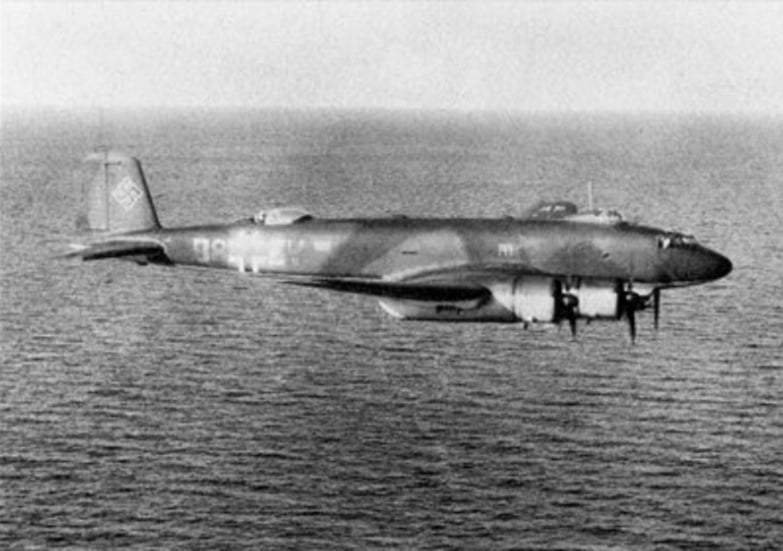
Focke-Wulf Fw 200 Condor
The elegant four-engine airliner that flew Berlin to New York non-stop in 1938 — then went to war as the U-boats' eyes over the ocean. Graceful, far-ranging and dangerously fragile, it became the aircraft Churchill is famously said to have called the "Scourge of the Atlantic".
Can you fly an Fw 200 today?The Focke-Wulf Fw 200 Condor: the airliner that became the U-boats' eyes over the Atlantic
Few aircraft carried a more contradictory reputation than the Focke-Wulf Fw 200 Condor. It was born in 1936 as a symbol of peaceful modernity — a sleek, four-engine transatlantic airliner drawn up for Deutsche Lufthansa by a team under the brilliant designer Kurt Tank. When the prototype first flew on 27 July 1937, it was one of the most advanced landplanes in the world: elegant, all-metal, and built for the kind of intercontinental range that airlines could only dream about.
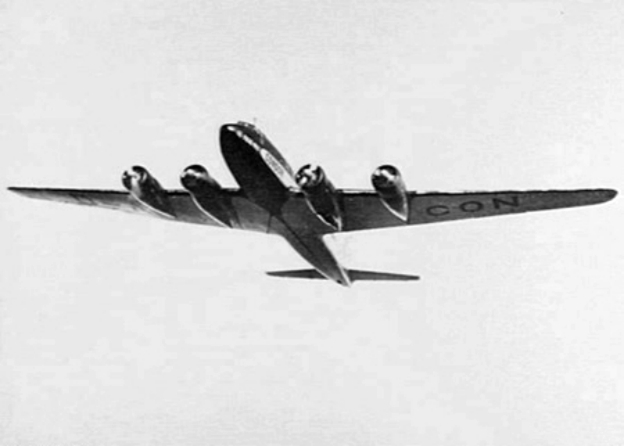
The Condor made good on that promise almost at once. In August 1938 the first aircraft, D-ACON "Brandenburg", flew non-stop from Berlin to New York and back, then set out to demonstrate a route toward the Far East. Those flights were genuine records that impressed the world and made the Condor a propaganda showpiece for German aviation. It looked like the future of long-distance travel.
War rewrote its story. When the Kriegsmarine's U-boats pushed out into the Atlantic in 1939–40, the Luftwaffe had almost nothing that could fly far enough to work with them. The Condor's enormous range made it the obvious stopgap. Focke-Wulf hurriedly militarised the airliner into the Fw 200 C: a reconnaissance-bomber with a bomb bay, a ventral weapons gondola, defensive guns and extra fuel. It was never designed for the job, but nothing else in the fleet could reach where the convoys were.
From bases around Bordeaux-Mérignac in occupied France, the Condors of Kampfgeschwader 40 flew vast solo patrols out over the Bay of Biscay and deep into the ocean. They shadowed Allied convoys for hours, radioed their positions to guide U-boat wolfpacks onto them, and — when they dared — dived to mast height to bomb merchant ships directly. In the winter of 1940–41 the toll was severe, and the Condor briefly became one of the most feared machines of the sea war.
That is the period from which its most famous line survives. Winston Churchill is widely reported to have called the Fw 200 the "Scourge of the Atlantic", a phrase that has followed the aircraft ever since. Whether or not the exact words are his, they captured a real and frightening moment when a handful of long-range aircraft could tip the balance of the Battle of the Atlantic.
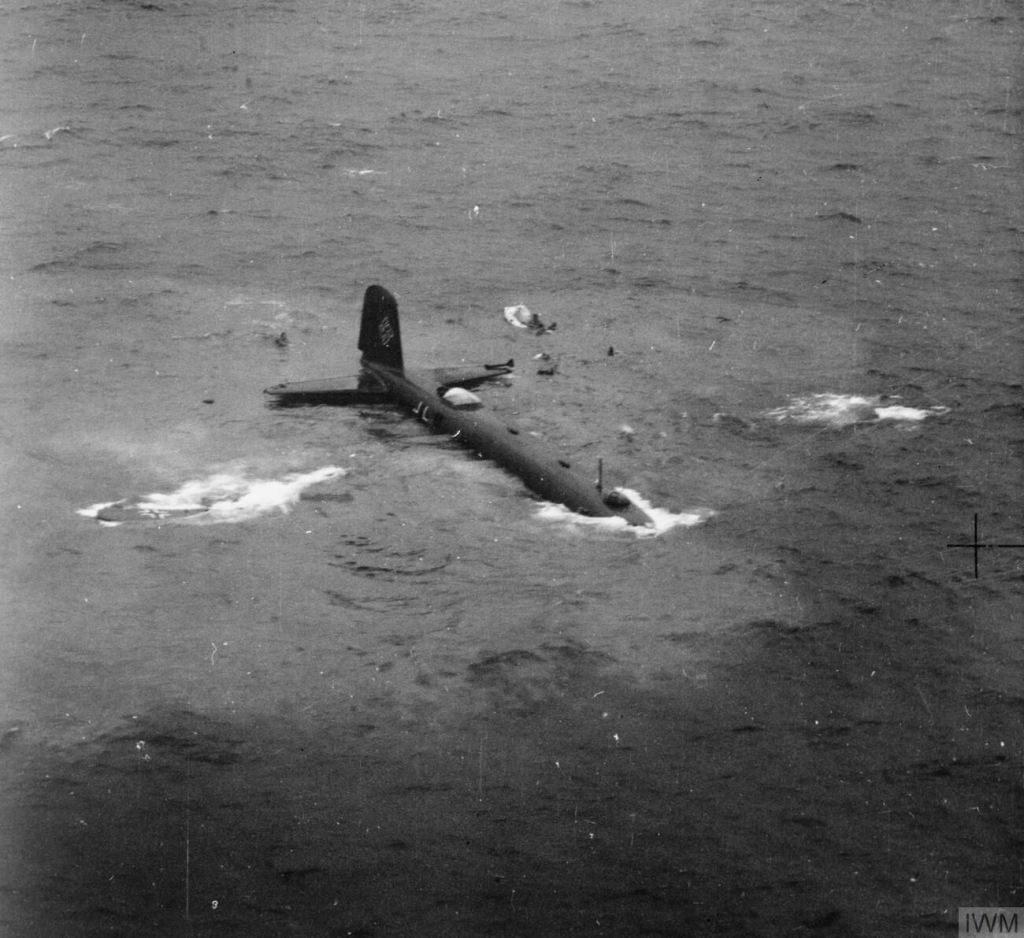
But the Condor's airliner origins were also its undoing. Its airframe had been stressed for smooth commercial flying, not for combat loads, violent manoeuvres or the pounding of rough-field operations. Condors became notorious for structural failure: there are well-documented cases of aircraft literally breaking their backs — the fuselage failing just behind the wing — during heavy or badly judged landings. It was fast and far-reaching, but it was never a robust warplane.
As the Allies fought back, the Condor's brief dominance collapsed. Merchant ships began carrying catapult-launched Hurricanes; escort carriers put fighters over the convoys; and long-range aircraft such as the Liberator closed the mid-Atlantic "air gap". By 1943 the vulnerable, thinly armoured Condor was being driven from the daylight sky, and it slipped increasingly into transport and special-duties work — including service as a personal VIP aircraft for Hitler and other Nazi leaders.
By 1945 the type had all but vanished. No complete original survived intact into preservation for decades, and there is no airworthy Condor anywhere in the world. The single restored example that exists today — reconstructed around an airframe raised from a Norwegian fjord — stands in a Berlin museum as a reminder of an aircraft that began as a promise of peace and ended as an instrument of war.
What makes the Condor so compelling is precisely this double life. Most famous warplanes were designed as weapons from the first rivet; the Fw 200 was designed to carry holidaymakers and mail across oceans, and stumbled into notoriety because it happened to be the only thing that could reach where the war at sea was being decided. Every quality that made it dangerous — its range, its endurance, its ability to loiter for hours far from land — was inherited from the airline drawing board, not the bomber requirement.
And every quality that made it vulnerable came from the same source. It was big, slow, lightly built and thinly defended, a graceful cruiser thrust into a knife-fight it was never meant to survive. The tension between those two inheritances runs through the whole story of the type, and it is why the Condor is remembered as much for what it could not do as for the brief, real terror it inflicted on the Atlantic convoys.
How the Fw 200 Condor was built: airliner grace pressed into a warplane's job
The Condor's strengths and its fatal weaknesses came from the same place — a civil airframe asked to do a military job it was never designed for.
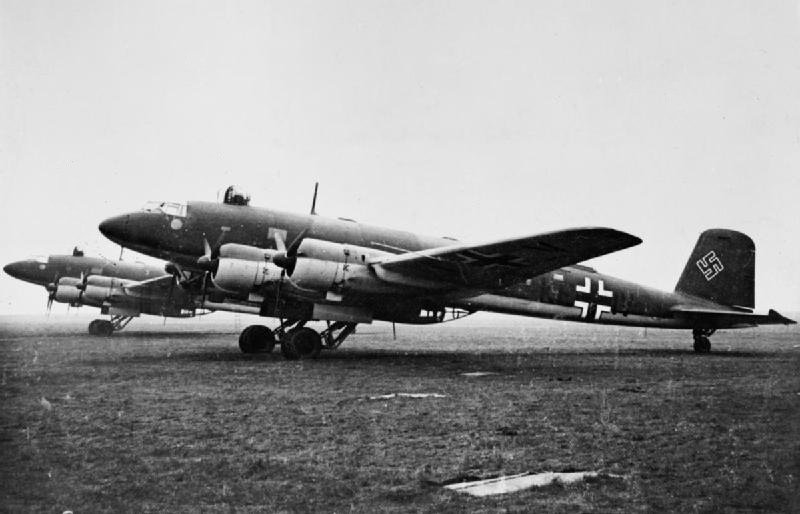
Kurt Tank's team designed the Fw 200 as a clean, cantilever-winged, four-engine airliner with a slim fuselage, retractable undercarriage and the range to cross oceans. Everything about it was optimised for efficient, gentle cruising: light structure, low drag, and the fuel volume to stay airborne for a very long time. Those qualities are exactly what made it valuable to a Luftwaffe that had no purpose-built long-range ocean patrol aircraft.
Militarising it meant hanging weapons, armour, radios and a ventral gondola onto a frame that had no margin for them. The result could reach targets nothing else could — but it flew heavy, it flew fragile, and its crews paid for the compromise. Three features tell the story.
It is worth stressing how unusual this was. Almost every other significant aircraft of the war was designed, from the outset, for a military role, with structure, systems and defences sized to match. The Condor inherited none of that. Its designers had optimised for smooth, economical, long-range cruising, and the qualities that flowed from those choices — light weight, clean lines, generous fuel volume — were exactly the qualities that made it both uniquely useful and uniquely vulnerable once guns and bombs were bolted on.
Airliner bones
The Condor's structure was designed for smooth commercial cruising, not combat. Light and efficient, it lacked the reinforcement a bomber needs — and became infamous for fuselage failures, with several aircraft breaking their backs behind the wing during hard landings. Range came free; strength did not. Attempts to reinforce later marks helped but never cured the problem, and always at the cost of the payload and range that justified the aircraft in the first place.
Four radials for reach
Four air-cooled radial engines — BMW 132s on the early machines, more powerful BMW-Bramo 323 Fafnirs on the C-series — gave the Condor the redundancy and endurance for oceanic patrols measured in thousands of kilometres. That range, not speed or toughness, was its whole reason for going to war. Four engines also meant that a single failure far out over the ocean need not be fatal — a real advantage on patrols that could last most of a day beyond any hope of rescue.
A gondola of guns and bombs
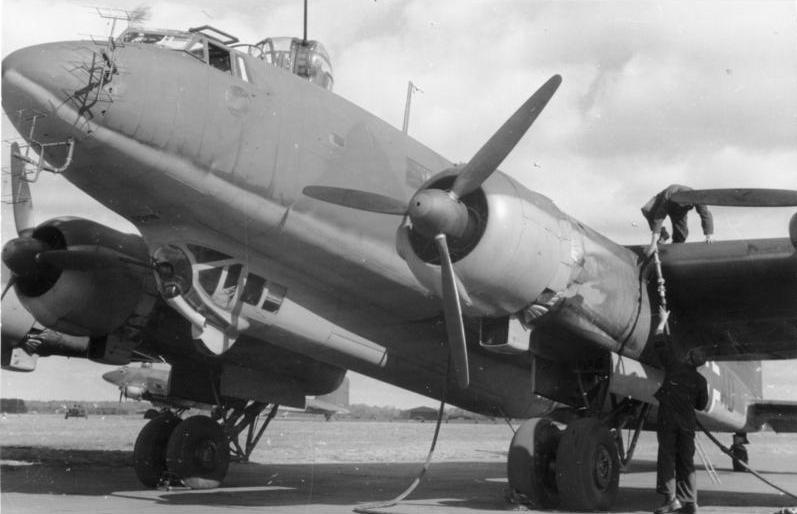
The military C-series added a long ventral gondola, a bomb bay and hardpoints, plus defensive positions carrying machine guns and a 20 mm cannon. Later Condors could even carry Hs 293 radio-guided glide bombs — a genuinely advanced weapon on a genuinely obsolete airframe. Late Condors also carried the FuG 200 Hohentwiel search radar, letting them find ships through cloud and darkness — capability that arrived just as Allied defences were making the daylight ocean too dangerous to use it.
The Fw 200 Condor in detail: origins, records, weapons and weaknesses
01How the Fw 200 Condor began as a Lufthansa airliner+
The Condor started not as a weapon but as a business proposition. In 1936 Deutsche Lufthansa wanted a landplane able to fly long intercontinental stages — including, eventually, the North Atlantic — and Focke-Wulf's technical director Kurt Tank promised a design in remarkably short order. The prototype, Fw 200 V1 (Werk Nr. 2000, registered D-ACON and named "Brandenburg"), first flew on 27 July 1937.
It was an elegant, modern machine: an all-metal cantilever monoplane with four engines, a slender fuselage and retractable landing gear. Small numbers of civil Condors entered service with Lufthansa and were exported to a handful of foreign operators, carrying passengers in comfort over distances that few contemporaries could match. Had there been no war, the Fw 200 might be remembered simply as one of the graceful early airliners of the piston age.
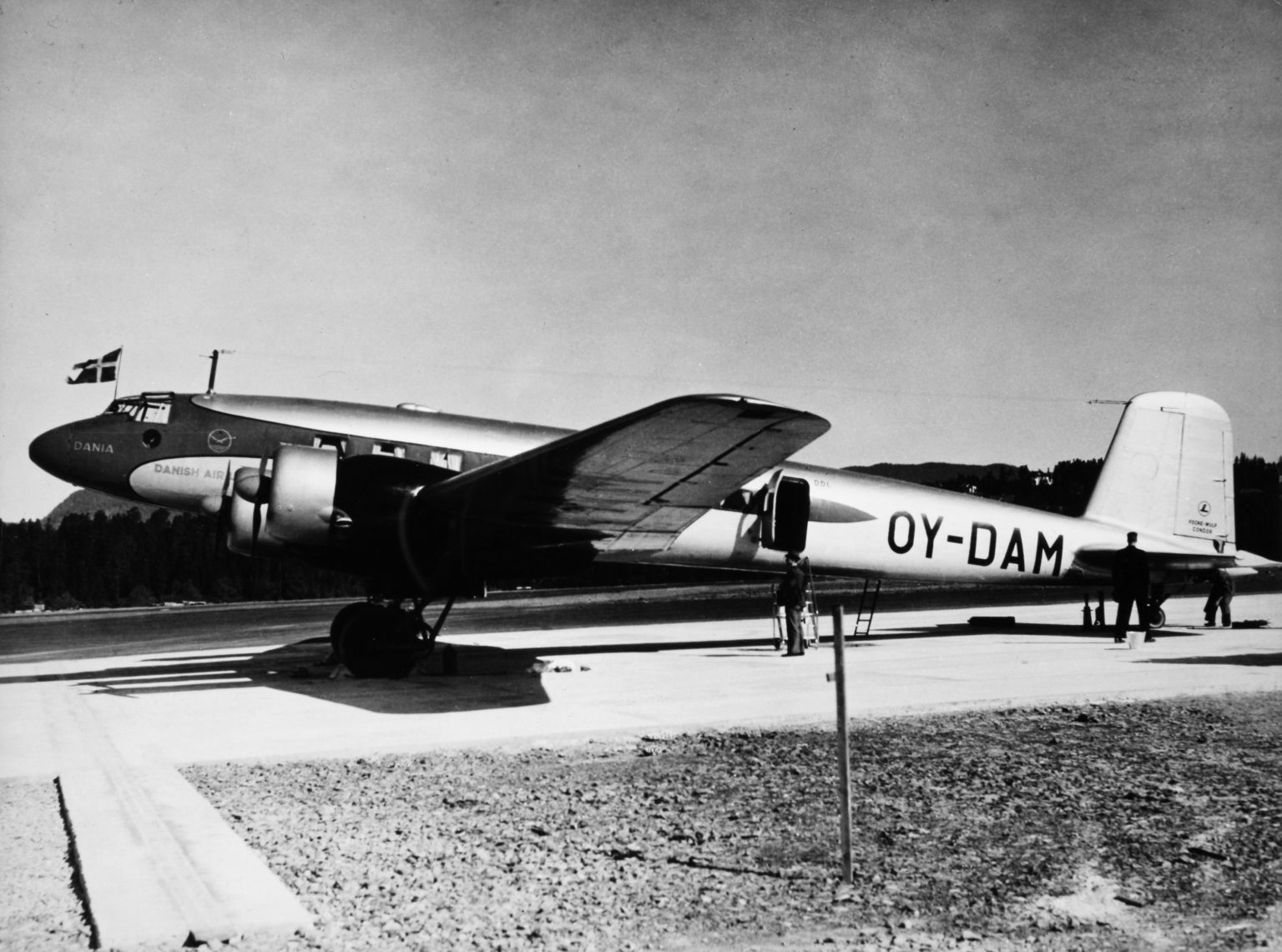
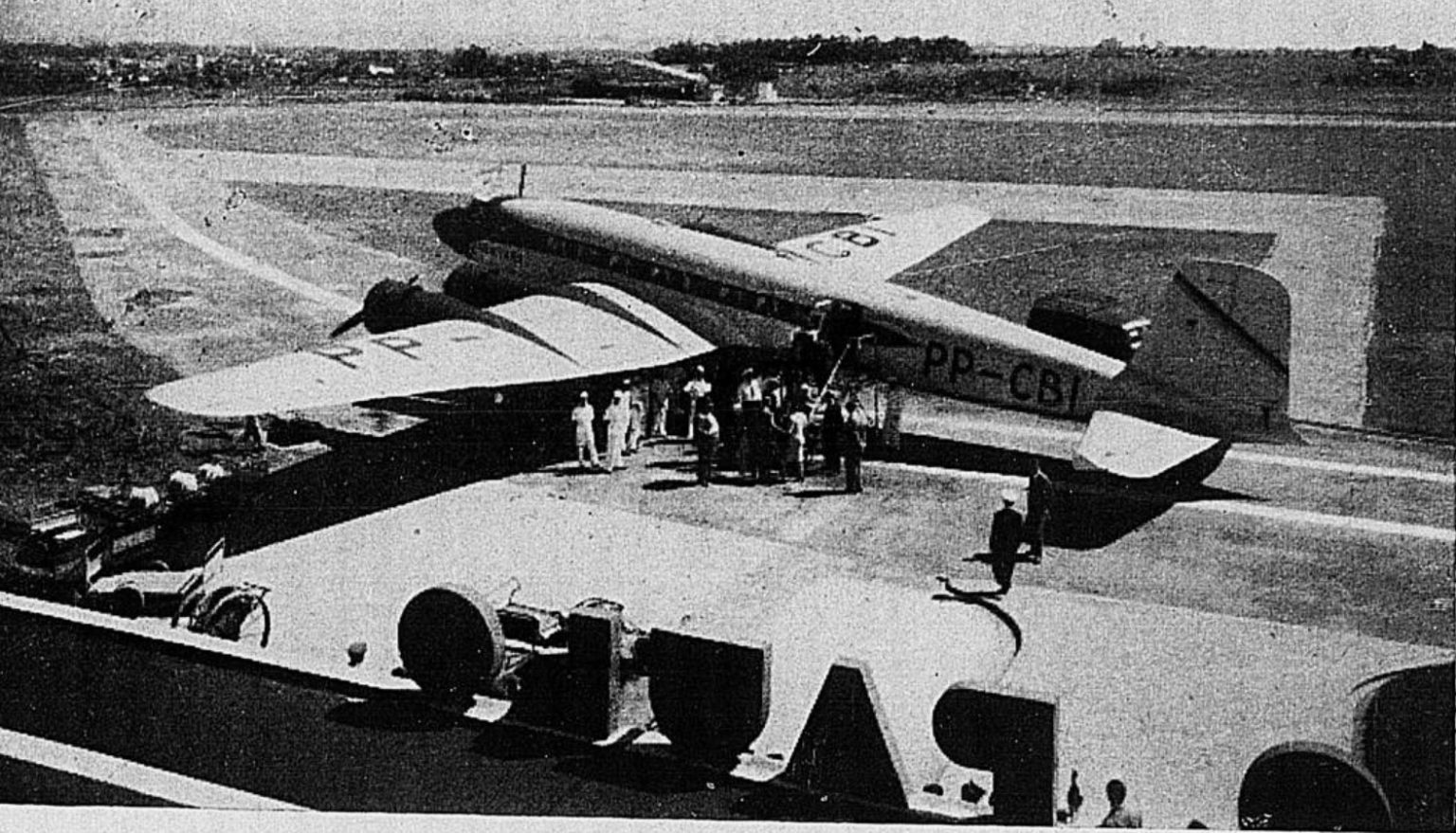
Lufthansa put a small fleet into service on prestige long-haul routes, and a handful were exported: Denmark's DDL flew two, Brazil's Syndicato Condor operated one, and single examples went to operators as far afield as Japan. It was never a numerous airliner — the whole civil production ran to only a few dozen machines — but each one was a flagship, chosen precisely because no rival could match its combination of range, speed and four-engine reassurance over water.
02The Fw 200 Condor's record-breaking 1938 Berlin–New York flight+
In August 1938 D-ACON made the flight that sealed the Condor's early fame: a non-stop crossing from Berlin to New York. Departing on 10 August, it reached Floyd Bennett Field the following day after roughly a full day in the air, then flew the return leg to Berlin — aided by favourable winds — in appreciably less time. It was a demonstration flight rather than a scheduled service, but it was a genuine long-distance record and a global sensation.
Later in 1938 a Condor pressed on with a much longer demonstration toward the Far East, flying in stages via the Middle East and India toward Tokyo. The tour showcased the type's extraordinary reach, though the record-setting prototype itself was subsequently lost in an accident. The exact durations and dates of these flights vary between sources; what is not in doubt is that in 1938 the Fw 200 was one of the longest-legged landplanes in the world.
The New York flight was commanded by Lufthansa captain Alfred Henke, and it was seized on by German propaganda as proof of national technical prowess. There was an unhappy postscript: the record-setting prototype itself was lost only months later, ditching in shallow water off Manila during the Far East tour. The airframe that had conquered the Atlantic never returned home — a foreshadowing, perhaps, of how hard the type would be used and how little of it would survive.
03Why the Fw 200 Condor went to war: from airliner to maritime patrol bomber+
When war came, the Luftwaffe discovered a gap in its arsenal: it had no dedicated long-range ocean-reconnaissance aircraft to support the U-boat campaign. The Condor's civil range made it the fastest available answer. Focke-Wulf reworked the airliner into the armed Fw 200 C, adding a bomb bay, a ventral weapons gondola, defensive guns, additional fuel tankage and military radios.
It was a stopgap and everyone knew it. The conversion strained an airframe that had never been designed to carry weapons or fly combat profiles, and production was always modest. But for a crucial period the Condor gave Germany something no other Luftwaffe aircraft could: the ability to find, report and strike shipping far out in the Atlantic.
The conversion also exposed a command tangle that dogged the Condor throughout its career. The aircraft belonged to the Luftwaffe, but the targets belonged to the Kriegsmarine's war on trade, and Admiral Dönitz repeatedly complained that he could never get enough long-range reconnaissance from Göring's air force. The Condor units were eventually grouped under a dedicated maritime command, Fliegerführer Atlantik, but the friction between air and sea services meant the type never operated in the numbers its strategic value arguably deserved.
04The Fw 200 Condor and Kampfgeschwader 40 over the Bay of Biscay+
The Condor's war was fought above all by Kampfgeschwader 40 (KG 40), operating from Bordeaux-Mérignac in occupied France and, at times, from bases in Norway. From these fields individual Condors flew enormous solo sorties out over the Bay of Biscay and around the western approaches to the British Isles, sometimes routing right around neutral Ireland to reach the convoy lanes and recover at a different base.
These were lonely, exhausting missions of many hours over open water, often at low level and in poor weather. A single well-placed Condor could shadow a convoy for a long time, and the intelligence it radioed back was frequently worth more than the bombs it carried. KG 40 became, for a while, one of the most strategically important bomber units in the German order of battle.
Its crews became specialists in a very particular kind of flying: navigating for hours over featureless ocean, holding formation with no formation to hold, and pressing home attacks alone. Among them were airmen who became well known in the type's history, such as Bernhard Jope, who as a young pilot bombed and crippled the liner Empress of Britain in October 1940. Success, though, was always fragile — a single engine failure or a navigational error far out over the Atlantic could be fatal with no prospect of rescue.
05How the Fw 200 Condor hunted convoys and guided the U-boats+
The Condor's most dangerous weapon was its radio. On finding a convoy it would circle out of range, transmitting position, course and speed so that U-boat command could vector wolfpacks onto the target. This air–sea cooperation, when it worked, multiplied the effectiveness of both weapons and briefly threatened Britain's Atlantic lifeline.
When conditions allowed, Condors also attacked directly, running in at low altitude to drop bombs along the length of a ship — a tactic that traded the airframe's fragility for a good chance of a hit. In the winter of 1940–41 this combination of shadowing, reporting and low-level bombing sank or damaged a startling tonnage of Allied shipping for the tiny number of aircraft involved.
The low-level attack was the Condor's signature and its gamble. Running in along the length of a ship at mast height improved the chance of a hit with unguided bombs, but it exposed the big, slow aircraft to every gun the target could bring to bear — and merchant ships were increasingly well armed. Some Condors were lost or crippled by the very ships they attacked. The reporting role, by contrast, was almost pure profit: an aircraft that never came within gun range could still doom a convoy simply by telling the U-boats where it was.
06The Fw 200 Condor's fatal flaw: an airframe that broke its back+
The Condor's civilian ancestry left it dangerously weak for military use. Its structure had been sized for gentle airline loads, and adding weapons, armour and fuel pushed it well beyond its comfortable margins. The most notorious symptom was catastrophic fuselage failure: there are well-documented cases of Condors literally breaking their backs, the rear fuselage snapping just aft of the wing, during heavy or mishandled landings.
Structural fatigue, overloading and the strain of combat manoeuvring all contributed. Crews learned to treat the aircraft gently, but a laden Condor arriving at a rough forward strip after a long, cold patrol was always at risk. For all its reach, the Fw 200 was never a rugged warplane — a point every honest account of the type has to make.
Focke-Wulf did try to address the problem. Later C-series machines received local strengthening around the wing centre-section and rear fuselage, and crews were given weight and handling limits meant to keep landings gentle. But there was only so much that could be done to a structure conceived for airline service, and the reinforcement added weight that ate into the payload and range that were the aircraft's whole reason for existing. The Condor never fully escaped its origins as a machine built to carry passengers, not punishment.
07The weapons of the Fw 200 Condor: guns, bombs and the Hs 293 missile+
A typical Fw 200 C carried a mix of defensive machine guns in dorsal, ventral and beam positions, together with a 20 mm cannon in the forward gondola. Offensively it could carry bombs in and under the fuselage — on the order of a couple of thousand kilograms in favourable conditions — for use against shipping and land targets.
Late-war Condors went further, becoming launch platforms for the Henschel Hs 293, a rocket-boosted, radio-guided anti-ship glide bomb. It was a genuinely advanced stand-off weapon that let the aircraft attack from beyond a ship's flak — a striking contrast with the elderly, fragile airframe carrying it. By then, however, too few Condors remained to make a decisive difference.
The later marks also gained the tools of a proper patrol aircraft, most importantly the FuG 200 Hohentwiel search radar, which let a Condor find ships through cloud and darkness rather than relying on the naked eye. It was a genuine capability improvement — but it arrived alongside the Allied countermeasures that were already making the daylight ocean too dangerous for the type. The Condor thus reached its technical peak just as its tactical window was closing, a recurring pattern in the aircraft's short and contradictory front-line life.
08How Allied defences beat the Fw 200 Condor by 1943+
The Condor's dominance was brief because the Allies answered it hard. Merchant ships were fitted with catapults to launch a single expendable Hurricane fighter (the "Hurricat" of the CAM ships); escort carriers began sailing with the convoys, putting fighters permanently overhead; and shore-based long-range aircraft extended air cover far out to sea.
Against fighters the thin-skinned, unmanoeuvrable Condor was desperately vulnerable. Losses mounted, and by 1943 daylight anti-shipping patrols had become near-suicidal. The type was progressively withdrawn from the front-line maritime strike role and shifted toward reconnaissance, transport and trials work, its brief reign as scourge of the convoys over.
The turning point was systemic rather than the result of any one weapon. RAF Coastal Command, flying long-range Liberators, Sunderlands and hard-hitting Beaufighters and Mosquitos over the Bay of Biscay, contested the very airspace the Condors had to cross to reach the ocean. Caught between fighters over the convoys and fighters over the Biscay transit, the unescorted Condor had nowhere left to hide. What had briefly been a strategic threat became, by 1943, a hunted rarity.
09The Fw 200 Condor as Hitler's personal transport+
The Condor's range and comfort also made it a natural VIP aircraft. Specially fitted Fw 200s served as personal transports for the Nazi leadership, including Adolf Hitler, whose aircraft — one of a succession named "Immelmann" — was equipped with armour plating, an escape hatch and even a reported armoured seat for its passenger.
These machines flew Hitler and senior officials between headquarters and around occupied Europe, a very different life from the ocean patrols of KG 40. It is one of the Condor's quieter ironies that the same airliner-turned-bomber that terrorised the convoys also spent the war as a flying command coach for the men who ordered them attacked.
10The Fw 200 Condor at Stalingrad: the airlift transport role+
As the Condor's combat value on the Atlantic waned, its transport capacity was called upon elsewhere. During the winter of 1942–43 a number of Fw 200s were thrown into the desperate airlift to supply the encircled German Sixth Army at Stalingrad, flying ammunition and food in and carrying wounded out.
It was grim, dangerous work in appalling weather and under Soviet fire, and it cost aircraft the Luftwaffe could ill afford to lose. The episode underlined how far the Condor had drifted from its designers' intentions: an elegant transatlantic airliner ending up as an emergency freighter over the frozen steppe.
Condors also flew transport runs elsewhere as the war turned against Germany, including supply flights in the Mediterranean and to North Africa. Each of these missions consumed airframes that could not be replaced in any number, and every Condor lost hauling freight was one fewer available for the ocean-patrol role it alone could perform. By using its rare long-range aircraft as stopgap transports, the Luftwaffe was quietly spending down an irreplaceable capability.
11Fw 200 Condor variants: from the V1 prototype to the C-8+
The Condor family ran from the civil prototypes and early A- and B-series airliners through to the militarised C-series that did almost all of the fighting. Successive C sub-variants (C-1, C-2, C-3, C-4 and on to the C-6 and C-8) refined the engines, defensive armament, radar and weapons fit, with the later marks configured to carry guided missiles.
Total production was modest by wartime standards — commonly cited at around 276 aircraft of all types, though figures vary between sources. It was never built in the numbers of a Ju 88 or He 111; the Condor was always a specialist, produced in small batches for a niche the Luftwaffe had never planned to fill.
Roughly the first couple of dozen aircraft were civil airliners and prototypes; the great majority of the rest were military C-series machines built at Focke-Wulf's plants at Bremen and, later, Cottbus. Because output was so limited, the loss rate on Atlantic operations mattered enormously — a squadron could be worn down faster than the factories could replace it. The Condor's scarcity, as much as its fragility, capped what it could achieve.
12The Fw 200 Condor's operating costs and production numbers+
Reliable unit-cost figures for the Fw 200 were never recorded in the way modern programmes document them, and wartime German accounting makes any single Reichsmark price effectively meaningless today. What is clear is that the Condor was expensive in relative terms: a large, four-engine, hand-built aircraft produced in small numbers, absorbing scarce engines and skilled labour for a modest output.
Because no Fw 200 is airworthy anywhere in the world, there is no meaningful cost-per-flight-hour to quote — the figure simply does not apply. The one restored survivor is a static museum exhibit, not a flying aircraft, so its "operating cost" is that of conservation and display rather than flight.
For a modern reader wanting a sense of proportion, the meaningful comparison is with the Luftwaffe's mass-produced bombers. Where types like the Ju 88 and He 111 were turned out in the thousands and tens of thousands, the Condor was built in the low hundreds; each one tied up four engines, a large all-metal airframe and skilled labour for a very small production run. In every sense that matters — resources, rarity and irreplaceability — the Fw 200 was an expensive way to put a long-range aircraft over the ocean.
13How every wartime Fw 200 Condor vanished — and one came back+
Built in small numbers and flown hard in one of the war's most punishing environments, the Condors were used up. Many were lost to accidents, weather, fighters and flak; the survivors were scrapped in the chaos of 1945 and after. For decades not a single complete Fw 200 remained anywhere — a remarkable gap for so historically significant a type.
The story changed in 1999, when the wreck of a Condor that had force-landed and later sunk in a Norwegian fjord near Trondheim was located and raised from the seabed. Corroded and incomplete, it became the seed of an ambitious international restoration that would, eventually, put a Condor back on public display.
That so significant an aircraft could vanish so completely says much about how it was used. Built in small numbers, flown to destruction over the ocean and the Eastern Front, and then swept away in the scrapping of 1945, the Condor left almost no physical trace. For half a century the type existed only in photographs, drawings and memory — which is exactly why the recovery of a single waterlogged wreck from a fjord became such an important event for aviation historians.
14The restored Fw 200 Condor at the Deutsches Technikmuseum+
The salvaged airframe (Werk Nr. 0021) was painstakingly reconstructed over many years — a collaborative effort drawing on original components, recovered parts and newly manufactured sections — before going on display in Berlin at the Deutsches Technikmuseum. It is the only Fw 200 Condor preserved anywhere in the world.
Visitors should understand what they are seeing: not a pristine wartime survivor but a careful reconstruction built around a recovered wreck, standing for an entire type that otherwise disappeared. There is no airworthy Condor and no prospect of one flying again; the Berlin aircraft is the sole physical link to a machine that helped shape the Battle of the Atlantic.
The rebuild was a long, industry-backed effort, drawing on German aerospace partners and specialists over many years to combine the recovered wreck with parts from other airframes and newly fabricated sections. The result is best understood as a considered reconstruction rather than a time-capsule original — but it lets visitors stand beside the full-size shape of an aircraft that words and photographs can only hint at, and that is reason enough for the effort it took.
15The Fw 200 Condor's crews and the ordeal of ocean patrol+
Flying a Condor on an Atlantic patrol was a test of endurance as much as courage. A single sortie could last the better part of a day, much of it at low altitude over grey, empty water, in an unpressurised aircraft that was cold, noisy and physically tiring to fly. Navigation was by dead reckoning over a featureless ocean, and a serious error could leave a crew hopelessly lost with no landmark to correct against.
The threats were constant and varied: mechanical failure far from land, sudden fighter interception near the convoys, and the guns of the ships themselves during a low-level attack. Ditching a big four-engine aircraft in the North Atlantic was rarely survivable, and rescue was unlikely. The Condor crews of KG 40 were specialists in one of the loneliest and most unforgiving styles of flying the air war produced.
Their experience is a corrective to any romantic view of the type. Behind the "Scourge of the Atlantic" headlines were airmen doing exhausting, dangerous work in an aircraft they knew to be fragile, betting each mission that the weather, the engines and the enemy would all stay favourable long enough to get them home.
16The Fw 200 Condor versus the Ju 88 and He 111: why range was everything+
Compared with the Luftwaffe's mass-produced bombers, the Condor was neither fast, tough nor numerous. The Junkers Ju 88 was quicker and far more versatile; the Heinkel He 111 was sturdier and built in enormous numbers. On almost every conventional measure of a warplane, the Condor came off worse than its stablemates.
But neither the Ju 88 nor the He 111 could do the one thing the Condor could: reach far out into the Atlantic, loiter for hours, and come home. Range, not performance, was the currency of the ocean war, and in that currency the airliner-derived Condor was rich where the purpose-built bombers were poor. It is a neat illustration of how a mission can value a quality that a general-purpose design would never prioritise.
That is also why the Condor could never simply be replaced by a "better" bomber. Its value lived entirely in its endurance, and until Germany fielded genuinely long-range maritime aircraft in quantity — which it never really did — the fragile, unmilitary Condor remained, by default, irreplaceable.
17Myths and misconceptions about the Fw 200 Condor+
The Condor's dramatic reputation has attracted its share of myth. It is sometimes portrayed as a war-winning weapon that nearly starved Britain single-handed; in truth its window of real influence was narrow, confined largely to 1940–41, and its greatest value was reconnaissance rather than bombing. The "Scourge of the Atlantic" label, powerful as it is, describes a moment rather than the whole career.
Equally, the famous "broken back" landings are sometimes exaggerated into a claim that the Condor was useless. It was not: for a time it was genuinely dangerous and strategically significant. The honest picture sits between the extremes — a capable long-range reconnaissance-bomber with a serious, well-documented structural weakness, undone as much by Allied countermeasures and its own scarcity as by any single flaw.
Finally, the Churchill quotation should be handled with care. It is traditional and widely repeated, and it captures a real fear, but it is best cited as reported rather than as a firmly documented statement. Good history means enjoying the phrase while being honest about its provenance.
Focke-Wulf Fw 200 C-3 Condor specifications: dimensions, performance and cost
Representative figures for the maritime Fw 200 C-3. Sources vary; contested values are flagged as approximate.
Baseline note: the figures below describe the Fw 200 C-3 of 1941–42 — the first Condor with a deliberately strengthened airframe, the first with BMW-Bramo 323R-2 Fafnir engines, and the mark that flew the Atlantic campaign at its height. One common shorthand needs correcting at the outset: the Condor is routinely called a BMW 132 aeroplane, and the airliners, the B-series and the first armed marks C-1 and C-2 were, but from mid-1941 onward every Condor that mattered operationally had Bramo 323R-2 radials instead. Deltas for the A-series airliner, for the BMW-engined C-1 and C-2, and for the radar-carrying C-4, C-6 and C-8 are given in grey. Published Condor data are unusually corrupt. Empty weights of 12,950 kg and 17,005 kg both circulate for the same aircraft; engine ratings of 1,085, 1,183 and 1,200 hp are all quoted for the same Bramo 323R-2; and the maximum external bomb load of 5,400 kg that appears in several English-language reference works is arithmetically impossible on an aeroplane that weighs 17 tonnes empty and 22.7 tonnes loaded. Where authorities disagree, both figures are given and the disagreement is named.
Dimensions & weights
- Crew
- 6 — pilot, co-pilot, navigator doubling as bomb-aimer, flight engineer, radio operator and gunner. Five is quoted for the early armed marks; the C-3/U4 reconnaissance fit carried seven with an extra beam gunner
- Length
- 23.46 m (76 ft 11 in)
- Wingspan
- 32.84 m (107 ft 9 in) — the name came from exactly this proportion, a great span against a slim fuselage, as on the bird
- Height
- 6.30 m (20 ft 8 in)
- Wing area
- 119.85 m² (1,290 sq ft)
- Empty weight
- 17,005 kg (37,490 lb) equipped for war. The 12,950 kg (28,550 lb) figure that circulates on data sites is the civil A-series airliner: four tonnes of guns, armour, gondola, radar and fuel tankage is the difference between the two aeroplanes
- Normal loaded weight
- 22,700 kg (50,045 lb)
- Maximum take-off weight
- 24,520 kg (54,060 lb) in the overload condition quoted for the C-3/U4 — a weight this structure tolerated rather than enjoyed
- Wing loading
- 189 kg/m² (38.8 lb/sq ft) at normal loaded weight. Low by 1941 bomber standards, which is precisely why it could loiter for fourteen hours and precisely why it could not be thrown about
- Ventral gondola (Bola)
- Long fairing under the fuselage, offset slightly to starboard, holding the forward 20 mm cannon, the bomb-aiming position and a rearward MG 15 — the single most expensive item on the aeroplane in drag terms, worth 25–30 km/h on some marks
- Transport payload
- 30 fully equipped troops, or 26 passengers in two cabins in the Lufthansa layout — the cabin the whole design was drawn around, and the reason the type ended the war hauling freight
- Undercarriage
- Retractable tailwheel type with twin mainwheels, stressed for the paved airfields of a scheduled airline. Condors could not operate from the rough forward strips that Ju 52s used as a matter of routine
- Fuselage structure
- Semi-monocoque built around a central longitudinal beam on a civil load path. Nothing heavier than a 250 kg bomb would go inside it, and the rear fuselage failed repeatedly — on heavy landings and on pull-outs from low-level attacks. Strengthening from the C-0 and again on the C-3 reduced the problem and never cured it: Condors broke their backs on landing for the whole of the type’s service life
Performance
- Maximum speed
- 380 km/h (236 mph) at 4,800 m (15,750 ft)
- Maximum speed at sea level
- 360 km/h (224 mph)
- Cruising speed
- 335 km/h (208 mph) at 4,000 m (13,120 ft)
- Rate of climb
- Not reliably published. The standard data tables omit it for the loaded C-series, and the figures that circulate on aircraft databases trace to no primary source, so none is invented here. It mattered less than for most bombers: the Condor cruised at 4,000 m and attacked from 45 m, and its ceiling was largely a paper quantity
- Service ceiling
- 6,000 m (19,685 ft); 5,800 m (19,030 ft) in some data sheets
- Range
- 3,560 km (2,210 miles) at economical cruise with full internal tanks
- Endurance
- 14 hours — the whole point of the aeroplane, and a figure no other German type could approach in 1940
- Typical operational sortie
- Bordeaux-Mérignac out across the Bay of Biscay, a long arc west of Ireland, landing at Stavanger-Sola or Værnes near Trondheim; the reverse the following day. Fourteen hours over water with no diversion airfield and no rescue
- Attack profile
- A single run at about 45 m (150 ft), releasing a stick of three bombs to straddle the ship so that a near miss detonated below the waterline. Crude, effective against unescorted merchantmen, and fatal once the ships carried Oerlikons
- Shipping claimed, June 1940 to February 1941
- 331,122 tonnes (365,000 long tons) in the most-quoted tally; KG 40’s own claim for August 1940 to February 1941 was over 343,000 long tons. These are German claims, not Admiralty assessments, and the two have never been properly reconciled
- Serviceability
- KG 40 rarely put more than six to eight Condors over the Atlantic on any given day. About 21 were operational in April 1941, against a production rate of four or five airframes a month that barely covered losses
- For comparison: Consolidated Liberator GR Mk I
- Comparable range, eight heavy machine guns, ASV radar, depth charges and an airframe designed from the first drawing to be shot at. When the Liberator reached Coastal Command in numbers the Condor stopped being a predator and became prey
Propulsion & systems
- Engines
- 4 × BMW-Bramo 323R-2 Fafnir nine-cylinder air-cooled radials (Bramo was absorbed by BMW in 1939, which is why the same engine appears in the literature as both Bramo 323 and BMW 323)
- Take-off power
- 883 kW (1,200 PS / 1,184 hp) each with methanol-water injection, 736 kW (1,000 PS) nominal. English-language sources commonly give 809 kW (1,085 hp): the same engine at a different rating, not a different engine
- Earlier powerplants
- Pratt & Whitney Hornet on the V1, then BMW 132G-1 of 530 kW (720 PS) and BMW 132H of 610 kW (830 PS) on the airliners, the B-series and the C-1 and C-2. The BMW 132 was itself a licence-built Hornet, so the Condor opened its Atlantic campaign on an American engine design
- Propellers
- Three-blade VDM constant-speed metal propellers
- Fuel and protection
- Wing and fuselage tanks, with additional fuselage tankage added for the military marks. The tanks were not self-sealing, the nacelles had no fire suppression and several crew positions were unarmoured — a civil airframe’s assumptions carried straight into a shooting war
- Search radar
- FuG 200 Hohentwiel, built by C. Lorenz AG, working in the low-UHF band around 550 MHz with a transmitting dipole array flanked by port and starboard receiving arrays on the nose. Large ships at up to 70 km, coastline at up to 150 km — fitted from February 1942 on the C-4 and allowing blind attack on a convoy for the first time. The earlier FuG Rostock preceded it on a handful of aircraft
- Radar, the other side of the bargain
- Half of the Condors at Bordeaux still had no radar at all in 1943, and a set that transmits can be listened to. Allied search receivers turned the Hohentwiel from an advantage into a beacon over the course of 1943–44
- Bombsight
- Lotfe 7D tachometric sight from the C-3/U2 onward. Before that the low-level attack was aimed on a Revi reflector gunsight — a fighter’s sight, used because nothing better would fit the gondola
- Missile guidance
- FuG 203b Kehl III command transmitter on the C-6 and C-8, controlling the Hs 293’s FuG 230 Straßburg receiver. Manual command to line of sight: the operator flew the missile onto the ship by eye, watching a flare in its tail
- Radio and navigation
- FuG 10 HF for the shadowing reports on which the entire U-boat concept rested. Position errors of 50 to 100 km were routine, and were Dönitz’s standing complaint against the Luftwaffe from 1941 onward — a wolfpack sent to an imaginary convoy is a wolfpack wasted
- Reconnaissance equipment
- Rb-series vertical cameras in the rear fuselage, plus parachute flares for night shadowing and for marking a convoy’s position to submarines closing in the dark
Note: performance and weight figures for the Fw 200 vary considerably between references and sub-variants; the values above are widely quoted approximations for the C-3 and should be treated as indicative rather than definitive.
Armament & payload
The Condor sank ships with four 250 kg bombs dropped from 150 feet, because an airliner fuselage would not take anything heavier
The Fw 200C’s offensive load was 1,000 kg — four SC 250 bombs on external racks under the outboard nacelles and the outer wings, because the fuselage was built around a central longitudinal beam for a civil load path and would not swallow anything bigger than a 250 kg bomb internally. There was no bomb bay in any meaningful sense. There was a gondola, and in the gondola a man with a Revi gunsight borrowed from a fighter, and the method of attack was to run in at 45 m and release three bombs in a stick so that one of them would burst against the hull or just beneath it.
Against an unescorted 5,000-ton tramp in the winter of 1940 this worked appallingly well. Against a convoy with Oerlikons on the boat deck it was close to suicide, and by mid-1941 KG 40 crews were being told to stop attacking and start reporting instead. The defensive armament grew from a single 20 mm cannon and a few rifle-calibre MG 15s to a mixed battery of 13 mm and 20 mm guns, but it never solved the aircraft’s real problem, which was that the tapering airliner tailcone could not take a tail turret. Condors were shot down from astern for the entire war.
The one genuinely modern weapon the type carried, the Hs 293 radio-command glide bomb, arrived in late 1943 on an airframe that by then could not survive long enough to guide it. Gun fits varied by mark, by Umrüst-Bausatz conversion kit and by unit modification, and photographs of KG 40 aircraft routinely contradict the published tables; treat any single armament list, including this one, as a snapshot of one configuration.
Gun
- 1 × 20 mm MG 151/20 cannon in the forward end of the ventral Bola gondola with 800 rounds — the only gun aboard that could seriously hurt a ship’s upperworks or a fighter
- 1 × 13 mm MG 131 in the aft dorsal position with 1,000 rounds; the C-3/U1 added a powered forward dorsal turret with a 15 mm MG 151, replaced on the C-4 by a cylindrical HDL 151 turret
- 7.92 mm MG 15 machine guns in the forward dorsal position (1,125 rounds), at the rear of the gondola (750 rounds) and in two beam windows (1,500 rounds each) — rifle-calibre guns that were obsolete as air-to-air weapons before the type fired a shot in anger
- The C-1 began with only a 20 mm MG FF in the gondola nose and MG 15s elsewhere; the C-3/U3 and C-3/U4 progressively replaced the rifle-calibre guns with 13 mm MG 131s and added a gunner
- No tail gun position, ever. The conical rear fuselage inherited from the airliner would not accommodate one, and the Royal Navy learned to attack from behind and slightly below
Air-to-air
- No air-to-air weapon of any kind: the guns above were purely defensive, and the Condor’s survival depended on cloud, distance and the enemy having nothing with the legs to reach it
- Captain Eric Brown, flying a Grumman Martlet from HMS Audacity, worked out that the forward guns had narrow traverse arcs and could not be fired outside them without hitting the aircraft’s own structure. He destroyed a Condor through the resulting blind spot and taught the approach to his squadron
- Audacity, the Royal Navy’s first escort carrier, accounted for seven Condors on three convoys in the last months of 1941 — one on OG 74 in September, four on OG 76 and two on HG 76 in December — before U-751 torpedoed her on 21 December 1941
- Catapult fighters came first: Lieutenant Robert Everett flew a Hurricane off the Fighter Catapult Ship HMS Maplin on 3 August 1941 and shot a Condor down. Across the whole CAM ship programme there were eight combat launches for eight German aircraft destroyed, three of them Fw 200s — a tiny score that entirely changed the arithmetic of attacking a convoy
- On 14 August 1942 an Fw 200 C-3 over Iceland became the first German aircraft destroyed by USAAF pilots, caught between a P-38F Lightning and a P-40C Warhawk. V./KG 40’s Ju 88C long-range fighters were formed in June 1942 partly to escort the Condors over Biscay, and promptly found more profitable work hunting Coastal Command
Air-to-surface guided
- Henschel Hs 293 A: a rocket-boosted radio-command glide bomb built around a 500 kg SC 500 warhead, with a Walter liquid-fuel booster that burned for about ten seconds, cruising at roughly 230 m/s and reaching 4 to 8.5 km depending on release height
- Carried in pairs under the outer wings by the Fw 200 C-6, converted from C-3/U1 and C-3/U3 airframes, and by the purpose-built C-8; in service with III./KG 40 from November 1943
- Guidance was manual command to line of sight through the FuG 203b Kehl III transmitter, the operator steering the missile with a joystick against a tail flare. That required the Condor to fly straight and level in sight of the target while the escort shot at it — the stand-off weapon removed the stand-off
- The missile had to be kept warm in flight, drawing electrical power and engine heat from an aircraft that had neither to spare
- Few if any confirmed Condor successes. The Hs 293’s real work was done by Do 217s of KG 100 and He 177s of KG 40, and Allied jamming — the British Type 650 and the American Type MAS — had largely broken the guidance link by the spring of 1944
Bombs
- Standard anti-shipping load: 4 × SC 250 bombs of 250 kg, one under each outboard engine nacelle and one under each outer wing; nominal offensive load 1,000 kg (2,200 lb)
- Internal carriage was negligible. The central fuselage beam meant nothing above 250 kg would go inside, which is why the Condor never became the maritime bomber the Luftwaffe pretended it was
- Method: one low pass at about 45 m, a stick of three released to straddle the ship, relying on a near miss detonating below the waterline. Bernhard Jope hit the 42,348-ton liner Empress of Britain with two 250 kg bombs 70 miles north-west of Ireland on 26 October 1940 and set her on fire; she was under tow when U-32 torpedoed her on the 28th, and she remains the largest merchant ship lost in the war
- LMA and LMB parachute mines of 1,000 kg were laid off the English east coast in 1940, an under-remembered part of the type’s early work
- The maximum external load of 5,400 kg (11,900 lb) quoted in several English-language references is not credible and should be discarded: an aeroplane weighing 17,005 kg empty and 22,700 kg loaded does not have five tonnes of margin. One tonne of bombs is the real answer
Rockets
- None. No Fw 200 carried unguided rocket armament of any kind, and the card is kept because the absence is characteristic of the aeroplane rather than incidental to it
- The German air-launched rocket family — the Werfer-Granate 21, the RZ 65, the R4M, the Panzerblitz — was developed for fighters and ground-attack aircraft. The Condor’s wing was never stressed or cleared for them and no requirement existed for a maritime patrol aircraft to carry them
- The only rocket motor the type ever took to war was the booster strapped under an Hs 293, and even that was carried rather than fired by the aeroplane
- Nor did the Condor carry depth charges: German maritime doctrine used aircraft to find submarines’ targets, not to hunt submarines, and there was no German equivalent of the Allied air anti-submarine campaign for it to join
- By the time German air-to-ground rocketry matured in 1944 the Condor had left the anti-shipping business entirely
Pods & other stores
- 300-litre drop tanks on the C-2’s underwing racks in place of bombs, trading the entire offensive load for reach — a bargain crews were often glad to make
- Rb-series vertical reconnaissance cameras in the rear fuselage for photographing convoys and their escorts
- Parachute flares for night shadowing, used to mark a convoy’s position for U-boats closing in darkness
- Parachute supply containers for the Stalingrad airlift: once Pitomnik fell in January 1943 the Condors could no longer land and dropped their loads instead. The type’s total contribution to the airlift was about 36 tonnes delivered and 136 men flown out, against nine Condors lost — a rate of exchange that says everything about using a strategic reconnaissance aircraft as a truck
- The FuG 200 Hohentwiel aerial array on the nose was, in drag terms, the most expensive external store the Condor ever carried, and by 1944 the most dangerous
Three typical loadouts
- Atlantic armed reconnaissance, I./KG 40, winter 1940–41
- 4 × SC 250 on the underwing and nacelle racks, full internal fuel, no radar. Fourteen hours from Bordeaux-Mérignac around Ireland to Stavanger: attack anything unescorted from mast height, report anything escorted and stay out of range. This is the loadout behind the 331,122 tonnes claimed between June 1940 and February 1941, and behind the Empress of Britain.
- Convoy shadowing for the wolfpacks, 1942
- Bombs traded for fuel where the sortie allowed, FuG 200 Hohentwiel in the nose, flares in the fuselage. The job was to circle a convoy beyond gun range and transmit homing signals for Dönitz. Between August 1940 and December 1941 Fw 200s made 41 convoy contacts, 18 of which the U-boats managed to exploit, and those 18 produced 48 merchant ships sunk — the type’s largest single contribution to the Battle of the Atlantic, and one that never appears in its own tonnage column.
- Hs 293 stand-off strike, III./KG 40, winter 1943–44
- 2 × Hs 293 A under the outer wings, FuG 203b Kehl III transmitter, Hohentwiel radar. Release at 8 km, then hold a steady course in full view of the escort while the operator flew the missile in by eye. Almost nothing was hit, several Condors were lost, and the experiment ended when the Allied advance took the Biscay bases.
Sourcing caveat: the tonnage figures above are German wartime claims, repeated from book to book without systematic re-checking against Admiralty sinking records, and the true figure is very probably lower. Armament fits are given as published for each mark; unit-level modification was constant, and the Condor is a type where the surviving photographs are a better guide than the tables.
Variants
Every armed Condor was a modification of an airliner Lufthansa ordered in 1936, and that single fact explains all of the aircraft’s virtues and every one of its defects
Kurt Tank put the proposal to Deutsche Lufthansa’s board in July 1936; the contract followed on 16 July and the first prototype flew on 27 July 1937, a year and eleven days later. It was an all-metal low-wing monoplane for 26 passengers in two cabins, designed to cruise above 3,000 m where the air is thin and the fuel goes further, at a time when airliners generally worked below 1,500 m. It was the first landplane conceived to fly the North Atlantic as a commercial route rather than as a stunt, and against the flying boats that then owned long-distance travel it was a genuinely radical machine.
The records came quickly. On 10–11 August 1938 the first prototype, rebuilt as the S-1 with extra tanks, registered D-ACON and named Brandenburg, flew Berlin-Staaken to Floyd Bennett Field in New York — 6,371 km in 24 hours 56 minutes, with Alfred Henke, Rudolf von Moreau, Paul Dierberg and Walter Kober aboard. The return leg took 19 hours 47 minutes at an average of 321 km/h. On 28 November the same aircraft left Berlin-Tempelhof for Tokyo by way of Basra, Karachi and Hanoi, 13,844 km in 46 hours 18 minutes of flying. On the way home, on 6 December 1938, it ditched in Cavite Bay off Manila after a fuel-line failure. The propaganda value had already been banked.
The military Condor exists because of a Japanese order. The Imperial Japanese Navy asked for a single militarised long-range maritime patrol version; the Fw 200 V10 was built, the war intervened, it was never delivered, and it became the pattern for the entire C-series. When the Luftwaffe discovered in 1939 that it possessed no long-range maritime aircraft whatever, it took the airliner off the shelf. Everything good about the Condor’s war — 3,560 km of range, fourteen hours on task, an aeroplane that could reach the mid-Atlantic in 1940 when nothing else in Europe could — is Lufthansa’s doing. Everything bad — the broken backs, the 250 kg ceiling on bombs, the missing tail gun, the unprotected tanks, and a production line that never managed more than four or five airframes a month because the structure was not designed for dispersed mass production — is Lufthansa’s doing too.
Production totals are disputed in the usual way: 263 is the figure normally given for military airframes, around 272 for the annual totals added up (26 in 1940, 58 in 1941, 84 in 1942, 76 in 1943, 8 in 1944), and 276 for everything built including prototypes and airliners. All three appear in reputable places.
- Fw 200 V1 and S-1 (1937–38, 1 aircraft)
- The prototype, first registered D-AERE and later D-ACON Brandenburg, rebuilt as the long-range S-1 with additional tankage for the New York and Tokyo record flights. Ditched off Manila on 6 December 1938.
- Fw 200 V3 (1938, 1)
- D-2600, named Immelmann III, converted at the suggestion of Hitler’s pilot Hans Baur into his personal transport: an armchair with an armoured seat back, a parachute built into the cushion and an escape hatch in the floor. Later coded WL+2600 and then 26+00, and destroyed on the ground at Berlin-Tempelhof by an Allied bombing raid on 18 July 1944.
- Fw 200 A-0 and B-series airliners (1938–39, roughly 13 between them)
- The civil Condors, with BMW 132G-1, 132Dc and 132H engines: Lufthansa, the Danish airline Det Danske Luftfartselskab (Dania and Jutlandia) and the Brazilian Syndicato Condor. One Danish machine was seized in Britain in 1940 and flown by BOAC as G-AGAY until wrecked in 1941; a Condor flew Lufthansa’s last wartime scheduled service, Barcelona to Berlin, on 14 April 1945.
- Fw 200 V10 (1939, 1)
- The militarised search-and-patrol prototype ordered by the Imperial Japanese Navy and never delivered. It is the direct ancestor of every armed Condor, which makes the Atlantic campaign an accident of a Japanese export order.
- Fw 200 C-0 (1939–40, 10)
- First military batch, delivered from September 1939 with a strengthened airframe. The first four were unarmed transports and flew in the Norwegian campaign; the last six carried the ventral gondola and guns.
- Fw 200 C-1 and C-2 (1940–41, 26 built in 1940)
- BMW 132H engines, a 20 mm MG FF in the gondola nose, MG 15s elsewhere and four 250 kg bombs on underwing racks. The C-2 recessed the rack fairings into the nacelle undersides to recover a little of the drag. These are the aircraft that fought the 1940–41 campaign.
- Fw 200 C-3, with U1 to U4 conversion sets (1941–42, 58 built in 1941)
- The definitive mark: Bramo 323R-2 engines and the properly strengthened structure. U1 fitted a powered forward dorsal turret with a 15 mm MG 151; U2 substituted the Lotfe 7D bombsight; U3 added 13 mm MG 131s fore and aft; U4 was the Fernaufklärer long-range reconnaissance fit with an extra gunner and beam MG 131s.
- Fw 200 C-4, C-4/U1 and C-4/U2 (1942–43, 84 built in 1942)
- FuG Rostock and then FuG 200 Hohentwiel search radar, a cylindrical dorsal turret and heavier defensive armament. The two U-series aircraft were unarmed VIP transports with a shortened gondola and no bomb racks, used at various times by Hitler, Himmler, Speer, Göring and Dönitz; Ribbentrop had earlier flown a specially fitted Condor, Grenzmark, to Moscow to sign the pact with Molotov.
- Fw 200 C-6 and C-8 (1943–44, 8 C-8s completed)
- The missile carriers. C-6 aircraft were conversions of C-3/U1 and C-3/U3 airframes with FuG 203b Kehl III equipment for two Hs 293s; the C-8 was the purpose-built version with Hohentwiel radar and widened outboard nacelles, eight of which were finished in January and February 1944 before production stopped.
- MK-200 (USSR, 1947–50, 3)
- Three incomplete airframes found in German factories at the end of the war, finished under Soviet supervision with Shvetsov ASh-62IR engines and flown on Arctic routes by Aviaarktika until about 1950. Spain, which interned four Condors that force-landed on its territory after Operation Torch in November 1942 and bought three of them, scrapped the last around the same date.
Survivors: not one complete original Fw 200 exists anywhere in the world, and none has since about 1950. What exists is a composite. The aircraft displayed in Hangar 7 at the former Berlin-Tempelhof airport, for the Deutsches Technikmuseum, is built around Werk-Nr. 0063, coded F8+BR of I./KG 40 — usually listed as a C-3, sometimes as a C-4 — which was ditched in Trondheimsfjord on 22 February 1942 by Leutnant Werner Thieme after only the starboard landing flap deployed on the approach to Værnes; all six aboard escaped, and the aircraft sank inverted. Norwegian geologists found it at about 60 m in 1981, and it was raised on 26 May 1999 under a campaign called Save the Last Condor, whereupon the waterlogged fuselage broke up as it was lifted and the cockpit section was destroyed outright. The port wing and a number of smaller components come from a second aircraft, Fw 200 C-4 Werk-Nr. 0140, F8+AK of 2./KG 40, which flew into Mount Kvitanosi near Voss on 27 December 1942, killing four of its six crew; local people objected to the removal of what they regarded as a war memorial, a compromise was reached in 2008 and the required parts were lifted out by helicopter in 2009, with everything not needed left on the mountain where it lies today. Two original Bramo 323 engines were sourced separately, reportedly from a Dornier Do 24. Because no construction drawings survived, much of the fuselage had to be measured, reverse-engineered and newly manufactured. The work ran from 2002 to June 2021 at Airbus in Bremen, Lufthansa Technik in Hamburg (tail and undercarriage) and Rolls-Royce Deutschland at Oberursel (engines), largely by volunteers — up to 150 of them, many retired aircraft workers in their eighties who had built the things the first time. The honest description is therefore: two wrecks, some donated engines and a great deal of new metal, assembled into the shape of a Condor. It is the only one there is.
Fw 200 Condor variants: from airliner prototype to Atlantic hunter
The Condor evolved from a civil demonstrator into a specialised maritime bomber; the C-series did nearly all the fighting.
| Fw 200 V1 | Prototype D-ACON "Brandenburg"; first flight 1937; 1938 record flights |
|---|---|
| Fw 200 A | Early civil airliners for Lufthansa and export operators |
| Fw 200 B | Improved airliner with more powerful engines and higher weights |
| Fw 200 C (transport) | VIP / staff transports, including Nazi leadership aircraft |
| Fw 200 C-1 / C-2 | First armed maritime versions; bomb bay, gondola, defensive guns |
|---|---|
| Fw 200 C-3 | Definitive patrol bomber; BMW-Bramo 323 engines, strengthened where possible |
| Fw 200 C-4 | Added search radar (FuG 200) and improved equipment |
| Fw 200 C-6 / C-8 | Configured to carry Hs 293 radio-guided anti-ship missiles |
The Fw 200 Condor timeline: from record-setter to relic
Fw 200 Condor stories: records, raids and the wreck that rose from a fjord
Twelve short stories from the Condor's strange double life as record-setting airliner and ocean predator.
The night the Condor beat the Atlantic
In August 1938 D-ACON "Brandenburg" lifted off from Berlin and did not land again until New York — a non-stop crossing of the North Atlantic in a landplane, at a time when such a feat was headline news around the world. The return leg, helped by favourable winds, was flown in even less time. It was a pure demonstration of range, and it made the Condor briefly the most famous aircraft in the world.
The flight was flown by Lufthansa captain Alfred Henke and a small crew, and it was trumpeted across the German press as evidence of the nation's technical lead. For a moment the Fw 200 belonged not to any air force but to the romance of long-distance flight — the same romance that had surrounded the great ocean liners it was, in principle, meant to rival.
The airliner that impressed the world
Before the war the Condor was a showpiece of peaceful aviation: elegant, fast for its size, and capable of stages that shrank the map. Lufthansa flew it, and a small number went to foreign operators in Denmark, Brazil and Japan. For a few years it represented the glamorous promise of intercontinental air travel rather than the terror of the convoys.
Those civil Condors were rare and prized machines, each a flagship for its operator. Photographs from the period show them in gleaming airline colours, names like "Dania" and "Abaitará" painted on their noses — a world away from the grey, gun-studded patrol aircraft the same design would soon become.
Churchill's "Scourge of the Atlantic"
The phrase most often attached to the Fw 200 — the "Scourge of the Atlantic" — is widely attributed to Winston Churchill. Whether or not those were his exact words, the label stuck because it was true to the moment: in the winter of 1940–41 a tiny number of long-range aircraft genuinely threatened Britain's ocean lifeline, and the men who sailed the convoys had every reason to dread the circling silhouette on the horizon.
Whether Churchill wrote or spoke the exact phrase is not firmly documented, and careful historians treat it as reported rather than verbatim. But the label endures because it is emotionally true: for a brief, dangerous winter, a handful of converted airliners genuinely menaced the supply line on which Britain's survival depended.
The Condor that broke its back on landing
The Condor's most infamous habit was structural: aircraft that broke their backs on landing, the rear fuselage failing just behind the wing. It happened often enough to become a defining characteristic of the type — a direct consequence of hanging a warplane's loads on an airliner's frame. Crews returning heavy from long ocean patrols to rough forward strips knew the risk well.
It is a detail that captures the whole paradox of the type in a single image: an aircraft that could cross the Atlantic and menace an entire convoy, yet might destroy itself simply by landing badly. No amount of range or radio wizardry could compensate for a back that would not take the strain.
Eric "Winkle" Brown versus the Condor
The Condor's vulnerability to fighters is captured in the career of Royal Navy test pilot Eric "Winkle" Brown, who flew Grumman Martlets from the tiny escort carrier HMS Audacity in 1941 and was credited with shooting down Condors over the convoys. His accounts describe a big, ponderous aircraft that, once caught by a nimble fighter, had little chance — a stark reversal of the Condor's earlier dominance.
Brown, who would go on to fly more aircraft types than perhaps anyone in history, remembered the Condor as a dangerous adversary only to the ships it surprised; against a fighter it was a large, slow target with too few guns. The escort carrier had turned the tables, and pilots like Brown made the change stick.
The first catapult-Hurricane answer
Desperate to put a fighter over mid-ocean convoys, the Allies bolted catapults to merchant ships and launched a single expendable Hurricane — the "Hurricat" — to drive off or destroy shadowing Condors. The pilot, having no deck to return to, would ditch or bale out near the convoy and hope to be picked up. It was a brutal, improvised solution to the Condor threat, and it worked.
The very existence of the "Hurricat" measured how seriously the Condor was taken: navies do not throw away fighters and risk pilots in the open ocean for a trivial threat. The CAM ships were a stopgap until escort carriers arrived in numbers, but they proved that even a single fighter overhead could rob the Condor of the unmolested skies it needed to do its work.
HMS Audacity and the escort-carrier idea
The escort carrier — a small flat-top sailing with the convoy — was the more permanent answer. HMS Audacity, converted from a captured German merchant ship, showed in 1941 how a handful of fighters kept constantly overhead could break up Condor attacks. The concept, expanded across dozens of escort carriers, was one of the decisive developments that closed the Atlantic against the Condor.
Audacity's own career was short — she was torpedoed and sunk late in 1941 — but the idea she proved was unstoppable. Once fighters could sail with every convoy, the Condor's freedom of the ocean was finished, and with it the brief period in which the type could hunt at will.
The sinking of the Empress of Britain
In October 1940 a Condor bombed the 42,000-ton liner Empress of Britain off the Irish coast, setting her ablaze; badly damaged and under tow, she was finished off days later by a U-boat. The loss of so large a ship — one of the biggest sunk by air attack in the war — dramatised just how dangerous a single well-flown Condor could be.
The attack was pressed home by a young pilot, Bernhard Jope, and it made headlines precisely because the victim was so large and so famous. It was also a textbook illustration of the Condor's method and its limits: the aircraft could cripple even a giant liner, but it took a U-boat to finish her off — the air and sea arms working in the tandem that defined the Condor's war.
Guiding the wolfpacks
The Condor's deadliest role was often not to bomb but to report. Circling a convoy out of flak range, it radioed position, course and speed to U-boat command, which vectored submarine wolfpacks onto the target. This air–sea partnership, when the radios and the weather cooperated, turned each Condor sortie into a force-multiplier far out of proportion to the aircraft's numbers.
In practice the cooperation was often frustrated by radio problems, navigational errors and the sheer difficulty of relaying accurate positions across the ocean. When it did work, though, it was deadly — and it is this shadowing-and-reporting role, rather than the dramatic low-level bombing, that historians usually rate as the Condor's most significant contribution to the war at sea.
Hitler's flying command coach
Away from the ocean, specially equipped Condors served the Nazi leadership as personal transports. Hitler's aircraft — one in a line named "Immelmann" — carried armour, an escape hatch and reportedly an armoured seat. The same type that hunted the convoys thus spent much of the war ferrying the men who directed the war between their headquarters.
These VIP Condors were flown by the elite Fliegerstaffel des Führers, the government flight, whose chief pilot Hans Baur flew Hitler for years. Other senior figures made use of Condor transports as well, valuing the same range and comfort that had once sold the aircraft to Lufthansa. It is a strange symmetry: the machine designed to shrink the Atlantic for peaceful travellers ended up shrinking occupied Europe for the leadership of a regime at war.
The Stalingrad transports
In the winter of 1942–43, Condors joined the doomed airlift to the encircled Sixth Army at Stalingrad, flying supplies into the pocket and wounded out through appalling weather and Soviet fire. It was work the fragile, valuable aircraft were poorly suited to, and losses were heavy — a bleak coda to the type's front-line career.
Every Condor thrown into the airlift was an aircraft that could not be spared and could not be replaced, and the Stalingrad flights burned through a meaningful fraction of the tiny surviving fleet. It was a measure of how desperate the situation had become that the Luftwaffe would spend its rare ocean-patrol aircraft hauling freight into a doomed pocket on the Volga.
Raising Werk Nr. 0021 from Trondheim Fjord
By the 1990s not a single complete Condor survived. Then, in 1999, the wreck of one that had sunk in a Norwegian fjord was located and raised from the seabed. Corroded and broken, it nonetheless became the foundation of a long international reconstruction that finally returned a Fw 200 Condor to public view in Berlin — the only one in the world.
The rebuild took years and drew on German aerospace industry partners, blending the salvaged airframe with parts from other wrecks and freshly made sections. What stands in the museum today is therefore a reconstruction rather than an untouched survivor — but for a type that had otherwise disappeared entirely, it is a remarkable second life, and the closest anyone will ever come to standing beside a wartime Condor.
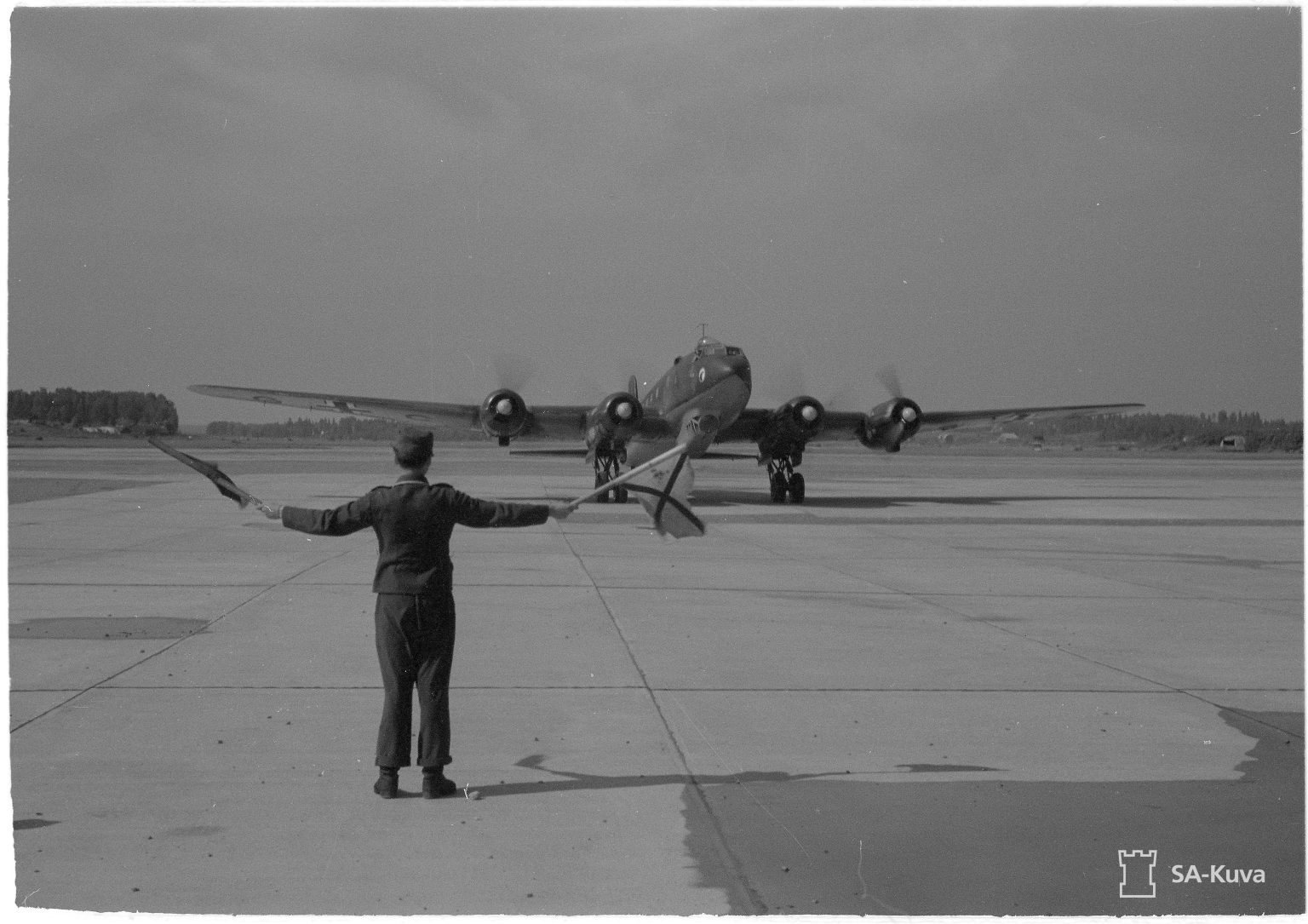
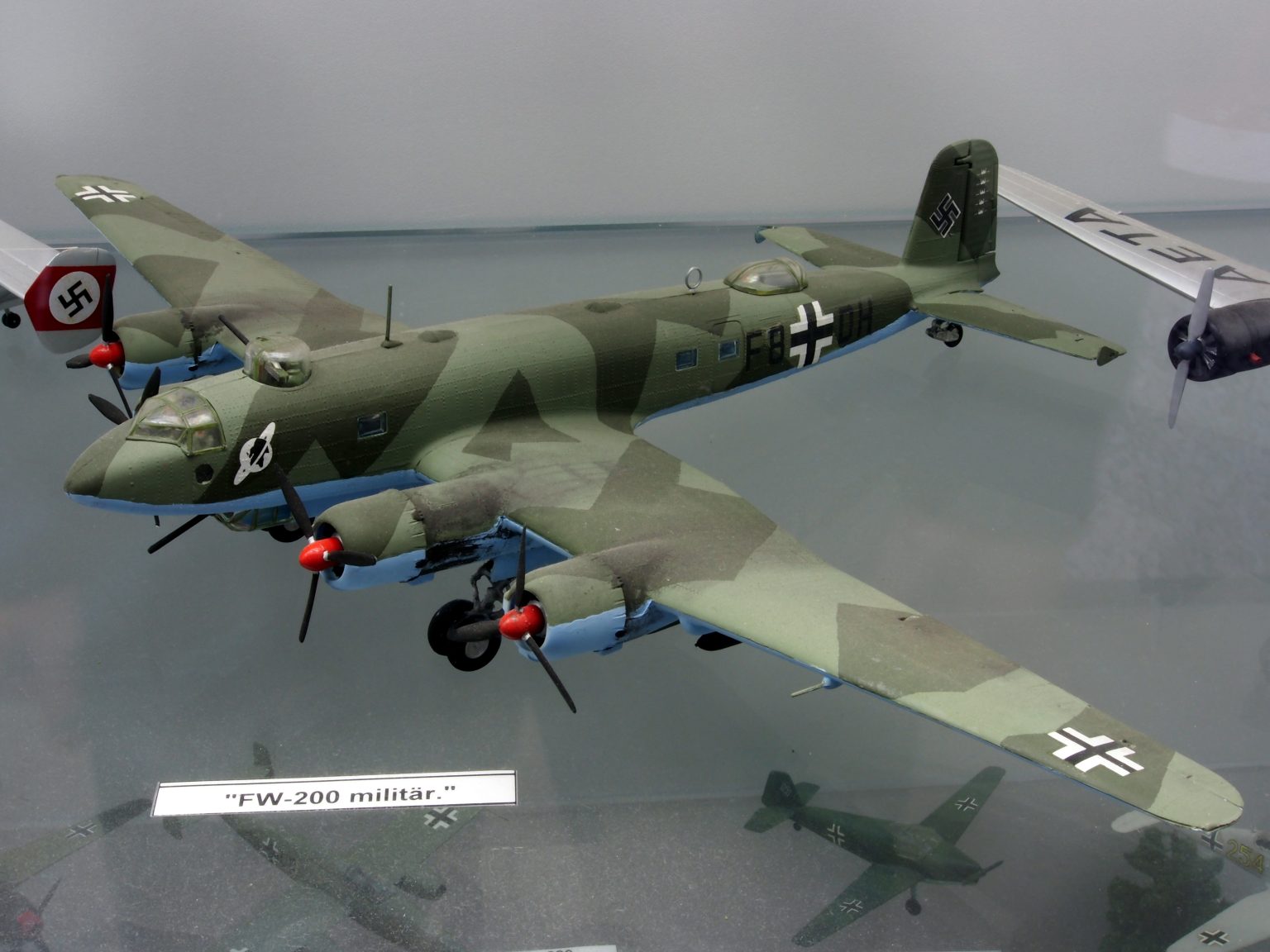
Fw 200 Condor photos: airliner, ocean hunter and museum survivor
Real photographs of the Condor across its double life — every image credited and licensed.
Fw 200 Condor documentary: when airliners went to war
"Focke-Wulf 200 Condor — When Airliners Go To War" by Rex's Hangar, an established aviation-history channel (≈298,000 views). A concise, well-sourced overview of the Condor's journey from record-setting airliner to Atlantic patrol bomber.
Where the Fw 200 Condor flew: origins, the Atlantic theatre and the last survivor
Germany designed and built the Condor (blue); wartime operations centred on the Bay of Biscay and Atlantic convoy routes; a handful of pre-war civil and export operators flew it; and a single restored airframe survives. Tap a country for detail.
The Fw 200 Condor's war record at a glance
A specialist aircraft that punched far above its numbers — briefly — before the Allies answered. Figures for the Condor's war vary between sources and should be read as indicative of scale rather than exact totals.
The Fw 200 Condor's legacy: elegance, terror and a cautionary tale
The Fw 200 Condor is remembered less for what it was designed to be than for what it was forced to become. As an airliner it was a genuine achievement — one of the first landplanes to cross the North Atlantic non-stop, and a graceful advertisement for the future of air travel. As a warplane it was an improvisation, valuable only because nothing better existed to do its job.
Its brief reign over the convoys was real, and frightening. For a few months in 1940–41 a handful of Condors, working hand-in-glove with the U-boats, threatened to strangle Britain's supply line. The label "Scourge of the Atlantic" — reported as Churchill's — was earned in those months, even if the aircraft could never sustain the pressure.
The Condor's downfall is as instructive as its rise. It was beaten not by a single wonder-weapon but by a system: catapult fighters, escort carriers, long-range patrol aircraft and better tactics, layered together until the lonely, fragile bomber had nowhere safe to fly. It is one of the clearest illustrations in the whole air war of how the Allies closed the Atlantic.
And it leaves a hard engineering lesson. The very civilian pedigree that gave the Condor its range denied it the strength to be a good warplane; the aircraft that broke its own back on landing was, in a sense, always going to. That the single surviving Condor had to be raised from the sea and rebuilt almost from nothing feels fitting for a machine that lived its whole life stretched beyond its design.
There is a human dimension that the specifications never capture. The Condor's war fell hardest on merchant seamen, who watched a distant aircraft circle their convoy knowing what its radio call would bring, and on the Condor crews themselves, who flew long, cold, lonely hours over an ocean that offered no second chances. Both sides paid in full for the few months in which a handful of converted airliners could shift the balance of the Battle of the Atlantic.
Today the Fw 200 endures mostly as a lesson and a curiosity — the airliner that became a scourge, the record-setter that broke its own back, the aircraft that was simultaneously ahead of its time and hopelessly unsuited to its job. It is a reminder that in aviation, as in war, an aircraft's origins shape its destiny, and that elegance and endurance are no substitute for being built for the fight you end up in.
Fw 200 Condor: frequently asked questions
Can I fly in a Focke-Wulf Fw 200 Condor?
No. There is no airworthy Fw 200 Condor anywhere in the world, and no way to book a flight in one. Only a single restored example exists — a reconstruction built around an airframe raised from a Norwegian fjord — and it is a static museum exhibit at the Deutsches Technikmuseum in Berlin. However, you can fly in genuine, flying military jets today: MiGFlug arranges real fighter-jet experiences in aircraft like the L-39 Albatros, the Hunter and the MiG-29. See what's available at migflug.com/flights-prices/.
Why was the Fw 200 Condor called the "Scourge of the Atlantic"?
The phrase is widely attributed to Winston Churchill and reflects the winter of 1940–41, when long-range Condors of KG 40 shadowed Allied convoys, guided U-boats onto them and bombed merchant ships far out in the Atlantic. For a short but dangerous period they threatened Britain's ocean lifeline. The attribution is traditional and often quoted; the exact wording should be treated as reported rather than definitively documented.
Was the Fw 200 Condor really an airliner first?
Yes. The Condor was designed in 1936–37 as a four-engine civil airliner for Deutsche Lufthansa, under a team led by Kurt Tank. It first flew in 1937 and set long-distance records in 1938 before the war led to its conversion into an armed maritime patrol bomber. Its airliner ancestry is central to its whole story — including its weaknesses.
Why did Fw 200 Condors break apart on landing?
Because the airframe was derived from a civil airliner and was never stressed for combat. Adding weapons, armour and fuel pushed the structure beyond its design margins, and the Condor became notorious for fuselage failures — well-documented cases exist of aircraft breaking their backs, the rear fuselage snapping just behind the wing, during hard or mishandled landings. It was fast and far-ranging, but structurally fragile.
How fast and how far could the Fw 200 Condor fly?
The maritime Fw 200 C-3 had a maximum speed of roughly 360 km/h and a patrol range on the order of 3,500 km or more — exceptional endurance for its day, and the whole reason it was pressed into ocean-patrol work. Exact figures vary between sources and sub-variants and should be treated as approximate.
How many Fw 200 Condors were built?
Around 276 aircraft of all variants are commonly cited, though the exact total varies between references. It was always produced in small numbers — a specialist type, never mass-produced like the Ju 88 or He 111.
Did Hitler use an Fw 200 Condor?
Yes. Specially equipped Condors served as VIP transports for the Nazi leadership, and Hitler's personal aircraft — one of a succession named "Immelmann" — was a modified Fw 200 fitted with armour and safety features. Other senior officials also used Condor transports during the war.
Are there any surviving Fw 200 Condors?
Just one. No complete Condor survived intact into preservation; the only example today was reconstructed around Werk Nr. 0021, an airframe recovered from a Norwegian fjord in 1999, and is displayed at the Deutsches Technikmuseum in Berlin. There is no airworthy Fw 200 anywhere.
What engines did the Fw 200 Condor use?
Four air-cooled radial engines. Early Condors used BMW 132 radials; the definitive military C-series was powered by more capable BMW-Bramo 323 Fafnir radials of around 1,200 hp each. Four engines gave the redundancy and endurance needed for long ocean patrols.
Who designed the Fw 200 Condor?
The Fw 200 was developed by Focke-Wulf under the direction of its technical director and chief designer Kurt Tank, who later became famous for the Fw 190 fighter. The Condor was drawn up quickly in the mid-1930s to meet a Deutsche Lufthansa requirement for a long-range four-engine airliner.
What was Kampfgeschwader 40?
Kampfgeschwader 40 (KG 40) was the Luftwaffe bomber wing that flew almost all of the Condor's front-line operations, based principally at Bordeaux-Mérignac in occupied France. Its Condors carried out the long-range Atlantic reconnaissance and anti-shipping missions that made the type notorious, later grouped under the maritime command Fliegerführer Atlantik.
How did the Fw 200 Condor work with the U-boats?
The Condor's most valuable role was reconnaissance. On finding a convoy it would shadow it from a distance and radio the position, course and speed to U-boat command, which then vectored submarine wolfpacks onto the target. This air–sea cooperation, when it functioned, made each Condor far more dangerous than its bomb load alone would suggest.
The Fw 200 Condor is grounded forever. Real jet flights are not.
No Fw 200 will ever fly again — but you can still strap into a genuine military jet and feel what these machines could do. MiGFlug arranges real fighter-jet experiences around the world — from Cold-War jets over the Alps to a supersonic climb toward the edge of space in a frontline fighter. It is the closest you can get to the raw performance the Condor's crews could only dream of.