
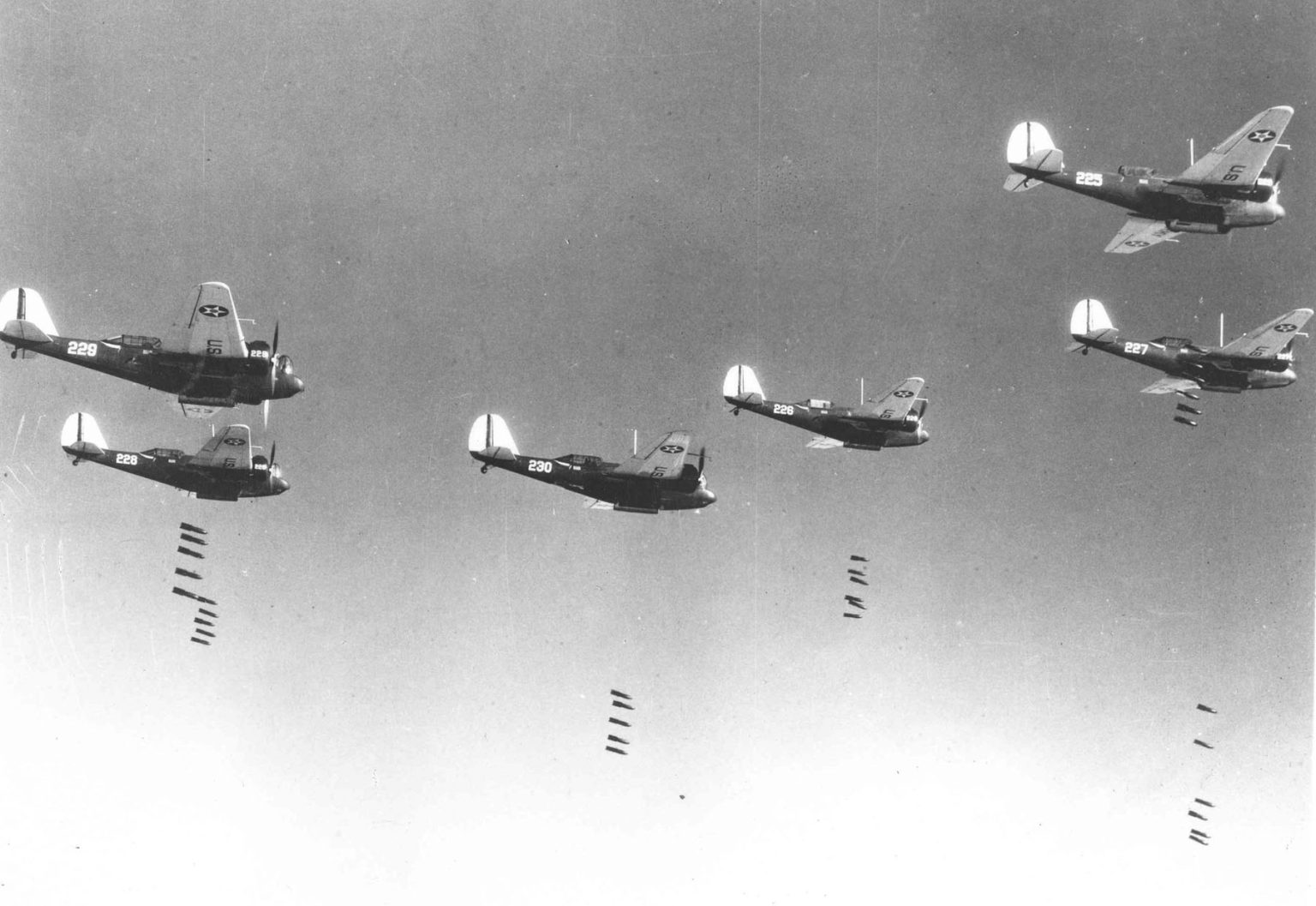
Martin B-10
In 1934 the Martin B-10 made every other bomber on earth look obsolete overnight. All-metal, monoplane, with retractable gear, an internal bomb bay, enclosed cockpits and a rotating nose gun turret, it was faster than the biplane fighters sent up to catch it — and it won Glenn L. Martin the 1932 Collier Trophy. A revolution that its own rapid obsolescence could not erase.
The essential figures
The essential figures on the Martin B-10
The story
The Martin B-10: the bomber that made every other bomber obsolete
For a few short years in the mid-1930s, the Martin B-10 was the most advanced bomber in the world — and it knew it. When the first production aircraft reached the U.S. Army Air Corps in 1934, they rendered the entire existing bomber fleet, and much of the fighter fleet, instantly old-fashioned. Here was a twin-engine, all-metal monoplane that carried its bombs internally, tucked its landing gear away in flight, sheltered its crew behind glazed canopies and mounted its forward machine gun in a rotating nose turret. And it did all of this while flying faster than the open-cockpit biplane fighters that were supposed to intercept it.
That combination had never before been assembled in one airframe built in quantity. Individually, some of these ideas had appeared elsewhere; together, in a machine the Army could actually buy by the dozen, they amounted to a revolution. The gap between the B-10 and the biplane bombers it replaced — fabric-covered, strut-braced, fixed-gear machines lumbering along at little more than half its speed — was so wide that contemporaries struggled to describe it. General Henry “Hap” Arnold, who led a celebrated 1934 mass flight of B-10s to Alaska and back, called it the air-power wonder of its day.
All-metal. Monoplane. Faster than the fighters. Those three phrases, taken together, are why the Martin B-10 matters far out of proportion to its short front-line career.
The design grew out of a private Martin venture, the Model 123, first flown in 1932. Its performance so startled the Army that in 1932 the Collier Trophy — American aviation’s highest honour, awarded for the year’s greatest achievement in aeronautics — went to Glenn L. Martin for the design. Refined into the Model 139 and given more powerful Wright Cyclone engines and a stepped-up, fully enclosed cockpit arrangement, it entered service as the B-10, with the Pratt & Whitney-engined B-12 as a parallel variant.
Yet the B-10’s reign at the top was astonishingly brief. The very pace of progress it embodied did not stop with it. Within a handful of years the same American industry that built the B-10 produced the four-engine Boeing B-17 and the twin-engine Douglas B-18, and the Army moved on. By the time the United States entered the Second World War at the end of 1941, the B-10 was already a training and second-line type at home.
Abroad, the story ran differently and more tragically. Martin sold export versions — the Model 139 and the improved Model 166 — around the world, and it was these aircraft, not the U.S. machines, that bore the brunt of early combat. In the Netherlands East Indies and over China, obsolescent Martins went to war against a modern Japanese enemy and were, for the most part, overwhelmed. That they fought at all, and hard, is part of the B-10’s honest legacy.
To understand the B-10 you have to hold two ideas at once. On one hand it was, for a moment, the best bomber in the world — a genuine leap that earned its designer the nation’s highest aviation honour and reshaped what a bomber was expected to be. On the other hand, that moment was fleeting, and the aircraft’s war record, such as it is, belongs mostly to foreign air forces fighting a losing battle with obsolescent equipment. Both things are true, and an honest account has to carry both.
It is precisely this arc — dazzling ascent, rapid eclipse — that makes the B-10 such an instructive aircraft. It is the clearest single illustration of how fast aviation moved in the 1930s, a decade in which a world-beating design could become a second-line trainer inside of a few years. The bomber that made everything else obsolete was, in turn, made obsolete by the very progress it had announced.
Today a single Martin B-10 survives, restored, in a museum. It is a fitting fate for an aeroplane whose greatest achievement was to point the way to everything that came after it — and then, gracefully and quickly, to be overtaken by it.
01Why the Martin B-10 was called revolutionary — the features that arrived together+
The B-10’s reputation rests on convergence. Retractable landing gear, an internal bomb bay, enclosed cockpits, a rotating nose gun turret and a cantilever, all-metal monoplane wing had each been tried before in isolation. What the Martin did — and did in a machine ordered in quantity for a major air force — was bring them together, and pair them with enough engine power to turn the package into genuine, war-changing speed.
The result was a bomber that a fighter of 1934 could barely catch. When your bombers outrun the enemy’s interceptors, the entire arithmetic of air defence changes. That single fact — a bomber faster than the fighters — is what made observers describe the B-10 as having made every other bomber obsolete overnight. It is a strong claim, and it should be hedged: the “obsolete overnight” phrasing is the language of contemporaries and later popular histories rather than a precise engineering statement. But the underlying leap in capability was real and dramatic.
02The Martin B-10 and the 1932 Collier Trophy: what the award actually recognised+
The claim: Glenn L. Martin received the Collier Trophy for 1932 in connection with the B-10 design.
The Collier Trophy is awarded annually for the greatest achievement in American aeronautics. The 1932 award recognised the Martin bomber — the private-venture Model 123 and its development — as the outstanding aeronautical achievement of the year, a formal acknowledgement that its blend of speed and modern construction represented a genuine advance. We state this as the historical record reports it; readers who want the primary citation should consult the National Aeronautic Association’s Collier Trophy roll.
Design & engineering
How the Martin B-10 was built — metal, monoplane and momentum
Three ideas define the Martin B-10 as an engineering object: an all-metal cantilever monoplane airframe, twin radial engines that gave it fighter-beating speed, and a set of “modern bomber” features — enclosed crew, internal bombs, retractable gear, nose turret — gathered into one design.
All-metal cantilever monoplane
The B-10 abandoned the wire-braced biplane formula entirely. Its stressed-skin, all-metal wing needed no external struts or bracing wires, cutting drag dramatically and allowing the clean lines that helped make the aircraft fast. This was the structural future of aviation, arriving in a front-line bomber.
Twin Wright Cyclone power
Most production B-10s were driven by two Wright R-1820 Cyclone air-cooled radials of roughly 700–775 hp each, in low-drag cowlings. The parallel B-12 used Pratt & Whitney R-1690 Hornets. It was this power, wrapped in the clean monoplane airframe, that produced a top speed higher than the biplane fighters of the day.
Enclosed crew, internal bombs, nose turret
The crew sat under glazed canopies rather than in open cockpits; the bombs rode in an internal bay rather than slung under the wings; and the nose gunner sat behind an early rotating gun turret. Combined with retractable main gear, these features marked the B-10 as the first genuinely “modern” monoplane bomber built in quantity.
03The Martin B-10’s nose turret and defensive guns: an early step, not a heavy battery+
The B-10 typically carried three rifle-calibre (0.30 in / 7.62 mm) machine guns: one in the powered/rotating nose turret, one in a dorsal position and one firing through a ventral tunnel. The nose turret is often cited as an early example of a rotating gun turret on a production bomber — an important step toward the heavily turreted heavy bombers of the Second World War.
It should be kept in proportion. Three light machine guns were a modest defensive battery even by the standards of the later 1930s, and against the cannon-armed fighters the export Martins met in 1941–42 they offered limited protection. The turret’s significance is developmental — it pointed the way — rather than a claim that the B-10 was heavily defended.
04Faster than the fighters: how big was the Martin B-10’s speed advantage?+
A B-10B’s top speed of roughly 213 mph (about 343 km/h) does not sound remarkable today, but in 1934 it was faster than many of the biplane pursuit aircraft in service. The point was not that no fighter could ever catch a B-10, but that the margin between bomber and interceptor had all but vanished — a shocking state of affairs that helped drive the rapid fighter development of the later 1930s.
All performance figures here are representative of the B-10B and vary between sources and sub-variants; treat them as approximate.
Engineering in depth
The Martin B-10 up close: structure, engines and systems
Strip away the “revolutionary” headlines and the B-10 rewards closer inspection as an engineering object — a careful, coherent assembly of new ideas that each had to be made to work. These deeper dives look at the parts.
20The Martin B-10’s all-metal structure: why the monoplane wing mattered+
The heart of the B-10’s advance was its wing. Where the biplane bombers it replaced carried two wings braced together with struts and a web of wires — every one of them adding drag — the Martin used a single cantilever wing carrying its loads internally, through a metal structure covered in load-bearing stressed skin.
The payoff was twofold. Aerodynamically, doing away with struts and wires cut drag sharply, which is a large part of why the aircraft was fast. Structurally, the all-metal monoplane was cleaner, stronger for its weight and more durable than fabric-over-wood-or-tube construction. It was also the layout the entire industry was moving toward; the B-10 simply got there first in a quantity-built bomber. Everything that flew in the great bomber fleets of the 1940s was built on this principle.
21Two radial engines: the Wright Cyclone, the Pratt & Whitney Hornet and the B-10’s speed+
Speed needs power, and the B-10 had it for its size. Most production aircraft used two Wright R-1820 Cyclone air-cooled radials, of roughly 700 to 775 horsepower each depending on sub-type, enclosed in low-drag cowlings that smoothed airflow over the big radial cylinders. The parallel B-12 series substituted Pratt & Whitney R-1690 Hornet radials of broadly similar output.
Air-cooled radials were rugged, relatively light and well suited to the era’s technology, and mounting them in clean nacelles on the leading edge of the monoplane wing kept drag down. It was this pairing — adequate power in a very clean airframe — rather than brute horsepower alone that gave the B-10 a top speed higher than the biplane fighters of 1934. Exact power ratings vary by engine mark and source.
22Retractable landing gear: tidying away the drag+
Fixed landing gear — wheels hanging permanently in the airstream — was one of the biggest sources of drag on 1930s aircraft, which is why so many designs of the era, including some otherwise-modern monoplanes, kept it for simplicity. The B-10’s retractable main gear folded away in flight, removing that penalty and contributing to its clean, fast profile.
Retraction added weight and mechanical complexity, and it demanded reliable actuation — a non-trivial engineering problem at the time. That the Martin made it work in a production bomber is part of what marked the type as genuinely modern rather than merely promising.
23The nose turret and defensive layout: an early answer to a hard question+
How does a bomber defend itself? The B-10’s answer was a spread of three rifle-calibre machine guns — in the rotating nose turret, a dorsal position and a ventral tunnel — giving fire forward, above and below. The powered nose turret in particular is frequently cited as an early production example of the rotating gun turret, a concept that would grow into the multi-turret defensive schemes of the heavy bombers.
By later standards it was light. Three 0.30-inch guns offered thin protection against the cannon fighters of the Second World War, and no amount of clever positioning could change the fundamental firepower gap. The turret’s importance is as a signpost — a first, practical step toward a defensive philosophy that others would develop much further.
24The internal bomb bay: performance hidden inside the fuselage+
Carrying bombs inside the fuselage rather than on external racks was another of the B-10’s quietly important features. An internal bay keeps the ordnance out of the airstream, preserving the clean lines that give speed and range, and it protects the bombs during flight. The B-10 could carry a useful load — on the order of 1,025 kg (about 2,260 lb) — internally.
Like retractable gear, an internal bay is one of those features that seems obvious in hindsight but represented real design discipline at the time, when many contemporaries still hung their bombs beneath the wings. Together, enclosed bombs, retracted wheels and a strut-free wing add up to the aerodynamic cleanliness that defined the type.
25Enclosed cockpits: comfort, altitude and a change of culture+
It is easy to overlook, but the B-10’s glazed, enclosed crew stations were a meaningful break from the open-cockpit tradition. Enclosing the crew reduced drag, sheltered them from wind and cold at altitude and in poor weather, and made long-range, high-altitude flying — the very missions a modern bomber was meant to fly — far more sustainable.
The change was partly cultural, too. Open cockpits carried a certain romance, and not every airman welcomed being shut behind glass. But for a fast, high-flying bomber the enclosed cockpit was plainly the future, and the B-10 helped normalise it. Within a few years it would be universal.
Full specifications
Martin B-10B specifications
Representative figures for the Wright Cyclone-powered B-10B. Dimensions and weights vary slightly between variants and sources; approximate values are marked.
Baseline note: the figures below describe the B-10B, the main United States Army Air Corps production model of 1935–36 with two 775 hp Wright R-1820-33 Cyclones, as tabulated by Swanborough and Bowers. Deltas for the YB-10 that preceded it, for the Pratt & Whitney-engined B-12 family and for the export Model 139W and Model 166 are in grey. Where Baugher and Wikipedia disagree with the Putnam tabulation, the spread is stated rather than smoothed away.
Dimensions & weights
- Crew
- 4 — pilot, and a bombardier-gunner in the nose turret, a radio operator and a rear gunner. The private-venture Model 123 had four open stations; the redesign that became the YB-10 is usually described as reducing the crew to three, and Swanborough and Bowers then list four again for the B-10B. Both numbers are defensible depending on whether the radio operator is counted as crew or as a fourth seat that was often empty
- Length
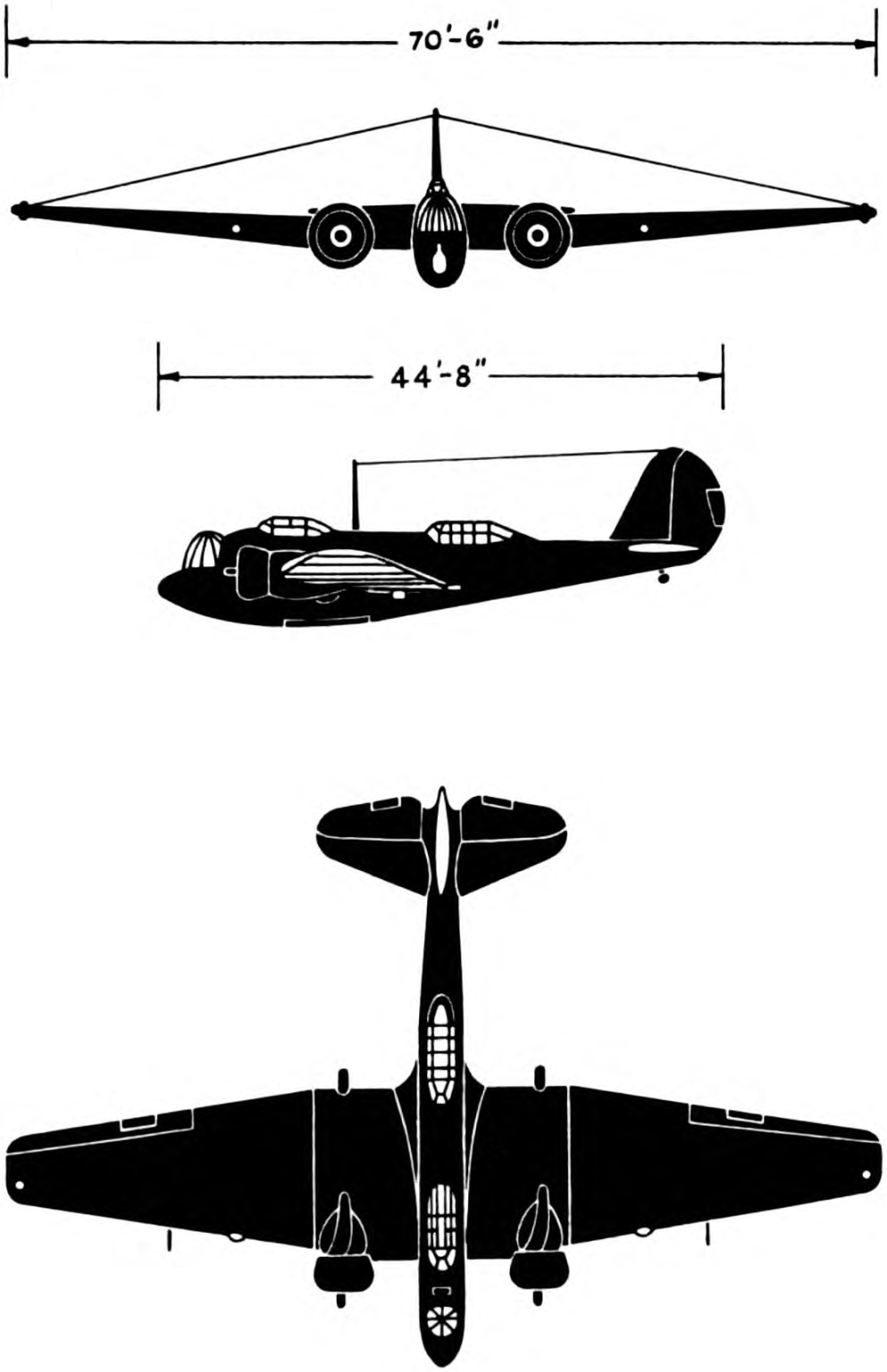
- 13.64 m (44 ft 9 in)
- Wingspan
- 21.49 m (70 ft 6 in). The XB-10 rebuild added 2.44 m (8 ft) of span over the original Model 123, and that span was carried through the whole family, including the redesigned Model 166 wing
- Height
- 4.70 m (15 ft 5 in) — tail down on a fixed tailwheel
- Wing area
- 62.99 m2 (678 sq ft)
- Empty weight
- 4,391 kg (9,681 lb)
- Gross weight
- 6,668 kg (14,700 lb). Baugher gives 14,600 lb; the hundred pounds are not worth arguing about, but they are a reminder that no two published B-10 tables agree exactly
- Maximum take-off weight
- 7,439 kg (16,400 lb) — the overload figure, reached with a bomb-bay ferry tank rather than with weapons
- Wing loading
- 106 kg/m2 (21.7 lb/sq ft) at gross weight — light by later standards, which is much of the reason a 775 hp engine could push this aeroplane past 340 km/h
- Internal bomb load
- 1,025 kg (2,260 lb) — two 513 kg (1,130 lb) bombs or five 136 kg (300 lb) bombs on vertical racks inside a bay in the deep belly. This was the whole point of the deep fuselage: the bombs went inside, out of the airflow
- External stores
- None on USAAC aircraft — the export Model 166 (Netherlands East Indies WH-3 and WH-3A) added shackles between the engine nacelles and the fuselage, which roughly doubled the bomb load at the cost of range and speed. That is the only variant that carried ordnance outside
- Structure
- All-metal stressed skin — a cantilever mid-wing monoplane with no bracing wires anywhere, which in 1932 was still unusual enough in a bomber to be the story rather than a detail
Performance
- Maximum speed
- 343 km/h (213 mph / 185 kt) at 3,050 m (10,000 ft)
- Speed at sea level
- 315 km/h (196 mph) — the gap between the two figures is small because the R-1820-33 had no supercharging worth the name above medium altitude
- Cruising speed
- 311 km/h (193 mph) — the B-10 cruised at nearly its maximum speed, which is a characteristic of clean airframes with modest power rather than a virtue in itself
- Service ceiling
- 7,376 m (24,200 ft)
- Normal range
- 950 km (590 miles) carrying the full internal bomb load. This is the operational number and it is short; the B-10 was a tactical bomber pretending, for a few years, to be a strategic one
- Maximum range
- ~1,996 km (1,240 miles) clean or with a bomb-bay tank in place of weapons
- Margin over the pursuits, 1932–34
- Roughly 25 to 50 km/h — the front-line Boeing P-12E made 304 km/h (189 mph) and the Curtiss P-6E Hawk 319 km/h (198 mph). A bomber that outran the fighters sent to stop it was the entire argument of the interwar bomber school, and for about two years the B-10 was the proof
- Margin lost, 1934 onwards
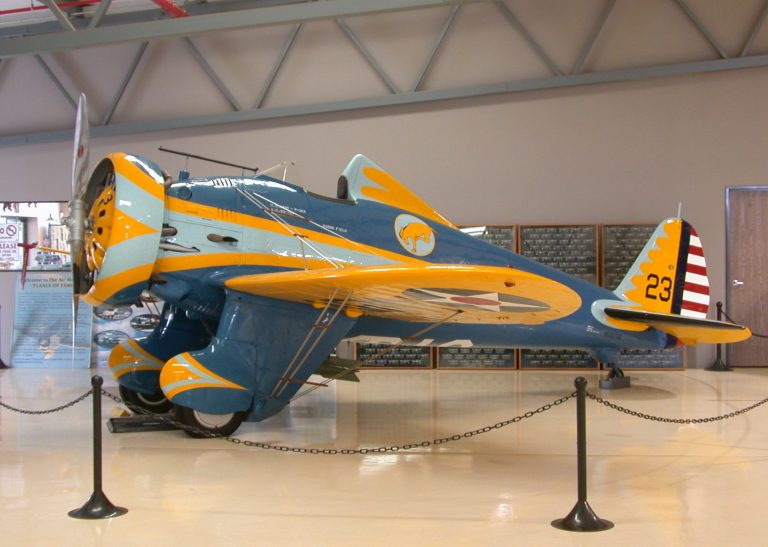
- Gone almost immediately — the Boeing P-26, in service the same year as the B-10B, made 377 km/h (234 mph). By 1941 the Mitsubishi A6M2 made 533 km/h (331 mph) and the Nakajima Ki-43 was not far behind. The B-10 had a lead of two years and a service life of fifteen
- XB-10 trials figure
- 317 km/h (197 mph) at 1,830 m (6,000 ft) in June 1932 — the number that won the Collier Trophy and reset what a bomber was expected to do
- YB-10A maximum speed
- 380 km/h (236 mph) at 7,620 m (25,000 ft) with turbo-supercharged Cyclones — the fastest of the whole family, and one aircraft only. Wikipedia calls the engine the R-1820-31 and Baugher the R-1820-21; the turbo-supercharging is not in dispute, the dash number is
- B-12A range
- 1,996 km (1,240 miles) with a 1,381-litre (365 US gal) tank in the bomb bay — the Hornet-engined variant was bought largely for over-water work, and carried flotation chambers for the same reason
Propulsion & systems
- Engines
- Two Wright R-1820-33 Cyclone (F-3), nine-cylinder air-cooled radials, 578 kW (775 hp) each. The YB-10 had 503 kW (675 hp) R-1820-25s and the original Model 123 only 447 kW (600 hp) SR-1820-Es
- Propellers
- Three-blade variable-pitch — a controllable-pitch propeller in 1933 was itself part of the technical package that made the aeroplane possible
- Cowlings
- Full NACA cowlings — the Model 123 flew with Townend rings; the XB-10 rebuild replaced them with full cowlings purely to cut drag, and that change alone is worth several miles an hour
- Undercarriage
- Retractable main units, fixed tailwheel — the mainwheels folded rearwards into the engine nacelles and did not fully enclose. Partial retraction was normal practice in the early 1930s and still bought most of the drag saving
- Fuel and tankage
- Wing tanks, with provision for a bomb-bay tank — the (Y)B-12A was built around a 1,381-litre (365 US gal) bomb-bay tank, trading the weapon load for reach. No self-sealing anywhere in the family
- Float fit
- Twin floats on some YB-10s and B-12As — flown for a time on coastal patrol duties, which is a reminder of how unsettled the Air Corps still was about what a twin-engined bomber was for
- B-12 and B-12A powerplant
- Two Pratt & Whitney R-1690-11 Hornet radials, 578 kW (775 hp) — near-identical performance to the Cyclone-engined B-10B at 351 km/h (218 mph), fitted mainly as a second-source insurance policy. Seven YB-12 and 25 B-12A were built; 23 B-12As were still on strength in April 1940
- Other engine trials
- XB-14 and the cancelled YB-13 — one XB-14 tested 671 kW (900 hp) Pratt & Whitney YR-1830-9 Twin Wasps and was converted back to YB-12 standard afterwards; ten YB-13s with R-1860 Hornet Bs were ordered and cancelled unbuilt. The A-15 attack version and the YO-45 observation conversion were both abandoned
- Export powerplants
- Progressively more powerful Cyclones — 574 kW (770 hp) GR-1820-F53 in the Dutch WH-1, 652 kW (875 hp) G-3 in the WH-2, 671 kW (900 hp) R-1820-G5 in the Model 166 WH-3 and 746 kW (1,000 hp) G-105A in the WH-3A. Turkey’s twenty had G-2s and Siam’s six had G-3s
- Protection
- None — no armour, no self-sealing tanks, no armoured glass, and three rifle-calibre guns. In 1932 nobody fitted such things; in 1941 every one of those omissions killed Dutch and Chinese crews. The aeroplane did not get worse, the war got harder
05The Martin B-10’s armament and bomb bay in detail+
Guns: nose turret — dorsal — ventral, typically three 0.30 in (7.62 mm) machine guns in all. Bombs: carried internally, up to roughly 1,025 kg (2,260 lb) depending on load and range.
The internal bomb bay was itself a modernising feature: enclosing the bombs cut drag and helped the aircraft’s speed, in contrast to the exposed under-wing racks common on earlier types.
Figures vary between the B-10, B-10B, B-12 and export Model 139/166 sub-variants; the values above are representative rather than definitive.
06Martin B-10 variants and export models: 139, 166, B-12 and beyond+
Model 123 / XB-907: the original 1932 private-venture prototype.
From it flowed the U.S. Army’s YB-10, B-10 and B-10B (Wright Cyclone) and the B-12 / B-12A (Pratt & Whitney Hornet), plus experimental sub-types. Export aircraft were sold as the Model 139 and, later, the more refined Model 166 with a long “greenhouse” canopy. Exact production numbers by sub-type vary between sources.
Armament & payload
The B-10 carried three rifle-calibre guns and two thousand pounds of bombs, and for two years that was enough because nothing could catch it
The Martin B-10’s armament is almost beside the point, and saying so is the honest way to describe it. The aeroplane’s weapon was its speed. Its three .30-inch Brownings were a 1920s defensive fit carried unchanged into an aircraft whose whole claim was that it would not need them, and its bomb bay held 1,025 kg (2,260 lb) — respectable in 1933 and derisory a decade later.
What matters is where those bombs went. The B-10 put them inside the fuselage, behind doors, in an aircraft with retractable undercarriage, full engine cowlings, enclosed cockpits and an enclosed rotating nose turret. Every one of those features existed somewhere else first; nobody had put them all in one production bomber. That combination is what won Glenn L. Martin the 1932 Collier Trophy and what made every biplane bomber in the world obsolete in a single stroke. It is also why the reckoning, when it came, was so brutal: the design bought its performance by carrying nothing that would slow it down, and when fighters got faster there was nothing left in the aeroplane to fall back on. Fits varied by operator and by mark: the Dutch Model 166 carried external shackles that no American B-10 had, Chinese aircraft flew leaflet and night-bombing sorties from 1937, and the B-12A traded its bomb bay for a ferry tank.
Gun
- Three 7.62 mm (0.30 in) Browning machine guns — one in the enclosed, manually rotated nose turret, one on a flexible mounting in the dorsal position aft of the wing, and one firing downwards and rearwards through a ventral tunnel
- The nose turret is the historically significant item: an enclosed rotating turret on a monoplane bomber, appearing at almost the same moment as the Boulton Paul Overstrand’s power turret on a biplane. Martin’s was hand-cranked, not powered
- No fixed forward-firing gun, no tail position, no beam positions. The ventral tunnel gun covered the blind spot below and behind, badly
- Rifle-calibre ammunition throughout. The B-10 was designed before any air force had settled on 12.7 mm as the minimum defensive calibre, and it never received the heavier guns
Air-to-air
- The three Brownings were the entire air-to-air capability, and they were defensive. The B-10 had no interceptor pretensions and never carried a fighter armament
- The doctrine behind them was speed, not gunnery. Hap Arnold called the B-10B the airpower wonder of its day precisely because it was half again as fast as any biplane bomber and faster than any fighter then in United States service, which was taken to mean that defensive guns were a formality
- That assumption failed comprehensively. Netherlands East Indies Model 139s and 166s met A6M Zeros and F1M floatplanes over Borneo and Malaya in December 1941 and January 1942 and were shot down in numbers — two lost near Penang on 1 January, four over the Muar River on 19 January, two of three shot down attacking Miri airfield on 28 December
- Chinese Nationalist B-10s of the 8th Bombardment Group suffered the same way from August 1937: fast enough to be useful at night, hopeless in daylight against fighters
Air-to-surface guided
- None. No guided air-to-surface weapon of any kind existed in service anywhere in the world when the B-10 was designed, built or retired, and none was ever fitted
- Attack was by level bombing from a nose bomb-aimer’s position, with the bombardier lying prone forward of the pilot and the bombs released on a mechanical sight
- Accuracy against moving ships was correspondingly poor. Dutch Martins bombing Japanese transports off Kuantan on 9 January 1942 were recorded as doing so "quite successfully"; the previous day’s attack on a suspected seaplane tender produced no result at all. That was the normal spread
- The one genuine ship kill was the minesweeper W-6, sunk with a transport off Kuching on 26 December 1941 — free-fall bombs, no guidance, and a great deal of luck
Bombs
- 1,025 kg (2,260 lb) internally: two 513 kg (1,130 lb) bombs or five 136 kg (300 lb) bombs on vertical racks in the belly bay
- The internal bay was the design’s defining feature. Contemporary biplane bombers hung their bombs in the slipstream; the B-10 did not, and the speed difference between those two arrangements is most of the aeroplane’s advantage
- The export Model 166 (Dutch WH-3 and WH-3A) added shackles between the nacelles and the fuselage, doubling the load for a shorter radius — the only external bomb carriage in the family
- Leaflets counted as ordnance at least once: on 19 May 1938 two Chinese B-10s of the 2nd BG, 14th Squadron, led by Captain Hsu Huan-sheng, flew the first raid on the Japanese home islands and dropped two million leaflets over Nagasaki, Fukuoka, Kurume and Saga while photographing airfields, ports and factories
- The 1936 Chesapeake ice relief flights carried food: thirteen B-10Bs of the 49th Bombardment Squadron dropped supplies to Tangier and Smith Islands in February 1936 when ships could not reach them
Rockets
- None, ever. Air-launched rocket projectiles did not enter service anywhere until the early 1940s, by which point the B-10 was being withdrawn from every air force that could afford to withdraw it
- No provision was made for underwing carriage on American aircraft at all — the wing was clean, deliberately, because drag was the enemy
- The Model 166’s inboard shackles were the only external hardpoints the type ever had, and they were plumbed for bombs
Pods & other stores
- Bomb-bay ferry tank: 1,381 litres (365 US gal) on the (Y)B-12A, giving 1,996 km (1,240 miles) of range in place of the weapon load
- Flotation chambers of 946 or 1,893 litres (250 or 500 US gal) on the YB-12, fitted for safety on long over-water flights
- Twin floats: some YB-10s and B-12As were flown as seaplanes for coastal patrol, an arrangement that cost a great deal of performance and was not persevered with
- Cameras for photographic mapping — the equipment that did the real work of the 1934 Alaskan Flight, when ten Martins photographed 60,000 square kilometres (23,000 sq miles) of Alaska in three days
- Target-towing gear on the B-10M conversions, which is where a good many airframes finished their American careers
Three typical loadouts
- Air Corps bombardment training, 1936
- Five 136 kg (300 lb) practice or live bombs internally, three .30 Brownings with ready ammunition, crew of four. Flown by the 2nd Bomb Group at Langley, the 9th at Mitchel, the 19th at March, the 6th Composite Group in the Panama Canal Zone and the 4th Composite Group in the Philippines — the whole of the Air Corps bomber force, briefly, was this aeroplane.
- Netherlands East Indies maritime strike, December 1941
- Model 166 (139WH-3A) with the internal bay loaded and the inboard shackles filled, three guns manned, flying from Singkawang or Samarinda against the Japanese invasion shipping off Miri and Kuching. Roughly 58 Martins were operational with six squadrons on the outbreak of war, with about twenty older WH-1 and WH-2 aircraft in reserve. Within ten weeks the force had effectively ceased to exist.
- Chinese Nationalist night raid, 1937–38
- Model 139WC with a light bomb load or leaflet canisters, no escort, launched singly after dark. On 14–15 October 1937 the Chinese Air Force sent one bomber an hour from Nanjing against Japanese positions in Shanghai until three in the morning; the B-10 was used for night bombing and maritime reconnaissance because in daylight it could not survive.
Sourcing caveat: armament details follow Baugher and Swanborough and Bowers; the 2,260 lb bomb figure is the standard published one and represents the bay’s rated capacity rather than a load routinely carried. Dutch operational narratives follow Casius, Shores, Cull and Izawa, Oktorino and Stille, whose loss figures differ in detail. Nobody has ever published a satisfactory account of what the Model 166’s external shackles were rated at; "roughly doubled" is what the sources say and it is as far as they go.
Variants
Martin built one aeroplane and sold it under a dozen designations, and the export models outnumbered the American ones
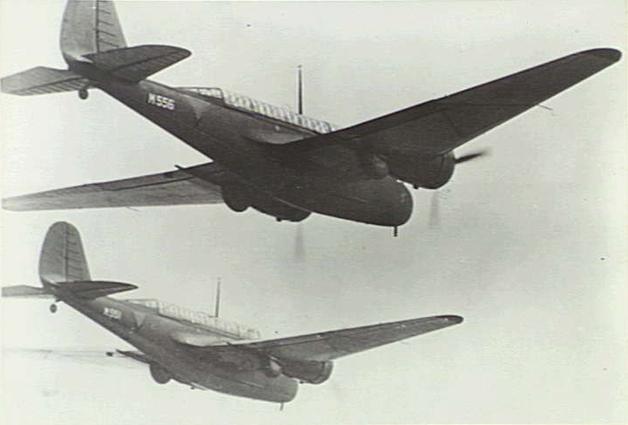
The B-10 family is easier to follow if you separate three lines that ran in parallel. There is the Army line, Model 123 into XB-10 into YB-10 into B-10B, with the Pratt & Whitney-engined B-12 as a second-source branch. There is the export line, Model 139W, which Martin was only allowed to sell once the Army’s own orders were filled in 1936 — because the Army, not Martin, owned the rights to the design. And there is the Model 166, a genuinely redesigned aircraft with a new wing, new nose and a single continuous canopy, built almost entirely for the Netherlands East Indies.
The proportions are worth stating plainly. Of 348 aircraft of all versions, 182 were exports. The largest single customer was not the United States Army Air Corps but the Netherlands, which took 121 aircraft across four sub-types and lost almost all of them in ten weeks in 1942. The aeroplane that had been designed to demonstrate American technical supremacy spent most of its combat career in Dutch, Chinese, Thai and Turkish hands.
The other thing the variant list shows is how quickly Martin ran out of road. The Model 146, an enlarged development entered in the 1934–35 long-range bomber competition, came second to the Boeing B-17 on range and endurance while beating it on ceiling and undercutting it on price by more than half — and lost anyway, with the contract going to the third-placed Douglas B-18. The B-10 lineage ended there.
- Martin Model 123 / XB-907 / XB-907A (1932 / 1)
- Private venture, first flight 16 February 1932, delivered to the Army on 20 March as the XB-907. Open cockpits, Townend rings, two 600 hp SR-1820-E Cyclones. Returned to Martin and rebuilt as the XB-907A with 2.44 m more span and 675 hp R-1820-19s.
- XB-10 (1932–33 / 1 rebuild)
- The XB-907A bought by the Air Corps and completed with full NACA cowlings, enclosed cockpits, an enclosed nose turret and single-strut landing gear. Recorded 197 mph at 6,000 ft in June 1932 and won Martin the 1932 Collier Trophy, presented by President Roosevelt on 1 June 1933.
- YB-10 and YB-10A (1933–34 / 14 and 1)
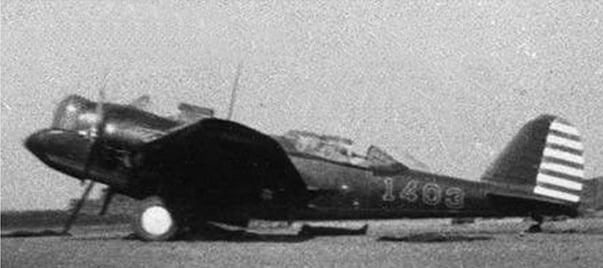
- Model 139A production standard: canopies over every crew station, 675 hp R-1820-25s, delivered to Wright Field from November 1933 and used in the Army Air Corps Mail Operation during the 1934 air mail scandal. These, not B-10Bs, were the aircraft of the 1934 Alaskan Flight. The single YB-10A with turbo-supercharged Cyclones reached 236 mph and remained a one-off. Thirteen of the fourteen were still in service in April 1940 as B-10Ms.
- B-10B (1935–36 / 103)
- The baseline for this page. Ordered in 1935 with 775 hp R-1820-33s and only minor changes from the YB-10; deliveries began in July 1935. Equipped the 2nd, 9th and 19th Bomb Groups and the composite groups in Panama and the Philippines. Some were later converted to B-10M target tugs.
- YB-12, B-12A and the abandoned branches (1935–36 / 7 and 25)
- Model 139B with Pratt & Whitney R-1690-11 Hornets and flotation chambers for over-water work; the B-12A added a 365 US gal bomb-bay tank for 1,240 miles of range. The XB-14 (one built, Twin Wasps, converted back to YB-12), the YB-13 (ten ordered, cancelled), the A-15 attack version and the YO-45 observation conversion all came to nothing.
- Model 139W export series (1936–38 / 100)
- Released for export once the Army’s orders were complete. Nine to China (six 139WC-1 and three 139WC-2, delivered 1936–37), six to Siam in April 1937 as the B.Th.3, twenty to Turkey in September 1937, 22 to the Argentine Army and 13 to the Argentine Navy, and one demonstrator to the Soviet Union. A licence-built Spanish version by CASA was blocked by the State Department.
- Model 139WH-1 and WH-2 (1936–38 / 13 and 26)
- The first Dutch order, chosen over the Fokker T.V because all-metal construction was thought more robust than steel tube and fabric and because Martin could deliver sooner. The Netherlands had cancelled its fighter orders to pay for these bombers — a doctrinal decision that left the East Indies with a bomber force and almost nothing to protect it.
- Model 166 / 139WH-3 and WH-3A (1938–40 / 40 and 42)
- The final and most extensively changed version: redesigned wing and nose, a single continuous glazed canopy over all crew stations, external bomb shackles, and 900 hp R-1820-G5 or 1,000 hp G-105A engines. Delivered September 1938 and March 1940; the last aircraft delivered was the last B-10 of any kind built. Nine were handed to Thailand by the Japanese in 1942 after capture.
- Martin Model 146 (1935 / 1, not proceeded with)
- An enlarged development entered in the Air Corps long-range bomber competition of 1934–35. Second to the Boeing B-17 on range and endurance, with a higher ceiling at 28,500 ft, only 2 mph slower and 313 lb lighter in bombs, at less than half the price. Judged a dead end; the third-placed Douglas B-18 got the order.
- RB-10MA (1942 / 1)
- A single ex-Netherlands East Indies Model 139WH-3A impressed by the United States in July 1942 and flown from Australia to America — the closing entry in the type’s American service, and a sign of how thin things were in mid-1942.
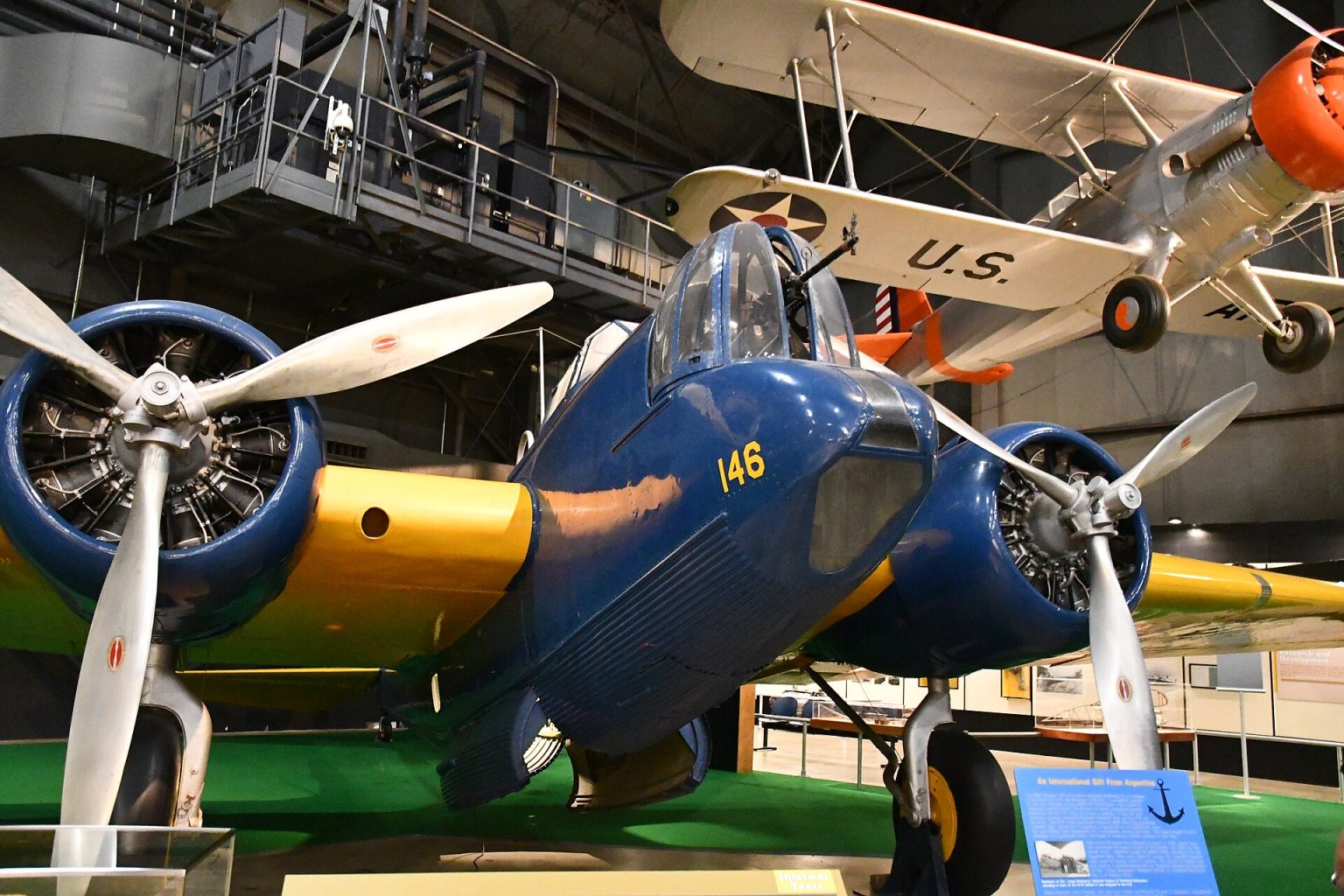
Closing note on numbers, retirement and survivors: 348 Martin bombers of all versions were built between 1933 and 1940, of which 182 were exports; the United States took 166 and the Netherlands 121. Front-line American service was over by 1940–41, the survivors reduced to target tugs and trainers. Turkey’s Model 139WTs flew Black Sea surveillance through the Second World War, were replaced by Blenheims and Beauforts in 1944, and twelve of the sixteen remaining were still serviceable in 1946. The Royal Thai Air Force flew the type in the Franco-Thai War of 1940–41 and the 1942 invasion of Burma and retired it in 1949, the last operator anywhere. Exactly one complete Martin bomber survives, and it is not an American one: the aircraft at the National Museum of the United States Air Force at Wright-Patterson is a Model 139WAA sold to Argentina in 1938, recovered, restored by the 96th Maintenance Squadron at Kelly Air Force Base between 1973 and 1976, and painted as a B-10 of the 1934 Alaskan Flight. No reproduction has ever been built, and no other complete original exists. What else remains is wreckage: the substantial remains of Model 166 WH-3 "M-574", lost over south-east Dutch Borneo on 5 January 1941 and rediscovered on Gunung Besar in Berau Regency, Kalimantan, in August 2018 with engines, rear fuselage, tail and starboard wing extant; and turrets and wing sections recovered from Borneo that were displayed at the Militaire Luchtvaart Museum at Soesterberg and are now held by the Nationaal Militair Museum.
Reading the numbers
The Martin B-10 in numbers: what the specifications actually tell us
Bare figures rarely explain an aircraft. These dives put the B-10’s numbers in context — what they meant in 1934, and why they stopped being impressive so soon after.
31The Martin B-10’s speed figure in context+
Roughly 343 km/h (213 mph) is the number that made the B-10 famous. In isolation it is unremarkable — a modern light aircraft can approach it — but in 1934 it sat above the speed of many front-line biplane fighters, and well above the lumbering biplane bombers the type replaced, some of which struggled past 200 km/h.
That is the whole story of the B-10 in one comparison: a bomber that flew half again as fast as the bombers before it, and faster than the fighters meant to stop it. Within five years, monoplane fighters pushing past 480–530 km/h had turned that advantage into a disadvantage. The figure did not change; the world around it did.
32Range, ceiling and payload: a genuine medium bomber+
A range on the order of 1,995 km (about 1,240 miles), a ceiling near 7,380 m (roughly 24,200 ft) and an internal bomb load of about 1,025 kg (2,260 lb) made the B-10 a credible medium bomber for its day. These were not heavy-bomber numbers — the B-17 to come would dwarf them — but they were a solid, useful package in a fast airframe.
In export service, that combination of reach and speed is what made the Martin attractive to air forces from the Dutch East Indies to Argentina. All these figures vary by sub-variant and loading; treat them as representative of the B-10B rather than fixed values.
33Weight, wing and structure: the shape of a modern bomber+
With a wingspan around 21.5 m (70 ft 6 in) and a maximum weight in the region of 7,440 kg (16,400 lb), the B-10 was a substantial twin, but a clean and efficient one. The all-metal cantilever wing carried that weight without external bracing, and the stressed-skin construction gave strength and durability that fabric-and-wire structures could not match.
These are the dimensions of an aircraft built to a modern formula. Compare them with the strut-and-wire biplanes of only a few years earlier and the B-10 looks like a different species — which, in engineering terms, it was.
34Why the Martin B-10’s cost is genuinely hard to state+
Modern readers expect a unit price and a cost-per-flight-hour for any aircraft. For a 1930s type sold across many countries, in a very different economic era, those numbers are not reliably or consistently recorded. Currency values, procurement practices and the mix of domestic and export sales all make a single meaningful figure impossible to quote responsibly.
Rather than invent a precise-looking number, this page states plainly that the B-10’s costs are not reliably recorded. That is the honest answer, and it is more useful than a false one. What can be said is that the type was, for its capability, a comparatively economical way for smaller air forces to acquire a genuinely modern bomber — part of why it sold so well abroad.
What it cost
What the Martin B-10 cost — a 1930s figure that is hard to pin down
Unlike modern aircraft, the B-10 has no reliable, consistently reported unit or hourly-operating cost. We flag this openly rather than invent numbers.
| Unit cost (1930s) | Not reliably recorded |
|---|---|
| Cost per flight hour | Not reliably recorded (1930s) |
| Programme / fleet cost | Not reliably recorded |
| Total built (incl. exports) | ~348 (figures vary widely by source) |
| U.S. Army machines | ~151 B-10 / B-12 (approx.) |
Interwar procurement accounting, currency values and the mix of U.S. and export sales make a single meaningful cost figure impossible to quote responsibly. Production totals also vary between sources; the values here are approximate and should be treated as estimates.
In context
The Martin B-10 against its contemporaries
How the B-10 of 1934 compared with the bombers that came just before and just after it. Figures are approximate and for illustration.
| Aircraft | First service | Layout | ~Max speed | Note |
|---|---|---|---|---|
| Martin B-10 | 1934 | All-metal monoplane | ~343 km/h | Faster than contemporary biplane fighters |
| Keystone B-4 / B-6 | Early 1930s | Biplane, fixed gear | ~195 km/h | The type the B-10 replaced |
| Douglas B-18 Bolo | 1936–37 | Monoplane | ~350 km/h | Displaced the B-10 in U.S. service |
| Boeing B-17 | 1938 onward | Four-engine monoplane | ~500 km/h | The heavy bomber the Army moved to |
The leap from the Keystone biplanes to the B-10 is the point of this table: within a few years the same air arm went from fabric biplanes to the B-17. The B-10 sits at the hinge.
Variants at a glance
The Martin B-10 marks at a glance
Model 123 / XB-907
The 1932 private-venture prototype that started it all and led to the 1932 Collier Trophy for Glenn L. Martin.
YB-10 / B-10
The first Army service versions, powered by Wright Cyclone radials, entering service from 1934.
B-10B
The main U.S. production version, with uprated Cyclones; the definitive Army B-10 and the basis for most quoted specifications.
B-12 / B-12A
Parallel version powered by Pratt & Whitney R-1690 Hornet engines rather than the Wright Cyclone.
Model 139 (export)
Export bomber sold internationally — to the Netherlands East Indies, China, Turkey, Argentina, Siam and others.
Model 166 (export)
Improved export version with a long continuous “greenhouse” canopy; the type the Netherlands East Indies flew hardest in 1941–42.
Timeline
The Martin B-10: a timeline
Stories & firsts
Martin B-10 stories: firsts, feats and hard fights
The bomber that outran the fighters
In 1934 a bomber faster than the interceptors sent to stop it was almost unthinkable — and the B-10 was exactly that.
More
The B-10B’s roughly 213 mph put it ahead of many biplane pursuit types then in service. The shock of a bomber that fighters could barely catch helped spur the rapid fighter development of the later 1930s. The advantage was real but temporary; monoplane fighters soon overtook it.
The 1932 Collier Trophy
Glenn L. Martin took American aviation’s highest honour for the design that became the B-10.
More
The Collier Trophy for 1932 recognised the Martin bomber as the outstanding aeronautical achievement of the year — formal acknowledgement that its blend of speed and all-metal construction was a genuine advance. We report this as the historical record states it.
Hap Arnold’s flight to Alaska
A 1934 mass flight of ten B-10s to Alaska and back showcased the new bomber’s reach.
More
Led by Lt. Col. Henry “Hap” Arnold, the flight was a headline demonstration of the type’s range and reliability, and of American air power in the far north. It became one of the most celebrated peacetime episodes of the B-10’s U.S. career.
China’s “paper raid” over Japan
In May 1938 a Chinese Martin flew over Japan and dropped not bombs but leaflets.
More
Chinese Nationalist Martin 139Ws are credited with one of the first flights of foreign aircraft over the Japanese home islands, scattering propaganda leaflets over Kyushu rather than bombs. The raid is widely reported in histories of the Sino-Japanese War; details of crews and routing vary between accounts.
The Netherlands East Indies stand
Dutch colonial Martins went to war against Japan in 1941–42 — and were overwhelmed, but fought hard.
More
The ML-KNIL flew Model 139 and 166 bombers against the Japanese invasion of the Dutch East Indies, striking at invasion convoys across the Indies, Malaya and Borneo. Obsolescent and lacking fighter cover, most were lost. Their crews’ determination is remembered even as the campaign ended in defeat.
The largest export customer
The Netherlands East Indies, not the U.S., operated the biggest Martin bomber fleet in combat.
More
The Dutch colonial air arm took delivery of well over a hundred export Martins — making it the type’s largest combat operator. It is one of the ironies of the B-10 that the aircraft saw its heaviest fighting in foreign, not American, markings.
Turkey, Argentina and Siam
The Martin bomber sold across three continents in the 1930s export boom.
More
Turkey, Argentina (which assembled aircraft locally) and Siam (Thailand) all bought Model 139s, alongside a single example evaluated by the USSR. The B-10 was, briefly, one of the most successful export bombers of its era.
All-metal, when metal was new
The stressed-skin monoplane wing pointed the way to every bomber that followed.
More
Doing away with struts and bracing wires, the B-10’s clean all-metal wing was a structural statement about the future of aviation — a future the B-17 and B-24 would fulfil only a few years later.
Overtaken by its own children
The same industry that built the B-10 quickly built the machines that replaced it.
More
Within roughly four years of the B-10 entering service, the Douglas B-18 and Boeing B-17 had arrived. The B-10’s obsolescence was not a failure of the design so much as proof of how fast aviation was moving in the 1930s.
From bomber to hack
In U.S. service the B-10 ended its days towing targets and training crews.
More
By 1940–41 the surviving American B-10s and B-12s had largely been relegated to utility, target-towing and training work as newer types filled the bombardment squadrons.
The long road home
The world’s only surviving B-10 came back from Argentina decades after retirement.
More
The single surviving airframe is an ex-Argentine machine, repatriated to the United States in the 1970s and restored for display — the last of its kind, saved from a continent away.
A hinge in bomber history
The B-10 marks the exact moment the biplane bomber gave way to the modern monoplane.
More
Look at what the U.S. Army flew in 1932 and in 1938 and the B-10 sits precisely on the hinge between the two worlds — the aircraft that turned the page.
Gallery
Martin B-10 in photographs
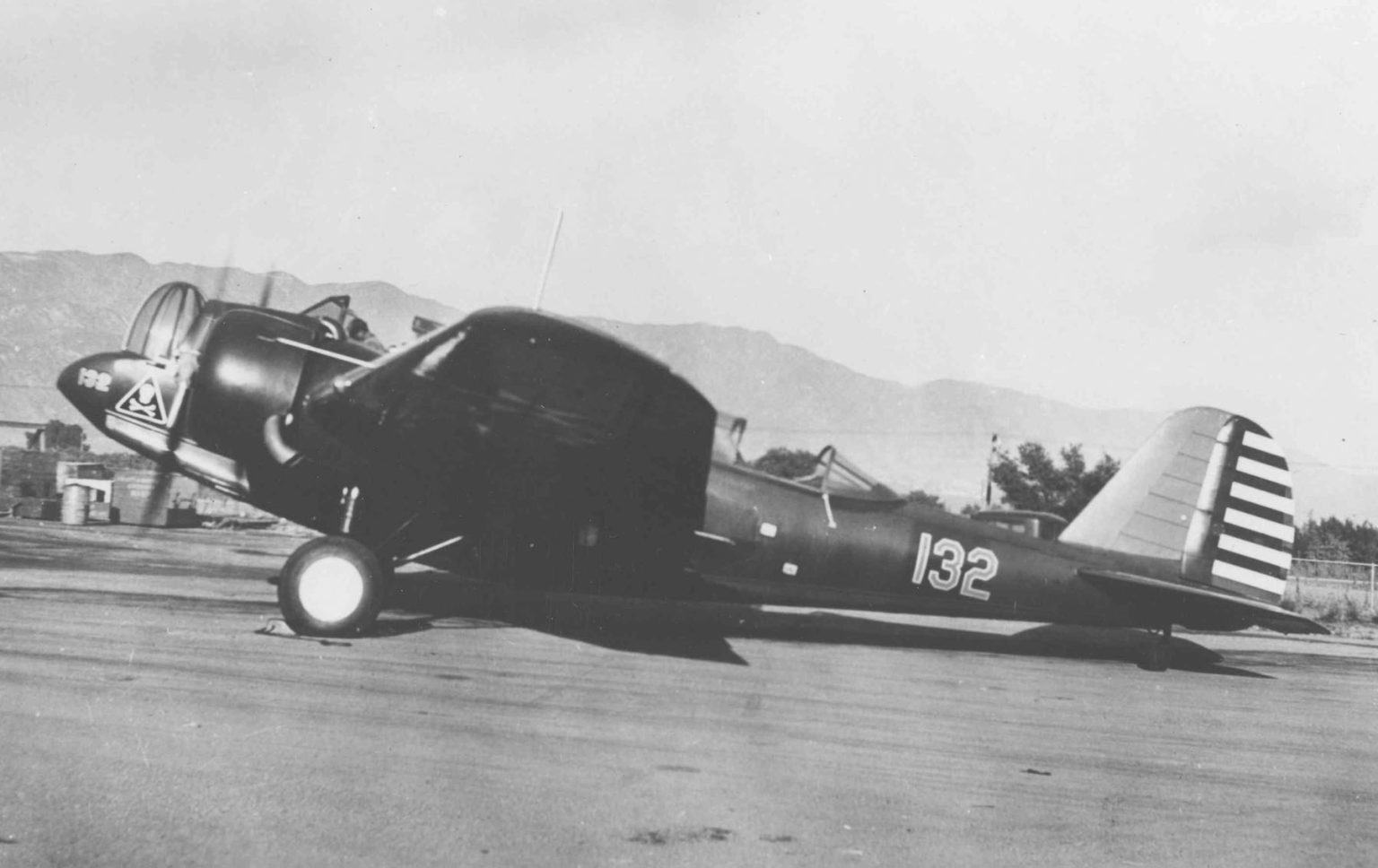
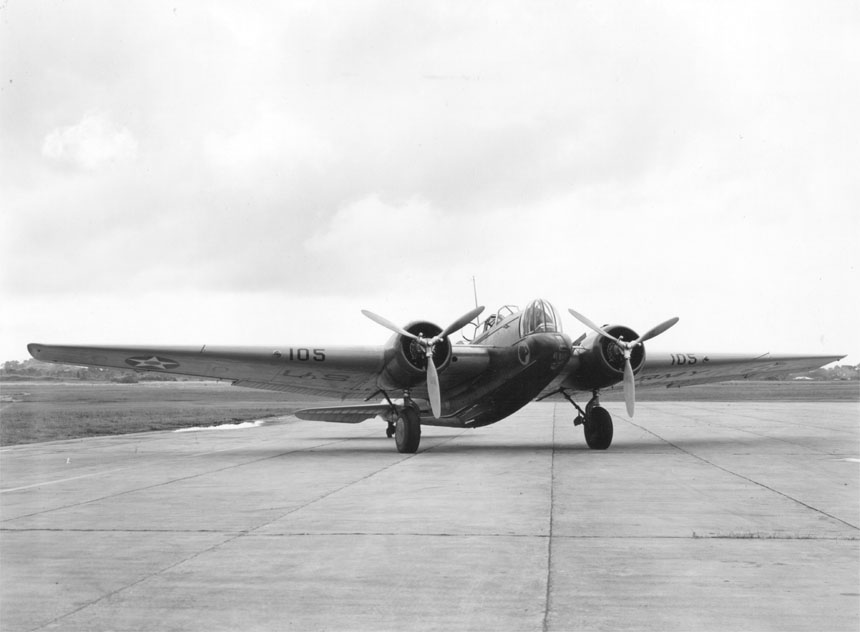
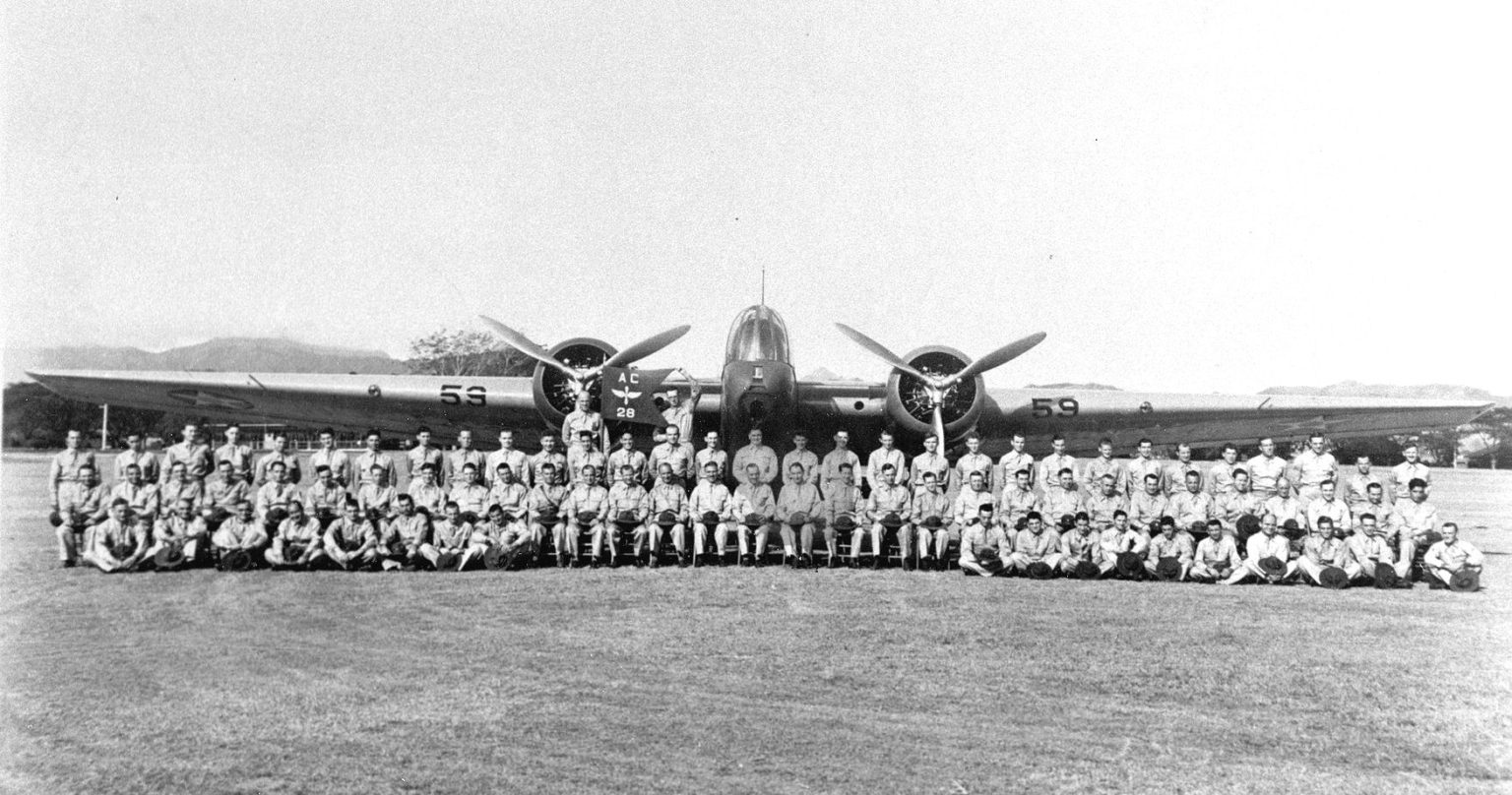
All images sourced from Wikimedia Commons; individual credits and licences are given in each caption.
On film
The Martin B-10 on video
A concise, well-sourced overview of the Martin B-10 from the aviation-history channel Rex’s Hangar.
“It Rewrote The Book On Bomber Design | Martin B-10” by Rex’s Hangar — an established aviation-history channel (~309,000 views at the time of writing). Chosen for its detailed, sourced treatment of the type.
Where it flew
Martin B-10 operations overview: origin, service, exports and survivor
The Martin B-10 was designed and built in the United States, served with the U.S. Army Air Corps, and was exported widely — and it was those export machines that saw the heaviest combat. Toggle the categories to explore. Approximate fleet figures are shown in the tooltips.
Crew & operations
Crewing and flying the Martin B-10
A modern bomber is more than a set of numbers; it is a workplace for the men who flew it. These dives look at how the B-10 was crewed, what it was like to operate, and how it was actually used day to day.
26Who crewed the Martin B-10, and where they sat+
A typical B-10 carried a crew of three to four: a pilot, a nose gunner who doubled as bombardier, and a rear gunner/radio operator, with a co-pilot position in some configurations. The stations were spread down the fuselage — the bomb-aimer and nose gun forward, the pilot beneath the stepped canopy, the dorsal gunner behind — and connected by the internal structure of the fuselage.
Crew numbers and roles varied between the U.S. B-10/B-12 and the export Model 139/166, and between sub-variants. The essential point is that this was a genuine multi-crew bomber with specialised stations, not a scaled-up single-seater — another way in which it prefigured the bombers to come.
27What the Martin B-10 was like to fly for its era+
For pilots stepping out of biplanes, the B-10 was a revelation and a challenge in equal measure. The clean monoplane was faster and slipperier than anything they were used to, with retractable gear and enclosed cockpits that changed the whole feel of a flight. It demanded a more modern, systems-minded approach to flying — managing two engines, gear retraction and a heavier, faster machine.
Contemporary accounts treated it as a thoroughly modern aircraft for 1934, if a demanding one by the standards of the fabric biplanes it replaced. As always with a type this old, first-hand pilot testimony is limited and should be read as impression rather than precise data.
28The Martin B-10 as a record-setter and demonstrator+
Beyond the Alaska flight, the B-10 spent much of its U.S. career as a very public demonstration of American aviation’s new capabilities. Fast, modern and photogenic, it featured in exercises, tours and set-piece flights designed to show the reach and reliability of the Air Corps’ newest bomber.
This showcase role suited an aircraft whose strengths were speed and modernity, and it did much to build the type’s formidable early reputation — the “wonder bomber” image that clung to it even after newer designs had quietly surpassed it.
29Maintenance, reliability and the realities of an interwar bomber+
The B-10’s air-cooled radial engines were, by the standards of the day, relatively rugged and maintainable, and its all-metal structure was more durable than fabric and wood. But it was still a 1930s aircraft, with the limited range, modest payload and demanding upkeep that implies.
In the far-flung export fleets — above all in the tropical conditions of the Netherlands East Indies — keeping ageing Martins serviceable became increasingly difficult as spares dried up and combat attrition mounted. By 1941–42 the wonder of 1934 was a maintenance and supply headache flying against a modern enemy.
30How the Martin B-10 was actually employed: doctrine and mission+
In concept the B-10 was a fast medium bomber for level bombing from altitude, using its speed to reach and leave the target before defences could react. In U.S. service that doctrine was exercised but never tested in war. In export service, reality intruded: the ML-KNIL and the Chinese used their Martins for anti-shipping strikes, level bombing and reconnaissance against a fast-moving Japanese advance.
The gap between the doctrine — speed as protection — and the 1941–42 battlefield, where modern fighters could catch and destroy the bombers, is the central tragedy of the type’s combat career. The aircraft was used as designed; the world had simply moved past the design.
Combat record
The Martin B-10 in combat: an honest reckoning
The paradox of the Martin B-10 is that its combat history belongs mostly to other nations. In United States service the type never fired a shot in anger; it was a peacetime wonder, displaced by the B-18 and B-17 before the shooting started. It was abroad, in export markings, that the Martin bomber went to war — and by then it was already obsolescent.
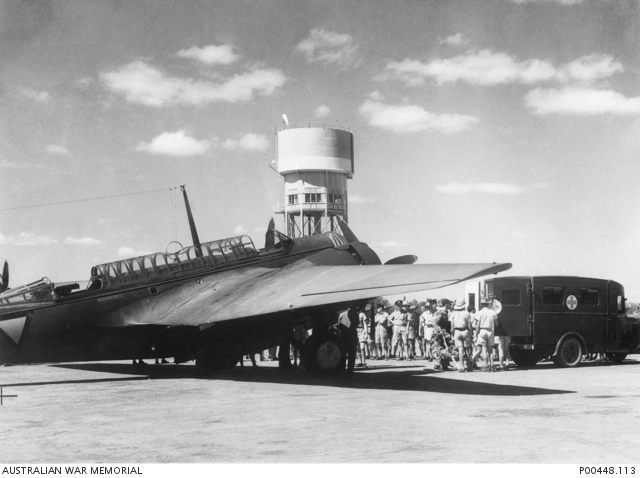
In China, Nationalist Martin 139Ws bombed Japanese forces from 1937 and flew the famous 1938 leaflet raid over Kyushu. In the Netherlands East Indies, the ML-KNIL threw its Model 139 and 166 bombers against the Japanese invasion of 1941–42, striking convoys across the Indies, Malaya and Borneo. Outclassed by modern fighters and without adequate escort, most were destroyed. Siam (Thailand) is reported to have used its Martins during the Franco-Thai War of 1940–41.
None of this was the war the B-10 had been designed for, and none of it ended well for the type. But the crews who flew these ageing bombers against a modern enemy did so with real determination, and that deserves to be recorded alongside the aircraft’s technical brilliance.
07The Netherlands East Indies campaign: the Martin B-10’s hardest fight+
The Dutch colonial air arm was the largest combat operator of the export Martin, with well over a hundred aircraft. When Japan invaded in December 1941, these bombers flew repeated strikes against invasion shipping and landings across the archipelago and neighbouring theatres.
The outcome was grim: obsolescent Martins, facing modern Japanese fighters without sufficient escort, suffered heavy losses, and the Indies fell by March 1942. The campaign is a study in courage against hopeless odds. Specific sortie and loss figures vary between sources and should be treated as approximate.
08China’s Martins and the 1938 leaflet raid over Japan+
Chinese Nationalist Martins are credited with an early — possibly the first — flight of foreign aircraft over the Japanese home islands, dropping propaganda leaflets over Kyushu in May 1938 rather than bombs. The “paper raid” is widely recounted in histories of the Second Sino-Japanese War, though details of the crews and route differ between accounts. We present it as a well-attested but variously-reported episode.
09Why the U.S. Martin B-10 never saw combat+
American aviation moved so fast in the 1930s that the B-10 was overtaken at home before any war reached it. The Douglas B-18 began replacing it from 1936–37, and the four-engine Boeing B-17 pointed to a wholly different scale of bomber. By Pearl Harbor the surviving U.S. B-10s and B-12s were training, utility and target-towing machines, not front-line bombers.
By the numbers
The Martin B-10’s combat record at a glance
Setting the record straight
The Martin B-10: myths, clarifications and honest caveats
A famous aircraft attracts famous claims, some of them truer than others. In the spirit of getting the history right, here are the B-10 statements worth handling with care — several of which appear on this very page, correctly hedged.
M1“The Martin B-10 made every other bomber obsolete overnight”+
This is the most quoted line about the type, and it captures a real truth — but it is the language of contemporaries and popular history, not a precise engineering fact. The B-10 did represent a dramatic leap over the biplane bombers it replaced, and it was faster than many fighters of its day. In that sense the shock was genuine.
What the phrase glosses over is that the “overnight” obsolescence it caused also caught up with the B-10 itself within a few years. It is best read as vivid shorthand for a real and sudden advance, not as a literal claim. We use it on this page in exactly that spirit.
M2“The B-10 was the first monoplane bomber”+
Not quite. Monoplane bombers and all-metal aircraft existed before the B-10. The careful and defensible claim is that it was the first all-metal monoplane bomber produced in quantity for the U.S. Army Air Corps, and the aircraft that brought the full modern package — monoplane, all-metal, retractable gear, internal bombs, enclosed cockpits, turret — together in quantity service. “First of its kind in mass service” is accurate; “the first monoplane bomber” full stop is not.
M3How many Martin B-10s were really built?+
You will see totals around 348 including exports, with roughly 151 for the U.S. Army. These are the commonly cited figures, and we use them — but sources genuinely disagree, partly because of the many sub-variants and export batches, and partly because record-keeping across several countries in the 1930s was uneven. Treat any single production number for the B-10 as approximate.
M4Was the B-10 “faster than all fighters”?+
No — the accurate statement is that it was faster than many of the biplane fighters in service around 1934, not that no fighter on earth could catch it. The significance is the near-disappearance of the speed margin between bomber and interceptor, which was startling enough without exaggeration. By the late 1930s monoplane fighters had comfortably restored, and then widened, the gap.
M5The 1938 “paper raid”: what we can and cannot say+
The Chinese leaflet flight over Japan in May 1938 is well attested and genuinely remarkable — among the first overflights of the Japanese home islands by foreign aircraft. But the specifics, including exact crews, aircraft and routing, are variously reported across sources. We present the raid as a real and celebrated event while being candid that its fine details are not uniformly recorded.
M6Can you fly a Martin B-10 today? The honest answer+
No. There is exactly one Martin B-10 left in the world, a restored static exhibit at the National Museum of the U.S. Air Force, and no airworthy or bookable example exists. Any suggestion that you can ride in a B-10 is simply wrong. If it is the experience of flying a genuine military aircraft you are after, that is possible — just in other types. See MiGFlug’s available fighter-jet flights.
M7“The Martin B-10 had the first gun turret”+
A careful phrasing again. The B-10’s rotating nose position is frequently and reasonably described as an early example of a powered/rotating gun turret on a production bomber. That is not the same as claiming it was the first turret of any kind ever fitted to any aircraft — a claim that is hard to sustain and that we do not make. Its significance is developmental: it was one of the early production steps toward the turreted defensive schemes that defined later heavy bombers.
M8“The Netherlands flew the B-10” — a point of precision+
The Martins were flown not by the Netherlands in Europe but by the military air arm of the Netherlands East Indies (the ML-KNIL), the colonial force in what is now Indonesia. It is a distinction worth keeping straight: the fighting happened in the Indies, Malaya and Borneo, not over the European Netherlands. On the operations map on this page, the aircraft’s combat service is therefore associated with the East Indies region rather than the European Netherlands, with the ordering nation noted alongside.
Legacy
The Martin B-10’s legacy: deeper reading
The B-10 is best understood not as a war-winner — it was neither — but as a turning point. These deeper dives trace how it changed bomber design, why its lead evaporated, and what became of the aircraft and the fleets that flew it.
14How the Martin B-10 shaped the self-defending monoplane bomber+
The B-10 embodied an idea that would dominate 1930s bomber thinking: that a fast, modern monoplane bomber could largely defend itself and outrun interception. When your bomber is faster than the fighters, the logic runs, you need less escort and can strike deeper. The B-10’s speed made that argument concrete.
The doctrine did not survive contact with the cannon-armed monoplane fighters of the Second World War, which comfortably overtook bombers in speed and firepower. But the B-10 helped plant the idea, and its layout — all-metal, twin-engine, internally-stowed bombs, turret defence — pointed straight at the heavy bombers that followed. In that sense the self-defending-bomber concept the B-17 would carry into 1943 was first made plausible by aircraft like the Martin.
15Model 139 versus Model 166: the two faces of the export Martin+
Martin’s export bombers came in two main families. The Model 139 broadly mirrored the U.S. B-10/B-12, with separate cockpit canopies for the crew stations. The later Model 166 introduced a long, continuous “greenhouse” canopy running the length of the fuselage spine, along with aerodynamic and equipment refinements.
The Netherlands East Indies operated both, and it was the Model 166 that flew hardest in the 1941–42 campaign. To the casual eye the long unbroken canopy is the quickest way to tell a Model 166 from the earlier, stepped Model 139. Sub-variant details and designations vary between sources and export customers.
16The 1934 Alaska flight: the Martin B-10’s greatest peacetime feat+
In the summer of 1934 the Army Air Corps sent ten B-10s on a round-trip flight from Washington, D.C. to Fairbanks, Alaska, and back, under the command of Lt. Col. Henry “Hap” Arnold. The expedition covered thousands of miles of demanding terrain and weather, mapping and photographing en route.
It was a deliberate demonstration — of the new bomber’s reliability and reach, and of American air power in the northern approaches. The flight earned wide acclaim and helped cement the B-10’s reputation as the wonder bomber of its moment. Arnold, of course, would go on to lead the U.S. Army Air Forces to victory a decade later.
17Why the Martin B-10’s lead evaporated so quickly+
The uncomfortable truth is that the B-10 was a victim of the very revolution it led. The 1930s were perhaps the fastest-moving decade in the history of aircraft design: stressed-skin construction, retractable gear, variable-pitch propellers, more powerful engines and cleaner aerodynamics compounded year on year.
An aircraft that was startling in 1932–34 was ordinary by 1938 and obsolescent by 1941. The B-10’s roughly 213 mph, so shocking at first, was soon eclipsed by monoplane fighters approaching and then exceeding 300 mph. Its light defensive armament, adequate for 1934, was dangerously thin against 1941 fighters. None of this reflects badly on the design; it simply marks how quickly the ground moved beneath it.
18The world’s only Martin B-10: the survivor’s long journey+
Not a single U.S.-built Martin B-10 remained intact in American hands by the postwar years — the type had been used up, worn out and scrapped. The aircraft that survives today began life as an export machine sold to Argentina. Retired and stored, it was eventually repatriated to the United States in the 1970s and painstakingly restored.
It now stands in U.S. Army Air Corps markings at the National Museum of the U.S. Air Force in Dayton, Ohio — the sole surviving example of a type of which several hundred were built. There is no airworthy Martin B-10 anywhere in the world, and given its rarity there is unlikely ever to be one.
19The Martin B-10 and the road to the Boeing B-17+
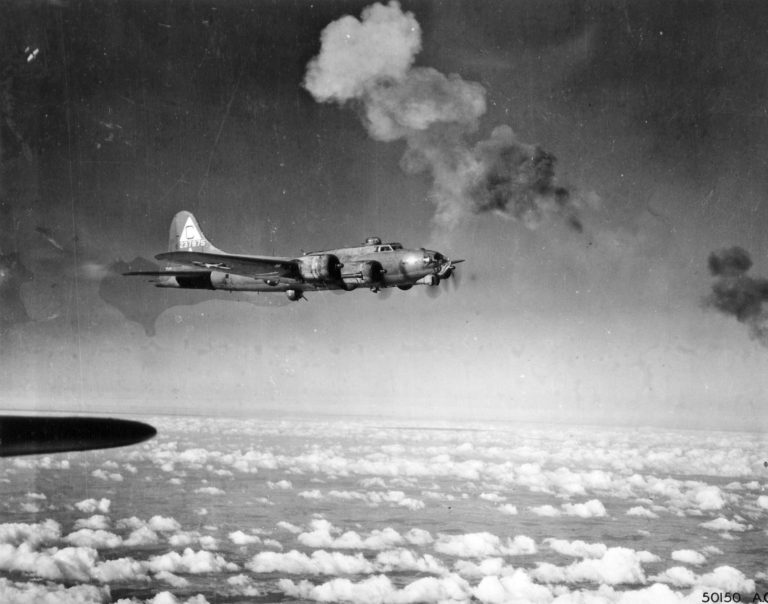
It is tempting, and not entirely wrong, to see a direct line from the Martin B-10 to the Boeing B-17. Both were all-metal monoplane bombers; both stowed bombs internally; both relied on speed and defensive guns. The B-10 proved, in service and in quantity, that such an aircraft was practical — and its success helped shape the Army’s appetite for a still bigger, faster, longer-ranged bomber.
The B-17 that answered that appetite was a generational leap beyond the Martin: four engines, far greater range and bomb load, and heavy defensive armament. But the conceptual groundwork — the modern monoplane bomber as the centrepiece of air power — was laid by aircraft like the B-10. The Martin was the proof of concept; the Fortress was the fulfilment.
Operators
The Martin B-10 around the world: operator by operator
The Martin bomber was one of the great export successes of the 1930s. Beyond the U.S. Army Air Corps, versions of the type served on four continents — and it was these export machines, not the American ones, that did nearly all the fighting. Figures below are approximate and vary between sources.
United States Army Air Corps
The launch operator, from 1934. Around 151 B-10 and B-12 machines equipped bombardment squadrons before the B-18 and B-17 displaced them; the American fleet never saw combat and ended its days in training and utility roles.
Netherlands East Indies
The largest combat operator. The ML-KNIL took well over a hundred Model 139 and 166 bombers and threw them against the Japanese invasion of 1941–42 — a doomed but determined campaign.
China
Chinese Nationalist Martin 139Ws bombed Japanese forces from 1937 and flew the celebrated 1938 leaflet raid over Kyushu, one of the first flights of foreign aircraft over Japan.
Turkey
Turkey bought a batch of Model 139s in the mid-1930s, operating them as part of a rapidly modernising interwar air arm.
Argentina
Argentina was a major customer, operating a substantial fleet of Model 139WAA bombers — and it was an ex-Argentine airframe that, decades later, became the world’s only survivor.
Siam (Thailand)
Siam operated Model 139s and is reported to have used them during the Franco-Thai War of 1940–41, on the type’s eastern-most front.
10The United States Army Air Corps and the Martin B-10: a short, brilliant peace+
For the U.S. Army Air Corps the B-10 was above all a peacetime showpiece — proof that American industry could build a bomber as modern as anything in the world. It equipped bombardment groups from 1934 and starred in set-piece demonstrations, most famously the 1934 mass flight to Alaska led by Henry “Hap” Arnold.
But the Air Corps’ own appetite for progress worked against the type. The Douglas B-18 Bolo, cheaper and roomier, began replacing it within a couple of years, and the Boeing B-17 pointed to an entirely different class of bomber. By the time the United States went to war, the surviving American Martins were second-line machines. It is one of history’s quiet ironies that the bomber that made all others obsolete was itself made obsolete at home without ever seeing combat.
11The Netherlands East Indies: the Martin B-10’s largest and hardest campaign+
The Dutch colonial air arm, the ML-KNIL, was the Martin bomber’s biggest combat operator, with well over a hundred Model 139 and improved Model 166 aircraft based across the Netherlands East Indies. When Japan struck in December 1941, these bombers flew repeated strikes against invasion convoys and landing forces from the Indies to Malaya and Borneo.
They were, by then, hopelessly outclassed. Facing modern Japanese fighters with little or no escort, the ML-KNIL Martins suffered severe losses, and the Indies fell by March 1942. Yet the campaign is remembered for the determination of its crews, who kept flying an obsolescent aircraft into action long after its front-line day had passed. Precise sortie and loss figures vary widely between sources.
12China’s Martins: bombing, reconnaissance and the 1938 “paper raid”+
China acquired a small number of Model 139Ws in the mid-1930s and used them against the Japanese from 1937. Their most famous exploit came in May 1938, when a Martin flew over the Japanese home islands and dropped propaganda leaflets over Kyushu rather than bombs — the “paper raid,” widely described as among the first overflights of Japan by foreign aircraft.
The raid was a propaganda coup rather than a military blow, and accounts differ on the crews, aircraft and exact route. We present it as a genuine and celebrated episode whose fine details are variously reported.
13Turkey, Argentina, Siam and the USSR: the wider Martin export story+
Turkey bought Model 139s as part of its 1930s modernisation. Argentina was a major customer, operating a large fleet of Model 139WAA machines — and it was one of these, retired and stored, that would eventually become the sole surviving B-10. Siam (Thailand) flew Model 139s and reportedly used them in the Franco-Thai War of 1940–41. The USSR obtained a single example for evaluation. Exact quantities differ between sources; the Argentine and Dutch East Indies fleets were by far the largest export orders.
Questions & answers
Martin B-10: questions & answers
Can I fly in a Martin B-10?
No. Only one Martin B-10 survives anywhere in the world — a restored, static aircraft at the National Museum of the U.S. Air Force in Dayton, Ohio — and there is no airworthy or bookable example. MiGFlug does not offer flights in a Martin B-10, and no operator does.
However, you can fly in several genuine military jets today, from the L-39 Albatros to the MiG-29 Fulcrum. See all available fighter-jet flights and prices.
Why is the Martin B-10 called revolutionary?
Because it gathered, in one quantity-built bomber, the features that defined the modern aeroplane: an all-metal cantilever monoplane airframe, retractable landing gear, an internal bomb bay, enclosed cockpits and a rotating nose gun turret — and it was faster than the biplane fighters of its day. Contemporaries said it made every other bomber obsolete overnight; the phrase is theirs, but the underlying leap was real.
Was the Martin B-10 really faster than fighters?
In 1934, yes — a B-10B’s roughly 213 mph (343 km/h) exceeded the speed of many biplane pursuit aircraft then in service. The margin between bomber and interceptor had nearly vanished, which is exactly why it caused such a stir. Monoplane fighters soon restored the balance.
What engines did the Martin B-10 use?
Most production B-10s used two Wright R-1820 Cyclone air-cooled radial engines of roughly 700–775 hp each. The parallel B-12 variant used Pratt & Whitney R-1690 Hornet radials instead. Exact power ratings vary by sub-type.
Did the Martin B-10 win the Collier Trophy?
Glenn L. Martin received the Collier Trophy for 1932 in connection with the bomber design that became the B-10 — American aviation’s highest annual honour, recognising the year’s greatest aeronautical achievement. We report this as the historical record states it.
Did the Martin B-10 see combat?
Not in U.S. hands, but yes in export service. Chinese Nationalist Martins fought Japan from 1937 (and flew the 1938 leaflet raid over Kyushu); Netherlands East Indies Martins fought the Japanese invasion of 1941–42 and were largely destroyed; and Siam is reported to have used the type in the Franco-Thai War. The U.S. B-10 was already a second-line aircraft by the time America entered the war.
Who flew the Martin B-10 besides the United States?
Export customers included the Netherlands East Indies (the largest combat operator), China, Turkey, Argentina and Siam (Thailand), with a single example evaluated by the USSR. Numbers vary between sources; the Dutch colonial fleet was by far the largest.
How many Martin B-10s were built?
Roughly 348 in total including exports, of which about 151 were U.S. Army B-10 and B-12 machines — but production figures vary widely between sources and should be treated as approximate.
How many Martin B-10s survive today?
Just one. The sole surviving Martin B-10 is an ex-Argentine airframe, repatriated to the United States in the 1970s and restored for the National Museum of the U.S. Air Force. There is no airworthy example anywhere.
Why did the Martin B-10 become obsolete so quickly?
Because aviation was advancing at breakneck speed in the 1930s. Within about four years of the B-10 entering service, the Douglas B-18 and Boeing B-17 had arrived, and the Army moved on. The B-10’s short reign is a measure of the era’s pace, not a flaw in the design.
What replaced the Martin B-10?
In U.S. service the Douglas B-18 Bolo began displacing it from 1936–37, and the four-engine Boeing B-17 Flying Fortress set the pattern for the heavy bombers to come.
What is the difference between the Martin B-10 and the B-12?
They are close relatives. The main difference is the engines: the B-10 series used Wright R-1820 Cyclone radials, while the parallel B-12 series used Pratt & Whitney R-1690 Hornet radials. The airframes were broadly similar, and the two are best thought of as engine variants of the same basic design.
How big was the Martin B-10?
Roughly: a wingspan of about 21.5 m (70 ft 6 in), a length near 13.6 m (44 ft 9 in) and a maximum weight in the region of 7,440 kg (16,400 lb). It was a substantial twin-engine medium bomber, though small beside the four-engine heavy bombers that followed it.
Did the Martin B-10 have an internal bomb bay?
Yes. Carrying its bombs internally, rather than on external racks, was one of the B-10’s modern features — it reduced drag and helped the aircraft’s speed and range. The internal load was on the order of 1,025 kg (about 2,260 lb).
Where can I see a Martin B-10?
At the National Museum of the U.S. Air Force near Dayton, Ohio, which holds the world’s only surviving Martin B-10 — a restored, static ex-Argentine airframe. It is not airworthy and cannot be flown.
Assessment
The Martin B-10: a final assessment
How should we rate an aircraft that was, briefly, the best in the world, and then almost immediately wasn’t? The temptation is to let the disappointing combat record — the losses over the Indies, the second-line American career — overshadow the achievement. That would be a mistake.
The Martin B-10’s importance is not measured in bombs dropped or victories won. It is measured in the direction it set. In 1934 it demonstrated, in front-line quantity service, that the future of the bomber was the fast, all-metal, cantilever monoplane with retractable gear, internal bombs and turret defence. Every great bomber of the Second World War was, in conceptual terms, a descendant of that demonstration. The B-10 did not win a war; it showed the way to the aircraft that would.
Its rapid obsolescence is not a criticism but a compliment to the age. The B-10 belonged to the fastest-moving decade in aviation history, and it led that decade off the mark. That it was overtaken so quickly says everything about how far and how fast the technology travelled — a journey the Martin itself helped begin.
Remembered honestly, then, the B-10 is neither the war-winner of legend nor a failure, but something more interesting: a hinge in history, the aircraft on which the biplane age turned into the modern one. The single survivor in Dayton is a monument to exactly that.
35Where the Martin B-10 sits in the story of air power+
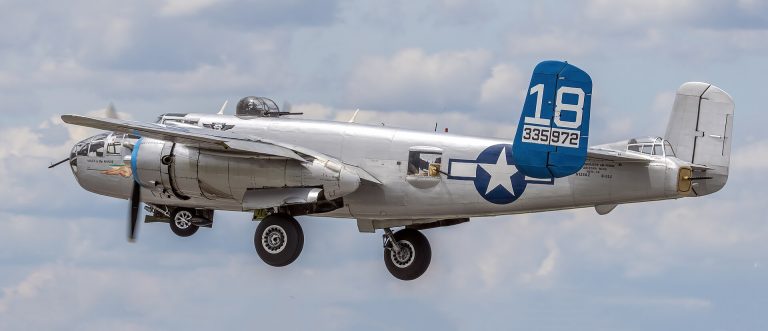
Place the B-10 on a timeline of American bombers and its role becomes obvious. Behind it lie the Keystone and Martin biplane bombers — slow, fabric, strut-braced. Ahead of it lie the Douglas B-18, the Boeing B-17, the North American B-25 and the rest of the great monoplane fleets. The B-10 is the aircraft that connects the two eras, the first quantity-service bomber recognisably belonging to the second.
That is a rare distinction. Most aircraft refine an existing idea; a few change the idea itself. The Martin B-10 belongs to the second, smaller group, and that is why it is remembered long after its brief front-line life ended.
36What the Martin B-10 teaches about the pace of technology+
If there is a lesson in the B-10’s arc, it is humility about the shelf life of even the most advanced technology. A design can be world-beating and, within the working life of the men who fly it, become dangerously outdated — not because it was flawed, but because progress did not pause.
The airmen who flew obsolescent Martins into battle in 1942 were operating, less than a decade after its triumph, an aircraft the world had already left behind. It is a sobering counterpoint to the “wonder bomber” headlines of 1934, and a reminder that in aviation, being first is not the same as being first for long.
You can’t fly a Martin B-10 — but these cockpits are open
The Martin B-10 is a single-seat museum piece, with just one example still flying. But MiGFlug puts you in the cockpit of genuine military jets — from the L-39 Albatros to a MiG-29 at the edge of space. Real aircraft, real fighter pilots, real afterburner.
Fighter Jet Flights
Take the controls of a real ex-military jet with an experienced fighter pilot.
L-39 Albatros
The classic jet trainer — aerobatics and low-level fun, in several countries.
Related aircraft
Related aircraft in the Museum
Sources
Sources & further reading
Where sources disagree — particularly on production totals, sub-variant performance and export fleet sizes — figures on this page are given as approximate and flagged accordingly. Corrections are welcome.