
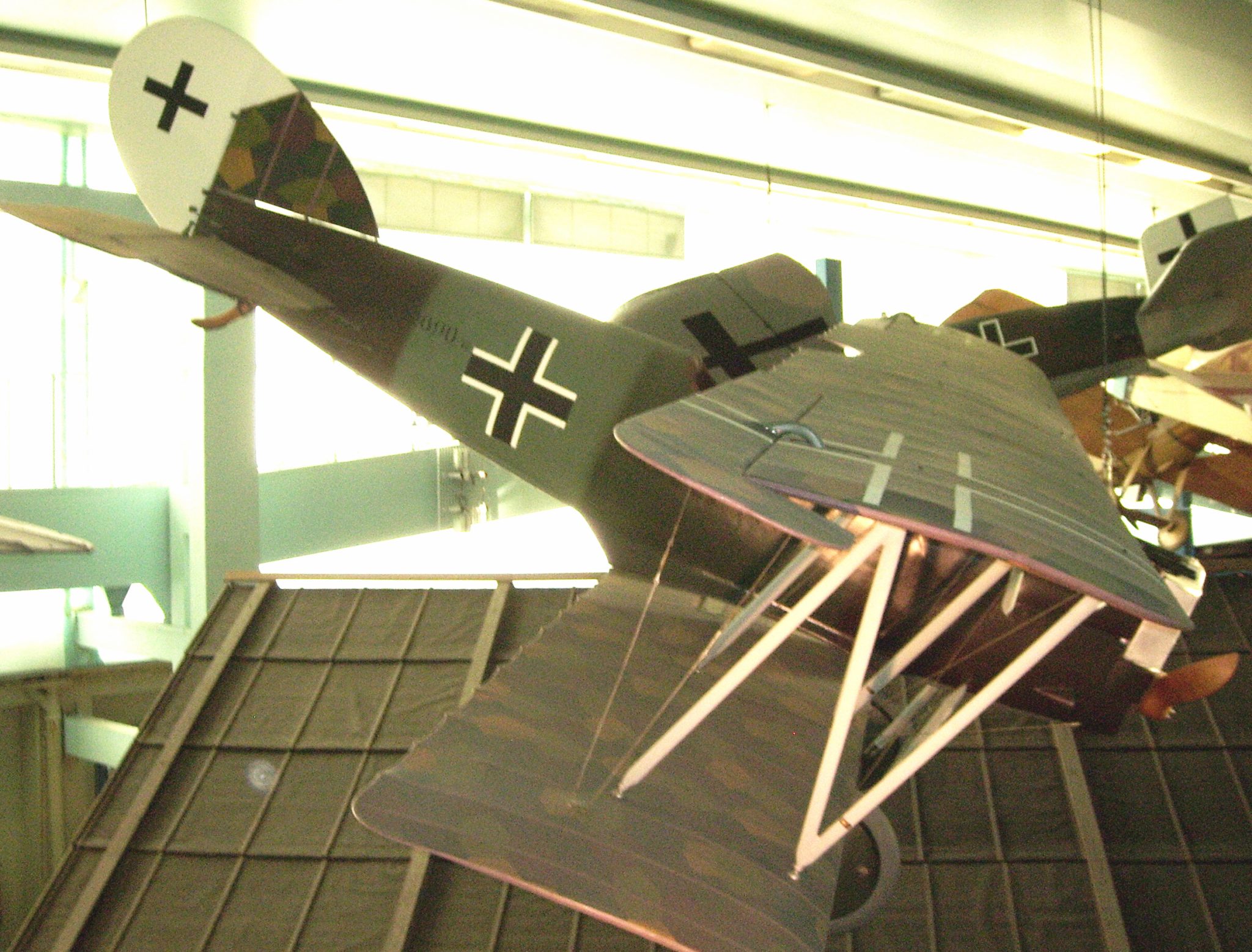
Pfalz D.XII
The strong, fast-diving Bavarian fighter that arrived in the shadow of the Fokker D.VII — resented by the pilots who wanted the Fokker, yet good enough that a handful of its originals still survive today.
The Story
The Pfalz D.XII: the fighter German pilots didn’t want — and then quietly came to respect
In the last summer of the First World War, the German Air Service was desperate for modern fighters. The Fokker D.VII had arrived and was rightly adored. But there were never enough of them, and the factories at Speyer offered a second, very different aeroplane to fill the gap: the Pfalz D.XII. Its reception among front-line pilots was, to put it mildly, cool.
The Pfalz D.XII was a single-seat, two-bay biplane fighter built by Pfalz Flugzeugwerke GmbH of Speyer am Rhein, in Bavaria. It first flew in the spring of 1918, passed its official type test on 19 June 1918, and began reaching the Jagdstaffeln — the German fighter squadrons — in July of that year. Powered by the same 180-horsepower Mercedes D.IIIa water-cooled inline-six that drove many German fighters of the period, and armed with two synchronised 7.92 mm LMG 08/15 “Spandau” machine guns firing through the propeller arc, it was on paper a thoroughly conventional and competitive machine.
The problem was timing and expectation. The men who climbed into a Pfalz D.XII had usually hoped for a Fokker D.VII — an aeroplane famous for being forgiving, for hanging on its propeller in a climb, and for flattering a tired or wounded pilot. The Pfalz was a stiffer, more demanding partner. Its controls were heavier, it needed a longer take-off run, and its taut, wire-braced two-bay wings and higher landing speed gave it a habit of “floating” on the approach that caught out the careless and punished its rather weak landing gear. To a pilot who had wanted a Fokker, all of this read as a downgrade, and many said so bluntly.
And yet the verdict was not the whole truth. Judged on its own merits rather than against the legend of the Fokker, the Pfalz D.XII was a genuinely good fighter. In level flight it was fast — comparable to the D.VII — and it was famously, exceptionally strong. Its robust structure let it dive harder and steeper than most of its contemporaries dared, so a Pfalz pilot in trouble could simply push the nose down and leave an opponent behind, confident the wings would stay on. It was a steady gun platform, and once pilots learned its manners — treat the landing with respect, use the dive, don’t try to out-turn a Camel — opinions warmed considerably.
The D.XII went to war almost entirely with Bavarian units, arriving in numbers only in the final weeks of fighting. It never had the chance, or the time, to build a reputation of its own before the Armistice silenced the Western Front on 11 November 1918. Its most remarkable chapter, in fact, came after the war — when a stroke of Hollywood luck turned a handful of surrendered German scouts into some of the very few genuine First World War German fighters that survive anywhere in the world today.
So the Pfalz D.XII sits in an unusual place in aviation memory. It has no roll-call of famous aces, no war-winning legend, no single celebrated combat — the things that make a fighter famous. What it has instead is a reputation for being disliked, a quiet truth that it was actually rather good, and a survival story so improbable that it left more originals behind than most of its betters. This page tries to hold all three of those things together honestly, because the real Pfalz D.XII is more interesting than either the dismissive verdict or an uncritical defence would suggest.
01Why the Pfalz D.XII existed: the German fighter shortage of 1918+
By early 1918 the Idflieg (Inspektorate der Fliegertruppen) knew that the Albatros and Pfalz D.III scouts then in service were outclassed by the newest Allied fighters. The January 1918 fighter competition at Adlershof crowned the Fokker D.VII as the winner, and it was rushed into mass production. But a single design could not re-equip the whole force fast enough, and German doctrine deliberately kept several manufacturers building fighters in parallel to guarantee supply.
Pfalz — already an established fighter builder through its D.III and D.IIIa — answered with the D.XII. It was never meant to beat the Fokker; it was meant to stand alongside it, so that a Jagdstaffel could be brought up to strength with whatever modern machine the factories could deliver. That origin story explains almost everything about how the aeroplane was received: it was, by design, the fighter you got when the Fokker you wanted wasn’t available.
02The Pfalz D.XII’s construction: a plywood fuselage and those distinctive twin struts+
Pfalz specialised in a beautifully made semi-monocoque fuselage: thin strips or sheets of plywood wrapped and glued over a light wooden frame to form a smooth, strong, torsionally stiff shell. It was more labour-intensive than the fabric-over-frame construction of many rivals, but it produced a clean, aerodynamically efficient body and a structure that could take punishment.
The wings told the other half of the story. The D.XII was a two-bay biplane with the interplane gap braced by paired, near-parallel struts on each side — the feature that lets enthusiasts identify a D.XII at a glance and which gave the aeroplane its slightly “wire-fenced” look compared with the cleaner single-bay Fokker D.VII. Those taut, heavily rigged wings were part of why the aircraft felt stiff in the air and demanded care on landing — and also exactly why it was so magnificently strong in a dive. Every trait pilots complained about and every trait they admired traced back to the same structural choices.
03What “Pfalz D.XII” actually means: reading a German fighter’s name+
The designation packs a lot of information into a few characters. “Pfalz” is the manufacturer, Pfalz Flugzeugwerke, itself named after the Palatinate region of Bavaria in which Speyer sits. The letter “D” is the Idflieg class code for an armed single-seat biplane fighter — a Doppeldecker scout — the same “D” you see in Albatros D.III and Fokker D.VII. The Roman numerals “XII” simply mark it as the twelfth D-class type accepted from that manufacturer’s sequence.
Understanding the code is the surest defence against the confusion that surrounds these aircraft. A “D” number belongs to one manufacturer’s series, so a Pfalz D.III and an Albatros D.III share only a class letter and a number, not a design. Read the maker first, the class letter second and the numeral last, and the whole tangle of 1917–18 German fighter names becomes far easier to keep straight.
The Wider War
The 1918 sky the Pfalz D.XII was born into — and why Germany needed it at all
The Pfalz D.XII cannot be judged in isolation. It was a product of a very specific moment in the air war: the spring and summer of 1918, when Germany was fighting a losing battle of numbers and trying to squeeze the maximum fighting power out of every airframe and engine it could build.
By 1918 the German Air Service had reorganised its fighters into the Jagdstaffeln (hunting squadrons) and grouped the best of them into larger Jagdgeschwader — the mobile “flying circuses” that could be rushed to whichever sector needed air superiority most. The system was excellent, and German pilots and tactics were often superb. But the arithmetic was turning against them: the Allies, now reinforced by a rapidly growing American presence, could put more aircraft, more engines and more trained men into the sky than Germany could hope to match. Quality had to compensate for a widening gap in quantity.
That is the pressure that produced the Fokker D.VII — and the pressure that produced the Pfalz D.XII right behind it. When the January 1918 fighter competition at Adlershof confirmed the Fokker as the new standard, the German authorities did not simply order Fokkers and wait; they could not afford to. They ordered the Fokker into licence production at other firms, and they kept alternative designs like the Pfalz in production so that the total output of modern fighters was as high as the exhausted German aircraft industry could manage. A squadron brought up to strength with Pfalz D.XIIs was a squadron that could fight, and in the desperate summer of 1918 that mattered more than whether the pilots were entirely happy with their mounts.
Against this backdrop the D.XII’s mixed reputation reads very differently. It was never meant to be the best fighter in the sky. It was meant to be a good, strong, buildable fighter that helped keep German squadrons in being while the Fokker lines caught up — and at that job, the historical record suggests, it succeeded. The men who flew it were fighting a war they were slowly losing, in an aeroplane that was not their first choice, and they still made it work. That, more than any single specification, is the honest measure of the Pfalz D.XII.
The Maker
Pfalz Flugzeugwerke: the Bavarian firm that built fighters in the Fokker’s shadow
To understand why the Pfalz D.XII was what it was — and why it went almost entirely to Bavarian squadrons — you have to understand the company that built it, a Speyer aircraft maker that spent the whole war being underestimated.
Pfalz Flugzeugwerke GmbH was founded in 1913 at Speyer am Rhein, in the Bavarian Palatinate (the Pfalz, from which it took its name), and it was backed by the government of the Kingdom of Bavaria. That Bavarian sponsorship shaped its entire career: Bavaria wanted its own aircraft industry supplying its own squadrons, and so Pfalz machines flowed, more often than not, to Bavarian Jagdstaffeln. The D.XII’s heavily Bavarian service was not an accident of 1918 — it was the culmination of a pattern set at the company’s birth.
In its early years Pfalz built monoplanes derived from French Morane-Saulnier designs, and it never quite shed a reputation as a second-tier maker compared with the celebrated names of Fokker and Albatros. Its breakthrough came with the adoption of a superb structural technique: the wrapped-plywood, semi-monocoque fuselage associated with LFG Roland, which Pfalz refined into a house speciality. The result was the Pfalz D.III and D.IIIa of 1917 — sleek, strong, shark-bodied fighters that served capably even as they were overshadowed by the Albatros scouts alongside which they flew.
The D.XII of 1918 was the direct heir to that tradition: the same commitment to a strong plywood fuselage, the same role as the dependable understudy rather than the star. Pfalz was, in a sense, always the Pfalz D.XII of German aircraft firms — competent, robust, quietly effective and perpetually in someone else’s limelight. The company did not survive the collapse of German military aviation after the Armistice in anything like its wartime form, but the handful of its fighters that endure — almost all of them D.XIIs, saved abroad — have given it a longer memory than many of its more famous rivals enjoy.
Design & Engineering
How the Pfalz D.XII was built to fight — and why it earned its nickname the hard way
The engineering of the Pfalz D.XII is the key to its whole contradictory character. Almost every quality that pilots praised and almost every quality that pilots cursed came from the same handful of deliberate design decisions — the strong wrapped-plywood body, the heavily braced two-bay wings, the proven but altitude-limited Mercedes engine. Read the aircraft as a set of engineering trade-offs and the “cart-horse” reputation stops being a mystery and becomes an entirely logical consequence.
The Pfalz D.XII’s dive: strength you could stake your life on
The wrapped-plywood fuselage and stoutly rigged two-bay wings made the D.XII one of the strongest fighters of 1918. Pilots learned they could dive it far harder than a rotary-engined opponent could follow — the type’s signature escape and attack move, and the quality that most redeemed it in combat.
The Pfalz D.XII’s Mercedes D.IIIa: 180 reliable horses
The water-cooled 180 hp Mercedes D.IIIa inline-six was proven, well-understood and shared with much of the German fighter fleet. It gave the D.XII level speed on a par with the Fokker D.VII, even if it lacked the over-compressed BMW IIIa’s startling high-altitude climb.
The Pfalz D.XII’s controls: heavy hands, honest answers
Firmer and less forgiving than the Fokker, the D.XII needed a longer run to unstick, was slower to roll, and floated on the approach onto a fragile undercarriage. Flown with respect it was a steady, accurate gun platform; flown carelessly it bit — hence the “cart-horse” reputation.
04The Pfalz D.XII’s guns and cockpit: two Spandaus and a clear field of fire+
Like almost every serious German single-seater of 1918, the D.XII carried two fixed, forward-firing 7.92 mm LMG 08/15 machine guns — the aircraft version of the Maxim-derived weapon universally nicknamed the “Spandau” after the arsenal that made it. Both were synchronised to fire through the spinning propeller, giving the pilot a concentrated twin stream directly along his line of sight.
The cockpit sat behind and slightly below the upper wing’s trailing edge. Visibility forward and downward was reasonable for the period, and the smooth plywood decking gave the pilot a tidy, businesslike office. The gun breeches sat within reach for clearing the frequent jams that plagued all synchronised installations of the era.
05The Pfalz D.XII versus the Fokker D.VII: an honest side-by-side+
Level speed: broadly equal. Climb and altitude performance: the Fokker, especially the BMW-engined D.VIIF, was better, and its ability to “hang on the prop” and fight nose-high was legendary. Turning and general agility: the Fokker again, and it was far more forgiving of a heavy-handed or exhausted pilot. Diving strength and structural robustness: the Pfalz, clearly and by a wide margin. Landing and ground handling: the Fokker was much the easier and safer.
Read that list and the whole affair makes sense. The Fokker D.VII was the better all-round dogfighter and the better aeroplane to learn on, which is why pilots wanted it. But the Pfalz D.XII was not a bad aircraft — it was a specialised, sturdy, fast machine whose strengths simply didn’t match the qualities front-line pilots prized most. The Smithsonian’s own assessment is blunt and fair: it “performed well enough to relieve the German Air Service of its shortage of competitive fighters.”
06The Pfalz D.XII’s colours, markings and finish+
Like most late-war German fighters, service D.XIIs typically wore the printed “Buntfarbenaufdruck” lozenge camouflage fabric on their flying surfaces — a pre-printed multi-colour polygonal pattern that saved paint and labour — while the plywood fuselage carried varnish, painted finishes or unit and personal markings. The Balkenkreuz (straight-armed cross) national insignia of the war’s final months identified them as German.
Because several survivors spent time as Hollywood props, their present-day colours do not always reflect an authentic 1918 combat scheme — the Smithsonian aircraft, for instance, is deliberately displayed in its film-prop markings. This is a useful reminder to identify the type by its shape and structure rather than its paint, since the paint may tell a story from the 1930s rather than 1918.
07The Pfalz D.XII’s operating costs: what a 1918 fighter’s economics looked like+
Meaningful unit-cost and operating-cost figures for the Pfalz D.XII are simply not reliably recorded. Wartime German procurement accounting, currency collapse and the destruction of records make any single price tag untrustworthy, and we would rather say so than invent one.
What can be said is qualitative. The wrapped-plywood fuselage was more skilled and time-consuming to build than fabric-covered rivals, so in manufacturing terms the D.XII was not the cheapest option — a real consideration in the resource-starved Germany of 1918. In service, its economics were dominated, as with all these machines, by the Mercedes D.IIIa engine: engines were the scarce, expensive, hand-built heart of the aeroplane, and airframes were comparatively expendable around them.
In The Air
How the Pfalz D.XII was actually flown — take-off, fight and the all-important landing
Every complaint and every compliment the Pfalz D.XII attracted makes sense once you follow a sortie from the moment the chocks were pulled to the moment the wheels touched grass again. This was an aeroplane that rewarded discipline and punished the assumption that it would behave like a Fokker.
On take-off, the D.XII wanted room. Its higher wing loading and heavier feel meant a noticeably longer ground run than the Fokker D.VII before it would unstick, and a pilot used to the Fokker’s eager leap into the air had to be patient and let the Pfalz build speed. Once flying, the aircraft climbed steadily rather than spectacularly — roughly four metres per second — and the Mercedes D.IIIa pulled it up to a useful ceiling near 5,600 metres, though without the electric high-altitude urgency of the over-compressed BMW engine in the best Fokkers.
In the fight itself, the golden rule was to play to the aeroplane’s strengths and never to its weaknesses. The D.XII would not out-turn a Sopwith Camel or a SPAD in a scrap, and a pilot who tried to mix it in a tight, low-speed turning duel was fighting the aircraft as much as the enemy. What the Pfalz offered instead was speed and, above all, the dive. A D.XII pilot who kept his energy up, made slashing diving passes and then used the aircraft’s tremendous structural strength to bunt away and extend was a genuinely dangerous opponent — and, crucially, one who could always break off a losing fight by simply diving through the floor, a door that was closed to more lightly built machines.
Then came the landing, the phase that did most to blacken the type’s name. The clean wing floated in ground effect, reluctant to quit flying, so a pilot who arrived a few miles per hour too fast found himself sailing down the field waiting for the aircraft to settle. Combined with an undercarriage that was not built to absorb heavy, bounced arrivals, this produced a steady drip of landing accidents that pilots blamed squarely on the aeroplane. The squadrons that got on best with the D.XII were the ones that treated the approach as a precise, slightly faster, firmly flown affair rather than the gentle three-point float a Fokker allowed.
None of this was exotic. It was simply a different aircraft with a different set of manners, arriving among pilots who had been told to expect something else. The men who adapted found a strong, fast, honest fighter under the awkward first impression. The men who did not adapt wrote the quotes everyone remembers.
It is worth stressing how ordinary all of this was in engineering terms. The D.XII was not eccentric or badly made — on the contrary, it was beautifully built. It simply optimised for strength and speed where the Fokker optimised for docility and agility, and in the specific arena of the low-speed turning dogfight that dominated pilots’ sense of what mattered, the Fokker’s choices looked better. Fly the two aircraft on a fast diving attack instead, and the ranking would reverse. That is the honest heart of the whole Pfalz-versus-Fokker debate: not good against bad, but one set of trade-offs against another.
Full Specifications
Pfalz D.XII specifications: dimensions, performance and armament
Figures below are drawn from the Smithsonian National Air and Space Museum and standard reference sources. First World War performance data varies between sources and was rarely measured to modern standards — treat all figures as period estimates and expect variation of a few per cent. Where a value is especially uncertain, such as the top speed or the production total, it is flagged as an estimate in the table itself.
Baseline: the Pfalz D.XII in the form the Jagdstaffeln actually received from July 1918 — a single-seat two-bay biplane fighter on the over-compressed 180 hp Mercedes D.IIIaü, two synchronised LMG 08/15 guns, a frontal car-type radiator and the wrapped-plywood fuselage Pfalz had inherited from its Roland licence work. Deltas for the D.III and D.IIIa that preceded it, for the BMW-engined D.XIIf, the Benz-engined D.XIV and the D.XV are in grey. Five corrections before the figures. First, the engine. Data tables routinely print "Mercedes D.IIIa, 180 hp", which conflates two engines: the D.IIIa was rated at 170 hp, and 180 hp is the over-compressed D.IIIaü with domed pistons and an altitude-compensating carburettor. Production D.XIIs were designed around the aü, and squadron aircraft flew with whichever of the two the supply system produced. Second, the speed conversion. 170 km/h is 106 mph; the 110 mph that circulates in English-language tables is a conversion error repeated for sixty years, and it quietly makes the aeroplane look closer to the Fokker D.VII than it was. Third, the order sequence. The D.XII did not win its production contracts at the second Adlershof competition: a first order for 50 followed the March 1918 prototype and pre-dated the trials. What the competition produced was the enormous follow-on order, and it produced it largely because Ernst Udet said so. The frequently repeated claim that Hans Weiss also spoke for the type is hard to reconcile with the calendar, since Weiss was killed on 2 May 1918 and the second D-type competition ran from late May into June. Fourth, climb. The "4 m/s rate of climb" in modern tables is a back-conversion that matches neither published time to height, and it is given here the period way, as minutes to a stated altitude. Fifth, the Armistice. Only the Fokker D.VII was named in the surrender terms; the roughly 175 D.XIIs that went to the Allies went as part of the general handover of war material, not because anyone wrote them into a treaty.
Dimensions & weights
- Crew
- 1
- Length
- 6.35 m (20 ft 10 in)
- Wingspan, upper
- 9.00 m (29 ft 6 in) the lower wing was slightly shorter and the cellule was unequal-span and staggered; period drawings and modern reconstructions disagree over the lower span by a few centimetres and no figure is quoted here that the sources will not support
- Height
- 2.70 m (8 ft 10 in)
- Wing area
- 21.7 m² (234 sq ft)
- Empty weight
- 716 kg (1,579 lb)
- Loaded weight
- 897 kg (1,978 lb)
- Useful load
- 181 kg (399 lb) pilot, parachute, petrol, oil, water, two guns and their ammunition. There was nothing else to put in it, and no margin for anything else either
- Wing loading
- 41.3 kg/m² (8.5 lb/sq ft) high for 1918 and the arithmetic behind two of the pilots’ three complaints: the long take-off run and the flat, fast, floating approach
- Power loading
- 4.98 kg/hp (11.0 lb/hp)
- Fuselage structure
- LFG Roland Wickelrumpf — two layers of thin plywood strip wound in opposing spirals over a male mould to make each half-shell, the halves glued together, then fabric-covered and doped. Strong, light, aerodynamically clean, slow to build and expensive; on the earlier D.III it was also prone to warping if the timber had not been properly seasoned
- Wing structure
- two-bay, two-spar wooden wings with N-form interplane struts and a full set of flying and landing wires. Ailerons on the upper wing only the bracing is the reason the aeroplane could be dived hard, and the reason the riggers hated it: a Fokker D.VII’s cantilever cellule needed almost no tuning, and a D.XII’s needed a great deal
- Undercarriage
- fixed cross-axle vee undercarriage on rubber-cord springing, with a wooden tailskid the weakest part of the aeroplane. Combined with a landing that would not settle, it produced a steady attrition of broken legs and spread axles that no squadron with a supply of Fokkers would have tolerated
- Number built
- ~750 to 800 by the Armistice Pfalz Flugzeugwerke at Speyer only; the D.XII was never licence-built elsewhere, unlike the Fokker D.VII, which Albatros and OAW turned out in quantity
Performance
- Maximum speed
- 170 km/h (106 mph) at low level a few German sources give 180 km/h (112 mph); the spread is loading, propeller and whether the engine was a D.IIIa or a D.IIIaü
- Climb to 1,000 m
- 3 min 24 s to 1,000 m (3,280 ft) given as a time to height in the German type-test manner rather than as a rate of climb
- Climb to 5,000 m
- 29 min 54 s to 5,000 m (16,400 ft)
- Service ceiling
- 5,600 m (18,400 ft)
- Endurance
- 2 h 30 min the figure that governed a Jagdstaffel’s day. The 420 km (261 miles) sometimes printed as "range" is that endurance multiplied by a cruising speed, not a distance anybody flew
- Take-off run
- long, and the single most consistent complaint in the front-line reports. Off a wet or short Flugplatz the D.XII used ground that a Fokker did not need
- Landing
- fast, flat and reluctant to stop flying. The clean two-bay cellule floated, and pilots converting from the Fokker’s forgiving thick-section wing arrived too fast and ran out of aerodrome
- Dive
- the aeroplane’s real virtue. The braced two-spar cellule could be dived to speeds the Fokker’s cantilever wing was never cleared for, an inheritance from the D.III’s balloon-attacking career and the one respect in which every pilot agreed the Pfalz was the better machine
- Against the Fokker D.VII, Mercedes-engined
- 189 km/h (117 mph) and 4 min 15 s to 1,000 m. On the published cards the Pfalz was slower in level flight and reached 1,000 m sooner — which is the opposite of the received story, and a reminder that type-test figures were flown by manufacturers’ pilots on chosen days. What the front-line pilot experienced was control forces and landing behaviour, and neither appears on a climb card
- Against the Fokker D.VII, BMW IIIa-engined
- 200 km/h (124 mph) and 1 min 40 s to 1,000 m. This is the aeroplane the Jastas actually wanted, and against it the D.XII had no case at all. Much of the D.XII’s bad name is really the gap between a Mercedes and a BMW
- Against the SPAD S.XIII and the S.E.5a
- 218 km/h (135 mph) and 222 km/h (138 mph). Both Allied fighters were faster in level flight; both could be met on level terms by a Pfalz that started with height and used the dive
- Handling
- heavy on all three controls, poor in roll, and unwilling to change direction quickly. Leutnant Rudolf Stark, who ended the war commanding Jasta 35b, set the two aeroplanes side by side: the Pfalz was "a clumsy cart-horse that went heavy in the reins and obeyed nothing but the most brutal force", the Fokker "a bloodstock animal that answered to the slightest movement"
- Spinning
- it would enter a spin readily and was disliked for it. In an air force that had begun issuing parachutes in 1918 this mattered less than it had in 1917, but it did nothing for a new pilot’s confidence
Propulsion & systems
- Engine
- one Mercedes D.IIIaü, six-cylinder water-cooled upright inline of 14.78 litres (902 cu in), bore 140 mm and stroke 160 mm (5.51 in × 6.30 in), single overhead camshaft
- Rated power
- 180 hp (134 kW), with the over-compressed engine giving up to about 200 hp when the throttle could be opened fully at height the aü used domed pistons and an altitude-compensating carburettor and had to be throttled back low down to avoid detonation. It was the most numerous German fighter engine of 1918 and the same engine that powered most Fokker D.VIIs
- Engine weight
- about 310 kg (683 lb) dry — better than a third of the aeroplane’s empty weight
- Alternative engines
- Mercedes D.IIIa of 170 hp (127 kW) where the aü was short; 185 hp (138 kW) BMW IIIa in the proposed D.XIIf, for which Pfalz was allotted 84 engines between July and October 1918 without a single photograph confirming a completed aircraft; 200 hp (149 kW) Benz Bz.IVü in the D.XIV
- Cooling
- frontal car-type radiator mounted ahead of the cylinder block in the nose, replacing the D.III’s flush wing radiator and the reason the D.XII was late. Deliveries slipped into June 1918 because radiators, not airframes, were the bottleneck — an unglamorous supply failure that cost the type six weeks of a war with five months left to run
- Propeller
- two-blade fixed-pitch laminated wooden airscrew, driven direct manufacturers and diameters varied between batches and are not consistently recorded; no figure is given here rather than pick one
- Starting
- hand-swung, with a mechanic on the blade and a second man on the compression release. There was no on-board starter of any kind
- Gun synchronisation
- Fokker Zentralsteuerung — the flexible-drive-shaft gear taken off the engine camshaft, with a separate trigger motor and clutch for each gun, standardised across all German aircraft by order of 24 July 1917 the point of the Zentralsteuerung, and the reason it displaced Fokker’s own earlier push-rod Stangensteuerung and the Albatros Hedtke and Semmler gears, is that it worked with an inline engine and with two guns at once: each gun was timed independently, so a failure in one did not stop the other
- Fuel and oil
- main and gravity tanks in the fuselage behind the firewall, feeding by air pressure with a hand pump as back-up. Capacity is not consistently published; the 2 h 30 min endurance is the usable figure
- Electrics and instruments
- Bosch magneto ignition and nothing else electrical. Tachometer, altimeter, fuel pressure gauge, compass, water thermometer and a watch. No radio, no navigation aids, no lighting, no oxygen — which is what a 5,600 m ceiling really means
- Manufacturer
- Pfalz Flugzeugwerke GmbH, Speyer am Rhein, a Bavarian firm founded on 3 June 1913 by the Eversbusch brothers, whose earlier work was licence-building Morane-Saulnier monoplanes and then Roland D.I and D.II fighters the Bavarian connection is why so many D.XIIs went to Bavarian Jagdstaffeln, and why the type’s reputation was formed inside a small and vocal community of units
08Pfalz D.XII variants and the wider Pfalz fighter family+
The D.XII was the principal production version and the one that reached the front. A small number were fitted with the higher-compression 200 hp Mercedes D.IIIav or experimented with alternative engines and radiators, but these did not change the type’s essential character. Pfalz also pursued more advanced designs in 1918 — notably the parasol-monoplane Pfalz D.VIII and later prototypes — but the war ended before any could matter.
It is worth guarding against a common confusion: the earlier Pfalz D.III / D.IIIa of 1917 is a different, single-bay aircraft with a distinctive shark-like plywood fuselage, and the Pfalz D.III should never be muddled with the Albatros D.III it served alongside. The D.XII of 1918 is the two-bay, twin-strut machine described on this page.
09How many Pfalz D.XIIs were built — and why the number is uncertain+
Sources most often quote a figure of roughly 750 to 800 machines completed by the Armistice, and the Smithsonian states “nearly 800 delivered.” The exact total is genuinely uncertain: German wartime production records are incomplete, contracts were still open when fighting stopped, and airframes in various stages of completion muddy any clean count. We therefore give the figure as an estimate and flag it as contested rather than pretend to a precision the record cannot support.
The same caution applies to the roughly 175 airframes said to have gone to the Allies as war prizes, and to performance figures like the 170 km/h top speed. All are best-available estimates from a period when data was gathered inconsistently and records were later lost or destroyed. Where this page gives a number, assume a sensible margin of error rather than laboratory precision — that is simply the nature of First World War aircraft history.
10Keeping the Pfalz D.XII alive: restorations, reproductions and modellers+
Beyond the four original survivors, the type is kept alive in other ways. Museum restoration teams have invested years in conserving the surviving airframes — the Australian War Memorial’s multi-year rebuild of 2600/18 being a notable example — and their work has, in turn, greatly improved the documentary record of exactly how a D.XII was built. Every careful restoration adds to what is known about the plywood fuselage, the rigging and the finish.
The D.XII is also a favourite subject for enthusiasts and modellers precisely because of its distinctive twin-strut silhouette and its rare status as a genuine German survivor. Detailed reference photographs of the museum aircraft, several of which appear in this page’s gallery courtesy of Wikimedia Commons and the San Diego Air and Space Museum archive, are the raw material for that continuing enthusiasm — a quiet afterlife for an aeroplane that its own pilots were once so quick to dismiss.
11The Pfalz D.XII’s radiator and cooling: a small clue to a big difference+
Unlike the Fokker D.VII, whose flat frontal “car-type” radiator sat in the nose, the Pfalz used a wing-mounted radiator arrangement typical of the Mercedes-engined scouts of its lineage, feeding the water-cooled inline-six. It is the kind of detail that looks trivial but matters to a restorer or a spotter: cooling layout, exhaust routing and the exact shape of the nose are among the surest ways to tell late-war German fighters apart, and they reflect each manufacturer’s own engineering habits rather than any shared standard.
The Mercedes D.IIIa itself was the quiet hero of the German fighter arm. Robust, well-developed and produced in large numbers, it was the engine that kept aircraft like the D.XII competitive. Its limitation was altitude: it lacked the over-compression of the scarce BMW IIIa that made the very best Fokker D.VIIFs such astonishing climbers. On the Pfalz, the D.IIIa gave dependable, honest performance rather than record-breaking numbers — which is a fair summary of the whole aeroplane.
12Near-miss designations: keeping the Pfalz D.XII straight from its cousins+
First World War aircraft designations are a minefield of near-misses, and the Pfalz sits in the middle of several. The Pfalz D.XII is not the Pfalz D.III (an earlier, single-bay 1917 fighter from the same firm). Neither Pfalz is the Albatros D.III, a wholly separate aircraft they flew alongside — a Pfalz D.III and an Albatros D.III are different machines from different makers that merely share a mark number. And the Pfalz D.XII is not the Fokker D.VII, however often the two are mentioned in the same breath. When reading contemporary accounts, it always pays to check which “D.III” or which “D.XII” an author means.
Armament & payload
The Pfalz D.XII carried two Spandau guns, no bombs and nothing else, so its armament story is really the story of the gear that fired them through the airscrew
A 1918 German single-seat fighter had one weapon system and it was standardised across the whole force: a pair of belt-fed 7.92 mm LMG 08/15 machine guns on the upper fuselage decking, ahead of the pilot, timed to fire between the propeller blades. The D.XII carried exactly that, in exactly the same place as a Fokker D.VII or an Albatros D.Va, with the same ammunition, the same sights and the same synchronising gear. Nothing about the armament distinguished this aeroplane from its rivals, and nothing about it was chosen by Pfalz. What the D.XII brought to the gun was a steady gun platform and a structure that could be dived after a target without the pilot doing arithmetic about his wing spars — the inheritance of the D.III, which had made its name attacking observation balloons precisely because it could be dived when Albatros scouts could not. Because the six headings below are written for aircraft with bomb bays and missile rails, they are repurposed here to the things a 1918 scout actually had: the guns, their ammunition and sights, the synchronising gear, what else the airframe could carry, what the pilot could see, and what the type deliberately did without.
The guns
- Two 7.92 mm LMG 08/15, the aircraft version of the Maxim-pattern MG 08 — universally called the Spandau after the arsenal, a nickname the Germans themselves did not use
- Mounted side by side on the upper fuselage decking directly ahead of the cockpit, breeches within the pilot’s reach so that a jam could be cleared in the air with a mallet and a great deal of swearing
- That placement was the lesson of the Pfalz D.III, whose guns were buried inside the fuselage in the Roland manner and were effectively unreachable in flight; the D.IIIa moved them on top in November 1917 and the D.XII never repeated the mistake
- Cyclic rate around 450 rounds per minute per gun, reduced further by the synchronising interrupter — the practical output of a 1918 fighter was a short burst measured in tenths of a second, not a stream of fire
- Rifle-calibre and unchanged since 1915. Germany fielded no fighter cannon in the First World War, and the twin-Spandau battery was still the standard armament of a front-line German fighter on the last morning of the war.
Ammunition and feed
- Typically 500 rounds per gun in fabric belts, fed from magazines in the fuselage beneath the decking, with the spent links and cases collected rather than thrown into the slipstream
- Standard ball ammunition mixed on the belt with armour-piercing and tracer, the tracer both for aiming correction and for the pilot to see that his guns were still running
- Phosphorus incendiary rounds were issued for balloon work and were the reason the D.III lineage mattered: a hydrogen balloon does not burn from a hole, it burns from a flame
- Belt stoppages were the routine hazard. The commonest were separated cases and misfeeds, and they were the reason a fighter carried two guns rather than one
- Ammunition loads varied with unit practice and with what the depot had. Figures of 400 and 500 rounds per gun both appear in the literature for German scouts of 1918 and neither is wrong for every aeroplane.
Synchronisation gear
- Fokker Zentralsteuerung, the flexible-shaft gear designed in late 1916 and available from mid-1917, driven off the engine camshaft and standardised on all German service aircraft by an official order of 24 July 1917
- It replaced Fokker’s original Stangensteuerung, the push-rod gear of the Eindecker, which had been built around a rotary engine and never worked properly with an inline engine or with more than one gun
- Each gun had its own trigger motor and its own clutch, so the two guns were timed separately and a failure in one gear left the other gun firing — the specific advance that made the twin-gun inline fighter reliable
- Albatros had developed its own answers, the Hedtke gear and the improved Albatros-Semmler Steuerung, precisely because the early Fokker gear did not suit inline engines; the 1917 order swept them aside in favour of one system across the whole air service
- This is the least-discussed reason German fighters of 1918 were dangerous. A common, well-understood, engine-driven gear on every aeroplane meant armourers moved between types without retraining, and it is why the D.XII’s guns are the one part of it that nobody complained about.
Other stores carried
- Effectively none. The D.XII had no bomb racks, no external carriers, no hardpoints and no provision for any offensive load beyond its two guns
- A signal pistol with a handful of coloured cartridges, carried in the cockpit for recognition, recall and the standard Jagdstaffel signals — a fighter with no radio still had to be able to say something
- A Heinecke static-line parachute, issued to German single-seater pilots from the spring of 1918 and the one piece of equipment the D.XII carried that no Allied fighter pilot was given. Its weight is inside the 181 kg useful load
- Nothing photographic. Unlike the two-seaters it escorted, the D.XII carried no camera, no wireless, no observer and no means of bringing anything home but a verbal report
- Some German scouts were flown with small anti-personnel bombs improvised for ground attack in the March and July 1918 offensives. There is no good evidence the D.XII was used this way, and it arrived at the front after the offensives had failed.
Sights and the pilot’s view
- Simple ring-and-bead iron sights above the breeches, occasionally supplemented by a tubular Oigee telescopic sight on individual aircraft at a pilot’s request
- The view forward and down was better than the Fokker D.VII’s: the D.XII’s upper wing had less chord over the cockpit and the fuselage was slimmer, which is a real advantage in the one manoeuvre the type was good at, the diving attack
- The view forward and up was worse than an Albatros pilot would have liked, and the frontal radiator put a hot, opaque block in the middle of the deflection picture on a climbing shot
- An open cockpit, no heating, no oxygen and a windscreen of the period’s dimensions. Above 5,000 m in a German winter the limiting component was the pilot
- Sight fits were not standardised. Contemporary photographs of D.XIIs on the same aerodrome show ring-and-bead only, ring-and-bead with a telescope, and telescopes mounted at noticeably different angles.
What it deliberately did without
- No armour. German fighter pilots of 1918 flew behind a petrol tank and an unprotected engine and accepted it, because the alternative was a slower aeroplane
- No self-sealing tanks, no fire extinguisher and no fireproof bulkhead beyond the engine firewall — the risk that made the Heinecke parachute worth its weight
- No electrical system, no radio and no lighting, so no night flying and no cooperation with anti-aircraft defences beyond ground signal panels
- No cannon, no rockets, no guided anything. Every one of those existed in prototype form somewhere in 1918; none of them was going into a Jagdstaffel scout
- Judged as a weapon rather than an aeroplane, the D.XII was exactly as armed as everything else Germany flew. Its failure to impress had nothing to do with what it shot and everything to do with how it behaved between the take-off run and the landing.
Three typical loadouts
- Jagdstaffel patrol, Western Front, August 1918
- Two LMG 08/15 with 500 rounds each on mixed ball, armour-piercing and tracer; full fuel for a 2 h 30 min sortie; signal pistol and cartridges; Heinecke parachute. A Kette of five or six aircraft climbing on their own side of the line to 4,000 m before crossing, because with 29 min 54 s to 5,000 m nobody climbed into a fight.
- Balloon attack
- The same two guns with phosphorus incendiary heavy in the belts, fuel cut back if the target was close, and a dive begun from as much height as the pilot could get. The D.XII’s braced cellule was cleared for the dive speeds this needed, which is the tactical inheritance from the Pfalz D.III and the one mission where nobody in a Jasta wished he were in a Fokker.
- Disarmed, 1919 onward
- Guns removed, gun troughs faired or left empty, ammunition boxes stripped. The condition of every surrendered airframe, every American and Canadian evaluation machine, and every D.XII that later flew for a film company — and, since the surviving aircraft are all in it, the configuration in which the type is now almost exclusively seen.
Sourcing: Gray and Thetford, German Aircraft of the First World War (Putnam, 1962) for the airframe data; Jack Herris, Pfalz Aircraft of WWI (Aeronaut Books, 2012) and the earlier Flying Machine Press edition of 2001 for production, engine allocation and the D.XIIf question; Greg VanWyngarden, Pfalz Scout Aces of World War I (Osprey, 2006) for unit service and pilot testimony. Ammunition loads, sight fits and parachute issue are reconstructed from unit practice and photographs rather than from a surviving armament schedule for this type, and are stated as typical rather than official.
Variants
Pfalz built four generations of scout in twenty months, and the D.XII is the only one of which an original example survives anywhere in the world
Pfalz Flugzeugwerke was a Bavarian firm that reached fighter design late and by way of other people’s aeroplanes: Morane-Saulnier monoplanes under licence, then Roland D.I and D.II fighters under licence, and only in 1917 an original design of its own. What it took from Roland was not a shape but a process — the patented Wickelrumpf wrapped-plywood fuselage — and that process runs unbroken from the D.III of 1917 through the D.XII to the D.XV that was approved for production three days after the fighting stopped.
The lineage is worth reading as a single argument about structure. Pfalz built strong, clean, wooden aeroplanes that could be dived hard and were tiring to fly; Fokker built light, forgiving, steel-tube-and-fabric aeroplanes with cantilever wings that flattered mediocre pilots. In 1917, against Albatros scouts whose lower wings failed in dives, the Pfalz argument won a niche. In 1918, against the Fokker D.VII, it lost the war of opinion inside the Jagdstaffeln, and it lost it before most pilots had flown the D.XII at all — because a unit told it was getting Pfalz scouts knew it was not getting Fokkers, and judged the aeroplane accordingly on the day it arrived.
- Pfalz D.III (1917, ~260 built)
- The first original Pfalz fighter, designed by Rudolph Gehringer, prototype April 1917, in service from August with Jasta 10 the first recipient. Mercedes D.IIIa, wrapped-plywood fuselage, two LMG 08/15 buried inside the fuselage in the Roland manner where the pilot could not reach them.
- Pfalz D.IIIa (November 1917, ~750 built)
- Guns moved on to the upper decking where a jam could be cleared, enlarged semicircular tailplane, cropped lower wingtips. Inferior to the Albatros D.V in most respects and better than either in a dive, which made it the German balloon-attack scout of 1917 and 1918. Front-line strength fell from 433 aircraft on 30 April 1918 to 166 by 31 August as the D.VII arrived.
- Pfalz D.XII prototype (first flight March 1918)
- Gehringer again, working from SPAD S.VII wing data circulated to German manufacturers by Idflieg. New two-bay wire-braced cellule, frontal car-type radiator in place of the D.III’s flush wing radiator, the same Wickelrumpf fuselage. An initial order for 50 followed almost at once.
- Pfalz D.XII, early production (June 1918, first ~200)
- Passed official type test on 19 June 1918. Distinguished by a rectangular fin and rudder. Deliveries ran late because the new frontal radiators were in short supply, not because the airframes were.
- Pfalz D.XII, late production (1918, balance of ~750 to 800)
- Enlarged rounded rudder, the shape in which the type is usually illustrated. Issued from July 1918, principally to Bavarian Jagdstaffeln, and received by several of them with open resentment because it was visibly not a Fokker D.VII.
- Pfalz D.XIIf (1918, no confirmed production)
- Proposed BMW IIIa installation. Pfalz was allotted 84 of the over-compressed BMW engines between July and October 1918, but no photograph is known of a completed D.XIIf. Anthony Fokker claimed after the war that pilots wrecked D.XIIfs deliberately so that the BMWs could be salvaged for Fokker D.VIIs — a story that says more about Fokker than about the Pfalz, and one that nobody has corroborated.
- Pfalz D.XIV (1918, small production)
- Same fuselage and basic wing structure with the 200 hp Benz Bz.IVü, longer-span wings, enlarged fin and enlarged ailerons. Flown at the second Adlershof competition; production stopped almost immediately because it showed no advantage over the D.XII and the Benz engines were wanted for reconnaissance aircraft.
- Pfalz D.XV (October 1918, 74 fuselages)
- The interesting one. Both wings carried clear of the fuselage on outward-leaning N-struts with no cabane and no flying wires, BMW IIIa, 203 km/h (126 mph) at 4,000 m. Judged fast and manoeuvrable at the third D-type competition, and tail-heavy and hard to land. Approved for production on 4 November 1918. Allied inspectors found 74 completed fuselages at Speyer in the autumn of 1919 and not one aeroplane that had reached a squadron.
- Pfalz D.VIII (1918, 40 built)
- The rotary-engined branch of the family, on the geared Siemens-Halske Sh.III with Oberursel U.III and Goebel Goe.III alternatives tried on prototypes. 190 km/h (118 mph), twin Spandaus, and too late for anything but evaluation.
- Post-war and evaluation aircraft (1919 onward)
- About 175 D.XIIs passed to the Allies under the general surrender of war material — the Armistice named only the Fokker D.VII — and examples went to the United States, Canada, France and Australia for testing or exhibition. Allied test pilots reached the same verdict as the Germans. Poland operated two D.XIIs after the war.
Survivors, stated precisely. Four original Pfalz D.XII airframes survive, and they are the only original Pfalz fighters of any mark in existence: one at the National Air and Space Museum in Washington; one at the Museum of Flight in Seattle, which came from the Champlin Fighter Museum at Mesa, Arizona when that collection closed in 2003; one at the Musée de l’Air et de l’Espace at Le Bourget, serial 2690/18; and 2600/18 at the Australian War Memorial in Canberra, allotted to Australia under the Armistice terms, shipped from France by way of England in 1919, shown in Melbourne and Adelaide in 1920 and in Sydney in 1924, put into storage in 2001, restored at the Treloar Technology Centre and on display in ANZAC Hall since 2008. All four are original in structure; all four have been recovered, redoped and in places refitted, and none should be described as untouched. The two American aircraft owe their existence to Hollywood: in the 1920s two war-surplus D.XIIs were sold to the Crawford Aeroplane and Supply Company of Venice, California, went into the film fleet that supplied the aviation pictures of the period and appeared in The Dawn Patrol of 1930, after which they passed to private collectors. Louis Kinnell, a Paramount property manager, had one restored to flying condition in the workshops of Chaffey Junior College, kept it at Dycer Field in Los Angeles and flew it unregistered for a short time in 1939. The American film industry, which is usually blamed for destroying historic aircraft, is the reason these two exist. Everything else wearing Pfalz markings today is new: no original D.III survives at all, and what is shown as one is either of the two flying replicas built for The Blue Max in 1966 — one from scratch, one converted from a de Havilland Tiger Moth, both now in New Zealand — or Ron Kitchen’s 1987 replica, now static at the Cavanaugh Flight Museum in Texas, or the static replica the modern Pfalz Flugzeugwerke built in 2005 for the Technik Museum Speyer. The claim that the two American D.XIIs are specifically the pair sold to Crawford is the standard account and rests chiefly on H. Hugh Wynne, The Motion Picture Stunt Pilots and Hollywood’s Classic Aviation Movies (1987); the individual airframe histories between 1919 and the 1920s are not documented to the standard of the Australian aircraft.
Timeline
The Pfalz D.XII from drawing board to museum hall
Stories & Eyewitnesses
Stories from the Pfalz D.XII’s short, strange career
Pilots’ verdict“A clumsy cart-horse”: Rudolf Stark and the D.XIIThe most-quoted judgement on the Pfalz came from a Bavarian squadron leader who flew it in anger.Read the full story
Leutnant Rudolf Stark commanded a Bavarian Jagdstaffel in 1918 and later wrote one of the finest German flying memoirs of the war. His famous description of the Pfalz D.XII as “a clumsy cart-horse that went heavy in the reins” has followed the aeroplane ever since.
It is worth remembering the context. Stark and his men had been promised Fokker D.VIIs; the Pfalz was what actually arrived. Measured against the Fokker’s feather-light responsiveness, any stiffer aircraft would have felt like a plough-horse. The quote is real and fair as a first impression — but it is a first impression, coloured by disappointment, not the last word on the type.
Stark himself was no armchair critic; he was a capable combat leader who flew through the hardest fighting of 1918 and lived to write about it with unusual honesty. That is exactly why his verdict carries weight — and exactly why it is worth noting that the same generation of pilots, once they had learned the aircraft, came to value its speed and its strength. The cart-horse, it turned out, could run.
The redeeming traitWhy a Pfalz pilot could always dive awayThe one manoeuvre the D.XII did better than almost anything in the sky.Read the full story
The great fear of every First World War pilot was structural failure in a high-speed dive — wings that folded, fabric that stripped, bracing that let go. Rotary-engined fighters and lightly built scouts had to nurse their dives for exactly this reason.
The Pfalz D.XII had no such worry. Its wrapped-plywood fuselage and heavily rigged two-bay wings were so strong that pilots could bunt into a near-vertical dive and simply outrun trouble, confident the airframe would hold. Against a Sopwith Camel or SPAD that dared not follow, the dive was both a reliable escape and a slashing attack. It is the single quality that turned a resented aircraft into a respected one.
There is a broader lesson in it about how fighters are judged. A dogfighter’s reputation is usually built on agility — the tight turn, the quick roll, the ability to point the nose and shoot. The Pfalz offered a less glamorous virtue: the confidence to commit to a manoeuvre that would tear a weaker aircraft apart. Pilots who understood that they were flying a strong, fast energy-fighter rather than a nimble turn-fighter got the best out of it.
Who flew itThe Bavarian Jagdstaffeln and the D.XIIAlmost the entire front-line career of the Pfalz D.XII belonged to Bavaria.Read the full story
Pfalz was a Bavarian firm, and the D.XII went overwhelmingly to Bavarian Jagdstaffeln — the fighter squadrons raised and administered by the Kingdom of Bavaria within the wider German force. Some sectors re-equipped whole units with the type; more often it flew alongside Fokker D.VIIs and older machines in mixed establishments.
Because it arrived so late and in such a concentrated way, the D.XII never became a household name attached to famous aces the way the Albatros or Fokker did. Its story is a squadron story — ordinary Bavarian pilots making a demanding aeroplane work in the last, desperate months of the air war.
That Bavarian identity ran right through the aircraft’s life. It was built by a Bavarian firm, funded with Bavarian money, issued to Bavarian squadrons and flown by Bavarian airmen — a small, coherent thread of regional identity inside the vast machine of the Imperial German military. When you look at a surviving D.XII today, you are looking at a distinctly Bavarian contribution to the air war.
The landing problem“Floating” onto a fragile undercarriageThe trait that caused the most accidents — and the most complaints.Read the full story
The D.XII’s clean, efficient wing had a downside on the approach: it was reluctant to stop flying. Pilots reported the aircraft would “float” along the ground effect, refusing to settle, so a misjudged approach ate up runway and often ended in a bounced, heavy arrival.
That mattered because the landing gear was not especially strong. Repeated hard landings meant repeated damage, and the reputation for being difficult on the ground did as much as anything to sour pilots on the type. The lesson squadrons learned was simple and unglamorous: fly a disciplined, slightly faster approach and put it down firmly, and the D.XII behaved.
It is easy to forget how much a fighter’s reputation was made or broken on the airfield rather than over the lines. A pilot who pranged his aircraft on landing lost days of availability and, sometimes, his nerve. An aeroplane that made ordinary landings a small daily gamble was bound to be resented, however well it fought — and the D.XII’s float-and-bounce habit put it squarely in that category until pilots retrained their hands.
War prizesHow ~175 D.XIIs left GermanyThe Armistice terms scattered the type across the victorious nations.Read the full story
Under the surrender, Germany handed over large quantities of front-line aircraft. Roughly 175 Pfalz D.XIIs are thought to have passed to the Allies as war prizes — crated up and shipped to the United States, Britain, France, Australia and elsewhere for technical evaluation, display and disposal.
Most of these captured machines were tested briefly and then sold, stored or scrapped as surplus. But this dispersal is the reason the D.XII survives at all: unlike fighters that stayed in a defeated and disarming Germany, a scatter of D.XIIs ended up in countries and hands that would, by luck, preserve a few of them for the next century.
There is an irony worth savouring here. The Treaty of Versailles and the Armistice terms were designed to strip Germany of its air power and erase its military aviation. Yet by forcing those modern fighters out of Germany and into the wide world, the same terms unintentionally guaranteed that a few of them would outlast almost everything that stayed behind. The D.XII survives because it was taken away.
HollywoodThe Pfalz that went to the moviesTwo surplus D.XIIs became authentic German villains on the silver screen.Read the full story
In 1930 the aviation film The Dawn Patrol needed real German fighters. Two surplus Pfalz D.XIIs — genuine 1918 airframes — were pressed into service as on-screen enemy scouts, and the type went on to feature in the golden age of Hollywood First World War aviation pictures.
These films are usually associated with a fleet of converted trainers dressed up as German aircraft, which makes the presence of the real thing all the more remarkable. For a few years, authentic Pfalz D.XIIs earned their keep not over the trenches but over southern California, standing in for the very war they had actually fought in.
The film work was not merely charming trivia — it was, in a real sense, a preservation programme by accident. A studio that owned a genuine German fighter had every reason to keep it intact, maintained and stored between productions. In an era when surplus military aircraft were routinely burned or sold for scrap, being useful to Hollywood was one of the safest things a 1918 airframe could be.
Still flying in 1939Louis Kinnell’s airworthy D.XIIA studio property man kept a genuine German fighter in the air two decades after the war.Read the full story
Louis Kinnell, a property manager at Paramount Pictures, restored one of the surviving D.XIIs to flying condition and flew it briefly in 1939 from Dycer Field in Los Angeles. Think about what that means: a real 1918 Bavarian fighter, built to fight the Fokker D.VII’s war, was still taking off under its own power twenty-one years later.
Few First World War fighters of any nationality can claim such continuity, and fewer German ones. It is a small, human footnote — a movie prop-man and his aeroplane — that helped carry an original D.XII through to the era of proper museum preservation.
It also underlines how thin the thread of survival really was. These aircraft endured not because anyone in 1918 set out to preserve German fighters, but because a handful of individuals — a studio, a collector, a museum curator — happened to value particular airframes at particular moments. Change any link in that chain and the survivor count today might be one, or none, instead of four.
Survivor: WashingtonThe Smithsonian’s Pfalz D.XIIRestored to its Dawn Patrol film appearance, and one of only four left.Read the full story
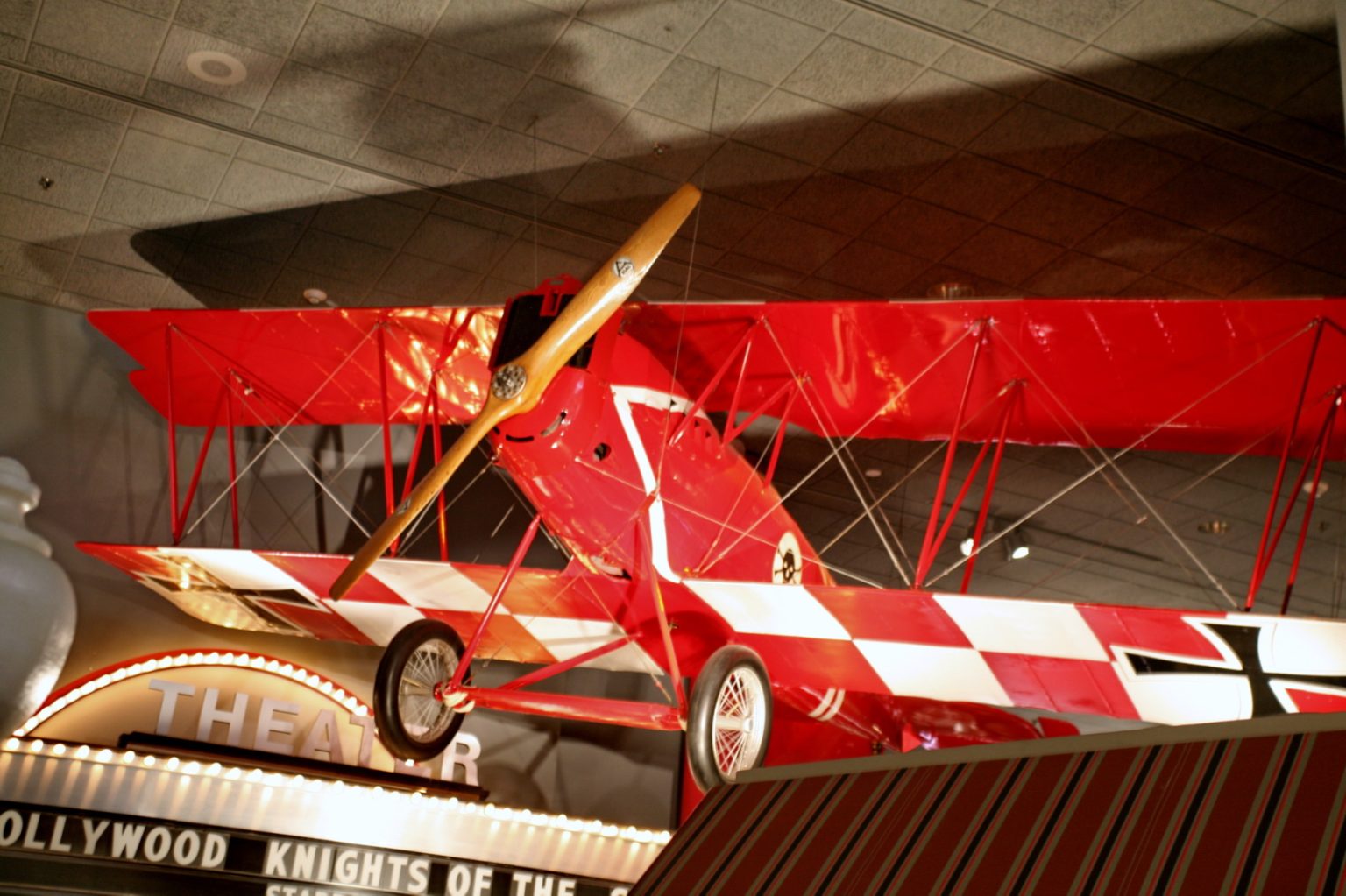
The National Air and Space Museum in Washington holds a genuine Pfalz D.XII — one of the two that appeared in The Dawn Patrol. The Smithsonian notes that only four examples survive worldwide, and that its aircraft was restored to the colours it wore as a Hollywood prop, a nod to the strange post-war life that saved it.
For visitors, it is a rare chance to stand in front of an authentic German fighter of 1918, not a reproduction — the twin interplane struts, the smooth plywood fuselage and the two Spandau guns all present and correct.
The aircraft’s film-prop colours, retained deliberately by the museum, make it a double artefact: a genuine relic of the First World War air battle and a genuine relic of Hollywood’s fascination with that war. Few exhibits tell two such different stories at once, and the Smithsonian’s decision to preserve both is part of what makes this particular D.XII so evocative.
Survivor: CanberraThe Australian War Memorial’s 2600/18A prize of the Australian Flying Corps, restored and displayed in ANZAC Hall.Read the full story
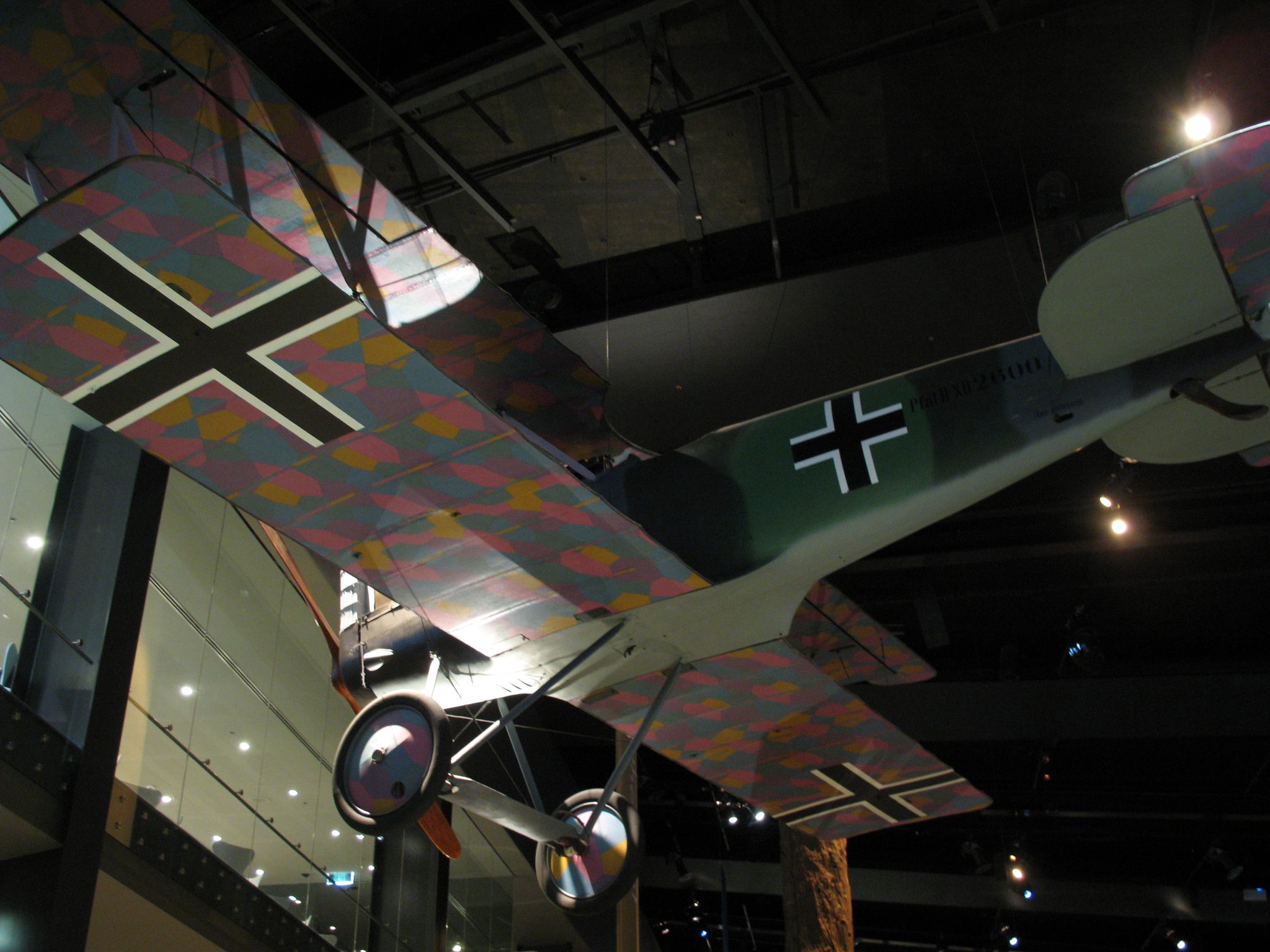
The Australian War Memorial in Canberra displays Pfalz D.XII serial 2600/18. Australia’s connection to the type runs deep: No. 4 Squadron of the Australian Flying Corps was based at Bickendorf near Cologne after the Armistice and handled captured German aircraft, including newly assembled D.XIIs, which is how one came to travel south.
After a long and careful restoration, the aircraft went on display in the Memorial’s ANZAC Hall in 2008, where it remains one of the standout First World War exhibits and one of the best-preserved D.XIIs anywhere.
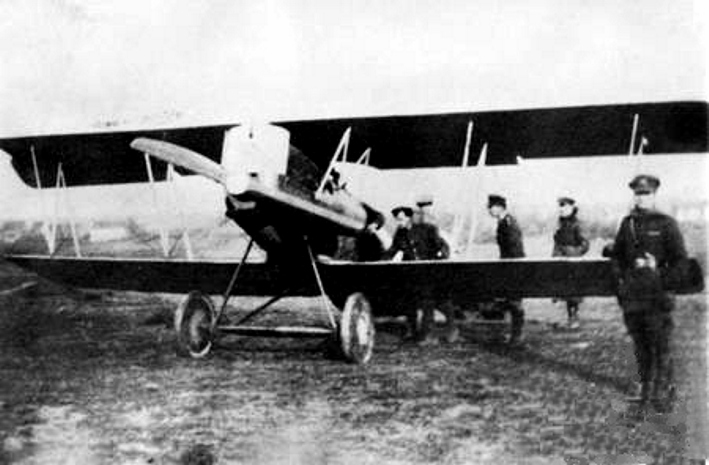
Australia’s deep connection to the type is no coincidence. It was the Australian Flying Corps, occupying German airfields after the Armistice, that had first-hand access to brand-new D.XIIs — and it is an AFC squadron that appears in the most famous surviving photograph of the aircraft, reproduced in this page’s gallery.
Survivor: Paris & SeattleLe Bourget and the Museum of FlightThe other two originals keep the count at exactly four.Read the full story
The Musée de l’Air et de l’Espace at Paris–Le Bourget holds a Pfalz D.XII, serial 2690/18, a legacy of the French share of the war-prize airframes. The fourth survivor is at the Museum of Flight in Seattle, acquired from the collection of the former Champlin Fighter Museum in Mesa, Arizona.
Together with the Smithsonian and Canberra machines, these four aircraft are the entire surviving population of the type — which, for a genuine German fighter of the First World War, is an extraordinarily good survival rate, and entirely a product of the aircraft’s post-war journeys abroad.
Seattle’s example in particular shows how these aircraft passed through private and collector hands before reaching their permanent homes. The thread from a 1918 Bavarian airfield, through war-prize crates and Arizona warehouses, to a climate-controlled museum gallery is long and improbable — and every surviving D.XII travelled some version of it.
The myth vs the metalReassessing the Pfalz D.XIIHow a poor reputation and a good aeroplane can be true at the same time.Read the full story
The Pfalz D.XII is a case study in how reputation and reality diverge. The reputation — heavy, clumsy, unloved — is real, well-documented and came from the pilots themselves. The reality — fast, immensely strong, a fine diver and a steady gun platform — is equally real and comes from the same sources once you read past the first impressions.
Both can be true because pilots were comparing it to the exceptional Fokker D.VII and judging it on the qualities that keep you alive in a turning dogfight, where the Pfalz was second best. Judged as an aircraft rather than as a disappointment, it did its job. As the Smithsonian puts it, it “performed well enough” when Germany had nothing to spare.
The honest way to hold the two views together is to separate the aeroplane from the expectation. Strip away the fact that its pilots wanted Fokkers, and you are left with a fast, strong, well-armed 1918 fighter that was hard to land and hard to out-turn — a perfectly respectable machine with a distinct personality. It is only against the legend of the D.VII that the D.XII looks like a letdown, and legends are a harsh yardstick.
Identifying oneHow to spot a Pfalz D.XIITwin struts, a plywood body and a radiator in the upper wing.Read the full story
Three features give the D.XII away. First, the two-bay wings braced by paired, near-parallel interplane struts — the “double” strut arrangement that distinguishes it from the single-bay Fokker D.VII. Second, the smooth, rounded plywood-skinned fuselage characteristic of Pfalz construction, without the flat fabric panels of many rivals. Third, the frontal radiator arrangement and the chin-mounted look of the Mercedes installation.
Get your eye in on those twin struts and you will never again confuse a Pfalz D.XII with its more famous stablemates — or with the earlier, single-bay Pfalz D.III.
Colour and markings vary between the survivors and their film-era repaints, so it is the shape, not the paint, that identifies the type. The proportions are distinctive too: a compact, purposeful fighter with a deep, rounded fuselage and an upright, workmanlike stance on its landing gear — every line of it speaking of strength rather than finesse.
The Bavarian firmPfalz Flugzeugwerke of SpeyerA Bavarian company that built strong fighters and never quite got the credit.Read the full story
Pfalz Flugzeugwerke was founded at Speyer in 1913 with Bavarian government backing, which is exactly why its fighters kept flowing to Bavarian squadrons. It began by building French-derived monoplanes and spent the war as a respected but second-billed maker behind Fokker and Albatros.
Its great strength was construction: the wrapped-plywood, semi-monocoque fuselage it turned into a house speciality, first on the shark-bodied D.III of 1917 and then on the D.XII. The company embodied the same qualities as its most numerous fighter — sturdy, capable, quietly effective and forever in a more glamorous rival’s shadow.
There is something fitting in the fact that Pfalz, the perennial understudy among German aircraft firms, is today better represented by original survivors than many of the celebrated names that outshone it in 1918. The company that never quite got the credit has, in the end, left more of itself behind — a last, quiet vindication delivered a century late.
TimingToo late to change anythingThe D.XII reached the front with only weeks of war left to fight.Read the full story
The tragedy and the mercy of the Pfalz D.XII is that it arrived so late. Reaching squadrons in numbers only from about July 1918, it had barely three or four months of front-line life before the Armistice. There was no time to build the kind of legend the Albatros and Fokker fighters accumulated over years, and no time for the type to shed its poor first impression through sheer familiarity.
But the late arrival also meant that when the war ended, the D.XII population was young, numerous and in good condition — fresh airframes that made ideal war prizes and, later, ideal film props. An aircraft that came too late to fight its war effectively came at exactly the right time to survive it.
History is full of these quiet ironies. The very lateness that denied the Pfalz D.XII a glorious combat record is the reason so many examples were sitting new and intact when the shooting stopped — and therefore the reason it, rather than some more storied fighter, is the German scout you are most likely to meet in a museum today.
Photo Gallery
The Pfalz D.XII in period photographs and museum halls
Every image below is a genuine photograph — wartime originals and the surviving airframes on display today. Click any picture to enlarge it. Credits and licences are shown on each frame. Because no airworthy Pfalz D.XII exists, there is no in-flight photography of the type; what you see instead is the honest record it left behind — captured machines being inspected in 1918, and the four survivors as they appear in museums a century later.
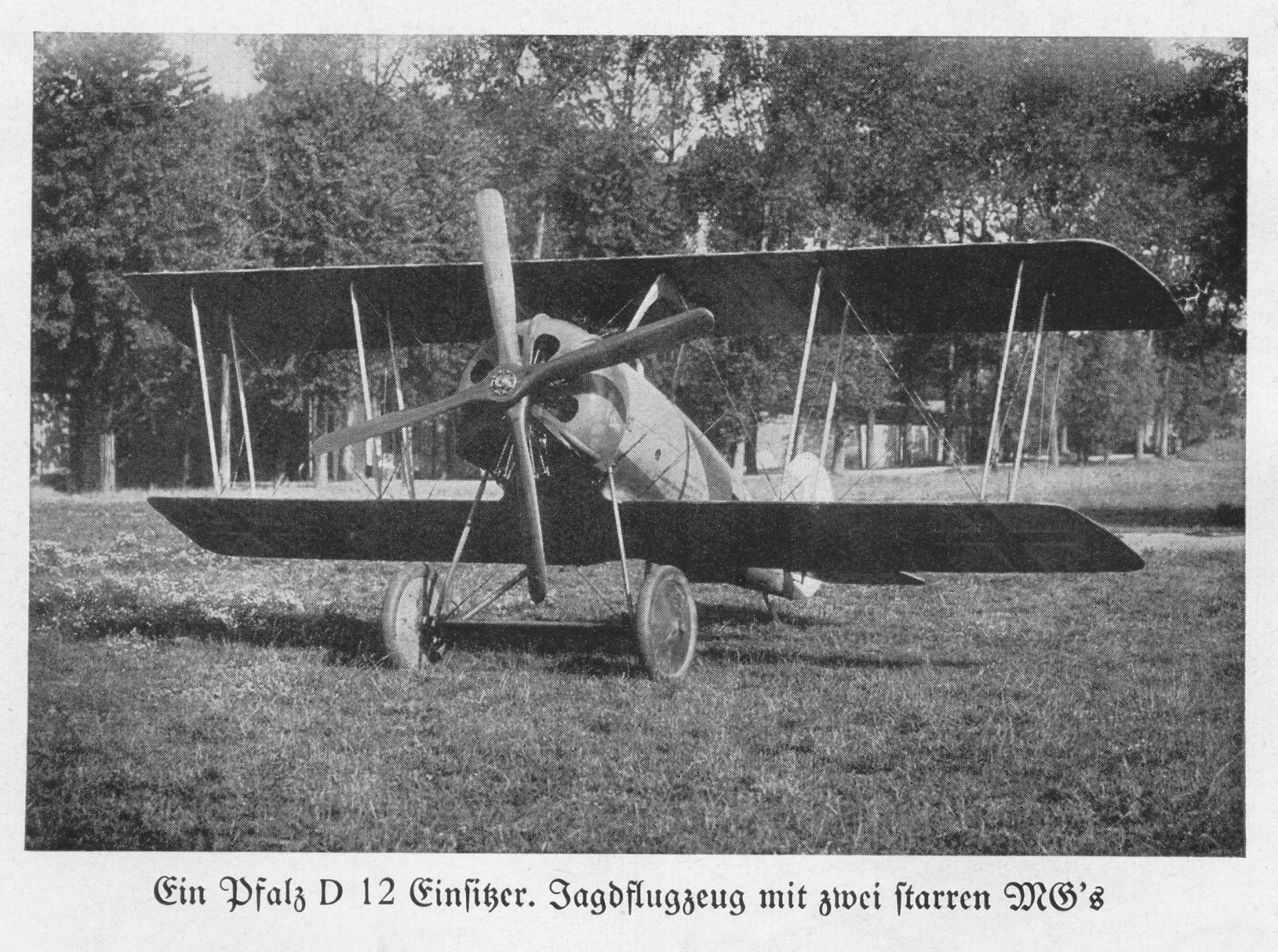
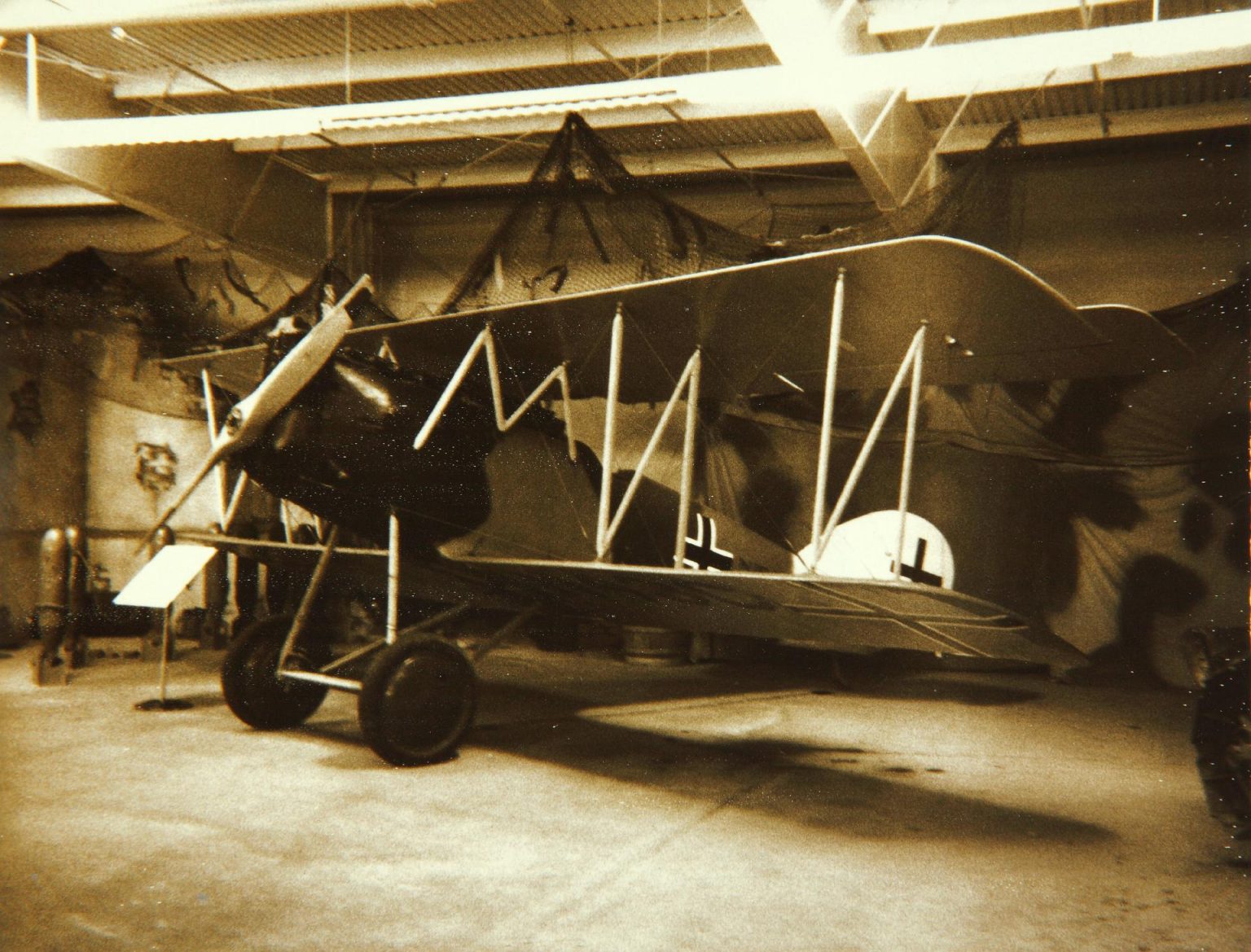
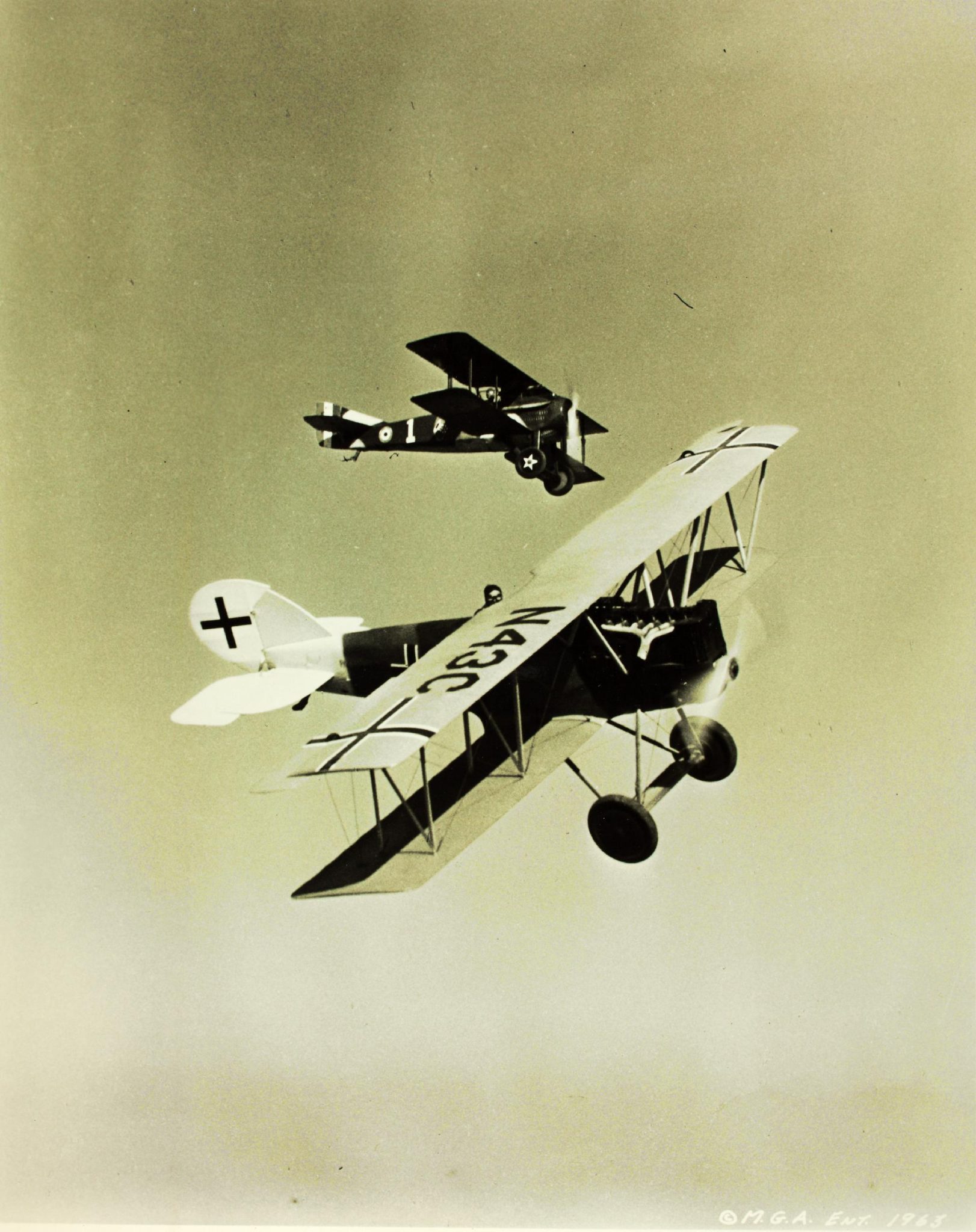
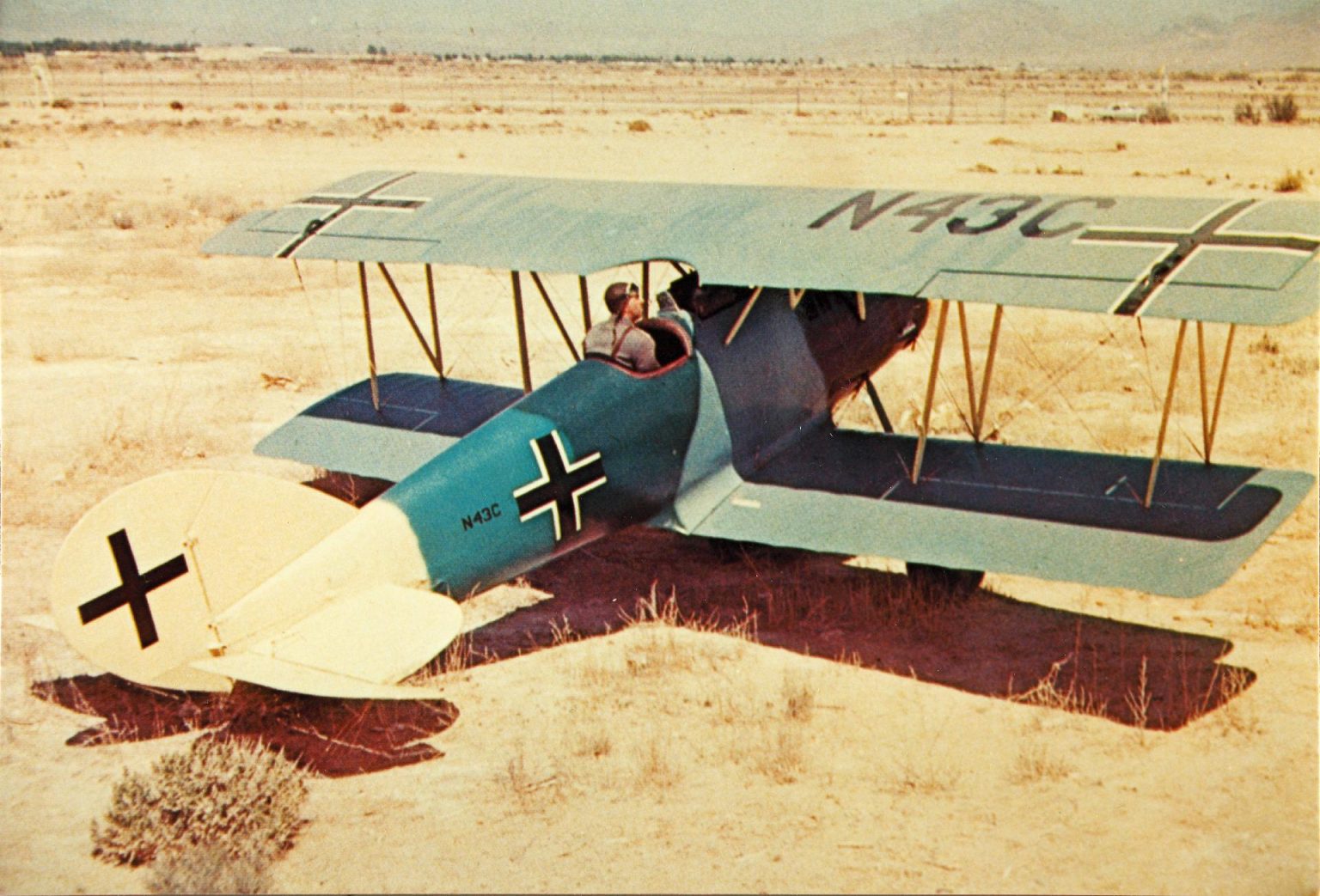
On Film
The Pfalz D.XII on video: a walkaround of a genuine survivor
Because no airworthy Pfalz D.XII exists anywhere in the world, there is no modern flying footage of the type — the four originals all sit in museums. The clip below is a close walkaround of a genuine surviving D.XII, one of the best ways to appreciate the twin struts and plywood fuselage in three dimensions.
Video: “Pfalz D.XII” by the WWI-aviation channel Requiem (approx. 7,400 views). A short museum walkaround of a surviving original airframe; we have chosen genuine D.XII footage over higher-view clips of other aircraft.
Operations Overview
Where the Pfalz D.XII was built, fought and survives
The D.XII’s story is geographically simple: designed and built in Germany, flown in combat only over the Western Front in 1918, then scattered abroad as war prizes — which is precisely why its survivors are in Washington, Seattle, Paris and Canberra rather than in Germany. Toggle the categories to explore. Hover or tap a country for detail.
By the Numbers
The Pfalz D.XII’s war, in figures
These four numbers tell the whole arc in miniature: a large production run, a big handover in defeat, a tiny window of combat, and a survival rate that would be the envy of far more famous aircraft. The Pfalz D.XII was built in quantity, fought for a season, and then — almost uniquely among German fighters of its war — endured.
Note: reliable aggregate victory and loss statistics for the Pfalz D.XII specifically do not exist — it served briefly, in mixed units, at the very end of the war, and German loss records for late 1918 are incomplete. We deliberately avoid quoting a kill tally the sources cannot support, and every production and prize figure on this page is a best-available estimate rather than a precise count.
Post-war & Legacy
The loser’s fighter that outlived almost all the winners
Here is the paradox at the heart of the Pfalz D.XII story. The fighter German pilots least wanted to fly is today one of the very few genuine First World War German fighters that anyone can still walk up to and touch. Four originals survive — more than survive of many far more celebrated types — and the reason is a chain of post-war accidents that had nothing to do with how the aircraft flew.
When the Armistice came into force on 11 November 1918, the surrender terms required Germany to hand over enormous quantities of front-line equipment, aircraft included. The Pfalz D.XII, fresh off the production lines and sitting in numbers on Bavarian airfields, was exactly the sort of modern machine the Allies wanted to examine. Something like 175 D.XIIs are believed to have been taken as war prizes, crated, and shipped to the victorious nations — the United States above all, but also Britain, France and, by way of the Australian Flying Corps, Australia.
Most captured German aircraft met a dull fate: a few evaluation flights, a spell in a hangar or a public “captured enemy aircraft” display, and then the scrap heap or a quiet sale. What saved the D.XII was that so many crossed the Atlantic to a country with a booming film industry and, soon, a fashion for First World War aviation pictures. Where a German fighter left in a disarming, cash-strapped Germany was likely to be broken up, a German fighter in a California warehouse in the late 1920s was a valuable, hireable film prop — and props get looked after.
The Hollywood connection that preserved them
The late 1920s and 1930s produced a run of aviation films — The Dawn Patrol (1930) chief among them — that needed convincing German fighters. Many of the “German” aircraft in these pictures were ordinary trainers dressed up with crosses and fake guns, which makes the appearance of real Pfalz D.XIIs all the more striking. Two genuine airframes played authentic enemy scouts in The Dawn Patrol, and the type became a familiar face in the golden age of Hollywood dogfight cinema.
The most remarkable single episode belongs to Louis Kinnell, a property manager at Paramount Pictures, who restored one D.XII to airworthy condition and flew it from Dycer Field, Los Angeles, in 1939 — a real Bavarian fighter of 1918 still climbing away under Mercedes power on the eve of the Second World War. It is a footnote, but a telling one: the D.XII’s afterlife as a film star kept individual aircraft intact, maintained and valued through the exact decades when most WWI airframes were vanishing.
The four survivors, one by one
S1Smithsonian National Air and Space Museum, Washington DC+
The Smithsonian’s Pfalz D.XII is one of the two aircraft that appeared in The Dawn Patrol, and it is displayed in the colours it wore as a film prop — a deliberate acknowledgement of the strange journey that preserved it. The museum states plainly that only four examples survive worldwide, and its own machine is the definitive reference airframe for the type in North America. For a visitor, it is a rare chance to see an authentic 1918 German fighter, complete with its twin interplane struts, wrapped-plywood fuselage and paired Spandau guns.
S2The Museum of Flight, Seattle+
Seattle’s Museum of Flight holds the second American survivor, an airframe that passed through the collection of the former Champlin Fighter Museum of Mesa, Arizona before moving north. It has been the subject of careful conservation and periodic display, and represents the West Coast anchor of the type’s American survival — fitting, given how much of the D.XII’s post-war story played out in the film country of southern California.
S3Australian War Memorial, Canberra — serial 2600/18+
Australia’s D.XII, serial 2600/18, is one of the finest preserved examples anywhere. It reached Australia through the Australian Flying Corps, whose No. 4 Squadron was stationed at Bickendorf near Cologne after the Armistice and handled surrendered German aircraft — the very scene captured in the famous 1918 photograph of AFC airmen inspecting a freshly assembled Pfalz. After a long restoration, the aircraft was unveiled in the Memorial’s ANZAC Hall in 2008, where it anchors the First World War aviation display.
S4Musée de l’Air et de l’Espace, Paris–Le Bourget — serial 2690/18+
The French national air museum at Le Bourget preserves serial 2690/18, part of the French share of the war-prize airframes. It completes the surviving population of the type and, alongside the Smithsonian, Seattle and Canberra aircraft, means that the entire world stock of original Pfalz D.XIIs sits in just four museums on three continents — every one of them abroad, none of them in Germany, exactly as the war-prize story would predict.
Put the pieces together and the legacy is genuinely poignant. An aircraft its own pilots grumbled about, built too late to make a difference, handed over in defeat — and yet, precisely because it was handed over, carried abroad and turned into a movie star, it endures where prouder machines have vanished. The Pfalz D.XII lost its war and won a strange kind of immortality.
Questions & Answers
Pfalz D.XII: your questions answered
Can I fly in a Pfalz D.XII today?
No — and realistically, no one can. Only four original Pfalz D.XIIs survive, and all four are static museum exhibits in Washington, Seattle, Paris and Canberra; none is airworthy. Genuine airworthy reproductions of the type are extraordinarily rare, and in any case the Pfalz D.XII is not a MiGFlug flight — we do not offer rides in it and it is not bookable anywhere as a passenger experience.
What you absolutely can do is fly for real in genuine ex-military jets. MiGFlug puts civilians in the cockpit of aircraft like the L-39 Albatros, the Hawker Hunter and others — the modern descendants of the fighter idea the Pfalz belonged to. Explore what is bookable at migflug.com/flights-prices.
Was the Pfalz D.XII a good fighter or a bad one?
Both reputations are true at once. Front-line pilots disliked it because they were comparing it to the beloved Fokker D.VII: the Pfalz was heavier on the controls, needed a longer take-off, floated on landing and had a weak undercarriage. But judged on its own terms it was a genuinely good aeroplane — fast in level flight, an exceptionally strong and safe diver, and a steady gun platform. Once pilots learned its manners, opinions improved. The Smithsonian sums it up as having “performed well enough to relieve the German Air Service of its shortage of competitive fighters.”
Why did German pilots prefer the Fokker D.VII to the Pfalz?
The Fokker D.VII was famously forgiving and could fight nose-high, hanging on its propeller, which flattered even a tired or wounded pilot. It was easier to land and more agile in a turning fight — exactly the qualities that keep a pilot alive in a dogfight. Many airmen were promised Fokkers and were issued Pfalz D.XIIs instead, so the newcomer arrived already resented. The Bavarian squadron commander Rudolf Stark famously called it “a clumsy cart-horse that went heavy in the reins.”
How many Pfalz D.XIIs survive, and where are they?
Four originals survive worldwide — a remarkable number for a genuine WWI German fighter. They are held by the Smithsonian National Air and Space Museum (Washington DC), the Museum of Flight (Seattle), the Musée de l’Air et de l’Espace (Paris–Le Bourget, serial 2690/18) and the Australian War Memorial (Canberra, serial 2600/18). They survive precisely because they left Germany as post-war war prizes.
Is it true the Pfalz D.XII appeared in Hollywood films?
Yes. Because roughly 175 D.XIIs were shipped abroad as war prizes, several ended up in the United States, and two genuine airframes appeared as authentic German fighters in the 1930 film The Dawn Patrol. One was even restored to flying condition by a Paramount property manager and flown briefly in 1939. That Hollywood connection is a big reason original D.XIIs were preserved rather than scrapped, and the Smithsonian’s aircraft is displayed in its movie-prop colours.
What engine and guns did the Pfalz D.XII have?
It was powered by a water-cooled 180-horsepower Mercedes D.IIIa inline-six, the same class of engine used across much of the German fighter fleet in 1918. Its armament was two fixed, forward-firing 7.92 mm LMG 08/15 “Spandau” machine guns, synchronised to fire through the propeller arc.
How fast was the Pfalz D.XII and what were its dimensions?
Its top speed was about 170 km/h (roughly 106 mph) — a period estimate, and comparable to the Fokker D.VII in level flight. It was around 6.35 m (20 ft 10 in) long with a wingspan of about 9.0 m (29 ft 6 in), an empty weight near 716 kg and a loaded weight around 897 kg, and a service ceiling of roughly 5,600 m (18,500 ft). As with all WWI aircraft, these figures vary between sources and should be read as estimates.
What is the difference between the Pfalz D.XII and the Pfalz D.III?
They are different aircraft from the same maker. The Pfalz D.III / D.IIIa of 1917 is an earlier, single-bay biplane with a sleek shark-like plywood fuselage. The Pfalz D.XII of 1918 is a later two-bay design identified by its paired, near-parallel interplane struts. Do not confuse either Pfalz with the Albatros D.III, a separate aircraft they served alongside — a classic near-miss in WWI aircraft identification.
Which units flew the Pfalz D.XII?
The D.XII went almost entirely to Bavarian Jagdstaffeln — the fighter squadrons of the Kingdom of Bavaria within the German force — because its maker, Pfalz Flugzeugwerke, was a Bavarian firm with Bavarian government backing. Some sectors re-equipped whole squadrons with the type; more often it flew in mixed establishments alongside Fokker D.VIIs and older machines during the final months of the war.
Did any famous aces fly the Pfalz D.XII?
Not in the way the Albatros and Fokker fighters are tied to legendary names. The D.XII reached the front only in the last three or four months of the war, mostly with Bavarian squadrons, and it never became the personal mount of a celebrated high-scoring ace. The most prominent name associated with it is Leutnant Rudolf Stark, a capable Bavarian squadron commander and memoirist — better known for his writing, including the famous “cart-horse” verdict, than for a towering victory tally on the type. The D.XII is a squadron aircraft, remembered for its collective story rather than for individual heroes.
What was the Pfalz D.XII's greatest strength in combat?
Its structural strength, and specifically its dive. The wrapped-plywood fuselage and heavily braced two-bay wings let a Pfalz pilot dive harder and steeper than most contemporaries dared, making the dive both a slashing attack and a guaranteed escape from a losing fight — a door closed to more lightly built rivals. Combined with good level speed and a steady gun platform, the dive is what turned a resented aircraft into a respected one.
Fly For Real
You can’t fly the Pfalz D.XII — but these, you can
The Pfalz belongs to the museums now. The thrill it represented — a real fighter, flown for real, with the ground falling away and the aircraft answering your hands — does not. That experience is still very much available; it just wears a jet engine instead of a Mercedes inline-six. MiGFlug puts civilians in the cockpit of genuine ex-military jets around the world, from Cold War trainers to frontline fighters.
Related Aircraft
Explore the fighters that shared the Pfalz D.XII’s sky
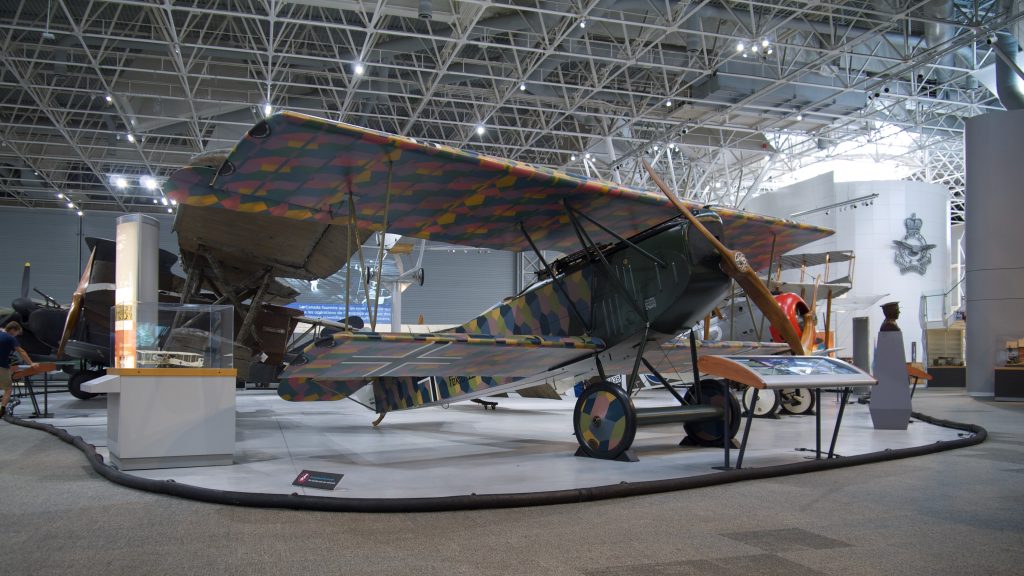
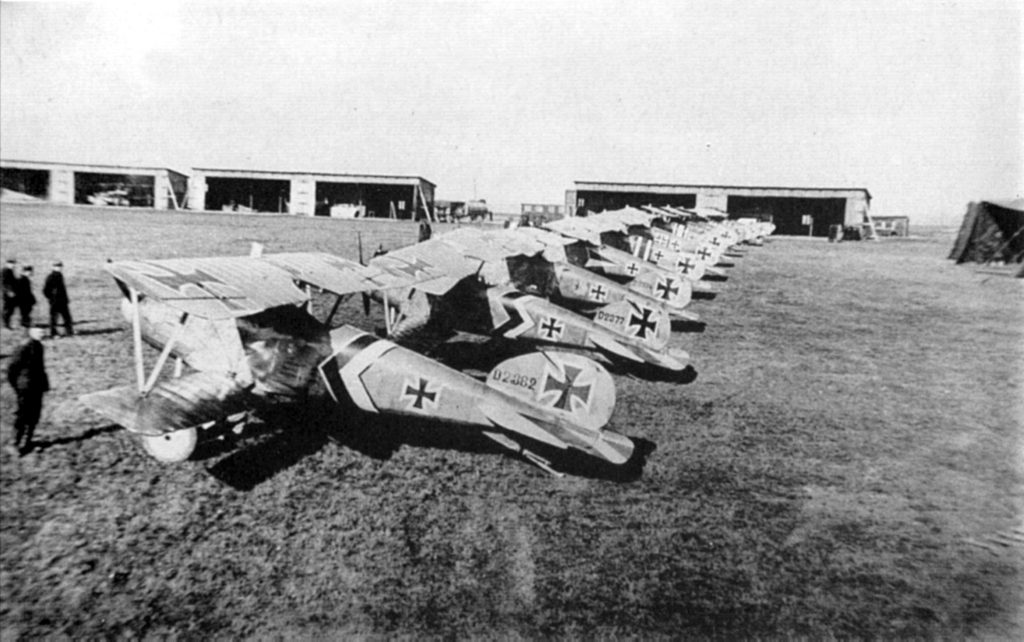
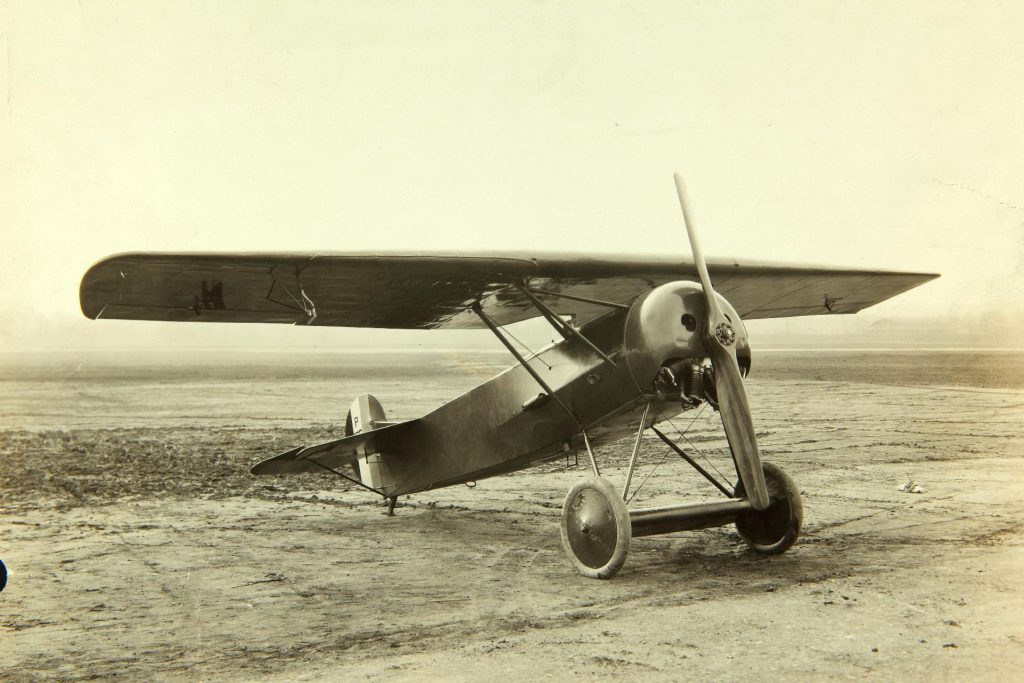
Sources & Further Reading
Where the facts on this page come from
A note on method: where sources disagree — as they frequently do on First World War production totals and performance figures — this page states a range or flags the number as an estimate rather than choosing a single figure and presenting it as certain. Wikipedia is used only as a starting point for locating primary and institutional sources, never as a citation in its own right.