
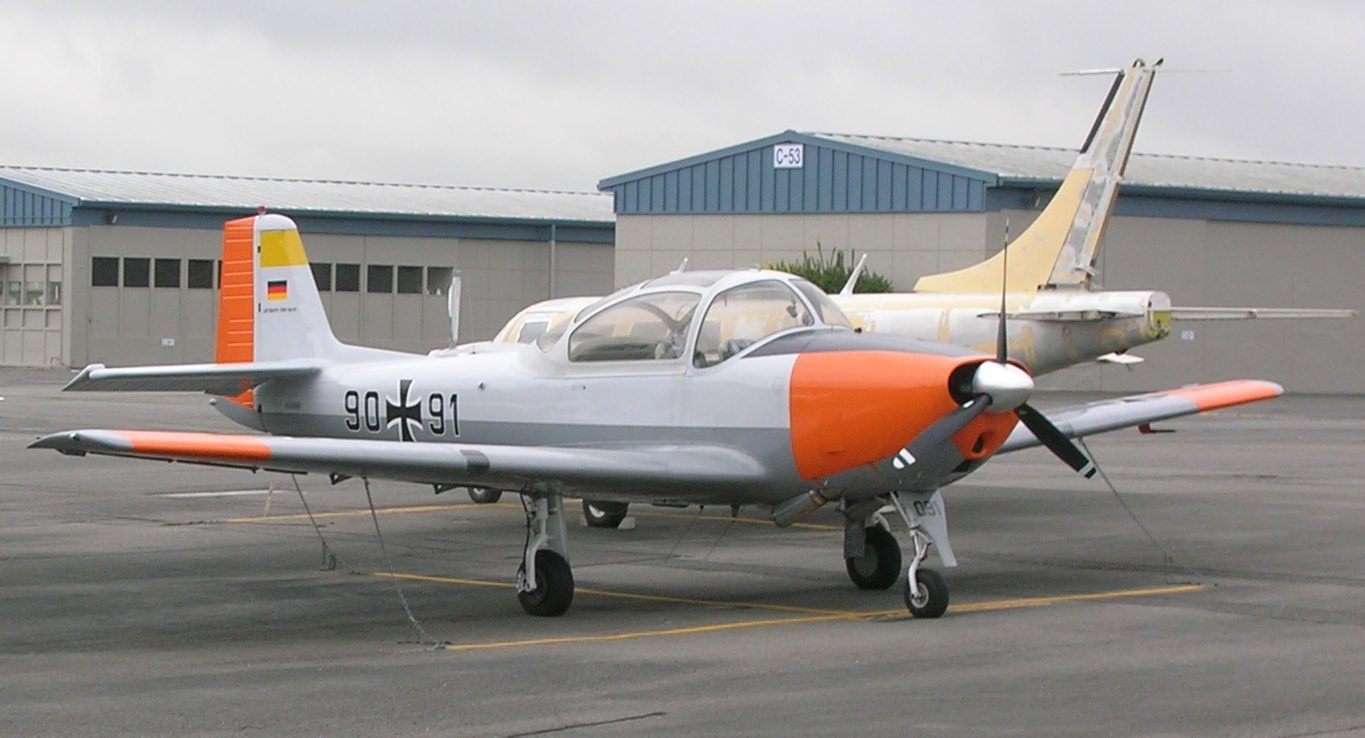
Piaggio P.149
The Luftwaffe’s First Trainer
An Italian four-seat tourer became the first basic trainer of the post-war Luftwaffe, licence-built by Focke-Wulf and flown for 33 years, before teaching Swissair pilots and finding a second life in private hands.
The P.149: how an Italian tourer trained the new Luftwaffe
In the early 1950s Piaggio, the Genoa company better known to the world for the Vespa scooter, returned to aircraft design. Its engineer Giovanni Casiraghi produced the P.148, an all-metal, two-seat side-by-side trainer that flew in February 1951 and was bought by the Italian Air Force. Casiraghi then stretched the idea. The P.149, which first flew in June 1953, added a cabin for up to four or five people, a retractable tricycle undercarriage and a geared Lycoming GO-480 six-cylinder engine of about 270 hp. Piaggio pitched it as both a touring aircraft and a military trainer, and the Italian Air Force evaluated a pair. On its own it might have been a footnote. What made it significant was a customer that did not yet exist when it first flew: the air force of the Federal Republic of Germany.
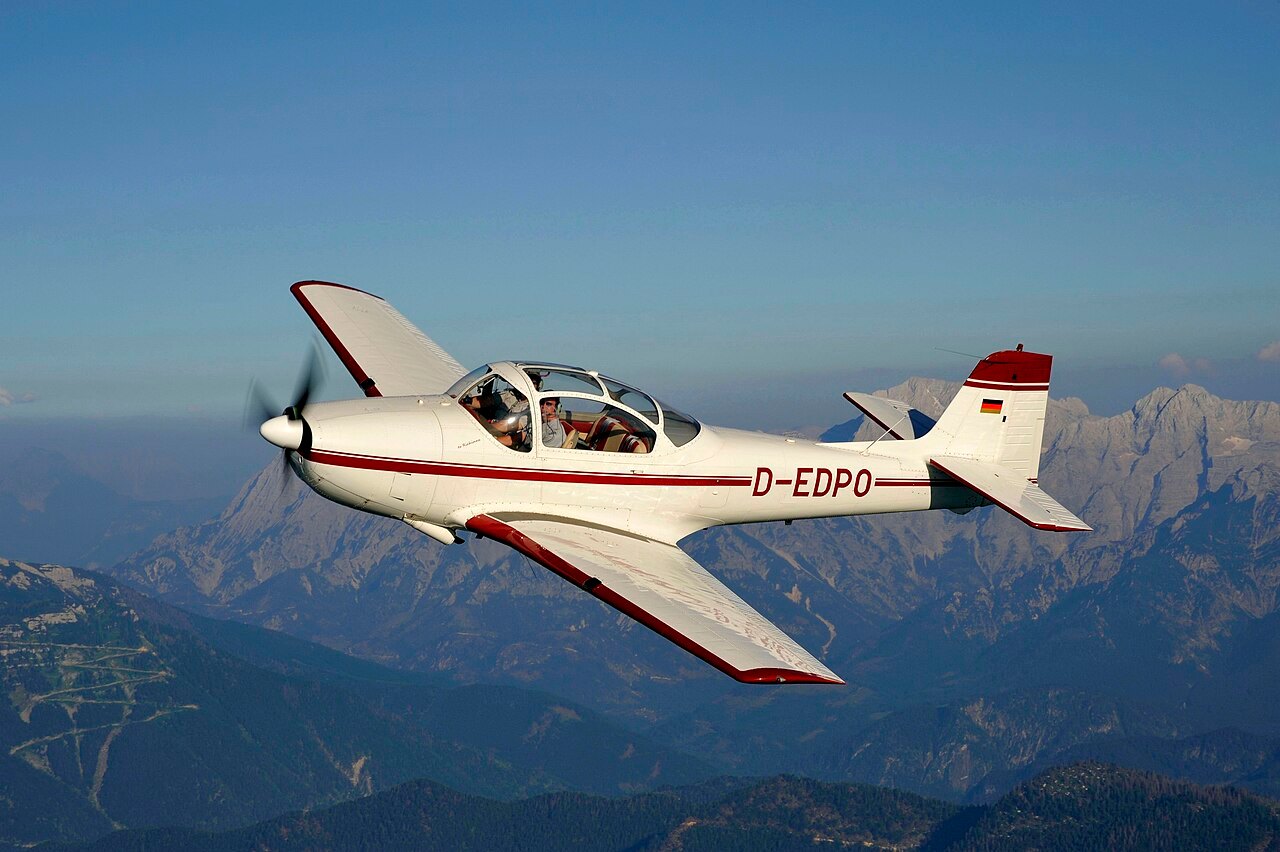
West Germany was allowed to rearm in 1955, and its new Luftwaffe had to train pilots from scratch. In 1955 it chose the P.149 as its basic trainer and liaison aircraft. Piaggio delivered the first batch, 76 aircraft as the P.149D, and the rest came from Focke-Wulf in Bremen, the company that had built the Fw 190 and was now back in the aircraft business under licence. Focke-Wulf built 190 as the FWP.149D from 1957. In all, roughly 270 P.149s were built, and the Luftwaffe took the great majority. Students flew it at the pilot schools for screening, basic aerobatics and instrument flying, while other aircraft carried staff officers between bases or towed targets. The Germans nicknamed it the Piggi.
The P.149 served the Luftwaffe until 1990, a career of 33 years that took it from the first post-war intakes to the eve of reunification. Along the way it helped found another air force: West German aid supplied P.149s to Nigeria from 1963, and others went to Tanzania and Uganda. In Switzerland the Swiss Air Transport School used P.149s to give future Swissair pilots their first hours from 1961 until 1997. From the 1970s surplus German aircraft were sold to private owners, and today a number still fly in Germany and beyond, prized as fast, roomy and slightly extravagant classics. Several have been restored in Luftwaffe colours and appear at German air displays.
01The P.149’s German career: from Piaggio batch to Focke-Wulf line
When the Federal Republic’s armed forces were created in the mid-1950s, the Luftwaffe needed everything at once: jets, transports, helicopters and, most urgently, aircraft on which to teach a new generation to fly. American aid supplied T-6 Harvards and T-33s for later stages, but the service also wanted a modern basic aircraft with a cabin, retractable gear and enough performance for instrument and navigation training. In 1955 it chose the P.149. Piaggio supplied the initial aircraft, and by May 1957 seventy-odd P.149Ds had been delivered from Italy.
The remainder of the order went to Focke-Wulf in Bremen. For a company whose name was tied to the wartime Fw 190 and Condor, the licence was a way back into aircraft manufacture after the post-war ban. The first Bremen-built FWP.149D was delivered in late 1957, and 190 were built. The type went to the pilot schools, where students received a substantial block of flying on it for selection, basic aerobatics, instrument flying and bad-weather work, and to operational units as a liaison and communications aircraft. The Marine also used a small number.
Early service was not trouble-free. German accounts record construction deficiencies in the undercarriage and the wing attachments, which were corrected by about 1960, and the spinning behaviour demanded careful rigging checks. Once these problems were dealt with, the P.149 settled into a long and uneventful career that ended only in March 1990.
What makes the P.149 special
A trainer with a cabin
Most basic trainers of the 1950s seated two in tandem. The P.149 was a four-seat cabin monoplane in which the instructor and student sat side by side with room for passengers behind. That made it unusually versatile: a school could use it for instruction in the morning and to carry staff in the afternoon. For students it also meant a cockpit layout closer to the light transports and liaison aircraft many would later fly, and an instructor who could see exactly what the student was doing.
Retractable gear and a geared engine
The P.149 introduced students to features absent from simpler trainers. Its tricycle undercarriage retracted, so pilots had to learn gear drills from the start, and its Lycoming GO-480 flat-six drove the propeller through a reduction gearbox, giving about 270 hp and a maximum speed of roughly 300 km/h. A variable-pitch propeller and a good range made it suitable for navigation exercises across Germany. The price was complexity and fuel consumption, which later made it expensive for private owners.
Conditionally aerobatic
The P.149 was not a pure aerobatic machine. It was cleared for aerobatics only with a reduced weight and at most two people on board, which was enough for the basic manoeuvres in a military syllabus. Its spin characteristics required properly rigged and symmetrical aircraft, and the Luftwaffe paid attention to this after early problems. Even so, Luftwaffe instructors flew it in aerobatic displays in its early years, showing that a roomy cabin aircraft could loop and roll with some style.
02The P.149’s family: P.148, P.149D, P.149E and P.149U
The P.149 grew out of the P.148, a two-seat side-by-side trainer with a tailwheel and fixed undercarriage, first flown in February 1951. About a hundred were built, of which roughly 70 went to the Italian Air Force, and eight were later transferred to Somalia. The P.149 kept the basic all-metal low-wing layout but enlarged the cabin, fitted a much more powerful geared Lycoming and adopted a retractable tricycle undercarriage.
The P.149D, with D for Deutschland, was the German military standard, built both by Piaggio and, as the FWP.149D, by Focke-Wulf in Bremen. The P.149E was supplied to the Swiss Air Transport School for airline pilot training, and the P.149U was a small batch for Uganda. Beyond these, the type changed little during its life, a sign that the Luftwaffe valued it for its steady usefulness rather than for any need to keep it up to date.
Piaggio P.149D specifications
Specifications
- Crew
- 2 (side by side) plus 2 to 3 passengers
- Length
- 8.8 m (28 ft 10 in)
- Wingspan
- 11.12 m (36 ft 6 in)
- Height
- 2.9 m (9 ft 6 in)
- Empty weight
- 1,160 kg (2,557 lb)
- Max take-off weight
- 1,680 kg (3,704 lb)
- Powerplant
- 1 × Lycoming GO-480-B1A6 geared flat-six, about 270 hp (201 kW)
- Maximum speed
- about 304 km/h (189 mph) at sea level
- Cruise speed
- 266 km/h (165 mph) at 2,300 m
- Range
- 1,090 km (677 mi) with 30-minute reserve
- Service ceiling
- about 5,400 to 6,050 m (17,650 to 19,850 ft), depending on source
- Climb rate
- 5 m/s (985 ft/min)
- Armament
- None
Costs & production
- Cost per flight hour
- Roughly €350 to €550 per hour for a private example: an estimate based on a geared GO-480 burning in the region of 50 to 60 litres of avgas an hour plus maintenance, insurance and engine reserves; German sources note its running costs were well above typical sport aircraft
- Production
- About 270 built, including 76 Piaggio-built aircraft for the Luftwaffe and 190 built under licence by Focke-Wulf in Bremen
- Programme
- Chosen by the Luftwaffe in 1955; deliveries from 1957; retired in March 1990
03The P.149’s variants: from Genoa to Bremen
- P.148: two-seat tailwheel predecessor, first flown 1951; Italian Air Force trainer.
- P.149: prototype and Italian-built four-seat version, first flown June 1953.
- P.149D: Luftwaffe trainer and liaison version built by Piaggio.
- FWP.149D: Focke-Wulf licence-built version, 190 produced in Bremen.
- P.149E: version for the Swiss Air Transport School.
- P.149U: small batch for Uganda.
04The P.149’s operating costs: roomy, fast and thirsty
No air force figure for the P.149’s hourly cost is available, so a modern estimate must come from civil operation. The geared GO-480 is a powerful engine for a light aircraft and burns fuel accordingly, in the region of 50 to 60 litres an hour in cruise. The retractable undercarriage, constant-speed propeller and gearbox add maintenance, and parts for a type out of production for six decades need careful sourcing.
German accounts note that the aircraft’s operating costs were well above those of typical sport aircraft, which limited private demand when the Luftwaffe began selling them off in the 1970s. A reasonable estimate for a privately owned example today is €350 to €550 per flying hour, depending on fuel prices, hangarage, insurance and how much engine and airframe reserve the owner sets aside. Treat these figures as indicative only.
The P.149 from Genoa to the Luftwaffe’s last flight
The P.148 flies
Piaggio’s two-seat trainer, the P.149’s predecessor, makes its first flight in February.
P.149 first flight
The four-seat P.149 with retractable gear flies in June.
Chosen by the Luftwaffe
The newly formed West German air force selects the P.149 as its basic trainer and liaison aircraft.
Deliveries and Bremen production
Piaggio-built P.149Ds are delivered to Germany, and the first Focke-Wulf FWP.149D follows late in the year.
Austria
The Austrian Air Force puts a single P.149D into service, keeping it until 1965.
Swissair’s trainer
The Swiss Air Transport School receives its first P.149E in April for airline pilot training.
Nigeria
Nigeria orders P.149s as West Germany helps establish the Nigerian Air Force.
Sell-off begins
Surplus Luftwaffe aircraft begin passing into civilian hands.
Luftwaffe retirement
The P.149 leaves German military service in March after 33 years.
Last airline trainer
The Swiss Air Transport School retires its last P.149.
Stories & eyewitnesses: the P.149 in uniform and out
From scooters to trainers
Piaggio returned to aircraft with a pair of practical designs.
Read the full story
Training an air force from scratch
The new Luftwaffe chose an Italian aircraft for its first students.
Read the full story
Focke-Wulf’s comeback
A famous wartime name returned to aircraft through a licence.
Read the full story
Teething troubles
Early P.149s revealed structural weaknesses.
Read the full story
Aerobatics in a cabin aircraft
Luftwaffe instructors showed what the Piggi could do.
Read the full story
Founding the Nigerian Air Force
German instructors and P.149s helped create a new African air force.
Read the full story
Swissair’s first hours
Generations of airline pilots learned on the P.149 in Switzerland.
Read the full story
Austria’s single P.149
One aircraft, seven years.
Read the full story
91+74 back in uniform
A restored P.149D returned to a Bundeswehr open day in 2024.
Read the full story
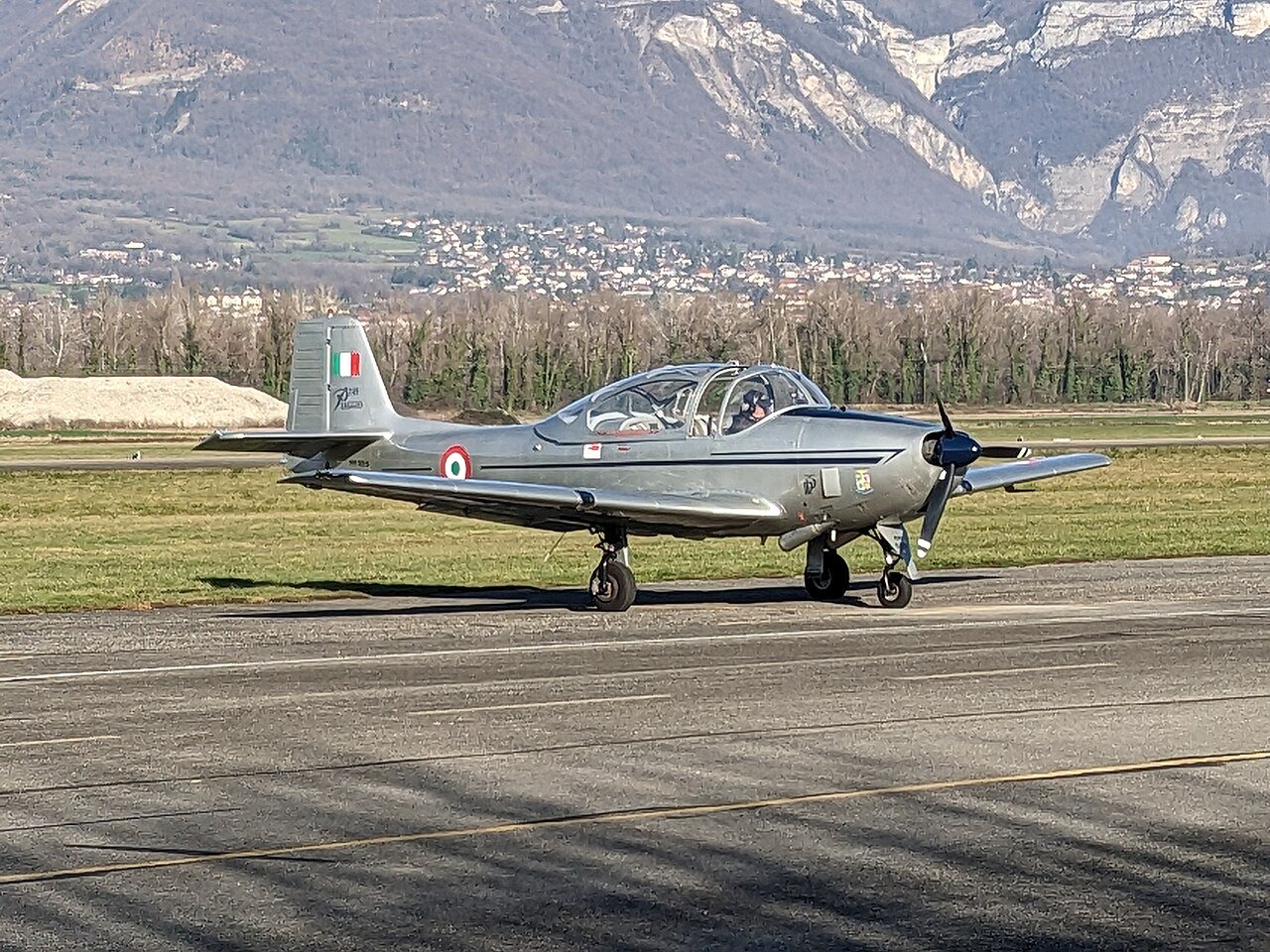
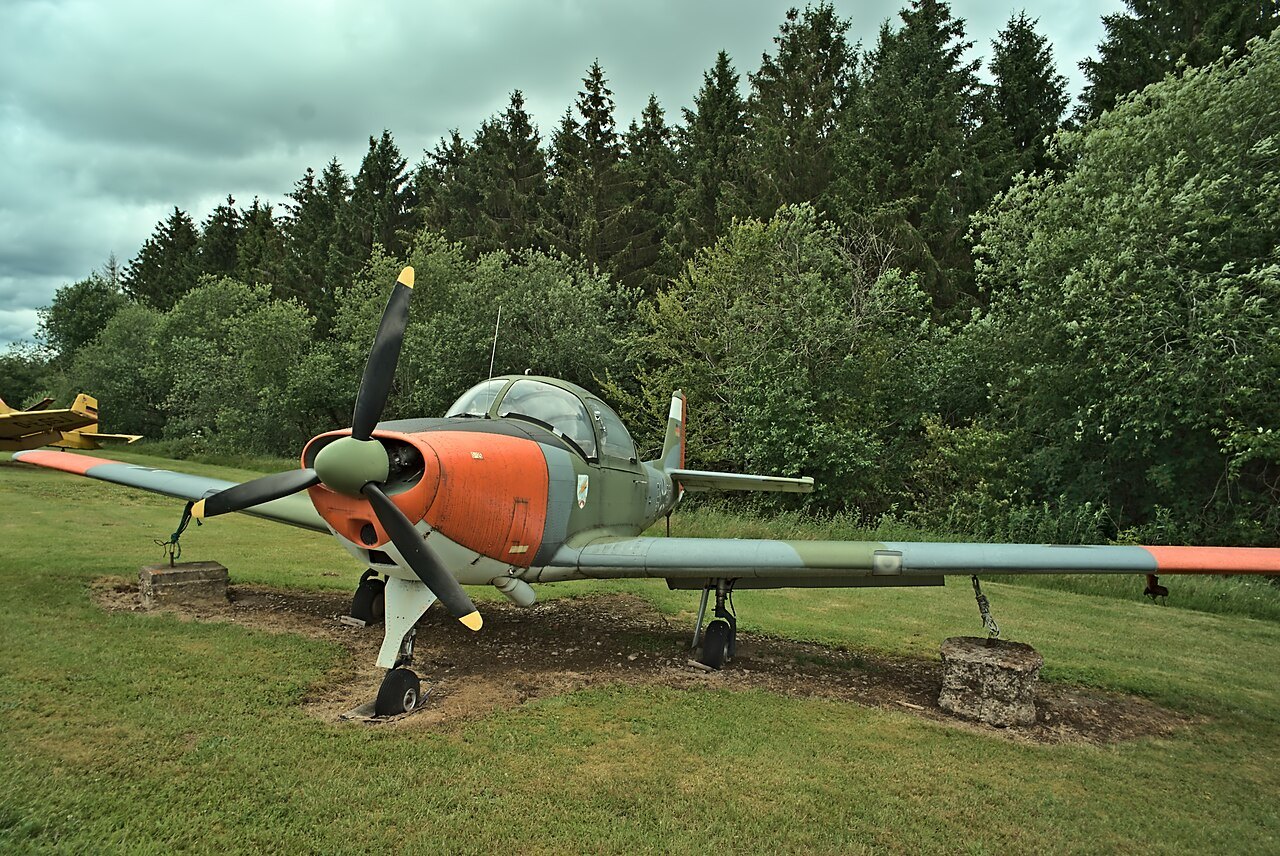
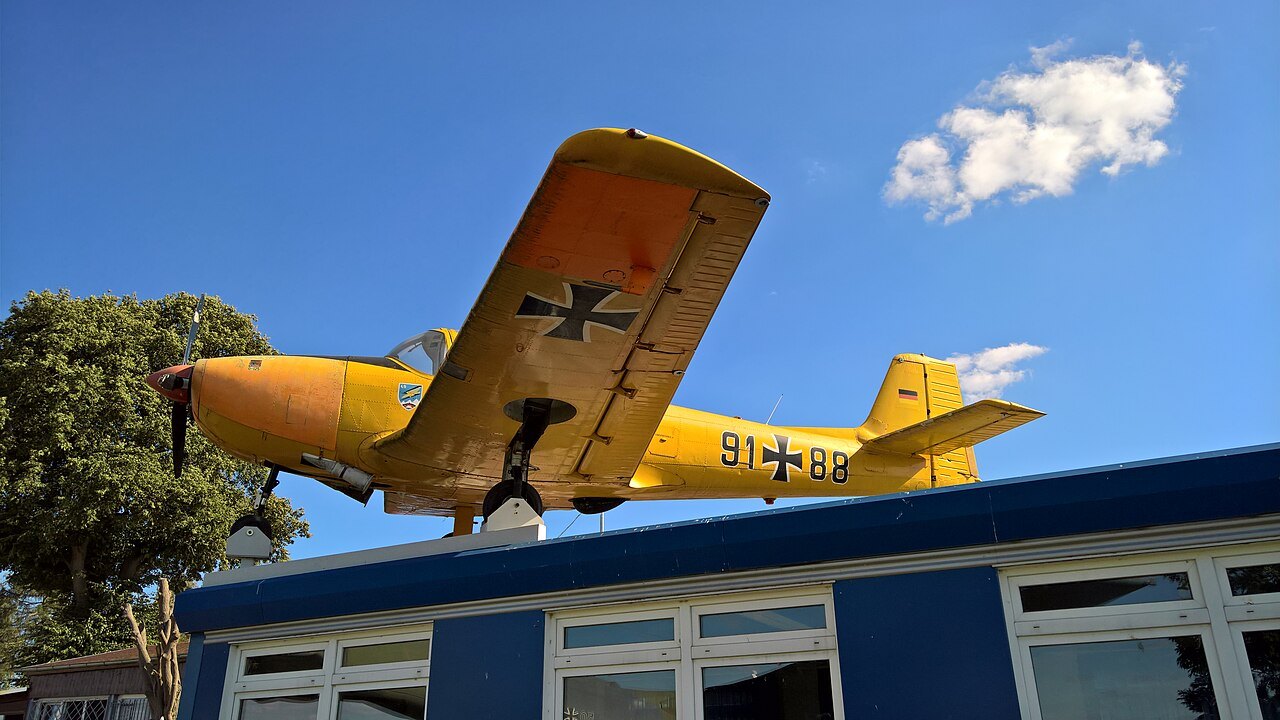
The P.149 in pictures
Where the P.149 flies and flew
The P.149’s record
The P.149 never fought. Its record is one of training: 33 years as the Luftwaffe’s basic trainer and liaison aircraft, a role in founding the Nigerian Air Force, and more than three decades teaching Swissair’s future pilots.
See how training and combat types compare in the military aircraft statistics database. Figures are approximate.
Everything people ask about the P.149
Can I fly in a Piaggio P.149?
When did the Piaggio P.149 first fly?
How many P.149s were built?
Why did the Luftwaffe choose an Italian trainer?
How long did the Luftwaffe fly the P.149?
Which other countries used the P.149?
Are P.149s still flying?
You can’t fly the P.149.
These, you can.
Most of this museum you can only look at. These genuine military jets you can fly yourself with MiGFlug — with aerobatics and time on the controls.
 Fly the L-39 AlbatrosThe world’s most-flown jet trainer — aerobatics included
 Fly the F-104 Starfighter“The missile with a man in it”
 Fly the MiG-21The Cold War’s most-produced jet
 Fly the T-33 Shooting StarAmerica’s first jet trainer
 Fly the DH VampireA piece of early jet history
 Fly the S.211Agile Italian jet trainer
 Fly the MB-326The classic Aermacchi jet
 Fly the MiG-15The Soviet legend of the Korean War
Continue the tour
Every fact, checked
- Museo Piaggio: P 148 and P 149Piaggio Museum: P.148 for the Italian Air Force and Somalia, the 1953 P.149 and its German, Nigerian, Tanzanian and Ugandan users
- Piaggio P.149DGlobalSecurity: Luftwaffe selection in 1955, about 270 built including 190 by Focke-Wulf, 33 years of German service, Austria 1958–65
- Piaggio P.149 / FWP.149DAfterburner (Poland): 76 Piaggio-built and 190 Focke-Wulf aircraft for Germany, the “Piggi” nickname, 91+74 (D-ELKS) at Fassberg in 2024
- Piaggio P.149Aviastar: development from the P.148, operators and specifications
- Piaggio P.149-D flight testFlight, 1958: air test of the P.149D, its GO-480 engine, handling, cruise and ceiling
- Nigerian Air Force historyGlobalSecurity: German technical assistance from 1963 and the founding Act of April 1964
- Aviation Safety Network: Piaggio P.149 occurrencesASN: some 80 recorded accidents and incidents, 1958 to 2024