
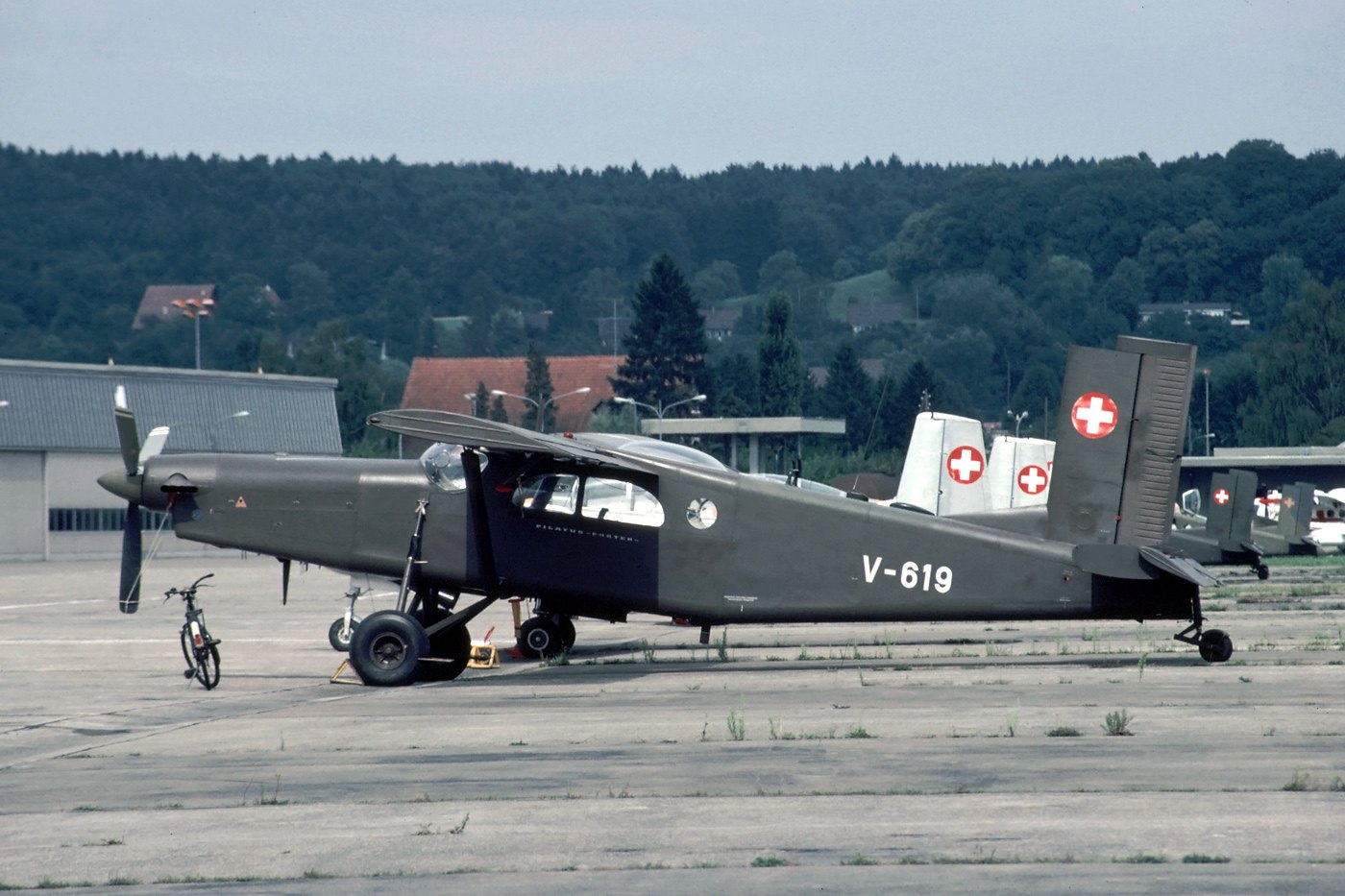
Pilatus PC-6 Porter
The Swiss Mountain Workhorse
Built in Stans for 63 years, the Porter and Turbo Porter could land almost anywhere: on a Himalayan glacier, a jungle strip or a Swiss alp, for air forces from Austria and Australia to the US Army and Air America.
The PC-6 Porter: how a Swiss utility aircraft learned to land anywhere
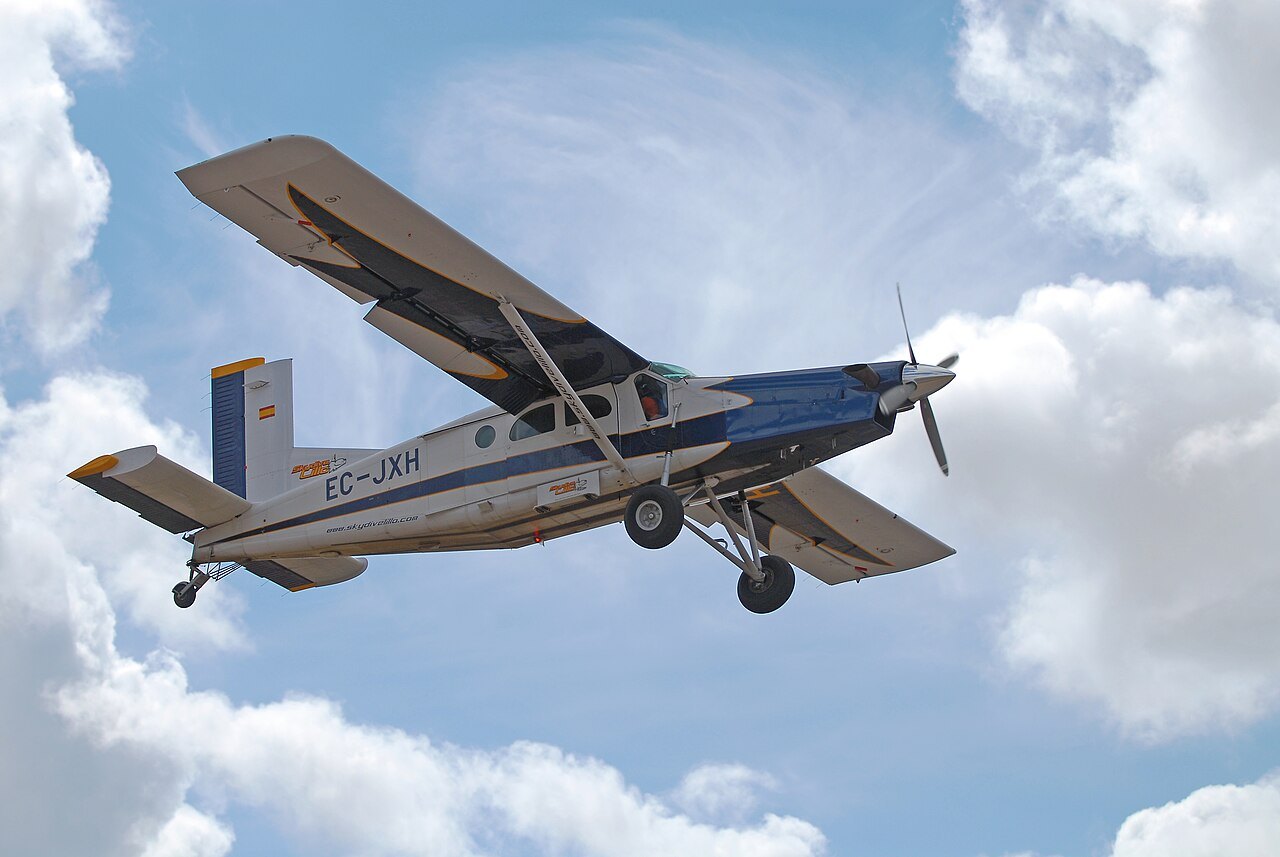
On 4 May 1959 a stubby, high-winged monoplane registered HB-FAN lifted off from the Pilatus works at Stans, beside Lake Lucerne, with the test pilot Rolf Böhm at the controls. It had a long, square-sided cabin, a huge wing with full-span flaps, a tailwheel and a big engine up front. Pilatus called it the PC-6 Porter. It was designed for the kind of places Switzerland has plenty of: short, sloping, high-altitude strips where an ordinary aircraft could neither land nor get out again. Within a year the Porter had proved the point in the most dramatic way possible, by landing on a glacier on Dhaulagiri in the Himalaya, higher than any fixed-wing aircraft had landed before.
The original Porter had a Lycoming piston engine. In May 1961 Pilatus flew the first Turbo Porter, with a French Turbomeca Astazou turboprop, and from 1966 the Pratt & Whitney Canada PT6A became the standard engine. The turbine gave power at altitude, simple maintenance and the ability to burn jet fuel available at any military base. In the United States Fairchild built around 100 under licence, including the armed AU-23A Peacemaker for the Vietnam War. Production at Stans continued, at low rates, until the last aircraft, serial 1019, was delivered to the Indonesian operator Smart Aviation on 12 December 2022, after a run of 63 years.
Military users valued the same qualities as bush pilots. The Austrian Air Force has flown a dozen Turbo Porters since 1976 for transport, search and rescue and parachuting. The Australian Army took 19 from 1968. The CIA-owned airline Air America flew up to 23 at a time across Laos and Southeast Asia. The US Army flew UV-20A Chiricahuas in Berlin, and the Royal Thai Air Force has kept its AU-23As in service for decades. At home, the Swiss Air Force has operated a fleet of Porters for light transport and utility work, modernised them with glass cockpits from 2018, and turned a home-built aircraft into one of the most familiar sounds in the Alps.
01The PC-6 in Swiss service: a home-built aircraft for home-grown terrain
For Pilatus, the Porter was a commercial design first, but the Swiss armed forces became one of its most loyal users. German-language reference works give the Swiss Air Force fleet as 19 aircraft over the years, of which around 15 remained in military use, with one more operated by armasuisse, the federal procurement agency. The aircraft serve as light STOL transports and utility aircraft, a role that suits a country of short valley airfields.
Rather than replace them, Switzerland chose to update its Porters. From 2018 armasuisse delivered modernised aircraft with a glass cockpit and electronic map, new radios and GPS, new wiring, a civil transponder and a collision warning system, according to its own magazine. The approach mirrors the wider Turbo Porter fleet: in 2008 Pilatus began work on a Garmin glass cockpit retrofit after a French Air Force contract, and FlightGlobal estimated the upgrade at about $295,000 per aircraft. For MiGFlug readers who have watched a Porter climb out of an Alpine valley, the type is as Swiss as the PC-7 and the Hunter.
02The PC-6 in Southeast Asia: Air America and the Peacemaker
The Porter’s best-known wartime work was done by civilians. During the 1960s and 1970s Air America, the airline secretly owned by the CIA, flew up to 23 PC-6s at a time across Laos, Vietnam and Thailand. They dropped supplies to remote outposts, moved people, carried out reconnaissance and flew intelligence missions, landing on mountain strips that were often little more than a cleared ridge. Air America found the early Astazou-engined Turbo Porters unreliable and re-engined many with the Garrett TPE331.
The US Air Force tried to turn the Porter into a gunship. Fairchild built 15 AU-23A Peacemakers with a 20 mm side-firing cannon and underwing stores for the Credible Chase programme, intended to give the South Vietnamese Air Force a light armed aircraft. In the Pave Coin evaluation of June and July 1971, according to the National Museum of the US Air Force, American crews flew 73 missions and Vietnamese crews 68. The evaluating unit recommended against combat use without a major upgrade because the aircraft was slow and unarmoured. The Peacemakers were stored and then sent to Thailand, which used them for border surveillance and counter-infiltration work.
What makes the PC-6 special
Short field, steep slope
The Porter’s wing has large flaps and a low wing loading, and the aircraft was built to fly slowly and steeply. FlightGlobal’s flight test of a PT6A-27 Turbo Porter measured a take-off ground roll of 197 m at the maximum weight of 2,800 kg and a landing roll of 127 m, and noted the aircraft operating from strips with upslopes of 15 to 20 degrees and from jungle clearings. That is why it could supply the Dhaulagiri expedition and Laotian hill outposts alike.
A turbine for the mountains
A piston engine loses power as the air gets thin. A turboprop such as the 550 shp PT6A-27 keeps more of its performance at altitude, starts easily in the cold and runs on jet fuel, which every military base and many remote airstrips stock. The Turbo Porter could carry more than 1,000 kg with full internal fuel, according to FlightGlobal, and single-lever operation made it straightforward to fly.
A box with doors
The cabin is a simple box of more than 3 cubic metres with large sliding doors on both sides. That made the Porter easy to convert from passenger seats to stretchers, cargo or parachutists in minutes. Flying magazine reported that around 40 per cent of the PC-6s in Europe in the early 1990s were used by skydiving clubs, and armies used the same doors for paratroopers.
03The PC-6’s variants: piston Porter to Turbo Porter
- PC-6 and PC-6/350 Porter: piston-engined originals with Lycoming engines.
- PC-6/A series: Turbo Porter with the Turbomeca Astazou turboprop, first flown in May 1961.
- PC-6/B series: Pratt & Whitney Canada PT6A turboprop from 1966, the standard version; the B2-H4 added a strengthened airframe and higher weights.
- PC-6/C series: Garrett TPE331 turboprop, including Fairchild-built aircraft.
- AU-23A Peacemaker: Fairchild-built armed version for the US Air Force, later transferred to Thailand.
- UV-20A Chiricahua: US Army designation for Porters flown by the Berlin Brigade.
Pilatus PC-6/B2-H4 Turbo Porter specifications
Specifications
- Crew
- 1 or 2
- Payload
- More than 1,000 kg with maximum internal fuel (FlightGlobal)
- Length
- 11 m (36 ft 1 in)
- Wingspan
- 15.87 m (52 ft 1 in)
- Height
- 3.2 m (10 ft 6 in)
- Empty weight
- 1,270 kg (2,800 lb)
- Max take-off weight
- 2,800 kg (6,173 lb)
- Powerplant
- 1 × Pratt & Whitney Canada PT6A-27 turboprop, 550 shp
- Maximum speed
- 232 km/h (144 mph)
- Range
- About 730 km (450 mi) with maximum payload
- Service ceiling
- About 8,200 m (26,900 ft)
- Take-off ground roll
- 197 m (646 ft) at maximum take-off weight (FlightGlobal)
- Landing roll
- 127 m (417 ft) at maximum landing weight (FlightGlobal)
- Armament
- None on standard aircraft; AU-23A: side-firing 20 mm cannon and underwing stores
Costs & production
- Unit cost
- Late-production prices not published; used Turbo Porters were advertised at about EUR 1 million to USD 2.25 million in 2026 (pc-6.com listings)
- Cost per flight hour
- Hedged estimate: in the order of several hundred to around a thousand US dollars per hour for civil operators, based on fuel for a single PT6A-27 plus engine and airframe reserves; no official military figure has been published and this is an order of magnitude only
- Production
- About 600 in total, 1959 to 2022, including around 90 to 100 built by Fairchild in the USA
- Programme
- Avionics upgrade: Garmin glass cockpit retrofit estimated at about $295,000 per aircraft (FlightGlobal)
04The PC-6’s operating costs: cheap to run, expensive to replace
The Porter is a single-engine turboprop with fixed undercarriage and simple systems, so its running costs are modest by military standards. Fuel for the PT6A-27 and the reserve for engine overhauls make up most of the direct cost, which is why civil operators in China saw it as cheaper to operate than the Antonov An-2, as AIN reported in 2016. The more serious cost is the lack of a direct successor: production ended in 2022, so air forces such as Switzerland and Austria have had to choose between upgrading old airframes, as Switzerland did from 2018, and buying a different type.
05The PC-6’s production numbers: why counts differ
Different sources give different totals. One common count is 604 aircraft; another splits production into 521 built by Pilatus and 92 by Fairchild Hiller. Fairchild’s share is often rounded to about 100. Late in the programme some fuselages were built by a Pilatus joint venture in Chongqing, China. The figure of about 600 is used here as a rounded total.
The PC-6 from Stans to the Himalaya and back
First flight
The prototype HB-FAN flies at Stans on 4 May with Rolf Böhm at the controls.
Dhaulagiri
A Porter named Yeti supports the Swiss Dhaulagiri expedition and lands at about 5,750 m, a record for fixed-wing aircraft.
Turbo Porter
The first turboprop Porter, with a Turbomeca Astazou, flies in early May.
PT6A engine
The Pratt & Whitney Canada PT6A version appears and becomes the standard Turbo Porter.
Australian Army
The Australian Army begins taking delivery of 19 Porters in February.
Pave Coin
The AU-23A Peacemaker gunship is evaluated in Southeast Asia in June and July.
Austria
The Austrian Air Force begins operating its fleet of 12 Turbo Porters.
Berlin
Two UV-20A Chiricahuas join the US Army Berlin Brigade aviation detachment.
Swiss modernisation
Modernised Swiss Air Force Porters with glass cockpits begin to be delivered.
Last delivery
On 12 December the last PC-6, serial 1019, is delivered to Smart Aviation in Indonesia.
Stories & eyewitnesses: the PC-6 on glaciers, jungles and alps
Yeti on Dhaulagiri
The highest landing by a fixed-wing aircraft.
Read the full story
Rolf Böhm and HB-FAN
The first flight at Stans in 1959.
Read the full story
Air America’s Porters
Up to 23 PC-6s flew for the CIA’s airline.
Read the full story
A gunship that never went to war
The AU-23A Peacemaker and Pave Coin.
Read the full story
Thailand’s Peacemakers
Decades of border patrol.
Read the full story
Austria’s dozen
Turbo Porters as the backbone of a small transport fleet.
Read the full story
Chiricahuas in Berlin
Porters behind the Iron Curtain.
Read the full story
The Swiss refit
Glass cockpits for an old friend.
Read the full story
GoldenEye
James Bond’s escape aircraft.
Read the full story
The last Porter
Production ended in December 2022.
Read the full story
The PC-6 in pictures
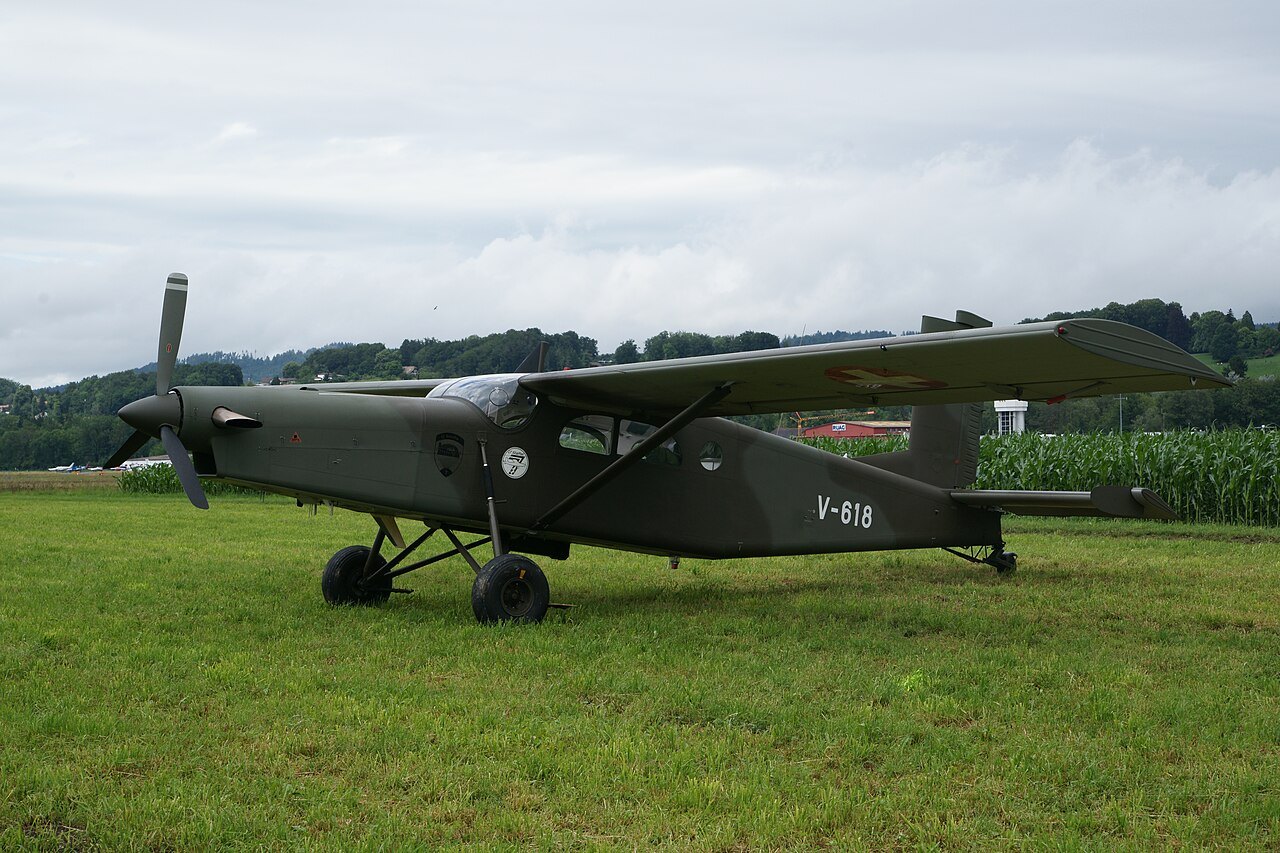
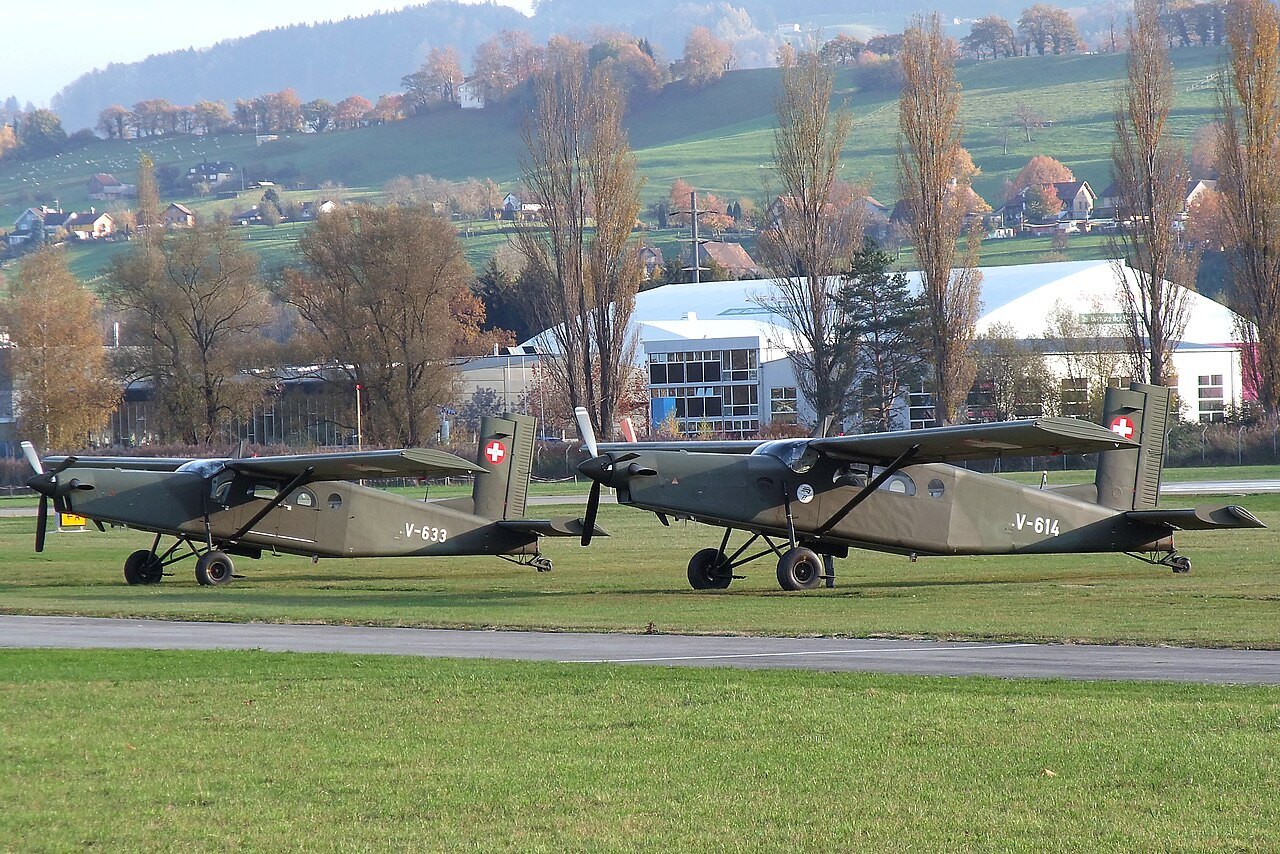
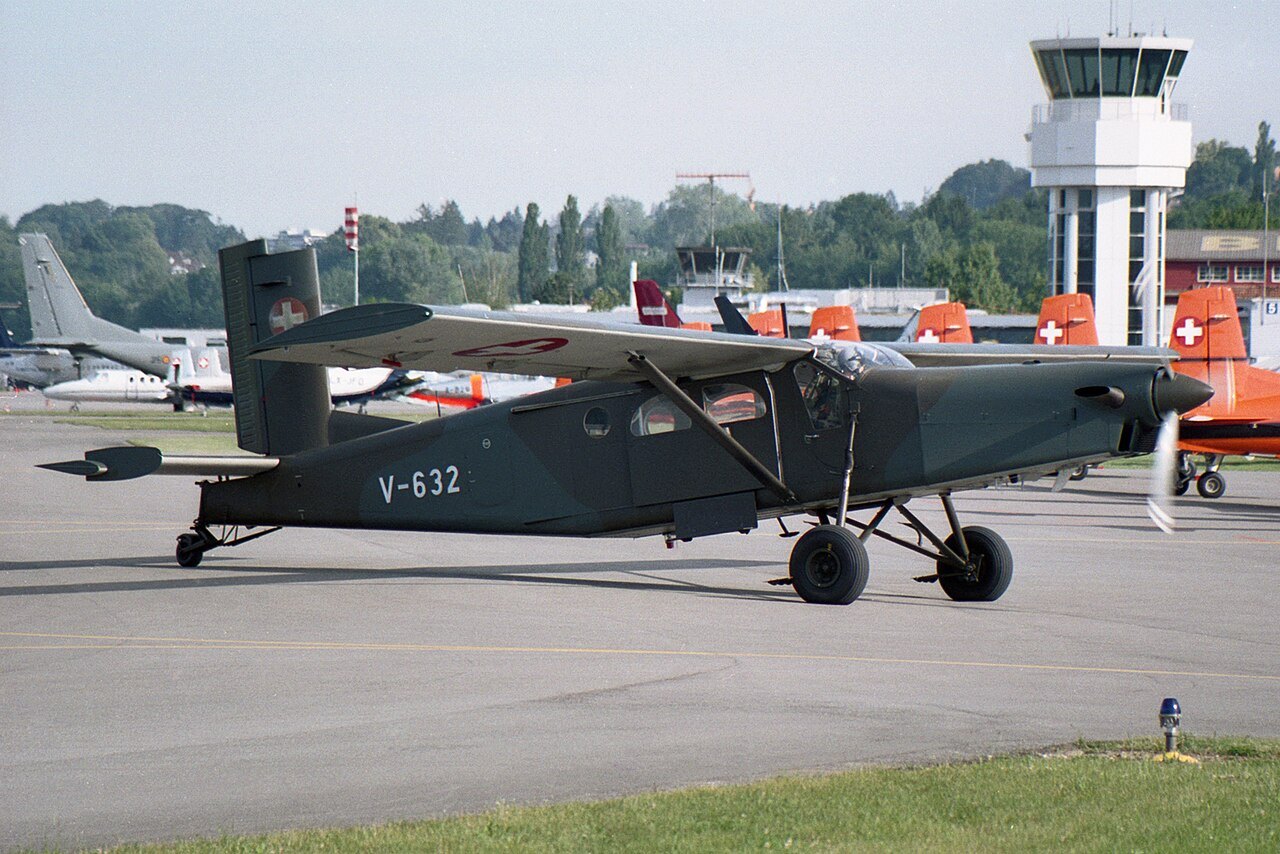
Where the PC-6 flies and flew
The PC-6’s record
The Porter is a utility transport rather than a combat aircraft. Its best-known war service was with Air America in Southeast Asia and, in armed form, with the AU-23A Peacemaker, which was evaluated in combat conditions in 1971 and later used by Thailand for border patrol. Its main military record is transport, parachuting and rescue for air forces in Switzerland, Austria, Australia and elsewhere.
See how training and combat types compare in the military aircraft statistics database. Figures are approximate.
Everything people ask about the PC-6
Can I fly in a Pilatus PC-6 Porter?
Does the Swiss Air Force still fly the PC-6?
What is the difference between the Porter and the Turbo Porter?
How short a runway does a PC-6 need?
How many PC-6s were built?
Was the PC-6 used in the Vietnam War?
What record does the PC-6 hold?
You can’t fly the PC-6.
These, you can.
Most of this museum you can only look at. These genuine military jets you can fly yourself with MiGFlug — with aerobatics and time on the controls.
 Fly the L-39 AlbatrosThe world’s most-flown jet trainer — aerobatics included
 Fly the F-104 Starfighter“The missile with a man in it”
 Fly the MiG-21The Cold War’s most-produced jet
 Fly the T-33 Shooting StarAmerica’s first jet trainer
 Fly the DH VampireA piece of early jet history
 Fly the S.211Agile Italian jet trainer
 Fly the MB-326The classic Aermacchi jet
 Fly the MiG-15The Soviet legend of the Korean War
Continue the tour
Every fact, checked
- The Pilatus Porter (PC-6) website, Markus HerzigFirst flight of HB-FAN on 4 May 1959 with Rolf Böhm; production and fleet records; market listings.
- AIN: Pilatus Aircraft delivers last PC-6 Porter (December 2022)Final delivery, serial 1019, to Smart Aviation; 63-year production run.
- National Museum of the US Air Force: Fairchild AU-23A Peacemaker fact sheetCredible Chase, Pave Coin missions, assessment and transfer to Thailand.
- AIN: Pilatus PC-6 proves popular in China (Matt Thurber, April 2016)Fuselage production in Chongqing; operating costs compared with the An-2.