
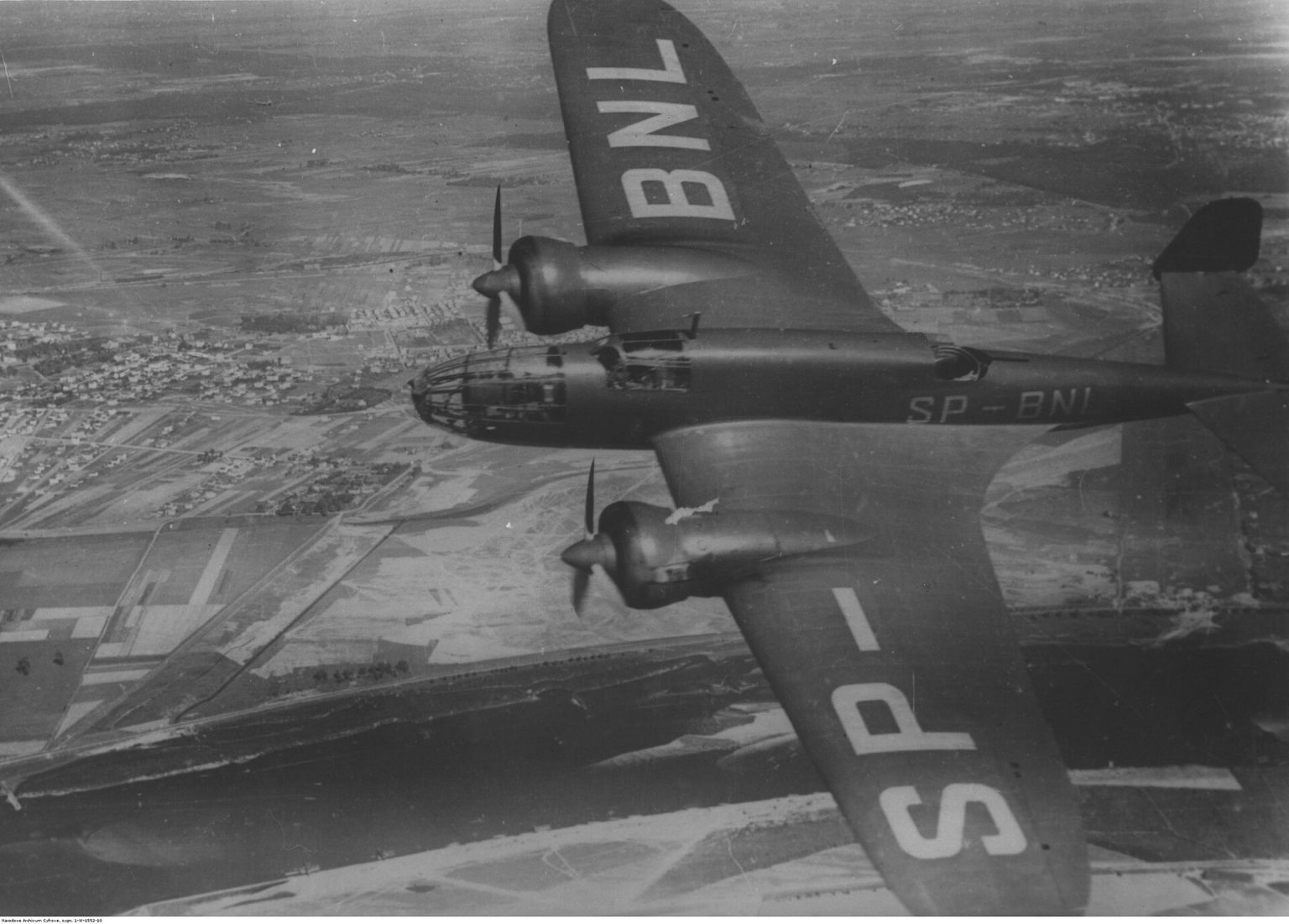
PZL.37 Łoś: Poland's world-class bomber that arrived too late
In 1936 it was one of the most modern medium bombers on earth — fast, compact and able to out-carry far bigger aircraft. When Germany invaded in 1939, Poland could field only a handful.
The PZL.37 Łoś: a world-class bomber Poland could not build fast enough
When the PZL.37 Łoś ("Elk", sometimes rendered "Moose") first flew in 1936, it was arguably the most advanced medium bomber in the world: clean, compact, and able to lift a bomb load that shamed aircraft twice its size. Three years later it became a symbol of a crueller truth — that a brilliant design counts for little if you cannot field enough of it in time.
The Łoś was the work of engineer Jerzy Dąbrowski, whose team at Poland's state aviation works (Państwowe Zakłady Lotnicze, PZL) set out in 1934 to build a fast, all-metal bomber that could operate from the rough grass fields of a country with little concrete. What emerged was strikingly modern for its day: a low-wing, twin-engine monoplane with a slim fuselage, a smooth stressed-skin structure, retractable undercarriage and a wing whose gentle taper hid an unusually efficient design.
Its defining party trick was load. A production PZL.37B could carry up to roughly 2,580 kg (about 5,690 lb) of bombs internally and under the wing — more than contemporaries such as the early Vickers Wellington or the Bristol Blenheim, despite the Łoś being smaller and lighter. It did this on two licence-built Bristol Pegasus radial engines of under 1,000 hp each, which speaks to how cleanly the airframe was designed.
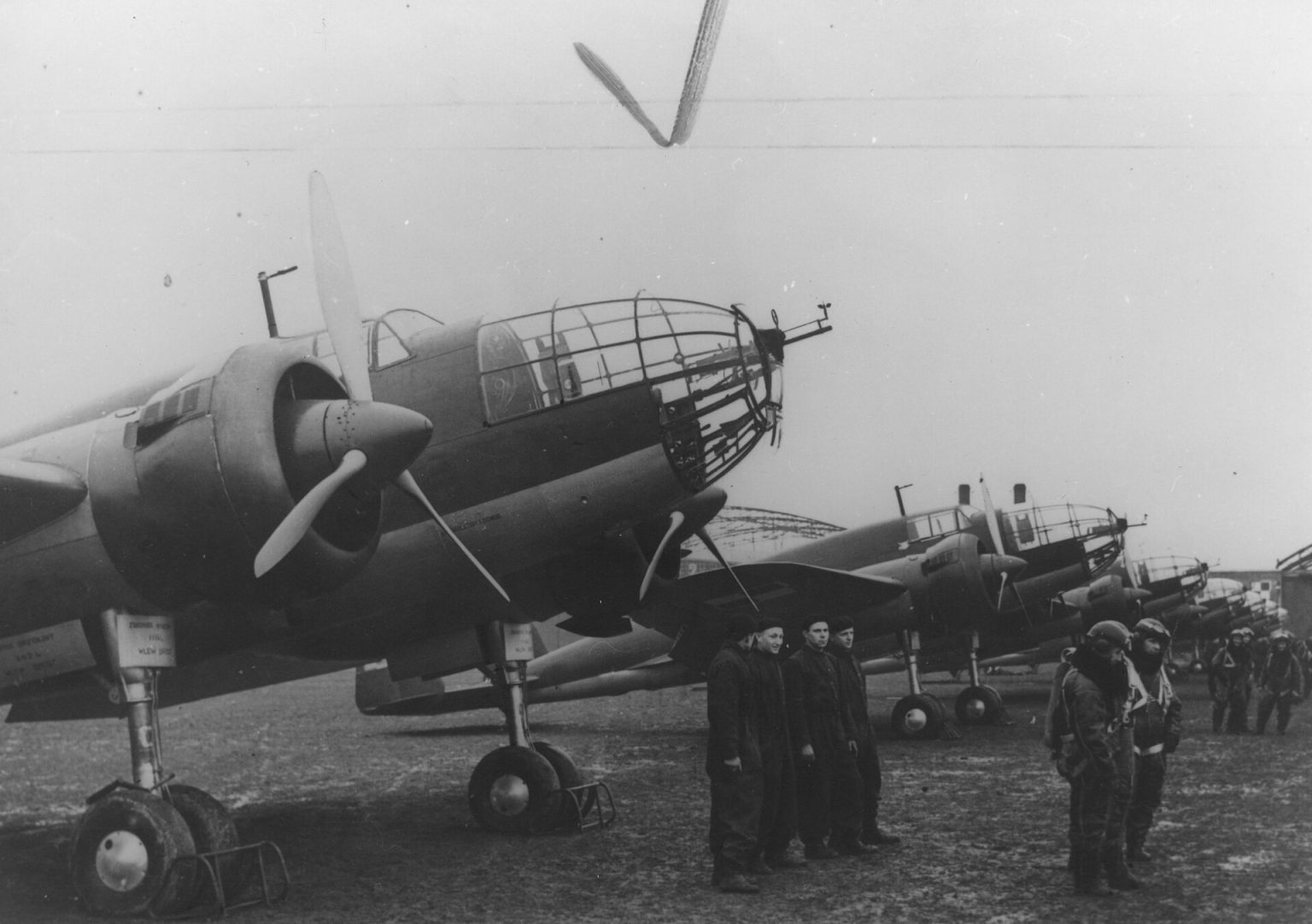
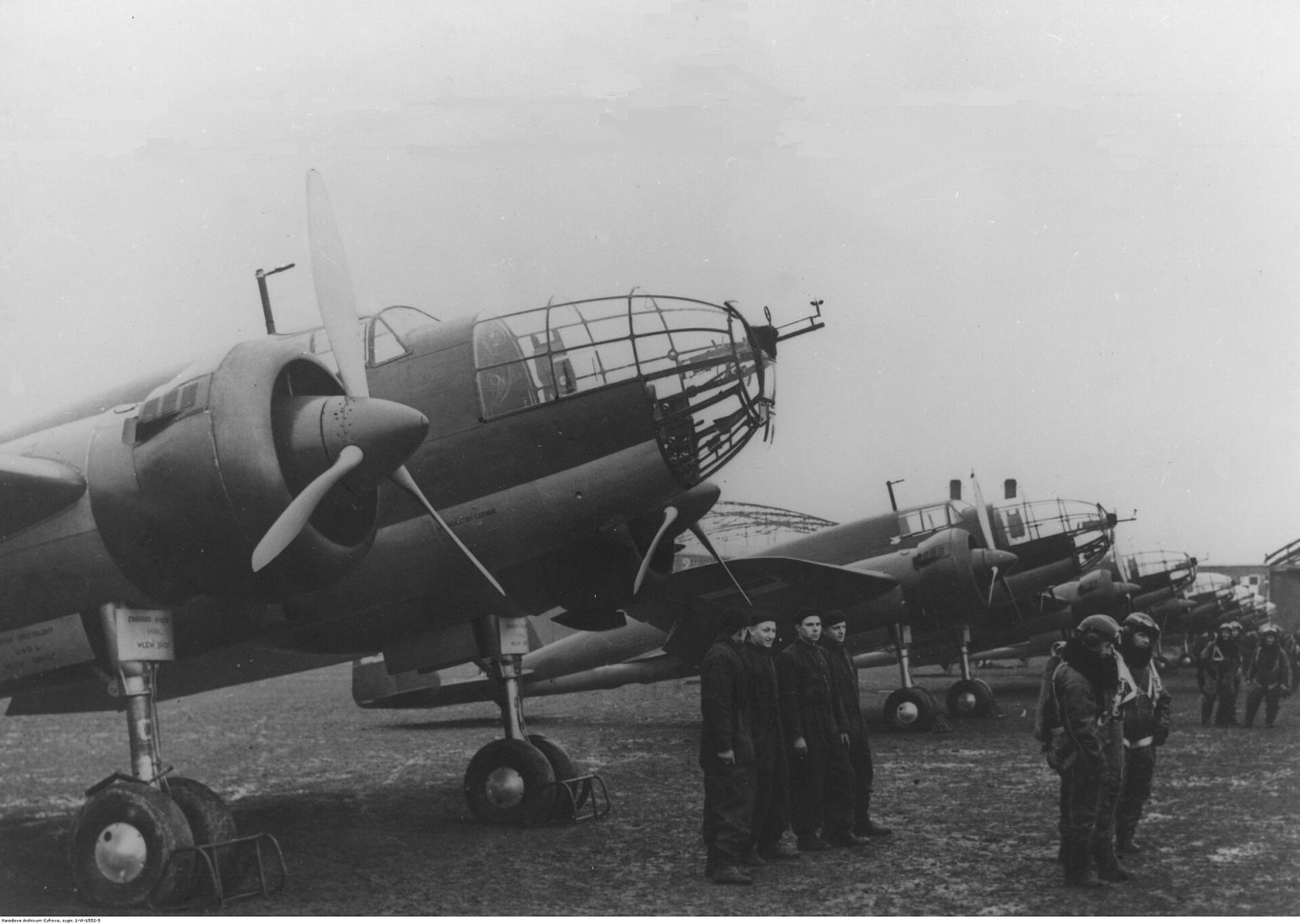
The second signature feature sat on the ground: each main undercarriage leg carried two wheels side by side in a twin-tandem "double" arrangement, each independently sprung. That doubled the footprint and let a fully loaded Łoś operate from soft, uneven fields that would have bogged a single-wheel bomber — exactly the austere conditions Polish planners expected in a war.
It arrived at a proud moment for Polish aviation. In the mid-1930s PZL was producing world-class designs — the gull-winged P.11 fighter had briefly been among the best in the world, and Polish pilots and designers were winning international recognition. The Łoś was meant to be the bomber that matched that reputation, a modern strike aircraft to stand beside the modern fighter. For a brief window, on paper and at air shows, it did exactly that.
On paper the Łoś could have been a world-beating bomber. The tragedy is that Poland finished so few of them before the clock ran out.
But paper is not a fielded fleet. Production and organisational delays meant that when Germany invaded on 1 September 1939, only around 36 Łoś were combat-ready in the Polish Air Force's single Bomber Brigade (Brygada Bombowa), out of somewhere between roughly 90 and 120 aircraft built or on the line (sources vary). The crews flew with conspicuous courage against German armoured columns, but there were too few of them, they usually flew without fighter escort, and losses were heavy.
As Poland collapsed, surviving Łoś were evacuated to Romania, where they were interned and later pressed into Romanian service — several going on to fly on the Eastern Front from 1941. Meanwhile a string of pre-war export orders — from Bulgaria, Yugoslavia, Turkey, Greece, Romania and others — mostly evaporated in the chaos of 1939; only a few aircraft were ever delivered abroad. Today no complete PZL.37 survives: only relics, a preserved engine and a full-scale replica remain to show what Poland's lost bomber looked like.
That is the paradox worth holding onto. The Łoś was not a flawed design that failed on its merits; it was a good design that history never let compete. Understanding it means separating two questions that are easy to blur: how good was the aircraft, and how good was Poland's position in 1939. The answers are very different, and the sections below take each in turn.
01What the name "Łoś" means and how to say it
"Łoś" is Polish for the elk (the large deer known in North America as the moose). It is pronounced roughly "wôsh" — the barred Ł sounds like an English "w", and the ś is a soft "sh". PZL's aircraft of the era often carried names drawn from Polish life and nature; the type designation PZL.37 (also written P.37) is the manufacturer's number, and the main wartime version was the PZL.37B, nicknamed Łoś II.
02Why the PZL.37 Łoś looked so modern in 1936
Most bombers of the mid-1930s were still slab-sided, fabric-and-strut machines. The Łoś was an all-metal stressed-skin monoplane with retractable gear and a clean, low-drag shape — closer in concept to the aircraft that would define the early war years than to its own contemporaries. Its combination of a small, efficient airframe with a large bomb load is exactly what made informed observers rate it so highly at the time.
It is important to be honest about the numbers, though: the Łoś was fast for a loaded medium bomber but not a record-breaker, and its defensive armament was light. Its excellence was in the balance of the whole design, not in any single headline figure.
03Jerzy Dąbrowski and the team behind the Łoś
The Łoś was principally the work of Jerzy Dąbrowski, one of the leading Polish aircraft engineers of the interwar period, with earlier concept work involving other PZL designers. Dąbrowski's philosophy was to extract maximum efficiency from a clean airframe rather than to rely on brute engine power — a sound instinct given the modest engines available to Poland. After the fall of Poland he continued his career abroad, part of the wider diaspora of Polish aviation talent scattered by the war.
04The PZL.37 Łoś and the "too few, too late" problem
The Łoś story is often summarised as "a world-class bomber that came too late" — and that framing is fair, provided it is stated carefully. The design was genuinely advanced. What failed was the timeline: re-equipping squadrons, training crews, sorting out early-production issues and building enough airframes all took longer than the deteriorating international situation allowed. By September 1939 only a fraction of the planned force was ready for combat.
It is also worth remembering that Poland was a young, capital-poor state rebuilding after more than a century of partition. Financing a modern bomber fleet in quantity was a genuine strain, and the money and time simply ran out before the aircraft could be produced at scale.
05How many PZL.37 Łoś were actually built?
Figures vary between sources and should be treated as estimates. A commonly cited picture is that around 90 aircraft had been delivered by the outbreak of war with perhaps 30 or so more in various stages of production, giving a rough total in the region of 90 to 120. Of these, only about 36 were combat-ready in the Bomber Brigade on 1 September 1939. Exact serial-by-serial accounting is complicated by wartime losses and destroyed records.
06Is any PZL.37 Łoś still around to see?
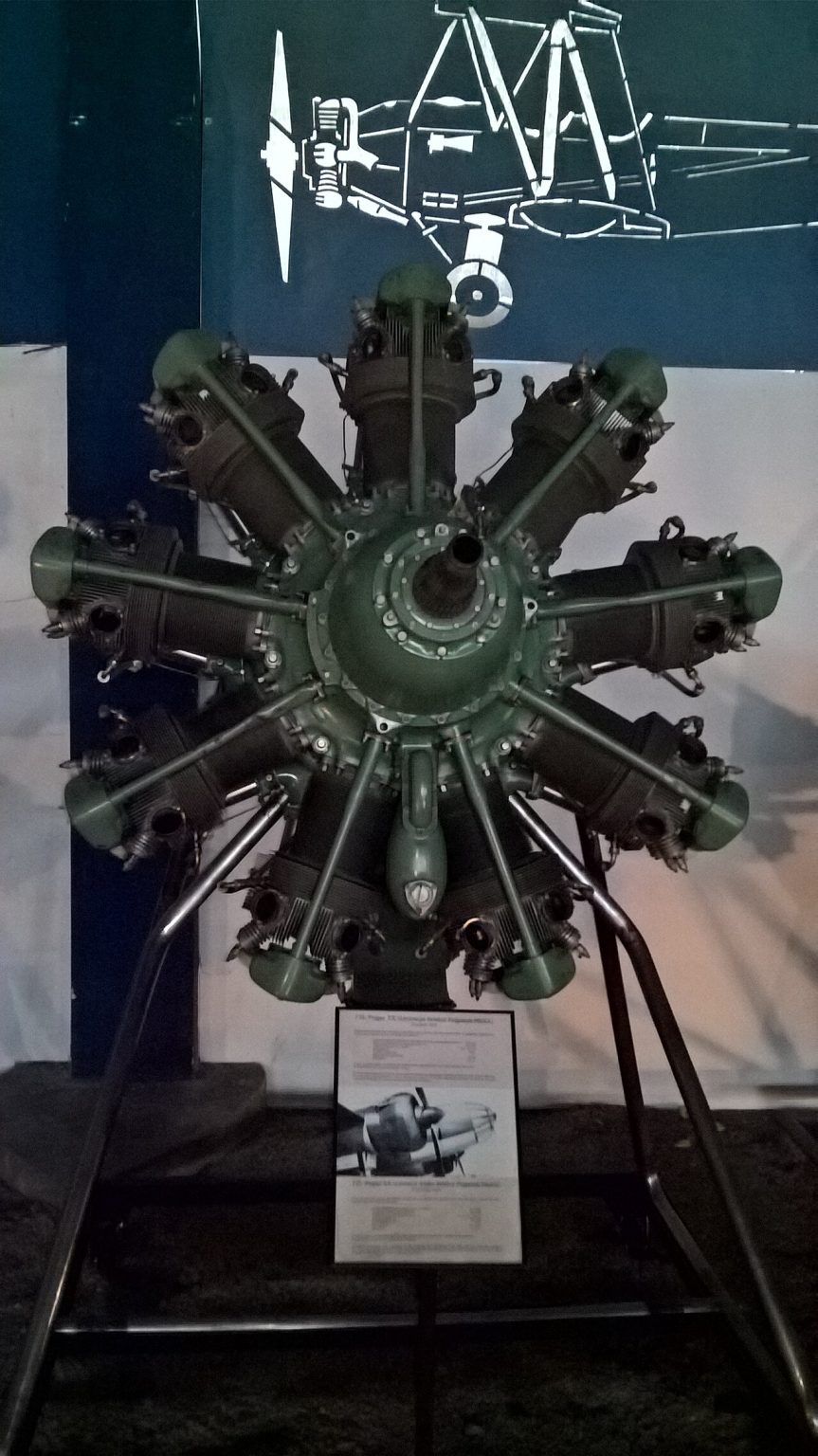
No complete original airframe survives anywhere. What remains are relics and fragments, an original PZL-built Pegasus engine preserved at the Polish Aviation Museum in Kraków (it had been sent to the 1939 New York World's Fair and survived the war abroad), and a full-scale non-flying replica built by PZL Mielec and unveiled in 2012, reconstructed largely from photographs because few original drawings survived. There is no airworthy example and none is under restoration to fly.
07Why the Łoś still matters to Polish aviation memory
For Poland the Łoś is more than a footnote in bomber development. It stands for a moment when Polish engineering was genuinely world-class, and for the courage of the aircrew who flew an outnumbered force into a hopeless campaign. That is why the type is memorialised with a full-scale replica and why its story is retold so often: it is a symbol both of what Polish industry achieved and of how little time it was given.
What made the PZL.37 Łoś advanced — and where it was ordinary
The Łoś was not a collection of exotic technologies. It was an exercise in balance: a light, clean airframe wrapped around a big bomb bay, two proven engines and an undercarriage built for the mud of a real war.
A bomb load out of all proportion to its size
Up to roughly 2,580 kg (about 5,690 lb) of bombs — carried by a compact aircraft lighter than many single-engine types of the later war. The Łoś routinely out-carried bigger, heavier contemporaries, which is the single fact that most impressed observers of the day.
Two Pegasus radials, licence-built in Poland
The main PZL.37B used two Bristol Pegasus XX radials (built under licence in Poland as the PZL Pegaz), each around 900–970 hp. Modest power, but the clean airframe turned it into respectable speed and a useful load — a sign of how efficient the design was.
Double main wheels for rough, soft fields
Each main leg carried two independently sprung wheels side by side. This distinctive twin-wheel gear spread the load and let a fully bombed-up Łoś operate from the soft grass strips that were the reality of Polish air bases — a genuinely practical, war-minded touch.
Taken together, these choices describe a coherent design philosophy: build light, build clean, and spend the weight budget on bombs rather than on armour, heavy guns or oversized engines. It was a philosophy well suited to a bomber meant to strike hard from primitive fields — and less well suited to surviving in contested skies without escort. The expanders below unpack the engineering in detail.
08The PZL.37 Łoś wing and all-metal structure
The Łoś used a stressed-skin, all-metal structure that was thoroughly up to date for the mid-1930s. The wing was built around a strong spar system that also housed fuel and, crucially, left room for a deep internal bomb bay in the fuselage. The clean aerodynamic shape — few struts, no fixed gear hanging in the airflow — is a large part of why such modest engines produced competitive performance. The wing's moderate loading also kept field performance and handling reasonable despite the heavy loads it could lift.
09Inside the PZL.37 Łoś bomb bay and its load options
Bombs were carried both in the fuselage and in the wing centre-section. A frequently quoted maximum loadout combined many small bombs — for example around eighteen 110 kg bombs — with a pair of larger weapons, up to the roughly 2,580 kg figure. In practice, operating from improvised fields in 1939, aircraft often flew with a reduced load of around 800 kg so they could get airborne from short, soft strips. The very largest bombs were available only in small numbers, so the theoretical maximum was rarely the operational reality.
10The Pegasus engines — and the Gnome-Rhône export re-engining
Polish-service aircraft used the Bristol Pegasus (XII B on early machines, XX on the main PZL.37B), built under licence by PZL as the Pegaz. For export, the planned PZL.37C and PZL.37D versions were to use French Gnome-Rhône 14N radials of around 1,000–1,065 hp, giving foreign customers an engine they could support locally. Very few export-engined aircraft were completed before the war intervened. The choice of licence-built engines was itself telling: Poland preferred proven, supportable powerplants over chasing the last few horsepower.
11The PZL.37 Łoś defensive armament — its real weak spot
Honesty matters here. The Łoś carried only three rifle-calibre machine guns (7.92 mm) — one in the nose, one in a dorsal position and one in a ventral position. That was light defensive firepower even by 1939 standards, and against modern fighters it left the bomber vulnerable, especially when flown without escort. The Łoś was built to carry bombs, not to fight its way home. Some Romanian-operated aircraft were later modified with additional guns, an implicit acknowledgement of the original weakness.
12The four-man PZL.37 Łoś crew and their stations
A standard crew was four: a pilot; a commander who also served as bombardier in the glazed nose; a radio operator; and a gunner covering the rear. The nose and rear positions doubled as the defensive gun stations. It was a conventional, sensible layout for a medium bomber of the period, and it kept the fuselage slim, which helped the aircraft's clean lines and low drag.
13The twin-wheel undercarriage explained
The most visually distinctive feature of the Łoś was its main undercarriage: each leg carried two wheels mounted side by side, each with independent suspension. The idea was simple and clever — double the number of wheels to halve the ground pressure, so a heavy, fully loaded bomber could taxi and take off from soft grass without digging in. The gear retracted into the engine nacelles, keeping the clean airframe intact in flight. Few other bombers of the era adopted such a solution, and it perfectly captured the Łoś design ethos of practicality for real-world conditions.
14PZL.37 Łoś performance in context (and why figures vary)
Quoted top speeds range from about 412 km/h (loaded, at altitude) up toward roughly 445 km/h in some lighter or optimistic figures — treat the higher numbers with caution. Range was around 1,000–1,500 km in a combat configuration and up to roughly 2,600 km ferried, with a service ceiling near 7,000 m. These were solid, competitive numbers for a 1936 medium bomber, if not extraordinary. The point that matters is efficiency: the Łoś delivered these figures on relatively little power, which is the truest measure of how good the airframe was.
15PZL.37 Łoś variants: 37A, 37Abis, 37B and the export 37C/37D
The first production aircraft (PZL.37A) had a single tail fin; the PZL.37Abis introduced twin fins; and the definitive PZL.37B (Łoś II) combined twin fins with the more powerful Pegasus XX. The PZL.37C and PZL.37D were the Gnome-Rhône-engined export models. Prototypes had explored both single- and twin-tail layouts before the twin-fin arrangement was settled on, which improved stability and gave the rear gunner a better field of fire.
16How the Łoś compares to a modern reading of "good design"
By today's standards the Łoś reads as a well-judged compromise. It prioritised payload and field performance, accepted light defensive armament as the cost, and used proven engines to keep the aircraft supportable. Those are exactly the trade-offs a small nation with limited industry should make. What the design could not compensate for was strategic reality: no medium bomber, however clever, could have changed the outcome of September 1939 in the numbers Poland had available.
The PZL.37 Łoś in 1939: brave, outnumbered and soon in exile
The Łoś went to war concentrated in a single formation, flew hard against the advancing Wehrmacht, and within two weeks had been all but used up. The survivors escaped south into Romania — and, in one of the war's stranger turns, went on to fight again in someone else's air force.
On 1 September 1939 the combat-ready Łoś were gathered in the Polish Air Force's Bomber Brigade (Brygada Bombowa), organised into a handful of squadrons (eskadry). This was the striking force Poland had been building toward — and it amounted to only around 36 aircraft. Held back at first, the brigade was committed from about 4 September against German armoured and motorised columns pushing into Poland.
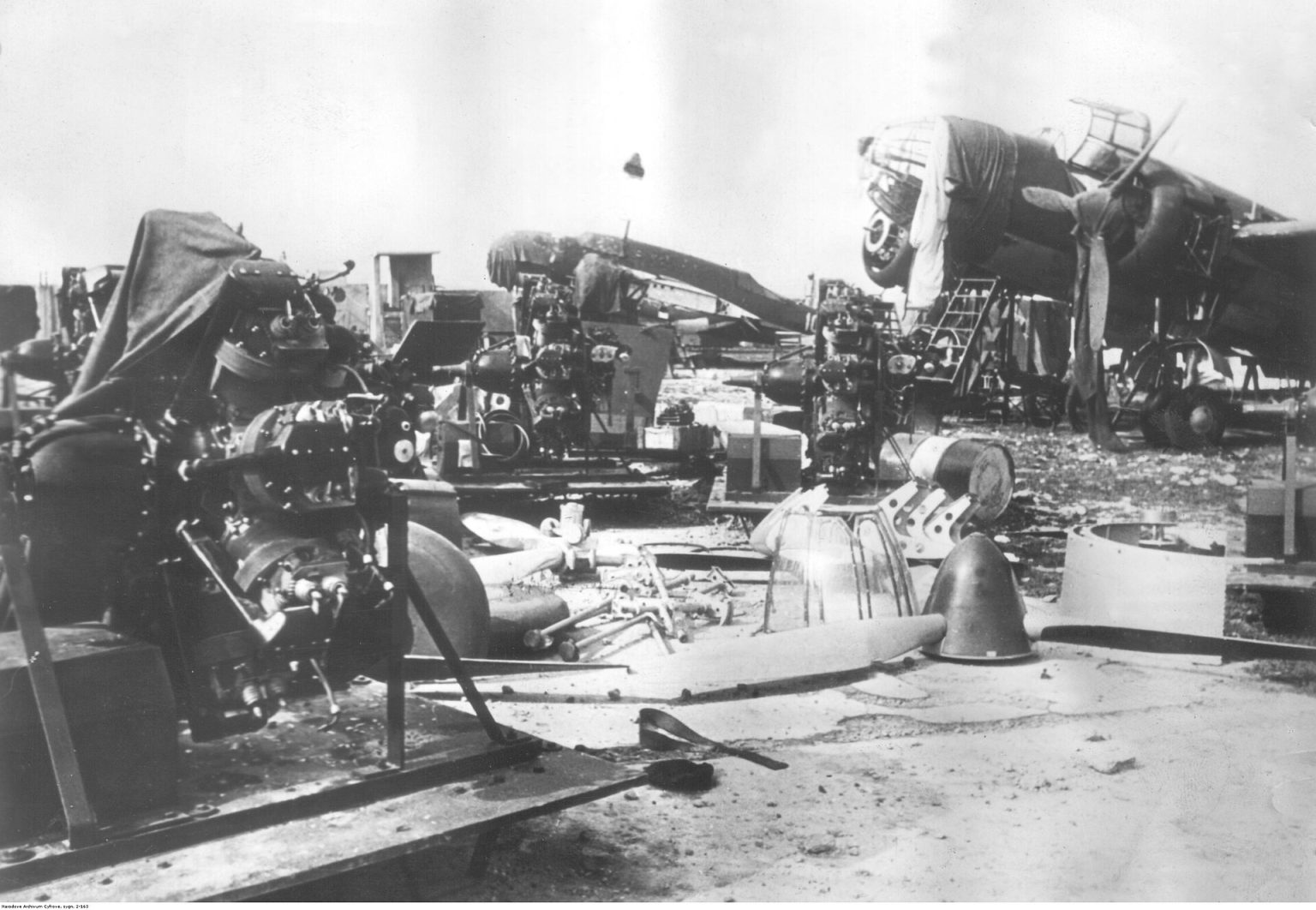
The crews pressed their attacks with real courage, bombing tank and vehicle concentrations by day. But the Łoś had been designed as a bomber, not a dogfighter, and the campaign exposed every structural weakness of Poland's situation: too few aircraft, too little fighter cover, light defensive armament, and an enemy with air superiority. Bombers were lost to German fighters and flak on almost every mission, and more were destroyed on the ground.
The tactical picture was grim from the start. German mechanised columns moved fast and were well protected by mobile flak, while the Luftwaffe's Bf 109 fighters roamed freely overhead. A slow, lightly armed bomber attacking such targets by day, without escort, was operating at the very edge of survivability. That the brigade kept flying missions under these conditions is a measure of the crews' determination rather than of any realistic chance of turning the campaign.
By mid-September the brigade was spent. As the military situation collapsed — and with the Soviet invasion from the east on 17 September — surviving aircraft were ordered south. Between roughly 26 and 27 Łoś flew out to neutral Romania, where crews and machines were interned.
What happened next is the twist in the tale. In 1940 the interned aircraft were taken over by the Royal Romanian Air Force, which pressed around 23 of them into service. From 1941, alongside Romania's participation in the German-led invasion of the Soviet Union, a number of these Łoś flew combat missions on the Eastern Front — over Bessarabia and toward targets such as Odessa and Kiev — before attrition, wear and a lack of spare parts wore the fleet down. A handful soldiered on into 1944.
Both of Poland's invaders also examined the type: the German Luftwaffe and the Soviet Air Force each captured and flight-tested a small number of Łoś, a quiet acknowledgement that the aircraft was worth a close look.
17The PZL.37 Łoś Bomber Brigade order of battle
The Łoś combat force was concentrated in the Bomber Brigade, made up of several eskadry grouped into two dywizjony (roughly, wings). Commonly cited are the 11th, 12th, 16th and 17th eskadry operating the Łoś. Keeping the type in one brigade made training and supply simpler, but it also meant the whole striking force could be worn down together — which is exactly what happened. There was no second echelon of Łoś units to rotate in once the first was exhausted.
18The first PZL.37 Łoś missions and the reality of daylight attack
From around 4 September the brigade attacked German columns by day, often from low level to improve accuracy against moving vehicles. Daylight, unescorted attacks against an enemy holding air superiority are among the most dangerous missions in air warfare, and the Łoś crews paid the price. Their aggression is not in doubt; the odds were. Communications and reconnaissance were also breaking down as the front collapsed, so targets were often located and struck under chaotic, improvised conditions.
19How many PZL.37 Łoś were lost in September 1939?
Precise figures vary and should be read as estimates. Roughly half of the committed Łoś were lost in action to fighters and anti-aircraft fire, with further aircraft destroyed on the ground at bases and at the factory. The essential point is not the exact tally but the pattern: a small force, heavily engaged, ground down within about two weeks. Losses among aircrew were correspondingly heavy, and the survivors were left with too few serviceable aircraft to continue effective operations.
20The evacuation of the PZL.37 Łoś to Romania
As Poland fell, aircraft of many types were flown to neutral Romania and Hungary. Around 26–27 Łoś reached Romania, where they were interned along with much of Poland's surviving air arm. For the Łoś this internment was not the end of the story — it was the beginning of a second, foreign career. Many Polish airmen, meanwhile, escaped onward through Romania to France and Britain, where they would fight again in other cockpits.
21Romanian PZL.37 Łoś service on the Eastern Front
From 1940 the Royal Romanian Air Force took over the interned aircraft and formed a bomber unit around them. When Romania joined the Axis invasion of the USSR in 1941, these Łoś flew real combat sorties on the Eastern Front. Inexperience with the type, engine trouble and a shortage of Polish spare parts caused heavy non-combat losses, and the fleet dwindled, with a few examples still around as late as 1944. It was a strange fate for a Polish bomber — to fight its longest campaign in the markings of another nation.
22Captured PZL.37 Łoś: German and Soviet evaluation
Both invaders tested captured Łoś. The Luftwaffe is reported to have flown a couple of examples, and the Soviet Air Force a few more. Neither adopted the type, but the fact that both bothered to evaluate it is a modest vote of confidence in a design that never got the chance to prove itself in numbers. For historians, these evaluation reports are among the few technical assessments of the aircraft made by outside observers.
23Could more PZL.37 Łoś have changed 1939?
It is tempting to imagine a Poland with two or three hundred Łoś in September 1939, but honesty requires caution. More bombers would have inflicted more damage on German columns and cost the Luftwaffe more — but they would still have flown into overwhelming enemy air superiority, and the campaign's outcome was decided by far larger strategic factors. A stronger Łoś force would have written a prouder chapter, not a different ending.
24The PZL.37 Łoś against the Luftwaffe fighters
The Łoś met the Messerschmitt Bf 109 in the worst possible circumstances: slow, lightly defended and usually unescorted against a fast, cannon-armed modern fighter with numbers and altitude. In that matchup the bomber's only real defences were low-level flight, cloud and luck. It is a stark illustration of why bomber survival in the early war depended so heavily on escort, tactics and darkness — none of which the Łoś crews of 1939 could count on.
PZL.37B Łoś full specifications and cost data
Figures are for the main production PZL.37B (Łoś II) and should be read as period estimates — surviving documentation is incomplete, and sources disagree on the details.
Baseline: the PZL.37B Łoś B of the 1938–39 production series — two licence-built Pegaz XX radials, twin fins, a crew of four and twenty bomb cells buried inside the airframe — because that is the aeroplane the four bomber eskadry of the Brygada Bombowa took to war on 1 September 1939, and the aeroplane every foreign customer was trying to buy. Deltas for the ten single-finned PZL.37A, the nineteen PZL.37A bis and the never-built Gnome-Rhône-engined C and D export marks are in grey. Three warnings before the figures. First, the production total needs stating carefully: roughly 92 aircraft had been delivered to the Polish Air Force by 1 September 1939, with about 31 more standing on the line at Warsaw-Okęcie in various stages of completion, so the round figure of ~120 that circulates in English is a count of airframes begun, not of aeroplanes flown, issued or serviceable. Second, almost every performance number below descends from PZL's own pre-war figures, published by a company selling hard into an export market and never independently retested by anybody; the 412 km/h in particular is a clean-airframe brochure figure and squadron aircraft off wet grass did not see it. Third, and unusually even by the standards of 1939 types, there is nothing left to check the numbers against. Not one PZL.37 survives anywhere in the world. A single Pegaz XX engine, sent to the 1939 New York World's Fair and never brought home, is the only original PZL.37 hardware in a museum.
Dimensions & weights
- Crew
- 4 — pilot, commander-bombardier in the glazed nose, radio operator and a dorsal gunner The commander was the bomb aimer and the nose gunner; the radio operator worked the ventral gun. As on almost every medium bomber of the generation, the moment the aeroplane was attacked it stopped navigating and stopped signalling, because the men who did those jobs were behind the guns instead. With only three guns to man, the Łoś at least did not have to strip its flight deck to fight.
- Length
- 12.92 m (42 ft 5 in) Short for the load carried. A Heinkel He 111P was over 16 m long and lifted less.
- Wingspan
- 17.93 m (58 ft 10 in) Also short: the Bristol Blenheim IV spanned 17.17 m for half the bomb load, the He 111P 22.60 m. The Łoś was a genuinely small aeroplane doing a large aeroplane's work.
- Height
- 5.10 m (16 ft 9 in)
- Wing area
- 53.50 m² (576 sq ft) Aspect ratio 6.0. The section was developed from a Ryszard Bartel profile and then thickened at the root so that bomb cells could be sunk into the centre section — the single decision that made the whole aeroplane possible.
- Empty weight
- 4,280 kg (9,436 lb) This is the number that ought to be famous. Four and a quarter tonnes empty, and the aircraft was cleared to more than double that. Very few aeroplanes of the late 1930s carried a higher proportion of their all-up weight as fuel and bombs.
- Normal loaded weight
- 8,865 kg (19,544 lb) in standard combat trim
- Maximum take-off weight
- 9,105 kg (20,073 lb) Better than a 2.1:1 ratio of maximum weight to empty weight. A Do 17Z managed about 1.7:1 and a Blenheim IV about 1.6:1. Poland built the lightest airframe in the class and then filled the difference with ordnance.
- Wing loading
- 166 kg/m² at normal loaded weight (34 lb/sq ft) Low, deliberately. Poland had few paved runways and expected to disperse to farm fields the moment war began, which is exactly what happened. Low wing loading plus large slotted flaps plus the twin-wheel gear is why Łoś units flew from meadows for a fortnight while the Luftwaffe hunted their proper aerodromes.
- Power loading
- 4.7 kg/hp at maximum weight (10.3 lb/hp) Modest. Two 970 hp radials to move nine tonnes was never generous, and it shows in the climb figure rather than in the top speed. This is the aeroplane's one real design weakness: Poland had no engine of 1,300 hp or more to give it, which is precisely why the enlarged PZL.49 Miś was drawn around imported Bristol Hercules.
- Maximum bomb load
- 2,580 kg (5,688 lb) — eighteen 110 kg bombs plus two of 300 kg, all internal Against roughly 2,000 kg for a He 111P, 1,000 kg for a Do 17Z and 454 kg for a Blenheim IV. On lower power than any of them, and with nothing hung in the airstream. The routine claim that the Łoś out-carried aircraft of twice its power is, unusually for a national favourite, true.
- Internal fuel
- Not reliably published Wing tanks fed both engines, with provision for auxiliary tanks in the fuselage bomb bay for the long-range fit. Figures in circulation are inconsistent and none traces to a primary document, so none is quoted here. What matters operationally is documented: the auxiliary tanks had not been issued to squadrons by September 1939, so the 2,600 km ferry range existed on paper only.
Performance
- Maximum speed
- 412 km/h (256 mph; 222 kn) at 2,800 m (9,190 ft) Quoted by PZL with a bomb load aboard, which is either an honest boast or a loosely defined one; treat it as best-case. The PZL.37A on the lower-rated Pegaz XII B was some 20 km/h slower. Either way the Łoś was faster than the PZL P.11c fighter that was supposed to escort it — 390 km/h — which tells you everything about the state of Polish fighter procurement in 1939.
- Cruising speed
- 360 km/h (224 mph) Polish sources are consistent on this; some English references quote figures as low as 320 km/h, apparently for an economical rather than a fast cruise.
- Landing speed
- 120 km/h (75 mph) Low enough to matter. It is what let crews put a nine-tonne bomber into a pasture and get it out again with a military load.
- Rate of climb
- 4.7 m/s (930 ft/min) at sea level The weak figure in the set, and the direct consequence of the power loading. Getting to a bombing altitude took time the Brygada Bombowa rarely had, and in September 1939 its crews attacked from low level anyway.
- Service ceiling
- 7,000 m (23,000 ft) Adequate rather than good, and largely irrelevant to how the type was actually used: the Brigade bombed armoured columns from a few hundred metres because that was the only way to hit them.
- Maximum range
- 2,600 km (1,600 mi; 1,400 nmi) Ferry figure, auxiliary tanks fitted, minimal load. It was never available to a Polish squadron in wartime because the tanks were not delivered. It was, however, the number that sold the aeroplane to Romania, Turkey, Yugoslavia, Bulgaria and Greece.
- Combat range
- ~1,000 km (~620 mi) with 1,760 kg (3,880 lb) of bombs and extra tanks A remarkable combination for 1938 and the reason foreign air staffs took the type seriously. Compare a Blenheim IV: 1,810 km with 454 kg.
- Practical radius, September 1939
- ~250–300 km (~155–185 mi) from a dispersed field with 800 kg of bombs Not a design limitation but an operational one: no auxiliary tanks, short strips, no refuelling infrastructure at the improvised landing grounds, and targets that were within an hour's flying anyway because the front was collapsing towards the aerodromes.
- Field performance
- Designed from the outset for unprepared grass Twin low-pressure wheels on each main leg spread the load, and the main legs had independent suspension so that one wheel could drop into a rut without throwing the aeroplane. No consistent take-off run figure is published, and the useful measure is the historical one: Łoś eskadry operated for a fortnight from farm fields with full military loads and did not lose aircraft to the ground.
- Defensive margin
- None worth the name against 1939 fighters A Bf 109E did 560 km/h and a Bf 110C 540 km/h. A bomber at 412 km/h with three rifle-calibre guns has no defensive margin at all, and the September loss list — ten shot down by fighters against five by flak — says so plainly.
- Against its contemporaries
- Best load-to-power ratio in its class; middling speed; worst defensive armament On paper the Łoś beat the He 111P, the Do 17Z, the Blenheim IV and the SM.79 on bomb load per horsepower, and beat all but the Ju 88 on cleanliness of installation. It lost to every one of them on defensive firepower, and to the Ju 88 on speed. Calling it the most modern bomber in the world in 1939 overstates the case; calling it the most efficient design of its weight class does not.
Propulsion & systems
- Engines
- Two PZL Pegaz XX nine-cylinder air-cooled radials — 970 hp (723 kW) maximum, 905 hp (675 kW) normal Bristol Pegasus XX built under licence by PZL Wytwórnia Silników at Warsaw-Okęcie. Poland had been building Bristol radials under licence since the Jupiter and knew the type intimately; the Pegaz was the most dependable major component of the aeroplane.
- Engines, PZL.37A and A bis
- Two PZL Pegaz XII B — 940 hp (701 kW) maximum, 860 hp (642 kW) normal The 29 early aircraft. Around 30 hp per engine less, worth roughly 20 km/h, and enough that the A and A bis were pushed into training and reserve duties once B production was running.
- Engine dimensions
- 146 mm bore × 190.5 mm stroke, 28.7 litres (5.75 in × 7.5 in; 1,753 cu in) A pre-war Bristol poppet-valve radial of entirely conventional design. Nothing about the Łoś's propulsion was innovative; the innovation was all in the airframe wrapped around it.
- Supercharger
- Single-stage, single-speed geared centrifugal Which fixes the full-throttle height at around 2,800 m and explains why the Łoś's best speed occurs so low. Two-speed and two-stage supercharging was arriving elsewhere in 1939; Poland was not going to have it.
- Propellers
- Three-blade metal variable-pitch, built in Poland under licence Constant-speed units were the coming thing in 1939 and their absence costs a little climb and a little cruise economy.
- Undercarriage
- Retractable, twin wheels on each main leg, tailwheel The signature feature and a genuine Polish contribution. Two small low-pressure tyres side by side on each leg carry the same load as one large tyre at lower ground pressure, retract into a shallower nacelle and give redundancy if one tyre bursts. The idea is now routine on transports; in 1936 on a medium bomber it was unusual, and it was chosen for one blunt reason: Poland had almost no concrete.
- Structure
- All-metal, duralumin, stressed skin throughout Semi-monocoque oval-section fuselage, two-spar wing, slotted flaps. Compare what the neighbours were flying in 1936: fabric-covered Fokkers, corrugated Junkers, mixed-construction Savoias. The Łoś was structurally a generation ahead of its own air force, which was still operating gull-winged PZL P.11 fighters of 1931 vintage.
- Bomb stowage
- Two-section fuselage bay for up to four bombs, plus eight cells in the wing centre section for up to sixteen Twenty cells, everything internal, no external racks at all. This is the design's central idea: put the ordnance inside a small clean airframe and you get the bomb load of a much bigger aeroplane without the drag. The cost is inflexibility — the cells took nothing larger than 300 kg, and no Łoś could ever be adapted to carry a torpedo, a mine or an outsize weapon.
- Defensive armament
- Three 7.92 mm wz.37 machine guns — nose, dorsal, ventral Polish-built derivatives of the gas-operated Vickers K, fed from drum magazines. Three rifle-calibre guns, all hand-worked, no powered turret, none of the three able to cover the others' blind spots properly.
- Protection
- None No armour for the crew, no self-sealing tanks, no fire suppression, no de-icing. The airframe's lightness — its greatest virtue in the brochure — was bought partly by leaving out everything that keeps a bomber crew alive. This was normal for a 1936 design and lethal by 1939.
- Radio and navigation
- Polish-built transmitter and receiver, worked by the radio operator who also manned the ventral gun No specific set designations are reliably attested in accessible sources and none is invented here. There was no radio navigation aid of any kind, and in September 1939 the Brigade's dispersed fields frequently could not be reached by wireless at all, which is part of why returning crews often had no idea whether their own base still existed.
- Production sites
- PZL Wytwórnia Płatowców No. 1, Warsaw-Okęcie A second airframe plant at Mielec in the Central Industrial Region was built specifically to mass-produce the Łoś and was only starting up when the war began. Its unrealised output is a large part of why Poland had 92 bombers instead of the several hundred the plan called for. The site is still an aircraft factory today.
25The PZL.37 Łoś operating costs: what a flight hour would cost
There is no meaningful cost-per-flight-hour figure for the Łoś, and we will not invent one. No complete aircraft survives, none is airworthy, and no operator flies the type — so there is no fuel, maintenance or overhaul stream to measure. Original Polish unit-cost records from the 1930s are incomplete and were denominated in pre-war złoty, which makes any modern conversion misleading. Where other aircraft in this museum have real operating-cost data, the Łoś simply has none — and that absence is itself part of its story.
26Reading the PZL.37 Łoś weight and load figures
The headline 2,580 kg bomb load is a maximum, achievable only under favourable conditions with the right mix of bomb sizes and from a decent airfield. In the field in 1939, aircraft frequently flew with much less — around 800 kg — to get airborne from short, soft strips. Empty and loaded weights also vary between sources depending on equipment fit, so treat single figures as representative rather than definitive.
27How the PZL.37 Łoś compared with the Blenheim and Wellington
Against the Bristol Blenheim, the Łoś carried a substantially larger bomb load from a similar-sized airframe. Against the larger Vickers Wellington, the Łoś was smaller and lighter yet could lift a comparable or greater load over useful ranges — which is why enthusiasts still argue it was, pound for pound, one of the best medium bombers of its moment. The honest caveat is that the Wellington was built in the thousands and fought for years; the Łoś was built in dozens and fought for two weeks.
28Why so few PZL.37 Łoś specifications are certain
The destruction of PZL's records, the loss of most airframes and the aircraft's short, chaotic service life mean that many "facts" about the Łoś are reconstructions. Even the full-scale replica had to be shaped largely from photographs because original drawings were scarce. That is why this page hedges figures such as top speed, numbers built and losses: the ranges are real, and pretending otherwise would be dishonest.
29What the export variants would have offered
The PZL.37C and PZL.37D were the versions the world nearly bought: broadly the same excellent airframe re-engined with French Gnome-Rhône radials for easier overseas support, and in the 37D's case slightly more power. Had the war held off even a year, Łoś in Bulgarian, Yugoslav, Turkish, Greek and Romanian markings might have become a common sight across south-eastern Europe. Instead, almost none were delivered, and the export story remains one of the great "what ifs" of interwar aviation.
Armament & payload
The Łoś carried a heavy bomber's load on a light bomber's engines, and defended it with three rifle-calibre guns
Everything good about this aeroplane is in the bomb bays and everything bad about it is in the gun positions. Twenty internal cells, a maximum of 2,580 kg, nothing hung in the airstream and no drag penalty for carrying it: on two 970 hp radials the Łoś lifted more than a Heinkel He 111P and two and a half times what a Bristol Blenheim IV could manage. Jerzy Dąbrowski had understood before most of his contemporaries that bomb load is bought with clean airframes and low structural weight rather than with horsepower, and the PZL.37 is one of the purest expressions of that idea built anywhere in the 1930s. Set against it are three hand-worked 7.92 mm guns in nose, dorsal and ventral positions, no powered turret, no armour, no self-sealing tanks and no cannon anywhere. In 1934, when the specification was written, that was defensible; the fast bomber was expected to outrun what came up after it. By 1939, when a Bf 109E did 560 km/h and worked with ground radar and radio control, it was a death sentence, and the September loss ledger records exactly that: twice as many Łoś shot down by fighters as by anti-aircraft fire. Gun fits were not entirely uniform — the ventral position was rearranged between the first and second prototypes, and the Romanians added a fourth gun to the aircraft they seized in 1940.
Gun
- Nose: one 7.92 mm wz.37 on a flexible mount in the glazed nose, worked by the commander-bombardier, who had to leave the bombsight to use it
- Dorsal: one 7.92 mm wz.37 in the rear upper position, the only gun with a genuinely useful field of fire and the only crewman whose sole job was gunnery
- Ventral: one 7.92 mm wz.37 in a tunnel position firing aft and downward, worked by the radio operator, covering the approach every fighter pilot of the period was taught to use
- The wz.37 was a Polish-built gas-operated gun of the Vickers K pattern — fast-firing, reliable, fed from drum magazines that had to be changed by hand in an unheated fuselage at altitude. Sources differ on magazine capacity and none is quoted here
- Three rifle-calibre guns on a nine-tonne bomber. A Do 17Z carried up to six, a Vickers Wellington had power turrets at both ends, and even the Blenheim IV had a powered dorsal turret. The PZL.37 had none. Poland understood the problem — the PZL.49 Miś was to have a 20 mm cannon in a proper dorsal turret — but understanding it in a drawing office in 1939 was worth nothing over Radomsko in September.
Air-to-air
- None. The Łoś carried no air-to-air weapon beyond its three defensive machine guns, and Poland fielded nothing comparable to an air-to-air rocket or an upward-firing installation
- The doctrine was speed. At 412 km/h the Łoś was faster than most 1936 interceptors and, embarrassingly, faster than the PZL P.11c gull-winged fighter that constituted the bulk of Poland's own fighter force at 390 km/h
- That fact is the whole tragedy in one line. Poland built a bomber its own fighters could not keep up with, and then sent it into a sky owned by an air force whose fighters were 150 km/h faster than either
- In practice the Brygada Bombowa flew without escort throughout September 1939. The Brygada Pościgowa — the Pursuit Brigade — was defending Warsaw and was itself being ground down; there was never a question of fighter cover for the bombers
- Claims that Łoś gunners shot down significant numbers of German fighters should be treated with the usual caution owed to claims filed by a retreating air force with no means of confirming them. A handful of credible defensive victories exist. They do not change the arithmetic.
Air-to-surface guided
- None, ever. Poland had no guided weapons programme and the Łoś was never fitted, trialled or proposed for one
- Nor was there a torpedo fit. The internal cells took nothing longer or heavier than a 300 kg bomb, so the type was structurally incapable of the anti-shipping role that Italian and British medium bombers of the same generation took on
- Nor were there dive brakes. The PZL.37 was a level bomber and nothing else, aimed through a simple Polish-built optical sight from a prone position in the nose
- This narrowness was a deliberate choice and, given Poland's strategic position, a rational one: the Polish Air Force needed something to hit an advancing army with, not something to hunt shipping in the Baltic
- The consequence showed in September. Ordered to attack moving armoured columns — a task requiring precision from low level that no level bomber of 1939 could deliver — Łoś crews had no weapon or sighting method suited to the job, and had to fly low enough to be shot at by everything on the road.
Bombs
- Fuselage: a two-section bay taking up to four bombs, ahead of and behind the main spar structure
- Wings: eight small cells in the centre section taking up to sixteen bombs, two per cell — the arrangement that made the whole design work
- Maximum load 2,580 kg (5,688 lb) as eighteen 110 kg bombs plus two of 300 kg; a straight twenty-bomb load of 110 kg gave 2,200 kg (4,850 lb)
- Largest weapon carried: 300 kg. No external racks existed and none could be improvised, so the bomb bay defined the aeroplane's entire offensive repertoire for its whole life
- What was actually dropped in September 1939 was far less. Poland had 50 kg and 100 kg bombs in quantity and little else; heavier weapons were scarce, and the improvised grass strips would not support full loads. A typical Brygada Bombowa sortie went out with eight 100 kg bombs, about 800 kg — less than a third of what the aeroplane was built to carry. The most efficient bomb bay in Europe spent its only war two-thirds empty.
Rockets
- None. Poland had no operational air-launched rocket in 1939 and the Łoś had no provision for one
- The absence is worth stating rather than skipping, because the anti-armour attacks the type was thrown into from 4 September 1939 are precisely the mission that rockets would later be invented to do
- Crews attacking the 1st and 4th Panzer Divisions between Radomsko and Piotrków Trybunalski had only free-fall bombs released in level flight at low altitude against moving vehicles on roads
- The results were correspondingly thin: real disruption and delay to the German XVI Corps advance, some vehicles destroyed, no operationally decisive effect, and a casualty rate that consumed the Brigade in under a fortnight
- No air force in 1939 could do this mission well. The Fairey Battle squadrons in France discovered the same thing in May 1940 at even higher cost. The difference is that Britain could absorb the loss and rebuild; Poland could not.
Pods & other stores
- Auxiliary fuel tanks fitted in the fuselage bomb bay in place of bombs, for the long-range and ferry configurations quoted in the sales literature
- These tanks had not been issued to operational units by 1 September 1939. Every published long-range figure for the Łoś therefore describes a fit no Polish squadron ever flew in anger
- A camera installation was available for the reconnaissance role; Łoś crews flew reconnaissance sorties in September 1939 alongside their bombing missions, often because nothing else could survive the trip
- Flares for night work. Ten aircraft of the training pool at Dęblin were among those flown out to Romania in the third week of September, which says something about how thoroughly the operational fleet had been used up
- Nothing else. No drop tanks under the wings, no gun packs, no external stores of any kind. The clean-wing philosophy that gave the Łoś its performance also left it with no growth path whatsoever, and the PZL.49 Miś existed precisely because the PZL.37 could not be stretched any further.
Three typical loadouts
- Anti-armour strike, Radomsko–Piotrków, September 1939
- Eight 100 kg bombs, about 800 kg, in the wing and fuselage cells; full ammunition for three guns; no auxiliary tanks. Flown from an improvised grass field, at low level, in daylight, without fighter escort, against moving columns of the German XVI Corps. This is what the Łoś actually did in its only war, and it is roughly one-third of the load it was designed for.
- Designed maximum, as advertised to export customers
- Eighteen 110 kg bombs plus two of 300 kg — 2,580 kg, all internal, no external racks, no drag penalty. Short radius, maximum take-off weight of 9,105 kg, and the configuration that made Romanian, Turkish, Yugoslav, Bulgarian and Greek air staffs order the aeroplane. No PZL.37 is known to have flown this load operationally.
- Long-range fit, brochure configuration
- 1,760 kg of bombs with auxiliary tanks in the fuselage bay, for a combat range of about 1,000 km. This was the Łoś's real selling point — a medium bomber that could reach a target 500 km away with nearly two tonnes — and it was unavailable to Polish squadrons in September 1939 because the tanks had not been delivered.
Sourcing caveat: no PZL.37 airframe survives, PZL's records at Okęcie were destroyed in 1939 and the design documentation for the follow-on PZL.49 was lost in the siege of Warsaw. Bomb-cell arrangements, gun magazine capacities and September 1939 sortie totals therefore rest on post-war Polish reconstruction from surviving crew testimony and fragmentary paperwork, not on primary technical files. Loss figures below are the most widely accepted set; they are not audited and no complete sortie tally for the Brygada Bombowa's Łoś eskadry has ever been established.
Variants
Twenty-nine aircraft with the wrong engines, some seventy with the right ones, and four export marks that were never built
Jerzy Dąbrowski put his proposal for a fast four-crew all-metal twin-engined bomber to the Polish air staff in July 1934, and the first prototype, the single-finned PZL.37/I, flew at Warsaw-Okęcie on 30 June 1936. It was an immediate technical success and an immediate technical headache: pilots liked the handling, testing found rear-fuselage flutter, instrument-panel vibration, cylinder-head overheating and a cramped cockpit. The second prototype answered them with twin fins — which cured the directional and flutter problems and gave the dorsal gunner a clear field of fire between them — a reworked cockpit and a rearranged ventral gun position, and that machine set the shape of everything that followed. It is a fast, sane development programme by any standard of the period, and it produced a bomber that was structurally a full generation ahead of the PZL P.11 fighters flying alongside it.
Production ran at Warsaw-Okęcie and never got where it was going. Ten PZL.37A with single fins and the lower-rated Pegaz XII B came first in 1938, followed by nineteen PZL.37A bis with the twin tail, and then the definitive PZL.37B with Pegaz XX engines from the autumn of 1938. Six aircraft were lost in production-period crashes traced to rudder control trouble, a reminder that the twin-fin fix was not free. A new airframe plant at Mielec, purpose-built in the Central Industrial Region to mass-produce the Łoś, was barely running when the Germans crossed the frontier. By 1 September 1939 about 92 aircraft had been delivered and roughly 31 more stood unfinished on the line; the Polish Air Force held about 86, of which 36 were with the four bomber eskadry — the 11th, 12th, 16th and 17th — of Colonel Władysław Heller's Brygada Bombowa, organised in the X and XV dywizjony. The rest were in reserve at Małaszewicze, in training units at Dęblin, or in workshops.
What followed is the part that should be told without flattery. The Brigade was held back for the first three days of the campaign while the high command argued about how to use it, and by the time it was released on 4 September the war it had been designed for — interdiction of railheads and depots by fast unescorted bombers — no longer existed. Instead the Łoś eskadry were sent against moving armoured columns of the German 1st and 4th Panzer Divisions in the Radomsko, Kamieńsk and Piotrków Trybunalski triangle, at low level, in daylight, with 800 kg loads and no fighter cover, doing a job no level bomber of 1939 could do well. They hampered the XVI Corps advance and they were consumed doing it. Around 46 aircraft saw combat in all. Ten were shot down by fighters, five by anti-aircraft fire, two bombed on the ground and roughly ten lost in other ways; a further eighteen were destroyed at the Małaszewicze reserve base and at the Okęcie works. The last combat sorties were flown on 16 September, twelve days after the first. The finest aeroplane the Polish aviation industry ever built had a combat career of under a fortnight.
Between 17 and 18 September, with the Soviet Union invading from the east, twenty-six or twenty-seven Łoś — seventeen from the Brigade and ten training machines — were flown across the Romanian frontier and interned. In October 1940, with Romania now aligned with Germany, they were seized outright; twenty-three went to the Royal Romanian Air Force, which gave them a fourth machine gun and issued them to Grupul 4 Bombardament, Escadrilele 76 and 77. About fifteen flew against the Soviet Union from 22 June 1941 over Bessarabia and then towards Kiev and Odessa. Roughly a third were written off, mostly in accidents flown by crews unfamiliar with the type and by engines that could no longer be properly maintained; with no source of Polish spares the survivors were pulled off the front in October 1941 and finished their lives in training and transport work. That is the whole operational history of the PZL.37: two weeks of Polish combat and four months of Romanian.
The export book is the cruellest part of the story, because it was full. By the summer of 1939 PZL held orders for twenty PZL.37C for Yugoslavia, twelve for Bulgaria, thirty PZL.37D plus licence rights for Romania, ten PZL.37D with materials for twenty-five more and a licence for Turkey, and twelve aircraft for Greece; a Belgian licence had been agreed and the Belgian firm Renard had rights covering twenty to fifty aircraft for Spain, abandoned when the Nationalists won; Denmark, Estonia, Finland and Iran were at various stages of negotiation. The C and D marks differed mainly in substituting Gnome-Rhône 14N radials of around 1,050 hp for the Bristol-derived Pegaz, which would have made a faster aeroplane still. Not one export aircraft was delivered. Bolesław Orliński's demonstration tours around the Balkans and the type's appearance at the 1938 Paris salon had done their work far too late for an industry that needed three more years and got none.
- PZL.37/I (1936, 1 built)
- First prototype, single vertical fin, Pegaz XII B. Flew 30 June 1936. Revealed rear-fuselage flutter, panel vibration, cylinder-head overheating and a cramped cockpit; handling was praised from the outset.
- PZL.37/II (1936–37, 1 built)
- Second prototype and the shape of the production aeroplane: twin fins, reworked cockpit, rearranged ventral gun position. Sources differ on whether it first flew in late 1936 or early 1937. Approved for series production.
- PZL.37/III (1937, 1 built)
- Third development airframe used for trials and armament work, bridging the prototypes and the first production batch.
- PZL.37A Łoś A (1938, 10 built)
- First production batch: single fin, Pegaz XII B of 940 hp. Delivered from early 1938 and quickly relegated to training and second-line duties once the B was available.
- PZL.37A bis (1938, 19 built)
- Interim mark combining the twin tail with the older Pegaz XII B engines. With the ten PZL.37A it makes 29 Łoś A of both tail configurations.
- PZL.37B Łoś B (1938–39, the balance of ~92 delivered)
- Definitive mark and the only one that fought: twin fins, Pegaz XX of 970 hp, 412 km/h, 2,580 kg of internal bombs. Production began in the autumn of 1938 and was still accelerating when it stopped.
- PZL.37C (export, none completed)
- Export mark with Gnome-Rhône 14N-20/21 radials of around 1,050 hp. Twenty ordered by Yugoslavia and twelve by Bulgaria. None was built.
- PZL.37D (export, none completed)
- Export mark with Gnome-Rhône 14N-06/07. Thirty ordered by Romania with licence rights, ten by Turkey with materials for twenty-five more and a licence of its own. None was built, and Romania ended up seizing second-hand Polish aircraft instead of receiving new ones.
- PZL.49 Miś (1938–39, mock-up only)
- Enlarged successor by Dąbrowski, Kot and Kubicki reusing roughly half the Łoś's design: two Bristol Hercules of about 1,350 hp, 520 km/h, 3,000 kg of bombs and a proper dorsal turret with a 20 mm cannon. Mock-up approved in the summer of 1939, first flight planned for the summer of 1940. The drawings were destroyed during the siege of Warsaw.
Survivors: none. Not one PZL.37 exists anywhere in the world, in any condition, original or otherwise — the Polish aircraft were destroyed in 1939 or worn out in Romanian service and scrapped, and no airframe, cockpit section or substantial assembly was preserved. The only original PZL.37 hardware in a museum is a single PZL Pegaz XX engine at the Polish Aviation Museum in Kraków, which escaped because it had been shipped to the 1939 New York World's Fair and was never returned. What visitors see at Mielec is a full-scale non-flying replica, built from photographs and completed in September 2012; it contains no original parts and should never be counted as a survivor. For an aircraft of this significance the erasure is unusually total, and it is the reason so much of the technical record above has to be qualified.
The PZL.37 Łoś: from drawing board to lost legend
A short life, told in dates — a design that promised the world and was overtaken by history.
Design begins. Jerzy Dąbrowski's team at PZL starts work on a fast, all-metal medium bomber able to operate from Poland's rough grass airfields.
First flight. The prototype PZL.37/I takes to the air in mid-1936 — a strikingly modern machine for its day.
Twin-tail prototype. A second prototype introduces the twin vertical fins and refinements that shape the production aircraft.
Production starts. The first series PZL.37A aircraft, with a single tail and Pegasus XII B engines, enter production.
The definitive Łoś II. The PZL.37B, with twin fins and more powerful Pegasus XX engines, becomes the main production version.
Export interest surges. Bulgaria, Yugoslavia, Turkey, Greece, Romania and others negotiate or place orders — most of which the war would leave unfilled.
Germany invades. Only about 36 Łoś are combat-ready, concentrated in the Polish Air Force's Bomber Brigade.
Into action. The Bomber Brigade is committed against German armoured and motorised columns in daylight attacks.
Ground down. Flying largely unescorted against enemy air superiority, the small Łoś force suffers heavy losses within about two weeks.
Exodus south. With the Soviet invasion from the east, surviving aircraft are ordered to neutral Romania; around 26–27 Łoś escape.
Interned, then impressed. Romania takes over the interned aircraft, pressing roughly 23 into the Royal Romanian Air Force.
Second war, foreign colours. Romanian Łoś fly combat on the Eastern Front — over Bessarabia and toward Odessa and Kiev.
The end of the line. Worn out by attrition and a lack of spares, the last Łoś fade from service. No complete airframe survives the war.
Reborn from photographs. PZL Mielec unveils a full-scale non-flying replica, reconstructed largely from period images.
Design refined. PZL settles the twin-engine layout and the twin-wheel undercarriage concept that will define the aircraft.
Public debut. The Łoś is shown internationally, drawing admiring attention from foreign air forces and sparking export interest.
Export talks peak. Bulgaria, Yugoslavia, Turkey, Greece and Romania negotiate or order the Łoś; export models PZL.37C and 37D are prepared.
Last Polish sorties. The Bomber Brigade flies some of its final missions before the surviving aircraft are ordered abroad.
Romanian front line. Impressed Łoś serve with the Royal Romanian Air Force on the Eastern Front until worn out.
The PZL.37 Łoś in twelve short stories
The people, decisions and moments behind Poland’s lost bomber — swipe through the cards for the human and historical detail that the specifications alone can never capture.
The elk that out-lifted its betters
Enthusiasts still point out that a small, light Łoś could carry a bomb load rivalling or exceeding much larger aircraft. It is the fact that made 1930s observers sit up — and the reason the type is remembered so fondly today. In an age when bomber quality was often measured in raw size, the Łoś quietly proved that clever design could beat brute bulk.
Built for mud, not runways
The twin, independently sprung main wheels were a deliberate answer to Polish reality: grass fields, no concrete. A fully bombed-up Łoś could get off soft ground that would have trapped a single-wheel bomber. It is one of those details that tells you the designers had actually thought about where and how the aircraft would fight.
Dąbrowski’s gamble
Engineer Jerzy Dąbrowski bet on a clean, modern airframe with modest engines rather than brute power. The bet paid off aerodynamically — the Łoś did a great deal with a little. His career, like so many Polish aviation talents, would continue in exile after 1939, scattered across the Allied nations.
The engine that crossed the Atlantic twice
An original PZL-built Pegasus was sent to the 1939 New York World’s Fair, survived the war abroad, and was finally returned to Poland in 2006. It is now among the very few genuine Łoś artefacts on display, a small metal survivor of an aircraft that otherwise vanished almost completely.
Thirty-six against a Blitzkrieg
When Germany attacked, roughly 36 combat-ready Łoś stood against the Luftwaffe. It was a fraction of the force Poland had planned — and everyone in the Bomber Brigade knew it. The gap between the aircraft’s promise and the numbers actually available is the whole tragedy in a single statistic.
Bombing the panzers
From 4 September the brigade struck German armoured columns by day, often from low level. The attacks were pressed hard; the aircrew’s courage was never the problem. What defeated them was the arithmetic of too few bombers against an enemy who owned the sky.
No escort, no mercy
With only three rifle-calibre machine guns and rarely any fighter cover, the Łoś was desperately exposed to German fighters. It was a bomb-carrier sent into a fighter’s war, and it paid the price on almost every mission it flew that September.
The flight to Romania
As Poland fell, crews flew their surviving Łoś south to neutral Romania — around 26 to 27 of them — where aircraft and airmen were interned. For many Polish airmen, Romania was only the first stop on a long journey to fight again in France and Britain.
Polish bomber, Romanian war
In a strange second act, Romania impressed the interned Łoś and flew them in combat on the Eastern Front from 1941, over Bessarabia and toward Odessa and Kiev. The aircraft ended up fighting its longest campaign in another nation’s markings, far from the country that built it.
Tested by both invaders
Both Germany and the Soviet Union captured and flight-tested examples — a quiet acknowledgement that Poland’s bomber was worth studying. Neither adopted it, but the evaluation reports remain among the few outside technical assessments of the type.
The orders that never came
Bulgaria, Yugoslavia, Turkey, Greece and others lined up to buy the Łoś, and dedicated export models were prepared. The war swept almost all of those orders away before the aircraft could be delivered, leaving one of interwar aviation’s great unfulfilled export stories.
Rebuilt from photographs
With original drawings scarce, the full-scale replica unveiled at PZL Mielec in 2012 had to be reconstructed largely from period photographs — a monument to an aircraft that left almost nothing physical behind. Standing before it is the closest anyone can now come to seeing a Łoś.
The PZL.37 Łoś in photographs
Genuine period photographs of Poland’s lost bomber, its crews and its engine. All images are credited and public domain unless noted.
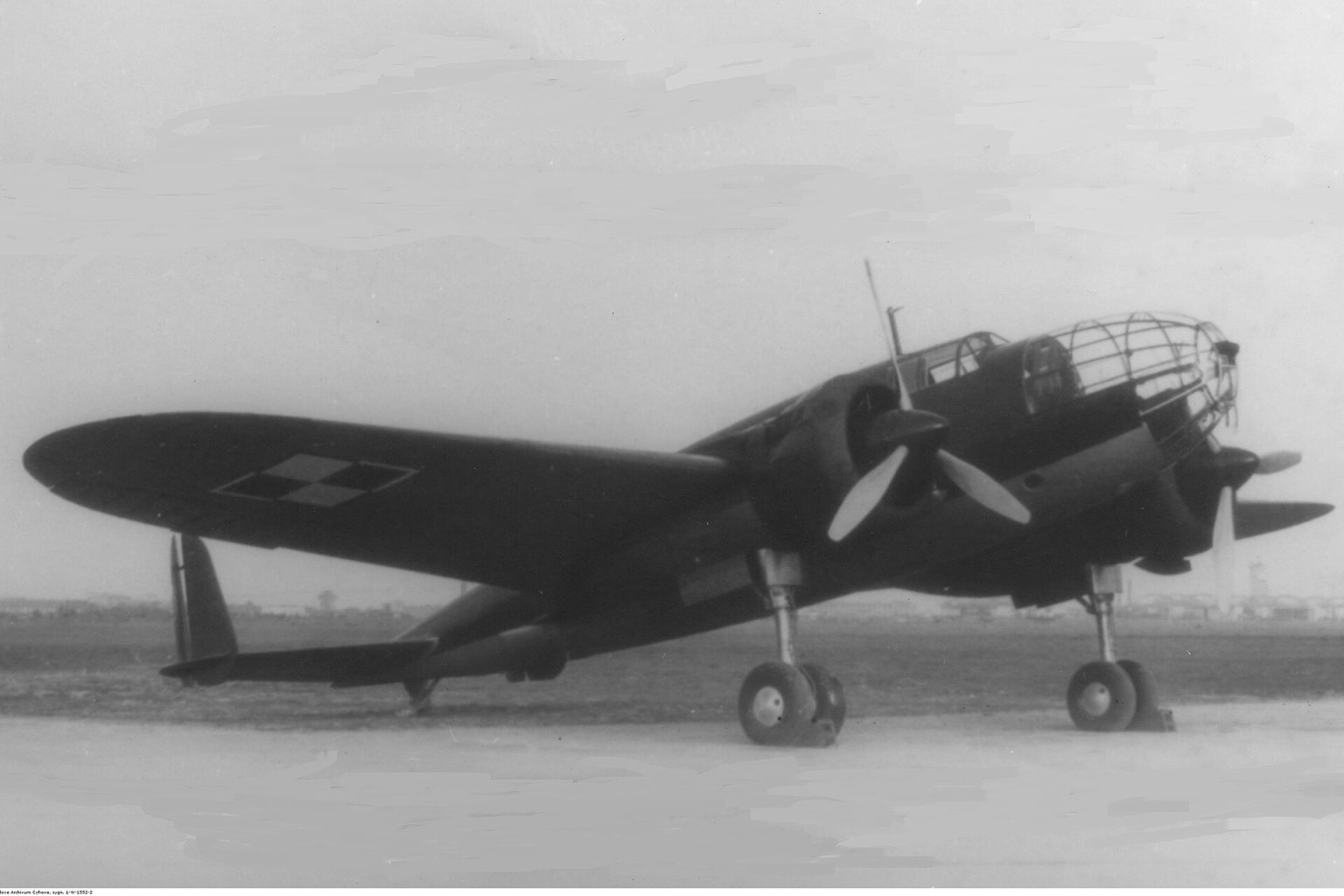
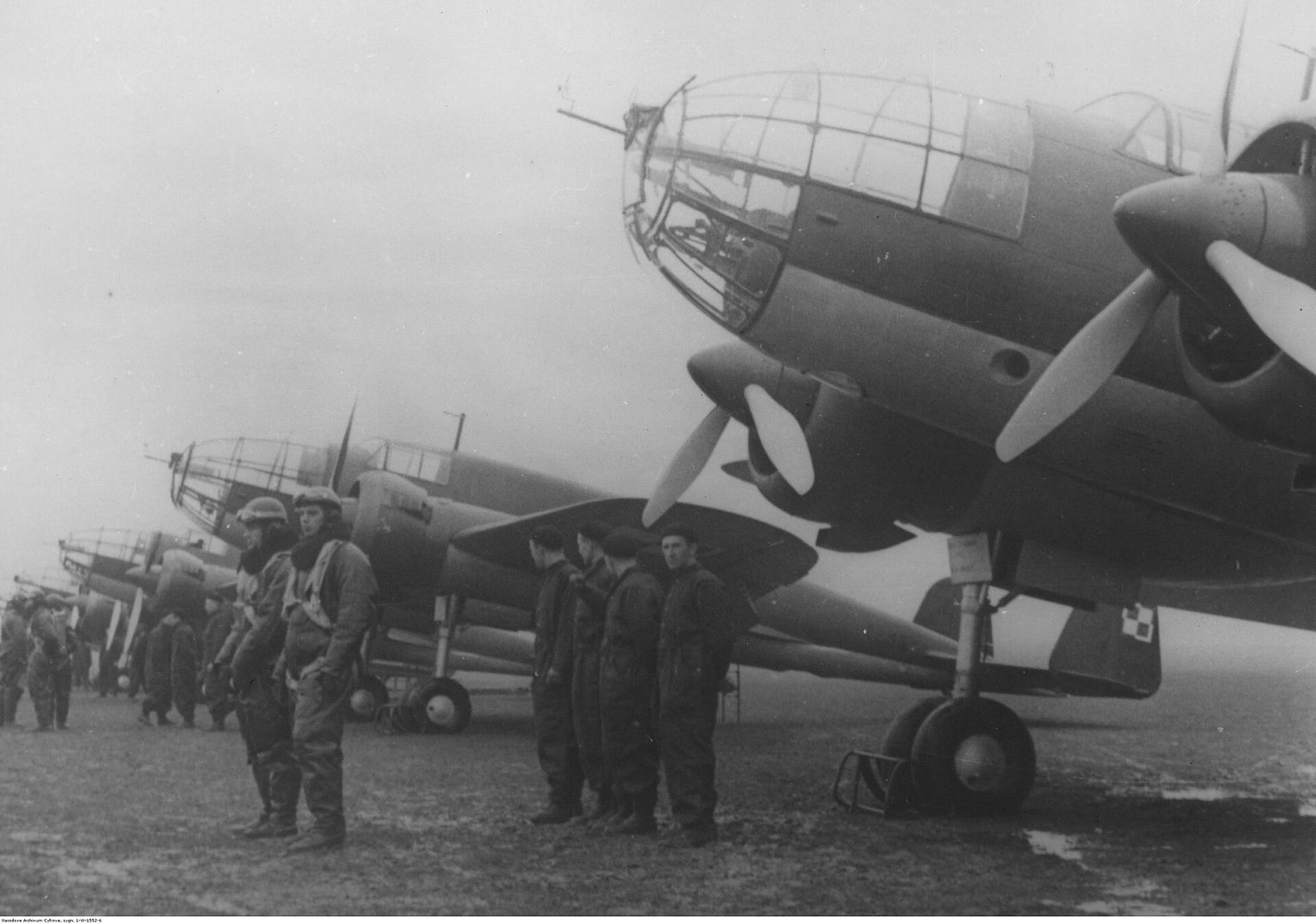
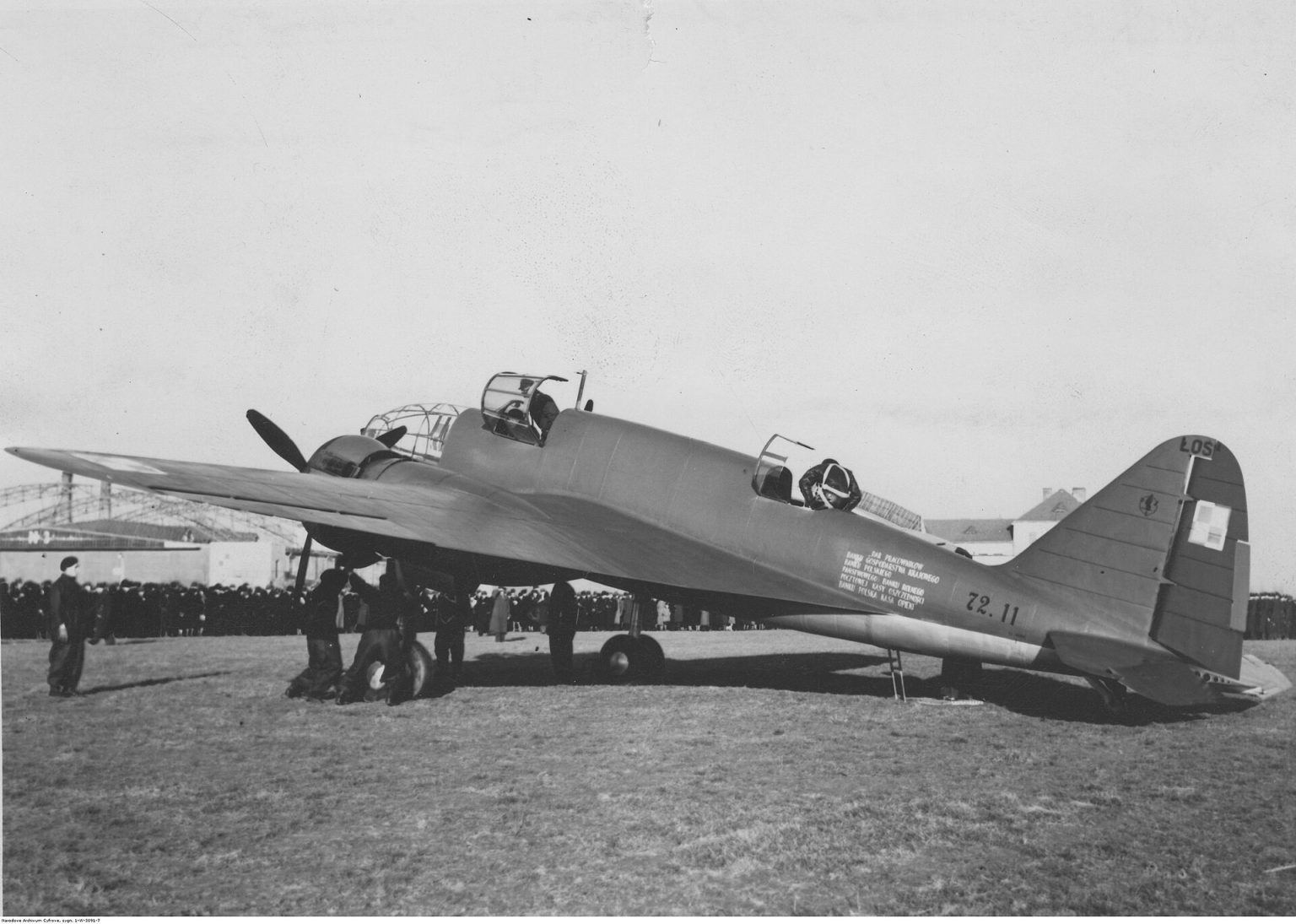
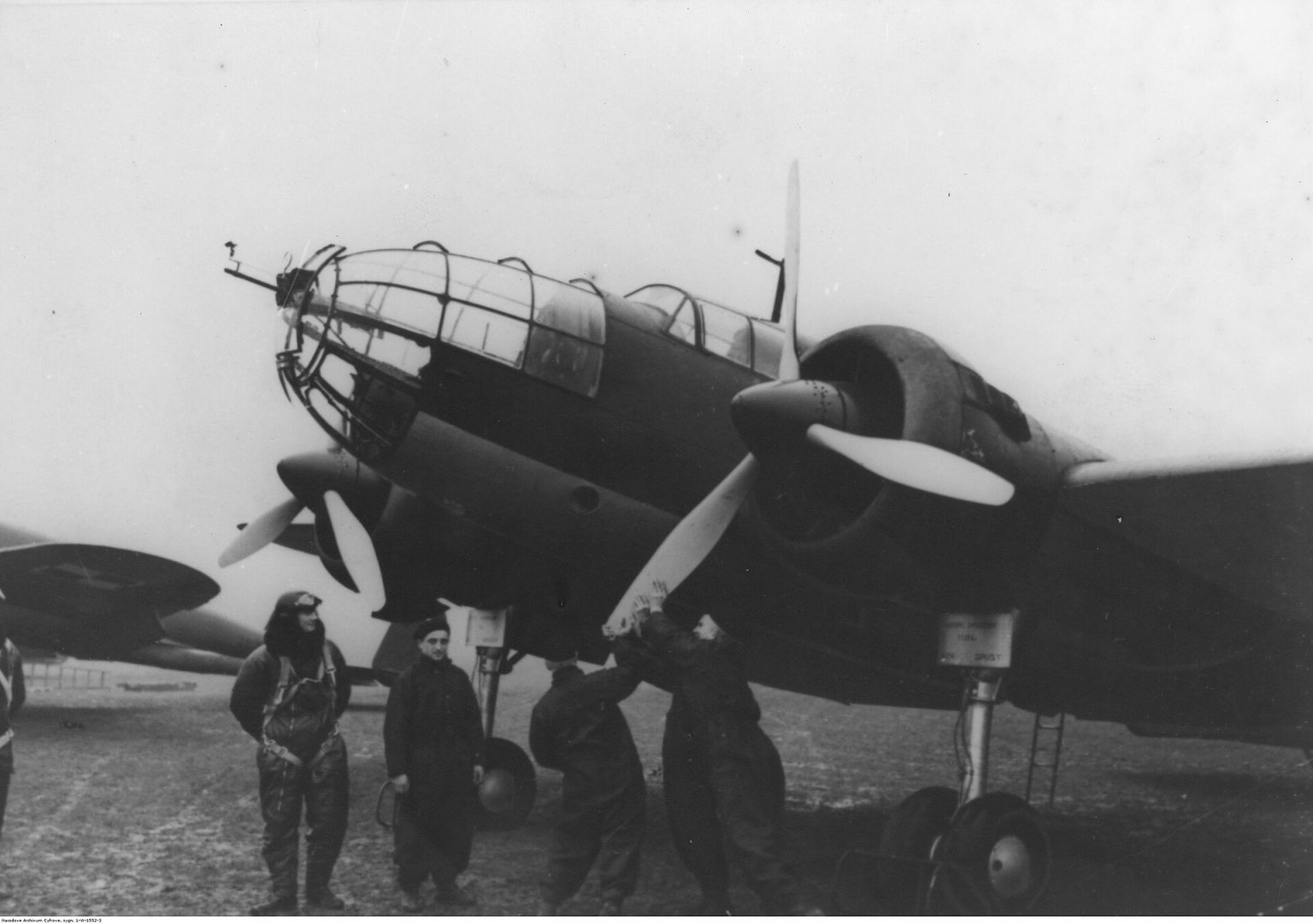
The PZL.37 Łoś on film: Poland’s advanced bomber of the 1930s
A concise, English-language documentary on the Łoś — its promise, its engineering and its tragic timing.
“PZL-37 Łoś – Poland’s Advanced Bomber of the 1930s” by The Grand Archive, a dedicated aviation-history channel (approx. 13,800 views and 660+ likes at the time of writing — a strong like ratio for a niche subject). We chose it as the clearest on-topic English overview; no large-channel documentary exists for this rare aircraft.
Where the PZL.37 Łoś operated: origin, 1939, exile and beyond
Poland built and flew it; a handful of survivors fought on in Romanian colours; and a string of pre-war export orders mostly came to nothing. Toggle the categories to explore. Note that most export orders (Bulgaria, Yugoslavia, Turkey, Greece and others) were never fulfilled because of the war — only a few aircraft were ever delivered abroad.
The PZL.37 Łoś in September 1939 and after
Four figures that capture the gap between what the Łoś could do and what Poland was able to field. Numbers are widely cited estimates.
PZL.37 Łoś: your questions answered
The questions people most often ask about Poland’s lost bomber — answered honestly, with figures hedged where the record is uncertain.
Can I fly in a PZL.37 Łoś?
No. No complete PZL.37 Łoś survives anywhere in the world — there is only a full-scale non-flying replica and a preserved engine — so there is no airworthy or bookable Łoś, and MiGFlug does not offer flights in this aircraft. However, you can fly in several genuine military jets today: see the current line-up and prices at migflug.com/flights-prices.
Was the PZL.37 Łoś really one of the best bombers of the 1930s?
In design terms, it has a strong claim. When it appeared in 1936 it was clean, compact and modern, and it could carry a bomb load out of proportion to its size — often more than larger contemporaries. The honest caveats are that its defensive armament was light and Poland built too few, too late, so its combat record could never match its potential.
How big was the PZL.37 Łoś bomb load?
Up to roughly 2,580 kg (about 5,690 lb) at maximum — impressive for such a small, light aircraft. In practice, operating from short, soft fields in 1939, aircraft often carried much less (around 800 kg) simply to get airborne.
Why did the PZL.37 Łoś have double wheels?
Each main undercarriage leg carried two independently sprung wheels side by side. This spread the aircraft’s weight and let a fully loaded Łoś operate from the soft grass airfields that were the reality in Poland, where concrete runways were scarce.
How many PZL.37 Łoś were built?
Estimates vary. A common figure is around 90 delivered by the outbreak of war with perhaps 30 or so more in production, giving a rough total of 90 to 120. Exact accounting is difficult because of wartime losses and destroyed records.
How many were combat-ready when Germany invaded?
Only about 36, concentrated in the Polish Air Force’s single Bomber Brigade on 1 September 1939 — a fraction of the force Poland had planned.
What happened to the PZL.37 Łoś after Poland fell?
Around 26 to 27 survivors were evacuated to neutral Romania and interned. In 1940 Romania took them over, pressing roughly 23 into the Royal Romanian Air Force, and from 1941 some flew combat on the Eastern Front before wear and a lack of spares wore the fleet out.
Did other countries actually buy the PZL.37 Łoś?
Several tried. Bulgaria, Yugoslavia, Turkey, Greece, Romania and others placed or negotiated orders before the war, and export versions (PZL.37C and 37D) were developed. But most of these orders were never fulfilled because of the outbreak of war — only a few aircraft were ever delivered abroad, and Romania’s examples came mainly from the 1939 evacuation.
How fast was the PZL.37 Łoś?
Around 412 km/h (256 mph) loaded at altitude, with some sources citing figures up to roughly 445 km/h. Treat the higher numbers with caution — they vary by source and configuration.
Does any PZL.37 Łoś survive today?
No complete aircraft survives. What remains are relics and fragments, an original PZL-built Pegasus engine at the Polish Aviation Museum in Kraków, and a full-scale non-flying replica built by PZL Mielec in 2012, reconstructed largely from photographs.
Who designed and built the PZL.37 Łoś?
It was designed by engineer Jerzy Dąbrowski and built by Poland’s state aviation works, PZL (Państwowe Zakłady Lotnicze), in Warsaw. The prototype first flew in 1936.
What does "Łoś" mean and how is it pronounced?
It is Polish for the elk (the moose). It sounds roughly like "wôsh" — the barred Ł is pronounced like an English "w" and the ś like a soft "sh".
How does the PZL.37 Łoś compare to the Vickers Wellington?
The Łoś was smaller and lighter but could carry a comparable or larger bomb load, which is why it is so often praised. The crucial difference is scale and time: the Wellington was built in thousands and served for years, while the Łoś was built in dozens and fought for about two weeks.
You can’t fly a PZL.37 Łoś — but you can fly these
No Łoś will ever fly again. But MiGFlug puts you in the cockpit of genuine, flyable military aircraft — from jet trainers to supersonic fighters. Choose your jet and go.