
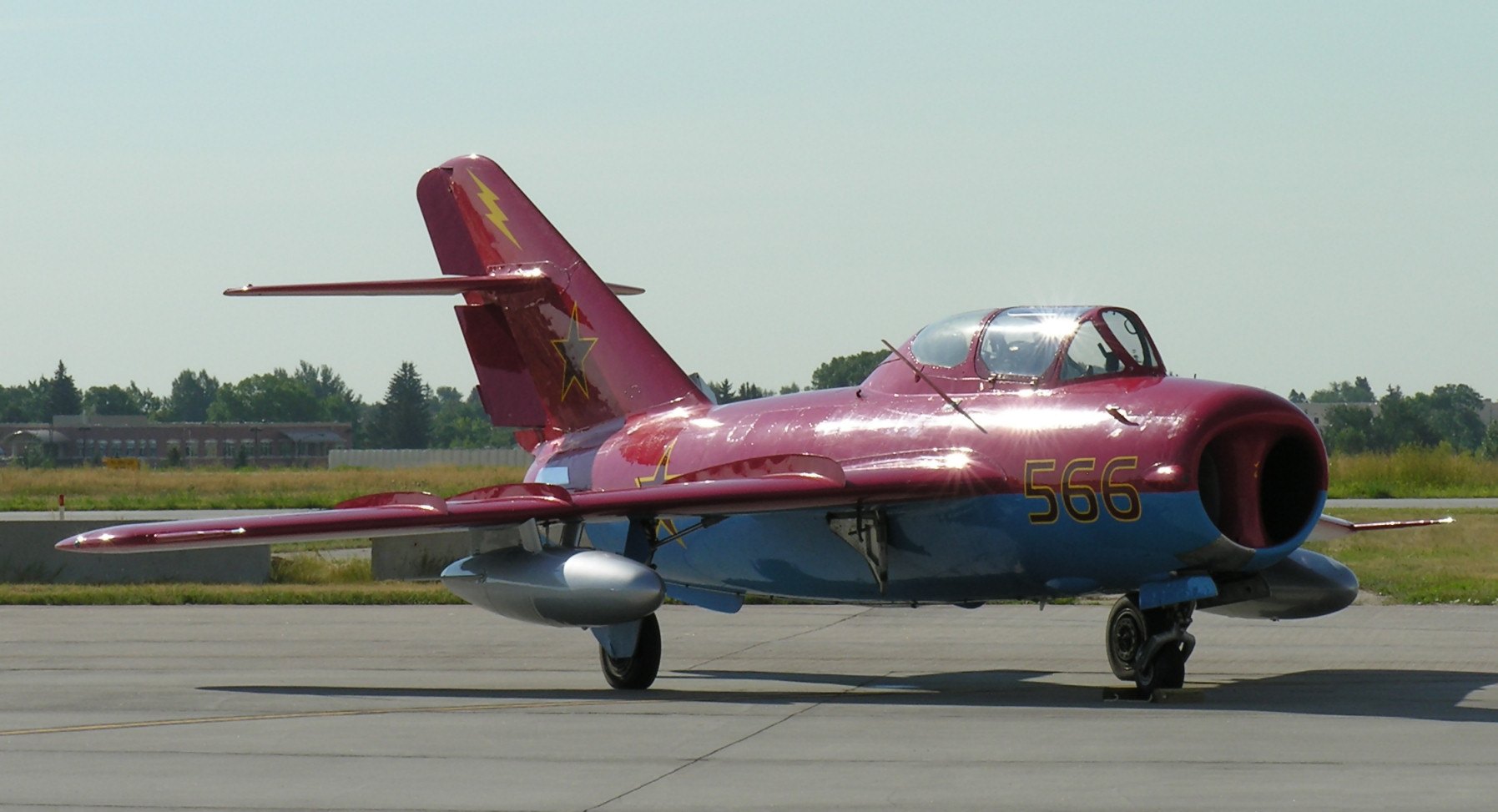
Shenyang JJ-5 / FT-5
The Two-Seat MiG-17
The only two-seat MiG-17 ever built in series: a Chinese hybrid that converted a generation of PLAAF, Pakistani and African pilots from propellers to swept-wing jets, and taught them for more than forty years.
The JJ-5: how China built the two-seat MiG-17 Moscow never did
The Soviet Union never put a two-seat MiG-17 into series production. Its pilots learned on the older MiG-15UTI and then simply strapped into the single-seat fighter. China, which had been building the MiG-17F as the Shenyang J-5 since its first flight on 19 July 1956, decided it could do better. By the mid-1960s the PLAAF was training pilots on a scale few air forces had attempted, and it wanted a jet trainer that flew like the fighter its students would actually go on to fly. The job went to the factory at Chengdu, and the answer was a piece of engineering pragmatism: take the J-5 airframe, add the airbrakes of the radar-equipped J-5A, and graft on the tandem two-seat cockpit section of the JJ-2, China’s licence-built MiG-15UTI.
The result, the JJ-5 (Jianjiji Jiaolianji, fighter trainer), made its maiden flight on 8 May 1966, according to Czech reference Armed Conflicts, and entered PLAAF service shortly afterwards; sources give December 1966 or November 1967. It was powered by the WP-5D, a non-afterburning version of the Chinese copy of the Klimov VK-1 centrifugal turbojet, rated at about 22 kN. Without reheat the trainer was slower than the J-5, but it kept the MiG-17’s swept wing, its handling and its 1,000 km/h-plus speed, which was exactly the point. A single 23 mm cannon was retained for gunnery training. Students who had come up through piston trainers such as the Nanchang CJ-6 now had an instructor behind them in a genuine swept-wing fighter.
Chengdu built 1,061 JJ-5s, with production ending in the mid-1980s (1983 and 1986 are both given). Under the export name FT-5 it went to Pakistan, Albania, North Korea, Sri Lanka, Sudan, Tanzania, Zambia, Zimbabwe and others, often as the lead-in trainer that came with a package of Chinese fighters. Pakistan flew it for 37 years as the gateway to the F-6 and A-5, finally retiring it in January 2012. In China it remained the standard jet trainer at PLAAF flying academies into the 2000s, until the Hongdu JL-8 and later types took over. North Korea is still reported to operate a large FT-5 fleet, making the two-seat MiG-17 one of the longest-serving jets of the first swept-wing generation.
01The JJ-5’s origins: why China needed a two-seat MiG-17
China’s jet training system in the late 1950s was built on Soviet hardware. Students moved from the CJ-5 (a licence-built Yak-18) to the JJ-2, the Chinese MiG-15UTI, and then on to the J-5 fighter. That worked, but the MiG-15UTI was a generation behind the aircraft its graduates went on to fly. The J-5 had a thinner, more sharply swept wing, different airbrakes and a different feel at high Mach numbers, and conversion to it had to be done solo.
By the mid-1960s the PLAAF was expanding rapidly and building its own aircraft in quantity at Shenyang, Nanchang and Chengdu. A trainer that matched the J-5 was the obvious next step, and it could be built from parts already in production. Chengdu’s engineers took the J-5 airframe, the airbrakes of the J-5A and the two-seat forward fuselage of the JJ-2, and lengthened the nose to accommodate the second cockpit. The non-afterburning WP-5D engine saved weight and fuel and simplified maintenance in a training fleet. The JJ-5 first flew on 8 May 1966, just as the Cultural Revolution began to disrupt Chinese industry, yet production continued for almost two decades. It remains one of the clearest examples of the Chinese aviation industry adapting a Soviet design to its own needs rather than simply copying it.
02The JJ-5 abroad: the FT-5 as part of the Chinese fighter package
When China exported fighters in the 1960s and 1970s, a trainer usually came with them. The FT-5 was that trainer for customers of the F-5 (the export J-5) and the F-6, China’s MiG-19. Pakistan, which had switched from American to Chinese fighters after the 1965 war, set up No. 1 Fighter Conversion Unit on 28 April 1975 specifically to convert pilots onto Chinese jets, starting with six FT-5s and building up to about 25.
Tanzania received up to 22 FT-5s from 1973. Sudan had FT-5s from 1969, Zambia took a mixed batch of F-5s and FT-5s in the late 1970s, and Zimbabwe leased two around 1986. Albania, isolated from both Moscow and the West, flew FT-5s from Kuçovë alongside its J-5s and J-6s until its jet force was grounded in the 2000s. Sri Lanka received two FT-5s in February 1991 as part of the package that founded its first fighter squadron. North Korea took the largest export fleet of all. For many of these air forces the FT-5 was the first jet in which a student could fly with an instructor behind him.
What makes the JJ-5 special
A hybrid airframe
The JJ-5 is a genuine composite. The fuselage and swept wing are the J-5’s, the airbrakes come from the J-5A, and the stepped tandem cockpit section comes from the JJ-2, China’s MiG-15UTI. The nose was stretched to make room for the second seat, which gives the JJ-5 its long, slightly drooping profile, noticeably different from the stubby single-seat MiG-17. Reusing proven parts kept development fast and cheap and meant Chengdu could build the trainer on tooling and skills it already had, while students trained in an aircraft with the fighter’s wing and handling.
No afterburner, by design
The single-seat J-5 used the afterburning WP-5. The JJ-5 used the WP-5D, a dry version rated at about 22 kN (5,000 lbf). The trade was deliberate. Reheat burns fuel at a ferocious rate, adds weight and maintenance and is of little use in a training sortie built around circuits, aerobatics, formation and navigation. Without it the JJ-5 was still good for roughly 1,050 km/h at 5,000 m and could climb at about 27 m/s, enough to give students a true taste of swept-wing jet flying at a fraction of the fighter’s running cost.
A trainer with a gun
Unlike many dedicated trainers, the JJ-5 kept a weapon. It carried a single 23 mm Type 23-1 cannon with a small ammunition load, and could carry two 250 kg bombs under the wings, according to Czech reference Armed Conflicts. That allowed instructors to teach air-to-ground gunnery and weapons delivery in the same aircraft used for conversion. Pakistan’s documentation notes that the FT-5 could, in principle, fight with gun and air-to-air missiles, but in practice it was always a classroom: its job was to make fighter pilots, not to replace the fighters.
03The JJ-5’s cockpit: a MiG-15UTI layout in a MiG-17 body
Because the forward fuselage came from the JJ-2, the JJ-5’s cockpits are essentially MiG-15UTI cockpits: two tandem seats under separate canopy sections, the instructor behind and slightly above the student, with duplicated controls and a basic set of flight and engine instruments. Both seats have ejection seats of the early Soviet type. The arrangement was familiar to any instructor who had flown the JJ-2, which eased the introduction of the new trainer.
It was not comfortable. An Aeroplane Monthly feature on the Pakistan Air Force in 2002 described the FT-5 as popular with students but limited by cramped cockpit space, poor air-conditioning and short endurance, all of which mattered in the heat of Mianwali. The instructor’s forward view, as in the MiG-15UTI, was restricted by the student’s seat and canopy frame, so landings from the rear seat demanded practice. None of this stopped the type being used for fighter conversion until 2012.
Shenyang JJ-5 / FT-5 specifications
Specifications
- Crew
- 2 (tandem, ejection seats)
- Length
- 11.50 m (37 ft 9 in)
- Wingspan
- 9.63 m (31 ft 7 in)
- Height
- 3.80 m (12 ft 6 in)
- Wing area
- 22.6 m² (243 sq ft)
- Empty weight
- 4,080 kg (8,995 lb)
- Max take-off weight
- 6,215 kg (13,702 lb)
- Powerplant
- 1 × Wopen WP-5D turbojet, about 22.3 kN (5,000 lbf), no afterburner
- Maximum speed
- 1,048 km/h (651 mph, 566 kt) at 5,000 m
- Range
- 1,230 km (764 mi) maximum
- Service ceiling
- 14,300 m (46,900 ft)
- Climb rate
- 27 m/s (5,300 ft/min)
- Armament
- 1 × 23 mm Type 23-1 cannon; provision for two 250 kg bombs
Costs & production
- Unit cost
- No reliable published figure; FT-5s were usually supplied as part of Chinese fighter and aid packages rather than sold individually
- Cost per flight hour
- Estimate only: roughly US$3,000 to 5,000 in Western civil terms, based on what private owners quote for the closely related MiG-15UTI and MiG-17; fuel for the centrifugal turbojet dominates
- Production
- 1,061 built at Chengdu, 1966 to the mid-1980s
- Programme
- Developed from parts already in production, which kept development cost low
04The JJ-5’s variants: one trainer, several names
- JJ-5: PLAAF designation, Jianjiji Jiaolianji-5 (fighter trainer 5).
- FT-5: export designation for the same aircraft, used by Pakistan, Albania, Sri Lanka, Tanzania, Sudan, Zambia, Zimbabwe, North Korea and others.
- J-5 / F-5: the single-seat MiG-17F fighter from Shenyang on which the trainer is based.
- J-5A: the radar-equipped MiG-17PF copy that supplied the JJ-5’s airbrakes.
- JJ-2: China’s MiG-15UTI, source of the tandem cockpit section.
05The JJ-5’s operating costs: cheap by fighter standards
There is no public cost data for PLAAF or Pakistani JJ-5 operations, and no JJ-5 is known to us on a Western civil register, so any hourly figure is an estimate. The best guide is the closely related MiG-15UTI and MiG-17, which private owners in the United States operate. Their quoted costs, dominated by fuel for a thirsty centrifugal-flow turbojet plus engine and airframe reserves, typically run to several thousand US dollars per hour. On that basis US$3,000 to 5,000 per hour is a reasonable working range for a JJ-5 in Western hands.
For its military operators the economics were different. The JJ-5 had no afterburner, shared spares and engines with fleets of J-5s, and was built from components already in production. For air forces equipped with Chinese MiG-17s and MiG-19s, it was the cheapest way to give a student real swept-wing jet hours with an instructor on board.
The JJ-5 from Chengdu prototype to the last Pakistani sortie
J-5 flies
The first Chinese-built MiG-17F, from Shenyang, flies on 19 July 1956 with test pilot Wu Keming.
JJ-5 first flight
The Chengdu-built two-seat trainer flies on 8 May 1966.
Into PLAAF service
The JJ-5 enters service; sources give December 1966 or November 1967.
First exports
Sudan receives FT-5s, among the first foreign users.
Tanzania
Deliveries of up to 22 FT-5s to Tanzania begin.
Pakistan’s conversion unit
No. 1 Fighter Conversion Unit forms on 28 April with six FT-5s, moving to Mianwali in November.
Production ends
Chengdu completes the last of 1,061 JJ-5s; some sources say 1983.
500 pilots
Pakistan’s FCU has run more than 22 courses and trained about 500 pilots by the end of 1987.
Sri Lanka
Two FT-5s arrive on 1 February with F-7BS fighters to form No. 5 Squadron.
Pakistan retires the FT-5
The PAF withdraws its last FT-5s in January 2012 after 37 years.
Stories & eyewitnesses: the JJ-5 in service
The MiG-17 Moscow never doubled
The Soviets trained MiG-17 pilots on the older MiG-15UTI; China built its own two-seater.
Read the full story
Pakistan’s gateway to Chinese jets
A conversion unit built around the FT-5 trained about 500 pilots in its first twelve years.
Read the full story
Cramped, hot and loved
Pakistani students liked the FT-5, but not its cockpit.
Read the full story
Thirty-seven years at Mianwali
The PAF flew its last FT-5 sorties in January 2012.
Read the full story
The Black Drongos’ first jets
Sri Lanka’s first fighter squadron began with two FT-5s.
Read the full story
Africa’s MiG-17 classroom
Tanzania, Sudan, Zambia and Zimbabwe all trained on the FT-5.
Read the full story
Albania’s isolated jets
Cut off from both blocs, Albania flew FT-5s for decades.
Read the full story
MiG-17s in formation
The PLAAF’s August 1st team began on MiG-17 derivatives.
Read the full story
0103 at Risalpur
A preserved FT-5 stands at the PAF Academy.
Read the full story
The JJ-5 in pictures
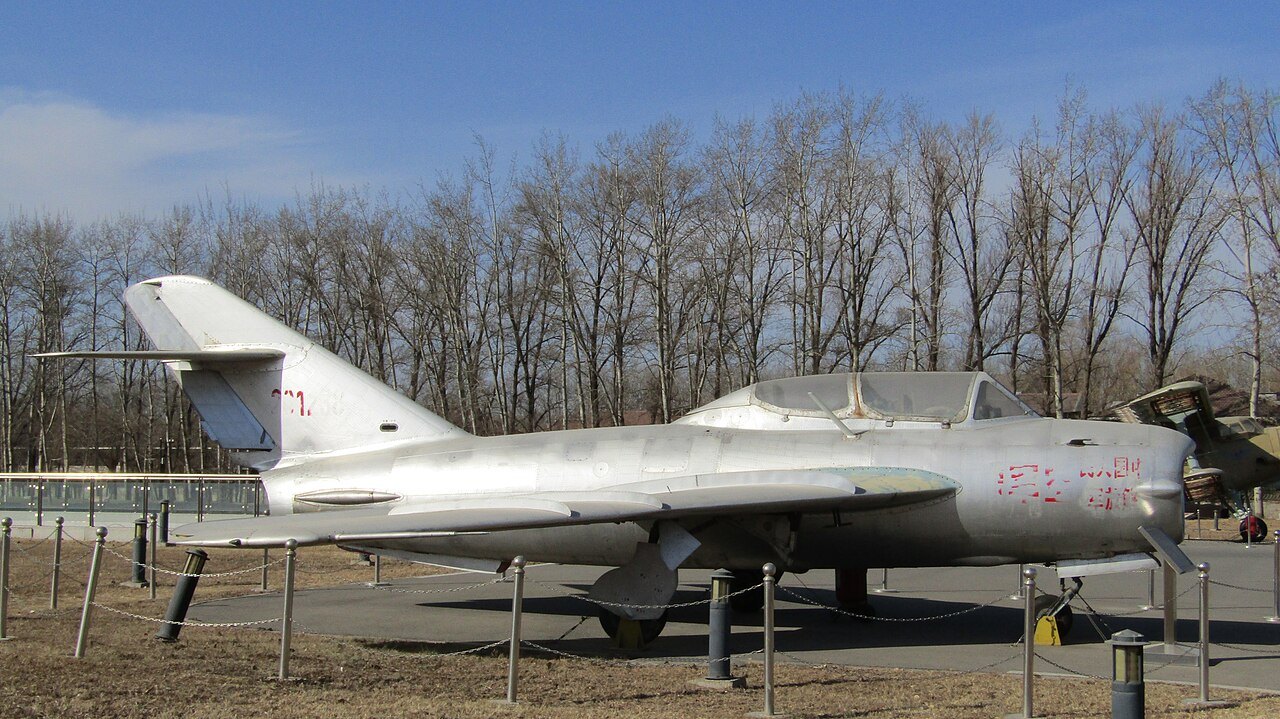
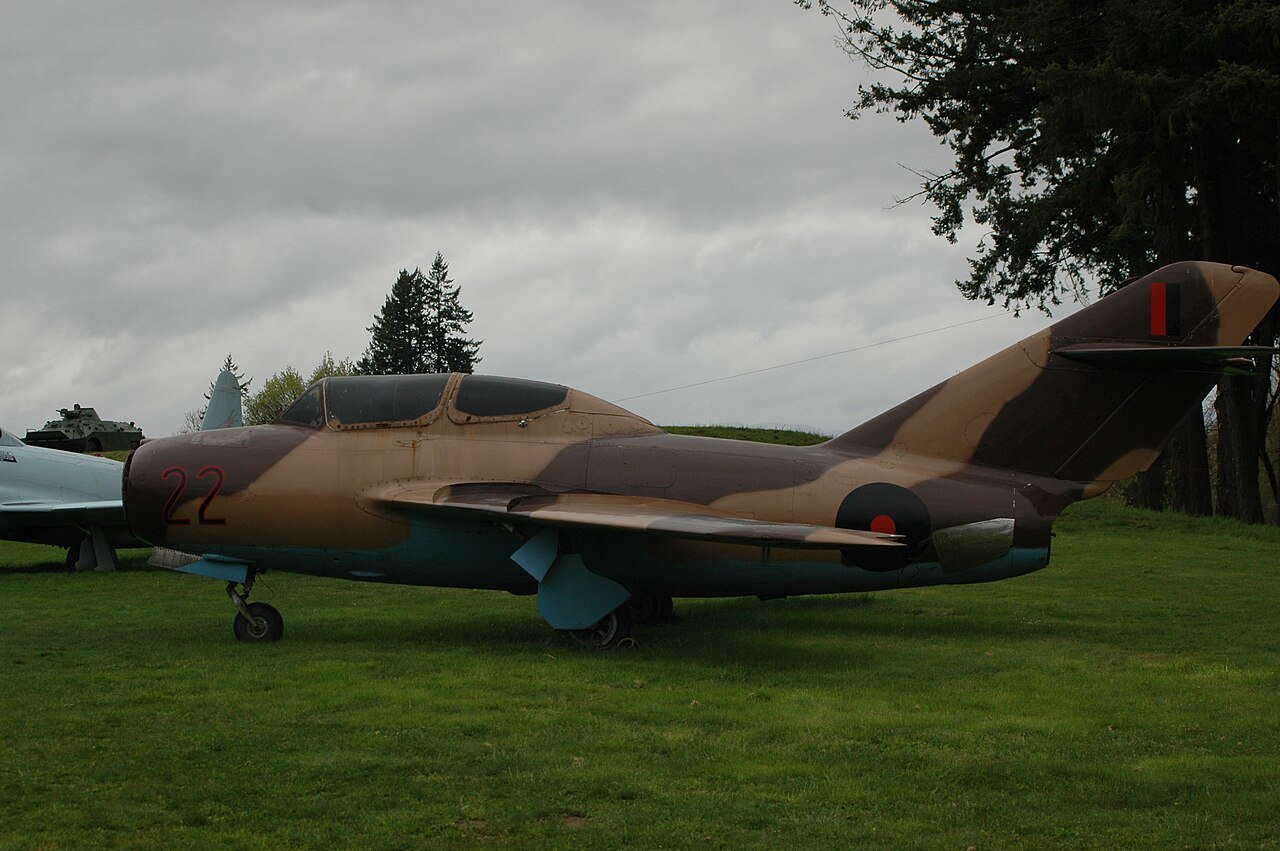
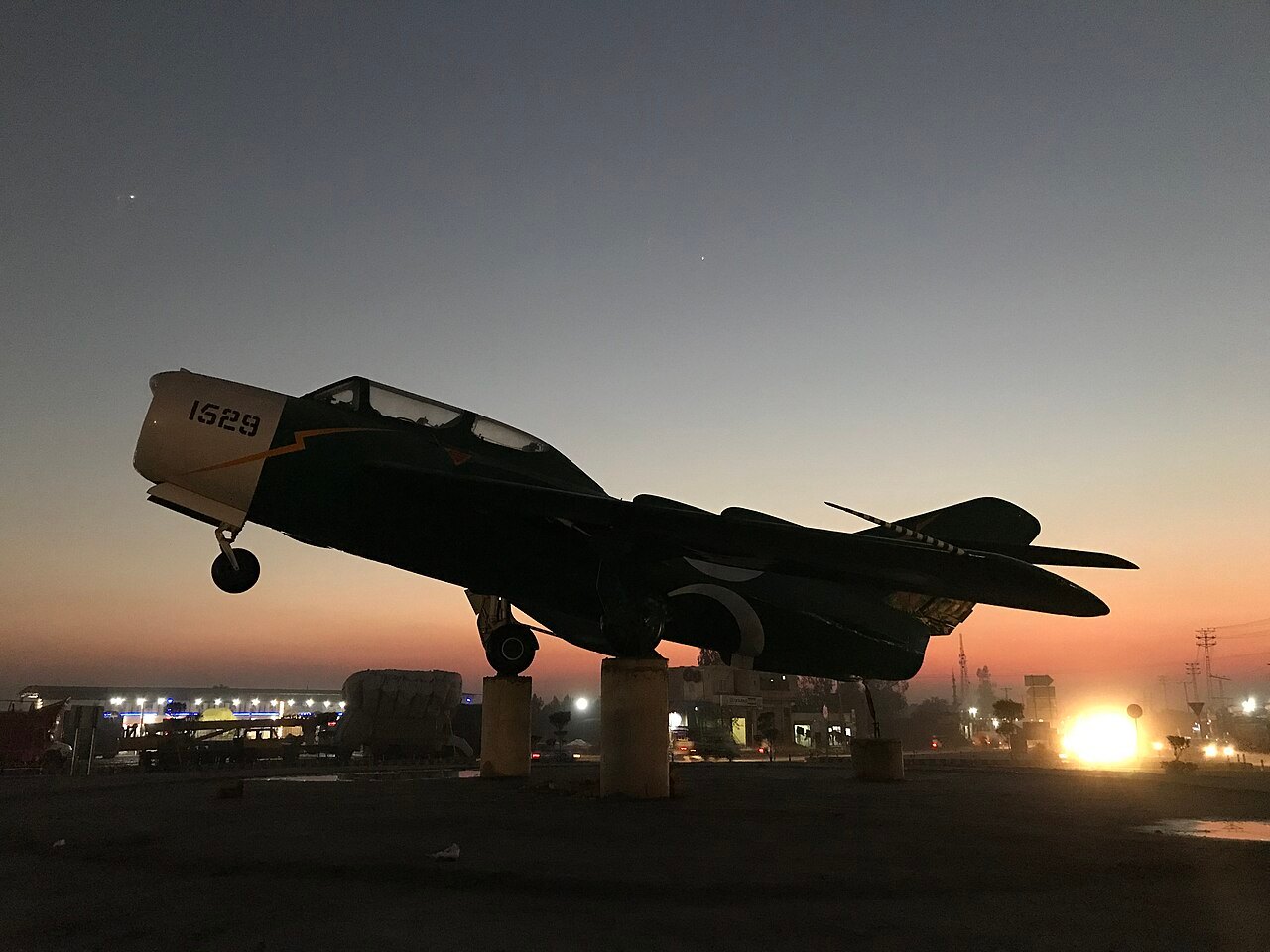
Where the JJ-5 flies and flew
The JJ-5’s record
The JJ-5 was a classroom, not a combatant: we know of no confirmed combat use of the two-seater, although the single-seat J-5 fought in several conflicts. Its record is measured in pilots trained, across China, Pakistan, Africa and Asia, over more than four decades.
See how training and combat types compare in the military aircraft statistics database. Figures are approximate.
Everything people ask about the JJ-5
Can I fly in a Shenyang JJ-5 / FT-5?
Is the JJ-5 a MiG-17?
Did the Soviet Union build a two-seat MiG-17?
How many JJ-5s were built?
What does FT-5 mean?
Does the JJ-5 have an afterburner?
Is the JJ-5 still flying?
You can’t fly the JJ-5.
These, you can.
Most of this museum you can only look at. These genuine military jets you can fly yourself with MiGFlug — with aerobatics and time on the controls.
 Fly the L-39 AlbatrosThe world’s most-flown jet trainer — aerobatics included
 Fly the F-104 Starfighter“The missile with a man in it”
 Fly the MiG-21The Cold War’s most-produced jet
 Fly the T-33 Shooting StarAmerica’s first jet trainer
 Fly the DH VampireA piece of early jet history
 Fly the S.211Agile Italian jet trainer
 Fly the MB-326The classic Aermacchi jet
 Fly the MiG-15The Soviet legend of the Korean War
Continue the tour
Every fact, checked
- Chengdu JJ-5 (Armed Conflicts aircraft database)First flight date, production, WP-5D engine, dimensions, weights, performance, armament.
- Chengdu JJ-5 (AeroCorner)Component origins, service entry, production total, performance.
- 1 Squadron, Pakistan Air Force (GlobalSecurity)No. 1 FCU formation, FT-5 numbers, courses and pilots trained to 1987.
- Mianwali 2004 (mig-21.de)FT-5s with No. 1 FCU at Mianwali for fighter conversion.
- Black Drongos of No 05 Fighter Squadron celebrate 30th anniversary (Sri Lanka Air Force)Arrival of two FT-5s on 1 February 1991 and first CO.
- Aeroplane Monthly 2002, Pakistan Air Force feature (via aviadejavu.ru)FT-5 0103 preserved at Risalpur; cockpit and endurance limitations.
- August 1st history (Aerobatic Teams)Team aircraft types including the JJ-5.
- Shenyang J-5 51230, China Aviation Museum (AirHistory.net)MiG-17 derivatives displayed at Datangshan.