
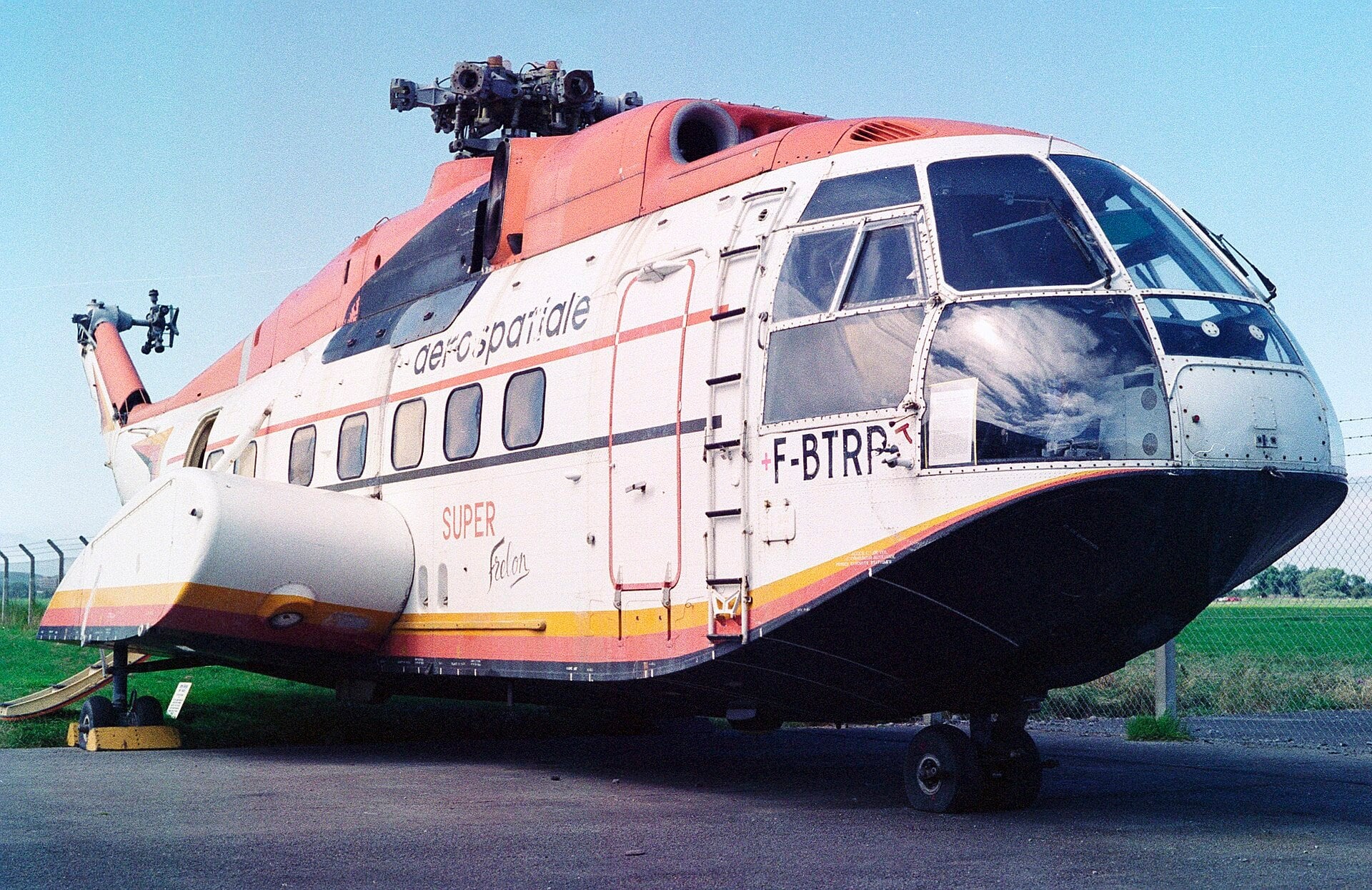
Aérospatiale SA 321 Super Frelon
Europe’s Three-Engined Heavy Lifter
France’s three-engined giant set a world helicopter speed record in 1963, fought for Israel, Iraq and South Africa, guarded French missile submarines for decades and lived on in China as the Changhe Z-8.
The Super Frelon: how France built Europe’s most powerful helicopter
In the late 1950s Sud Aviation was Europe’s most successful helicopter exporter, thanks to the Alouette, and it wanted a heavy machine to sit above its smaller types. Its first attempt, the SE.3200 Frelon, or hornet, flew in June 1958 but did not enter production when its French and German naval customers raised their requirements. The answer was the far bigger SA 321 Super Frelon: three far more powerful Turbomeca Turmo IIIC turboshafts, a six-blade main rotor of 18.9 m and a five-blade tail rotor designed with help from Sikorsky, and a main gearbox designed by Fiat. The fuselage was a boat hull with a planing bottom and watertight compartments, and a rear loading ramp opened onto a cabin for 27 troops or 15 stretchers.
The first prototype flew on 7 December 1962. On 23 July 1963 a modified Super Frelon flown by Jean Boulet and Roland Coffignot reached 350.4 km/h, setting an FAI absolute speed record for helicopters and two other international records. For a time it was both the most powerful helicopter built in Europe and the fastest in the world. West Germany, which evaluated it against the Sikorsky Sea King, lost interest, but France ordered it for its Pacific nuclear test centre and, above all, for the Aéronavale, which received its first anti-submarine SA 321G in October 1965. Two more prototypes flew in 1964, one dedicated to accelerated wear trials and the other to naval equipment.
Exports followed to Israel, South Africa, Libya, Iraq and China. Israeli Super Frelons flew in the Six-Day War, the War of Attrition and the Yom Kippur War; Iraqi ones fired Exocet missiles at shipping in the Iran-Iraq War; South African ones carried troops in the Border War. In France the type flew sanitisation patrols to protect departing ballistic-missile submarines, and later rescue missions, from Lanvéoc-Poulmic until 30 April 2010. Aérospatiale stopped production in 1981 after about 110, but China had already begun licence production as the Changhe Z-8, which first flew in 1985 and was still being developed in the 21st century. Few helicopters of its generation served so long.
01The Super Frelon at war: Israel, South Africa and the Tanker War
Israel ordered six SA 321K Super Frelons in 1965 for heavy-lift transport, and the first arrived on 20 April 1966 to form 114 Squadron at Tel Nof; six more were ordered the following year. An early plan to fly Panhard AML-90 armoured cars into airborne operations was abandoned when trials showed the helicopter could not lift the vehicle’s combat weight. Four Super Frelons were available for the Six-Day War of 1967, flying 41 sorties, and the type took part in raids of the War of Attrition, including Operations Helem, Tarnegol 53 and Rhodes. After the Yom Kippur War Israel re-engined the fleet with General Electric T58 turboshafts, flew it again in Lebanon in 1982, and retired it in 1991.
South Africa’s 16 SA 321Ls served with 15 Squadron from 1967. At least two supported Rhodesian operations in Mozambique in 1978 and 1979, and others helped evacuate paratroopers from Angola during Operation Reindeer. Iraq received 16 radar and Exocet-equipped SA 321Hs from 1977 and used them against Iranian shipping in the Tanker War. Two were shot down by Iranian fighters: one by an F-14’s AIM-54 Phoenix during Operation Pearl, and one by a Maverick missile from an F-4 Phantom in July 1986 as it tried to take off from an oil platform.
02The Super Frelon in China: the Changhe Z-8
Between December 1975 and April 1977 China received 12 navalised Super Frelons in anti-submarine and search and rescue versions. They were the first helicopters in the People’s Liberation Army able to operate from the flight decks of surface ships. With French help, China began licence production in 1976 as the Changhe Z-8. The first Chinese-built aircraft flew on 11 December 1985 and the type was certified on 12 November 1994. Naval Z-8s carried a French HS-12 dipping sonar, surface search radar and Whitehead A244S torpedoes, and were used for mine clearance, minelaying and anti-submarine work.
Army transport, search and rescue, medical and air force rescue versions followed, among them the Z-8A, Z-8S, Z-8JH and Z-8K. The 2008 Sichuan earthquake showed the value of a large rescue helicopter and gave production a major boost; the People’s Armed Police ordered 18, mostly for forest firefighting. A civil version, the AC313, with a 13.8-tonne maximum weight and 27 seats, first flew on 18 March 2010. In 2018 PLA Army Aviation announced that it would retire its Z-8s because of poor performance and high maintenance, but naval and other versions continued in service.
What makes the Super Frelon special
Three engines, one gearbox
The Super Frelon’s three Turbomeca Turmo IIIC turboshafts sit on the cabin roof, two side by side at the front and one behind the rotor, all feeding a single main gearbox designed by Fiat. Prototypes had about 1,320 shp per engine and production aircraft about 1,500 shp. Firewalls isolate each engine, and eight hinged doors give ground crews access without platforms. Three engines gave the margin of power needed for a heavy helicopter flying over the sea, far from any landing place.
A helicopter with a hull
The Super Frelon’s fuselage is a true semi-monocoque light-alloy hull, with a bow, planing bottom and watertight compartments, designed after studying American experiments with amphibious helicopters. Flight International described it as reminiscent of flying-boat engineering. Fuel sits in flexible cells in four watertight compartments under the floor. Naval versions added stabilising floats, and the boat-like shape gave crews a chance of surviving a ditching, a real concern for a helicopter that spent its life over the Atlantic and the Mediterranean.
A ramp at the back
A hinged rear loading ramp, which could be jettisoned in an emergency, opened onto a cabin for 27 equipped troops, 15 stretchers or bulky cargo. A crank in the tail boom lifted the tail rotor clear of vehicles approaching the ramp, and a hinge in the boom cut the folded length to about 18 m for shipboard stowage. A floor hatch near the rotor axis served slung loads. These features made it a genuine heavy transport as well as a submarine hunter.
03The Super Frelon’s naval kit: sonar, Exocet and the nuclear deterrent
The French Navy’s SA 321G was an anti-submarine helicopter, fitted with search radar and anti-submarine equipment. One of its most important jobs was the sanitisation of the approaches to the French ballistic-missile submarine base: before a Redoutable-class submarine sailed on deterrent patrol, Super Frelons searched for hostile submarines that might try to follow it. Some aircraft received nose-mounted radar for targeting Exocet anti-ship missiles, the same combination later exported to Iraq as the SA 321H.
Five SA 321Ga freighters, originally used in support of the Pacific nuclear test centre, were moved to assault transport duties. In 2003 the surviving Aéronavale aircraft were reassigned to transport, commando support, vertical replenishment and search and rescue, and they ended their careers with Flotille 32F at Lanvéoc-Poulmic in Brittany, retiring on 30 April 2010. Two Eurocopter EC225s were bought as stop-gaps until the NH90 arrived, ending the type’s long French career.
Aérospatiale SA 321G Super Frelon specifications
Specifications
- Crew
- 5 (naval version); 3 (transport)
- Capacity
- 27 equipped troops or 15 stretchers
- Length
- 23.03 m (75 ft 7 in) rotors turning; fuselage 19.40 m (63 ft 8 in)
- Main rotor diameter
- 18.90 m (62 ft 0 in)
- Height
- 6.66 m (21 ft 10 in)
- Empty weight
- 6,863 kg (15,130 lb)
- Max take-off weight
- 13,000 kg (28,660 lb)
- Powerplant
- 3 × Turbomeca Turmo IIIC turboshafts, about 1,100 to 1,160 kW (1,500 to 1,550 shp) each
- Cruise speed
- 249 km/h (155 mph)
- Range
- about 820 to 1,020 km (510 to 635 mi); sources differ
- Service ceiling
- 3,150 m (10,330 ft)
- Armament
- Naval versions: anti-submarine torpedoes or AM39 Exocet anti-ship missiles; transports usually unarmed
Costs & production
- Cost per flight hour
- No official figure. Hedged estimate: well above that of a medium twin, plausibly US$5,000–10,000 or more per hour in today’s money, given three turbines and a 13-tonne airframe; Israel retired its fleet in 1991 partly because of high maintenance costs
- Production
- About 110 built in France, 1962–1981 (figure commonly given, not firmly documented); further aircraft licence-built in China as the Z-8
- Programme
- First flight 7 December 1962; French Navy service October 1965 to 30 April 2010; production ended 1981
04The Super Frelon’s variants: from SA 321G to Z-8
- SE.3200 Frelon: the smaller predecessor, with three less powerful Turmo IIIB engines and a four-blade rotor; two built, first flown 10 June 1958.
- SA 321G: French Navy anti-submarine version; SA 321Ga utility and assault transport.
- SA 321GM: Libyan version with search radar; SA 321M: Libyan search and rescue and transport.
- SA 321H: Iraqi version with radar and Exocet missiles.
- SA 321K: Israeli transport, later re-engined with General Electric T58s.
- SA 321L: South African transport with air intake filters.
- SA 321F and SA 321J: civil airliner and utility versions.
- Changhe Z-8: Chinese licence-built naval version, first flown 1985, followed by Z-8A army transport, Z-8S and Z-8K rescue, Z-8JH medical versions and the civil AC313.
05The Super Frelon’s operating costs: why Israel let it go
No operator has published a cost per flight hour for the Super Frelon, so the figure in the table is an estimate based on its size and its three engines. What is recorded is how operators judged it. Israel retired its Super Frelons in 1991 because of their relatively high maintenance cost and poor performance compared with its Sikorsky CH-53s. In China, PLA Army Aviation announced in 2018 that it would retire the Z-8 for the same reasons, even though some airframes were only a few years old.
Yet the French Navy kept the type flying for 45 years, and China invested heavily in new versions after 2008. For navies needing a large, seaworthy helicopter with a ramp, the Super Frelon’s capability outweighed its running costs for decades, and in China the Z-8 family grew into army, rescue, medical, firefighting and civil versions.
The Super Frelon from speed record to Changhe Z-8
First flight
The first prototype flies on 7 December.
World speed record
On 23 July Jean Boulet and Roland Coffignot reach 350.4 km/h.
French Navy service
The anti-submarine SA 321G joins the Aéronavale in October.
Israel
The first SA 321K arrives on 20 April and 114 Squadron forms at Tel Nof.
Six-Day War and South Africa
Four Israeli Super Frelons fly 41 sorties; 15 Squadron SAAF reforms with the type in June.
China
Deliveries of 12 navalised Super Frelons begin in December.
Iraq
The first of 16 Exocet-armed SA 321Hs is delivered.
Production ends
Aérospatiale closes the line for lack of orders.
Changhe Z-8
The first Chinese-built Z-8 flies on 11 December.
Israel retires the type
High maintenance costs and the CH-53 end Israeli service.
Sichuan earthquake
Rescue work after the earthquake revives Z-8 production in China.
French farewell
Flotille 32F retires the last French Super Frelons on 30 April.
Stories & eyewitnesses: the Super Frelon from Brittany to the Persian Gulf
The fastest helicopter in the world
In July 1963 a Super Frelon reached 350.4 km/h.
Read the full story
A French helicopter with American and Italian parts
Sikorsky and Fiat helped shape the Super Frelon.
Read the full story
The armoured car that was too heavy
Israel hoped to fly AML-90s into battle.
Read the full story
Forty-one sorties in six days
Israel’s Super Frelons went to war barely a year after delivery.
Read the full story
Beirut, December 1968
A raid that changed Israel’s choice of helicopter supplier.
Read the full story
Shots across the Zambezi
In 1978 a Super Frelon at Katima Mulilo sparked a border clash.
Read the full story
Hunted in the Gulf
Iraq’s Exocet Super Frelons met Iranian F-14s and Phantoms.
Read the full story
From Norway to East Timor
One civil Super Frelon had an extraordinary career.
Read the full story
China’s earthquake helicopter
The 2008 Sichuan earthquake gave the Z-8 a new life.
Read the full story
Brittany’s rescue giants
The last French Super Frelons flew search and rescue over the Atlantic.
Read the full story
The Super Frelon in pictures
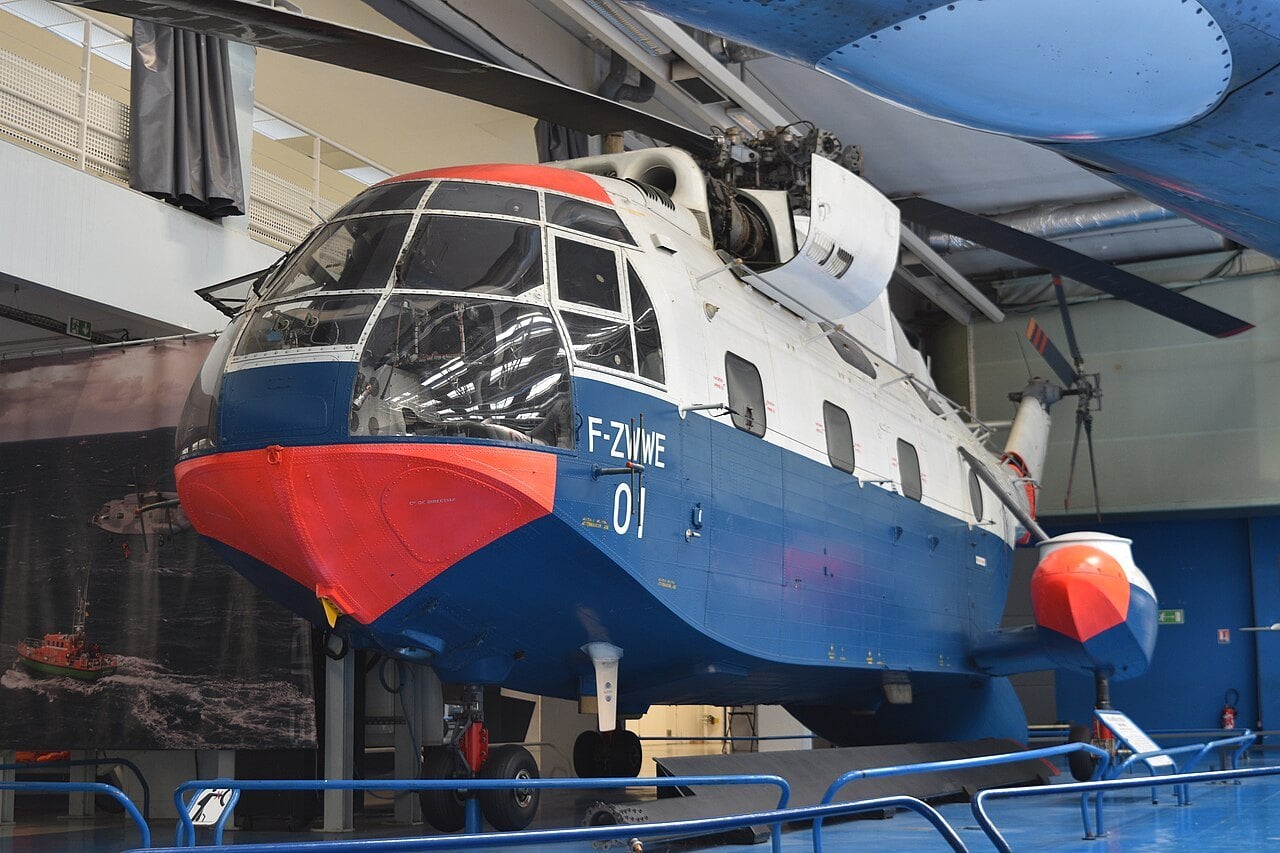
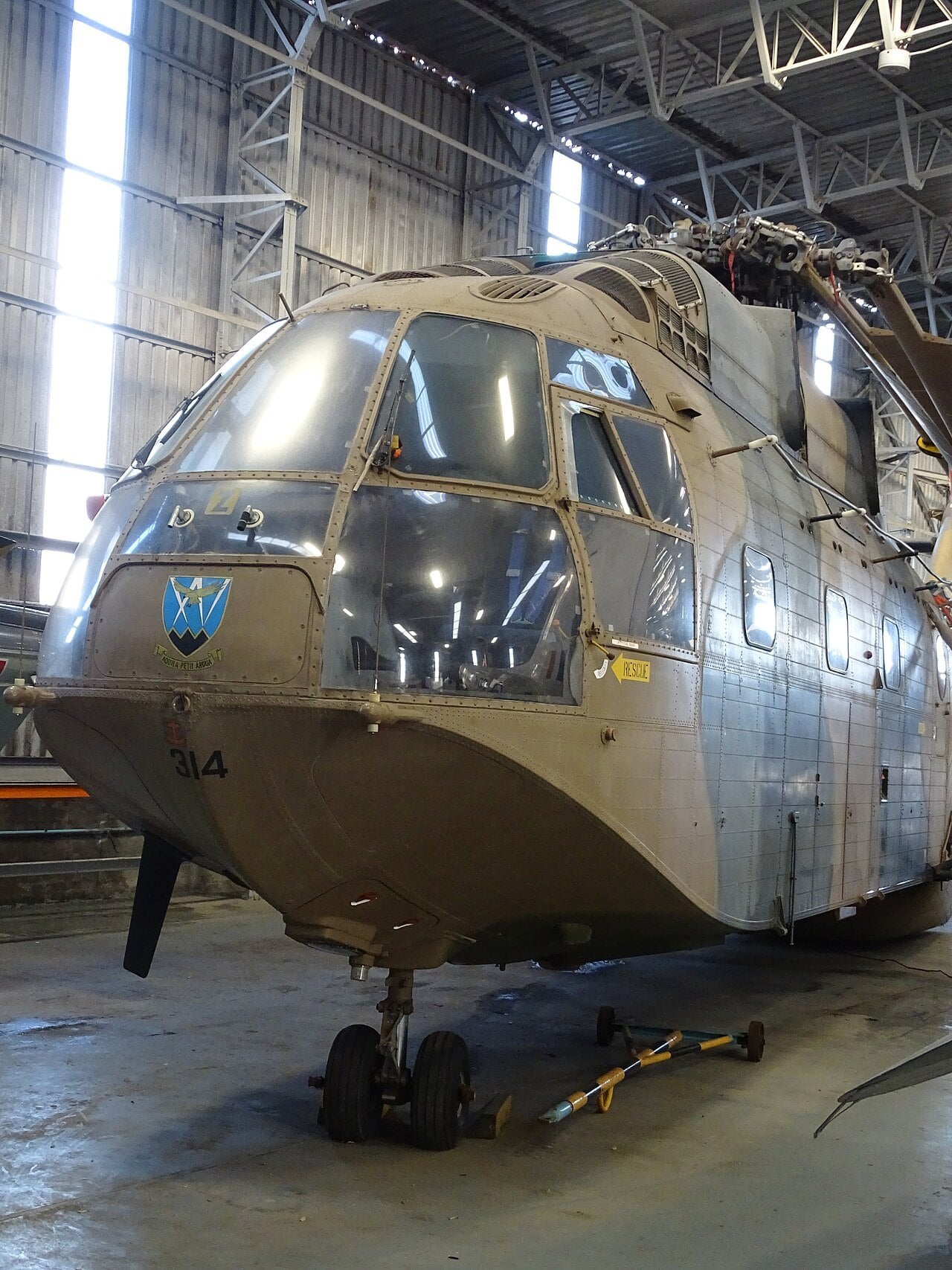
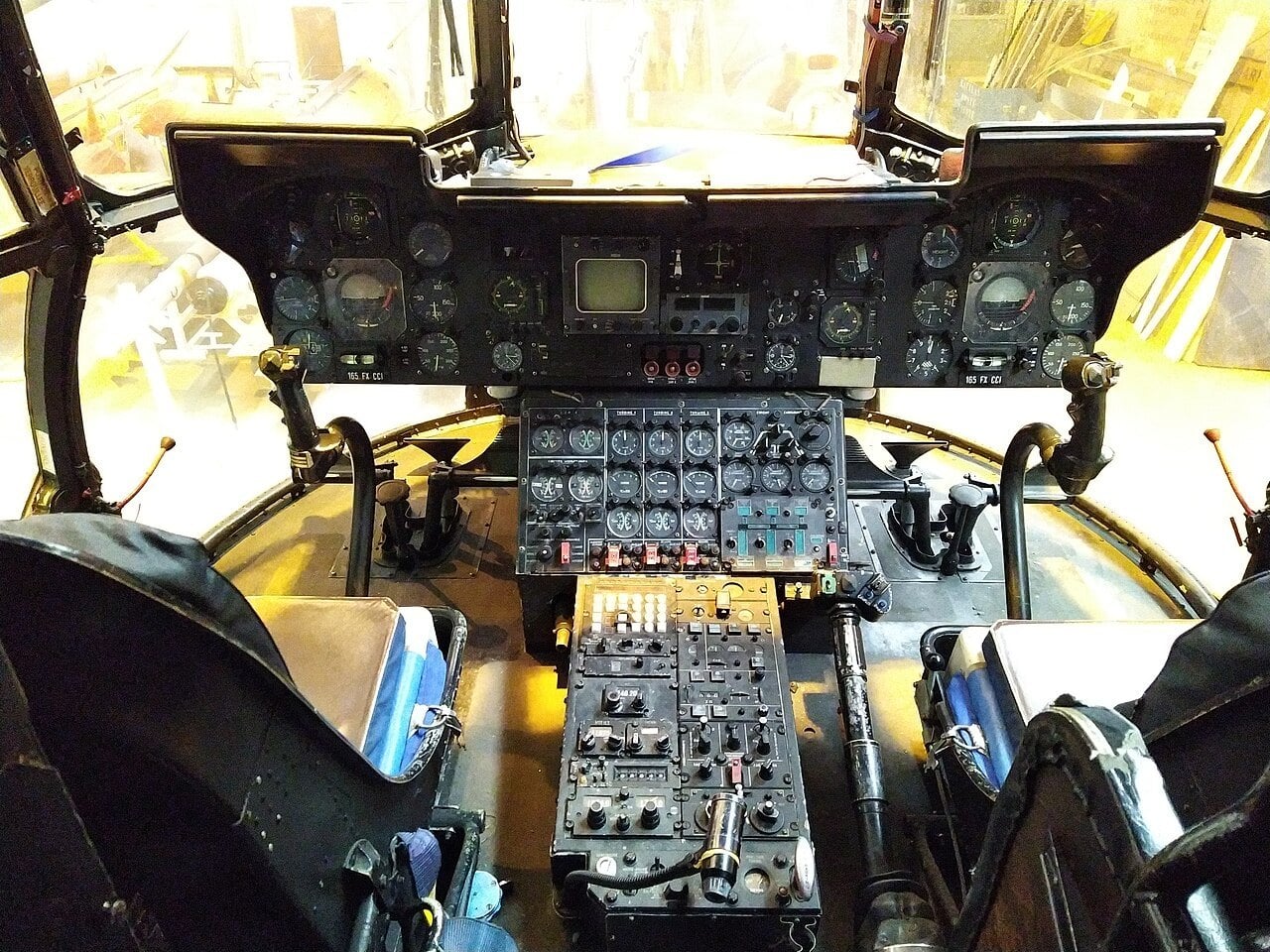
Where the Super Frelon flies and flew
The Super Frelon’s record
The Super Frelon flew in the Arab-Israeli wars from 1967 to 1982, the South African Border War and the Iran-Iraq War, where Iraqi aircraft attacked shipping with Exocet missiles and at least two were shot down by Iranian fighters. In France and China its longest service was in anti-submarine and rescue work.
See how training and combat types compare in the military aircraft statistics database. Figures are approximate.
Everything people ask about the Super Frelon
Can I fly in a Super Frelon?
Why does the Super Frelon have three engines?
Was the Super Frelon the fastest helicopter in the world?
What is the Changhe Z-8?
When did France retire the Super Frelon?
How many Super Frelons were built?
Where can I see a Super Frelon?
You can’t fly the Super Frelon.
These, you can.
Most of this museum you can only look at. These genuine military jets you can fly yourself with MiGFlug — with aerobatics and time on the controls.
 Fly the L-39 AlbatrosThe world’s most-flown jet trainer — aerobatics included
 Fly the F-104 Starfighter“The missile with a man in it”
 Fly the MiG-21The Cold War’s most-produced jet
 Fly the T-33 Shooting StarAmerica’s first jet trainer
 Fly the DH VampireA piece of early jet history
 Fly the S.211Agile Italian jet trainer
 Fly the MB-326The classic Aermacchi jet
 Fly the MiG-15The Soviet legend of the Korean War
Continue the tour
Every fact, checked
- SA-321K Tzira (Hornet)Helis.com on Israeli Super Frelons: orders, wars, re-engining, Beirut raid and survivors
- SA321L Super FrelonHelis.com on South African Super Frelons, units and preserved aircraft
- SA321L Super FrelonSAAF information site: specifications and service dates
- 15 SquadronSAAF information site: the squadron that flew the Super Frelon from 1967
- SA321J Super Frelon: jejak sejarah helikopter angkut berat TNI AU dan Pelita Air ServiceIndomiliter on the Indonesian Super Frelon PK-PEF
- Chinese Z-8AWJS crashes during aerial firefighting missionKey.Aero on the Erhai Lake firefighting accident