
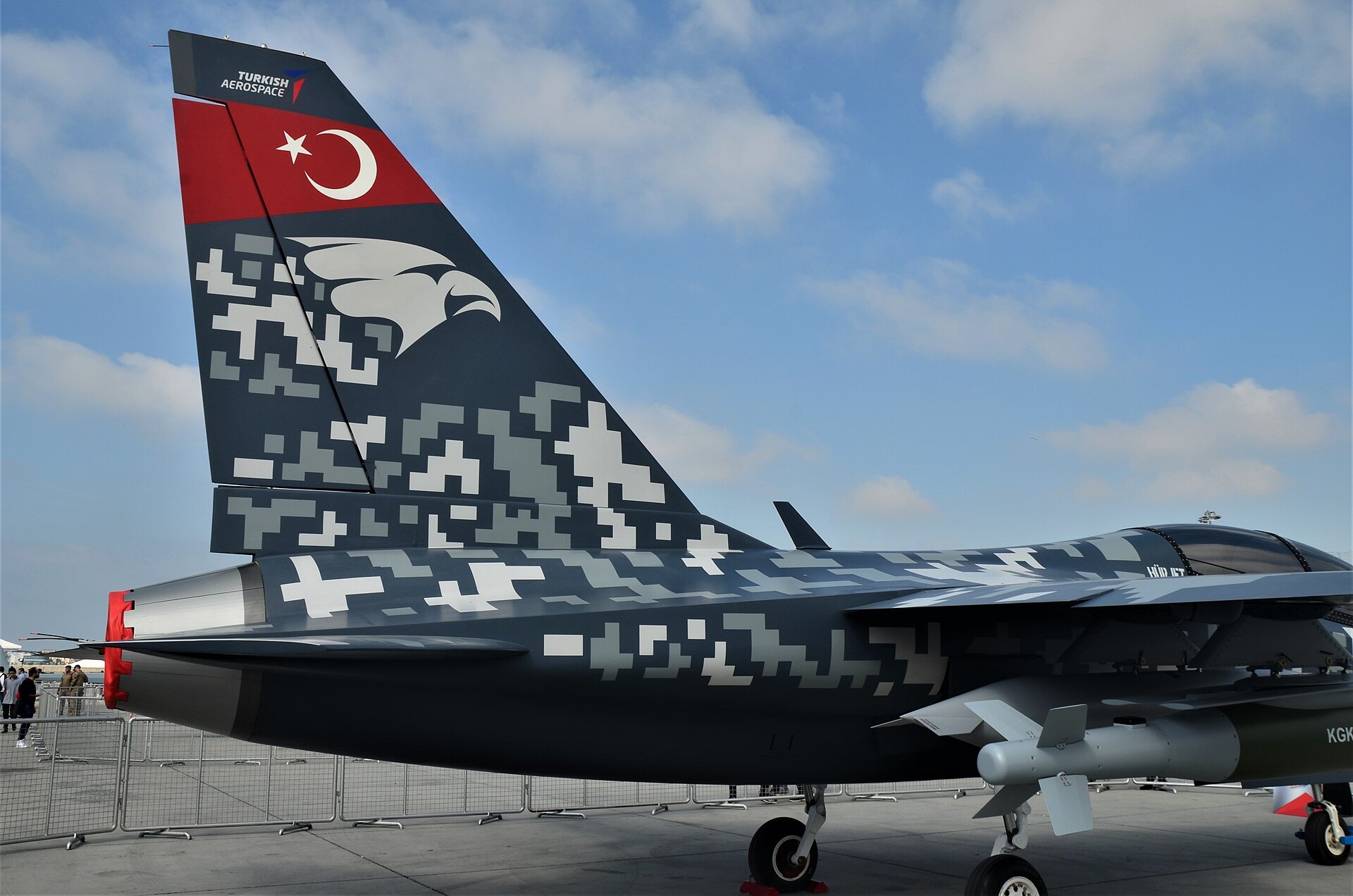
TAI Hürjet
Supersonic Trainer
Turkey’s first home-designed jet to fly, a supersonic trainer and light fighter that went from private venture to a NATO export order in eight years and is set to replace the T-38s and F-5s of two air forces.
The Hürjet: how Turkey built a supersonic trainer from a blank sheet
At 7.35 on the morning of 25 April 2023, a slim grey jet rolled down the runway at Turkish Aerospace’s plant at Kahramankazan, outside Ankara, and climbed away for a 26-minute flight that reached 14,000 ft and 250 knots. In the front seat was chief test pilot Ercan Çelik. It was the first flight of the Hürjet, and the first time a military jet designed and built in Turkey had flown. The programme had begun only six years earlier, in 2017, as a company-funded private venture. Its name joins the Turkish word for free, hür, to jet, and its brief was ambitious: a supersonic, single-engined tandem two-seater that could train fighter pilots for the F-16 and the coming KAAN, and also fight in its own right.
The Turkish Air Force signed up in July 2018, and the requirement was clear. Its advanced training rested on the Northrop T-38 Talon, modernised as the T-38M but more than half a century old in design, and its national display team, the Turkish Stars, flew Canadian-built F-5s. The Hürjet was designed to replace both. Turkish Aerospace chose a single General Electric F404, the engine of the F/A-18 Hornet and the Korean T-50, giving about 17,700 lbf with afterburner and a design speed of Mach 1.4. Around it went a fly-by-wire flight control system, a glass cockpit with head-up display and helmet display, seven hardpoints and provision for air-to-air refuelling, so that the same airframe could serve as a lead-in trainer and a light combat aircraft.
The aircraft moved quickly from first flight to sales. A prototype flew to Torrejón for Spanish evaluation in July 2024, a second prototype joined the test fleet that November, and in December 2025 Spain signed for 30 aircraft, with approval for up to 45, through a deal in which Airbus acts as national prime. It made Spain the first export customer, and the first NATO and European Union buyer of a Turkish combat aircraft. On 30 August 2026, Turkey’s Victory Day, the first series-production Hürjet for the Turkish Air Force made an 18-minute maiden flight, accompanied by a prototype. By then the two test aircraft had flown more than 500 sorties between them.
01The Hürjet’s origins: a private venture with a national purpose
Turkish Aerospace started the Hürjet in July 2017 with its own money, and its board formally approved the project that August. The company had already built a turboprop trainer, the Hürkuş, and had a growing role in fighter work, but no Turkish design had flown as a jet. The conceptual design phase was completed in April 2018, and on 22 July 2018 the Turkish Air Force signed an agreement with the company, giving the project a customer. A critical design review was completed in March 2021, and in January 2022 the decision was taken to move towards series production.
The jet was designed alongside the national fighter programme that became the KAAN, and the two share an ambition: to reduce Turkey’s dependence on imported combat aircraft after the country was removed from the F-35 programme in 2019. The Hürjet still depends on an American engine, but in July 2024 Turkish Aerospace, GE Aerospace and the Turkish engine maker TEI signed a memorandum on F404 integration and local assembly and maintenance. The Turkish Air Force order was eventually set at 16 aircraft, four in Block 0 configuration and twelve in Block 1, and production was planned to reach two aircraft a month.
02The Hürjet in Spain: replacing the F-5M at Talavera
Spain’s Ejército del Aire y del Espacio trains its fighter pilots at Ala 23 at Talavera la Real, near Badajoz, on the F-5M, a modernised version of the Northrop F-5B. About 19 remain in service, and they were overdue for replacement. After a Hürjet prototype was evaluated at Torrejón in July 2024, Spain and Turkey signed a memorandum on 20 December 2024. On 26 February 2025 the commanders of both air forces flew the aircraft in formation, and in May 2025 Turkish Aerospace, Airbus and the Spanish defence ministry agreed a framework for joint production.
The Spanish government approved the programme in autumn 2025, with a total package reported at about 3.7 billion euros including industrial pre-financing for Airbus. On 28 December 2025 the contract for 30 aircraft, worth about 2.4 billion euros, was signed. Airbus is the national coordinator and leads the Integrated Training System for Combat, known as ITS-C. The first two aircraft are to be converted to Spanish standard at Getafe and the rest at a new national conversion centre. Initial deliveries are planned for 2028, with fully Spanish-configured aircraft following between 2031 and 2035.
What makes the Hürjet special
A Hornet’s engine
The Hürjet uses a single General Electric F404 afterburning turbofan, a family that has powered the F/A-18 Hornet, the Gripen’s ancestor engine and the KAI T-50. It produces about 53 kN (11,930 lbf) dry and 78.7 kN (17,700 lbf) with reheat. That gives the trainer a design maximum speed of Mach 1.4 and a service ceiling of about 45,000 ft, performance close to that of the front-line fighters its students will fly, and well beyond the subsonic Hawk, Alpha Jet and M-346. Using a proven, widely supported engine also reduced the development risk for a first-time jet builder.
Fly-by-wire for training
The Hürjet has a fly-by-wire flight control system with parameter limiting, built with actuators and computers from Moog, which also supplies the M-346. Limiting lets instructors take students to the edge of the envelope with protection against departures, while the software can be tuned to mimic the handling of different front-line types. The aircraft is cleared for +8 and −3 g. It also has a built-in auxiliary power unit, so it can start and run its systems at airfields without ground equipment, which matters for a jet also intended to deploy as a light fighter.
Trainer and light fighter
Turkish Aerospace designed the Hürjet from the start for two jobs. As a trainer it has a digital glass cockpit, a head-up display, night-vision-compatible lighting and an integrated helmet display, and it can simulate radar and weapons through embedded training. As a light combat aircraft it has seven hardpoints, one under the fuselage, four under the wings and two at the wingtips, with a payload of about 3,400 kg (7,500 lb), plus provision for air-to-air refuelling. Turkey intends it to supplement the F-16 in close air support, and a navalised version for the ship TCG Anadolu has been studied.
03The Hürjet’s variants: Block 0, Block 1 and beyond
- Prototypes: two flying prototypes, first flown on 25 April 2023 and 12 November 2024, which between them flew more than 500 test sorties by August 2026.
- Block 0: initial Turkish Air Force configuration; four aircraft in the national order.
- Block 1: main production standard for the Turkish Air Force, twelve aircraft in the order; the first series aircraft flew on 30 August 2026.
- Spanish version: aircraft delivered in an initial configuration and converted by Airbus with national avionics, mission systems and Spanish components for the ITS-C programme.
- Light combat version: armed configuration using the seven hardpoints, intended to supplement the F-16.
- Naval version: studied for operation from the amphibious assault ship TCG Anadolu; not built.
TAI Hürjet specifications
Specifications
- Crew
- 2 (tandem)
- Length
- 13.6 m (44 ft 7 in)
- Wingspan
- 9.5 m (31 ft 2 in)
- Height
- 4.1 m (13 ft 5 in)
- Wing area
- 25 m² (269 sq ft)
- Powerplant
- 1 × General Electric F404 afterburning turbofan, 53.07 kN (11,930 lbf) dry, 78.7 kN (17,700 lbf) with afterburner
- Maximum speed
- Mach 1.4 (design)
- Range
- 1,960 km (1,220 mi)
- Service ceiling
- 13,700 m (45,000 ft)
- g limits
- +8 / −3 g
- Hardpoints
- 7 (1 fuselage, 4 underwing, 2 wingtip)
- Armament
- About 3,400 kg (7,500 lb) of external stores
Costs & production
- Unit cost
- Spain’s contract for 30 aircraft, signed in December 2025, is worth about 2.4 billion euros, roughly 80 million euros per aircraft including the training system, conversion and support; no flyaway price has been published
- Cost per flight hour
- No official figure; an estimate in the mid to high thousands of US dollars is reasonable, based on its single afterburning F404 and comparison with other supersonic single-engined trainers, more than subsonic trainers but far below twin-engined fighters
- Production
- 16 ordered by the Turkish Air Force; 30 contracted by Spain, with approval for up to 45
- Programme
- Launched 2017 as a Turkish Aerospace private venture; Spanish programme package reported at about 3.7 billion euros
04The Hürjet’s operating costs: supersonic, but only one engine
Neither Turkish Aerospace nor the two air forces have published an hourly cost, so any figure is an estimate. The Hürjet sits between two classes. It is more expensive to run than subsonic trainers such as the Hawk or M-346, because it uses an afterburning engine and is built for supersonic flight. But it has a single engine, where most fighters it prepares pilots for have one or two larger ones, and its fly-by-wire system lets the air force move training sorties off costly front-line jets.
The Spanish contract figures illustrate the gap between price and cost. Roughly 2.4 billion euros for 30 aircraft includes not only airframes but the ITS-C ground training system, simulators, the conversion of each aircraft to Spanish standard by Airbus and support. Spain also budgeted about 1.04 billion euros of industrial pre-financing between 2025 and 2029, spread over the years of conversion and delivery, to build up the domestic share of the work.
The Hürjet from private venture to production line
Programme launched
Turkish Aerospace starts the Hürjet in July as a company-funded project; the board approves it in August.
Air force signs
The Turkish Air Force signs an agreement with Turkish Aerospace on 22 July.
Design frozen
The critical design review is completed in March.
First flight
Chief test pilot Ercan Çelik flies the first prototype on 25 April, a 26-minute sortie.
With the Turkish Stars
In September the prototype flies in formation with the national aerobatic team it is meant to re-equip.
Spain takes a look
A prototype is evaluated at Torrejón in July; the type reaches Mach 0.9 in transonic tests.
Second prototype
The second aircraft flies on 12 November; Spain and Turkey sign a memorandum on 20 December.
Commanders fly together
On 26 February the Turkish and Spanish air force commanders fly the Hürjet in formation.
First export contract
Spain signs for 30 aircraft on 28 December, with Airbus as national prime.
First production jet flies
The first series aircraft for the Turkish Air Force flies on 30 August, Victory Day.
Stories & eyewitnesses: the Hürjet takes off
Twenty-six minutes at Kahramankazan
The first Turkish-designed military jet leaves the ground.
Read the full story
Formation with the Turkish Stars
The prototype meets the team it is meant to re-equip.
Read the full story
Too young for Malaysia
An early export bid failed on maturity, not design.
Read the full story
Through Mach 0.9 and into a hundred flights
The test programme pushes towards the transonic regime.
Read the full story
A Turkish jet at Torrejón
Spain’s pilots get their first look.
Read the full story
The second prototype
A second airframe doubles the test fleet.
Read the full story
Spain signs
A NATO and EU air force becomes the first foreign customer.
Read the full story
Victory Day maiden flight
The first series jet flies on a national holiday.
Read the full story
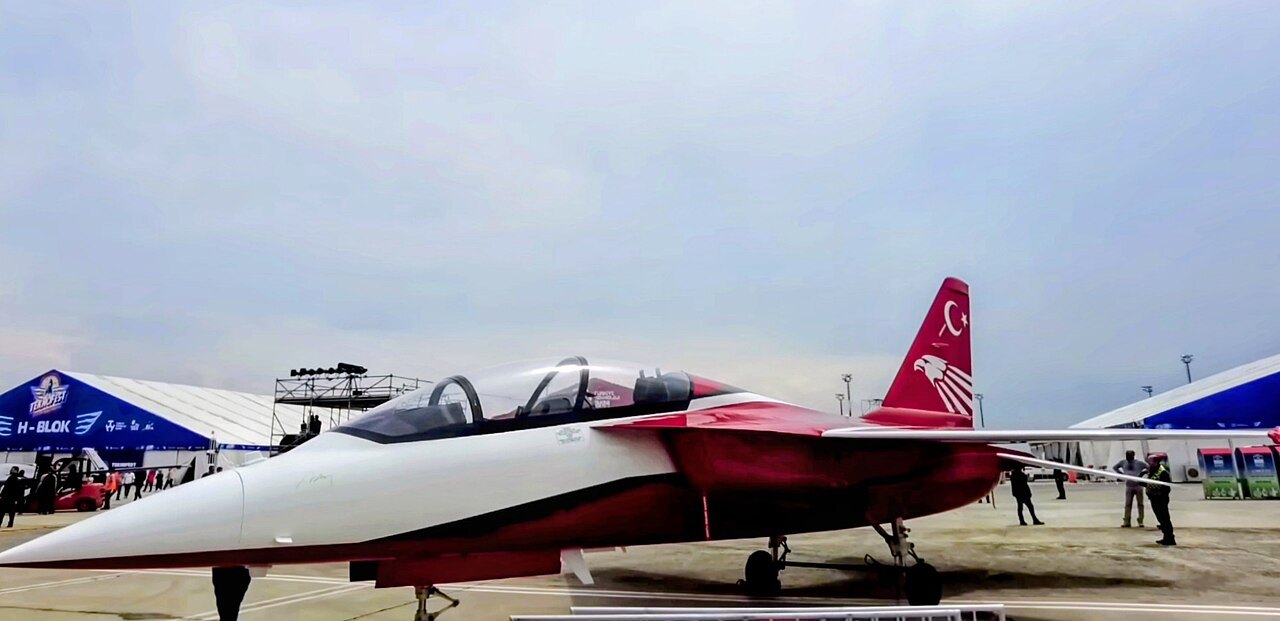
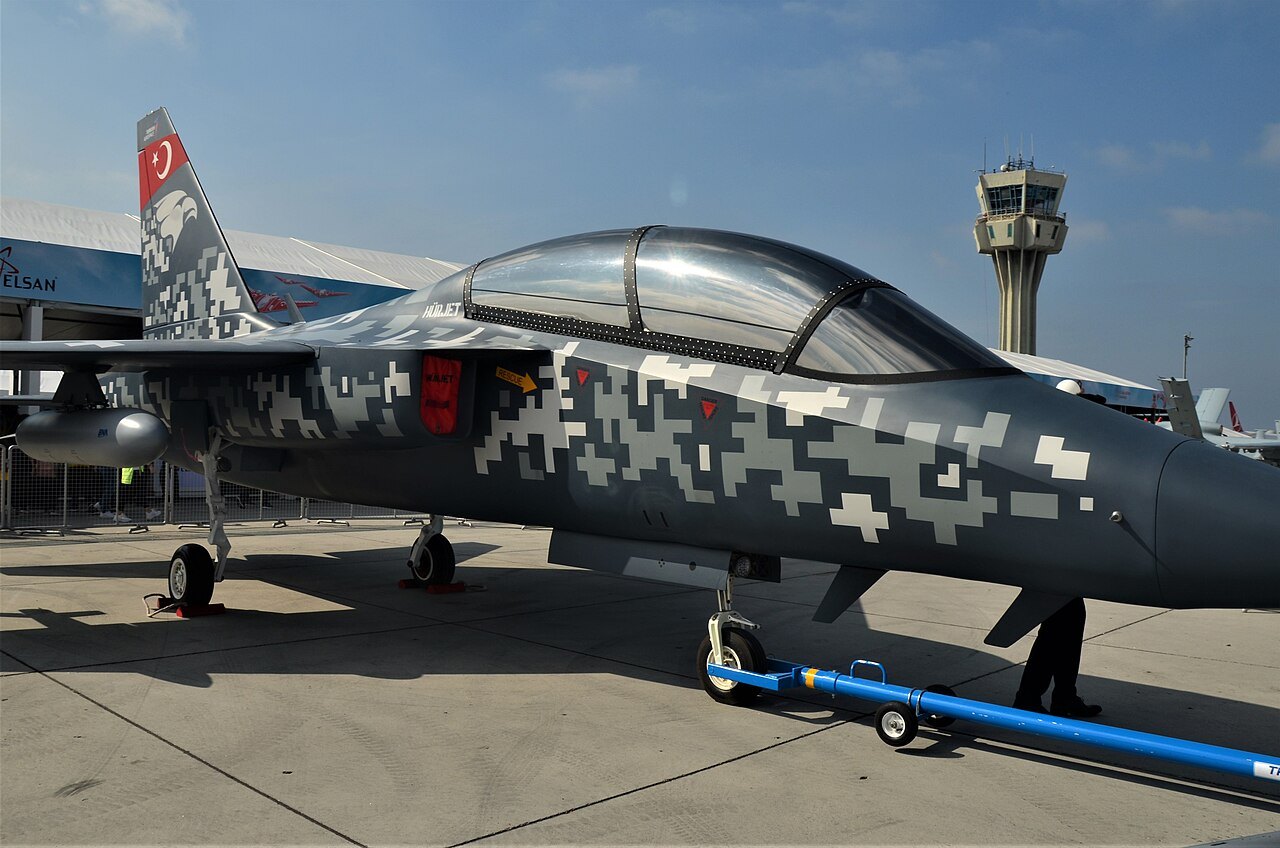
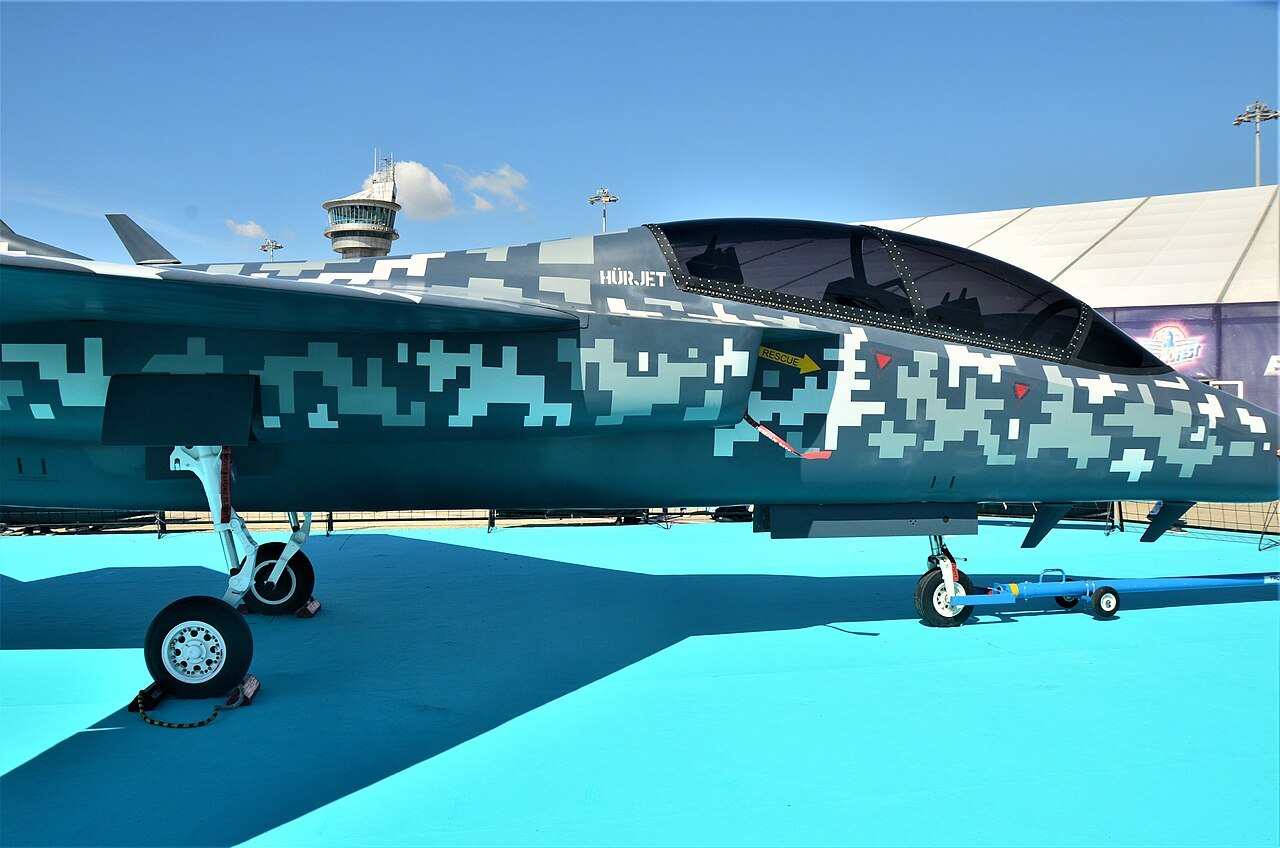
The Hürjet in pictures
The Hürjet’s record
The Hürjet has no combat record and, as of 2026, has only just begun to reach squadrons. Its record so far is a test programme: two prototypes, more than 500 flights and a first production aircraft in the air within three and a half years of the first flight, plus a first export contract.
See how training and combat types compare in the military aircraft statistics database. Figures are approximate.
Everything people ask about the Hürjet
Can I fly in a TAI Hürjet?
What does Hürjet mean?
Is the Hürjet supersonic?
When did the Hürjet first fly?
Which air forces have ordered the Hürjet?
What will the Hürjet replace?
Can the Hürjet carry weapons?
You can’t fly the Hürjet.
These, you can.
Most of this museum you can only look at. These genuine military jets you can fly yourself with MiGFlug — with aerobatics and time on the controls.
 Fly the L-39 AlbatrosThe world’s most-flown jet trainer — aerobatics included
 Fly the F-104 Starfighter“The missile with a man in it”
 Fly the MiG-21The Cold War’s most-produced jet
 Fly the T-33 Shooting StarAmerica’s first jet trainer
 Fly the DH VampireA piece of early jet history
 Fly the S.211Agile Italian jet trainer
 Fly the MB-326The classic Aermacchi jet
 Fly the MiG-15The Soviet legend of the Korean War
Continue the tour
Every fact, checked
- First flight of the Turkish Hürjet advanced trainerAviacionline, 2023: first flight details
- TAI’s first Hürjet supersonic jet trainer for Turkish Air Force completes maiden flight on Victory DayArmy Recognition, 2026: first production flight, orders, Spain financing
- First Turkish Air Force Hürjet makes maiden flightAVweb, 2026: production flight, test campaign totals
- Spain signs contract for 30 HürjetsThe Aviationist, 2025: contract value, Airbus role, Ala 23
- Spain signs memorandum of understanding with Turkey to procure HürjetThe Aviationist, 2024: memorandum
- Spain signs deal for 45 TAI Hürjet supersonic jet trainers to replace F-5 fleetOvert Defense, 2025: Spanish package and schedule
- Airbus, TAI team up to pitch Hürjet for Spanish trainer needFlightGlobal, 2025: Airbus and TAI partnership
- Türkiye’s Hürjet moves ahead with tests, mass production goalsDaily Sabah: test programme and production plans
- Hürjet jet trainer aircraftGlobalSecurity: programme background