
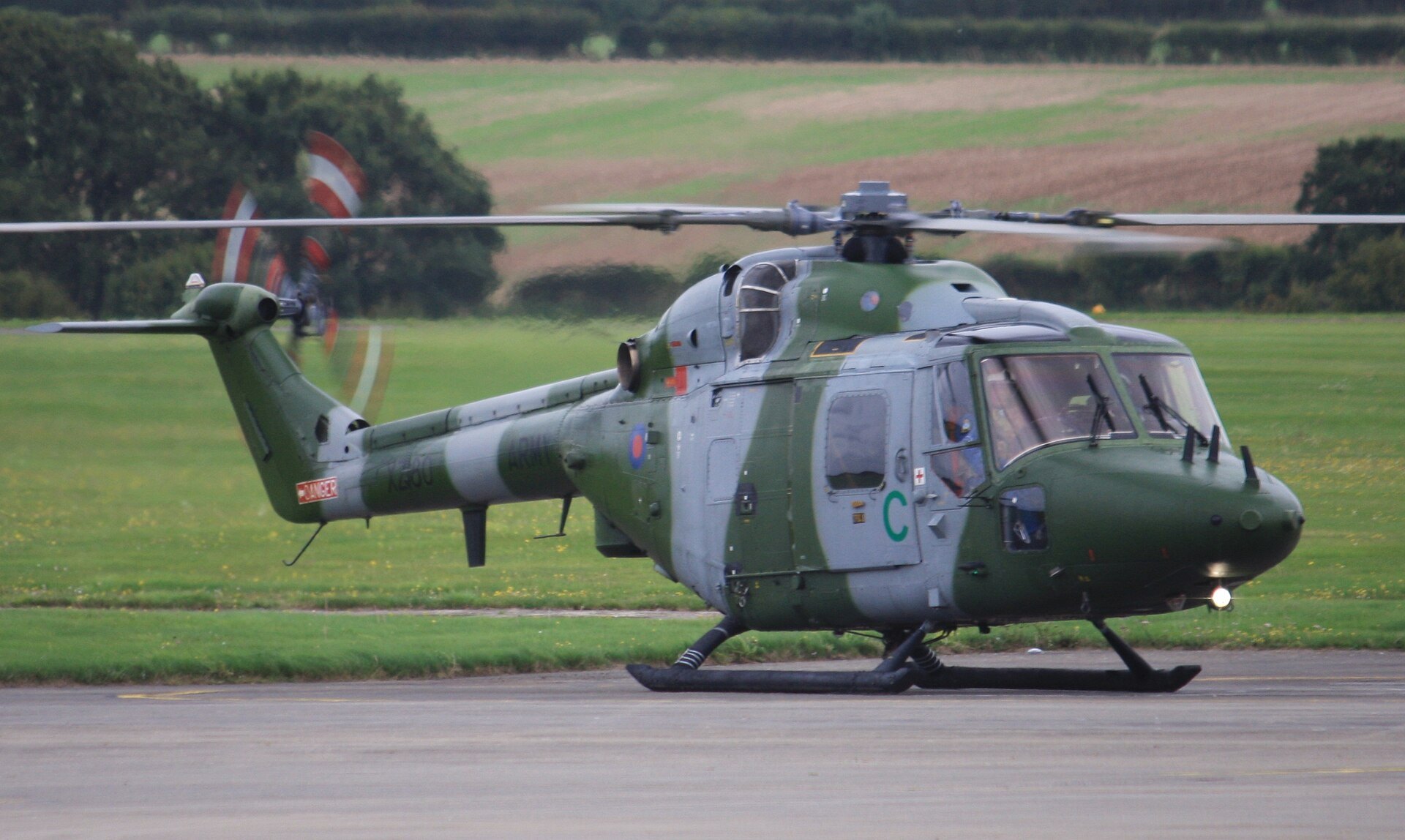
Westland Lynx
Super Lynx and AW159 Wildcat
Britain’s agile twin-engined helicopter: still the holder of the absolute helicopter speed record, it fired the first Sea Skuas in the Falklands, crippled Iraq’s navy in 1991 and lives on as the AW159 Wildcat.
The Lynx: how Westland built the fastest helicopter in the world
In the mid-1960s Westland began designing the WG.13, a twin-engined replacement for its Scout and Wasp and a more advanced alternative to the American Huey. Under the Anglo-French helicopter agreement of February 1967, Sud Aviation took 30 per cent of the work, and Britain agreed to buy the French Puma and Gazelle while France would buy the Lynx. The French Army dropped its armed version in 1969, but the French Navy stayed in. The first prototype flew on 21 March 1971, and the next year Westland’s deputy chief test pilot Roy Moxam set speed records over 15 and 25 km at 321.74 km/h. It had a rigid titanium monobloc rotor head of the kind pioneered by the Bo 105, composite honeycomb blades and, uniquely for its class, the ability to loop and roll.
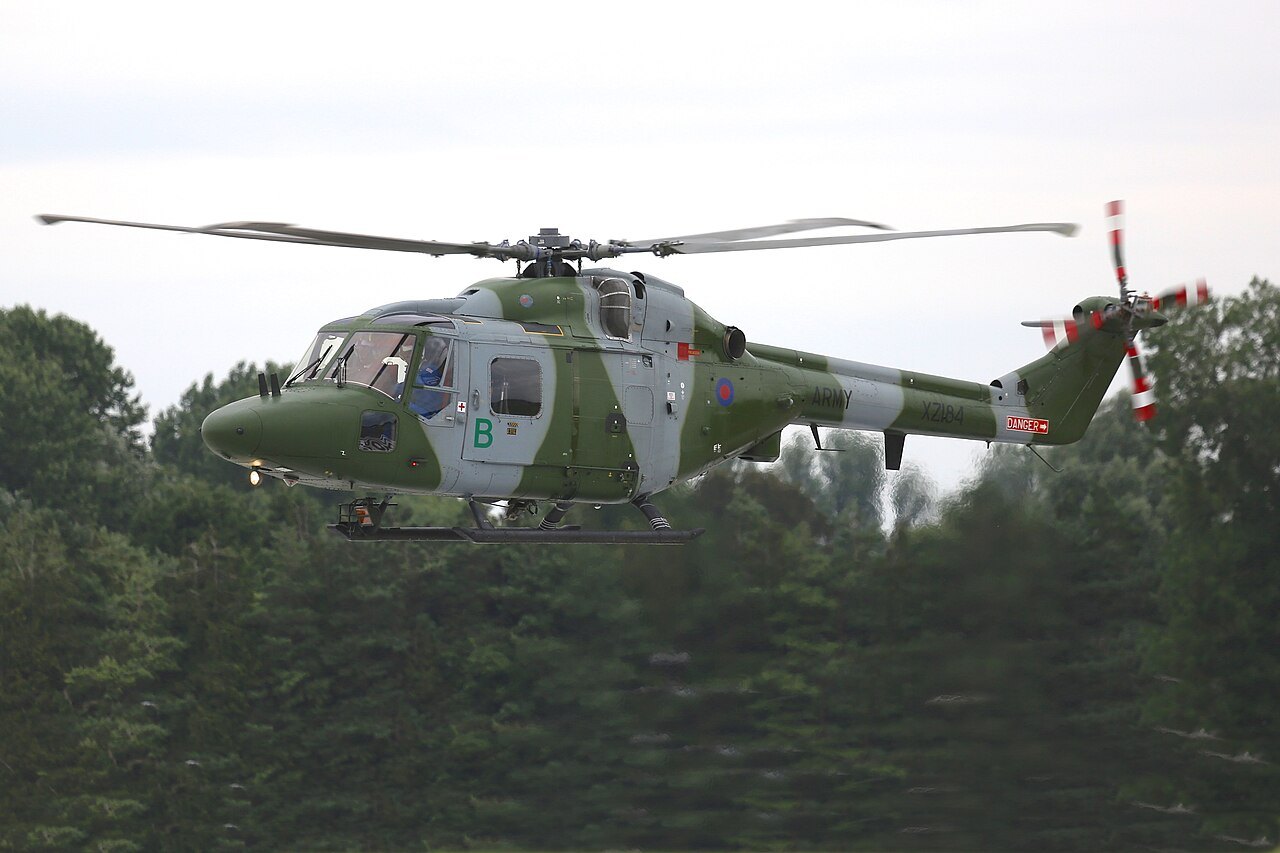
The British Army ordered more than 100 Lynx AH.1s, delivered from 1977 for transport, escort, reconnaissance and anti-tank work with eight TOW missiles. The naval HAS.2 added wheels, folding blades, a deck-lock harpoon, radar and torpedoes or Sea Skua missiles, and it went to war almost at once, in the Falklands in 1982 and the Gulf in 1991, where Royal Navy Lynx devastated Iraq’s small navy. Exports reached navies from Brazil, the first foreign customer in 1978, to Germany, the Netherlands, Denmark, Norway, Portugal, South Korea, Malaysia, Thailand, Oman and Algeria. In 1986 a modified company demonstrator, G-LYNX, set an absolute helicopter speed record of 400.87 km/h that still stands.
The type kept evolving. BERP rotor blades, a larger tail rotor and Gem 42 engines produced the Super Lynx and the Royal Navy’s HMA.8; the wheeled Battlefield Lynx became the Army’s AH.9, and the AH.9A, re-engined with CTS800s, transformed hot-weather flying in Afghanistan. Finally, the AW159 Wildcat, first flown on 12 November 2009, kept the Lynx shape but used 95 per cent new components. The Royal Navy retired its last Lynx in March 2017 and the Army in 2018, after Lynx crews had flown in the Falklands, Northern Ireland, the Gulf, the Balkans, Sierra Leone, Iraq and Afghanistan. Super Lynxes remain at sea with several navies, and 62 Wildcats now serve the British Army and Royal Navy.
01The Lynx at sea: Sea Skua in the Falklands and at Bubiyan
The Royal Navy’s Lynx HAS.2s went south in 1982 with the Falklands task force, flying anti-submarine patrols alongside Sea Kings. On 3 May a Lynx made the first combat firing of the Sea Skua anti-ship missile, still not fully qualified for service, against the Argentine patrol boat ARA Alférez Sobral, causing heavy damage. No Lynx was shot down, but several were lost aboard ships hit by Argentine air attacks, among them HMS Coventry, HMS Ardent and the Atlantic Conveyor.
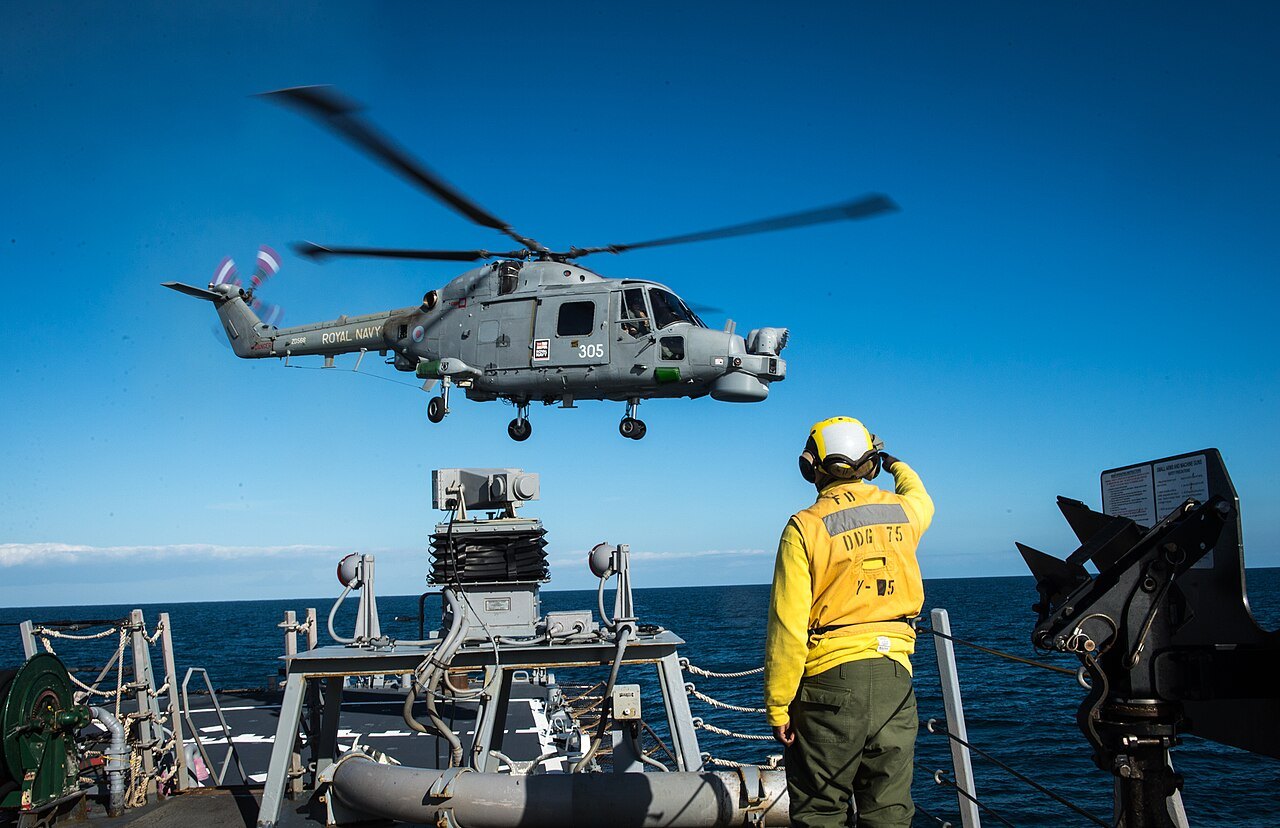
The Lynx’s finest hour as a ship-killer came in the 1991 Gulf War. Lynx from the destroyers and frigates HMS Cardiff, Gloucester, Manchester and Brazen hunted Iraqi naval vessels in the northern Gulf, culminating in the Battle of Bubiyan, the largest naval engagement of the war. By 2 February 1991, 25 Sea Skuas had been launched and 18 confirmed as hits; Navy Lookout credits Royal Navy Lynx with destroying 14 Iraqi vessels in 21 engagements. HMS Cardiff’s Lynx carried five ship silhouettes on its nose afterwards. Special Gulf-modified aircraft, the HAS.3GM, carried extra infrared countermeasures, jammers and FLIR.
02The Lynx on land: TOW in the desert, losses in Ireland, Iraq and Afghanistan
In the 1991 Gulf War the Army Air Corps deployed 24 TOW-armed Lynx alongside Gazelles to find and attack Iraqi armour. On 26 February a Lynx of 654 Squadron destroyed four T-55 tanks and two MT-LB armoured carriers, the first recorded combat use of TOW from a British helicopter. Army Lynx later escorted the Chinooks carrying troops into Kosovo in 1999 and helped rescue British soldiers in Sierra Leone during Operation Barras in 2000.
The losses tell the harder story. On 19 March 1994 the IRA brought down Lynx AH.7 ZD275 with an improvised mortar as it landed at Crossmaglen; the crew survived. On 6 May 2006 a Lynx AH.7 of the Commando Helicopter Force was shot down by a shoulder-launched missile over Basra, killing five, among them 847 Naval Air Squadron’s commanding officer, Lieutenant Commander Darren Chapman, Wing Commander Coxen and Flight Lieutenant Sarah-Jayne Mulvihill, the first British servicewoman killed in action in 22 years. In Afghanistan the AH.7 could fly only in winter until the AH.9A arrived in 2010; on 26 April 2014 an AH.9A crashed near Kandahar, killing all five aboard.
What makes the Lynx special
A rigid rotor and BERP blades
The Lynx’s four-bladed main rotor sits on a rigid titanium monobloc head with no flapping hinges, giving fast, precise control response and making the helicopter fully aerobatic: it can loop and roll, which is why the Army’s Blue Eagles and the Navy’s Black Cats display teams flew it. Later Lynx adopted BERP blades from the British Experimental Rotor Programme, with distinctive paddle-shaped tips that delay blade stall and raise top speed; on the record-breaking G-LYNX the blade tips approached Mach 0.97.
Built for a frigate’s deck
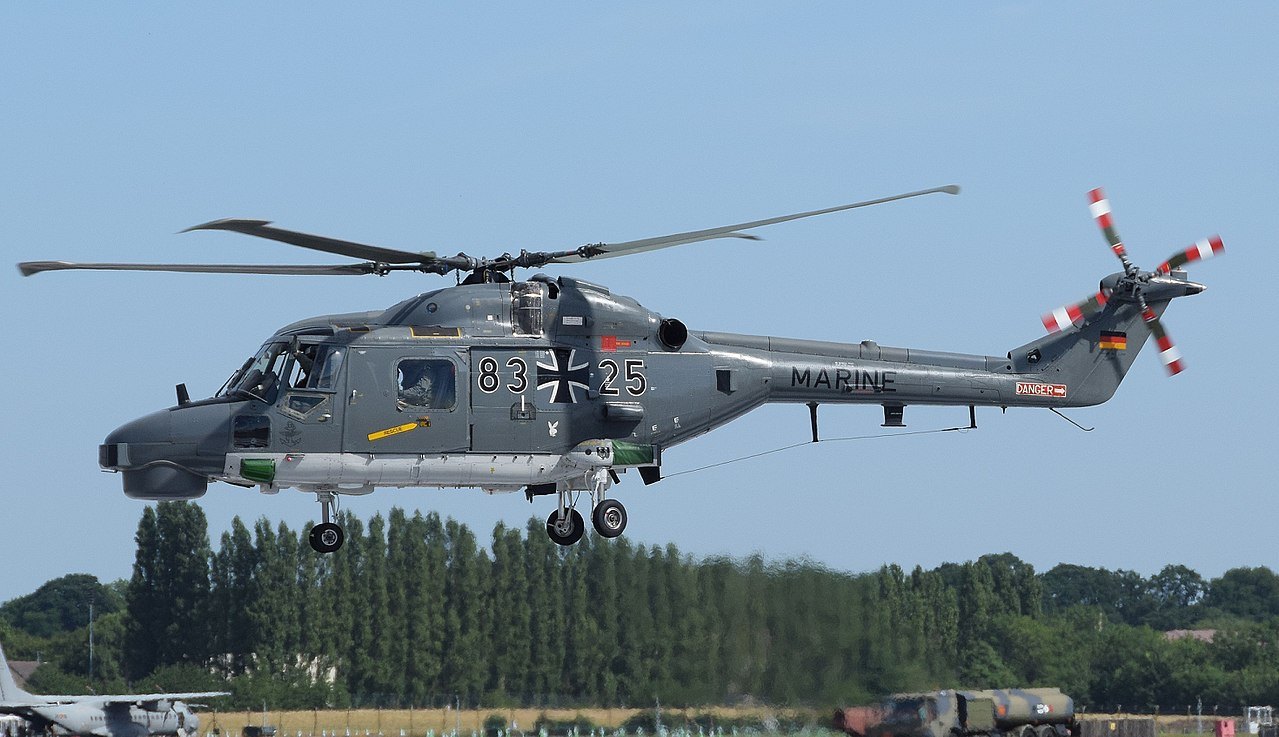
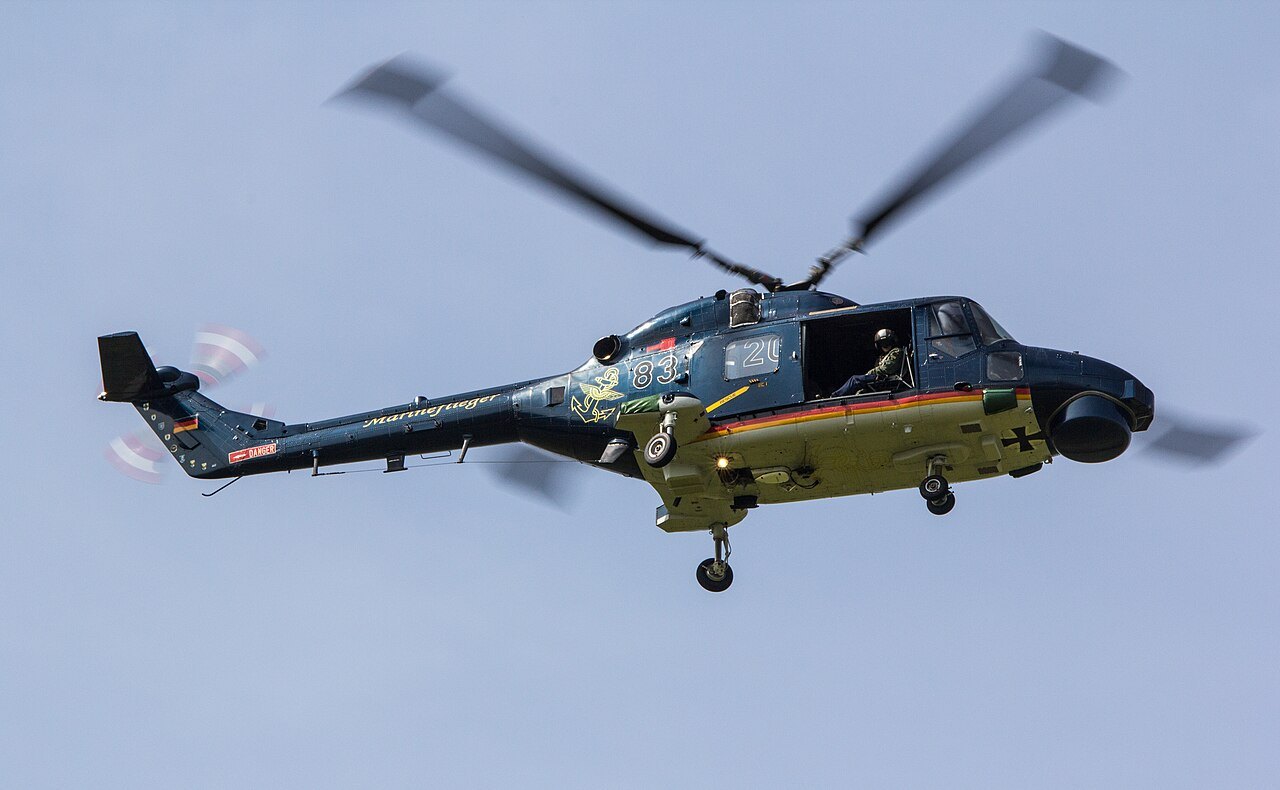
Naval Lynx traded skids for a fixed tricycle undercarriage, folding main blades and tail, emergency flotation and a harpoon deck-lock that engages a grid on the flight deck. The rotor can generate negative lift to hold the aircraft down on a heaving deck. That combination let a 5-tonne helicopter operate from small frigates in heavy weather, and it carried radar, dipping sonar or magnetic anomaly detectors, Sting Ray torpedoes, depth charges and Sea Skua missiles.
One airframe, many jobs
Behind a side-by-side cockpit for pilot and observer, the cabin takes up to about ten troops depending on seating, or stretchers, radios for a command post, or extra fuel. Army Lynx carried TOW missiles on outriggers or door-mounted machine guns, and could switch roles quickly; AgustaWestland claimed a conversion in about 40 minutes. More than 40 variants served with British and export forces, from Danish fishery patrols around Greenland to South Korean anti-submarine patrols.
03The Lynx’s successor: the AW159 Wildcat
In 2002 the Ministry of Defence began studies for a Future Lynx, and in June 2006 AgustaWestland won a £1 billion contract for 70, later cut to 62: 34 for the Army and 28 for the Royal Navy. Named Wildcat in April 2009, it first flew from Yeovil on 12 November 2009. Although it looks like a Lynx, it has 95 per cent new components, a machined airframe by GKN with a far lower part count, two LHTEC CTS800-4N engines, BERP IV blades, a new tail rotor and nose, and a glass cockpit with four large displays. The naval HMA2 has a Seaspray 7400E AESA radar and a Wescam MX-15 sensor turret.
The Army’s Wildcat AH1 reached initial operating capability in August 2014 and the Navy’s HMA2 in January 2015, first deploying in HMS Lancaster in March 2015. Its weapons include the Martlet lightweight missile against small boats and uncrewed surface craft, up to 20 per aircraft, and the Sea Venom anti-ship missile, which replaced Sea Skua and reached initial operating capability in 2025. South Korea bought eight and the Philippines two, with more ordered. On 4 July 2019 Royal Marines of 42 Commando fast-roped from a Wildcat onto the tanker Grace 1 off Gibraltar. Britain’s 2026 defence investment plan foresees replacing the Wildcat with uncrewed systems in the 2030s.
Westland Super Lynx (Series 100) specifications
Specifications
- Crew
- 2–3 (pilot, observer and crewman or door gunner)
- Capacity
- 8 troops; 1,361 kg (3,000 lb) underslung
- Length
- 13.34 m (43 ft 9 in) fuselage including tail rotor; 15.24 m (50 ft) rotors turning
- Main rotor diameter
- 12.80 m (42 ft)
- Height
- 3.67 m (12 ft 0.5 in)
- Empty weight
- 3,277 kg (7,225 lb)
- Max take-off weight
- 5,330 kg (11,750 lb)
- Powerplant
- 2 × LHTEC CTS800-4N turboshafts, 1,016 kW (1,362 shp) each, or 2 × Rolls-Royce Gem 42-1, 746 kW (1,000 shp) each
- Maximum speed
- 324 km/h (201 mph; 175 kn)
- Range
- 528 km (328 mi; 285 nmi)
- Endurance
- 5 hours 20 minutes with auxiliary fuel
- Armament
- 2 × torpedoes or depth charges, or 4 × Sea Skua; Army versions 8 × TOW, 20 mm cannon, rocket pods or door-mounted machine guns
Costs & production
- Unit cost
- Wildcat programme: £1.689 billion forecast for 62 aircraft including development (DE&S); lifetime programme cost forecast at £5.2 billion (2016)
- Cost per flight hour
- No official figure published for Lynx or Wildcat. Hedged estimate: several thousand pounds per hour, based on a 5–6 tonne twin-turbine naval helicopter whose costs are dominated by maintenance of marinised airframes, engines and mission systems
- Production
- About 450 Lynx and Super Lynx built; 62 Wildcats for the UK plus exports to South Korea and the Philippines
- Programme
- WG.13 design mid-1960s; first flight 21 March 1971; Army service 1977–2018; Royal Navy service until 2017; Wildcat first flight 2009
04The Lynx’s variants: from WG.13 to Super Lynx 300
- WG.13: prototypes; 13 built, first flight 21 March 1971.
- Lynx AH.1: first Army version, 113 built from 1977; 60 fitted for TOW.
- Lynx AH.7: uprated Army version with a larger composite tail rotor; later BERP blades.
- Lynx AH.9 (Battlefield Lynx): wheeled utility version; AH.9A re-engined with CTS800-4N, all 22 upgraded by December 2011.
- Lynx HAS.2 / Mk.2(FN): first naval versions for the Royal Navy (60) and French Navy (26).
- Lynx HAS.3: Gem 42 engines and upgraded gearbox; Gulf-modified HAS.3GM and Antarctic HAS.3ICE.
- Lynx HMA.8: Royal Navy Super Lynx with nose FLIR and under-nose radar.
- Export Lynx: Brazil (Mk.21), Netherlands (UH-14A, SH-14B/C/D), Denmark (Mk.80/90), Norway (Mk.86), Germany (Mk.88), Nigeria, Qatar, Argentina and others.
- Super Lynx: Portugal (Mk.95), South Korea (Mk.99), Malaysia (Mk.100), Thailand (Mk.110), Oman (Mk.120), Algeria (Mk.130), Germany (Mk.88A).
- Super Lynx 300: CTS800-4N engines and a glass cockpit derived from the EH101.
- Westland 30: enlarged civil derivative for up to 22 passengers.
- AW159 Wildcat: Wildcat AH1 (Army, 34) and HMA2 (Navy, 28); exports to South Korea and the Philippines.
05The Lynx’s operating costs: upgrades instead of replacements
The Lynx’s economics have been shaped by mid-life upgrades. The Army’s AH.9A programme was run as an urgent operational requirement: the first re-engined aircraft reached Afghanistan in May 2010, 18 months after the project began, and the last of 22 was handed over three months early in December 2011. Portugal, Brazil and South Korea have taken similar routes, Portugal’s Mk95A gaining CTS800 engines and a Wildcat-derived glass cockpit to serve into the 2030s.
For Britain, the bigger decision was to buy the Wildcat rather than more Merlins or a foreign type, sustaining Westland’s Yeovil factory. The Wildcat came with a 34-year integrated support and training arrangement. No operator publishes a reliable cost per flight hour for either type, so the figure in the table is an estimate based on the class, not an official number.
The Lynx from WG.13 to Wildcat
Anglo-French deal
Sud Aviation takes 30 per cent of the WG.13 under the helicopter agreement signed in February.
First flight
The first Lynx prototype flies on 21 March.
Speed records
Roy Moxam sets records over 15 and 25 km at 321.74 km/h.
Army deliveries
Production Lynx AH.1s reach the British Army; the AAC puts them into service in 1979.
Falklands
On 3 May a Lynx makes the first combat firing of Sea Skua, against ARA Alférez Sobral.
400.87 km/h
Trevor Egginton flies G-LYNX to the absolute helicopter speed record on 11 August.
Gulf War
Navy Lynx dominate the Battle of Bubiyan; Army Lynx fire TOW in combat for the first time.
Basra
A Lynx AH.7 is shot down over Basra on 6 May, killing five.
Wildcat flies
The AW159 Wildcat makes its first flight at Yeovil on 12 November.
Wildcat in service
The Army’s Wildcat AH1 enters service on 29 August; Norway retires its Lynx in December.
Royal Navy farewell
The Royal Navy decommissions the Lynx on 23 March; the Army follows in 2018.
France retires the Lynx
The French Navy formally retires the type on 4 September.
Stories & eyewitnesses: the Lynx at war, at sea and in the record books
G-LYNX and 400.87 km/h
A 1986 record that no conventional helicopter has beaten.
Read the full story
First Sea Skua: the Alférez Sobral
On 3 May 1982 a Lynx fired a missile not yet cleared for service.
Read the full story
Bubiyan: five silhouettes on Cardiff’s Lynx
Navy Lynx crippled Iraq’s navy in the Gulf War.
Read the full story
First TOW kills
On 26 February 1991 a 654 Squadron Lynx destroyed six armoured vehicles.
Read the full story
The mortar at Crossmaglen
The IRA’s most successful attack on a helicopter.
Read the full story
Five lost over Basra
The first British helicopter shot down in the Iraq war.
Read the full story
The door that broke a Lynx in two
Nine died near Mombasa in 1989, the deadliest Lynx crash.
Read the full story
Kandahar, April 2014
A Lynx AH.9A crash killed five in the last year of the Afghan campaign.
Read the full story
Lynx 207, the world’s most-flown Lynx
Norway’s coast guard Lynx flew past 9,200 hours.
Read the full story
Captured in Libya
A Dutch Lynx crew was seized during an evacuation in 2011.
Read the full story
Fast-roping onto Grace 1
Royal Marines boarded a tanker from a Wildcat in 2019.
Read the full story
The Lynx in pictures
Where the Lynx flies and flew
The Lynx’s record
The Lynx went to war in the Falklands, the Gulf, Northern Ireland, the Balkans, Sierra Leone, Iraq and Afghanistan, and pioneered helicopter-launched anti-ship missiles in combat. Losses came mostly from accidents and ground fire, including the Basra shoot-down of 2006.
See how training and combat types compare in the military aircraft statistics database. Figures are approximate.
Everything people ask about the Lynx
Can I fly in a Westland Lynx?
Is the Lynx the fastest helicopter in the world?
Can a Lynx loop?
What is the difference between the Lynx and the Wildcat?
When did Britain retire the Lynx?
Who still flies the Lynx?
Where can I see a Lynx?
You can’t fly the Lynx.
These, you can.
Most of this museum you can only look at. These genuine military jets you can fly yourself with MiGFlug — with aerobatics and time on the controls.
 Fly the L-39 AlbatrosThe world’s most-flown jet trainer — aerobatics included
 Fly the F-104 Starfighter“The missile with a man in it”
 Fly the MiG-21The Cold War’s most-produced jet
 Fly the T-33 Shooting StarAmerica’s first jet trainer
 Fly the DH VampireA piece of early jet history
 Fly the S.211Agile Italian jet trainer
 Fly the MB-326The classic Aermacchi jet
 Fly the MiG-15The Soviet legend of the Korean War
Continue the tour
Every fact, checked
- Westland Lynx HMA.8Pima Air & Space Museum: aerobatics, the 1986 record and service history
- Westland Lynx AH.Mk1, G-LYNXFriends of The Helicopter Museum on the record-holding G-LYNX and its restoration
- Upgraded Army Lynx helicopter fleet completeMinistry of Defence (GOV.UK) on the Lynx AH.9A programme, December 2011
- Nå skal denne verdensrekordholderen pensjoneresTeknisk Ukeblad on Norway’s Lynx retirement and Lynx 207’s 9,200 hours
- Germany grounds Sea Lynx helicopters on piracy dutyDeutsche Welle on the 2014 Sea Lynx cracks and Operation Atalanta
- Portuguese Navy takes delivery of first upgraded LynxVertical on the Lynx Mk95A mid-life upgrade
- In focus: the Wildcat multi role helicopter in service with the Royal NavyNavy Lookout on Lynx history, Gulf War Sea Skua engagements and the Wildcat HMA2
- Wildcat Mk1 and Wildcat Mk2 helicopterDefence Equipment & Support: Wildcat roles, numbers and programme cost
- Iran fury as Royal Marines seize tanker suspected of carrying oil to SyriaThe Guardian on the Grace 1 boarding from a Wildcat
- Philippine Navy inducts two AW159 Wildcat helicoptersNaval News on Wildcat exports to the Philippines and South Korea