
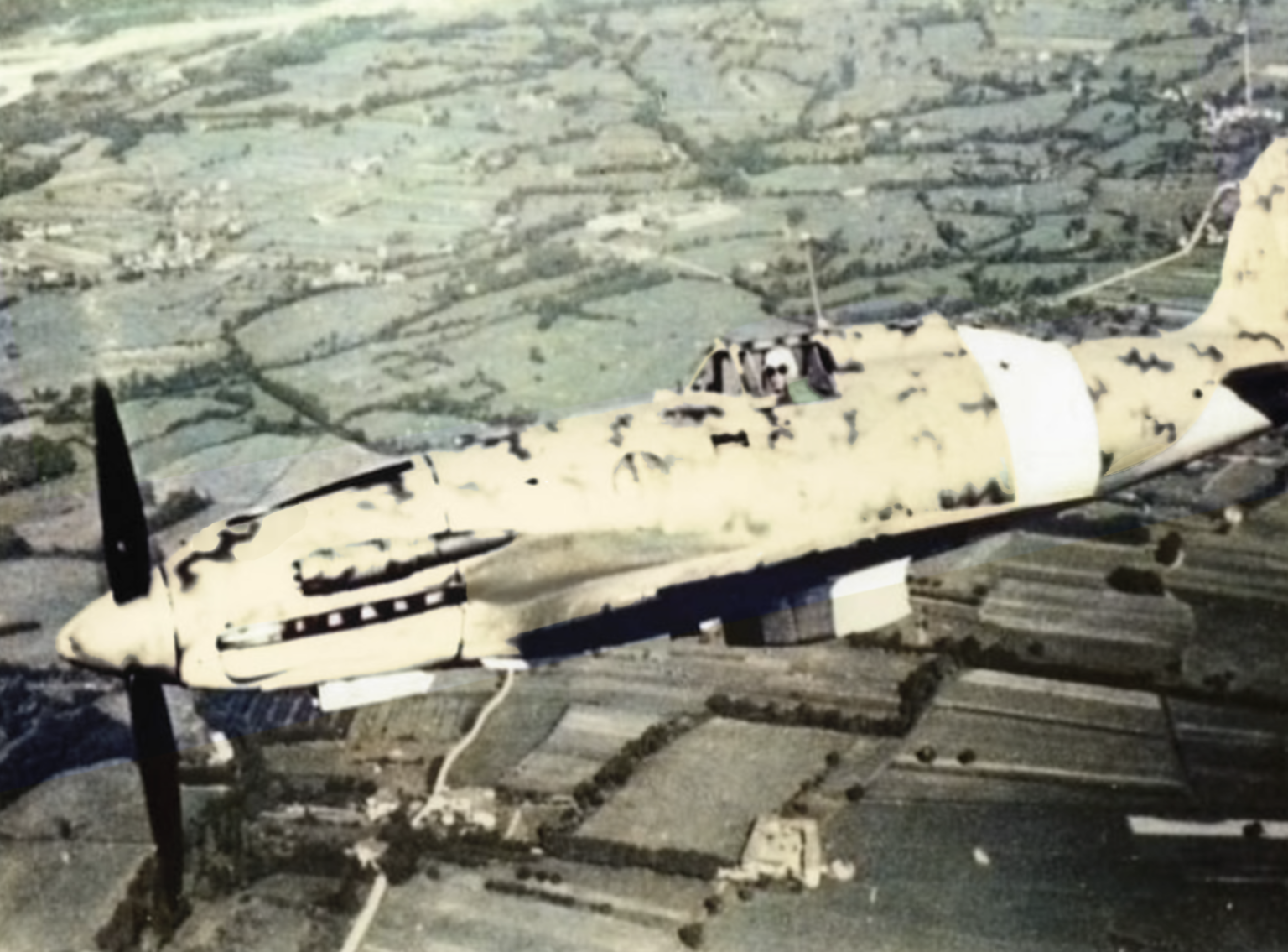
C.202 Folgore
Italy’s elegant desert fighter
A German engine in an Italian racing airframe — the Folgore (“Thunderbolt”) was the finest fighter Italy fielded in numbers, agile enough to out-turn a Spitfire, but hobbled by a feeble pair of guns.
The Folgore: a racer’s airframe and a German heart
Italy entered the war with fighters that were nimble but slow — open-cockpit biplanes and stubby radial-engined monoplanes like Macchi’s own C.200 Saetta, which handled beautifully but simply could not keep up with modern opponents. The problem was the engine: Italy had no home-grown inline engine to match the German and British V-12s.
Macchi’s answer was elegant. The designer Mario Castoldi — the man behind Italy’s record-breaking Schneider Trophy seaplane racers — took the sound wings and structure of the C.200 and married them to a slim new fuselage built around a licence-produced German Daimler-Benz DB 601 engine. The transformation was dramatic: the C.202 Folgore was one of the best fighters of its generation.
That German V-12, built in Italy by Alfa Romeo as the RA.1000 Monsone, gave the Folgore the speed and high-altitude reach its radial-engined predecessors lacked. Combined with Castoldi’s aerodynamic craftsmanship, it produced an aircraft that pilots adored — light, responsive and a delight to fly.
In the air the Folgore could out-turn the Spitfire Mk V, the Hawker Hurricane and the Curtiss P-40. But it carried a crippling handicap: just two 12.7 mm machine guns in the nose, sometimes with two rifle-calibre guns in the wings. Against armoured, self-sealing Allied fighters that was far too little firepower — the one great flaw in an otherwise superb design.
From 1941 the Folgore fought hardest where Italy needed it most: over besieged Malta, across the North African desert, over Sicily, and briefly on the Eastern Front. In the hands of a good pilot it was formidable — in mid-1942 Folgore units in North Africa posted a kill-to-loss ratio that stood comparison with the vaunted Messerschmitt Bf 109.
Some 1,106 Folgores were built, making it the most important Italian fighter of the war and one respected by every enemy who met it. Its successor, the faster and properly-armed C.205 Veltro, finally fixed the firepower problem — but arrived too late and in too few numbers to change the outcome. Two Folgores survive today.
01Why the Folgore mattered: the right airframe, the wrong armament
The Folgore is one of the war’s great “what ifs.” Aerodynamically and in handling it was the equal of the fighters it faced, and in a turning fight it was often the better aircraft. Its engine — a German design built under licence — gave it genuinely competitive performance.
What it never had was firepower. Two heavy machine guns were adequate in 1940 but hopeless against the armoured fighters and bombers of 1942–43. The Folgore’s story is a lesson in how a single design decision can hold back an otherwise excellent aircraft — and why its better-armed successor, the C.205 Veltro, is remembered as what the Folgore could have been.
How Macchi built Italy’s best wartime fighter
The engine transplant
Italy’s fighters were held back by their engines. Macchi’s solution was to fit a German Daimler-Benz DB 601 — a modern liquid-cooled V-12 — built under licence by Alfa Romeo as the RA.1000 Monsone. Dropped into a slim new fuselage on the proven C.200 wing, it transformed a mediocre fighter into a first-rate one.
A racer’s aerodynamics
Designer Mario Castoldi had created Italy’s record-breaking Schneider Trophy seaplane racers, and that pedigree shows. The Folgore was aerodynamically clean and beautifully balanced, giving it handling that pilots on both sides praised — light, responsive and forgiving.
The firepower flaw
For all its grace, the Folgore was badly under-gunned: just two 12.7 mm machine guns in the nose, with at most two rifle-calibre guns in the wings. It was enough to down an unprotected aircraft, but far too little against the armoured, self-sealing fighters and bombers it faced from 1942 on.
02Out-turning the Spitfire
In a turning fight the Folgore was often the superior aircraft. Italian pilots found they could out-turn the Spitfire Mk V, the Hurricane and the P-40, using the Folgore’s light, precise controls to stay inside an opponent’s circle. What they could not do was capitalise: two machine guns rarely delivered a decisive blow before the chance passed. The Folgore could win the manoeuvre and still lose the fight — a frustration that defined its combat career and drove the development of the better-armed C.205 Veltro.
Macchi C.202 Folgore — by the numbers
Baseline note: the figures below describe a standard M.C.202 Folgore of the middle production blocks — Serie VII to XI, built by Macchi, Breda and SAI Ambrosini between late 1941 and the spring of 1943, with the Alfa Romeo RA.1000 RC.41-I Monsone and the two-gun cowling battery that the type carried from first to last. Deltas for the parent C.200 Saetta, for the C.205 Veltro that grew out of the same fuselage, and for the Messerschmitt Bf 109F that shared the engine family are given in grey. Two points of genuine dispute are flagged where they occur: the exact Daimler-Benz mark that Alfa Romeo licensed, and whether the published wingspan accounts for the aeroplane’s asymmetric wing. Italian manufacturer’s data survive unevenly and the Regia Aeronautica published little; where authorities disagree, both figures are named.
Dimensions & weights
- Crew
- 1
- Length
- 8.85 m (29 ft 0 in) — 60 cm (2 ft) longer than the C.200 Saetta, and every centimetre of the difference is new fuselage
- Wingspan
- 10.58 m (34 ft 9 in), the figure printed almost everywhere — and taken unchanged from the C.200
- Semi-span asymmetry
- Port wing 21 cm (8 in) longer than starboard, to offset propeller torque. This is the detail most often mangled: it is the LEFT wing that is longer, on the C.202 and on the C.205 after it, and it is absent from the C.200, whose wing was symmetrical
- Overall span, as built
- Probably 10.79 m (35 ft 5 in). When the Italian Air Force Museum rebuilt MM 9667’s missing wings to C.200 drawings it came out roughly 20 cm short, which suggests the quoted 10.58 m is the Saetta’s span repeated rather than the Folgore’s
- Height
- 3.49 m (11 ft 5 in), tail down
- Wing area
- 16.82 m² (181.0 sq ft) — identical to the C.200, because it was the C.200’s wing
- Aerofoil
- NACA 23018 modified at the root, NACA 23009 modified at the tip
- Empty weight
- 2,491 kg (5,492 lb)
- Loaded weight
- 2,930 kg (6,460 lb)
- Serie IX with the wing guns
- 2,515 kg empty, 3,069 kg loaded (5,545 lb and 6,766 lb) — the two 7.7 mm guns and their 1,000 rounds cost about 100 kg (220 lb), which is why squadrons took them out again
- Weight growth over the C.200
- 527 kg (1,162 lb) empty — the price of a liquid-cooled V-12, its radiator, coolant and plumbing
- Wing loading
- 174.2 kg/m² (35.7 lb/sq ft) — light for 1942, and the arithmetic behind every Allied report that the Folgore out-turned them
- Power loading
- 2.49 kg/PS (3.39 kg/kW, 5.57 lb/hp) at loaded weight, against roughly 2.1 kg/PS for a Bf 109E and better still for the F
Performance
- Maximum speed
- 600 km/h (373 mph) at 5,600 m (18,400 ft)
- Prototype at Guidonia
- 603 km/h (375 mph) in August 1940 — nearly 100 km/h (62 mph) faster than the C.200 on 300 more horsepower and a cleaner nose
- Cruising speed
- 500 km/h (311 mph) at 5,000 m (16,400 ft)
- Rate of climb
- 18.1 m/s (3,560 ft/min) at sea level
- Time to 6,000 m
- 5 min 55 s (19,700 ft)
- Service ceiling
- 11,500 m (37,700 ft); Italian sources more often give 11,800 m (38,700 ft), and the difference is a matter of which test report is being quoted rather than of two different aeroplanes
- Range, internal fuel
- 765 km (475 miles) — short, and the reason Folgore units over Malta were forever watching the fuel gauge rather than the fight
- Drop tanks
- 2 × 100 litres (22 imp gal, 26 US gal each), authorised on 23 December 1942 for 6° and 7° Gruppo at Pantelleria: a 47 per cent increase in fuel carried, arriving about a year too late to matter
- Dive
- Exceptionally strong airframe; speeds over 900 km/h (560 mph) were recorded, and on 21 August 1941 Tenente Giulio Reiner pulled 5.8 g out of a vertical dive without damage. The often-repeated 1,078 km/h is an uncorrected instrument reading, not a true airspeed
- For comparison: Bf 109F-4
- 635 km/h (395 mph) at 6,200 m (20,300 ft) on the DB 601E, 175 PS more than the Folgore ever had
- For comparison: Spitfire Mk VB
- 597 km/h (371 mph) at 6,100 m (20,000 ft) — faster in the climb, slower in the turn, and better armed by a wide margin
- For comparison: P-40E and Hurricane IIB
- 570 km/h and 547 km/h (354 and 340 mph) — the two aircraft the Folgore actually met most often in the Western Desert, and beat
- The family, end to end
- C.200 Saetta 504 km/h, C.202 Folgore 600 km/h, C.205 Veltro 642 km/h (313, 373 and 399 mph) — the same wing and much the same fuselage, twice re-engined
Propulsion & systems
- Engine
- 1 × Alfa Romeo RA.1000 RC.41-I Monsone, a licence-built Daimler-Benz DB 601, inverted V-12, liquid-cooled, 33.9 litres, built at Pomigliano d’Arco under a licence taken out in November 1939 Which mark is disputed: Italian sources usually say DB 601A-1, English-language sources the export DB 601Aa. The take-off rating of 1,175 PS is the Aa figure — the A-1 gave 1,100 PS — so Aa is the better reading, and the brief for this page has been corrected accordingly
- Take-off power
- 1,175 PS (1,159 hp, 864 kW) at 2,500 rpm
- Rated power
- 1,100 PS (1,085 hp, 809 kW) at 3,700 m (12,100 ft); the later RA.1000 RC.41 Ia held 1,000 PS continuous at 4,100 m (13,500 ft)
- Fuel system
- Bosch direct mechanical injection — the single most important thing the German licence bought. A carburetted Hurricane or Spitfire V cut out under negative g; the Folgore did not, and Italian pilots used the push-over as an escape manoeuvre exactly as the Luftwaffe did
- Supercharger
- Single-stage centrifugal, driven through a barometrically controlled hydraulic fluid coupling — stepless boost with no gear change to fumble in combat
- Propeller
- Piaggio P.1001, three-blade metal, constant-speed, 3.05 m (10 ft 0 in) diameter
- Fuel
- 430 litres (95 imp gal, 114 US gal) total: 270 litres in the main tank behind the engine, 80 litres behind the pilot, 2 × 40 litres in the wing roots. All self-sealing from the first production aircraft, which was more than the early Bf 109F could say
- Cooling
- Ventral radiator in a rectangular fairing under the cockpit, oil cooler in a separate housing under the nose — the C.202D prototype (MM 7768) tried a P-40-style chin radiator and went no further
- Radio
- Allocchio Bacchini B.30 where fitted at all. Sets were chronically short and the ones delivered were so noisy that pilots switched them off; formations signalled by rocking their wings, which forced tight, rigid formations that were poor for fighting and worse for lookout. Against RAF squadrons being vectored by radar this was the Folgore’s heaviest single handicap — heavier, arguably, than the guns
- Oxygen
- Unpressurised cockpit; the Italian oxygen equipment was so poor that on early sorties 50 to 60 per cent of pilots aborted, and it was implicated in fatal accidents — 4° Stormo fixed it in April 1942 by adopting German Dräger masks
- Protection
- Armoured seat back and self-sealing tanks from the start; armoured windscreen only from Serie VII
- Undercarriage
- Wide-track hydraulic main legs retracting inward into the wing; fixed tailwheel — the C.205 introduced a retractable one on new-build airframes. Folgore pilots reported the main gear falling partly open when pulling hard out of a steep dive
- Labour to build
- In excess of 22,000 man-hours per airframe against 4,500 to 6,000 for a Bf 109E or F, according to Giuseppe Ciampaglia. This, and not the design, is why only about 1,100 were built
03From Saetta to Veltro
The Folgore sits in the middle of a family. It began as a re-engined Macchi C.200 Saetta, trading the Saetta’s radial for the inline DB 601. It ended by pointing the way to the Macchi C.205 Veltro, which used a still more powerful engine and added 20 mm cannon to cure the firepower problem. Performance figures vary between production batches and sources; those above are representative of the standard Serie production Folgore.
Armament & payload
The Folgore flew into 1942 with the gun battery of a 1933 biplane
Two 12.7 mm Breda-SAFAT machine guns in the upper cowling, synchronised through the propeller disc: that is the whole of the M.C.202’s fixed armament, and it is precisely what the Fiat CR.32 had carried nine years earlier. Mario Castoldi had built an airframe that could out-turn a Spitfire V and dive with anything in the theatre, and then hung on it a battery that could not reliably destroy what it hit. The Breda-SAFAT was not a bad gun so much as a small one — the 12.7 × 81SR round threw a 36 g bullet at 760 m/s for roughly 10,400 joules at the muzzle, against about 16,900 for a Browning M2 and some 37,000 for the single MG 151/20 that a Bf 109F fired through its propeller hub. Six Brownings in a Spitfire’s wings or one Mauser in a Messerschmitt’s nose settled fights that two Bredas merely started. The Australian ace Clive Caldwell, who fought both, thought the Folgore would have been the better aeroplane than the Bf 109 had it been better armed. Wing and underwing fits varied a great deal by series and by squadron, and the Regia Aeronautica’s own returns are incomplete; what a given Folgore actually carried on a given day is often unrecoverable.
Gun
- 2 × 12.7 mm Breda-SAFAT in the upper cowling, synchronised, 360 to 400 rounds per gun
- 12.7 × 81SR cartridge; 36 g projectile at 760 m/s, roughly 10,400 J muzzle energy — well below the 0.50 in Browning on the same nominal calibre
- 700 rounds per minute cyclic, falling to about 575 when synchronised; the pair put out roughly 18 rounds a second, and there was around 40 seconds of it
- From Serie VII the wings were stressed for 2 × 7.7 mm Breda-SAFAT with 500 rounds each. They added about 100 kg (220 lb), did little to a 1942 fighter, and were routinely removed in the field
- San Giorgio reflector sight. Jams were frequent: broken gun-bay panels, belts snagging, and an air-cleaner intake that crystallised and sheared under engine vibration
Air-to-air
- No guided air-to-air weapon of any kind; guns were the entire air-to-air armament throughout the type’s career
- The tactic that made up for the battery was the dive-and-zoom pass, used to great effect over Bir Hakeim in May 1942, where Folgore units claimed 22 victories against Hurricanes and P-40s for five losses — a 4.4:1 return against 3.5:1 for the Bf 109 units alongside them
- Over Malta the equation reversed: RAF fighters were radar-vectored, the Folgore had no radio worth using, and 51° Stormo’s claim of 97 aircraft destroyed for 17 Folgores lost at the end of June 1942 should be read as a claim rather than a score
- Against the Spitfire V the Folgore could out-turn but not out-climb, and could not finish what it caught. Against the Hurricane II it was simply superior from its first sortie
- Capitano Furio Niclot-Doglio, seven victories, was shot down over Malta on 27 July 1942 by George Beurling — the encounter that best sums up the type: a fine aeroplane, a fine pilot, outgunned
Air-to-surface guided
- None in service. The card is kept because the absence is the point: no Italian single-seat fighter carried a guided weapon of any kind
- The one gesture in that direction was the C.202 AR.4, a handful of aircraft rigged as director machines for the AR.4 radio-controlled flying bomb, a Mistel-style pairing with expended S.79 airframes
- The programme was still experimental at the September 1943 armistice and no such attack was ever flown
- What the Folgore did instead, from Serie XI, was carry ordinary iron bombs on two underwing racks — crude, unguided, and very rarely used
Bombs
- Serie XI onward: 2 × 50 kg, 100 kg or 160 kg bombs (110, 220 or 350 lb) on underwing racks, the fit designated C.202 CB for caccia bombardiere
- Alternatively clusters of 10, 15 or 20 kg spezzoni for use against troops and soft-skinned transport
- Used chiefly over the Don in the winter of 1942 and in Tunisia in 1943, and even then sparingly — every kilogramme cost the climb rate a home-defence interceptor could not spare
- Most squadrons treated the racks as drop-tank fittings and left the bombs on the ground
Rockets
- None. No M.C.202 is recorded as having fired rocket projectiles operationally
- Italian air-launched rocket work was thin, and what there was went to twin-engined types with the airframe and the crew to aim it
- The two hardpoints were shallow, the wing structure was the C.200’s, and the aeroplane had no power margin to spend on the drag
- The Folgore’s answer to a bomber remained two cowling guns fired from close astern, which by 1943 against a B-17 was no answer at all
Pods & other stores
- 2 × 100 litre jettisonable drop tanks, authorised for 6° and 7° Gruppo at Pantelleria on 23 December 1942 and the only external store the type carried in any numbers
- Corbetta sand-and-dust filter on the supercharger intake, the C.202 AS fit for Africa Settentrionale, which cost almost nothing in speed and eventually became near-universal
- C.202 EC: a pair of underwing gondolas each with a 20 mm MG 151/20 and 200 rounds. MM 91974 flew on 12 May 1943, four more followed, results were good and the drag was not — the answer went into the C.205 as internal wing cannon instead
- C.202 RF: a very small number fitted with vertical cameras for reconnaissance, a role the Veltro later took over
- What was missing matters more than what was carried: no armoured windscreen before Serie VII, no usable radio in most airframes, and no gun heaters worth the name at altitude
Three typical loadouts
- Malta escort and free hunt, Sicily, June 1942
- 2 × 12.7 mm with 400 rounds per gun, wing 7.7 mm guns removed, no drop tanks, radio often absent. Clean, light, and about as good as the Folgore ever was — roughly 60 aircraft were mustered in Sicily that month against an island now receiving Spitfire Vs in quantity.
- Western Desert sweep, Bir Hakeim, May 1942
- C.202 AS with Corbetta filter, 2 × 12.7 mm, full ammunition, no external stores. Flown as a dive-and-zoom fighter above escorted Ju 87 and Bf 110 formations; on 26 May about 60 Folgores went for Gambut landing ground in one sweep.
- Fighter-bomber, Tunisia and the Don, winter 1942 to spring 1943
- C.202 AS/CB with 2 × 100 kg bombs or spezzoni clusters on the underwing racks, guns loaded, tanks off. The role the airframe was worst suited to, flown because there was nothing else left to fly it with.
Ammunition loads are quoted variously as 360 or 400 rounds per cowling gun and the difference is probably a matter of series rather than of sources being wrong. The 7.7 mm wing guns appear on paper from Serie VII but photographs and unit returns show them absent far more often than present, and figures that describe a four-gun Folgore as standard should be treated with care.
Variants
The Folgore was one airframe stretched across three engines and two air forces
There is no mark structure in the M.C.202 in the British or German sense — no F-4 or Mk IX. Macchi built to Serie, numbered in Roman figures, and the changes between them are small and cumulative: a lighter aluminium engine mount from Serie II, wing provision for the 7.7 mm guns and an armoured windscreen from Serie VII, underwing racks from Serie XI. Three firms built it. Macchi delivered 390 of 403 ordered, Breda 649 of 900, and SAI Ambrosini 67 of 150, which is 1,106 aircraft against more than 1,450 on order — the gap is the whole story of Italian aero-engine supply.
The real variant history runs sideways rather than forward. The Folgore is the middle term of a family: a C.200 Saetta wing, tail and undercarriage under a new fuselage built around a German engine, and the same fuselage again under the DB 605 to make the C.205 Veltro. Macchi was so short of Monsone engines that it finished some C.202 airframes as radial-engined C.200s instead, and after the war it went the other way and re-engined C.202s as Veltros for Egypt. Very few Folgores were ever built to a settled standard and left alone.
- M.C.202 Serie I to VI (1941–42)
- Initial production. Armoured seat and self-sealing tanks but no armoured windscreen; steel engine bearers on Serie I, lighter aluminium from Serie II. Many flew on German-supplied DB 601s because Alfa Romeo could not keep up.
- M.C.202 Serie VII to X (1942)
- New wing with provision for 2 × 7.7 mm Breda-SAFAT and 500 rounds each, plus an armoured windscreen. Serie IX carried the type’s highest quoted weights, 2,515 kg empty and 3,069 kg loaded.
- M.C.202 Serie XI to XV (1942–44)
- Underwing pylons for bombs of 50 to 160 kg, spezzoni clusters or 100 litre drop tanks. Serie XII and XV were partly completed by Breda after the armistice, for German account, until USAAF bombing stopped the line.
- M.C.202 AS (from 1941)
- Africa Settentrionale: Corbetta sand filter on the supercharger intake, and the tropical kit that went with it. Cost almost no speed and was eventually fitted to nearly everything.
- M.C.202 CB and AS/CB (1942–43)
- Caccia bombardiere: the underwing racks used in earnest for ground attack over Tunisia and the Don. A role the airframe tolerated rather than suited.
- M.C.202 EC (1943, 5 aircraft)
- Esperimento Cannoni. Underwing gondolas with 2 × 20 mm MG 151/20 and 200 rounds each; MM 91974 first flew the fit on 12 May 1943. It worked and it was draggy, and the lesson went straight into the C.205’s internal wing cannon. MM 91974 was itself later rebuilt as a Veltro.
- M.C.202 RF and M.C.202 D (1942–43, very few)
- RF: vertical camera installation for tactical reconnaissance. D: a single prototype, MM 7768, with the radiator moved forward under the nose in P-40 fashion. Neither was pursued.
- M.C.202 AR.4 (1943, experimental)
- Director aircraft for the AR.4 radio-controlled flying bomb, to be paired with worn-out S.79 airframes in a Mistel arrangement. Never used operationally.
- Croatian aircraft (1944, about 20–22)
- Breda-built Serie XII machines delivered through the Luftwaffe to the Zrakoplovstvo NDH, first arriving at Zagreb-Lučko in January 1944. Flown against USAAF heavy bombers with 11 to 16 claims and three confirmed. Their commander, Josip Helebrant, described the results as nil.
- Egyptian conversions (1948–51, 31 airframes)
- Surplus C.202 airframes re-engined with licence-built DB 605s and sold to Egypt as C.205V, keeping the Folgore’s two 12.7 mm guns rather than the Veltro’s cannon. Some flew in the 1948 Arab-Israeli war. Twenty more Folgores ordered by Switzerland in 1943 were never delivered.
- M.C.205 Veltro (1942–44, about 262)
- Not a variant but the successor, and unintelligible without the Folgore: the same fuselage aft of the firewall and the same asymmetric wing, with the 1,475 PS DB 605 and, from Serie III, two 20 mm MG 151/20 in the wings. It was the aeroplane the C.202 should have been from 1942, and it arrived in 1943 in numbers that could not matter.
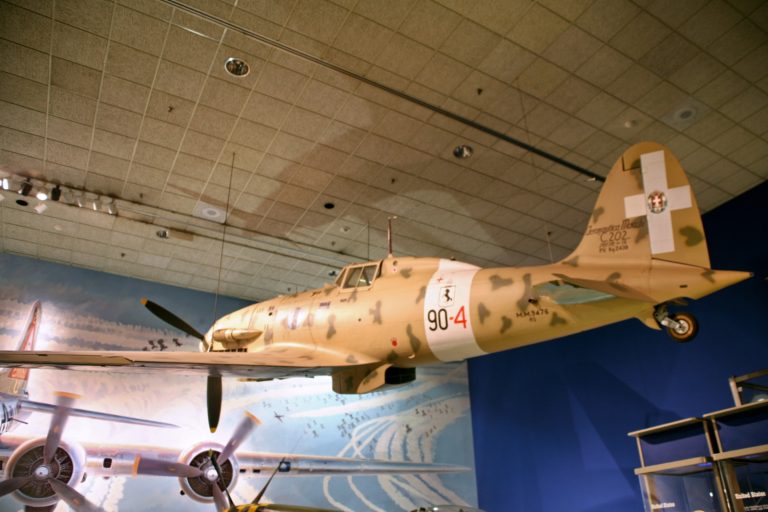
Survivors, counted honestly. Only one substantially original and complete M.C.202 exists: the aircraft at the National Air and Space Museum, captured at Sciacca in Sicily in August 1943, evaluated in the United States as EB-300, FE-300, FE-498 and finally T2-498, and restored in 1974–75. It wears the spurious serial MM 9476 and the codes of 90ª Squadriglia, 10° Gruppo, 4° Stormo; research by Giovanni Massimello identifies it as Macchi-built MM 91981, and it is currently in storage at the Udvar-Hazy Center rather than on display. The second airframe, MM 9667 at the Italian Air Force Museum at Vigna di Valle, is a genuine Breda-built Serie XI fuselage of March 1943 with reconstructed wings built to C.200 drawings and at least one cowling panel from a C.205; it is painted as Giulio Reiner’s 73-7. Two further machines exist as C.202 airframes converted to C.205 standard — MM 9546 at Vigna di Valle, converted in 1952, and MM 91818 at the Museo Nazionale della Scienza e della Tecnologia in Milan, restored to flight in 1980 and badly damaged in a take-off accident on 23 July 1986. Every other Folgore-shaped exhibit is a Veltro, a composite or a replica. Of roughly 1,100 built, one survives as an aeroplane.
From the desert war to the armistice
From Saetta to Folgore
Macchi’s radial-engined C.200 is in service, but it lacks speed. Castoldi re-engines it with a licence-built DB 601, and the C.202 Folgore first flies on 10 August 1940.
Into the Mediterranean
The Folgore enters service in July 1941 and is quickly committed to the fighting over Libya and the siege of Malta.
The Folgore’s best year
Over Malta and North Africa the Folgore comes into its own, and in mid-1942 its units post a kill-to-loss ratio that rivals the Bf 109.
Defending Sicily and Italy
As the Allies advance across the Mediterranean, the Folgore is increasingly thrown into the defence of Sicily and the Italian mainland.
The armistice split
After Italy’s surrender, Folgores end up flying on both sides — with the Allied co-belligerent air force and with the German-aligned Italian Social Republic.
Twilight and the Veltro
The better-armed C.205 Veltro supersedes the Folgore, which fades from front-line use. Two examples survive today, in Italy and at the Smithsonian.
Eight chapters in the Folgore’s war
From Schneider Trophy to Folgore
The Folgore’s designer had spent the 1920s and 30s building the fastest seaplanes on earth.
The full story
An Italian-built DB 601
The single change that made the Folgore great was its engine — a German design, built in Italy.
The full story
Agility that impressed the enemy
In a turning fight, the Folgore could hold its own against — and often beat — the best Allied fighters.
The full story
The firepower that held it back
For all its virtues, the Folgore went to war badly under-armed.
The full story
The siege in the sky
Some of the Folgore’s hardest fighting came over the tiny, embattled island of Malta.
The full story
Folgores over North Africa
Across the North African desert the Folgore was the Regia Aeronautica’s finest fighter.
The full story
Fighting on both sides
Italy’s surrender in September 1943 split the Folgore’s story in two.
The full story
What the Folgore could have been
The Folgore’s successor finally gave the design the guns it had always deserved.
The full story
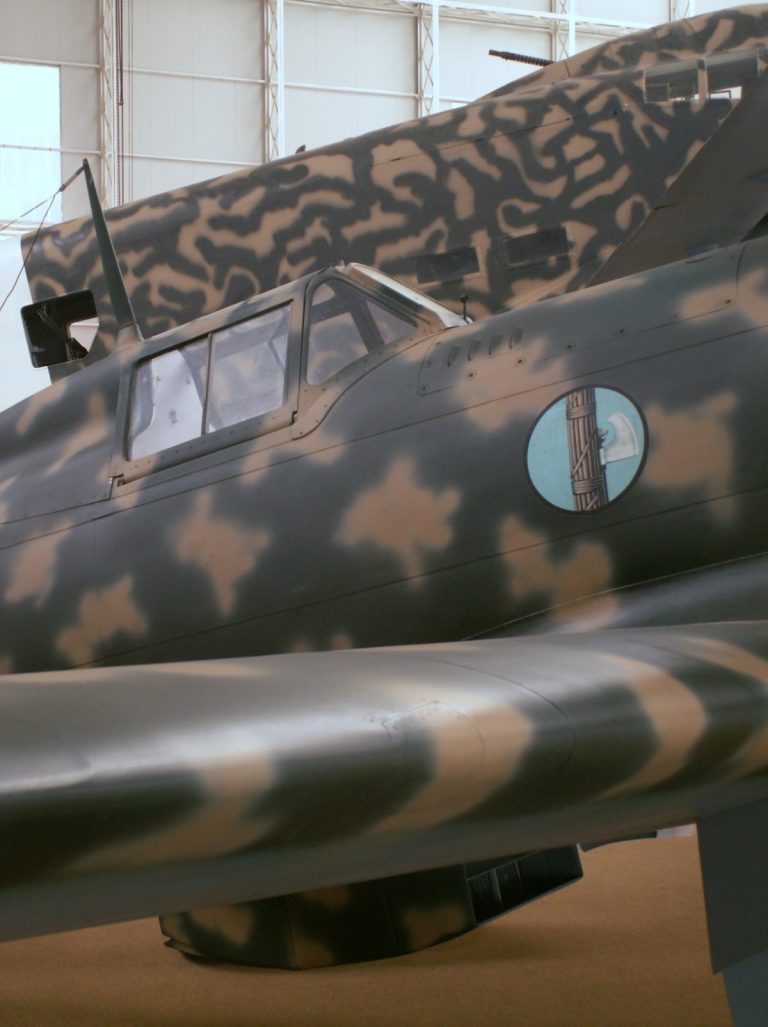
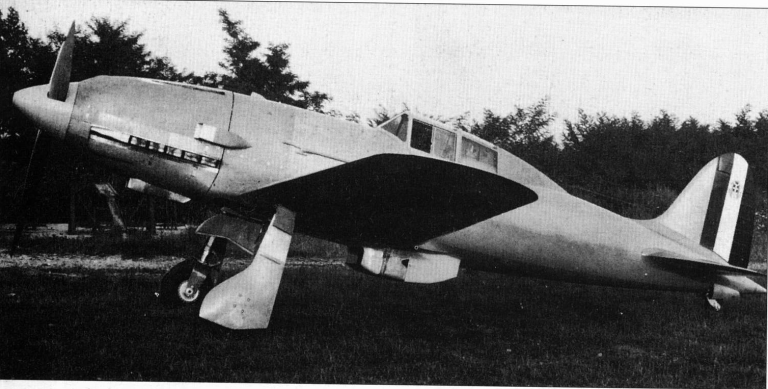
The Folgore in pictures
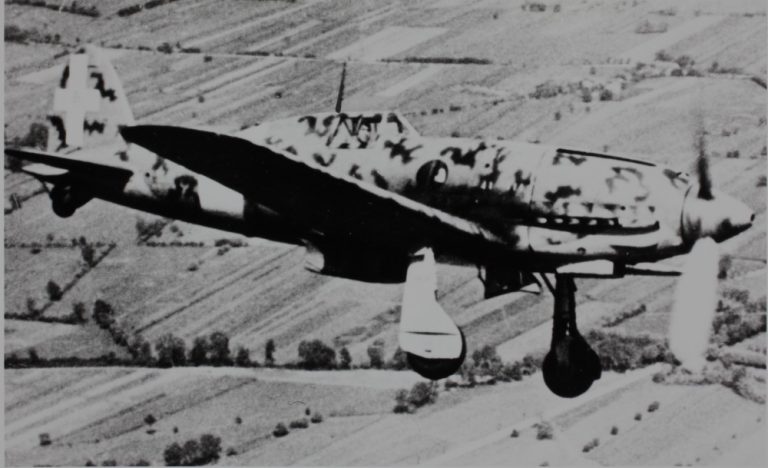
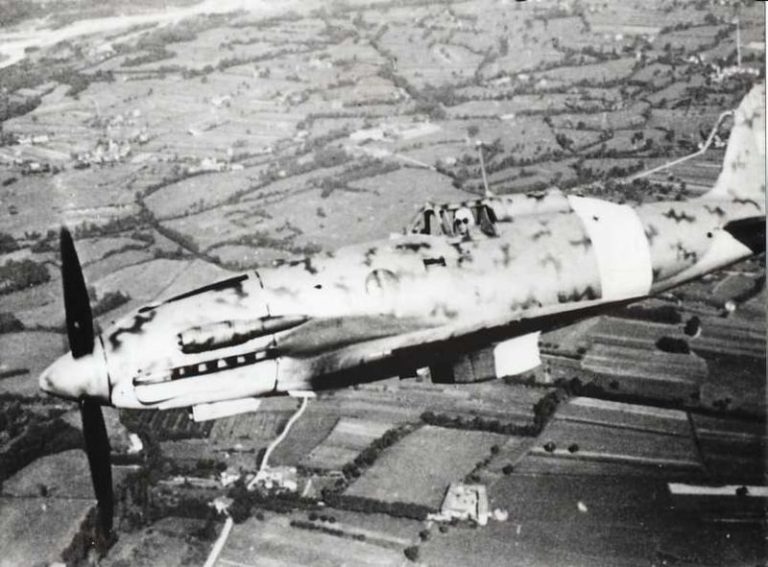
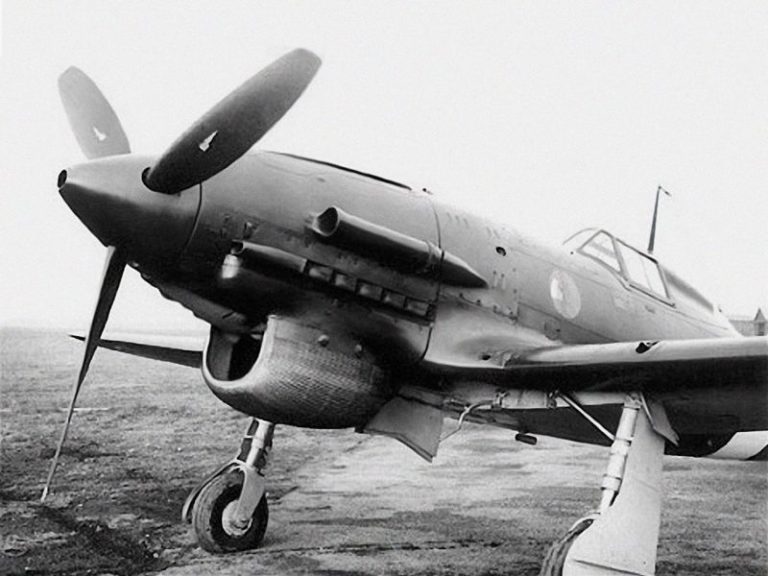
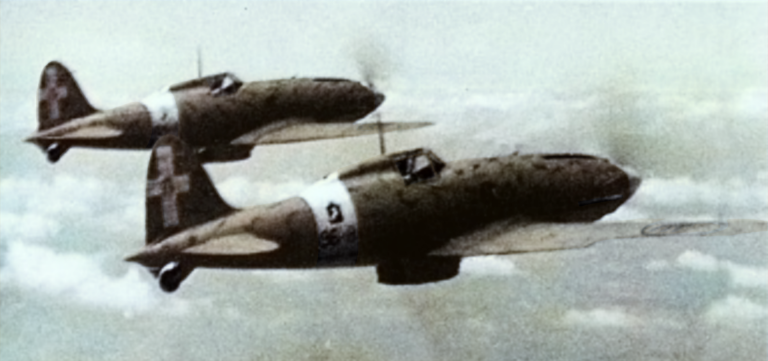
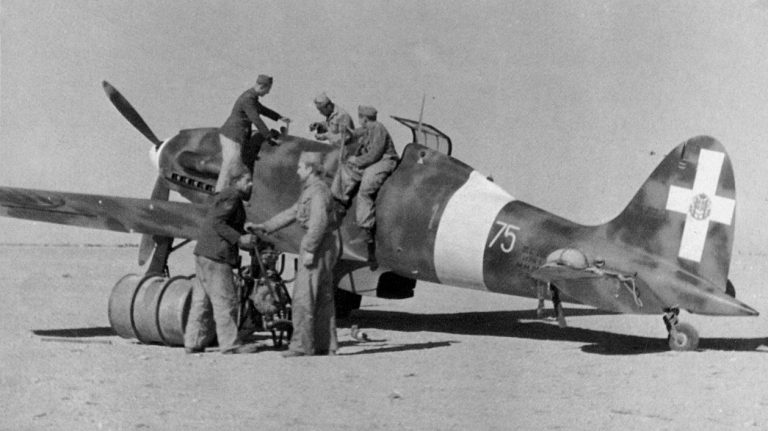
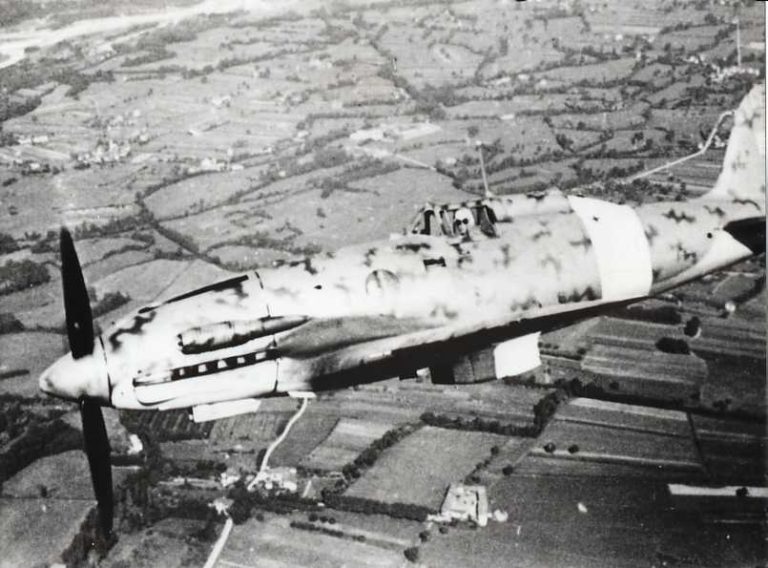
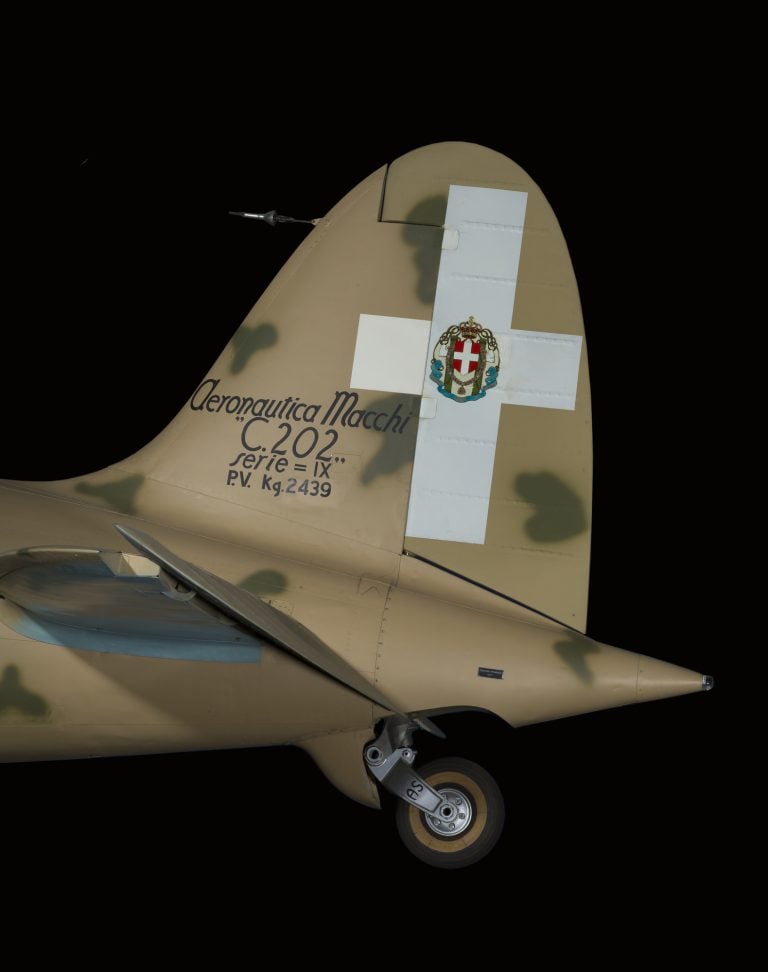
See the Folgore in context
How good was the Folgore, really? This detailed technical history digs into the C.202’s German-derived engine, its superb handling and its notorious lack of firepower — and how it stacked up against its Allied opponents.
Video: “Macchi C.202 Folgore” by Greg’s Airplanes and Automobiles (~67,000 views). Embedded via YouTube.
Where the Folgore fought
The Folgore, by the numbers
The Folgore was the Regia Aeronautica’s workhorse fighter through the hardest years of Italy’s war, fighting over Malta, the North African desert, Sicily and the Italian mainland. Its combat record is a study in contrasts: an aircraft that could out-fly almost anything it met, repeatedly let down by guns too light to make its advantages count.
Italian and Allied claims for the Mediterranean air war often overlap and are hard to reconcile; the figures above reflect the type’s scale and reputation rather than a precise victory tally.
Macchi C.202 Folgore — questions & answers
Can you fly a Macchi C.202 Folgore today?
No. Only two Folgores are known to survive — one at the Italian Air Force Museum at Vigna di Valle and one at the Smithsonian — and both are static museum exhibits. If you want to fly a real fighter yourself, MiGFlug offers cockpit experiences in genuine jet fighters you can actually strap into.
Was the Folgore a good fighter?
In many ways, yes. It had excellent handling and could out-turn the Spitfire Mk V, the Hurricane and the P-40, and in 1942 its units matched the Bf 109’s success in North Africa. Its great weakness was firepower: just two heavy machine guns, far too little against armoured Allied aircraft.
Why did an Italian fighter have a German engine?
Italy had no competitive home-grown inline engine, so Macchi used the German Daimler-Benz DB 601, built under licence in Italy by Alfa Romeo as the RA.1000 Monsone. That engine was the key to the Folgore’s performance.
What does “Folgore” mean?
“Folgore” is Italian for “thunderbolt” or “lightning.” Macchi’s fighters of the era carried weather- and sky-themed names — the earlier C.200 was the “Saetta” (arrow/thunderbolt), and the later C.205 the “Veltro” (greyhound).
What replaced the Macchi C.202?
The Macchi C.205 Veltro, a development with a more powerful engine and hard-hitting 20 mm cannon that finally cured the Folgore’s firepower problem — though it arrived too late and in too small a number to change the war.
You can’t fly a Folgore — but you can fly a fighter jet
The Folgore’s war belongs to history, but the thrill of flying a real fighter doesn’t. With MiGFlug you can strap into a genuine jet — from the L-39 Albatros to a MiG-29 at the edge of space — with an experienced fighter pilot beside you.
 Fly the L-39 AlbatrosThe world’s most-flown jet trainer — aerobatics included
 Fly the F-104 Starfighter“The missile with a man in it”
 Fly the MiG-21The Cold War’s most-produced jet
 Fly the T-33 Shooting StarAmerica’s first jet trainer
 Fly the DH VampireA piece of early jet history
 Fly the S.211Agile Italian jet trainer
 Fly the MB-326The classic Aermacchi jet
 Fly the MiG-15The Soviet legend of the Korean War
Related aircraft
Where these facts come from
- Smithsonian NASM — Macchi C.202 FolgoreThe Smithsonian’s surviving Folgore
- Vintage Aviation News — the Italian ThunderboltSurvivor history & restoration
- San Diego Air & Space MuseumArchive photography of the type
- Imperial War MuseumsNorth African & Malta air-war records
Figures are drawn from museum and reference sources and cross-checked; where sources differ, the most commonly cited value is given. Performance and armament varied between production batches of the Folgore.