
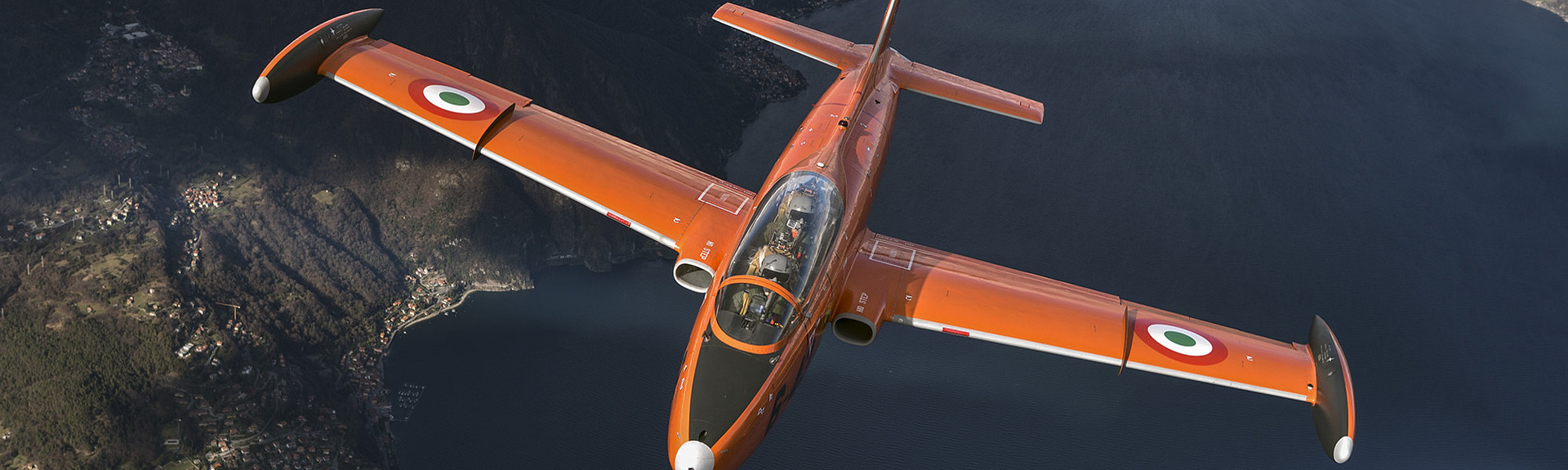
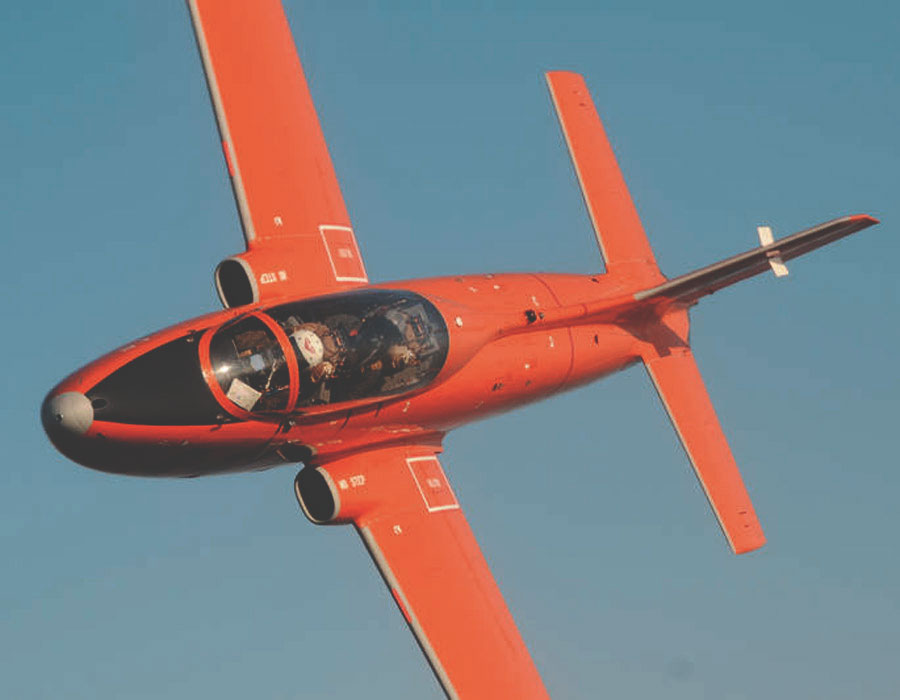
MB-326. Italy's Jet Trainer Legend.
Around 800 built. More than 10 air forces. Licence-produced on three continents. The Aermacchi MB-326 is one of the most commercially successful military jet trainers ever made — an Italian-designed aircraft that trained a generation of fighter pilots from Rome to Canberra and saw real combat over southern Africa. Today, it is the direct ancestor of the MB-339, the aircraft flown by the Frecce Tricolori.
An Italian Classic, Designed for the Cockpit
When Aermacchi's chief engineer Ermanno Bazzocchi began work on a new jet trainer in the early 1950s, Italy was still rebuilding from the war. The country could not finance the development of supersonic fighters, so Aermacchi focused on what it could do best: build a simple, robust training aircraft powered by the proven British Rolls-Royce Viper turbojet. First flown on 10 December 1957, the MB-326 beat out the competing Fiat G.80 and entered service with the Italian Air Force in February 1962. Its combination of low cost, easy maintenance, and forgiving handling made it an immediate export success. Australia, Brazil, and South Africa all built the aircraft under licence, and the type went on to serve with air forces across four continents. In South Africa, MB-326s — known as Impalas — flew combat missions during the Border War at 650 km/h and altitudes as low as 15 metres. In March 1966, an MB-326 reached an altitude of 17,315 metres in a zoom climb — a record for its class. No other jet trainer of its era matched this combination of reach, adaptability, and proven service life.
More than a trainer. The MB-326 was also a capable warplane:
- Light attack & counter-insurgency (MB-326K): A single-seat armed version with twin 30 mm DEFA cannon and underwing hardpoints for bombs and rockets.
- Combat service: Licence-built in South Africa as the Atlas Impala, it flew low-level strike missions throughout the South African Border War of the 1970s and 1980s.
- Worldwide operator: Around 800 were built and flown by more than ten air forces, many in armed configurations.
- The Pilot's Aircraft: The MB-326 was designed from the ground up as a trainer — simple to fly, forgiving of student mistakes, and built with safety as a core principle. Martin-Baker ejection seats and a pressurised tandem cockpit came standard.
- Combat-Proven Heritage: South African Impalas flew real combat missions during the Border War in Angola, operating at 650 km/h at altitudes as low as 15 metres to avoid enemy air defences — and returning to fight again the next day.
- The Rolls-Royce Viper: Powered by a Rolls-Royce Viper turbojet — an engine originally designed for disposable target drones that turned out to be one of the most reliable powerplants of its era. Simple, robust, and easy to maintain.
- Built on Three Continents: With around 800 aircraft produced in Italy, Australia, Brazil, and South Africa, the MB-326 became the most-produced post-war Italian military aircraft — and one of the most successful jet trainers ever exported.
- Aerobatic Pedigree: The MB-326 served as the mount of the South African Silver Falcons aerobatic team for nearly three decades, and the Australian Roulettes also displayed the type. It remains a regular guest at European airshows today.
- The Frecce Tricolori Connection: The MB-326 is the direct predecessor of the MB-339 — the aircraft that has been flown by Italy's famous Frecce Tricolori display team since 1982. The lineage from Bazzocchi's original design runs straight through.
Design and Airframe
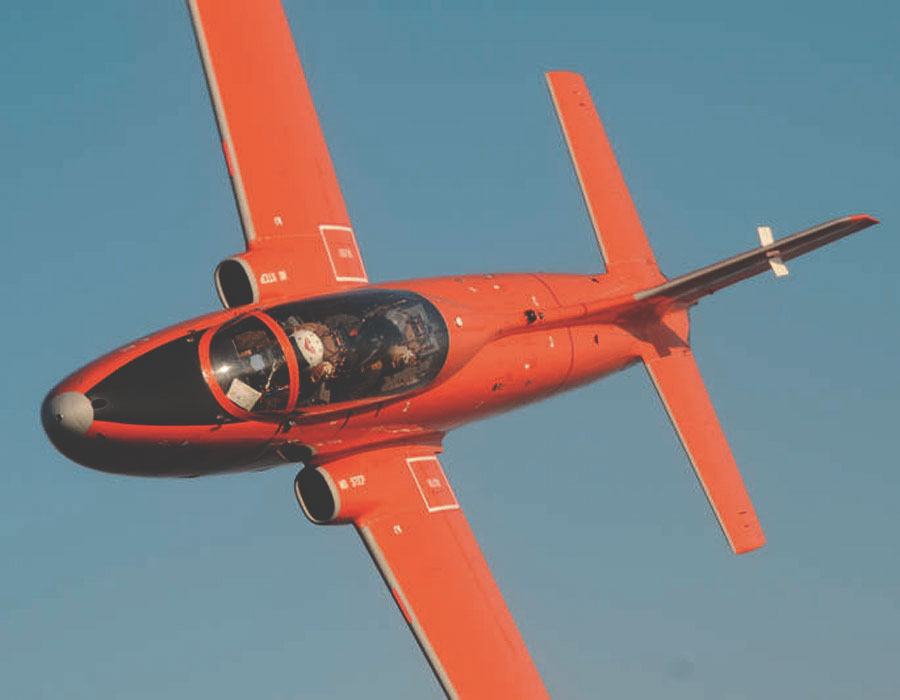
The MB-326 was designed around a single idea: the simplest possible jet that could do everything a military pilot needed to learn. Aermacchi's Ermanno Bazzocchi kept the airframe clean and honest — a straight low wing, a single Bristol Siddeley Viper turbojet, and a tandem two-seat cockpit with near-identical controls front and rear. Nothing was there without a reason. The result was an aircraft that was forgiving enough for ab initio students, fast enough for weapons training, and robust enough for light ground attack. The Viper engine — a pure turbojet with no afterburner — delivered reliable thrust and straightforward handling that generations of pilots learned to trust before moving to faster, more complex aircraft. The airframe's structural strength was built in from the start: the MB-326 was stressed for weapons pylons, g-loads, and hard field operations, which is why so many air forces kept it in service for three and four decades. Around 800 aircraft were built across Italy, Australia, Brazil and South Africa, in variants ranging from unarmed trainer to single-seat ground-attack jet. The MB-326 never tried to be more than it was — and that is precisely why it became one of the most successful jet trainers ever built.
MB-326 operations worldwide
The MB-326 was never just a trainer. From Italy's flight schools to South African combat zones, from Australian Roulettes displays to Brazilian Xavante ground-attack missions — the MB-326 proved itself in every role it was given. Around 800 aircraft were built across four countries, serving with more than 10 air forces on four continents. South African Impalas flew real combat in the Border War, Argentine Navy aircraft stood ready during the Falklands, and the type set altitude records that stood for years. The interactive map below shows MB-326 operations worldwide.
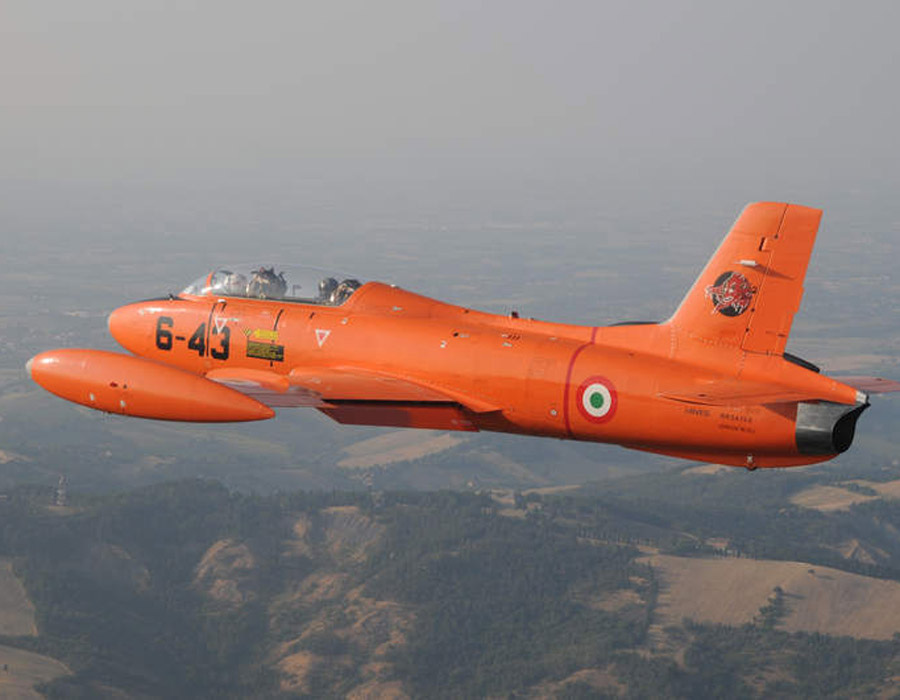
MB-326 Technical Data
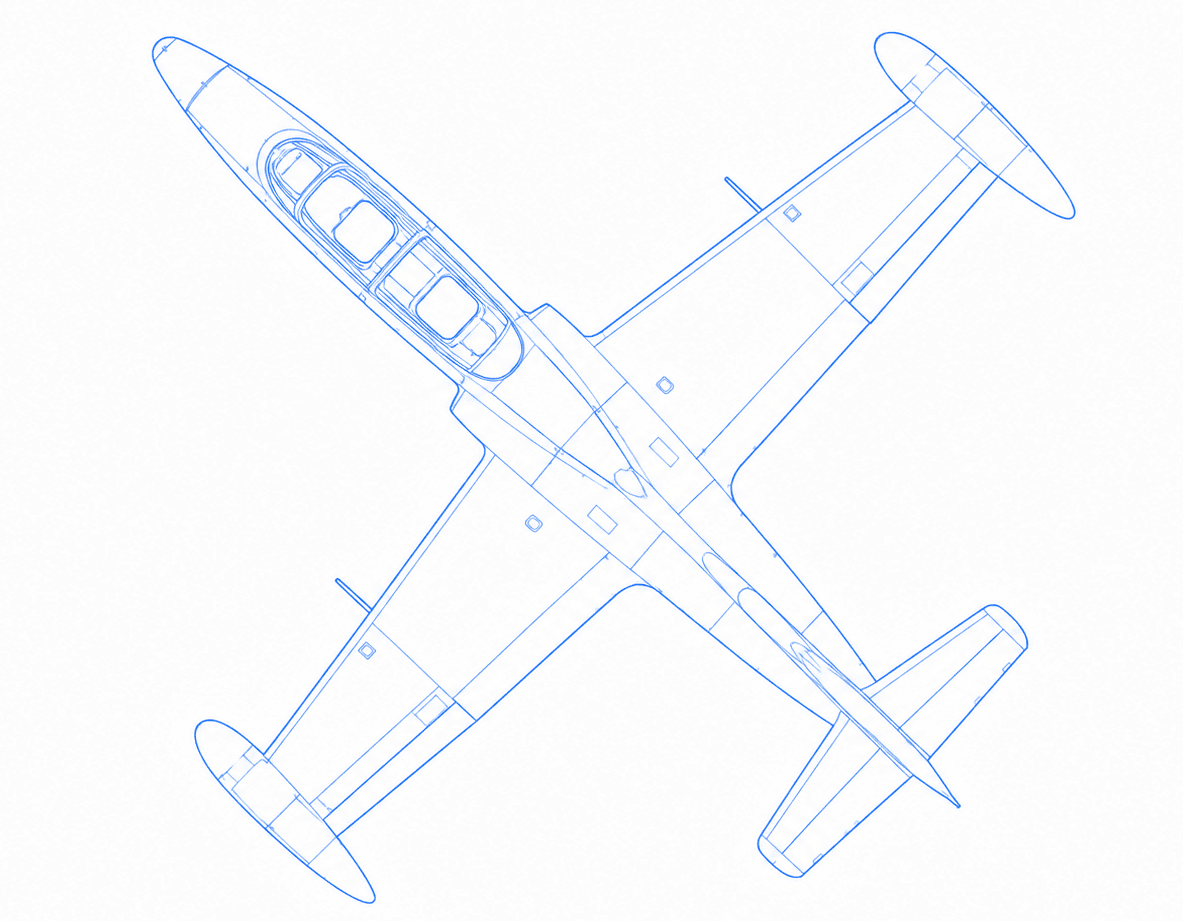
The MB-326 was built to be flown hard and often. Aermacchi's Viper-powered trainer combined genuine jet performance with structural integrity designed for decades of daily operations — stressed for weapons, aerobatics, and the full spectrum of military pilot training. Straightforward to maintain, honest to fly, and capable enough to serve as a light attack platform when required.
m
WINGSPAN
m
LENGTH
m
HEIGHT
km/h
MAX SPEED
km
RANGE
m/s
CLIMB RATE
m
SERVICE CEILING
kN
ENGINE THRUST
For aviation enthusiasts who want to go deeper, here is a broader technical snapshot of the MB-326.
| Crew | 2 (tandem) |
| Engine | Rolls-Royce Viper Mk.11 turbojet |
| Engine thrust | 15.17 kN / 3,410 lbf |
| Maximum speed | 815 km/h / 507 mph (Mach 0.8) |
| Range | 1,110 km / 690 mi (with tip tanks: 1,512 km / 940 mi) |
| Climb rate | 22.5 m/s / 4,430 ft/min |
| Wingspan | 10.04 m / 32.9 ft |
| Length | 10.7 m / 35.1 ft |
| Height | 3.72 m / 12.2 ft |
| Empty weight | 2,964 kg / 6,534 lb |
| Maximum take-off weight | 5,897 kg / 13,000 lb |
Why the MB-326 stands apart
Few military jets offer what the MB-326 does — genuine jet performance, real combat heritage, and a cockpit experience that puts you in the same seat used by air forces on four continents. This is not a simulator. This is the real thing
Genuine Jet Performance
The MB-326 reaches 815 km/h on a non-afterburning turbojet — no augmentation, no shortcuts. Every knot is earned. One of the most accessible jet flight experiences available, and one of the most honest.
Combat-Proven Heritage
South African Impalas flew real combat missions in Angola. Argentine Navy MB-326s stood ready during the Falklands. Over 800 built across four countries — a jet with a history that goes well beyond the training circuit.
Built for the Cockpit, Not the Brochure
The MB-326 was designed to train military pilots from first flight to combat-ready — analogue controls, responsive handling, and a tandem cockpit where you are part of every input. No fly-by-wire between you and the aircraft.
Fly a MB-326
Select a location and make your dream of flying a real fighter jet come true.
Book now →
Book now →
What Customers Say
★★★★☆
Loved it! Flying in a fighter jet exceeded my expectations. My pilot, Mike, was friendly and experienced, making sure I was comfortable and customizing the flight.
★★★★★
My flight in the Aermacchi MB-326 out of Reggio was amazing. The crew is highly professional. They even have an own flight engineer taking care of the jets. Amazing place, all of it.
★★★★★
Doesn’t get better than that!
Very good, great organization ,great pilots team. information’s mail very complete .