
Pilatus PC-7
Turbo Trainer
The Swiss turboprop that taught the world to fly military — a rugged, fully aerobatic tandem trainer built in the Alps, flown by more than twenty air forces, and made famous by the red-and-white PC-7 TEAM.
The Pilatus PC-7: how a Swiss trainer taught the world to fly military
By the mid-1960s the piston-engined Pilatus P-3 had proved that a small Swiss firm from Stans could build a durable military trainer. The obvious next step was the turbine. A P-3 airframe was re-engined with a Pratt & Whitney Canada PT6A turboprop and first flew in 1966 — but the project languished for years before Pilatus committed to a definitive design. That aircraft, the PC-7 Turbo Trainer, flew in 1975 and entered production in 1978.
The formula was deceptively simple: take a strong, fully aerobatic tandem-seat airframe, hang a reliable free-turbine engine on the front, and price it so an air force could train ab-initio pilots at a fraction of the cost of a jet. A student could go solo, learn instrument flying, formation and full aerobatics on the PC-7, then step almost straight into a fast jet. The turbine gave jet-like handling — instant throttle response, smooth power, high-altitude capability — without a jet’s thirst or complexity.
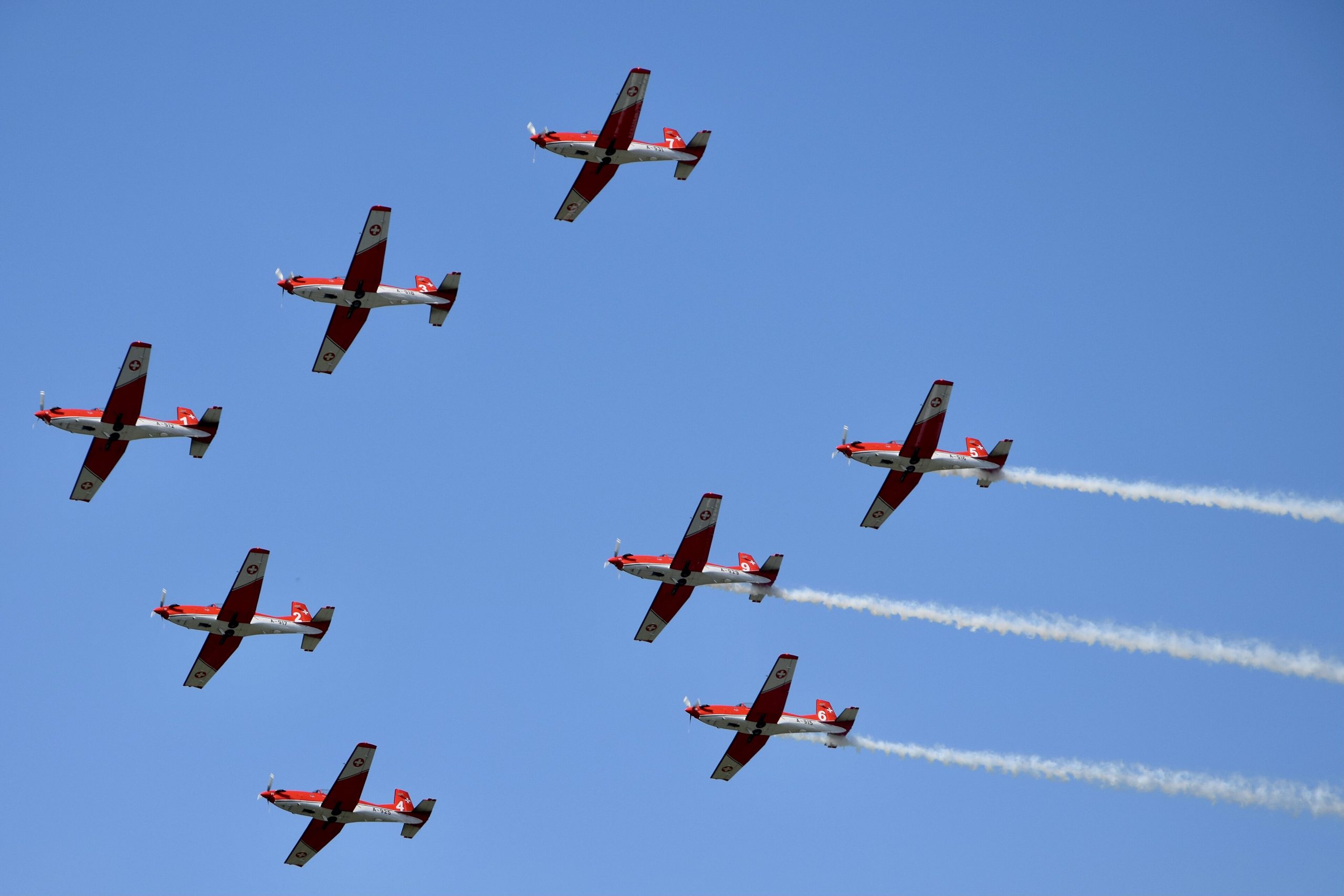
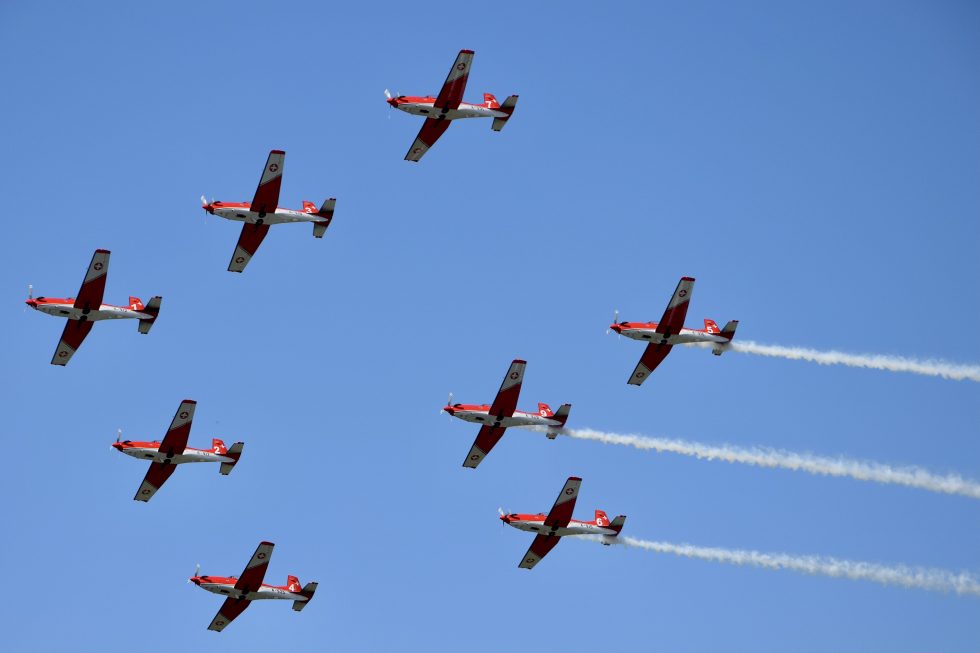
It worked spectacularly. More than twenty air forces bought the PC-7, from Switzerland and Austria to Mexico, Malaysia, Iran, Iraq, Chile and beyond; around 600 were built. The type spawned a whole family — the more powerful PC-9, the hybrid PC-7 Mk II, and today’s PC-21 — making Pilatus one of the dominant names in military flight training. And in Switzerland the PC-7 became a national icon through the PC-7 TEAM, the air force’s nine-ship aerobatic display team.
01The Pilatus PC-7’s roots: from the piston P-3 to the turbine Turbo Trainer
The PC-7 did not appear from nothing. Its direct ancestor was the Pilatus P-3, a piston-engined tandem trainer that served the Swiss Air Force from the 1950s. In 1966 Pilatus fitted a P-3 airframe with a Pratt & Whitney Canada PT6A turboprop as a proof of concept, and it flew — but the oil crisis, a small market and other priorities kept the idea on the shelf for most of a decade. When Pilatus finally returned to it, the airframe was redesigned and strengthened around the turbine, gaining a new wing and a bubble canopy. The definitive PC-7 flew in 1975; certification and the first customer deliveries followed in 1978. The long gestation is why sources disagree on the type’s “first flight” — 1966 for the turbine testbed, 1975 for the aircraft that actually went into production.
What makes the Pilatus PC-7 special
A free-turbine engine that flies like a jet
The PC-7’s Pratt & Whitney Canada PT6A-25A is a free-turbine turboprop — commonly rated around 550 shp and flat-rated so it holds power to altitude. Students get near-instant throttle response, smooth power and no mixture or propeller-pitch fuss to master, giving jet-like handling on a turboprop’s running costs. The PT6 is also famously robust and easy to maintain, which is exactly what a hard-worked training fleet needs.
Fully aerobatic — and built to be abused
The airframe is stressed for +6 / −3 g and cleared for the full aerobatic repertoire: loops, rolls, spins, stall turns. It has to be — a trainer spends its life being mishandled by students. The PC-7 is deliberately honest and forgiving in the stall and spin so instructors can teach recovery safely, yet crisp enough to fly a public aerobatic display.
No ejection seats — by design
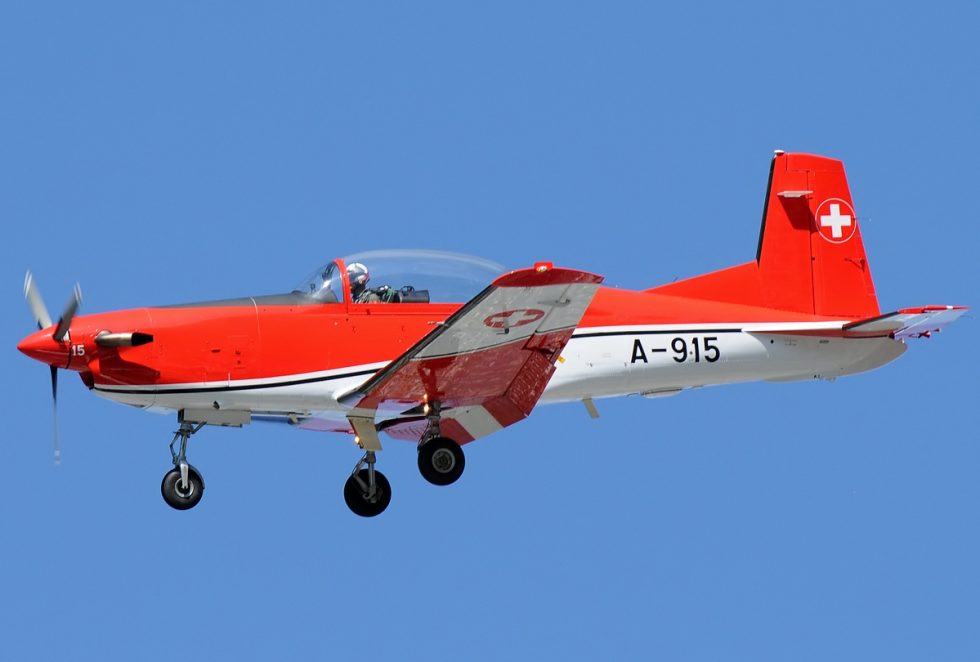
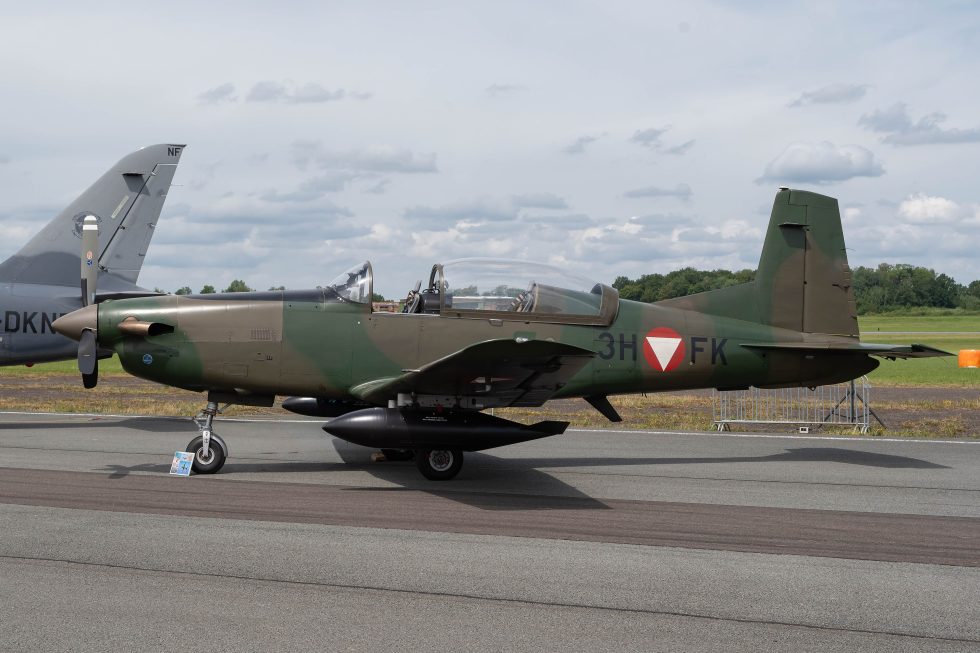
Unlike a jet trainer, the PC-7 has no ejection seats; crews fly on conventional seats and harnesses. That keeps the aircraft light, simple and cheap, and reflects its role: benign speeds, a strong airframe and a glide-capable turboprop mean a conventional forced landing is usually the safer option. Tandem seating puts instructor behind student, the classic military-training layout.
02The Pilatus PC-7 versus the PC-9 and PC-21: how the family grew
The PC-7’s success bred a dynasty. The PC-9 (1984) took the concept and added far more power, a stepped cockpit, ejection seats and a larger tail — a heavier, faster advanced trainer. The PC-7 Mk II spliced the PC-9’s stronger airframe and avionics onto a PC-7-class engine, a cost-effective hybrid bought by South Africa, India, Malaysia, Botswana and the UAE. The PC-21 (2002) went further still, using a powerful turboprop and a glass cockpit to simulate a modern fast jet so convincingly that some air forces train frontline pilots almost entirely on it. Through it all the original PC-7 kept selling — simpler and cheaper than its own descendants.
03The Pilatus PC-7 armed: light attack and a contested history
The PC-7 was designed as a trainer, but its strong wing carries hardpoints, and several export operators armed it for light strike and counter-insurgency using gun pods, rockets and light bombs. Iraq flew armed PC-7s against Iran in the 1980s; Chad, Guatemala and Mexico among others used the type in light-attack or counter-narcotics roles. This armed use has at times been controversial, and it sits uneasily beside the aircraft’s primary identity as a benign ab-initio trainer — we note it here neutrally as part of the record. The great majority of PC-7s have only ever carried students, not weapons.
Pilatus PC-7 full specifications
Baseline: the first-generation PC-7 Turbo Trainer as certificated in December 1978 and delivered from 1979 — Pratt & Whitney Canada PT6A-25A flat-rated to 410 kW (550 shp), three-blade Hartzell propeller, fixed tandem seats, analogue instrument panel. Deltas for the Swiss NCPC-7 rebuild, for the PC-7 Mk II (a PC-9 airframe around a small engine) and for the current PC-7 MKX are in grey. Two cautions before reading the numbers. First, the PC-7 has two maximum take-off weights that are routinely conflated: 1,900 kg clean, at which it is a fully aerobatic trainer, and 2,700 kg with external stores, at which it is a slow and heavily loaded light attack aeroplane. Quoting the 2,700 kg figure alongside the clean-wing performance, as many tables do, flatters the aircraft badly. Second, German-language sources print a maximum speed of 556 km/h where English sources print 412 km/h; the higher number is a dive or true-airspeed-at-altitude figure and does not describe level flight.
Dimensions & weights
- Crew
- 2, in tandem under a one-piece sliding bubble canopy, with full dual controls and the rear (instructor's) seat raised for a view over the pupil's head — the single most visible break from the flat-canopy P-3
- Length
- 9.78 m (32 ft 1 in) German-language tables give 9.75 m; the difference is a rounding of the same airframe, not a variant
- Wingspan
- 10.40 m (34 ft 1 in) — identical to the P-3, although the wing itself is entirely new: a one-piece structure with integral fuel tanks in place of the P-3's two-piece bolted arrangement
- Height
- 3.21 m (10 ft 6 in)
- Wing area
- 16.60 m² (178.7 sq ft)
- Aspect ratio
- 6.5:1
- Aerofoil
- NACA 642A-415 at the root, 641A-612 at the tip — a laminar-flow section chosen for docile stall behaviour rather than speed
- Dihedral
- 7°, raised from the 3° of the P-3 during HB-HOZ development after the first Paris exhibition — one of three changes (with a taller fin and the tailplane moved 28 cm aft) that turned a converted P-3 into a stable production trainer
- Empty weight
- 1,330 kg (2,932 lb) German sources give 1,300 kg; equipment fit varies by customer and neither figure is wrong for every airframe
- Maximum take-off weight, clean
- 1,900 kg (4,189 lb) — the aerobatic and spinning weight, and the one that matters for a training aeroplane
- Maximum take-off weight, with stores
- 2,700 kg (5,952 lb) — only with external tanks or weapons, and outside the aerobatic envelope
- Maximum landing weight
- 2,565 kg (5,655 lb)
- Wing loading
- 114 kg/m² (23.4 lb/sq ft) clean, rising to 163 kg/m² (33.3 lb/sq ft) at maximum weight — the clean figure is what gives the aeroplane its honest, unhurried stall
- Power loading
- 3.45 kg/shp (7.6 lb/shp) clean, 4.91 kg/shp (10.8 lb/shp) fully loaded — against 5.77 kg/hp for the P-3 it replaced, which is the whole point of the turbine
Performance
- Maximum level speed
- 412 km/h (256 mph, 222 kt) German tables print 556 km/h (300 kt) in this row. That is a dive or high-altitude true-airspeed figure, not a level-flight maximum, and it has propagated widely enough to give casual readers a wholly false picture of a 550 shp trainer.
- Cruising speed
- 316 km/h (196 mph, 171 kt) at economical cruise
- Never-exceed speed
- 500 km/h EAS (310 mph, 270 kt)
- Stalling speed
- 119 km/h (74 mph, 64 kt) with flaps and undercarriage down — low enough that a pupil who mishandles the approach has time to recover
- Rate of climb
- 10.9 m/s (2,150 ft/min) at sea level — roughly half again the P-3's figure, and available all the way up rather than falling away with a supercharger-free piston engine
- Climb to 5,000 m
- 9 minutes (to 16,400 ft)
- Service ceiling
- 10,060 m (33,010 ft) German sources give 9,755 m (32,000 ft); the aeroplane is unpressurised and oxygen, not engine power, is the practical limit
- Range, internal fuel
- 1,200 km (750 miles, 650 nm)
- Ferry range
- 2,630 km (1,630 miles, 1,420 nm) with two 240-litre external tanks
- Endurance
- 4 hours 22 minutes — unusually long for a basic trainer, and the reason the type keeps being used for surveillance and liaison work its designers never advertised
- Take-off run
- 780 m (2,559 ft) at maximum weight
- Landing run
- 505 m (1,657 ft) at maximum landing weight
- Load factors
- +6 / −3 g at aerobatic weight, with full clearance for intentional spins in both directions — a fully spinnable trainer, which is a genuine distinction: several of its contemporaries were placarded against deliberate spinning
Propulsion & systems
- Engine
- 1 × Pratt & Whitney Canada PT6A-25A free-turbine turboprop, 410 kW (550 shp) flat-rated for take-off
- Rating
- derated from 485 kW (650 shp) thermodynamic — the engine is deliberately throttled below what it can produce, which is why PC-7 hot-section lives are long and why the type survives in air forces with weak maintenance bases
- Propeller
- Hartzell HC-B3TN-2, three-blade constant-speed, 2.36 m (7 ft 9 in) diameter
- Fuel
- Jet A-1 or JP-8, ~474 litres usable (~104 imp gal, ~125 US gal) in integral wing tanks; provision for two 240-litre underwing tanks. Single-fuel logistics with the jet fleet was a real selling point to air forces still buying avgas for piston trainers
- Seats
- fixed, non-ejection tandem seats on the first-generation PC-7 — the aeroplane is abandoned over the side, not fired out of. The PC-7 Mk II introduced Martin-Baker Mk 15A zero-zero ejection seats, inherited with the PC-9 airframe; this is the largest single safety difference between the two generations.
- Cabin environment
- unpressurised, with a gaseous oxygen system for the crew
- Undercarriage
- hydraulically retractable tricycle gear, nosewheel steering — carried over in concept from the P-3, which had already broken the Swiss Air Force of tailwheel habits
- Electrical
- 28 V DC, engine-driven starter-generator; no auxiliary power unit
- Avionics, as delivered
- conventional analogue IFR panel with blind-flying instrumentation front and rear, and provision for a rear-cockpit instrument hood
- Avionics, NCPC-7
- Swiss glass-cockpit rebuild carried out from 2006, completed across 28 airframes by 2009: multifunction displays, GPS navigation and a fully IFR-capable fit. The "NC" prefix was a temporary bookkeeping device to tell rebuilt from unrebuilt aircraft and was dropped once the whole fleet was through. A later PC-7 WE package added TCAS and extended ADF.
- External stores provision
- six underwing hardpoints, ~1,040 kg (~2,293 lb) total external load Sources differ between four and six stations depending on variant and customer fit, and Pilatus has never published a store-by-store clearance list. The Swiss fleet has never been armed.
- Aerobatic clearance
- cleared for the full basic training syllabus — loops, rolls, stall turns, inverted flight, erect and inverted spins — which is what a basic trainer is actually bought for
04The Pilatus PC-7’s operating costs: why the turboprop trainer is so cheap to fly
Exact figures for the PC-7 are not published in any consistent public source, and prices vary widely by variant, year and buyer, so any single number should be read as an estimate. What is clear is the type’s core selling point: a single PT6A turboprop burns a fraction of the fuel of a jet trainer, needs far less maintenance, and can be flown from short, rough strips. That is precisely why air forces bought it — a student can accumulate the bulk of their basic and even intermediate training hours on a PC-7 for a small fraction of the cost of doing the same on a jet, before ever strapping into something with an afterburner. Treat any precise dollar-per-hour figure you see attached to the PC-7 as an approximation.
Armament & payload
The PC-7 carries no gun of its own, and the six empty hardpoints under its wing have caused Switzerland more political trouble than any weapon it ever sold
The PC-7 has no built-in gun and carries no guided weapon of any kind. What it has is six underwing hardpoints and about a tonne of external capacity, and that provision — designed in from the first production aircraft, sold as an option, and largely unused by the European air forces that bought the type — is the source of nearly everything politically difficult about the aeroplane. An unarmed PC-7 leaves Stans as a civil certificated aircraft. What a customer bolts to the wing afterwards is beyond Pilatus's control and, for many years, beyond the reach of Swiss war-material law.
In service the armed PC-7 is a counter-insurgency aeroplane of the crudest sort: rocket pods, gun pods and light iron bombs, aimed through a fixed sight by a pilot in a slow, unarmoured, unpressurised trainer. It is cheap to fly and it can loiter for four hours, which is exactly why it appealed to air forces fighting irregular wars on small budgets, and exactly why the results were what they were. Guatemala flew armed PC-7s through the worst years of its civil war; Chad bombed rebel positions with them in the late 2000s; Mexico used them over Chiapas in 1994. Store fits vary enormously by operator and generation. The Swiss, Austrian and Netherlands fleets have never carried a weapon; the South African PC-7 Mk II fleet is a pure trainer; and no public Pilatus document lists cleared stores, so almost every weapon identification below rests on journalism, imagery analysis and NGO reporting rather than on a manufacturer's clearance sheet.
Gun
- No internal gun on any variant. Guns are carried podded, on the underwing stations, and are a customer option rather than standard equipment
- Rifle-calibre (7.62 mm) and heavy machine-gun (12.7 mm) pods are the fits generally described on armed PC-7s; Guatemalan aircraft were reported with gun pods alongside rocket pods from 1982
- A podded, unstabilised gun fired from a 550 shp trainer with a fixed sight is a short-range, low-accuracy weapon. Against an opponent with no air defence it is nonetheless lethal, which is the whole uncomfortable point of the armed-trainer category
- The Swiss Air Force has never fitted a gun of any kind to a PC-7. Neither, so far as the public record shows, have Austria, the Netherlands, South Africa or India
- Pod designations quoted in secondary sources for the PC-7 are rarely consistent and are frequently inferred from the operator's other equipment rather than observed. Treat any specific model number for a PC-7 gun pod as unverified.
Air-to-air
- None integrated. No PC-7 or PC-7 Mk II has ever been cleared for an air-to-air missile, and the aircraft has no radar, no radar warning receiver and no missile approach warning
- The aeroplane's only realistic air-to-air weapon is a podded gun against a helicopter or a light aircraft — the classic slow-mover intercept
- One such engagement is on record: in early 1984, during the Iran–Iraq War, an Iraqi Air Force PC-7 is credited with shooting down an Iranian AH-1J SeaCobra. If correct it is among the very few air-to-air kills ever claimed by a basic trainer
- Iran, on the other side of the same war, is reported to have considered packing PC-7s with explosives for attacks on shipping — a plan, not an operation, and it should be described as such
- Both of these episodes come from wartime accounts by belligerents and neither has been independently confirmed. They are worth recording because they are the only air-to-air claims the type has; they are not worth treating as settled fact.
Air-to-surface guided
- None. No laser-guided bomb, no guided rocket, no anti-armour missile has been integrated on any PC-7 variant
- There is no targeting pod, no laser designator, no electro-optical turret and no weapons data bus in the baseline aircraft. Aiming is by fixed sight and pilot judgement
- This is the single sharpest technical dividing line between the PC-7 and the armed-trainer types that displaced it in the light-attack market — the Embraer A-29 Super Tucano and the Beechcraft AT-6, both of which carry precision weapons and the sensors to use them
- The practical consequence is not abstract: every documented combat use of an armed PC-7 was carried out with unguided ordnance over populated or forested terrain
- Pilatus has consistently positioned the PC-7 as a trainer rather than a light-attack aircraft, and has never marketed a precision-strike configuration. The absence of guided weapons is a design and commercial choice, not an oversight.
Bombs
- Light general-purpose and practice bombs on the underwing stations, within a total external load of about 1,040 kg (2,293 lb) — and that figure is the airframe limit, not a useful war load once fuel and two crew are aboard
- Chadian Air Force aircraft were used to bomb rebel positions inside Chad and across the border in Sudan in the late 2000s. The Chadian conversion work, carried out by the contractor Griffon Aerospace, fitted hardpoints for Mk 81 (250 lb) and Mk 82 (500 lb) bombs sourced from Pakistan
- Guatemalan PC-7s flew air strikes and close air support alongside Cessna A-37s from 1982 until the 1996 peace accords
- Loading bombs on a PC-7 costs it everything that made it attractive: climb, endurance, manoeuvre margin and the aerobatic envelope. A bombed-up PC-7 is a slow aeroplane in a dive with no escape speed
- The Chad case is more tangled than the shorthand suggests. The aircraft at the centre of the Swiss scandal was a Pilatus PC-9 bought direct from the manufacturer and armed in-country against an undertaking that it would not be used in combat; Chad separately operated PC-7s, and both types have been implicated in the bombing campaigns. Accounts that attribute the whole affair to the PC-7 are over-simplifying.
Rockets
- Unguided rocket pods are the characteristic armed-PC-7 fit and account for most of the type's combat use
- 70 mm (2.75 in) FFAR and Hydra-class pods, and 68 mm SNEB-class pods, are the families generally described; exact pod types are seldom identified in the reporting
- Guatemala armed its twelve aircraft with gun and rocket pods and flew them operationally from 1982
- Three ex-Bophuthatswana PC-7s were operated armed by the private military company Executive Outcomes in Sierra Leone in the mid-to-late 1990s — a case in which the aeroplane ended up in the hands of a customer no export licence ever contemplated
- Rocket types attributed to PC-7 operators are almost always inferred from what else that air force held. No published Swiss or Pilatus document names a rocket cleared on a PC-7 station.
Pods & other stores
- Two 240-litre external fuel tanks — the only external stores routinely carried by the European operators, and the ones that give the 2,630 km ferry range
- Baggage and travel pods for cross-country and liaison flying, a mundane fit that explains why so many air forces keep a handful of PC-7s long after the training role has moved on
- The Swiss PC-7 Team's smoke is not a pod: since 2014 seven of the nine display aircraft have carried a system injecting a diesel-oil mixture into the right-hand exhaust
- Camera and light reconnaissance fits have been described on some export aircraft, but the type has no dedicated sensor installation and no downlink
- The dividing line between a "training store" and a weapon is exactly where the Swiss export argument has always been fought. A rack cleared for a practice bomb is mechanically the same rack that takes a live one.
Three typical loadouts
- Basic and aerobatic training — Switzerland, Austria, the Netherlands, South Africa, India
- Clean wing, 474 litres internal, two crew. 1,900 kg take-off weight, +6/−3 g, full spin clearance, roughly four hours of endurance. This is the configuration in which the overwhelming majority of the 600-odd airframes built have spent their entire lives, and the one Pilatus designed.
- Counter-insurgency close air support — Guatemala 1982–96, Chad late 2000s
- Two underwing rocket pods and either a gun pod or a pair of light bombs, single pilot, reduced fuel. Fixed sight, no armour, no warning receivers, no guided weapons. Effective only against an opponent with no air defence, and indiscriminate by construction.
- Ferry and long transit
- Two 240-litre underwing tanks, no weapons, aerobatics prohibited. 2,630 km, which is how PC-7s were delivered across oceans and how small air forces move them between bases without a transport aircraft.
Sourcing caveat: Pilatus publishes no armament clearance data for the PC-7, and the Swiss Air Force fleet has never carried a weapon, so there is no domestic reference fit to work from. Every weapon named above comes from operator reporting, wartime journalism, human-rights investigations or photographic analysis of individual airframes, and several of the attributions are contested. Where a store type is given as a family ("70 mm rocket pods") rather than a model, that is deliberate.
Variants
Pilatus turned a 1950s piston trainer into a turboprop in 1978 and has been re-selling the same aeroplane, in four generations, for nearly fifty years
Pilatus has been selling the same basic aeroplane since 1978, and has been remarkably candid about it. The PC-7 is a P-3 with a turbine, a new one-piece wing and a bubble canopy; the PC-9 is a bigger, faster development of the PC-7; the PC-7 Mk II is a PC-9 airframe with the PC-7's small engine put back in; and the PC-21 grew out of a modified PC-7 Mk II flown as a testbed in November 1997. Four decades of the company's product line trace back to a converted 1950s piston trainer.
The commercial logic behind the PC-7's export success is worth stating plainly, because it is not romantic. A turboprop trainer costs a fraction of a jet to operate: one engine, no afterburner, jet fuel already in the depot, hot-section lives stretched by deliberate derating, and a syllabus that can take a cadet from first flight to advanced instrument and formation work without an intermediate type. For an air force with twenty combat aircraft and a training problem, that arithmetic is decisive. Pilatus sold the PC-7 to more than twenty air forces on it, and the profits financed the PC-9, the PC-12 and eventually the PC-21.
The other half of the story is political. Because an unarmed PC-7 holds a civil type certificate, it has historically been exported as a civil aircraft rather than as war material, which placed it outside the strictest tier of Swiss export control while leaving it entirely capable of being armed on arrival. Successive episodes — Guatemala, Iraq, Mexico in 1994, Chad in the late 2000s — forced that gap into Swiss domestic politics, produced a sales ban on Mexico, and fed a long-running argument about whether a neutral state can sell an aeroplane with hardpoints and then disclaim what happens next. That argument has never been settled, and it is not the PC-7's fault; it is simply the clearest case study of it.
- PC-7 first prototype, HB-HON (1966, 1 conversion)
- The original P-3 prototype, latterly a Contraves target tug, re-engined with a Pratt & Whitney Canada PT6A-20 and lengthened. First flight 12 April 1966 in the hands of Rolf Böhm; shown at Paris in 1967, where the PC-7 designation was applied. Damaged beyond economical repair in a belly landing on 9 September 1970, and with no market for turbine trainers the programme was shelved.
- PC-7 second prototype, HB-HOZ (1975, 1 conversion)
- A low-hours Swiss Air Force P-3.05, A-871, bought back and rebuilt after the 1973 oil crisis and the arrival of the Beechcraft T-34C made the concept commercial. First flight 12 May 1975. German sources date it 13 May. Post-Paris testing moved the tailplane 28 cm aft, enlarged the fin and raised wing dihedral from 3° to 7°; type approval for series production followed on 13 May 1976.
- PC-7 Turbo Trainer (1978–2000s, ~450–460 built)
- The production aeroplane: PT6A-25A, one-piece wing with integral tanks, bubble canopy, six underwing stations. First production flight 18 August 1978 (sources give 12, 18 and 19 August; the German account has the aircraft rolled out on 16 August and flying three days later), civil certification 5 December 1978, first deliveries to Burma and Bolivia in 1979.
- NCPC-7 (2006–2009, 28 Swiss conversions)
- Swiss Air Force glass-cockpit rebuild: multifunction displays, GPS, full IFR capability. The "new cockpit" prefix was dropped in 2009 once every airframe had been through, and a later PC-7 WE package added TCAS and extended ADF. A RUAG and Pilatus life-extension programme announced in 2024 is intended to hold the fleet in service to about 2040. Nine of these aircraft equip the PC-7 Team, the Swiss Air Force display team formed for the service's 75th anniversary in 1989 after solo displays through the 1980s and a first nine-ship show in 1987. Its pilots are serving F/A-18 aircrew flying a 23-element programme, normally from Dübendorf, Emmen or Locarno, and since 2014 seven of the nine have carried a smoke system; the aircraft are otherwise standard fleet machines rather than modified show aircraft, which is the point of the team and the clearest demonstration of what an unarmed basic trainer can be made to do.
- PC-7 Mk II (first flight 28 September 1992)
- Not a modified PC-7 at all: the PC-9's airframe, cockpit and Martin-Baker Mk 15A zero-zero ejection seats, fitted with a PT6A-25C of 522 kW (700 shp) instead of the PC-9's much larger PT6A-62. It is often described as a "de-rated PC-9". That is loose: it is a smaller, different engine, chosen to bring purchase and operating costs down to PC-7 levels while giving customers the modern airframe and, crucially, ejection seats.
- PC-7 Mk II M "Astra" (1994–1996, 60 aircraft)
- The South African Air Force launch order, and the reason the Mk II exists. Assembled locally in South Africa and delivered as the Astra, replacing the North American Harvard in a single step. The fleet was grounded in January 2008 after a fatal accident at Overberg raised a suspected structural problem.
- PC-7 MKX (announced November 2021)
- The current production offering: new avionics and cockpit displays, and tight integration with a ground-based training system so that a large part of the syllabus moves off the aeroplane. Selected by the Netherlands (8 aircraft, October 2024), France (23 aircraft with 12 simulators, December 2024) and Belgium (18 aircraft, November 2025).
- Iranian-built derivatives (1990s onwards, numbers unclear)
- Iran, cut off from Swiss support after the Iran–Iraq War, developed indigenous trainers at HESA that are widely described as PC-7 derivatives and are reported to be progressively replacing the surviving Swiss-built aircraft. No licence was granted and no reliable production figures exist; claims about the degree of commonality with the PC-7 should be treated as unverified.
- Pilatus PC-9 (first flight May 1984, 250+ built)
- The divergent descendant rather than a variant: larger cockpit with stepped ejection seats, a ventral airbrake, a PT6A-62 and a substantially different structure despite the familiar outline. Certificated September 1985, and the direct ancestor of the Beechcraft T-6 Texan II.
Production totals for the PC-7 family are widely quoted as "more than 600" across the PC-7 and PC-7 Mk II, but neither Pilatus nor the standard references publish a clean split between the two generations, and the figure of roughly 450–460 first-generation aircraft used above is a reconstruction from delivery records rather than a manufacturer's number. Treat it as an order of magnitude. Dates are similarly contested at the margins: the first production flight is variously given as 12, 18 or 19 August 1978, and the HB-HOZ first flight as 12 or 13 May 1975.
Operators
The Pilatus PC-7 Turbo Trainer taught more than twenty air forces to fly, and several of them to fight.
Launched in 1978, the PC-7 sold almost 500 examples to air arms from Myanmar and Mexico to Iran, Iraq, Malaysia and South Africa, and its light-attack potential drew it into wars in Angola, Chad, Guatemala and Iran–Iraq. Switzerland, Austria, the Netherlands, Malaysia, India and the UAE still fly it, and the new PC-7 MKX has already been ordered by France, Belgium and the Netherlands. Active-fleet figures are approximate and vary by year of reporting; the list mixes original PC-7s with the later PC-7 Mk II.
Current strength, largest fleet first. Where a figure is a range or an estimate the bar is drawn at the middle of it and the number keeps its published form.
In service with
- Indian Air ForceIndia · 74 PC-7 Mk II delivered 2013–15, two lost; follow-on order for 38 cancelled in favour of the HAL HTT-40
- 72 · 2013–
- Mexican Air ForceMexico · 88 delivered from May 1979, the largest PC-7 fleet; active number varies by source
- ~50 · 1979–
- Royal Malaysian Air ForceMalaysia · 30 PC-7 from 1983 and 17 PC-7 Mk II delivered 2001–08; Taming Sari display team
- 47 · 1983–
- South African Air ForceSouth Africa · 60 PC-7 Mk II Astra delivered from November 1994; Silver Falcons display team
- ~35 · 1994–
- Islamic Republic of Iran Air ForceIran · 35 delivered; HESA S-68 copies also reported
- 34 · 1983–
- United Arab Emirates Air ForceUnited Arab Emirates · 31 in service 2008 and 2021
- 31 · 1983–
- Swiss Air ForceSwitzerland · 40 delivered; 28 rebuilt as NCPC-7 from 2008, PC-7 WE upgrade to keep the fleet to 2040; PC-7 Team since 1989
- 27 · 1982–
- Myanmar Air ForceMyanmar · launch customer, 17 delivered from early 1979
- 16 · 1979–
- Austrian Air ForceAustria · 16 delivered 1983–84
- 13 · 1983–
- Royal Netherlands Air and Space ForceNetherlands · 13 first-generation PC-7; 8 PC-7 MKX on order from 2025
- 13 · 1989–
- Chilean NavyChile · 10 delivered
- 7 · 1980–
- Direction générale de l’armementFrance · six PC-7 with the French defence procurement agency’s flight test centre
- 6 · —
- Botswana Defence Force Air WingBotswana · 7 PC-7 from 1990 replaced by 5 PC-7 Mk II in 2013
- 5 · 1990–
- National Air Force of AngolaAngola · 12 ordered 1981 and 8 more in 1990; used in the civil war, 5 lost
- 5 · 1982–
- Uruguayan Air ForceUruguay · 6 delivered, one lost in 2008
- 5 · 1992–
- Royal Brunei Air ForceBrunei · PC-7 Mk II with No. 73 Squadron and the Alap-Alap display team
- 4 · 2008–
- Bolivian Air ForceBolivia · 24 delivered; 2 remained in 2021
- 2 · 1979–
- Chadian Air ForceChad · 4 acquired including two second-hand in 2007, one lost
- 2 · 1979–
- Guatemalan Air ForceGuatemala · 12 delivered; one remained in 2021
- 1 · 1979–
Formerly operated by
- Iraqi Air ForceIraq · delivered from 1980, used in the Iran–Iraq War; survivors stored unairworthy
- 52 · 1980–
- Suriname Air ForceSuriname · two in service 1986, one transferred to civil use
- 3 · 1986–
- Bophuthatswana Air ForceBophuthatswana · absorbed by the South African Air Force in 1994
- 2 · 1989–1994
- Nigerian Air ForceNigeria · two aircraft; dates not recorded
- 2 · —
23 operators, 19 current. Dates are first delivery to last retirement, and the basis of the quantity column is stated above. Air forces with a MiGFlug Order of Battle page are linked (22 so far); the rest follow as the database grows.
The Pilatus PC-7 from prototype to living legend
Turbine testbed flies
Pilatus fits a piston P-3 airframe with a Pratt & Whitney Canada PT6A turboprop; the concept flies, then sits on the shelf for years.
The definitive PC-7 flies
A redesigned, strengthened airframe with a new wing and bubble canopy takes to the air as the production-standard PC-7 Turbo Trainer.
Certification and first deliveries
The PC-7 is certified and enters service with its first customers — the start of a two-decade export run.
The global bestseller
More than twenty air forces buy the PC-7. Some export users, including Iraq, arm the type for light attack in regional conflicts.
The PC-7 TEAM forms
The Swiss Air Force establishes its PC-7 display team, which grows into the famous red-and-white nine-ship formation.
A family is born
The more powerful PC-9 (1984) and later the PC-21 (2002) extend the line; the hybrid PC-7 Mk II wins fresh export orders.
Still the standard
India orders 75 PC-7 Mk IIs as its basic trainer; the PC-7 family remains the backbone of military flight training worldwide.
Flyable in the Alps
The PC-7 still trains Swiss military pilots — and, uniquely, civilians can now fly a real PC-7 aerobatic sortie over the Alps through GoAviator.
From the cockpit: twelve Pilatus PC-7 stories
The P-3 that grew a turbine
Pilatus proved the PC-7 idea by bolting a PT6 turboprop onto a piston P-3 in 1966.
Read the full story
Why a turboprop, not a jet
The PT6 gave students jet-like handling without a jet’s cost, complexity or fuel bill.
Read the full story
Switzerland’s red-and-white nine-ship
The PC-7 TEAM turned a training aircraft into a national aerobatic icon.
Read the full story
Twenty air forces and counting
From Austria to Malaysia to Mexico, the PC-7 became a global training standard.
Read the full story
Seventy-five for a rising air power
India chose the PC-7 Mk II as its basic trainer after a grounding crisis.
Read the full story
The armed Foxbat-hunter it never was
Iraq and others armed the trainer for light strike — a contested chapter.
Read the full story
The Dutch elementary trainer
The Royal Netherlands Air Force flew the PC-7 for decades of first solos.
Read the full story
Honest in the stall, crisp in a roll
Instructors prize the PC-7 for teaching recovery safely while still flying like a sports aircraft.
Read the full story
Life without an ejection seat
The PC-7 deliberately omits ejection seats — and it is safer for it.
Read the full story
The trainer that built a dynasty
PC-7, PC-9, PC-7 Mk II, PC-21 — one Swiss idea, four generations.
Read the full story
A trainer that never left home
The Swiss Air Force still flies the PC-7 that Pilatus builds a few valleys away.
Read the full story
You can actually fly one
Through MiGFlug’s partner GoAviator, civilians can fly a real PC-7 over the Alps.
Read the full story
The Pilatus PC-7 in pictures
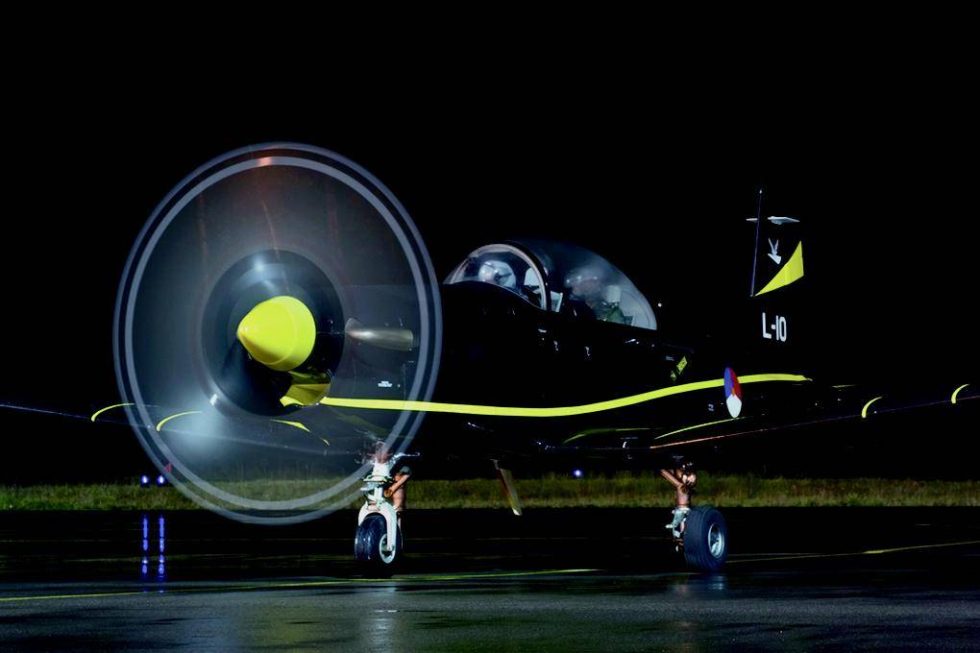
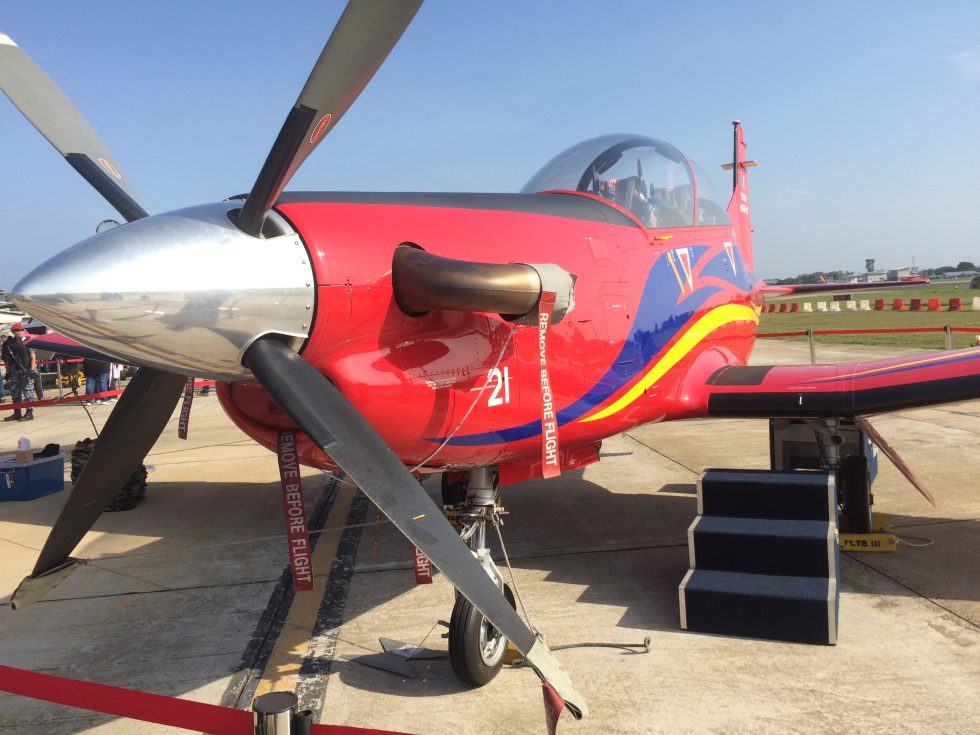
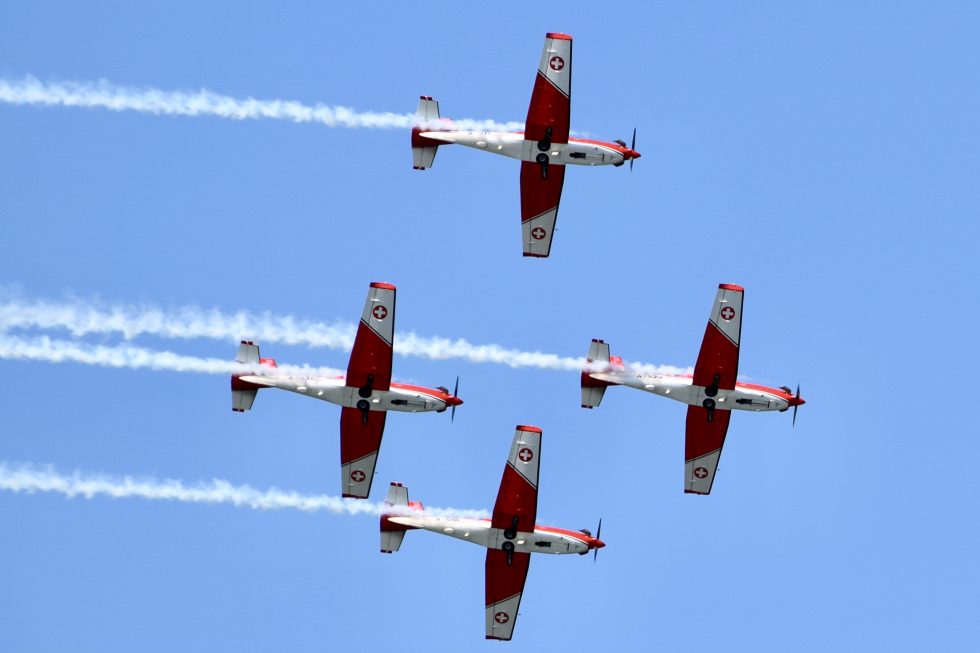
The Pilatus PC-7 in motion
Swiss Air Force PC-7 TEAM, from the official Swiss Armed Forces channel — nine standard Pilatus PC-7 trainers flying a full aerobatic display, the clearest demonstration of what the type can do.
Where the Pilatus PC-7 flies
What the Pilatus PC-7 is measured by
The PC-7 is not judged by kills but by pilots trained, hours flown and air forces served. Its record is one of the most successful in the history of military flight training — though a handful of export users did arm the type for light attack, a chapter we note plainly.
See how training and combat types compare in the military aircraft statistics database. Figures are approximate and change over time.
Everything people ask about the Pilatus PC-7
Can I fly in a Pilatus PC-7?
How much does a Pilatus PC-7 flight cost?
How fast is the Pilatus PC-7?
Does the Pilatus PC-7 have ejection seats?
What is the difference between the PC-7, PC-9 and PC-21?
Is the Pilatus PC-7 armed?
Who flies the Pilatus PC-7 today?
What is the PC-7 TEAM?
You CAN fly the Pilatus PC-7.
Over the Swiss Alps.
Most of this museum you can only look at. The PC-7 is the exception — through MiGFlug’s partner GoAviator you can take the controls of a real Pilatus PC-7 on an aerobatic flight from Locarno, and fly loops and rolls over the Alps yourself.
 Fly the L-39 AlbatrosThe world’s most-flown jet trainer — aerobatics included
 Fly the F-104 Starfighter“The missile with a man in it”
 Fly the MiG-21The Cold War’s most-produced jet
 Fly the T-33 Shooting StarAmerica’s first jet trainer
 Fly the DH VampireA piece of early jet history
 Fly the S.211Agile Italian jet trainer
 Fly the MB-326The classic Aermacchi jet
 Fly the MiG-15The Soviet legend of the Korean War
Continue the tour
Every fact, checked
- Pilatus Aircraft LtdThe manufacturer — company history and the PC-7 / PC-9 / PC-21 training family.
- Swiss Air Force — PC-7 TEAMOfficial page for the Swiss display team and its use of standard PC-7s.
- Airforce Technology — Pilatus PC-7Programme overview, variants and operator summary.
- Military Factory — Pilatus PC-7Specifications, production total and the full operator list used for the map.
- Pratt & Whitney Canada — PT6ABackground on the free-turbine turboprop that powers the PC-7.
- AeroNaut.media — Three generations of PC-7Editorial history of the PC-7 and its place in the Pilatus trainer family.
- FlugRevueReporting on Pilatus trainers and their export operators.
- The AviationistCoverage of Pilatus training aircraft in service worldwide.