
Polikarpov R-5
The workhorse of interwar Soviet aviation — Nikolai Polikarpov’s rugged two-seat reconnaissance and light-bomber biplane, built in their thousands, flown from Arctic ice to the skies of Spain, and forever tied to the 1934 Chelyuskin rescue that created the first Heroes of the Soviet Union.
The Story
The Polikarpov R-5: the workhorse of interwar Soviet aviation
If one aircraft can be said to have carried the young Soviet air force through the years between the wars, it is the Polikarpov R-5. A rugged, cheap, endlessly adaptable two-seat biplane, it was built in enormous numbers, flown in every conceivable role — reconnaissance, light bombing, ground attack, army co-operation, mail carrying, ambulance, torpedo dropping and polar exploration — and it turned up wherever Soviet aviation went in the 1930s. In sheer ubiquity within the USSR the R-5 was the Soviet equivalent of the great Western interwar workhorses like the French Potez 25 and Breguet 19: not glamorous, not fast, but tough, reliable and available in the numbers that actually matter.
The R-5 was designed by Nikolai Nikolaevich Polikarpov, the most important Soviet aircraft designer of the era and the man behind a long line of biplanes and monoplanes from the ubiquitous Po-2 trainer to the I-15 and I-16 fighters. The R-5 first flew in 1928 and was intended as a replacement for the earlier R-1, itself a Soviet copy of the British de Havilland D.H.9A. Where the R-1 had been a stopgap built from a foreign design, the R-5 was a thoroughly modern, home-grown machine, and it quickly became the standard reconnaissance and light-bomber aircraft of the Soviet Workers’ and Peasants’ Red Army Air Force.
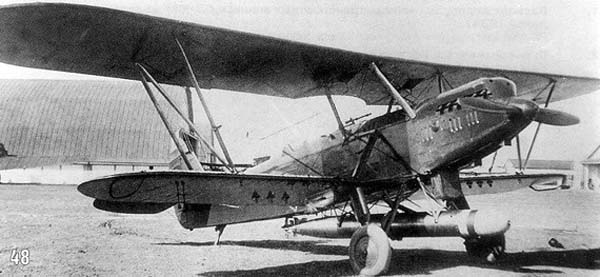
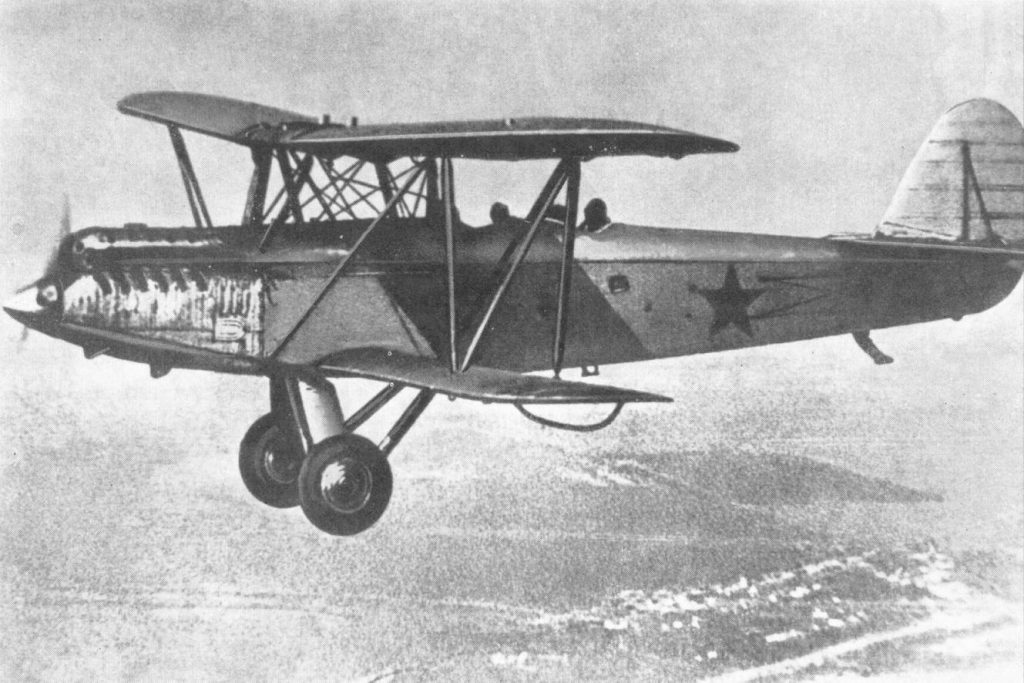
Its construction was typical of Polikarpov’s practical approach. The R-5 was a two-bay biplane of unequal span, built mainly of wood with fabric covering over a wooden structure — a deliberately simple, cheap and repairable design well suited to a country that was short of light alloys but rich in timber and needed aircraft in quantity. It carried a crew of two, a pilot and an observer/gunner, and it was powered by the Mikulin M-17, a licence-built version of the German BMW VI liquid-cooled V-12 engine. That engine, produced in the Soviet Union in large numbers, gave the R-5 respectable performance and, just as importantly, a reliable and well-supported powerplant.
“Tough, cheap and everywhere — the R-5 was the aircraft the Soviet air force reached for when it simply needed the job done.”— the R-5’s place in history, in a sentence
Production was on a scale that few contemporaries matched. Something in the order of six thousand R-5s and its derivatives were built across the 1930s — a colossal number that made it one of the most-produced aircraft in the world during that decade and by far the most numerous Soviet aircraft of its type. This vast output is central to the R-5’s story: it was cheap enough and available in sufficient quantity to equip the Red Army Air Force’s reconnaissance and light-bomber squadrons wholesale, and to spill over into civil aviation, the Arctic services and export as well.
The R-5 was the classic multi-role aircraft of its day, and the Soviets developed a remarkable family of variants from the basic design. There was the standard R-5 reconnaissance aircraft; the R-5Sh (Shturmovik) ground-attack version, bristling with machine guns and light bombs for close support; the R-5T torpedo carrier; floatplane versions for naval and maritime work; and the developed R-Z, an improved successor with a more powerful engine that carried the line on into the later 1930s. Alongside the military machines ran a whole civil family — the P-5 and the enclosed-cabin PR-5 passenger and mail aircraft — which flew for Aeroflot and the Soviet civil and Arctic services.
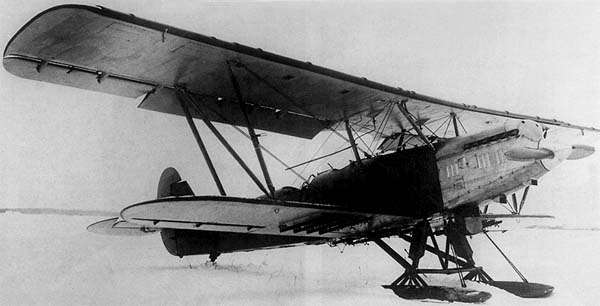
It is that Arctic connection that gives the R-5 its most famous moment. In February 1934 the Soviet steamship Chelyuskin, attempting to sail the Northern Sea Route in a single season, was crushed by pack ice and sank in the Chukchi Sea, stranding more than a hundred people on the drifting ice. The rescue that followed became one of the great set-piece dramas of the Stalin era, and aircraft were central to it. Polar aviators flying a mix of types — the R-5 prominent among them — made repeated, dangerous flights across the frozen sea to lift the stranded “Chelyuskinites” to safety, a few at a time, in appalling conditions. The R-5’s ruggedness and reliability made it well suited to the task.
The rescue was a national sensation, and it had a lasting consequence: the seven pilots who led the airlift became the very first recipients of the new title Hero of the Soviet Union, created in April 1934 specifically to honour them. The Chelyuskin episode cemented the place of aviation — and of aircraft like the R-5 — at the heart of Soviet self-image in the 1930s, the decade of record-breaking flights and polar heroics. Few military aircraft can claim so direct a link to the founding of a nation’s highest honour.
The R-5 was also blooded in combat, and its record spans a decade of conflict. It first saw action in the early 1930s in Soviet operations in Central Asia against the Basmachi insurgents. It fought in the border clashes with Japan in the Far East, including the fighting at Khalkhin Gol in 1939, and in the Soviet invasion of Poland and the Winter War against Finland in 1939–40. By the time of the German invasion in 1941 the R-5 was thoroughly obsolete as a front-line type, yet such was the scale of its production that it was still pressed into service in large numbers — above all as a night bomber and liaison aircraft, roles in which its slow, quiet, low-level flying was turned into an asset much as it was for its stablemate the Po-2.
Beyond the Soviet Union, the R-5 was exported and saw combat abroad. It was supplied to the Spanish Republic during the Spanish Civil War of 1936–39, where Soviet aircraft played a major part in the Republican air arm. There the R-5 and its ground-attack sibling the R-Z were flown against the Nationalists, earning the nicknames “Natacha” and “Rasante” from the Spaniards who operated and fought against them. The type was also exported to Mongolia, a close Soviet ally, which used it through the 1930s and in the fighting against Japan, and to Iran, where in 1930 an R-5 famously performed well in an international competition of light aircraft.
How does the R-5 compare with the Western workhorses of its generation? It belongs firmly in the same family as the French Potez 25 and Breguet 19 — rugged, general-purpose two-seat biplanes, built in large numbers, adaptable to many roles and engines, and forming the everyday backbone of their air forces between the wars. The chief difference is one of context: where the French types were exported across the world to twenty or more nations, the R-5 was overwhelmingly a Soviet aircraft, built for and used by the USSR in enormous numbers, with only a handful of export customers. Within its own country, though, it was every bit as important as the Potez and the Breguet were within theirs.
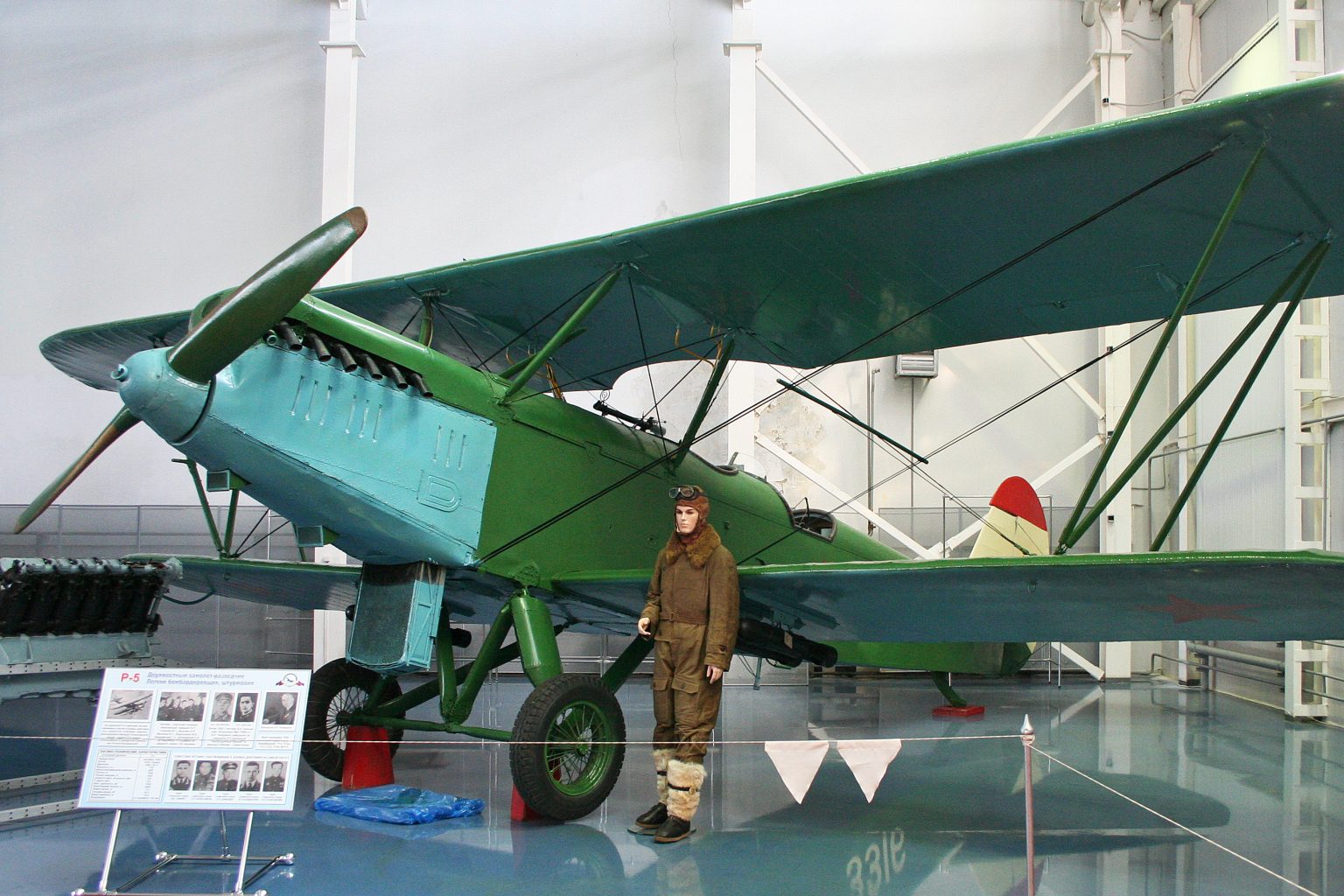
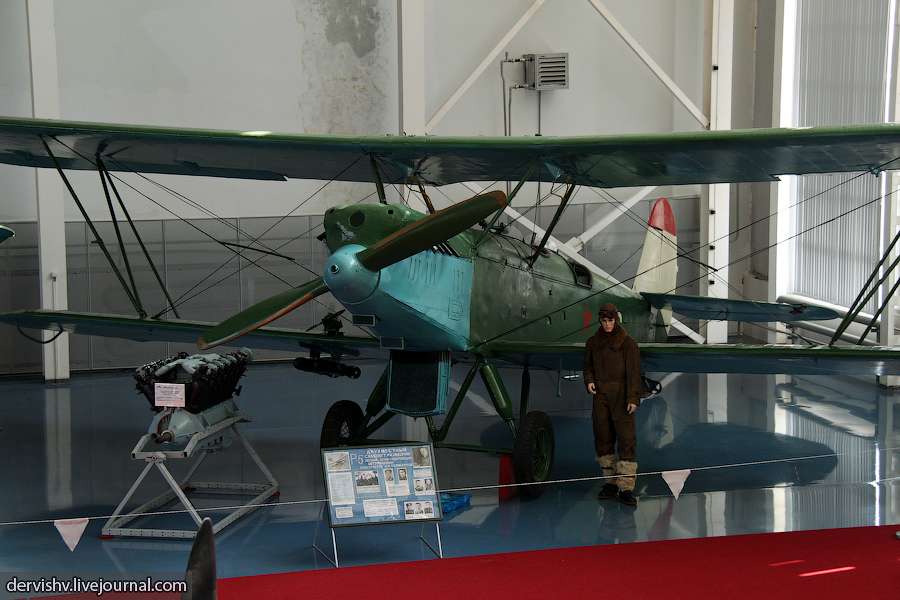
By the middle of the Second World War the surviving R-5s had largely been worn out or replaced, and the type faded from service. Its legacy is that of the quintessential Soviet interwar workhorse — the aircraft that did the unglamorous everyday jobs of a rapidly expanding air force, that carried the flag on the great polar rescues, and that soldiered on in combat long after it should have been retired. Genuine survivors are extremely rare today; a small number of R-5 airframes, several recovered from the Russian north where they came down decades ago, are preserved or under restoration, tangible links to one of the most important aircraft in Soviet aviation history.
01The Polikarpov R-5’s design: a wooden workhorse built for quantity+
The R-5 was designed by Nikolai Polikarpov and first flew in 1928, conceived as a modern, home-grown replacement for the R-1 — a Soviet copy of the British de Havilland D.H.9A that had served as a stopgap reconnaissance aircraft. Where the R-1 was borrowed foreign technology, the R-5 was a thoroughly Soviet design.
It was built to be cheap, simple and produced in enormous quantity. The airframe was largely wooden, with fabric covering over a wooden structure — a sensible choice for a country short of light alloys but with abundant timber and a pressing need for aircraft in numbers. This ruggedness and simplicity, rather than any single outstanding quality, is what made the R-5 so successful.
02The Mikulin M-17 engine: a licensed BMW at the heart of the R-5+
The R-5 was powered by the Mikulin M-17, a Soviet licence-built version of the German BMW VI, a liquid-cooled V-12 producing somewhere in the region of 500 to 680 horsepower depending on the sub-type. Licence-building a proven foreign engine was a common and pragmatic Soviet strategy of the period, giving the R-5 a reliable and well-supported powerplant.
Because the M-17 was produced in the Soviet Union in very large numbers for a range of aircraft and even tanks, spares and support were readily available — a crucial advantage for an aircraft meant to be operated in bulk, far from major workshops, across the vast expanse of the USSR.
03The R-5 family: from Shturmovik attacker to torpedo carrier and floatplane+
Few aircraft spawned so varied a family. The basic R-5 reconnaissance and light bomber was joined by the R-5Sh (Shturmovik), a dedicated ground-attack version carrying additional machine guns and light bombs for close support of ground troops; the R-5T torpedo carrier for naval strike; and floatplane versions for maritime and coastal work.
The line was later developed into the improved R-Z, with a more powerful engine and revised structure, which carried the design on into the later 1930s. This breadth of variants let a single, well-understood basic design cover an extraordinary range of duties — the hallmark of a true workhorse.
04Built by the thousand: the R-5 as one of the most-produced aircraft of the 1930s+
Production of the R-5 and its derivatives ran to something in the order of six thousand aircraft across the 1930s. This was a colossal figure for the period and made the R-5 by far the most numerous Soviet reconnaissance and light-bomber aircraft, and one of the most-produced aircraft in the world during that decade.
That scale of production is central to the type’s importance. It allowed the rapidly expanding Red Army Air Force to equip its reconnaissance and light-bomber units wholesale, and left enough aircraft over to serve in civil aviation, the Arctic services and, in smaller numbers, export. Numbers, as much as any technical quality, made the R-5 indispensable.
05The Chelyuskin rescue of 1934 and the first Heroes of the Soviet Union+
In February 1934 the Soviet steamship Chelyuskin was crushed by pack ice and sank in the Chukchi Sea, stranding more than a hundred people on the drifting ice. The airborne rescue that followed became one of the defining dramas of the Stalin era, and the R-5 was one of the principal aircraft involved, its ruggedness suiting it to repeated, dangerous flights across the frozen sea.
The rescue was a national sensation. Its most lasting consequence was the creation, in April 1934, of the title Hero of the Soviet Union — the country’s highest honour — which was awarded first of all to the seven pilots who led the airlift. Few military aircraft have so direct a connection to the founding of a nation’s supreme decoration.
06The R-5 in the Spanish Civil War: “Natacha” and “Rasante”+
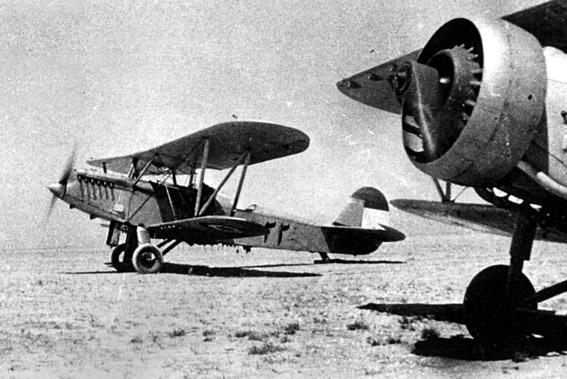
During the Spanish Civil War of 1936–39, the Soviet Union supplied large quantities of aircraft to the Spanish Republic, and the R-5 and its ground-attack derivative the R-Z were among them. Flown by Republican and Soviet crews, they served as light bombers and ground-attack machines against the Nationalist forces.
The Spaniards gave them nicknames that stuck: the R-5 was known as the “Natacha,” and the R-Z ground-attack version as the “Rasante” (roughly, “the skimmer,” for its low-level attack runs). By the standards of the fast monoplanes appearing in Spain they were already obsolescent and vulnerable, but they were available in numbers and were pressed hard into service.
07Combat over a decade: Central Asia, Khalkhin Gol, Poland and Finland+
The R-5’s military career spanned a remarkable range of conflicts. It first saw action in the early 1930s in Soviet operations against the Basmachi insurgents in Central Asia, where its reconnaissance and light-bombing capabilities were well suited to the open terrain.
It went on to fight in the border clashes with Japan in the Far East, including the fighting at Khalkhin Gol in 1939, and took part in the Soviet invasion of eastern Poland and the Winter War against Finland in 1939–40. Across all these campaigns the R-5 performed the unglamorous but essential duties of reconnaissance, artillery spotting, liaison and light bombing.
08The R-5 as a WWII night bomber: obsolete but still useful in 1941+
By the time of the German invasion of the Soviet Union in June 1941 the R-5 was thoroughly obsolete as a front-line combat aircraft. Yet so many had been built that large numbers were still in service, and they were pressed into use in the desperate fighting of 1941–42.
Their most important wartime role was as night bombers and liaison aircraft. Flying low and slow under cover of darkness, R-5s harassed German positions much as their more famous stablemate the Po-2 did, turning the very qualities that made them useless in daylight combat — low speed and quiet, low-level flight — into genuine assets in the night-nuisance role.
09The civil R-5: the P-5 and PR-5 in Aeroflot and Arctic service+
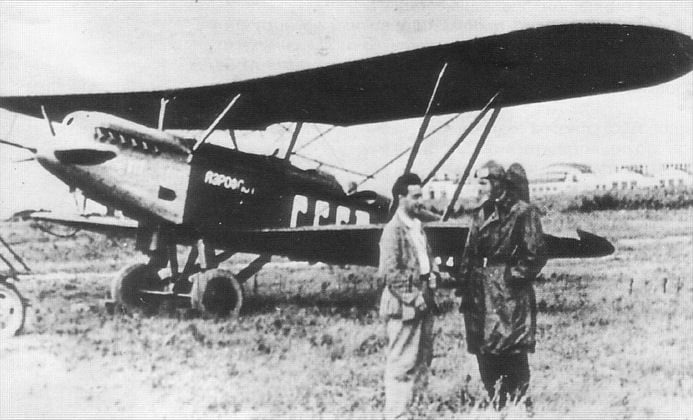
Alongside the military machines ran an important civil family. The P-5 was a civil version of the R-5 used for passenger, mail and cargo work, and the PR-5 added an enclosed cabin for passengers. These aircraft flew with Aeroflot and the Soviet civil and polar services, carrying mail, freight and people across the vast and often roadless expanse of the USSR.
This civil use was especially important in the Soviet north and far east, where aircraft were often the only practical means of transport and communication. The same ruggedness and reliability that made the R-5 a good military aircraft made it a valuable civil and Arctic one, and the civil versions extended the type’s working life and its reach well beyond the military sphere.
10Export operators: Mongolia, Iran and the Spanish Republic+
Unlike the widely exported French biplanes of its generation, the R-5 was overwhelmingly a Soviet aircraft, but it did have a handful of foreign operators. Mongolia, a close Soviet ally, was supplied with R-5s and used them through the 1930s, including in the fighting against Japan on its eastern borders.
Iran (then Persia) also acquired the type; famously, an R-5 performed well in an international competition of light aircraft held there in 1930, a useful piece of publicity for Soviet aviation. And through Soviet military aid, R-5s and R-Zs reached the Spanish Republic during the Civil War. These exceptions aside, the R-5 remained first and foremost the aircraft of the Soviet air force.
11R-5 versus Potez 25 and Breguet 19: the Soviet workhorse and its Western cousins+
The R-5 belongs to the same family as the great Western general-purpose biplanes of the interwar years, above all the French Potez 25 and Breguet 19. All were rugged, adaptable two-seat biplanes, built in large numbers, capable of reconnaissance, light bombing and army co-operation, and forming the everyday backbone of their air forces between the wars.
The main difference lies in their markets. The Potez and Breguet were exported across the world to twenty or more nations, while the R-5 was built overwhelmingly for the Soviet Union itself, with only a few export customers. Within the USSR, however, the R-5 filled exactly the same indispensable role that the French types filled in the West — and it was built in numbers to match.
12Polikarpov the designer: from the R-5 to the Po-2 and the fighters+
The R-5 was one of many important designs by Nikolai Polikarpov, the leading Soviet aircraft designer of the interwar period. His work ranged from the ubiquitous U-2/Po-2 trainer and utility biplane — built in tens of thousands and flown into the jet age — to the I-15 biplane and I-16 monoplane fighters that equipped the Soviet air force and fought in Spain and against Japan.
Polikarpov’s career was shadowed by the politics of the era: he was arrested in 1929 and for a time worked in a prison design bureau, a fate that befell a number of Soviet engineers. Yet his aircraft, the R-5 among them, were fundamental to Soviet aviation in the 1930s, and he is rightly remembered as one of the most influential designers his country produced.
Design & Engineering
How the Polikarpov R-5 was built: a rugged wooden biplane for the Soviet air force
A simple, tough, mostly-wooden two-seat biplane by Nikolai Polikarpov — powered by the licence-built Mikulin M-17 V-12, easy to build and repair in quantity, and adaptable into attack, torpedo, floatplane and civil versions.
Wood & fabric
Largely wooden structure with fabric covering — cheap, simple and repairable, and ideal for mass production in a country short of light alloys.
Mikulin M-17
A licence-built BMW VI liquid-cooled V-12 of roughly 500–680 hp — reliable, widely produced and well supported across the USSR.
One design, many roles
Reconnaissance, light bomber, R-5Sh attacker, R-5T torpedo carrier, floatplane and civil P-5 / PR-5 — a true multi-role family.
Specifications
Polikarpov R-5 specifications: dimensions, performance and cost
Baseline: the Polikarpov R-5 as it left the Moscow and Taganrog lines between 1931 and 1934 — a two-seat wooden biplane on a 680 hp Mikulin M-17B, fixed undercarriage, one synchronised gun forward and one on a ring aft — because that is the machine that equipped the great majority of Soviet reconnaissance and light bomber squadrons for a decade, that flew the Chelyuskin rescue, and that nearly every figure in the literature describes. Deltas for the ground-attack R-5Sh, the torpedo-carrying R-5T, the float-equipped R-5a, the cleaned-up R-5SSS, the civil P-5 and PR-5 and the M-34-engined R-Z are in grey. Five corrections before the figures. First, the production total. The brief figure of roughly 6,000 is close but conflates two aeroplanes. Russian sources give 5,645 R-5s built between 1930 and 1936 plus 1,031 R-Z, a family total of 6,676; the English-language literature usually says "approximately 7,000 of all versions" and separately quotes 4,914 for the baseline reconnaissance R-5 alone. The numbers can be reconciled only by deciding what counts: 4,914 is the standard R-5, 5,645 adds the military sub-types, ~6,700 adds the R-Z, and ~7,000 sweeps in the civil P-5 conversions. All four are defensible and all four get quoted flatly as "the" production figure. What is not in dispute is the rank: after the Po-2 and the Avro 504, the R-5 is among the most-built biplanes in history, and it was built in larger numbers than any other reconnaissance aircraft of the 1930s. Second, the Chelyuskin arithmetic, which is worth getting exactly right. One hundred and four people were left on the ice when the steamer went down on 13 February 1934. Anatoly Lyapidevsky lifted out ten women and two children in an ANT-4 on 5 March; the rest came off between 7 and 13 April. Vasily Molokov flew out 39 in eight sorties, Nikolai Kamanin 34 in nine, and Mikhail Vodopyanov 10 in three — all three flying R-5s. Mavriky Slepnyov brought out five in an American Consolidated Fleetster and Ivan Doronin two in a Junkers W 33. That is 83 of 104 in R-5s: not merely the majority, but four in five. Third, Doronin's aeroplane. The English Wikipedia article on the ship credits him with an R-5. He flew a Junkers W 33, the type the Soviet Union operated as the PS-4, and Russian accounts are consistent on this. The error matters because it inflates the R-5's already impressive share and obscures how mixed the rescue fleet actually was. Fourth, Rasante and Natacha are not the same aeroplane. Thirty-one R-5s reached Republican Spain from November 1936 and were called Rasante; sixty-one of the later M-34-engined R-Z followed and were called Natacha. Sources routinely swap the names, and a good deal of what is written about "R-5s over Spain" describes R-Zs. Fifth, the height. Russian tables give 2.62 m and English ones 3.25 m. The discrepancy is almost certainly tail-up against tail-down measurement and neither camp says which; the Russian figure is used here because the rest of the Russian table is internally consistent.
Dimensions & weights
- Crew
- 2 — pilot forward under a cut-out in the upper centre section, observer and gunner aft, both in open cockpits with a speaking tube between them The observer was the reason the aeroplane existed. He worked a Potte plate camera, a drift sight, a map board and a drum-fed machine gun in an open cockpit at 3,000 m in a Soviet winter, and the type's reputation for producing usable photographs owes as much to him as to the airframe.
- Length
- 10.56 m (34 ft 8 in)
- Wingspan, upper
- 15.30 m (50 ft 2 in) English-language references usually round this to 15.5 m (50 ft 10 in). The Russian figure is used here.
- Wingspan, lower
- 12.00 m (39 ft 4 in) The lower span is quoted far less consistently than the upper, and some tables omit it entirely. The unequal-span layout was not decoration: it gave the observer a clear downward field of view over the trailing edge of a short lower wing, which is precisely what a reconnaissance crew needs and what an equal-span biplane denies them.
- Height
- 2.62 m (8 ft 7 in), tail down English sources give 3.25 m (10 ft 8 in). See the note above.
- Wing area
- 50.2 m² (540 sq ft) A very large wing for a 3.2-tonne aeroplane, and the single number behind everything the R-5 was later asked to do off snow, ice, sand and ploughed field.
- Wing structure
- Two-bay wooden biplane, unequal span, single-spar wings with plywood leading-edge torsion boxes and fabric aft, wire braced, ailerons on the upper wing only; a thick 10 per cent section, given as Clark Y in Western references The overhanging upper panels are carried on outward-raked struts, which is the quickest way to identify an R-5 in a photograph at any distance and distinguishes it instantly from the equal-span R-1 it replaced.
- Fuselage
- Wire-braced wooden box girder, plywood-skinned forward around the engine and cockpits, fabric aft The R-5SSS and the Rafaelyants PR-5 conversion replaced this with a proper plywood semi-monocoque shell, which is why a PR-5 looks fatter and cleaner than an R-5 and why the conversion is sometimes mistaken for a different design altogether.
- Undercarriage
- Fixed divided main gear on rubber-cord shock legs with a tailskid; interchangeable with skis for winter and with twin floats on the R-5a and MR-5 The R-5T torpedo aircraft needed the undercarriage widened and re-divided again to give a torpedo somewhere to hang, which is the sort of change that sounds trivial and eats a year.
- Empty weight
- 1,969 kg (4,341 lb) Airwar gives 1,965 kg, effectively the same aeroplane. The Russian Wikipedia figure of 2,169 kg is 200 kg higher and almost certainly describes a later, heavier military fit rather than the baseline.
- Loaded weight, reconnaissance
- 2,955 kg (6,515 lb) with crew, fuel, camera and a 256 kg bomb load
- Loaded weight, light bomber
- 3,247 kg (7,158 lb); maximum permitted 3,800 kg (8,378 lb) The 3,800 kg figure is a limit, not a normal condition, and it was routinely exceeded in Arctic and rescue work by crews who had decided the alternative was worse.
- Wing loading
- 64.7 kg/m² (13.3 lb/sq ft) at 3,247 kg, falling to 58.9 kg/m² (12.1 lb/sq ft) at reconnaissance weight Low enough that the aeroplane would come off a snowfield in a few hundred metres and land on one that no wheeled machine could use. Everything remarkable in the R-5's career — the ice landings, the mountain strips, the mail runs into Siberian villages — comes out of this number.
- Power loading
- 4.78 kg/hp (10.5 lb/hp) at 3,247 kg on 680 hp
Performance
- Maximum speed, sea level
- 228 km/h (142 mph) at normal reconnaissance weight Russian tables quote up to 244 km/h (152 mph) for a lightly loaded machine. The R-5SSS, with the M-17F and a systematic aerodynamic clean-up, was 25–30 km/h faster; the M-34-engined R-Z reached 316 km/h at 3,500 m and belongs to a different performance class altogether.
- Maximum speed at 3,000 m
- 210 km/h (130 mph at 9,800 ft) The M-17 was unsupercharged and the R-5 lost speed steadily with height, which is one reason the type was pushed towards low-level work long before anybody called it a ground-attack aircraft.
- Cruising speed
- 190 km/h (118 mph) Sources disagree badly here. Airwar's table reads as either 210 km/h cruise or 210 km/h maximum at altitude depending on how the row is parsed, and the two readings cannot both be right. Treat any R-5 cruise figure as approximate.
- Climb to 1,000 m
- 2 min 6 s (3,300 ft)
- Climb to 3,000 m
- A little over 11 minutes (9,800 ft) Derived from the quoted initial rate rather than taken from a state test report, and therefore optimistic: the real figure will be longer because the rate decays with height. Quoted as a time to height because that is how the period stated and compared climb.
- Initial rate of climb
- 295 m/min (968 ft/min) at sea level
- Service ceiling
- 6,400 m (21,000 ft) Airwar gives 6,100 m (20,000 ft) and aviastar 6,150 m. The R-5SSS added roughly 2,000 m to this, and the R-Z reached 8,700 m.
- Range
- 800 km (500 miles) Aviastar gives 600 km on maximum fuel, which is the more pessimistic and probably the more operationally honest number.
- Endurance
- Around 4 hours at cruising power Endurance is the meaningful figure for this aeroplane and for almost everything of its generation. A corps reconnaissance sortie was planned in hours over a sector, not in miles between aerodromes, and the Arctic crews who flew R-5s to the edge of their tankage and back were solving an endurance problem, not a range one.
- Aerodrome performance
- Grass, snow, ice, sand or ploughed field; no wheel brakes on early aircraft, tailskid steering, three-point landing Take-off and landing runs are not usefully quotable for a machine flown from surfaces this various, but the practical answer is that Kamanin and Molokov put R-5s down on cleared strips of Arctic pack ice barely longer than a football pitch, repeatedly, without breaking them. No other Soviet aeroplane of the period could have done it.
- Handling
- Docile, stable, heavy on the controls, slow to respond in roll, and almost impossible to provoke into anything sudden Pilots did not describe the R-5 as pleasant. They described it as trustworthy, which for a machine flown by sergeant pilots on winter nights over the taiga was the more valuable property. The type's accident record in Aeroflot service was notably good for the era.
- Ski and float penalty
- Skis cost roughly 10–15 km/h and the twin floats of the R-5a rather more, along with a noticeable loss of climb The float version needed an enlarged fin to cope with the side area forward. Both fits were accepted without complaint because they bought access to whole regions that had no aerodromes at all.
Propulsion & systems
- Engine
- One Mikulin M-17B, water-cooled 60-degree V-12, 500 hp nominal and 680 hp (507 kW) maximum, driving a two-blade fixed-pitch wooden propeller Around 550 kg of engine on a 1,969 kg airframe. The M-17 is the reason the R-5 has the nose it has and the reason it needed that much wing.
- The BMW VI licence
- The M-17 was a licence-built BMW VI, the licence bought in 1927 and production established at Factory No. 26 in Rybinsk This is the most consequential single decision in the aeroplane's history and it is a commercial one, not an engineering one. The Soviet aero-engine industry in 1927 could not have designed or built a reliable 680 hp V-12; buying Germany's best current one outright bought a decade. The same engine, in its M-17 form, powered the TB-3, the T-28 and T-35 tanks and a good deal else. When the licence ran out the Soviets had learned enough to produce the M-34 in-house, and the R-Z is what the R-5 became once they had.
- M-17F, from 1934
- 500 hp nominal, 730 hp (544 kW) maximum Fitted to late production and to the R-5SSS. The gain is modest on paper and was worth having, because by 1934 the airframe had put on weight that the original rating no longer covered comfortably.
- Prototype engine
- The 1928 prototype flew on an imported BMW VIb The first flight is autumn 1928 and series production begins in 1930 — a two-year gap that is entirely accounted for by getting the M-17 into production, not by any problem with the aeroplane.
- Diesel experiment
- One airframe was flown with a Junkers Jumo 4 opposed-piston aviation diesel of 600 hp An intelligent line of enquiry that went nowhere: the diesel was heavy, the fuel economy real, and the Soviet Union had neither the metallurgy nor the production capacity to chase it in 1932.
- Cooling
- Frontal water radiator under the forward fuselage, retractable or shuttered against the cold Cooling was the R-5's standing operational headache in exactly the environments it made its name in. At −40 °C the problem is not overheating but a radiator that will freeze solid on the ground; Arctic crews drained the coolant after every flight and reheated it before the next, which is why photographs of P-5s in the north so often show a canvas tent over the nose.
- Fuel and oil
- Fuselage and centre-section tanks feeding by gravity and pump; long-range and Arctic aircraft carried additional tankage in the rear cockpit or under the wings Published capacities vary and no figure here is reliable enough to quote as a specification. Endurance is the safer statement.
- Starting
- Hand-cranked inertia starter engaged from the ground, with compressed-air starting on some aircraft In Arctic conditions neither worked without a preheated engine, and the standard method was a blowlamp under a felt cover and two hours of patience.
- Photographic equipment
- Potte-type plate cameras on a fuselage mount for vertical work, hand-held obliques by the observer The R-5 was a photographic reconnaissance aeroplane first and everything else second, and the Soviet aerial survey of the 1930s — mapping, forestry, ice reconnaissance for the Northern Sea Route — was very largely flown on this type.
- Radio
- Absent from most production aircraft; a receiver-only or full transmitter-receiver set was fitted to squadron and flight leaders' aircraft A recurring Soviet weakness of the period rather than a Polikarpov one. Formations worked on hand signals and pre-briefed plans, which is one reason the R-5 was so vulnerable when it met organised fighter opposition in Spain.
- Cold-weather and field equipment
- Interchangeable ski undercarriage, engine covers, cabin heating taken from the exhaust, and on Arctic aircraft an enclosed or partly enclosed rear cockpit The ARK-5, of which two were built, went further and gave the whole crew a glazed cabin for polar work.
- Underwing containers
- Plywood cargo panniers, the kassety, slung under the lower wings; the civil P-5 could take a quoted 400 kg of freight One published account has a P-5 carrying sixteen adults with seven in each container, which is at the outer edge of belief and is quoted here only because it is quoted everywhere. The Chelyuskin version was more modest and better attested: two men lying in each pannier, plus two in the rear cockpit.
13The R-5 in detail: variants and the developed R-Z+
The R-5 was produced in a wide range of variants, distinguished by role, equipment and engine. The principal versions were the baseline R-5 reconnaissance and light bomber, the heavily-armed R-5Sh ground-attack Shturmovik, the R-5T torpedo carrier and various floatplane conversions for maritime work.
The most important development was the R-Z, an improved successor with a more powerful engine, refined structure and better performance, which continued the line into the later 1930s and served notably as the “Rasante” ground-attack aircraft in Spain. Together with the civil P-5 and PR-5, these variants show how thoroughly a single sound basic design was exploited.
14The Polikarpov R-5’s cost: what the records show+
As with most Soviet aircraft of the 1930s, there is no reliable, transparent public figure for the R-5’s unit cost, cost per flight hour or total programme cost. It was procured over many years within the Soviet planned economy, where prices were administrative rather than market figures, and consistent lifetime cost data does not survive in a usable, comparable form.
Rather than repeat an invented number, we list the cost fields here as “not reliably recorded.” What can be said with confidence is that low cost was central to the R-5’s success: it was deliberately built of cheap, abundant materials (mostly wood) and produced in enormous quantity, which is exactly why the Soviet air force could afford to field it in the thousands.
15Why the Polikarpov R-5 mattered so much+
The R-5’s importance lies not in any single spectacular quality but in its combination of ruggedness, adaptability and sheer numbers. It was by far the most numerous Soviet reconnaissance and light-bomber aircraft of the 1930s, the everyday workhorse that did the unglamorous jobs of a rapidly expanding air force.
It also carries a unique historical distinction through its central role in the 1934 Chelyuskin rescue, which led directly to the creation of the Hero of the Soviet Union title. Between its vast production, its decade of combat and its place in one of the defining dramas of the Stalin era, the R-5 is one of the most historically significant aircraft the Soviet Union produced.
16Survivors: the rare preserved R-5s+
Genuine R-5 survivors are extremely rare. Despite the many thousands built, the type was worn out in hard service or scrapped, and very few complete original airframes remain. Some of those that do survive were recovered decades later from the Russian north, where they had come down in remote areas and lain preserved by the cold.
A small number of R-5 airframes are preserved or under restoration in Russia and elsewhere, and examples or substantial remains can be found in Russian aviation collections. Given how important and how numerous the type once was, these few survivors are precious — tangible links to an aircraft that was once everywhere in Soviet skies but is now almost gone.
Armament & payload
The R-5 carried one synchronised Maxim, one drum-fed Degtyaryov and a quarter of a tonne of bombs, and the Soviet Union spent fifteen years asking it to do everything with that
The R-5 was armed as a corps reconnaissance aeroplane of 1928 and it was still armed that way in 1941. One fixed 7.62 mm PV-1 forward through a mechanical synchroniser, one 7.62 mm DA on a ring aft, 256 kg of bombs in the normal case: that fit was entirely adequate against Basmachi horsemen in the Ferghana valley, adequate against Chinese warlord troops in Xinjiang, marginal over Spain in 1937 and suicidal over the Ukraine in 1941.
What is genuinely interesting is how far the airframe stretched when the Soviet Union needed it to. The R-5Sh hung a battery of PV-1s under the lower wing and became a ground-attack aircraft; the TSh-1 and TSh-2 tried to armour it and proved that the idea needed a different aeroplane; the R-5T cut the crew to one and hung a torpedo underneath; the P-5 threw the guns away and hung plywood freight containers there instead. The same wing, the same engine, the same wooden box girder. Very few aircraft of any era have been asked to be so many different things, and fewer still have been competent at most of them.
The six headings below are repurposed, because a fighter-shaped armament table would misrepresent this aeroplane badly. What follows is the gun, the gear that timed it, the observer's weapon, the bombs, the specialised ground-attack and torpedo fits, and — the most revealing card of the six — what the R-5 never carried at all. Fits varied enormously by year, by factory batch and by operator. A 1931 aircraft on the Afghan frontier, a 1937 Rasante over Teruel, a stripped P-5 on the ice at Vankarem and a 1942 night bomber on the Kalinin front had almost nothing in common but the airframe.
Fixed gun and synchronisation gear
- One 7.62 mm PV-1 machine gun, fixed, firing forward through the propeller disc from the port side of the forward fuselage
- The PV-1 was the aircraft version of the Maxim M1910: water jacket removed and replaced by a perforated air-cooling sleeve, recoiling mass lightened and the return spring stiffened to lift the cyclic rate from 600 to 750 rounds per minute. Adopted 1928, the same year the R-5 first flew
- Belt fed from a fuselage magazine; the pilot could reach the breech to clear a stoppage, which on a Maxim derivative he regularly had to
- Synchronisation was by a mechanical gear of the PUL-9 pattern, driven off the engine and linked to the gun by a push-rod run — the standard Soviet fitting of the late 1920s and early 1930s, used across the I-3, I-5 and R-5
- Soviet synchroniser nomenclature of this period is poorly documented in Western literature and the PUL-9 attribution should be treated as the best available rather than as settled. What is not in doubt is the type of gear: mechanical, engine-driven, and inferior to the Constantinesco hydraulic gear the British had been fielding since 1917. A mechanical gear on a 750 rpm Maxim derivative loses rounds and occasionally loses propeller blades, and the R-5's single forward gun was never taken very seriously as a weapon.
Observer's gun, ring and ammunition
- One 7.62 mm DA (Degtyaryov Aviatsionny) on a Tur-6 ring mounting over the rear cockpit, fed from a 63-round flat pan magazine
- The twin DA-2 replaced the single gun on many aircraft from the early 1930s, doubling the weight of fire at the cost of a heavier and slower-traversing mounting
- The 1,800 rounds-per-minute ShKAS was fitted from 1934 on late aircraft, on the R-5SSS and as standard on the R-Z — a genuine step change, and the only part of the R-5's armament that was competitive when the war came
- Sighting throughout was by ring-and-bead. There was no reflector sight, no interrupter for the tail surfaces beyond the mounting's mechanical stops, and no power assistance of any kind
- The rear gun is the honest measure of the aeroplane. In 1930, against a Basmachi band with rifles, one DA on a ring was ample. In 1937, against a Fiat CR.32 closing from below and behind at 350 km/h, a man standing up in a slipstream changing a 63-round pan was not defending anything. The R-5 did not get worse; the world it flew in did.
Bombs, racks and the normal load
- Normal reconnaissance load 256 kg (564 lb) of bombs on underwing and under-fuselage racks
- Overload light-bomber configuration 300–400 kg (660–880 lb); the ground-attack fits went to 500 kg (1,100 lb)
- Carriage was on Der-series racks under the lower wing centre section and the fuselage, in combinations from small fragmentation bombs upward — typically AO-8, AO-10 and AO-25 fragmentation weapons, FAB-50 and FAB-100 general-purpose bombs, and incendiary and chemical containers
- Some aircraft carried light bomb cassettes for scatter loads of very small anti-personnel bombs, which was the preferred weapon against cavalry and infantry in the open
- Two hundred and fifty-six kilogrammes is not a bomb load by the standards of 1940 and it was a perfectly reasonable one in 1930. The comparison that matters is with the R-1 it replaced, which carried less, flew slower and could not reach as far. Rack designations vary between sources and between production batches; the loads listed here are representative rather than an official table.
The R-5Sh gun battery and the armoured attack aircraft
- R-5Sh (shturmovik): up to eight 7.62 mm PV-1 machine guns — the synchronised gun plus wing-mounted batteries in fairings under the lower wing — with 500 kg of bombs
- Some sources describe a four-gun R-5Sh and others eight; both existed, the count depending on batch and on whether the nose gun and the observer's guns are included in the total
- ShON (shturmovik osobogo naznacheniya, special-purpose attack): a border-troops variant with folding wings for rail and lorry movement across Central Asia, around 30 ordered, configured to carry troops as well as guns
- TSh-1 and TSh-2: fully armoured attack derivatives with 6 mm plate around engine, cockpits and tanks, one and ten built respectively between 1930 and 1932
- The TSh programme is the more interesting failure. It correctly identified that a ground-attack aeroplane needs armour, and it proved on ten airframes that hanging enough steel on an R-5 to matter left an aeroplane that could barely climb. The problem was not solved until Ilyushin made the armour a structural component rather than an addition, and the Il-2 is the direct answer to the question the TSh-2 asked and could not answer.
Torpedo, freight and the underwing panniers
- R-5T: single-seat torpedo bomber, the observer deleted and the undercarriage divided and widened to clear a 450 mm aerial torpedo under the fuselage; 50 built and taken on charge in the mid-1930s
- The R-5T could carry 250–500 kg of bombs in place of the torpedo, and served with naval aviation until purpose-built torpedo aircraft displaced it
- P-5 civil freight: 400 kg in the fuselage and in the underwing kassety, the plywood panniers that made the type an air-freight aeroplane rather than a converted bomber
- Agricultural conversions carried a hopper and spreader for dusting and fertiliser work; ambulance conversions carried a stretcher in an enclosed rear compartment
- The R-5T deserves more scepticism than it usually gets. A 3.2-tonne biplane at 210 km/h making a straight, level, low-altitude run at a warship is a target, and the Soviet Navy knew it; fifty aircraft is a trial batch, not a torpedo force, and the type is better read as an experiment in learning how to drop torpedoes than as a weapon anyone expected to use twice.
What the R-5 did not carry
- No armour on the standard aircraft — no seat back plate, no engine protection, no self-sealing tanks. The TSh prototypes were the exception that proved the rule
- No radio on the great majority of aircraft, and no intercom beyond a rubber speaking tube
- No gun sight worth the name: ring-and-bead front and rear, in a decade when reflector sights were becoming general
- No blind-flying panel as delivered, in an aeroplane that was routinely flown at night, in cloud and in Arctic whiteout by crews who improvised the instrumentation themselves
- No parachute provision for passengers carried in the underwing containers, which is worth stating plainly because those containers carried people
- Listing the absences is not a criticism of Polikarpov. The R-5 was specified in 1926 as a corps reconnaissance aeroplane to replace the R-1, and against that specification it was excellent. The absences became lethal only because the Soviet Union kept the type in front-line use for fifteen years and then sent it against the Luftwaffe.
Three typical loadouts
- Corps reconnaissance, Belorussian Military District, 1933
- Pilot and observer; Potte vertical camera on the fuselage mount; one synchronised PV-1 with belt, one DA on the Tur-6 ring with six 63-round pans; four small fragmentation bombs on the underwing racks for targets of opportunity; full fuel for a three-hour sortie over a divisional sector. This is the aeroplane doing the job it was designed for, and doing it as well as anything in Europe.
- Night harassment sortie, 1942, a nochnoy bombardirovochny regiment
- Pilot and observer; exhaust flame dampers where the unit had contrived them; 200–300 kg of FAB-50 and AO-25 bombs; engine throttled back and the last part of the approach flown with power off; four to eight sorties a night from a field strip a few kilometres behind the line. The R-5 flew this alongside the U-2 and was less suited to it — heavier, noisier, harder to hide — but it carried roughly twice the load, and both types were doing the same thing: denying a German infantry division its sleep.
- Vankarem to the ice camp, 7–13 April 1934
- One pilot, no observer, no guns, no bombs, no radio; ski undercarriage; fuel calculated to the litre for 140–160 km each way over open Arctic pack; two survivors in the rear cockpit and two more lying flat in each plywood pannier under the lower wings. Molokov flew this profile eight times and brought out 39 people. It is the single most impressive thing any R-5 ever did, and it was done by stripping the aeroplane of everything it was built to carry.
Sourcing: bomb loads and rack designations are drawn from Russian-language references and vary between them; the 256 kg normal and 400 kg overload figures are the most consistently repeated. The PV-1 count on the R-5Sh is given variously as four and as eight and both appear to be correct for different batches. Synchroniser identification is the weakest link in this section and is flagged as such above.
Variants
The R-5 became an eight-gun assault aircraft, a float seaplane, a torpedo bomber, a mail plane and a four-seat airliner, and the airliner outlasted them all
Most successful military aircraft spawn variants within their role. The R-5 spawned variants across roles, and did it because the Soviet Union in the 1930s had one good, cheap, buildable airframe and an enormous number of unrelated problems. It needed a reconnaissance aeroplane, a light bomber, a ground-attack machine for a counter-insurgency war in Central Asia, a naval floatplane, a mail carrier for a country with no roads, and an aeroplane that could land on Arctic ice. It got all of them out of the same wooden two-bay biplane, and the reason it could is the wing loading: at under 65 kg/m² there was margin to hang things on.
The military line runs R-5, R-5Sh, R-5SSS, R-Z, and it is a story of an airframe being asked to keep up with a decade that was moving faster than it was. The R-5SSS of 1935 was a genuinely good aeroplane by the standards of 1932. The R-Z of 1935 was a good aeroplane by the standards of 1934. Both were obsolete when they met modern monoplane fighters over Spain, and the Republic learned the lesson at a price: of the 61 R-Zs delivered, 36 survived to be captured by the Nationalists in April 1939, and of 31 R-5 Rasantes sent in November 1936 only seven were still operational by March 1939. Both types ended up flying at night, because that was the only time they could fly at all.
The civil line runs P-5, PR-5, ARK-5, and it is the happier story. Aeroflot took perhaps a thousand aircraft and flew mail, freight, sick passengers and Arctic scientists into places that had no aerodrome, no radio beacon and frequently no map. Rafaelyants' PR-5 rebuild — a new monocoque fuselage with a proper enclosed cabin for four — turned a 1928 reconnaissance biplane into a usable small airliner, roughly 200 of them, and those were still working when the R-5 had vanished from military service entirely.
Exports were modest and regional: Mongolia, which flew R-5s at Khalkhin Gol in 1939; Republican Spain; Iran and Turkey; and the pro-Soviet provincial government in Xinjiang, supported by Soviet-flown aircraft from 1933. Finnish troops in the Winter War called it the hermosaha, the nerve-saw, for the sound of its engine over their positions at night — the same compliment, in the same words, that the Germans would later pay the Po-2.
- R-5 (1930–1937, ~4,914 baseline aircraft; 5,645 including military sub-types)
- The standard two-seat reconnaissance and light bomber on the M-17B, later M-17F. Built at Factory No. 1 in Moscow and at Taganrog; annual output peaked at over 1,700 airframes in 1934.
- R-5Sh / R-5ShP (1931–1935)
- Ground attack. Batteries of PV-1 machine guns under the lower wing, up to eight guns in total, and 500 kg of bombs. The Soviet Air Force's first mass ground-attack aircraft in everything but name.
- ShON (early 1930s, ~30 ordered)
- Special-purpose attack aircraft for the OGPU border troops in Central Asia, with folding wings so it could be moved by rail and lorry to wherever the Basmachi were, and provision to lift a small number of troops.
- TSh-1 and TSh-2 (1930–1932, 1 and 10)
- Armoured ground-attack derivatives with 6 mm plate around engine, crew and tanks. Both flew, both were too heavy, and both demonstrated the problem that the Il-2 later solved.
- R-5a / MR-5 (1934–1935, 111)
- Twin-float seaplane with an enlarged fin for the extra forward side area, for naval reconnaissance and for operations from rivers and lakes where no aerodrome existed.
- R-5T (1935, 50)
- Single-seat torpedo bomber. The observer went, the undercarriage was divided and widened, and a 450 mm torpedo went underneath. A trial batch rather than a torpedo force.
- R-5SSS (1935–1936, 100+)
- The definitive military R-5: M-17F, a semi-monocoque plywood fuselage, faired undercarriage, aerodynamic clean-up and ShKAS guns. Some 25–30 km/h faster and 2,000 m higher than the baseline. Also written SSS for skorostnoy, skoropodyomny, skorostrelny — fast, fast-climbing, fast-firing.
- P-5, P-5L and R-5L (1931 onwards, ~1,000 by 1940)
- The civil aeroplane. Guns removed, freight and mail in the fuselage and in the underwing kassety, two passengers in an enlarged rear cockpit or in an enclosed limousine cabin on the L variants. Aeroflot's workhorse and the backbone of the Northern Sea Route air service.
- PR-5 and PR-5bis (Rafaelyants, from 1936, ~200 conversions)
- A thorough rebuild by Aram Rafaelyants: a new plywood semi-monocoque fuselage with an enclosed four-passenger cabin. The best-looking and most useful thing ever done to an R-5, and the version that kept the type flying commercially into the later 1940s.
- ARK-5 (2 built)
- Arktichesky. A glazed, enclosed three-seat cabin for polar exploration work.
- R-Z (1935–1937, 1,031)
- The successor, developed from the R-5SSS with the 820 hp Mikulin M-34 and a raised, faired rear cockpit. 316 km/h and an 8,700 m ceiling. Sixty-one went to Spain as the Natacha. Frequently and wrongly described as an R-5.
Survivors, stated precisely, because this is where aircraft encyclopedias are least careful. For a type built in the thousands, almost nothing physical remains. The R-5 was wooden, it was worked to destruction, it was scrapped wholesale during and after the Great Patriotic War, and the Soviet Union preserved very little of its interwar aviation. Russian Wikipedia credits the Central Air Force Museum at Monino with an R-5, and that is the only display aeroplane the literature names consistently; the English-language references list no survivors at all. There is no airworthy R-5 anywhere in the world, and no complete original airframe is known outside the former Soviet Union. What does exist, in quantity, is wreckage: M-17 engines, undercarriage legs, fuselage frames and instrument panels recovered from Arctic and Siberian crash sites from the 1970s onwards, some of it used in restorations and some of it displayed as found. Modern reproductions have also been built for film and museum work. Any survivor count above one or two is almost certainly counting R-Z airframes, reproductions, or recovered components as complete aircraft, and the honest position is that the most-produced Soviet aircraft of the 1930s survives chiefly in photographs.
Timeline
The Polikarpov R-5 through the years
Nikolai Polikarpov’s R-5 makes its first flight as a modern replacement for the R-1 reconnaissance biplane.
The R-5 enters Soviet service and rapidly becomes the standard reconnaissance and light-bomber aircraft of the Red Army Air Force.
R-5s see their first combat in Soviet operations against the Basmachi insurgents in Central Asia.
R-5s take a leading part in the airlift that rescues the Chelyuskin survivors from the Arctic ice; the rescue pilots become the first Heroes of the Soviet Union.
The R-5Sh attacker, R-5T torpedo carrier, floatplanes and civil P-5 / PR-5 broaden the family; R-5s serve widely with Aeroflot and the Arctic services.
R-5s and R-Zs are supplied to the Spanish Republic, where they fight as the “Natacha” and “Rasante.”
R-5s serve in the border fighting against Japan in the Far East, including at Khalkhin Gol; Mongolia also operates the type.
The R-5 takes part in the Soviet invasion of eastern Poland and the Winter War against Finland.
Though obsolete, surviving R-5s are pressed into WWII service, above all as night bombers and liaison aircraft.
A very small number of R-5 airframes, some recovered from the Russian north, are preserved or under restoration.
Stories & Eyewitnesses
The Polikarpov R-5 in stories: the moments that defined it
A rugged Soviet workhorse built by the thousand, hero of the Chelyuskin rescue, blooded from Central Asia to Spain and pressed into WWII as a night bomber — the R-5’s history through the moments that stuck.
Soviet WorkhorseThe backbone of the 1930s
Tough, cheap, everywhere.
The R-5 was the workhorse of interwar Soviet aviation — the standard reconnaissance and light-bomber biplane, built in their thousands.
Ubiquity, not glamour, made it indispensable.
The DesignerNikolai Polikarpov
From R-5 to Po-2 and fighters.
Designed by Nikolai Polikarpov, the leading Soviet designer of the era, whose work ran from the Po-2 to the I-15 and I-16 fighters.
A home-grown replacement for the foreign-derived R-1.
Wood & FabricBuilt for quantity
Cheap, simple, repairable.
Largely wooden with fabric covering — ideal for mass production in a country short of light alloys but rich in timber.
Simplicity was the secret of its success.
The EngineMikulin M-17
A licensed BMW V-12.
Powered by the Mikulin M-17, a Soviet licence-built BMW VI V-12 of roughly 500–680 hp.
Reliable, widely produced and well supported.
Mass ProductionBuilt by the thousand
Around 6,000 made.
Some six thousand R-5s and derivatives were built — one of the most-produced aircraft in the world in the 1930s.
Numbers made it the backbone of the air force.
The ChelyuskinRescue on the ice
1934, the Chukchi Sea.
When the steamship Chelyuskin sank in the Arctic ice in 1934, R-5s flew many sorties in the airlift that saved the survivors.
A national sensation of the Stalin era.
First HeroesHero of the Soviet Union
The title born of a rescue.
The Chelyuskin rescue pilots became the very first Heroes of the Soviet Union, a title created in April 1934 to honour them.
Few aircraft are so tied to a nation’s highest honour.
Spain“Natacha” and “Rasante”
Soviet aid to the Republic.
Supplied to the Spanish Republic in the Civil War, the R-5 and R-Z were nicknamed the “Natacha” and the “Rasante.”
Obsolescent but pressed hard into service.
The Far EastKhalkhin Gol
Fighting Japan.
R-5s served in the border clashes with Japan, including at Khalkhin Gol in 1939; Mongolia flew the type too.
Reconnaissance, spotting and light bombing.
Night BomberStill useful in 1941
Slow, quiet, dangerous.
Obsolete by WWII, surviving R-5s were turned into night bombers, harassing German positions much as the Po-2 did.
Low and slow became an asset after dark.
The Civil R-5P-5 and PR-5
Mail, freight and passengers.
Civil versions flew with Aeroflot and the polar services, carrying mail and people across the vast Soviet north.
Aircraft were often the only way through.
The RivalsR-5 vs Potez & Breguet
The Soviet cousin.
The R-5 was the Soviet equivalent of the French Potez 25 and Breguet 19 — the same rugged, multi-role interwar biplane.
Built for the USSR rather than the world.
SurvivorsRecovered from the north
Precious and few.
Genuine R-5s are extremely rare; some survivors were recovered decades later from the Russian north.
Tangible links to a once-ubiquitous type.
Photo Gallery
The Polikarpov R-5 in photographs
Archival and museum photographs of the Polikarpov R-5, each credited to its source and licence. Click any photo to enlarge.
On Film
The Polikarpov R-5 on video: the Soviet interwar workhorse
Archival Soviet film of the Polikarpov R-5 — the rugged reconnaissance and light-bomber biplane that was built in the thousands and became the backbone of 1930s Soviet aviation.
Archival Soviet film footage of the Polikarpov R-5 in service. Source: Historical Aviation Film Unit (YouTube).
Operations Overview
Where the Polikarpov R-5 flew: a global operator map
Designed and built in the Soviet Union, the R-5 was overwhelmingly a Soviet aircraft, produced in the thousands and flown in every corner of the USSR. The world atlas has no “Soviet Union” polygon, so Russia stands in for the USSR on this map. Beyond the Soviet Union, the R-5 saw combat in Republican Spain and served as an export type in Mongolia. Hover or tap a country for detail.
Categories: Design & Manufacture (Russia, standing in for the USSR) · Operators & Combat Use (Spain — Republican combat use; Mongolia — export operator) · Surviving Airframes (Russia). Russia is used throughout as a stand-in for the Soviet Union, which has no polygon in the world atlas; only well-documented operators are shown.
Service Record
The Polikarpov R-5’s record: the ubiquitous Soviet workhorse
The R-5’s significance lies in its enormous production, its decade of combat from Central Asia to WWII, its role in the Chelyuskin rescue, and its place at the heart of 1930s Soviet aviation.
Questions & Answers
Polikarpov R-5: your questions answered
Can I fly in a Polikarpov R-5?
No — there is no bookable Polikarpov R-5 flight experience, and MiGFlug does not offer one. The type retired long ago, and genuine R-5s are extremely rare museum and restoration aircraft. If what you actually want is the real thing — strapping into a genuine military aircraft and flying it — you very much can do that today in other types. MiGFlug arranges flights in real fighter jets and warbirds around the world. Start here: migflug.com/flights-prices.
Why is the Polikarpov R-5 historically important?
The R-5 was the workhorse of interwar Soviet aviation — by far the most numerous Soviet reconnaissance and light-bomber aircraft of the 1930s, built in around six thousand examples and flown in every role from Arctic rescue to night bombing. Its most famous moment came in the 1934 Chelyuskin rescue, which led directly to the creation of the Hero of the Soviet Union title. Between its vast production, its decade of combat and its place in one of the defining dramas of the Stalin era, it is one of the most significant aircraft the USSR produced.
Who designed the Polikarpov R-5, and when did it first fly?
It was designed by Nikolai Nikolaevich Polikarpov, the leading Soviet aircraft designer of the interwar years, whose other designs included the ubiquitous Po-2 trainer and the I-15 and I-16 fighters. The R-5 first flew in 1928 and entered Soviet service around 1930, replacing the earlier R-1 — itself a Soviet copy of the British de Havilland D.H.9A.
What was the R-5’s role in the Chelyuskin rescue?
When the Soviet steamship Chelyuskin was crushed by Arctic pack ice and sank in February 1934, more than a hundred people were stranded on the drifting ice. R-5s were among the principal aircraft used in the airlift that flew them to safety a few at a time, in appalling conditions. The rescue was a national sensation, and the seven pilots who led it became the very first Heroes of the Soviet Union — a title created in April 1934 specifically to honour them.
Did the Polikarpov R-5 see combat?
Yes, over a full decade. It fought in Soviet operations against the Basmachi in Central Asia in the early 1930s; in the border clashes with Japan in the Far East, including Khalkhin Gol in 1939; in the invasion of eastern Poland and the Winter War against Finland in 1939–40; and in the Spanish Civil War, where Soviet-supplied R-5s and R-Zs fought for the Republic. Though obsolete by 1941, large numbers were still pressed into WWII service, above all as night bombers.
What engine did the R-5 use?
The R-5 was powered by the Mikulin M-17, a Soviet licence-built version of the German BMW VI — a liquid-cooled V-12 producing roughly 500 to 680 horsepower depending on the sub-type. Licence-building a proven foreign engine gave the R-5 a reliable, widely-produced and well-supported powerplant, which was a major advantage for an aircraft meant to be operated in bulk across the vast USSR.
How many R-5s were built, and did any countries other than the USSR use it?
Around six thousand R-5s and derivatives were built across the 1930s, making it one of the most-produced aircraft in the world in that decade. It was overwhelmingly a Soviet aircraft, but a handful of foreign operators used it: Mongolia flew it as an export type, Iran acquired examples (an R-5 did well in an international competition there in 1930), and the Spanish Republic received R-5s and R-Zs through Soviet military aid during the Civil War.
How does the R-5 compare with the Potez 25 and Breguet 19?
It belongs to the same family of rugged, general-purpose interwar biplanes — two-seat, multi-role, built in large numbers and forming the everyday backbone of their air forces. The difference is one of market: the French Potez 25 and Breguet 19 were exported to twenty or more nations worldwide, while the R-5 was built overwhelmingly for the Soviet Union itself. Within the USSR, though, the R-5 filled exactly the same indispensable role that the French types filled in the West.
Fly For Real
You can’t fly the Polikarpov R-5 — but these, you can
No R-5 is a bookable ride today. The urge behind it — to strap into a real aircraft and actually fly — is very much still bookable. MiGFlug puts you in genuine fighters and warbirds around the world.
Fighter Jet Flights
Take the controls of a real ex-military jet with an experienced pilot.
Warbird experiences
Fly in a genuine piston-engined warbird from the golden age of aviation.
All flights are operated by MiGFlug’s vetted partners with professional pilots. Browse every option and current pricing at migflug.com/flights-prices. MiGFlug does not operate Polikarpov R-5 flights — no bookable example exists.
Related Aircraft
If the Polikarpov R-5 interests you, explore these
Sources & Further Reading
Where this Polikarpov R-5 history comes from
Note on figures: dimensions, performance, engine and production numbers for the Polikarpov R-5 vary between sources, variants and engine fits, and are hedged here as approximate; the figures given are broadly representative of a typical version. Total production is commonly cited as around six thousand across all versions and derivatives. Cost fields are listed as not reliably recorded because trustworthy Soviet 1930s procurement cost data is not available in a comparable form. The Chelyuskin rescue, the Spanish Civil War, the Soviet–Japanese border wars and the events of the Stalin era are treated here factually and with due care. On the operations map, Russia is used as a stand-in for the Soviet Union, which has no polygon in the world atlas, and only well-documented operators are shown. Genuine survivors are very rare, and some were recovered from the Russian north.