
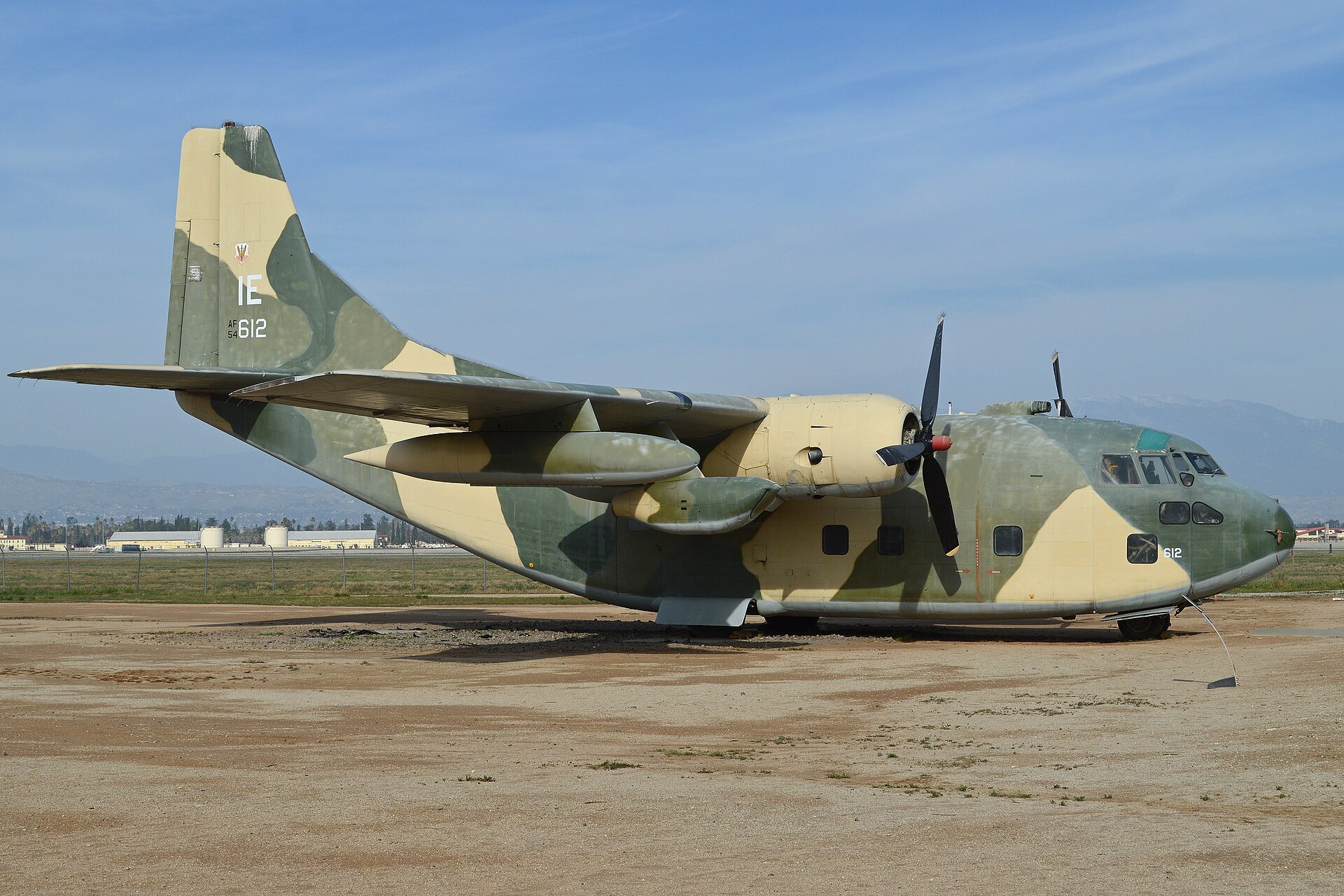
Fairchild C-123 Provider
The Thunder Pig
Born as a giant assault glider, the C-123 became Vietnam’s short-field workhorse: it landed under fire at Kham Duc, sprayed Agent Orange, flew covert missions and was shot down over Nicaragua in the Iran-Contra affair.
The C-123 Provider: how a glider became Vietnam’s short-field lifeline
On 12 May 1968 the Special Forces camp at Kham Duc, close to the Laotian border, was being overrun. The evacuation was over, or so the commanders thought, until it emerged that a three-man Air Force combat control team had been left behind. Lieutenant Colonel Joe M. Jackson of the 311th Air Commando Squadron put his C-123 into a steep descent onto a runway strewn with wreckage and reduced to some 2,200 feet. A rocket landed in front of the nose and failed to explode. The three men scrambled aboard and Jackson took off again through fire crossing the strip ahead of him. He received the Medal of Honor. It was the kind of landing the Provider had been built for: short, rough and dangerous.
The aircraft began as a glider. Chase Aircraft designed the big all-metal XCG-20 assault glider, then fitted it with two piston engines; the powered XC-123 first flew on 14 October 1949. The prototype was flown unpowered, with pistons and even with jets. Production went to Fairchild after the Air Force fell out with Kaiser-Frazer, which had taken control of Chase, and the first of some 300 Fairchild-built C-123Bs entered service in 1955. In all 307 were built. Its high wing, upswept tail and wide rear ramp let it carry 61 troops, 50 stretchers or about 24,000 lb of cargo into strips that bigger transports could not use. Saudi Arabia, Venezuela and Thailand were among the first foreign buyers.
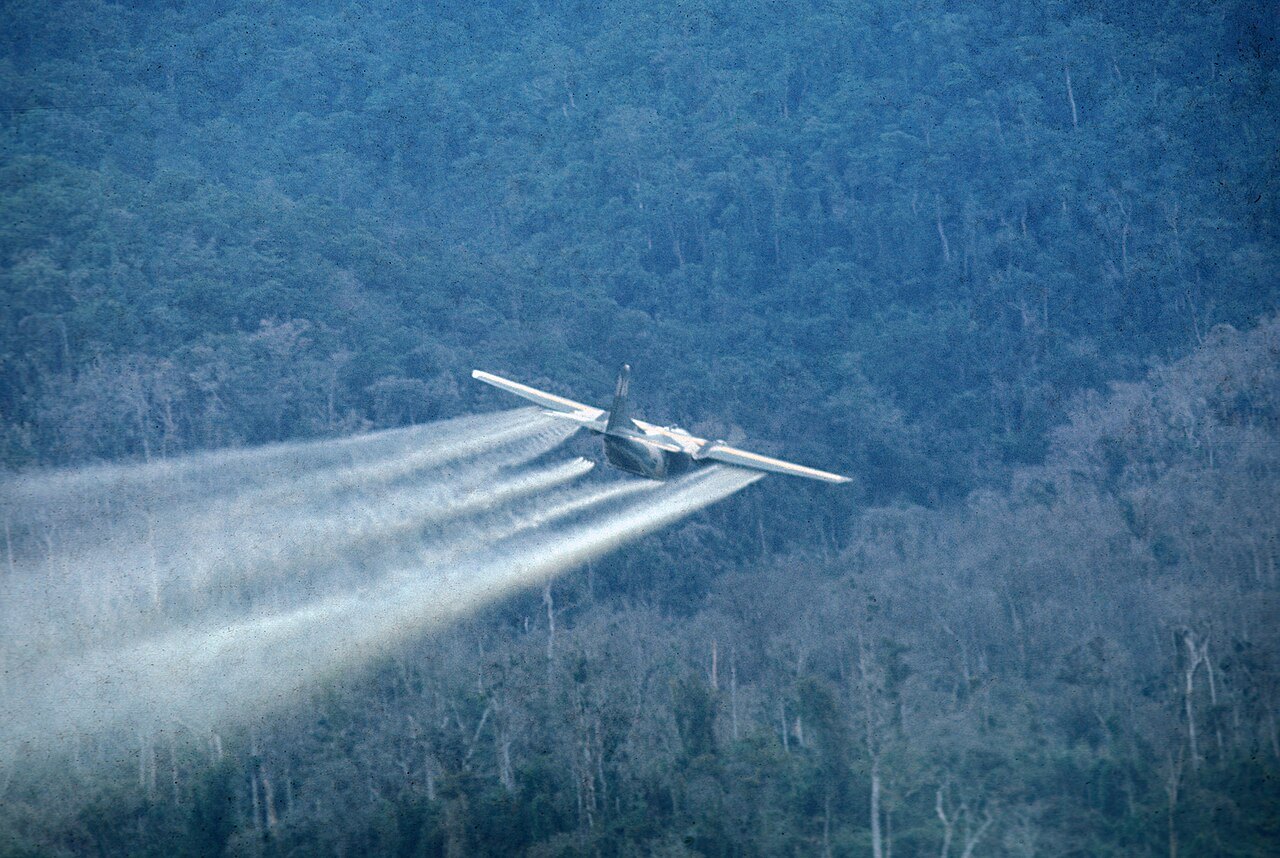
Vietnam made its reputation. From 1962 the Provider flew airdrops, resupply, evacuation and flare missions, and as the UC-123 it was the main aircraft of Operation Ranch Hand, the defoliation campaign that spread Agent Orange. From 1966 most were rebuilt as the C-123K, with two J85 jets under the wings for heavy, hot take-offs; crews called it the Thunder Pig. Taiwan’s Black Bat squadron flew it on covert missions, the Coast Guard used it for rescue, and in 1986 a former USAF C-123 shot down over Nicaragua exposed the Iran-Contra affair. The dioxin left in the Ranch Hand aircraft became a scandal of its own, and the last C-123K still flying now belongs to a museum in Pennsylvania.
01The C-123 at Kham Duc: the landing that won the Medal of Honor
Kham Duc was a Special Forces camp in a valley near the Laotian border, and by May 1968 North Vietnamese forces had surrounded it. The decision was made to evacuate by air, and transports flew in through heavy fire to bring out defenders and civilians. When the last aircraft had gone, it turned out that a three-man USAF Combat Control Team had been landed to control the final stages and was now stranded on the overrun camp.
Lieutenant Colonel Joe M. Jackson, a C-123 pilot with the 311th Air Commando Squadron at Da Nang, volunteered to go in. According to his Medal of Honor citation, he landed on a runway littered with debris and reduced to about 2,200 feet, in poor weather and under intense hostile fire. A rocket landed in front of the aircraft’s nose and did not explode. The team boarded and Jackson took off through fire that crossed the runway ahead of him.
The episode shows exactly why the Provider mattered in Vietnam. It could make a steep approach, stop in a short distance and get out again with a full load, and the C-123K’s auxiliary jets added the thrust needed for a heavy departure from a hot, high or damaged strip. Few transports could have attempted that landing at all.
02The C-123’s darker legacy: Ranch Hand and the Agent Orange residue
The Provider was the main aircraft of Operation Ranch Hand, the US Air Force herbicide campaign in Southeast Asia that began at the end of 1961. Converted UC-123B and UC-123K aircraft, fitted with tanks and spray booms, flew low over jungle, roadsides and crops to strip cover from the enemy. The most widely used herbicide was Agent Orange, contaminated with the dioxin TCDD.
When the campaign ended in 1971 the surviving spray aircraft were reassigned to Air Force Reserve units for cargo and aeromedical work, and the US Department of Veterans Affairs says that roughly 1,500 to 2,100 reservists trained and worked on the affected C-123s between 1972 and 1982, at Rickenbacker in Ohio, Westover in Massachusetts and Pittsburgh. A 2015 Institute of Medicine study collected sampling data, including on the aircraft known as Patches, tail number 56-4362, which tested as highly contaminated before it was cleaned up in the late 1990s. The Air Force shredded its remaining stored C-123s at Davis-Monthan in 2010. The VA now considers claims from reservists who had regular contact with these aircraft.
What makes the C-123 Provider special
A glider’s airframe
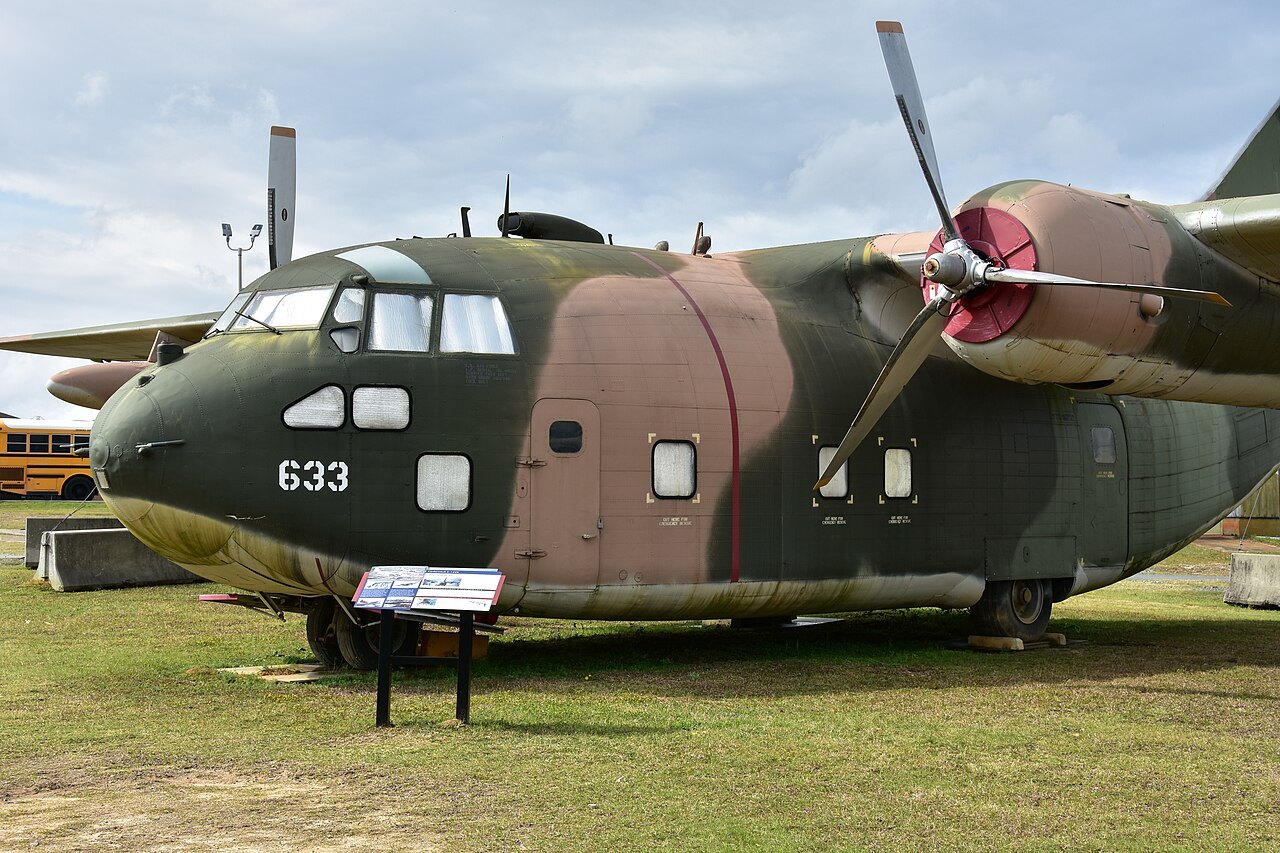
The C-123 inherited its shape from the Chase XCG-20 assault glider: a deep, boxy fuselage slung under a high, straight wing, an upswept rear fuselage and a ramp at the back. That meant a level cargo floor close to the ground, room for vehicles and guns, and the low-speed manners of an aircraft designed to land in fields. It could carry 61 equipped troops or 50 stretchers with attendants, and its rugged undercarriage was made for unprepared strips.
Pistons plus jets
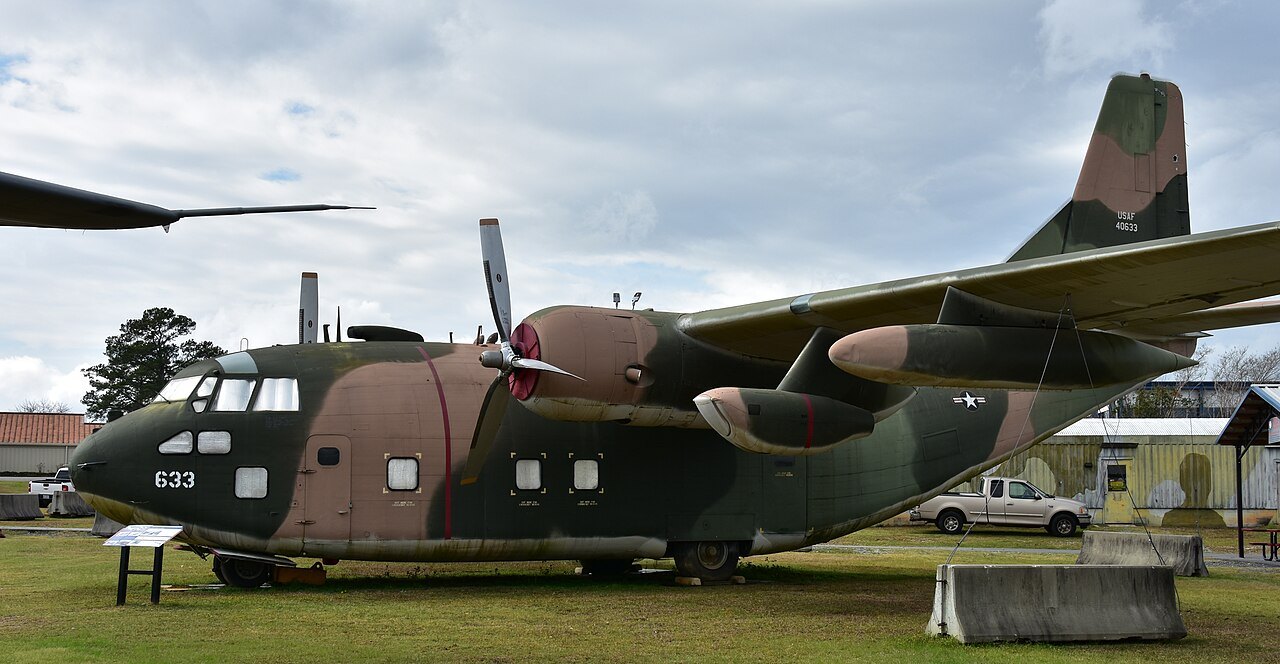
The standard C-123B relied on two 2,500 hp Pratt & Whitney R-2800 radials. In tropical heat with a full load that was not enough, so between 1966 and 1969 about 183 aircraft were converted to C-123K standard with a General Electric J85 turbojet pod under each wing. The jets were run for take-off, climb and engine-out safety, then throttled back. An earlier version, the C-123J, carried small Fairchild J44 jets on its wingtips.
One airframe, many secret jobs
Few transports were adapted for such odd work. The Provider sprayed defoliant, dropped flares for night strikes, flew as a forward air control platform and carried supplies to remote camps. Lockheed modified C-123Bs with jammers and terrain-following radar for covert flights over North Vietnam, two became sensor-laden AC-123K night hunters, and Coast Guard HC-123Bs flew long-range search and rescue and supported LORAN stations.
03The C-123’s specialist versions: from spray booms to night sensors
The Ranch Hand UC-123B and UC-123K carried internal tanks and underwing spray booms. The Black Bat Squadron of the Republic of China Air Force flew C-123Bs modified by Lockheed’s Skunk Works for CIA-sponsored covert insertion over North Vietnam, with electronic countermeasures. Under Project Duck Hook six more aircraft received terrain-following radar, Doppler navigation and jammers and flew classified missions from Nha Trang between 1966 and 1968.
Two aircraft became the AC-123K and NC-123K, fitted with low-light television, forward-looking infrared and a laser rangefinder for armed night surveillance along the trails. The Coast Guard’s HC-123B is easy to spot by its large nose radar; the service received its first in June 1958, operated eight in all from bases from Kodiak to Naples, and retired them by 1972.
Fairchild C-123 Provider specifications
Specifications
- Crew
- 4 (pilot, co-pilot, flight engineer, navigator); loadmaster as required
- Capacity
- 61 equipped troops, 50 stretchers plus 6 attendants, or about 10,900 kg (24,000 lb) of cargo
- Length
- 23.25 m (76 ft 3 in)
- Wingspan
- 33.53 m (110 ft 0 in)
- Height
- 10.39 m (34 ft 1 in)
- Empty weight
- 16,042 kg (35,366 lb)
- Max take-off weight
- 27,216 kg (60,000 lb)
- Powerplant
- 2 × Pratt & Whitney R-2800-99W radials, 2,500 hp each; C-123K adds 2 × General Electric J85-GE-17 turbojets
- Maximum speed
- 367–386 km/h (228–240 mph); US museums give 240 mph for the jet-boosted C-123K
- Cruise speed
- 278 km/h (173 mph)
- Range
- 1,666 km (1,035 mi) with maximum payload; ferry about 5,280 km (3,280 mi)
- Service ceiling
- 6,430–8,530 m (21,100–28,000 ft); sources differ widely, the higher figures being quoted for the jet-boosted C-123K
Costs & production
- Cost per flight hour
- No official figure; a hedged estimate for a privately operated C-123K today is in the low thousands of US dollars an hour, based on two R-2800 radials burning large quantities of avgas plus jet fuel for the J85s and heavy overhaul reserves, similar to other R-2800-powered twins
- Production
- 307 built: 5 by Chase, 302 by Fairchild; production ended in 1969 to 1970
- Programme
- XC-123 first flight 1949; C-123B in service 1955; about 183 converted to C-123K from 1966
04The C-123’s variants: glider to jet-boosted transport
- XCG-20 / XC-123: Chase assault glider and its powered prototype, first flown in 1949.
- C-123B: main production model with two R-2800 radials, built by Fairchild.
- C-123J: about ten aircraft with wingtip Fairchild J44 jets for short-field work, some on skis in Alaska.
- C-123K: about 183 conversions with underwing J85 jets and bigger wheels.
- UC-123B/K: Ranch Hand spray aircraft.
- AC-123K / NC-123K: two night sensor and attack aircraft.
- HC-123B: Coast Guard search and rescue and LORAN support.
- C-123T: one aircraft re-engined with Allison T56 turboprops for Thailand, first flown on 24 October 1980; the project was dropped in 1981 in favour of the C-130H.
05The C-123’s operating costs: radials, jets and residue
The Provider was never cheap to run. Two big radials and, on the K model, two turbojets meant two fuel types, two sets of maintenance skills and a thirsty aircraft. Surplus airframes that survived into civil hands worked as cargo carriers, sprayers and film aircraft, but the type’s association with dioxin ended any second career for the Ranch Hand airframes: the Air Force destroyed stored examples rather than sell them. Today the Air Heritage Museum in Beaver Falls, Pennsylvania, describes its C-123K Thunder Pig as the last flying example, kept airworthy by volunteers.
The C-123 from glider to Thunder Pig
Powered prototype
The Chase XC-123, a glider with engines, makes its first flight on 14 October.
Fairchild takes over
After the Air Force cancels the Kaiser-controlled Chase contract, Fairchild wins the order for 300 C-123Bs.
Into service
The first Fairchild-built C-123Bs join the US Air Force.
Coast Guard and a tragedy
The Coast Guard receives its first C-123B in June; in October a Thunderbirds support C-123 crashes near Payette, Idaho, killing 19.
Ranch Hand begins
UC-123 spray aircraft start defoliation flights in South Vietnam at the end of the year.
Vietnam
C-123s arrive in Southeast Asia for airdrop, resupply and evacuation work.
The K model
Conversion of about 183 aircraft to jet-boosted C-123K standard begins.
Khe Sanh and Kham Duc
Providers help resupply besieged Khe Sanh; on 12 May Joe Jackson’s rescue at Kham Duc earns the Medal of Honor.
Shot down over Nicaragua
On 5 October a former USAF C-123 carrying arms to the Contras is downed by a missile; the survivor’s capture exposes the Iran-Contra network.
Thunder Pig flies home
Air Heritage volunteers fly C-123K 54-664 out of desert storage to Beaver County, Pennsylvania, on 14 May.
Shredded
The Air Force shreds its remaining stored C-123s at Davis-Monthan because of dioxin contamination.
Stories & eyewitnesses: the C-123 in war and secrecy
Joe Jackson at Kham Duc
A C-123 dives onto an overrun camp to rescue three forgotten men.
Read the full story
Khe Sanh
Providers kept a besieged Marine base supplied in 1968.
Read the full story
Ranch Hand
The Provider was the aircraft of America’s defoliation war.
Read the full story
Patches and the reservists
Dioxin in the airframes reached a new generation of crews.
Read the full story
Shot down over Nicaragua
One missile, one parachute and a scandal in Washington.
Read the full story
The Thunderbirds’ worst day
A support C-123 crashed with team maintenance men aboard.
Read the full story
The last Thunder Pig
Volunteers flew a C-123K out of the desert after two weeks of work.
Read the full story
El Burro in Peru
A Vietnam veteran went to war again against the drug trade.
Read the full story
A bar in the jungle
A C-123 in Costa Rica now serves cocktails.
Read the full story
The C-123 in pictures
Where the C-123 flies and flew
The C-123 Provider’s record
The Provider was a support aircraft that spent its war in the line of fire: landing at besieged camps, dropping supplies and flares, and spraying herbicide at low level over hostile ground. One of its pilots won the Medal of Honor at Kham Duc, and its spray role left a toxic legacy that is still being dealt with.
See how training and combat types compare in the military aircraft statistics database. Figures are approximate.
Everything people ask about the C-123
Can I fly in a Fairchild C-123 Provider?
Why does the C-123K have jet engines?
Who designed the C-123?
What was the C-123’s role in Agent Orange spraying?
What happened to the C-123 shot down over Nicaragua?
Is any C-123 still flying?
What replaced the C-123?
You can’t fly the C-123.
These, you can.
Most of this museum you can only look at. These genuine military jets you can fly yourself with MiGFlug — with aerobatics and time on the controls.
 Fly the L-39 AlbatrosThe world’s most-flown jet trainer — aerobatics included
 Fly the F-104 Starfighter“The missile with a man in it”
 Fly the MiG-21The Cold War’s most-produced jet
 Fly the T-33 Shooting StarAmerica’s first jet trainer
 Fly the DH VampireA piece of early jet history
 Fly the S.211Agile Italian jet trainer
 Fly the MB-326The classic Aermacchi jet
 Fly the MiG-15The Soviet legend of the Korean War
Continue the tour
Every fact, checked
- Joe Madison Jackson, Medal of Honor citationCongressional Medal of Honor Society: the Kham Duc rescue of 12 May 1968
- C-123 ProviderGlobalSecurity: Chase origins, Fairchild production, variants and Vietnam service
- C-123K ProviderAir Mobility Command Museum: development, specifications and the history of 54-0658, El Burro
- Fairchild C-123K Provider ThunderpigAir Heritage Aviation Museum on 54-664, the last flying C-123
- C-123 Aircraft Agent Orange ExposureUS Department of Veterans Affairs on post-war residue exposure and eligibility
- Post-Vietnam Dioxin Exposure in Agent Orange-Contaminated C-123 AircraftInstitute of Medicine (2015): aircraft histories and sampling data, including Patches
- Fairchild C-123B ProviderCoast Guard Aviation History: HC-123B service 1958 to 1972
- Thunderbirds C-123B crashCheck-Six on the 1958 Payette, Idaho, accident
- The C-123TOldwings on the T56-powered conversion for Thailand
- El AviónThe Costa Rica restaurant built around a C-123