
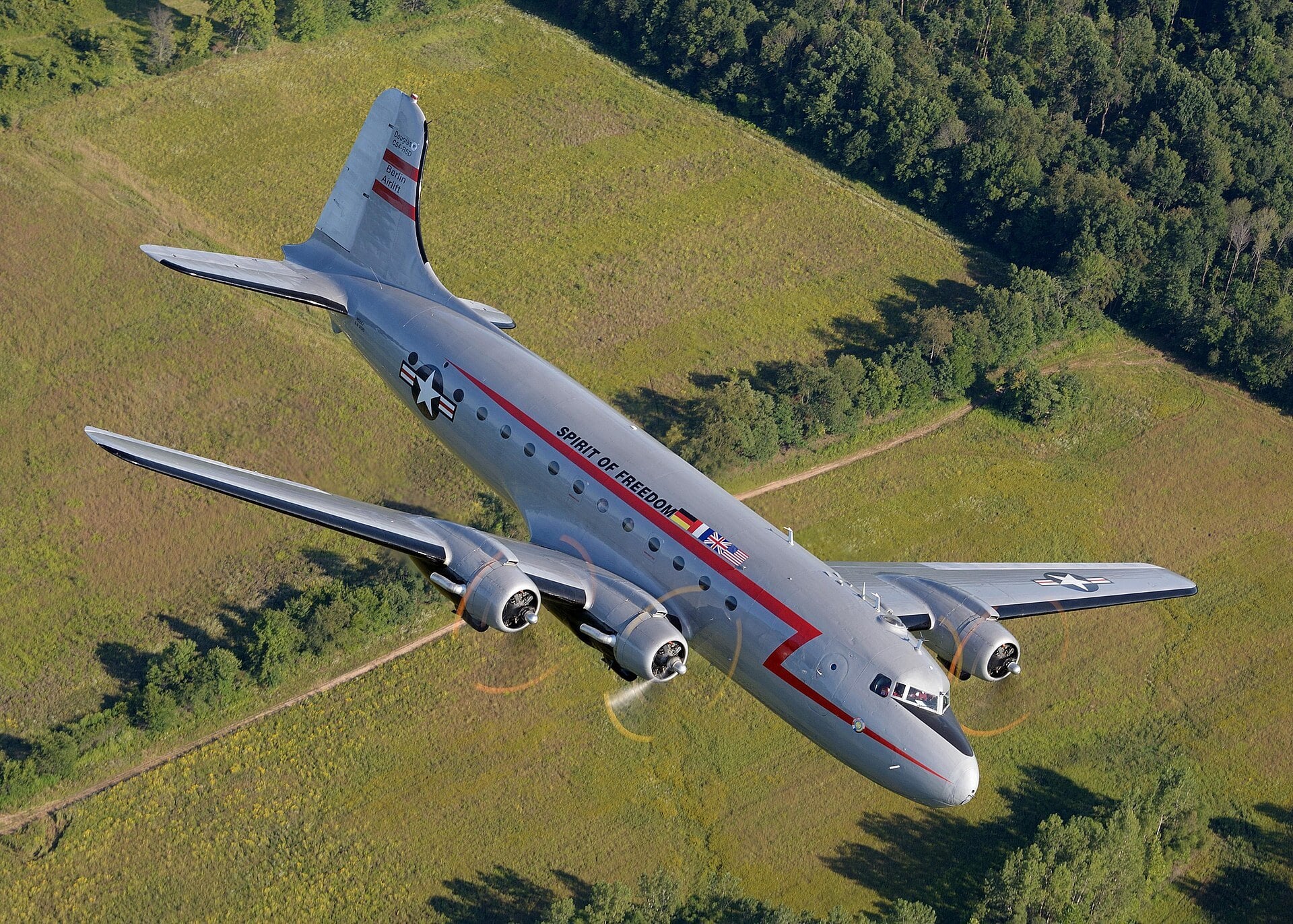
Douglas C-54 Skymaster
The Aircraft That Fed Berlin
The military DC-4 bridged oceans for the Allies in the Second World War, carried presidents as the Sacred Cow and, ten tons at a time, kept two million West Berliners alive through the Soviet blockade of 1948 to 1949.
The C-54 Skymaster: how an airliner fed a blockaded city
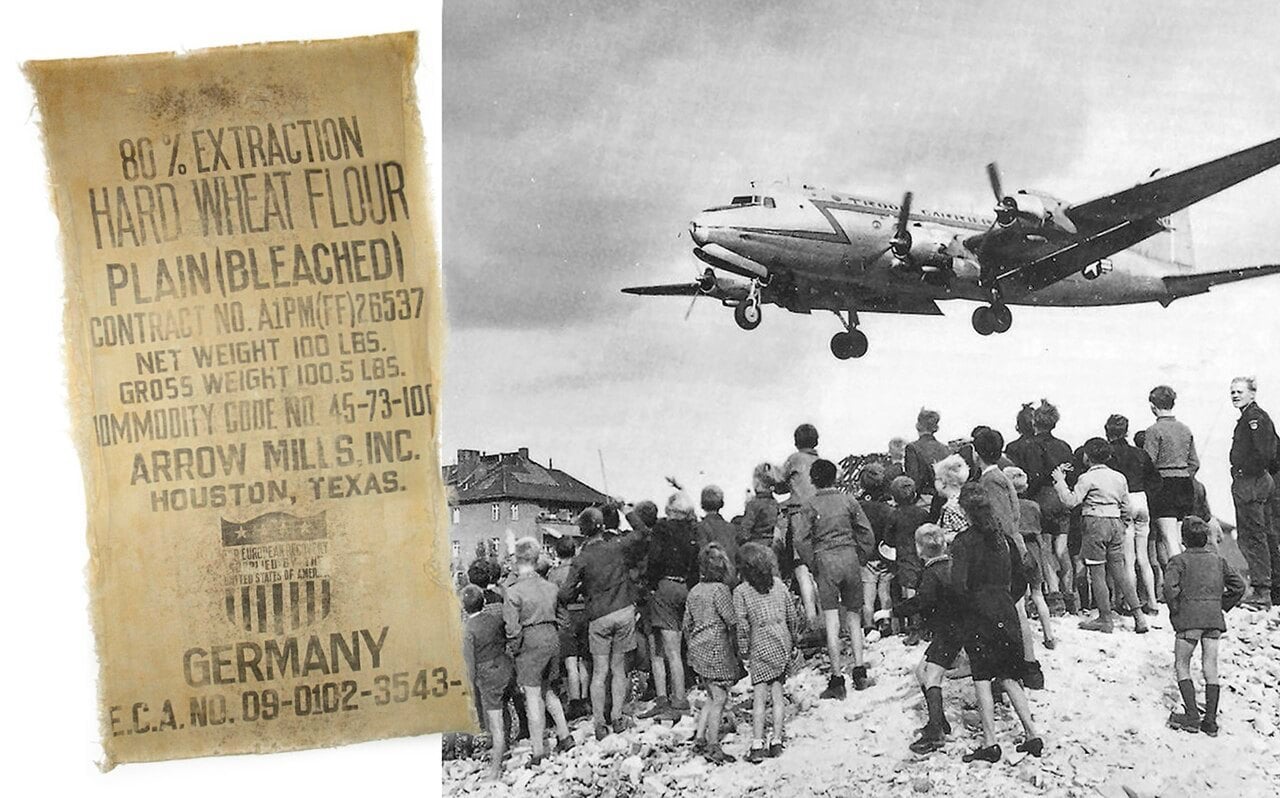
On 17 July 1948, a young C-54 pilot named Lieutenant Gail Halvorsen stopped at the fence at the end of Tempelhof airfield in Berlin and met a group of children watching the transports come in. He promised to drop them sweets on his next flight. Soon handkerchief parachutes loaded with chocolate were floating down over the city, and Operation Little Vittles made Halvorsen the best-known pilot of the Berlin Airlift. Behind the gesture was a feat of endurance. The aircraft he flew, the four-engined Douglas C-54 Skymaster, carried about ten tons on each trip, three times the load of a C-47, and it became the backbone of the lift. Without it, the blockade might well have worked.
The Skymaster was born as the DC-4, a four-engined airliner Douglas developed with the major American airlines. It had not yet entered airline service when the government took over the production line in December 1941, and the first military C-54 flew on 14 February 1942. The first two dozen were airliners commandeered on the line. Douglas built more than 1,160 for the US forces at Santa Monica and Chicago, and the Navy called its version the R5D. The C-54 gave Air Transport Command a transport that could fly non-stop across oceans; it flew the Atlantic and Pacific routes, the Hump to China and casualty evacuation home, and in doing so it laid the foundations of post-war long-range air transport.
One special aircraft, the VC-54C Sacred Cow, carried Presidents Roosevelt and Truman; Truman signed the National Security Act of 1947, which created the independent US Air Force, aboard it. Then came Berlin. When the Soviet Union blockaded the western sectors in June 1948, C-54s flew from Wiesbaden, Rhein-Main and Fassberg in tight streams around the clock, and by January 1949 there were some 225 Air Force C-54s and 24 Navy R5Ds on the lift. The Skymaster went on to fly the first evacuations of the Korean War, Antarctic support, rescue and research, and in civil hands it fought fires into the 1990s. Several survivors are on display in the United States and Europe.
01The C-54’s Berlin Airlift: the conveyor belt in the sky
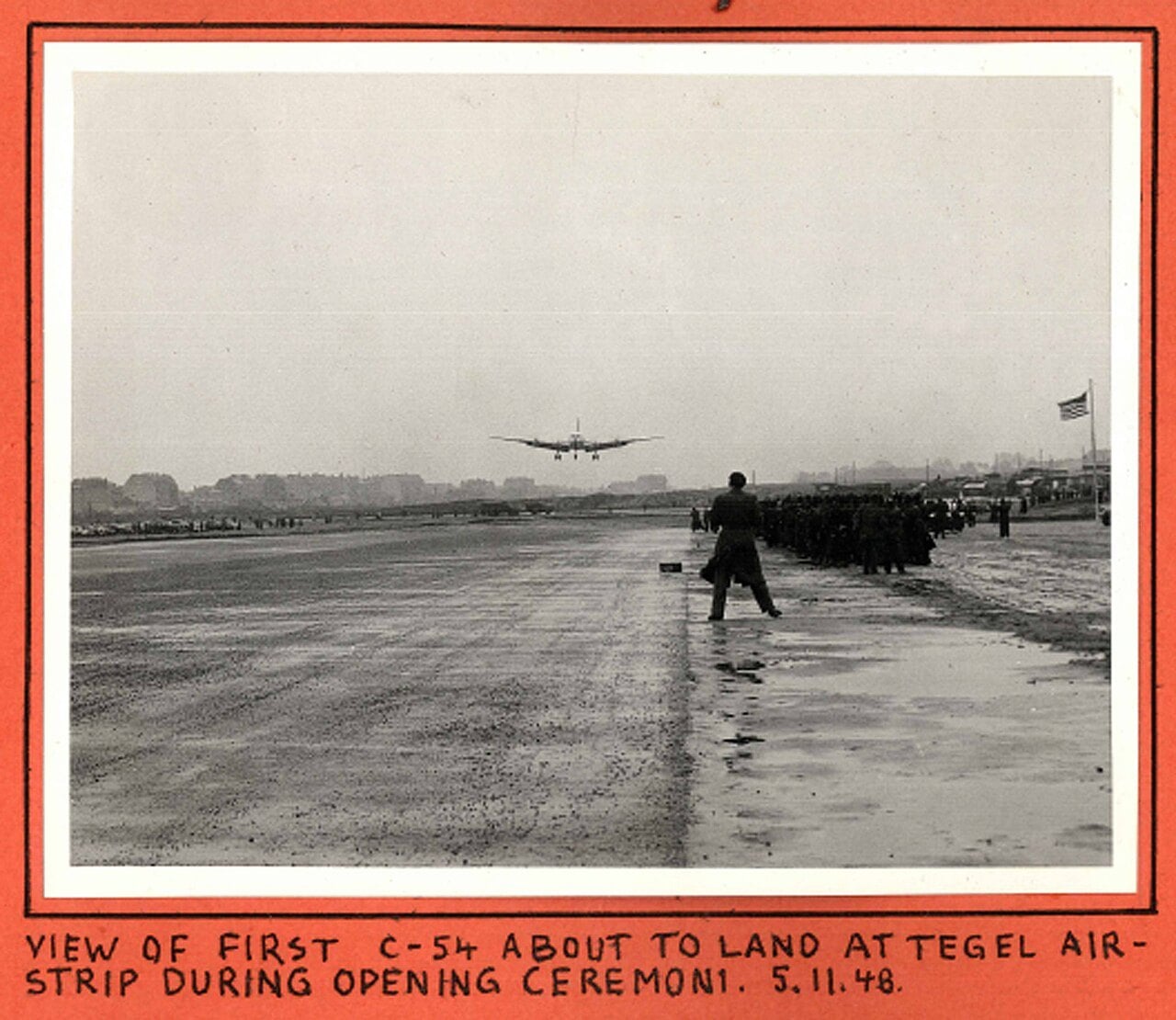
The Soviet blockade of West Berlin began on 24 June 1948, and the Americans flew their first supply sorties two days later, at first with C-47s. The C-47 carried only about three tons, and the city needed thousands of tons a day. On 27 June more C-54s were ordered to Germany, and from July the Skymasters steadily took over; the last C-47s were withdrawn by the end of September.
In late July Major General William H. Tunner, who had run the Hump airlift in the Second World War, took command. His method was relentless standardisation. Aircraft flew in blocks at fixed heights and intervals so that faster and slower types did not mix, ground crews learned to load ten tons of coal into a C-54 in minutes, and turnaround times in Berlin were cut sharply. Air Force Magazine records a Fassberg-based C-54 completing a round trip in under two hours with a turnaround of only 15.5 minutes.
The climax was the Easter Parade of 16 April 1949, when in 24 hours the lift flew nearly 1,400 flights carrying about 12,900 tons. The Soviets lifted the blockade on 12 May 1949, but flights continued until 30 September. In all the Airlift delivered about 2.3 million tons in some 277,000 flights. The cost was more than 100 accidents and dozens of lives: Air Force Magazine gives 77 dead, 31 of them Americans.
02The C-54 at war: oceans, the Sacred Cow and Korea
In the Second World War the C-54 gave the United States its first truly global military air transport. Its range let it fly non-stop between the United States and the European and Pacific theatres, carrying high-priority cargo, staff and passengers out and casualties home. Navy R5Ds flew the same work across the Pacific, among them casualty evacuation from Okinawa. One specially built aircraft, the VC-54C Sacred Cow, served as the presidential aircraft of both Roosevelt and Truman.
Five years later the Skymaster was at war again. On 25 June 1950, the first day of the Korean War, North Korean fighters attacked Kimpo and destroyed a USAF C-54 on the ground. Over the next days C-54s and C-47s evacuated hundreds of American civilians from Korea to Japan, 748 on 27 June alone and 851 US citizens by air in all by 28 June, under fighter escort. The heavier C-54 was soon found to damage the rough runways at Pusan, but as the front moved, C-54s of Combat Cargo Command landed supplies at newly captured airfields such as Suwon. The Strategic Air Command museum credits them with evacuating some 66,000 patients back to the United States.
What makes the C-54 Skymaster special
Four engines and a tricycle undercarriage
The DC-4 was a big step on from the DC-3: four 1,290 to 1,450 hp Pratt & Whitney R-2000 radials and a tricycle undercarriage that kept the cabin floor level on the ground. For a freighter that level floor mattered, making loading quick, and the extra engines gave real ocean-crossing safety. It could carry up to 50 passengers or around 28,000 to 32,500 lb of cargo, depending on version.
Range that shrank the world
With extra fuselage tanks a C-54 could fly some 3,900 miles, enough to link the United States non-stop with Europe and the Pacific bases. That range, combined with reliable engines, made Air Transport Command’s global network possible and taught a generation of military aircrew long-range navigation and scheduled operations that would shape airline flying after the war.
Ten tons into Tempelhof
On the Berlin Airlift the C-54 was the right aircraft at the right time. It carried about ten tons a trip, three times the load of a C-47, at similar speeds and with modest runway needs. Fitted out as a coal carrier, the C-54M, and flown in rigid streams, it turned an emergency improvisation into a reliable industrial process.
03The C-54’s versions: from commandeered airliners to coal haulers
- C-54: the first batch, airliners commandeered on the Douglas line.
- C-54A / B / D: main wartime cargo and passenger versions; the D used R-2000-11 engines.
- C-54E / G: later versions with improved engines and fuel systems, able to switch quickly between cargo and passengers.
- VC-54C Sacred Cow: the presidential transport of Roosevelt and Truman.
- C-54M: Berlin Airlift-era coal carriers.
- R5D: US Navy and Marine Corps versions; some served in Antarctica with Operation Deep Freeze.
- HC-54 / EC-54U and others: post-war rescue and electronic versions.
Douglas C-54 Skymaster specifications
Specifications
- Crew
- 4 to 6
- Capacity
- up to 50 passengers or about 12,700–14,700 kg (28,000–32,500 lb) of cargo, depending on version
- Length
- 28.6 m (93 ft 10 in)
- Wingspan
- 35.8 m (117 ft 6 in)
- Height
- 8.38 m (27 ft 6 in)
- Powerplant
- 4 × Pratt & Whitney R-2000 Twin Wasp radials, 1,290–1,450 hp each depending on version
- Maximum speed
- about 426–443 km/h (265–275 mph)
- Cruise speed
- about 306–327 km/h (190–203 mph)
- Range
- about 2,400 km (1,500 mi) standard; up to about 6,300 km (3,900 mi) maximum
- Service ceiling
- about 6,700 m (22,000 ft)
Costs & production
- Cost per flight hour
- No official figure for military service; a hedged estimate for a privately operated C-54 today is several thousand US dollars an hour, based on four R-2000 radials burning large quantities of avgas plus engine overhaul reserves; the Berlin Airlift Historical Foundation depends on donations to keep its aircraft flying
- Production
- More than 1,160 C-54s and R5Ds for the US forces (figures from 1,163 to about 1,240 depending on what is counted), built at Santa Monica and Chicago, 1942 to 1946
- Programme
- First C-54 flight 14 February 1942; backbone of the Berlin Airlift 1948–1949; last US Navy example retired on 2 April 1974
04The C-54’s operating costs: four radials and a flying museum
Four 14-cylinder radials make the Skymaster expensive to keep in the air: fuel, oil and engine overhauls dominate. That is why the survivors that still fly are mostly operated by enthusiasts. The Berlin Airlift Historical Foundation in New Jersey, founded in 1988 by Timothy Chopp, flies its C-54 Spirit of Freedom as a flying museum and classroom on donations and volunteer labour. Others had long second careers as fire-fighting tankers: the Travis and March Field museum aircraft both worked as fire bombers before being retired to display.
The C-54 from the DC-4 to the Berlin Airlift
Commandeered
In December the US government takes over the DC-4 production line before the airliner enters service.
First flight
The first military C-54 flies on 14 February, from Clover Field, Santa Monica.
Into the airlines
Surplus Skymasters re-equip airlines; KLM flies the first scheduled Amsterdam to New York service by a European airline.
A new air force
President Truman signs the National Security Act aboard the Sacred Cow, creating the independent US Air Force.
Operation Vittles
The Berlin blockade begins on 24 June; C-54s soon take over the airlift, and Gail Halvorsen starts dropping sweets on 17 July.
Easter Parade
On 16 April the lift delivers about 12,900 tons in 24 hours; the blockade ends on 12 May and flying stops on 30 September.
Korea
A C-54 is destroyed at Kimpo on 25 June, the first day of the war; C-54s evacuate American civilians to Japan.
Antarctica
Navy R5Ds support Operation Deep Freeze on the ice.
Navy retirement
The US Navy retires the last of its Skymasters.
Stories & eyewitnesses: the C-54 over Berlin and beyond
The Candy Bomber
A pilot’s promise to children at Tempelhof became a legend.
Read the full story
The Easter Parade
A one-day surge to show the blockade could not win.
Read the full story
Tunner’s stopwatch
Ten tons of coal loaded in six minutes.
Read the full story
The Sacred Cow
A presidential aircraft and the birth of the US Air Force.
Read the full story
First loss in Korea
A C-54 burned at Kimpo on the first day of the war.
Read the full story
Spirit of Freedom
A flying museum of the Berlin Airlift.
Read the full story
From Deep Freeze to fire bomber
One Skymaster served on the ice and over wildfires.
Read the full story
PH-TAR and the Atlantic
A Dutch C-54 pioneered post-war airline flying.
Read the full story
Film star at Robins
An Airlift veteran in a Robert Mitchum film.
Read the full story
The C-54 in pictures
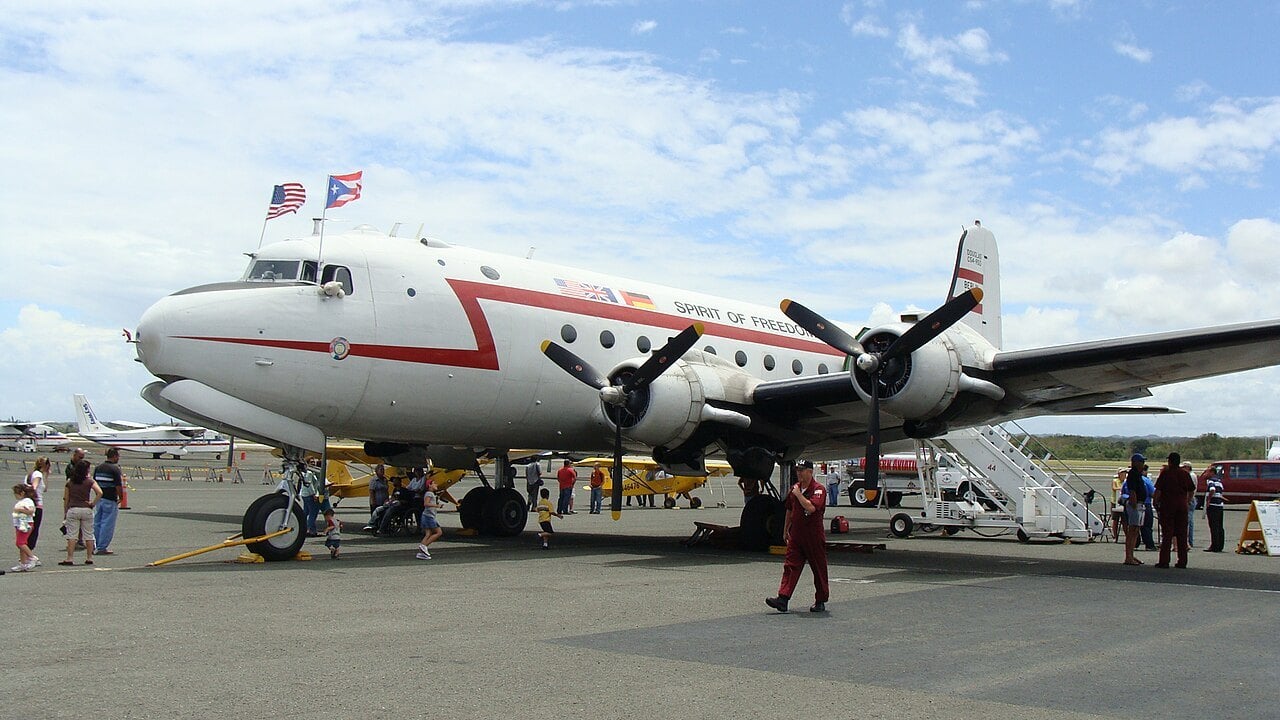
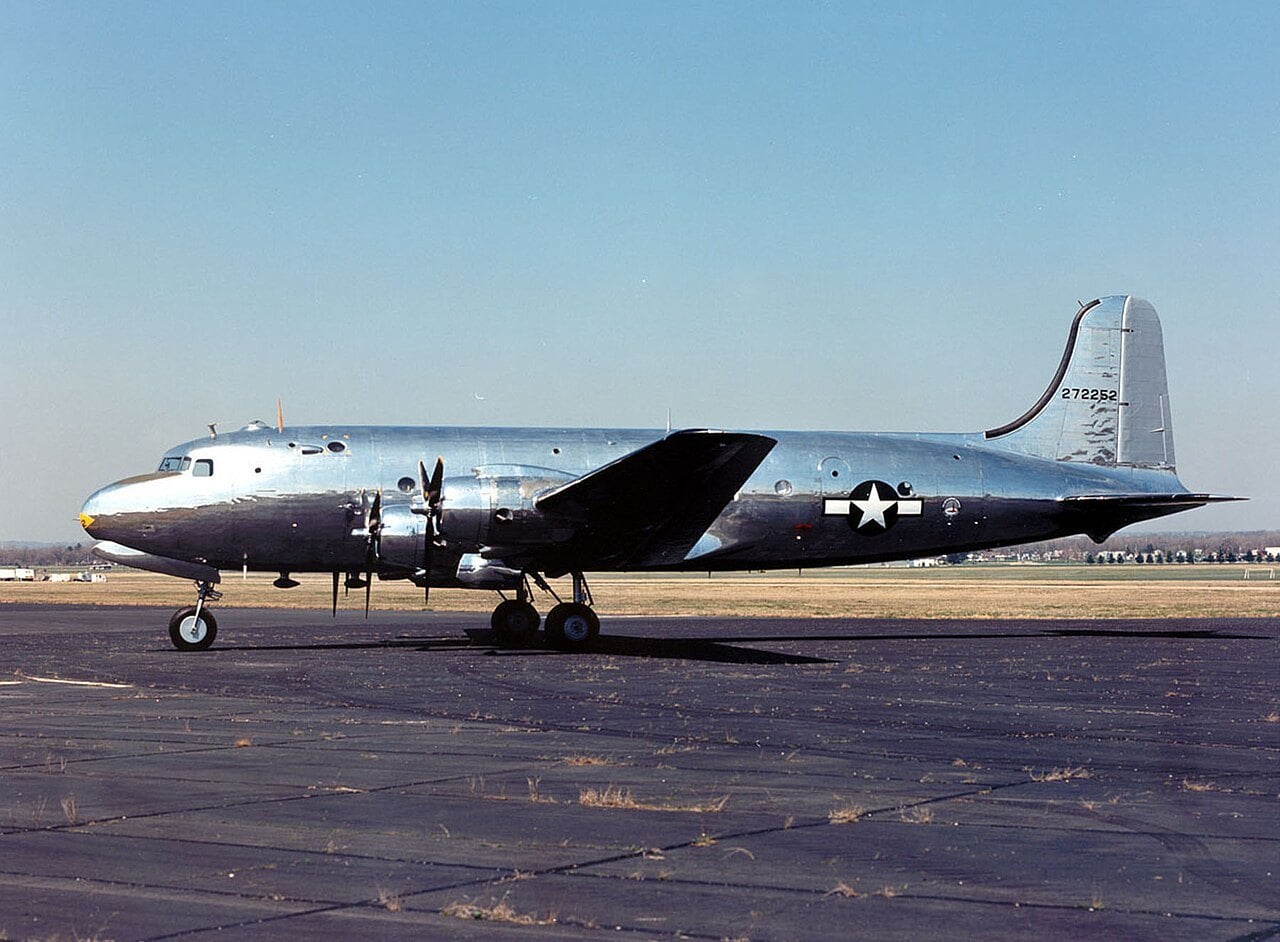
Where the C-54 flies and flew
The C-54 Skymaster’s record
The Skymaster was a transport, not a combat aircraft, but its service record is one of the greatest of any airlifter. It carried the Allied war effort across oceans, flew presidents, and delivered the bulk of the 2.3 million tons that kept West Berlin alive. In Korea it flew the first evacuations and some of the first losses.
See how training and combat types compare in the military aircraft statistics database. Figures are approximate.
Everything people ask about the C-54
Can I fly in a Douglas C-54 Skymaster?
What is the difference between the DC-4 and the C-54?
Why was the C-54 so important to the Berlin Airlift?
Who was the Candy Bomber?
What was the Sacred Cow?
How many C-54s were built?
Can I see a C-54 today?
You can’t fly the C-54.
These, you can.
Most of this museum you can only look at. These genuine military jets you can fly yourself with MiGFlug — with aerobatics and time on the controls.
 Fly the L-39 AlbatrosThe world’s most-flown jet trainer — aerobatics included
 Fly the F-104 Starfighter“The missile with a man in it”
 Fly the MiG-21The Cold War’s most-produced jet
 Fly the T-33 Shooting StarAmerica’s first jet trainer
 Fly the DH VampireA piece of early jet history
 Fly the S.211Agile Italian jet trainer
 Fly the MB-326The classic Aermacchi jet
 Fly the MiG-15The Soviet legend of the Korean War
Continue the tour
Every fact, checked
- The Berlin AirliftStewart M. Powell, Air Force Magazine, June 1998: C-54 numbers, Tunner, Easter Parade, losses
- Supplying a City by Air: The Berlin AirliftSmithsonian National Air and Space Museum on the Airlift and the C-54
- The Berlin AirliftBerlin Airlift Historical Foundation: dates, tonnage, flights, Halvorsen
- Berlin Airlift Historical FoundationThe flying museum C-54 Spirit of Freedom
- Korean War chronologyAir Force Magazine: C-54 losses and evacuations in June 1950
- Douglas C-54D SkymasterPima Air and Space Museum on development and 42-72488
- C-54 Skymaster / R5DMarch Field Air Museum on the commandeered line, first flight and variants
- C-54DTravis AFB Heritage Center on the Sacred Cow and 42-72560
- C-54D SkymasterStrategic Air Command and Aerospace Museum on service and Korean War medevac
- C-54G SkymasterMuseum of Aviation on production and 45-579
- Douglas C-54A SkymasterAviodrome on its KLM-liveried C-54A