
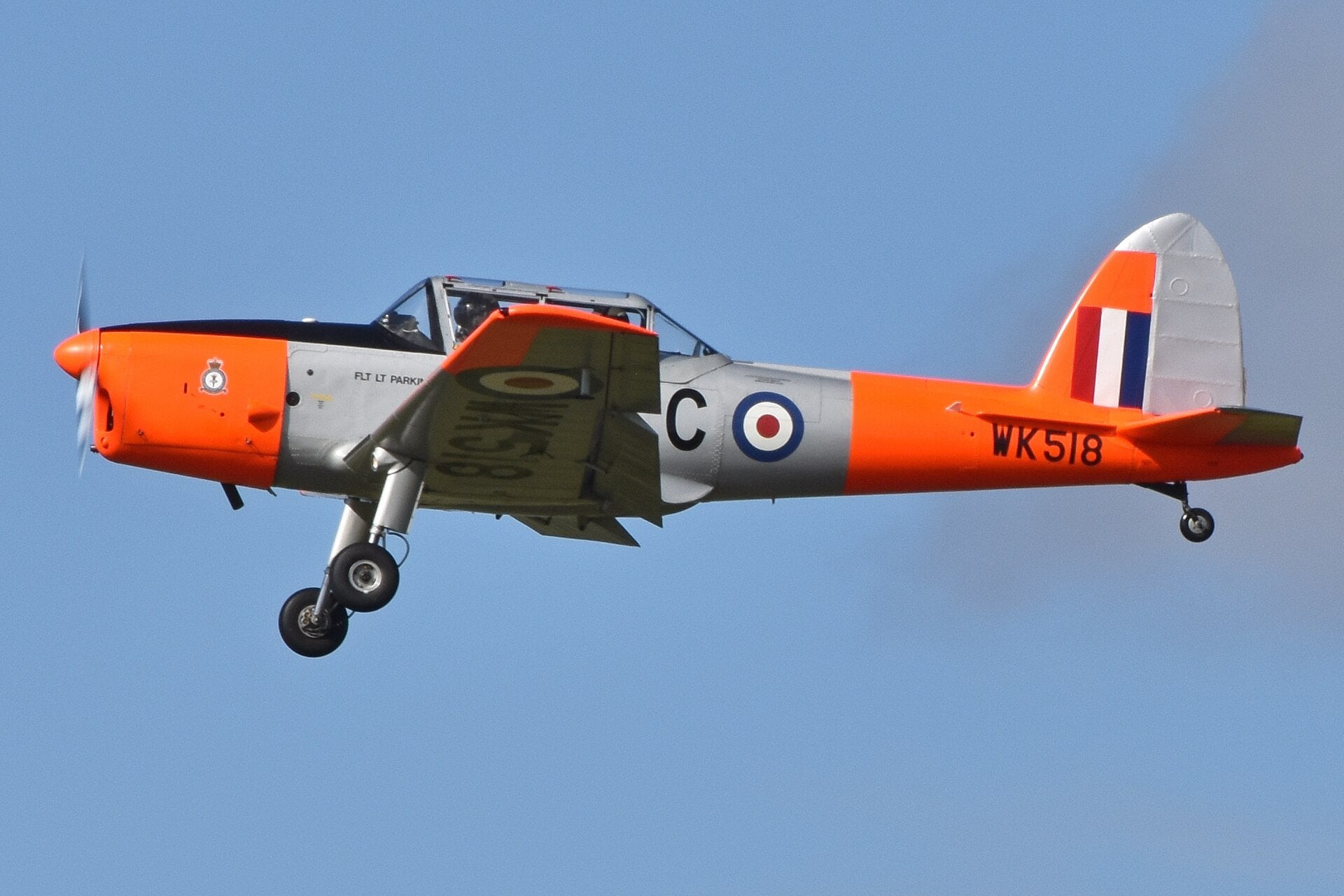
de Havilland Canada DHC-1 Chipmunk
The Tiger Moth’s Successor
Canada’s first home-designed aeroplane became the trainer on which a generation of RAF pilots, two royal princes and countless air cadets first took control, and hundreds still fly today.
The Chipmunk: how a Toronto design replaced the Tiger Moth
On 22 May 1946 a small, silver monoplane lifted off from Downsview, north of Toronto. At the controls was Pat Fillingham, a test pilot sent across the Atlantic by the parent de Havilland company, and the aircraft was CF-DIO-X, the first DHC-1 Chipmunk. Its designer was Wsiewołod Jakimiuk, a Polish engineer who had escaped to Canada during the war and was now chief engineer at de Havilland Canada. His brief was simple and urgent: the Tiger Moth biplane, which had taught the Commonwealth to fly, belonged to another age. Jakimiuk answered with a low-wing cantilever monoplane with an enclosed cockpit under a sliding canopy, flaps, brakes and room for a radio, while keeping the familiar 145 hp Gipsy Major engine that every Tiger Moth mechanic already knew.
The Chipmunk was evaluated by the RAF at Boscombe Down and chosen over the Fairey Primer as the service’s new elementary trainer. That decision turned a modest Canadian project into a large British programme. Of the 1,284 Chipmunks built, about 1,000 came from de Havilland’s British lines at Hatfield and Chester, 217 from Downsview and 66 from OGMA in Portugal. The RAF took 735 as the Chipmunk T.10, entering service in 1950 with Reserve Flying Schools and University Air Squadrons. For the next four decades the Chipmunk was the first military aeroplane that thousands of young Britons ever touched: national servicemen, university cadets, Army and Navy aircrew, and finally air cadets on Air Experience Flights, the last of which gave up the type in 1996.
The Chipmunk never fired a shot, but its career was far from sheltered. RAF Chipmunks patrolled Cyprus during the EOKA emergency and, from RAF Gatow in West Berlin, flew covert photographic sorties over the Soviet sector until 1990. It taught Prince Philip and the future King Charles III to fly, carried two RAF crews around the Northern Hemisphere in 1997, and became the basis for Art Scholl’s clipped-wing Super Chipmunk display aircraft. Military operators from Portugal and Canada to Thailand and Lebanon used it to grade and train pilots. Today the RAF’s Battle of Britain Memorial Flight still keeps two for tailwheel training, and hundreds more fly in private hands, known to their owners simply as the Chippie.
01The Chipmunk’s design: Jakimiuk’s answer to the Tiger Moth
De Havilland Canada had spent the Second World War building Tiger Moths, Ansons and Mosquitoes to British designs. The DHC-1 was its first original aircraft, and its designer, Wsiewołod Jakimiuk, brought a Polish engineering school’s taste for clean, stressed-skin monoplanes. The result was a low-wing, all-metal aircraft with fabric-covered control surfaces, a conventional tailwheel undercarriage and a two-bladed fixed-pitch propeller driven by the 145 hp de Havilland Gipsy Major.
The features that mattered most were the ones a student would never notice until something went wrong. Jakimiuk fitted small strakes ahead of the tailplane to improve spin recovery and stall-break strips on the wing leading edges so that the stall arrived predictably. The enclosed cockpit, with instructor behind student in tandem, made long sessions of circuits bearable in a Canadian or Yorkshire winter. Flaps and wheel brakes introduced students to the controls they would meet in operational aircraft, something the Tiger Moth could not do.
The prototype, CF-DIO-X, flew on 22 May 1946 with Pat Fillingham at the controls. Canadian production followed from 1947 and the Royal Canadian Air Force took deliveries from 1948, eventually receiving 113, of which 34 went to flying clubs for refresher training of reserve pilots. But it was the RAF evaluation at Boscombe Down, where the Chipmunk beat the Fairey Primer, that secured the type’s future and moved the centre of production to Britain.
What makes the Chipmunk special
A monoplane that flies like a trainer should
The Chipmunk handles crisply, with light, well-harmonised controls and a clear, readable stall. That combination is exactly what an instructor wants: the aircraft rewards accurate flying and shows a student’s errors immediately, without biting. Spin strakes on the rear fuselage and stall strips on the wing were added specifically to make spinning and stalling, the core of elementary training, predictable and recoverable. Many pilots who later flew jets remember the Chipmunk as the aircraft that actually taught them to fly.
The tailwheel classroom
With a conventional tailwheel undercarriage and a narrow view over the long nose, the Chipmunk demands active feet on take-off and landing. That is why it outlived its primary training role inside the RAF: the Battle of Britain Memorial Flight uses its Chipmunks to teach and keep current pilots who will go on to fly the Spitfire, Hurricane and Lancaster. Military museums and historic flights in the Army and Royal Navy did the same, keeping the type in uniform long after the jet age had swept away its contemporaries.
A Gipsy Major and a simple airframe
The Chipmunk’s inverted four-cylinder Gipsy Major was the same engine family that powered the Tiger Moth, so air forces could switch trainers without retraining their mechanics or changing their spares system. The aircraft itself is simple: an all-metal structure, fabric-covered control surfaces, fixed undercarriage and fixed-pitch propeller. That simplicity is the reason so many survive. Ex-military Chipmunks have been re-engined with Lycoming O-360s, fitted out as glider tugs and crop-sprayers, and rebuilt as single-seat aerobatic machines.
02The Chipmunk’s Super Chipmunk conversions: from trainer to air-show star
The most dramatic Chipmunks are not trainers at all. In 1968 the American aerobatic and film pilot Art Scholl bought a Canadian-built DHC-1A and rebuilt it as a single-seater. According to the Smithsonian’s National Air and Space Museum, he replaced the 145 hp engine with a 260 hp Lycoming GO-435, shortened each wing by 20 inches, enlarged the fin and rudder by about a quarter, fitted retractable landing gear and installed smoke generators. Painted as the Pennzoil Special, it became one of the best-known display aircraft in North America.
Other pilots followed with their own Super Chipmunks, typically combining a much bigger engine, clipped wings and inverted fuel and oil systems for sustained negative-g flight. The conversions showed how much the original structure could take, although they bear little resemblance to the docile trainer that Jakimiuk designed. Scholl was killed in 1985 while filming aerial sequences for Top Gun; his estate donated the Pennzoil Special to the Smithsonian in 1987, and it is displayed at the Steven F. Udvar-Hazy Center in Virginia.
de Havilland Canada DHC-1 Chipmunk specifications
Specifications
- Crew
- 2 (tandem)
- Length
- 7.75 m (25 ft 5 in)
- Wingspan
- 10.46 m (34 ft 4 in)
- Height
- 2.16 m (7 ft 1 in)
- Wing area
- 16.0 m² (172 sq ft)
- Empty weight
- 646–688 kg (1,425–1,517 lb), depending on source and equipment fit
- Max take-off weight
- 914 kg (2,014 lb) for the T.10; up to 998 kg (2,200 lb) is also published
- Powerplant
- 1 × de Havilland Gipsy Major 8 inverted 4-cylinder inline, 145 hp (108 kW), two-bladed fixed-pitch propeller
- Maximum speed
- 222 km/h (138 mph) at sea level
- Cruise speed
- 166 km/h (103 mph)
- Range
- about 445 km (280 mi)
- Service ceiling
- 4,800 m (15,800 ft)
- Climb rate
- 4.6 m/s (900 ft/min)
- Armament
- None
Costs & production
- Market value today
- Airworthy civil examples are commonly advertised in the region of £50,000 to £100,000, depending on hours, engine and history (2020s market, indicative only)
- Cost per flight hour
- Roughly £150 to £250 per hour for a private or group-owned example: an estimate based on UK group-ownership rates, a Gipsy Major burning around 25 to 30 litres of fuel an hour, and engine overhaul reserves
- Production
- 1,284 built: about 1,000 in the UK (Hatfield and Chester), 217 in Canada (Downsview, 1947 to 1956), 66 in Portugal (OGMA, 1955 to 1961)
- Programme
- RAF deliveries of 735 T.10s from 1949 to 1953; front-line training use ended in 1996
03The Chipmunk’s variants: from T.10 to Supermunk
- DHC-1 prototype: CF-DIO-X, first flown 22 May 1946 with a 145 hp Gipsy Major 1C.
- Chipmunk T.10: British-built RAF trainer with the Gipsy Major 8; 735 delivered.
- Chipmunk Mk 20: British-built military export version with the Gipsy Major 10 series.
- Chipmunk Mk 21: civil version of the Mk 20.
- Mk 22 and 22A: ex-RAF T.10s converted for civil use, the 22A with extra fuel.
- Mk 23: a handful of T.10s converted for agricultural spraying.
- Bristol Masefield: touring conversion with a luggage compartment.
- Super Chipmunk: single-seat aerobatic conversions with 260 hp Lycoming engines, clipped wings and, in some cases, retractable gear.
- Supermunk: glider-tug conversions with 180 hp engines.
04The Chipmunk’s operating costs: cheap to fly, expensive to neglect
No air force published a per-hour figure for the Chipmunk, so any cost today has to be built from civil operation. A Gipsy Major burns roughly 25 to 30 litres of avgas an hour, oil consumption is noticeable, and the engine needs a costly overhaul at the end of its life. UK groups commonly charge members somewhere in the region of £150 to £250 per flying hour once fuel, insurance, hangarage and overhaul reserves are spread across the year. These are estimates, not quoted prices, and they rise sharply if the airframe needs corrosion work or a fabric re-cover on its control surfaces. For comparison, the Chipmunk is cheaper to run than any warbird with a radial engine or turbine, which is why so many survive in private hands.
The Chipmunk from Downsview to the Memorial Flight
First flight at Downsview
Pat Fillingham flies the prototype CF-DIO-X from Toronto on 22 May.
Royal Canadian Air Force deliveries
The RCAF begins receiving the first of 113 Chipmunks for ab initio training and flying clubs.
RAF service begins
The Chipmunk T.10 replaces the Tiger Moth with RAF Reserve Flying Schools and University Air Squadrons.
Portugal orders
The Portuguese Air Force receives its first Chipmunks, later building 66 under licence at OGMA.
A royal first solo
Prince Philip flies Chipmunk WP912 solo on 20 December.
Berlin operations
Chipmunks at RAF Gatow begin flights over Berlin that will continue until 1990.
Cyprus patrols
Eight Chipmunks are flown out to Cyprus inside Blackburn Beverleys for internal security work with No. 114 Squadron.
The Prince of Wales learns to fly
Prince Charles goes solo in Chipmunk WP903 at RAF Tangmere on 14 January.
RCAF retirement
The last Chipmunks leave Canadian military service.
End of RAF training use
Air Experience Flights hand over to the Bulldog, ending 46 years of Chipmunk instruction for air cadets.
Around the Northern Hemisphere
Two RAF Chipmunks complete Exercise Northern Venture: 16,259 miles in 64 days.
Stories & eyewitnesses: the Chipmunk from Berlin to Hollywood
The Chipmunk’s Polish designer
An exiled engineer gave Canada its first home-grown aeroplane.
Read the full story
Beating the Fairey Primer
An evaluation at Boscombe Down decided who would train the RAF.
Read the full story
Prince Philip’s first solo
WP912 is preserved at the RAF Museum because of one December flight.
Read the full story
The Red Dragon and a future king
Chipmunk WP903 taught the Prince of Wales to fly.
Read the full story
Spying over Berlin
An innocent-looking trainer flew covert photo sorties for three decades.
Read the full story
Chipmunks over Cyprus
In 1958 trainers went to work in an emergency.
Read the full story
Northern Venture: around the world on 145 hp
Two RAF Chipmunks circled the Northern Hemisphere in 1997.
Read the full story
Art Scholl’s Pennzoil Special
A Canadian trainer became a Hollywood stunt pilot’s air-show weapon.
Read the full story
The Memorial Flight’s tailwheel tutors
Why the RAF still keeps two Chipmunks.
Read the full story
Portugal’s long-serving Chipmunks
The Portuguese Air Force kept the type for grading pilots into the 21st century.
Read the full story
The Chipmunk in pictures
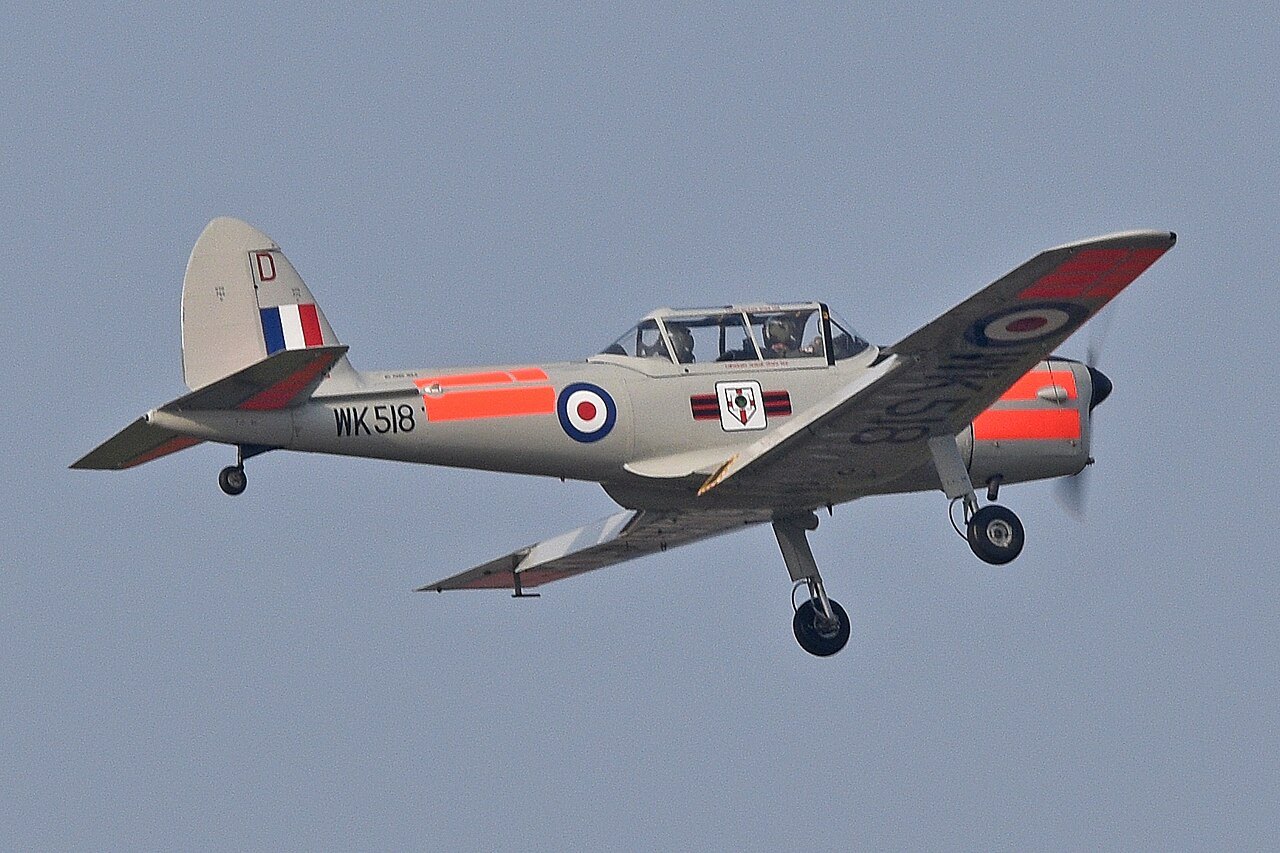
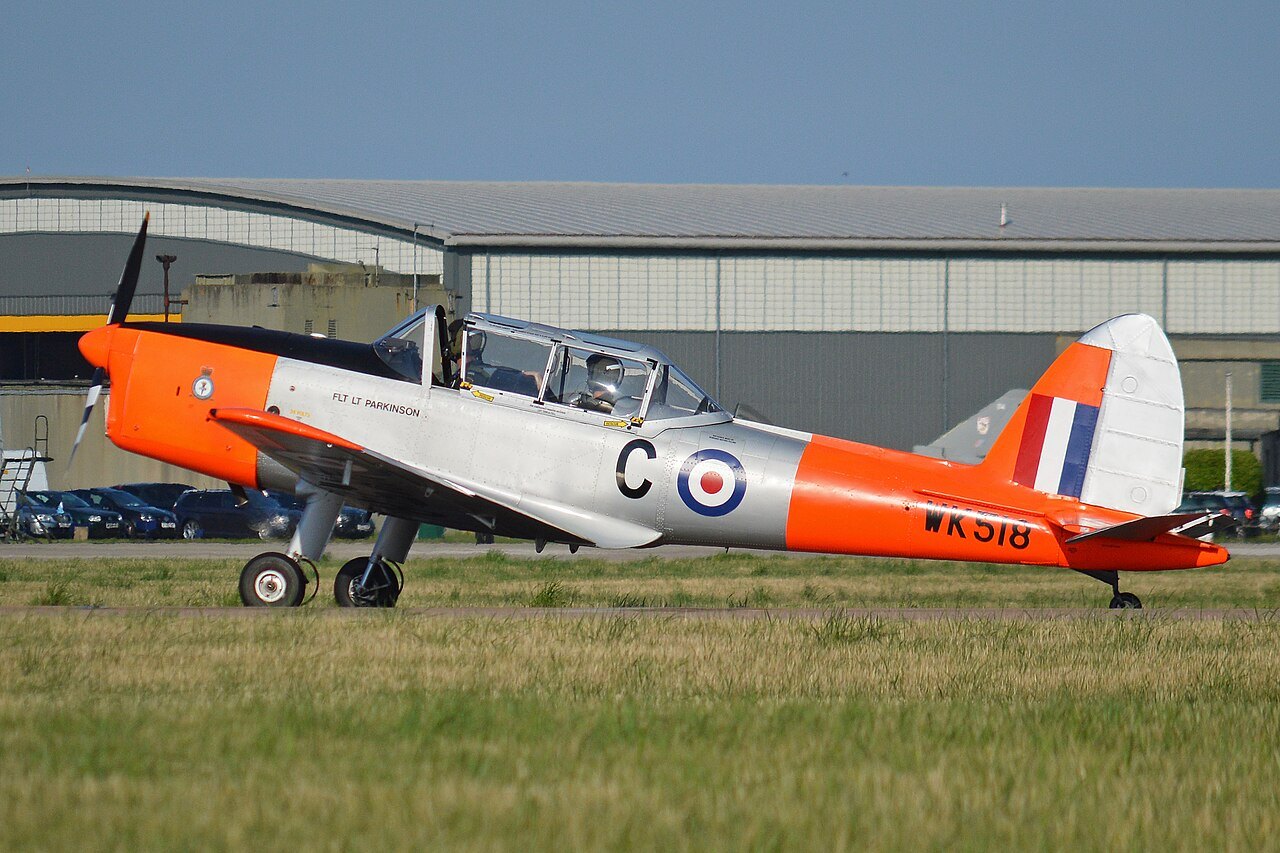
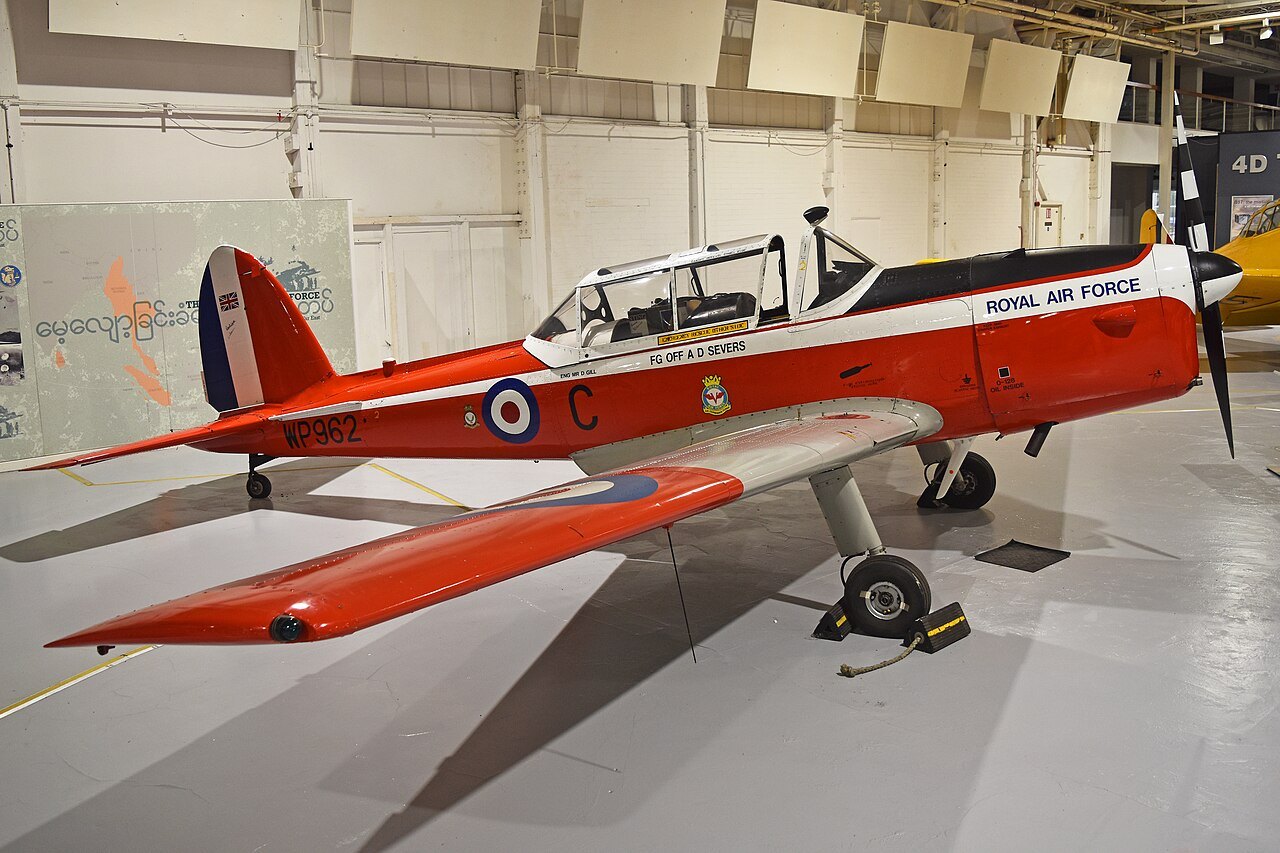
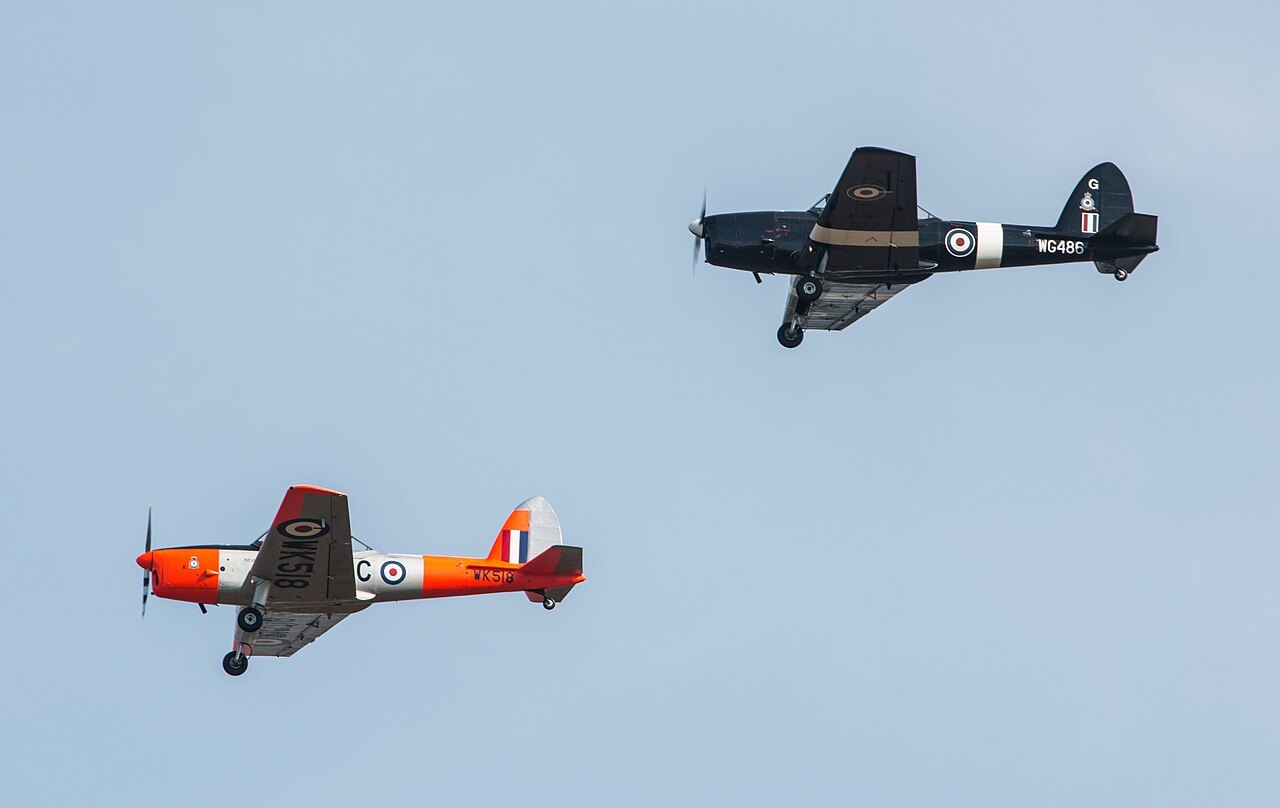
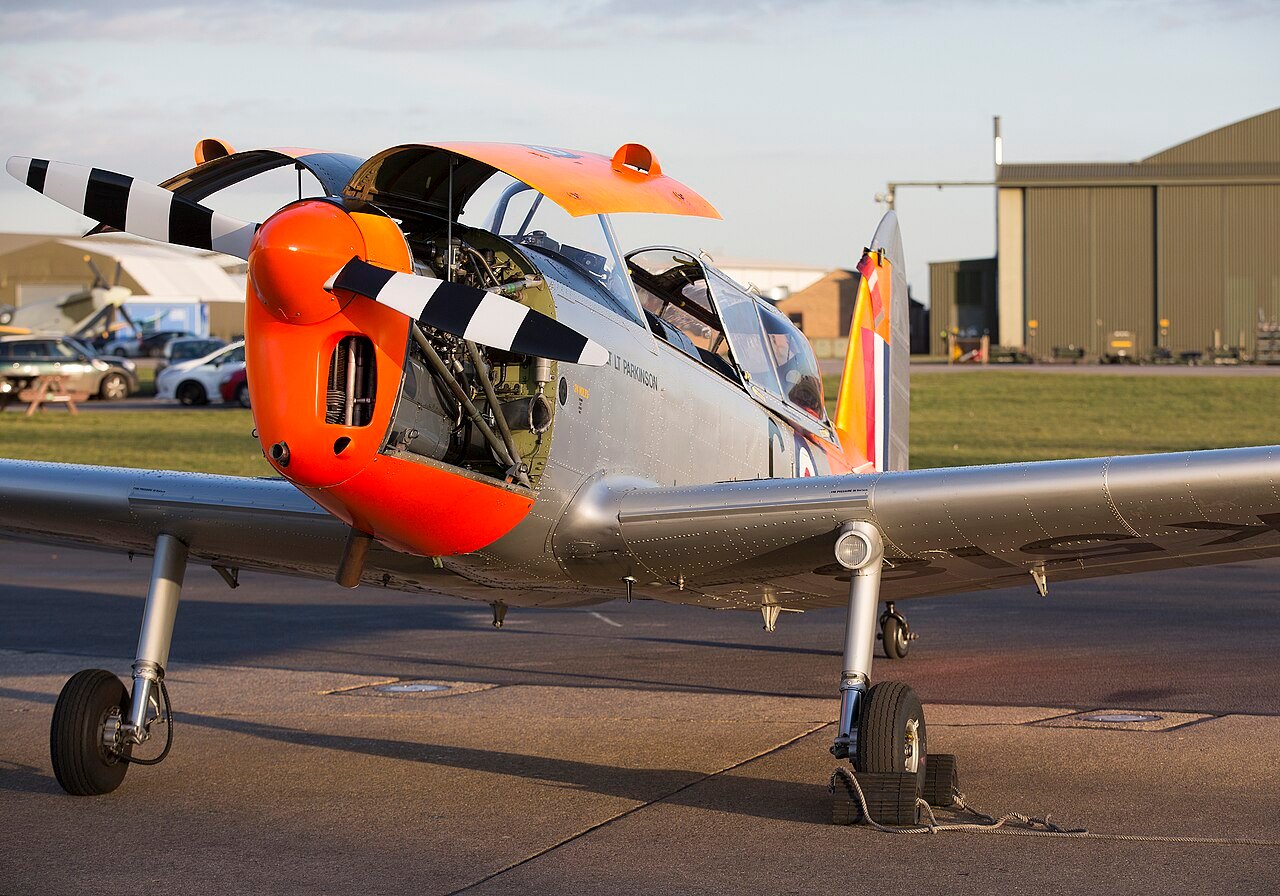
Where the Chipmunk flies and flew
The Chipmunk’s record
The Chipmunk was never armed and never fought, but its service record is not purely academic. RAF Chipmunks flew internal security patrols in Cyprus in 1958 and 1959 and covert photographic sorties over Berlin from 1956 to 1990, while generations of pilots took their first lessons in it.
See how training and combat types compare in the military aircraft statistics database. Figures are approximate.
Everything people ask about the Chipmunk
Can I fly in a de Havilland Canada DHC-1 Chipmunk?
Who designed the Chipmunk?
How many Chipmunks were built?
What aircraft did the Chipmunk replace?
Did the Chipmunk ever see operational service?
Is the Chipmunk still in military service?
Which famous pilots learned on the Chipmunk?
You can’t fly the Chipmunk.
These, you can.
Most of this museum you can only look at. These genuine military jets you can fly yourself with MiGFlug — with aerobatics and time on the controls.
 Fly the L-39 AlbatrosThe world’s most-flown jet trainer — aerobatics included
 Fly the F-104 Starfighter“The missile with a man in it”
 Fly the MiG-21The Cold War’s most-produced jet
 Fly the T-33 Shooting StarAmerica’s first jet trainer
 Fly the DH VampireA piece of early jet history
 Fly the S.211Agile Italian jet trainer
 Fly the MB-326The classic Aermacchi jet
 Fly the MiG-15The Soviet legend of the Korean War
Continue the tour
Every fact, checked
- RAF Museum: De Havilland Chipmunk T.10 WP912Prince Philip’s first solo; RAF service dates
- RAF Museum: Chipmunk T.10 WP962 individual historyRAF production batches; Northern Circle and Northern Venture
- Memorial Flight Club: Chipmunk 75th anniversaryFirst flight, Fairey Primer evaluation, Cyprus, Berlin, BBMF airframes
- Aircrashsites.co.uk: Chipmunk WG486 at RAF ConingsbyWG486 Berlin reconnaissance history
- Smithsonian National Air and Space Museum: DHC-1A Chipmunk, Pennzoil SpecialArt Scholl’s Super Chipmunk; production totals
- Northern Times (PA): Vintage plane King learned to fly in takes to the skyWP903 and King Charles III’s training at Tangmere
- Afterburner: 22 May 1946, first flight of DHC-1 ChipmunkFirst flight background
- Historic Army Aircraft Flight: De Havilland Canada DHC-1 ChipmunkArmy Air Corps use and preserved example