
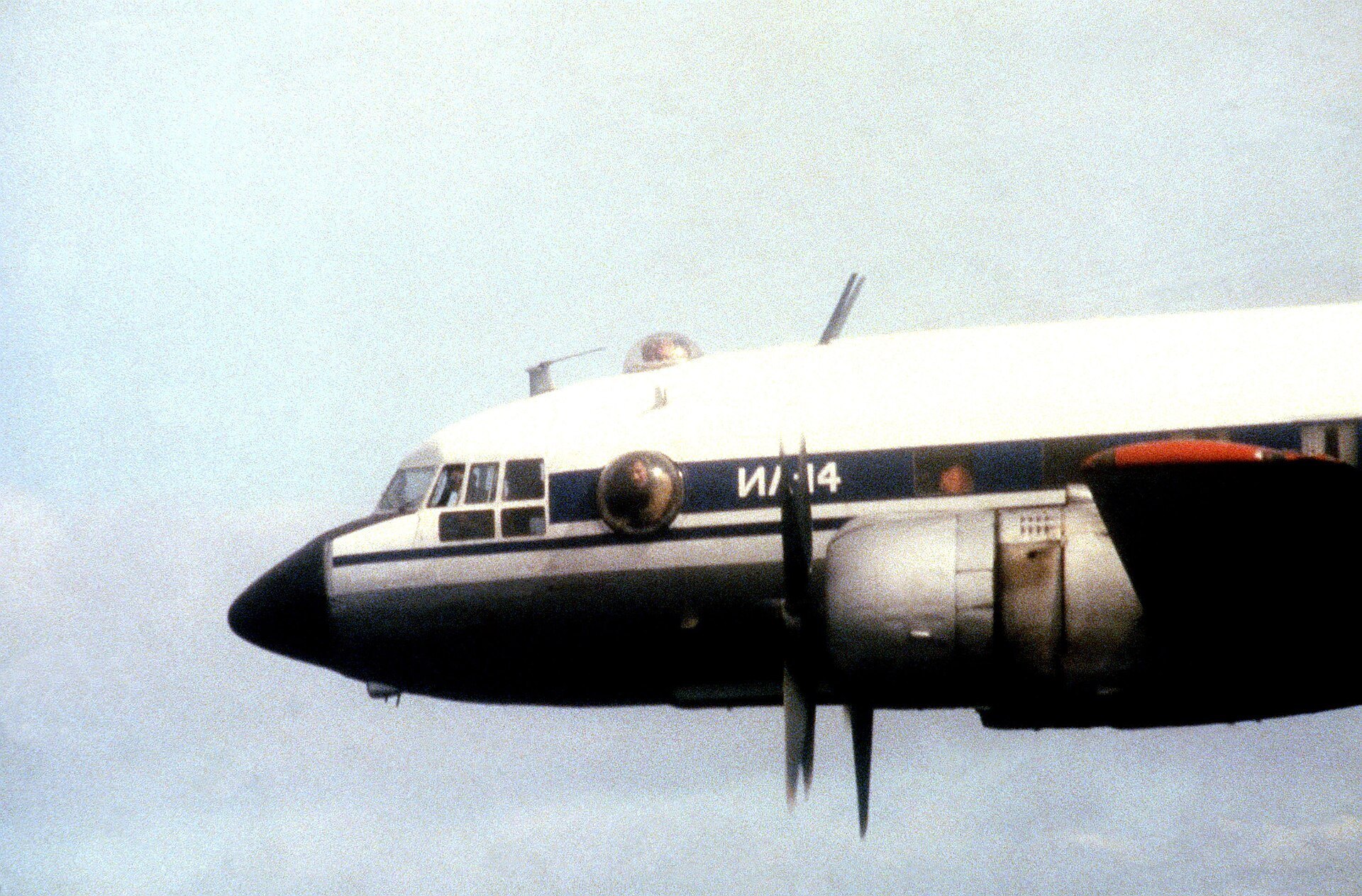
Ilyushin Il-14
Crate
The Soviet bloc’s answer to the DC-3’s retirement: built in Moscow, Tashkent, Prague and Dresden, it flew presidents, airlines, paratroops and polar explorers, and served more than thirty air forces for four decades.
The Il-14: how Ilyushin replaced the Soviet DC-3
In July 1955 a silver twin-engined airliner landed at Berlin-Schönefeld wearing the registration DDR-ABA. It was the first aircraft of the new East German airline, Deutsche Lufthansa, later Interflug, and within a few years the same type was being built in Dresden. That aircraft was the Ilyushin Il-14, NATO code name Crate, and for a decade it was the standard short- and medium-range transport of the Soviet bloc: airliner for Aeroflot, LOT, ČSA and Malév; transport and paratroop aircraft for the air forces of the Warsaw Pact; personal aircraft for leaders from Tirana to Warsaw; and a polar workhorse on the ice of the Arctic and Antarctica. Few aircraft did more to knit the socialist world together.
The Soviet Union needed a successor to the Li-2, its licence-built DC-3. Ilyushin’s first attempt, the Il-12 of 1945, was underpowered with one engine out and carried too little. The Il-14 kept the basic layout but added a new, more efficient wing, a broader fin and more powerful Shvetsov ASh-82T radials. It first flew in 1950, and entered Aeroflot service in 1954. Production ran at Moscow and Tashkent, and under licence at Avia in Letňany near Prague and VEB Flugzeugwerke Dresden. Some 1,350 are usually counted, though a few sources claim far more. Most went to Aeroflot and the Soviet Air Force, which still had some 235 in 1979, but exports reached every corner of the socialist world.
It was a modest aircraft, carrying 18 to 36 passengers or a few tonnes of cargo, but it was rugged and easy to maintain. The military Il-14T had a cargo door and reinforced floor, other versions carried paratroops, cameras or survey equipment, and ski-equipped aircraft linked the Soviet stations in Antarctica. More than thirty air forces flew it, from Egypt and Cuba to China and Vietnam. On 28 October 1956 an Egyptian Il-14 was shot down by an Israeli Meteor night fighter on the eve of the Suez war. The last military examples left service in the late 1990s, and in Russia a few restored aircraft still fly.
01The Il-14 behind the Iron Curtain: three factories, one workhorse
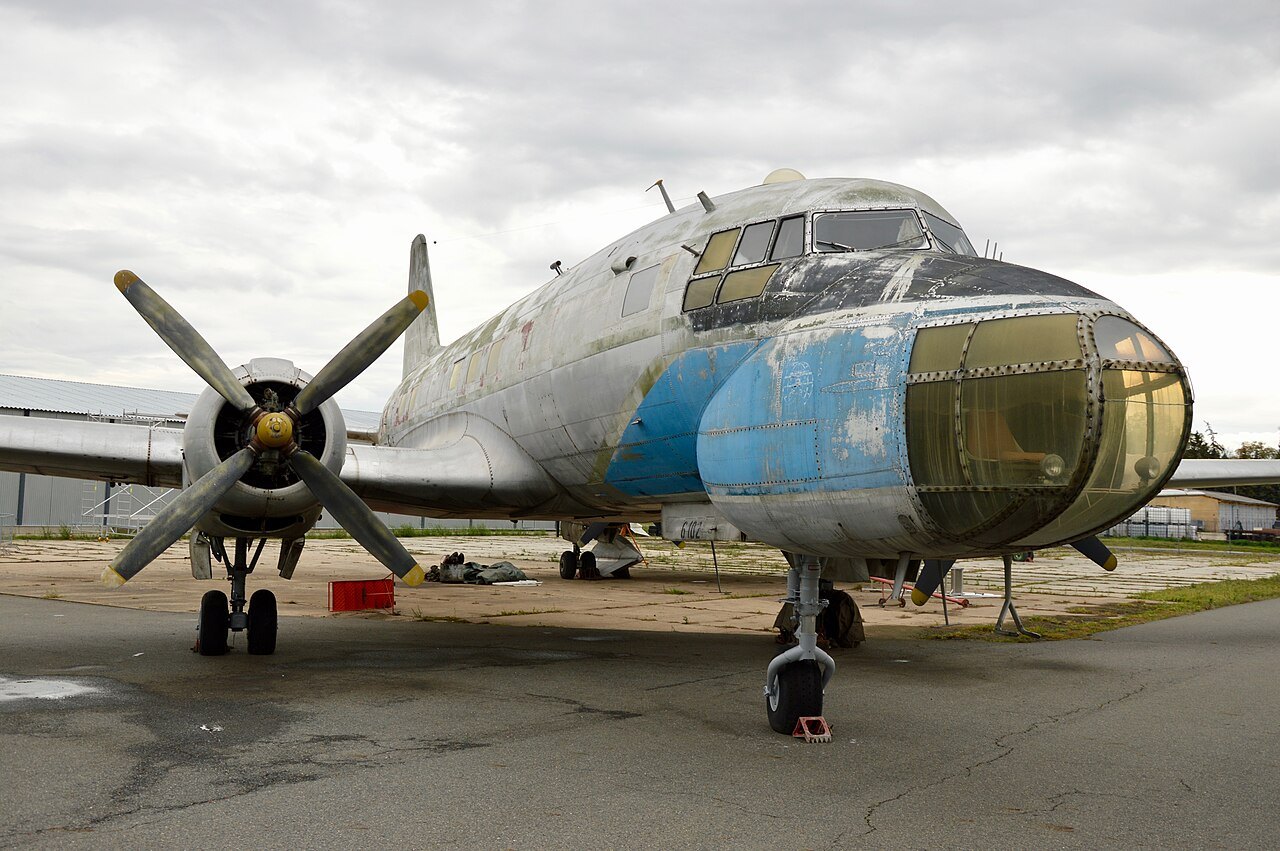
The Il-14 was the first Soviet transport to be built in quantity outside the USSR. In Czechoslovakia the Jiří Dimitrov Works at Letňany obtained the licence and built the type from the mid-1950s as the Avia 14, mainly for the Czechoslovak military and the airline ČSA, with part of production delivered back to the Soviet Union. ČSA kept improving its aircraft until the cabin held up to forty paying passengers. The Military History Institute in Prague preserves OK-MCI, built in 1958, which flew 18,435 hours on domestic and international routes without incident before its last scheduled flight on 20 September 1975.
In East Germany, VEB Flugzeugwerke Dresden built 80 Il-14Ps under licence in 1956 to 1959. The aircraft went to Deutsche Lufthansa of the GDR, whose first Il-14 had arrived from the Soviet Union in July 1955, and to the air forces of the bloc. Poland’s 36th Special Air Transport Regiment flew a luxuriously fitted Dresden-built Il-14S VIP aircraft, built in 1959 and now in the Polish Aviation Museum in Kraków.
02The Il-14 at the ends of the earth: polar flying
The Il-14’s robust structure, simple systems and ability to operate on skis made it the natural successor to the Li-2 in Soviet polar aviation. In the Arctic it flew ice reconnaissance for shipping on the Northern Sea Route, supplied drifting ice stations and linked remote settlements with the mainland. In Antarctica, Il-14s supported the Soviet Antarctic Expeditions, fitted with additional fuel tanks that allowed flights of around 4,000 km between stations across the high, cold interior of the continent.
The work was hard on crews and aircraft alike: navigation over featureless ice, intense cold and landings on unprepared snow far from any help. Yet the Il-14 remained active in polar and remote northern flying through the 1970s, longer than in most airline fleets.
What makes the Il-14 special
A new wing on a proven layout
The Il-14 kept the Il-12’s tricycle undercarriage and fuselage, but its new wing used a more efficient aerofoil, and a broader fin and rudder improved control with an engine out. That was the Il-12’s great weakness: with one engine failed it could barely climb. The redesign made the Il-14 safe enough for mass airline and military use, and its tricycle gear gave a level floor for loading.
Two big Shvetsov radials
Power came from two Shvetsov ASh-82T 14-cylinder radials of about 1,900 hp each, a member of the engine family that had powered the La-5 and La-7 fighters and the Tu-2 bomber. Compared with the Li-2’s engines they nearly doubled the available power, giving better climb, a higher payload and a cruise speed of about 320 km/h.
Easy to fix anywhere
Like the DC-3 it replaced, the Il-14 was built to be maintained by ordinary mechanics at primitive airfields. That mattered for a type sent to the Arctic, to the deserts of Egypt and Syria and to the jungles of Vietnam. Soviet authorities repeatedly extended its permitted airframe life, from 3,000 to as much as 35,000 flying hours between 1957 and 1972, which tells its own story of durability.
03The Il-14’s versions: airliners, freighters and spy cameras
- Il-14P: the first passenger version, originally with 18 seats, later 24.
- Il-14M: from 1956, a fuselage stretched by about one metre for 24 to 36 passengers.
- Il-14T: military transport with a large cargo door and reinforced floor for about 3.5 tonnes.
- Il-14G: civil freighter conversions.
- Il-14D and other military variants: paratroop and transport versions.
- Il-14FK / FKM: aerial photography and survey aircraft with mounted cameras.
- Il-14LL: flying laboratories for research.
- Avia 14: Czechoslovak licence family, including passenger, transport, VIP Salon and survey versions.
- VEB Il-14P / Il-14S: East German licence production, including VIP aircraft.
Ilyushin Il-14 specifications
Specifications
- Crew
- 4 to 5
- Capacity
- Il-14P 18 to 24, Il-14M 24 to 36 passengers; Il-14T about 3,500 kg (7,700 lb) of cargo
- Length
- 22.31 m (73 ft 2 in) (Il-14M)
- Wingspan
- 31.70 m (104 ft 0 in)
- Height
- 7.80 m (25 ft 7 in)
- Empty weight
- 12,600 kg (27,780 lb) (Il-14M)
- Max take-off weight
- 17,500 kg (38,580 lb) (Il-14M)
- Powerplant
- 2 × Shvetsov ASh-82T radials, about 1,415 kW (1,900 hp) each
- Maximum speed
- commonly given as 350–417 km/h (217–259 mph), depending on version and source
- Cruise speed
- about 320–345 km/h (199–214 mph)
- Range
- about 400 km (250 mi) with maximum payload; 1,750–2,250 km (1,090–1,400 mi) with maximum fuel
- Service ceiling
- about 6,500–7,400 m (21,300–24,300 ft)
Costs & production
- Cost per flight hour
- No published figure; a hedged estimate for one of the few privately restored Il-14s is in the low thousands of US dollars an hour, based on two large radials burning avgas, scarce spare parts and heavy overhaul costs
- Production
- About 1,350 (1,348 commonly given): about 1,065 in the USSR, 203 by Avia, 80 by VEB Dresden; some sources claim far more
- Programme
- First flight 1950; Aeroflot service from 1954; licence production 1956–1960; last military users retired in the late 1990s
04The Il-14’s operating costs: cheap to build, costly to keep
In its prime the Il-14 was economical by Soviet standards, built in large numbers in four factories and maintained by conscript mechanics on simple tooling. Today, the few airworthy examples are expensive labours of love. Russian enthusiasts restoring aircraft such as Pingvin and Golubaya Mechta (Blue Dream) must find ASh-82 engines and parts decades after production ended, and fuel burn for two big radials is high.
The Il-14 from the drawing board to the ice
The Il-12
Ilyushin’s first post-war transport flies, but proves weak with an engine out.
First flight
The improved Il-14 prototype makes its first flight.
Into service
Aeroflot begins regular Il-14 passenger services.
East Germany
The first Il-14 of Deutsche Lufthansa of the GDR, DDR-ABA, arrives at Schönefeld in July.
Licence production and Suez
Avia and VEB Dresden start production; on 28 October an Egyptian Il-14 is shot down by an Israeli Meteor.
Hoxha’s aircraft
Albania receives an Il-14M as the personal transport of Enver Hoxha.
The VIP Il-14S
Dresden builds the Il-14S later flown by Poland’s government transport regiment.
ČSA retires OK-MCI
The Avia 14 now in Prague flies its last scheduled service on 20 September after 18,435 hours.
Last soldiers
The last military Il-14s are retired, in Vietnam and Syria among others.
Pingvin flies again
A restored Il-14 named Pingvin returns to the air in Russia.
Stories & eyewitnesses: the Il-14 from Tirana to Antarctica
Shot down on the eve of Suez
An Egyptian transport was intercepted at night.
Read the full story
Enver Hoxha’s transport
Albania’s leader flew in a Soviet Il-14M.
Read the full story
The first aircraft of Interflug
East Germany’s airline began with the Il-14.
Read the full story
OK-MCI’s 18,435 hours
A Czechoslovak Avia 14 that never had an incident.
Read the full story
Poland’s flying salon
A VIP Il-14 built in Dresden.
Read the full story
The Soviet Union, Penguin and Blue Dream
Russian enthusiasts keep three Il-14s flying.
Read the full story
On the ice
Il-14s connected Soviet stations across Antarctica.
Read the full story
The Il-14’s Blue Dream: back from Tushino
A 1957 Il-14T left derelict in Moscow flew again after three and a half years of volunteer work.
Read the full story
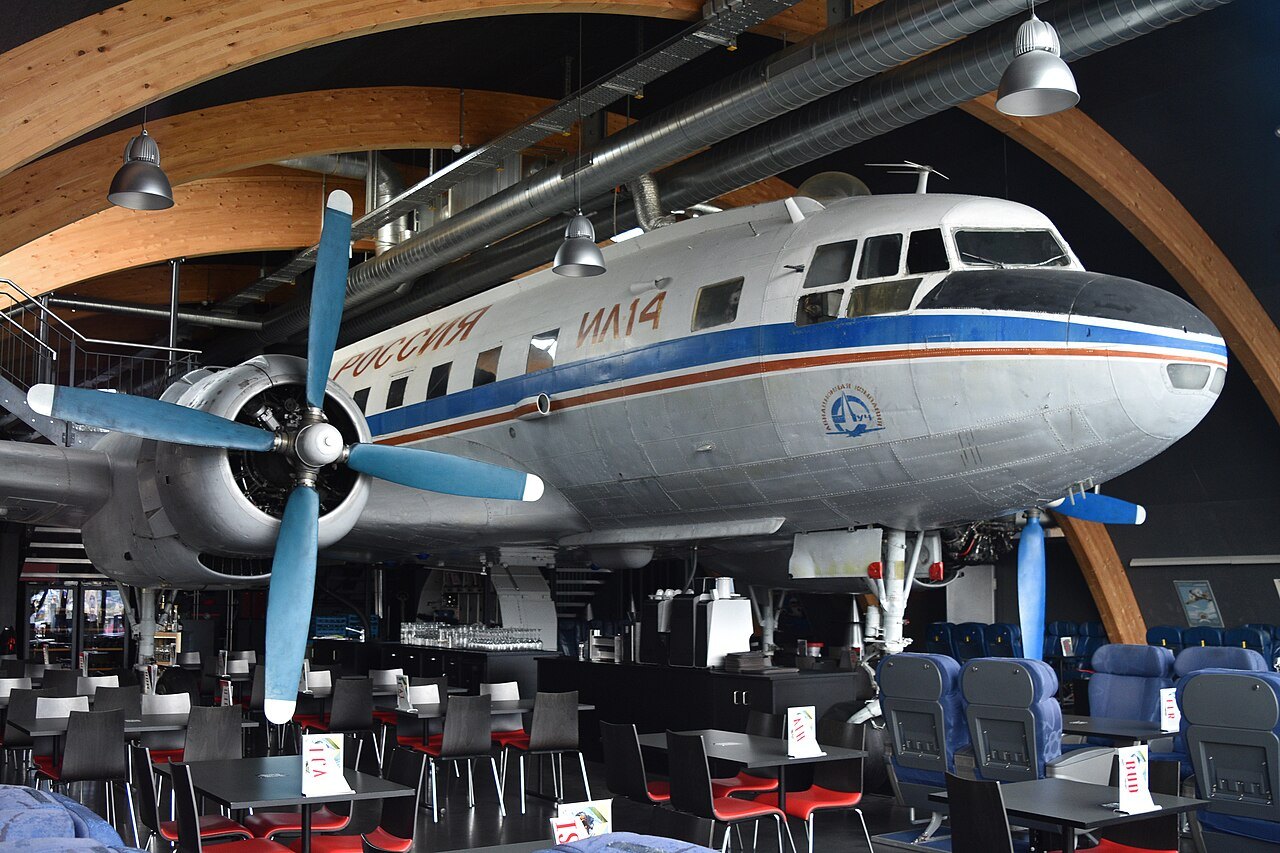
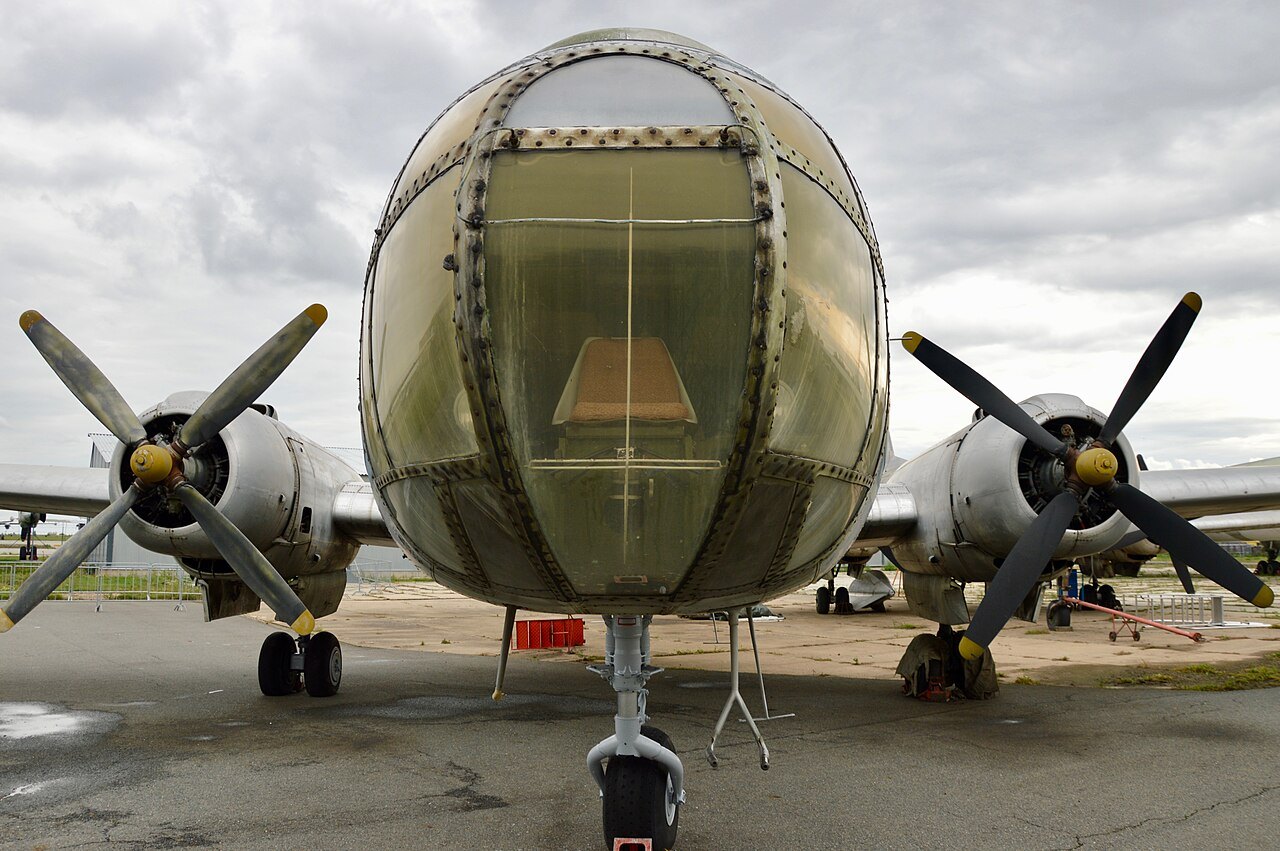
The Il-14 in pictures
Where the Il-14 flies and flew
The Il-14’s record
The Il-14 was a transport, but it served in many of the Cold War’s hot spots: Egyptian aircraft were lost at Suez in 1956 and in 1967, others supplied Algerian insurgents and served in Vietnam. Its greatest record, though, is one of service: four decades with more than thirty air forces and polar flying at the edge of the possible.
See how training and combat types compare in the military aircraft statistics database. Figures are approximate.
Everything people ask about the Il-14
Can I fly in an Ilyushin Il-14?
What does the NATO name Crate mean?
What is the Avia 14?
Was the Il-14 built in East Germany?
What did the Il-14 replace?
Are any Il-14s still flying?
You can’t fly the Il-14.
These, you can.
Most of this museum you can only look at. These genuine military jets you can fly yourself with MiGFlug — with aerobatics and time on the controls.
 Fly the L-39 AlbatrosThe world’s most-flown jet trainer — aerobatics included
 Fly the F-104 Starfighter“The missile with a man in it”
 Fly the MiG-21The Cold War’s most-produced jet
 Fly the T-33 Shooting StarAmerica’s first jet trainer
 Fly the DH VampireA piece of early jet history
 Fly the S.211Agile Italian jet trainer
 Fly the MB-326The classic Aermacchi jet
 Fly the MiG-15The Soviet legend of the Korean War
Continue the tour
Every fact, checked
- Avia Av-14Military History Institute Prague on Czechoslovak licence production and OK-MCI
- Iljuszyn VEB Il-14SPolish Aviation Museum on the type, production and its VIP aircraft
- IL-14Interflug history site on DDR service and Dresden licence production
- Avia 14 / Il-14 in Albanian serviceAeroflight World Air Forces on Hoxha’s transport and the Albanian fleet
- Ilyushin Il-14Airliners.net aircraft data: development, production and Il-14M specifications
- Il-14 restorationRussian enthusiasts’ site on the restored Soviet Union, Penguin and Blue Dream