
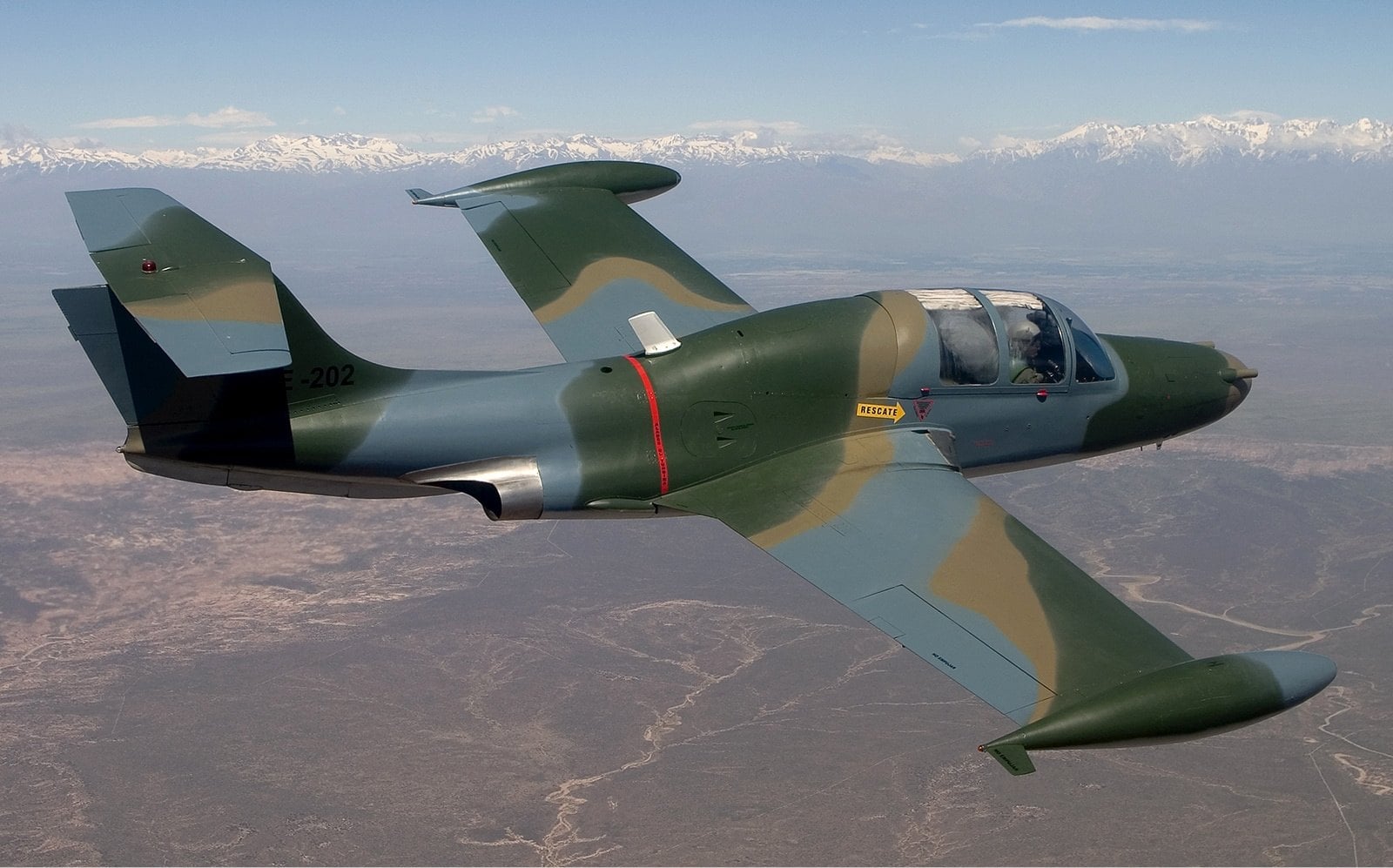
Morane-Saulnier MS.760 Paris
The First Jet Taxi
France’s little four-seat twin-jet trained and carried military pilots for four decades, fought in an Argentine naval revolt and is often described as the first business jet.
The MS.760 Paris: how a losing trainer became the first jet taxi
In the early 1950s the Armée de l’Air wanted a jet basic trainer, and Morane-Saulnier at Tarbes answered with the MS.755 Fleuret, a side-by-side two-seater powered by a pair of tiny Turbomeca Marboré turbojets. It lost the competition to the tandem Fouga Magister. Rather than abandon the work, the company stretched the cabin to four seats under a single sliding canopy and created the MS.760 Paris. Test pilot Jean Cliquet took the prototype F-WGVO into the air on 29 July 1954, and the result was something nobody else was building: a small, fast, jet-powered aircraft for moving a handful of people. It was a light jet built to carry people rather than weapons.
The military saw the point at once. The Armée de l’Air ordered the Paris for liaison and training, the Aéronavale took 14 for instrument training and pilot proficiency, and the flight-test centre bought its own. Argentina ordered 48 in 1957, with 36 assembled locally by the Fábrica Militar de Aviones, and Brazil took around 30. For a generation of French officers the Paris was the jet that carried them between bases and kept their instrument ratings current, a job it did with little fuss. The improved Paris II added more powerful Marboré VI engines, extra fuel and air conditioning, but the formula stayed the same. Its side-by-side front seats suited instrument instruction, and its rear seats suited staff officers.
The Paris also reached for a civil market that did not yet exist. Beechcraft signed up to sell it in North America in 1955 and flew a demonstrator for some 500 hours across the United States and Canada, yet only a couple of American sales followed. A few Paris jets went to wealthy private owners, including the Italian oil company ENI, whose chairman Enrico Mattei died in one in 1962. Military service lasted far longer than anyone planned: the French Navy flew the type until 1997, and Argentina retired its last in 2007, after 48 years. Production ended at around 220 aircraft, a modest total for a design that anticipated the business-jet age by a decade.
01The MS.760 Paris in Argentina: trainer, liaison jet and bomber
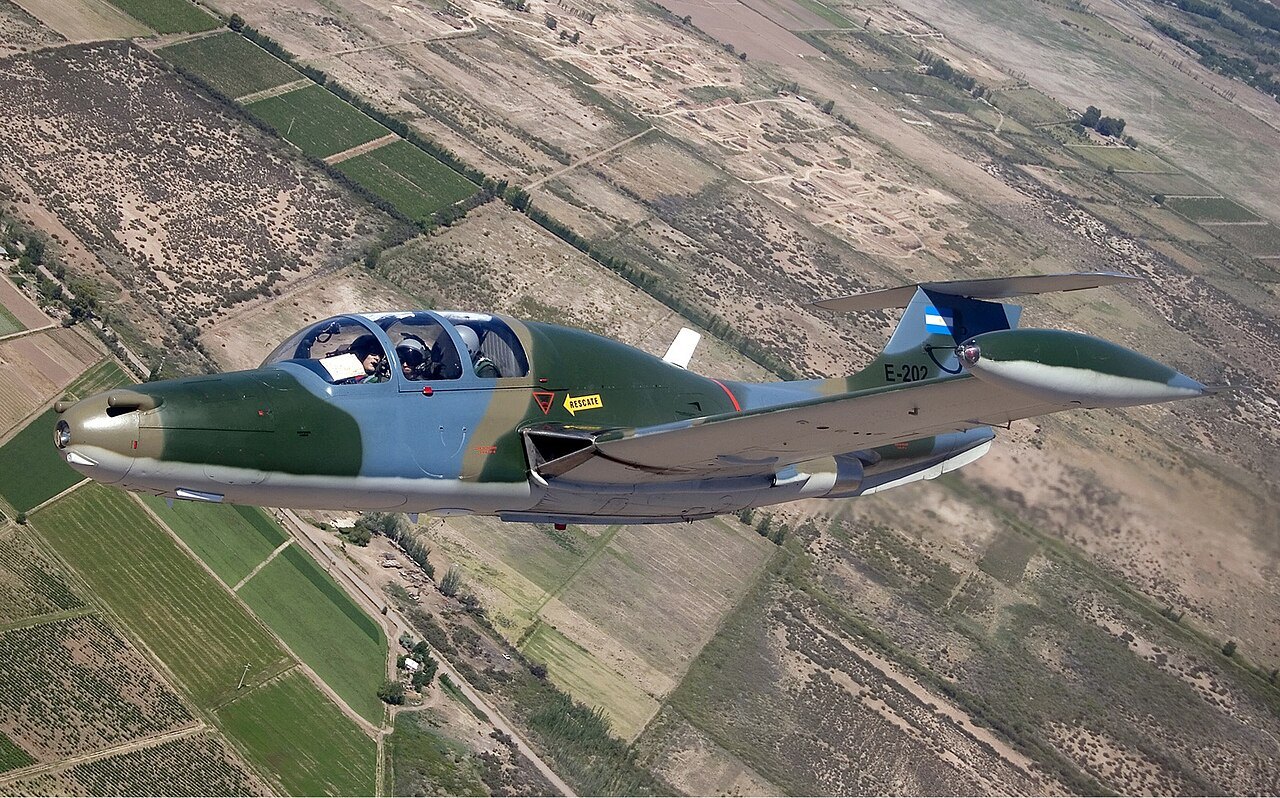
Argentina was the Paris’s biggest export customer. The Fuerza Aérea Argentina ordered 48 in late 1957; a dozen came from France and 36 were assembled under licence by the Fábrica Militar de Aviones at Córdoba, giving the country an early lesson in jet production. Some Argentine aircraft were fitted with nose machine guns and racks for rockets and light bombs, which turned a liaison trainer into a modest strike aircraft.
That capability was used in anger. During the Argentine naval revolt of April 1963, loyalist air force Paris jets bombed rebel positions, including a rebel-held radio station and the naval air base at Punta Indio, where aircraft were destroyed on the ground. It is one of the very few occasions on which a four-seat liaison jet has flown combat sorties.
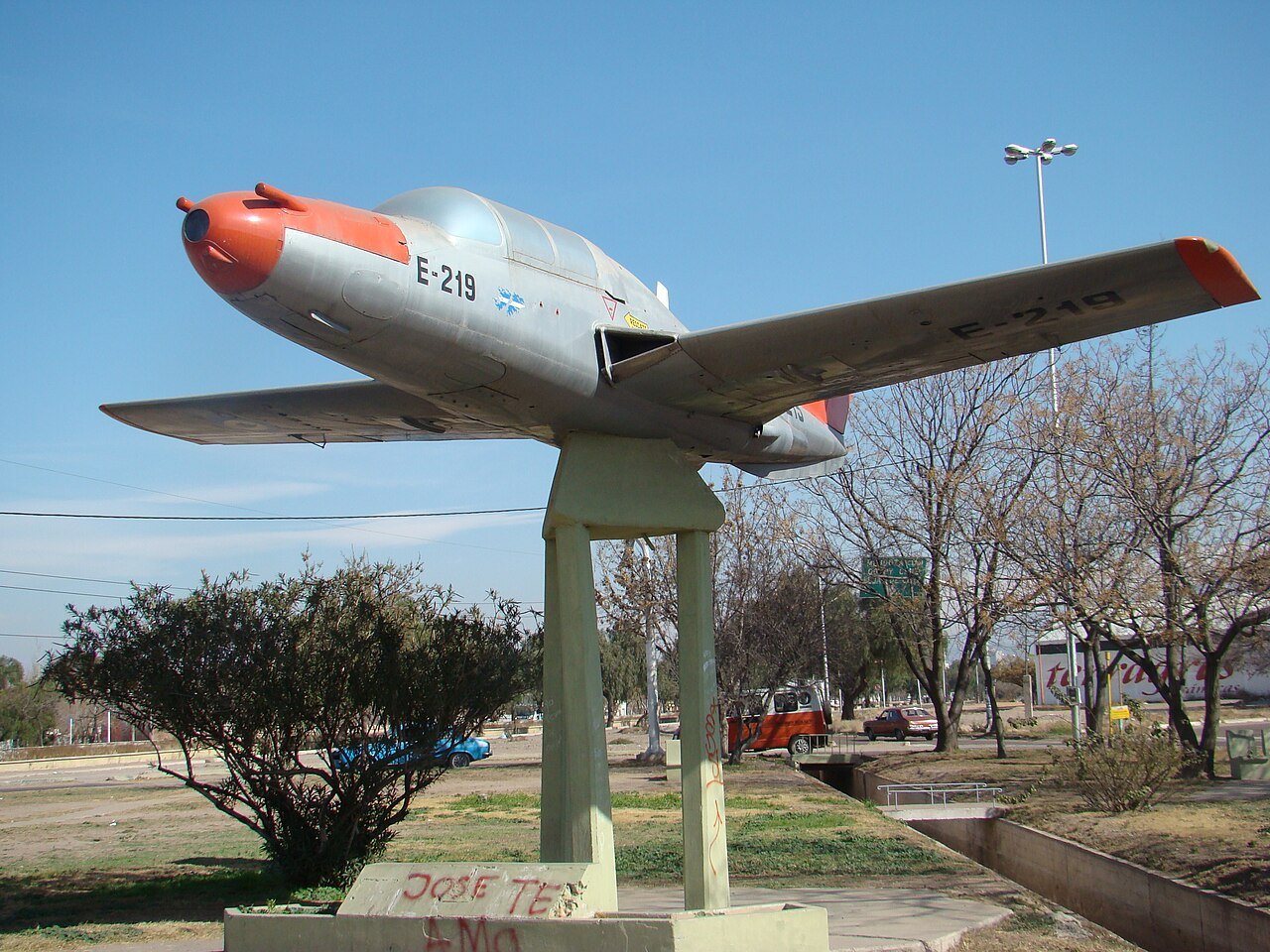
The Paris then settled into decades of training and communications work. Argentina kept it flying long after France had moved on, and the last examples were retired in 2007 after 48 years of continuous service. Several retired Argentine airframes were later sold to private buyers in the United States, which is why so many of the surviving Paris jets have Argentine histories.
02The MS.760 Paris in French service: forty years of quiet work
In France the Paris was never glamorous, and that was its strength. The Armée de l’Air used it for liaison, staff transport and training, flying senior officers between bases far faster than the piston twins it replaced. The flight-test centre used it as a chase and communications aircraft.
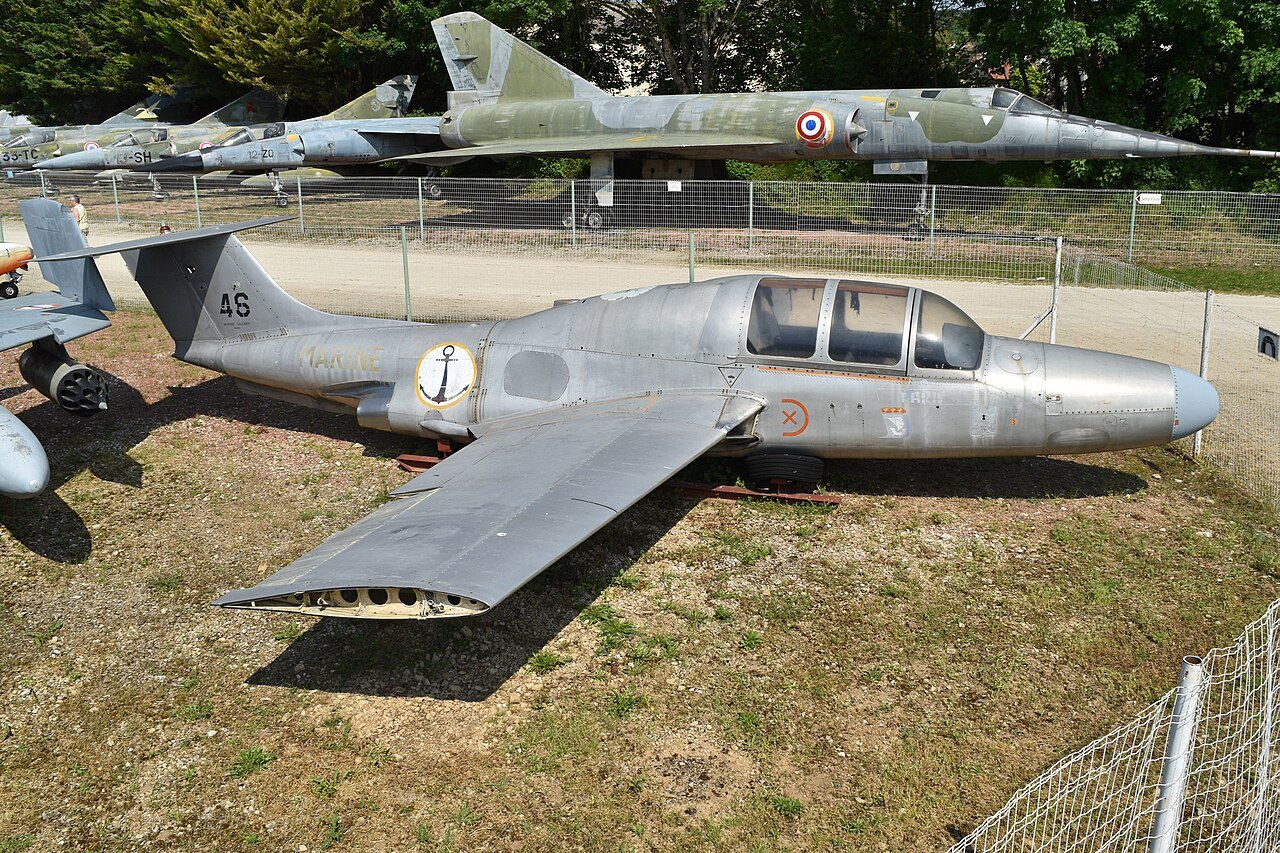
The Aéronavale’s 14 aircraft served first with Flottille 11.S from 1959, then, from 1970, from Lann-Bihoué as Escadrille 2.S, renamed 57.S in 1981. Their role was instrument flying and proficiency training for naval pilots, a jet classroom in which aircrew from desk jobs and maritime patrol could keep their hands in. The navy retired its Paris fleet in October 1997 at Landivisiau after almost four decades.
French sources credit the Armée de l’Air with around 45 years of Paris operations, which would put its final flights in the early 2000s; published dates vary. Either way, few jets of the 1950s served any air arm for so long in an unchanged role.
What makes the MS.760 Paris special
Two tiny turbojets in the fuselage
The Paris uses two Turbomeca Marboré centrifugal turbojets mounted side by side in the rear fuselage, each giving about 3.9 kN (880 lbf) in the Marboré II. Twin engines gave a margin of safety that mattered for a liaison aircraft carrying officers, and burying them in the fuselage kept the wing clean. The whole tail unit could be detached for access to the engines, a sensible touch for maintenance crews working on a fleet that would fly for decades.
Four seats under one canopy
Most jet trainers of the period seated two in tandem. The Paris put a pilot and passenger side by side in front, with two more seats behind, all under a single sliding canopy. The cabin was pressurised and, on the Paris II, air-conditioned. That layout made it equally useful as an instrument trainer, with instructor beside student, and as a small staff transport, which is exactly how most of its operators used it.
A business jet before the term existed
When Beechcraft quoted a US-built Paris at about $210,000 in 1958, there was no direct competitor: nobody else was offering a small, pressurised jet for four people. The type is therefore often described as the first business jet. It was too small and too thirsty to win that market once the Lockheed JetStar, Sabreliner and Learjet arrived, but it showed what a light jet could do years before they did.
03The MS.760 Paris’s armament: a liaison jet with teeth
The Paris was designed for transport and training, but it could be armed. The standard provision was for two machine guns in the nose and underwing racks for four 90 mm rockets or two 50 kg bombs. Argentine aircraft used this fit for weapons training and, in 1963, for real attacks. French aircraft were generally unarmed. The modest load and lack of armour meant the Paris was never a serious attack aircraft, but the capability gave smaller air forces a cheap way to teach weapons delivery in a jet.
04The MS.760 Paris family: from Fleuret to Paris III
- MS.755 Fleuret: two-seat side-by-side jet trainer, flown in January 1953; lost to the Fouga Magister.
- MS.760A Paris I: initial production version with Marboré II engines.
- MS.760B Paris II: Marboré VI engines, larger fuel tanks and air conditioning.
- MS.760C Paris III: six-seat development, flown at Tarbes in February 1964 by Lucien Colomes; a single prototype only.
- C-41: Brazilian Air Force designation for the Paris.
Morane-Saulnier MS.760 Paris specifications
Specifications
- Crew
- 1–2 pilots
- Capacity
- 2–3 passengers (four seats in total)
- Length
- 10.05 m (33 ft 0 in)
- Wingspan
- 10.15 m (33 ft 4 in) over tip tanks
- Height
- 2.60 m (8 ft 6 in)
- Wing area
- 18.0 m² (194 sq ft)
- Empty weight
- 1,945 kg (4,288 lb)
- Max take-off weight
- 3,470 kg (7,650 lb)
- Powerplant
- 2 × Turbomeca Marboré II turbojets, 3.9 kN (880 lbf) each (Paris I)
- Maximum speed
- 650 km/h (404 mph) at sea level
- Cruise speed
- 570 km/h (354 mph) at 5,000 m
- Range
- 1,500 km (930 mi) at 7,000 m
- Service ceiling
- 10,000 m (33,000 ft)
- Climb rate
- 11.5 m/s (2,264 ft/min)
- Take-off run
- 750 m (2,460 ft)
- Armament
- Provision for 2 nose machine guns, 4 × 90 mm rockets or 2 × 50 kg bombs
Costs & production
- Unit cost
- About $210,000 for a US-built Paris, as quoted by Beechcraft in January 1958, including spares, tooling and training
- Cost per flight hour
- No official military figure. Private operators of refurbished examples describe it as expensive for its size because two early turbojets burn a lot of fuel; a hedged estimate is in the low thousands of US dollars per hour, based on fuel burn and the cost of keeping 1950s engines airworthy
- Production
- About 220 in total, including 36 assembled in Argentina; roughly 150 Paris I and II from French lines
- Programme
- 1954–early 1960s production; military service from 1959 to 2007
05The MS.760 Paris’s operators: who flew it
- France: Armée de l’Air (liaison and training), Aéronavale (14 aircraft, 1959–1997) and the flight-test centre.
- Argentina: 48 aircraft, 36 assembled locally; retired 2007.
- Brazil: around 30 aircraft as the C-41.
- Netherlands: a small batch of Paris IIs in the 1960s and early 1970s.
- Civil: corporate and private owners, including ENI in Italy and the College of Aeronautics at Cranfield.
06The MS.760 Paris’s operating costs: a thirsty little jet
The Marboré was an excellent engine for its day but, like all early centrifugal turbojets, it was thirsty, and the Paris carried two of them. That fuel bill, rather than the purchase price, was what limited its civil appeal once more efficient business jets arrived. For air forces the sums were different: a Paris was far cheaper to run than a fighter, and using it for instrument and proficiency flying saved hours on expensive frontline types. No authoritative per-hour figure has been published, so treat any number as an estimate.
The MS.760 Paris from Tarbes to retirement
Fleuret flies
The two-seat MS.755 Fleuret flies in January but loses the French trainer competition to the Fouga Magister.
Paris prototype flies
Jean Cliquet flies the four-seat MS.760 prototype F-WGVO on 29 July.
Beechcraft deal
Beechcraft agrees to market the Paris in North America; orders follow from the French Air Force.
Argentina orders 48
Argentina orders 48 aircraft, 36 of them to be assembled locally.
Navy service begins
The first Paris is delivered to the Aéronavale on 9 February.
Mattei crash
ENI chairman Enrico Mattei is killed when his Paris crashes near Bascapè on 27 October.
Combat in Argentina
Loyalist Paris jets bomb rebel targets, including Punta Indio, during the April naval revolt.
Paris III flies
The six-seat Paris III prototype flies at Tarbes in February; it never enters production.
French Navy retires it
The Aéronavale retires its Paris fleet at Landivisiau in October.
Argentina retires the last
The Fuerza Aérea Argentina ends 48 years of Paris service.
A civil afterlife
JetSet International buys more than 30 retired airframes and the type certificate for refurbishment.
Stories & eyewitnesses: the MS.760 Paris
Jean Cliquet and F-WGVO
On 29 July 1954 a four-seat jet took off from Tarbes.
Read the full story
Born from defeat
The Paris exists because the Fleuret lost to the Magister.
Read the full story
Beechcraft’s American tour
A demonstrator flew 500 hours across North America and sold almost nothing.
Read the full story
Bill Lear and the Paris
The future father of the Learjet was photographed with a Paris.
Read the full story
The death of Enrico Mattei
In 1962 a Paris carrying Italy’s most powerful oilman crashed near Milan.
Read the full story
Bombing Punta Indio
In April 1963 Argentine Paris jets went to war against their own navy.
Read the full story
The navy’s instrument classroom
For 38 years naval pilots kept current in the Paris.
Read the full story
Concorde’s taxi
The only Paris III carried Concorde test pilots between sites.
Read the full story
48 years in Argentina
Argentina flew the Paris longer than anyone.
Read the full story
The Paris’s civil afterlife
Retired military jets found new owners.
Read the full story
The MS.760 Paris in pictures
Where the MS.760 Paris flies and flew
The MS.760 Paris’s record
The Paris was a liaison and training aircraft, and most of its long career was spent moving officers and keeping pilots current. Its one real combat episode came in Argentina in April 1963, when armed Paris jets attacked rebel navy positions during a short-lived revolt.
See how training and combat types compare in the military aircraft statistics database. Figures are approximate.
Everything people ask about the MS.760 Paris
Can I fly in a Morane-Saulnier MS.760 Paris?
Was the MS.760 Paris the first business jet?
How many MS.760 Paris were built?
Which air forces flew the MS.760 Paris?
Did the MS.760 Paris see combat?
What engines does the MS.760 Paris use?
When was the MS.760 Paris retired?
You can’t fly the MS.760 Paris.
These, you can.
Most of this museum you can only look at. These genuine military jets you can fly yourself with MiGFlug — with aerobatics and time on the controls.
 Fly the L-39 AlbatrosThe world’s most-flown jet trainer — aerobatics included
 Fly the F-104 Starfighter“The missile with a man in it”
 Fly the MiG-21The Cold War’s most-produced jet
 Fly the T-33 Shooting StarAmerica’s first jet trainer
 Fly the DH VampireA piece of early jet history
 Fly the S.211Agile Italian jet trainer
 Fly the MB-326The classic Aermacchi jet
 Fly the MiG-15The Soviet legend of the Korean War
Continue the tour
Every fact, checked
- Le Morane-Saulnier MS.760C Paris III revient à TarbesAerovfr, 2019: Paris III prototype, first flight crew, Concorde liaison role
- Morane Saulnier M.S. 760, by AerofileDevelopment from the Fleuret, first flight, French service and production
- William P. Lear and James V. Piersol with a Morane-Saulnier M.S.760A ParisThe Museum of Flight, Lear Papers photograph
- Enrico MatteiEncyclopaedia Britannica biography of the ENI chairman killed in a Paris in 1962
- Morane-Saulnier MS-760 Paris, French Air Force photographsAirHistory.net, French military Paris in service
- Morane-Saulnier MS.760 warbird directoryGeoff Goodall, individual airframe histories including ex-military civil examples