
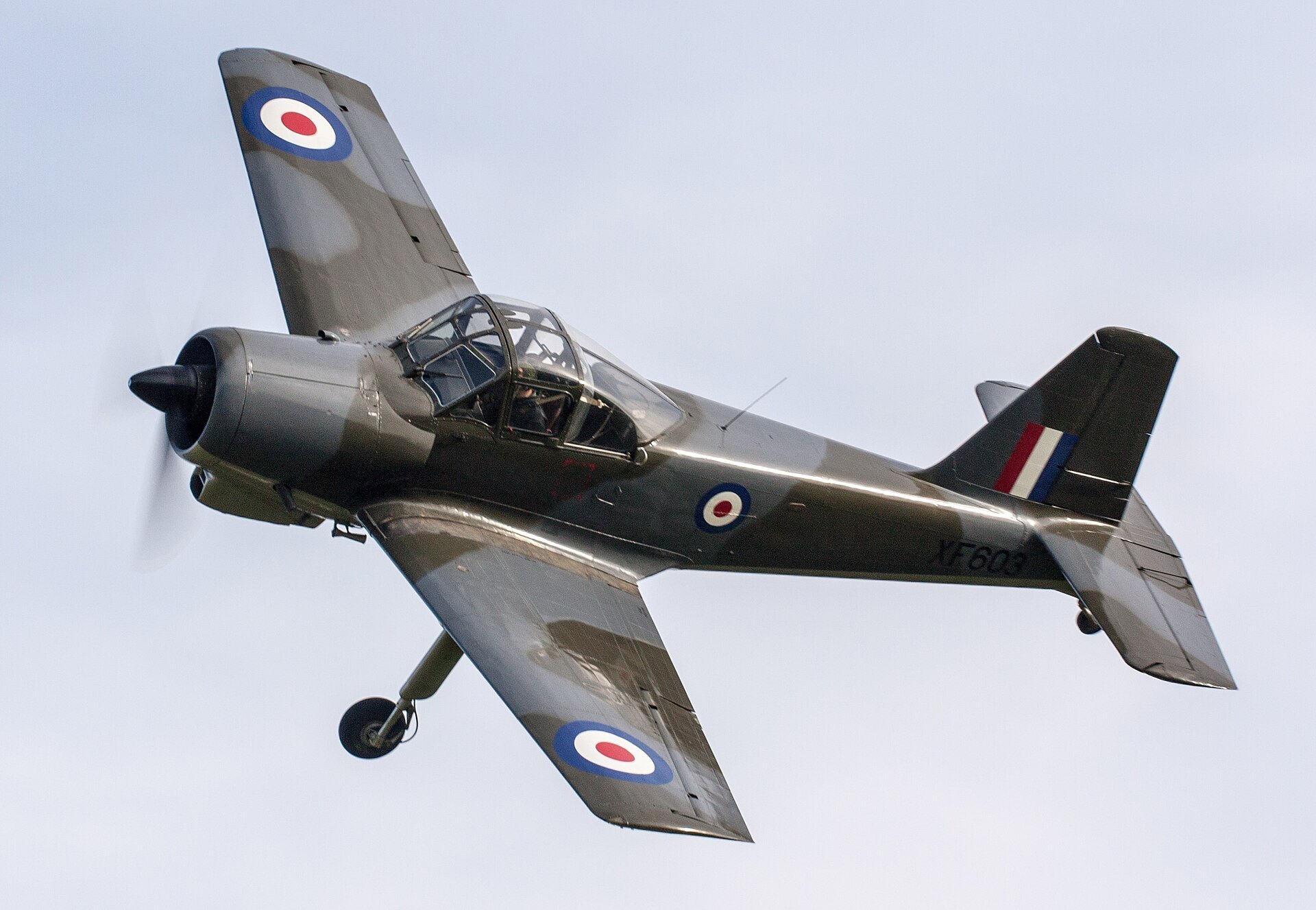
Percival Provost
The RAF’s Last Piston Trainer
The radial-engined basic trainer that taught a decade of RAF pilots with fighter-like handling, fathered the Jet Provost, and went to war as a light-attack aircraft in Oman, Rhodesia and Burma.
The Provost: how a Luton trainer bridged the RAF from Tiger Moth thinking to the jet age
In September 1948 the Air Ministry issued Specification T.16/48 for a new basic trainer to replace the Percival Prentice. The Prentice was docile but underpowered and dull, and the RAF wanted an aircraft that would sort out unsuitable students early, with an instructor sitting close enough to watch every move. More than thirty proposals arrived. Two were chosen for prototypes: the Handley Page H.P.R.2 and Percival’s P.56, drawn by the Polish-born engineer Henry Millicer. The first P.56, WE522, flew on 24 February 1950 with an Armstrong Siddeley Cheetah radial. After a fly-off at Boscombe Down and tropical trials abroad, the Ministry picked the Percival design, fitted with the much more powerful nine-cylinder Alvis Leonides, and in May 1951 ordered 200. It was named Provost.
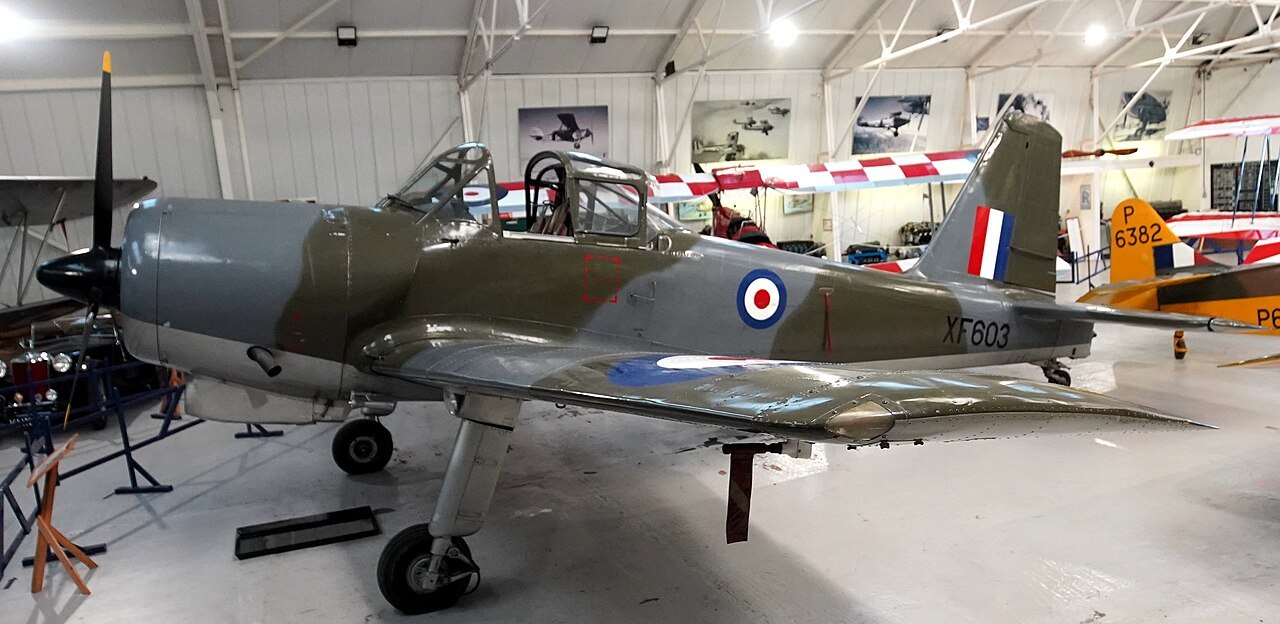
The Provost was a straightforward, all-metal, low-wing monoplane with a fixed tailwheel undercarriage and side-by-side seats under a three-piece canopy. What made it special was the engine: about 550 hp, roughly twice the power of the Prentice, in an aircraft of under two tonnes. Pilots found a rapid climb, light, well-harmonised controls and a roll rate commonly quoted at more than 90 degrees a second, close to the best fighters of the day. Deliveries began at the Central Flying School in 1953, No. 6 Flying Training School at Ternhill started re-equipping on 1 July, and the first students began training that October. By September 1954 the Provost had replaced the Prentice entirely.
For the rest of the 1950s every RAF pilot trainee went solo on a Provost before moving on to the Vampire T.11. The RAF took 397 of the 461 built. Then the Air Ministry asked a radical question: why not teach from the start on a jet? Hunting Percival answered with a jet-powered derivative, the Jet Provost, which steadily took over from 1959 onwards. The piston Provost lingered in second-line roles until November 1969. Abroad its career ran longer and harder. Armed T.52 and T.53 versions went to Rhodesia, Oman, Burma, Iraq, Sudan and Ireland, and in the jungles of Burma, the mountains of Dhofar and the Rhodesian bush, the trainer flew real combat sorties.
01The Provost at war: a trainer with guns in three insurgencies
Percival built armed export versions from the start. The T.52 and T.53 carried two machine guns and up to about 500 lb of bombs or rockets, which turned a basic trainer into a cheap counter-insurgency aircraft for air forces with little else. Burma was the biggest customer, eventually acquiring about 40. Based at Meiktila but operating mostly from small jungle strips, Burmese Provosts flew numerous sorties against communist and ethnic insurgents in the early 1960s, though inexperienced crews, poor co-ordination with ground troops and the near-impossibility of finding targets under the canopy limited their effect.
In Oman, the Sultan’s Air Force was formed on 1 March 1959 with a few ex-RAF Provost T.52s. When the Dhofar rebellion broke out in 1962, the service took on twelve armed Provosts, which saw extensive close air support use until faster BAC Strikemasters began arriving in 1968. In Rhodesia, the air force had twelve Provosts at the unilateral declaration of independence in 1965. Under sanctions, engineers replaced the type’s cartridge starter with a truck starter motor, and Provosts were among the aircraft that carried the home-made Frantan fire bombs during the bush war. By the end of the war they served alongside SIAI-Marchetti SF.260s with No. 6 Squadron.
What makes the Provost special
The Leonides radial
The Alvis Leonides was a compact nine-cylinder air-cooled radial of about 550 hp, driving a three-bladed constant-speed propeller. In the Provost it produced a climb to 10,000 ft in a little over three minutes, remarkable for a basic trainer of 1950. It also meant students had to learn to manage a powerful, high-torque engine and a variable-pitch propeller from the very beginning of their training, much as they would on a fighter.
Side by side, under watch
The specification demanded closer supervision of students, and the Provost seated instructor and pupil side by side. The instructor could see the student’s hands, eyes and instruments at a glance, catching problems that a tandem layout would hide. The controls were grouped logically on a central console. The same thinking carried into the Jet Provost and, later, other side-by-side trainers such as the Strikemaster.
Amber screens for blind flying
To teach instrument flying, the Provost’s three-piece canopy could be fitted with extendible amber screens. The student wore blue-tinted goggles, so the amber panels appeared opaque and he had to fly on instruments alone, while the instructor, without goggles, could still see outside normally. It was a simple and effective solution, and the aircraft also had VHF radio for ground-controlled approach practice.
02The Provost’s variants: from RAF T.1 to armed exports
- Prototypes: WE522 and WE530 with Armstrong Siddeley Cheetah radials, later re-engined, plus a Leonides-powered third aircraft.
- Provost T.1: RAF basic trainer with the Alvis Leonides; 397 delivered to the RAF.
- T.51: unarmed export trainer, for Ireland, early Rhodesian deliveries and Malaysia.
- T.52: armed export version with two machine guns and underwing stores, for Rhodesia and Oman.
- T.53: armed export version for Burma, Iraq, Ireland and Sudan.
- Jet Provost: a jet derivative developed from the Provost with an Armstrong Siddeley Viper turbojet and nosewheel undercarriage, the RAF’s next basic trainer.
Percival Provost T.1 specifications
Specifications
- Crew
- 2 (side by side)
- Length
- 8.69 m (28 ft 6 in)
- Wingspan
- 10.67 m (35 ft 0 in)
- Height
- 3.66 m (12 ft 0 in)
- Wing area
- 19.9 m² (214 sq ft)
- Empty weight
- 1,520 kg (3,350 lb)
- Max take-off weight
- 1,995 kg (4,399 lb)
- Powerplant
- 1 × Alvis Leonides 9-cylinder radial, about 550 hp (410 kW)
- Maximum speed
- about 320 km/h (200 mph) at sea level
- Cruise speed
- about 261 km/h (162 mph)
- Range
- about 1,050 km (650 mi); endurance about 4 hours
- Service ceiling
- about 6,860–7,600 m (22,500–25,000 ft), sources differ
- Climb rate
- about 11 m/s (2,200 ft/min); 10,000 ft in about 3 min 16 s
- Armament
- None on T.1; T.52 and T.53: two machine guns plus up to about 230 kg (500 lb) of bombs or rockets
Costs & production
- Unit cost
- No reliable contract price has been published
- Cost per flight hour
- Roughly £700–1,200 per hour for a privately operated example today, an estimate based on the fuel burn of a 550 hp radial, oil, insurance and engine reserves for a rare Leonides; not an official figure
- Production
- 461 built, 1950s to about 1960; 397 delivered to the RAF
- Programme
- Specification T.16/48 (1948); first flight 1950; RAF service 1953–1969
03The Provost’s export customers: who flew it
- Rhodesia: four T.51 ordered in 1953, twelve armed T.52 delivered in 1955, more acquired in 1968 despite the arms embargo.
- Ireland: four T.51 ordered in January 1954 and six armed T.53 in 1960.
- Burma: first order for 12 T.53 in 1954; about 40 in all.
- Iraq: 15 T.53, deliveries from 1955.
- Sudan: four T.53 in 1957, two soon lost in accidents; three more in 1959 and five ex-RAF.
- Oman: ex-RAF aircraft as armed T.52s from 1959.
- Malaysia: 24 T.51 between 1961 and 1968.
04The Provost’s operating costs: what a Leonides costs to run
Official RAF hourly costs for the Provost have not been published. For civil owners today, the dominant costs are fuel for a 550 hp radial, oil, and above all the scarcity of Alvis Leonides parts and overhaul expertise, which has kept several survivors on the ground for years. Our range of about £700–1,200 per hour is an order-of-magnitude estimate for private warbird operation and should not be taken as a quoted price.
The Provost from Specification T.16/48 to museum hangars
Specification issued
On 11 September the Air Ministry issues T.16/48 for a Prentice replacement; more than 30 designs are submitted.
First flight
The Cheetah-powered prototype WE522 flies on 24 February; it is evaluated against the Handley Page H.P.R.2.
Production order
On 29 May the RAF orders 200 Leonides-powered Provosts.
Into RAF service
The Central Flying School receives the first aircraft; No. 6 FTS at Ternhill re-equips from 1 July and starts student courses in October.
Prentice replaced
By September the Provost has fully replaced the Prentice in RAF basic training.
Armed exports
Rhodesia receives twelve armed T.52s and Iraq takes the first of 15 T.53s.
The Sparrows
The Central Flying School’s display team flies Provosts, led by Flt Lt J. Kingsbury.
Oman and the jet age
The Sultan’s Air Force forms with Provosts on 1 March, while the Jet Provost begins replacing the piston type in RAF schools.
Dhofar
Rebellion in Dhofar begins; armed Omani Provosts fly close air support until Strikemasters arrive in 1968.
RAF retirement
The last RAF Provost leaves service, with the Central Air Traffic Control School at Shawbury, in November.
Stories & eyewitnesses: the Provost in the classroom and in combat
Thirty designs, one winner
How the Provost beat the Handley Page H.P.R.2.
Read the full story
Henry Millicer’s first trainer
The designer who later created the Airtourer.
Read the full story
Flying blind behind amber
A coloured-filter trick for instrument training.
Read the full story
The Sparrows
The Central Flying School’s piston display team.
Read the full story
From Ternhill to Cranwell
A decade of RAF pilots went solo on the type.
Read the full story
Close air support in Dhofar
Oman’s first combat aircraft.
Read the full story
Fire bombs over the bush
Rhodesia keeps its Provosts flying under sanctions.
Read the full story
Jungle strips in Burma
Burma’s armed trainers in a counter-insurgency war.
Read the full story
Sudan’s hard start
Half the first batch lost within months.
Read the full story
XF597’s long road back
From college instructional airframe to restoration project.
Read the full story
WV562 at Cosford
The RAF Museum’s example.
Read the full story
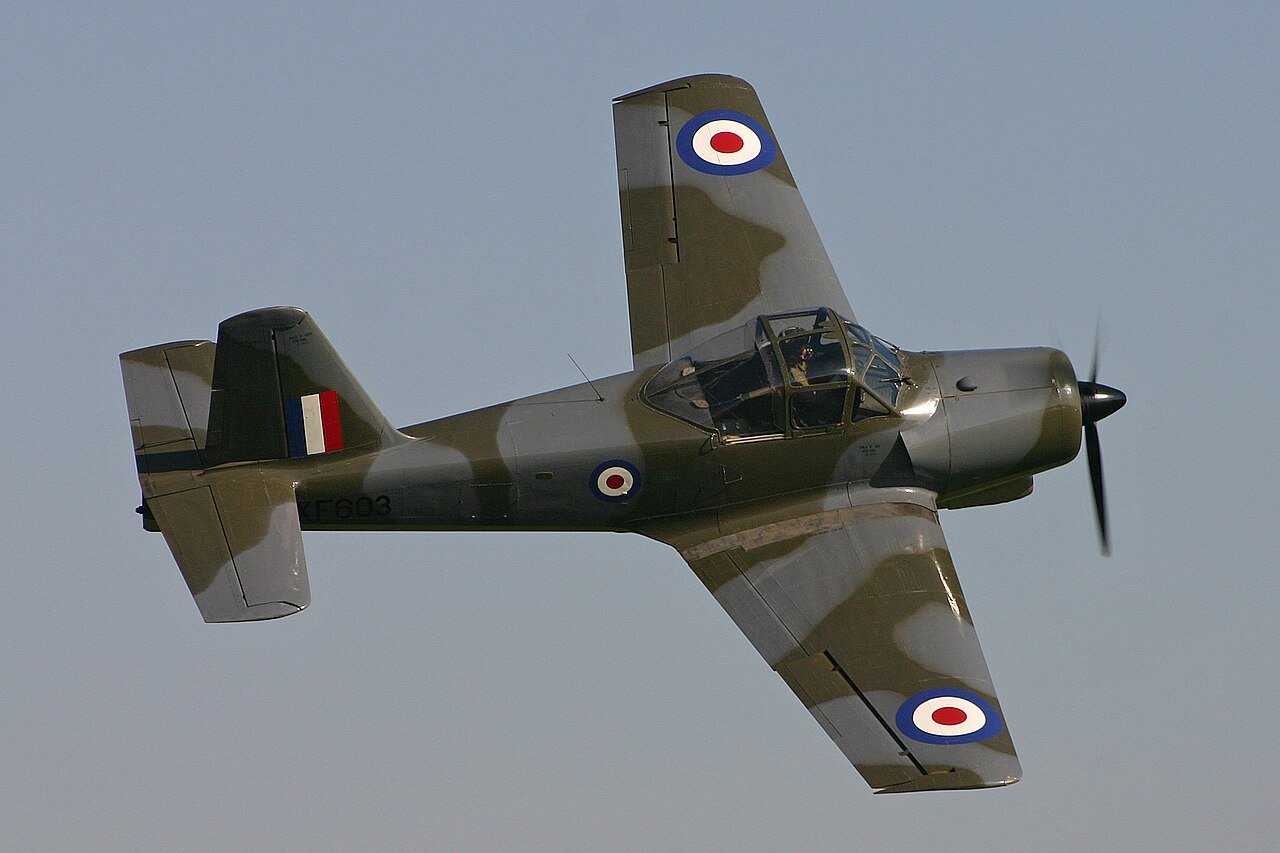
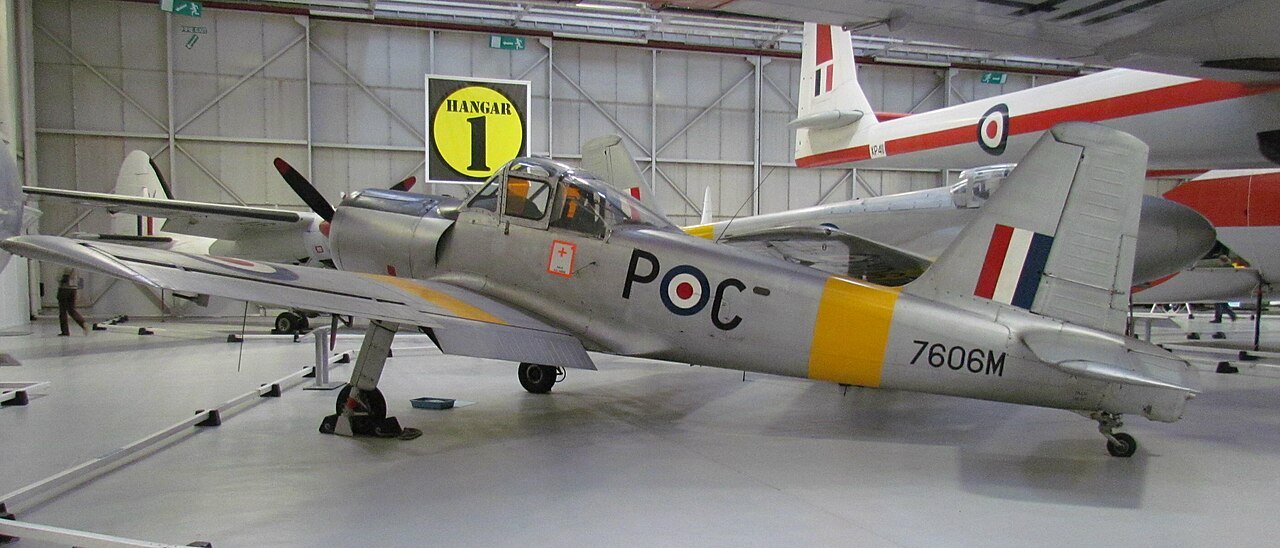
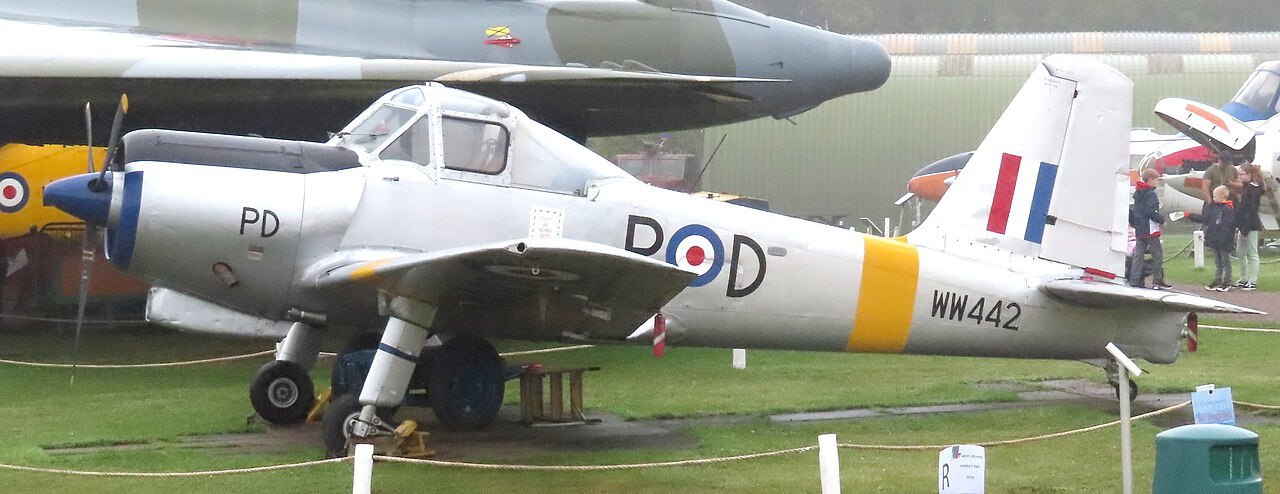
The Provost in pictures
Where the Provost flies and flew
The Provost’s record
In the RAF the Provost was purely a basic trainer, the last piston type in that role. Abroad, armed T.52 and T.53 versions flew genuine combat sorties in Burma’s insurgencies in the early 1960s, in Oman’s Dhofar war from 1962 and in the Rhodesian bush war.
See how training and combat types compare in the military aircraft statistics database. Figures are approximate.
Everything people ask about the Provost
Can I fly in a Percival Provost?
Is the Percival Provost the same as the Jet Provost?
What engine powers the Provost?
How many Provosts were built?
Did the Provost see combat?
When did the RAF retire the Provost?
Where can I see a Provost today?
You can’t fly the Provost.
These, you can.
Most of this museum you can only look at. These genuine military jets you can fly yourself with MiGFlug — with aerobatics and time on the controls.
 Fly the L-39 AlbatrosThe world’s most-flown jet trainer — aerobatics included
 Fly the F-104 Starfighter“The missile with a man in it”
 Fly the MiG-21The Cold War’s most-produced jet
 Fly the T-33 Shooting StarAmerica’s first jet trainer
 Fly the DH VampireA piece of early jet history
 Fly the S.211Agile Italian jet trainer
 Fly the MB-326The classic Aermacchi jet
 Fly the MiG-15The Soviet legend of the Korean War
Continue the tour
Every fact, checked
- Percival Provost T1 (WV562), RAF MuseumRAF deliveries (397), units, retirement in November 1969
- Percival P56 Provost T.1, Shuttleworth CollectionXF603, Omani delivery camouflage, operators
- Provost Preservation (XF597)Individual history of XF597 / G-BKFW
- Percival P-56 Provost, AeropediaPerformance, roll rate, service dates
- Small air force with a big reputation, Times AerospaceProvosts in the Sultan of Oman’s Air Force and Dhofar
- Burmese air force history, ACIGAbout 40 Provosts in Burma and their counter-insurgency use
- The Rhodesian Air Force: fifteen years of flying under embargo, MiGFlug AfterburnerRhodesian Provosts, Frantan, improvised starters
- RAF past aerobatic display teams overview, AerobaticTeams.netThe Sparrows, CFS, 1957