
Aérospatiale SA 341/342 Gazelle
The Fenestron Fighter
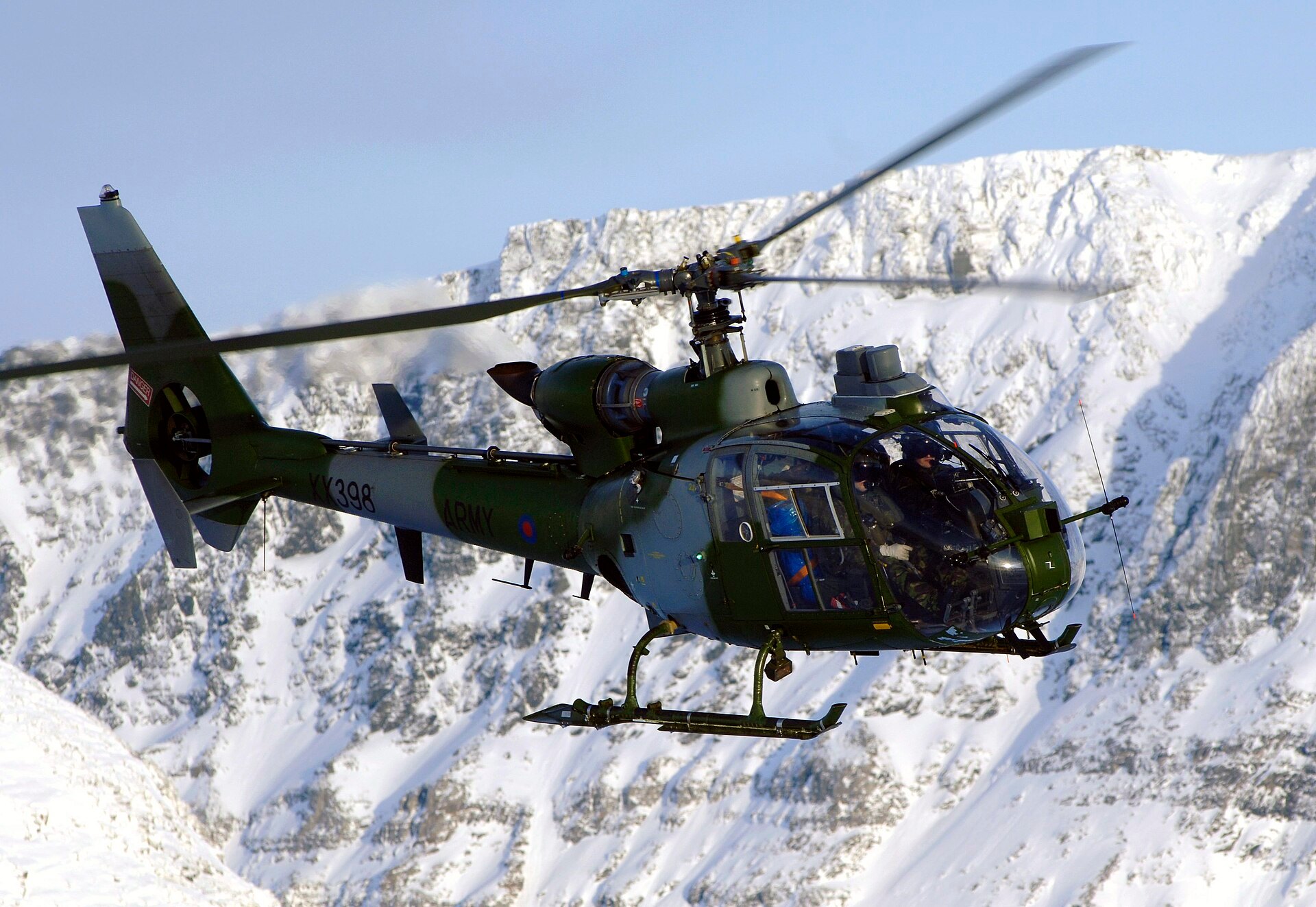
The first helicopter with a fenestron tail, the Gazelle set speed records, hunted tanks with HOT missiles from Lebanon to Kuwait, flew with every branch of the British forces for 49 years and still serves on three continents.
The Gazelle: how a fast French scout became a tank hunter
In 1966 Sud Aviation began work on a light observation helicopter to follow the Alouettes. The French Army wanted something faster and more modern, and the design grew to seat five so that it could also sell abroad. The prototype SA 340 flew on 7 April 1967 with a conventional Alouette tail rotor, but early in 1968 the second prototype appeared with the tail that made the type famous: the fenestron, a shrouded multi-blade fan set into the fin. It was safer for people on the ground, harder to damage and more efficient at speed. On 13 May 1967 a Gazelle had already taken two world speed records on a closed course, 307 km/h over 3 km and 292 km/h over 100 km.
Britain had come aboard almost from the start. Under the Anglo-French agreement of February 1967, Westland took a large share of production for the British forces in exchange for French purchases of the Lynx, and built 262 Gazelles in all. The first production aircraft flew on 6 August 1971. In France the SA 342M with four HOT missiles became the backbone of the Army’s anti-tank helicopter force, while the SA 341F carried a 20 mm cannon. Licence production in Yugoslavia by SOKO and assembly in Egypt by ABHCO added more, and by the end of production in 1996 more than 1,700 had been built. Civil versions sold well too: the American operator Vought Helicopters alone once had at least 70.
The Gazelle’s combat career is long and varied. Syrian Gazelles harried Israeli armour in Lebanon in 1982; Iraqi Gazelles fought Iran; French, Kuwaiti and British Gazelles flew in the Gulf War; Ecuador used them against Peru in 1995. Royal Marines Gazelles were shot down at San Carlos in the Falklands. French Gazelles struck in Côte d’Ivoire and Libya in 2011 and opened Operation Serval in Mali in 2013. In Britain the type became the only aircraft to serve with every branch of the armed forces, and the Army Air Corps flew its last Gazelles on 31 October 2023, after 49 years. France, Egypt, Serbia, Lebanon and others fly them still.
01The Gazelle over Lebanon, 1982: the HOT-armed harassers
When Israel invaded Lebanon in June 1982, Syria’s small force of HOT-armed Gazelles was among the few weapons that could strike its armoured columns in the mountains. The first attacks came on 8 June, and according to the historian Roger Spiller they spread alarm among Israeli tank crews, who found themselves engaged by missiles fired from beyond the range of their own weapons. The Gazelles used Western-style pop-up tactics, rising briefly from cover to fire and dropping back out of sight.
Their effect is still argued over. Syria later claimed 30 tanks and 50 other vehicles destroyed for the loss of five helicopters; Israel acknowledged seven tanks lost to the Gazelles and claimed 12 of them shot down. The analyst Kenneth Pollack judged them psychologically effective but able to manage no more than a few armour kills. As Israeli air superiority grew, the raids became more dangerous, yet strikes continued until the ceasefire. What is not contested is the lesson Syria drew: after the war it expanded its Gazelle fleet from 16 to 50 and added 50 heavier Mi-24s. Across the region the war confirmed the attack helicopter as a weapon armies could not ignore.
02The Gazelle in British service: 49 years, every branch
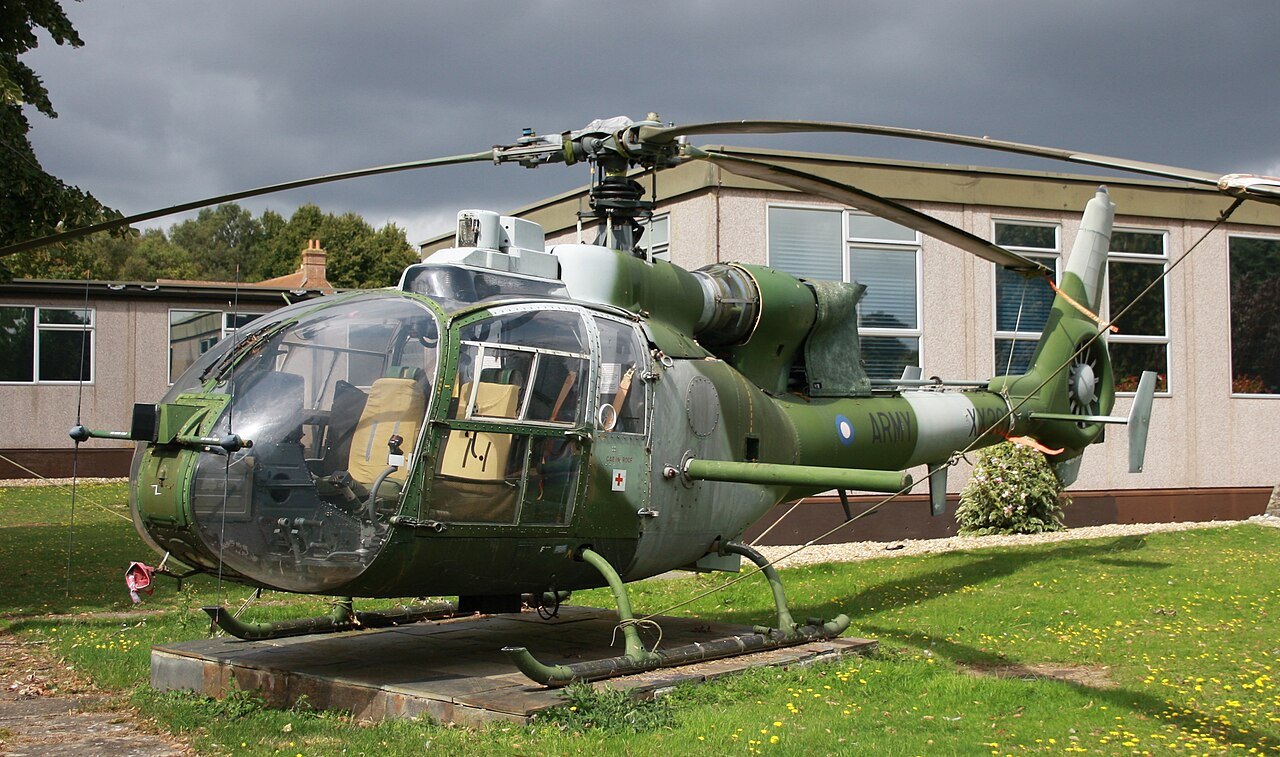
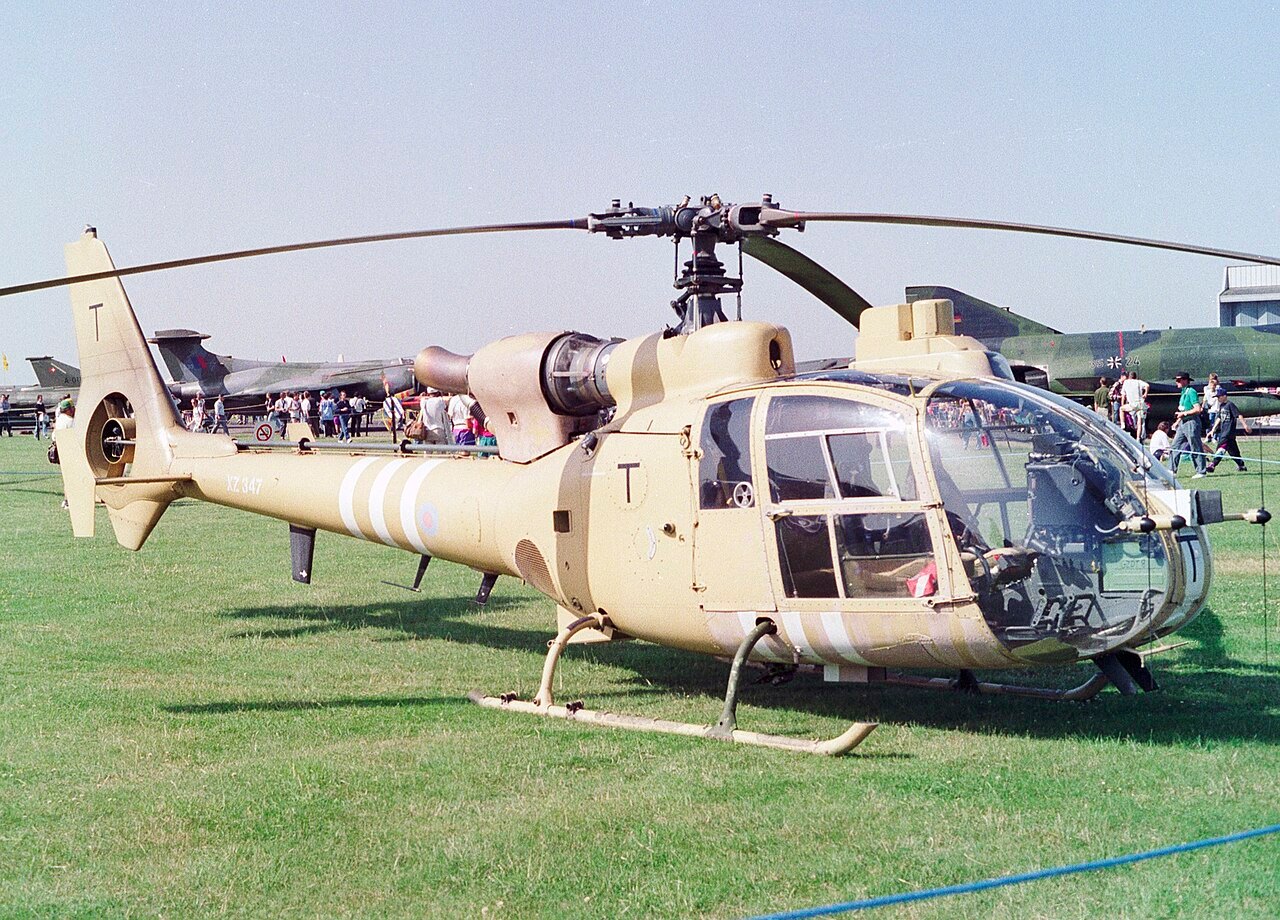
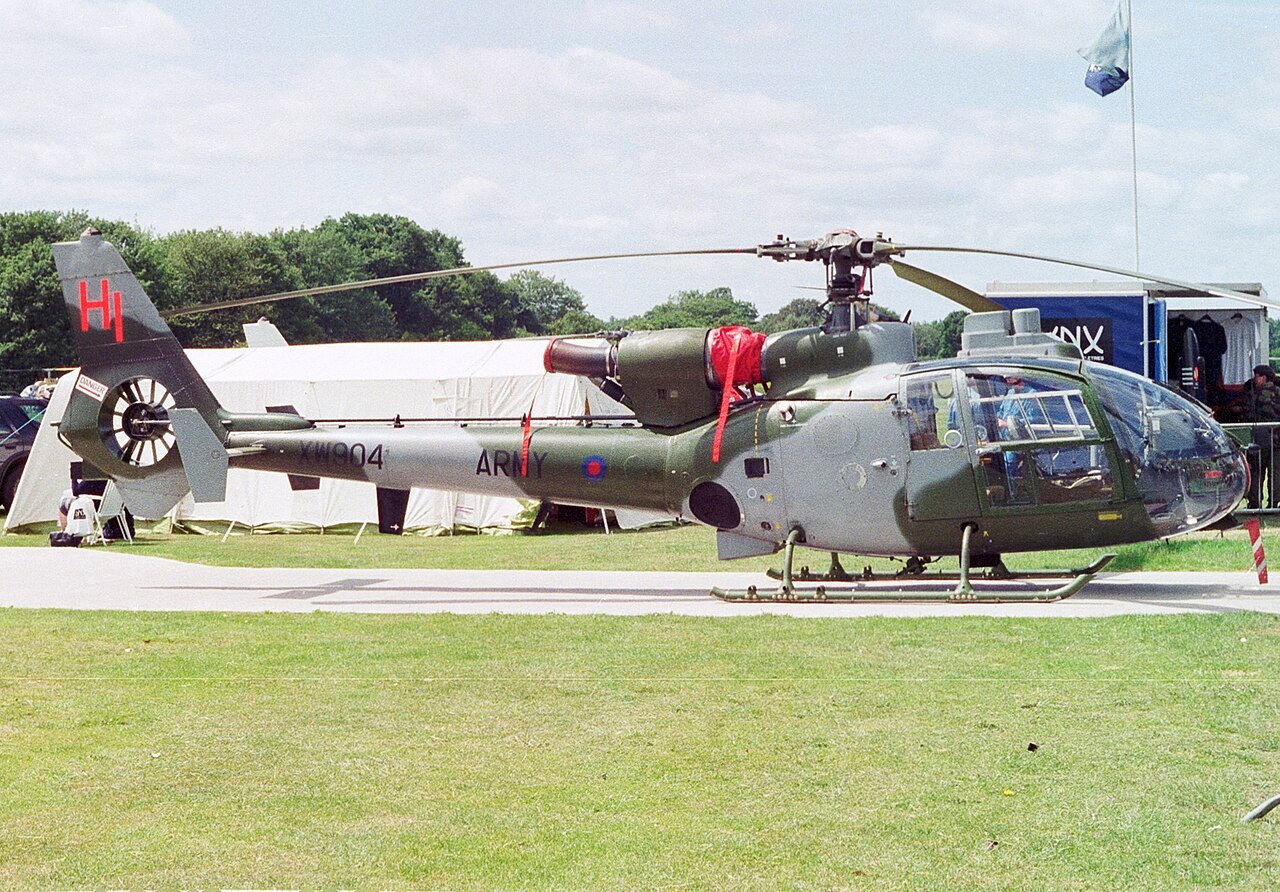
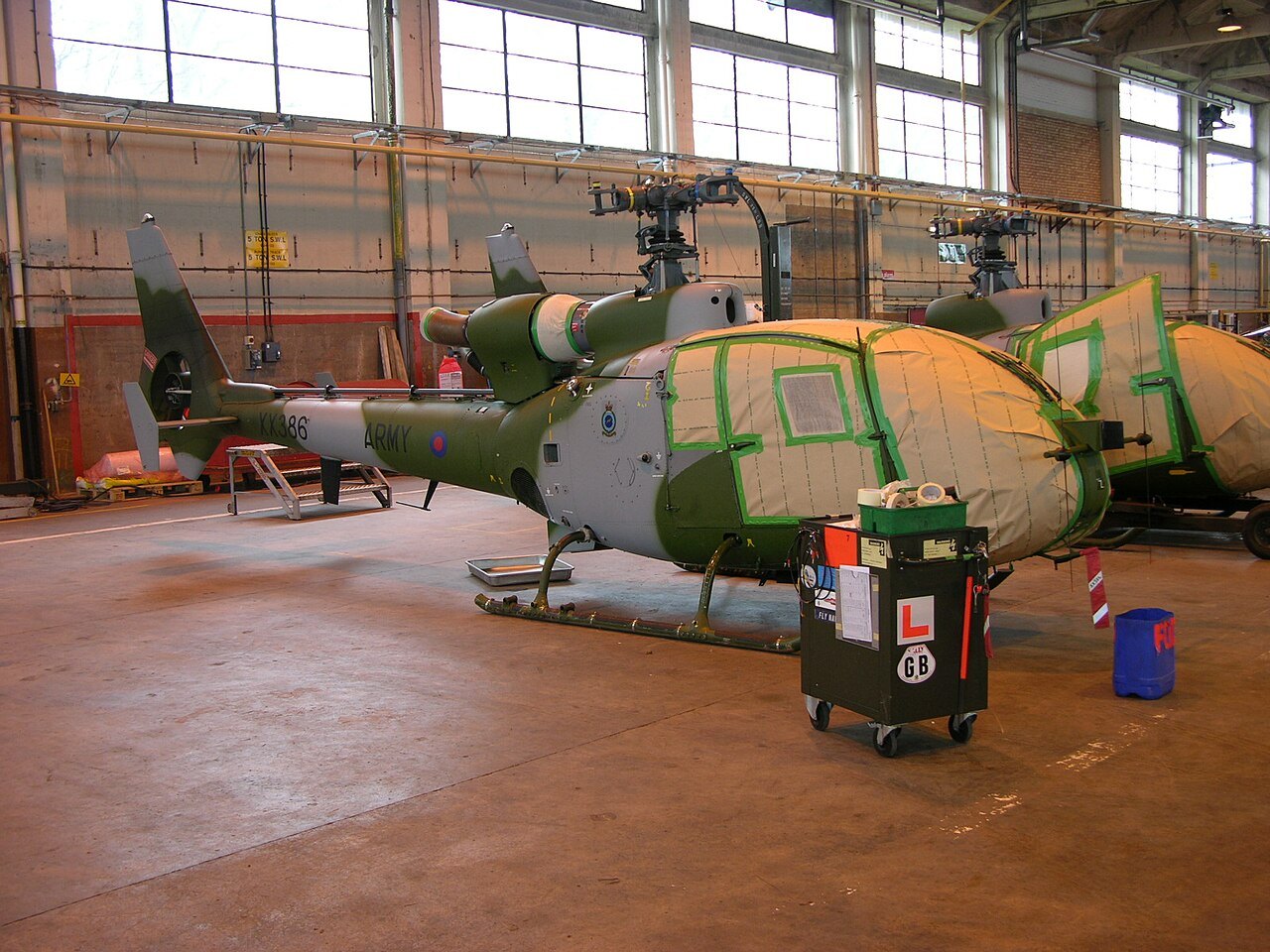
The first British Army unit to fly the Gazelle was No. 660 Squadron AAC in Germany, operational from 6 July 1974. The AH.1 replaced the Sioux for reconnaissance, artillery spotting, liaison and casualty evacuation, and in the Cold War Army Gazelles flew more than 660,000 hours. The Royal Navy used the HT.2 at Culdrose from December 1974 to train its helicopter pilots, the RAF flew the HT.3 trainer and HCC.4 communications aircraft, and the Royal Marines flew AH.1s with 3 Commando Brigade Air Squadron. It became the only aircraft to serve with every branch of the British armed forces.
The Gazelle flew patrols over Northern Ireland, where one was brought down near Jonesborough in February 1978 during a firefight with the Provisional IRA. In the Falklands, two Royal Marines Gazelles were shot down on the first day of the San Carlos landings, and on 6 June 1982 an Army Gazelle was shot down by HMS Cardiff after being mistaken for an Argentine aircraft. Later it flew in the Gulf, Bosnia, Kosovo, Sierra Leone, Iraq and Afghanistan, where in 2007 it was reported as the best-performing British helicopter, with about 80 percent availability. Its last tasks were surveillance in Northern Ireland and support at the Suffield training area in Canada, until three Gazelles flew a farewell tour before retirement on 31 October 2023.
What makes the Gazelle special
The fenestron
The Gazelle was the first helicopter to fly with a fenestron, a fan of many small blades inside a duct in the tail fin, instead of an open tail rotor. It is far less vulnerable to damage and much safer for people on the ground, and it needs little power at cruise speed. It helped make the Gazelle the fastest helicopter in its class, and the idea went on to Airbus types from the Dauphin to the H160. Pilots noticed the difference too: the fenestron let them hover close to trees and buildings with less fear of a tail strike.
Composite blades and a forgiving rotor
The original rotor was a rigid design derived from the MBB Bo 105, but high-speed control problems led to an articulated rotor on production aircraft. Its blades were made largely of glass-fibre composite and designed for a very long life, an early example of a technology that became standard. The rotor is known for its wide tolerance in autorotation, and the type was reported able to fly without its main hydraulic system at up to 100 knots. Hydraulic servo boosters on every control circuit eased the loads if equipment failed.
Built for low running costs
Designers aimed for minimal maintenance. Bearings were life-rated without routine lubrication, fluid reservoirs could be checked at a glance, and many parts were designed to last 700 to 1,200 flight hours before replacement. The Gazelle was also the first helicopter adapted for single-pilot flight under instrument rules, with a Honeywell duplex autopilot. Easy handling made it a favoured training helicopter for the Royal Navy and the RAF for decades, and its quick, responsive controls made it popular with display pilots and private owners alike. It has neither a throttle nor a trim system, which surprises pilots from other types.
03The Gazelle’s variants: SA 341, SA 342 and the British marks
- SA 340: prototypes, first flight 7 April 1967.
- SA 341B / Gazelle AH.1: British Army and Royal Marines utility and observation version.
- SA 341C / Gazelle HT.2: Royal Navy pilot trainer.
- SA 341D / Gazelle HT.3: RAF pilot trainer.
- SA 341E / Gazelle HCC.4: RAF communications and VIP version.
- SA 341F: French Army light support version, some with a 20 mm cannon; basis of the Mistral-armed Gazelle Celtic.
- SA 341G / H: civil and export military versions.
- SA 342L: export military version with the uprated Astazou XIV.
- SA 342M / M1: French Army anti-tank version with four HOT missiles; later Viviane thermal-imaging and Mistral versions.
- SOKO HN-42M / HN-45M Gama: Yugoslav licence-built armed versions.
Aérospatiale SA 341G Gazelle specifications
Specifications
- Crew
- 1 or 2 pilots
- Capacity
- Up to 3 or 4 passengers, or about 600 kg (1,320 lb) underslung
- Length
- 11.97 m (39 ft 3 in) rotors turning
- Main rotor diameter
- 10.50 m (34 ft 5 in)
- Height
- 3.15 m (10 ft 4 in)
- Empty weight
- 917 kg (2,022 lb)
- Max take-off weight
- 1,800 kg (3,968 lb)
- Powerplant
- 1 × Turbomeca Astazou IIIA turboshaft, 440 kW (590 shp); SA 342 versions use the uprated Astazou XIV
- Maximum speed
- 310 km/h (193 mph) at sea level
- Cruise speed
- 264 km/h (164 mph)
- Range
- 361 km (224 mi) at sea level with maximum fuel
- Service ceiling
- 5,000 m (16,400 ft)
- Climb rate
- 9 m/s (1,770 ft/min)
- Armament
- SA 342M: 4 Euromissile HOT anti-tank missiles; other versions 20 mm cannon, rocket pods, Mistral air-to-air missiles, machine guns
Costs & production
- Cost per flight hour
- No official figure published. Hedged estimate: roughly US$1,000–2,500 per hour for a military Gazelle, and less for civil examples, based on a single Astazou engine, long-life components and the type’s reputation for low running costs; armed versions and ageing fleets cost more
- Production
- More than 1,700 built 1967–1996, including 262 by Westland, 132 by SOKO and about 100 assembled by ABHCO in Egypt
- Programme
- First flight 7 April 1967; first production aircraft 6 August 1971; British Army service 6 July 1974 to 31 October 2023
04The Gazelle’s operating costs: why it lasted so long
The Gazelle’s longevity is partly a matter of money. It was designed from the start to be cheap to maintain: sealed, life-rated bearings, components with service lives of 700 to 1,200 hours, and an engine and rotor system simple enough for small air arms to support. That is why the British Army kept it until 2023, more than once extending its out-of-service date, and why France, Egypt, Serbia and others still fly it alongside much newer helicopters.
Upgrade packages have helped. Companies such as Aerotec have offered ballistic protection, night-vision goggles, new weapons and modern displays, QinetiQ developed direct voice input for the cockpit, and there were proposals to turn retired Gazelles into unmanned aircraft. No air force publishes an official hourly cost for the type, so the figure in the table is a hedged estimate. In civil hands, ex-military Gazelles remain one of the more affordable ways to own a turbine helicopter with a military pedigree.
The Gazelle from fenestron prototype to British farewell
First flight and speed records
The SA 340 flies on 7 April; on 13 May a Gazelle sets two world speed records. Britain and France sign their helicopter agreement in February.
The fenestron
The second prototype introduces the shrouded fenestron tail.
Production begins
The first production Gazelle flies on 6 August.
British service
660 Squadron AAC becomes operational on 6 July; Royal Navy training begins at Culdrose in December.
Two wars
Syrian Gazelles strike Israeli armour in Lebanon from 8 June; British Gazelles are lost at San Carlos and to friendly fire in the Falklands.
Gulf War
More than 50 French Gazelles deploy; Kuwaiti Gazelles that escaped the invasion strike back with HOT missiles.
Cenepa War
Ecuadorean Army Gazelles fly close air support and escort missions against Peru.
Production ends
The last Gazelles are built after more than 1,700.
Côte d’Ivoire and Libya
French Gazelles attack Gbagbo’s compound in April and strike Libyan targets from the Tonnerre.
Mali
Gazelles fly the first raids of Operation Serval in January.
British farewell
The Army Air Corps retires its last Gazelles on 31 October after 49 years.
Stories & eyewitnesses: the Gazelle at war and on display
307 km/h before the fenestron
Five weeks after first flight, the Gazelle was a record-holder.
Read the full story
Missiles in the Bekaa
Syrian Gazelles slowed Israeli armour in 1982.
Read the full story
San Carlos, 21 May 1982
Two Royal Marines Gazelles were shot down on the first day of the landings.
Read the full story
Kuwait’s Gazelles strike back
Helicopters that escaped the invasion returned with HOT missiles.
Read the full story
Abidjan, April 2011
Gazelles helped end the siege of Gbagbo’s compound.
Read the full story
The first loss of Serval
A Gazelle pilot was France’s first death in Mali.
Read the full story
Learning to fly at Culdrose and Shawbury
Generations of British pilots started on the Gazelle.
Read the full story
Fifty years over Northern Ireland
The Gazelle watched the province from the Troubles to 2023.
Read the full story
China’s first attack helicopters
Eight Gazelles taught the PLA anti-armour tactics.
Read the full story
Where to see a Gazelle
Museums and civil owners keep the type in the public eye.
Read the full story
The Gazelle in pictures
Where the Gazelle flies and flew
The Gazelle’s record
The Gazelle has seen combat in Lebanon, the Iran–Iraq War, the Falklands, the Gulf War, the Cenepa War, the Yugoslav wars, Afghanistan, Côte d’Ivoire, Libya, Mali and Syria. Its HOT-armed versions were among the first light attack helicopters to fight modern armour, with results that are still debated.
See how training and combat types compare in the military aircraft statistics database. Figures are approximate.
Everything people ask about the Gazelle
Can I fly in an Aérospatiale SA 341/342 Gazelle?
What is a fenestron?
How fast is the Gazelle?
How many Gazelles were built?
When did the British Army retire the Gazelle?
What weapons does the Gazelle carry?
Is the Gazelle still in service?
You can’t fly the Gazelle.
These, you can.
Most of this museum you can only look at. These genuine military jets you can fly yourself with MiGFlug — with aerobatics and time on the controls.
 Fly the L-39 AlbatrosThe world’s most-flown jet trainer — aerobatics included
 Fly the F-104 Starfighter“The missile with a man in it”
 Fly the MiG-21The Cold War’s most-produced jet
 Fly the T-33 Shooting StarAmerica’s first jet trainer
 Fly the DH VampireA piece of early jet history
 Fly the S.211Agile Italian jet trainer
 Fly the MB-326The classic Aermacchi jet
 Fly the MiG-15The Soviet legend of the Korean War
Continue the tour
Every fact, checked
- British Army Gazelles make farewell flypast before retirementForces News, October 2023: 6 July 1974 to 31 October 2023, every branch, deployments
- UK selects H135s to replace British Army’s elderly Gazelle helicoptersFlightGlobal, January 2022, on the replacement plan
- Aérospatiale GazelleRoyal International Air Tattoo 2023: 1,700+ built, combat history, ex-French Army SA 342M
- Helicopter capability: eleventh report of session 2008–09House of Commons Defence Committee on UK helicopter fleets including the Gazelle
- The Falklands War: The Bluff Cove DisasterMilitary Review, 2004: context of Gazelle operations and losses in 1982
- La M134 “minigun” qualifiée sur les Gazelle du COSAir & Cosmos on special forces Gazelle armament
- The Illustrated Encyclopedia of HelicoptersGiorgio Apostolo, 1984: Gazelle development and fenestron