
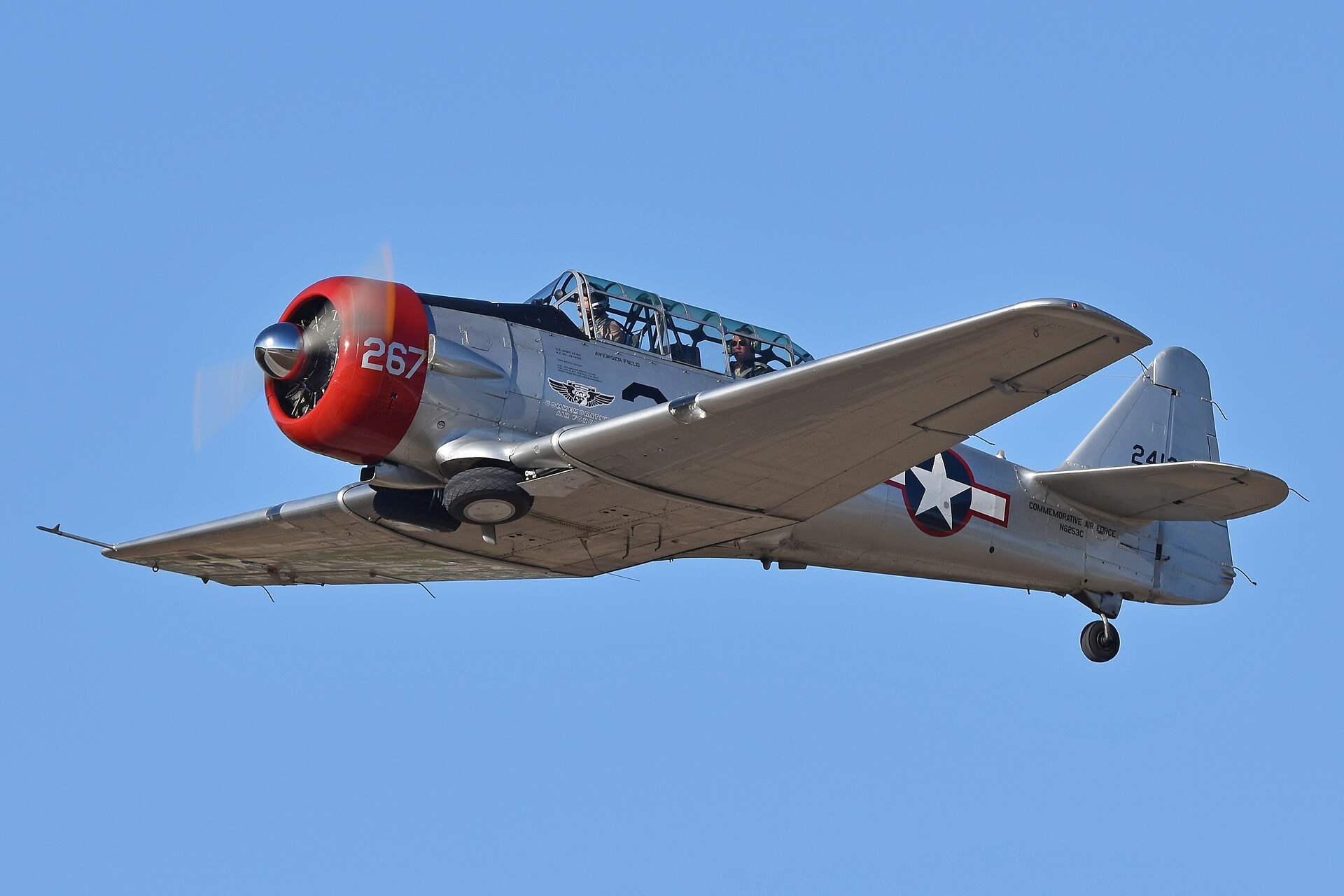
North American T-6 Texan
The Pilot Maker
The advanced trainer that turned hundreds of thousands of cadets into combat pilots for the Allies, then fought its own wars from Korea to Algeria and served the South African Air Force until 1995.
The T-6 Texan: how one trainer taught the Allies to fly
On 1 April 1935 North American Aviation flew a low-wing, fixed-gear two-seater called the NA-16. It was a modest machine, but the US Army Air Corps wanted a trainer that behaved like the fighters its cadets would soon fly, and North American kept refining it: retractable undercarriage, a bigger engine, a stressed-skin structure built to take punishment. The line ran through the BC-1 basic combat trainer of 1937 to the AT-6 of 1940. The Army called it the Texan, the US Navy the SNJ, and the British Commonwealth the Harvard. After 1948 the US Air Force settled on T-6, the name that stuck. By then the aircraft had already trained a large share of the pilots who fought the Second World War, on both sides of the Atlantic and across the Commonwealth.
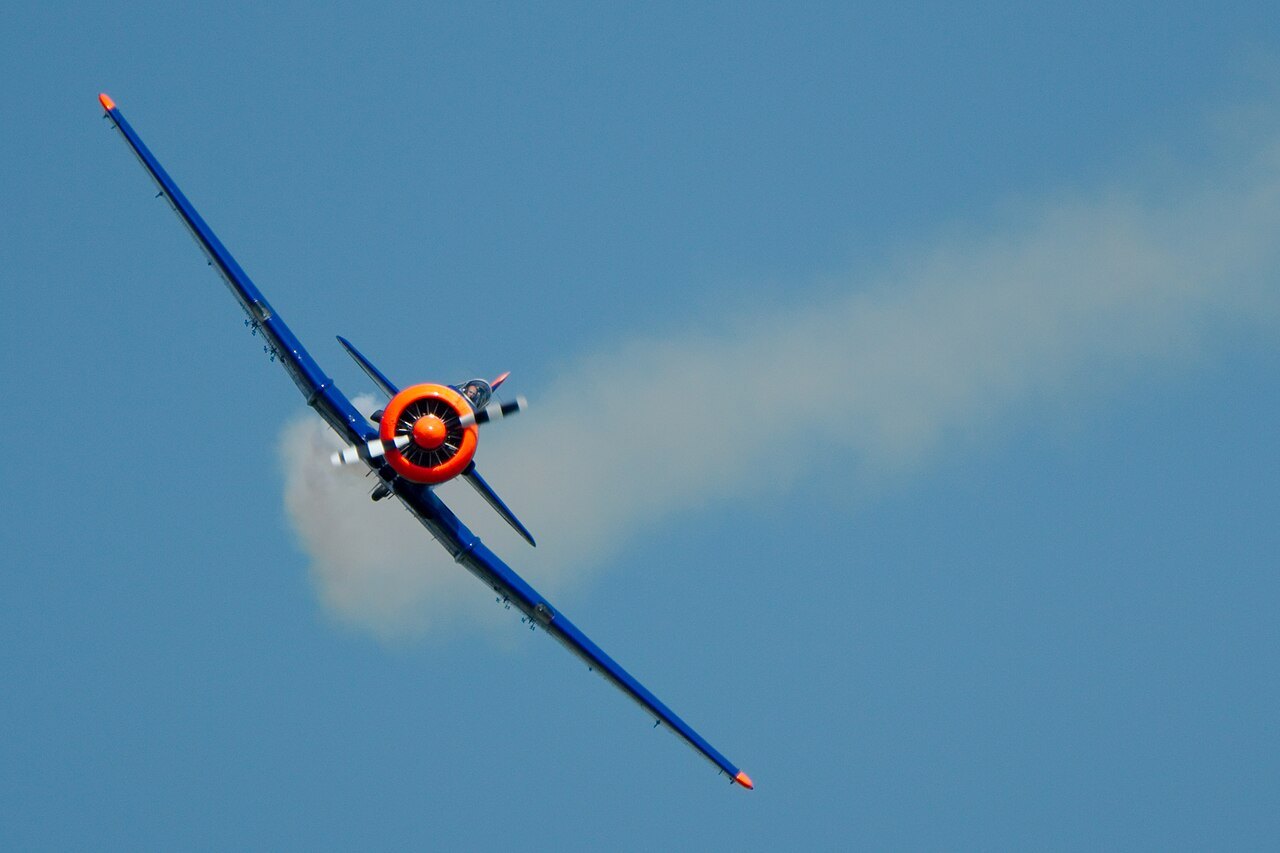
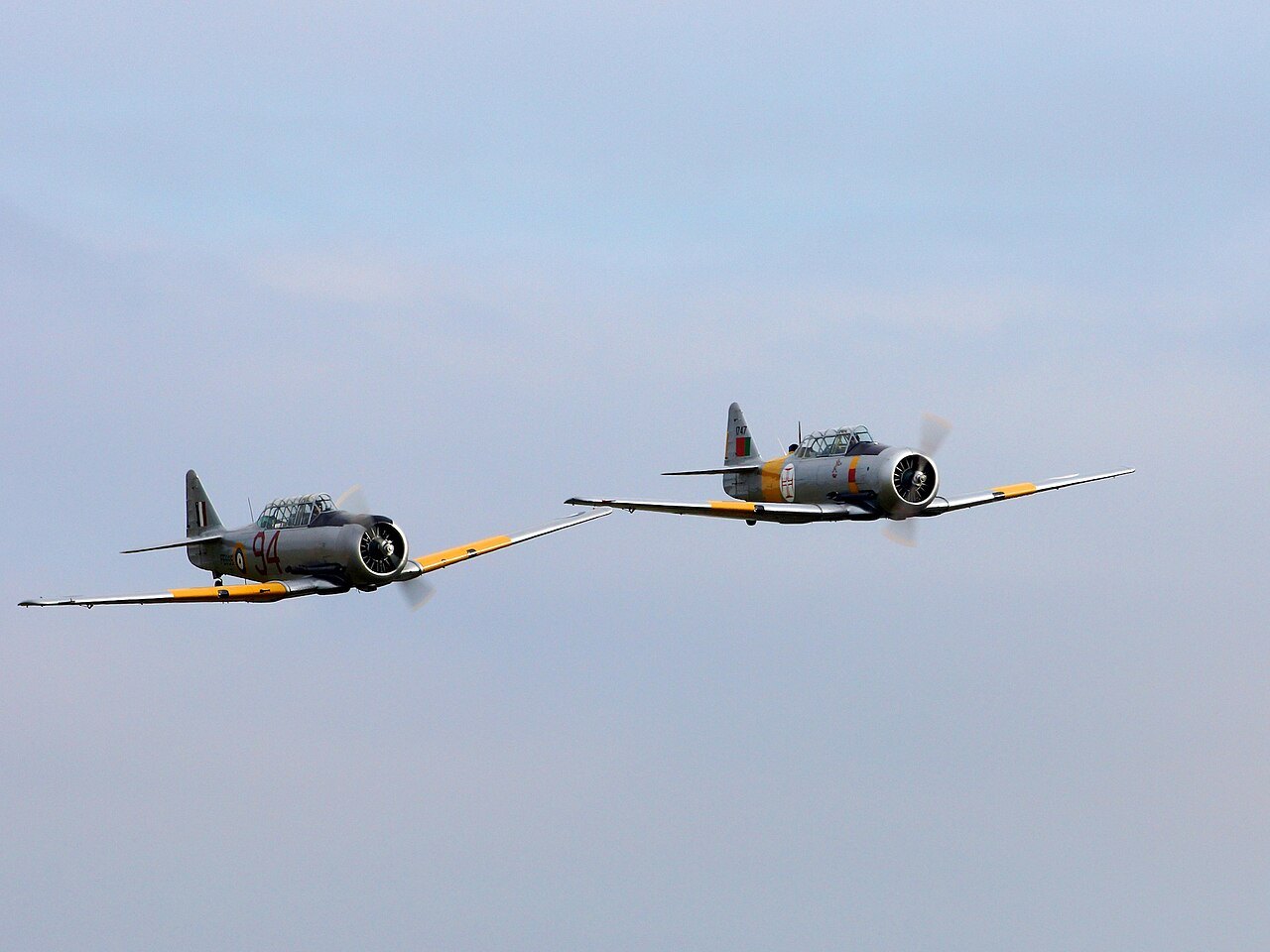
Its job was the step between a gentle primary trainer and a 1,000-horsepower fighter. The Texan had a constant-speed propeller, flaps, retractable gear, a full instrument panel and enough torque on the Pratt & Whitney R-1340 Wasp to bite a careless pilot on take-off and landing. Instructors liked that: a cadet who could handle a T-6 cleanly could handle a P-51 Mustang or a Spitfire. Gunnery versions carried machine guns, Navy SNJs carried tail hooks for carrier practice, and the type became known simply as the Pilot Maker. Its long greenhouse canopy, tandem seats and blunt radial nose became, for a whole generation, the very picture of learning to fly military aircraft.
Production was enormous. North American, Noorduyn and Canadian Car & Foundry in Canada, and Commonwealth Aircraft Corporation in Australia (as the Wirraway) built well over 15,000 of the family, with totals commonly given between about 15,500 and 17,000 depending on which derivatives are counted. More than 5,000 went to British and Commonwealth air forces, many of them to the schools of the British Commonwealth Air Training Plan. After 1945 the T-6 trained the air forces of more than sixty nations, flew forward air control in Korea, fought insurgencies in Greece, Algeria and Africa, and remained in South African service until November 1995. Hundreds still fly today as warbirds, film aircraft and air racers.
01The T-6 Texan’s lineage: from the NA-16 to the T-6G
The family tree is tangled because the aircraft grew in steps. The NA-16 of 1935 had fixed gear and an open cockpit layout; the Air Corps bought a derivative as the BT-9 basic trainer. The NA-26, submitted to the Basic Combat Trainer competition in 1937, added retractable gear and became the BC-1, 177 of which were delivered from June 1937, powered by the 550 hp R-1340-47. In 1940 the Air Corps created the Advanced Trainer category and the definitive airframe became the AT-6.
Wartime production ran through the AT-6A, the armament-training AT-6B, the AT-6C (designed to save aluminium with wood and steel parts) and the AT-6D with a 24-volt electrical system, with Navy equivalents from SNJ-1 to SNJ-6. After the war the US Air Force remanufactured existing airframes as the T-6G, with a revised cockpit, a steerable tailwheel and more fuel. Tinker Air Force Base history records that around 1,800 aircraft were upgraded under this programme from 1949. Canadian Car & Foundry built new Harvard 4s, essentially T-6Gs, into the 1950s.
02The T-6 Texan abroad: Harvard, Wirraway and the Commonwealth schools
Britain ordered its first 200 Harvards in June 1938, according to the RAF Museum, and direct purchases reached about 1,100 before Lend-Lease took over. Once war began, much flying training moved away from Britain’s crowded skies to Canada, Southern Rhodesia, South Africa and the United States. In Canada, Noorduyn at Cartierville received its Harvard contract in January 1940 and delivered from January 1941; the RCAF flew the type from 1939 to 1965, until the Canadair Tutor replaced it.
Australia went further. Commonwealth Aircraft Corporation built 755 Wirraways, a Harvard derivative armed as a general-purpose combat aircraft, and in the desperate months of 1942 they were sent into action against Japanese forces. Sweden built and bought Harvards as the Sk 16; Japan’s navy flew the Kyushu K10W, loosely derived from the NA-16; and post-war, Harvards spread through NATO and beyond under the US Mutual Defense Assistance Program, giving the type a second career in the air forces of West Germany, Italy, Turkey, Greece and many others.
What makes the T-6 Texan special
A trainer that behaved like a fighter
The T-6 was deliberately not easy. With a 600 hp radial, a narrow-track tailwheel undercarriage, constant-speed propeller and retractable gear, it demanded the same habits a fighter would: careful rudder on take-off, a disciplined circuit and pre-landing checks for gear, flaps, mixture and propeller. A USAAF officer writing in 1944 called it a plane that could do anything a fighter could. That reputation is why air forces kept it for decades as the final step before operational types.
Built to be abused
The airframe was conventional all-metal stressed skin with fabric-covered control surfaces, simple to repair and tolerant of hard landings by tired cadets. The Pratt & Whitney R-1340 Wasp was already a proven engine from pre-war fighters and transports, which kept spares and training easy. The same toughness later made the T-6 useful in light attack, where operators valued its ability to absorb small-arms damage and fly home.
The Harvard’s voice
Anyone who has heard a Harvard at full power on take-off remembers it: a harsh, rasping howl quite unlike other radial-engined aircraft. The cause is the direct-drive two-blade propeller, whose tips approach the speed of sound at take-off power. It made the type notorious around training airfields and is still a signature sound at airshows, where the surviving aircraft remain among the most numerous flying warbirds.
03The T-6 Texan’s cockpit: tandem seats and a full instrument panel
Student and instructor sat in tandem under a long glazed canopy with sliding sections, the student usually in front. Both cockpits had full controls and instruments, so the T-6 could be used for instrument training under a hood as well as aerobatics, formation and navigation. Gunnery versions carried a fixed forward-firing .30-inch machine gun, with provision on some for a second in the wing and a flexible gun in the rear cockpit, giving a total provision of up to three guns.
The fuel system later became a known weak point. Wear in the fuel tank selector valve could let it drift into an intermediate position and starve the engine, and civil authorities have issued guidance on it; operators today commonly fit modified selectors.
North American T-6 Texan specifications
Specifications
- Crew
- 2 (student and instructor, tandem)
- Length
- 8.84 m (29 ft 0 in)
- Wingspan
- 12.81 m (42 ft 0 in)
- Height
- 3.56 m (11 ft 8 in)
- Wing area
- 23.57 m² (253.7 sq ft)
- Empty weight
- 1,886 kg (4,158 lb)
- Max take-off weight
- 2,548 kg (5,617 lb) gross
- Powerplant
- 1 × Pratt & Whitney R-1340-AN-1 Wasp radial, 600 hp (450 kW)
- Maximum speed
- 335 km/h (208 mph) at 1,500 m (5,000 ft)
- Cruise speed
- 233 km/h (145 mph)
- Range
- 1,170 km (730 mi)
- Service ceiling
- 7,400 m (24,200 ft)
- Climb rate
- 6.1 m/s (1,200 ft/min)
- Armament
- Provision for up to 3 × 0.30 in machine guns; light bombs and rockets on armed post-war versions
Costs & production
- Cost per flight hour
- Hedged estimate: roughly US$600–1,000 for a privately operated warbird today, driven by a radial burning on the order of 30–40 US gallons of avgas an hour plus engine overhaul reserves; operator figures vary widely
- Production
- 15,000+ of the T-6, SNJ and Harvard family, commonly given as about 15,500; some counts including derivatives exceed 17,000
- Programme
- 1935 NA-16 first flight; AT-6 from 1940; T-6G remanufacture from 1949; last front-line training use with South Africa in 1995
04The T-6 Texan’s variants: the main family members
- NA-16 / BT-9: fixed-gear ancestors of 1935 onwards.
- BC-1 / BC-1A: basic combat trainers with retractable gear, 1937.
- AT-6, AT-6A: the first Advanced Trainers; SNJ-3 the Navy equivalent.
- AT-6B: gunnery training version.
- AT-6C / SNJ-4 / Harvard IIA: built with substitute materials to save aluminium.
- AT-6D / SNJ-5 / Harvard III: 24-volt electrics; the most numerous wartime types.
- AT-16 / Harvard IIB: built by Noorduyn in Canada, over 2,500.
- T-6G: post-war remanufacture with revised cockpit and more fuel; LT-6G for forward air control in Korea.
- Harvard 4: new-build T-6G equivalent from Canadian Car & Foundry.
- CAC Wirraway: Australian armed derivative, 755 built.
05The T-6 Texan’s operating costs: what keeps a Harvard flying
No official modern cost-per-hour figure exists for the military T-6, so any number is an estimate. For today’s civil owners the large items are fuel for the R-1340, which commonly burns in the region of 30 to 40 US gallons an hour, oil consumption typical of a large radial, and a reserve towards engine overhaul, which on this type runs to tens of thousands of dollars. Add insurance, hangarage and inspections and owners commonly arrive at somewhere between US$600 and US$1,000 an hour. Purchase prices for airworthy examples vary greatly with condition and history.
The T-6 Texan from the NA-16 to the last Harvard
NA-16 first flight
North American’s fixed-gear two-seater flies on 1 April, the ancestor of the whole family.
BC-1 enters service
The first retractable-gear basic combat trainers reach the US Army Air Corps from June.
Britain orders the Harvard
The RAF signs for its first 200 aircraft in June.
AT-6 Texan
The Air Corps creates the Advanced Trainer category; Noorduyn in Canada receives its Harvard contract.
Wirraway in combat
On 26 December an RAAF Wirraway shoots down a Japanese Ki-43 near Buna, New Guinea.
T-6
The new US Air Force redesignates the type T-6; Harvards and AT-6s fly in the Arab-Israeli war.
T-6G programme
Around 1,800 airframes are remanufactured to T-6G standard.
Mosquitoes over Korea
Within weeks of the war starting, T-6s begin airborne forward air control; more than 40,000 sorties follow.
Algeria
France arms T-6Gs for counter-insurgency, eventually forming dozens of light support squadrons.
Portugal in Africa
Portugal deploys more than 100 T-6Gs in its colonial wars.
RCAF retires the Harvard
Canada ends 26 years of Harvard service as the Tutor jet takes over.
The last Harvard class
The South African Air Force retires its Harvards in November, replaced by the PC-7 Mk II Astra.
Stories & eyewitnesses: the T-6 Texan at war and in peace
The Mosquitoes of Korea
Slow, unarmoured trainers became the eyes of UN air power.
Read the full story
The Wirraway that shot down a fighter
An Australian trainer derivative claimed a Japanese fighter in 1942.
Read the full story
The Milkman of the Greek mountains
Greek Harvards flew dawn patrols in the civil war.
Read the full story
Algeria: the T-6 as a gunship
France built a whole light-attack force around armed T-6Gs.
Read the full story
Tel Aviv, 1948: a gunner’s victory
A Syrian AT-6 rear gunner shot down an Israeli fighter.
Read the full story
Buenos Aires, 16 June 1955
Navy SNJs bombed the capital in a failed coup.
Read the full story
Flying home one-handed
A Pakistani pilot brought back a shot-up T-6G in 1971.
Read the full story
Twenty-five thousand Canadian pilots
The Harvard was the backbone of Canada’s air training.
Read the full story
South Africa’s farewell formation
The SAAF flew Harvards for more than half a century.
Read the full story
Hollywood’s Zero
Modified T-6s played Japanese aircraft for decades.
Read the full story
The RAF’s longest-serving aircraft
One Harvard outlived the jets it trained pilots for.
Read the full story
A racing class of its own
After the war the T-6 found a new life at Reno.
Read the full story
The T-6 Texan in pictures
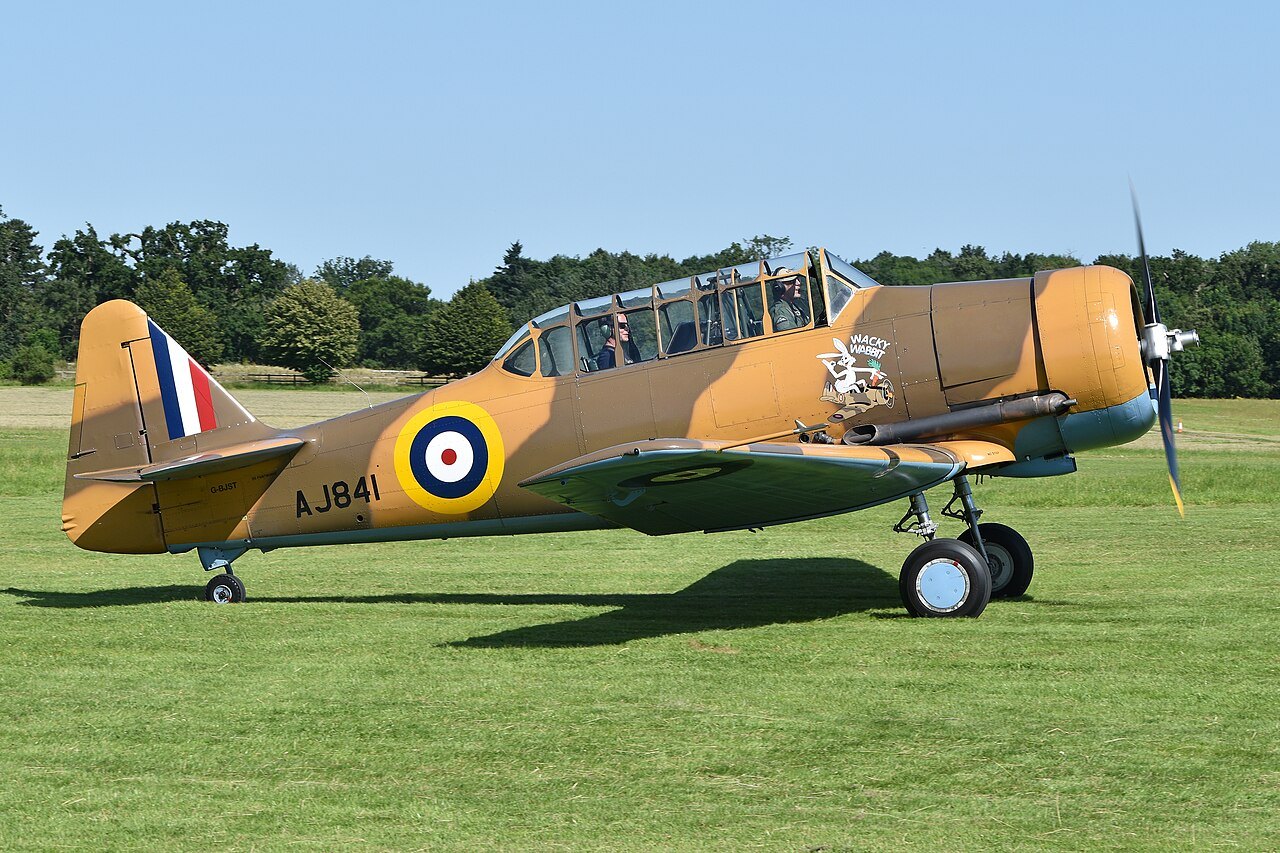
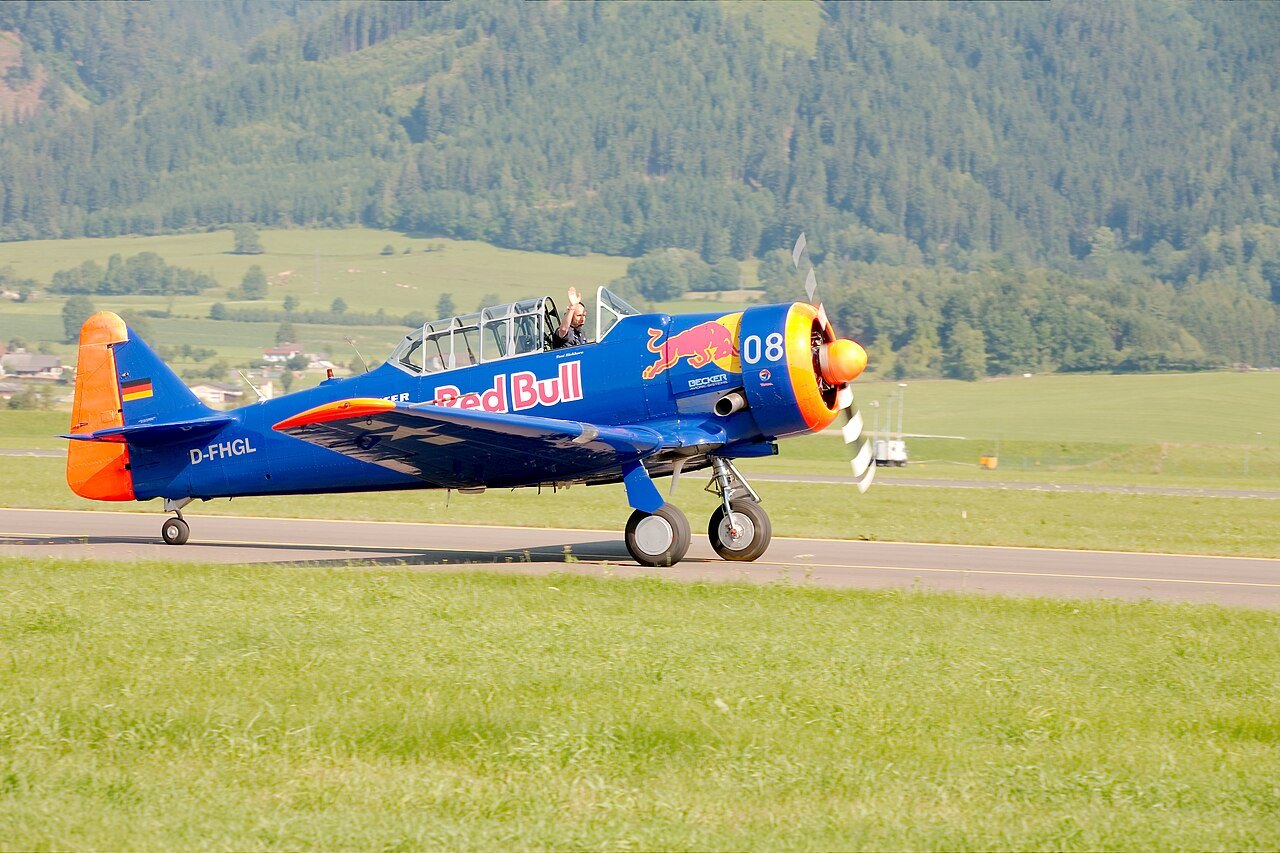
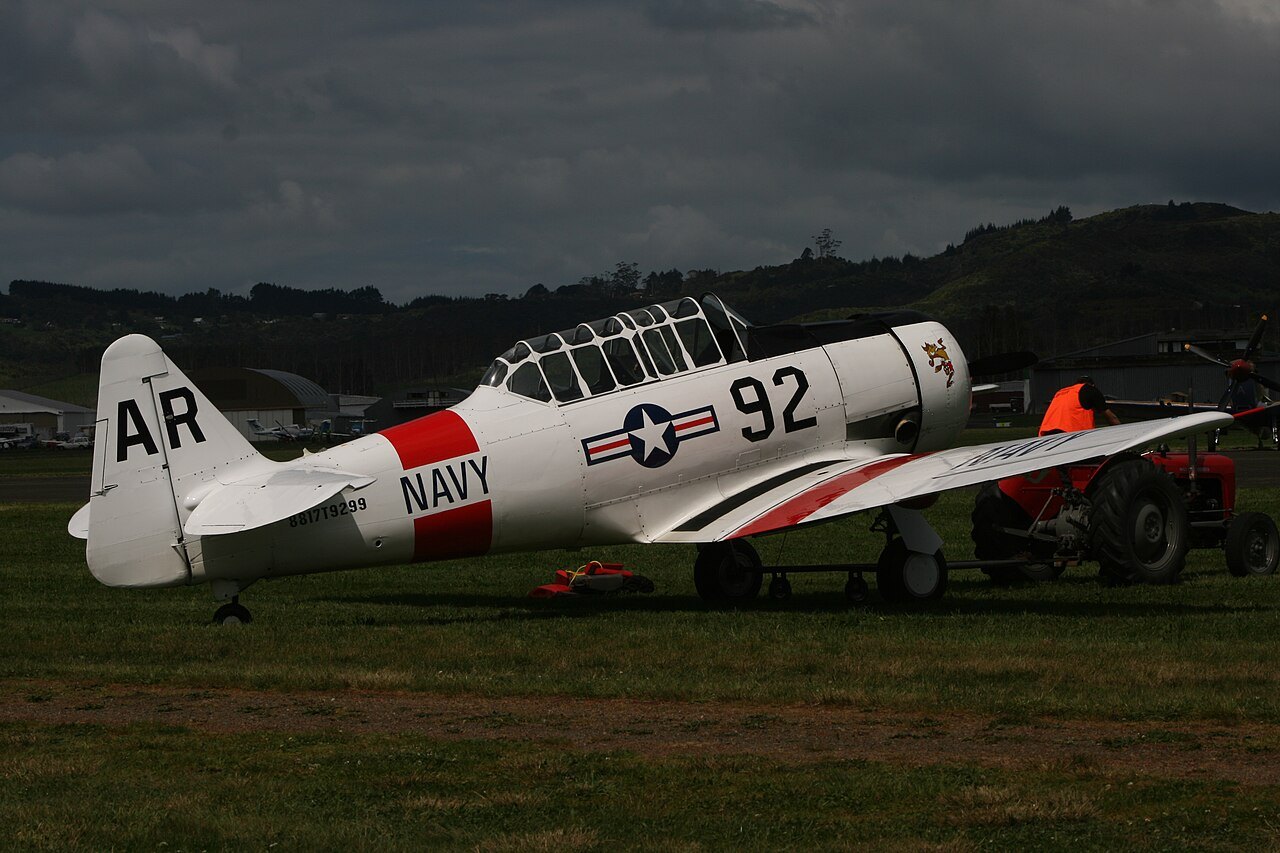
Where the T-6 Texan flies and flew
The T-6 Texan’s record
The T-6 was built to teach, and its true record is the hundreds of thousands of pilots who learned on it. Yet armed versions and derivatives fought in a remarkable number of wars, from New Guinea in 1942 to Korea, Greece, Algeria, Portuguese Africa, the Middle East and South Asia, usually as forward air control or light attack aircraft.
See how training and combat types compare in the military aircraft statistics database. Figures are approximate.
Everything people ask about the T-6 Texan
Can I fly in a North American T-6 Texan?
What is the difference between the T-6 Texan, SNJ and Harvard?
How many T-6 Texans were built?
Why was the T-6 called the Pilot Maker?
Did the T-6 Texan see combat?
When did the T-6 retire from military service?
Why is the Harvard so loud?
You can’t fly the T-6 Texan.
These, you can.
Most of this museum you can only look at. These genuine military jets you can fly yourself with MiGFlug — with aerobatics and time on the controls.
 Fly the L-39 AlbatrosThe world’s most-flown jet trainer — aerobatics included
 Fly the F-104 Starfighter“The missile with a man in it”
 Fly the MiG-21The Cold War’s most-produced jet
 Fly the T-33 Shooting StarAmerica’s first jet trainer
 Fly the DH VampireA piece of early jet history
 Fly the S.211Agile Italian jet trainer
 Fly the MB-326The classic Aermacchi jet
 Fly the MiG-15The Soviet legend of the Korean War
Continue the tour
Every fact, checked
- Mosquitoes in KoreaNational Museum of the US Air Force on T-6 forward air control and the 40,000-sortie figure
- Tinker history: AT-6 TexanUS Air Force base history on post-war modification and the T-6G programme
- North American Harvard IIB, FE905RAF Museum on British orders and Commonwealth training
- North American HarvardNational Air Force Museum of Canada on RCAF service 1939-1965 and BCATP
- Central Flying SchoolSAAF unit history including the Harvard’s replacement in November 1995
- Snapshot 6: South African Air Force HarvardSAAF Harvard deliveries, retirement and survivors
- CAC Wirraway A20-103: a fortunate survivorArcher’s 1942 victory and the Australian War Memorial aircraft
- Texans, Harvards, and Yales: North American’s advanced trainerGeneral history, names and the Pilot Maker nickname