
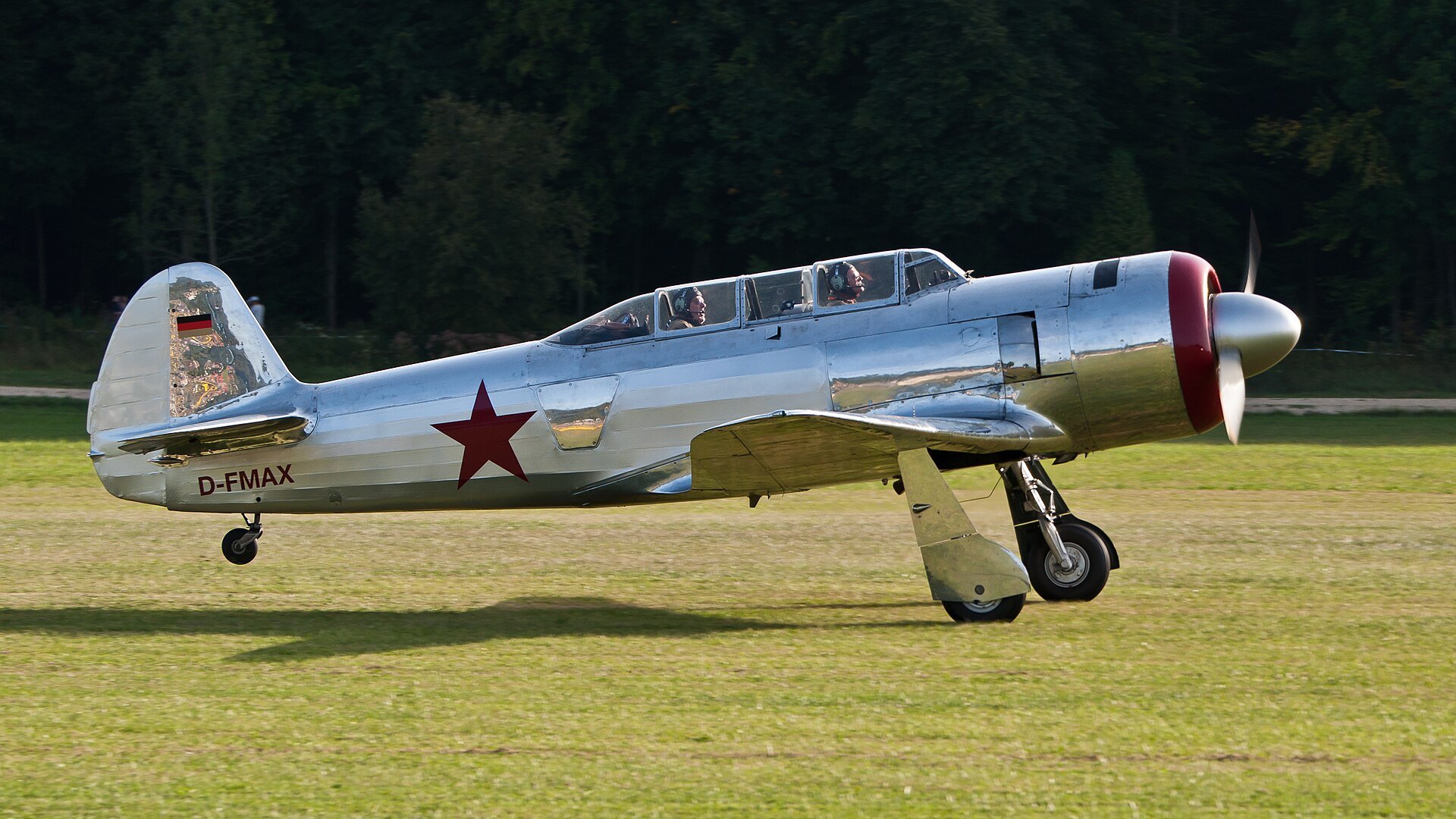
Yakovlev Yak-11
The Fighter-Bred Trainer
A two-seat trainer bred from Yakovlev’s wartime fighters, built in thousands to bridge the gap to the MiG-15, and reborn decades later as a warbird and a Reno air racer.
The Yak-11: how a fighter design became the Eastern Bloc’s classroom
In mid-1944, with the Red Army rolling west, the Yakovlev design bureau began sketching a two-seat trainer based on its lightweight Yak-3 fighter. It was a low priority while the war lasted, and the first prototype, the Yak-UTI, did not fly until late 1945. Instead of the fighter’s liquid-cooled V-12 it used a seven-cylinder Shvetsov ASh-21 radial of about 700 hp, in effect half of the big ASh-82. An improved prototype passed state testing in October 1946, and the type entered service in 1947 as the Yak-11, known to NATO as Moose. Aleksandr Yakovlev’s bureau, famous for light and agile fighters, had produced a trainer that looked and behaved like one of its own combat aircraft, and that was precisely what the air force wanted.
The aircraft filled a precise gap. Soviet cadets learnt the basics on primary trainers, but the new generation of jet fighters demanded pilots already used to speed, a tailwheel fighter’s handling, instruments and gunnery. The Yak-11 had a fighter’s wing, tail and undercarriage pedigree, a top speed around 460 km/h, a synchronised machine gun and racks for practice bombs. It could teach aerobatics, formation flying, navigation and air-to-ground attack before a student ever touched a MiG-15. Instructors, many of them wartime fighter pilots, found its handling familiar, and the type became the standard advanced trainer at Soviet flying schools. Some 3,859 were built in the Soviet Union between 1947 and 1955, a huge run for a training aircraft.
Czechoslovakia added about 707 more as the Let C-11, built at Kunovice from 1953 to 1956. The Yak-11 went to every Warsaw Pact air force and to China, North Korea, Egypt, Syria, Yemen, Afghanistan, Austria and others, and North Korean examples fought in the opening days of the Korean War. By the 1960s jet trainers had replaced it in the Soviet bloc, but Egypt and other customers kept flying C-11s into the 1960s and beyond, and the wrecks it left behind in the desert became the raw material for a second life: dozens restored as warbirds in Europe and America, and a handful turned into some of the fastest piston racers at Reno.
01The Yak-11’s place in the system: from piston primary to the MiG-15
Post-war Soviet pilot training ran in stages. A cadet started on a gentle primary aircraft, moved to an advanced trainer, and only then reached a two-seat jet such as the UTI MiG-15. The Yak-11 was the advanced stage of that ladder for the best part of a decade. It borrowed features from the wartime Yak-9 and Yak-3, including the layout of the wing, tail and undercarriage, so a student flying it was effectively learning on a two-seat fighter with a less powerful, more forgiving engine.
That fighter ancestry was deliberate. The Yak-11 retained a single 12.7 mm UBS machine gun (or a 7.62 mm ShKAS on some aircraft) with a gun camera, a reflector sight and underwing racks for up to 200 kg of practice bombs, so gunnery and dive-bombing could be taught on the same airframe that taught spins and loops. A tricycle-gear Yak-11U, introduced around 1951, tried to prepare students for jets with nosewheels, and a Yak-11T proficiency version carried jet-style equipment. Neither displaced the original, and the arrival of jet trainers such as the L-29 Delfín eventually made the whole piston advanced stage redundant.
What makes the Yak-11 special
Half an ASh-82
The Shvetsov ASh-21 is a seven-cylinder, single-row air-cooled radial, essentially one row of the fourteen-cylinder ASh-82 that powered the La-5 and La-7. It gave about 700 hp at take-off. A radial was tougher than a liquid-cooled V-12, with no radiator to hole and no coolant to lose, which mattered for a trainer flown hard by students and maintained at remote schools. It also gave the Yak-11 its stubby, round-nosed look and its unmistakable radial bark.
A fighter’s airframe
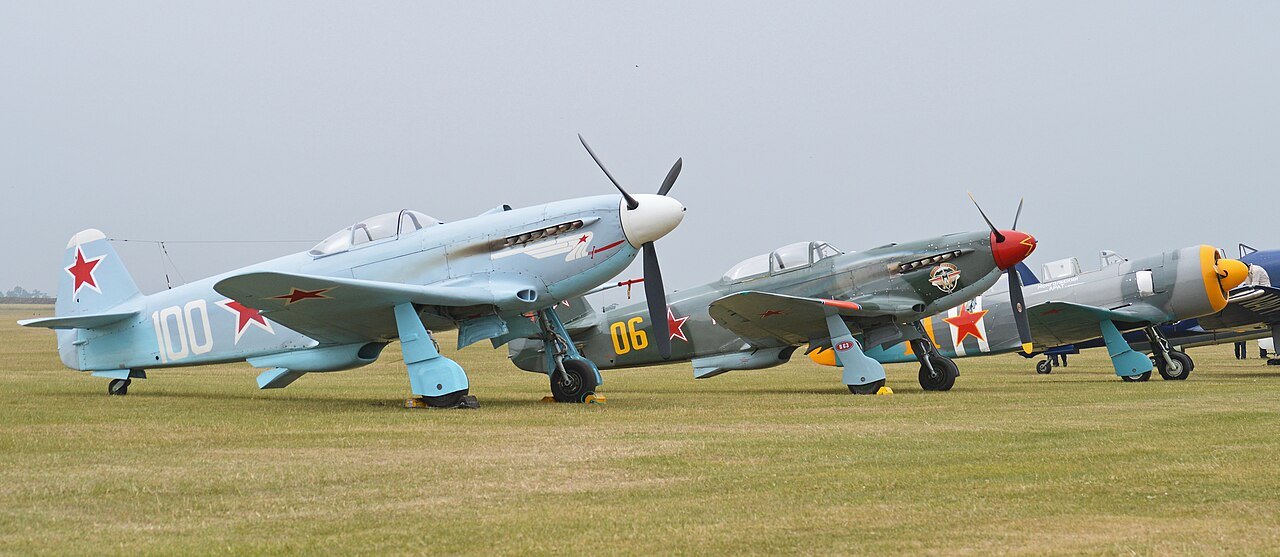
The Yak-11 inherits the wartime Yakovlev approach: a compact, lightly built airframe with a fighter-style wing and tailwheel undercarriage with retractable main legs. Wingspan is about 9.4 m and maximum take-off weight about 2,440 kg, close to a wartime fighter. Students sat in tandem under a long glazed canopy, instructor in the rear. The result handled much like the fighters many instructors had flown in combat, which was exactly the point.
Armed for teaching
Unlike a pure flying trainer, the Yak-11 was a weapons classroom. A single synchronised machine gun fired through the propeller arc, a gun camera recorded attacks, and two underwing racks carried up to 200 kg of bombs. Some air forces went further: Egypt fitted rockets and extra guns and used armed Yak-11s for ground attack during its intervention in North Yemen in the 1960s, according to Tom Cooper’s history of that war.
02The Yak-11’s variants: tailwheel, nosewheel and the Czech C-11
- Yak-UTI / Yak-3UTI: prototypes from 1945, first with an ASh-82 then with the ASh-21.
- Yak-11: standard production model with tailwheel undercarriage, built 1947 to 1955.
- Yak-11U: 1951 revision with retractable tricycle undercarriage to prepare students for jets.
- Yak-11T: proficiency trainer with equipment matching contemporary jet fighters.
- Let C-11: Czechoslovak licence-built version from Kunovice, 1953 to 1956, about 707 built; many later sold to Egypt.
- C-11U: small Czechoslovak series with tricycle gear.
- Racing conversions: civil Yak-11s re-engined in the US with Pratt & Whitney R-2800 or Wright R-3350 radials for Unlimited-class air racing.
Yakovlev Yak-11 specifications
Specifications
- Crew
- 2 (tandem)
- Length
- 8.20 m (26 ft 11 in)
- Wingspan
- 9.40 m (30 ft 10 in)
- Height
- 3.28 m (10 ft 9 in)
- Wing area
- 15.40 m² (166 sq ft)
- Empty weight
- 1,900 kg (4,189 lb)
- Max take-off weight
- 2,440 kg (5,379 lb)
- Powerplant
- 1 × Shvetsov ASh-21 7-cylinder air-cooled radial, about 521 kW (700 hp)
- Maximum speed
- 460 km/h (286 mph)
- Cruise speed
- 370 km/h (230 mph)
- Range
- about 1,250 km (777 mi)
- Service ceiling
- 7,100 m (23,300 ft)
- Climb rate
- about 8.1 m/s (1,600 ft/min)
- Armament
- 1 × 12.7 mm UBS or 7.62 mm ShKAS machine gun; up to 200 kg (440 lb) of bombs on two underwing racks
Costs & production
- Production
- 3,859 built in the USSR (1947 to 1955) plus about 707 Let C-11s in Czechoslovakia (1953 to 1956)
- Programme
- Design begun 1944; first prototype flew late 1945; service entry 1947
- Cost per flight hour
- No historical figure published; for a privately operated warbird today, roughly US$1,000 to 2,000 per hour is a reasonable estimate, based on the fuel and oil burn of a 700 hp radial and typical piston-warbird maintenance and insurance
03The Yak-11’s operating costs: a radial warbird on a budget
No Soviet or Czechoslovak cost figures for the Yak-11 have been published, so any per-hour figure is an estimate. In private hands the ASh-21 burns aviation gasoline and oil at the rates typical of a 700 hp radial, and parts are scarcer than for American types; some owners have re-engined their aircraft with more common American radials for that reason. Allowing for fuel, engine reserves, maintenance and insurance, a privately run Yak-11 plausibly costs in the region of US$1,000 to 2,000 per flying hour, far less than a Mustang and one reason the type became popular with European and American warbird owners from the 1980s.
The Yak-11 from Yakovlev’s drawing board to Reno
Design starts
Yakovlev begins work on a two-seat trainer derived from the Yak-3 fighter.
First flight
The Yak-UTI prototype flies late in the year.
State trials
An improved ASh-21-powered prototype completes state testing in October.
Into service
Series production begins and the Yak-11 enters Soviet service.
The West takes notice
Western intelligence gets a close look when a Yak-11 crash-lands in Turkey in March.
Korea
North Korean Yak-11s fly in the opening days of the war; one is shot down by an F-82 over Kimpo on 27 June.
Czech production
Let at Kunovice begins building the C-11, about 707 by 1956.
Production ends
Soviet output stops after 3,859 aircraft; the new Austrian air arm receives four as a gift.
Defection
An Egyptian instructor flies a C-11 from Bilbeis to Israel on 19 January.
Desert recovery
French enthusiasts salvage ex-Egyptian C-11s, starting the type’s warbird revival.
Reno
Two heavily modified Yak-11s race in the Unlimited class at Reno.
Back in Czech skies
A C-11 restored for the Military History Institute in Prague returns to the air.
Stories & eyewitnesses: the Yak-11 in war, flight and air racing
Over Kimpo, 27 June 1950
A trainer was among the first aircraft shot down in the Korean War.
Read the full story
The pilot who flew to Israel
In 1964 an Egyptian instructor used a Yak-11 to defect.
Read the full story
The last step before the MiG
For a decade, the Yak-11 was where Eastern Bloc pilots learnt to fly like fighter pilots.
Read the full story
Death on the approach at Bezno
Instrument training on the Yak-11 carried real risk.
Read the full story
A Soviet gift to neutral Austria
The new Austrian air arm’s first trainers came from Moscow.
Read the full story
Rockets over Yemen
Egypt turned its trainers into light strike aircraft.
Read the full story
Aerobatic groups of Svazarm
In Czechoslovakia, the C-11 flew formation aerobatics for decades.
Read the full story
Out of the Egyptian desert
Wrecks abandoned in Egypt seeded the Yak-11 warbird boom.
Read the full story
Mr Awesome at Reno
In 1988 a Yak-11 raced with a 3,700 hp airliner engine.
Read the full story
Czech Mate
An ex-Egyptian trainer became a long-running Unlimited racer.
Read the full story
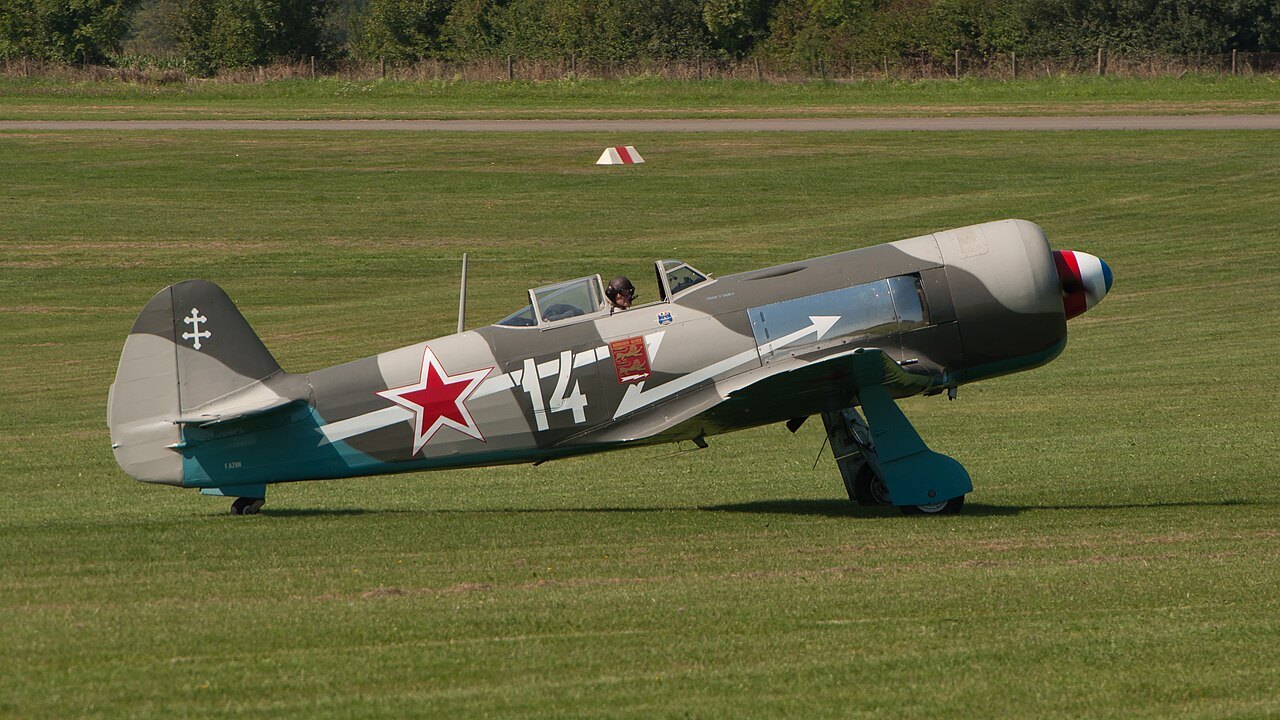
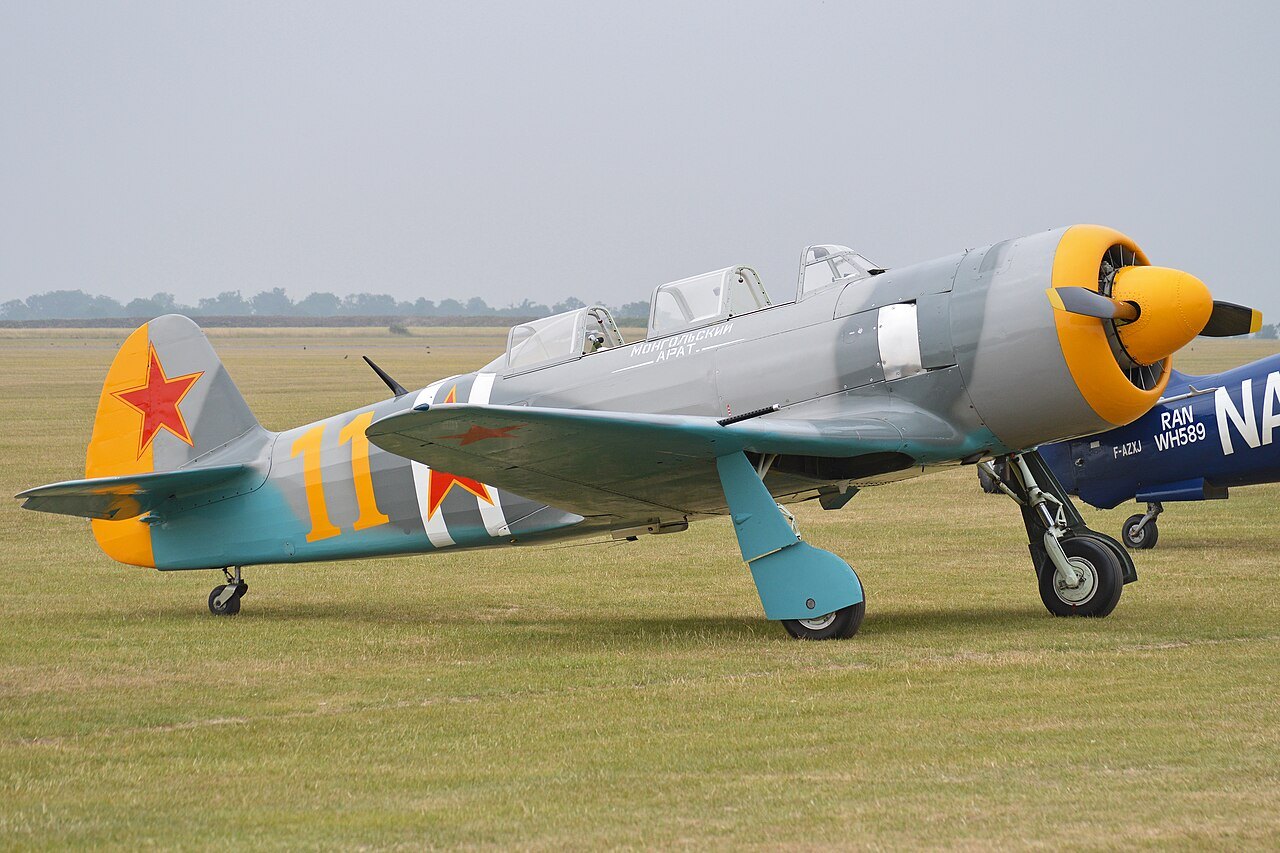
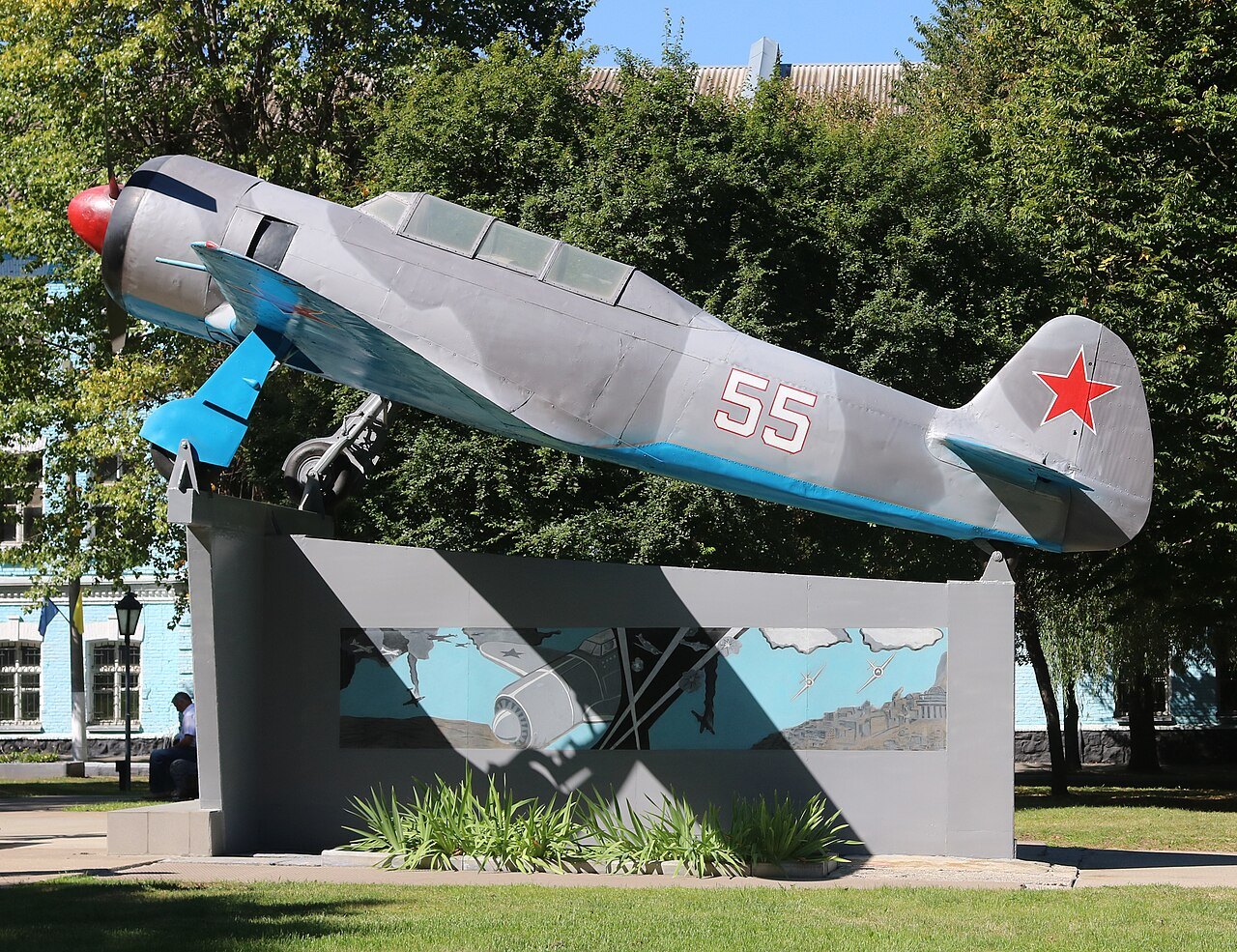
The Yak-11 in pictures
Where the Yak-11 flies and flew
The Yak-11’s record
The Yak-11 was above all a trainer, and its real record is the thousands of pilots who learnt to fly fighters on it. It also saw limited combat: North Korean examples fought in 1950, and Egypt armed its C-11s for ground attack in Yemen in the 1960s.
See how training and combat types compare in the military aircraft statistics database. Figures are approximate.
Everything people ask about the Yak-11
Can I fly in a Yakovlev Yak-11?
What was the Yak-11 used for?
What is the Yak-11’s NATO reporting name?
How many Yak-11s were built?
What engine powers the Yak-11?
Did the Yak-11 see combat?
Are Yak-11s still flying?
You can’t fly the Yak-11.
These, you can.
Most of this museum you can only look at. These genuine military jets you can fly yourself with MiGFlug — with aerobatics and time on the controls.
 Fly the L-39 AlbatrosThe world’s most-flown jet trainer — aerobatics included
 Fly the F-104 Starfighter“The missile with a man in it”
 Fly the MiG-21The Cold War’s most-produced jet
 Fly the T-33 Shooting StarAmerica’s first jet trainer
 Fly the DH VampireA piece of early jet history
 Fly the S.211Agile Italian jet trainer
 Fly the MB-326The classic Aermacchi jet
 Fly the MiG-15The Soviet legend of the Korean War
Continue the tour
Every fact, checked
- Yakovlev Yak-11Aeropedia (David C. Eyre): development, Turkey 1948, operators, FAI records, survivors
- LET C-11 (Yakovlev Yak-11)Afterburner.com.pl: Kunovice production, Svazarm display groups, 2018 restoration of OK-JIL
- Defection to IsraelHistoric Wings: Mahmoud Abbas Hilmi’s 1964 defection
- Reno Racer Czech Mate crashedScramble: history of race 86 and the 2022 crash
- Racing YaksModel Aviation (July 1990): Mr Awesome and Yancey Yak-11 at Reno 1988
- Accident Yakovlev Yak-11 (C-11), 21 July 1955Aviation Safety Network: Bezno accident
- Yak-11 1/48 featureHyperScale: development summary, Austrian and Egyptian service
- Yefim Gordon, Dmitry and Sergey Komissarov, OKB Yakovlev (2005)Book: design-bureau history and production figures
- Tom Cooper, Hot Skies Over Yemen, Volume 1 (2017)Book: armed Egyptian Yak-11s in North Yemen