
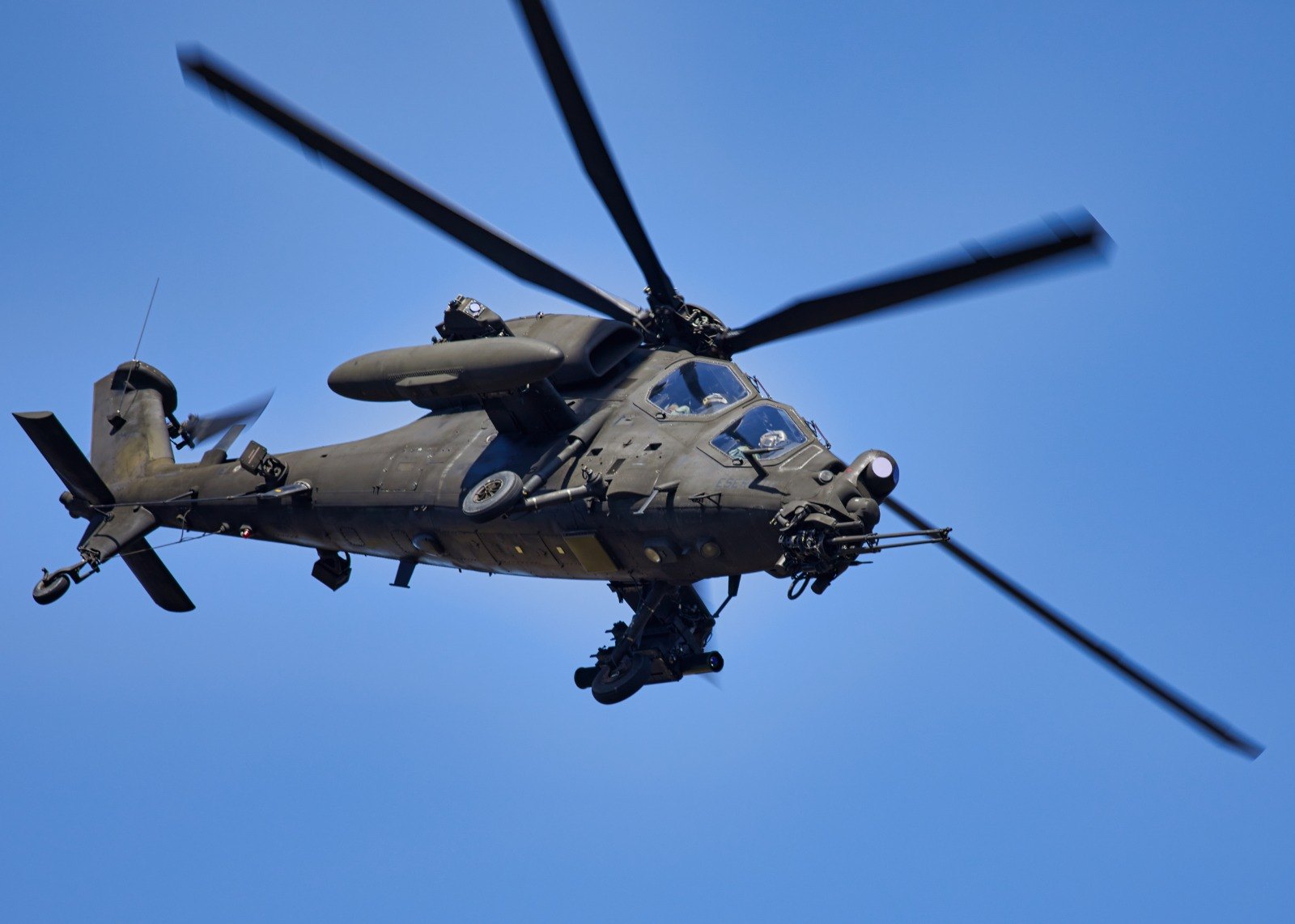
Agusta A129 Mangusta
Italy’s Mongoose
The first attack helicopter designed and built wholly in Western Europe, Italy’s Mangusta flew from Somalia to Afghanistan and Iraq, and lives on as Turkey’s T129 ATAK, exported to three countries.
The Mangusta: how Italy built Western Europe’s first attack helicopter
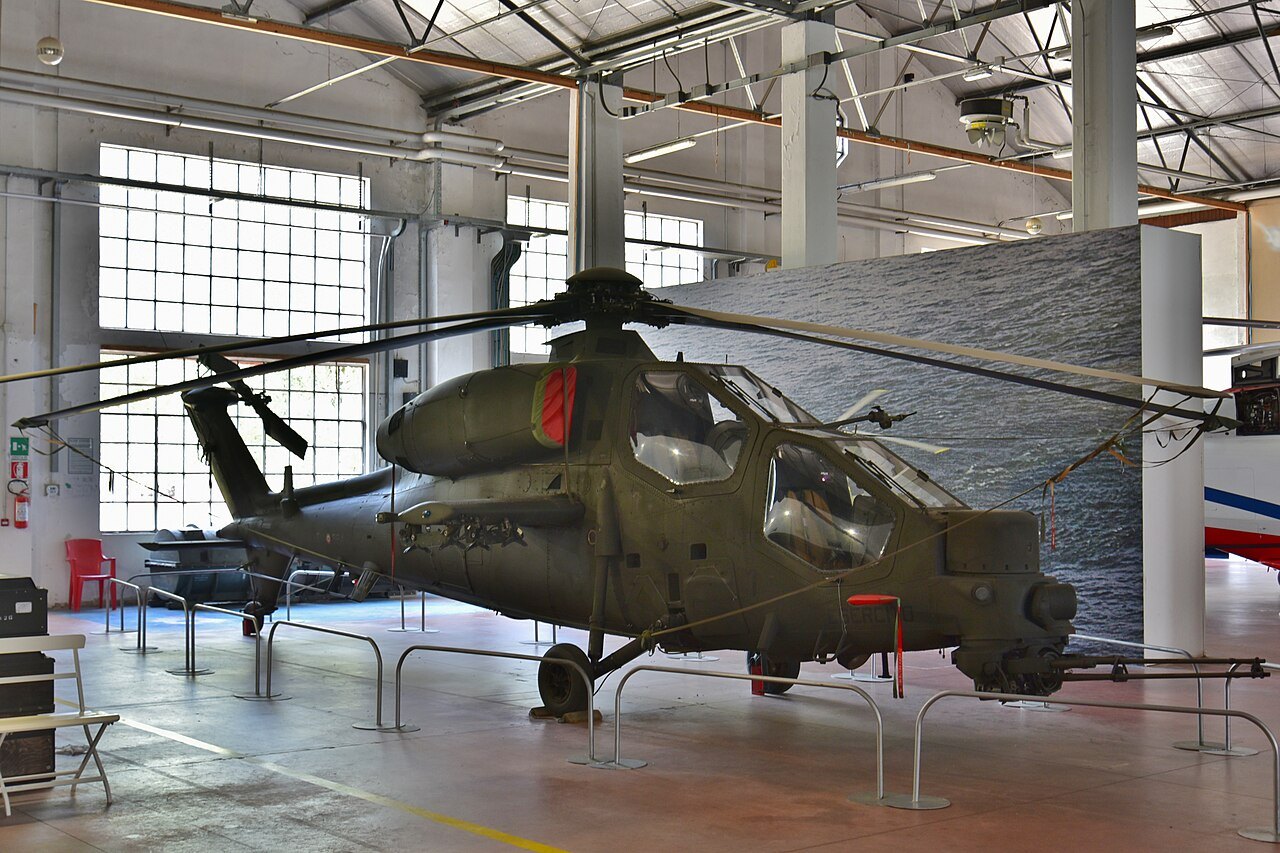
In the early 1970s the Italian Army began looking for a light anti-tank and scout helicopter of its own. Agusta, a company that had grown rich building American helicopters under licence, decided to design its own. Preliminary design began in 1978, using the dynamic system of the elegant A109 utility helicopter as a starting point, and West Germany briefly took an interest before leaving Italy to go ahead alone. The first of the prototypes flew in September 1983. The A129 Mangusta, Italian for mongoose, was slim and angular, with stepped tandem cockpits, stub wings for TOW missiles and rockets, and two Rolls-Royce Gem turboshafts built under licence by Piaggio. It was the first attack helicopter to be designed and produced wholly in Western Europe.
Development was slow, held back by funding problems for the HeliTOW sight, and the first production machines did not reach the army until about 1990. The end of the Cold War cut the planned 100 helicopters to 60. Yet the Mangusta quickly found work far from the plains of northern Italy it had been designed to defend. Italian crews flew it on peacekeeping operations in Somalia in the early 1990s, and later in the Balkans and Angola. Upgrades followed: the A129 CBT combat version with a nose-mounted 20 mm three-barrel cannon and five-blade rotor, and then the AH-129D, available from 2013, with the Israeli Toplite sight, Spike missiles and new protection systems. The British and Dutch armies, which had studied the Mangusta, both bought the Apache instead.
The type’s hardest service came in Afghanistan, where Mangustas became operational in 2007 and had flown more than 10,000 hours by June 2014, and in Iraq, where they served at Nasiriyah and returned in 2016 for the campaign against Islamic State. Crews brought aircraft home with battle damage more than once. Meanwhile the design gained a second life in Turkey, which chose it in 2007 and built it as the TAI T129 ATAK, with more powerful American-British engines and Turkish weapons. The T129 went into action against the PKK and in Syria, where one was lost in February 2018, and has been exported to the Philippines, Nigeria and Somalia, while Italy develops the Leonardo AW249 as its successor.
01The Mangusta on operations: Somalia, Afghanistan and Iraq
The Mangusta was designed for a war on the plains of north-eastern Italy against Warsaw Pact armour, but its operational career was spent almost entirely on expeditionary missions. Italian Army Mangustas were deployed in the peacekeeping role in Somalia during the UN operations of the early 1990s, and later supported missions in the Balkans and Angola.
Their most sustained service came in Afghanistan, where Italian forces led the NATO effort in the west of the country around Herat. The Mangustas became operational there in 2007, escorting transport helicopters, protecting convoys and supporting Italian and allied troops in contact; by June 2014 the helicopters rotating through the theatre had flown more than 10,000 hours. The upgraded AW129D was first deployed there in November 2014. Italian defence writers have noted that the crews distinguished themselves in particularly dangerous missions, and that the aircraft’s survivability was demonstrated more than once by the damage they brought home.
In Iraq, Mangustas served with Italian forces at Nasiriyah during Operation Antica Babilonia after 2003, and returned to the country in 2016, ten years after that mission ended, as part of the coalition campaign against Islamic State, deploying to the Kurdistan region.
02The T129 ATAK: the Mangusta goes to Turkey
In 2007 Turkey selected the Mangusta for its attack and tactical reconnaissance helicopter (ATAK) programme, with Turkish Aerospace Industries as prime contractor and AgustaWestland as subcontractor. The T129 kept the basic airframe but switched to two LHTEC CTS800-4A engines, a five-blade rotor, a 20 mm three-barrel cannon and Turkish avionics, sights and weapons from Aselsan and Roketsan. The first prototype flew at Vergiate in Italy on 28 September 2009; it crashed during high-altitude hover tests near Verbania on 19 March 2010 after a loss of tail-rotor power. The first Turkish-built prototype flew in Ankara on 17 August 2011.
The ATAK programme grew into orders for the Turkish Land Forces and the Ministry of the Interior, including the gendarmerie and police. During Operation Olive Branch in northern Syria, a T129 came down on 10 February 2018 during operations around Afrin, killing its two crew; President Erdoğan said it had been shot down. Exports were complicated by the American-British engine: Pakistan agreed in 2018 to buy 30 for US$1.5 billion, but the United States never granted an export licence and in January 2022 Pakistan said it had moved on. The Philippines, Nigeria and Somalia did receive T129s, and Turkey began developing its own TS1400 engine to free the type from foreign licences.
What makes the Mangusta special
Made to take hits
The Mangusta’s airframe was about 70 per cent composite and designed to resist 12.7 mm ammunition and to meet crashworthiness standards of the 1980s. Its four-blade main rotor with elastomeric bearings used fibreglass blades designed to tolerate 12.7 mm hits and to survive considerable 23 mm damage, and the transmission was designed to keep running for a time after losing its oil. Low-glint canopies, a narrow frontal area and infrared exhaust suppressors made it harder to see and to hit.
A computer at the heart
The A129 was one of the first helicopters built around a fully computerised integrated management system. A Harris digital multiplex system controlled communications, navigation, engines, weapons, power distribution and utility systems, and a data management system recorded malfunctions and suggested repairs. The two crew, gunner in front and pilot behind, used helmet displays fed by infrared sensors for night flying. It was advanced thinking for a design that first flew in 1983.
Small, light and quick
At around 4 tonnes, the original Mangusta was much lighter than the Apache or the Mi-28, and its narrow fuselage and short span made it an agile scout. Four stub-wing pylons could be elevated and depressed for firing, carrying up to eight TOW or later Hellfire or Spike missiles, rocket pods, gun pods or Stinger and Mistral air-to-air missiles. The A129 CBT and AH-129D added a 20 mm three-barrel cannon under the nose, the same family of gun as the AH-1 Cobra’s.
03The Mangusta’s variants: A129 to T129
- A129 Mangusta: original production version for the Italian Army with Gem 2 engines, TOW missiles and a four-blade rotor; in service from about 1990.
- A129 International: export demonstrator with LHTEC T800 engines, five-blade rotor and M197 20 mm cannon.
- A129 CBT / AH-129C: Italian combat version with upgraded transmission, five-blade rotor and 20 mm turret cannon.
- AH-129D (AW129D): upgrade available from 2013 with Rafael Toplite sight, Spike-ER missiles and new self-protection; 32 aircraft for front-line use.
- TAI T129 ATAK: Turkish development with CTS800-4A engines, Aselsan avionics and UMTAS, Cirit and Stinger missiles; first flight 28 September 2009.
- Leonardo AW249: new-design successor for the Italian Army, approved in 2016.
Agusta A129 Mangusta specifications
Specifications
- Crew
- 2 (gunner in front, pilot behind)
- Length
- 12.28 m (40 ft 3 in) fuselage; 14.29 m (46 ft 11 in) rotors turning
- Main rotor diameter
- 11.90 m (39 ft 1 in)
- Height
- 3.35 m (11 ft 0 in)
- Empty weight
- 2,530 kg (5,578 lb)
- Max take-off weight
- 4,100 kg (9,040 lb) original A129; 4,600 kg (10,141 lb) A129C/D; T129: 5,000 kg (11,023 lb)
- Powerplant
- 2 × Rolls-Royce Gem 2 Mk 1004D turboshafts, 615–664 kW (825–890 shp) each; T129: 2 × LHTEC CTS800-4A, about 1,014 kW (1,360 shp) each
- Maximum speed
- 259–278 km/h (161–173 mph), depending on version
- Cruise speed
- T129: 269 km/h (167 mph)
- Range
- 510 km (320 mi)
- Service ceiling
- 4,725 m (15,500 ft)
- Climb rate
- 10.9 m/s (2,150 ft/min)
- Endurance
- about 3 hours
- Armament
- 20 mm three-barrel cannon (A129 CBT/D, T129); up to 8 TOW, Hellfire or Spike missiles; rockets; Stinger or Mistral air-to-air missiles; T129: UMTAS, Cirit and Stinger
Costs & production
- Unit cost
- T129: about US$45 million per aircraft estimated for Nigeria’s order; six for the Philippines under a contract of US$269–280 million
- Cost per flight hour
- No official figure published. Hedged estimate: several thousand US dollars per hour, based on a light twin-turbine attack helicopter of about 4–5 tonnes with modern sensors; actual Italian and Turkish costs are not disclosed
- Production
- 60 for the Italian Army; Turkish ATAK programme for the Land Forces and the Ministry of the Interior, plus exports
- Programme
- Design began 1978; first flight September 1983; Italian service from about 1990; AW249 successor development approved in 2016 at an estimated €487 million (2016 prices)
04The Mangusta’s operating costs and successor
Neither Italy nor Turkey publishes operating costs for the Mangusta or the T129. The clearest public figures are export prices for the T129: Nigeria’s six were reported at an estimated US$45 million each, and the Philippines paid about US$269–280 million for six including support. With two light turboshafts and a take-off weight of four to five tonnes, the Mangusta is cheaper to operate than heavy gunships such as the Apache or Mi-28, but its modern sensors and weapons keep the cost of a flight hour in the thousands of US dollars.
Italy has planned the Mangusta’s replacement since 2016. In November that year the Senate defence committee approved the first phase of a programme for a new scout and escort helicopter, estimated at €487 million in 2016 prices for development and qualification between 2016 and 2025, citing the need to begin retiring the Mangusta from 2020. The result is the Leonardo AW249.
The Mangusta from Agusta drawing board to T129
Design begins
Agusta starts preliminary design of a light attack helicopter for the Italian Army.
First flight
The first A129 prototype flies in September.
Into service
Production Mangustas reach the Italian Army; the planned 100 are cut to 60.
Somalia
Italian Mangustas deploy on peacekeeping operations in Somalia.
Iraq
Mangustas serve at Nasiriyah with Operation Antica Babilonia.
Afghanistan and Turkey
Mangustas become operational in Afghanistan; Turkey selects the design for its ATAK programme.
T129 flies
The first T129 prototype flies at Vergiate on 28 September.
10,000 hours
Mangustas pass 10,000 flight hours in Afghanistan by June.
Back to Iraq, successor approved
Mangustas return to Iraq against Islamic State; Italy approves the AW249 programme.
Loss in Syria
A Turkish T129 comes down near Afrin on 10 February; both crew are killed.
Philippine fleet complete
The fifth and sixth T129s reach the Philippine Air Force in May.
Somalia
Turkey delivers T129s to the Somali government in June.
Stories & eyewitnesses: the Mangusta at home and abroad
From licence builder to designer
Agusta goes it alone.
Read the full story
A hundred planned, sixty built
The Cold War ends before the Mangusta arrives.
Read the full story
Somalia
The Mangusta’s first mission abroad.
Read the full story
Ten thousand hours over western Afghanistan
Italy’s gunship goes to war.
Read the full story
Israeli eyes for an Italian helicopter
The Toplite upgrade.
Read the full story
The prototype that crashed at Verbania
A setback for the T129.
Read the full story
Afrin, 10 February 2018
A T129 lost in Syria.
Read the full story
The engine that blocked a sale
Pakistan’s cancelled order.
Read the full story
Sangley Point, May 2024
The Philippines completes its fleet.
Read the full story
Africa’s ATAKs
Nigeria and Somalia.
Read the full story
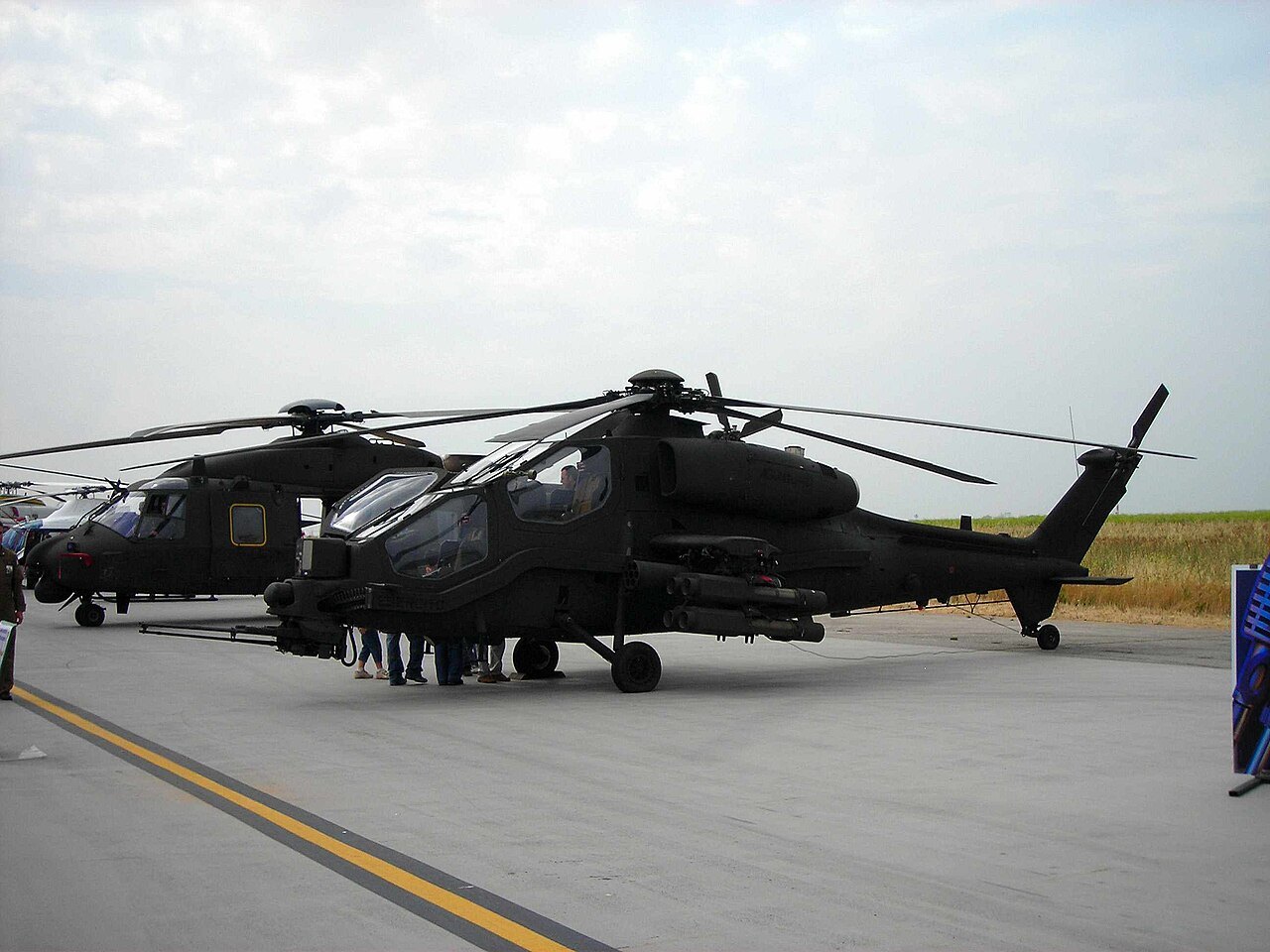
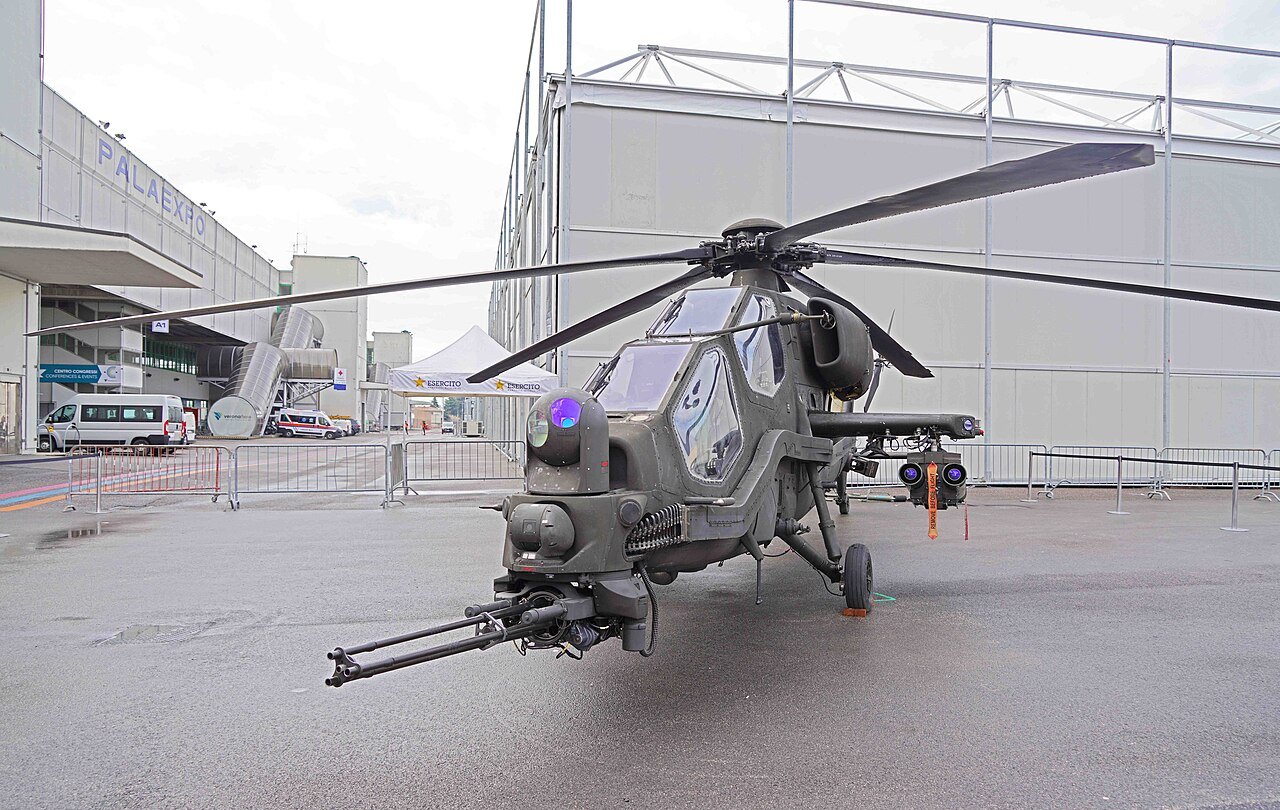
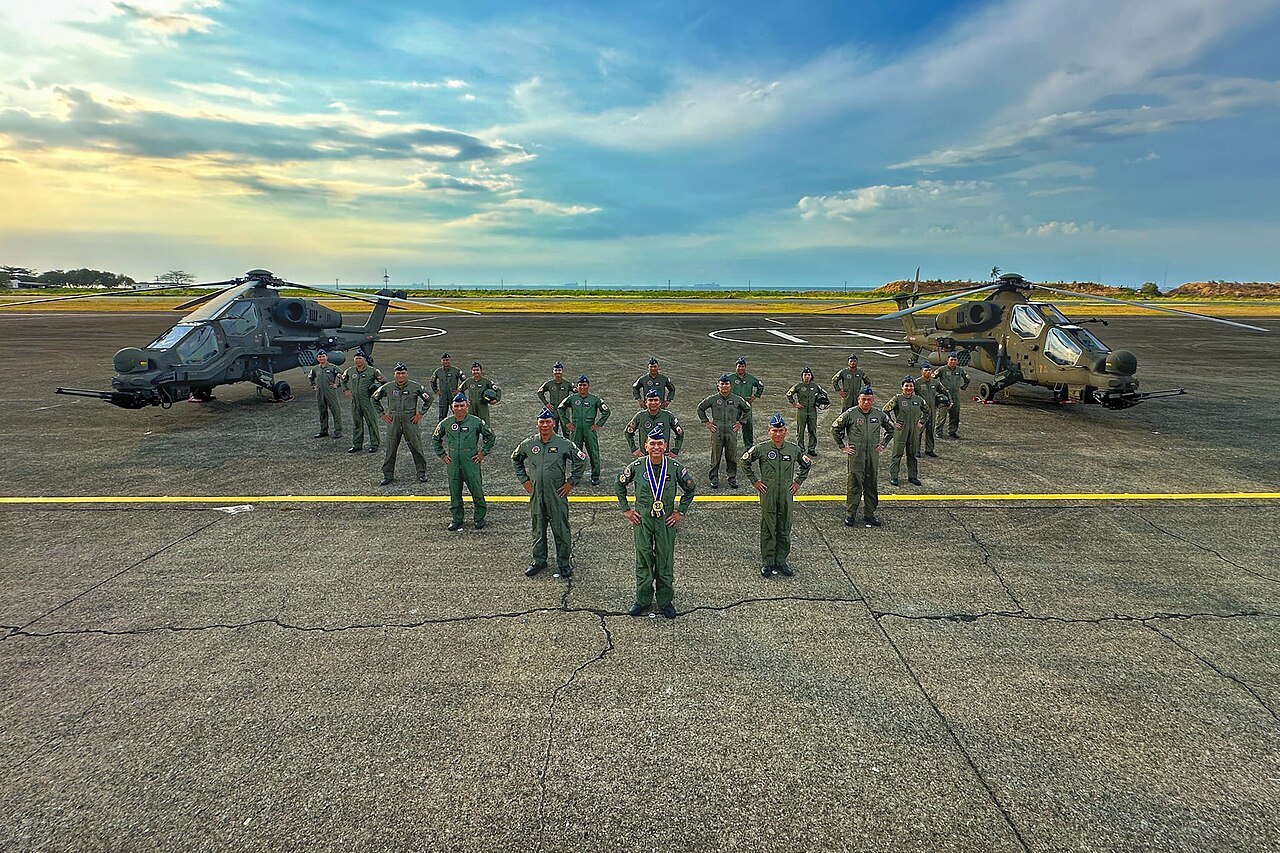
The Mangusta in pictures
Where the Mangusta flies and flew
The Mangusta’s record
The Italian Mangusta has served on peacekeeping and combat operations in Somalia, the Balkans, Angola, Iraq and Afghanistan. Its Turkish derivative, the T129, has flown counter-insurgency missions in Turkey and operations in northern Syria, where one was lost in 2018.
See how training and combat types compare in the military aircraft statistics database. Figures are approximate.
Everything people ask about the Mangusta
Can I fly in an Agusta A129 Mangusta?
What does Mangusta mean?
How many Mangustas were built for Italy?
What is the difference between the A129 and the T129?
Where has the Mangusta seen action?
Who operates the T129?
What will replace the Mangusta?
You can’t fly the Mangusta.
These, you can.
Most of this museum you can only look at. These genuine military jets you can fly yourself with MiGFlug — with aerobatics and time on the controls.
 Fly the L-39 AlbatrosThe world’s most-flown jet trainer — aerobatics included
 Fly the F-104 Starfighter“The missile with a man in it”
 Fly the MiG-21The Cold War’s most-produced jet
 Fly the T-33 Shooting StarAmerica’s first jet trainer
 Fly the DH VampireA piece of early jet history
 Fly the S.211Agile Italian jet trainer
 Fly the MB-326The classic Aermacchi jet
 Fly the MiG-15The Soviet legend of the Korean War
Continue the tour
Every fact, checked
- Agusta A-129 MangustaCompiled from R. Jackson (2005), G. Apostolo (1984) and D. Donald (1997): design, composite airframe, Somalia, specifications
- Everything to know about Italy’s homegrown attack helicopterWe Are The Mighty: first flight, West German withdrawal, 100 cut to 60
- Via libera al successore del MangustaAnalisi Difesa (Italian), December 2016: fleet, Afghanistan hours, Iraq, AW249 programme cost
- Israeli systems on Italian helicopters?iHLS, January 2015, on the Toplite upgrade
- T129 Attack HelicopterArmy Technology: T129 contract, prototypes, 2010 crash, engines
- T129 ATAKTurkish Aerospace: ATAK programme quantities, exports and weapons
- Zeytin Dalı Harekâtı: Düşen helikopterle ilgili taraflar ne diyor?BBC News Türkçe, February 2018, on the T129 loss near Afrin
- Pakistan cancels Turkish chopper deal amid US license deadlockDaily Sabah, January 2022
- Turkey to export T129 helos to Philippines despite block on Pakistani orderDefense News, May 2021
- Philippines Receives Two T129 ATAK Helicopters From TurkeyThe Defense Post, May 2024
- Nigeria takes delivery of T-129 ATAK helicopters from TurkeyMilitary Africa, November 2023
- Turkey delivers T129 Atak helicopters to SomaliaMiddle East Eye, June 2025