
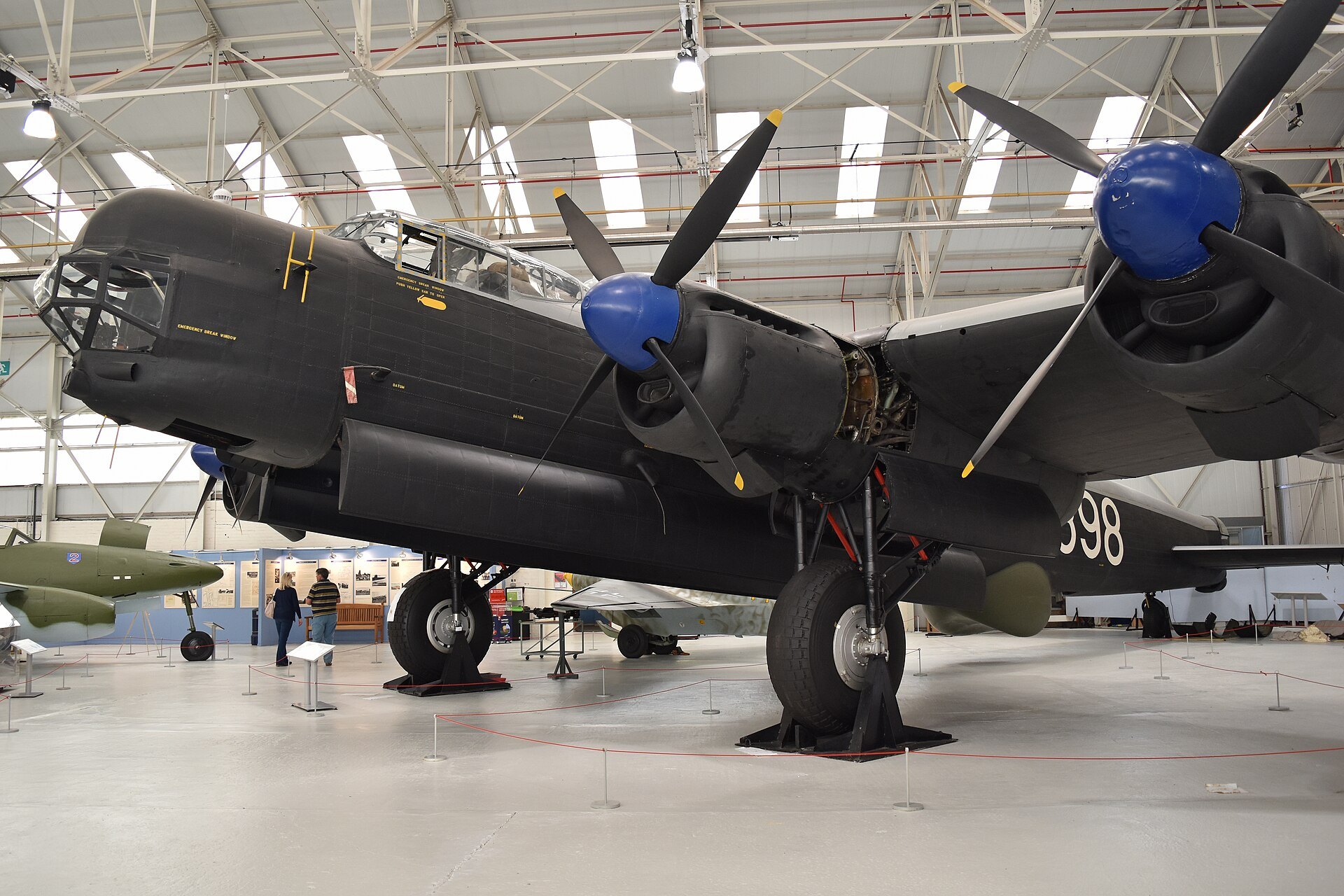
Avro Lincoln
The Last Piston Bomber
The Lancaster’s bigger successor arrived just too late for the Second World War, then became Bomber Command’s post-war mainstay, bombed insurgents in Malaya and Kenya, and was shot down by MiGs in the Cold War’s chilliest skies.
The Lincoln: how the Lancaster’s heir became Britain’s last piston bomber
By 1943 Roy Chadwick’s Lancaster was the backbone of Bomber Command, but the war against Japan would demand longer range and higher altitude. Chadwick answered Specification B.14/43 with an enlarged Lancaster, at first called the Lancaster IV and V: a longer fuselage, a new high-aspect-ratio wing and two-stage supercharged Merlin 85 engines. Renamed the Lincoln, the prototype flew from Ringway, Manchester, on 9 June 1944.
The first production Lincolns reached No. 57 Squadron at East Kirkby in August 1945, earmarked for the Tiger Force that was to bomb Japan. The war ended first. Instead the Lincoln became the mainstay of the post-war Bomber Command, equipping around twenty RAF squadrons. Its front-line career was short: from 1950 Boeing Washingtons supplemented it, and by 1955 the V-bombers had superseded it. But the Lincoln’s most active years came after it had become obsolete.
From 1950 RAF and Royal Australian Air Force Lincolns bombed communist insurgents in the jungles of Malaya, and in 1953 RAF Lincolns went to Kenya against the Mau Mau. That same year a Lincoln was shot down by Soviet MiG-15s over Germany. Australia built 73 of its own, the largest aircraft ever made there, and flew them until 1961; Argentina bought 30 and used them to supply Antarctica and in its own political upheavals until 1967. The last RAF Lincolns retired from radar trials in 1963.
01The Lincoln in Malaya: bombing the jungle
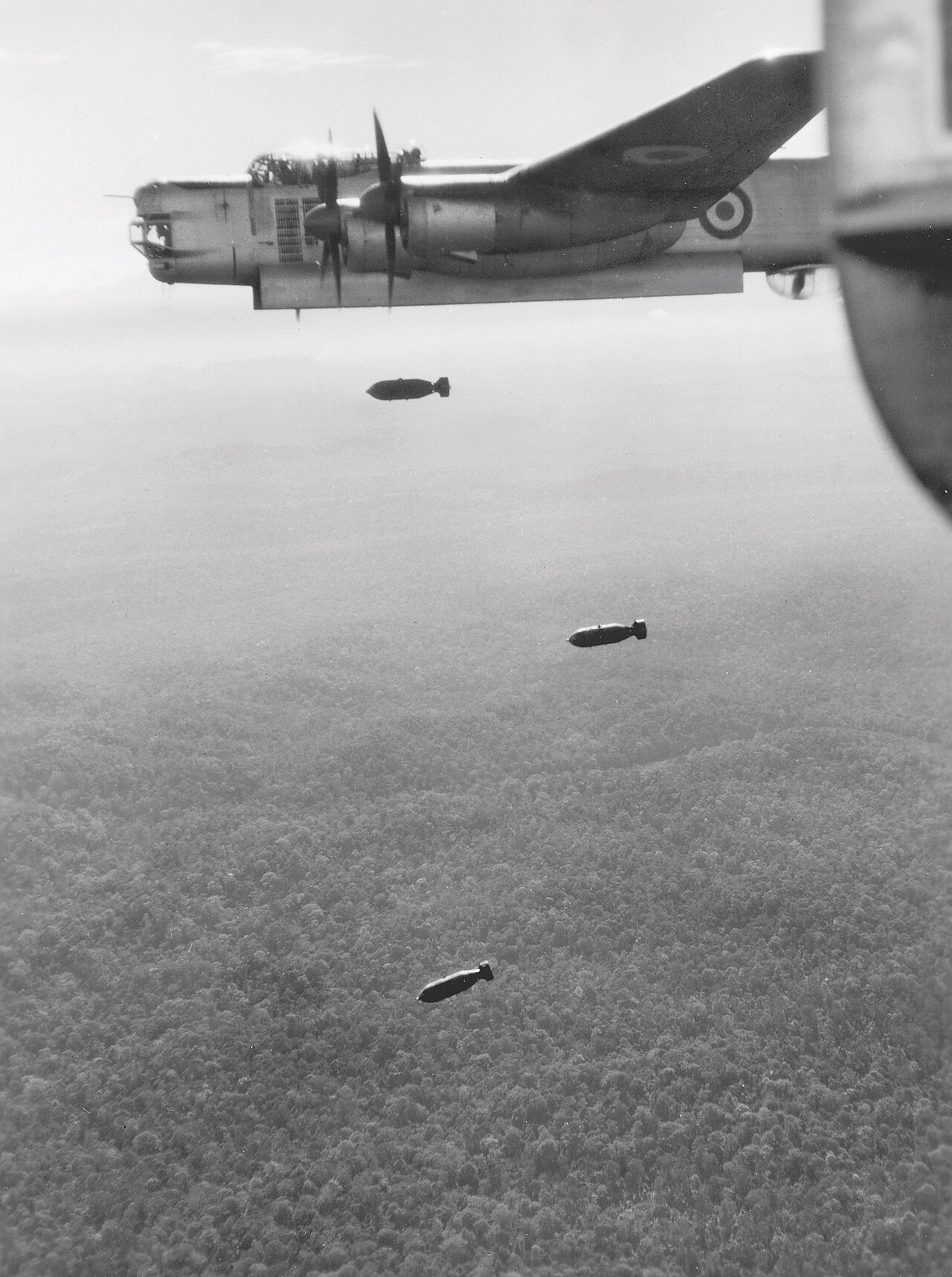
The Malayan Emergency gave the Lincoln its longest campaign. From 1950 RAF Lincolns rotated through Singapore, and the Royal Australian Air Force sent No. 1 Squadron, which arrived in Singapore on 17 July 1950 and stayed for eight years. Its crews flew more than 3,000 sorties against communist guerrillas, dropping heavy bombs on suspected camps deep in the jungle, often guided by ground markers or by smaller aircraft.
Results were hard to measure. Heavy bombing of a forest canopy rarely found individuals, yet the threat it created kept insurgent groups moving and helped push them away from populated areas. The Lincolns carried most of the weight of the air campaign: Lincolns of the RAF and RAAF are commonly credited with about 85 per cent of the bomb tonnage dropped during the Emergency.
In 1953 RAF Lincolns flew similar missions in Kenya from Eastleigh against the Mau Mau.
02The Lincoln shot down over Germany: 12 March 1953
On 12 March 1953 an RAF Lincoln, RF531, was on a training flight along the air corridor near the inner German border when it was attacked by several Soviet MiG-15s. It came down about 20 miles north-east of Lüneburg, killing all seven men on board. It was one of the most serious Cold War air incidents in Europe, and a reminder that even training flights near the Iron Curtain were dangerous.
What makes the Lincoln special
A bigger, higher Lancaster
The Lincoln kept the Lancaster’s family look but almost nothing was simply carried over. The fuselage was longer, the new wing spanned 120 ft with a much higher aspect ratio, and the Merlin 85 engines had two-stage superchargers for altitude. The result could fly higher and further with a heavy bomb load, with a service ceiling of about 30,500 ft.
Heavier guns for a jet age
Where the Lancaster relied on .303 in machine guns, the Lincoln carried paired .50 in guns in nose and tail turrets and, in the B.2, 20 mm cannon in a dorsal turret. Its bomb bay took up to 14,000 lb (6,350 kg). Against the new jet fighters of the late 1940s, no piston bomber’s guns could be enough, which is why its career as a front-line strategic bomber was so short.
A flying test bed for the turbine age
Its size, payload and docile handling made the Lincoln an ideal engine test bed. Lincolns flew with Armstrong Siddeley Python and Bristol Theseus turboprops, Rolls-Royce Avon and Bristol Phoebus jets, and the Napier Nomad turbo-compound. At the 1956 SBAC show at Farnborough a Lincoln on loan to Rolls-Royce flew with a Tyne turboprop, photographed flying on the Tyne alone.
03The Lincoln’s descendants: Tudor and Shackleton
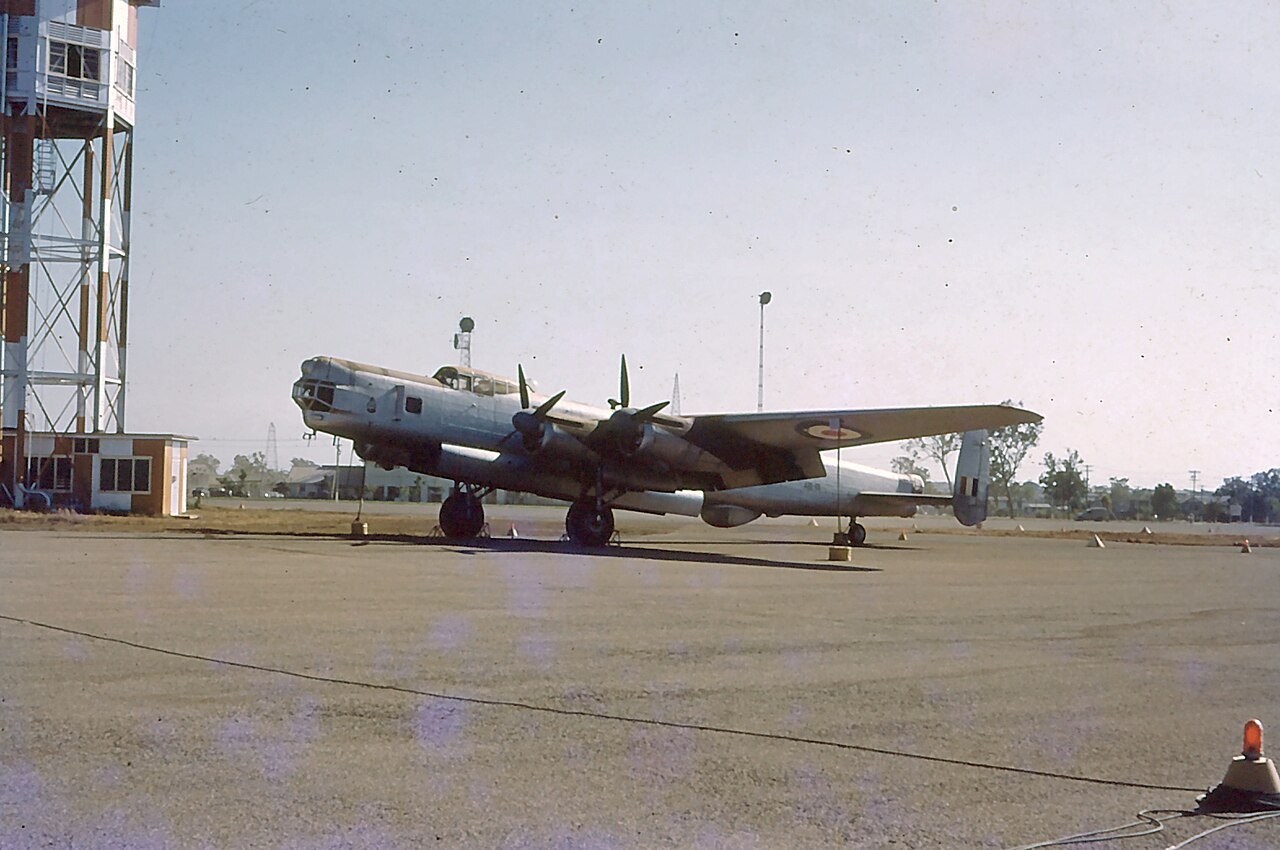
The Lincoln’s wing and engines went on to two important descendants. The Avro Tudor airliner used Lincoln wings with a new pressurised fuselage. More significantly, the Avro Shackleton maritime patrol aircraft began life as the Lincoln III and kept the Lincoln’s wing. In Australia, the long-nosed Lincoln Mk 31 added a 6 ft 6 in nose extension for anti-submarine crew and equipment, and its maritime versions flew with No. 10 Squadron until 1961.
Avro Lincoln B.2 specifications
Specifications
- Crew
- 7
- Length
- 23.86 m (78 ft 3.5 in)
- Wingspan
- 36.58 m (120 ft)
- Height
- 5.27 m (17 ft 3.5 in)
- Wing area
- 132 m² (1,421 sq ft)
- Empty weight
- about 19,860 to 20,040 kg (43,778 to 44,188 lb), depending on source
- Max take-off weight
- 37,195 kg (82,000 lb)
- Powerplant
- 4 × Rolls-Royce Merlin 85 V12, about 1,750 hp each
- Maximum speed
- about 475 to 499 km/h (295 to 310 mph)
- Cruise speed
- 346 km/h (215 mph) at 6,100 m (20,000 ft)
- Range
- 2,366 km (1,470 mi) with maximum bomb load
- Service ceiling
- 9,300 m (30,500 ft)
- Climb rate
- about 4 m/s (800 ft/min)
- Armament
- Paired .50 in machine guns in nose and tail turrets, 2 × 20 mm cannon in dorsal turret; up to 6,350 kg (14,000 lb) of bombs
Costs & production
- Cost per flight hour
- No published figure; as a rough estimate, several thousand US dollars per hour in today’s money, based on four large Merlin engines, a crew of seven and the fuel and maintenance of comparable four-engined piston aircraft still flown today
- Production
- About 600 in all, including 73 built in Australia and one in Canada; the RAF Museum gives 583
- Programme
- Specification B.14/43; designed by Roy Chadwick; built by Avro, Armstrong Whitworth, Metropolitan-Vickers and the Government Aircraft Factories in Australia
04The Lincoln’s variants: from Lancaster IV to Lincolnian
- Lancaster IV / V: original designations of the Merlin 85 and Merlin 68A prototypes.
- Lincoln B.1: first production version, in service from August 1945.
- Lincoln B.2: main RAF version with improved equipment and 20 mm dorsal turret.
- Lincoln Mk 30 / 30A: Australian-built bombers.
- Lincoln Mk 31 / MR.31: Australian long-nose maritime reconnaissance versions.
- Lincoln III: the maritime design that became the Shackleton.
- Lincolnian: Argentine transport conversion, including the Antarctic supply aircraft.
- Engine test beds: Python, Theseus, Tyne, Naiad, Nomad, Avon and Phoebus installations.
05The Lincoln’s operating costs: an estimate
No contemporary cost per flight hour for the Lincoln has been published. A modern comparison is the cost of operating the airworthy Lancaster and other four-engined warbirds, which runs to several thousand pounds or dollars per hour once fuel, engine overhauls and insurance are counted. The figure above is a hedged order of magnitude, not a documented value.
The Lincoln from Ringway to the last Argentine bomber
First flight
The prototype flies from Ringway, Manchester, on 9 June.
In service, too late
No. 57 Squadron at East Kirkby receives the first Lincolns in August, intended for the Tiger Force against Japan.
Australian Lincolns
The first Australian-assembled Lincoln flies on 17 March.
Argentina
Lincolns enter service with the bomber group of Argentina’s V Brigada Aérea.
Malaya
RAF Lincolns begin operations in Malaya; RAAF No. 1 Squadron arrives in Singapore on 17 July.
Antarctic supply
An Argentine Lincolnian makes its first supply drop to the San Martín Antarctic station in December.
Kenya and a shoot-down
RAF Lincolns deploy against the Mau Mau; on 12 March RF531 is shot down by MiG-15s over Germany.
Revolución Libertadora
Argentine Lincolns fly for both government and rebels; in Britain the V-bombers supersede the type.
Australian retirement
No. 10 Squadron flies the RAAF’s last Lincoln sorties in June.
RAF retirement
The last RAF Lincolns, used for radar trials, are retired.
Argentina retires the last
The Fuerza Aérea Argentina withdraws its last Lincolns.
Stories & eyewitnesses: the Lincoln
Roy Chadwick’s last bomber
The designer of the Lancaster drew its successor.
Read the full story
Eight years over the Malayan jungle
Australia’s No. 1 Squadron flew more than 3,000 sorties.
Read the full story
Seven men lost near Lüneburg
In March 1953 Soviet MiGs shot down a British bomber.
Read the full story
Against the Mau Mau
In 1953 Lincolns flew to Kenya.
Read the full story
The largest aircraft built in Australia
Seventy-three Lincolns came off Australian lines.
Read the full story
Cruz del Sur over Antarctica
An Argentine Lincoln flew supplies to the frozen south.
Read the full story
Bombers on both sides of a revolution
In 1955 Argentine Lincolns flew for government and rebels.
Read the full story
Flying on a Tyne alone
A Lincoln showed off Rolls-Royce’s new turboprop at Farnborough.
Read the full story
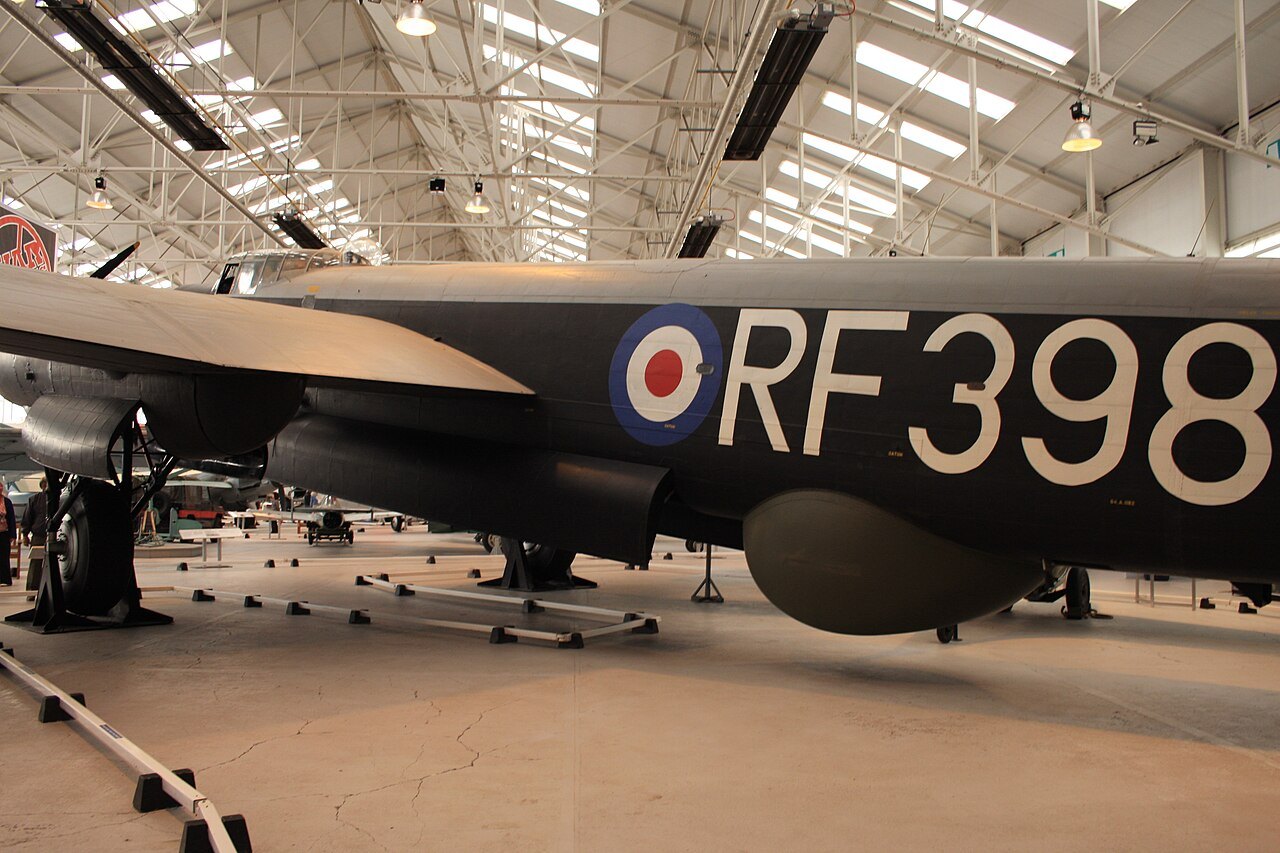
RF398 at Cosford
Britain’s only Lincoln is in the RAF Museum Midlands.
Read the full story
The Lincoln in pictures
Where the Lincoln flies and flew
The Lincoln’s record
The Lincoln missed the war it was built for, but flew real operations in two colonial emergencies, Malaya from 1950 and Kenya from 1953, and in Argentina’s political conflicts. One was shot down by Soviet fighters over Germany in 1953.
See how training and combat types compare in the military aircraft statistics database. Figures are approximate.
Everything people ask about the Lincoln
Can I fly in an Avro Lincoln?
What is the difference between the Lancaster and the Lincoln?
Did the Lincoln fly in the Second World War?
Where did the Lincoln see action?
Was a Lincoln shot down by MiGs?
How many Lincolns survive?
Which aircraft replaced the Lincoln?
You can’t fly the Lincoln.
These, you can.
Most of this museum you can only look at. These genuine military jets you can fly yourself with MiGFlug — with aerobatics and time on the controls.
 Fly the L-39 AlbatrosThe world’s most-flown jet trainer — aerobatics included
 Fly the F-104 Starfighter“The missile with a man in it”
 Fly the MiG-21The Cold War’s most-produced jet
 Fly the T-33 Shooting StarAmerica’s first jet trainer
 Fly the DH VampireA piece of early jet history
 Fly the S.211Agile Italian jet trainer
 Fly the MB-326The classic Aermacchi jet
 Fly the MiG-15The Soviet legend of the Korean War
Continue the tour
Every fact, checked
- Avro Lincoln B2 (RF398)RAF Museum: first flight June 1944, No. 57 Squadron August 1945, 583 built, Malaya and Kenya, last RAF use May 1963
- Individual history: Avro Lincoln B.2 RF398RAF Museum: RF398’s service, final flight 30 April 1963, Armstrong Whitworth production, the Tyne test bed
- Avro 694 LincolnBritish Aircraft of WW2: first flight 9 June 1944, Specification B.14/43, dimensions, weights and performance
- A73 Avro LincolnRAAF Museum: 85 ordered and 73 built, first flight 17 March 1946, No. 1 Squadron in Malaya, last flight June 1961
- LincolnDigger History: RAAF production, squadrons, Malaya sorties, eleven accident losses
- Museo V Brigada Aérea, San LuisFuerza Aérea Argentina: Lincoln B-016, one of four preserved worldwide
- V Brigada AéreaGaceta Aeronáutica: the Lincoln among the preserved aircraft at Villa Reynolds
- Avro 694 Lincoln B.Mk.II (Tyne test bed)1000 Aircraft Photos: Rolls-Royce Tyne test bed flying on the Tyne alone at the SBAC Display, September 1956