
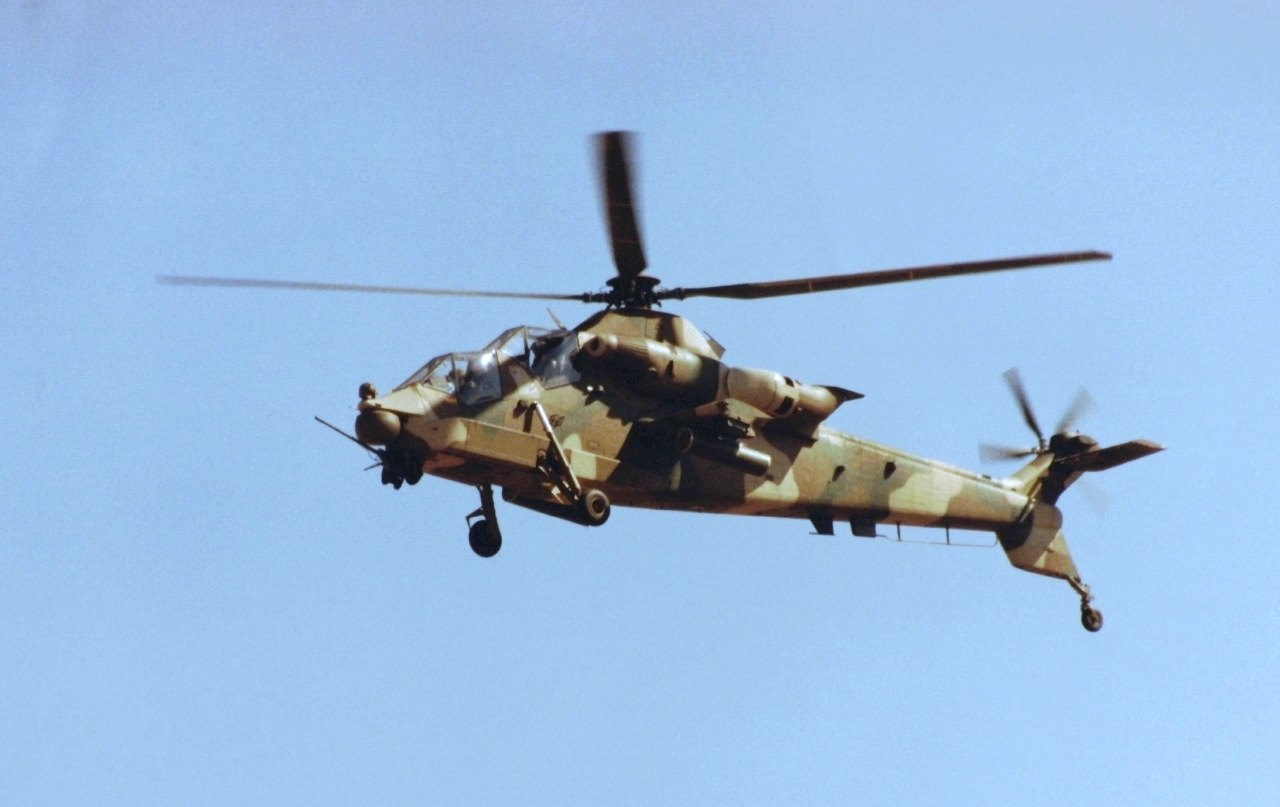
Denel Rooivalk
South Africa’s Attack Helicopter
Conceived under the arms embargo and built on Puma dynamics, the Rooivalk took 23 years to fire in anger, finally striking M23 rebels in Congo in 2013 in its combat debut.
The Rooivalk: how South Africa built an attack helicopter under embargo
In March 1984 South Africa was fighting a long war in Angola and was cut off from Western arms by a United Nations embargo. Its air force wanted a tank-buster that could survive in a high-threat environment, operating from rough forward bases with little support. Atlas Aircraft Corporation, later part of Denel, began the project that would become the Rooivalk, Afrikaans for red kestrel. Rather than start from nothing, Atlas took the engines and dynamic system of the Oryx, its own remanufactured Puma with Super Puma components, and wrapped a new, narrow, tandem two-seat fuselage around them. The prototype, the XDM, first flew on 11 February 1990, just as the war it was meant for came to an end.
Peace changed everything. Defence budgets were slashed in the 1990s, development slowed and the South African Air Force cut its requirement to a dozen aircraft, the Rooivalk Mk 1. Hopes of export sales, which might have justified a proper production run, went unrealised. The type joined the reactivated 16 Squadron at Bloemspruit, Bloemfontein, in 1999, but avionics designed in the 1980s were already ageing, and the first deliveries had little operational capability. One aircraft was destroyed in August 2005 while testing a new automatic hover system. In 2007 the production line closed, and an upgrade programme began to bring the remaining 11 helicopters to a combat-ready Block 1F standard.
On 1 April 2011 the SAAF finally took delivery of fully operational Rooivalks, and the last upgraded aircraft was handed over in 2013. Later that year three deployed to the Democratic Republic of Congo with the United Nations’ Force Intervention Brigade. On 4 November 2013, 23 years after the prototype’s first flight, two Rooivalks fired 55 rockets at M23 rebel positions at Tshanzu, and the next morning Congolese troops held the ground. The success revived talk of a Rooivalk Mk 2, but Denel said it needed about 70 orders to restart production, and none came. A small fleet remains in service with the SAAF. It remains the only attack helicopter South Africa has designed and built.
01The Rooivalk in Congo: Tshanzu, November 2013
In 2013 the United Nations created a Force Intervention Brigade within its Congo mission, MONUSCO, with a mandate to neutralise armed groups in the east of the country rather than merely keep the peace. South Africa contributed troops and three Rooivalks, the first time the helicopter had been deployed on operations. The principal enemy was the M23 rebel movement, entrenched in the hills of North Kivu near the Rwandan border.
At about 17:10 on 4 November 2013, two Rooivalks attacked M23 bunkers and positions at Tshanzu, a mountainous area close to the border. In five salvos, one helicopter fired 38 rockets and the other 17. Early reports said the strikes dispersed the defenders and destroyed a 14.5 mm anti-aircraft gun that had been used against helicopters. The brigade’s spokesman, Major Pethias Mdoka, said the brigade had supported the Congolese army in neutralising M23 positions at Tshanzu with artillery and Rooivalk attack helicopters, and that by 06:00 the following morning Congolese forces held the ground. For a helicopter whose critics had long called it a white elephant, it was a vindication, and it prompted renewed interest from abroad.
What makes the Rooivalk special
A Puma at heart
The Rooivalk’s engines, gearbox and rotor system come from the Oryx, South Africa’s remanufactured Puma, which itself combined Puma and Super Puma components. This gave Atlas a proven, powerful dynamic system without having to design one under embargo. The result is a heavy attack helicopter: at 8,750 kg maximum take-off weight it is in the same class as the Apache and much bigger than the Cobra or the Tiger, with two Makila turboshafts giving it ample power for hot, high African airfields.
Built for the bush war
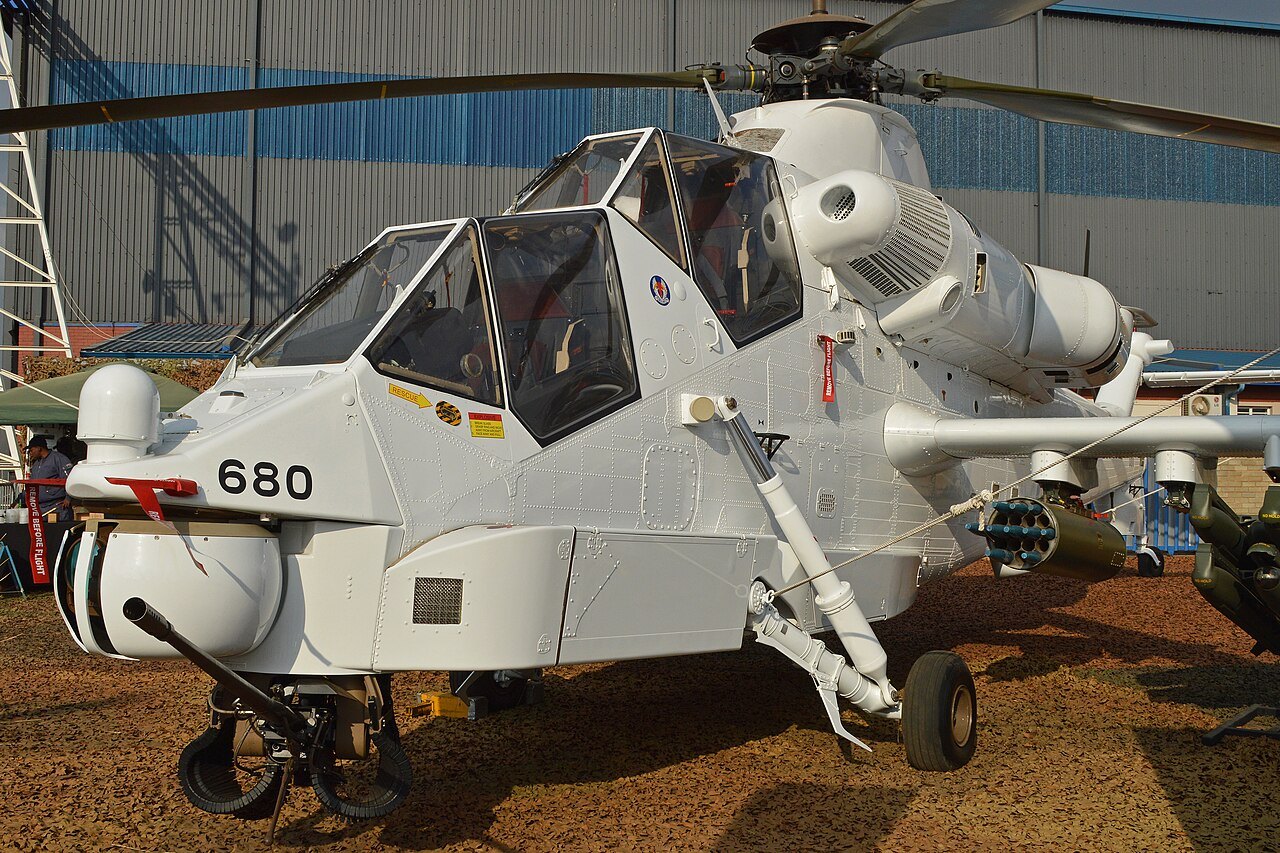
The Rooivalk was designed to operate for long periods from forward bases far from depots, with minimal ground support. That reflected the Border War, where helicopters flew from rough strips in northern Namibia and southern Angola. The two crew sit in tandem, pilot behind and weapon systems officer in front, under armour and with crashworthy seats. A 550-litre drop tank can be carried on the stub wings to extend range, and the aircraft was designed to deploy with its own support package.
Guns, rockets and missiles
Under the nose sits the F2 20 mm cannon, based on the French GIAT F2, in a turret that the crew can slave through 220 degrees in azimuth. Its dual feed lets them switch between high-explosive and armour-piercing rounds in flight. The stub wings carry FZ90 70 mm rockets in 19-round pods, selected in 1997 in place of older 68 mm SNEB rockets, and were designed for the Mokopa anti-tank missile and Mistral air-to-air missiles, giving the crew options against armour, aircraft and troops in the open.
02The Rooivalk’s long upgrade: from Mk 1 to Block 1F and Mk 1.1
When the first aircraft reached 16 Squadron, their avionics were already dated and much of the planned weapon system had not been integrated. In 2008 the SAAF said that four helicopters had been upgraded to an operational configuration and the remaining seven would follow by 2009. The interim fit gave cannon and rocket support to ground troops, but no guided weapons: integration of the long-range Mokopa missile had been indefinitely delayed and the medium-range Ingwe had been dropped because of the cost of modifications. Laser-guided rockets were considered as an interim precision weapon.
The Block 1F standard, accepted on 1 April 2011, brought improved targeting systems, gearbox modifications and other changes that made the helicopter combat-ready. In 2016 Denel and the government discussed a Mk 1.1 upgrade with improved avionics and a missile approach warning system, with work planned to begin in 2017, and a more ambitious Mk 2. Denel said it would need firm commitments for at least 70 helicopters to restart production, and talks with potential partners and customers did not produce an order.
Denel Rooivalk specifications
Specifications
- Crew
- 2 (pilot and weapon systems officer, in tandem)
- Length
- 18.73 m (61 ft 5 in) rotors turning; fuselage 16.39 m (53 ft 9 in)
- Main rotor diameter
- 15.58 m (51 ft 1 in)
- Height
- 5.19 m (17 ft 0 in)
- Empty weight
- about 5,730 to 5,910 kg (12,630 to 13,030 lb); sources differ
- Max take-off weight
- 8,750 kg (19,290 lb)
- Powerplant
- 2 × Turbomeca Makila 1K2 turboshafts, about 1,845 to 1,900 shp (1,380 to 1,420 kW) each
- Maximum cruise speed
- 278 km/h (173 mph) at sea level
- Never-exceed speed
- 309 km/h (192 mph)
- Range
- about 700 to 740 km (435 to 460 mi)
- Service ceiling
- 6,100 m (20,000 ft)
- Climb rate
- 13.3 m/s (2,620 ft/min)
- Armament
- F2 20 mm cannon in nose turret; FZ90 70 mm rockets in 19-round pods; provision for Mokopa anti-tank and Mistral air-to-air missiles
Costs & production
- Programme cost
- Development estimated at up to R2 billion, according to the SAAF information site
- Cost per flight hour
- No official figure. Hedged estimate: several thousand US dollars per hour, based on the fuel burn and maintenance of two Makila turboshafts in an 8.75-tonne airframe, raised by the cost of supporting a very small fleet
- Production
- 12 delivered to the SAAF as the Rooivalk Mk 1; one lost in 2005; production line mothballed in 2007
- Programme
- Project launched March 1984; first flight 11 February 1990; fully operational Block 1F accepted 1 April 2011
03The Rooivalk’s versions: XDM prototype to Block 1F
- XDM: the experimental development model and first prototype, which flew on 11 February 1990.
- Rooivalk Mk 1: the 12 production aircraft ordered by the SAAF and delivered to 16 Squadron from 1999.
- Block 1F: the upgraded combat standard accepted on 1 April 2011, with improved targeting, gearbox modifications and other changes.
- Mk 1.1: proposed avionics and self-protection upgrade, discussed from 2016.
- Mk 2: a proposed new-build successor, discussed with potential partners but never launched.
04The Rooivalk’s operating costs: the price of a tiny fleet
No official cost per flight hour has been published, so the figure in the table is an estimate based on the type’s size and engines. The Rooivalk shares its Makila engines and dynamic components with the Oryx, which should help, but supporting only about a dozen airframes of a unique design means every spare part, software update and specialist engineer is expensive. With production closed since 2007 and no export customer, the SAAF bears the whole support burden alone.
That is the central fact of the Rooivalk story. The design was sound enough to work well in Congo, but the small production run left the SAAF with an orphan fleet. Denel’s estimate that around 70 orders would be needed to restart the line shows the scale of the problem: a modern attack helicopter only becomes affordable when its costs are spread over hundreds of airframes, as the Apache’s have been.
The Rooivalk from embargo project to Congo
Project launched
Atlas Aircraft Corporation begins work on an attack helicopter for the SAAF in March.
First flight
The XDM prototype flies on 11 February.
Rockets chosen
The FZ 70 mm rocket system is selected for the Rooivalk.
16 Squadron reforms
The squadron is reactivated on 28 October at Bloemspruit to fly the Rooivalk.
Aircraft lost
On 3 August a Rooivalk is damaged beyond repair while testing an automatic hover system.
Production ends
The production line is mothballed and an upgrade programme for the fleet begins.
Fully operational
The SAAF accepts Block 1F Rooivalks on 1 April.
Deployed to Congo
Three Rooivalks join the UN Force Intervention Brigade in the eastern DRC.
First combat
On 4 November two Rooivalks fire 55 rockets at M23 positions at Tshanzu.
Mk 2 talks
South Africa authorises Denel to seek partners for a Rooivalk Mk 2; a Mk 1.1 upgrade is planned.
Stories & eyewitnesses: the Rooivalk from the Border War to Congo
Fifty-five rockets at Tshanzu
The Rooivalk’s first combat came on 4 November 2013.
Read the full story
A kestrel born of an embargo
The Rooivalk was South Africa’s answer to being cut off from Western arms.
Read the full story
The hover test that went wrong
In August 2005 the fleet of 12 became 11.
Read the full story
16 Squadron: Hlaselani
The Rooivalk’s squadron has a history stretching back to 1939.
Read the full story
The gun that changes its mind
The Rooivalk’s 20 mm cannon can switch ammunition in flight.
Read the full story
Rockets from Belgium
In 1997 the Rooivalk switched to 70 mm rockets.
Read the full story
Waiting for the Mokopa
The anti-tank missile designed for the Rooivalk took years to arrive.
Read the full story
The Mk 2 that never came
Combat success brought interest, but not orders.
Read the full story
The Rooivalk in pictures
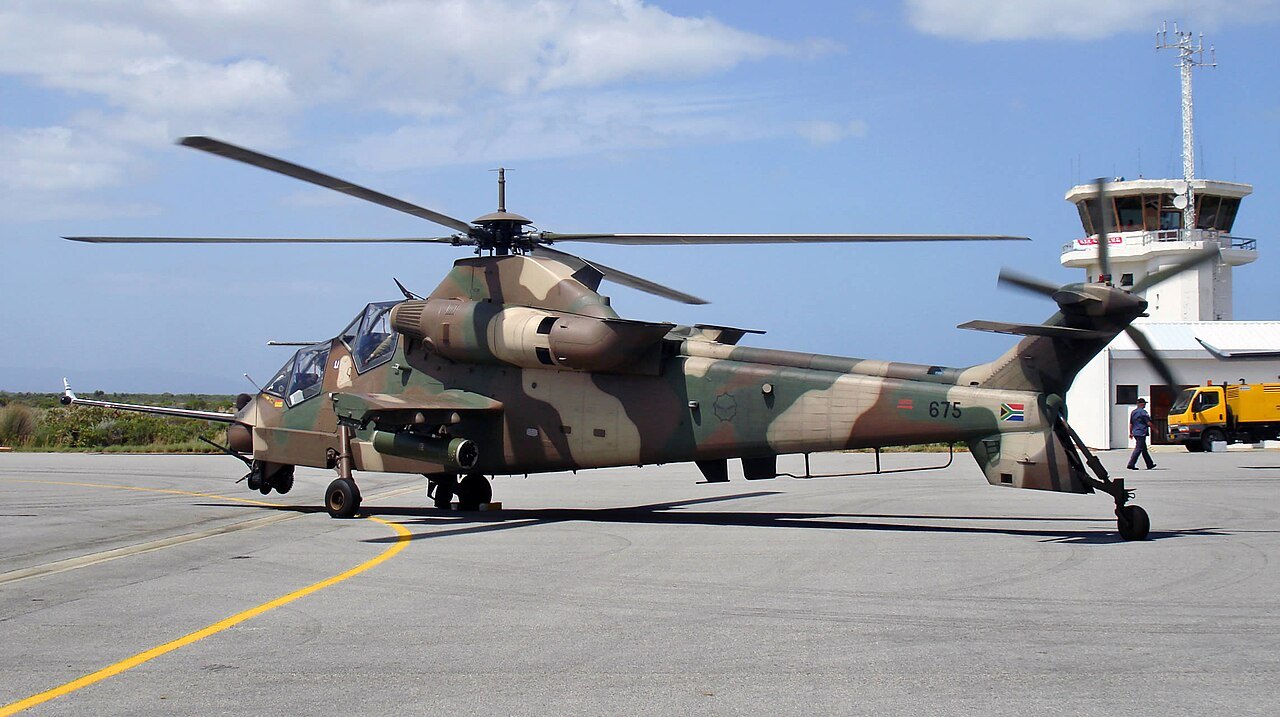
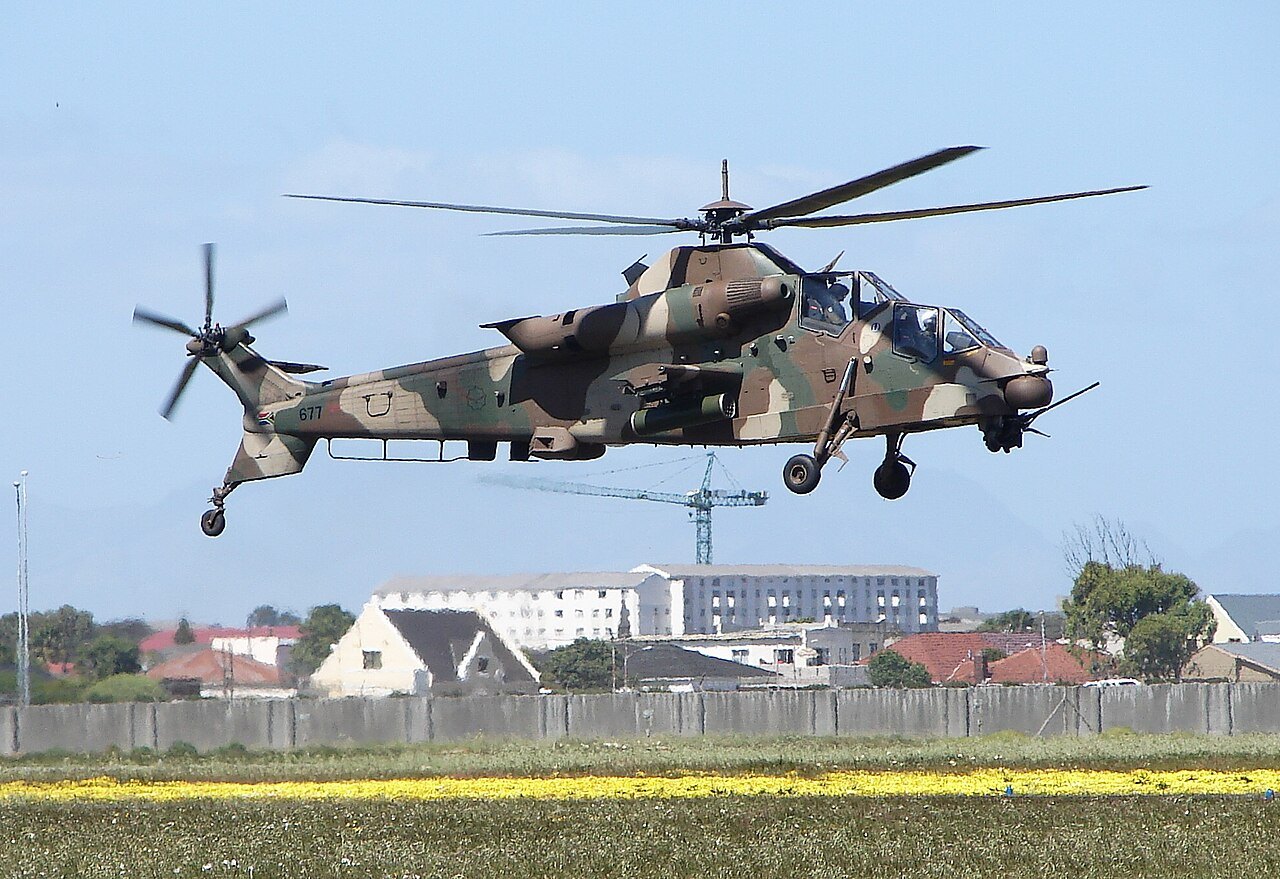
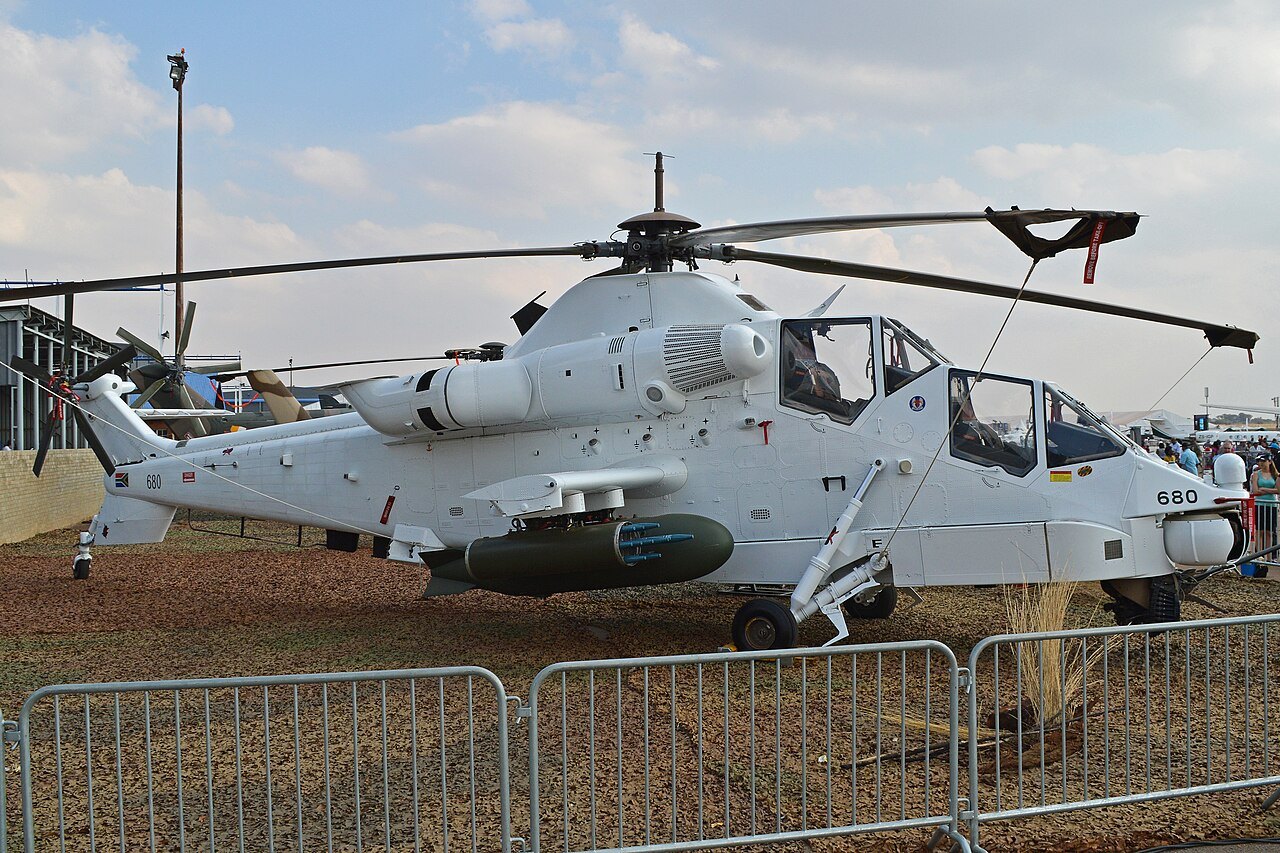
Where the Rooivalk flies and flew
The Rooivalk’s record
The Rooivalk arrived too late for the Border War it was designed for. Its combat record is with the United Nations in the eastern Democratic Republic of Congo, where in 2013 it supported the offensive against the M23 rebellion.
See how training and combat types compare in the military aircraft statistics database. Figures are approximate.
Everything people ask about the Rooivalk
Can I fly in a Denel Rooivalk?
What does Rooivalk mean?
How many Rooivalks were built?
Has the Rooivalk seen combat?
Is the Rooivalk based on the Puma?
Did any other country buy the Rooivalk?
You can’t fly the Rooivalk.
These, you can.
Most of this museum you can only look at. These genuine military jets you can fly yourself with MiGFlug — with aerobatics and time on the controls.
 Fly the L-39 AlbatrosThe world’s most-flown jet trainer — aerobatics included
 Fly the F-104 Starfighter“The missile with a man in it”
 Fly the MiG-21The Cold War’s most-produced jet
 Fly the T-33 Shooting StarAmerica’s first jet trainer
 Fly the DH VampireA piece of early jet history
 Fly the S.211Agile Italian jet trainer
 Fly the MB-326The classic Aermacchi jet
 Fly the MiG-15The Soviet legend of the Korean War
Continue the tour
Every fact, checked
- RooivalkSAAF information site: origins, development cost, specifications, armament and service
- 16 SquadronSAAF information site: squadron history and 1999 reactivation with the Rooivalk
- SAAF Rooivalk fleet nearing operational status2008 report on upgrades, weapons delays and accidents
- After 23 years Rooivalks fire first shots in DRCAfrican Defence Review on the Tshanzu strike of 4 November 2013
- F2 20mm CannonSAAF information site on the Rooivalk’s gun
- FZ 90 70mm FFARSAAF information site on the Rooivalk’s rockets