
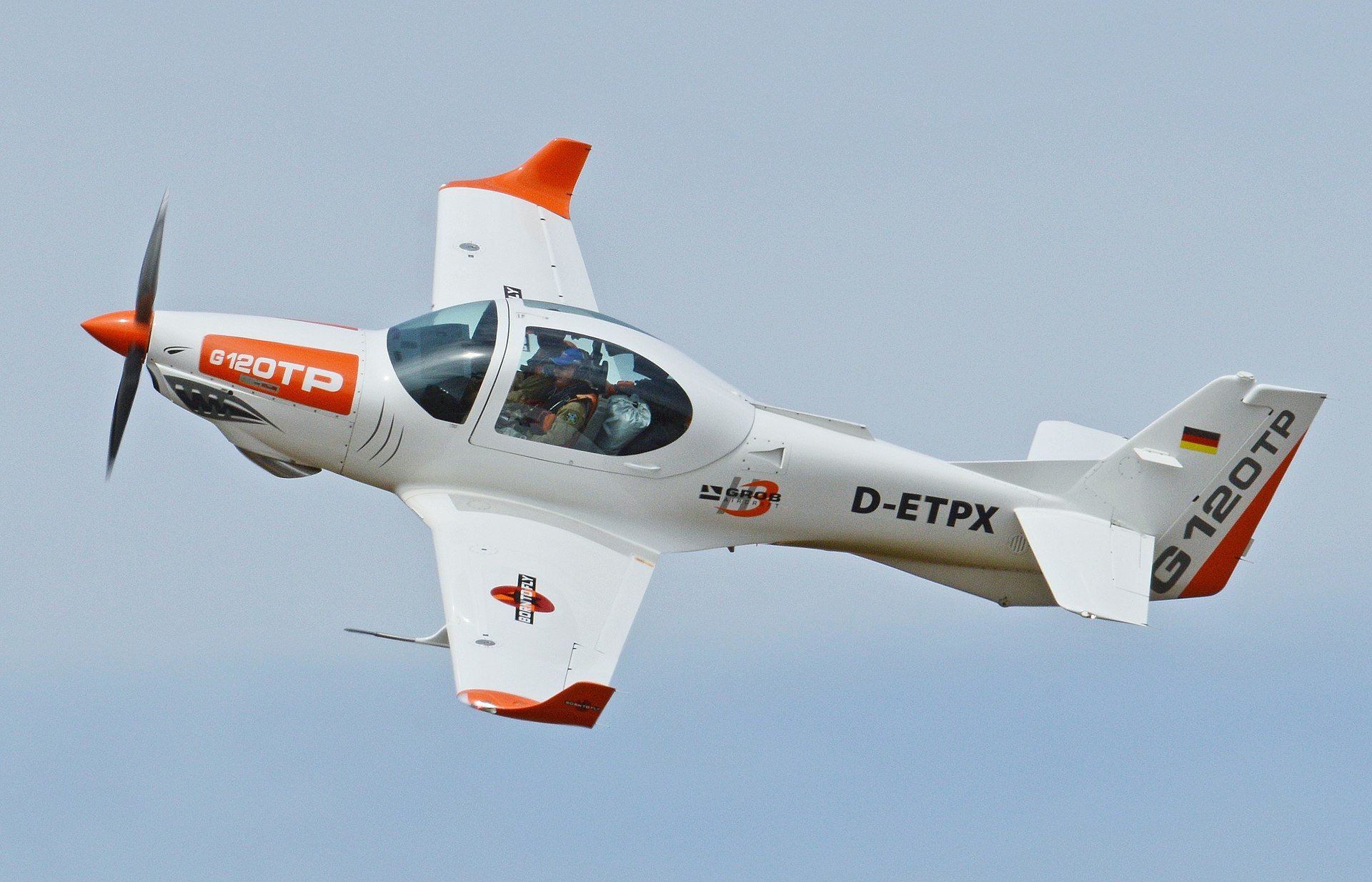
Grob G 120TP
Composite Turboprop Trainer
A carbon-composite Bavarian turboprop that has quietly become a standard first military aircraft, teaching pilots from the RAF and Sweden to Indonesia, Mexico and Canada.
The G 120TP: how a Bavarian glider builder made the world’s first-step turboprop
Grob began at Tussenhausen-Mattsies airfield in Bavaria in 1971 and made its name with composite gliders. Its G 109 motor glider of 1980 led to the G 115 piston trainer, adopted by around ten air forces, including the RAF as the Tutor, and then to the retractable-gear G 120A. By the late 2000s air forces wanted something different: a first aircraft that burned jet fuel, flew like a modern military type and cost far less to run than a PC-7 or Texan. Grob’s answer flew in the first quarter of 2010, and in development it turned into what the company described as a nearly new type. The aim was simple: a cheap, robust aircraft in which a student could take the first steps of a military flying career.
The G 120TP pairs an all-composite airframe, carbon-fibre wings and a glass-fibre fuselage, with a Rolls-Royce M250-B17F turboprop of 456 shp driving a five-blade MT propeller. Instructor and student sit side by side under a large canopy, with hands-on throttle-and-stick controls and a glass cockpit. It is stressed to +6 / −4 g, cruises at about 220 to 235 kt and, crucially, needs no aviation gasoline. EASA type certification under Part 23 followed in May 2013. The airframe is quoted with a 15,000-hour fuselage life, and the aircraft can be dismantled for shipping in a standard container. The result is a trainer that behaves like a small military aircraft but is far simpler and lighter than the turboprops above it in the training pipeline.
Indonesia was the launch customer, ordering 18 in 2011 and later more. Argentina, Mexico, Myanmar and Jordan followed; the United Kingdom bought 23 as the Prefect T1 for its tri-service elementary training; Bangladesh took 24; Sweden chose it as the SK 40 to replace a jet, the Sk 60; and in 2025 Canada received the first of 23 CT-102B Astra IIs. The US Army’s fixed-wing students have also flown it through a CAE-run academy in Alabama. Without fanfare, the G 120TP has become the aircraft in which a growing share of the world’s military pilots first fly a turbine. Its rivals are larger, but none has spread as quickly at this end of the market.
01The G 120TP’s roots: from motor glider to military trainer
The G 120TP is the end of a family line that began far from military aviation. Grob’s G 109 motor glider first flew in 1980; its composite construction and benign handling led to the G 115, a piston trainer that, by Grob’s account, was adopted by ten air forces. The RAF alone operated a large fleet of G 115Es as the Tutor T1 for elementary and university air squadron flying.
The G 120A added retractable gear, more power and a more military cockpit, and was sold to several air forces and contract training providers. The obvious next step was the turbine. Swapping the piston for a Rolls-Royce M250, an engine best known in helicopters, gave a trainer that ran on the same jet fuel as the rest of an air force’s fleet, with smoother handling and better reliability than a piston engine. In development the changes multiplied, until the G 120TP emerged as essentially a new aircraft, first flown in 2010.
The timing suited the market. Many air forces were replacing ageing piston trainers and looking for a cheaper stage below a PC-21, Texan or KT-1. Grob offered the aircraft with ground-based training systems, simulators and selection software, and its customers increasingly bought a complete training package rather than a fleet of aeroplanes alone.
What makes the G 120TP special
Composite from nose to tail
Grob’s glider heritage shows in the structure. The wings are carbon-fibre composite with winglets and the fuselage is glass-fibre reinforced plastic, quoted with a 15,000-hour life. Composites do not corrode, resist fatigue well and keep the airframe light: about 1,095 kg empty. The aircraft can be dismantled to fit, Grob says, two to a single 40-foot shipping container, a useful trick for air forces taking delivery on the far side of the world. Composites also allow the smooth, accurate wing surfaces that give the aircraft its crisp handling.
A helicopter engine on the nose
The Rolls-Royce M250-B17F belongs to one of the most widely produced small turbine families, better known in light helicopters. In the G 120TP it gives 456 shp for take-off and 380 shp at maximum continuous power, driving a five-blade propeller. The engine burns jet fuel, so the trainer shares fuel logistics with the rest of the fleet, and it offers turbine smoothness and reliability that a piston engine cannot. Its modest power keeps fuel burn low, which is the point of a first-stage trainer.
Side by side, glass and HOTAS
Unlike the tandem PC-7 or Texan, the G 120TP seats instructor and student side by side, so the instructor sees exactly what the student is doing. Both have hands-on throttle-and-stick controls, and the panel is a glass cockpit, latterly a Genesys IDU-680 system with up to four multifunction displays. Ejection seats, autopilot, air conditioning and oxygen are options, letting each customer choose between a simple elementary trainer and a more military basic trainer. The canopy gives both pilots an unusually wide view, useful in formation and circuit work.
02The G 120TP’s cockpit options: one airframe, different air forces
Grob has sold the G 120TP as a configurable platform. Early export aircraft, such as Indonesia’s, were described with Martin-Baker Mk 15B ejection seats and an Esterline Cockpit 4000 avionics suite with two large flat-panel displays. Later aircraft use the Genesys Aerosystems IDU-680 electronic flight instrument system with up to four 6 by 8 inch displays, the same family Grob uses on its G 520NG high-altitude aircraft. Martin-Baker’s lighter Mk 17 seat is also offered.
Other options include an autopilot, air conditioning and an oxygen system, the last needed if instructors use the aircraft’s 25,000 ft ceiling; the RAF limits its Prefects to 10,000 ft operationally. The constant across all versions is the HOTAS layout and the side-by-side cabin, which make the type an elementary trainer, an instrument trainer and an introduction to the switchology of a combat aircraft at once. Training systems complete the package: Grob offers computer-based training, a full-mission simulator with a wide-angle visual system and a pilot selection and evaluation system intended to reduce attrition.
Grob G 120TP specifications
Specifications
- Crew
- 2 side by side, dual controls
- Length
- 8.4 m (27 ft 7 in)
- Wingspan
- 10.3 m (33 ft 10 in)
- Height
- 2.62 to 2.7 m (8 ft 7 in to 8 ft 10 in), by source
- Wing area
- 13.5 m² (145 sq ft)
- Empty weight
- 1,095 kg (2,414 lb)
- Max take-off weight
- 1,590 kg (3,505 lb)
- Powerplant
- 1 × Rolls-Royce M250-B17F turboprop, 340 kW (456 shp) take-off; five-blade MT propeller
- Maximum speed
- about 435 to 454 km/h (235 to 245 kt), by source
- Cruise speed
- about 435 km/h (270 mph, 235 kt) at 10,000 ft
- Range
- about 1,070 km (580 nmi); ferry 1,361 km (735 nmi)
- Endurance
- up to 6 h at endurance power
- Service ceiling
- 7,620 m (25,000 ft)
- Climb rate
- 14.1 m/s (2,772 ft/min)
- g limits
- +6 / −4 g
- Armament
- None
Costs & production
- Cost per flight hour
- Not published; a MiGFlug estimate based on the fuel burn and maintenance of light single-turboprop aircraft in this class is roughly US$600 to US$1,200 per hour, well below a PC-21 or T-6
- Production
- In production since 2010; announced orders from more than ten air forces total roughly 190 aircraft (MiGFlug tally of published contracts)
- Programme
- Often sold within complete training packages; Canada’s 23 CT-102B Astra IIs form part of the C$11 billion Future Aircrew Training programme run with SkyAlyne
03The G 120TP’s operators: who flies it and under what name
- Indonesia: launch customer, 18 ordered in 2011 with deliveries from 2012, later increased.
- Argentina: 10 aircraft, deliveries from 2013.
- Mexico: 25 aircraft delivered 2015 to 2016.
- Myanmar: 10 received by July 2015, with more ordered.
- Jordan: King Hussein Air College, replacing Slingsby T67M260 Fireflies from 2017.
- United Kingdom: 23 Prefect T1s for the UK Military Flying Training System, operating from 2017 at RAF Barkston Heath and Cranwell; two further aircraft at the Empire Test Pilots’ School.
- Bangladesh: 24 ordered in 2021.
- Sweden: SK 40 at Malmen, first aircraft handed over in April 2023.
- Canada: 23 CT-102B Astra II, first two received in September 2025 for 15 Wing Moose Jaw.
- Also Ecuador and Ethiopia, and US Army students through a CAE academy at Dothan, Alabama.
- Many customers buy the aircraft with Grob’s ground-based training, simulators and maintenance support, and several fleets are owned or operated through contractors rather than by the air force alone.
04The G 120TP’s operating costs: the case for a small turboprop
No operator publishes an hourly cost, so MiGFlug’s figure is an estimate. The M250 is a small engine by turboprop-trainer standards, less than half the power of a PC-21’s, and the airframe is light, composite and corrosion-free, with a quoted 15,000-hour fuselage life. Maintenance is often bundled into the contract: in Sweden Grob itself provides line and heavy maintenance.
On the basis of light turbine aircraft of similar power and weight, a range of roughly US$600 to US$1,200 per flight hour including fuel and maintenance reserves is plausible, more than a piston trainer but far less than the larger turboprops and jets it feeds. That gap is the type’s whole argument: students can learn aerobatics, instrument flying and turbine handling in it before moving on to an aircraft that costs several times as much an hour. Canada’s arrangement, in which the air force owns the aircraft but a contractor delivers the training, shows how such costs are increasingly managed through long-term service contracts rather than per-hour budgets.
The G 120TP from Mattsies to Moose Jaw
Grob founded
Grob begins at Tussenhausen-Mattsies in Bavaria, building composite gliders.
First flight
The G 120TP flies for the first time in the first quarter of the year.
Launch customer
Indonesia orders 18 aircraft in September.
Certified
EASA Part 23 type certification is completed in May; Argentine deliveries begin.
British order
Affinity orders 23 aircraft for the UK Military Flying Training System on 2 February.
Prefect in service
UK training begins on 1 August with five Prefect T1s at RAF Barkston Heath.
Sweden and Bangladesh
Sweden selects the type in May; Bangladesh orders 24 the following month.
Jordanian loss
An RJAF G 120TP crashes near Ramtha on 5 June, killing both pilots.
SK 40 handed over
Sweden’s first aircraft are handed over on 3 April at Malmen, replacing the Sk 60 jet.
Canada’s Astra II
The RCAF receives its first two CT-102B Astra IIs on 11 September.
Stories & eyewitnesses: the G 120TP in service
From gliders to air forces
Grob built its reputation on composite sailplanes before trainers.
Read the full story
Indonesia goes first
Southeast Asia’s largest air force launched the type.
Read the full story
The Prefect’s first day
British military pilot training changed on 1 August 2017.
Read the full story
Sweden swaps a jet for a turboprop
After nearly six decades of Sk 60s, Swedish students start on a turboprop.
Read the full story
Canada’s Astra II
The RCAF’s next generation of pilots will start on the G 120TP.
Read the full story
Army pilots in Alabama
The US Army’s fixed-wing students have flown it too.
Read the full story
At the Empire Test Pilots’ School
Test pilots learn on it as well as beginners.
Read the full story
Loss near Ramtha
A Jordanian training loss cost two lives.
Read the full story
Bangladesh’s 24
A fast order and a fast delivery.
Read the full story
The G 120TP in pictures
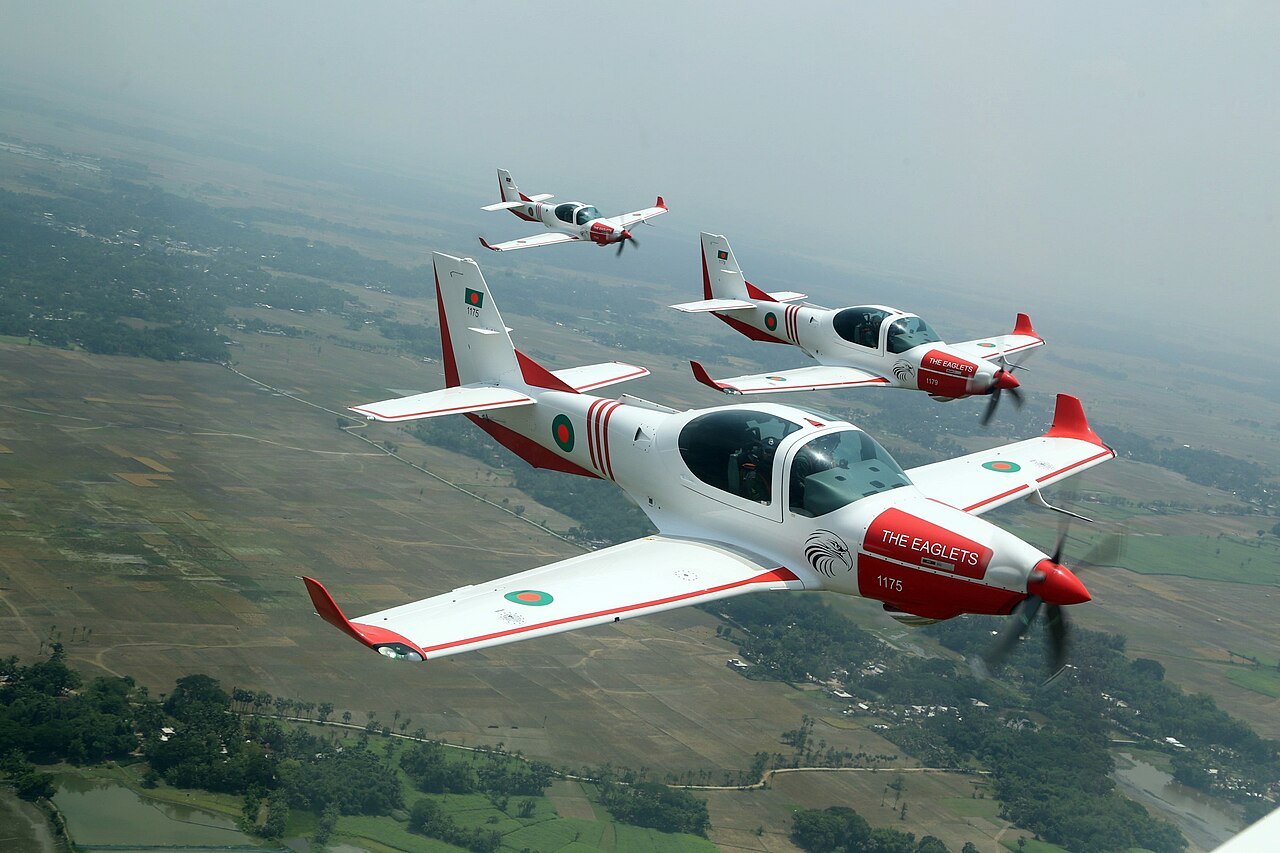
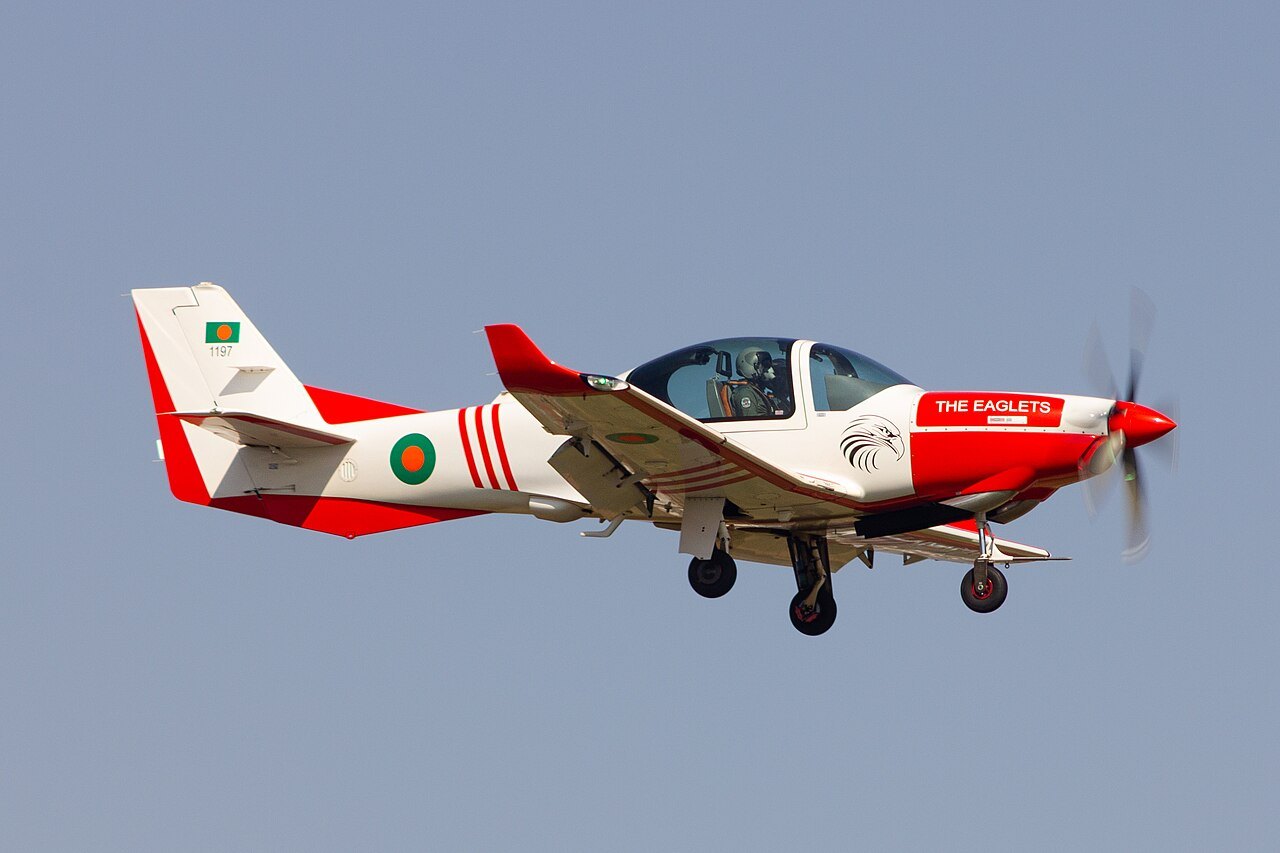
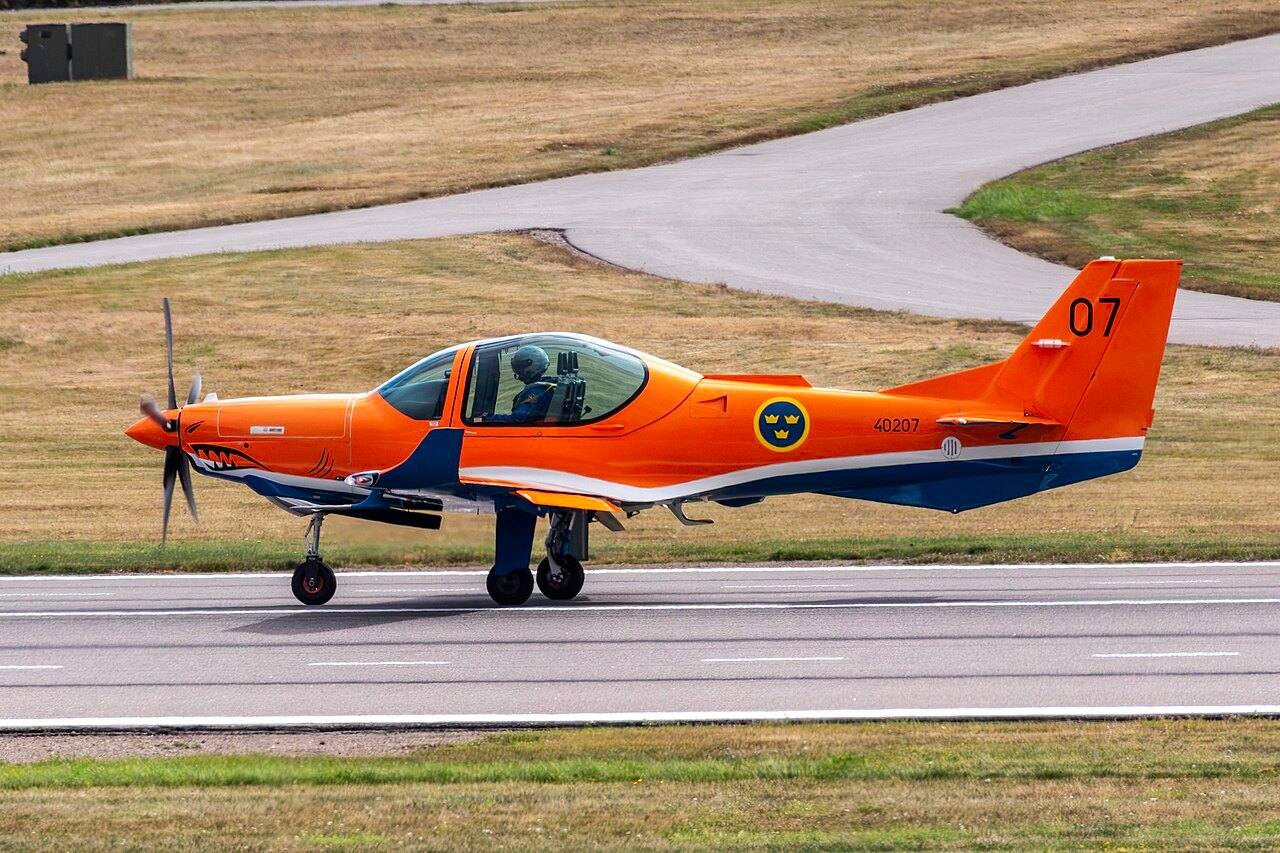
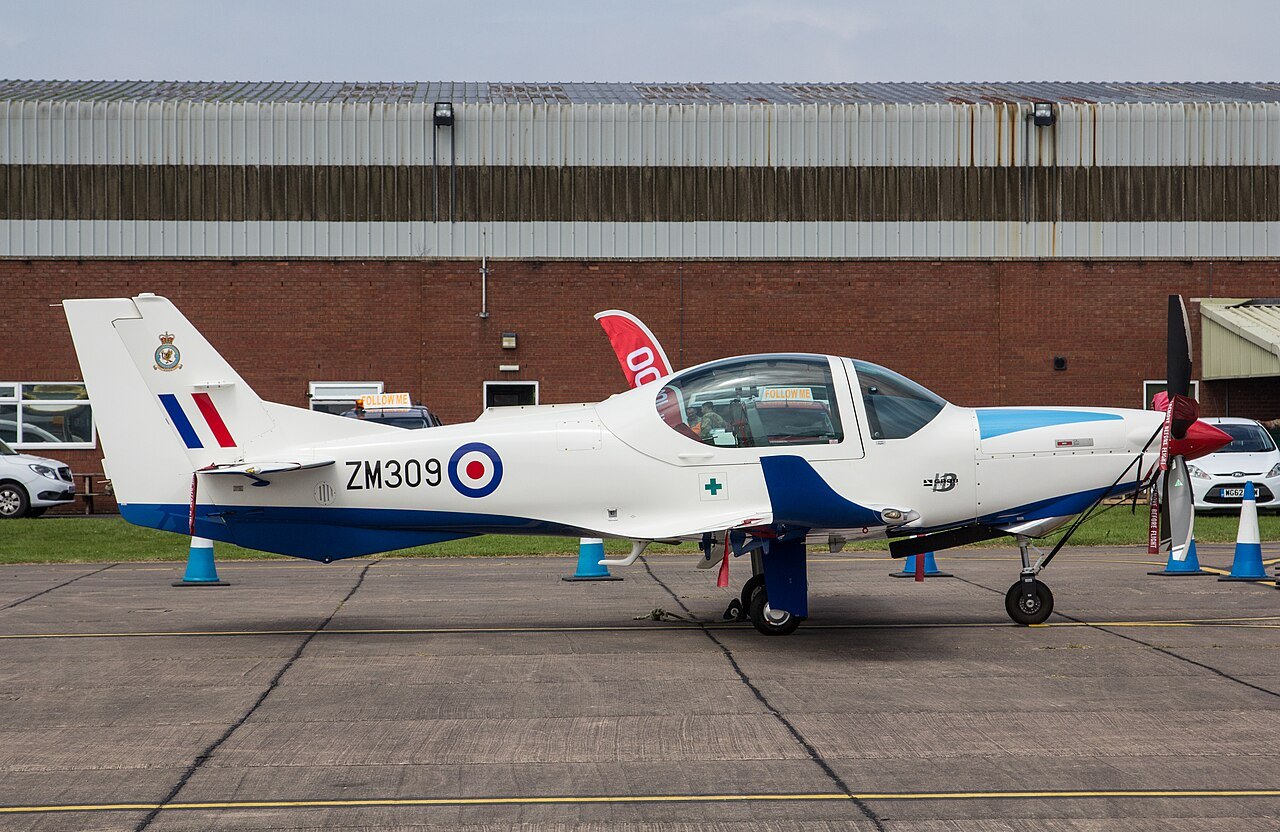
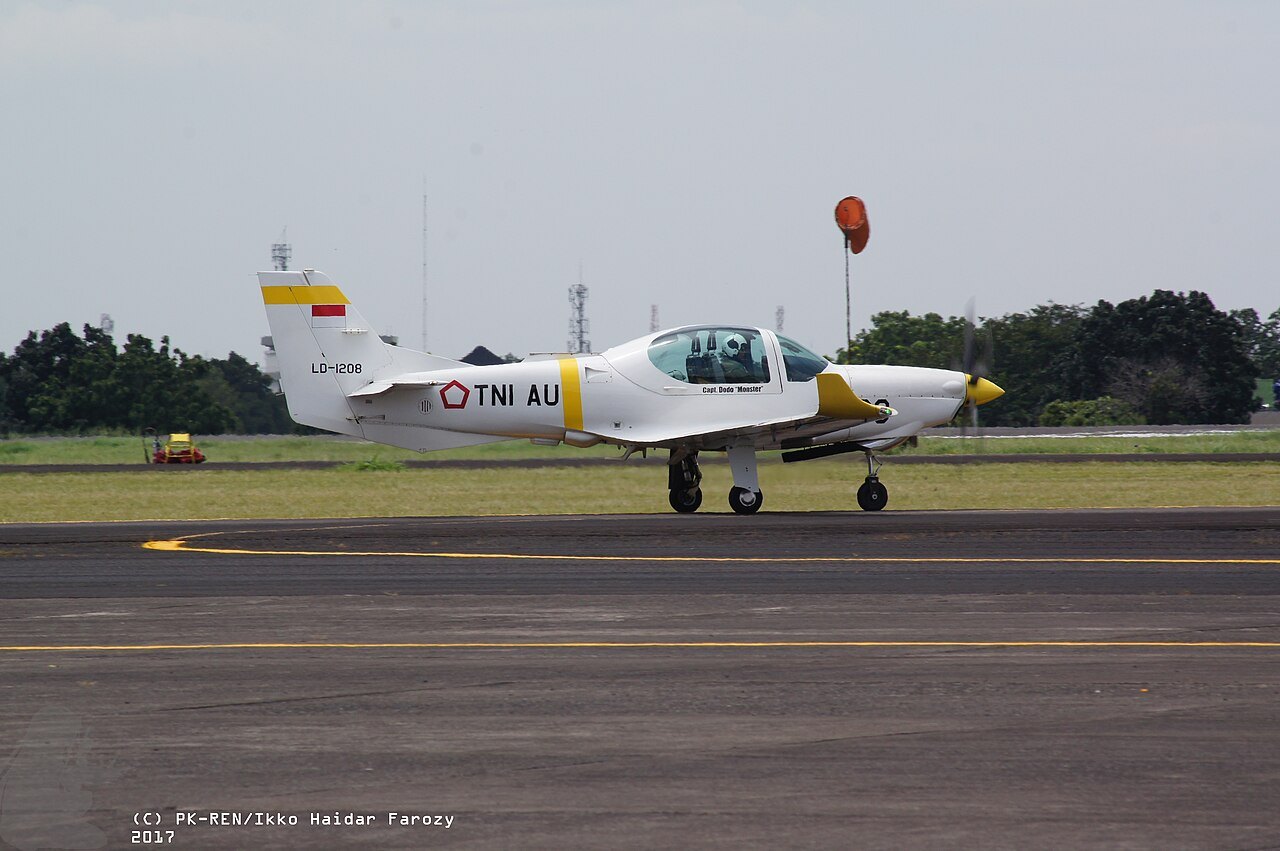
Where the G 120TP flies and flew
The G 120TP’s record
The G 120TP is a pure trainer with no armament and no combat use. Its record is one of rapid adoption: in roughly a decade it became the first military aircraft for students in more than ten air forces, with a small number of fatal training accidents.
See how training and combat types compare in the military aircraft statistics database. Figures are approximate.
Everything people ask about the G 120TP
Can I fly in a Grob G 120TP?
What engine does the G 120TP use?
Is the G 120TP aerobatic?
Who uses the G 120TP?
Does the G 120TP have ejection seats?
How is the G 120TP different from the PC-7 or T-6?
You can’t fly the G 120TP.
These, you can.
Most of this museum you can only look at. These genuine military jets you can fly yourself with MiGFlug — with aerobatics and time on the controls.
 Fly the L-39 AlbatrosThe world’s most-flown jet trainer — aerobatics included
 Fly the F-104 Starfighter“The missile with a man in it”
 Fly the MiG-21The Cold War’s most-produced jet
 Fly the T-33 Shooting StarAmerica’s first jet trainer
 Fly the DH VampireA piece of early jet history
 Fly the S.211Agile Italian jet trainer
 Fly the MB-326The classic Aermacchi jet
 Fly the MiG-15The Soviet legend of the Korean War
Continue the tour
Every fact, checked
- Prefect T1, Royal Air ForceUK order, deliveries, bases, specifications
- Royal Canadian Air Force welcomes first two Future Aircrew Training Program aircraft, Department of National DefenceCT-102B Astra II deliveries and FAcT programme
- Grob: Gliders, Trainers and ISR, HalldaleCompany history, technical features, customers
- G 120TP trainer, Airforce TechnologyLaunch customer, engine, cockpit and performance
- Sweden orders Grob G 120TP for basic trainer needs, AINSwedish contract and Sk 60 replacement
- First Grob G120TP training aircraft delivered to Sweden, ScrambleSK 40 delivery dates
- Crash RJAF Grob G120TP, ScrambleJordanian accident of June 2022
- Bangladesh confirms purchase of 24 Grob G 120TP trainer aircraft, Air RecognitionBangladeshi order and certification date