
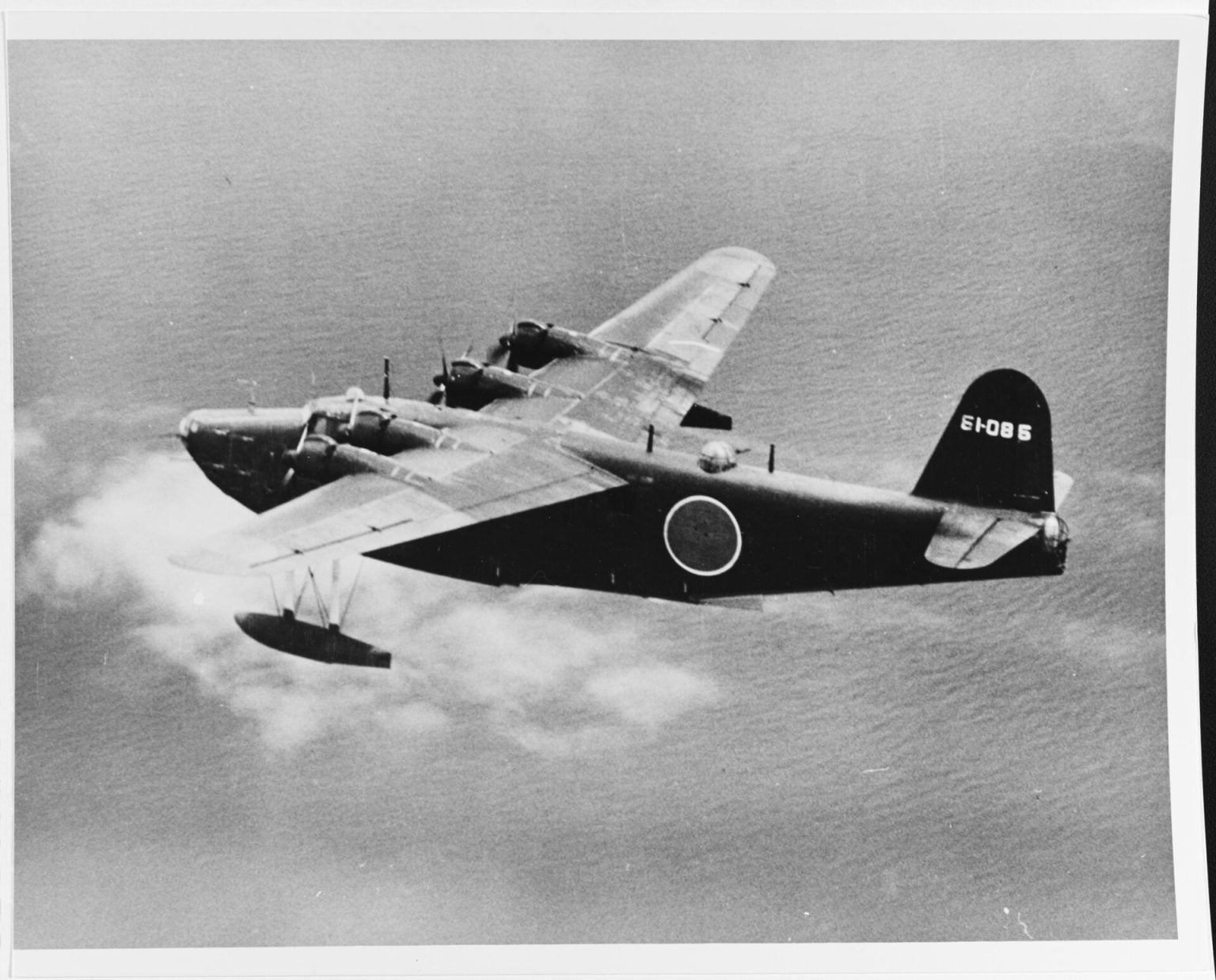
Kawanishi H8K
“Emily”
The Imperial Japanese Navy’s four-engine ocean patrol flying boat — long-ranged, heavily armed and, by many accounts, the finest flying-boat design of the Second World War, and the aircraft Allied crews rated hardest to shoot down.
The Kawanishi H8K Emily: the flying boat the Allies rated hardest to shoot down
By the late 1930s the Imperial Japanese Navy had built its maritime strategy around the flying boat — aircraft able to range for thousands of kilometres over open ocean to scout, patrol and strike. Its existing Kawanishi H6K “Mavis” was already being outclassed, and in 1938 the Navy issued a demanding specification for a successor. Kawanishi’s answer was the H8K, a large four-engine boat that first flew in early 1941 after the prototype was completed at the end of 1940.
Early testing exposed a serious flaw: at speed on the water the hull “porpoised” badly. Engineers deepened the hull, curing the instability and clearing the aircraft for service. Accepted as the Navy Type 2 Flying Boat, the H8K entered combat in 1942, and the improved H8K2 — the definitive version — followed at the end of that year. Powered by four Mitsubishi Kasei radial engines, spanning roughly 38 metres and able to fly well over 7,000 kilometres, it could patrol vast stretches of the Pacific, hunt submarines, carry torpedoes or bombs, and — in the H8K2-L “Seiku” transport version — move troops and cargo between distant island bases.
What set the Emily apart was not just range but protection. Most Japanese aircraft of the era traded armour for performance; the H8K did the opposite, carrying partially self-sealing fuel tanks, armour, and a carbon-dioxide fire-suppression system, together with heavy defensive armament of up to five 20 mm cannon and additional machine guns. Allied aircrew who tried to shoot one down came away with a lasting respect: the type is frequently cited as the hardest Japanese aircraft to destroy, and many historians regard it as the best flying-boat design of the war.
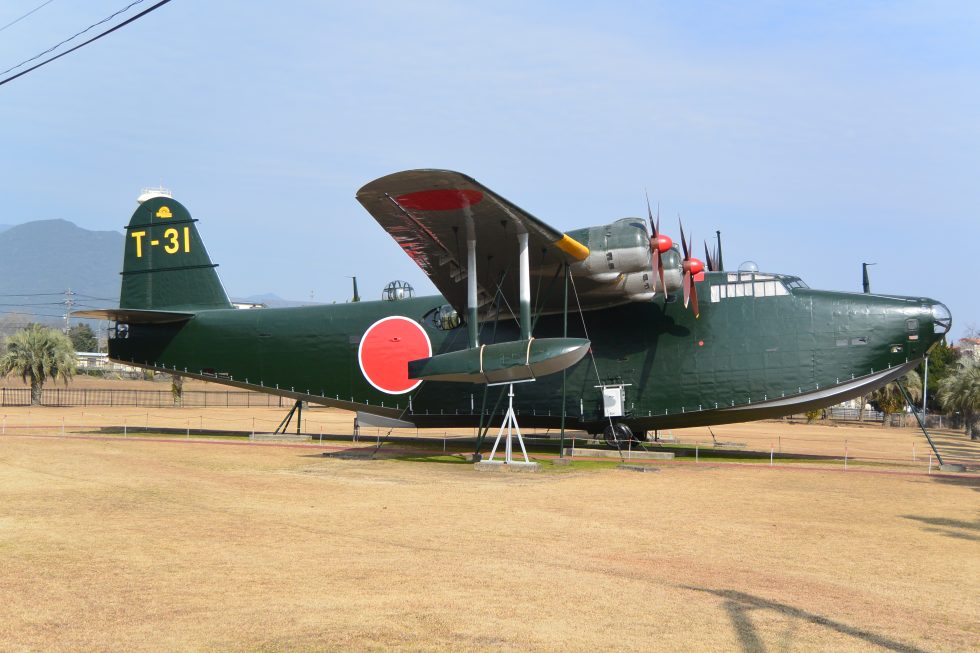
The Emily is also remembered for one audacious operation. In March 1942, three months after Pearl Harbor, two H8Ks attempted a second raid on the base — flying from the Marshall Islands, refuelling from submarines at a remote atoll, and pressing on toward Oahu. Heavy cloud over the target foiled the attack, and the bombs fell harmlessly. It achieved nothing militarily, but as a demonstration of the aircraft’s reach it was extraordinary. About 167 H8Ks were built before production ended in 1945; only a handful survived the war, and a single restored airframe is preserved today at the Kanoya Air Base Museum in Japan.
01The Kawanishi H8K Emily and Operation K: the second raid on Pearl Harbor
On the night of 4–5 March 1942, Japan attempted what it called Operation K — a second aerial attack on Pearl Harbor using the H8K’s exceptional range. The plan called for flying boats to fly roughly 1,900 miles from the Marshall Islands to French Frigate Shoals, an uninhabited atoll north-west of Oahu, rendezvous with fuel-carrying submarines, top off, and then bomb the harbour. Five aircraft were planned; only two were available.
The raid went ahead but achieved nothing. A submarine tasked with reporting the weather over Oahu had been lost, so the crews flew in blind, and heavy cloud hid the target. The bombs fell harmlessly — some into the sea, others onto a Honolulu hillside — causing no meaningful damage. Its lasting consequence was strategic: it drew American attention to French Frigate Shoals, which was then watched and mined, denying Japan the use of the atoll to scout Pearl Harbor before the Battle of Midway.
What makes the H8K Emily special
A long-range four-engine flying boat
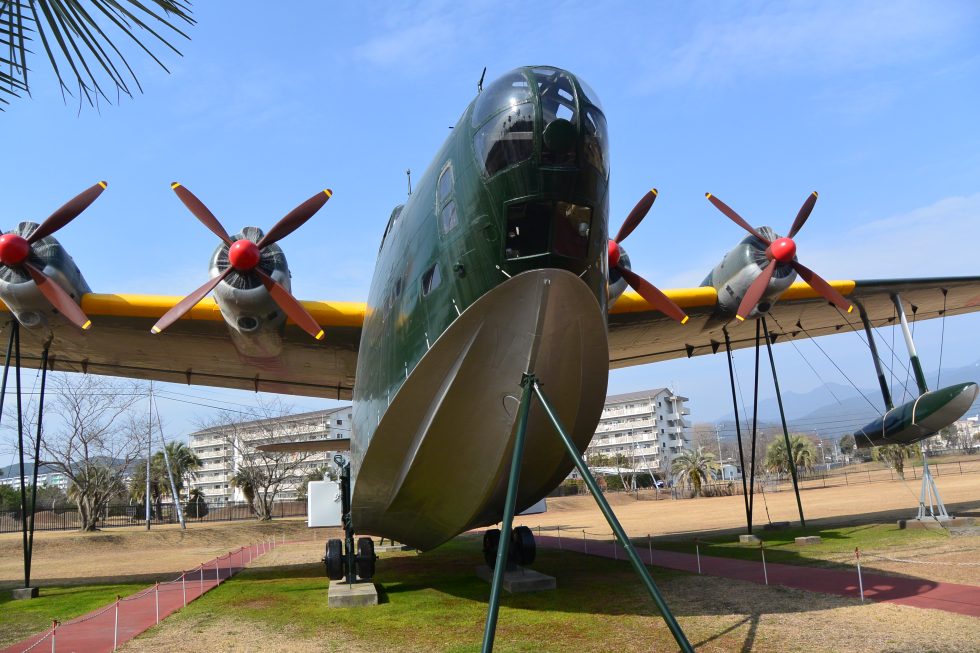
Built around four Mitsubishi Kasei radial engines and a large, deep hull, the H8K2 could fly roughly 7,150 km with a ~28 m fuselage and ~38 m wing. The prototype’s water instability forced a hull redesign that produced clean high-speed handling. In service it was rated faster than the American PBY Catalina and more heavily armed than Britain’s Short Sunderland — a combination that leads many historians to call it the best flying-boat design of the war.
Armour, self-sealing tanks and heavy guns
Unlike most Japanese wartime aircraft, the Emily was built to survive. It carried partially self-sealing fuel tanks over fuel-proof bilges, armour protection and a CO₂ fire-suppression system, together with defensive armament of up to five 20 mm cannon plus 7.7 mm machine guns. The result was an Allied reputation, widely repeated, as the hardest Japanese aircraft to shoot down.
Built for the ocean: patrol, bombing and Operation K
The Emily’s defining quality — very long over-water reach — made it a versatile ocean aircraft. It flew maritime reconnaissance (the role in which it is said to have excelled), anti-submarine patrol with depth charges, and torpedo and bombing strikes, and it enabled the audacious submarine-refuelled Operation K raid of March 1942. A dedicated transport version, the H8K2-L “Seiku,” carried troops and cargo across the Pacific.
02The Kawanishi H8K Emily’s protection: why Allied fighters struggled to down it
Japanese aircraft of the early war were often lightly built, trading protection for range and agility; the H8K was a deliberate exception. Its fuel tanks were partially self-sealing and sat over “fuel-proof” bilges that allowed fuel transfer between tanks, a carbon-dioxide system fought fires, and the crew and key structure were armoured. Combined with heavy defensive fire from up to five 20 mm cannon, this made the Emily costly to attack. According to one widely repeated account, an Allied fighter poured hundreds of rounds into an H8K without bringing it down — an anecdote often cited as evidence of the type’s unusual survivability, though exact figures should be treated with caution.
03The Kawanishi H8K Emily’s maritime patrol and transport roles
Emilys were forward-based in sheltered harbours, moored to buoys or hauled ashore on temporary beaching gear and supported by seaplane tenders. From these bases they flew long ocean patrols, scouted for enemy fleets, hunted submarines and carried out bombing and torpedo attacks. The unarmed H8K2-L “Seiku” transport, of which about 36 were built between 1943 and 1945, stripped out the weapons to carry between roughly 29 and 64 personnel — a long-range airlift capability rare in Japan’s wartime inventory.
Kawanishi H8K2 Emily: full specifications
Baseline note: the figures below describe the H8K2, Navy Type 2 Large Flying Boat Model 12 — the Kasei 22-engined mark that entered service in 1943, of which 112 were built and which flew the great majority of the type’s wartime sorties. Deltas for the 13-Shi prototypes, the Kasei 12-engined H8K1 Model 11, the experimental H8K3 and H8K4 and the H8K2-L Seikū transport are in grey. Metric values follow the Kawanishi and Kaigun Koku Hombu tables as reprinted by René Francillon and in Japanese compilations; where the standard Western lists round or convert differently — and on wingspan and fuel capacity they plainly do — both readings are named.
Dimensions & weights
- Crew
- 10 — two pilots, navigator, flight engineer, two radio operators and gunners, working on two decks joined by a ladder. The upper deck carried the flight station; the lower held the hull fuel tanks, bunks and a galley, because a patrol could run a full day and night and some sources give the establishment as 9
- Length
- 28.13 m (92 ft 3 in). Among the largest aircraft in operational Japanese service; the older H6K had a greater span at 40.00 m, but the H8K was far heavier and far more powerful
- Wingspan
- 38.00 m (124 ft 8 in). Several English-language references print "125 ft 8 in", which does not convert from 38 m; it is a long-lived transcription error
- Height
- 9.15 m (30 ft 0 in)
- Wing area
- 160.0 m² (1,722 sq ft) — against 130.4 m² (1,404 sq ft) for a Short Sunderland and 130.1 m² (1,400 sq ft) for a Catalina
- Aspect ratio
- 9.03 — high, and deliberately so. The shoulder-mounted wing was long and slim because range comes from span, and it was mounted high enough to keep four propeller discs clear of spray
- Hull
- two-step planing hull of deep, fine section, semi-monocoque, with a high length-to-beam ratio chosen for low air drag — which is precisely what made the prototype behave so badly on water. See the propulsion column and the variants section
- Wingtip floats
- fixed, strut-mounted, non-jettisonable — the H8K3 replaced them with retractable units to recover the drag, and did not reach production
- Empty weight
- 18,380 kg (40,521 lb)
- Loaded weight
- 24,500 kg (54,013 lb) — the normal patrol condition
- Maximum take-off weight
- 32,500 kg (71,650 lb) at overload, the condition in which the very long transit sorties were flown
- Wing loading
- 153.1 kg/m² (31.4 lb/sq ft) at loaded weight; 203.1 kg/m² (41.6 lb/sq ft) at maximum. Heavy for a flying boat, and part of why the hull had to be got right
- Power loading
- 3.31 kg/hp (7.30 lb/hp) at loaded weight; 4.39 kg/hp (9.68 lb/hp) at maximum take-off weight, at which the aeroplane needed a long, calm stretch of water
Performance
- Maximum speed
- 467 km/h (290 mph, 252 kn) at 5,000 m (16,400 ft). Some tables give 454 or 460 km/h; the 467 figure is the one in the Japanese acceptance data
- Cruising speed
- 296 km/h (184 mph, 160 kn) at 4,000 m (13,100 ft)
- Speed in context
- roughly 160 km/h (100 mph) faster than a PBY Catalina and about 110 km/h (70 mph) faster than a Sunderland. Not fast enough to outrun a fighter outright, but fast enough that interception became a chase rather than a formality — which was exactly what the 1938 requirement had been written to buy
- Service ceiling
- 8,850 m (29,040 ft); a small number of sources give 8,780 m (28,800 ft)
- Time to 5,000 m
- 10 min 12 s (16,400 ft)
- Mean rate of climb
- 8.2 m/s (1,610 ft/min) averaged to 5,000 m — a climb figure that would not disgrace a twin-engined bomber
- Maximum range
- 7,152 km (4,444 miles, 3,862 nm). The 1938 specification had asked for 7,410 km (4,604 miles) and the type came within four per cent of it
- Endurance
- of the order of 24 hours at economical cruise, which is what the patrol pattern actually demanded: out, a long square search, and back
- Combat radius
- ~2,500–2,800 km (1,550–1,740 miles) with a useful search leg and reserves, depending on load. Operational legs of over 3,000 km were flown routinely
- Internal fuel
- ~18,880 litres (4,150 imp gal, 4,990 US gal) in the usual Western tables; Japanese-derived compilations give ~17,040 litres (3,748 imp gal). The difference is probably overload versus normal tankage, but no source states which
- Take-off from water
- no dependable published figure exists for run or time to unstick, and the honest answer is that it varied enormously with sea state, weight and whether the hull was clean. At overload weight in a swell it was a long, wet business, and Operation K nearly foundered on exactly that
- Maximum ordnance
- ~2,000 kg (4,410 lb) of bombs or depth charges, or two torpedoes — carried on external racks between the engine nacelles
Propulsion & systems
- Engines
- four Mitsubishi MK4Q Kasei 22, 14-cylinder two-row air-cooled radials of 42.1 litres (2,570 cu in) each, driving four-blade constant-speed propellers
- Take-off power
- 1,850 hp (1,380 kW) each
- Rated power at altitude
- 1,680 hp (1,253 kW) at 2,100 m (6,900 ft) and 1,540 hp (1,148 kW) at 5,500 m (18,000 ft), on the two-speed supercharger
- Total installed power
- 7,400 hp (5,518 kW) — more than half again the installed power of a Sunderland Mk III
- Boosting
- water-methanol injection on the Kasei 22, which is where most of the gain over the H8K1’s Kasei 12 came from; the Kasei was the same family that powered the G4M and the J2M
- Earlier and later engines
- H8K1: four Mitsubishi MK4B Kasei 12 of 1,530 hp (1,141 kW), giving about 433 km/h (269 mph). H8K4: four Kasei 25b of 1,825 hp (1,361 kW), two aircraft only
- Fuel tankage
- eight tanks in the wing and six in the hull, cross-connected so fuel could be transferred to trim the aeroplane over a twenty-hour sortie. The hull tanks sat above fuel-proof bilges, so a holed tank drained into a sealed compartment rather than into the boat
- Tank protection
- the hull tanks were partially self-sealing with a rubber covering; the wing tanks were not, but the whole installation was served by a carbon-dioxide inerting and fire-extinguishing system. This is the single most important fact about the aeroplane: almost no other Japanese type of the period had anything comparable
- Armour
- armour protection for the crew stations, again markedly unusual in Japanese practice. Combined with the tank protection it is why Allied aircrew rated the H8K the hardest Japanese aeroplane in the sky to shoot down
- Radar
- late H8K2 batches carried Type 3 Ku Mark 6 ASV air-to-surface search radar, with Yagi aerials on the nose and hull sides — Western sources render the set variously as Mark VI Model 1 and Model 4, and the fitting was not universal
- Navigation and radio
- long-range HF wireless, direction-finding loop, drift sight and astrodome. On a 3,000 km over-water leg to an atoll rendezvous the navigator was the mission, not the pilot
04The Kawanishi H8K Emily’s cost: what the record does and does not show
The H8K was a wartime product of the Japanese state, never sold on an open market, so no reliable flyaway unit price or cost-per-flight-hour figure survives in accessible public sources. What is documented is production: about 167 aircraft of all versions were built between 1941 and 1945, a modest total that reflects both the aircraft’s size and complexity and the growing strain on Japanese industry late in the war. Any precise monetary figure attached to the type should be treated as an estimate rather than a sourced fact.
Armament & payload
The H8K carried five 20 mm cannon, two torpedoes and enough fuel for a day in the air, and was the only Japanese aeroplane Allied crews genuinely did not want to attack
Every other big flying boat of the war was defended by rifle-calibre machine guns and hope. The H8K2 was defended by five 20 mm cannon — bow turret, dorsal turret, tail turret and one in each beam blister — backed by five 7.7 mm guns in hull hatches, so that there was no approach to it that did not run into a cannon. That was a genuinely formidable arrangement in 1943, and it was mounted on an aeroplane fast enough that a fighter had to work to get into a firing position at all.
What made it lethal rather than merely well armed was the protection behind the guns. Japanese aircraft of the period were built light and burned readily; the H8K was built with partially self-sealing hull tanks over fuel-proof bilges, a carbon-dioxide inerting system and armour at the crew stations. Allied fighter pilots who had learned that a burst into a Betty or a Mavis produced a fire found that the same burst into an Emily produced holes. The type acquired a reputation across the Pacific as the hardest Japanese aircraft to bring down, and René Francillon’s judgement — "the most outstanding water-based combat aircraft of the Second World War" — is not really contested.
Offensively it was a torpedo and bomb carrier as well as a scout: two torpedoes or 2,000 kg of bombs and depth charges on racks between the engine nacelles. Its very first operational sortie was a bombing mission, and one of the strangest of the war. On the night of 4 March 1942 two H8K1s of the Yokohama Kōkūtai flew Operation K — the second raid on Pearl Harbor. They staged 3,060 km (1,900 miles) from Wotje in the Marshalls to French Frigate Shoals, an uninhabited reef 900 km (560 miles) north-west of Oahu, refuelled on the water from submarines waiting there, and pressed on to Hawaii with four 250 kg (550 lb) bombs apiece. Gun and store fits varied widely: H8K1s carried a lighter battery, some late H8K2s had the beam blisters deleted in favour of sliding hatches, and the transport marks kept only a bow cannon and a single rearward-firing gun.
Gun
- Five 20 mm Type 99 Mark 1 cannon on the H8K2 — one in a powered bow turret, one dorsal, one in the tail turret and one in each of the two beam blisters. Drum-fed, muzzle velocity about 600 m/s, roughly 520 rounds per minute; the Japanese Navy’s licence development of the Oerlikon FF
- Five 7.7 mm Type 92 flexible machine guns in hull hatches, including a ventral position covering the blind spot under the tail. Pan-fed Lewis derivatives, useful mainly for keeping a fighter’s head down
- The H8K1 was more lightly armed — commonly quoted as two 20 mm and four or five 7.7 mm — and the H8K2’s improved tail turret was one of the main reasons for the new mark
- The H8K3 experimented with a retractable dorsal turret and sliding hatch gun positions in place of the blisters, purely to recover drag; only two were built
- Ten guns, five of them cannon, on a patrol aircraft: no Allied flying boat came close. A Sunderland’s celebrated "Flying Porcupine" battery was all rifle-calibre
Air-to-air
- None. The H8K carried no air-to-air weapon in the modern sense, and no fixed forward-firing armament for offensive use against aircraft
- Its entire air-to-air capability was defensive, and is described in the gun card above — the cannon turrets existed to survive interception, not to seek it
- That said, H8K crews did claim Allied aircraft shot down in patrol encounters, and duels between big four-engined patrol boats and PB4Y Liberators or PBYs over empty ocean were a recognisable feature of the Pacific war
- The most useful air-to-air asset was speed. A 467 km/h flying boat could and did decline combat, which is what the 1938 requirement had been written to achieve
Air-to-surface guided
- None. No guided anti-ship weapon existed in Japanese Navy service that the H8K could carry, and none was ever fitted
- The ship-killing weapon was the unguided Type 91 aerial torpedo, two of which could be slung on the racks between the inboard and outboard nacelles. Japanese loading tables quote them at 800 kg apiece; the Type 91 Model 2 actually weighed about 838 kg (1,847 lb) with a warhead in the 200–240 kg class depending on model
- The Type 91 was the outstanding air-dropped torpedo of the early war — wooden stabiliser fins that shed on entry, tolerant of high drop speeds and low altitudes, and the weapon that did the work at Pearl Harbor and off Malaya
- A torpedo attack by an aircraft this size against an alerted warship was near-suicidal, and in practice the H8K carried torpedoes far more often than it dropped them
Bombs
- Up to 2,000 kg (4,410 lb) of bombs on the between-nacelle racks — typically eight Navy Type 99 No. 25 bombs of 250 kg (550 lb), or a larger number of 60 kg (132 lb) weapons
- Depth charges for the anti-submarine role, the H8K2’s most productive offensive employment. Radar-equipped aircraft of the 801st and other Kōkūtai hunted American submarines in the Luzon Strait and the approaches to the Philippines, and are credited with sinking several — the frequently quoted "at least three" is an attributed claim rather than a verified tally, and Japanese anti-submarine claims of this period are generally optimistic
- Four 250 kg bombs per aircraft was the Operation K load, chosen because it was what could be lifted after a submarine refuelling at an open-sea anchorage
- Night bombing of Allied rear areas was a regular H8K task from Rabaul: Townsville in Queensland was raided three times in late July 1942, and the aerodrome at Broome in Western Australia was attacked in August 1943
Rockets
- None. No air-to-surface or air-to-air rocket was ever fitted to an H8K of any mark
- The Japanese Navy did field air-launched rocket weapons late in the war, but they went to land-based attack and interceptor types, not to a scarce and expensive patrol boat
- Nor were assisted take-off rockets used operationally, despite the type’s marginal overload take-off performance in a swell — the standard answer to a heavy departure was a longer run and a calmer lagoon
Pods & other stores
- Type 3 Ku Mark 6 ASV search radar on late H8K2s, with Yagi aerials projecting from the nose and hull sides — the single most valuable "store" the aircraft ever carried, because it turned a daylight scout into a night anti-shipping and anti-submarine platform
- Hand-held and fixed cameras for photographic reconnaissance, the role in which the type spent most of its flying hours
- Flares, float lights and sea markers for night search and for marking datum on a submarine contact
- Beaching gear, mooring and sea anchor equipment, dinghies and survival stores — a flying boat operating from undeveloped atolls carried its own infrastructure
- No drop tanks: with fourteen internal tanks and 18,880 litres there was nothing external worth adding
Three typical loadouts
- Long-range ocean search
- Full internal fuel, ten crew, cameras, ASV radar where fitted, a light bomb or depth-charge load or none at all. Out to 2,500 km or more, a square search of several hours, and home — twenty hours or better in the air. This was the aeroplane’s real job and the one it did superbly.
- Anti-submarine patrol, Luzon Strait 1944–45
- Radar-equipped H8K2, full defensive battery, depth charges on the wing racks, operating at night against American submarines transiting to their patrol areas. The most genuinely dangerous version of the aeroplane from an Allied point of view, and the one that produced its sinking claims.
- Operation K, 4 March 1942
- H8K1, four 250 kg bombs, overload fuel, staging through a submarine refuelling at French Frigate Shoals. Approach to Oahu at 4,600 m (15,000 ft), bombs released between 02:00 and 02:15 local. Total distance flown by the lead aircraft, Wotje to French Frigate Shoals to Oahu to Jaluit, was the longest bombing sortie yet flown by anyone.
Sourcing caveat: Japanese ordnance nomenclature and Western reporting names do not map cleanly, and gun fits were changed in the field. The five-cannon battery is the standard H8K2 fit and is well attested from the captured aircraft and from Allied gun-camera and intelligence reports, but individual airframes carried more or fewer 7.7 mm guns, and the blister positions were deleted on some late aircraft. Ordnance weights follow the Japanese loading tables, which round.
Variants
Kawanishi built 167 H8Ks in five years, fixed the prototype’s hull before anyone else saw it, and exactly one airframe still exists
The Imperial Japanese Navy issued the 13-Shi Large Flying Boat requirement in 1938, when the H6K "Mavis" it was meant to replace had barely entered service. The demand was extraordinary: a cruising range beyond 7,400 km, a speed of well over 400 km/h, two torpedoes, and heavy defensive armament — in other words, an aeroplane thirty per cent better than the H6K in every dimension at once. Dr Shizuo Kikuhara’s team at Kawanishi answered with a deep, fine-lined hull of high length-to-beam ratio and a long shoulder-mounted wing, and got the aerodynamics almost exactly right.
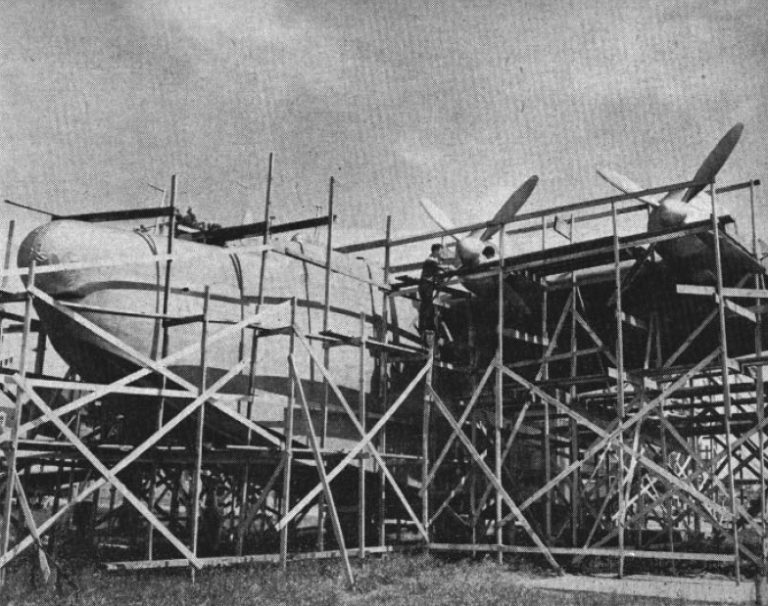
They got the hydrodynamics badly wrong. The prototype was completed on 31 December 1940 and flew in January 1941 — not, as is often written, in 1940 — and its behaviour on the water was frightening. The fine hull that gave such low air drag threw enormous sheets of spray into the propellers and porpoised violently on the step, to the point that the aircraft was barely controllable during take-off and landing. The fix was unglamorous and complete: the hull was made about 0.50 m (1 ft 8 in) deeper, the planing bottom was reshaped, and spray strips were added under the nose. Two further pre-production aircraft followed in December 1941, and the type was cleared for production. It is worth noticing how rare this was in wartime Japanese practice — a fundamental defect found, admitted and properly engineered out before the aeroplane reached a squadron.
What emerged was the best flying boat of the war by a clear margin, and the Navy never had enough of them. Production ran at six or seven a month at Kawanishi’s Konan and Naruo plants near Kobe, against thousands of Catalinas; 167 aircraft of all marks were completed. They flew reconnaissance, anti-shipping and night bombing from Rabaul, the Marshalls, the Kuriles, Singapore and the home islands, and after 1943 increasingly at night, because Allied fighter cover had made daylight patrol lethal even for an aeroplane this tough. They also carried the Navy’s senior officers: on 31 March 1944 two H8K2s flying Admiral Mineichi Koga and his chief of staff Vice Admiral Shigeru Fukudome from Palau to Davao ran into a typhoon. Koga’s aircraft was lost with all aboard, Fukudome’s ditched off Cebu, and the copy of the Combined Fleet’s "Z Plan" he carried passed through Filipino guerrillas into American hands — one of the most consequential aircraft accidents of the war.
- 13-Shi Experimental / H8K1 (1940–41, 5 aircraft)
- Prototype completed 31 December 1940, first flight January 1941, plus four development machines. Kasei 12 engines. Poor water handling led to the deeper hull, reshaped planing bottom and nose spray strips that defined every later aircraft.
- H8K1, Navy Type 2 Large Flying Boat Model 11 (1941–42, 12 built)
- First service mark. Four 1,530 hp Kasei 12, lighter gun fit, about 433 km/h. Flew Operation K in March 1942 and the earliest Pacific patrols. Some references count these as 14 or 16 by folding in development airframes.
- H8K1-L, Type 2 Transport Flying Boat (November 1943, 1 conversion)
- The surviving prototype rebuilt as a 41-passenger transport with dorsal turret and beam blisters removed and augmented exhausts fitted. A one-off, and the proof of concept for the Seikū.
- H8K2, Model 12 (1943–45, 112 built)
- The definitive aircraft and the baseline of the specification above. Kasei 22 with water-methanol injection, 467 km/h, greater fuel capacity, an improved tail turret and the full five-cannon battery. Late batches carried Type 3 Ku Mark 6 ASV radar; some had the beam blisters replaced by sliding hatches.
- H8K2-L Seikū ("Clear Sky"), Model 32 (1943–45, 36 built)
- Dedicated transport built at the Naruo plant. Dorsal turret, blisters and ventral hatch deleted, hull tanks removed to free volume, leaving one 20 mm in the bow and one 13 mm firing aft. Carried 29 staff passengers or up to 64 troops; range fell to about 2,200 km. This is the mark that flew the Navy’s senior officers around the shrinking empire.
- H8K3, Model 22 (1944, 2 built)
- Drag-reduction experiment: retractable wingtip floats, retractable dorsal turret, sliding hatch gun positions instead of blisters, and Fowler flaps. Works numbers 596 and 597. Faster, but too late and too complicated to matter.
- H8K4, Model 23 (1945, 2 conversions)
- The two H8K3s re-engined with 1,825 hp Kasei 25b. No production; by 1945 Japanese industry was building fighters for home defence and nothing else.
- H8K4-L Seikū, Model 33 (1945, project only)
- Transport version of the H8K4, abandoned when flying boat production was stopped in favour of interceptors.
- G9K Gunzan (project only, no aircraft built)
- Proposed land-based attack bomber derivative of the H8K airframe. It existed on paper; the "G9K" designation is a post-war retrospective convention rather than a wartime allocation.
Survivors: exactly one original H8K exists anywhere in the world, and there are no reproductions. It is H8K2 manufacture number 426, built at Kawanishi’s Konan plant at Kobe and completed in March 1943; it served with the 802nd Kōkūtai as N1-26, with the 801st on Saipan as 801-86 from April 1944, and finally with the Takuma Kōkūtai at Takuma seaplane base on Shikoku as T-31, where it surrendered in early September 1945. Japanese mechanics made it airworthy for the Americans and it was ferried to Yokohama; it reached Naval Air Station Norfolk, Virginia in 1946, though accounts differ on the route — one has it shipped aboard the escort carrier USS Anzio departing on 18 January 1946, another crated to Whidbey Island and thence through the Panama Canal. It was rebuilt at Norfolk without manuals, blueprints or spares by 23 May 1946, made a single American flight from Hampton Roads to NAS Patuxent River with Commander Thomas F. Connolly at the controls — losing two engines en route and a third after landing — underwent hydrodynamic testing, and then sat at Chambers Field for thirty-three years. Hurricane Donna tore it from its moorings in September 1960 and flipped it onto its starboard side, wrecking the number four engine. It was displayed at Gate 4 in the 1970s, then stored, and was scheduled for disposal in 1976. Congress approved its transfer to the Museum of Maritime Science in Tokyo on 23 April 1979 at the urging of the museum’s president, Ryoichi Sasakawa; it was craned onto a barge on 31 May and reached Japan on 13 July 1979, and after restoration was unveiled on 21 July 1980 as an outdoor exhibit on the Tokyo waterfront. In late January 2004 it moved again, to the JMSDF Kanoya Air Base Museum at Kanoya in Kagoshima Prefecture, where it is now displayed under cover in a sealed, air-conditioned environment, the first indoor home it has had since it left Takuma in 1945. Two H8K wrecks are also known: one in shallow water off the west coast of Saipan, confusingly nicknamed the "B-29" by local divers, and one in Chuuk Lagoon off the south-western end of Dublon Island.
The H8K Emily: from ocean patrol to museum survivor
Specification issued
The Imperial Japanese Navy issues a demanding requirement for a long-range flying boat to replace the Kawanishi H6K “Mavis”; Kawanishi begins design.
Prototype completed
The first prototype is finished at the end of the year, ahead of flight testing.
First flight
The H8K makes its maiden flight in January; early water-handling instability leads to a redesigned, deeper hull.
Operation K
On 4–5 March, two H8Ks attempt a submarine-refuelled second raid on Pearl Harbor; heavy cloud over Oahu foils the attack.
H8K2 enters service
The improved and definitive H8K2, with uprated Kasei engines and heavier armament, reaches units by December.
Seiku transport
The unarmed H8K2-L “Seiku” transport enters production; about 36 are built.
Production ends
Production stops with about 167 aircraft built in total; only a handful survive the war.
Survivor returns to Japan
The sole surviving airframe, captured and tested in the United States, is repatriated and unveiled at the Tokyo Maritime Museum.
Preserved at Kanoya
The survivor is moved to the JMSDF Kanoya Air Base Museum in Kagoshima Prefecture, where it remains on display.
The Emily up close: twelve stories
“The hardest to shoot down”
Allied aircrew rated the Emily the toughest Japanese aircraft to destroy.
Read the full story
Rounds that would not bring it down
A widely repeated account describes an Emily absorbing hundreds of rounds and flying on.
Read the full story
A record-setting failure
The March 1942 raid on Pearl Harbor covered enormous distances yet achieved nothing.
Read the full story
How Midway was quietly protected
Operation K drew American attention to French Frigate Shoals.
Read the full story
Faster than a Catalina, better armed than a Sunderland
Allied assessments placed the Emily ahead of contemporary flying boats.
Read the full story
A flying boat with fire suppression
Protection features rare on Japanese aircraft were built into the hull.
Read the full story
From bomber to airliner
The Seiku variant carried troops and cargo across the Pacific.
Read the full story
Tended like a ship
Emilys were based in harbours and supported by seaplane tenders.
Read the full story
Captured, tested, then a gate guard
The one surviving airframe went to the United States after the war.
Read the full story
The long road home
A 1970s effort returned the aircraft to Japan.
Read the full story
The porpoise problem
The prototype’s water instability nearly held it back.
Read the full story
A modest total, a lasting name
Only about 167 were built, but the Emily is well remembered.
Read the full story
The H8K Emily in pictures
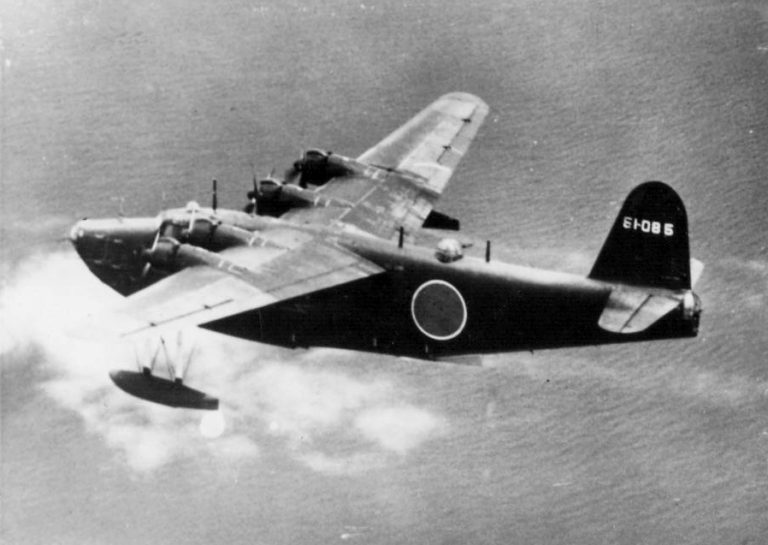
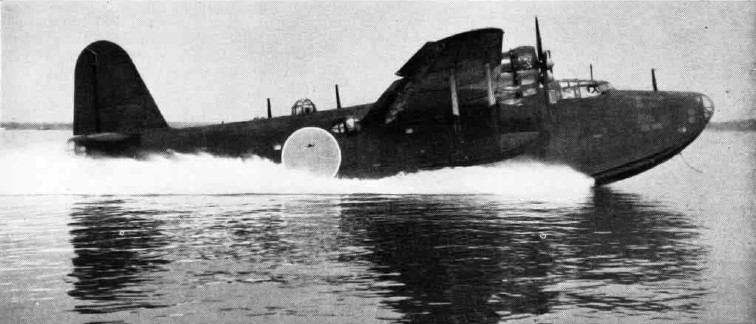
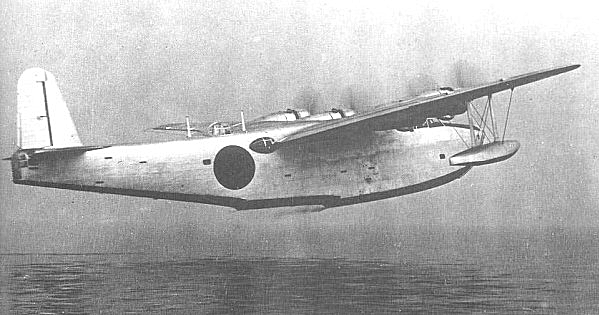
The H8K Emily in motion
A verified, high-authority video feature on the Kawanishi H8K is coming soon. In the meantime, explore the gallery above and the stories of the aircraft’s design, protection and long-range operations.
Where the H8K Emily flew
The record that defines the H8K Emily
The Emily’s record is written less in air-to-air kills than in reach, endurance and survivability. It flew long ocean patrols, scouted for fleets, hunted submarines and carried out bombing and torpedo strikes across the Pacific — and it earned an Allied reputation as the hardest Japanese aircraft to shoot down. Its most famous single operation, the submarine-refuelled Operation K raid on Pearl Harbor, achieved nothing militarily but demonstrated an extraordinary range.
Compare the combat record of every military aircraft. Figures as of 2026.
Everything people ask about the Kawanishi H8K Emily
Can I fly in an H8K?
Who built the H8K and what did it replace?
Why did Allied crews consider the Emily so hard to shoot down?
What was Operation K?
How fast was the H8K2 and how far could it fly?
How many were built, and are any left?
What was the H8K2-L “Seiku”?
You can’t fly the Emily.
These, you can.
Some legends only live in museums — others are fuelled and waiting. MiGFlug has put civilians in real military jet cockpits since 2004.
 Fly the L-39 AlbatrosThe world’s most-flown jet trainer — aerobatics included
 Fly the F-104 Starfighter“The missile with a man in it”
 Fly the MiG-21The Cold War’s most-produced jet
 Fly the T-33 Shooting StarAmerica’s first jet trainer
 Fly the DH VampireA piece of early jet history
 Fly the S.211Agile Italian jet trainer
 Fly the MB-326The classic Aermacchi jet
 Fly the MiG-15The Soviet legend of the Korean War
Continue the tour
Every fact, checked
- The National WWII Museum — The Second Pearl Harbor Attack, 1942Authoritative museum account of Operation K, the submarine-refuelled second raid.
- HistoryOfWar.org — Kawanishi H8K “Emily”Development history, protection features, per-variant production and H8K2 specifications.
- Military Factory — Kawanishi H8K (Emily)Full specification sheet, variant list and production totals.
- Pacific Wrecks — H8K2 Emily No. 426 (Tail T-31)Complete provenance of the sole survivor, from wartime service to Kanoya display.
- Pearl Harbor Historic Sites — Operation KNarrative of the raid and its link to French Frigate Shoals and Midway.
- Smithsonian National Air and Space Museum — H8K referenceInstitutional reference on the type and its preservation.
- WW2DB — H8K specificationCross-check reference for dimensions, weights and performance figures.
- We Are The Mighty — Operation KDistances, bomb impacts and the record-range framing of the raid.