
IAR 99 Șoim
Romania’s Own Jet
The first jet designed and built entirely in Romania, the IAR 99 has trained the country’s fighter pilots since 1988, from the MiG-21 Lancer era to the F-16, and is now being rearmed for the F-35 age.
The IAR 99: how Romania built a jet of its own
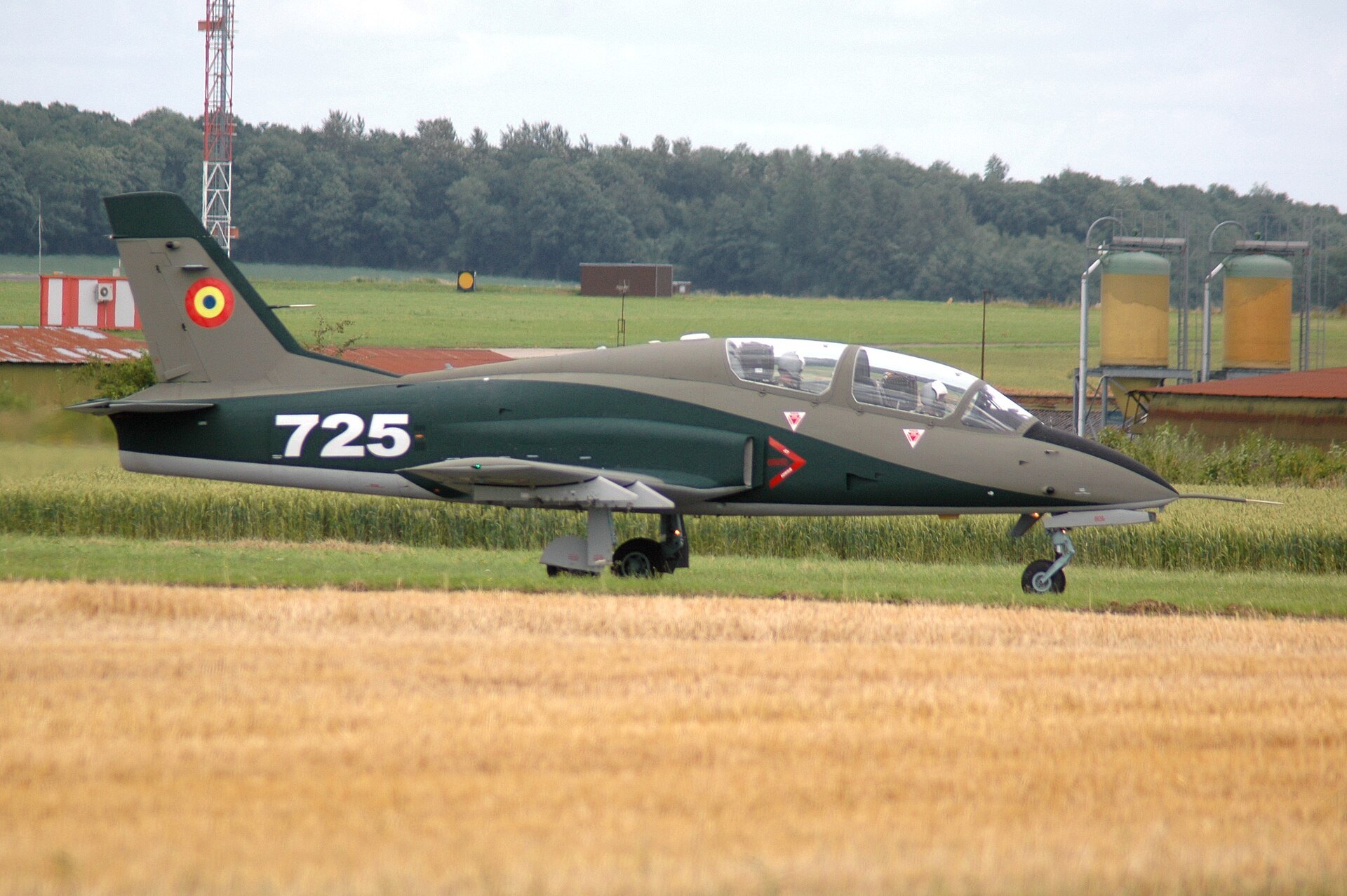
In the mid-1970s Romania was building a ground-attack jet, the IAR-93, with Yugoslavia, and it needed an advanced trainer to feed pilots into it. Design studies for a home-grown answer began in 1975 at the national aerospace institute INCREST in Bucharest, later renamed INCAS. Funding was approved in 1979, a Ministry of Defence design contract followed in 1981, and by 1983 the drawings were in the hands of industry, with Avioane Craiova as lead manufacturer. That same year the design was revealed at the Paris Air Show. It was a conventional, sensible layout: a low-wing, single-engined, tandem-seat jet with a stepped cockpit, a Rolls-Royce Viper turbojet built under licence in Romania, and a shape that invites comparison with the British Hawk.
The prototype flew at Craiova on 21 December 1985, with Lieutenant Colonel Ștefănel Vagner at the controls, and Romania could claim its first jet aircraft both designed and built at home. Series production began in 1987, and in 1988 the first four aircraft reached Boboc air base near Buzău, home of the air force flying school. By 1989 seventeen had been delivered, and the Șoim, the hawk, gradually replaced the Czechoslovak L-29 Delfín and L-39 Albatros in advanced training. The programme also paid a price. One prototype was lost in 1986 when both crew ejected, and in June 1990 Vagner himself was killed with Lieutenant Colonel Mihai Ionescu when the first prototype clipped the runway during inverted low-level flight.
After 1989 the IAR 99 became a showcase for upgrades. Craiova fitted Honeywell and Collins avionics and flew the result at Farnborough in 1990, then teamed with Israel’s IAI Lahav on the IAR-109 Swift, and finally chose Elbit Systems to create the IAR-99C Șoim, a lead-in trainer for the MiG-21 LanceR. In all only 28 were built, including prototypes, and no export order ever materialised. Yet the type has outlived the MiG-21 it was modernised to serve. Under a 2020 contract ten older aircraft are being rebuilt as the IAR-99 SM, with F-16-compatible avionics, so that the jet first flown in 1985 can prepare Romanian pilots for the F-16 and the F-35.
01The IAR 99’s search for a market: Swift, JPATS and Botswana
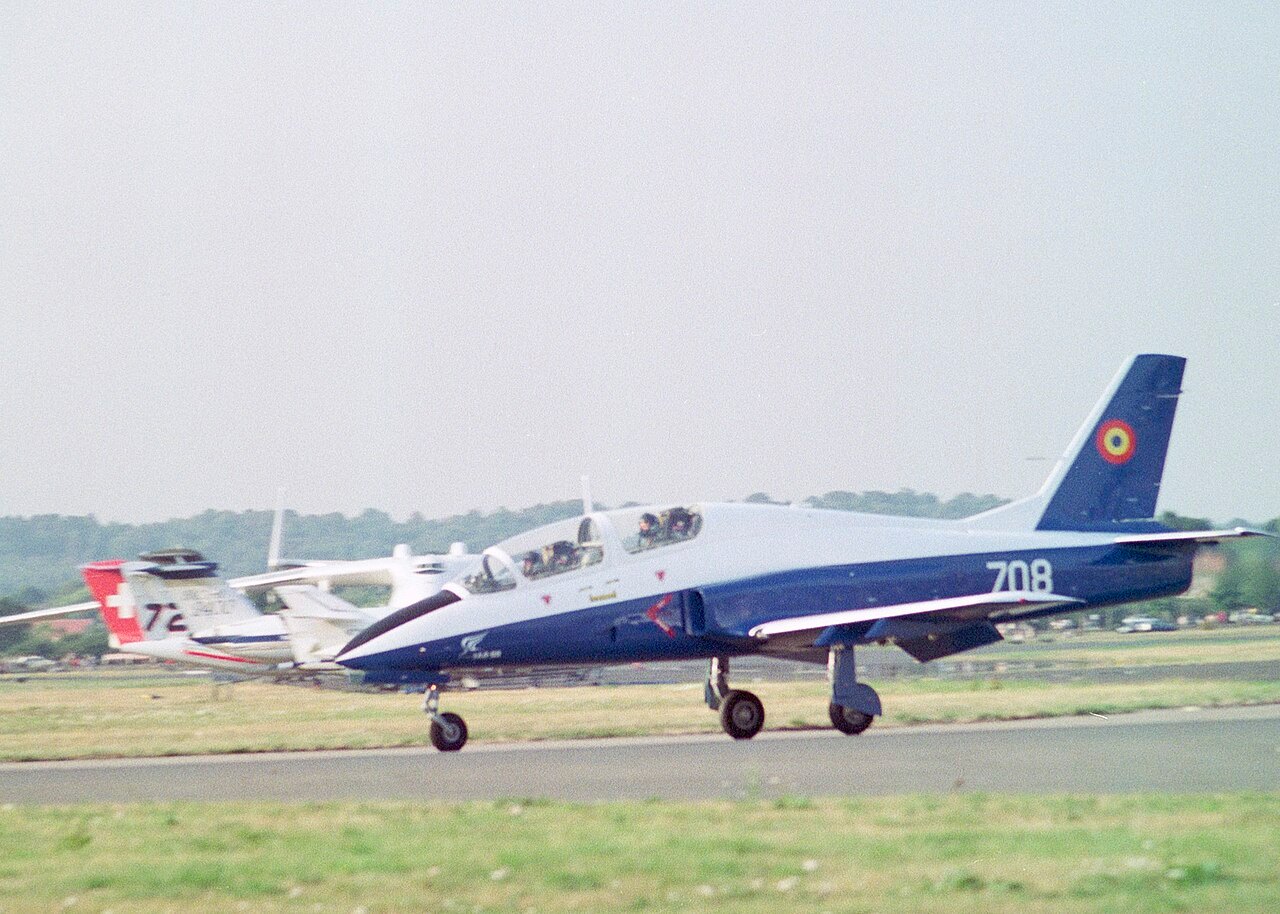
For a small industry that had just completed its first indigenous jet, exports were the obvious next goal, and the IAR 99 spent the 1990s being repackaged for foreign buyers. In 1990 aircraft 708 and 709 were fitted with Honeywell avionics and 712 with Collins equipment, and the type was shown at the Farnborough Airshow that year. Western avionics made it a candidate, at least on paper, for the American JPATS trainer competition.
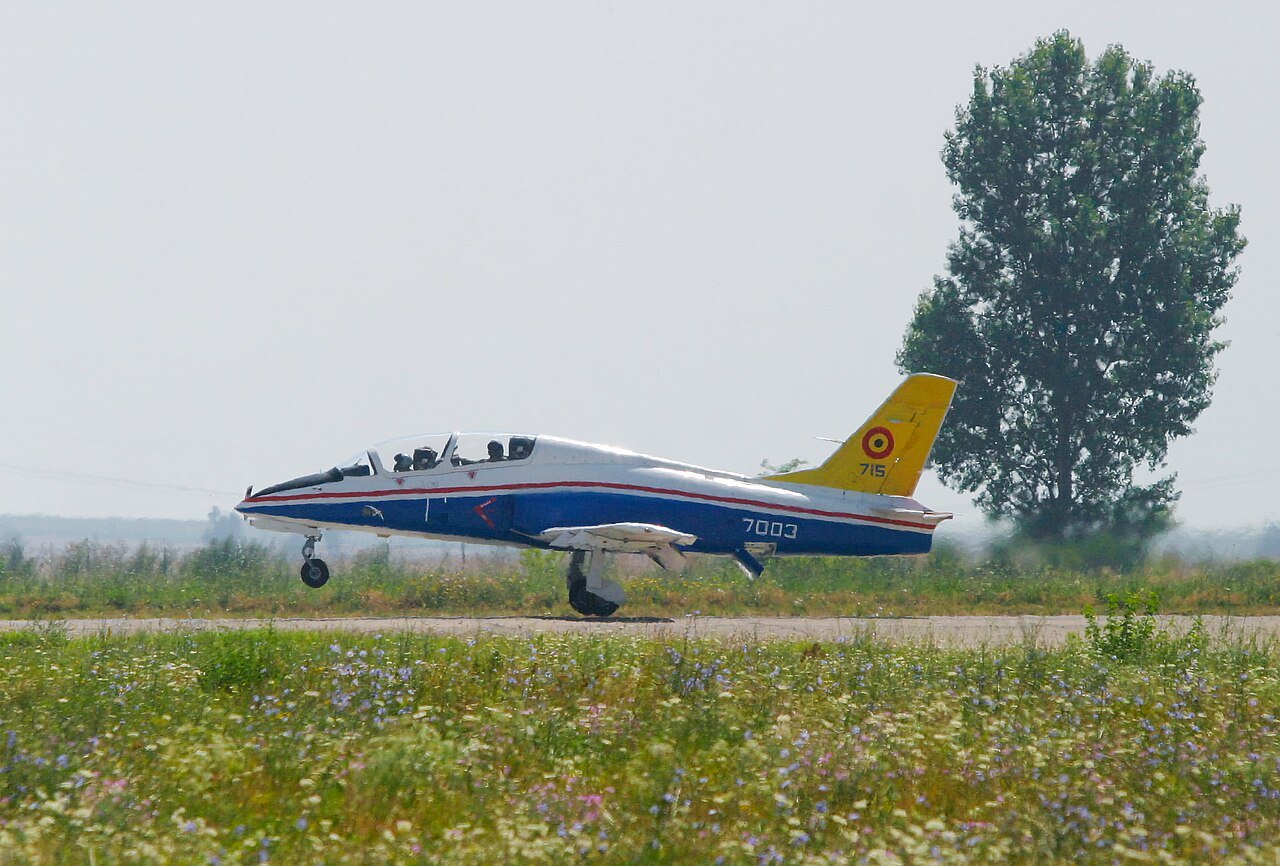
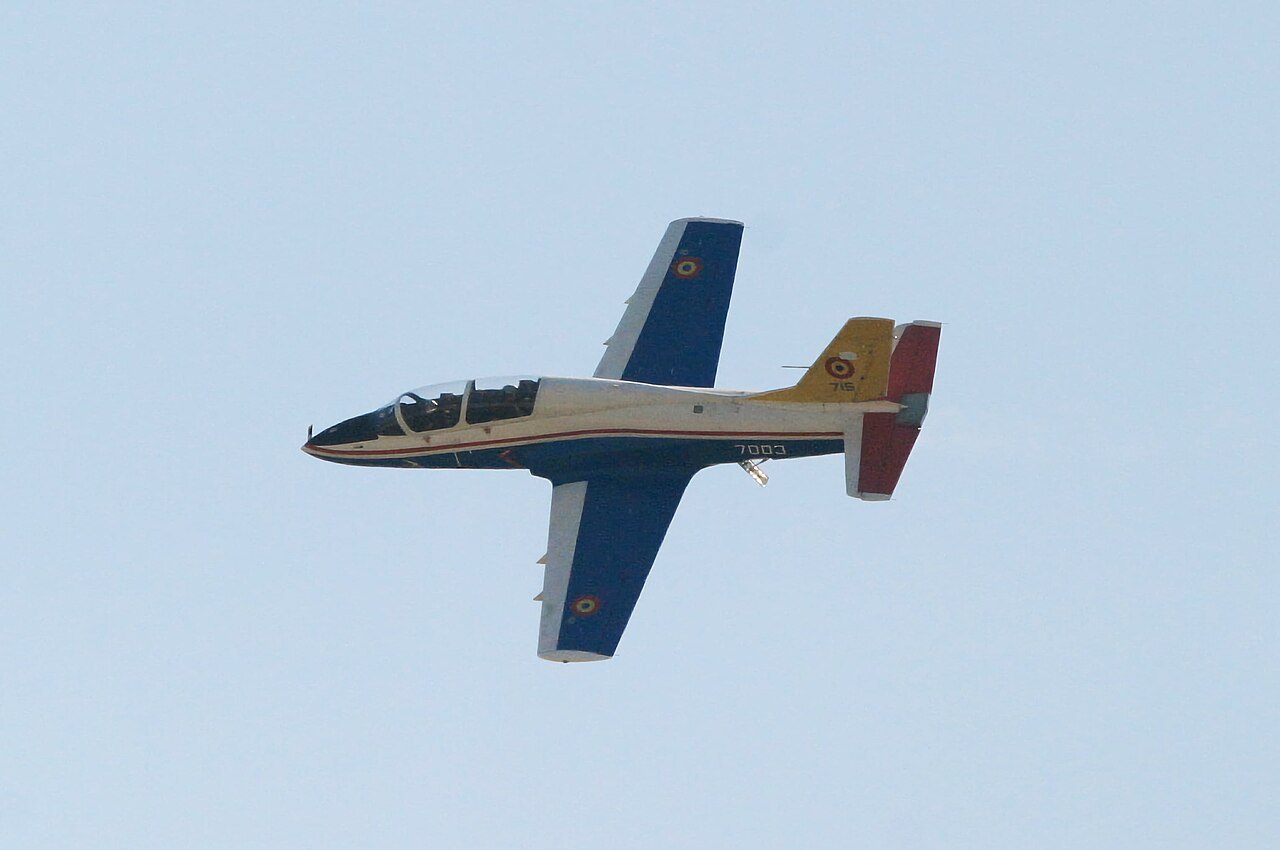
In 1992 Avioane Craiova teamed with IAI Lahav of Israel to produce the IAR-109 Swift. Aircraft 7003 received hands-on-throttle-and-stick controls, a wide-angle head-up display, two small multifunction displays and a ring-laser-gyro inertial navigation system. The Swift was displayed at the Paris Air Show in 1993 and flew at Asian Aerospace in 1994. A sale of ten to Botswana was proposed but blocked by that country’s parliament, and a package for Mauritania, linked to the IAR-93, was never finalised.
The Israeli link did pay off at home. Elbit, which was already modernising Romania’s MiG-21s into the LanceR, integrated similar avionics into aircraft 718, which flew on 22 May 1997. The government approved series production of the resulting IAR-99C Șoim in August 1998, initially for 24 aircraft, cut to 12 in December 2000. That modest batch, built between 2003 and 2008, gave the air force a trainer whose cockpit matched the fighter its students would go on to fly.
What makes the IAR 99 special
A Hawk-like layout
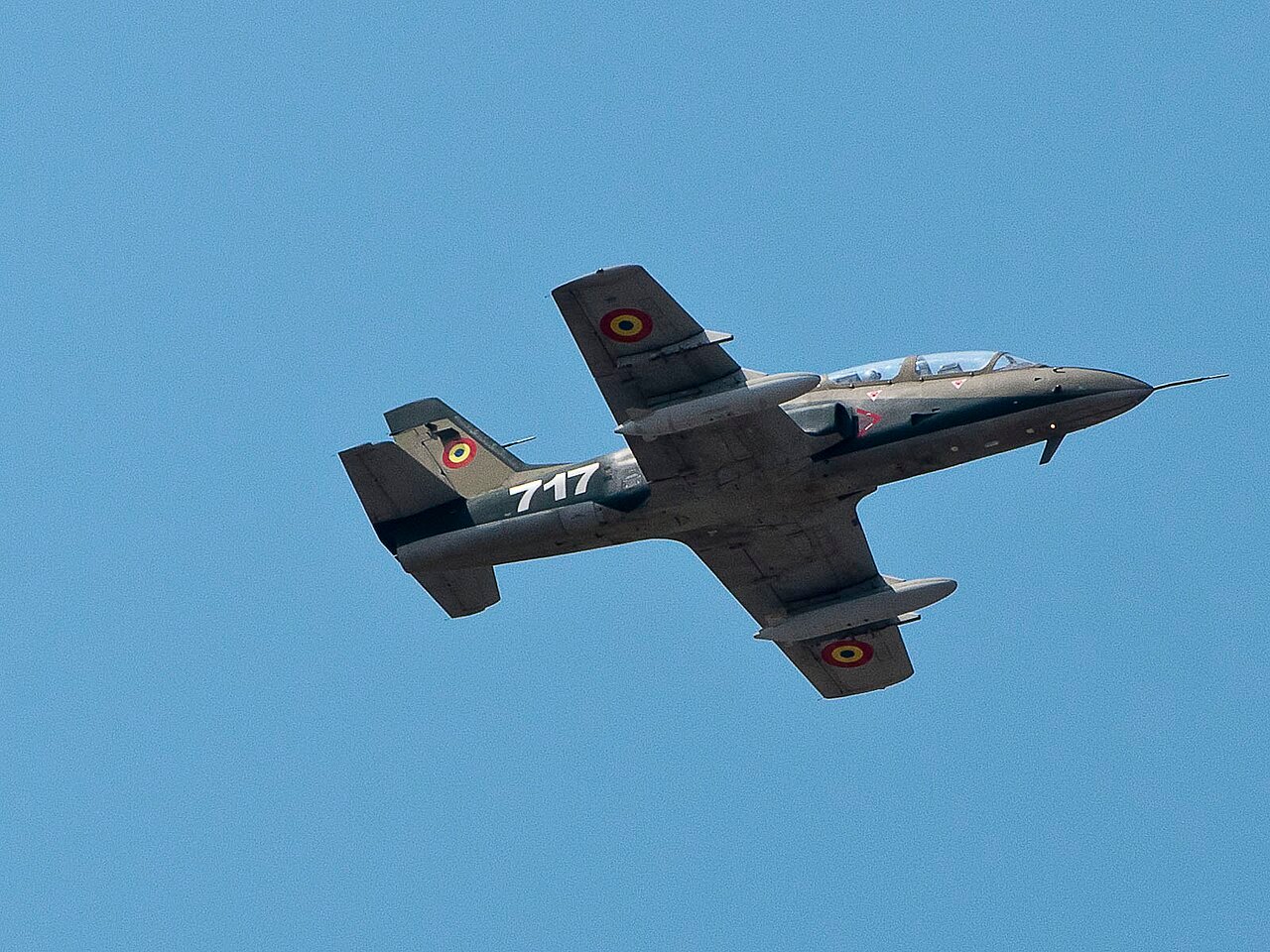
The IAR 99 follows the formula that made the BAe Hawk successful: a single turbojet buried in the fuselage, a low, moderately swept wing, and a stepped tandem cockpit with the instructor seated about 35 cm higher than the student. Both crew sit on Martin-Baker Mk 10 zero-zero ejection seats. The semi-monocoque airframe is all metal, and a distinctive blade aerial under the nose helps identify it. Cleared to +7 and −3.6 g, it is strong enough for the full advanced syllabus of aerobatics, formation and tactical flying.
A trainer that can fight
The Șoim was designed from the start as a light attack aircraft as well as a trainer. A 23 mm GSh-23L cannon can be carried in a pod on the centreline, and four underwing pylons plus the central station carry bombs, rockets and air-to-air missiles, including the R-60, the Python 3 and the R.550 Magic. Maximum take-off weight rises from 4,400 kg as a trainer to about 5,560 kg in the attack role. Romania has never used it in combat, but weapons training on the type prepared students for the MiG-21 LanceR’s similar systems.
Romanian industry in one airframe
The IAR 99 was a national effort. INCAS in Bucharest designed it, Avioane Craiova led manufacture in partnership with other Romanian firms, and the Viper engine was built under licence by Turbomecanica. Avioane Craiova, founded in 1972 to build the IAR-93, still assembles, overhauls and now modernises the type at its plant beside Craiova airport. For Romania, keeping that capability alive has been as important as the trainer itself, and the IAR-99 SM programme is as much an industrial project as a military one.
02The IAR 99’s variants: from Standard to SM
- IAR 99 Standard: the original production version, a lead-in trainer for the IAR-93 with Soviet-style instruments.
- IAR 99 with Western avionics (1990 to 1991): aircraft 708, 709 and 712 fitted with Honeywell or Collins equipment and shown at Farnborough.
- IAR-109 Swift: 1992 demonstrator with IAI Lahav, featuring HOTAS, a wide-angle HUD and inertial navigation; shown at Paris in 1993.
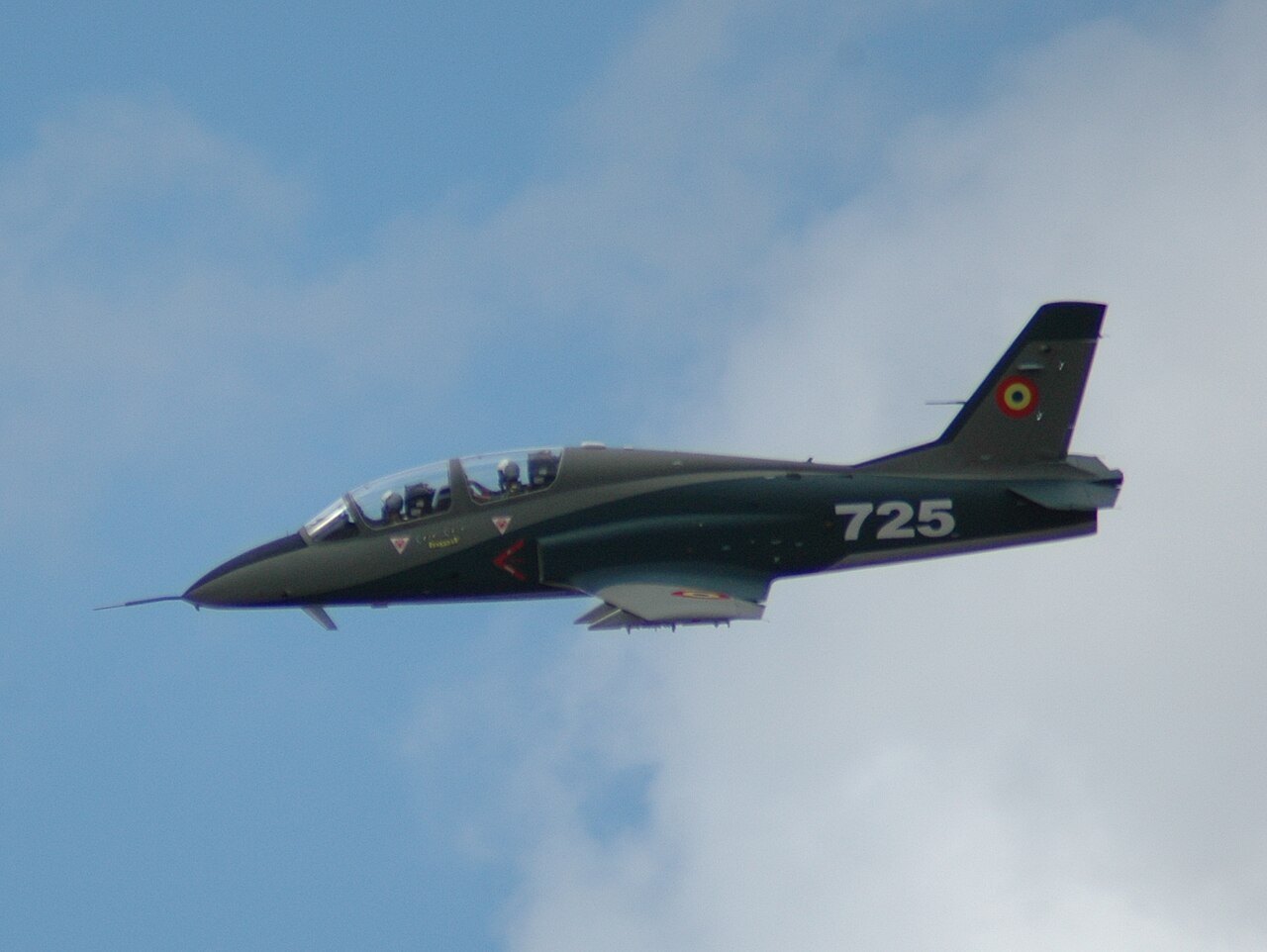
- IAR-99C Șoim: Elbit-avionics lead-in trainer for the MiG-21 LanceR, built or converted between 2003 and 2008.
- IAR-99 TD: technology demonstrator announced in 2015 on prototype 7003, planned with a Leonardo Vixen 500E radar and a new engine.
- IAR-99 SM (Standard Modernizat): ten Standard airframes upgraded by Avioane Craiova with Elbit avionics compatible with the F-16; first aircraft in testing from December 2023, with IRIS-T missile integration demonstrated.
IAR 99 Șoim specifications
Specifications
- Crew
- 2 (stepped tandem)
- Length
- 11.01 m (36 ft 1 in)
- Wingspan
- 9.85 m (32 ft 4 in)
- Height
- 3.90 m (12 ft 10 in)
- Wing area
- 18.71 m² (201.4 sq ft)
- Empty weight
- 3,200 kg (7,055 lb)
- Max take-off weight
- 4,400 kg (9,700 lb) trainer; 5,560 kg (12,260 lb) attack
- Powerplant
- 1 × Turbomecanica / Rolls-Royce Viper Mk 632-41M turbojet, 17.79 kN (4,000 lbf)
- Maximum speed
- 865 km/h (467 kt) clean at sea level; 810 km/h at 10,000 m is also quoted
- Range
- 1,100 km (590 nmi) on internal fuel
- Service ceiling
- 12,900 to 13,000 m (42,300 to 42,650 ft)
- Climb rate
- 35 m/s (6,900 ft/min) at sea level
- g limits
- +7 / −3.6
- Armament
- 23 mm GSh-23L gun pod; five hardpoints, about 1,000 kg of stores, including R-60, Python 3 and R.550 Magic missiles, bombs and rockets
Costs & production
- Cost per flight hour
- Our estimate: roughly US$2,000 to 4,000, based on the fuel burn of a 17.8 kN Viper turbojet and the operating costs of comparable Viper-powered trainers such as the MB-326 and the earlier jet trainers it replaced
- Production
- 28 aircraft including 3 prototypes, built between 1985 and 2008
- Programme
- IAR-99 SM upgrade of ten aircraft: 275 million lei excluding VAT (2020 contract); Elbit’s share reported at about US$27 million
- Earlier upgrade
- A US$43 million Elbit and Romanian industry contract for upgraded aircraft was reported in November 2004
03The IAR 99’s operating costs: a small fleet, a big industrial bet
No unit price for a new IAR 99 has been published, and with only 28 built and no exports there is no market price to point to. What is on record are the upgrade bills. In November 2004 Elbit and its Romanian partners were reported to have won a contract worth about US$43 million for upgraded Șoim aircraft. In December 2020 Elbit received a contract of roughly US$27 million for avionics on ten Standard airframes, within an overall IAR-99 SM programme quoted at 275 million lei excluding VAT.
Running costs are a matter of estimate. The single Viper turbojet is thirsty compared with a modern turbofan, and a fleet of around twenty aircraft carries the overheads of a dedicated production and support line. Our range of roughly US$2,000 to 4,000 per flight hour is based on comparable Viper-powered trainers and should be treated as an order of magnitude, not an official figure. The modernisation is expected to extend the airframes’ life by ten to fifteen years.
The IAR 99 from INCREST drawing board to F-35 lead-in
Studies begin
INCREST in Bucharest starts design work on an indigenous advanced trainer.
Design contract
The Ministry of Defence formally contracts the institute to design the aircraft.
Revealed in Paris
The design is shown at the Paris Air Show and documentation passes to industry.
First flight
Ștefănel Vagner flies the prototype at Craiova on 21 December.
Into service
The first four production aircraft arrive at Boboc; seventeen are delivered by 1989.
Test pilot killed
On 26 June the first prototype clips the runway in inverted flight, killing Vagner and Mihai Ionescu.
Swift at Paris
The IAI Lahav-equipped IAR-109 Swift is displayed at Le Bourget.
Elbit cockpit flies
Aircraft 718 flies on 22 May with Elbit avionics matching the MiG-21 LanceR.
Șoim approved
Series production of the IAR-99C is approved in August; the order is later cut to 12.
Student lost
On 23 August a Standard crashes after take-off; the student is killed and the instructor ejects.
SM contract
Ten Standard aircraft are ordered upgraded to IAR-99 SM with F-16-compatible avionics.
First SM in test
The first modernised aircraft begins testing in December after delays caused by COVID-19 and the war in Ukraine.
Stories & eyewitnesses: the IAR 99 and its crews
A trainer for a fighter that needed one
The IAR 99 was born to feed pilots into the IAR-93.
Read the full story
Romania’s first all-Romanian jet
On 21 December 1985 the prototype took off from Craiova.
Read the full story
The loss of the test pilot
In 1990 the man who first flew the IAR 99 died in it.
Read the full story
Taking over at Boboc
From 1988 the Șoim replaced Czechoslovak jets at Romania’s flying school.
Read the full story
The Swift that never flew away
An Israeli-equipped version reached Paris but not Botswana.
Read the full story
Lead-in to the LanceR
Elbit turned the IAR 99 into a mirror of Romania’s upgraded MiG-21.
Read the full story
Bird strike, 2004
A Șoim crew survived a forced landing after an engine ingested a bird.
Read the full story
Tragedy after take-off, 2012
A student pilot was killed when a Standard crashed.
Read the full story
Rebuilt for the F-16 and F-35
The IAR-99 SM keeps the 1985 design relevant.
Read the full story
An IRIS-T under the wing
Romania showed the SM armed with a modern European missile.
Read the full story
The IAR 99 in pictures
Where the IAR 99 flies and flew
The IAR 99’s record
The IAR 99 has never fired in anger. Its record is in training: more than three decades as Romania’s advanced jet trainer at Boboc, preparing pilots for the MiG-21 LanceR and the F-16, with a modest fleet that has never been exported.
See how training and combat types compare in the military aircraft statistics database. Figures are approximate.
Everything people ask about the IAR 99
Can I fly in an IAR 99 Șoim?
What does Șoim mean?
Who designed the IAR 99?
Is the IAR 99 a copy of the BAe Hawk?
How many IAR 99s were built?
What engine powers the IAR 99?
Is the IAR 99 still in service?
You can’t fly the IAR 99.
These, you can.
Most of this museum you can only look at. These genuine military jets you can fly yourself with MiGFlug — with aerobatics and time on the controls.
 Fly the L-39 AlbatrosThe world’s most-flown jet trainer — aerobatics included
 Fly the F-104 Starfighter“The missile with a man in it”
 Fly the MiG-21The Cold War’s most-produced jet
 Fly the T-33 Shooting StarAmerica’s first jet trainer
 Fly the DH VampireA piece of early jet history
 Fly the S.211Agile Italian jet trainer
 Fly the MB-326The classic Aermacchi jet
 Fly the MiG-15The Soviet legend of the Korean War
Continue the tour
Every fact, checked
- INCAS: IAR 99 programmeDesigner; contract, documentation and first-flight dates
- Avioane Craiova: About usManufacturer; company history, IAR-93 and IAR 99
- AGIR: First modernised IAR-99 SM enters service at BobocOrigins, first deliveries 1988, SM cost
- Geopolitic.ro: IAR 99, a milestone for future military training aircraftFirst flight, production of 28, TD demonstrator
- Profit.ro: Romania tests IAR-99SM armed with IRIS-TSM contract, delays, IRIS-T integration
- GlobalSecurity: IAR-99 SOIMSpecifications, armament, 2004 Elbit contract