
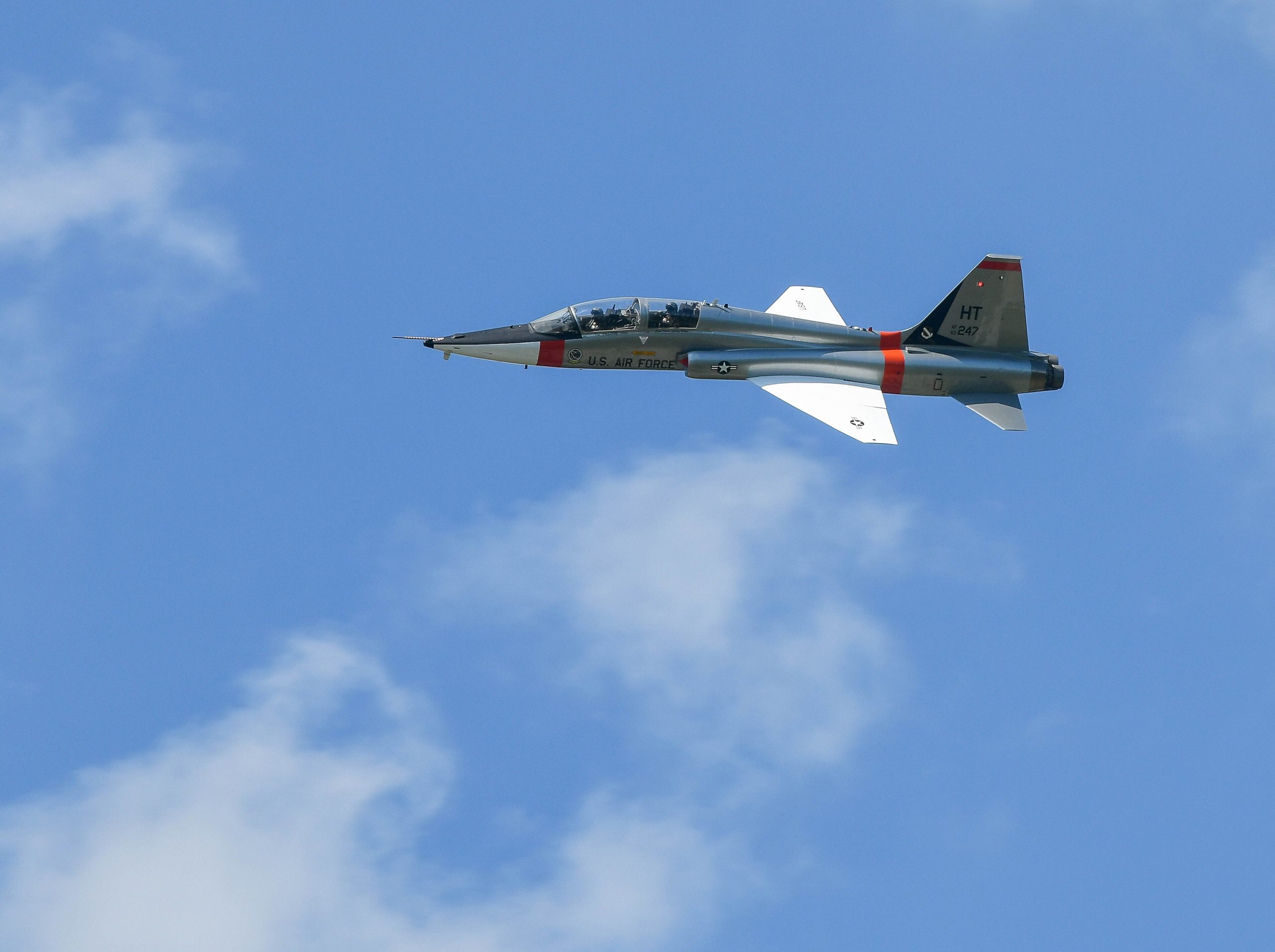
Northrop T-38
“Talon”
The world’s first supersonic trainer — a sleek, twin-engine jet that has taught American fighter and astronaut pilots to fly fast for more than sixty years, and still wears NASA’s white paint today.
The jet that taught the West to go supersonic
By the mid-1950s the fighters entering service — the F-100, F-104 and their kin — could all fly faster than sound. The trainers feeding pilots into them could not. Student aviators were making the leap from subsonic jets straight into supersonic front-line aircraft, and the accident reports showed it. What the U.S. Air Force needed was a trainer that flew like the fighters it fed.
Northrop’s answer grew out of a private venture. Designer Edgar Schmued and his team had drawn up a lightweight fighter, the N-156, built around two compact General Electric J85 turbojets. From that same airframe family Northrop developed a two-seat trainer, the T-38 Talon, with a slim, area-ruled “coke-bottle” fuselage, a razor-thin wing and tandem cockpits. It first flew on 10 April 1959 and entered Air Training Command service in March 1961 — the world’s first supersonic trainer.
The Talon was fast, honest and cheap to run, and it stuck. Between 1959 and 1972 Northrop built 1,187 of them, and the type became the backbone of USAF advanced pilot training for generations. It also went to work far beyond the training pattern: NASA adopted a fleet of white Talons to keep astronauts current and to chase spacecraft, the USAF Thunderbirds flew it through the fuel-conscious late 1970s, and allied air forces sent their pilots to fly it. More than six decades on, upgraded T-38C and T-38M Talons are still flying — now finally on track to be replaced by the Boeing T-7A Red Hawk.
01The Northrop T-38 Talon’s origins: how a lightweight fighter became the world’s first supersonic trainer
The Talon shares its DNA with the F-5 Freedom Fighter. Both descend from Northrop’s N-156 project of the mid-1950s, a deliberately small, simple design built around a pair of General Electric J85 engines. The single-seat version became the F-5; the two-seat, unarmed version became the T-38.
That fighter heritage is the whole point. Because the Talon accelerates, climbs and handles much like the supersonic jets students would graduate to, it closed the dangerous gap between subsonic trainers and Mach-2 front-line aircraft. The area-ruled fuselage — pinched at the waist to cut transonic drag — let a modestly powered aircraft slip past the speed of sound cleanly. The formula worked so well that the basic design has never really needed replacing, only re-winging and re-wiring.
What makes it special
Twin J85s and an area-ruled body
Two General Electric J85-GE-5 afterburning turbojets — each about 3,850 lbf (17 kN) in reheat — give the light Talon a superb thrust-to-weight ratio. Paired with the area-ruled, wasp-waisted fuselage and a thin, short-span wing, they let it reach Mach 1.3 and climb at over 33,000 ft per minute, on a fraction of a fighter’s fuel.
Built to fly like a fighter
Tandem cockpits, a fighter’s control response and genuine supersonic performance mean students learn on an aircraft that behaves like the jets they will graduate to. That is exactly why it endured: the T-38 bridged the gap between subsonic trainers and Mach-2 front-line fighters, and stayed the standard advanced trainer for over sixty years.
NASA’s white rocket
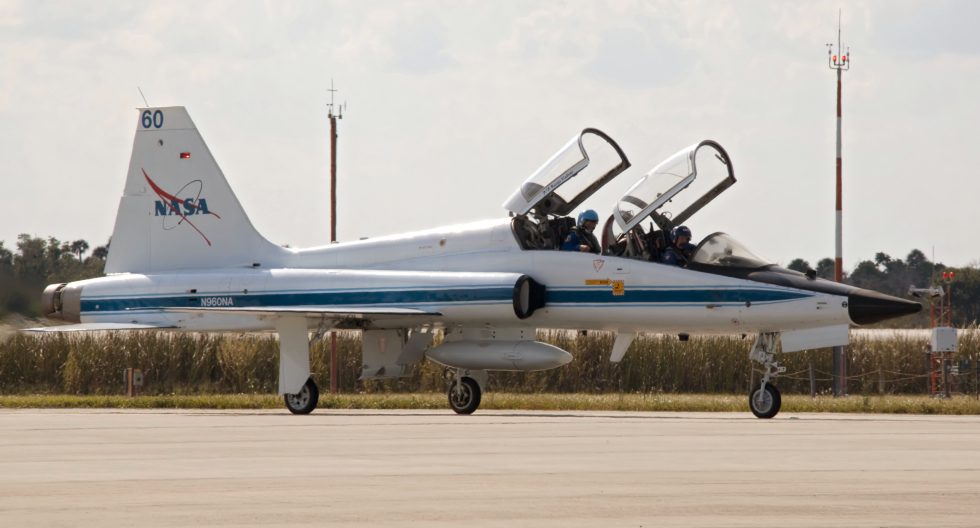
Since the 1960s NASA has flown a fleet of white T-38s to keep astronauts flight-current, ferry crews and act as chase planes. Their sharp handling makes them ideal for staying sharp between spaceflights — the Talon has carried nearly every American astronaut generation from Gemini to the Space Shuttle and beyond.
02The T-38 Talon’s engines: why two small J85s were the right choice
The General Electric J85 is a tiny engine — barely a metre long — but with afterburner it produces roughly 3,850 lbf of thrust for very little weight. Two of them give the sub-13-tonne Talon a thrust-to-weight ratio close to a contemporary fighter, which is why it can go supersonic and climb so hard while burning far less fuel than the jets it trains pilots for. The same J85 powers the Talon’s single-seat cousin, the F-5, and remained in production for decades — cheap, rugged and easy to maintain, exactly what a training fleet needs.
03The T-38 Talon’s long career: upgrades, ageing airframes and the T-7A replacement
Keeping a 1960s design safe into the 2020s has meant constant modernisation. The T-38C Pacer Classic and avionics upgrades added a glass cockpit, HUD and modern navigation; Turkey’s T-38M programme re-winged and re-avioniced its fleet. Even so, the airframes are old, and a run of accidents drove structural and ejection-seat improvements. The U.S. Air Force has selected the Boeing T-7A Red Hawk as the Talon’s successor; until enough arrive, upgraded T-38s keep flying, making the type one of the longest-serving aircraft in U.S. service.
Full specifications
Baseline note: the figures below describe the Northrop T-38C as Air Education and Training Command flies it today — a T-38A airframe of the 1960s rebuilt around the 2001 Avionics Upgrade Programme cockpit, the Propulsion Modernisation Programme engine changes and, on roughly a third of the fleet, the Pacer Classic III structural package. Deltas for the original T-38A of 1961 and for the weapons-capable AT-38B are given in grey. Two cautions before the numbers. First, the aeroplane the published tables describe has not really existed since the mid-2000s: every airworthy Talon is a modified aircraft, and squadron figures drift from the manual. Second, the USAF fact sheet quotes 2,050 lbf dry and 2,900 lbf in afterburner for the J85-GE-5, and repeats the error at 2,200 and 3,300 lbf for the PMP engine; the engine data give 2,680 lbf and 3,850 lbf. The higher pair is used here, and the discrepancy is flagged where it falls.
Dimensions & weights
- Crew
- 2 — student in front, instructor behind, in tandem under a two-piece canopy. The rear seat sits high enough to see over the front, which is why an instructor can land the aeroplane from the back; it is still the worst forward view of any USAF trainer, and rear-seat landings are a discrete skill taught in their own right
- Length
- 14.14 m (46 ft 4.5 in), nose probe included
- Wingspan
- 7.70 m (25 ft 3 in) — narrower than a Spitfire by nearly four metres
- Height
- 3.92 m (12 ft 10.5 in)
- Wing area
- 15.79 m² (170 sq ft). Some sources round to 16 m²; the small difference matters because wing loading is quoted from it
- Aspect ratio
- 3.8 — a very short, very thin trapezoidal wing, mounted low and cut square at the tips
- Wing planform
- Straight-edged and square-tipped, meeting the fuselage without leading-edge root extensions — this is the reliable way to tell a Talon from an F-5B or F-5F, which carry root extensions and wingtip missile rails. The two aeroplanes share a family but not a wing
- Empty weight
- 3,266 kg (7,200 lb)
- Gross weight
- 5,361 kg (11,820 lb) in the normal training configuration
- Maximum take-off weight
- 5,485 kg (12,093 lb) is the USAF figure. German sources publish 5,670 kg (12,500 lb) for the same aircraft, which is a rounding convention rather than a different aeroplane
- Wing loading
- 339.5 kg/m² (69.5 lb/sq ft) at gross weight. High, and the source of everything good and bad about the type: it goes where it is pointed, and it must be flown fast on final
- Internal fuel
- ~2,180 L (~576 US gal, roughly 3,800 lb) carried entirely in fuselage cells. There is no fuel in the wing at all — the wing is too thin to hold any — and no provision for drop tanks on the T-38A or T-38C, which is why the type’s radius of action is so modest
- External stores
- None on T-38A and T-38C. The AT-38B added a single centreline pylon; NASA aircraft carry a slim centreline travel pod for crew baggage, which is the only external store most Talons have ever worn
Performance
- Maximum speed
- 1,382 km/h (746 kn, 858 mph) at altitude, Mach 1.3 — a limit set by intake and structural considerations rather than by thrust
- Maximum speed, sea level
- 1,307 km/h (812 mph, Mach 1.08) per the USAF fact sheet — the T-38 is genuinely supersonic on the deck in afterburner, which very few trainers of any era have been
- Rate of climb
- 171 m/s (33,600 ft/min) initial, clean and light
- Time to height
- Sea level to about 9,100 m (30,000 ft) in roughly one minute. In 1962 a T-38 took the absolute time-to-climb records to 3,000, 6,000, 9,000 and 12,000 m from the F-104 Starfighter. The F-4 Phantom took them back inside a month, which is a fair summary of where the Talon sat: astonishing for its size, outclassed by anything bigger
- Service ceiling
- 15,240 m (50,000 ft) is the figure in the type data; the USAF fact sheet says above 16,760 m (55,000 ft). Both are defensible depending on weight and whether a zoom is counted
- Range
- 1,835 km (991 nmi, 1,140 mi) on internal fuel, which with no external tanks is also the ferry range. A cross-country in a Talon is a sequence of short legs
- Thrust-to-weight ratio
- 0.65 at gross weight in full afterburner — better than most 1960s fighters and the reason students arrive at the F-16 or F-22 already used to accelerating vertically
- Roll rate
- Up to 720°/s — two full rolls a second. The stubby wing and powered ailerons give a rate that startles pilots coming off larger aircraft
- Final approach speed
- Typically 155–175 kn (287–324 km/h) depending on fuel state, computed upward from a base speed as fuel is added. This is the single most consequential number on the aeroplane: it is faster than many fighters approach, the wing has almost no low-speed forgiveness, and a slow, sinking Talon has very little margin to trade
- Take-off run
- As little as 700 m (2,300 ft) in afterburner at light weight
- Design load factor
- +7.33 g on the original wing, matched to a 4,000-flight-hour fatigue life. That life assumption was made for a 1960s training syllabus; the aggressive manoeuvring of later fighter lead-in work outran it, wingtips were reported separating in flight, and the fleet was rewinged with thickened skins
Propulsion & systems
- Engines
- 2 × General Electric J85-GE-5 afterburning turbojets (later -5A and -5R blocks). The prototypes flew on YJ85-GE-1 engines. The same engine family, in its -13 and -21 forms, powers the F-5A and F-5E
- Thrust, dry
- 11.9 kN (2,680 lbf) each
- Thrust, afterburning
- 17.1 kN (3,850 lbf) each. The USAF fact sheet’s 2,900 lbf is not reconcilable with the engine data and should be disregarded
- Engine weight
- Under 270 kg (600 lb) per engine — the whole design exists because General Electric’s Small Aircraft Engine Department showed Northrop, in 1953, a turbojet of about 180 kg installed weight making 2,500 lbf. Two of those made a supersonic aeroplane possible on a light airframe
- Propulsion Modernisation Programme
- Replaced major engine hot-section components for reliability and maintainability, with an inlet and fuel-injector modification to raise available take-off thrust. The low-altitude thrust problem was real: the small intakes choke in hot-and-high conditions, and departures from Holloman or Sheppard in summer were marginal before the fix
- Engine change time
- About one hour. The fin attaches to the keel between the engines rather than to the aft fuselage, the tail shell comes off on fasteners, and the accessory drives live on the airframe rather than the engine. Very few supersonic aircraft have ever been this easy to work on, and it is a large part of why the type has lasted
- Flight controls
- Fully hydraulically powered ailerons, rolling tailplane and rudder, on two independent systems, with no manual reversion. Lose both engines and both hydraulic systems and the aeroplane cannot be flown; there is nothing to revert to. Crews are taught accordingly
- Cockpit
- Two pressurised, air-conditioned cockpits with rocket-powered ejection seats. The original seats were not zero-zero, and low-level, low-speed ejection margin has been a recurring theme in the type’s accident record and in its upgrade programmes
- Avionics, T-38C
- Head-up display, GPS, inertial navigation, traffic collision avoidance system and multi-function displays, delivered from 2001 under the Avionics Upgrade Programme. The point was not capability but relevance: a student stepping to an F-22 or F-35 needed to have flown a HUD-and-symbology cockpit, not a 1961 instrument panel
- Structure, Pacer Classic III
- Replaces 185 primary structural items — longerons, bulkheads, formers, internal skins and structural floors — and inspects a further 155 for remaining life. About 9,700 work hours per aircraft, driven down from 600 days on the first two airframes to a 240-day target, at roughly 18 aircraft a year at Joint Base San Antonio-Randolph. Around 150 T-38Cs were planned through the line, to hold the fleet to 2029
- Armament provision
- None as built. The AT-38B added a gunsight and one centreline pylon; the T-38A and T-38C have neither
04The T-38 Talon’s operating costs: what an hour of supersonic training costs
The Talon was designed to be cheap, and by fast-jet standards it still is. Its 1961 flyaway price is usually given as around $756,000, and its two small J85 engines sip fuel next to a front-line fighter. Published cost-per-flight-hour figures nonetheless range widely — from roughly $5,000 to over $11,000 depending on the year, the variant and how each study counts maintenance on an ageing fleet; a figure around $8,000 per hour is often quoted. Treat any single number as an estimate: like most military operating costs, it is a moving target rather than a fixed price, and the rising cost of keeping 1960s airframes flying is a big part of why the T-7A is on the way.
Armament & payload
The Talon was built to carry nothing, and the one version that carried anything hung it all from a single centreline pylon
The T-38 is the rare supersonic aeroplane designed from the start to be unarmed. Northrop kept the weight down by leaving things out: no radar, no wing fuel, no hardpoints, no guns, only the navigation and communication kit a training sortie needs. That discipline is why a 3,266 kg airframe on two 600-pound engines could go supersonic at sea level, and it is why the fighter derivative — the N-156F, which became the F-5 Freedom Fighter — needed a different wing, a different nose and a fuselage stretch to carry weapons at all.
One variant broke the rule. From the 1970s the USAF converted a number of T-38As into AT-38Bs for Lead-In Fighter Training: a gunsight in the front cockpit and one centreline pylon, from which a practice-bomb dispenser, rocket pods or a gun pod could be hung. It was never a combat aircraft and nobody pretended otherwise; the object was to let a student who had never dropped anything learn range procedure, pattern discipline and weapons-delivery parameters in a cheap aeroplane before doing it in an expensive one. AT-38Bs wore lizard camouflage at Holloman and later at Sheppard, and the last of them left the fighter-fundamentals role in 2006. Fits varied between units and over time; the AT-38B configuration is documented far less precisely in open sources than any USAF combat type, and squadron photographs are the better evidence.
Gun and gunsight
- None fitted to the T-38A or T-38C. There is no internal gun, no gun bay and no provision for one — the space an F-5A gives to two 20 mm M39 cannon is, in the Talon, nose electronics and ballast
- AT-38B: an optical gunsight in the front cockpit only, so that gunnery and bombing parameters could be taught to the student while the instructor flew safety from the back
- AT-38B centreline gun pod, when carried — a podded 7.62 mm minigun installation of the SUU-11 family is the fit usually described. It was a training device for pattern and sight picture, not a weapon of any operational consequence
- By contrast the F-5A carried two 20 mm M39A2 revolver cannon in the nose and the F-5E kept them; that difference, more than any other, is what separates the fighter from the trainer
Air-to-air
- None, on any T-38 variant. The Talon has no wingtip launch rails — the square-cut tips that distinguish it from the F-5B exist precisely because there is nothing to hang there
- No radar, no radar warning receiver as built, and no missile interface. A T-38 in a dissimilar-air-combat set-up is scoring with a camera and a gunsight reticle, or with nothing at all
- The F-5A and F-5E carried AIM-9 Sidewinder on tip rails; the T-38 never has, in any air force
- USAF and USN adversary units have flown T-38s as small, fast, hard-to-see aggressors for decades, which works because of what the aeroplane looks like on a canopy, not because of what it carries
Air-to-surface
- No guided air-to-surface weapon has ever been cleared on the T-38, and no version has carried a targeting pod, laser designator or data link for one
- The AT-38B’s single centreline station could not have carried a guided store of the era in any case: one pylon, no power or coolant provision, no cockpit interface
- Northrop marketed armed T-38 derivatives to export customers without success; buyers who wanted a light attack aeroplane bought the F-5, which is what the F-5 was for
- This card exists to be answered plainly: the Talon does not do this mission and never did
Practice bombs and dispensers
- SUU-20 practice bomb and rocket dispenser on the AT-38B centreline — the standard USAF training store, holding six 11 kg (25 lb) BDU-33 practice bombs and four 2.75 in rockets
- BDU-33 dummy bombs replicate the ballistics of a low-drag general-purpose bomb and mark impact with a smoke charge. Almost every USAF fighter pilot of the 1980s and 1990s dropped their first ones from a Talon
- Live general-purpose bombs were not part of the AT-38B syllabus; the aeroplane could physically carry small stores on the pylon but was used with inert ordnance
- The T-38A and T-38C carry no dispenser of any kind
Rockets
- 2.75 in (70 mm) folding-fin aerial rockets from the SUU-20 dispenser, or from a podded launcher on the AT-38B centreline station
- Used for the same purpose as the practice bombs: teaching the sight picture, dive angle and release parameters of a strafing or rocket pass before the student meets a real weapons system
- No wing stations means no multiple rocket pods and no meaningful volume of fire — a single centreline station is a teaching aid, not an armament
- Withdrawn with the AT-38B from fighter-fundamentals work in 2006
Pods, pylons and what the Talon never carried
- One centreline pylon, AT-38B only. This is the entire external stores capability of the type across 1,189 airframes and 65 years
- NASA T-38s carry a slim centreline travel pod for crew baggage — the only external store most Talons have ever worn, and a genuinely necessary one for an aeroplane with no room for a flight bag
- Never carried: drop tanks, gun pods on the wing, reconnaissance pods, electronic countermeasures pods, chaff and flare dispensers as built, or an in-flight refuelling receptacle. The T-38 cannot be air-refuelled
- Camera and instrumentation fits appear on NT-38A test aircraft and on NASA chase aeroplanes, usually internally or on the nose, and vary aircraft by aircraft
Three typical loadouts
- ENJJPT advanced training sortie, T-38C
- Clean. No external stores of any kind, internal fuel only, two crew. A formation or instrument ride of roughly an hour and a quarter out of Sheppard AFB, flown by a student who may be German, Italian, Norwegian, Danish, Dutch, Belgian, Turkish or American, with an instructor from any of those air forces in the back.
- Lead-in fighter training range ride, AT-38B
- One SUU-20 dispenser on the centreline with six BDU-33 practice bombs and four 2.75 in rockets, gunsight in the front cockpit, tactical camouflage. A range pattern at Holloman: repeated 10-degree and 30-degree dive deliveries, strafe passes, and a scored debrief. Nothing live, everything counted.
- NASA astronaut proficiency or chase sortie, T-38N
- Centreline travel pod, internal fuel, one astronaut and one NASA instructor pilot, or a single-seat chase configuration with camera. In the Shuttle era this was the aeroplane crews flew to the Cape before a launch and the aeroplane that formated on the Shuttle Carrier Aircraft; it remains NASA’s tool for keeping non-pilot astronauts current in a high-workload, high-consequence cockpit.
Sourcing caveat: the T-38A and T-38C are unarmed and this is not in dispute. The AT-38B fit is another matter — open sources agree it carried a gunsight and a centreline pylon able to take a gun pod, rockets or bombs, but the precise stores cleared, the number of aircraft converted and the variation between Holloman and Sheppard practice are poorly documented. Where a specific store is named above it is the standard USAF training item of the period, not a citation from a stores clearance document.
Variants
One airframe, two careers: the T-38 that trained everybody and the F-5 that fought for everybody else
The Talon’s variant history is unusually simple in one respect and unusually tangled in another. Simple, because only one production model was ever built: 1,139 T-38As, off one line, between 1961 and January 1972. Tangled, because almost every T-38 flying today is a converted aircraft, and the conversions overlap — a 1964 T-38A may have become an AT-38B in 1978, a T-38C in 2003 and a Pacer Classic III airframe in 2015, keeping its serial throughout.
The other half of the story is the N-156 fighter. Northrop pursued the trainer and the fighter as one family from 1955: the N-156T won the USAF supersonic trainer requirement, and the N-156F, built as a private venture, became the F-5 Freedom Fighter and then the far more capable F-5E Tiger II. They share the J85 engine and a design philosophy, not a wing or a fuselage. The trainer is the one that outlived everything, including three generations of the fighters it fed.
- N-156T (1959, 2 prototypes)
- Company designation for the two-seat trainer. First flight 10 April 1959 with Lew Nelson, on YJ85-GE-1 engines. Sold to the USAF partly on a lifecycle-cost argument against a two-seat F-100 that could not recover from a spin.
- YT-38 and YT-38A (1959–61, 6 aircraft)
- Three prototypes ordered in June 1956 plus pre-production aircraft; those re-engined with the definitive J85-GE-5 became YT-38A. Production totals are usually given as 1,187 T-38s plus two N-156Ts, or 1,189 in all; the two conventions are the source of every discrepancy you will see.
- T-38A (1961–72, 1,139 built)
- The only production model. Entered service 17 March 1961 alongside the T-37 Tweet. Unarmed, no radar, no external stores. Around 50,000 military pilots have trained on the type.
- AT-38B (1970s–2006, conversions)
- Gunsight and a centreline pylon for Lead-In Fighter Training, flown in tactical camouflage at Holloman AFB and, from January 1994, at Sheppard for ENJJPT fighter fundamentals; withdrawn from that role in 2006.
- T-38C (from 2001, most of the surviving fleet)
- The Avionics Upgrade Programme conversion: HUD, GPS, inertial navigation, TCAS and multi-function displays, with the Propulsion Modernisation Programme engine work and an inlet and injector change for take-off thrust. Most surviving T-38As and AT-38Bs went through it.
- T-38N (1990s, about 32 NASA aircraft)
- NASA’s Avionics Upgrade Program conversions, modernising communications and navigation for a fleet based mainly at Ellington Field, Houston. NASA spends roughly 25 to 30 million dollars a year flying and maintaining them.
- T-38M (Turkey, 2010s, up to 68 aircraft)
- Turkish Aerospace Industries rebuild of Turkish Air Force T-38As with a full glass cockpit and modern avionics. Turkey intends the indigenous TAI Hürjet to replace them. The number actually modernised is reported variously; 68 is the figure usually quoted for the fleet, and it may exceed the number converted.
- NT-38A, QT-38A, DT-38A, GT-38A (small numbers, various dates)
- Permanent test conversions; target drones; US Navy drone directors; and permanently grounded airframes turned into ground procedural trainers. Together a handful of aircraft, but they explain why fleet totals rarely reconcile.
- N-156F, F-5A and F-5B Freedom Fighter (from 1959, several hundred plus licence production)
- The fighter half of the family. First flight 30 July 1959, supersonic on that flight. Two 20 mm M39 cannon, wingtip Sidewinder rails, leading-edge root extensions and underwing pylons; selected for the US Military Assistance Program and licence-built by Canadair as the CF-5 and by CASA in Spain.
- F-5E and F-5F Tiger II (1972–87, roughly 1,400 built)
- The definitive fighter: J85-GE-21 engines at 5,000 lbf in afterburner, more fuel, greater wing area, enlarged root extensions and radar. Still flown as an aggressor by the US Navy and by a dozen air forces — the same engine core as the Talon, in an aeroplane that fights.
Closing caveat: the 1,187-versus-1,189 discrepancy is a counting convention, not a factual dispute — the two N-156T prototypes are included in one figure and not the other. Conversion totals are harder: the USAF does not publish how many T-38As became AT-38Bs, or how many of each went on to T-38C standard, and open figures for T-38Cs delivered are estimates. Loss figures are firmer: more than 210 airframes have been lost or abandoned by ejection over the type’s life, with 149 USAF fatalities since 1960. Between 1961 and 2005 the fleet flew 25 million hours for 150 losses and 45 deaths — a rate that was genuinely good for a supersonic trainer, and which the last two decades have made harder to sustain.
Operators today
Sixty-five years on, the Talon is still the aeroplane that turns American pilots into fighter pilots
Almost every T-38 ever built went to one customer, and that customer still has most of them. The USAF fleet is the whole story; everything else is a rounding error by comparison, and two of the four other entries below are American too. The type is not merely surviving in service — it is the sole advanced jet trainer of the world’s largest air force, and will remain so until the T-7A Red Hawk arrives in numbers, a date that has moved from 2020 to 2024 to 2027 and, for full replacement, to 2034.
One entry needs explaining before it is read. The German Air Force bought 46 T-38As in the late 1960s and they have flown at Sheppard AFB ever since, in USAF markings and USAF serials, as part of Euro-NATO Joint Jet Pilot Training. They are German-funded aircraft inside an American training system, and different sources count them inside or outside the USAF total. They are shown separately here, with that warning attached.
These are estimates. Many airframes counted on paper are stored, in deep overhaul, or not operational — T-38 availability was measured at 60 per cent in 2015 against a 75 per cent goal, so a fleet of 485 does not mean 485 flyable aeroplanes. USAF and USN figures are as of December 2024; the German figure is a January 2017 count of aircraft upgraded to T-38C standard and is very likely double-counted inside the USAF total by some sources; the Turkish figure is the fleet size usually quoted rather than a confirmed count of T-38Ms delivered. Sources: IISS The Military Balance and FlightGlobal World Air Forces; entries that could not be corroborated are omitted. Former operators — Portugal, which flew 12 from 1977 to 1993; South Korea, which leased 30 from April 1999 and returned them by 2009 once the T-50 Golden Eagle was in production; and Taiwan, whose aircraft went back to the United States in 1998 — are excluded.
From Century Series to the Space Shuttle
The N-156 concept
Northrop begins a lightweight, twin-J85 design that will branch into the F-5 fighter and the T-38 trainer.
First flight
Test pilot Lewis Nelson lifts the prototype Talon off at Edwards AFB on 10 April — the first supersonic trainer takes to the air.
Enters service
The T-38A joins USAF Air Training Command; Jacqueline Cochran sets a string of women’s world records in a Talon the same year.
NASA takes the Talon
NASA begins operating white T-38s for astronaut proficiency and chase duties — a role it still fills today.
Production ends
The 1,187th and last Talon rolls out of Northrop’s Hawthorne plant after thirteen years of production.
Thunderbirds era
After the 1973 oil crisis the USAF Thunderbirds fly the economical T-38 for eight display seasons.
Rebuilt for the 21st century
Pacer Classic and T-38C avionics upgrades give the fleet glass cockpits and fresh structure to fly on for decades more.
Enter the Red Hawk
The USAF picks the Boeing T-7A Red Hawk to succeed the Talon; upgraded T-38s keep training pilots until it arrives in force.
From the flight line: twelve Talon stories
One airframe, two aircraft
The T-38 and the F-5 Freedom Fighter are twins from Northrop’s N-156 project.
Read the full story
Ten April at Edwards
Test pilot Lewis Nelson took the prototype supersonic on an early flight.
Read the full story
Jackie Cochran’s Talon records
The legendary aviator set a batch of women’s world records in a T-38 in 1961.
Read the full story
The white Talons
NASA’s fleet of white T-38s has kept astronauts current since the Gemini era.
Read the full story
The See and Bassett crash
A NASA T-38 accident cost the lives of two Gemini astronauts.
Read the full story
Thunderbirds go economical
The USAF display team flew the fuel-sipping Talon for eight seasons.
Read the full story
The AT-38B
An armed Talon taught new fighter pilots to shoot and bomb before their front-line jets.
Read the full story
Sheppard and ENJJPT
Allied air forces send their fast-jet students to fly the Talon in Texas.
Read the full story
Turkey’s T-38M
Turkey rebuilt its Talons into modern T-38M jets that still fly today.
Read the full story
Pacer Classic
A structural rebuild programme bought the fleet decades of extra service.
Read the full story
The pilots it made
Most American fighter and astronaut pilots of the jet age trained on the Talon.
Read the full story
Enter the Red Hawk
The Boeing T-7A will finally take the Talon’s place.
Read the full story
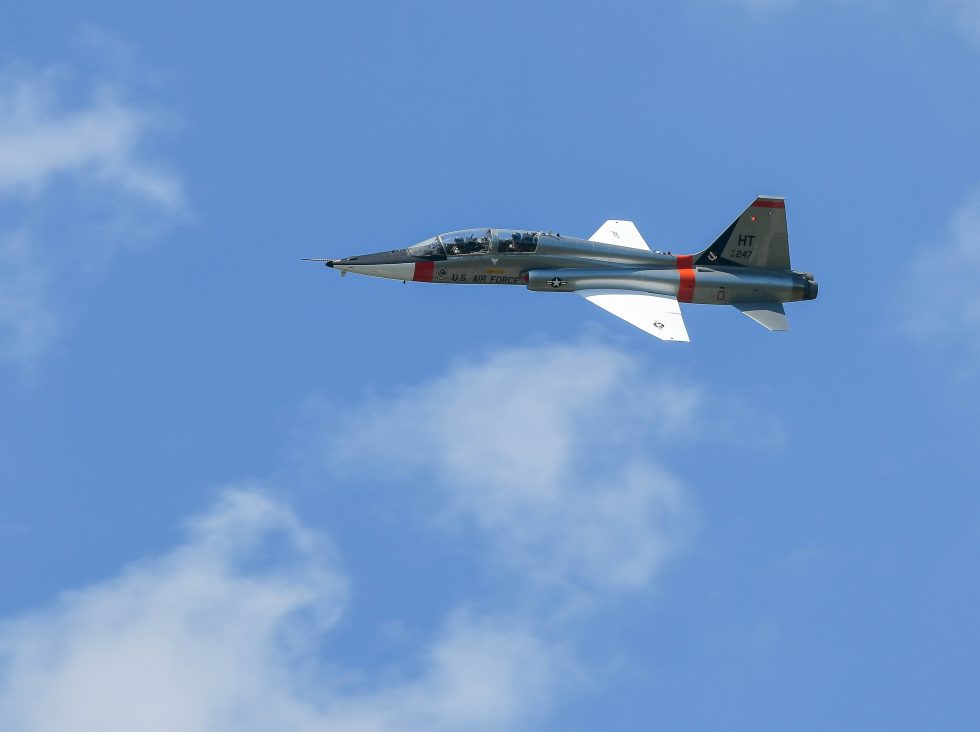
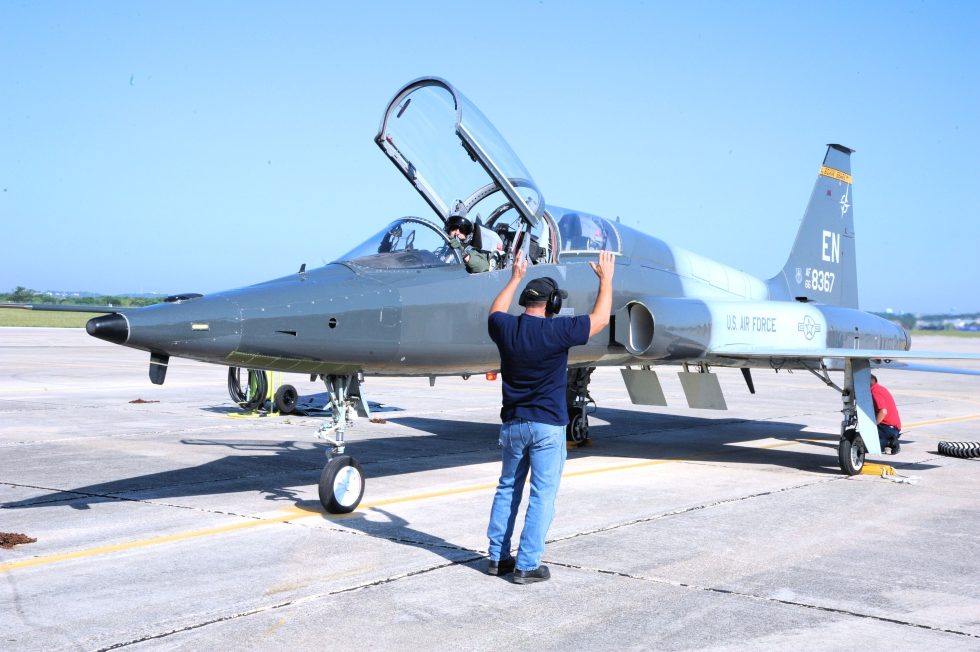
The Talon in pictures
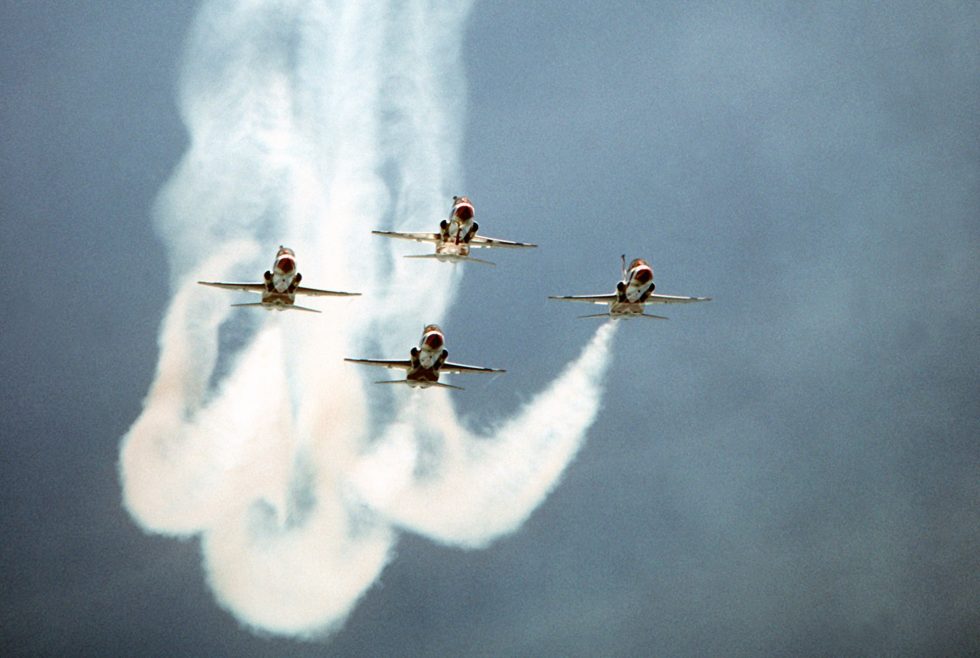
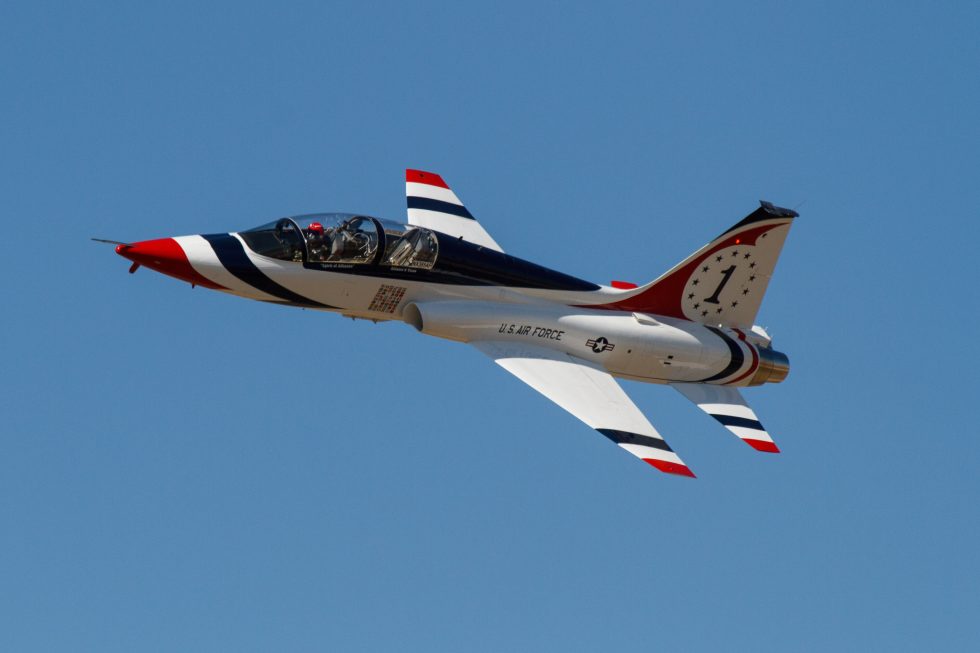
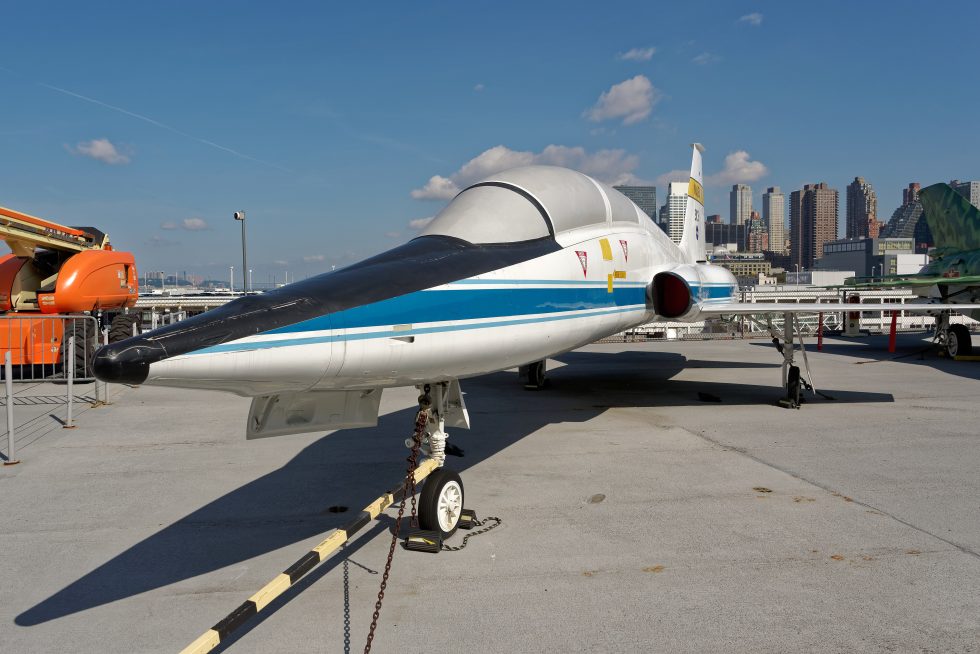
The Talon in motion
NBC News · Take a seat in the cockpit of NASA’s T-38 jet. A close look at why the space agency still flies the Talon to keep its astronauts sharp between missions.
Where the Talon flies
The numbers that define it
The T-38 never fired a shot in anger — that was never its job. Its record is measured in longevity, output and the aircrew it produced: more than a thousand built, six decades on the flight line, and the great majority of American jet-age fighter and astronaut pilots trained on its wings.
The Talon trained the pilots who flew almost every American combat jet of the era — compare their combat records aircraft by aircraft.
Everything people ask about the T-38 Talon
Can I fly in a Northrop T-38 Talon?
How fast is the T-38 Talon?
Why is the T-38 called the first supersonic trainer?
Does NASA still use the T-38?
What is the difference between the T-38 and the F-5?
How many T-38 Talons were built?
Is the T-38 still in service, and what will replace it?
You can’t fly the T-38 Talon.
These, you can.
Some legends only live in museums — others are fuelled and waiting. MiGFlug has put civilians in real military jet cockpits since 2004.
 Fly the L-39 AlbatrosThe world’s most-flown jet trainer — aerobatics included
 Fly the F-104 Starfighter“The missile with a man in it”
 Fly the MiG-21The Cold War’s most-produced jet
 Fly the T-33 Shooting StarAmerica’s first jet trainer
 Fly the DH VampireA piece of early jet history
 Fly the S.211Agile Italian jet trainer
 Fly the MB-326The classic Aermacchi jet
 Fly the MiG-15The Soviet legend of the Korean War
Continue the tour
Every fact, checked
- National Museum of the U.S. Air Force — T-38A TalonOfficial fact sheet: history, dimensions, performance and service.
- NASANASA’s T-38 fleet, astronaut proficiency flying and chase operations.
- Smithsonian National Air and Space MuseumNorthrop T-38 Talon collection record and background.
- This Day in Aviation — 10 April 1959First flight details, test pilot, engines and production figures.
- Northrop Grumman — company historyThe N-156 / T-38 / F-5 design family and Talon production.
- FAI records databaseJacqueline Cochran’s 1961 world records set in a T-38.
- Boeing — T-7A Red HawkThe Talon’s selected USAF replacement.
- Military Factory — T-38 TalonOperator list and variant reference (USA, Germany, Turkey, Taiwan, Portugal, South Korea).