
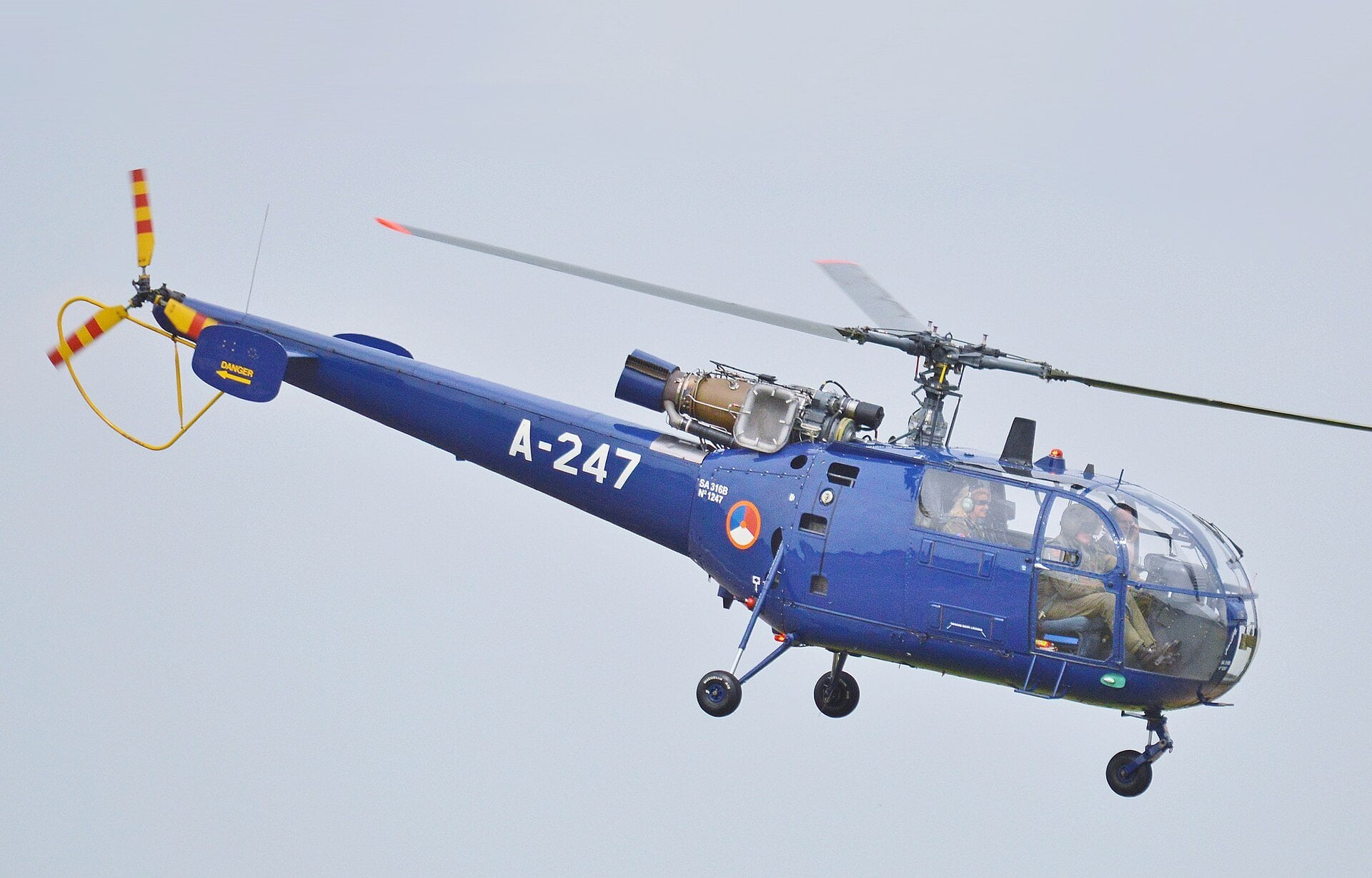
Aérospatiale Alouette III
The Lark of Sixty Years
The turbine light helicopter that landed on Mont Blanc, carried Portuguese and Rhodesian Fireforce troops into battle, saved hundreds at sea and was still being built in India six decades after its first flight.
The Alouette III: how a French lark became the world’s helicopter
On 28 February 1959 the test pilot Jean Boulet lifted the first SE 3160 off the ground at Marignane. It looked like a grown-up version of the Alouette II that had already made Sud Aviation famous: the same Turbomeca turbine above the cabin, the same bubble of glazing at the front, but now with a fully enclosed fuselage, a tail boom with a proper fin, and room for a pilot and six passengers. Within months the prototype was showing off. In 1960 it took off and landed on Mont Blanc at 4,810 metres with seven people aboard, and later that year it operated in the Himalayas at 6,004 metres with a crew of two and a 250 kg payload. No helicopter had worked so high so routinely, and the order books filled accordingly.
The production aircraft, renamed Alouette III, combined a derated Artouste IIIB turboshaft with an articulated three-blade rotor and a cabin that could be stripped for stretchers, cargo, a rescue hoist or weapons. That versatility made it the archetypal helicopter of the 1960s and 1970s. Aérospatiale built more than 1,400 in France before its line closed in 1985, and licence production carried on elsewhere: HAL in India as the Chetak, IAR in Romania as the IAR 316, F+W Emmen in Switzerland and Lichtwerk in the Netherlands. In all, more than 2,000 were built, and HAL did not deliver its last Chetak until 2021. The SA 319B, with the more economical Astazou engine, broadened its appeal further among civil and police operators.
Its operators read like an atlas. French soldiers and sailors flew it for six decades, the French Navy retiring its last examples at the end of 2022. Portugal took it to war in Africa from 1963; Rhodesia built the Fireforce doctrine around it; South Africa flew 121 of them for 44 years. Ireland’s eight Alouettes saved 542 lives at sea and in the mountains. India turned its Chetaks into parade elephants and Himalayan workhorses. Few aircraft have served so many masters in so many climates for so long, and even now a handful remain in uniform. Pakistan received more than ten former Swiss examples for rescue work after 2010, and Austria flew its fleet into the 2020s, proof that a 1950s design could still earn its keep in a modern air arm.
01The Alouette III’s war in Africa: Portugal’s canibais and Rhodesia’s Fireforce
The first air force to fly the Alouette III in a sustained war was Portugal’s. From 1963 its helicopters supported the counter-insurgency campaigns in Angola, Mozambique and Guinea, and Portuguese crews developed two distinct roles for the same airframe. The canibal was an unarmed troop carrier, typically lifting five paratroopers or commandos. The lobo mau, the “big bad wolf”, carried a 20 mm cannon firing out of the side of the cabin. A typical assault package put six or seven Alouettes in the air together: five or six canibais and one lobo mau circling overhead.
Rhodesia took the idea further. At its peak No. 7 Squadron of the Rhodesian Air Force operated 34 Alouette IIIs alongside a smaller number of Alouette IIs, and these became the heart of the Fireforce: a rapid-reaction package that could be over a reported guerrilla sighting within minutes. Troop-carrying G-Cars, armed with side-mounted Browning .303 or 7.62 mm MAG machine guns, delivered sticks of soldiers to cut off escape routes, while the K-Car, with a 20 mm MG 151 cannon firing from the port side, carried the commander and orbited the contact as a command post and gunship. Fireforce bases at Centenary and Mount Darwin kept helicopters and troops as close to the action as possible. South Africa, which flew 121 Alouette IIIs between 1962 and 2006, used the type in the same theatre and later across the Border War, losing eight in combat according to Air Force figures.
02The Alouette III in India: the Chetak, Republic Day and the dancing elephants
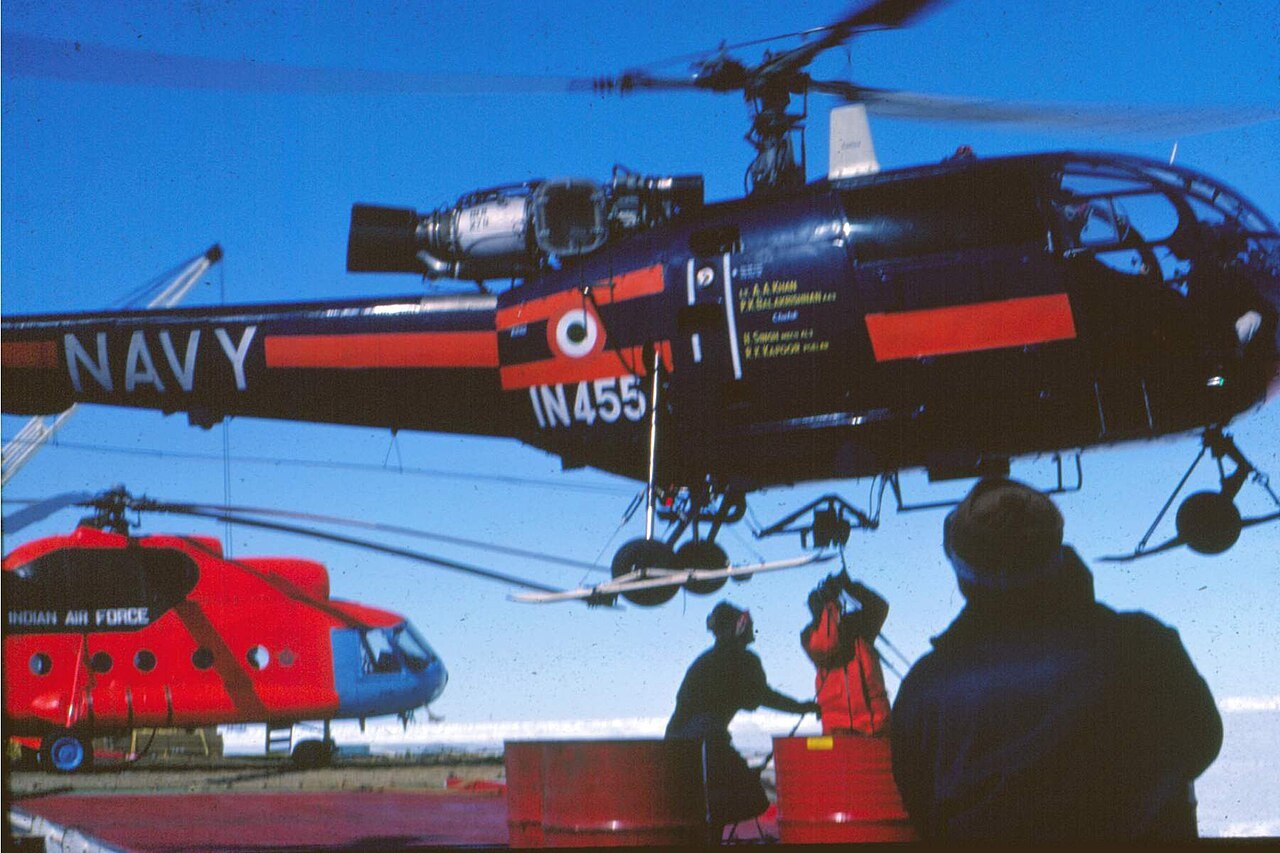
India signed for licence production in the early 1960s and HAL went on to build more than 350 Alouette IIIs as the Chetak, named after the warhorse of the 16th-century Rajput king Maharana Pratap. HAL delivered its first Chetak to the Indian Navy in February 1966, and the type became the basic utility helicopter of all three services, flying training, liaison, casualty evacuation, search and rescue and light anti-submarine work from frigates. When the Army Aviation Corps was formed, most Air Force Chetaks transferred to it on 1 November 1986.
Its most charming moment came on Republic Day in the 1970s, when Air Force tailors dressed Chetaks in fabric elephant costumes with hollow legs, ears, tusks and trunks. The pilots had to keep their speed down, around 110 km/h according to AeroTime, so the costumes would not tear away, and the gentle swaying of the formation earned them the name of the “dancing elephants”. The Chetak was far more than a parade piece: it flew in the 2000 UN rescue known as Operation Khukri in Sierra Leone, and the Navy ordered eight new-build examples as late as 2017, the first delivered in July 2019.
What makes the Alouette III special
A turbine with power to spare
The Artouste IIIB could produce about 870 shp, but the Alouette III’s gearbox limited it to roughly 570 shp. That margin is the secret of its altitude performance: the engine still had full rated power in thin, hot air where piston helicopters wheezed. It is why the type could land on Mont Blanc and work in the Himalayas, and why it inspired the even higher-flying SA 315B Lama, which married this engine to the lighter Alouette II airframe. Mountain rescuers in the Alps valued the same reserve on hot summer afternoons.
One cabin, many jobs
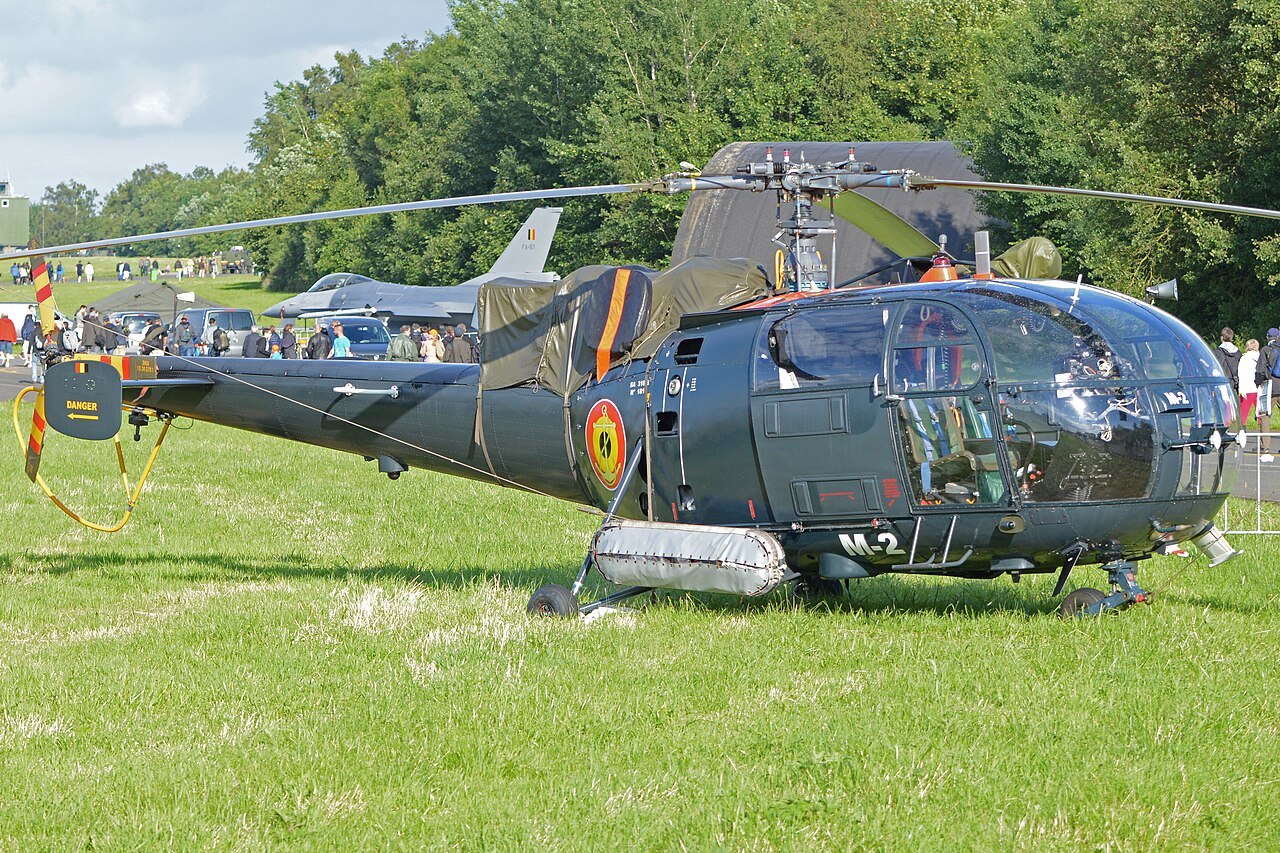
Behind the glazed nose sits a box-like cabin with large sliding doors, seats for six passengers and a floor that can take two stretchers, cargo, a rescue hoist or a weapon mount. Crews fitted 20 mm cannon, machine guns, AS.11 and AS.12 wire-guided missiles and lightweight torpedoes. That flexibility, more than any single figure in the specification, explains why one airframe served as troop carrier, gunship, air ambulance, ship’s flight and trainer in dozens of countries. The wide glazing also gave crews an exceptional view for observation and hoist work.
Simple enough to last
The three-blade articulated rotor, tricycle undercarriage and mechanical controls were straightforward by modern standards, and air forces kept the type going for half a century with modest industrial support. Age eventually told: the French Navy found its final Alouettes needed about 15 hours of maintenance for every hour flown, according to Vertical magazine, and parts that were long out of production grew harder to find. Even so, availability at sea had exceeded 90 percent with proper support, a remarkable figure for a design whose first flight dated back to February 1959.
03The Alouette III’s variants and licence builds
- SE 3160: first production version, built 1961 to 1968 with the Artouste IIIB (sometimes retrospectively called SA 316A).
- SA 316B: strengthened transmission and rotor, higher weights; the main production model from 1968.
- SA 316C: small batch with the Artouste IIID.
- SA 319B Alouette III Astazou: more fuel-efficient Turbomeca Astazou XIVB engine.
- HAL Chetak: Indian licence build, more than 350 produced up to 2021, including re-engined variants.
- IAR 316: Romanian licence build, about 250 produced 1971 to 1987, roughly half exported; the IAR 317 Airfox was an armed derivative of which three prototypes flew.
- Swiss and Dutch builds: 60 assembled by F+W Emmen; 27 built by Lichtwerk for the Netherlands.
- G-Car and K-Car: Rhodesian field conversions as armed troop carrier and 20 mm cannon gunship.
- Atlas XH-1 Alpha: South African two-seat attack helicopter demonstrator using Alouette III components.
Sud Aviation / Aérospatiale Alouette III (SA 316B) specifications
Specifications
- Crew
- 1 or 2 pilots
- Capacity
- Up to 6 passengers, or 2 stretchers, or underslung load
- Length
- 10.03 m (32 ft 11 in)
- Main rotor diameter
- 11.02 m (36 ft 2 in)
- Height
- 3.00 m (9 ft 10 in)
- Empty weight
- 1,143 kg (2,520 lb)
- Max take-off weight
- 2,200 kg (4,850 lb)
- Powerplant
- 1 × Turbomeca Artouste IIIB turboshaft, derated to 425 kW (570 shp)
- Maximum speed
- 210 km/h (130 mph)
- Cruise speed
- 185 km/h (115 mph)
- Range
- 540 km (340 mi)
- Service ceiling
- 3,200 m (10,500 ft)
- Climb rate
- 4.3 m/s (850 ft/min)
- Armament
- Optional: 20 mm cannon, 7.62 mm machine guns, AS.11/AS.12 wire-guided missiles, lightweight torpedoes
Costs & production
- Cost per flight hour
- No official figure published. Hedged estimate: in the low thousands of US dollars per hour in late military service, based on the French Navy’s reported 15 maintenance hours per flight hour on its final aircraft; civil operators of single-turbine light helicopters of this class typically budget far less
- Production
- More than 2,000 built: over 1,400 in France (1961–1985), 350+ HAL Chetaks (to 2021), about 250 IAR 316s, plus Swiss and Dutch licence assembly
- Programme
- First flight 28 February 1959; French certification 1961; last HAL delivery 2021
04The Alouette III’s operating costs: cheap to buy, dear to keep in old age
The Alouette III sold on its simplicity, and for decades it was one of the most economical ways for a small air arm to own a turbine helicopter. A single engine, a three-blade rotor and mechanical controls kept routine maintenance within reach of modest workshops from Dublin to Paramaribo. That calculation changed as fleets passed 40 and 50 years. The French Navy reported that its last aircraft needed around 15 maintenance hours per flying hour and that parts no longer in production were increasingly hard to source, which is why it leased Dauphins as a stop-gap before retiring the type at the end of 2022.
No air force publishes a clean cost per flight hour for the Alouette III, so the figure above is a hedged estimate rather than a quoted number. The early Artouste engines were also thirstier than the later Astazou fitted to the SA 319B, which was developed precisely to cut fuel burn. Private and civil examples, which do not carry military overheads, are considerably cheaper to run.
The Alouette III from Marignane to the last Chetak
First flight
Jean Boulet flies the first SE 3160 prototype on 28 February.
Mont Blanc and the Himalayas
The prototype lands on Mont Blanc at 4,810 m with seven aboard, then works at 6,004 m in the Himalayas.
Certification
The type receives its airworthiness certificate on 15 December and enters production.
War and rescue
Portugal begins combat use in Africa; Ireland receives its first two Alouettes.
SA 316B
The strengthened SA 316B replaces the original SE 3160 on the production line.
Romanian production
IAR begins licence production; about 250 IAR 316s follow by 1987.
Fireforce
Rhodesian G-Cars and K-Cars become the core of the Fireforce rapid-reaction doctrine.
Spy-ship kill
A Republic of Korea Navy Alouette III destroys a North Korean spy vessel with an AS.12 missile on 13 August.
French line closes
Aérospatiale builds its last Alouette III after more than 1,400 in France.
Farewells
South Africa retires its fleet in June 2006; Ireland stands its Alouettes down on 21 September 2007.
Last Chetak
HAL delivers its final new-build Chetak; Belgium retires its Alouettes in July.
French Navy retirement
The Marine nationale retires its last three Alouette IIIs after more than 60 years.
Stories & eyewitnesses: the Alouette III in war, rescue and parade
Seven people on top of Mont Blanc
In 1960 an Alouette III proved what a turbine could do in thin air.
Read the full story
The big bad wolf
Portugal invented its own gunship from a utility helicopter.
Read the full story
Fireforce: the K-Car over the contact
Rhodesia built a whole doctrine around 34 Alouettes.
Read the full story
542 lives in Irish skies
Ireland’s eight Alouettes were its only helicopters for decades.
Read the full story
The only victory marking in the ROK forces
A Korean Navy Alouette III sank a spy ship with an AS.12.
Read the full story
Aboard the Belgrano
An Argentine Alouette went down with the cruiser in 1982.
Read the full story
The dancing elephants of Rajpath
India dressed its Chetaks as elephants for Republic Day.
Read the full story
Where French Navy pilots learned to land on a deck
Squadron 22S trained every French Navy helicopter pilot on the Alouette.
Read the full story
Still flying, still on show
Museums and a few air arms keep the Alouette III alive.
Read the full story
The Alouette III in pictures
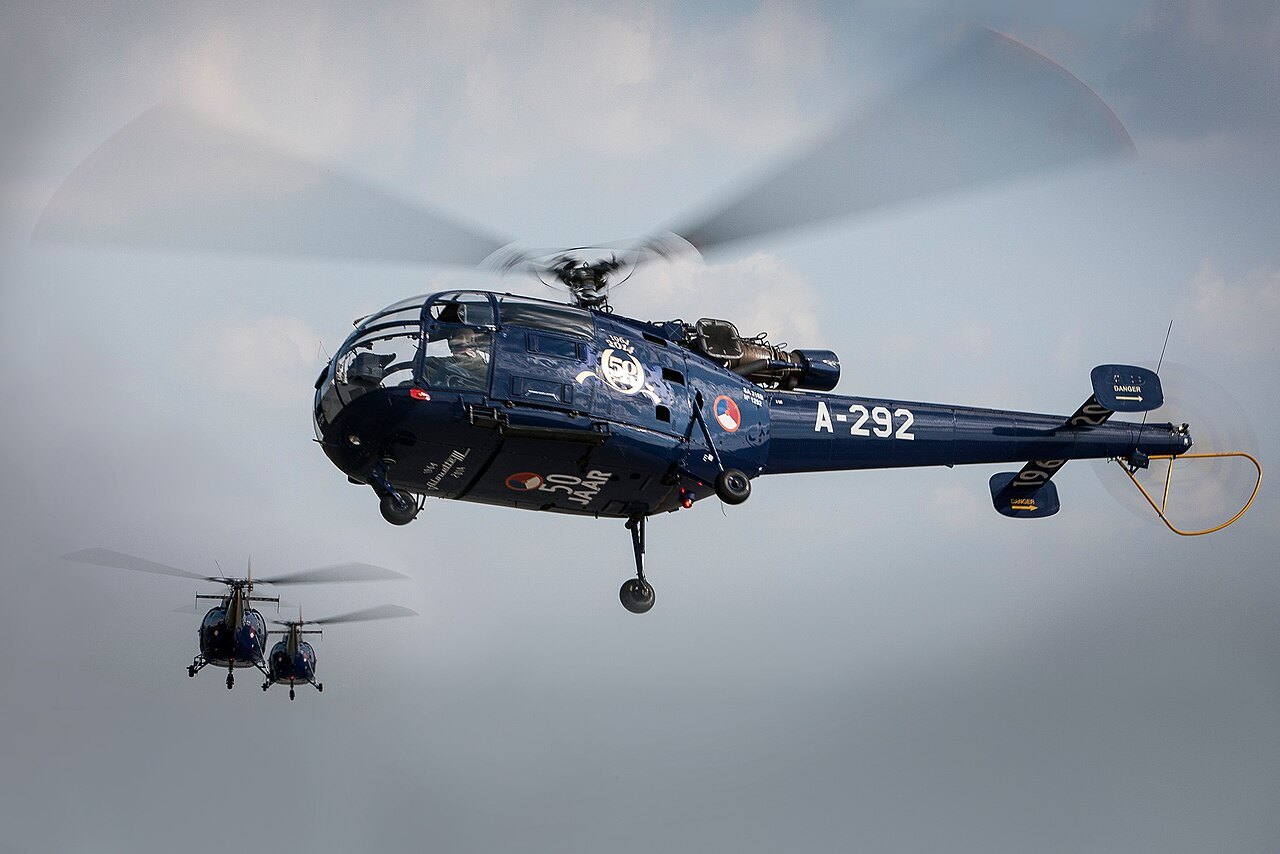
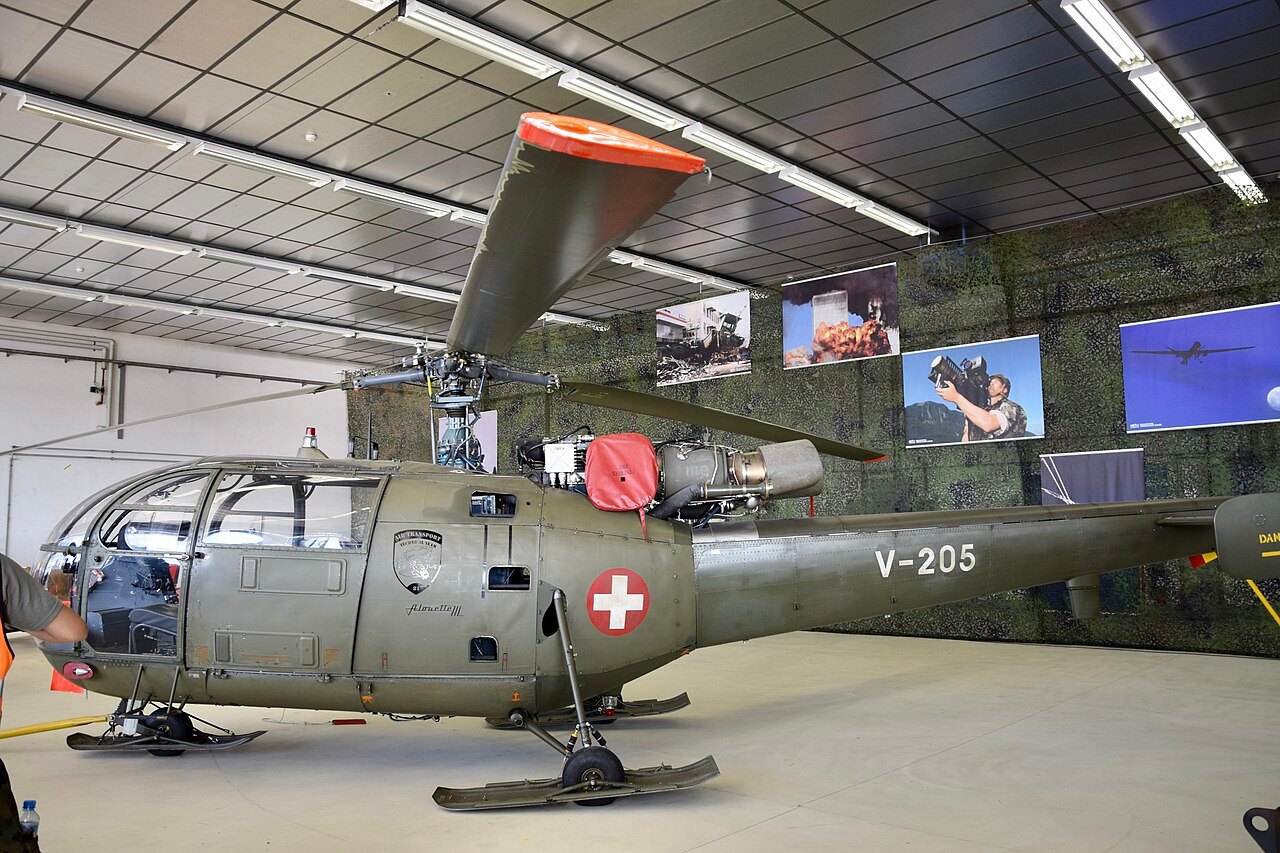
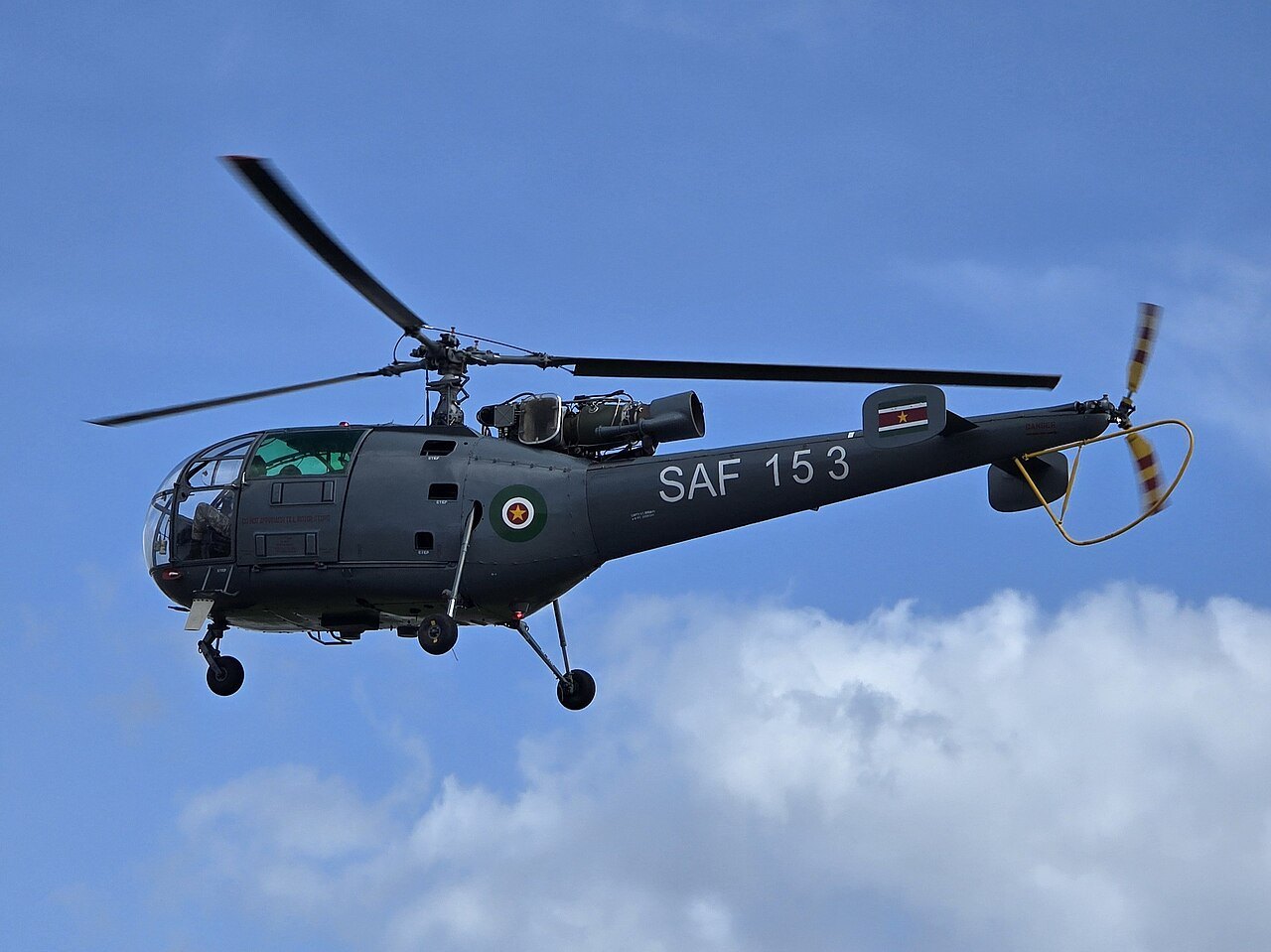
Where the Alouette III flies and flew
The Alouette III’s record
The Alouette III flew in more wars than most combat aircraft: Portugal’s African campaigns, the Rhodesian bush war, South Africa’s Border War, the Indo-Pakistani war of 1971 and the Falklands among them. It was equally famous for rescue work, where national fleets logged tens of thousands of hours and hundreds of lives saved.
See how training and combat types compare in the military aircraft statistics database. Figures are approximate.
Everything people ask about the Alouette III
Can I fly in a Sud Aviation / Aérospatiale Alouette III?
When did the Alouette III first fly?
How many Alouette IIIs were built?
What is the HAL Chetak?
Was the Alouette III used in combat?
Is the Alouette III still in service?
Why was the Alouette III so good at high altitude?
You can’t fly the Alouette III.
These, you can.
Most of this museum you can only look at. These genuine military jets you can fly yourself with MiGFlug — with aerobatics and time on the controls.
 Fly the L-39 AlbatrosThe world’s most-flown jet trainer — aerobatics included
 Fly the F-104 Starfighter“The missile with a man in it”
 Fly the MiG-21The Cold War’s most-produced jet
 Fly the T-33 Shooting StarAmerica’s first jet trainer
 Fly the DH VampireA piece of early jet history
 Fly the S.211Agile Italian jet trainer
 Fly the MB-326The classic Aermacchi jet
 Fly the MiG-15The Soviet legend of the Korean War
Continue the tour
Every fact, checked
- French armed forces wave goodbye to the AlouetteVertical magazine on French Navy retirement, 22S training, maintenance burden and availability
- New Wings for the Irish Air CorpsIrish Alouette retirement on 21 September 2007, 77,000 hours, 1,717 SAR missions, 542 lives saved
- The time when India had dancing elephant helicoptersAeroTime on Chetak origins, Republic Day elephant costumes and the Mauritius dodo
- HAL delivers Chetak helicopter to Indian Navy2017 order for eight Chetaks, July 2019 delivery, first navy Chetak in 1966
- S. Korea retires last Alouette-III naval helicoptersYonhap on the 1983 spy-ship engagement and December 2019 retirement
- Austria To Replace Alouette IIIs with Leonardo AW169sAviation International News on the Austrian replacement programme
- Type Certificate Data Sheet EASA.R.123 (SE 3160, SA 316, SA 319)Certification basis, engines and weights for the Alouette III family
- Les Alouette III terminent leur carrière embarquéeMer et Marine on the last French Navy shipborne deployments