
Amiot 143
The unmistakable “flying greenhouse” of the Armée de l’Air — a slab-sided, high-winged French night bomber so ungainly it became a byword for awkward design. Obsolete by 1940, it was flown with desperate courage in the Battle of France, most famously on the doomed daylight raids against the Meuse bridges at Sedan.
The Story
The Amiot 143: the ungainly bomber that fought a hopeless battle
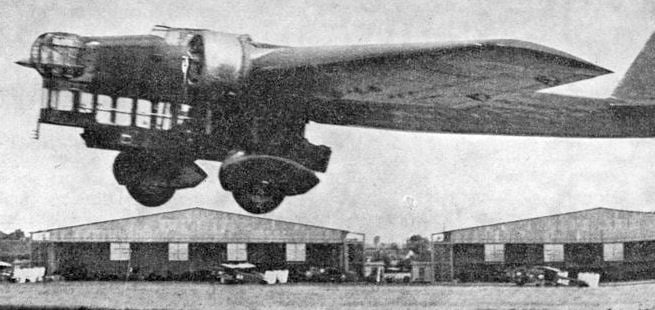
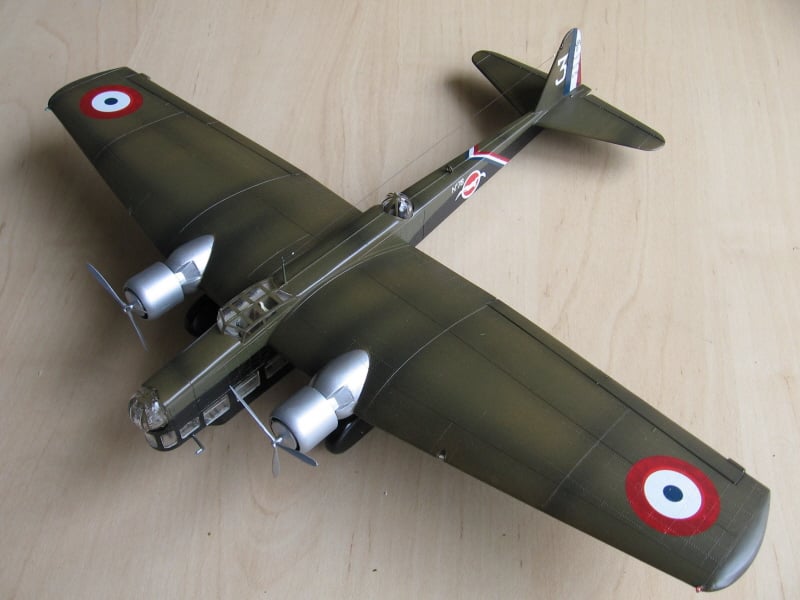
Few aircraft have ever looked quite so awkward as the Amiot 143. With its deep, slab-sided fuselage, its high strut-braced wing, its fixed and heavily spatted undercarriage, and its bristling array of glazed gun positions — including a great gondola slung beneath the nose — it seemed almost a caricature of a bomber, an aeroplane assembled from angular boxes. French airmen and the public alike found it faintly absurd, and it earned nicknames such as “the flying greenhouse” and simply “le monstre.” Yet behind the ungainly shape lies a serious and rather poignant story: the Amiot 143 was one of the standard bombers of the French air force in the 1930s, and when war came it was flown, hopelessly outclassed, by crews of great courage in one of the most desperate air battles of 1940.
The Amiot 143’s awkwardness was not simply bad design; it was the product of a flawed idea. In 1928 the French air ministry issued a specification for a new kind of combat aircraft under the designation “BCR” — Bombardement, Combat, Reconnaissance — a single machine that was supposed to be able to bomb, to fight, and to reconnoitre, all at once. It was an over-ambitious concept, asking one aircraft to do three very different jobs, and the aircraft built to meet it were inevitably heavy, slow and compromised. The Amiot 143 was the most numerous product of the BCR doctrine, and its ungainly form is in large part the visible expression of that doctrine’s contradictions.
The type began as the Amiot 140, a prototype that first flew in the early 1930s, and was developed through the Amiot 142 into the definitive production Amiot 143, which appeared in the mid-1930s. It was a large twin-engined monoplane, powered by two Gnome-Rhône 14K radial engines, and it entered service around 1935. Crucially, by the time it reached the squadrons it had already been reassigned to a more sensible single role: night bombing. As a night bomber, flying under cover of darkness where its slowness and vulnerability mattered less, the Amiot 143 was at least employed in a way that played to what strengths it had.
“Ungainly, obsolete and slow — and flown, when the hour came, with a courage that its designers could never have asked of it.”— the Amiot 143 in a sentence
For the rest of the 1930s the Amiot 143 soldiered on as one of the mainstays of the French bomber force, equipping a number of groupes de bombardement. Around a hundred and thirty-eight were built. It was never a good aircraft by the standards of the late 1930s — its performance was modest, its lines archaic, and the pace of aircraft development was leaving it further behind with every passing year — but France was slow to re-equip, and when the Second World War broke out in September 1939 the Amiot 143 was still very much in front-line service.
The first months of the war, the so-called “Phoney War,” saw the Amiot 143 used cautiously, mostly at night. Its units flew reconnaissance and leaflet-dropping missions over Germany — long, cold, dangerous flights deep into hostile airspace, scattering propaganda leaflets rather than bombs. These sorties, undramatic as they sound, were demanding tests of navigation and endurance, and they kept the crews and their obsolete machines in action through the tense winter of 1939–40.
Then came May 1940 and the German offensive in the west, and with it the Amiot 143’s tragic finest hour. When the German army broke through the Ardennes and forced crossings of the River Meuse at Sedan, the French command threw everything it had at the vital bridges and bridgeheads in a frantic effort to stem the breakthrough. Among the aircraft sent against them were Amiot 143s. On 14 May 1940 and in the days around it, these slow, obsolete night bombers were ordered into action in broad daylight, against heavily defended targets, in the teeth of German fighters and massed anti-aircraft fire.
The result was, predictably and heartbreakingly, a slaughter. Flying low and slow over the Meuse, the Amiot 143 crews pressed home their attacks into a wall of flak and fighters, and losses were appalling. The raids on the Sedan bridges are remembered as one of the most costly and most gallant episodes of the entire Battle of France — a forlorn hope flown by men who knew the odds and went anyway. That an aircraft as outdated as the Amiot 143 was committed to such missions is a measure both of the desperation of the French position in May 1940 and of the courage of the crews who flew them.
The bravery of those crews should not be allowed to excuse the failures that put them in such aircraft. The Amiot 143’s presence in the front line in 1940 reflected the slowness of French rearmament, the muddle of the BCR doctrine, and the general unpreparedness of French air power for the kind of war that Germany unleashed. The men paid the price for decisions taken years before, in ministries and design offices, and their sacrifice in obsolete machines is part of the wider tragedy of France’s defeat in 1940.
After the fall of France the surviving Amiot 143s were largely relegated to secondary duties. Some passed to the air force of Vichy France, where they were used mainly as transports, ferrying men and supplies rather than fighting. The type’s combat career was effectively over, and the remaining aircraft were gradually worn out or scrapped as the war went on. The Amiot 143 had had a short and, for most of its life, unglamorous existence, bracketed by a flawed doctrine at the start and a hopeless battle at the end.
How should such an aircraft be judged? Technically, the Amiot 143 was a poor bomber — ungainly, slow and obsolete almost from the moment it entered service, a monument to the muddled thinking of the BCR specification. But it was also a workhorse that served France steadily through the 1930s, and, above all, it was the mount of crews who, in May 1940, flew it into battle against impossible odds with a courage that transcends any judgement of the machine itself. The Amiot 143 is remembered, rightly, as much for the men who flew it as for the aircraft it was.
Today the Amiot 143 survives only in photographs, drawings and film. No complete example is known to exist — like so many interwar aircraft, the type was scrapped once obsolete, and none was preserved. That absence is itself a small loss, for the Amiot 143, for all its ugliness, is one of the most distinctive and historically resonant aircraft of its era: a symbol of the flawed doctrines and unpreparedness of the 1930s, and a memorial to the airmen who paid for them over the bridges of the Meuse.
01The Amiot 143’s unmistakable shape: why it looked so strange+
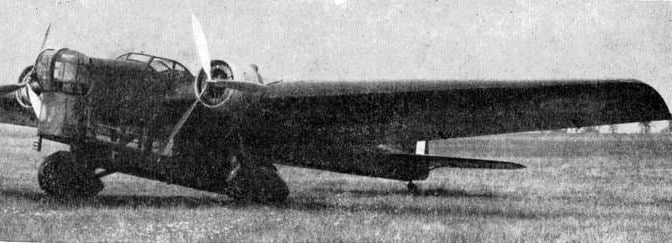
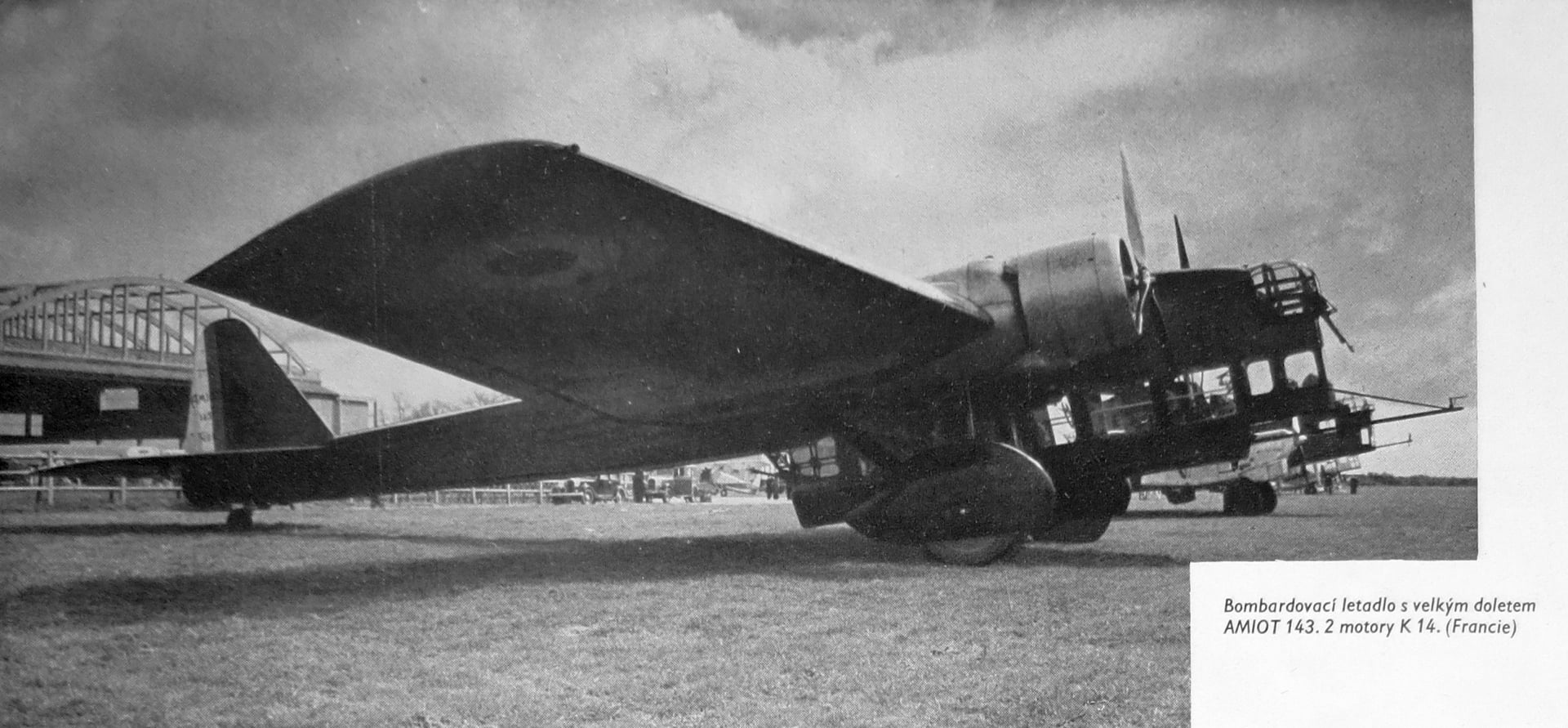
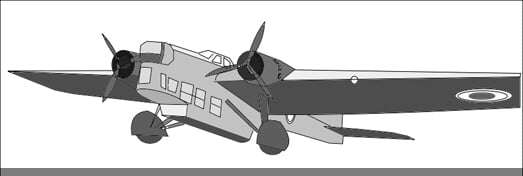
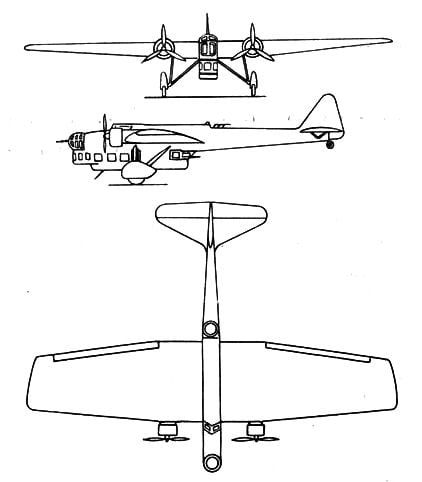
The Amiot 143 is one of the most awkward-looking aircraft ever built. It had a deep, slab-sided, almost rectangular fuselage; a high, strut-braced monoplane wing; a fixed undercarriage with large streamlined spats; and an extraordinary amount of glazing and gun positions, including a prominent gondola slung beneath the nose for the bomb-aimer and a gunner.
This bristling, angular form earned it nicknames such as “the flying greenhouse” and “le monstre.” The look was not mere ugliness for its own sake: the multiple gun positions and the deep fuselage flowed from the demands placed on the design. But the result was undeniably ungainly, and it has made the Amiot 143 a byword for awkward aircraft design ever since.
02The flawed “BCR” doctrine behind the design+
The Amiot 143’s shape was ultimately the product of a flawed idea. In 1928 the French air ministry issued a specification under the designation BCR — Bombardement, Combat, Reconnaissance — calling for a single aircraft that could bomb, fight and reconnoitre all at once.
This was an over-ambitious concept. Asking one machine to perform three very different roles inevitably produced a heavy, slow, compromised aeroplane that did none of them especially well. The Amiot 143 was the most numerous product of the BCR doctrine, and its ungainly form is in large part the visible expression of that doctrine’s internal contradictions. It is a classic case of a flawed requirement producing a flawed aircraft.
03From Amiot 140 to the production Amiot 143+
The type began as the Amiot 140, a prototype that first flew in the early 1930s to meet the BCR specification. It was developed through the intermediate Amiot 142 into the definitive production version, the Amiot 143, which appeared in the mid-1930s.
The production Amiot 143 was a large twin-engined monoplane powered by two Gnome-Rhône 14K radial engines. Around a hundred and thirty-eight were built, making it the most numerous of the Amiot bombers and one of the standard aircraft of the French bomber force in the second half of the 1930s.
04Reassigned to a sensible role: the night bomber+
By the time the Amiot 143 reached the squadrons around 1935, wiser counsel had prevailed about how to use it. The impossible BCR multi-role concept was quietly set aside, and the aircraft was employed in a single, more sensible role: night bombing.
This mattered. At night, under cover of darkness, the Amiot 143’s slowness and vulnerability were far less of a liability, and its steadiness and endurance could be turned to advantage. As a night bomber the type was employed in a way that at least played to what strengths it had — which makes its later use in daylight in 1940 all the more tragic.
05The Gnome-Rhône engines and the aircraft’s performance+
The Amiot 143 was powered by two Gnome-Rhône 14K radial engines, each of around 870 horsepower, a widely-used French powerplant of the period. They gave the big, draggy bomber a modest top speed of somewhere around 310 km/h (about 190 mph) — adequate in the early 1930s, but hopelessly slow by the standards of the late 1930s and 1940.
The aircraft carried a crew of several — typically including a pilot, a bomb-aimer in the nose gondola, a navigator/radio operator and gunners — and a useful bomb load. But its performance figures tell the essential story: it was simply too slow and too draggy to survive in daylight against modern fighters, which is why it was a night bomber, and why its daylight use in 1940 was so costly.
06A standard French bomber of the 1930s+
For most of the 1930s the Amiot 143 was one of the mainstays of the French bomber force, equipping a number of groupes de bombardement. In an era when France was slow to modernise its air force, the type remained in front-line service far longer than its performance warranted.
This longevity was not a compliment to the aircraft but a symptom of French unpreparedness. Newer, faster bombers such as the Lioré et Olivier LeO 451 were slow to arrive in numbers, and so the ageing Amiot 143 stayed in the line, increasingly obsolete, right up to and into the Second World War.
07The Phoney War: leaflet raids over Germany+
When war broke out in September 1939, the Amiot 143 was still in front-line service. Through the tense winter of the “Phoney War,” its units were used cautiously and mostly at night, flying reconnaissance and leaflet-dropping missions deep into German airspace.
These leaflet sorties — scattering propaganda rather than bombs — sound undramatic, but they were long, cold and dangerous flights that tested navigation and endurance to the limit, deep over hostile territory in an obsolete aircraft. They kept the crews and their ageing machines in action during the strange lull before the storm broke in May 1940.
08May 1940: the daylight raids on the Sedan bridges+
The Amiot 143’s tragic finest hour came in May 1940. When German forces broke through the Ardennes and forced crossings of the River Meuse at Sedan, the French command threw everything available against the vital bridges and bridgeheads in a frantic effort to halt the breakthrough.
Among the aircraft sent in were Amiot 143s. On 14 May 1940 and around it, these slow, obsolete night bombers were ordered to attack heavily defended targets in broad daylight, against German fighters and massed anti-aircraft fire. It was a mission for which the aircraft was utterly unsuited, ordered out of sheer desperation as the front collapsed.
09A gallant slaughter: the cost of the Meuse raids+
The outcome of the daylight Meuse raids was, predictably, catastrophic. Flying low and slow over Sedan, the Amiot 143 crews pressed home their attacks into a wall of flak and fighters, and their losses were appalling. The raids are remembered as one of the most costly and most courageous episodes of the entire Battle of France.
It was a forlorn hope, flown by men who understood the odds and went anyway. The sacrifice of these crews, in aircraft that should never have been asked to fly such missions, stands as one of the most moving stories of 1940 — and a sober reminder of the human cost of the failures of pre-war planning.
10After the fall: Vichy service and the end+
After the fall of France in June 1940, the surviving Amiot 143s were relegated to secondary duties. A number passed to the air force of Vichy France, where they were used mainly as transport aircraft, carrying men and supplies rather than bombs.
The type’s combat career was over. The remaining aircraft were gradually worn out or scrapped as the war continued. It was a quiet end for an aircraft whose last act in the front line had been so dramatic and so costly — the Amiot 143 slipping out of service as unglamorously as it had spent most of its career.
11Bravery and blame: how to remember the Amiot 143+
The courage of the Amiot 143 crews in 1940 should be honoured, but it should not obscure the failures that put them in such aircraft. Their presence in the front line reflected the slowness of French rearmament, the muddle of the BCR doctrine, and the general unpreparedness of French air power for modern war.
The airmen paid the price for decisions taken years earlier, in ministries and design offices. To remember the Amiot 143 honestly is to hold both truths at once: it was a poor, obsolete aircraft that should not have been sent where it was sent, and its crews flew it with a gallantry that transcends any judgement of the machine.
12The Amiot 143 as a symbol of the interwar years+
More than most aircraft, the Amiot 143 has become a symbol — of the awkwardness of some interwar design, of the flawed doctrines that shaped it, and of the unpreparedness of France in 1940. Its very ugliness makes it memorable, and its story encapsulates a whole troubled era of French military aviation.
It stands, too, as a memorial to the men who flew it. For all that it was slow, ungainly and obsolete, the Amiot 143 was the aircraft in which brave crews went to their deaths over the Meuse, and that gives this unlovely machine a dignity that its designers never built into it. It is remembered as much for the courage it carried as for the aircraft it was.
Design & Engineering
How the Amiot 143 was built: a slab-sided product of the BCR idea
A large twin-engined high-wing monoplane built to the over-ambitious multi-role BCR specification — deep-fuselaged, fixed-undercarriage, bristling with glazed gun positions, and reassigned to night bombing once its awkward compromises became clear.
The BCR compromise
Built to do bombing, combat and reconnaissance in one airframe — an impossible brief that produced a heavy, slow, ungainly aircraft.
The “flying greenhouse”
A deep slab-sided fuselage, high strut-braced wing, fixed spatted undercarriage and extensive glazing, including an under-nose gondola.
Twin Gnome-Rhône radials
Two Gnome-Rhône 14K engines of about 870 hp each — enough for the early 1930s, hopelessly slow by 1940.
Specifications
Amiot 143 specifications: dimensions, performance and cost
Baseline note: the figures describe the Amiot 143M as built from the thirty-first airframe onward — the standard late-production configuration, with the fuselage lengthened by 30 cm forward, the dorsal turret moved 90 cm forward and 7.5 mm MAC 1934 guns in place of the 7.7 mm Lewis guns of the first batch. Deltas in grey. That production history is why the reference tables disagree with each other, and it is worth saying plainly rather than leaving readers to guess. A run of 138 aircraft changed configuration twice while it was being built, and each source quotes whichever version its own source described. The recurring splits: empty weight 5,455 kg or 6,100 kg; maximum speed 295 km/h or 310 km/h; service ceiling 7,500 m or 7,900 m; internal bomb load 800 kg or 880 kg. Range is the clearest case of all — the familiar "1,200 km versus 2,000 km" disagreement is not a disagreement but a normal-versus-ferry confusion, since the best sources give 1,300 km normal and 1,995 km ferry for the same aeroplane.
Dimensions & weights
- Crew
- 5, pilot, navigator/bombardier, radio operator, nose gunner and dorsal gunner
- Length
- 18.24 m (59 ft 10 in) — 18.26 m elsewhere; the first thirty aircraft were 30 cm shorter
- Wingspan
- 24.53 m (80 ft 6 in)
- Height
- 5.68 m (18 ft 8 in)
- Wing area
- 100 m² (1,076 sq ft)
- Aspect ratio
- 6.0
- Empty weight
- 5,455 kg (12,026 lb) — 6,100 kg (13,448 lb) in other tables, most likely a late-production or equipped figure
- Gross weight
- 8,611 kg (18,984 lb)
- Maximum take-off weight
- 10,360 kg (22,840 lb)
- Wing loading at gross
- 86.1 kg/m² (17.6 lb/sq ft)
- Internal bomb load
- 800 kg (1,764 lb) — 880 kg (1,940 lb) in several sources
- External bomb load
- 800 kg (1,764 lb) on under-fuselage and underwing racks
- Undercarriage
- fixed, with streamlined spats 2.13 m (7 ft 0 in) long over each mainwheel
Performance
- Maximum speed
- 295 km/h at 4,000 m (183 mph at 13,100 ft) — 310 km/h (193 mph) at the same height in historyofwar.org and others
- Range, normal
- 1,300 km (810 miles)
- Range, ferry
- 1,995 km (1,240 miles) — the usual "1,200 versus 2,000 km" conflict is these two figures rounded, not two claims
- Combat radius
- ~550 km (~340 miles) with reserve and a war load
- Service ceiling
- 7,500 m (24,600 ft) — 7,900 m (25,900 ft) in historyofwar.org
- Time to 2,000 m
- 6.8 min (to 6,560 ft)
- Power loading at gross
- 4.95 kg/hp (10.9 lb/hp)
- Speed of the Bf 109E met over Sedan
- 560 km/h (348 mph) — almost twice the Amiot's, which is the whole story of 14 May 1940
- Front-line strength, 10 May 1940
- 67 in metropolitan front-line groups (87 counting North Africa; both figures are correct, they count different things)
- Bombs dropped to the Armistice
- 474 tonnes (523 tonnes in some accounts)
- Service entry
- first four production aircraft delivered July 1935, already obsolete on arrival
Propulsion & systems
- Engines
- 2 × Gnome-Rhône 14K Mistral Major, fourteen-cylinder two-row air-cooled radial
- Engine designations
- 14Kirs to port, 14Kjrs to starboard — handed, opposite-rotation units
- Rated power
- 640 kW (870 hp) each — 850 hp and 858 hp both appear in print for the same engine
- Propellers
- three-blade metal, fixed-pitch
- Airframe
- all-metal high-wing monoplane, slab-sided and angular, with an extensively glazed nose position
- Ventral gondola
- under-fuselage gondola with gun positions fore and aft, running most of the fuselage length
- Bomb stowage
- internal bay in the fuselage plus external racks
- Internal bomb options
- 1 × 500 kg, or 4 × 100 or 200 kg, or 8 × 50 kg, or 32 × 10 kg incendiaries
- Undercarriage
- fixed, in large streamlined spats; no retraction was ever fitted to a production aircraft
- Crew layout
- two-deck fuselage, with the gondola positions below the main crew compartment
- Programme designation
- BCR — bombardement, combat, reconnaissance — applied retrospectively to a 1928 requirement
- Successor
- LeO 451, which replaced the type in North Africa from July 1941
13The Amiot 140, 142 and 143: the family+
The Amiot bomber family began with the Amiot 140 prototype of the early 1930s, built to the BCR specification. It was developed through the intermediate Amiot 142 into the definitive production Amiot 143, which was built in the largest numbers — around 138 aircraft — and gave the line its place in history.
The production aircraft were generally designated Amiot 143 or 143M, with detail differences across the run. It was this version that equipped the French bomber groups through the later 1930s and fought in 1940. The earlier 140 and 142 are essentially steps on the way to the definitive 143.
14The Amiot 143’s cost: what the records show+
As with most French aircraft of the 1930s, there is no reliable, transparent public figure for the Amiot 143’s unit cost, cost per flight hour or total programme cost. It was procured across several years under the defence budgets of the period, and consistent lifetime cost data does not survive in a usable, comparable form.
Rather than repeat an invented number, we list the cost fields here as “not reliably recorded.” What can be said is that the Amiot 143 was a large, complex twin-engined aircraft, and that the resources spent keeping such obsolete types in service — instead of re-equipping fully with modern bombers — were part of the wider failure of French rearmament in the 1930s.
15Why the Amiot 143 matters+
The Amiot 143 matters less as a machine than as a symbol and a story. As a machine it was a poor bomber: ungainly, slow and obsolete almost from the start, a monument to the muddled BCR doctrine. But it was also one of the standard bombers of the French air force in the 1930s, and understanding it is part of understanding the state of French air power on the eve of war.
Above all it matters for what happened in May 1940. The Amiot 143 is inseparable from the desperate, gallant daylight raids on the Meuse bridges at Sedan, one of the most costly and courageous episodes of the Battle of France. It is remembered, rightly, as much for the bravery of its crews as for the aircraft it was.
16No survivors: an aircraft lost to history+
No complete Amiot 143 is known to survive. Like so many interwar aircraft, the type was scrapped once it became obsolete, and the upheavals of the war and occupation left no opportunity or inclination to preserve one. The Amiot 143 exists today only in photographs, drawings and a little film.
That absence is a small but real loss. For all its ugliness, the Amiot 143 is one of the most distinctive and historically resonant aircraft of its era, and a preserved example would be a striking memorial both to the flawed doctrines of the 1930s and to the airmen who died flying it in 1940. As it is, we must remember it through the images that remain.
Armament & payload
The Amiot 143 carried four rifle-calibre guns because a specification demanded it fight fighters
The Amiot 143's armament is the BCR programme's argument made in metal, and it loses. Four 7.5 mm MAC 1934 machine guns in a nose turret, a dorsal turret and the fore and aft ends of the ventral gondola gave good all-round coverage on paper, because "combat" in bombardement, combat, reconnaissance meant the aircraft was expected to fight fighters as well as bomb and reconnoitre. It could not. Rifle-calibre drum-fed guns in hand-worked positions on a 295 km/h airframe were not a fighter's equal in 1935 and were irrelevant by 1940, and the weight and drag of carrying four of them cost the bomb load and speed the aircraft actually needed. The gun fit changed twice during production: the first ten aircraft carried six 7.7 mm Lewis guns including a ventral gun, which was deleted from the eleventh airframe, and MAC 1934 weapons replaced the Lewis guns from the thirty-first.
Gun
- Four 7.5 mm MAC 1934 machine guns: nose turret, dorsal turret, and one each at the front and rear of the ventral gondola
- Drum fed and hand worked; no power operation and no belt feed
- First ten aircraft: six 7.7 mm Lewis guns instead — one nose, two dorsal, two in the lower rear position and one ventral
- From the eleventh airframe the ventral gun was deleted; from the thirty-first the Lewis guns gave way to MAC 1934s
- The coverage was genuinely good for 1933 and genuinely useless against a Bf 109E in 1940
Air-to-air
- None. No guided air-to-air weapon existed anywhere in the world during the Amiot 143's entire design and service life
- The first operational air-to-air missiles entered service in the mid-1950s, more than a decade after the last airframe was struck off
- The BCR requirement nonetheless demanded an air-to-air capability, and the answer was turret guns
- That answer was already obsolete when the specification was written and catastrophic by May 1940
Air-to-surface guided
- None. Guided air-to-surface weapons did not exist when the Amiot 143 was designed, built or retired
- The first used in action were the German Fritz X and Henschel Hs 293 in 1943
- Every weapon the Amiot dropped was unguided and aimed optically from the glazed nose
- Against the Meuse bridges on 14 May 1940 this meant flying straight and level at low altitude in daylight
Bombs
- Internal bay: 800 kg (1,764 lb), given as 880 kg in several sources
- Internal options: 1 × 500 kg, or 4 × 100 or 200 kg, or 8 × 50 kg, or 32 × 10 kg incendiaries
- External racks: a further 800 kg (1,764 lb), giving a theoretical 1,600 kg maximum
- External carriage cost speed the aircraft could not spare, so operational loads were usually internal only
- The type dropped 474 tonnes of bombs between September 1939 and the Armistice, 523 tonnes by some accounts
Rockets
- None. Not carried, not trialled, not proposed
- French air-to-ground rocket work of the period did not produce an operational weapon for this class of aircraft
- The Amiot 143 had left front-line bombing duties by July 1940, long before rockets became common
- The wing and gondola structure carried bomb racks only
Pods & other stores
- Cameras for the reconnaissance third of the BCR requirement — the one role the type actually performed adequately
- Flares for the night bombing and leaflet sorties that occupied it through the Phoney War
- The ventral gondola itself: a large fixed store housing crew and guns, and a substantial drag penalty
- From summer 1940, freight and passengers in the bomb bay and fuselage as a night transport, its final role
Three typical loadouts
- Night bombing and leaflet sortie, winter 1939–40
- Internal bomb bay loaded with 8 × 50 kg or leaflet containers; flares; four MAC 1934 guns manned; no external stores, to preserve what speed there was.
- Daylight anti-bridge strike, Sedan, 14 May 1940
- Internal load of 100 or 200 kg bombs against the Meuse crossings; all four guns manned; fighter escort provided and overwhelmed.
- Night transport, summer 1940 and North Africa
- Bombs deleted; freight, fuel drums or passengers carried in the bomb bay and fuselage; guns often removed to save weight.
Sourcing caveat, and it is a large one. The Sedan raid of 14 May 1940 is reported in irreconcilable ways. The best-supported account has roughly ten Amiots dispatched from GB I/34, GB II/34 and GB II/38 against the Meuse bridges in daylight, of which two were shot down and a third crash-landed, with nearly every survivor damaged; Cdt de Laubier, Lt Vauzelle and Sgt-Chef Occis are among the crews named. historyofwar.org instead states that nineteen were dispatched, nine reached the target and five were shot down, and at least one popular account claims twelve of thirteen were lost. The higher figures appear to conflate the Amiot effort with total Allied losses over the Meuse that day, which were severe from every direction — the RAF's Fairey Battle squadrons alone lost about thirty-five aircraft on 14 May. The Amiot loss rate was appalling by any measure; it was not the massacre the largest published numbers describe. Armament figures carry the same caution: gun calibre, gun count and internal bomb load all changed during the production run.
Variants
The Amiot 143 was ordered against a 1928 requirement and labelled BCR five years later
The chronology behind the Amiot 143 needs correcting before the variants make sense, because the designation implies a programme the aeroplane did not come from. The design answered the French Air Ministry's 1928 multiplace de combat requirement, and the first prototype, the Amiot 140-01, flew at Étampes on 12 April 1931. The BCR programme — bombardement, combat, reconnaissance — was not formalised until October 1933. The production order for forty aircraft followed on 23 November 1933, one month after BCR was formalised, and it was placed against a design that was by then five years old. The BCR label was applied to the Amiot 143 retrospectively. It was not built to that specification; it was recruited into it.
The BCR idea is the real subject here, and it is a lesson rather than a curiosity. One airframe was to be a bomber, a fighter-destroyer and a reconnaissance machine at once. Those requirements pull against each other in every dimension: a bomber wants load and range, an escort wants speed and agility, a reconnaissance aircraft wants height and endurance. Trying to satisfy all three produced an aeroplane that did none of them well — and it produced three of them, the Amiot 143, the Potez 540 and the Bloch 131, all equally disappointing. That is the signature of a procurement failure, not a design failure. Amiot built competently to a specification that should never have existed.
The production run itself is the other thing worth understanding, because it explains the contradictory specification tables. The aircraft changed twice on the line: the ventral gun went from the eleventh airframe, and from the thirty-first the fuselage was lengthened by 30 cm forward, the dorsal turret moved 90 cm forward and the Lewis guns replaced by MAC 1934s. Reference works quote whichever of the three configurations their source happened to describe, and none of them says which.
- Amiot 140 M.4 (1931, two ordered, one flown)
- The original answer to the 1928 multiplace de combat requirement. First flight at Étampes on 12 April 1931; Hispano-Suiza engines. Official evaluation began 31 May 1932.
- Amiot 141 (project, none built)
- Proposed three-engined derivative with Lorraine-Dietrich powerplants. Not proceeded with.
- Amiot 142 (1934, one)
- Re-engined with liquid-cooled Hispano-Suiza 12Ybrs V-12s. Cancelled in favour of the radial-engined 143.
- Amiot 143.01 prototype (1934, one)
- Gnome-Rhône 14K radials; first flight August 1934. Markedly fewer problems than the 140, and accepted for production as the 143M.
- Amiot 143M, first ten (1935, 10)
- As delivered from July 1935: six 7.7 mm Lewis guns including a ventral position. The first four were handed over on 6 July 1935.
- Amiot 143M, eleventh airframe onward (1935–36)
- Ventral gun deleted. The gondola retained its fore and aft positions but lost the downward-firing weapon.
- Amiot 143M, thirty-first airframe onward (1936–37)
- Fuselage lengthened 30 cm forward, dorsal turret moved 90 cm forward, Lewis guns replaced by 7.5 mm MAC 1934s. The standard late configuration and the one most specification tables describe.
- Amiot 143M, total production (1935–37, 138)
- All three configurations together. Deliveries ran from July 1935; the type equipped four metropolitan bomber groups and one in North Africa.
- Amiot 144 (1936, one)
- Retractable undercarriage and reduced wing area, the obvious fix for the drag. Not adopted for production.
- Amiot 150 BE (1937, one)
- Floatplane reconnaissance and torpedo-bomber derivative; first flight September 1937. Not ordered.
- Transport conversions (1940–44)
- Surviving aircraft stripped for night transport after June 1940, serving in North Africa until replaced by the LeO 451 from July 1941. The last Amiot 143 was retired in February 1944.
No Amiot 143 survives. There is no original airframe anywhere in the world, no substantially complete original section, and no reproduction or replica has ever been built — the type exists today only in photographs, drawings and a memorial at Sedan to the crews lost over the Meuse bridges on 14 May 1940. Production was 138 Amiot 143Ms. On front-line strength at the opening of the German offensive on 10 May 1940, both of the commonly quoted numbers are correct and they count different things: 67 aircraft in metropolitan front-line groups, 87 including the group in North Africa. The type dropped 474 tonnes of bombs before the Armistice — 523 tonnes by some accounts — almost all of it at night, because daylight had been tried once at Sedan and answered conclusively. That the last airframe was not struck off until February 1944 says less about the aeroplane than about how little else France had.
Timeline
The Amiot 143 through the years
France issues the over-ambitious BCR (bomber-combat-reconnaissance) specification that will shape the Amiot 143.
The Amiot 140 prototype first flies, beginning the line that leads to the Amiot 143.
The definitive production Amiot 143 appears, a large twin-engined monoplane with Gnome-Rhône radials.
The Amiot 143 enters Armée de l’Air service, reassigned from the impossible BCR role to night bombing.
The type equips several French bomber groups and remains in front-line service despite growing obsolescence.
Amiot 143 units fly night reconnaissance and leaflet raids over Germany during the Phoney War.
Obsolete Amiot 143s are sent against the Meuse bridges at Sedan in daylight and suffer catastrophic losses.
With France defeated, the surviving Amiot 143s are withdrawn from combat.
Surviving aircraft pass to Vichy France, used mainly as transports before being worn out or scrapped.
No complete Amiot 143 is known to survive; the type lives on only in photographs, drawings and film.
Stories & Eyewitnesses
The Amiot 143 in stories: the moments that defined it
The ungainly “flying greenhouse” of the Armée de l’Air, born of a flawed doctrine and flown to destruction over the Meuse — the Amiot 143’s history through the moments that stuck.
The Look“Le monstre”
One of the ugliest ever.
With its slab sides, high wing and gun gondola, the Amiot 143 was famously ungainly.
Nicknamed “the flying greenhouse” and “le monstre.”
The BCR IdeaThree jobs, one plane
A flawed brief.
The 1928 BCR specification asked one aircraft to bomb, fight and reconnoitre at once.
The impossible brief produced an awkward compromise.
OriginsFrom the Amiot 140
A prototype line.
The type began as the Amiot 140 prototype of the early 1930s.
It matured into the production Amiot 143.
Night BomberA sensible role
Darkness as cover.
Once in service, the Amiot 143 was wisely reassigned to night bombing.
At night its slowness mattered less.
The EnginesGnome-Rhône radials
Modest power.
Two Gnome-Rhône 14K radials gave a top speed of only around 190 mph.
Adequate early on, hopeless by 1940.
A Standard TypeMainstay of the 1930s
~138 built.
The Amiot 143 was one of the mainstays of the French bomber force.
Kept in the line by slow rearmament.
Phoney WarLeaflets over Germany
Cold, dangerous flights.
In 1939–40 the type flew night leaflet and recon raids deep into Germany.
Long, perilous sorties in an obsolete aircraft.
Sedan14 May 1940
Into the flak by day.
In May 1940 the obsolete Amiot 143 was sent against the Meuse bridges in daylight.
A mission for which it was utterly unsuited.
The CostA gallant slaughter
Appalling losses.
The daylight Meuse raids cost the Amiot 143 units terribly.
One of the bravest, costliest episodes of 1940.
CourageThe crews
They went anyway.
The crews flew a forlorn hope, knowing the odds.
Their gallantry transcends any judgement of the machine.
VichyThe quiet end
From bomber to transport.
Survivors passed to Vichy France, used mainly as transports.
The combat career was over.
A SymbolThe interwar tragedy
Ugliness and unpreparedness.
The Amiot 143 has become a symbol of flawed doctrine and unreadiness.
Memorable in its awkwardness.
No SurvivorsLost to history
Only images remain.
No complete Amiot 143 survives today.
It lives on only in photographs, drawings and film.
Photo Gallery
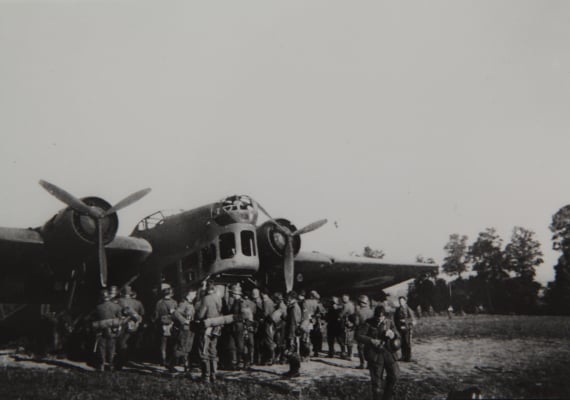
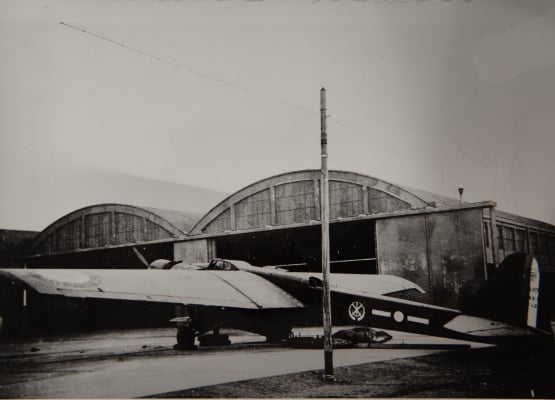
The Amiot 143 in photographs
Archival photographs and drawings of the Amiot 143, each credited to its source and licence. Click any photo to enlarge.
On Film
The Amiot 143 on film: the “flying greenhouse” in motion
Restored archival film of Amiot 143 bombers in service — a rare chance to see the ungainly “flying greenhouse” of the Armée de l’Air actually flying.
Restored archival footage of Amiot 143 bombers on a bombing exercise, with original French narration and English subtitles. Source: Look in The Past War Archives (YouTube).
Operations Overview
Where the Amiot 143 flew: an operator map
The Amiot 143 was a wholly French aircraft, designed and built by Amiot and flown by one nation only — France. It served with the Armée de l’Air through the 1930s and into the Battle of France, and surviving aircraft later passed to the Vichy French air force, which is the same state, so this map shows a single country. Hover or tap it for detail.
Category: Design, Manufacture & Service (France). The Amiot 143 was operated only by France — the Armée de l’Air and later the Vichy air force. It was never exported, and no complete example is known to survive, so a single country is shown.
Service Record
The Amiot 143’s record: obsolete, ungainly — and gallant in 1940
The Amiot 143’s significance lies in its role as a standard French bomber of the 1930s, as an emblem of the flawed BCR doctrine, and above all in the desperate courage of its crews on the Meuse bridge raids of May 1940.
Questions & Answers
Amiot 143: your questions answered
Can I fly in an Amiot 143?
No — there is no bookable Amiot 143 flight experience, and MiGFlug does not offer one. The type retired during the Second World War and no complete example is known to survive anywhere. If what you actually want is the real thing — strapping into a genuine military aircraft and flying it — you very much can do that today in other types. MiGFlug arranges flights in real fighter jets and warbirds around the world. Start here: migflug.com/flights-prices.
Why is the Amiot 143 so famous for being ugly?
The Amiot 143 had a deep, slab-sided fuselage, a high strut-braced wing, a fixed spatted undercarriage, and an extraordinary amount of glazing and gun positions, including a large gondola under the nose. This angular, bristling shape struck contemporaries as absurd, earning it nicknames such as “the flying greenhouse” and “le monstre.” It has been a byword for awkward aircraft design ever since — though every odd feature flowed from the demands placed on the design.
What was the “BCR” specification?
BCR stood for Bombardement, Combat, Reconnaissance — a French requirement issued in 1928 for a single aircraft that could bomb, fight and reconnoitre all at once. It was an over-ambitious concept: asking one machine to do three very different jobs inevitably produced a heavy, slow, compromised aircraft. The Amiot 143 was the most numerous product of the BCR doctrine, and its ungainly form is largely the visible result of that flawed idea.
What happened to the Amiot 143 in the Battle of France?
Although obsolete, the Amiot 143 was still in front-line service in 1940. When German forces forced crossings of the Meuse at Sedan in May 1940, the French command sent everything available against the bridges — including these slow night bombers, ordered into action in broad daylight. The raids of 14 May 1940 and around it, against heavy flak and fighters, cost the Amiot 143 units catastrophic losses, and are remembered as one of the most gallant and costly episodes of the campaign.
Did the Amiot 143 do anything before May 1940?
Yes. It entered service around 1935 as a night bomber and was one of the mainstays of the French bomber force through the later 1930s. During the “Phoney War” of 1939–40 its units flew cautious night missions, including reconnaissance and leaflet-dropping raids deep over Germany — long, cold and dangerous sorties that tested navigation and endurance to the limit.
How many Amiot 143s were built, and who operated it?
Around 138 Amiot 143s were built. It was a wholly French aircraft, operated only by France — the Armée de l’Air through the 1930s and into 1940, and then the Vichy French air force, which used the survivors mainly as transports. The type was never exported to any other country.
What engines did the Amiot 143 use?
The Amiot 143 was powered by two Gnome-Rhône 14K radial engines, each of around 870 horsepower — a widely-used French powerplant of the period. They gave the big, draggy bomber a top speed of only around 310 km/h (about 190 mph), which was adequate in the early 1930s but hopelessly slow by 1940, and the reason the aircraft was so vulnerable in daylight.
Does any Amiot 143 survive today?
No. No complete Amiot 143 is known to survive. Like most interwar aircraft, the type was scrapped once it became obsolete, and the war and occupation left no example preserved. The Amiot 143 exists today only in photographs, drawings and a little archival film — which makes those images all the more valuable as a record of this distinctive and historically important aircraft.
Fly For Real
You can’t fly the Amiot 143 — but these, you can
No Amiot 143 survives, let alone flies. The urge behind it — to strap into a real aircraft and actually fly — is very much still bookable. MiGFlug puts you in genuine fighters and warbirds around the world.
Fighter Jet Flights
Take the controls of a real ex-military jet with an experienced pilot.
Warbird experiences
Fly in a genuine piston-engined warbird from the golden age of aviation.
All flights are operated by MiGFlug’s vetted partners with professional pilots. Browse every option and current pricing at migflug.com/flights-prices. MiGFlug does not operate Amiot 143 flights — no example survives.
Related Aircraft
If the Amiot 143 interests you, explore these
Sources & Further Reading
Where this Amiot 143 history comes from
Note on figures: dimensions, performance, engine and production numbers for the Amiot 143 vary between sources and sub-types, and are hedged here as approximate; the figures given are broadly representative. Production is commonly cited as around 138 aircraft, all for France. Cost fields are listed as not reliably recorded because trustworthy 1930s procurement cost data is not available in a comparable form. The May 1940 raids on the Meuse bridges at Sedan, in which Amiot 143 crews suffered heavy losses, are treated here factually and with due respect for the airmen involved. No complete Amiot 143 is known to survive, so the operations map shows France, the sole operator, alone.