
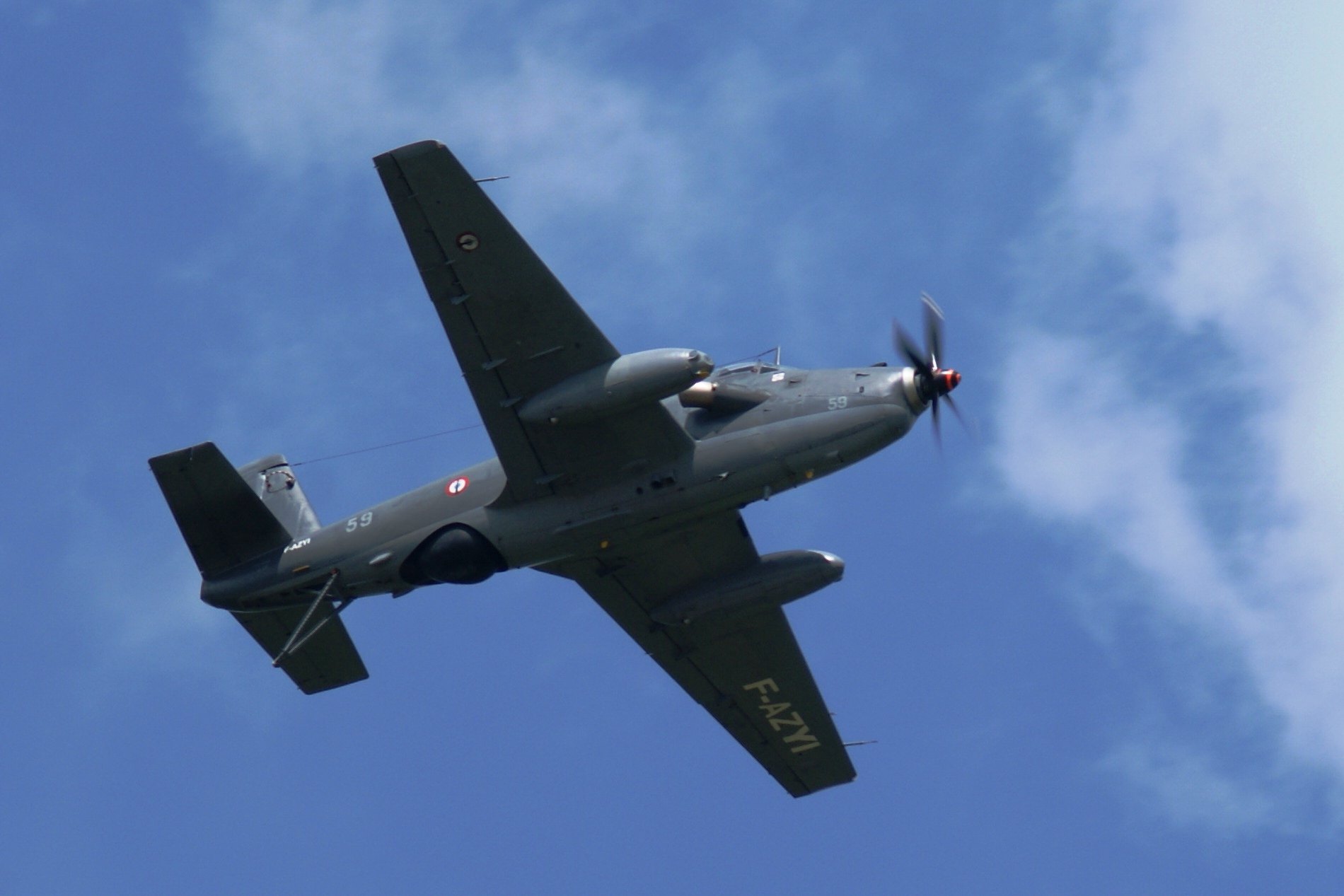
Breguet Br.1050 Alizé
France’s Carrier Submarine Hunter
France’s carrier-borne submarine hunter flew from Clemenceau and Foch for four decades, fought for India in 1961 and 1971, saw out the century over Kosovo and retired only when the Foch left the fleet in 2000.
The Alizé: how Breguet turned a failed strike jet into France’s carrier submarine hunter
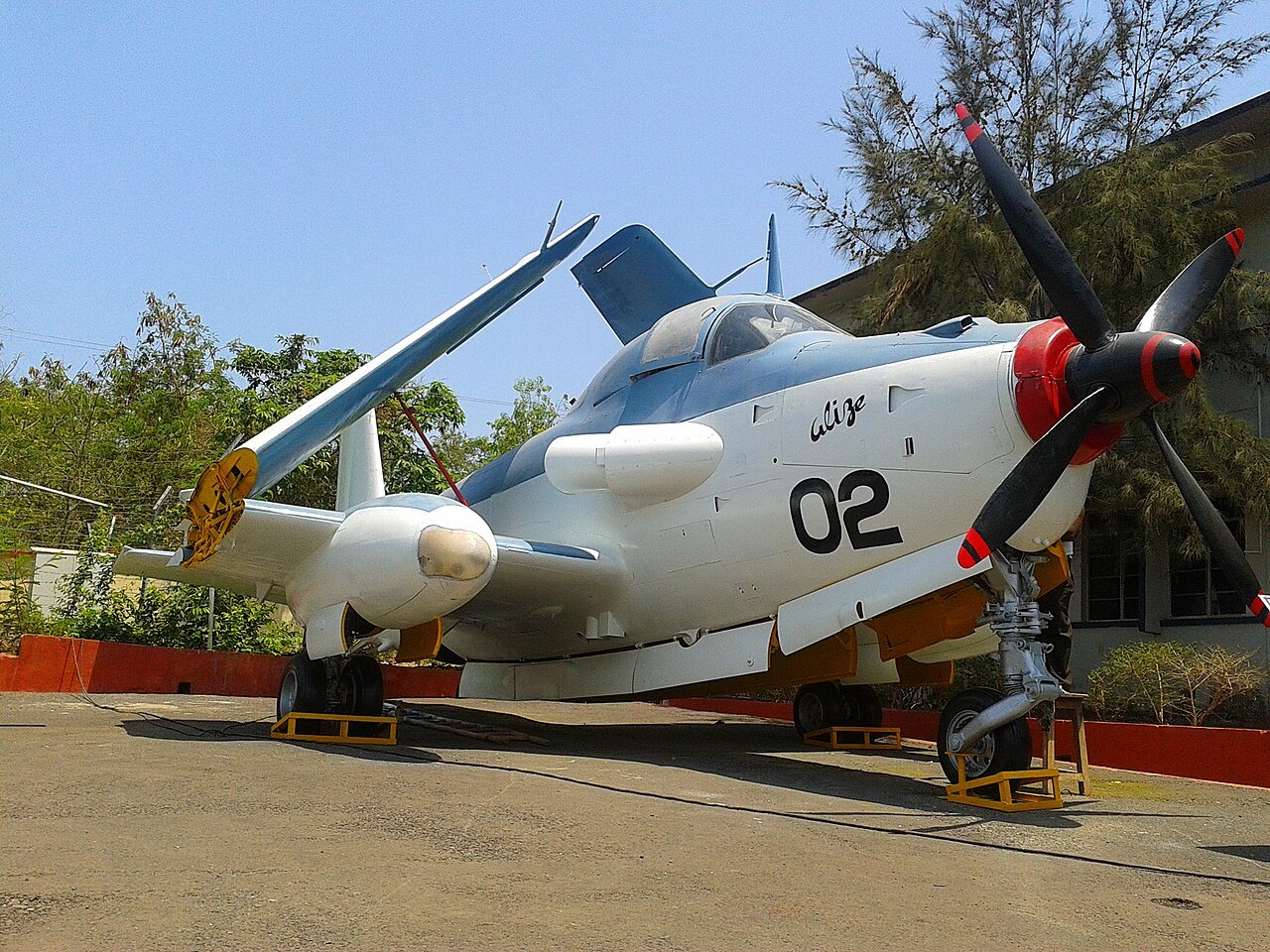
The Alizé was born from a cancellation. Breguet’s Br.960 Vultur had been a naval strike aircraft with a turboprop in the nose and a small jet in the tail, and when it was abandoned the French Navy asked for an anti-submarine aircraft built on the same, well-liked airframe. Breguet took out the rear jet and put a retractable radar dome in its place, installed a Rolls-Royce Dart turboprop up front, made room for a third crew member and set nacelles into the wing leading edges to hold sonobuoys and the main wheels. The first of three prototypes flew in October 1956, but early trials revealed poor handling and a long period of changes followed.
Catapult and deck-landing trials began on shore installations in 1957 and moved to the British carrier HMS Eagle in March 1958, since France’s own new carriers were still being built. An order for 100 was cut to 75 for the Aéronavale, and final assembly took place at Biarritz. The first production Alizé was handed over in 1959 and the type went to sea with Flottilles 4F, 6F and 9F, first from the light carrier Arromanches and then from the new Clemenceau and Foch. A crew of three, pilot, navigator and radar operator, worked as a hunter-killer team, finding a submarine with radar and buoys and attacking with a homing torpedo or depth charges carried in the internal bay.
India bought twelve new aircraft and later two ex-French ones for its light carrier INS Vikrant, and Indian Alizés flew in the Goa operation of 1961 and the 1971 war with Pakistan, when one was shot down by a Pakistani F-104 Starfighter, the type’s best-known combat loss. In France the Alizé was upgraded again and again, gaining a new Iguane radar in the 1980s, but by the 1990s it could no longer chase modern nuclear submarines and turned to surface surveillance. It flew from the Foch during the Kosovo air campaign of 1999, and its career ended in September 2000 with the carrier’s retirement.
01The Alizé in Indian service: Goa, 1965 and the 1971 war
The Indian Navy’s Alizés equipped INAS 310, the squadron known as the Cobras, and were delivered from 1961. They operated from shore bases and from the light carrier INS Vikrant. Their first operation came almost at once: in December 1961 they flew maritime patrol and photographic reconnaissance during India’s seizure of Portuguese Goa. During the 1965 war with Pakistan they flew patrols off the west coast but saw no combat.
The 1971 war was different. Vikrant sailed into the Bay of Bengal with Sea Hawk fighter-bombers and Alizés, and the Alizés flew anti-submarine and surface patrols for the carrier group. One Alizé was shot down by a Pakistan Air Force F-104 Starfighter. The type’s numbers dwindled in the 1980s, and when Vikrant was rebuilt to operate Sea Harriers in 1987 the Alizés moved ashore. India retired them in 1991, replacing them with anti-submarine helicopters, and one is preserved at the Naval Aviation Museum in Goa.
02The Alizé’s last decade: from submarine hunter to surface watcher
The French Navy never had the money to replace its Alizés with a new carrier anti-submarine aircraft, so it kept upgrading them. In the mid-1960s thirty were modified to fire the US Mk 44 torpedo and the wire-guided AS.12 missile. In the early 1980s 28 were rebuilt to the ALM (Alizé Modernisé) standard with a Thomson-CSF Iguane pulse-compression radar, OMEGA navigation, new sonobuoy receivers, chaff and flare dispensers and a new radar-warning system. In the 1990s more were fitted with decoys, a new autopilot and avionics, and in 1996 and 1997 some received the Chlio infrared camera.
By then the Alizé could not realistically hunt nuclear submarines, and it became the eyes of the carrier group, watching surface shipping off Lebanon in the 1980s and later in the Persian Gulf. It flew from the Foch during NATO’s Kosovo campaign in spring 1999. The last carrier landing came on 27 June 2000, and the type was withdrawn on 15 September 2000 as the Foch was sold to Brazil. Airborne surveillance for the French carrier passed to the E-2C Hawkeye aboard the new Charles de Gaulle.
What makes the Alizé special
A radar that drops out of the belly
Where the Vultur had a jet engine in its tail, the Alizé had its radar. The antenna sat in a retractable dome in the rear fuselage, lowered in flight for searching and pulled back in for take-off and carrier landing. Early aircraft used the DRAA-2A radar; the 1980s ALM upgrade fitted the Thomson-CSF DRAA-10A Iguane, a pulse-compression set that could detect a ship at long range and, sea state permitting, a periscope at around 25 nautical miles. A radar-warning receiver gave the crew a first electronic-surveillance capability.
Sonobuoys in the wings
The Alizé’s wing carried two pods set into the leading edges. Their rear sections took the main undercarriage, which retracted forwards, and their front sections held sonobuoys on release racks. The navigator, seated beside the pilot, doubled as acoustic operator, listening to the buoys and using the Julie explosive-echo tactic to fix a submarine’s position. The radar operator sat behind them. With radar, buoys and a weapons bay in one airframe, a single Alizé could search, localise and attack.
A small aircraft for small carriers
The Alizé was sized for the carriers France actually had. With a wingspan of 15.6 m and wings that folded upwards, it fitted the lifts and hangars of the Arromanches and later the larger Clemenceau and Foch, and it was light enough at about 8.2 tonnes for their catapults. Its single Dart turboprop drove a four-bladed propeller, used water-methanol injection for extra take-off power and gave useful residual jet thrust. Pilots found it underpowered high up, where the margin above stalling speed shrank to a few tens of knots.
03The Alizé’s weapons and crew stations
The internal bay under the fuselage was designed for a single homing torpedo, first the French L4 and later the American Mk 44 and Mk 46, or for depth charges; it could also take rescue containers or an extra 500-litre fuel tank. Underwing pylons carried depth charges, bombs, 68 mm rocket pods or two AS.12 wire-guided missiles for attacking surfaced submarines and small craft. Sonobuoys rode in the wing pods.
The crew sat in a short glazed cabin. The pilot was in front on the left, the navigator in front on the right handling navigation and acoustics, and the radar and sensor operator sat behind them. A fourth seat or a passenger could be fitted in the rear. The main undercarriage had twin wheels on each leg to spread the loads of carrier landings, and a yoke-type arrester hook was mounted under the rear fuselage.
Breguet Br.1050 Alizé specifications
Specifications
- Crew
- 3 (pilot, navigator/acoustic operator, radar operator)
- Length
- 13.86 m (45 ft 6 in)
- Wingspan
- 15.60 m (51 ft 2 in)
- Height
- 5.00 m (16 ft 5 in)
- Empty weight
- 5,700 kg (12,566 lb)
- Max take-off weight
- 8,200 kg (18,078 lb)
- Powerplant
- 1 × Rolls-Royce Dart RDa.21 turboprop, four-bladed propeller
- Maximum speed
- about 460 km/h (286 mph) at sea level
- Cruise speed
- about 370 km/h (230 mph)
- Range
- about 2,500 km (1,553 mi)
- Service ceiling
- 6,250–8,000 m (20,500–26,250 ft) depending on source
- Armament
- One homing torpedo or depth charges in internal bay; underwing depth charges, bombs, 68 mm rockets or 2 × AS.12 missiles; sonobuoys in wing pods
Costs & production
- Unit cost
- No reliable figure found in the sources used
- Cost per flight hour
- No official figure. A rough estimate for the one privately operated Alizé is a few thousand euros per hour, based on a single Dart turboprop, a 1950s airframe and the specialist maintenance of a lone ex-naval type; an order of magnitude only, not a quoted rate
- Production
- 89 built 1957–1962 including pre-series aircraft; 75 production aircraft for the French Navy and 12 new aircraft for India
- Programme
- First flight October 1956; first delivery 1959; ALM upgrade early 1980s; French withdrawal 15 September 2000; Indian withdrawal 1991
04The Alizé’s versions: from prototype to ALM
- Br.965 Épaulard: the second Vultur prototype modified as a test aircraft for the Alizé concept, with a fixed radar under the fuselage.
- Br.1050 prototypes and pre-series: three prototypes, the third with the more powerful Dart chosen for production, followed by pre-series aircraft.
- Br.1050 production: 75 for the French Navy, 12 new aircraft for India, plus two ex-French aircraft for India.
- 1964–65 modification: about thirty aircraft cleared for the Mk 44 torpedo and AS.12 missile.
- ALM (Alizé Modernisé): 28 aircraft rebuilt in the early 1980s with Iguane radar, OMEGA navigation and new acoustics.
- ALH: 1990s standard with decoys, new autopilot and, on some aircraft, Chlio infrared sensor.
05The Alizé’s operating costs: a long-lived economy
The Alizé was cheap by carrier-aviation standards: one engine, three crew and a small airframe. Its longevity was itself a cost decision, since France chose repeated upgrades over buying a new carrier anti-submarine aircraft. Against that, a turboprop working from salt-laden decks needed constant corrosion control, and the airframes accumulated very high hours; French sources commonly give a total of around 330,000 flying hours for the fleet. No per-hour figure has been published.
The Alizé from Vultur to the last carrier landing
From the Vultur
After the Br.960 Vultur strike aircraft is abandoned, Breguet reworks its airframe as an anti-submarine aircraft.
First flight
The first of three Alizé prototypes flies in October 1956.
HMS Eagle trials
After shore-based catapult and arrester trials in 1957, deck trials take place aboard the British carrier HMS Eagle in March.
Into service
The first production aircraft is handed over to the Aéronavale; the order has been cut from 100 to 75.
India and Goa
Indian Alizés arrive for INAS 310 and fly reconnaissance during the Goa operation in December.
War from Vikrant
Indian Alizés fly patrols from INS Vikrant; one is shot down by a Pakistani F-104.
ALM upgrade
28 French aircraft receive the Iguane radar, OMEGA navigation and new acoustics.
India retires it
The Indian Navy withdraws its last Alizés in favour of helicopters.
Kosovo
Alizés fly from the carrier Foch during NATO’s air campaign over Yugoslavia.
Last landing
The final Alizé carrier landing aboard Foch on 27 June; withdrawal from service on 15 September.
Stories & eyewitnesses: the Alizé at sea
A strike jet turned inside out
The Alizé kept the Vultur’s wing and lost its tail jet.
Read the full story
Learning to land on a British deck
France’s new carrier aircraft first went to sea on HMS Eagle.
Read the full story
Over Goa, December 1961
The Indian Navy’s newest aircraft flew in its first operation within a year of arrival.
Read the full story
The 1971 war and the F-104
Vikrant’s Alizés flew the carrier’s patrols, and one did not come home.
Read the full story
3,156 hours: a navigator’s life on the Alizé
Bruno Boudet’s notebooks record 542 carrier landings.
Read the full story
Iguane: a new radar for an old aeroplane
The 1980s ALM rebuild kept the Alizé useful for another 20 years.
Read the full story
Kosovo from the Foch
In 1999 the Alizé flew its last war.
Read the full story
27 June 2000: the last trap
The Alizé left the fleet with the carrier that had carried it.
Read the full story
Number 5 at Toulouse
An early Alizé, never upgraded, is being restored by Ailes Anciennes.
Read the full story
F-AZYI: the Alizé that still flies
Number 59 is the type’s only airworthy example.
Read the full story
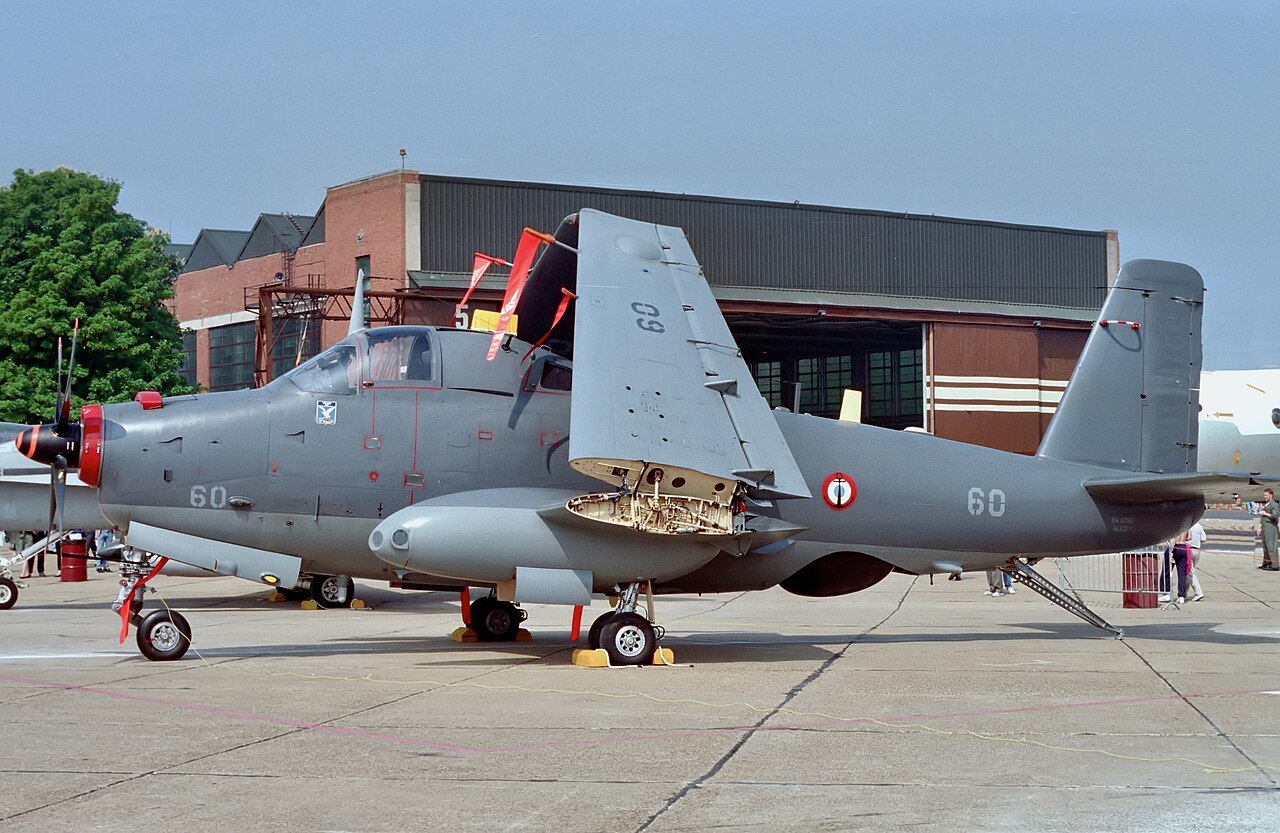
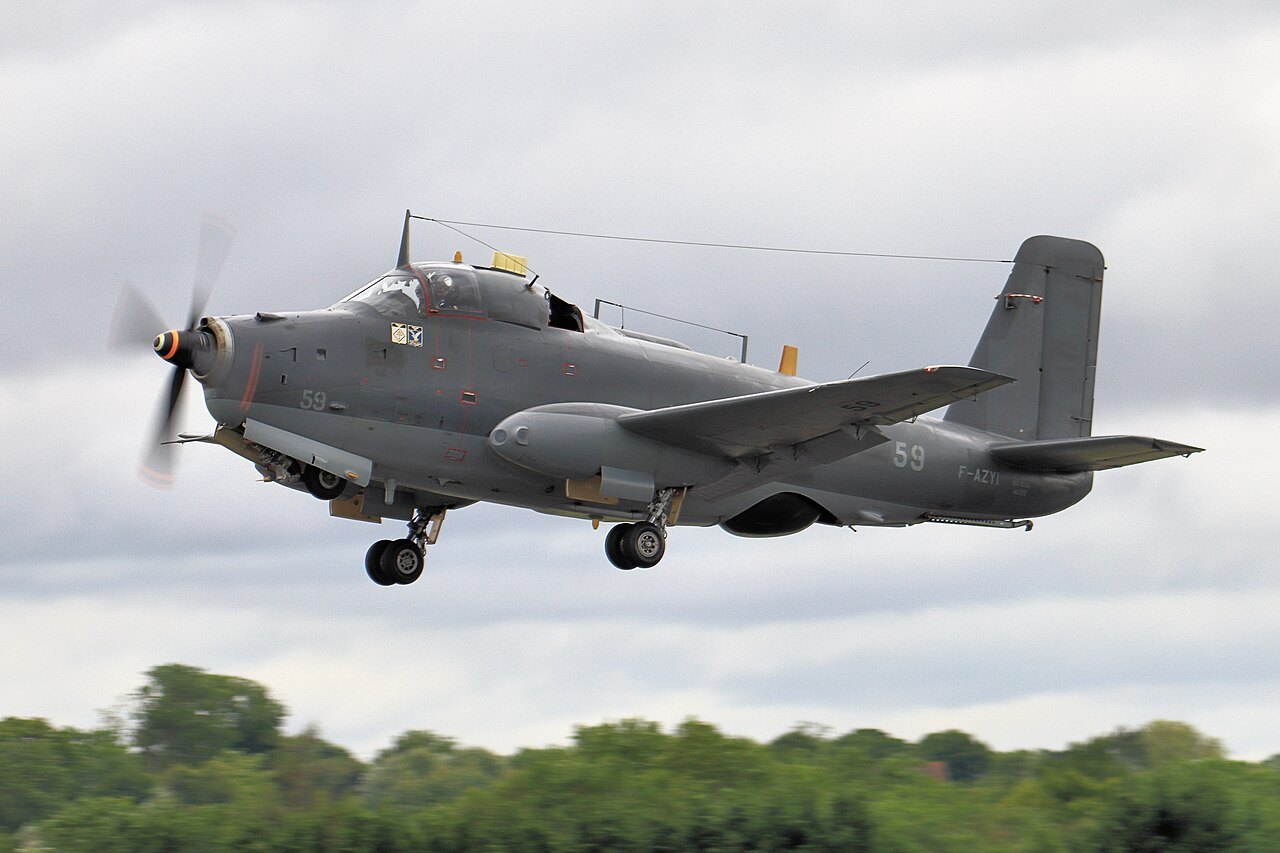
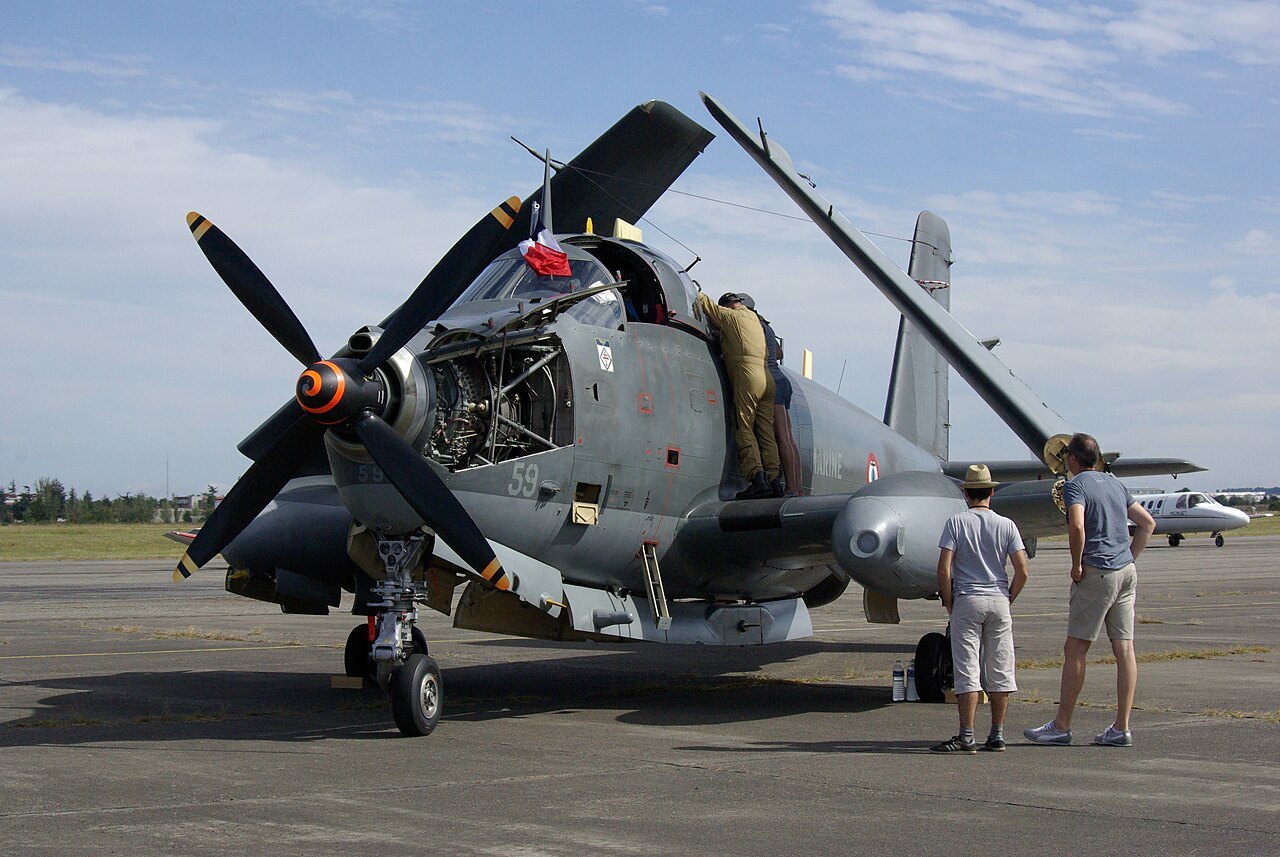
The Alizé in pictures
Where the Alizé flies and flew
The Alizé’s record
The Alizé was a Cold War patroller whose real work was tracking submarines and ships in peacetime. Its combat record came mostly in Indian hands, in the Goa operation of 1961 and the 1971 war, and in French service in surveillance roles off Lebanon, in the Gulf and over the Adriatic in 1999.
See how training and combat types compare in the military aircraft statistics database. Figures are approximate.
Everything people ask about the Alizé
Can I fly in a Breguet Alizé?
What was the Alizé used for?
How many Alizés were built?
Which carriers did the Alizé fly from?
Did the Alizé see combat?
When was the Alizé retired?
Where can I see an Alizé today?
You can’t fly the Alizé.
These, you can.
Most of this museum you can only look at. These genuine military jets you can fly yourself with MiGFlug — with aerobatics and time on the controls.
 Fly the L-39 AlbatrosThe world’s most-flown jet trainer — aerobatics included
 Fly the F-104 Starfighter“The missile with a man in it”
 Fly the MiG-21The Cold War’s most-produced jet
 Fly the T-33 Shooting StarAmerica’s first jet trainer
 Fly the DH VampireA piece of early jet history
 Fly the S.211Agile Italian jet trainer
 Fly the MB-326The classic Aermacchi jet
 Fly the MiG-15The Soviet legend of the Korean War
Continue the tour
Every fact, checked
- Breguet Br 1050 AlizéAiles Anciennes Toulouse: first flight 5 October 1956, 89 built, Biarritz assembly, service to September 2000, history of no. 5
- Breguet 1050 AlizéVirtual Aircraft Museum: prototype and pre-series, 75 ordered, 1959 delivery, 12 plus 2 for India, specifications
- Le Navigateur de l’Alizé (memoirs of Bruno Boudet)Navigator’s memoirs: Flottille 6F from 1980, 3,156 hours and 542 deck landings on the Alizé