
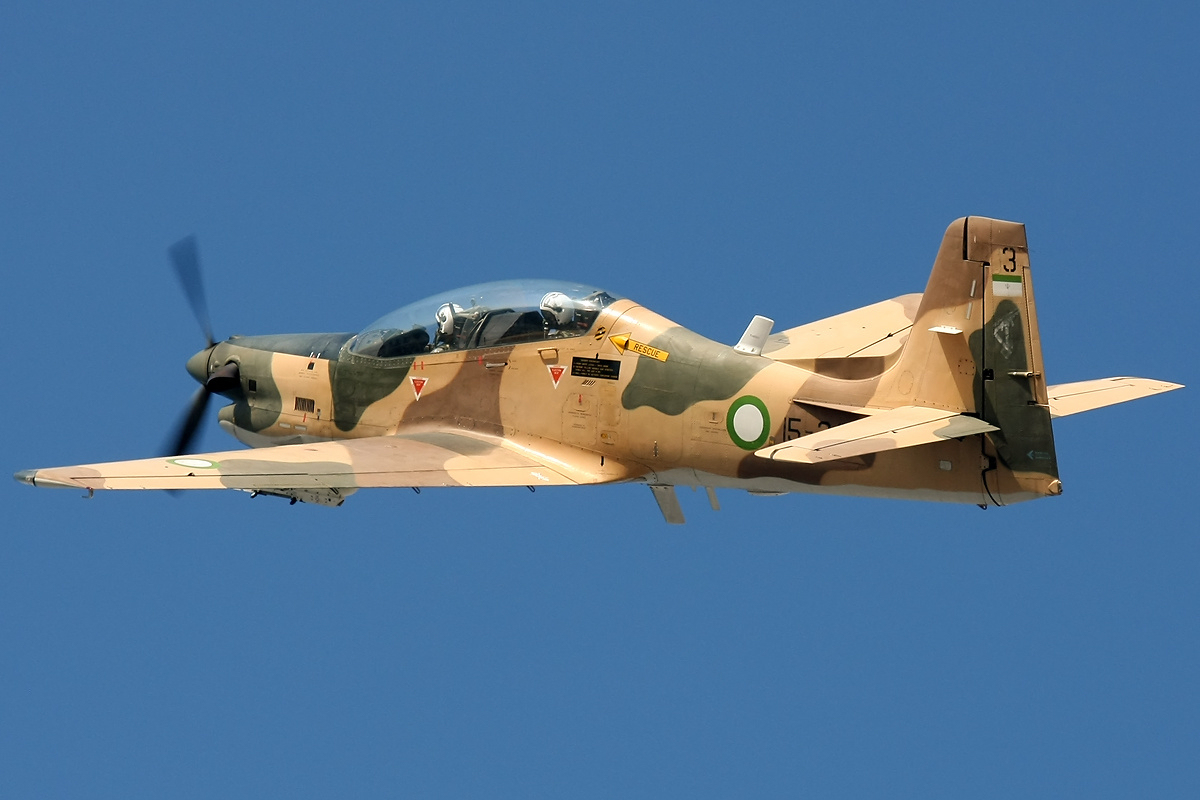
Embraer EMB-312
Tucano
The Brazilian turboprop that gave air forces jet-style training at a fraction of the cost of a jet — exported and licence-built across four continents, and the direct ancestor of the Super Tucano.
The trainer that taught the world to fly jets — on a propeller
By the mid-1970s Brazil’s young aircraft maker Embraer had already found success with the Bandeirante airliner. When the Brazilian Air Force went looking for a replacement for its ageing Cessna T-37 jets and piston-engined trainers, Embraer proposed something unusual: a turboprop that flew and felt like a jet, but cost a fraction as much to buy and to run. The EMB-312 Tucano — Portuguese for “toucan” — first flew on 16 August 1980 and entered Brazilian service in 1983 as the T-27.
Its central idea was the cockpit. Where earlier turboprop trainers sat the two crew side-by-side, the Tucano put them in a stepped tandem cockpit under a single long canopy, with the instructor raised behind the student — exactly the layout of a fast jet. It added ejection seats, a single power lever, and jet-style instruments. A student could take ab-initio, aerobatic and instrument training on the Tucano and step almost directly into a jet, saving expensive jet flying hours.
The formula sold. Beyond Brazil the Tucano was exported across Latin America — Argentina, Colombia, Venezuela, Peru, Honduras, Paraguay and others — and to the Middle East and Africa. Two large licence deals followed: Egypt’s Arab Organization for Industrialization assembled roughly 120 for Egypt and Iraq, and in Britain Short Brothers of Belfast re-engined and strengthened the design as the Shorts Tucano T.1 for the Royal Air Force. Counting Embraer’s own production of more than 600 and the UK’s ~130, well over 700 Tucanos of all kinds were built.
Many were armed. With underwing hardpoints the Tucano could carry light bombs, rockets and gun pods, and several air forces used it for counter-insurgency and border patrol as much as for training. That armed, more powerful idea was pushed much further in the 1990s into a bigger, heavier aircraft — the EMB-314 Super Tucano — which is a separate, later design and should not be confused with the original EMB-312.
01The Embraer EMB-312 Tucano’s origin: how a Brazilian trainer became a global export hit
Brazil’s 1978 requirement asked for a single trainer able to take a student from first flight through to advanced and weapons training, cheaply. Embraer’s answer combined a turboprop’s low running cost with a jet’s ergonomics: tandem seating, a bubble canopy, ejection seats and a single throttle. First flown in 1980 and in Brazilian service by 1983, it arrived just as many air forces were looking to cut the cost of pilot training. The result was one of the most widely exported military trainers of its generation, adopted on four continents and built under licence in both Egypt and the United Kingdom — a remarkable outcome for what was then a young manufacturer in an emerging aerospace nation.
What makes the EMB-312 Tucano special
A jet cockpit on a turboprop budget
The Tucano’s defining feature is its stepped tandem cockpit — instructor behind and above the student, under one long canopy, with ejection seats and jet-style instruments. It let students learn the sight picture, workflow and discipline of a fast jet while burning a fraction of the fuel, so the expensive jet phase of training could be shorter.
One Pratt & Whitney PT6A doing a whole syllabus
Power comes from a single Pratt & Whitney Canada PT6A-25C turboprop of about 750 shaft horsepower, driving a three-blade propeller. The PT6 is one of the most reliable and economical engines ever built, and its single power lever gave students clean, jet-like throttle handling without the fuss of a piston engine.
Designed to be exported — and built by others
The Tucano was engineered for cost and adaptability. It was assembled under licence in Egypt and, heavily modified and re-engined with a more powerful Garrett turboprop, built in Britain as the Shorts Tucano. Underwing hardpoints let many operators use it for light attack and counter-insurgency as well as training.
02The EMB-312 Tucano’s cockpit: why tandem seating and ejection seats mattered
Before the Tucano, many turboprop trainers seated instructor and student side-by-side. Embraer deliberately copied the fast-jet layout instead: tandem seats with the rear (instructor) seat raised for a clear forward view, a single-piece bubble canopy, and Martin-Baker-type ejection seats on most versions. The point was transfer of training — a student who learned formation, aerobatics and instrument flying in a Tucano would find a jet trainer familiar, cutting the number of costly jet hours needed. That philosophy, proven on the Tucano, became the template for the next generation of turboprop trainers.
03The Shorts Tucano: how Britain rebuilt the Brazilian design for the RAF
When the Royal Air Force chose the Tucano in 1985 to replace the Jet Provost, it did not buy the aircraft as-built. Short Brothers of Belfast substantially re-engineered it: a much more powerful Garrett TPE331 turboprop (roughly 1,100+ shp) for a steeper climb and higher speed, a strengthened airframe for a longer fatigue life, a revised cockpit and a four-blade propeller. Around 130 Shorts Tucano T.1s were built; they served the RAF from 1989 until retirement in 2019, and a handful were also exported to Kenya and Kuwait. It is best understood as a licence-built British derivative of the EMB-312 rather than an identical aircraft.
Embraer EMB-312 Tucano: full specifications
Baseline: the production EMB 312 as delivered to the Força Aérea Brasileira from September 1983 under the local designation T-27 Tucano — one Pratt & Whitney Canada PT6A-25C, a three-blade constant-speed propeller, an unpressurised stepped tandem cockpit on two Martin-Baker seats, and an airframe rated for 8,000 flying hours. Deltas for the French EMB-312F, the Brazilian T-27M avionics upgrade, the stretched EMB-312H demonstrator and above all the Short Tucano T1 are in grey. Three warnings before the numbers. First, the Short Tucano is not a re-engined EMB 312 but a different aeroplane wearing the same shape: around nine hundred modifications left roughly a fifth of the parts common, so its figures are quoted separately rather than blended into the Brazilian ones. Second, the propeller. Almost every English-language table gives the EMB 312 a four-blade propeller; it has three, and the four-blade Hartzell is a Short Tucano feature and one of the two easiest ways to tell the aircraft apart in a photograph. Third, the engine rating. Brazilian and widely reproduced English-language tables print 552 kW (740 shp) as the installed figure while the PT6A-25C is variously catalogued between 715 and 750 shp; the installation is flat-rated, so the lower number is the honest one to compute from.
Dimensions & weights
- Crew
- 2 in stepped tandem, the rear instructor seat raised so that he can see past the pupil to the horizon and the runway threshold. Solo flight is from the front seat. This layout, on a turboprop, on ejection seats, is the Tucano's single most imitated idea
- Length
- 9.86 m (32 ft 4 in) the EMB-312H demonstrator was stretched by 1.37 m to take a far larger engine, and that stretch is what became the Super Tucano
- Wingspan
- 11.14 m (36 ft 7 in) the Short Tucano spans 11.28 m (37 ft 0 in), a small but real difference and not a rounding error
- Height
- 3.40 m (11 ft 2 in)
- Wing area
- 19.40 m² (208.8 sq ft) — a generous wing for the power available, which is why the aeroplane is docile at the bottom of the envelope and unremarkable at the top
- Aspect ratio
- 6.40:1
- Undercarriage track
- 3.76 m (12 ft 4 in) — wide for the size, deliberately, because the customer list was always going to include air forces operating from grass and murram
- Empty weight
- 1,810 kg (3,990 lb) Short Tucano 2,017 kg (4,447 lb): more than 200 kg of extra structure, engine and equipment, which is the price of a 12,000-hour fatigue life and a heavier powerplant
- Maximum take-off weight
- 3,175 kg (7,000 lb) Short Tucano 3,275 kg (7,220 lb)
- Maximum landing weight
- 2,800 kg (6,173 lb)
- Wing loading
- 163.7 kg/m² (33.5 lb/sq ft) at maximum take-off weight; nearer 125 kg/m² (25.6 lb/sq ft) at the clean training weight a cadet actually flies
- Power loading
- 4.29 kg/shp (9.46 lb/shp) at maximum weight on the published 740 shp rating — modest, and the reason the Tucano was always a competent trainer rather than a fast one
- External load
- 1,000 kg (2,200 lb) across four underwing pylons on the armed aircraft; the RAF and Kuwaiti machines were delivered without the wiring and never carried a weapon
- Structure and fatigue life
- all-metal stressed-skin low wing and semi-monocoque fuselage, cleared to 8,000 hours Short Brothers strengthened the airframe to 12,000 hours to survive a Royal Air Force basic-training sortie rate, which is the least visible and most expensive of the British changes
- Canopy
- one-piece rearward-sliding canopy over both seats the Short Tucano canopy was rebuilt to a British birdstrike standard, one of the specific items that made the aeroplane heavier and the programme dearer
Performance
- Maximum speed
- 458 km/h (285 mph, 247 kn) at 4,115 m (13,500 ft) Short Tucano 507 km/h (315 mph, 274 kn) — the Garrett engine bought about fifty km/h at the top end and a great deal more in the climb
- Cruise speed
- 441 km/h (274 mph, 238 kn) Short Tucano cruise 407 km/h (253 mph, 220 kn) at 6,100 m, a lower figure because it is quoted at a higher and more economical altitude
- Never-exceed speed
- 539 km/h (335 mph, 291 kn)
- Maximum diving speed
- 607.5 km/h (377 mph, 328 kn) as cleared in 1983 — the figure exists because the second prototype was lost in August 1982 when full rudder was applied some 65 km/h beyond the then-limiting dive speed and the airframe came apart. Both crew ejected; the tailplane leading edge was redesigned
- Stalling speed
- 124 km/h (77 mph, 67 kn) in the landing configuration the Royal Air Force requirement demanded a stall around 60 kn, which is a large part of why the British aircraft got a ventral airbrake and revised wing details the Brazilian one never had
- Rate of climb
- 11.3 m/s (2,230 ft/min) at sea level published figures for the PT6A aircraft cluster between 11.0 and 11.4 m/s. The Short Tucano climbs at 17.8 m/s (3,510 ft/min), better than half as fast again, and climb rate was the single specification that decided the British engine change
- Service ceiling
- 8,750 m (28,710 ft) Short Tucano 10,000 m (32,800 ft)
- Range
- 1,916 km (1,191 miles, 1,035 nmi) on internal fuel Short Tucano 1,665 km (1,035 miles, 899 nmi)
- Endurance
- up to ~9 hours aloft with two underwing tanks, a ferry and deployment figure rather than a training one the Short Tucano's published internal-fuel endurance is 5 h 12 min, which is the more useful comparison
- Load factors
- +6 / −3 g Short Tucano +7 / −3.6 g, matching the Hawk it fed pupils into
- Spinning
- fully cleared for intentional spins and recovery in both directions — not a footnote but a design requirement, since a basic trainer that cannot be spun deliberately cannot teach the recovery
- Field performance
- cleared for grass and semi-prepared surfaces at training weights; published take-off and landing distances vary too widely between operators' manuals to quote a single pair of numbers honestly
Propulsion & systems
- Engine
- one Pratt & Whitney Canada PT6A-25C free-turbine turboprop, the aviation industry's most reliable single-engine answer to almost any question, chosen here for exactly that reason
- Rating
- 552 kW (740 shp) as installed and flat-rated catalogue ratings for the -25C run from 715 to 750 shp depending on the source and the limit being quoted; the Tucano installation does not use the top of that band
- Propeller
- three-blade Hartzell constant-speed, fully feathering and reversible the Short Tucano has a four-blade Hartzell of 2.39 m diameter; English-language tables that give the Brazilian aircraft four blades have simply copied the British figure across
- Short Tucano powerplant
- one Garrett (later Honeywell) TPE331-12B single-shaft turboprop of 858 kW (1,151 shp) with an electronic engine controller. A single-shaft engine spools differently from a free turbine and the throttle response is sharper, which instructors liked and which made the British aircraft feel less like a light aeroplane and more like a jet
- Fuel
- 694 litres (183 US gal, 153 imp gal) internal in the wings, plus two underwing tanks for ferry and deployment Short Tucano 724 litres
- Pressurisation and oxygen
- none — the cockpit is unpressurised in every EMB 312 and every Short Tucano, with a gaseous oxygen system for work above about 3,000 m. Cabin pressurisation arrived only on the EMB-312H demonstrator and went on into the Super Tucano
- Ejection seats
- two Martin-Baker lightweight rocket-assisted seats, the BR8LC pattern in Brazilian-built aircraft and the Mk 8LC in the Short Tucano, usable through the canopy. Ejection seats in a basic trainer were not universal practice in 1980 and were among the reasons the Tucano beat cheaper competitors
- Undercarriage
- hydraulically retractable tricycle with a steerable nosewheel and oleo-pneumatic legs, wide-tracked and cleared for unpaved strips
- Airbrake
- none on the baseline EMB 312; a ventral airbrake was fitted to the Short Tucano to meet the British approach and stall requirement and was later adopted on the French EMB-312F
- Avionics
- analogue instruments and conventional VHF/UHF, VOR/ILS and TACAN fits as ordered by each customer the EMB-312F carried Thomson-CSF navigation equipment and TEAM avionics; the Brazilian T-27M programme, launched with an initial 42 aircraft, replaced the panel with electronic displays; the Short Tucano cockpit was laid out to mirror the BAe Hawk rather than the Brazilian original
- Armament provision
- four underwing hardpoints with a stores management panel on the AT-27 and the export armed aircraft; wiring and pylons were customer options, so a Tucano airframe is not by itself an armed aeroplane
04The Embraer EMB-312 Tucano’s operating costs: cheap by design, but hard to pin down
The Tucano’s whole selling point was low cost, so its economics matter — but exact figures are elusive. It was sold to many governments on confidential terms, and published operating costs are rare and inconsistent. A single PT6A turboprop burning aviation kerosene is far cheaper to run than any jet trainer, and cost-per-flight-hour figures quoted for comparable PT6-powered turboprop trainers generally fall in the low hundreds to around US$1,000 per hour — but no authoritative, type-wide number exists for the EMB-312, and any precise figure should be treated as an estimate. The flyaway unit price in the 1980s is commonly put in the region of US$1.5–2 million, again an approximation rather than a sourced list price.
Armament & payload
The Tucano was sold as a trainer and used as a counter-insurgency aeroplane, and the four wing pylons are where those two careers meet
There is no gun in an EMB 312. There is no gun in any EMB 312, in any air force, in any variant. What Embraer sold was four underwing pylons rated at 1,000 kg in total, a stores panel and the wiring to go with them, and an air force that wanted an armed aeroplane fitted pods to those pylons and called the result an AT-27.
That arrangement produced two entirely different service records. In Britain and Kuwait the pylons were never fitted at all and the aeroplane spent its whole life as a pure trainer. In Colombia, Peru, Honduras, Venezuela, Angola and Mauritania it flew real operations with real weapons, mostly against opponents with rifles, and in the counter-narcotics role it was used to intercept and in several cases to shoot down civil light aircraft — a mission no trainer specification ever envisaged and one that has cost at least one general his job. Clearances vary enormously by operator; a store on a Brazilian brochure is not a store certified on a particular national fleet, and several of the combat claims below rest on national statements that no independent source has confirmed.
Gun
- No internal gun of any calibre, in any variant. This is not an omission to be worked around but the basic fact of the type
- Podded 7.62 mm machine guns on the inboard pylons — the standard light fit, and the weapon used in the Honduran interception and destruction of a drug-carrying Aero Commander in April 2003
- Podded 12.7 mm heavy machine guns of the FN Herstal HMP class, the heaviest gun the aeroplane is realistically flown with
- 20 mm cannon pods appear on manufacturers' options lists; no operator is known to have adopted them, and the recoil and drag of a 20 mm pod on a 740 shp aeroplane are theoretical rather than practical
- With no fixed gun there is no fleet harmonisation standard, and accuracy depends entirely on the pod, its mounting and whether the customer paid for a sight at all.
Air-to-air
- No air-to-air missile has ever been integrated on the EMB 312 or the Short Tucano. Not Sidewinder, not Magic, not any man-portable derivative
- The air-to-air work the type has actually done is the slow-mover intercept: a gun-podded Tucano running down a light aircraft that a fighter cannot slow to engage. Peru, Colombia and Honduras have all used it this way against trafficking flights
- Peruvian sources credit their Tucanos with a very large number of light aircraft destroyed or forced down since 1991. The published totals are not independently verifiable and should be read as claims rather than counts
- The Tucano has been on the receiving end too. During the Venezuelan coup attempt of 27 November 1992 an EMB 312 flown by mutineers was shot down by a loyalist F-16 alongside two OV-10 Broncos
- The 2012 Honduran shoot-down over the Bay Islands ended with the dismissal of the general who ordered it, because Honduran law forbids shooting down civil aircraft. The mission the Tucano performs best in this category is also the most legally fraught one it performs.
Air-to-surface guided
- None. No laser-guided bomb, no guided missile, no anti-armour weapon has ever been integrated on a production EMB 312 or Short Tucano
- There is no internal targeting sensor, no designator provision and no data path for one; the aircraft was designed before precision attack was an expectation of a light aeroplane
- This gap is the whole reason the Super Tucano exists. The EMB-314 was built around a bigger engine, a pressurised cockpit and a modern mission system precisely because the EMB 312 could not be made to drop a guided weapon
- Egyptian and Iraqi Tucanos, the largest single block of airframes ever built, were unguided-only aircraft throughout and were used mainly for training rather than strike
- Colombia's 2011 modernisation programme with Embraer brought new wings, landing gear and Rockwell Collins avionics, but did not add a guided-weapon capability.
Bombs
- Mk 82 227 kg (500 lb) general-purpose bombs on the inboard stations — the heaviest single store the aeroplane carries
- Mk 81 113 kg (250 lb) general-purpose bombs on any of the four pylons
- Mk 76 practice bombs on multiple carriers, which in most air forces is the only thing ever actually released from a Tucano
- Peruvian Air Force Tucanos flew a night attack with Mk 82s against Ecuadorean positions on 5 February 1995 during the Cenepa War, which is the type's clearest use as a bomber in a state-on-state conflict
- Two Mk 82s consume most of the 1,000 kg external allowance and a good deal of the climb performance. The bombing capability is genuine but it is a single-pass, short-radius, no-opposition capability.
Rockets
- SBAT-70 70 mm rocket pods of Brazilian Avibras manufacture, seven-tube on the standard launcher — the most commonly fitted Tucano weapon after the gun pod
- SBAT-37 37 mm pods for lighter work and for cheap air-to-ground gunnery training
- 127 mm HVAR rockets on single rails, a wartime American weapon still in Latin American inventories when the Tucano entered service
- Rocketry suits the aeroplane far better than bombing: light stores, shallow dives and a platform stable enough that a competent cadet can be taught to hit something. Colombia's Escuadrón de Combate 212 flew its AT-27s this way against FARC positions for years, reportedly passing 50,000 flying hours without an operational loss
- The Colombian loss-free record is a national claim and covers operational losses, not the fleet's whole accident history.
Pods & other stores
- Two underwing fuel tanks, which take the aeroplane to something like nine hours aloft and turn a trainer into a self-deploying one
- Gun pods as above, and practice bomb carriers, which between them account for the overwhelming majority of stores ever hung on a Tucano
- Smoke generating systems for display flying — the Esquadrilha da Fumaça flew smoke-equipped T-27s from 1983 to 2013, thirty years on the type
- Night-vision-compatible cockpit lighting, retrofitted to Peruvian aircraft from 1998 for night counter-narcotics work
- Kenya's Tucano Mk 51 was delivered with four hardpoints and is the only armed Short-built aircraft. The Royal Air Force T1 and the Kuwaiti Mk 52 were unarmed and stayed that way; roughly a quarter of all Tucanos ever built never had a pylon fitted.
Three typical loadouts
- Basic and advanced training, any operator
- Clean. Two crew, full internal fuel, no external stores, aerobatics and spinning within the +6 / −3 g envelope. This is what almost every Tucano sortie ever flown looked like.
- Armed reconnaissance, Colombian or Peruvian pattern
- Two SBAT-70 seven-tube rocket pods inboard, two 7.62 mm gun pods outboard, full internal fuel. A three-hour patrol with enough ordnance for two or three passes against a camp or a river crossing, and nothing whatever with which to answer a shoulder-launched missile.
- Counter-trafficking interception, Honduran or Peruvian pattern
- One or two 12.7 mm gun pods, remaining pylons clean or carrying a single fuel tank, night-vision lighting where fitted. The aeroplane is fast enough to overhaul a piston twin and slow enough to formate on it, which is the entire tactical proposition.
Sourcing caveat: weapon lists for the Tucano come from manufacturers' options literature and from photographs of aircraft in service, not from published national clearance documents, which for most operators do not exist in the open. Combat claims from Peru, Colombia and Honduras are national statements. Where a secondary source credits the EMB 312 with guided weapons or air-to-air missiles it is almost always describing the EMB-314 Super Tucano, which is a different aeroplane.
Variants
The Tucano was the aeroplane that invented the modern turboprop trainer, and then had to watch two better-funded rivals refine the idea
The Brazilian Air Force wanted an aeroplane that would let a cadet step almost directly from a piston primary trainer into a jet, without the cost of a jet. Design work began in 1979 under Guido Pessotti and Joseph Kovacs, on an authorisation of December 1978 for two flying prototypes and two fatigue specimens. What they produced in August 1980 was the combination that every subsequent basic trainer has copied: a turboprop with jet-like power response, a stepped tandem cockpit with the instructor raised behind the pupil, ejection seats, a jet-convention cockpit layout, and full aerobatic and spinning clearance.
The Pilatus PC-9, the Beechcraft T-6 Texan II and the Super Tucano are all recognisably built to that template, and none of them existed when the Tucano flew. The Tucano's misfortune was that it defined the category with the smallest engine anyone would later use in it. A 740 shp trainer was exactly right for 1980 and merely adequate by 1990, and the two most important later chapters of the story — the British Short Tucano and the Brazilian Super Tucano — are both, in essence, the same airframe with far more power.
Commercially it did extremely well. The Egyptian contract of December 1983, worth some 181 million dollars, covered ten aircraft built in Brazil and 110 assembled under licence at Helwan, with a further order in 1989 taking the programme to around 134 airframes; roughly eighty of these went on to Iraq, which made a Brazilian trainer assembled in Egypt one of the more widely used aircraft in Saddam Hussein's air force. Then in March 1985 Short Brothers won the Royal Air Force's AST 412 competition with a Tucano derivative, beating the PC-9, the NDN Turbo-Firecracker and the Australian Wamira II, on a contract worth 126 million pounds for 130 aircraft. The exact Egypt-Iraq split is reported inconsistently across sources and the figures below should be read as the best reconstruction rather than as an audited total.
- EMB 312 prototypes and YT-27 (1980–1982, 3 flying airframes)
- First flight 16 August 1980; the second prototype was destroyed in August 1982 in an overspeed rudder-reversal test and both crew ejected, leading to a redesigned tailplane leading edge and the 1983 dive-speed clearance.
- EMB 312 / T-27 Tucano (1983–1990s, ~168 for Brazil)
- Production baseline. First deliveries 29 September 1983, to the Esquadrilha da Fumaça rather than to a training unit, which tells you what Embraer thought of the aeroplane's advertising value. An initial 118 aircraft with options on fifty, of which forty were taken up.
- AT-27 (export and Brazilian, four pylons)
- Not a separate production line but the armed configuration: four underwing hardpoints, stores management and a gunsight. Colombia, Peru, Honduras, Venezuela, Angola and Mauritania are the operators that used it as a weapon rather than a teaching aid.
- T-27M (from the 2010s, initially 42 aircraft)
- Brazilian mid-life upgrade replacing the analogue panel with electronic displays, keeping the airframe and PT6A-25C. The cheap way to hold a 1980s trainer in an air force whose front line has moved on.
- EMB-312F (1993–1995, 50 for France)
- First flight 7 April 1993. French avionics from TEAM and Thomson-CSF, propeller and canopy de-icing, a ventral airbrake and increased fatigue life. Withdrawn abruptly on 22 July 2009 with most airframes at about half their usable life; five were passed to Mauritania in 2011, where they were promptly used against AQIM targets and in a 2012 incursion into Malian airspace.
- EMB 312 Egyptian licence assembly (1984–c.1990, ~120–134)
- Assembled from Brazilian kits at Helwan, the largest single Tucano programme by airframe count. Around 54 stayed with the Egyptian Air Force and roughly 80 were transferred to Iraq from late 1984.
- EMB-312G1 (1986, 1 conversion)
- The Garrett TPE331 testbed, flown in July 1986, and the technical bridge to the British aircraft. The Brazilian Air Force showed no interest whatsoever in a Garrett-engined Tucano; the RAF requirement was the only reason it existed.
- Short Tucano T1 (1986–1993, 130 for the RAF)
- The substantial rebuild: TPE331-12B of 1,151 shp with an electronic controller, four-blade propeller, ventral airbrake, birdstrike-rated canopy, Martin-Baker Mk 8LC seats, a Hawk-pattern cockpit and a 12,000-hour airframe. Some nine hundred modifications cut commonality with the Brazilian aircraft to roughly twenty per cent. Prototype flew 14 February 1986, first Belfast-built aircraft 30 December 1986, RAF service from June 1988, withdrawn 25 October 2019 in favour of the Beechcraft T-6C.
- Short Tucano Mk 51 and Mk 52 (Kenya 12, Kuwait 16)
- The only Short-built exports. The Kenyan Mk 51 is combat-capable with four hardpoints; the Kuwaiti Mk 52 is unarmed. Some sources give Kuwait 12 rather than 16.
- EMB-312H, ALX and the EMB-314 Super Tucano (1991 onwards)
- The demonstrator that outgrew the type. A 1991 conversion stretched the fuselage by 1.37 m, pressurised the cockpit and fitted a PT6A-67R of some 1,424 shp; two further prototypes followed in 1993 with the PT6A-68A. Offered as the ALX for Brazil and, with Northrop, for the American JPATS competition, it became the EMB-314 / A-29 Super Tucano — a genuinely different aeroplane with a modern mission system, precision weapons and a service record from Afghanistan to the Sahel, and the reason the EMB 312 line closed.
Production and survivors. The best-attested total is 637 airframes, 477 by Embraer and 160 by Short Brothers, built between 1980 and 1996; figures of 664 and of "more than 600" both circulate, and the higher number appears to arise from counting Egyptian licence assembly separately from the Brazilian kits it consumed. This page uses 637 and flags the disagreement rather than splitting the difference. On current service: no operators chart is offered here because the numbers could not be corroborated to the standard the rest of this page uses. The type is genuinely still flying — Brazil retains a large T-27 and T-27M fleet at the Air Force Academy, variously reported around 109 of some 151 received; Egypt is credited with about 54; Argentina had a reported dozen operational in 2021; Kenya is credited with about a dozen Short-built aircraft; Colombia, Honduras, Paraguay, Angola, Mozambique, Mauritania and Iran's Revolutionary Guard all still list the type. But the Peruvian and Venezuelan inventories no longer show Tucanos at all, several of the published counts are simply delivery totals repeated for decades, and a bar chart built on that would be a chart of paper aeroplanes. The Esquadrilha da Fumaça flew the T-27 from 1983 to 2013 and now flies the A-29; the Royal Air Force retired its last Tucano T1 on 25 October 2019 after more than thirty years and only five airframes written off, a safety record that no jet trainer of the previous generation came close to.
From Brazilian trainer to global fleet
Requirement issued
The Brazilian Air Force asks Embraer for a single turboprop able to cover the whole training syllabus cheaply.
First flight
The prototype EMB-312 flies on 16 August, with its jet-style tandem cockpit and single PT6A turboprop.
Enters service
The Tucano joins the Brazilian Air Force as the T-27, quickly becoming its standard trainer.
Britain chooses the Tucano
The RAF selects a re-engined, strengthened version, to be built by Short Brothers as the Shorts Tucano T.1.
Licence assembly abroad
Egypt’s AOI begins assembling Tucanos for Egypt and Iraq; France orders the EMB-312F for its air force.
Shorts Tucano in RAF service
The British-built Tucano T.1 enters Royal Air Force service, replacing the Jet Provost.
Armed service in Latin America
Peru, Colombia, Venezuela and others use armed Tucanos for counter-insurgency and border patrol.
The Super Tucano appears
The larger, more powerful EMB-314 Super Tucano first flies — a separate, later development of the concept.
The RAF retires the Tucano
Britain withdraws the Shorts Tucano T.1 after 30 years, replacing it with the Texan T1 turboprop.
Still flying
Original EMB-312 Tucanos remain in service with several air forces, decades after first flight.
From the flight line: twelve Tucano stories
A young Embraer aims high
Brazil’s aircraft maker was barely a decade old when it set out to build a world-class trainer.
Read the full story
Why it sits you like a jet
The stepped tandem cockpit was the Tucano’s single most important idea.
Read the full story
Sold across four continents
From Latin America to the Middle East and Africa, air forces bought the Tucano in numbers.
Read the full story
The RAF’s Brazilian trainer
Short Brothers rebuilt the Tucano so thoroughly it was almost a new aircraft.
Read the full story
Assembled on the Nile
Egypt’s aircraft industry built Tucanos under licence for itself and for Iraq.
Read the full story
A Tucano for the Armée de l’Air
France bought a modified Tucano to teach a generation of its military pilots.
Read the full story
A trainer that could fight
Underwing hardpoints turned the trainer into a light attack and patrol aircraft.
Read the full story
Combat over the Cenepa
Peruvian Tucanos flew operationally during the 1995 border conflict with Ecuador.
Read the full story
Know the difference
The EMB-312 and the EMB-314 Super Tucano are two different aircraft.
Read the full story
The PT6 factor
Much of the Tucano’s appeal came from one very good engine.
Read the full story
Grandfather of a family
The Tucano started a line that still shapes pilot training today.
Read the full story
Still on the flight line
Decades after 1980, original Tucanos are still training pilots.
Read the full story
The Tucano in pictures
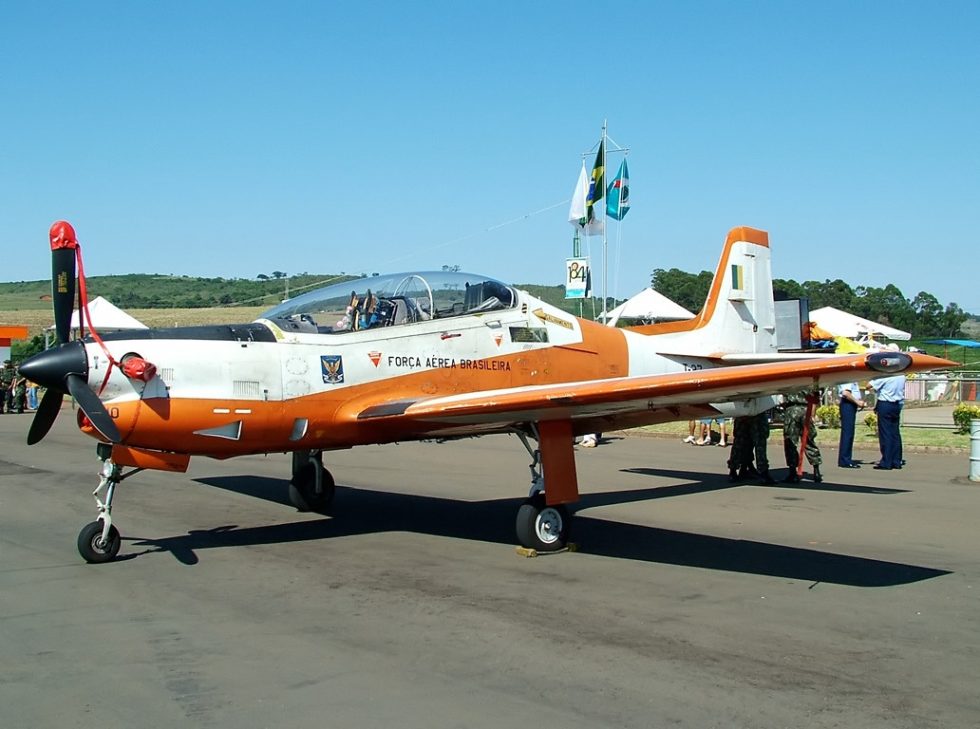
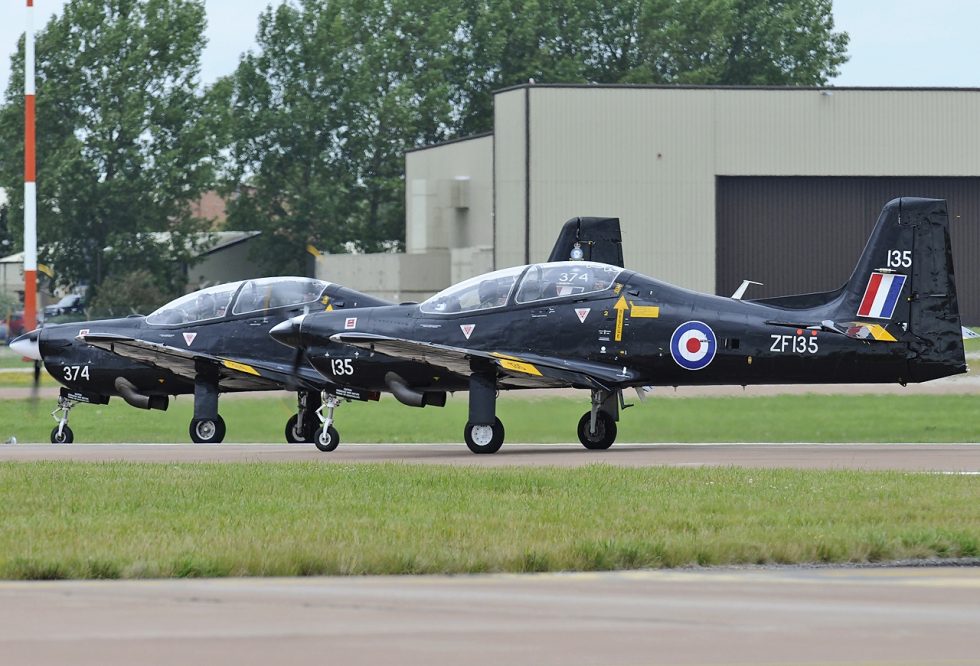
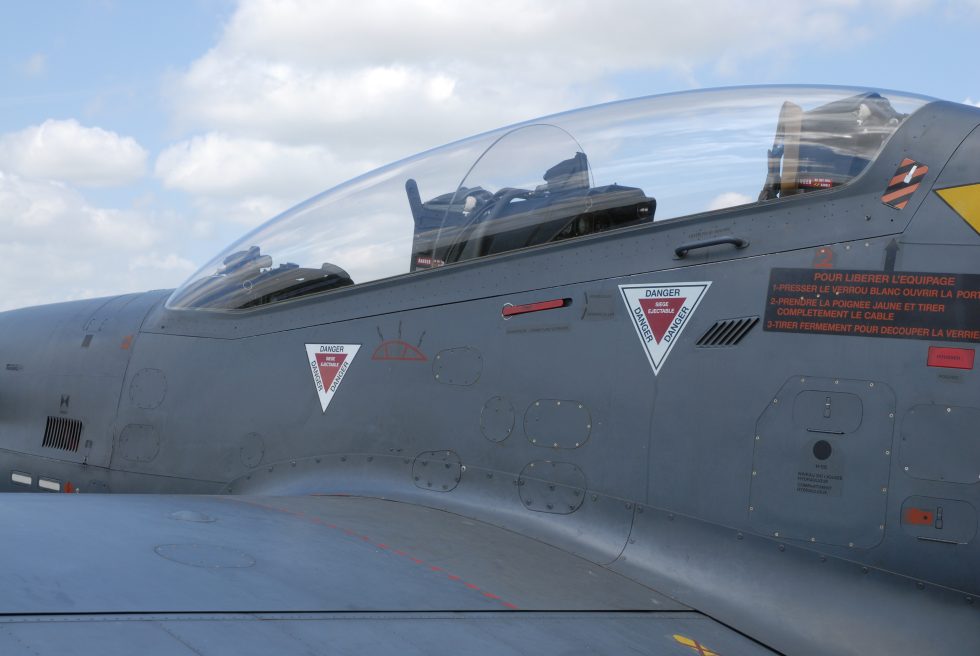
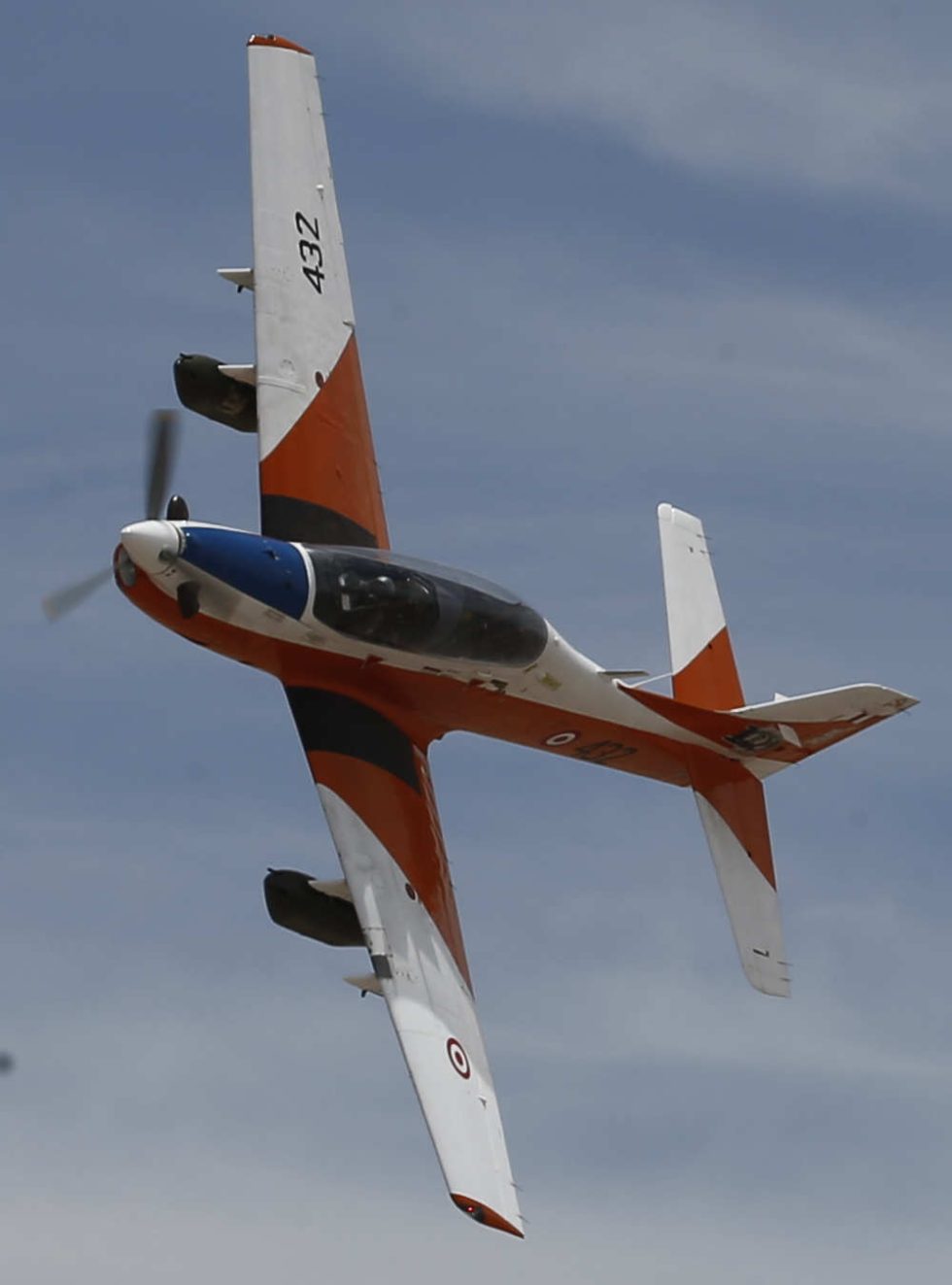
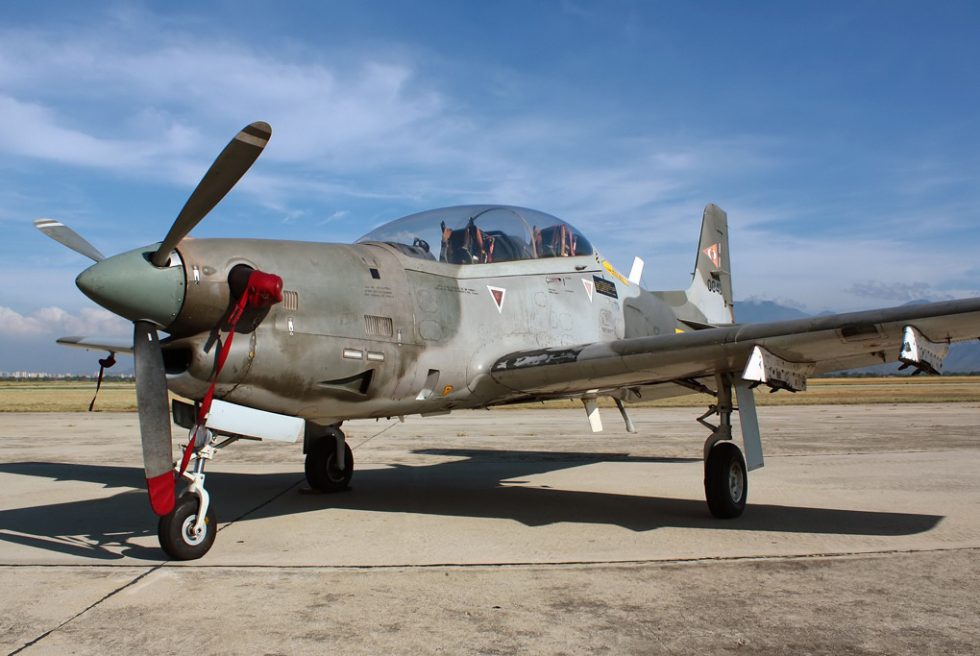
The EMB-312 Tucano in motion
Embraer EMB-312 Tucano Airshow — an airshow display of a genuine EMB-312 showing the trainer’s aerobatic handling, single turboprop and jet-style canopy in flight.
Where the Tucano flies
What the Tucano actually did
The Tucano’s job was to train pilots, and it did that for more than a dozen air forces across four continents. But with underwing hardpoints it was also a capable light-attack and patrol aircraft, and several operators — especially in Latin America — flew it on real counter-insurgency and border missions. Its record is one of ubiquity and economy rather than air-to-air combat.
Compare the combat record of every military aircraft. Figures are approximate and hedged where sources disagree.
Everything people ask about the EMB-312 Tucano
Can I fly in an Embraer EMB-312 Tucano?
What is the EMB-312 Tucano?
What is the difference between the Tucano and the Super Tucano?
Who built the Shorts Tucano, and is it the same aircraft?
How many were built and who flew them?
Was the Tucano ever used in combat?
Is the EMB-312 Tucano still in service?
You can’t fly the EMB-312 Tucano.
These, you can.
Some legends only live in museums — others are fuelled and waiting. MiGFlug has put civilians in real military jet cockpits since 2004.
 Fly the L-39 AlbatrosThe world’s most-flown jet trainer — aerobatics included
 Fly the F-104 Starfighter“The missile with a man in it”
 Fly the MiG-21The Cold War’s most-produced jet
 Fly the T-33 Shooting StarAmerica’s first jet trainer
 Fly the DH VampireA piece of early jet history
 Fly the S.211Agile Italian jet trainer
 Fly the MB-326The classic Aermacchi jet
 Fly the MiG-15The Soviet legend of the Korean War
Continue the tour
Every fact, checked
- EmbraerManufacturer background on the EMB-312 Tucano programme and its place in Embraer’s history.
- Royal Air ForceReference for the Shorts Tucano T.1 in RAF service, 1989–2019.
- Royal Air Force MuseumHistory and technical detail on the British-built Tucano.
- FlightGlobal / Flight InternationalContemporary reporting on the Tucano’s development, exports and licence deals.
- BAE Systems (Short Brothers heritage)Corporate heritage of the Belfast-built Shorts Tucano.
- IISS Military BalanceOperator and fleet reference used to cross-check who flew the Tucano.
- Pratt & Whitney Canada — PT6AReference for the Tucano’s engine family.
- National Cold War ExhibitionPreserved-airframe and display reference for the Tucano.