
Focke-Wulf Fw 189 Uhu
The twin-boom, all-glass “Flying Eye” of the Eastern Front — slow, strange-looking and almost impossible to kill, the Luftwaffe’s beloved reconnaissance owl.
The Story
The Focke-Wulf Fw 189 Uhu: the twin-boom eye that would not die
Some aircraft are remembered for their speed, others for their firepower. The Focke-Wulf Fw 189 Uhu — “Eagle Owl” — is remembered for two things almost unique to it: the way it looked, and the way it refused to die. With its glazed, insect-like central pod slung between two long tail booms and two modest engines, it was one of the most distinctive shapes in the sky over the Eastern Front. And to the Soviet fighter pilots who tried to shoot it down, it became a byword for frustration: a slow, awkward-looking reconnaissance machine that seemed able to soak up an astonishing amount of punishment and still fly home.
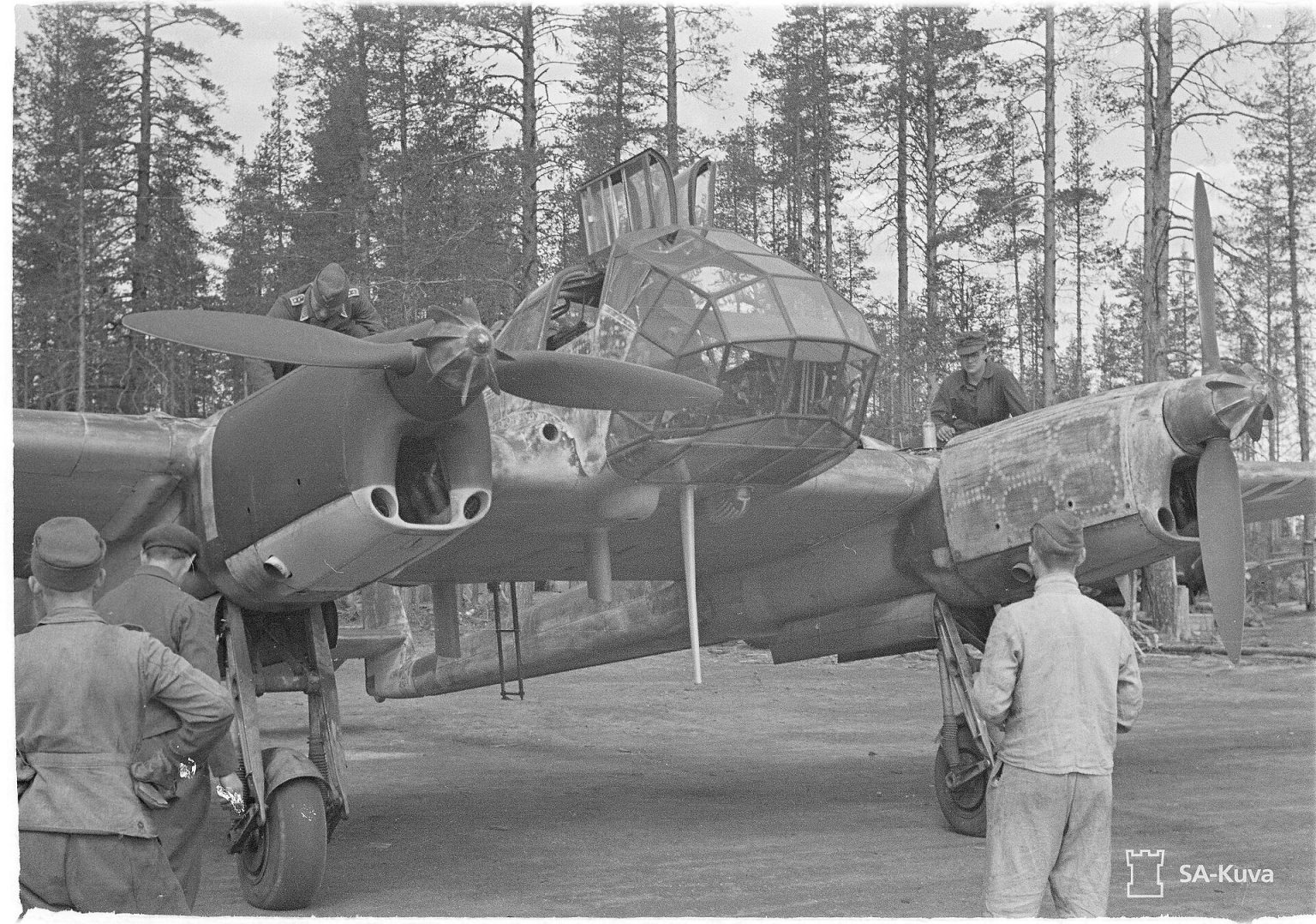
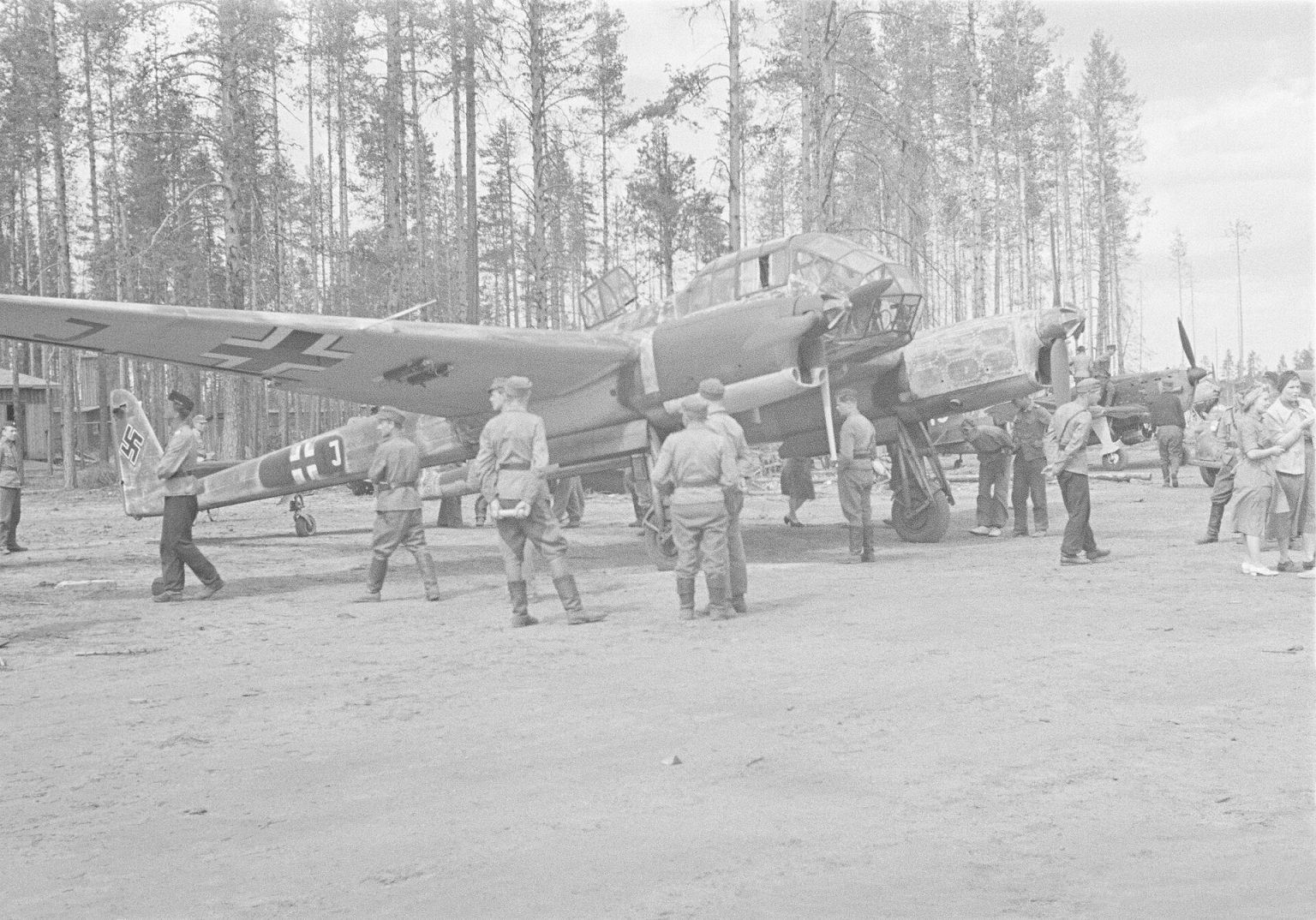
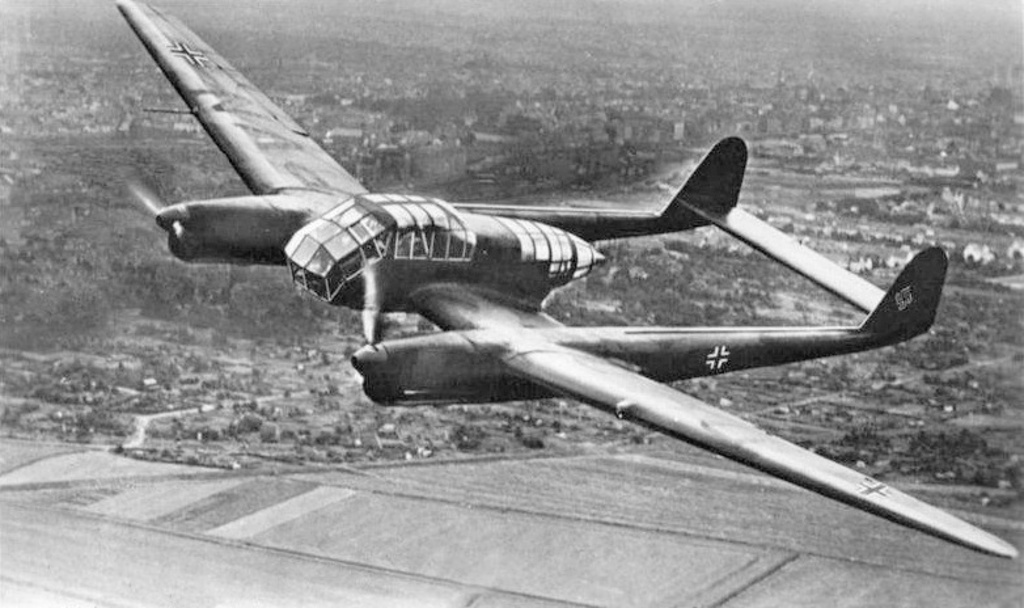
It was designed in the mid-1930s to a Luftwaffe requirement for a short-range tactical reconnaissance aircraft — a modern replacement for the parasol-winged Henschel Hs 126 then in the army-cooperation role. Focke-Wulf’s answer, led by the great designer Kurt Tank with E. Kosel as project engineer, was radical. Rather than a conventional single-fuselage aircraft, they built a fully glazed central crew nacelle for a crew of three, mounted on a wing with two engines, and carried the tail on twin booms extending aft of each engine. The layout gave the crew a field of view that a normal aircraft could not begin to match: nearly all-round vision, ideal for the reconnaissance and observation work the aircraft existed to do. It first flew in 1938.
“Ugly, unarmed to a fault, and almost unkillable — the Uhu was the eye the German army could not do without.”— a fair summary of the Fw 189’s Eastern Front reputation
Power came from two Argus As 410 inverted-V12 air-cooled engines of only around 465 horsepower each. That made the Uhu slow — its top speed was barely 350 km/h — but speed was never the point. What mattered for tactical reconnaissance was a stable, docile platform with superb visibility and long endurance at low and medium altitude, and the Fw 189 delivered exactly that. Pilots found it pleasant and forgiving to fly, and its handling made the demanding work of low-level observation over the front line far easier and safer than it might otherwise have been.
When Germany invaded the Soviet Union in 1941, the Fw 189 came into its own. It became the standard short-range reconnaissance aircraft of the Luftwaffe on the Eastern Front — the “Flying Eye” of the Ostheer, flying artillery-spotting, photographic and visual reconnaissance, and army-cooperation missions in direct support of the ground forces. Day after day, Uhu crews mapped Soviet positions, directed artillery fire and reported movements, unglamorous but vital work on which the army depended.
What turned the aircraft into a legend was its toughness. The Uhu’s twin-boom layout and rugged structure gave it an extraordinary ability to absorb battle damage and keep flying. Crews and historians recorded Fw 189s returning with entire sections of tail boom shot away, with an engine gone, with the crew nacelle riddled — and, most famously, cases of the aircraft surviving being rammed by Soviet fighters, losing part of the airframe in the collision and still bringing its crew home. For a lightly armed reconnaissance machine expected to loiter over a hostile front line, that resilience was worth more than speed or guns.
The Fw 189 was more versatile than its reconnaissance role suggests. It flew liaison and communication flights, carried out casualty evacuation, and — as the partisan war behind the Eastern Front intensified — was pressed into night ground-attack and anti-partisan operations, harassing insurgents in areas where the slow, long-loitering Uhu was well suited to the task. A dual-control trainer version, the Fw 189B, was built to convert crews, and a heavily armoured single-seat ground-attack variant, the Fw 189C “Kampfzelle”, was developed to compete with the Henschel Hs 129 — a competition the Uhu lost, so that the C-model never entered production.
Around 860 were built, not only by Focke-Wulf in Germany but under occupation by the Aero works in Prague and by SNCASO in Bordeaux, France — a reminder that much of the German war machine ran on the captured industry of occupied Europe. Beyond the Luftwaffe, the type served the air forces of Germany’s Eastern Front allies: Hungary, Slovakia, Romania and Bulgaria all operated the Uhu for reconnaissance. As the war turned and the Luftwaffe lost control of the skies, the slow, lightly armed Fw 189 grew increasingly vulnerable without fighter escort, and losses mounted; by the war’s end the survivors were worn out and the type faded away. Almost every one was destroyed or scrapped. Today a single Fw 189 survives — recovered decades later from a Russian forest where it had lain since being shot down in 1943, and painstakingly restored in the United Kingdom — the last of the flying owls.
01The Fw 189’s origins: Kurt Tank, Kosel and a radical recon concept+
In the mid-1930s the Luftwaffe issued a requirement for a modern short-range reconnaissance and army-cooperation aircraft to replace the Henschel Hs 126. Several manufacturers responded, most with fairly conventional designs. Focke-Wulf’s submission, developed under chief designer Kurt Tank with E. Kosel leading the project, was anything but conventional.
Tank and Kosel reasoned that a reconnaissance aircraft’s single most important quality was the crew’s ability to see. So they designed the aircraft around vision: a fully glazed central crew nacelle giving almost unobstructed sight in every direction, carried on a twin-boom layout that kept the tail clear of the glazed pod and the engines out to either side. It was an unusual, even startling configuration, but it was superbly matched to the job, and it won the Uhu its production contract over more orthodox rivals.
02The twin-boom, all-glazed layout: why the Uhu looked like that+
The Fw 189’s appearance was dictated entirely by function. Reconnaissance and artillery observation demanded that the crew see as much of the ground and sky as possible, so the central nacelle was glazed almost from nose to tail, giving the three-man crew a panoramic view that a conventional cockpit could never provide. To achieve that, the designers moved everything that would block the view out of the way.
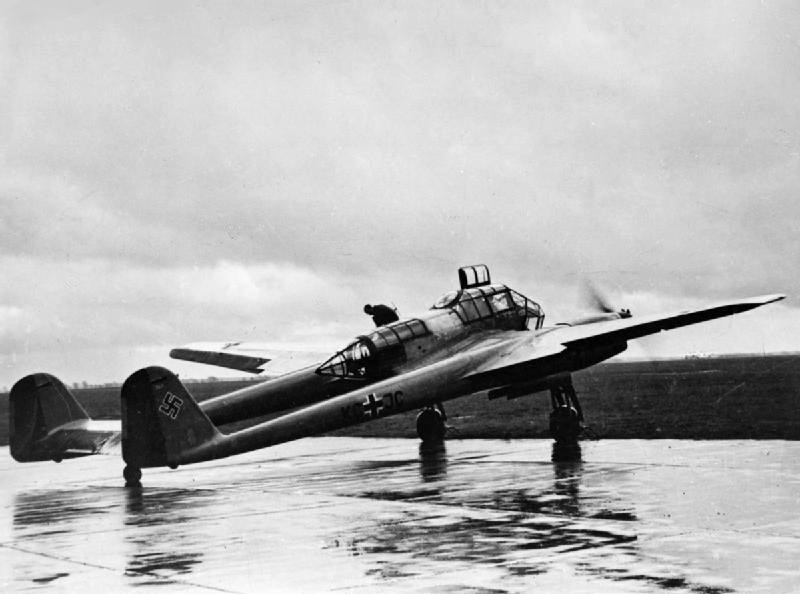
The two engines were mounted on the wing to either side of the nacelle, and instead of a conventional rear fuselage and tail, twin booms ran back from behind each engine to carry a tailplane between them. This kept the rear of the glazed pod clear for a gunner and for downward vision. The result looked strange — contemporaries and later observers alike remarked on its insect-like or “flying greenhouse” appearance — but every oddity served the aircraft’s purpose as an aerial observation post.
03The Argus As 410 engines: low power by design+
The Uhu was powered by two Argus As 410 inverted-V12 air-cooled engines, each producing only around 465 horsepower. By the standards of front-line combat aircraft this was very modest — a single fighter engine of the period produced two or three times as much — and it made the Fw 189 slow, with a top speed of only about 350 km/h.
But this was a deliberate and sensible match to the mission. A short-range reconnaissance aircraft did not need to be fast; it needed to be reliable, economical, stable and able to loiter for a long time over the battlefield at low and medium altitude. The air-cooled Argus engines were dependable and simple, well suited to the rough conditions of Eastern Front airfields. The Uhu’s modest power was not a flaw so much as a design choice appropriate to its work — though it did leave the aircraft dangerously slow once enemy fighters were about.
04The survivability legend: the toughest eye in the sky+
The Fw 189’s enduring fame rests on its toughness. For a slow, lightly armed aircraft that spent its life loitering over a hostile front line, an ability to absorb damage was a matter of survival, and the Uhu had it in abundance. Its twin-boom structure meant that damage to one boom, or even the loss of much of it, did not necessarily bring the aircraft down, and the whole airframe proved remarkably resistant to the kind of hits that would destroy a conventional machine.
The record is full of Fw 189s coming home in states that seem barely credible — with a boom or tail surface largely shot away, an engine dead, or the crew nacelle badly holed. The most dramatic accounts involve the Uhu surviving being rammed by Soviet fighters whose pilots, unable to shoot it down, resorted to collision; in several recorded cases the Fw 189 lost part of its structure in the impact and still flew its crew back to safety. That reputation for near-indestructibility is the single thing most often remembered about the aircraft.
05The Fw 189 on the Eastern Front: the “Flying Eye” of the Ostfront+
The Fw 189 is inseparable from the Eastern Front. From the 1941 invasion of the Soviet Union onward it became the Luftwaffe’s standard short-range tactical reconnaissance aircraft in the East, so ubiquitous over the battlefield that it earned the nickname “das fliegende Auge” — the Flying Eye. Wherever the German army fought in the East, Uhu crews were overhead, watching.
Its work was the daily, unglamorous foundation of ground operations: photographing enemy positions, spotting for the artillery, tracking troop and vehicle movements and reporting them back. This was precisely the tactical reconnaissance on which a modern army depends, and the Fw 189’s combination of superb visibility, docile handling and toughness made it outstandingly good at it. For much of the war it was, quite simply, the eyes of the German army in the East.
06Army cooperation and reconnaissance: what the Uhu actually did+
“Reconnaissance and army cooperation” covered a wide range of daily tasks. Fw 189 crews flew photographic reconnaissance, bringing back imagery of enemy defences, airfields and rear areas for interpretation; visual reconnaissance, reporting in real time on what they could see; and artillery observation, circling over the battlefield to direct and correct the fire of the guns below.
They also carried out liaison and communication flights, moving officers and messages, and casualty evacuation, using the aircraft’s stability and short-field ability to lift wounded from rough strips. This was cooperation with the army in the most literal sense — the Uhu existed to serve the ground forces directly, and its versatility in these supporting roles was a large part of its value.
07Night ground-attack and the anti-partisan war+
As the war on the Eastern Front dragged on, a vicious partisan conflict developed behind the German lines, and the Fw 189 was drawn into it. Its slow speed, long endurance and good low-level handling — liabilities against fighters — made it well suited to hunting and harassing partisans, and some Uhu units were tasked with night ground-attack and anti-partisan operations, carrying light bombs and guns against insurgent camps and movements under cover of darkness.
It was grim, brutal work in a brutal theatre, and it stretched the reconnaissance aircraft well beyond its original purpose. But it illustrates how the Uhu’s particular qualities — endurance, docility, the ability to operate low and slow for long periods — kept finding it new employment as the nature of the Eastern Front war changed.
08The Fw 189B trainer and the crew of three+
The standard Fw 189A carried a crew of three: a pilot, an observer/navigator who handled the cameras and much of the reconnaissance work, and a gunner/radio operator who manned the defensive armament and the wireless. Getting crews proficient on the unusual aircraft required a dedicated trainer, and Focke-Wulf produced one: the Fw 189B, a version with a more conventional, less glazed cabin and dual controls for instruction.
The B-model was built in modest numbers and served the important background role of converting pilots and crews onto the type. It is a reminder that behind every operational aircraft stands a training pipeline, and that even an aircraft as specialised as the Uhu needed its own dedicated schoolroom version to keep the operational squadrons supplied with capable crews.
09The Fw 189C “Kampfzelle”: the armoured attacker that lost+
One of the more intriguing might-have-beens of the Uhu story is the Fw 189C. Where the A-model had a spacious, glazed reconnaissance nacelle, the C-model replaced it with a tiny, heavily armoured “Kampfzelle” (battle cell) — a cramped, armour-plated pod for a small crew — and heavier armament, turning the airframe into a dedicated close-support and ground-attack aircraft.
It was developed to meet the same requirement that produced the Henschel Hs 129, and the two competed for the ground-attack role. The Hs 129 won, and the Fw 189C got no further than prototypes. It is an interesting glimpse of the road not taken: the same tough twin-boom airframe that made such a good reconnaissance platform reimagined as an armoured tank-buster, a role it never got the chance to fill.
Design & Engineering
How the Fw 189 was built: everything for the crew’s eyes
The Uhu was engineered around a single priority — visibility — and a single virtue — toughness — with speed and firepower deliberately sacrificed to the reconnaissance mission.
The glazed nacelle
A central crew pod glazed almost end to end, giving three crew near all-round vision for observation, photography and artillery spotting. The whole aircraft was arranged so nothing blocked the view.
Twin booms and twin engines
Two Argus As 410 engines on the wing, with twin tail booms carrying the tailplane clear behind them. The layout kept the nacelle open and gave the structure its famous damage tolerance.
Light defensive armament
Hand-held MG 15 / MG 81 machine guns in dorsal and tail-cone positions and a light bomb load. Enough to bite back, but the Uhu relied on toughness and low-level agility, not firepower, to survive.
Specifications
Focke-Wulf Fw 189 specifications: dimensions, performance and cost
Baseline: the Fw 189A-2 of 1942–43, the standard short-range reconnaissance machine as built at Prague-Letňany and Bordeaux-Mérignac and flown by the Luftwaffe's Nahaufklärungsstaffeln on the Eastern Front. Deltas for the earlier A-1, the five-seat B trainer, the armoured C attack prototypes, the re-engined E and F and the 1945 night-fighter conversions are in grey. Four cautions before the figures. First, the production total is not settled: the most-quoted number is 864 of all variants, German-language sources give 830 delivered up to March 1944, and Russian sources give about 848 series aircraft plus roughly 16 prototypes and development airframes. The brief's "roughly 860" sits inside that spread and is a fair working figure. Second, the length is quoted three different ways — 11.90 m, 12.03 m and 12.30 m — because the tail cone was not the same on every mark and because some tables measure to the rear gun position and some to the fuselage nacelle; 12.03 m is the most common. Third, range is quoted as both 940 km and 670 km, which is almost certainly the difference between a still-air ferry figure and a practical radius on task with a camera run at the far end. Fourth, and most important, no performance number on this page explains why the Uhu worked. It was slower than the fighters sent to kill it and it survived anyway, because three men could see in every direction at once and the aeroplane would turn inside anything that came at it.
Dimensions & weights
- Crew
- 3 — pilot, observer/navigator and gunner/radio-operator, all three inside one glazed nacelle with overlapping fields of view the B trainer seated five in a conventional stepped fuselage; the A-1/U2 and U3 staff transports carried passengers in place of the observer's station
- Wingspan
- 18.40 m (60 ft 4 in)
- Length
- 12.03 m (39 ft 6 in) English-language tables commonly give 11.90 m (39 ft 1 in) and German ones 12.30 m (40 ft 4 in); the difference is a tail-cone and datum question, not a different aeroplane
- Height
- 3.10 m (10 ft 2 in) low enough that the nacelle sat close to the ground, which is why the cameras had short mounts and the crew boarded through a hatch rather than over a wing
- Wing area
- 38.00 m² (409 sq ft)
- Aspect ratio
- 8.9 high for a 1938 tactical type, and the direct cause of the gentle stall and the tight sustained turn that kept crews alive
- Empty weight
- 2,830 kg (6,239 lb) 2,690 kg (5,930 lb) is also widely published and probably describes an A-1 without the full camera and radio fit
- Normal take-off weight
- 3,950 kg (8,708 lb)
- Useful load
- 1,120 kg (2,469 lb) crew, fuel, cameras, ammunition and bombs all came out of this, and on a long photographic sortie the bombs were the first thing left behind
- Wing loading
- 104 kg/m² (21.3 lb/sq ft) at normal take-off weight a contemporary Bf 109F sat near 175 kg/m², which is the whole story of why a fighter could not follow the Uhu round a circle
- Power loading
- 4.25 kg/PS (9.5 lb/hp) poor, and the reason the aeroplane climbed and accelerated badly
- External bomb load
- 200 kg (441 lb) — four 50 kg bombs on racks under the wing centre section a token load, carried for marking targets and harassing rather than for destroying them
Performance
- Maximum speed
- 344 km/h (214 mph, 186 kn) at 2,500 m (8,200 ft) tables giving 335 km/h and 350 km/h are also in circulation; all three describe the same aeroplane measured on different days at different weights
- Cruising speed
- 317 km/h (197 mph, 171 kn) unusually close to the maximum, because there was very little excess power to hold back
- Landing speed
- 120 km/h (75 mph, 65 kn) which is what let it work from the mud and grass strips that army co-operation units actually had
- Rate of climb
- 5.0 m/s (984 ft/min)
- Time to 4,000 m
- 8 minutes 18 seconds (to 13,120 ft)
- Service ceiling
- 7,000 m (22,970 ft) Russian sources give 7,300 m (23,950 ft); the difference is within the normal scatter of German ceiling definitions
- Range
- 940 km (584 miles, 508 nmi) the widely quoted 670 km (416 miles) figure is the more realistic operational number and the two should not be treated as a contradiction
- Endurance
- roughly 3 hours on a normal reconnaissance profile long enough to photograph a corps front and come home, which was the whole requirement
- Typical operating altitude
- 1,000–3,000 m (3,300–9,800 ft) for vertical photography, and much lower for visual observation and artillery registration the low work is what made it hated and what made it vulnerable
- Sustained turn
- The type's real performance figure, and the one nobody tabulated. Attacked, an Uhu crew flew a tight level circle at low altitude; a Yak or a LaGG could not hold the radius, and each firing pass became a fleeting deflection shot watched all the way in by three sets of eyes Soviet units resorted to attacking in pairs from opposite sides, and ramming attacks on Fw 189s are recorded, which is not a thing pilots do to an easy target
- Take-off and landing run
- Not consistently published in accessible sources. Contemporary practice put the Uhu on the same forward strips as the Hs 126 it replaced, so the numbers were short by the standards of any twin recorded here as a gap rather than filled with an invented figure
Propulsion & systems
- Engines
- Two Argus As 410A-1 twelve-cylinder inverted-V air-cooled piston engines, one in the nose of each tail boom air cooling was chosen deliberately: no radiators, no coolant lines and no glycol to lose to a single rifle bullet, which matters for an aeroplane whose job is to loiter over enemy troops
- Rated power
- 465 PS (459 hp, 342 kW) each for take-off at 3,100 rpm the prototypes and earliest airframes used the 430 PS (424 hp, 316 kW) As 410; the F series was to have had the 600 PS As 411 and the E prototype the 700 PS Gnome-Rhône 14M radial
- Engine displacement
- 12.67 litres (773 cu in), bore 105 mm and stroke 115 mm (4.13 in by 4.53 in)
- Propellers
- Two-blade Argus automatic variable-pitch units, pitch controlled by the engine's own oil pressure without pilot action the V3 prototype introduced them; the V1 first flew on fixed-pitch wooden airscrews
- Fuel
- Tankage in the wing centre section between the nacelle and the booms. Capacity is not consistently published in accessible sources and is quoted differently in almost every table flagged rather than guessed
- Cameras
- Rb 20/30 or Rb 50/30 vertical cameras in the floor of the nacelle, with hand-held oblique cameras worked by the observer through the side glazing the camera bay, not the gun positions, was the reason the aeroplane existed
- Radio
- FuG 17 air-to-ground radio telephony for direct co-operation with army formations, plus IFF exact fits varied by year and by unit and are reported inconsistently; the operational point is that the observer could talk to the artillery he was ranging while still over the target
- Defensive mounting
- A rotating conical rear gun position designed by Ikaria-Werke, forming the tail of the nacelle and turned by hand it gave a genuine hemisphere of rearward fire, which for a 1938 tactical aircraft was a real advance and part of why the type was so awkward to attack from behind
- Undercarriage
- Retractable tailwheel layout, main units folding rearward into the booms behind the engines, with a tailwheel under each boom the wide track suited rough forward strips
- Structure and repair
- All-metal stressed-skin airframe built as separable units — nacelle, centre section, two booms, two outer wings — which field workshops could exchange rather than repair an underrated virtue on the Eastern Front, where the alternative to a bolt-on boom was a written-off aeroplane
- Armour
- Essentially none on the A series beyond seat backs; the crew nacelle was glass where a combat aircraft would have had metal the A-4 proposal and the C prototypes added plating, and the C showed exactly what that costs: the armoured nacelle destroyed the visibility that was the design's entire reason for being
10The Fw 189’s variants and foreign production+
The main production version was the Fw 189A reconnaissance aircraft, built in several sub-variants (A-1, A-2 and so on) that differed mainly in armament and equipment. Alongside it came the Fw 189B dual-control trainer, and the experimental Fw 189C “Kampfzelle” armoured attack aircraft that never entered production. Various other roles and fits were trialled, but the reconnaissance A-model was overwhelmingly the type that mattered.
Production was not confined to Germany. As demand grew and German plants were needed for other types, Fw 189 manufacture was shifted to occupied Europe — the Aero factory in Prague and the SNCASO works at Bordeaux in France both built the Uhu. This reliance on the captured industry of occupied nations was typical of the later German war economy, and it means that many Fw 189s were, ironically, assembled by the workforces of countries Germany had conquered.
11The Fw 189’s operating costs: what the records show+
As with other German wartime aircraft, there is no reliable, transparent public figure for the Fw 189’s unit cost, cost per flight hour or total programme cost. It was produced by a wartime state economy — and partly in occupied territory — that did not publish the kind of accounts that would let those figures be stated with confidence, and the surviving records are incomplete. Any precise cost quoted for it should be treated with caution.
In general terms, the Fw 189 was a relatively simple, modestly powered aircraft built around small air-cooled engines, which would have made it comparatively economical to produce and operate next to a high-performance fighter or a large bomber. That affordability, along with its effectiveness, is part of why it could be built in the high hundreds and fielded so widely. We list its cost fields as “not reliably recorded” rather than invent numbers.
12The Fw 189’s foreign operators+
Beyond the Luftwaffe, the Fw 189 served the air forces of Germany’s Eastern Front allies. Hungary and Romania — the two largest Axis air arms in the East — both operated the Uhu for tactical reconnaissance alongside German units, and Slovakia and Bulgaria flew smaller numbers of the type. For these air forces the Fw 189 was a useful modern reconnaissance aircraft that fitted naturally into the same front-line reconnaissance role it filled for the Germans.
This spread of operators reflects how the Eastern Front was, on the Axis side, a coalition effort, with several allied air forces flying German equipment in support of a shared campaign. After the war the type disappeared quickly from all of these air forces, as it did from the Luftwaffe — obsolete, worn out and with no place in the post-war world.
13The sole surviving Fw 189: recovered from a Russian forest+
Of the roughly 860 Fw 189s built, just one survives — and its survival is a story in itself. The aircraft was shot down over the northern sector of the Eastern Front in 1943 and came down in a remote forest, where it lay largely undisturbed for almost half a century. It was located and recovered in the early 1990s, remarkably complete, and subsequently underwent a long and painstaking restoration in the United Kingdom.
That single restored airframe is now the only Fw 189 in existence anywhere in the world — the last of a type that once swarmed over the Eastern Front in the hundreds. It is a fitting survivor for an aircraft whose whole reputation rested on its ability to come home from the East against the odds: the one Uhu that, in the end, made it back for good.
Armament & payload
The Fw 189 carried four rifle-calibre guns and four small bombs, and every one of them was there to protect the cameras
Nothing about the Uhu's armament was ambitious, and that was correct. Two fixed MG 17s in the wing roots let the pilot strafe a column or discourage a head-on pass; a flexible gun above the nacelle and another in the Ikaria rotating tail cone covered the rear hemisphere that a reconnaissance aircraft actually gets attacked from; four 50 kg bombs let a crew mark a target for artillery or harass a supply road on the way home. The A-2 doubled the volume of defensive fire by replacing the single MG 15s with twin-barrelled MG 81Z mountings, which was the single most useful armament change the type received and still left it firing 7.92 mm ammunition at armoured fighters in 1944.
The two attempts to make it hit harder both failed, and both failed for the same reason. The A-4 was to have carried 20 mm MG 151/20 cannon in the wing roots with armour for the nacelle, and no production is recorded. The C went further, wrapping the crew in armour plate for close support, and lost the competition to the Henschel Hs 129 — smaller, cheaper and not obliged to carry three men. In each case the armour and the guns took away the visibility and the docile handling that made the aeroplane survivable in the first place. Armament fits differ mark by mark and unit by unit, and the late night-fighter conversions were workshop jobs rather than a production standard; treat any single tabulated fit as a snapshot.
Gun
- Two fixed 7.92 mm MG 17 machine guns in the wing roots, firing forward outside the propeller discs and aimed by the pilot
- Fw 189A-1: one flexible 7.92 mm MG 15 in the dorsal position above the nacelle and one in the rotating rear cone, each fed from saddle drums
- Fw 189A-2: the MG 15s replaced by twin-barrelled 7.92 mm MG 81Z mountings in both positions, belt-fed and far higher in rate of fire — the change that mattered most
- Fw 189A-4 proposal: two 20 mm MG 151/20 cannon in the wing roots in place of the MG 17s, with nacelle armour. No series production is recorded
- Rifle-calibre defensive guns were already marginal in 1941 and were an anachronism by 1944. The Uhu's survival was owed to its turn radius and its crew's eyesight, not to its guns.
Air-to-air
- No dedicated air-to-air weapon on the reconnaissance marks. Everything above was defensive, and the standard drill against fighters was a tight level circle at low altitude rather than a gun duel
- The exception is the night-fighter conversion of 1945: a small number of A-1s stripped of reconnaissance equipment, fitted with FuG 212 Lichtenstein airborne interception radar in the nose and a single 20 mm MG FF firing obliquely upward and forward from the nacelle in the Schräge Musik arrangement
- These served with NJG 100, based at Greifswald. The logic was sound — a slow, docile, long-endurance airframe with an unobstructed view is not a bad radar platform — and the war ended before it could be tested properly
- Fuel shortage and Allied air superiority meant the conversions achieved nothing measurable. They are a footnote, not a chapter
- Numbers converted are not reliably published; accounts agree only that there were few and that they arrived in the closing weeks.
Air-to-surface guided
- None, on any mark, in any air force. No Fw 189 carried a guided weapon of any kind
- Germany did field guided air-to-surface weapons during the type's service life — the Fritz X and the Hs 293 — but both were anti-shipping stores for heavy twins such as the Do 217 and He 177, and neither had any conceivable application to a 200 kg tactical aircraft
- The Uhu's contribution to precision attack was indirect and considerable: it found and photographed targets, and it ranged the guns that hit them
- Recorded as a genuine absence rather than a deficiency of this design.
Bombs
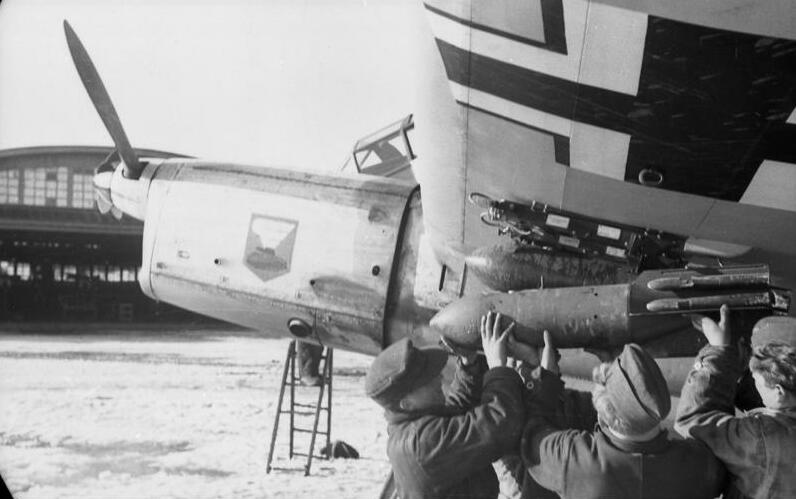
- Four 50 kg bombs (4 × 110 lb) on racks under the wing centre section, 200 kg total — the entire offensive load of the standard reconnaissance marks
- Used for marking targets with smoke or splash for artillery observation, for harassing road and rail movement on the return leg, and against partisan camps and villages in rear-area security operations
- Anti-partisan work in Yugoslavia, Belarus and Ukraine is where the Uhu did most of its actual bombing, and it is the least attractive part of the type's record
- On a long photographic sortie the racks were commonly left empty; fuel and film were worth more than 200 kg of bombs
- Some accounts credit anti-personnel container loads on security sorties; the store types are not consistently documented and are not asserted here.
Rockets
- None. No Fw 189 in any air force carried air-to-ground or air-to-air rockets operationally
- This is not for want of an era. German rocket stores were in wide use from 1943, by which time the Uhu was already being pushed out of daylight work over contested airspace
- Had the C attack variant been ordered instead of the Hs 129, a rocket fit would have been the obvious next step; it was not ordered, and the question never arose
- A clean negative, with no trials aircraft on record.
Pods & other stores
- Reconnaissance cameras were the primary payload: Rb 20/30 or Rb 50/30 vertical installations in the nacelle floor, plus hand-held oblique cameras worked through the extensively glazed sides
- Photoflash stores for night photography, and flares and smoke markers for co-operation with ground troops
- Supply and message containers for forward units, a role inherited directly from the Hs 126
- Fw 189A-1/U2 and U3: staff transport conversions, with passenger accommodation replacing part of the operational equipment
- Camera fits varied with the season, the task and what the depot had; the tabulated fit above is representative rather than universal.
Three typical loadouts
- Corps-front photographic sortie, Eastern Front, summer 1942
- Full crew of three, Rb vertical camera and film for the run, hand-held oblique camera, two MG 17 with full ammunition, dorsal and tail MG 81Z with belts, bomb racks empty. Cross the line at 2,000 m, photograph the road and rail net behind the enemy corps, descend and run home low. This is the sortie the aeroplane was designed for and the one it flew thousands of times.
- Artillery registration and harassment, 1943
- Three crew, cameras aboard, four 50 kg bombs on the centre-section racks, full defensive ammunition. Loiter at 600–1,200 m in radio contact with a divisional artillery regiment, correct fall of shot, then expend the bombs on a marked battery or a road column before withdrawing. The mission Soviet infantry meant when they said the Rama was overhead, because shellfire followed it.
- Night interception, NJG 100, spring 1945
- Reconnaissance equipment and cameras removed, FuG 212 Lichtenstein radar and its nose aerial array fitted, one 20 mm MG FF mounted to fire obliquely upward and forward from the nacelle, defensive guns retained. A workshop conversion flown in tiny numbers from Greifswald against night bombers, with no recorded operational effect.
Sourcing: armament and equipment details are drawn from the standard English- and German-language reference accounts of the type, which disagree on the A-3 designation in particular — some tables call it a tropicalised A-2, others a dual-control trainer conversion of the A series. Both readings are in print and the discrepancy is not resolved here.
Variants
The Fw 189 won a competition it should have lost on the rules, then spent the war being redesigned into things it was worse at
In February 1937 the RLM asked for a three-seat short-range reconnaissance aircraft with all-round visibility to replace the Henschel Hs 126, and specified a single engine to keep field maintenance simple. Arado offered the conventional shoulder-wing Ar 198, Blohm und Voss the famously asymmetric Bv 141, and Focke-Wulf, under Kurt Tank with Erhard Kosel doing the detail work, ignored the single-engine requirement entirely and offered a twin-boom aeroplane with a glazed pod for a fuselage. The Ar 198 was the early favourite and then flew: it was unstable and mediocre, and the Technical Office killed it in late 1938 after one prototype. The Bv 141 was the better aeroplane of the two losers and was strangled by engines — the BMW 801s it needed were wanted for the Fw 190 — with its official evaluation dragging on to May 1943, by which time the Fw 189 had been in production for years. Only about twenty Bv 141s were built.
The V1, Werk Nr 1997, first flew on 23 July 1938 with Tank himself at the controls. Roughly twenty prototype and pre-series airframes followed. Series manufacture began at Focke-Wulf in Bremen in late 1940 and then moved almost entirely out of Germany: to Aero at Prague-Letňany in the Protectorate, and to the former SNCASO plant at Bordeaux-Mérignac in occupied France, with Breguet subcontracting. Bremen and Prague finished in 1942–43; Mérignac delivered the last aircraft in March 1944, after which the whole programme was cancelled to free capacity for fighters. Some sources add Heinkel as a subcontractor. The exact split between the three plants is quoted differently in every account and is not reproduced here.
One correction to the common description of the type, because it is repeated often enough to be worth stating plainly: the B was not the armoured version. It was a five-seat trainer with an entirely conventional stepped fuselage in place of the glazed nacelle, and only thirteen were built. The armoured ground-attack machine was the C.
- Fw 189 V1 to V6 (1938–40, about 20 prototype and development airframes in all)
- V1 first flew 23 July 1938 on fixed-pitch airscrews; V2 added the armament and bomb racks; V3 introduced variable-pitch propellers; V5 became the trainer prototype and V6, with the rebuilt V1b, the armoured attack prototypes.
- Fw 189A-0 (1940, ten pre-production aircraft, with a larger batch ordered and not completed as A-0)
- Service-test aircraft to production standard, used to settle the camera, radio and gun installations before the line opened.
- Fw 189A-1 (from October 1940)
- First production standard: two MG 17 in the wing roots, single MG 15 in the dorsal and rotating tail positions, four 50 kg bombs, full camera fit. The airframe that made the type's reputation, and the one every surviving photograph of the Arctic and central fronts shows.
- Fw 189A-1 trop, A-1/U2 and A-1/U3 (1941–42, small numbers)
- Tropicalised aircraft with intake filters and desert survival equipment for the Mediterranean and North Africa; the U2 and U3 were staff transport conversions with passenger accommodation.
- Fw 189A-2 (1942–44, the main production standard)
- Twin-barrelled MG 81Z belt-fed mountings replacing the drum-fed MG 15 in both defensive positions. A real improvement in a fight and still only 7.92 mm.
- Fw 189A-3 (disputed designation)
- Given as a tropicalised A-2 in most English-language references and as a dual-control trainer conversion in others. Both descriptions are in print; the conflict is unresolved.
- Fw 189A-4 (project, no series production recorded)
- Light ground-attack fit with 20 mm MG 151/20 cannon in the wing roots and armour under the nacelle and engines. Abandoned rather than built.
- Fw 189B-0 and B-1 (1939–40, 3 and 10 built, 13 in total)
- Five-seat crew trainer and liaison aircraft with a conventional stepped fuselage replacing the glazed nacelle. Not armoured, not a combat variant, and frequently misdescribed as one.
- Fw 189C (1939–40, two prototypes, not produced)
- Armoured close-support machine developed from V1b and V6, with a small heavily plated nacelle carrying two 20 mm MG FF and four MG 17 forward. Visibility from the armoured cabin was appalling, the handling suffered, and the Luftwaffe chose the smaller and cheaper Henschel Hs 129 instead.
- Fw 189D, E and F (1940–44, projects and single prototypes)
- D, a twin-float training seaplane, was not built. E flew with two 700 PS Gnome-Rhône 14M radials. F-1 re-engined the A-1 with 600 PS Argus As 411s and F-2 added electrically operated undercarriage and more fuel; neither reached the front in numbers before cancellation.
- Night-fighter conversions (1945, workshop conversions, few)
- A-1 airframes stripped of cameras, given FuG 212 Lichtenstein radar and an obliquely mounted 20 mm MG FF, flown by NJG 100 from Greifswald in the final weeks.
- Foreign service (1942–45)
- Slovakia, Hungary, Romania and Bulgaria all received Fw 189A airframes from German stocks. Slovak aircraft are the best documented: A-1s served with the Slovak Air Force, and exactly one Fw 189 went over to the insurgents in the Slovak National Uprising, flying from Tri Duby and Zolná between 29 August and 25 October 1944 alongside four Avia B-534s, three Letov Š-328s and a handful of Messerschmitts. Post-war, a small number of captured airframes are recorded in Norwegian hands.
Survivors: one, and it is an original airframe rather than a reproduction — no Fw 189 replica has ever been built, and nothing survives of the Bv 141 or the Ar 198 at all. Fw 189A-1 Werk Nr 2100, coded V7+1H, was built by Aero at Prague-Letňany in July 1941 and served in the far north with 1.(H)/32. On 4 May 1943 it was hit by Soviet-flown Hawker Hurricanes and came down in forest north of Murmansk; the pilot, Lothar Mothes, was the only survivor and walked out over about a fortnight with severe frostbite. The wreck lay where it fell for forty-eight years, was located and recovered by British enthusiasts in 1991, and reached the United Kingdom in March 1992. It was rebuilt by the Aircraft Restoration Company at Duxford, incorporating material from other wrecks, and was acquired by Paul Allen's Flying Heritage Collection at Paine Field, Everett, Washington. No post-restoration flight is on record. The aircraft was offered for sale in 2021, separately from the rest of the collection; the Flying Heritage and Combat Armor Museum itself passed from Allen's estate to Steuart Walton's Wartime History Museum in 2022 and reopened in 2023. Published sources accessible for this entry do not establish the aircraft's present owner or location with confidence, and it is described here as sold or in transition rather than as a museum exhibit on view. Anyone citing a current owner should verify it directly.
Timeline
The Focke-Wulf Fw 189 Uhu through the years
The Luftwaffe seeks a modern short-range reconnaissance and army-cooperation aircraft to replace the Henschel Hs 126. Focke-Wulf proposes a radical twin-boom, glazed design.
The Fw 189 prototype flies, with its fully glazed central nacelle and twin tail booms — an unconventional layout optimised for all-round vision.
After evaluation against more conventional rivals, the Uhu’s superb visibility and handling win it the reconnaissance contract.
The Fw 189A reaches Luftwaffe reconnaissance units and begins replacing the Hs 126 in the short-range recon and army-cooperation role.
With the invasion of the Soviet Union, the Fw 189 becomes the Luftwaffe’s standard short-range reconnaissance aircraft on the Eastern Front — the “Flying Eye”.
The Uhu equips reconnaissance units across the Eastern Front and beyond; production is extended to the Aero works in Prague and SNCASO in France.
Fw 189s are used for night ground-attack and anti-partisan operations. In the same year, the aircraft that is today the sole survivor is shot down over a Russian forest.
As the Luftwaffe loses air superiority, the slow, lightly armed Uhu becomes increasingly exposed without escort, and losses climb.
By the war’s close the Fw 189 is largely gone from front-line service; surviving airframes are worn out and are scrapped or abandoned.
The wreck of a 1943 loss is recovered from a Russian forest and restored in the United Kingdom — the only Fw 189 to survive.
Stories & Eyewitnesses
The Focke-Wulf Fw 189 in stories: the moments that defined it
A radical shape built for vision, a modest engine chosen on purpose, a toughness that became legend, and a long war as the eyes of the German army in the East — the Uhu’s history told through the moments that stuck.
The OwlWhy “Uhu”
The Fw 189 was named Uhu — “Eagle Owl” — an apt name for a wide-eyed night and day watcher.
The name Uhu, German for the eagle owl, suited the aircraft perfectly: a big-eyed observer with superb all-round vision, equally at home watching the battlefield by day and hunting by night. Few nicknames have fitted an aircraft’s character and appearance so well.
It is a name that has stuck firmly to the type ever since, so much so that many people know the aircraft only as “the Uhu” without ever using its Fw 189 designation.
The Glass HouseBuilt to see
Its glazed nacelle gave the crew a view no conventional aircraft could match.
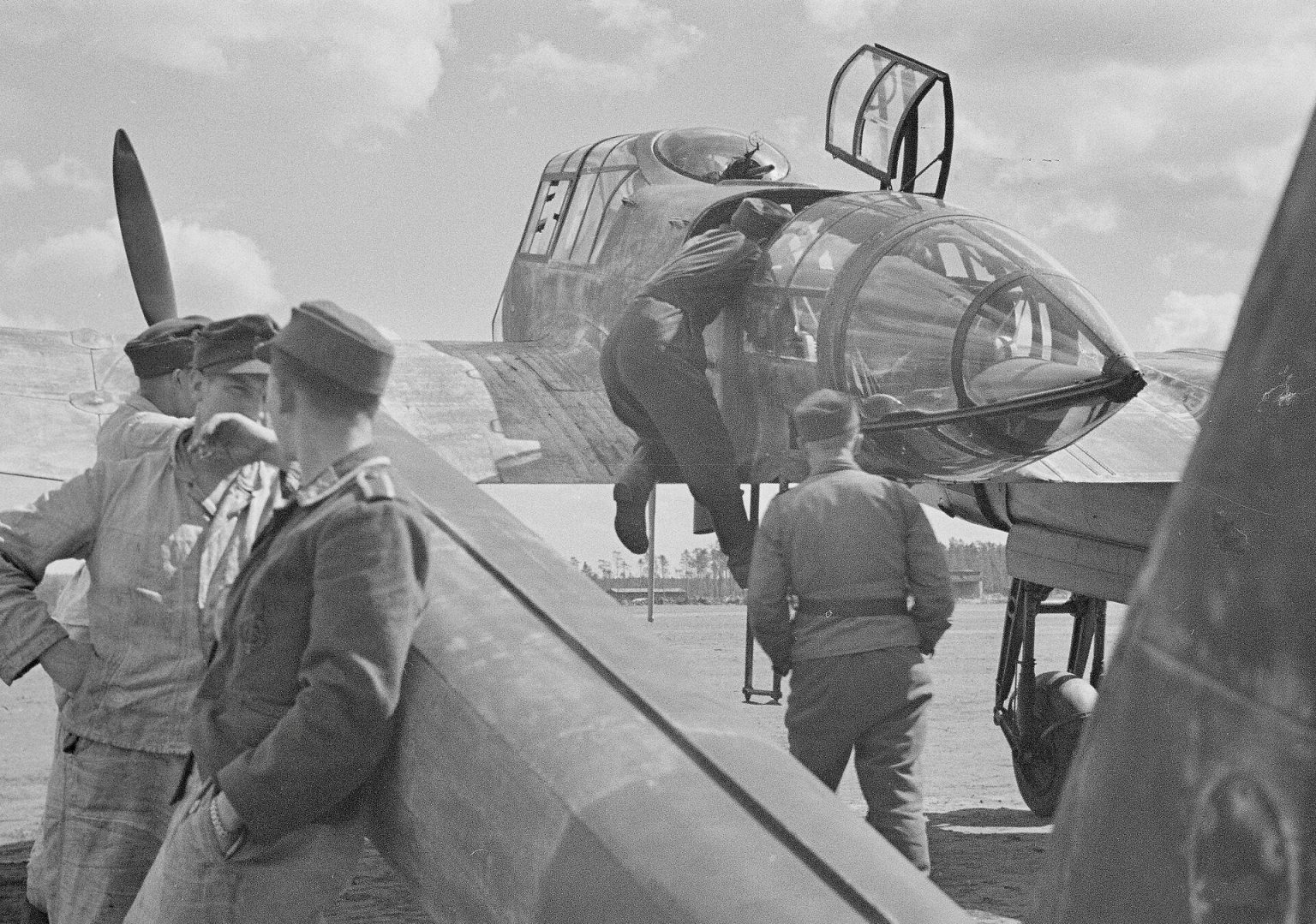
The Uhu’s central pod was glazed almost end to end, giving its three crew near all-round vision. For reconnaissance, artillery spotting and observation, that panoramic sight was the whole point of the aircraft, and everything else in the layout served it.
Observers loved it. Where crews of conventional aircraft peered out through small windows, the Uhu’s men sat inside what was effectively a flying greenhouse, able to see and record the battlefield spread out below and around them.
Kurt Tank’s EyeA famous designer’s unusual child
The Uhu came from Kurt Tank’s Focke-Wulf, better known for the Fw 190 fighter.
Kurt Tank’s name is usually associated with the superb Fw 190 fighter, but his design house also produced the utterly different Uhu, with E. Kosel as project engineer. It shows the breadth of Focke-Wulf’s work — from a world-class fighter to a specialised twin-boom observation platform.
The two aircraft could hardly be more different, yet both were exactly right for their jobs. The Uhu proved that Tank’s team could think as clearly about a slow reconnaissance machine as about a fast fighter.
Low and SlowModest power, on purpose
Two small Argus engines made the Uhu slow — and that was fine.
With two ~465 hp Argus engines, the Fw 189 could barely reach 350 km/h. For a combat aircraft that would be crippling; for a reconnaissance platform it was acceptable, because the job called for stability, endurance and good low-altitude behaviour, not speed.
The modest engines were reliable and simple, well suited to rough Eastern Front strips. The Uhu was built to loiter and observe, and its powerplant was chosen to do exactly that — even if it left the aircraft desperately slow when fighters appeared.
The Tough OneAlmost unkillable
The Uhu’s ability to absorb damage became the stuff of legend.
What the Fw 189 lacked in speed and guns it made up for in sheer resilience. Its twin-boom structure and rugged build let it come home with damage that would have destroyed a conventional aircraft — a boom shot away, an engine gone, the nacelle riddled with holes.
Soviet pilots found it maddeningly hard to shoot down, and the Uhu’s toughness is the quality most often remembered about it — a slow, awkward reconnaissance machine that simply would not die.
Rammed and HomeSurviving the collision
There are recorded cases of the Uhu being rammed by fighters and still flying home.
The most extraordinary stories of the Uhu’s toughness involve ramming. Soviet fighter pilots who could not shoot the aircraft down sometimes resorted to colliding with it, and in several recorded cases the Fw 189 lost part of its structure in the impact yet still carried its crew back to safety.
Few aircraft of any era have such stories attached to them. They cemented the Uhu’s reputation as one of the most survivable machines of the war, at least in the hands of a cool crew.
Flying EyeThe Ostfront’s watcher
On the Eastern Front the Uhu became “das fliegende Auge” — the Flying Eye.
From 1941 the Fw 189 was the Luftwaffe’s standard short-range reconnaissance aircraft in the East, so constantly overhead that it earned the nickname the Flying Eye. Wherever the German army fought in the Soviet Union, Uhu crews were watching and reporting.
It was the daily, vital work of tactical reconnaissance — and for much of the war the Uhu did it better than anything else the Luftwaffe had, thanks to its vision, handling and toughness.
Artillery’s FriendDirecting the guns
Circling over the battlefield, the Uhu spotted and corrected artillery fire.
One of the Uhu’s core tasks was artillery observation: loitering over the battlefield to locate targets and correct the fall of shot for the guns below. Its endurance and superb downward view made it ideal for this patient, dangerous work.
For the German artillery, an Uhu overhead meant accurate, responsive fire. It is exactly the kind of unglamorous cooperation between air and ground that wins battles without ever making headlines.
Night HuntersInto the partisan war
The Uhu was pressed into night ground-attack and anti-partisan operations.
As a savage partisan war developed behind the German lines, the Fw 189’s endurance and low-level handling found it new work: night ground-attack and anti-partisan operations, carrying light bombs and guns against insurgents under cover of darkness.
It was brutal work in a brutal theatre, far from the aircraft’s reconnaissance purpose, but the Uhu’s particular qualities suited it — another example of how the type kept finding new roles as the Eastern Front war changed.
The TrainerTeaching the owl
The Fw 189B dual-control trainer converted crews onto the unusual type.
To keep the reconnaissance squadrons supplied with capable crews, Focke-Wulf built the Fw 189B, a dual-control trainer version with a more conventional, less glazed cabin. It served the essential background role of converting pilots and crews onto the type.
It is a reminder that even a specialised aircraft needs its own schoolroom version — and that behind every operational Uhu over the front stood a training pipeline that put it there.
The KampfzelleThe armoured owl that lost
The Fw 189C swapped the glass pod for an armoured battle cell — and lost to the Hs 129.
The Fw 189C replaced the glazed reconnaissance nacelle with a tiny, heavily armoured “Kampfzelle” and heavier guns, turning the tough twin-boom airframe into a dedicated ground-attack aircraft to compete with the Henschel Hs 129.
The Hs 129 won the contest, and the Fw 189C never went beyond prototypes. It remains an intriguing might-have-been — the survivable Uhu airframe reimagined as an armoured tank-buster.
Foreign HandsBuilt and flown across the Axis
Made in Prague and Bordeaux, flown by Hungary, Romania, Slovakia and Bulgaria.
The Uhu was very much a coalition aircraft. It was built not only in Germany but by the Aero works in occupied Prague and SNCASO in occupied France, and it was flown by the air forces of Germany’s Eastern allies — Hungary, Romania, Slovakia and Bulgaria — for reconnaissance.
That spread reflects the reality of the Axis war effort in the East: German designs, produced with the captured industry of occupied Europe, flown by a coalition of allied air forces.
The SurvivorOne owl came back
A single Fw 189, pulled from a Russian forest, survives — restored in the UK.
Of some 860 built, exactly one Fw 189 survives. Shot down in 1943, it lay in a remote Russian forest for nearly fifty years before being recovered in the early 1990s and painstakingly restored in the United Kingdom.
It is the only Uhu left in the world — a fitting last survivor for an aircraft whose whole legend was its ability to come home from the East against the odds.
Photo Gallery
The Focke-Wulf Fw 189 Uhu in photographs
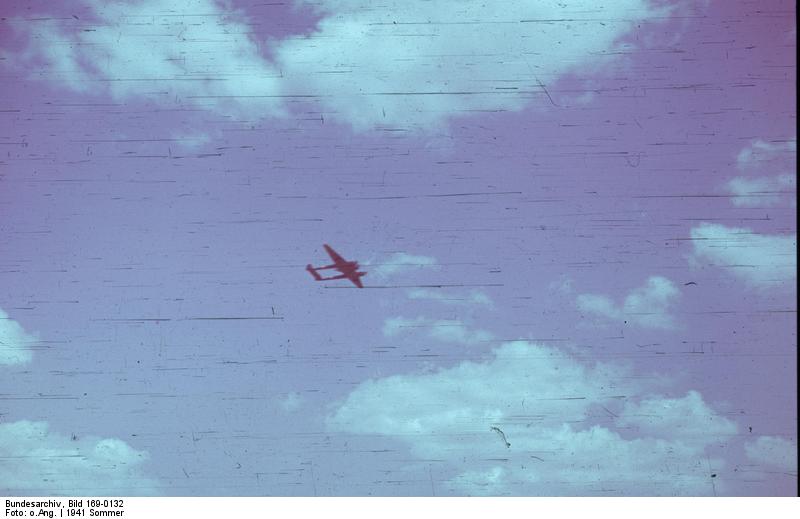
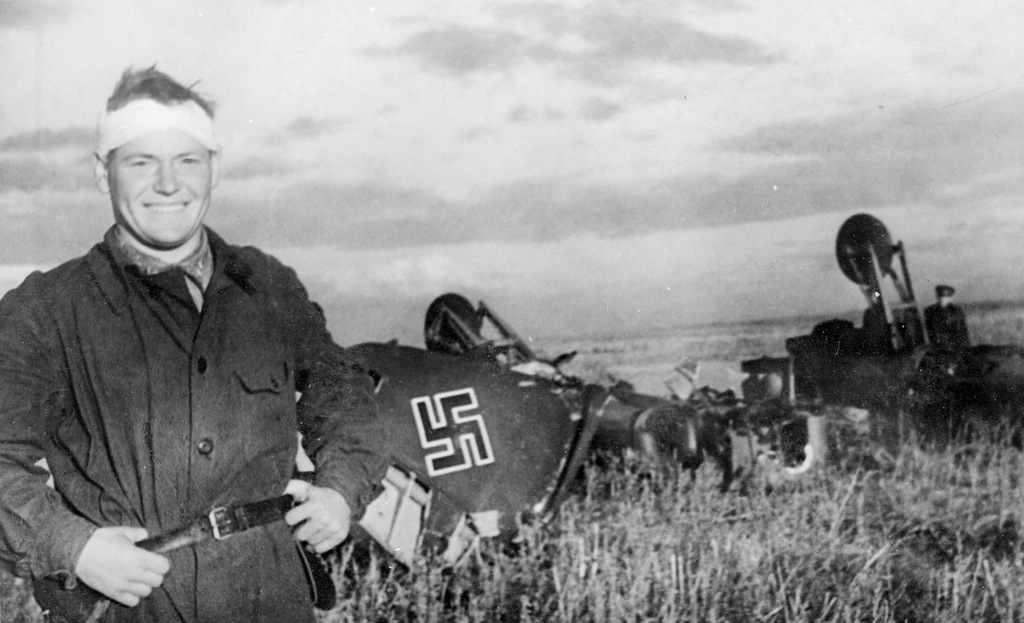
Wartime photographs of the Uhu from the German federal and Finnish wartime archives and other collections, each credited to its source and licence. Click any photo to enlarge.
On Film
The Focke-Wulf Fw 189 on video: a documentary history
A detailed documentary on the Uhu — its unusual design, its reconnaissance role on the Eastern Front, its legendary toughness and its decline.
“Focke Wulf 189 ‘Uhu’ | Success In The Face Of Defeat” by Rex’s Hangar (approx. 117,000 views at time of writing; running time ~57 minutes). A thorough, well-sourced documentary history of the type.
Operations Overview
Where the Focke-Wulf Fw 189 flew: an operator map
Designed and built in Germany (and in occupied Prague and Bordeaux), flown above all on the Eastern Front by the Luftwaffe and its Axis allies. Toggle the categories; hover or tap a country for detail. Figures are approximate and hedged.
Categories: Design & Manufacture (Germany; also built in occupied Prague and Bordeaux) · Major Axis Operator (Hungary, Romania) · Other Axis Operator (Slovakia, Bulgaria) · Surviving Restored Airframe (United Kingdom). Operator list is approximate and hedged.
Service Record
The Fw 189’s record: the indispensable eye of the Ostfront
The Uhu’s contribution was measured not in kills but in the endless, vital reconnaissance work it did — and in how often it survived to do it again.
Questions & Answers
Focke-Wulf Fw 189 Uhu: your questions answered
Can I fly in a Focke-Wulf Fw 189?
No — only one Fw 189 survives anywhere in the world, a single airframe recovered from a Russian forest and restored in the United Kingdom, and it is a rare, historic machine rather than a ride you can book. There is no bookable Fw 189 experience of any kind, and MiGFlug does not offer one. If what you actually want is the real thing — strapping into a genuine military aircraft and flying it — you very much can do that today in other types. MiGFlug arranges flights in real fighter jets and warbirds around the world. Start here: migflug.com/flights-prices.
Why did the Fw 189 have such an unusual twin-boom, glazed shape?
Because its entire design was built around one thing: the crew’s ability to see. As a reconnaissance and artillery-observation aircraft, its most important quality was all-round vision, so Focke-Wulf gave it a fully glazed central crew nacelle and moved everything that would obstruct the view — the engines and the tail — out to twin booms on either side. The strange “flying greenhouse” look was simply the price of an almost unobstructed field of view.
Why was the Fw 189 so hard to shoot down?
Its twin-boom structure and rugged construction gave it exceptional damage tolerance. Losing much of a tail boom, an engine or having the nacelle riddled did not necessarily bring it down, and there are recorded cases of Uhus surviving being rammed by Soviet fighters and still flying their crews home. For a slow, lightly armed aircraft that loitered over the front line, that toughness was its single most valuable quality — and it is the thing the type is most remembered for.
What did the Fw 189 actually do?
It was the Luftwaffe’s standard short-range tactical reconnaissance and army-cooperation aircraft, above all on the Eastern Front, where it was nicknamed the “Flying Eye”. It flew photographic and visual reconnaissance, artillery spotting, liaison and casualty evacuation, and later night ground-attack and anti-partisan missions. Its job was to serve the ground forces directly with information and support.
How many Fw 189s were built, and do any survive?
Around 860 were built (figures vary), by Focke-Wulf in Germany and by the Aero works in Prague and SNCASO in Bordeaux in occupied Europe. Just one survives today — an aircraft shot down in 1943, recovered from a Russian forest in the 1990s and restored in the United Kingdom. It is the only Fw 189 in existence.
What engines did the Fw 189 use, and how fast was it?
It was powered by two Argus As 410 inverted-V12 air-cooled engines of only around 465 horsepower each, giving a top speed of just about 350 km/h. That was slow, but deliberately so: a reconnaissance aircraft needed reliability, endurance and stability at low and medium altitude far more than speed, and the modest, dependable Argus engines suited that role well.
What were the Fw 189’s variants, including the B trainer and C Kampfzelle?
The main version was the Fw 189A reconnaissance aircraft. The Fw 189B was a dual-control trainer with a more conventional cabin, used to convert crews onto the type. The Fw 189C “Kampfzelle” was an experimental heavily armoured single-seat ground-attack variant developed to compete with the Henschel Hs 129; it lost the competition and never entered production, remaining a prototype.
Was the Fw 189 a good aircraft?
For its role, yes — it was excellent. It gave superb visibility, handled beautifully, and was extraordinarily tough, making it one of the best tactical reconnaissance aircraft of the war. Its weaknesses — low speed and light armament — only mattered once the Luftwaffe lost air superiority, after which the slow Uhu grew vulnerable without escort. Judged as the specialised observation platform it was designed to be, it was a genuine success.
Fly For Real
You can’t fly the Fw 189 — but these, you can
Only one Uhu survives, and it is a museum-grade rarity, not a ride. The urge behind it — to strap into a real military aircraft and actually fly — is very much still bookable. MiGFlug puts you in genuine fighters and warbirds around the world.
Fighter Jet Flights
Take the controls of a real ex-military jet with an experienced pilot.
All flights are operated by MiGFlug’s vetted partners with professional pilots. Browse every option and current pricing at migflug.com/flights-prices. MiGFlug does not operate Focke-Wulf Fw 189 flights — only one survives anywhere in the world.
Related Aircraft
If the Focke-Wulf Fw 189 interests you, explore these
Sources & Further Reading
Where this Focke-Wulf Fw 189 history comes from
Note on figures: dimensions, performance and production numbers for the Fw 189 vary between sources and are hedged here as approximate. Cost fields are listed as not reliably recorded because trustworthy wartime German cost data is not available. Just one original Fw 189 is known to survive, recovered from Russia and restored in the United Kingdom.