
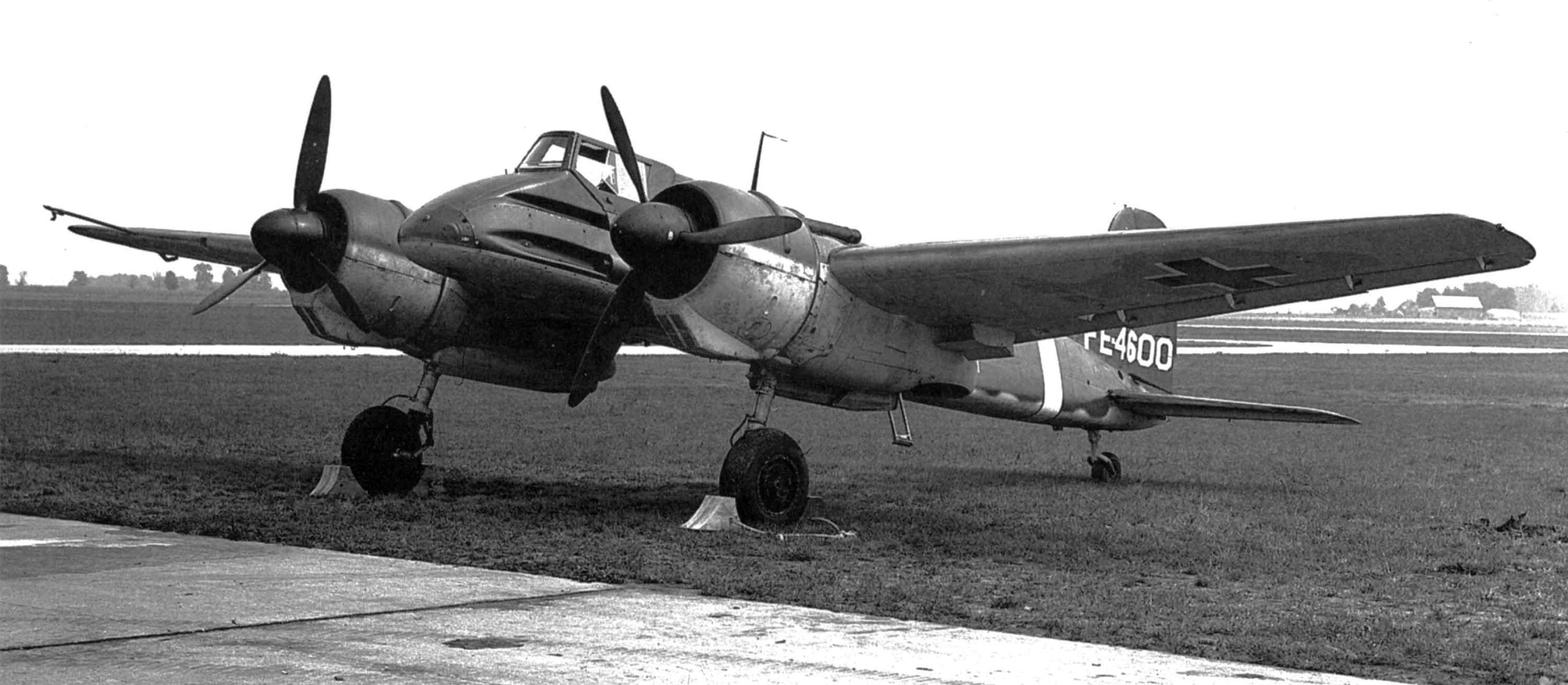
Henschel Hs 129
the flying anti-tank gun
Germany’s purpose-built tank-buster: a small, heavily armoured close-support aircraft that carried the biggest gun of any mass-produced warplane — deadly when it worked, but underpowered, cramped and forever in short supply.
The Henschel Hs 129: Germany’s dedicated flying tank-buster
The Henschel Hs 129 was one of the few aircraft of the Second World War designed from a blank sheet to do a single, brutal job: fly low over the battlefield and kill the enemy’s tanks and troops. Where most warplanes were adapted to ground attack, the Hs 129 was a purpose-built Schlachtflugzeug — an armoured assault aircraft — and almost everything about it was shaped by that mission.
The requirement came from the German Air Ministry (RLM) in 1937, which wanted a small, cheap, heavily armoured twin-engine machine that could survive small-arms and light flak while attacking pinpoint targets. Henschel’s design, led by Friedrich Nicolaus, beat a competing Focke-Wulf proposal and first flew on 29 May 1939. The heart of the concept was the pilot’s protection: the cockpit was a wedge of armour plate, with a windscreen of glass up to 75 mm thick, built to shrug off the ground fire that ground-attack pilots faced every sortie.
That protection came at a price. To keep the armoured box small and light, the fuselage was tiny and slab-sided, and the cockpit was famously cramped — so tight that some engine instruments had to be mounted outside, on the inner faces of the engine cowlings, and read through the canopy. Visibility was poor, and pilots found the aircraft demanding and uncomfortable to fly.
The bigger problem was power. The Hs 129 was meant to use two small Argus engines, but they were far too weak for a machine that kept gaining weight and armour. After the fall of France in 1940, Germany found itself with large stocks of captured French Gnome-Rhône 14M radial engines, and the production B-series was re-engined around them. Even so the aircraft remained underpowered, and the French radials proved unreliable — prone to failure and, worse, to choking on the dust and sand of the Eastern Front and the Tunisian desert. Engine trouble, not enemy fire, grounded many Hs 129s.
When it worked, though, the Hs 129 was a genuine tank-killer. Armament escalated steadily: from a pair of 20 mm cannon, to a 30 mm MK 101 or MK 103 in a conformal pod, and finally to the enormous 75 mm BK 7.5 on the Hs 129 B-3 — the heaviest gun ever fitted to a mass-produced aircraft. Specialist anti-tank squadrons used the type to hunt Soviet armour, aiming for the thinner rear and top armour of tanks, and Hs 129s were in the thick of the fighting at Kursk in July 1943 and in the defensive battles that followed.
But the aircraft was never available in large numbers, and it was vulnerable: slow, hard to fly, and easy prey for enemy fighters once its escort was gone. The same tank-busting job was also being done by the cannon-armed Junkers Ju 87G Stuka and by ground-attack Focke-Wulf Fw 190s. Around 865 Hs 129s were built before production ended in 1944, and the type faded from the battlefield as the war closed. Today not one flies; a few recovered wrecks and relics are all that remain of Germany’s dedicated flying anti-tank gun.
01The Henschel Hs 129 at the Battle of Kursk, July 1943
Kursk is the battle most associated with the Hs 129. In July 1943, during the massive armoured clashes of Operation Citadel, specialist anti-tank Panzerjagd units flying Hs 129 B-2s attacked Soviet tank formations with their 30 mm cannon, diving on the vehicles from the side and rear to strike thinner armour. German accounts credit Hs 129s with helping to break up Soviet counter-attacks in the southern sector, and the battle is often cited as the type’s finest hour. It should be read with care, however: claims from low-level attack are hard to verify, the Hs 129 force was small, and it operated alongside Ju 87Gs, Fw 190s and ground artillery. The Hs 129 was a useful specialist at Kursk — not, on its own, a war-winning weapon.
What made the Henschel Hs 129 different
The Hs 129’s armoured, cramped cockpit
The pilot sat inside a box of armour plate with a windscreen of glass up to 75 mm thick — protection against the ground fire that assault pilots met on every pass. To keep that armour small and light the cockpit was tiny, so tight that some engine instruments were fitted outside, on the engine cowlings, and read through the canopy. Visibility was poor and the office was uncomfortable, but the armour kept many pilots alive.
Underpowered French radial engines
After the intended Argus engines proved too weak, production aircraft used two captured French Gnome-Rhône 14M radials of about 700 PS each. They left the Hs 129 chronically underpowered and were unreliable, especially when dust and sand on the Eastern Front and in Tunisia were ingested into the cylinders. Engine failure was the type’s single greatest weakness.
An escalating anti-tank battery
Firepower grew as Soviet armour got tougher: from two 20 mm MG 151/20 cannon, to a 30 mm MK 101 or MK 103 in an underslung pod, and finally to the colossal 75 mm BK 7.5 on the B-3 — the largest gun ever carried by a mass-produced aircraft. The bigger the gun, the fewer rounds it carried and the harder the aircraft was to fly.
02Why the Henschel Hs 129’s cockpit was so notoriously tight
The Hs 129’s designers faced a hard trade-off. Armour is heavy, and the more of it you fit, the more the aircraft weighs and the more power you need. To protect the pilot without making the aircraft impossibly heavy, Henschel wrapped the smallest possible volume in armour — essentially a triangular, slab-sided fuselage with the pilot jammed into an armoured nose. The result was one of the tightest cockpits of any operational aircraft of the war. The control column, throttles and basic flight instruments were inside; but there was no room for a full instrument panel, so certain engine gauges were mounted on the inner sides of the engine nacelles, in the pilot’s peripheral view through the glass. Heavy canopy framing and the low, forward-set seat gave poor sightlines, which mattered for an aircraft whose whole job was to spot and hit small ground targets. Pilots respected the armour and disliked almost everything else about the office.
03The Gnome-Rhône engines: why the Hs 129 was always short of power
The Hs 129 was conceived around two Argus As 410 engines of only around 465 PS each. As the design absorbed more armour and equipment it grew heavier, and the Argus units simply could not haul it. The fall of France in 1940 handed Germany large stocks of the French Gnome-Rhône 14M — a compact 14-cylinder radial of about 700 PS — and the production B-series was built around a pair of them. Even doubled up, they gave the loaded Hs 129 a modest top speed of little over 400 km/h and sluggish climb, and the aircraft was underpowered for the weights it was asked to carry, especially with the heavier guns. The radials were also fragile in the field: they disliked dust and sand, needed careful maintenance, and suffered a high rate of failure in exactly the harsh Eastern Front and North African conditions where the Hs 129 was sent to fight. More Hs 129s were lost to mechanical trouble and accidents than many single-engine types, and low serviceability dogged the type throughout its career.
Henschel Hs 129 B full specifications
Baseline note: the figures describe the Hs 129 B-2, the version that was the Hs 129 in every sense that matters — 792 of the roughly 882 airframes accepted were B-2s, and it is the aeroplane that flew the anti-tank war on the Eastern Front from mid-1942. Dimensions and performance follow the Air International tabulation of December 1980; the weights and the B-3 column follow the German Bundesarchiv production records and Kens. Two cautions. First, the A-series figures are not a lesser version of these numbers but a different and much worse aeroplane, built round two 465 PS Argus As 410 inverted-V12s instead of two 700 PS Gnome-Rhône radials. Second, published Hs 129 weights vary by 200 kg between sources because almost every airframe carried a different Rüstsatz kit. Deltas for the Argus-engined A-0 and A-1, for the B-1 and for the 75 mm-gunned B-3 are given in grey.
Dimensions & weights
- Crew
- 1 (pilot only, in an armoured tub whose internal width was set by the width of a seated man — there was no room to turn the head fully, and tall pilots could not fly the A-series at all)
- Length
- 9.75 m (32 ft 0 in)
- Wingspan
- 14.20 m (46 ft 7 in)
- Height
- 3.25 m (10 ft 8 in)
- Wing area
- 29.00 m² (312 sq ft)
- Empty weight
- 4,020 kg (8,863 lb); 3,810 kg (8,400 lb) for the B-1/R3, 4,063 kg (8,957 lb) for the B-3
- Maximum take-off weight
- 5,250 kg (11,574 lb); 5,110 kg (11,266 lb) for the B-1/R3, 5,230 kg (11,530 lb) for the B-3
- Wing loading
- 181 kg/m² (37.1 lb/sq ft)
- Power loading
- 3.75 kg/PS (8.3 lb/hp) — on the A-series, with 465 PS a side, it was 5.0 kg/PS, which is the single number that explains why the Luftwaffe refused the aeroplane
- Cockpit armour
- Welded steel bathtub of 6–12 mm plate (0.24–0.47 in), enclosing the pilot to head height; the fuselage sides were canted inwards to a triangular section so that rounds struck at an angle
- Armoured glass
- 75 mm (2.95 in) laminated windscreen, a specification written into the 1937 requirement
- Propellers
- Ratier three-blade constant-speed, 2.60 m (8 ft 6 in) diameter, handed — the port unit turned clockwise and the starboard anticlockwise seen from the nose
- Ventral gun installation, B-3
- 1,200 kg (2,646 lb) for the BK 7,5 pod, recoil gear and autoloader — nearly a quarter of the aircraft’s all-up weight hung under the fuselage
Performance
- Maximum speed, altitude
- 407 km/h at 3,830 m (253 mph at 12,570 ft), clean
- Maximum speed, B-3
- 400 km/h (249 mph) — and that is the book figure; with the 75 mm pod fitted the aeroplane was slower and heavier in every axis than the B-2 it was converted from
- Cruising speed
- 315 km/h at 3,000 m (196 mph at 9,840 ft)
- Rate of climb
- 8.1 m/s (1,594 ft/min); some tabulations give 7.1 m/s (1,390 ft/min) for the B-1, and the difference is chiefly which stores are hung on the aeroplane
- Time to 8,000 m, B-3
- 37 minutes (to 26,250 ft) — a figure of purely academic interest, since the B-3 worked between 50 and 800 m
- Service ceiling
- 9,000 m (29,530 ft)
- Range
- 690 km (429 miles)
- Combat range
- ~560 km (348 miles) for the B-1/R3, ~780 km (485 miles) quoted for the B-3 — the wide spread reflects load, not a better aeroplane
- Single-engine flight
- Marginal to impossible at operational weight. With a gun pod fitted and a stopped engine the Hs 129 would not hold height; pilots were taught to jettison the pod first and were often still going down
- Speed margin over Soviet fighters
- None. From 1943 a Yak-9 or La-5FN was 150–250 km/h (90–155 mph) faster. The Hs 129 could not run and could not turn with anything; it needed a fighter escort to survive, and the escort was rarely there
- Control forces
- Heavy and worsening with speed. The V2 prototype was flown into the ground on 5 January 1940 because the pilot could not pull out of a shallow dive; electrically actuated trim tabs on the B-series eased but never cured it
Propulsion & systems
- Engines
- 2 × Gnome-Rhône 14M-4 and 14M-5 ("Mars"), 14-cylinder two-row air-cooled radials — French engines captured in quantity in 1940 and built on under occupation, chosen because the 1937 specification forbade any powerplant that German front-line types needed
- Power
- 515 kW (700 PS, 690 hp) each for take-off at 3,030 rpm; 660 PS at 4,000 m. The A-series had 2 × Argus As 410A of 342 kW (465 PS), and Henschel’s prototype came out 12 per cent overweight against engines giving 8 per cent less than promised
- Engine size and weight
- 18.92 litres (1,155 cu in) each, 419 kg (924 lb) dry, 950 mm (37.4 in) diameter — a small, light, lightly stressed engine asked to haul an armoured aeroplane
- Reliability
- The defining failure of the type. 4./Sch.G 2 lost three of twelve aircraft to engine failure simply flying from Dęblin to North Africa, and two more on its first three sorties. On the steppe the unfiltered 14M ingested dust and seized; a workable filter took about six months to reach the units
- Fuel
- 87 octane petrol, Bronzavia carburettors with automatic boost and altitude control. Tank protection was adequate against small arms but the tanks sat where the wing joined the fuselage, and fire was a common way to lose an Hs 129
- Sight
- Revi C 12/C reflector sight mounted outside the aircraft on the nose, ahead of the windscreen, because there was no room for it inside
- Instruments
- Main panel below the windscreen under the nose coaming, where it was barely visible; the engine instruments were moved out onto the inboard faces of the engine nacelles and read through the side windows. No other operational aircraft of the war did this
- Radio
- FuG 16 R/T. The B-1’s mast aerial was deleted on the B-2 in favour of a flush direction-finding loop, one of the few reliable ways to tell the two apart at a glance, along with the B-2’s shorter exhaust stacks
- First flight
- 26 May 1939 (V1, W.Nr. 129 3001, D-ONUD, from Schönefeld; Pegg gives 29 May, and the two dates come from different works records)
- Service entry
- April 1942, when the first twelve B-1s went to 4./Sch.G 1; the unit reached the Crimea in mid-May 1942
- Production
- ~882 accepted to 30 September 1944 (20 A-0, 50 B-1, 792 B-2, 20 B-3 plus 3 B-2 conversions), per the Bundesarchiv monthly delivery returns; other published totals are 841, 865 and 879, and the differences are accounting boundaries rather than lost aeroplanes
- Cost
- Not published as a unit price, but the reason Henschel won: the Hs 129 cost about two-thirds of the competing Focke-Wulf Fw 189C. Neither design flew acceptably, and the RLM picked on price
04The Henschel Hs 129’s operating costs: what a wartime tank-buster cost
Unlike modern aircraft, the Hs 129 has no meaningful published unit price or cost-per-flight-hour figure. Wartime German aircraft costs were recorded in Reichsmarks under a controlled economy, were not comparable to market prices, and were rarely broken out by type in surviving records; any single number would be misleading. What can be said is that the Hs 129 was meant to be cheap — a small, austere machine using captured French engines to spare scarce German powerplants for fighters and bombers. Yet its low serviceability, heavy maintenance demands and modest production run (~865 aircraft) made it expensive in practice for the results it delivered. And because not a single Hs 129 is airworthy today, there is no operating cost to quote at all: unit cost is best given as “not reliably recorded (WWII)” and cost per flight hour as “not applicable — no airworthy example.” All weight, speed and range figures on this page are wartime estimates that vary between sources and should be treated as approximate.
Armament & payload
The Hs 129 was rebuilt around a bigger gun three times, and the gun won every argument with the airframe
The Hs 129 is one of the very few aircraft of the Second World War designed from a blank sheet purely to attack ground targets, and the only German one. That is the interesting claim about it. The other interesting fact is that its fixed armament — two rifle-calibre MG 17 and two 20 mm MG 151/20 — was never the point. Everything that made the aeroplane matter hung underneath it in a conformal ventral pod, and the story of the type is the story of that pod growing from a 139 kg 30 mm cannon to a 1,200 kg 75 mm field gun in three years. Each step bought penetration and cost speed, climb, endurance and single-engine safety, on an airframe that had none of those to spare. Fits varied enormously between airframes: the Rüstsatz kits were renumbered between the B-1 and B-2, some were dropped, units swapped them in the field, and any single "Hs 129 armament" list is wrong for most of the aeroplanes.
Gun
- 2 × 7.92 mm MG 17 in the wing roots, 1,000 rounds per gun. On 1943–44 aircraft and on the B-3 these were replaced by 2 × 13 mm MG 131 with 250 rounds per gun. The A-1 had carried 2 × 20 mm MG FF in the fuselage sides instead of the MG 151/20.
- 2 × 20 mm MG 151/20 in the lower fuselage sides, 125–250 rounds per gun. Adequate against lorries, artillery tractors, parked aircraft and troops; useless against a T-34 from any aspect.
- 30 mm MK 101 in a ventral pod, 30-round box magazine, 230–260 rounds/min, 900 m/s. Its tungsten-cored AP round would go through 75 mm of plate at 300 m and could open the turret side of a KV-1. This was the B-1/R2, from June 1942, and it is where the "can opener" nickname comes from.
- 30 mm MK 103 in the same installation, belt-fed, 380–420 rounds/min. APCR penetration 75–95 mm at 300 m at normal incidence, 42–52 mm at 60°. Standard on the B-2 from 1943 and the best compromise the type ever carried — more rounds, faster firing, only a little less punch per shot than the MK 101.
- 37 mm BK 3,7 (B-2/R3) and 75 mm BK 7,5 (B-3). The BK 3,7 was the 3.7 cm Flak 18 in a pod with a 12-round magazine at 160 rounds/min; the Hs 129 could stow far more ammunition behind the cockpit than the Ju 87G that carried the same gun. The BK 7,5 was the 7.5 cm PaK 40 with a hydraulic recoil damper, a new muzzle brake and a rotary autoloader, firing a 12 kg shell at about 40 rounds/min.
Air-to-air
- None carried, and none intended. No guided air-to-air weapon existed, and the Hs 129 had no business in a fighter engagement.
- The two MG 151/20 could and occasionally did bring down Soviet aircraft — Il-2s and low-flying transports were the realistic targets — but this was opportunism, not a role.
- In practice the type was prey. It was slower than every Soviet fighter it met, had no rear gun and no second crewman to look behind, and the pilot’s rearward view through an armoured canopy was close to nil.
- The consequence is in the loss returns. By the summer of 1943 Bergström records 495 Hs 129 written off against a running production total of 664 — a wastage rate that is the real argument against the whole concept.
Air-to-surface guided
- None carried. Germany fielded guided anti-ship weapons in 1943 — Fritz X and Hs 293, the latter a Henschel product from the same firm — but nothing guided existed for the tactical anti-armour job.
- The nearest approach to a precision weapon was the SD-4 HL, a 4 kg shaped-charge bomblet sown in numbers, which relied on saturation rather than aiming.
- Everything else was iron sights and a shallow dive from behind, aimed at the engine deck and rear plates where armour was thinnest.
- This is the honest measure of the Hs 129’s dilemma: with no guided weapon available, the only way to raise lethality was to raise calibre, and calibre had to be carried.
Bombs
- 4 × SC 50 (50 kg, 110 lb) on belly racks, or 2 × SC 50 on underwing points; some sources give a single SC 250 on the centreline under the R4 kit.
- SD-2 "butterfly" anti-personnel bomblets in dispensers — two sets of 48, so 96 per aircraft. Against troops in the open, soft-skinned columns and supply dumps this was by some distance the Hs 129’s most effective load, and it is under-credited beside the anti-tank guns.
- SD-4 HL hollow-charge bomblets of 4 kg, the best armour-piercing store the type carried short of a Bordkanone, and the standard fit under the B-1/R4 and B-2/R4 kits.
- Maximum useful load was small. This was never a bomber, and with an anti-tank pod fitted the bomb load was effectively nil.
Rockets
- None standardised. This is the sharpest point of difference between the Hs 129 and its opposite numbers: the Il-2 carried RS-82 and RS-132 rockets and the Hawker Typhoon carried RP-3, and both put their faith in a cheap unguided rocket.
- Germany went the other way and put its faith in the gun. When German aerial anti-tank rockets did arrive in 1944 — Panzerblitz and Panzerschreck derivatives — they went to the Fw 190 and the Ju 87, not to the Hs 129, whose production was ending.
- The choice was defensible on paper. A 30 mm APCR round from 300 m was more accurate than any 1943 rocket, and the Hs 129 could carry a hundred of them.
- It was indefensible in practice, because it required the aeroplane to close to a few hundred metres of a defended target at 300 km/h, repeatedly.
Pods & other stores
- R1: two 50 kg bombs, or two dispensers of 48 SD-2 bomblets. R2: the 30 mm MK 101 pod with 30 rounds — later the MK 103. R3: a ventral tray of four MG 17 with 250 rounds each on the B-1; on the B-2 the same number was reassigned to the 37 mm BK 3,7.
- R4: mixed small bombs, including the SD-4 HL shaped-charge bomblets. R5: an Rb 20/30 or Rb 50/30 vertical camera for tactical reconnaissance — the fit the Romanians used most.
- The BK 7,5 installation on the B-3 was jettisonable in an emergency, with a circular port at the rear of the pod ejecting spent cases. Crews used the jettison: the recoil could throw the aircraft into attitudes the pilot could not recover from with the gun still attached.
- Dust and sand filters for the Gnome-Rhône engines, fitted late and retrofitted in the field, count as a store in every practical sense — without them a squadron on the steppe wore its engines out in weeks.
- No drop tanks. The Hs 129 flew short sorties from forward strips, which is also why it was so often caught by fighters on the way home.
Three typical loadouts
- Panzerjagd, Kursk, 8 July 1943
- B-2/R2 with the 30 mm MK 103 pod, 2 × MG 151/20 and 2 × MG 17 for suppression. This is the loadout of the type’s single best day: the Panzerjägerstaffel under Hauptmann Bruno Meyer, rotating Staffeln continuously from Mikoyanovka, broke up a Soviet armoured brigade moving against the flank of II SS Panzer Corps south of Belgorod. German claims for the day run to about 80 tanks. The claim is certainly high — aerial tank claims always are — but the disruption of the attack is attested from both sides.
- Schlacht, anti-personnel, 1943–44
- B-2/R1 with 96 SD-2 bomblets in two dispensers plus the fixed guns, no heavy pod. Faster, better balanced and more survivable than the tank-hunting fit, and against infantry, gun lines and horse-drawn supply columns it was the most useful thing the Hs 129 did. It is also the mission the type is never remembered for.
- Heavy anti-tank, autumn 1944
- B-3 with the 75 mm BK 7,5, 12 rounds in the rotary magazine plus one in the breech, and 2 × MG 131. Theoretically able to kill any tank then in service — and in the field it did knock out IS-series heavies. It was also the slowest, heaviest and least survivable Hs 129 ever built, it had one round for every four seconds of a firing pass, and about 25 aircraft were completed before the line shut in September 1944.
Sourcing caveat: the Rüstsatz numbering above follows Smith and Kay and the German Bundesarchiv-based accounts, which disagree with each other on the B-2 series because the kits were renumbered and some were dropped. Ammunition capacity for the BK 7,5 is given as 12 rounds by Smith and Kay, 13 by the German gun handbook (12 in the magazine plus one chambered) and 26 by some later compilations; the handbook figure is the best attested. Penetration figures are German test values against homogeneous plate and assume a stated range and impact angle — against a sloped, welded, spaced or hard-faced real target, at a real deflection angle, they should be read as an upper bound rather than a promise.
Variants
Henschel built the right aeroplane for the wrong specification, and the specification is what killed it
In April 1937 the RLM’s Technisches Amt issued a requirement for a Schlachtflugzeug: a small, heavily armoured, cannon-armed twin for direct support of ground troops, written on the evidence of the Condor Legion in Spain. Hamburger Flugzeugbau, Focke-Wulf, Gotha and Henschel were asked. Gotha did not reply, Hamburg’s asymmetric proposal was thrown out as too strange, and in October 1937 contracts went to Focke-Wulf, offering a version of the Fw 189, and to Henschel, whose P 46 became the Hs 129.
Buried in that requirement was the clause that doomed the aircraft: it had to use engines not needed by existing front-line types. That meant the 465 PS Argus As 410, and around two of those Friedrich Nicolaus drew the smallest airframe that would contain a man, an armoured tub and four guns. The result flew badly, was almost blind, had controls that stiffened into immovability with speed, and was rejected outright by the Luftwaffe after six months of troop trials. The fix — captured French Gnome-Rhône radials of 700 PS — made the aeroplane usable and introduced a new problem, because those engines were unreliable, fire-prone and helpless in dust. Henschel won the contract in the first place only because its design cost about two-thirds as much as Focke-Wulf’s. Both flew badly; the RLM chose on price.
What follows is a fair verdict. The concept was sound and about twenty years ahead of the institutional appetite for it: a small, armoured, gun-armed, single-purpose attack aeroplane is exactly what the A-10 would later be. The execution was compromised at the specification stage and never recovered. And the tactical record is genuinely mixed — days like 8 July 1943 sit alongside a loss rate that consumed three-quarters of production.
- Hs 129 V1 to V3 (1939–1940, 3 built)
- V1 first flew from Schönefeld on 26 May 1939 on two 430 PS Argus As 410A-0. V2 flew on 30 November 1939 and was destroyed on 5 January 1940 when Horst Petersdorff could not generate the stick force to pull out of a shallow dive; he was killed. V3, with 465 PS As 410A-1, flew on 2 April 1940. Testing was still incomplete when the war began.
- Hs 129 A-0 (1940, 20 built)
- Pre-production aircraft sent for troop trials in late summer 1940 and returned to the works six months later with a damning report. The complaints were flight performance, the cramped cabin and the visibility, which made accurate attacks very hard and, for a tall pilot, impossible.
- Hs 129 A-1 (1940–1941)
- Armament to specification at last — 2 × 20 mm MG FF in the fuselage sides, 2 × 7.92 mm MG 17 in the wing roots, four 50 kg bombs — on the same inadequate Argus engines. The Luftwaffe refused to accept it. It is generally accepted that all A-1s were converted to B standard, though a claim that some were sold to Romania persists without documentation.
- Hs 129 B-0 (December 1941, 10 built)
- The reprieve: Gnome-Rhône 14M radials of 700 PS, a redesigned and much better glazed armoured canopy, electrically actuated trim tabs to take some of the load off the stick, and the Revi sight relocated outside on the nose. Two A-1s converted in early 1941 had already shown the engine swap worked.
- Hs 129 B-1 (March 1942–, 50 built)
- First true production model, with the R1 to R5 kits. From June 1942 the R2 kit brought the 30 mm MK 101 with armour-piercing ammunition in a centreline pod, which is the moment the Hs 129 became an anti-tank aircraft rather than a strafer.
- Hs 129 B-2 (May 1942–1944, 792 built)
- The definitive aircraft, and 90 per cent of all Hs 129s. It began as a B-1 with a revised fuel system and diverged by accumulation: mast aerial deleted for a direction-finding loop, shorter exhaust stacks, renumbered kits, and from 1943 the belt-fed 30 mm MK 103 as the standard anti-tank gun. Late aircraft swapped the MG 17s for 13 mm MG 131.
- Hs 129 B-2/R3 (1943, small numbers)
- The 37 mm BK 3,7 pod, the same gun Hans-Ulrich Rudel used on the Ju 87G. It worked, and the Hs 129 could carry more rounds for it than the Stuka could, but few were converted because the effort had already moved to the 75 mm gun.
- Hs 129 B-3 (August–September 1944, ~20 built plus 3 conversions)
- The 75 mm BK 7,5, a modified PaK 40 with a hydraulic recoil damper and a 12-round rotary autoloader in the space behind the cockpit. At the time it was the heaviest and most powerful forward-firing gun fitted to any production military aircraft — the B-25G/H and the 24 Japanese Ki-109s carried 75 mm guns, but theirs were hand-loaded or built in trivial numbers. It killed IS-series tanks and ruined the aeroplane doing it.
- Hs 129 C and Hs 129 D (1943–1945, projects, nothing completed)
- The C was to have two 850 PS Isotta-Fraschini Delta inverted-V12s and a limited-traverse ventral barbette with twin MK 103; the Italian engines never arrived and the installation was still unready when Henschel’s plant was overrun in 1945. The D was to have Jumo 211s or BMW 801s — that is, real engines — and was never built or even bench-run. Every serious attempt to fix the type’s central defect failed for the same reason the defect existed: no engine could be spared.
- Export and Axis service (1943–1945, 62 to Romania, a handful to Hungary)
- Romania was the only substantial export customer, its 62 B-2s equipping three escadrile of the 8th Assault Group of the Royal Romanian Air Corps. After the coup of 23 August 1944 about 32 serviceable machines turned round and flew against the Germans in Transylvania, Hungary and Slovakia, degraded 30–40 per cent by the loss of German spares. The Royal Hungarian Air Force is listed as an operator and used a small number, but left little trace of them in its records.
Closing caveat on survivors, and it is a stark one: not one Henschel Hs 129 survives complete. No example is airworthy, and unlike almost every other significant Luftwaffe type — the Bf 109, Fw 190, Ju 87, Ju 88, He 111, Me 410 — there is no original Hs 129 on public display anywhere in the world. Neither the English nor the German reference literature lists a single preserved airframe. What exists are excavated wrecks and salvaged parts, mostly from Eastern Front and Romanian crash sites, held privately and in long-term restoration, plus museum mock-ups and modern reproductions. The distinction matters: a full-size Hs 129 in a display hall is a reproduction, not a survivor, and any claim that an original has been preserved should be tested against a documented Werknummer and a recovery history. The type that was built in greater numbers than the Me 163, the Ar 234 or the Do 335 is the one of which nothing whole remains — because the aircraft that were not shot down were scrapped where they stood, in territory that had no reason to keep them.
Henschel Hs 129: from requirement to retirement
Requirement issued
The German Air Ministry calls for a small, cheap, heavily armoured twin-engine ground-attack aircraft. Henschel and Focke-Wulf submit designs.
First flight
The Henschel Hs 129 V1 prototype flies on 29 May 1939, powered by two weak Argus engines. Test pilots criticise the cramped cockpit and poor performance.
Re-engined with French radials
Captured French Gnome-Rhône 14M engines, available after the fall of France, are chosen for the production B-series to cure the chronic lack of power.
Combat service begins
Production Hs 129 B-1s reach front-line assault units and see action on the Eastern Front and, from late 1942, in the Tunisian campaign in North Africa.
Tank-busting at Kursk
Hs 129 B-2s with 30 mm cannon hunt Soviet armour during the Battle of Kursk in July 1943, the type’s most famous action. Heavier 30 mm guns become standard.
The 75 mm B-3 appears
The Hs 129 B-3, carrying the massive 75 mm BK 7.5 anti-tank gun — the largest on any mass-produced aircraft — is developed late in the war; only around two dozen are completed.
Production ends
Hs 129 production finishes in September 1944 after roughly 865 aircraft. Losses, low serviceability and the collapsing war situation thin the fleet.
Withdrawal
The surviving Hs 129s fade from front-line use as the war ends. No aircraft is preserved in flying condition; a captured B-1 is shipped to the USA for evaluation.
From the war: twelve Henschel Hs 129 stories
A plane built around its armour
The Hs 129 started with the pilot’s survival, not speed.
Read the full story
Instruments on the outside
The cockpit was too small for a full panel.
Read the full story
A German plane on French engines
Captured Gnome-Rhône radials saved — and cursed — the design.
Read the full story
Sand in the cylinders
North Africa was brutal on the Hs 129’s engines.
Read the full story
Hunting tanks from behind
Pilots aimed for the thin rear and top armour.
Read the full story
Breaking up a counter-attack
The type’s most celebrated day.
Read the full story
The gun grows and grows
From 20 mm to a 75 mm anti-tank cannon.
Read the full story
The heaviest gun of the war
A field gun, more or less, bolted under an aeroplane.
Read the full story
Not only the Luftwaffe
The Royal Romanian Air Force flew the Hs 129 too.
Read the full story
Easy prey without an escort
Slow and heavy, the Hs 129 feared fighters.
Read the full story
Shipped across the Atlantic
A captured Hs 129 went to Freeman Field.
Read the full story
Wrecks, relics and restorations
No Hs 129 flies anywhere in the world.
Read the full story
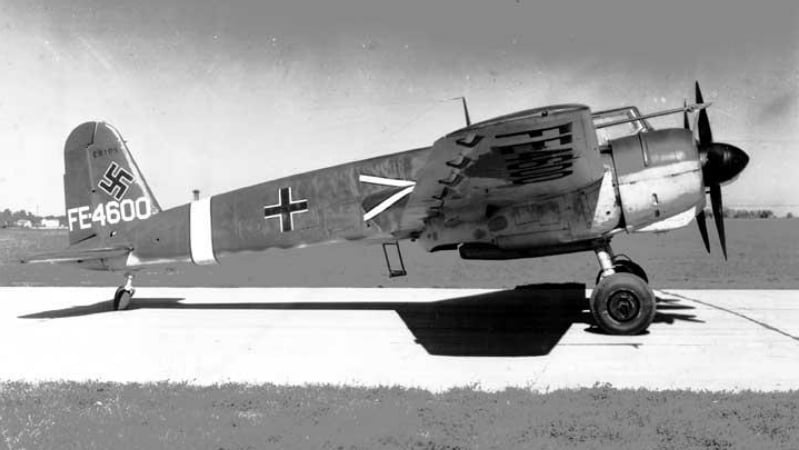
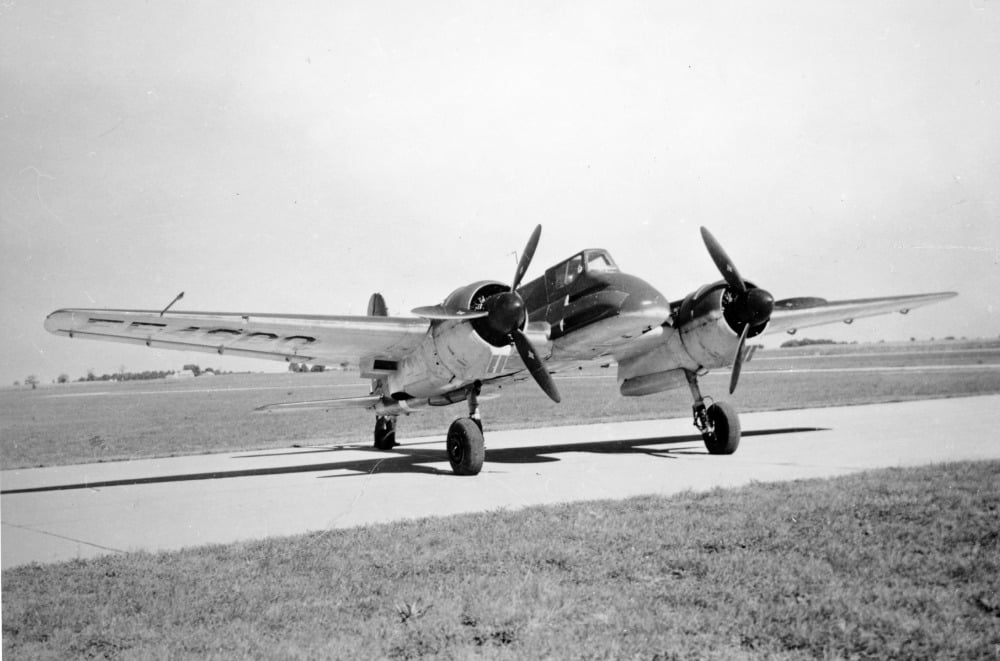
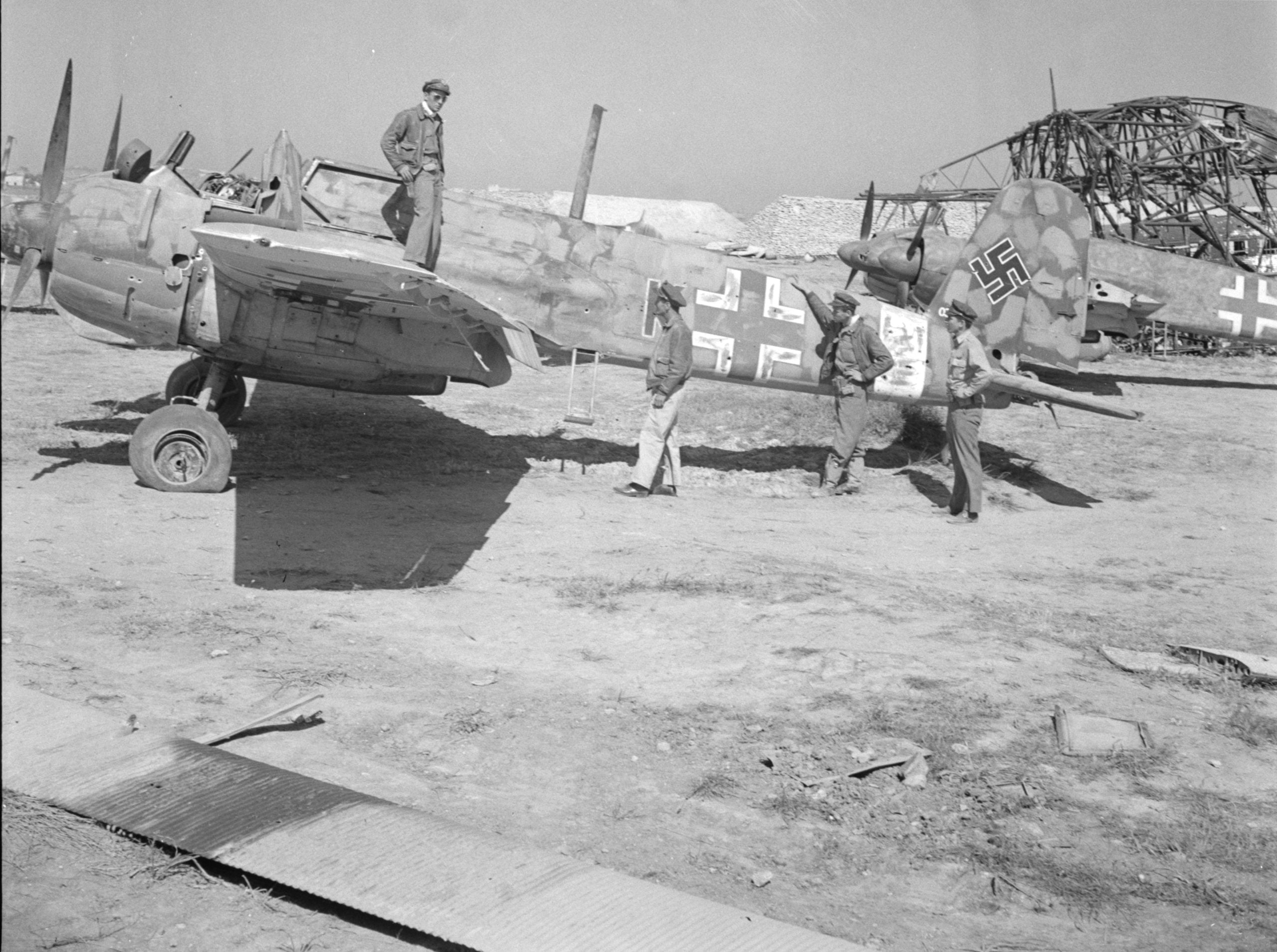
The Henschel Hs 129 in pictures
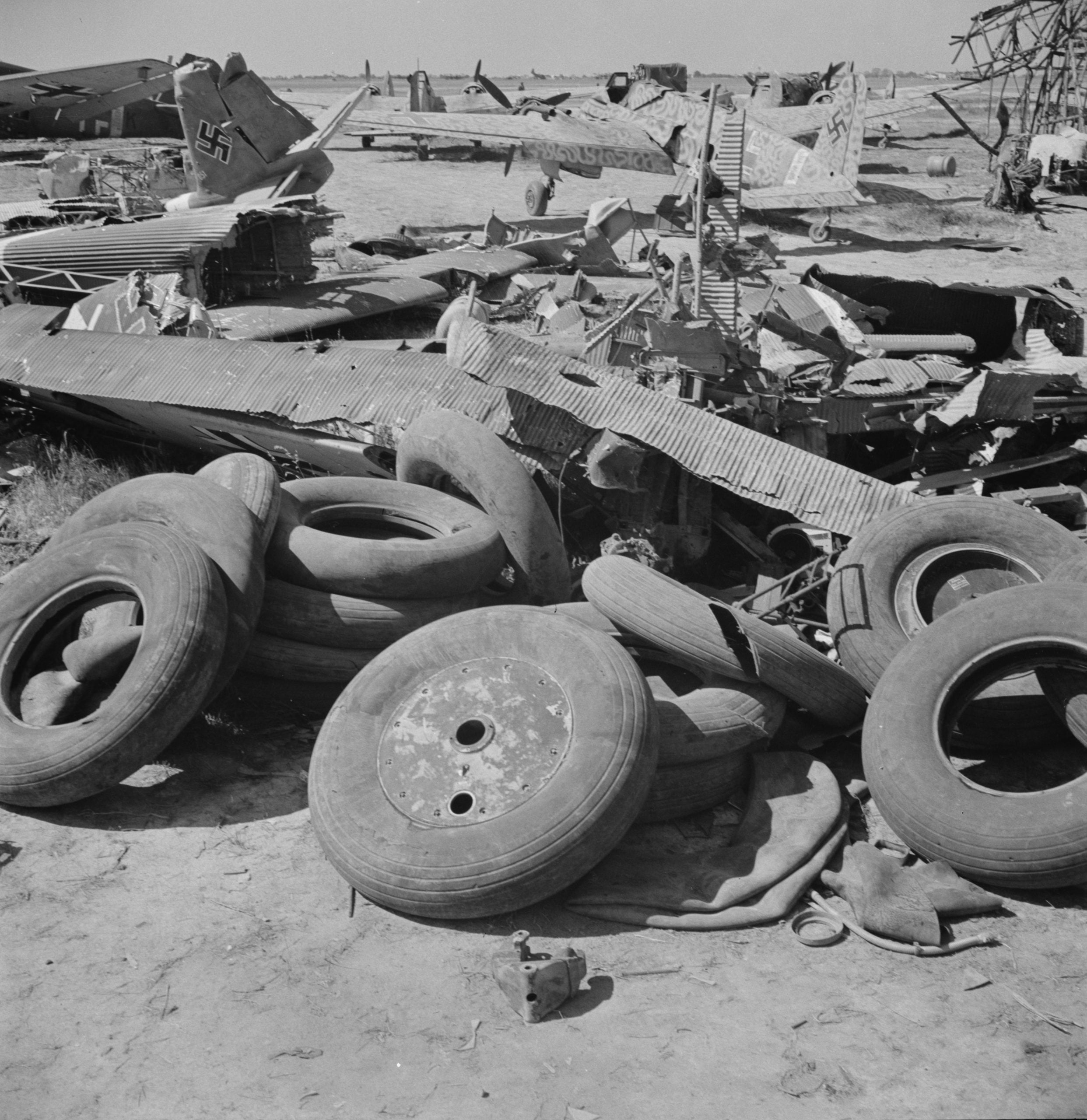
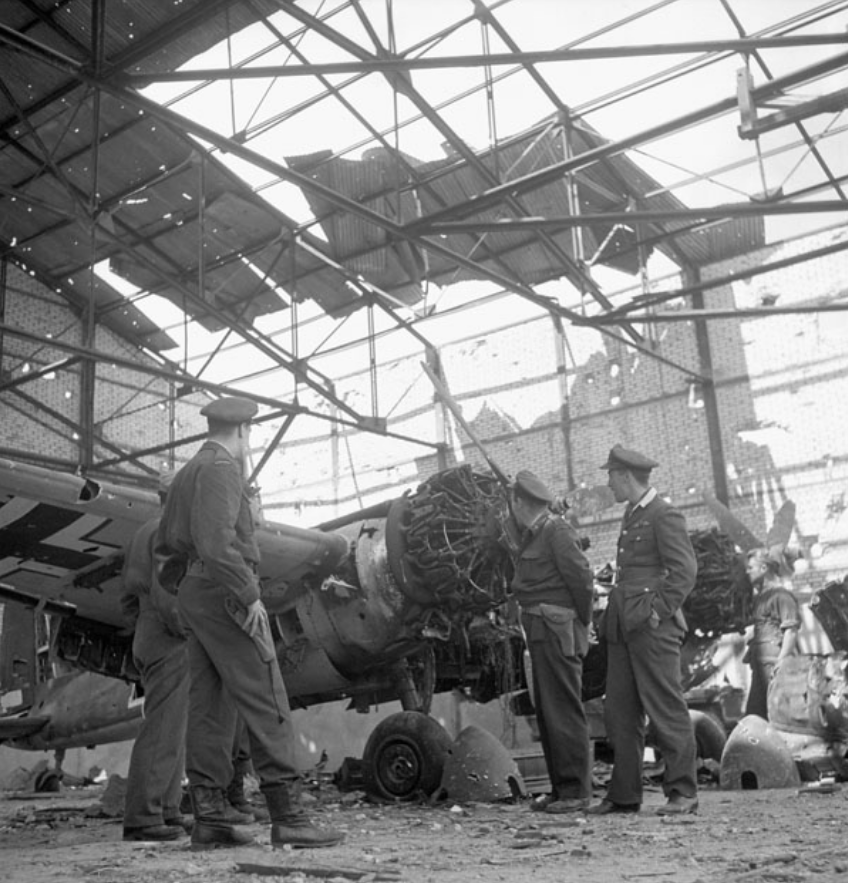
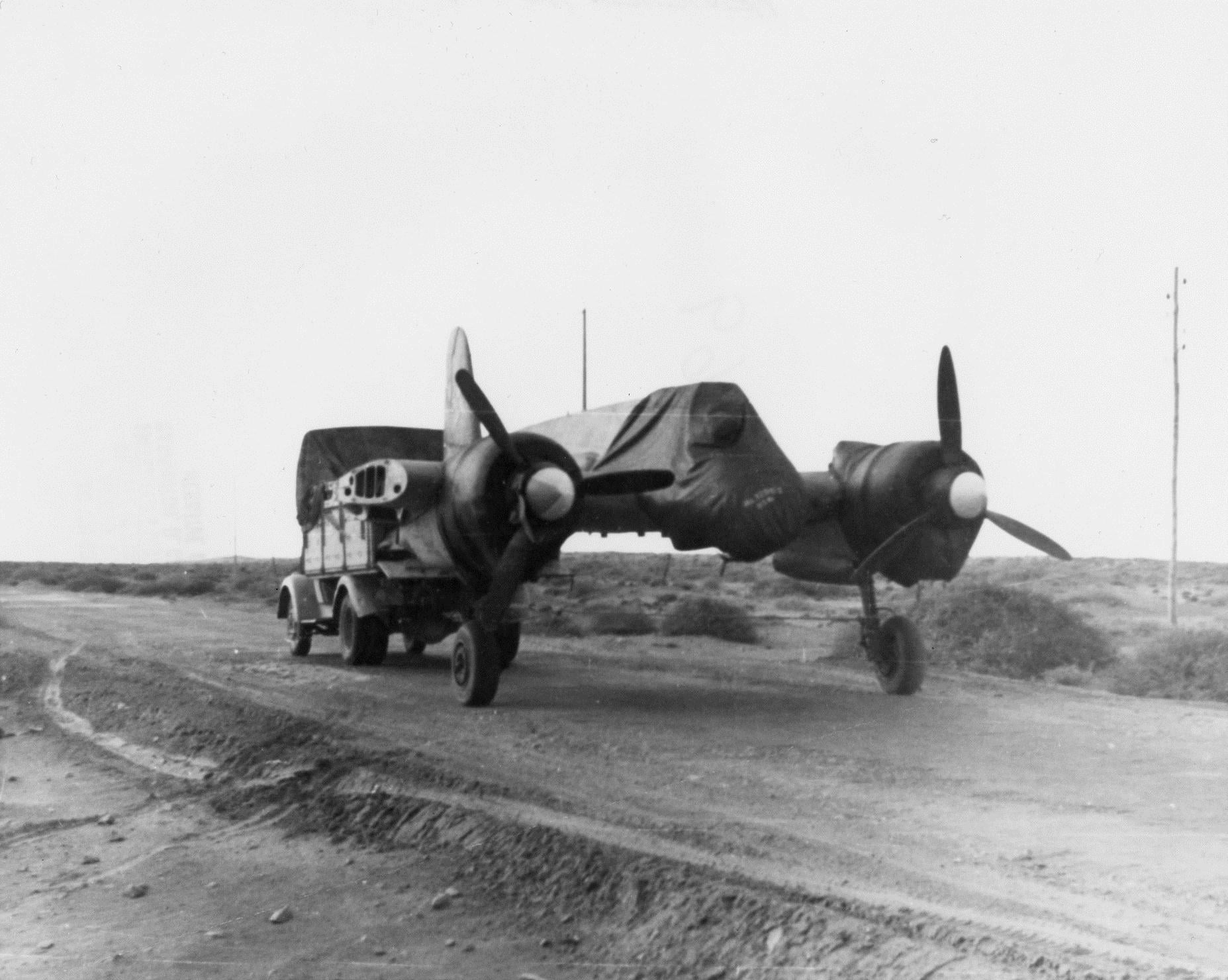
The Henschel Hs 129 in motion
A verified, high-view documentary on the Hs 129 from Rex’s Hangar, one of the most respected aviation-history channels — Germany’s Flying Anti-Tank Gun (about 424,000 views). It covers the design, the engine troubles and the tank-busting role honestly.
Where the Henschel Hs 129 flew
The Hs 129 was designed and built in Germany and flown almost entirely by the Luftwaffe as a close-support and anti-tank aircraft. Its combat was concentrated on the Eastern Front and in Tunisia; Romania and, reportedly, Hungary also operated it against Soviet armour. No aircraft survives airworthy — recovered relics and a captured airframe are scattered between Germany, Russia and the United States. Toggle the categories to explore.
Map categories are colour-coded by relationship to the aircraft, not by fleet size. “Theatres” marks where the Hs 129 saw combat (the ground it was fought over), not the home nations of its operators. Figures are approximate and hedged; several are wartime estimates.
What the Henschel Hs 129 actually achieved
The Hs 129 was a specialist that punched above its numbers when serviceable, yet never decisive. It was deadly against tanks in the hands of trained anti-tank crews, but it was slow, vulnerable, hard to fly, plagued by engine failures and always in short supply. Honest assessments rank it as a useful niche weapon rather than a battle-winner — the Ju 87G and Fw 190 shared the tank-busting burden.
Compare it with other ground-attack aircraft in the Aircraft Museum. Many figures for the Hs 129 are wartime estimates and are hedged accordingly.
Everything people ask about the Henschel Hs 129
Can I fly in a Henschel Hs 129?
What was the Henschel Hs 129?
Why were some of the Hs 129's instruments mounted outside the cockpit?
Why did the Hs 129 use French engines?
What was the 75 mm gun on the Hs 129 B-3?
How many Hs 129s were built, and are any left?
Did anyone besides Germany fly the Hs 129?
You can’t fly the Henschel Hs 129.
These, you can.
Some legends only live in museums — others are fuelled and waiting. MiGFlug has put civilians in real military jet cockpits since 2004.
 Fly the L-39 AlbatrosThe world’s most-flown jet trainer — aerobatics included
 Fly the F-104 Starfighter“The missile with a man in it”
 Fly the MiG-21The Cold War’s most-produced jet
 Fly the T-33 Shooting StarAmerica’s first jet trainer
 Fly the DH VampireA piece of early jet history
 Fly the S.211Agile Italian jet trainer
 Fly the MB-326The classic Aermacchi jet
 Fly the MiG-15The Soviet legend of the Korean War
Continue the tour
Every fact, checked
- Military FactoryOverview of the Hs 129, production total (865) and operator list (Germany, Romania, Hungary).
- Imperial War MuseumsReference collections on Luftwaffe ground-attack aircraft and the air war on the Eastern Front and in North Africa.
- Smithsonian National Air and Space MuseumBackground on German wartime aircraft design and the class of dedicated ground-attack machines.
- Rex’s Hangar — “Germany’s Flying Anti-Tank Gun”Detailed, well-sourced video history of the Hs 129 (~424,000 views); the embedded film above.
- Wikimedia CommonsSource of the public-domain photographs used in the gallery, with author and licence details.
- MiGFlug Aircraft MuseumThe full Book of Beasts encyclopedia, including the Ju 87, Il-2 and Fw 190 exhibits referenced here.
Specifications, production totals and combat claims for the Henschel Hs 129 vary between sources; figures here are given as approximate and were cross-checked across the references above. Photographs are public-domain or no-known-restriction images via Wikimedia Commons, credited individually.