
Henschel Hs 123
The Luftwaffe’s first dive-bomber and the biplane it could never quite retire — obsolete on paper, irreplaceable in the mud, and still fighting over the Eastern Front in 1944.
The Story
The Henschel Hs 123: the obsolete biplane the Luftwaffe could not do without
The Henschel Hs 123 is one of the great paradoxes of the Second World War. It was a biplane — an open-cockpit, fixed-undercarriage, single-seat biplane — conceived in the early 1930s and considered obsolete almost as soon as the war began. It was ordered out of production, ordered withdrawn from service, and overshadowed by the sleek monoplane Junkers Ju 87 Stuka that replaced it in the dive-bomber role. And yet, again and again, the men who actually flew close-support missions on the Eastern Front refused to give it up — because for the specific, brutal work of supporting troops in contact, the old Henschel was better than almost anything else they had.
It began as a pioneer. In the early 1930s the still-secret Luftwaffe wanted a dive-bomber, and Henschel’s chief designer Friedrich Nicolaus produced the Hs 123 to meet the requirement. The prototype first flew in 1935, and the type entered service as the Luftwaffe’s first operational dive-bomber — the machine on which German dive-bombing tactics were first developed and proven, before the purpose-built Ju 87 arrived. Its early testing was not without cost: prototypes were lost when the airframe failed in high-speed dives, and the design had to be strengthened before it was safe to push over into a full attack.
“They kept ordering it retired, and the front kept refusing to let it go.”— the essence of the Hs 123’s strange career
Its real proving ground was Spain. From 1936 the Condor Legion took a small number of Hs 123s to the Spanish Civil War, where they were used less as dive-bombers than as low-level ground-attack aircraft, strafing and bombing in close support of Nationalist troops. The experience was formative: it showed the Luftwaffe how effective direct air support of ground forces could be, and it revealed the Hs 123’s particular gifts — accuracy at low level, ruggedness, and an ability to keep working from primitive forward airfields.
By the time Germany went to war in 1939 the Hs 123 was officially obsolescent. Production had already ended in 1938 after only around 265 aircraft, and the Ju 87 had taken over as the Luftwaffe’s dive-bomber. The surviving Henschels were expected to fade quietly away. Instead they went to Poland, to France, to the Balkans and then, decisively, to the Eastern Front — and there they became something the Luftwaffe had not planned for: a superb dedicated close-support and ground-attack aircraft, exactly when the German army needed one most.
What made it so valued was a cluster of unglamorous virtues. The Hs 123 had a big, reliable BMW 132 radial engine that could shrug off battle damage and keep running. It handled beautifully at low speed, letting pilots place their bombs and gunfire with great precision. It could take off and land on short, rough, muddy or snow-covered strips close behind the front, where more modern aircraft could not operate. And it was tough — able to absorb ground fire and bring its pilot home. For the soldiers on the ground, an Hs 123 overhead meant fast, accurate help; for its pilots, it meant an aircraft that could be flown hard and survive.
The most telling tribute came in the middle of the war. By 1943 the surviving Hs 123s were wearing out, and frontline commanders, unable to find anything that did the close-support job as well, actually requested that production be restarted. It could not be done: the jigs and tooling had already been scrapped years earlier, and no more Hs 123s could ever be built. The units simply flew the ones they had until there were none left, keeping the biplane in action into 1944 — years after it should, on paper, have vanished.
The Hs 123 had one more trick, half legend and half fact: at certain engine settings its BMW radial could be made to produce a loud, crackling, machine-gun-like noise, and pilots are said to have used it deliberately to unnerve enemy troops and stampede cavalry horses below. Beyond Germany, the type saw combat in other hands too: Nationalist China bought a batch and flew them against the Japanese, and Nationalist Spain kept its Hs 123s in service for many years after the Civil War, into the 1950s. Only around 265 were ever built, almost all were used up or scrapped, and today the aircraft is one of the rarest of all Luftwaffe types — a vanished biplane remembered, fittingly, not for being modern, but for being needed.
01The Hs 123’s origins: the Luftwaffe’s first dive-bomber+
In the early 1930s the clandestine, rebuilding German air force became interested in dive-bombing as a way of delivering bombs with far greater accuracy than level bombing allowed. It issued a requirement for a dive-bomber, and Henschel responded with the Hs 123, which first flew in 1935 and entered service as the Luftwaffe’s first operational dive-bomber.
This makes the Hs 123 historically important out of all proportion to its numbers. It was the aircraft on which the Luftwaffe first developed and validated the dive-bombing tactics that would later make the Ju 87 Stuka famous. In a real sense the Hs 123 was the proof of concept for German dive-bombing — the first step on the road to the Blitzkrieg’s aerial artillery.
02Friedrich Nicolaus, the design, and the early dive failures+
The Hs 123 was designed by Friedrich Nicolaus, Henschel’s chief aircraft designer, as a compact, strong single-bay biplane with a radial engine, fixed spatted undercarriage and an open cockpit. It was deliberately conventional and rugged rather than advanced — a machine meant to dive, pull out under high load, and take punishment.
Its development revealed the dangers of dive-bombing before the discipline was fully understood. Early prototypes were lost when the airframe failed during high-speed dive testing, breaking up under the loads of the pull-out. Henschel strengthened the structure in response, and the production Hs 123 became a robust and reliable diver — but the accidents were an early, hard lesson in the stresses that dive-bombing imposed on an aircraft.
03The BMW 132 radial and the rugged airframe+
At the heart of the Hs 123’s effectiveness was its engine: a BMW 132 nine-cylinder air-cooled radial of around 880 horsepower — a German development of the American Pratt & Whitney Hornet, and one of the most reliable engines of its generation. Air-cooled and simple, it was far more tolerant of battle damage and rough-field conditions than a liquid-cooled inline, which could be knocked out by a single hit to the cooling system.
Combined with a strong, simple airframe, that engine gave the Hs 123 its reputation for toughness and dependability. It could absorb ground fire and keep flying, start reliably in cold and mud, and be maintained by hard-pressed ground crews at primitive forward strips. In the close-support role, where survivability and availability mattered more than speed, this rugged reliability was worth more than any amount of sophistication.
04The Hs 123 in Spain: the Condor Legion trials+
The Hs 123’s first taste of combat came with the Condor Legion in the Spanish Civil War from 1936. A handful were sent to Spain, ostensibly as dive-bombers, but in practice they were used mainly for low-level ground attack — strafing and bombing in direct support of Nationalist ground forces.
Spain was where the Luftwaffe learned, in real combat, how valuable close air support could be, and the Hs 123 was one of the aircraft that taught the lesson. Its low-level accuracy and ruggedness impressed, and the experience helped shape the ground-attack doctrine and dedicated Schlacht (assault) units that Germany would field later. The Spanish trials also confirmed that the Hs 123, whatever its limits as a dive-bomber, was an excellent low-level attacker.
05Obsolete but irreplaceable: why frontline units refused to give it up+
On paper, the Hs 123 was finished before the war really started: production ended in 1938, the Ju 87 had superseded it, and it was repeatedly slated for withdrawal. Yet on the Eastern Front the assault units that flew close-support missions kept clamouring to keep it, and higher commands kept relenting, because nothing available did the job as well.
The reason was a precise match between the aircraft and the mission. Close support of troops in contact demanded low-speed accuracy, the ability to operate from forward strips, toughness under ground fire, and reliability — and the Hs 123 had all of them in abundance. Faster, more modern aircraft were often worse at this particular task. So the “obsolete” biplane soldiered on, not out of sentiment, but because it was genuinely the best tool for a job that mattered enormously.
06The request to restart production — and the scrapped jigs+
The clearest possible proof of how valued the Hs 123 had become came in 1943. With the surviving aircraft wearing out in hard use and no equally suitable replacement available for the close-support role, frontline commanders formally requested that production of the Hs 123 be restarted — an extraordinary thing to ask for an aircraft that had been declared obsolete years before.
It proved impossible. Production had ended in 1938, and the jigs, tooling and drawings needed to build the aircraft had long since been scrapped or dispersed. Restarting a production line from nothing, in wartime, for a biplane, was simply not feasible. So the request was denied, and the units had to make do with the dwindling number of airframes they already had, nursing them along until attrition finally finished the type off.
07The terrifying engine noise: psychological warfare by rpm+
One of the more colourful stories attached to the Hs 123 concerns its engine note. At certain propeller and engine settings, the BMW 132 radial could be made to produce a loud, harsh, crackling or stuttering sound — likened to machine-gun fire — quite distinct from a normal engine roar.
Pilots are said to have exploited this deliberately, using the unsettling noise to panic enemy troops and, in particular, to stampede the horses of cavalry and horse-drawn transport columns, throwing them into disorder before or during an attack. Like many wartime anecdotes it should be treated with a degree of caution, but it is widely and consistently recorded, and it captures something of the Hs 123’s character: a low, slow, close-in attacker that fought its war at the level of the men and animals on the ground.
08Close air support on the Eastern Front+
It was on the Eastern Front that the Hs 123 found its true and lasting role. Attached to assault and close-support units, it flew in direct support of the German army through the great campaigns in the Soviet Union, attacking troop concentrations, vehicles, gun positions and strongpoints just ahead of friendly forces.
This was demanding, dangerous, low-altitude work, flown in the teeth of ground fire, and the Hs 123 excelled at it. Its accuracy meant it could hit targets close to friendly troops; its toughness meant it survived the flak; and its ability to fly from strips near the front meant it could respond quickly. For the hard-pressed German infantry, the sight and sound of the old biplanes coming in low was a genuine boost — help that arrived fast and hit hard.
09Operating from rough forward strips+
One of the Hs 123’s decisive advantages in the close-support role was where it could operate from. Its fixed, sturdy undercarriage, low landing speed, docile handling and rugged construction let it use short, rough, unprepared airfields — grass, mud, snow — close behind the front line, in conditions that grounded or wrecked more delicate modern aircraft.
This mattered enormously on the Eastern Front, where good airfields were scarce, the weather brutal and the front fluid. Being able to base close to the fighting meant faster response times, more sorties per day and better support for the troops. It is a reminder that in tactical aviation, the ability to operate from where you are needed can matter as much as raw performance — and the “obsolete” Hs 123 was outstanding at it.
Design & Engineering
How the Hs 123 was built: strength, simplicity and low-speed control
The Hs 123 was a deliberately rugged, conventional biplane built to dive, attack at low level and survive — its virtues were toughness and handling, not speed or modernity.
A strong single-bay biplane
An all-metal, fabric-covered biplane with a single-bay braced wing, fixed spatted undercarriage and open cockpit — strengthened after early dive failures into a robust airframe that could pull out of a dive and take punishment.
The BMW 132 radial
A reliable ~880 hp BMW 132 nine-cylinder radial — air-cooled, damage-tolerant and easy to maintain in the field. It gave the Hs 123 its dependability and its famous crackling engine note.
Guns and bombs, low and accurate
Two 7.92 mm MG 17 machine guns and a useful load of bombs, delivered with great low-level accuracy. Later aircraft could carry underwing gun pods or anti-personnel bomblet containers for ground attack.
Specifications
Henschel Hs 123 specifications: dimensions, performance and cost
Baseline: the Hs 123 A-1 as delivered from the summer of 1936 — the only version built in quantity, and the aeroplane that fought from Seville to Kursk. Figures are for a clean airframe at normal loaded weight. Front-line machines in Russia flew with the wheel spats stripped off, extra plate around the pilot and sometimes 20 mm cannon slung under the wings, and were slower and heavier than any published table admits. Deltas for the prototypes, the projected B-1 and C, and figures the authorities dispute, are in grey.
Dimensions & weights
- Crew
- 1, in an open cockpit set well aft
- Configuration
- single-bay sesquiplane usually called a biplane, but the lower wing is a stub of barely three-quarters the span and about a third the area; it exists mainly to carry the undercarriage and the bomb racks
- Upper wingspan
- 10.50 m (34 ft 5 in)
- Lower wingspan
- 8.00 m (26 ft 3 in)
- Length
- 8.33 m (27 ft 4 in) Russian sources give 8.38 m (27 ft 6 in); the difference is almost certainly the tailwheel fairing
- Height
- 3.20 m (10 ft 6 in) 3.76 m (12 ft 4 in) appears in some tables, which is the height with the propeller blade vertical
- Wing area
- 24.85 m² (267.5 sq ft), both wings
- Empty weight
- 1,500 kg (3,307 lb) 1,420 kg (3,131 lb) is also quoted, probably for an A-0 without racks or armoured headrest
- Loaded weight
- 2,215 kg (4,883 lb)
- Maximum take-off weight
- 2,350 kg (5,181 lb)
- Wing loading
- 89 kg/m² (18.3 lb/sq ft) at loaded weight — low even for 1936, which is exactly why it could be flown slowly and accurately over a target
- Power loading
- 2.52 kg/hp (5.55 lb/hp) at the take-off rating
- Structure
- all-metal: light-alloy skinned fuselage and wings, fabric only on the control surfaces and the rear portions of the wings; single faired interplane struts and no bracing wires
- Undercarriage
- fixed cantilever main legs bolted directly to the lower wing stubs, with removable spats and a faired tailwheel the spats clogged with mud and were taken off almost universally in Russia; the legs themselves were what made rough-strip work possible
Performance
- Maximum speed
- 341 km/h (212 mph) at 1,200 m (3,940 ft)
- Cruising speed
- 315 km/h (196 mph) at 2,000 m (6,560 ft)
- Rate of climb
- 15 m/s (2,950 ft/min) initial, sea level, clean
- Time to 2,000 m
- about 2 min 15 s (6,560 ft), computed from the initial rate; the real figure is longer because the rate falls away above the supercharger’s rated height
- Service ceiling
- 9,000 m (29,530 ft) — an academic number for an aeroplane that spent its war between 50 and 500 m
- Range
- 855 km (531 miles) with the 150-litre auxiliary tank
- Combat radius
- ~240 km (150 miles) on the 480 km (300-mile) combat range quoted with a 200 kg bomb load
- Endurance
- about 1 hour on internal fuel short even by 1939 standards; the type never crossed the English Channel because it could not
- Dive limit
- 70° imposed because the BMW had no engine brake and the airframe no dive brakes; it over-revved in anything steeper. The Hs 123 was procured as a dive bomber and was never really capable of being one
- Airfield performance
- could work from ploughed fields, forest clearings and frozen strips a few hundred metres long, within a short drive of the front line no published take-off run is trustworthy; the operational fact is that it flew on days when the Ju 87 and the Bf 109 were bogged
- Against the Ju 87 B-1
- Stuka: 383 km/h (238 mph), 500 kg (1,102 lb) bomb, two crew, dive brakes and a genuine 80° dive. Faster, heavier-hitting, and useless on a mud strip in November
- Against the Il-2 it faced from 1942
- Sturmovik: 414 km/h (257 mph), armoured bath, 600 kg (1,323 lb) of bombs and eight RS-82 rockets. The Henschel was a generation and a half behind and still flew more sorties per day
Propulsion & systems
- Engine
- one BMW 132Dc, nine-cylinder single-row air-cooled radial a licence descendant of the Pratt & Whitney Hornet, and the same family that powered the Ju 52/3m
- Take-off power
- 880 hp (656 kW) the figure repeated throughout the Hs 123 literature; BMW’s own rating for the 132Dc is usually given as 850 PS (838 hp) at 2,450 rpm, so treat 880 as the optimistic end
- Capacity
- 27.7 litres (1,692 cu in), bore 155.6 mm × stroke 161.9 mm (6.13 in × 6.37 in)
- Supercharger
- single-speed centrifugal, rated altitude 2,600 m (8,530 ft) — which is why the maximum speed is quoted low down and why the aeroplane was breathless high up
- Fuel
- 87-octane petrol; one jettisonable 150-litre (33 imp gal / 40 US gal) tank on the fuselage centreline, competing directly with the heaviest bomb station
- Propeller
- two-blade metal variable-pitch production A-1; three-blade units, including VDM propellers on the V5, were flown on several prototypes
- Cowling
- tight-fitting NACA-type ring with eighteen individual blisters faired over the valve gear only the V1 had a smooth cowling; the blistered cowl is the type’s single most recognisable feature
- Protection
- armoured headrest and fairing standard on the A-1; additional plate fitted in the field on the Eastern Front nothing approaching the Il-2’s structural armour, but the engine had no radiator, coolant lines or header tank to be holed — a decisive advantage over the Bf 109 E in the same role
- Dive equipment
- none: no air brakes, no automatic pull-out, no bomb-displacement crutch bombing was done by eye in a shallow dive from very low level, and the accuracy came from the pilot and the airframe’s docility rather than from any device
- Field maintenance
- rated by ground crews as easy to service and reliable in the open II.(Schlacht)/LG 2 turned sorties round faster than any other unit in France in 1940, which Guderian noticed and said so
- Acoustic effect
- the pilot could swing the variable-pitch propeller through its range to make a hard, staccato crack that infantry mistook for machine-gun fire an accident of the propeller control rather than a design feature, and one of the very few documented cases of an aeroplane being deliberately used as a noise weapon
10The Hs 123’s variants and armament+
The overwhelming majority of Hs 123s built were of the Hs 123A-1 production version, the standard single-seat dive-bomber and ground-attack aircraft. Export examples of essentially the same standard went to China and Spain. Proposed improved versions with more power and revised equipment were studied, but production ended in 1938 before any substantially new variant entered large-scale service, so the A-1 is effectively the Hs 123.
Armament was modest but flexible: two synchronised 7.92 mm MG 17 machine guns and a bomb load carried on a centreline rack and underwing points. In the ground-attack role, aircraft were adapted to carry underwing 20 mm cannon pods or containers of small anti-personnel bomblets, which were devastatingly effective against troops and soft vehicles in the open — exactly the targets the Hs 123 hunted in its close-support career.
11The Hs 123’s operating costs: what the records show+
As with other German aircraft of the period, there is no reliable, transparent public figure for the Hs 123’s unit cost, cost per flight hour or total programme cost. It was built in small numbers by a rearming, secretive state economy in the mid-1930s that did not publish the kind of accounts from which those figures could be stated with confidence, and the surviving records are incomplete.
In general terms, the Hs 123 was a simple, conventional biplane with a well-established engine, which would have made it comparatively cheap to build and easy to maintain. Its economy and ruggedness were part of its appeal in the field. But precise cost figures are simply not reliably recorded, and we list those fields as such rather than invent numbers the sources do not support.
12The Hs 123’s foreign operators: China and long Spanish service+
Beyond the Luftwaffe, the Hs 123 saw combat in two other air forces. Nationalist China purchased a batch of Hs 123s in the late 1930s and used them against the Japanese during the Second Sino-Japanese War, flying them in the ground-attack and dive-bombing roles that were the type’s speciality — a little-known chapter of the aircraft’s combat history far from Europe.
Spain’s connection was longer still. The Nationalist air arm had flown Condor Legion Hs 123s in the Civil War, and after the war the Spanish Air Force kept the type in service for many years, operating its Henschels well into the 1950s — long after they had disappeared everywhere else. For an aircraft declared obsolete before the Second World War even began, that was a remarkable span of service life.
13Survivors: the vanished dive-bomber+
For all its fame, the Hs 123 is today one of the rarest of Luftwaffe types. Only around 265 were ever built, they were used hard in a punishing role, and almost every one was destroyed in action or scrapped once worn out. Because production had ended in 1938 and could not be restarted, there was never a large pool of airframes to draw survivors from.
The result is that no airworthy Hs 123 exists, and complete survivors are extremely scarce. A Henschel Hs 123 is reported to be preserved at the China Aviation Museum near Beijing, a legacy of the type’s Chinese combat service, and it is often cited as one of the very few examples left in the world. For most people, though, the Hs 123 survives only in photographs and in the memory of the soldiers it supported — a genuinely vanished aircraft.
Armament & payload
The Hs 123 carried two rifle-calibre machine guns and a few small bombs, and its whole value lay in putting them exactly where the infantry asked
By any measure of tonnage the Hs 123 was contemptible: two 7.92 mm MG 17 and a nominal 200 kg of bombs, at a moment when the Ju 87 was lifting a 250 kg weapon under the fuselage as a matter of routine and the Il-2 would soon be carrying six times the Henschel’s load. In Spain in 1937 that was precisely the complaint — used as a light bomber from altitude it was, in the Condor Legion’s own assessment, a failure. What changed was the method rather than the weapon. Flown from a strip within sight of the fighting, called in by a ground liaison officer on a radio, and pressed to a few dozen metres before release, four 50 kg bombs delivered on the right trench line at the right minute were worth more than a tonne dropped on a map reference an hour late. The type ended its career with cannon gondolas bolted under the wings by squadron armourers on the Eastern Front, which is what happens when an aeroplane outlives its own factory. Bomb figures vary sharply by source and by mark: German references generally cap the A-1 at 200 kg, English-language ones give up to 450 kg as one SC 250 plus four SC 50, and the centreline station could not carry a bomb and the drop tank at once.
Gun
- Two 7.92 mm Rheinmetall-Borsig MG 17, fixed in the upper fuselage decking and synchronised to fire through the propeller disc
- 400 rounds per gun; cyclic rate about 1,200 rounds/min each, cut appreciably by the synchronising gear
- Field-fitted 20 mm MG FF cannon in underwing gondolas appeared on Eastern Front machines from 1942, alongside extra machine guns in the same fairings these were unit-level installations, not a factory mark; the standard is not documented as consistently as the A-1’s built-in fit
- The V3 was the first prototype to carry guns at all; the V6, pattern for the never-built C series, was to have four
- Two rifle-calibre guns was 1918 armament. Against infantry in the open it was still lethal; against a T-34 it was noise
Air-to-air
- None, and none existed. No guided air-to-air weapon was fielded anywhere until the AIM-9B Sidewinder in 1956
- The Hs 123 was never intended to fight other aircraft and did not do so willingly; it was demonstrably vulnerable to fighter interception in France in 1940
- Its defence was altitude — the lack of it. Flown at treetop height over its own troops it was a poor target, and the fixed spatted undercarriage that looked so obsolete cost nothing at 50 m
- Its manoeuvrability at low speed was genuinely useful in evasion; several accounts credit Hs 123 pilots with out-turning attackers rather than out-running them, which they could not do
- Whatever air-to-air claims are attributed to the type should be treated with caution; the surviving unit records are close-support records
Air-to-surface guided
- None. Nothing of the kind existed while the Hs 123 was in production, and nothing of the kind was ever fitted to it
- The irony is complete: Henschel itself built the first operational guided air-to-surface weapon, the rocket-boosted Hs 293 glide bomb, in service from 1943
- By then the Hs 123 was being cannibalised from training schools and scrap dumps to keep a single Staffel flying
- Precision on the Hs 123 came from flying close enough to see the target, which is the oldest guidance system there is
Bombs
- Four SC 50 general-purpose bombs of 50 kg (110 lb) each on underwing racks — the standard and by far the commonest operational load
- One SC 250 of 250 kg (551 lb) on the fuselage centreline, quoted as an alternative giving up to 450 kg (992 lb) in total
- The centreline station normally carried the 150-litre drop tank instead, and range mattered more than a single heavy bomb on most sorties
- The projected C series was to lift 500 kg (1,102 lb); it was never built
- Sources conflict on the maximum. German references cap the A-1 at 200 kg; treat the 450 kg figure as a demonstrated limit rather than a routine load
Rockets
- None. No air-launched rocket was in Luftwaffe service during the Hs 123’s production life, and none was retrofitted afterwards
- Germany fielded the 21 cm Werfer-Granate 21 and the R4M only in 1943—45, by which point the Henschel was down to a single Staffel
- The technology was not exotic: the Soviet RS-82 was being fired from I-16s at Khalkhin Gol in 1939, and the Il-2s the Hs 123 met over Kharkov carried eight of them
- This is the clearest single measure of how far the type had been left behind by 1942
Pods & other stores
- One jettisonable 150-litre (33 imp gal) auxiliary fuel tank on the fuselage centreline — the only store the type carried in every theatre
- Underwing gondolas for 20 mm MG FF cannon or additional machine guns, fitted on the Eastern Front by units rather than by the factory
- Bolt-on armour plate around the cockpit, likewise a field addition
- Removable main wheel spats and a faired tailwheel, standard on the A-1 and almost always removed in mud, snow or sand
- No camera pod, no gun pod of German factory design, no drop container, no towing gear until the very end — the last serviceable machines were reduced to supply-dropping and glider-towing in 1945
Three typical loadouts
- Close support, II.(Schlacht)/Lehrgeschwader 2, Poland, September 1939
- Two MG 17 with 400 rounds each, four SC 50 bombs under the lower wings, spats fitted, no drop tank. Thirty-nine serviceable Hs 123s went into Poland with the Luftwaffe’s only ground-attack Gruppe, flying from strips a few kilometres behind the leading tanks. This is the loadout with which the type made its reputation, and the one in which pilots discovered that varying propeller pitch produced a crack like massed machine-gun fire that scattered horse teams and infantry before a bomb was dropped.
- Anti-armour improvisation, 7./Schlachtgeschwader 1, Eastern Front, winter 1942—43
- Two MG 17, two 20 mm MG FF in underwing gondolas, a reduced bomb load, spats removed, additional plate around the pilot. Heavier, slower and uglier than anything that left the Schönefeld line in 1937, and still flying on days when the Fw 190s and Hs 129s of the same Geschwader were frozen or bogged. Schlachtgeschwader 1 flew 1,523 Hs 123 sorties in 1942 alone, against 3,128 by its Hs 129s and 1,938 by its Bf 109s — a remarkable share for a handful of five-year-old biplanes.
- Ferry and long-reach sortie, Grupo 24, Spain, 1938
- Two MG 17, 150-litre drop tank on the centreline, light or no bomb load. Spain bought the Condor Legion’s five evaluation aircraft and ordered eleven more; of the sixteen operated, only two were lost in the whole Civil War. The tank rather than the bomb on the centreline is the honest picture of the type’s central compromise: it could carry reach or it could carry weight, never both.
Ammunition loads, bomb fits and the underwing cannon installations are drawn from secondary literature and vary between authorities; the field modifications in particular were never standardised and no complete airframe survives against which to check them.
Variants
Henschel built roughly 265 Hs 123s, stopped in 1937, and every attempt to build a better one died before it reached a squadron
The Hs 123 answered a February 1934 Reichsluftfahrtministerium requirement, pushed by Ernst Udet, for a light single-seat dive bomber. Friedrich Nicolaus at Henschel drew it; the mock-up was inspected on 2 June 1934, construction began eighteen days later, and the V1 flew in the first days of April 1935 — 1 April in the English literature, 2 April in the German. Udet demonstrated it publicly on 8 May. Two of the first three prototypes then broke up in high-speed dives when the wing structure failed, and the V4 introduced the stronger centre-section struts that went into production. The accounts of those losses do not agree: German sources describe the V2 as written off in a landing accident and rebuilt as the V8, so "two of the first three" may conflate two different kinds of failure.
What followed is the odd part. Series production ran from October 1936 and ended in December 1937 — some English sources say autumn 1938 — because the Ju 87 had won the dive-bomber argument outright and the Hs 123 was surplus to a doctrine that had no word for what it was actually good at. Every proposed improvement, the BMW 132K-engined B-1 and the four-gun, closed-cockpit, 500 kg C, stalled at prototype stage. The tools and jigs were dismantled in 1940. When Generaloberst Wolfram von Richthofen, commanding Luftflotte 4 and the man who had first put the type into the close-support role in Spain, asked in January 1943 whether production could be restarted, the answer was that there was nothing left to restart it with.
- Hs 123 V1 to V3 (1935, 3)
- BMW 132A radials of 660—725 PS. V1 (D-ILUA) flew first and alone had a smooth cowling; V3 (D-IKOU) was the first to carry guns. Two of the three were lost, the wing structure failing in high-speed dives.
- Hs 123 V2 / V8 (1935—36, 1)
- The one experiment with an American engine, a 770 hp Wright Cyclone R-1820-F52. Damaged and rebuilt with a BMW 132A as the V8. Henschel learned that the imported engine bought nothing worth the supply problem.
- Hs 123 V4 (1935, 1)
- D-IZXY, the fix: strengthened centre-section struts and revised undercarriage after the dive failures. This became the pattern aircraft for the production series and is the reason the type had no structural reputation afterwards.
- Hs 123 A-0 (1936, 16)
- Pre-production batch for service evaluation, built at Schönefeld and Johannisthal. Externally almost the definitive aeroplane.
- Hs 123 A-1 (1936—37, about 229 with the B-1)
- The production aircraft and effectively the only one: BMW 132Dc, two MG 17, armoured headrest and fairing, removable wheel spats, faired tailwheel. Henschel and AGO shared the work, AGO building 129 of the series machines.
- Hs 123 B-1 (1937—38, prototypes only)
- Reinforced upper-wing skinning and the 960 PS BMW 132K, patterned on the V5 (D-INRA). It offered more power for the same airframe and was never ordered; by then the Ju 87 owned the requirement.
- Hs 123 V6 and V7 (1937—38, 2)
- V6 (D-IHDI) with a sliding cockpit hood, four machine guns and a 500 kg bomb load, as the pattern for the C series; V7 (D-IUPO) with a further BMW 132K. Both flew, neither led anywhere.
- Hs 123 C (projected, none built)
- The enclosed-cockpit, four-gun production version the type never received. Its cancellation is the point at which the Hs 123 stopped being a programme and became an inheritance.
- Spanish A-1, later BV.1 (1936—52, 16)
- Five Condor Legion evaluation aircraft sold to the Nationalists plus eleven more from Germany, flown by Grupo 24 and nicknamed "Angelito". Only two were lost in the Civil War. Spain kept them longer than the Luftwaffe did; the last were struck off in 1952, one having been photographed at Alcalá de Henares as late as 1947.
- Chinese export A-1 (1938, 12)
- Twelve aircraft originally ordered by Portugal, diverted to China and flown by the 15th Squadron of the Central Air Force Academy Group as dive bombers against Japanese shipping on the Yangtze in 1938 — the only Hs 123s to be used as the type was designed to be used.
Production totals disagree and the disagreement is worth stating plainly. Manufacturer figures of 136 aircraft from Henschel and 129 from AGO give the widely quoted total of about 265; German references that count 7 prototypes, 16 A-0 and 227 series machines arrive at 250. Nothing survives to settle it: not one complete Hs 123 exists anywhere in the world, in any museum, in any condition. No airframe was preserved in Germany, none in Spain despite service there until 1952, and none in China. What exists is fragmentary — excavated crash-site material from the Eastern Front and Spain, loose components, data plates — scattered through private collections and periodically announced as the basis of a reconstruction; no such project has yet produced a displayed aeroplane, and every claim of a recoverable Hs 123 should be judged against the fact that the type has been extinct for eight decades. The last Luftwaffe biplane in front-line service left no body behind.
Timeline
The Henschel Hs 123 through the years
The secret, rebuilding Luftwaffe seeks a dive-bomber to deliver bombs with greater accuracy than level bombing. Henschel begins work on the Hs 123.
The Hs 123 prototype flies, a compact, rugged single-bay biplane designed by Friedrich Nicolaus around the BMW radial.
The Hs 123 enters service as the Luftwaffe’s first operational dive-bomber, and a few are sent to Spain with the Condor Legion for combat trials.
The purpose-built Junkers Ju 87 supersedes the Hs 123 in the dive-bomber role, and the biplane is increasingly seen as obsolescent.
Manufacture of the Hs 123 stops after only around 265 aircraft. The jigs and tooling are eventually scrapped.
Rather than retiring, surviving Hs 123s serve as close-support aircraft in the opening campaigns, proving effective in the ground-attack role.
On the Eastern Front the Hs 123 comes into its own as a dedicated close-support aircraft, valued for accuracy, toughness and rough-field ability.
With aircraft wearing out and no equal replacement, frontline commanders ask for production to be restarted — but the tooling is gone and it cannot be done.
The dwindling survivors are flown in action into 1944, until attrition finally ends the Hs 123’s operational career.
Spain keeps its Hs 123s flying into the 1950s — the type’s final chapter, decades after it was declared obsolete.
Stories & Eyewitnesses
The Henschel Hs 123 in stories: the moments that defined it
A pioneering dive-bomber, a Spanish proving ground, an “obsolete” label it kept outliving, a plea to rebuild it, and a terrifying engine trick — the Hs 123’s history told through the moments that stuck.
First StukaBefore the Ju 87
The Hs 123 was the Luftwaffe’s first operational dive-bomber.
Long before the Ju 87 Stuka made the dive-bomber famous, the Hs 123 was the aircraft on which the Luftwaffe first developed and proved its dive-bombing tactics. It was the pioneer — the first operational German dive-bomber and the direct ancestor, in doctrine if not design, of the Stuka.
That role gives the modest biplane a significance out of all proportion to its numbers: it was where German dive-bombing began.
The Dive FailuresLearning the hard way
Early prototypes broke up in dive tests, a deadly lesson in dive-bombing stresses.
Dive-bombing imposed brutal loads on an airframe, and the Hs 123 learned that lesson the hard way: prototypes were lost when the structure failed during high-speed dive testing and pull-out.
Henschel strengthened the design in response, turning the Hs 123 into a robust diver. But the accidents were an early warning of just how demanding the dive-bombing discipline the aircraft pioneered really was.
Rugged RadialThe engine that took hits
The air-cooled BMW 132 shrugged off damage that would kill an inline engine.
The Hs 123’s BMW 132 radial was central to its toughness. Air-cooled and simple, it could take battle damage that would have finished a liquid-cooled inline — a single hit to a radiator can down an inline fighter, but a radial can keep running with cylinders shot away.
That resilience, plus easy field maintenance, made the Hs 123 dependable in exactly the rough, dangerous conditions of close-support work.
Spain 1936The Condor Legion trials
In Spain the Hs 123 showed how deadly close air support could be.
A handful of Hs 123s went to Spain with the Condor Legion and were used mainly for low-level ground attack. The experience taught the Luftwaffe the value of direct air support of ground forces and revealed the Henschel’s gifts for accurate, rugged low-level work.
Spain was the Hs 123’s first war and a formative one for German ground-attack doctrine as a whole.
One-Two-Three“Einz-zwei-drei”
German crews affectionately called it the “one-two-three”.
From its designation, German airmen nicknamed the Hs 123 the “Einz-zwei-drei” — “one-two-three”. The affectionate name says a good deal about the regard in which the tough little biplane was held by the men who flew and serviced it.
It was not a glamorous aircraft, but it was a trusted one, and nicknames like that are earned, not given.
Obsolete on PaperRetired again and again
Production ended in 1938 and it was repeatedly ordered withdrawn.
By every official measure the Hs 123 was finished early: production stopped in 1938 after ~265 aircraft, the Ju 87 had replaced it, and it was slated for withdrawal more than once. On paper, it should have vanished before the war got going.
But paper and the front line disagreed, and the front line kept winning the argument — the biplane stayed.
Irreplaceable in the MudBetter than the modern types
For close support from rough strips, nothing available beat it.
The reason the “obsolete” Hs 123 kept flying was simple: for the specific job of close support from forward strips, it was better than the more modern aircraft meant to replace it. Low-speed accuracy, toughness and the ability to fly from mud and snow made it uniquely suited to the task.
Frontline units did not keep it out of nostalgia; they kept it because it worked when other aircraft could not.
Restart the Line?An extraordinary request
In 1943 commanders asked for production to be restarted — too late.
The ultimate compliment came in 1943, when frontline commanders, unable to replace the worn-out Hs 123 in the close-support role, formally requested that its production be restarted — a startling thing to ask for a supposedly obsolete biplane.
It could not be done: the jigs and tooling had already been scrapped. No more Hs 123s could ever be built, and the units simply flew the ones they had until none were left.
The Crackling TerrorWeaponised engine noise
Its radial could crackle like machine-gun fire — used to panic troops and horses.
At certain settings the Hs 123’s BMW radial produced a loud, stuttering, crackling noise, likened to machine-gun fire. Pilots are widely said to have used it deliberately to unnerve enemy troops and stampede cavalry and horse-drawn columns below.
Like many such anecdotes it deserves a little caution, but it is consistently recorded — and it fits an aircraft that fought its war right down among the men on the ground.
Ostfront WorkhorseThe army’s low-level friend
On the Eastern Front the Hs 123 became a superb close-support aircraft.
It was in the East that the Hs 123 truly earned its keep, flying close support for the German army through the great campaigns in the Soviet Union — hitting troops, vehicles and guns just ahead of friendly forces, low and accurate, in the teeth of the flak.
For the infantry below, the old biplanes coming in low meant fast, precise help, and the Hs 123 delivered it again and again until there were none left to fly.
China’s HenschelsCombat against Japan
Nationalist China flew Hs 123s against the Japanese.
Far from Europe, Nationalist China bought a batch of Hs 123s in the late 1930s and used them in combat against Japan during the Second Sino-Japanese War, in the ground-attack and dive-bombing roles that suited the type.
It is a little-known chapter of the aircraft’s history — the German biplane fighting an Asian war — and the source of one of the type’s few surviving examples.
Spain’s Long ServiceFlying into the 1950s
Spain kept its Hs 123s in service for many years after the Civil War.
Having flown Condor Legion Hs 123s in the Civil War, the Spanish Air Force kept the type in service long afterwards, operating its Henschels into the 1950s — far outlasting the aircraft’s use anywhere else.
For a machine declared obsolete before the Second World War began, a service life stretching into the 1950s was a remarkable testament to its rugged usefulness.
The VanishedOne of the rarest survivors
With only ~265 built and hard use, almost none survive.
Only around 265 Hs 123s were ever built, they were used hard, and almost every one was destroyed or scrapped. With production long ended, no reserve of airframes existed, and the type has all but vanished.
No airworthy Hs 123 exists today; a preserved example is reported at the China Aviation Museum, one of the very few left anywhere — a fittingly rare survivor for a genuinely vanished aircraft.
Photo Gallery
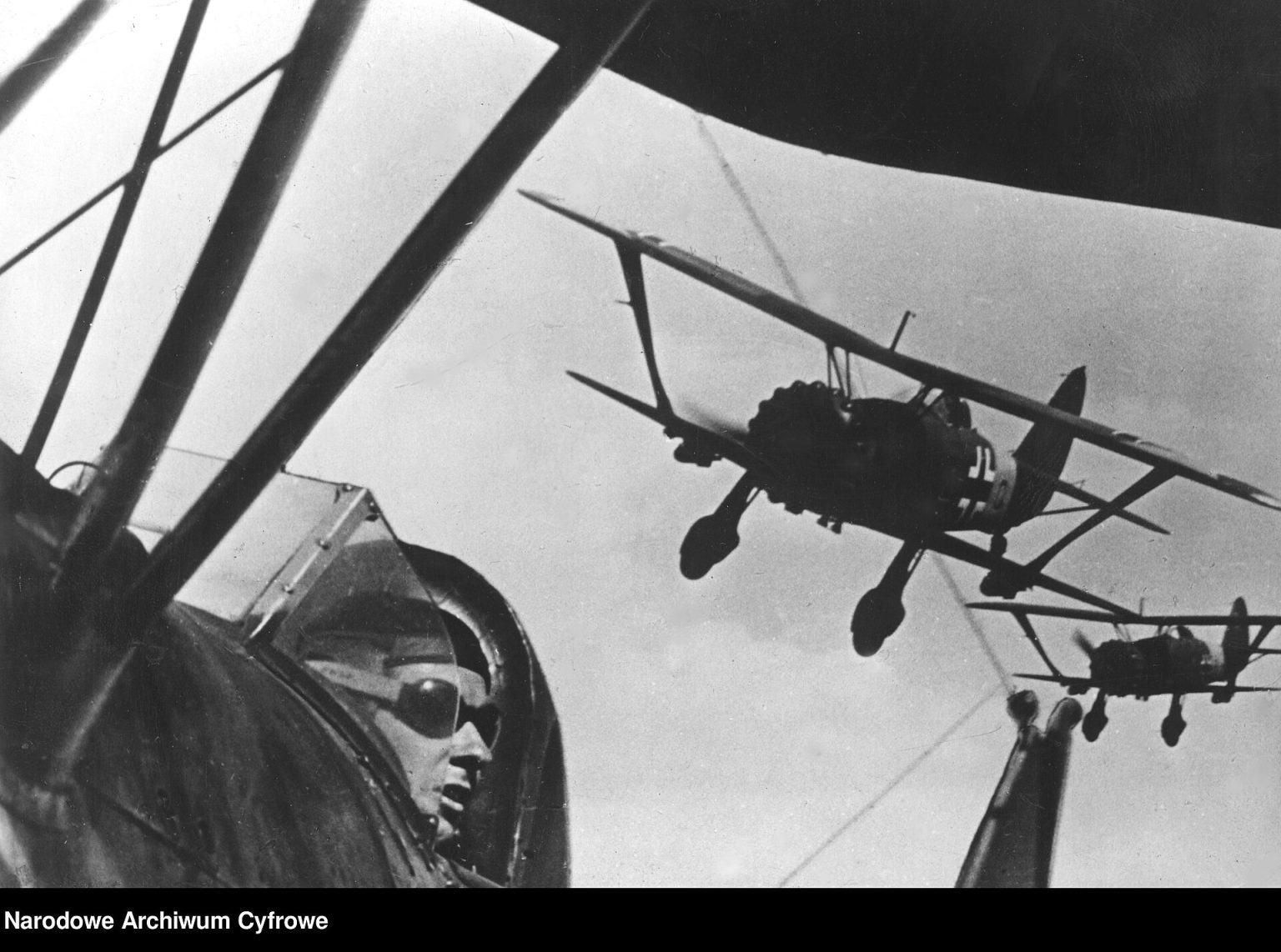
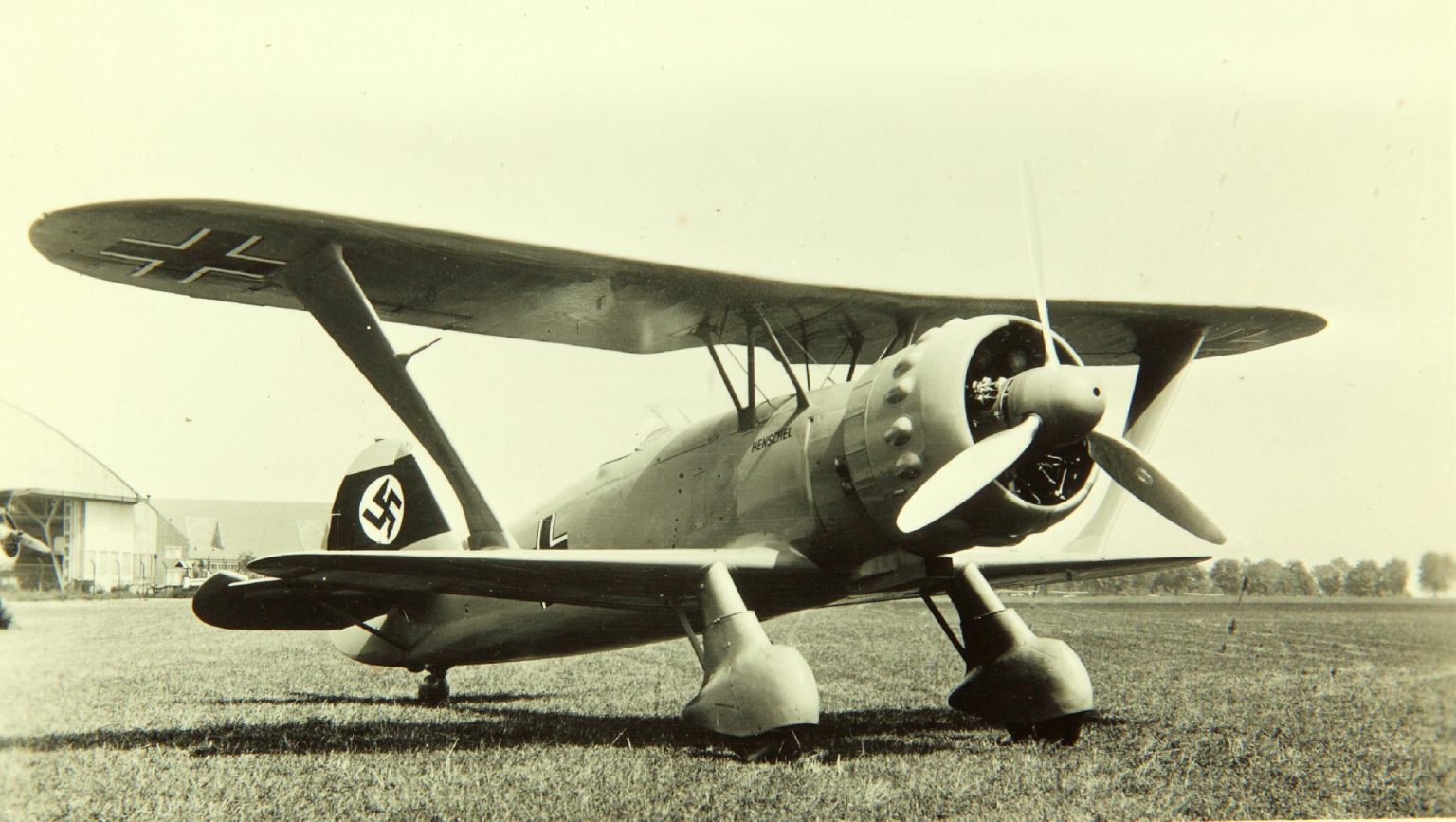
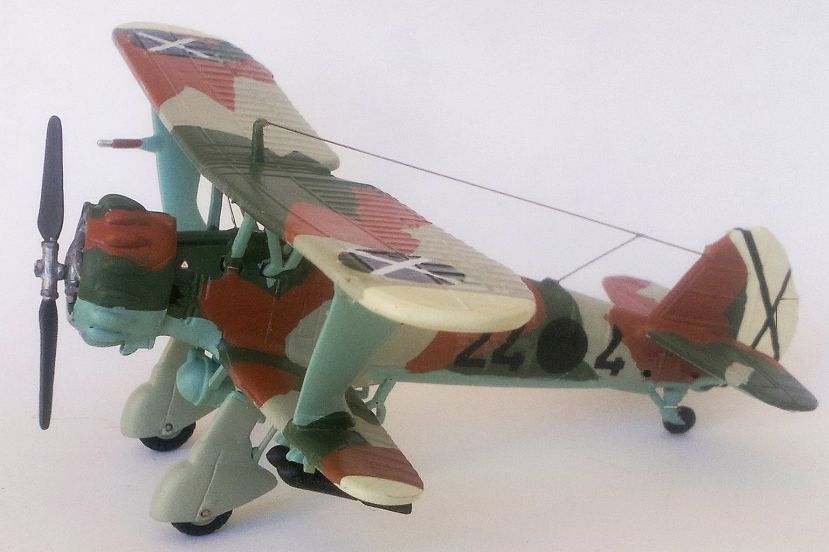
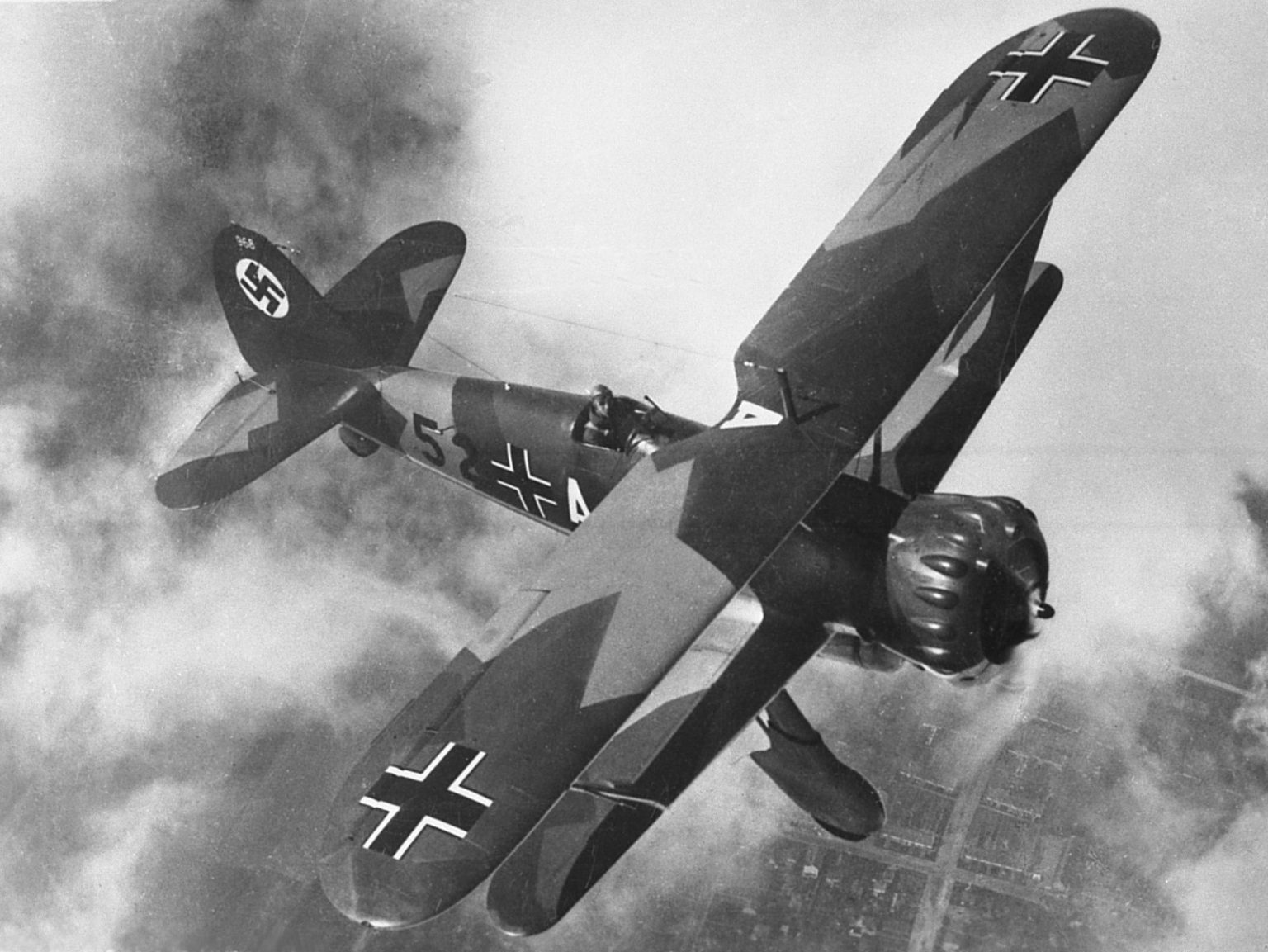
The Henschel Hs 123 in photographs
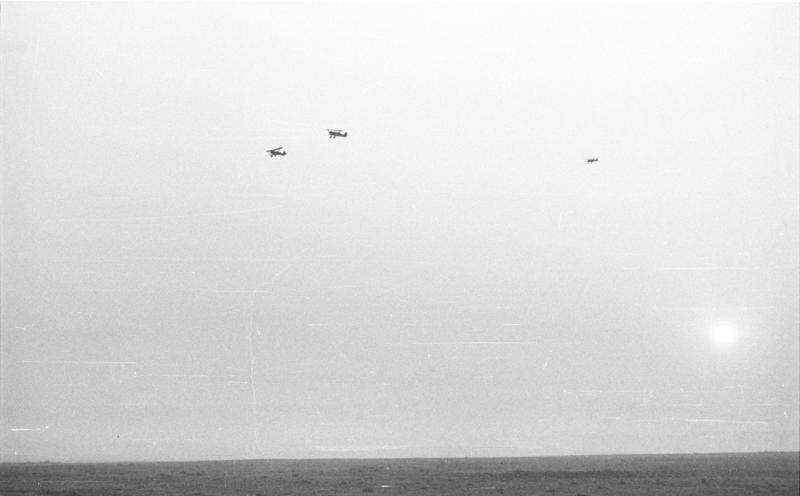
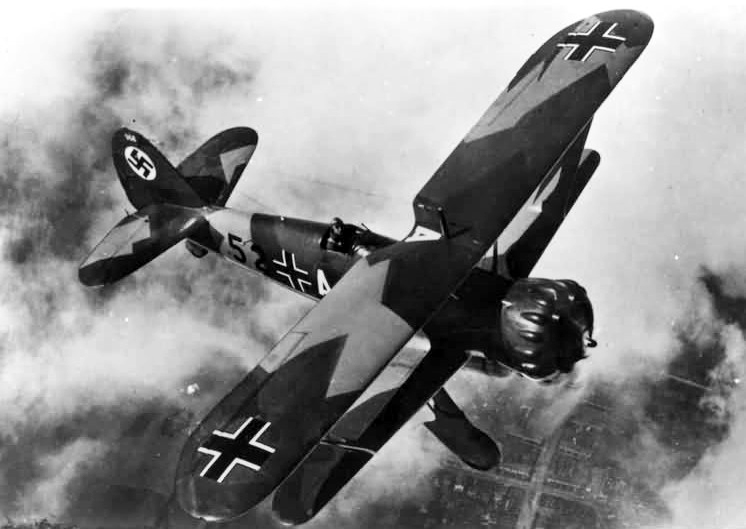
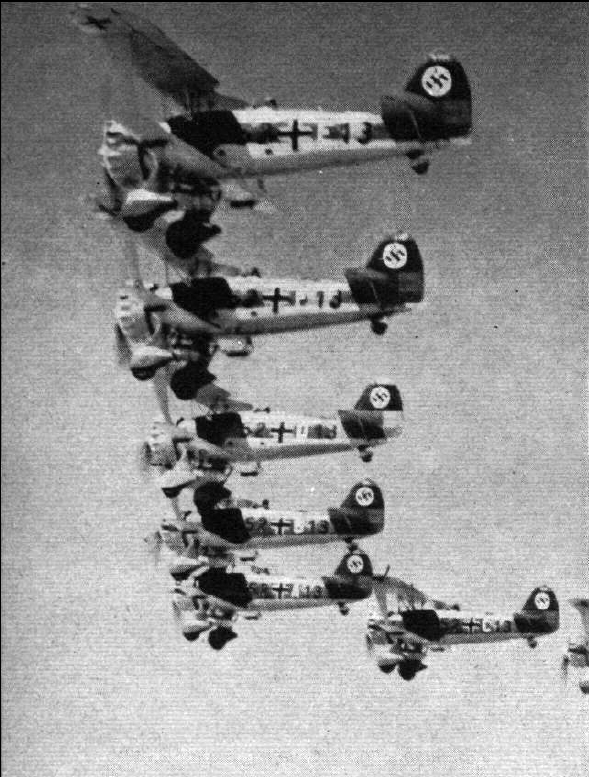
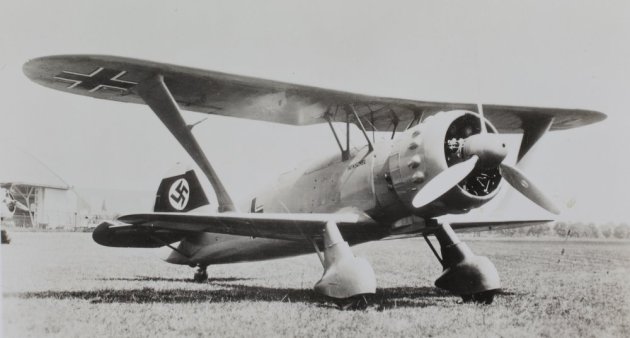
Wartime photographs of the Hs 123 from German and other archives, each credited to its source and licence. Click any photo to enlarge.
On Film
The Henschel Hs 123 on video: a documentary history
A detailed documentary on the Hs 123 — how the Luftwaffe’s first dive-bomber became its indispensable, “obsolete” close-support biplane.
“Why The Luftwaffe’s ‘Last Biplane’ Was Surprisingly Good” by Rex’s Hangar (approx. 204,000 views at time of writing; running time ~34 minutes). A thorough, well-sourced documentary history of the type.
Operations Overview
Where the Henschel Hs 123 flew: an operator map
Designed and built in Germany, blooded in Spain, flown hard on the Eastern Front, and used in combat as far afield as China. Toggle the categories; hover or tap a country for detail. Figures are approximate and hedged.
Categories: Design & Manufacture (Germany) · Combat & Long Service (Spain, Condor Legion and post-war into the 1950s) · Combat Operator (China, against Japan) · Preserved Example (a survivor is reported at the China Aviation Museum). Operator list is approximate and hedged.
Service Record
The Hs 123’s record: the biplane that would not retire
The Hs 123’s contribution was measured in close-support sorties flown for the troops on the ground — and in how long it outlasted its own obsolescence.
Questions & Answers
Henschel Hs 123: your questions answered
Can I fly in a Henschel Hs 123?
No — and almost nobody could, because the aircraft has all but vanished. Only around 265 were built, no airworthy example survives, and complete survivors are extremely rare (a preserved Hs 123 is reported at the China Aviation Museum near Beijing). There is no bookable Hs 123 experience of any kind, and MiGFlug does not offer one. If what you actually want is the real thing — strapping into a genuine military aircraft and flying it — you very much can do that today in other types. MiGFlug arranges flights in real fighter jets and warbirds around the world. Start here: migflug.com/flights-prices.
Why is the Hs 123 called the Luftwaffe’s first dive-bomber?
Because it was. First flown in 1935 and entering service in 1936, the Hs 123 was the first operational dive-bomber the rebuilding Luftwaffe fielded, and the aircraft on which German dive-bombing tactics were first developed and proven. It preceded and pointed the way to the purpose-built Junkers Ju 87 Stuka, which took over the dive-bomber role and became far more famous.
Why did the Luftwaffe keep an “obsolete” biplane flying into 1944?
Because for close air support of troops in contact, nothing available did the job better. The Hs 123’s low-speed accuracy, rugged air-cooled radial, toughness under fire and ability to operate from short, rough forward strips made it outstanding at close support — often better than the faster, more modern aircraft meant to replace it. Frontline assault units kept demanding it, and it stayed in action until attrition finished it off.
Is the story about restarting production true?
It is widely and consistently reported. By 1943 the surviving Hs 123s were wearing out and, with no equally suitable close-support aircraft available, frontline commanders requested that production be restarted. The request could not be met because the jigs and tooling had already been scrapped after production ended in 1938. It is a striking, well-known illustration of how valued the “obsolete” biplane had become.
What was the Hs 123’s engine-noise trick?
At certain engine and propeller settings, the Hs 123’s BMW 132 radial could produce a loud, harsh, crackling noise likened to machine-gun fire. Pilots are widely said to have used it deliberately to frighten enemy troops and stampede cavalry and horse-drawn columns. Like many wartime anecdotes it warrants some caution, but it is consistently recorded and fits the aircraft’s low-level, close-in style of fighting.
Who else flew the Hs 123 besides Germany?
Two other operators saw combat with it. Nationalist China bought a batch in the late 1930s and used them against Japan in the Second Sino-Japanese War. Spain flew Condor Legion Hs 123s in the Civil War and then kept the type in service for many years afterwards, into the 1950s — by far the longest service life the aircraft had anywhere.
How many Hs 123s were built, and do any survive?
Only around 265 were built, all before production ended in 1938. Because they were used hard in a punishing role and could not be replaced, almost all were destroyed or scrapped. No airworthy Hs 123 exists today, and complete survivors are extremely rare — a preserved example is reported at the China Aviation Museum near Beijing, a legacy of the type’s Chinese service.
Was the Hs 123 a good aircraft?
For its eventual role — close air support — it was excellent, arguably better than its more modern replacements at that specific job. It was accurate, tough, dependable and able to operate from rough forward fields. Its limitations were those of any 1930s biplane: it was slow, lightly armed and vulnerable to fighters. But judged by how much its users valued it, and how long they refused to let it go, the Hs 123 was a genuine success.
Fly For Real
You can’t fly the Hs 123 — but these, you can
The Hs 123 has all but vanished, and none is airworthy. The urge behind it — to strap into a real military aircraft and actually fly — is very much still bookable. MiGFlug puts you in genuine fighters and warbirds around the world.
Fighter Jet Flights
Take the controls of a real ex-military jet with an experienced pilot.
Warbird experiences
Fly in a genuine piston-engined warbird from the Hs 123’s era.
All flights are operated by MiGFlug’s vetted partners with professional pilots. Browse every option and current pricing at migflug.com/flights-prices. MiGFlug does not operate Henschel Hs 123 flights — no airworthy example exists.
Related Aircraft
If the Henschel Hs 123 interests you, explore these
Sources & Further Reading
Where this Henschel Hs 123 history comes from
Note on figures: dimensions, performance and production numbers for the Hs 123 vary between sources and are hedged here as approximate. Cost fields are listed as not reliably recorded because trustworthy interwar and wartime German cost data is not available. The engine-noise and production-restart stories are widely reported but, as wartime anecdotes, are presented with appropriate caution. No airworthy Hs 123 survives; a preserved example is reported at the China Aviation Museum.