
Lockheed Ventura
The “Flying Pig” that failed as a daylight bomber and then found its calling hunting submarines — Lockheed’s twin-engine patrol bomber, from the RAF to the US Navy’s PV-1 and PV-2 Harpoon.
The Story
The Lockheed Ventura: the bomber that failed, and the submarine-hunter that succeeded
The Lockheed Ventura is a study in how an aircraft can fail at the job it was built for and still end up a success. Ordered as a bomber, it proved dangerously vulnerable in that role and was mocked by its own crews as the “Flying Pig”. Yet within a couple of years the same aircraft, re-tasked as a maritime patrol and anti-submarine machine, was flying long, vital ocean patrols for half a dozen air forces across three oceans — and in its final US Navy form, the PV-2 Harpoon, it became one of the more capable patrol bombers of the war. It is the story of an aircraft that found itself only after being sent back to the drawing board of doctrine.
Its roots lay in a family of Lockheed twins. The company’s Model 14 Super Electra airliner had already spawned the Hudson, a maritime reconnaissance and light bomber bought in quantity by Britain before and during the early war. When the RAF wanted a bigger, more capable follow-on, Lockheed developed the Ventura from the larger Model 18 Lodestar, building it through its Vega subsidiary specifically to a British order placed in 1940. The Ventura first flew in 1941: a bigger, heavier, more powerful aircraft than the Hudson, with two mighty Pratt & Whitney R-2800 Double Wasp radials that made it genuinely fast for its class.
“A failure as a bomber and a success as a submarine-hunter — the Ventura’s whole career is the gap between what it was ordered to do and what it turned out to be good at.”— the essence of the Ventura story
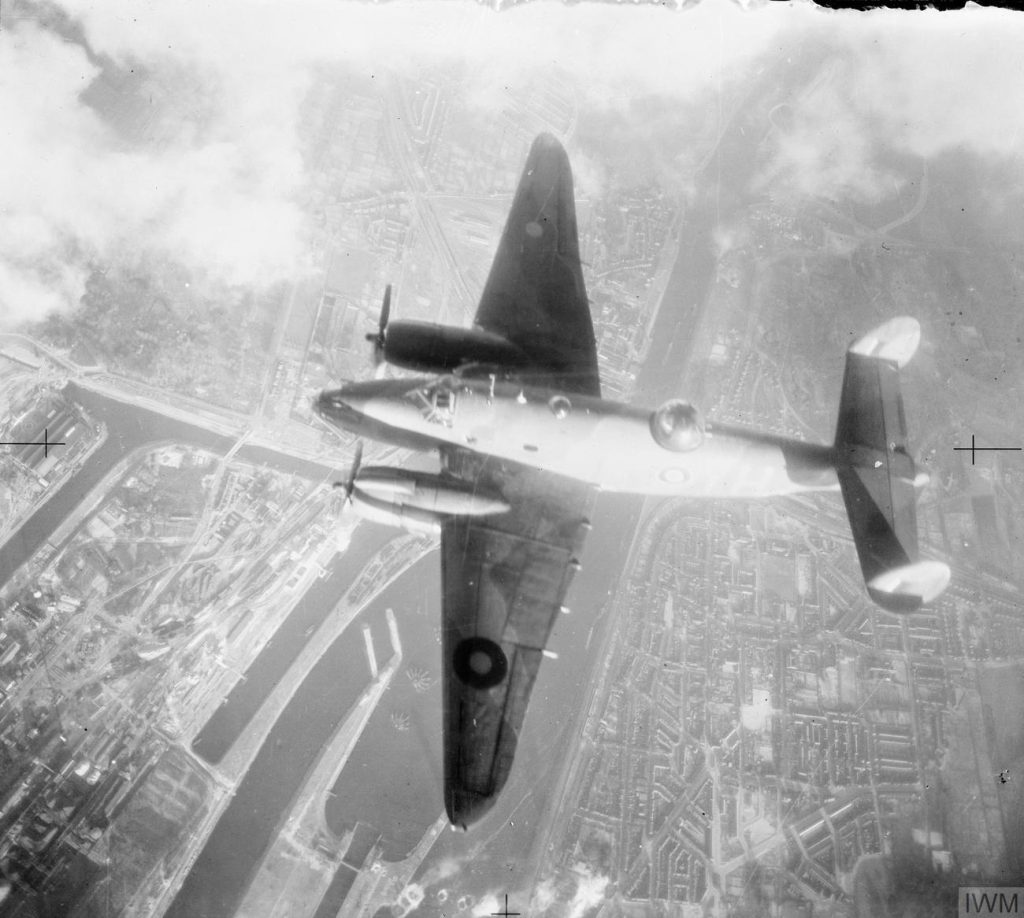
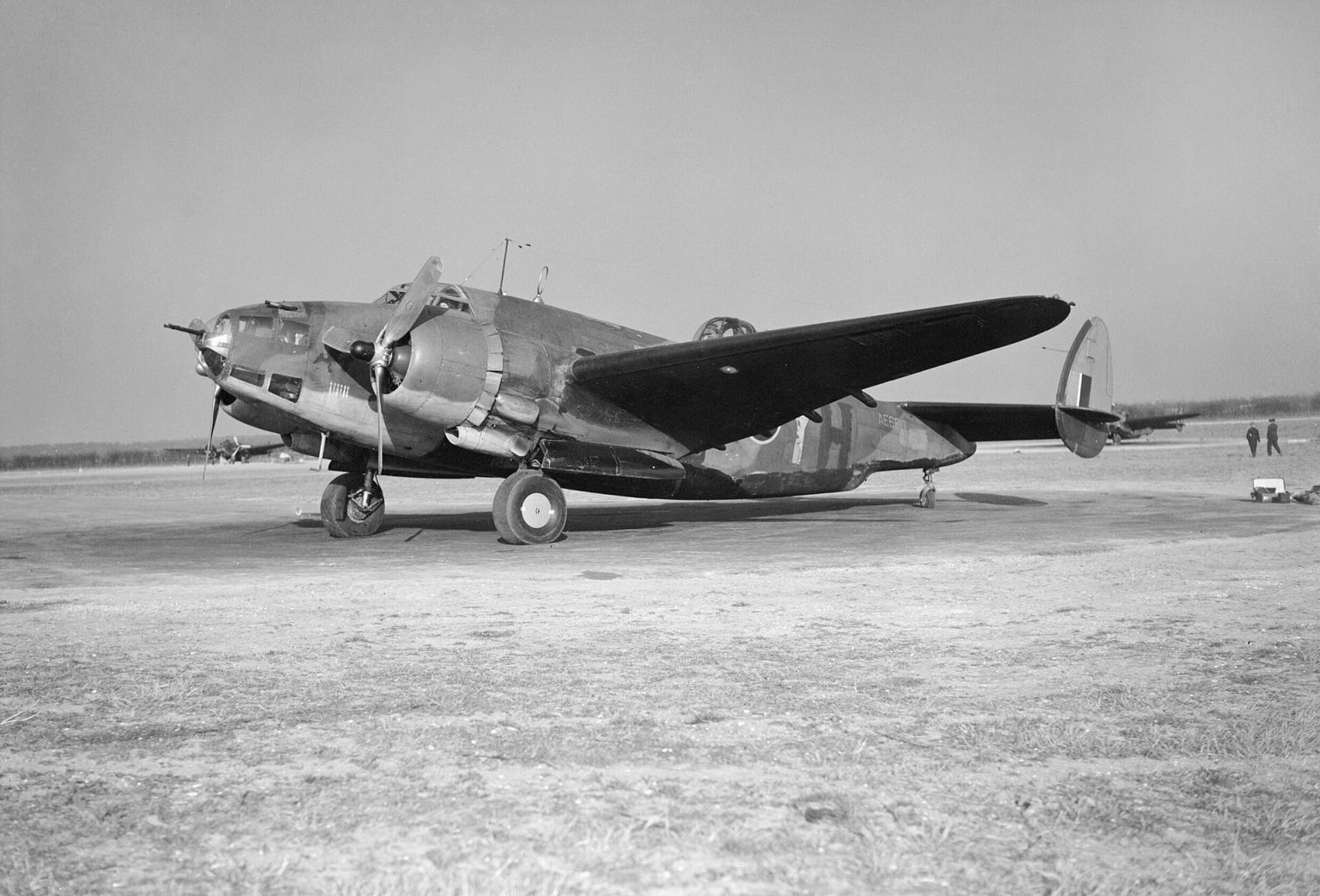
The RAF put it into Bomber Command service in late 1942, flying daylight raids against targets in occupied Europe. It did not go well. The Ventura was fast for a patrol aircraft but not fast enough to escape modern fighters, and on daylight raids over the heavily defended coast of the Low Countries it suffered badly. Crews, unimpressed by its bulk and vulnerability, nicknamed it the “Flying Pig”. The type’s reputation as a bomber was sealed by one catastrophic operation.
On 3 May 1943, twelve Venturas of No. 487 Squadron RNZAF set out to bomb a power station in Amsterdam in daylight. The formation ran into overwhelming German fighter opposition, and eleven of the twelve aircraft were shot down; only one turned back with damage. The formation leader, Squadron Leader Leonard Trent, pressed home the attack against hopeless odds and was himself shot down and captured. His courage was recognised only after the war, when surviving witnesses came home from prison camp: Trent was awarded the Victoria Cross, one of the last of the war to be confirmed. The Amsterdam raid stands as a grim monument both to the bravery of the crews and to the folly of using the Ventura as a daylight bomber.
The lesson was learned, and the Ventura was quietly moved to the role in which it excelled. As a maritime patrol and anti-submarine aircraft it was excellent: it had long range, a heavy load of bombs, depth charges and forward-firing guns, good endurance, and the speed to reach a patrol area quickly. RAF Coastal Command and the air forces of the Commonwealth took it up for the long, patient work of watching the sea lanes and hunting U-boats. Far from the daylight-bomber disaster, in this role the Ventura was a dependable, valued workhorse.
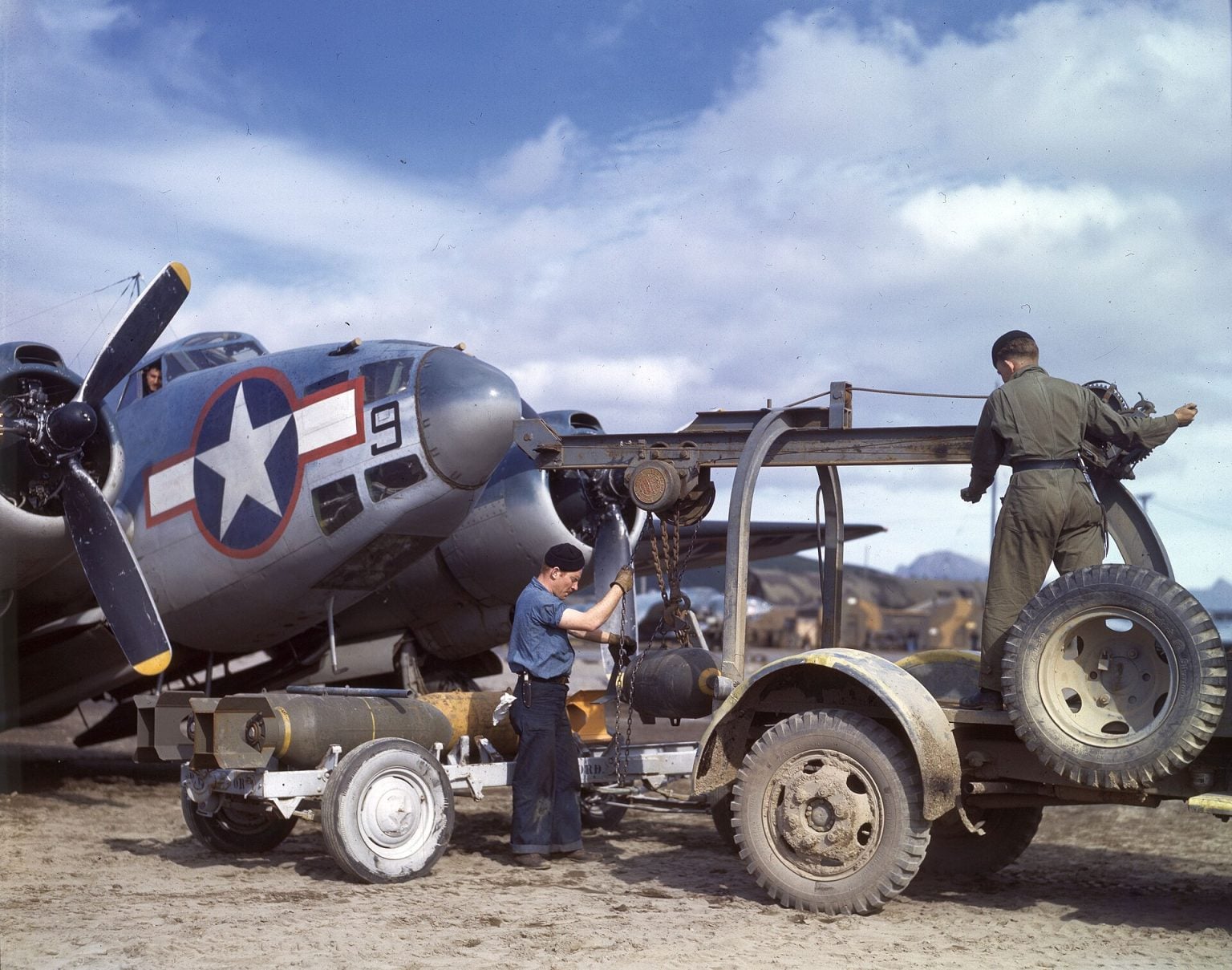
It was the United States Navy that developed the type furthest. The Navy operated the Ventura as the PV-1, a dedicated patrol bomber, and flew it hard in the Pacific and the bleak, dangerous skies of the Aleutians, from where PV-1s bombed Japanese positions in the Kuril Islands. Lockheed then produced a substantially improved version, the PV-2 Harpoon, with a larger wing, more fuel, greater range and heavier armament — a purpose-built long-range patrol bomber that entered service late in the war and served on into the post-war years.
The Ventura was very much a coalition aircraft. Beyond the US Navy and the RAF, it was flown by the Royal Canadian, Australian, New Zealand and South African air forces, and by Brazil, whose aircraft patrolled the South Atlantic against U-boats. New Zealand in particular made the Ventura its principal bomber and patrol aircraft in the Pacific. After the war the type lingered in service for decades in some air forces — Portugal flew PV-2 Harpoons on maritime patrol into the 1970s. Around three thousand or more were built across all variants. The Ventura never became famous or beloved, and its bomber career was a byword for vulnerability; but as the patient eyes over the convoy lanes, and as the direct ancestor of the long line of Lockheed patrol aircraft that followed, it more than earned its place.
01The Lockheed Ventura’s origins: from Hudson to Ventura+
The Ventura was the third in a line of military twins that Lockheed derived from its civil airliners. The Model 14 Super Electra gave rise to the Hudson, a maritime reconnaissance and light bomber that Britain bought in large numbers from 1938. As the war deepened, the RAF wanted a bigger, more capable successor with more power, more range and a heavier load.
Lockheed answered by developing a new military aircraft from its larger Model 18 Lodestar airliner. The result, the Ventura, was clearly of the same family as the Hudson but substantially bigger and more powerful. In effect the Ventura was the Hudson’s big brother — a natural evolution of a proven concept, scaled up for a more demanding war.
02Built to a British order by Vega+
Like the Hudson before it, the Ventura began as a British order rather than an American requirement. Britain, buying American aircraft to supplement its own industry, placed the order in 1940, and Lockheed built the aircraft through its Vega subsidiary. The early Venturas went to the RAF, which named and operated them as bombers.
This British-order origin shaped the aircraft’s whole early career. It was designed to a bomber specification and delivered as a bomber, which is why it was first used in a role that turned out not to suit it. Only later, when the United States entered the war and the US Navy took an interest, was the type developed in the maritime-patrol direction where its real strengths lay.
03The RAF daylight-bomber failure: the “Flying Pig”+
The RAF introduced the Ventura to Bomber Command in late 1942 and used it for daylight raids on targets in occupied Europe. It was not suited to the task. Though fast for a patrol aircraft, it was still a large, relatively unmanoeuvrable twin, and over the well-defended coast of the Low Countries it was highly vulnerable to modern German fighters and flak.
Crews were unimpressed, and the aircraft acquired the unflattering nickname the “Flying Pig”. Losses on daylight operations were heavy relative to the results achieved, and it quickly became clear that sending the Ventura against defended land targets in daylight was a costly mistake. The daylight-bomber experiment was a genuine failure — but it was not the end of the story.
04The Amsterdam raid and Leonard Trent’s Victoria Cross+
The nadir of the Ventura’s bomber career came on 3 May 1943. Twelve Venturas of No. 487 Squadron RNZAF were sent to attack a power station in Amsterdam in daylight. The raid met overwhelming fighter opposition, and eleven of the twelve aircraft were shot down — only one, damaged, turned back. It was one of the most one-sided losses suffered by any RAF squadron in a single operation.
Leading the attack was Squadron Leader Leonard Trent, who pressed on against hopeless odds until his own aircraft was destroyed and he was taken prisoner. The full story emerged only after the war, from survivors returning from captivity, and Trent was awarded the Victoria Cross — recognition of extraordinary determination in the face of certain destruction. The Amsterdam raid is remembered both for that valour and as the clearest possible proof that the Ventura had no future as a daylight bomber.
05The pivot to maritime patrol and anti-submarine warfare+
Withdrawn from the daylight-bomber role, the Ventura was redirected to the work it was genuinely good at: maritime patrol and anti-submarine warfare. Here its qualities came into their own. It had the range and endurance to patrol far out over the sea, the load-carrying ability to haul a useful mix of bombs, depth charges and guns, and enough speed to reach a contact quickly and press an attack.
RAF Coastal Command and Commonwealth air forces used it to watch the ocean approaches and hunt U-boats, flying the long, monotonous, occasionally deadly patrols on which the Battle of the Atlantic and the war against enemy shipping depended. In this role the “Flying Pig” became a respected and effective aircraft — a reminder that an aircraft’s worth depends entirely on matching it to the right job.
06The US Navy PV-1 Ventura+
It was the United States Navy that made the most of the design. The Navy adopted the Ventura as the PV-1, a dedicated patrol bomber, and operated it widely. PV-1s flew anti-submarine and patrol missions in the Atlantic and, above all, ranged across the Pacific, where their speed, range and firepower suited the vast distances of the theatre.
Among the PV-1’s hardest postings was the Aleutian Islands, the cold, fogbound chain stretching toward Japan. From Aleutian bases, PV-1s flew bombing and patrol missions against Japanese positions in the Kuril Islands — some of the few land attacks on the Japanese home islands’ approaches — in appalling weather that was often as dangerous as the enemy. The PV-1 was the version in which the Ventura truly proved its value.
07The PV-2 Harpoon: longer legs, heavier punch+
Building on PV-1 experience, Lockheed developed a substantially improved version for the US Navy: the PV-2 Harpoon. It introduced a larger wing with greater fuel capacity for longer range and endurance, a strengthened structure and heavier armament, turning the Ventura into a purpose-designed long-range patrol bomber rather than an adapted one.
The Harpoon entered service in the later part of the war and continued in use afterwards. Its extra range and load made it a genuinely capable ocean-patrol aircraft, and it is the version in which the Ventura line reached maturity. Several PV-2s survive today, some airworthy, making the Harpoon the best-remembered member of the family.
08The Pratt & Whitney R-2800 and the Ventura’s performance+
Much of the Ventura’s capability came from its engines. It was powered by two Pratt & Whitney R-2800 Double Wasp eighteen-cylinder radials — the same superb, powerful engine family that powered the F4U Corsair, P-47 Thunderbolt and many other first-rank American aircraft — each producing on the order of 2,000 horsepower.
That was a great deal of power for a patrol aircraft, and it gave the Ventura a high top speed for its class, good load-carrying ability and the performance to reach and attack contacts quickly. The R-2800 was also famously rugged and reliable, exactly what was wanted for long over-water patrols far from help. If the airframe was ordered for the wrong role, the engines were never in doubt: they were among the best in the world.
09The Ventura in the Pacific and the Aleutians+
The Pacific was where the Ventura and Harpoon did much of their most important work. US Navy PV-1s and PV-2s flew patrol, anti-shipping and bombing missions across the theatre’s enormous distances, and the Royal New Zealand Air Force made the Ventura its principal bomber and patrol type in the South and South-West Pacific, operating it intensively against Japanese-held islands.
The Aleutian campaign was a theatre of its own. From bases in the fogbound, storm-lashed Aleutian chain, PV-1s carried out long, gruelling missions against Japanese positions in the Kurils, in some of the worst flying weather anywhere in the war. It was cold, isolated, dangerous work, and the Ventura’s range, ruggedness and twin-engine reliability were exactly what such conditions demanded.
Design & Engineering
How the Ventura was built: an airliner’s frame, a warplane’s engines
The Ventura married a proven Lockheed airliner airframe to two of the most powerful radial engines of the war — fast and strong, but too big and vulnerable to survive as a daylight bomber.
A Lodestar grown for war
An all-metal twin developed from the Model 18 Lodestar airliner, via the Hudson lineage. Roomy and strong, with a capacious fuselage for bombs, depth charges, fuel and a crew of four or five.
Two Double Wasps
Two Pratt & Whitney R-2800 Double Wasp radials of around 2,000 hp each — the same engines as the Corsair and Thunderbolt. Powerful, fast and famously reliable over long ocean patrols.
Guns, bombs and depth charges
Nose machine guns, a powered dorsal turret and ventral guns, plus an internal bay and racks for bombs, depth charges or a torpedo. The PV-2 Harpoon added a bigger wing, more fuel and heavier armament.
Specifications
Lockheed Ventura (PV-1) specifications: dimensions, performance and cost
Baseline: the PV-1 Ventura as the United States Navy flew it from 1943 to 1945 — two Pratt & Whitney R-2800 Double Wasps, a Martin electric dorsal turret, radar in the nose and a weapons bay sized for a torpedo — because 1,600 of the roughly 3,000 airframes built were PV-1s, and because that is the aeroplane in which the design finally worked. Deltas for the RAF Ventura I and Ventura II, for the USAAF B-34 and B-37, and for the PV-2 Harpoon are in grey. Three warnings before the figures. First, one number governs the whole story and it is a number nobody quotes: the Ventura's wingspan of 65 ft 6 in is exactly the wingspan of the Hudson, and of the Model 14 Super Electra before it. Lockheed stretched the fuselage, doubled the installed power and added some five tons of gross weight, and left the wing where it was. Wing loading went from roughly 36 lb/sq ft on a Hudson to 56.4 lb/sq ft on a PV-1. Everything the Ventura did well and everything it did catastrophically follows from that one line in the drawing office. Second, published figures are loose in the usual ways — empty weights move by several hundred pounds with radar, armour and gun fit, and maximum speed appears as 312, 315 and 322 mph in reputable print — and in one case they are simply wrong: the rate of climb given as "2,035 ft/min (15.4 m/s)" in the widely mirrored Wikipedia specification block is an arithmetic error, since 2,035 ft/min is 10.3 m/s. The imperial figure is the sound one. Third, PV-2 Harpoon performance figures are the weakest data on this page: the aeroplane was redesigned twice during testing, the surviving numbers describe different states of the wing, and they are flagged where used.
Dimensions & weights
- Crew
- 4–5 — pilot, co-pilot or navigator, radio operator, turret gunner, ventral gunner RAF Ventura II crews were normally four: pilot, navigator/bomb-aimer in the glazed nose, wireless operator/air gunner and turret gunner. The figure of six that appears in the standard online specification block is a maximum ferry or training complement rather than an operational crew; USN patrol squadrons habitually flew five and occasionally six on very long legs so that men could be spared at the radar set
- Length
- 15.67 m (51 ft 5 in) PV-2 Harpoon: 15.98 m (52 ft 5 in). For comparison, a Hudson is 13.51 m (44 ft 4 in) and a Lodestar airliner 15.19 m (49 ft 10 in) — the Ventura is a Lodestar with a bomb-aimer's nose and a ventral gun step grafted on
- Wingspan
- 19.96 m (65 ft 6 in) Identical to the Hudson and to the Model 14 and Model 18 airliners. PV-2 Harpoon: 22.86 m (75 ft 0 in), the single most important change made to the design and the one that took eighteen months to make stick. Aviastar and one or two older references give the Ventura span as 66 ft 6 in; this is a transcription slip — the Lodestar wing is 65 ft 6 in and the Ventura did not alter it
- Height
- 3.63 m (11 ft 10 in) over the twin fins PV-2 height is given both as 3.63 m (11 ft 11 in) and as 4.04 m (13 ft 3 in) in print; the larger figure appears to be measured over the enlarged fins with the tail down and the smaller one in the levelled attitude. The Harpoon's fins are visibly taller and squarer than the Ventura's
- Wing area
- 51.2 m² (551 sq ft) PV-2: 63.7 m² (686 sq ft), an increase of about 24 per cent. This is the whole point of the Harpoon
- Wing loading
- 275 kg/m² (56.4 lb/sq ft) at normal loaded weight A Hudson sat near 36 lb/sq ft, a Blenheim IV near 31, a Douglas Boston III near 44. The Ventura was among the most heavily wing-loaded twin-engined bombers of its generation, which bought speed in a straight line and took away everything else: turn radius, climb with a load, engine-out margin and the ability to jink
- Empty weight
- 9,161 kg (20,197 lb) PV-1 PV-2 Harpoon: 9,538 kg (21,028 lb). RAF Ventura I and II figures run a few hundred pounds lower, chiefly because the British aircraft carried .303 in turret guns and lighter radio
- Normal loaded weight
- 14,061 kg (31,000 lb)
- Maximum take-off weight
- 15,422 kg (34,000 lb) PV-2: 16,330 kg (36,000 lb) on 24 per cent more wing — which is why the Harpoon, despite being heavier, was the better aeroplane at low speed and the one crews wanted for a long patrol out of a short strip
- Internal fuel
- ~6,083 litres (1,607 US gal; 1,338 imp gal) in the PV-1 The B-34 and the RAF Venturas carried ~5,091 litres (1,345 US gal; 1,120 imp gal). The Navy bought the extra 262 US gallons specifically to stretch the patrol leg, and it is the clearest single expression of what the two services wanted from the same airframe: the RAF wanted a fast bomb-carrier for a 250-mile round trip, the Navy wanted an aeroplane that could stay out for eight hours over empty water
- Weapons bay
- one bay under the centre section, 1,361 kg (3,000 lb) of bombs or depth charges, or one 22.4 in Mk 13 aerial torpedo RAF Venturas were cleared for 1,134 kg (2,500 lb). PV-2: 1,816 kg (4,000 lb) internal plus ~908 kg (2,000 lb) on wing racks, an increase of about 30 per cent over the PV-1 and roughly double what a Hudson could lift
- Structure
- all-metal stressed-skin light alloy; two-spar wing, twin fins and rudders, hydraulically retracted tailwheel undercarriage, Fowler-type flaps The airframe was genuinely strong — PV crews in the Aleutians and the Solomons brought home aircraft with cannon holes through the wing and a cylinder head missing, and the type's reputation for absorbing punishment is one of the few things every operator agreed on
- Protection
- armour for pilot and turret gunner, self-sealing tanks, armoured glass windscreen panel from the Ventura II onward Fitted from the start of production rather than retrofitted, which distinguishes the Ventura sharply from the 1935-generation British bombers it flew alongside in 2 Group. It did not save the aeroplane over the Netherlands, because the thing killing Venturas was not rifle fire but cannon-armed fighters that could not be outrun
Performance
- Maximum speed
- 518 km/h at 4,265 m (322 mph at 14,000 ft) PV-1 Figures of 312 and 315 mph also circulate for the Ventura II, and a clean, lightly loaded aeroplane is not the aeroplane that went to Amsterdam with a full bay, a turret, an under-fuselage gun step and open bomb doors. Operational cruising in formation was closer to 200 mph, which is the number that mattered when Fw 190s arrived
- Cruising speed
- 370 km/h (230 mph) PV-2 cruise is usually given as ~275 km/h (171 mph) — a patrol speed, not a transit speed, chosen for endurance rather than for getting anywhere
- Maximum speed, PV-2 Harpoon
- ~454 km/h (~282 mph) at ~4,175 m (~13,700 ft) The Harpoon was expected to be slower than the PV-1 on the same engines and it was, by roughly 40 mph. Nobody minded: the Navy had bought wing, not speed, and nothing over the Kuriles or the Bay of Biscay was going to be caught by a Ventura at any speed
- Rate of climb
- 10.3 m/s (2,035 ft/min) at sea level The 15.4 m/s conversion printed alongside this figure in the most-copied online specification block is wrong; 2,035 ft/min converts to 10.3 m/s. Climb fell away sharply with load, and a PV-1 at 34,000 lb on a hot Pacific strip was a genuinely marginal performer
- Service ceiling
- 8,020 m (26,300 ft) PV-2: ~7,285 m (~23,900 ft). Neither figure was operationally relevant. Patrol bombers worked between 50 and 5,000 ft, and 2 Group sent its Venturas across the Dutch coast at medium level where flak and fighters both had them
- Range with bomb load
- 2,670 km (1,660 miles) PV-2: ~2,880 km (~1,790 miles). RAF Venturas on cross-Channel work never used more than a fraction of this; the range was the reason the US Navy wanted the aeroplane and the reason the RAF, having given up on it as a bomber, kept it as a Coastal Command patroller
- Ferry range
- ~4,200 km (~2,600 miles) with bay tanks PV-2 ferry figures around 4,665 km (2,900 miles) are quoted. This is what made ocean delivery flights to New Zealand, South Africa and Brazil practical
- Endurance
- ~8 hours on a normal patrol load, extendable beyond 10 with bay tankage Aleutian and Atlantic squadrons routinely flew eight-hour sorties in weather that was itself the principal enemy. Attrition in VP and VB squadrons from cloud, ice and fog exceeded attrition from the Japanese in the Aleutians
- Combat radius
- ~1,050 km (~650 miles) with a useful weapons load and a search pattern at the far end A soft figure that depended entirely on how much of the sortie was spent at economical cruise. It was, however, comfortably enough to reach Paramushiro from Attu, which is the mission that made the PV-1 famous
- Take-off and landing
- long and unforgiving at weight; approach speeds high for the period and the aeroplane would not be rushed onto a short strip The single most common crew complaint about the PV-1, and the single biggest thing the Harpoon's larger wing fixed. RNZAF crews operating from coral strips in the Solomons noticed the difference immediately
- Handling
- heavy, stable, fast in the cruise, poor in the turn; adequate on one engine at patrol weight and dangerous on one engine at maximum weight Every operator's verdict is the same in substance and differs only in tone. RAF crews, asked to manoeuvre it against single-seat fighters, hated it. RNZAF and RAAF crews, asked to fly it straight and level for eight hours over the sea, came round to what the official RAAF history calls grudging respect
Propulsion & systems
- Engines
- two Pratt & Whitney R-2800-31 Double Wasp, 18-cylinder twin-row air-cooled radials, 1,491 kW (2,000 hp) each for take-off The Ventura I used the export-designated R-2800-S1A4-G of the same rating. The PV-2 used the R-2800-31 or -43. The Double Wasp is the reason the Ventura existed at all: it gave the Lodestar airframe roughly twice the Hudson's power, and the same engine was simultaneously carrying the P-47, the F6F, the F4U and the B-26
- Supercharging
- two-speed single-stage geared supercharger Adequate for a patrol bomber that lived low down; one of several reasons the type had no business at 15,000 ft over the Netherlands in 1943
- Propellers
- Hamilton Standard Hydromatic three-blade constant-speed, fully feathering, 3.35 m (11 ft 0 in) diameter
- Alternative powerplant
- Wright R-2600-13 Cyclone 14 of 1,268 kW (1,700 hp) in the USAAF B-37 The B-37, originally ordered as the O-56 armed observation aircraft, was the Ventura fitted with a different engine because Double Wasps were needed elsewhere. Eighteen of 550 were built before the whole Army order collapsed into the Army–Navy land-based patrol agreement of 1942, and the type is a footnote about American industrial priorities rather than about aeronautics
- Fuel system
- self-sealing wing and centre-section tanks; provision for bomb-bay ferry and range tanks; single-point pressure refuelling not fitted The 1,607 US gal PV-1 tankage was the principal Navy modification to the B-34 airframe and the origin of the whole PV series
- Radar
- ASV Mk II on RAF Coastal Command Venturas; AN/APS-2 and later AN/APS-3 X-band search radar on USN PV-1 and PV-2, the aerial in a nose or wing-leading-edge radome This is the systems fit that redeemed the design. A radar-equipped PV-1 could find a surfaced U-boat or a Japanese picket in cloud, and radar-equipped PV-1s were used to lead formations of B-24s to targets in the Kuriles because the Venturas could see and the Liberators could not
- Dorsal turret
- Martin 250CE electrically driven power turret with two 12.7 mm (0.50 in) Browning M2 guns on all PV variants RAF aircraft instead carried a Boulton Paul Type A hydraulic turret with two 7.7 mm (0.303 in) Brownings. The difference in calibre between the British and American fits is not a detail: it is most of the difference between a bomber that could hurt a fighter and one that could not
- Electrical and hydraulics
- 24-volt DC electrical system; hydraulic undercarriage, flaps, bomb doors and brakes; electrically driven turret
- Autopilot and navigation
- Minneapolis-Honeywell or Sperry automatic pilot, drift sight, radio compass, and on USN aircraft the full patrol navigation fit An autopilot is not glamorous and it was the difference between an eight-hour ocean patrol being possible and being exhausting
- De-icing
- pneumatic boots on wing and tail leading edges, propeller and carburettor anti-icing Essential in the Aleutians, where the weather destroyed more Venturas than the Japanese did
- Tail unit
- twin fins and rudders on a raised tailplane, inherited from the Lodestar and enlarged on the PV-2 The tailplane was raised relative to the Lodestar's specifically to clear the ventral gun position, one of the quickest external identification points against a Lodestar or Hudson
- Production
- ~3,000 airframes in all, built by Vega Aircraft Corporation at the Lockheed Air Terminal, Burbank 188 Ventura I, 487 Ventura II, 200 B-34, 18 B-37, 1,600 PV-1 and 470 PV-2 gives 2,963. Aviastar quotes 3,028 for PV-1 and PV-2 production alone to September 1945, which cannot be reconciled with 1,600 plus 470 and is probably a total for all Vega Ventura and Harpoon work. Anyone quoting a single tidy figure is quoting one source rather than reconciling several
10The Ventura’s variants: from B-34 to PV-2 Harpoon+
The Ventura family carried a confusing array of designations reflecting its many customers. The RAF flew the Ventura Mk I and Mk II as bombers. The US Army Air Forces took a number as the B-34 Lexington and the reconnaissance B-37, though it made relatively little use of them. The really important military versions were the US Navy’s: the PV-1 Ventura patrol bomber, and the improved PV-2 Harpoon.
The PV-2 Harpoon was the most developed member of the family, with a larger wing, greater fuel capacity and range, a strengthened airframe and heavier armament. Where the earlier aircraft were adaptations of a bomber ordered for another role, the Harpoon was in effect a purpose-built long-range patrol bomber — the version in which the design reached its full potential, and the one from which most survivors come.
11The Ventura’s operating costs: what the records show+
As with most American wartime aircraft supplied through Lend-Lease and wartime procurement, the Ventura has no clean, reliable public figure for unit cost, cost per flight hour or total programme cost. It was bought and transferred through complex government arrangements rather than sold at a transparent list price, and consistent figures across its many variants and operators are not available. Any single dollar figure quoted for it should be treated with caution.
In general terms, the Ventura was a substantial, twin-Double-Wasp aircraft — more expensive to build and operate than a small single-engined type, but a conventional mass-produced machine using well-established engines and structures. Built in the low thousands and operated by many air forces, it was economical enough to field widely. We list its cost fields as “not reliably recorded” rather than invent numbers.
12The Ventura’s many operators: Commonwealth, Brazil and beyond+
Few patrol aircraft of the war served under so many flags. Besides the US Navy and USAAF, the Ventura was flown by the RAF and by the Royal Canadian, Australian, New Zealand and South African air forces, each using it for bombing or, more successfully, for maritime patrol and anti-submarine work. New Zealand in particular relied on it heavily in the Pacific.
Brazil operated PV-1s and PV-2s on anti-submarine patrol in the South Atlantic, an important and often overlooked theatre of the U-boat war, and kept them in service afterwards. Other nations, including the Netherlands, France and Portugal, flew the type as well; Portugal’s PV-2 Harpoons served on maritime patrol into the 1970s. This breadth of service is a large part of the Ventura’s significance: it was one of the workhorse patrol aircraft of the entire Allied war at sea.
13Survivors and long post-war service+
Unlike some wartime types, the Ventura and especially the PV-2 Harpoon left a reasonable number of survivors, helped by long post-war service and by civilian use after the war (some Harpoons flew for years as fire-bombers and executive transports). Several PV-2s survive in museums today, and a small number remain airworthy — making the Harpoon one of the more accessible surviving members of the family, though genuine flying examples are rare and precious.
The type’s post-war career stretched surprisingly long in some air forces: Brazil, Portugal and others kept Venturas and Harpoons on maritime patrol into the 1950s, 1960s and, in Portugal’s case, the 1970s. For an aircraft that began as a British bomber order in 1940, a working life stretching over three decades was a remarkable second act — and a fitting one for a design that only truly succeeded once it found the right role.
Armament & payload
The Ventura went to war over Europe with rifle-calibre turret guns and came back from the Pacific with five half-inch guns in the nose, and the second aeroplane is the one that worked
Two air forces armed the same airframe for two completely different fights, and the contrast is the clearest lesson the Ventura has to teach. The RAF bought it as a Hudson replacement and armed it as one: a pair of fixed 0.50 in guns and a pair of 0.303 in guns in the nose, a Boulton Paul turret with two more 0.303 in guns on top, and two 0.303 in guns firing aft and down through a ventral step. That was a perfectly respectable maritime patrol fit in 1940 and a death sentence over the Netherlands in 1943, because the weapon that mattered was the one the other side had — the 20 mm cannon of an Fw 190 that could open fire from beyond the reach of a rifle-calibre Browning. The US Navy rearmed the aeroplane around half-inch guns throughout, added a three-gun nose pack on late PV-1s to make five forward-firing 0.50 in Brownings, hung eight 5-inch rockets under the wings and put a torpedo in the bay. The offensive load grew from 2,500 lb in RAF service to 3,000 lb in the PV-1 and 4,000 lb internal plus 2,000 lb external in the PV-2 Harpoon. Fits varied enormously by mark, operator and date, and squadron armourers improvised constantly: an early PV-1 with a bombardier's glazed nose, a late PV-1 with a solid gun pack, a PV-2D with eight nose guns and an RAF Ventura II are four different weapons systems wearing one silhouette.
Gun
- RAF Ventura I and II: two fixed 12.7 mm (0.50 in) Browning and two fixed 7.7 mm (0.303 in) Browning guns in the upper nose, fired by the pilot
- RAF dorsal defence: Boulton Paul Type A turret with two 7.7 mm (0.303 in) Brownings; ventral defence two more 0.303 in guns firing aft and downward through a step beneath the rear fuselage
- USN PV-1: two fixed 12.7 mm (0.50 in) Brownings in the upper nose, a Martin 250CE electric dorsal turret with two more, and two 7.62 mm (0.30 in) Brownings in the ventral tunnel
- Late-production PV-1: the glazed bombardier's station deleted and replaced by an external pack of three 12.7 mm (0.50 in) guns under the nose, giving five forward-firing half-inch guns for strafing and masthead attack
- PV-2 Harpoon: five 12.7 mm (0.50 in) guns in the nose as standard, two in the turret and two in the ventral tunnel; the PV-2D raised the nose battery to eight A PV-2D with eight forward-firing half-inch Brownings had roughly the strafing firepower of a B-25J gunship nose, on an aeroplane that could stay airborne for eight hours. That is a long way from a Boulton Paul turret with two rifle-calibre guns.
Air-to-air
- No guided air-to-air weapon existed anywhere during the Ventura's operational life; this card belongs to the aeroplane's two genuine air-combat careers, both of them accidental
- The first was defensive and disastrous. Over Eindhoven on 6 December 1942 and over Amsterdam on 3 May 1943 the Ventura's guns were tested against Bf 109s and Fw 190s in numbers and were comprehensively outranged. Squadron Leader Leonard Trent shot down a Bf 109 with the fixed nose guns of his Ventura during his bombing run on 3 May, which is a remarkable thing for a bomber pilot to have done and did not save any of the other ten aircraft
- The second was offensive and successful. Radar-equipped PV-1s served as night fighters with the US Marine Corps squadron VMF(N)-531 in the Solomons from late 1943, the first American Marine night-fighter unit — a big airframe was what an early airborne radar needed, and no single-seat fighter could carry one
- RNZAF Venturas fought a series of air battles over the Bismarcks and Solomons in which the type acquitted itself far better than its European record suggests; the best known is a Christmas Eve 1943 action in which a single Ventura was attacked by nine Japanese fighters and its crew were credited with three destroyed
- Victory claims by patrol-bomber crews are among the least reliable figures in the air war and the Pacific claims above are credits, not confirmed kills. What is not in doubt is that the same aeroplane which could not survive over the Dutch coast in daylight was a serviceable combat aircraft over the Pacific, because the opposition, the altitude and the mission had all changed.
Air-to-surface guided
- None. No Ventura, PV-1 or PV-2 of any operator carried a guided air-to-surface weapon in service
- The US Navy's wartime guided weapon, the ASM-N-2 Bat radar-homing glide bomb, went to the larger PB4Y-2 Privateer and not to the PV series; the Harpoon was retired from front-line US service before guided anti-ship weapons became general
- What the PV squadrons used instead was the unguided alternative that guided weapons were invented to replace: the masthead attack. Run in at 200 ft and 250 mph, hold the nose guns on the ship's bridge and flak positions, release 500 lb bombs fuzed for a delay so that they skipped or struck the hull at the waterline, and fly out over the target
- Against submarines the equivalent doctrine was the shallow-set depth charge, six 325 lb Mk 17 charges in a stick straddling the swirl, delivered from about 100 ft within thirty seconds of the boat submerging. PV-1s of squadrons flying from Port Lyautey in French Morocco from September 1943 worked the Atlantic approaches on exactly this pattern
Bombs
- RAF Ventura I and II: 1,134 kg (2,500 lb) internal, typically four 500 lb general-purpose bombs or a mixed load of 250 lb bombs
- USN PV-1: 1,361 kg (3,000 lb) internal — six 500 lb bombs, or six 325 lb Mk 17 depth charges, or one 22.4 in Mk 13 aerial torpedo carried semi-recessed in the bay
- PV-2 Harpoon: 1,816 kg (4,000 lb) internal plus racks under the wing centre section for a further ~908 kg (2,000 lb), giving the type roughly double a Hudson's offensive load
- Coastal and Pacific squadrons also carried parachute flares, smoke and dye markers, sonobuoys on late Atlantic fits, and 100 lb anti-submarine bombs for shallow-water work
- The torpedo capability was carried by nearly every PV-1 and used by almost none of them. The Mk 13 was a poor weapon until 1944 and by the time it was reliable the PV squadrons had settled on bombs, depth charges and rockets. The bay was sized for a torpedo chiefly because a US Navy patrol bomber specification in 1942 said it should be.
Rockets
- Late PV-1 and all PV-2 Harpoons: eight 5-inch (127 mm) HVAR high-velocity aircraft rockets on zero-length launchers beneath the outer wings, four a side
- The HVAR gave a patrol bomber a genuine anti-shipping and anti-barge punch without the accuracy problem of level bombing, and it was used heavily by USN, RNZAF and RAAF crews against coastal shipping, barges and shore installations in the South West Pacific
- Earlier 3.5-inch and 5-inch forward-firing aircraft rockets were carried on some Atlantic and Pacific aircraft before the HVAR became general in 1944
- Rockets and the five-gun nose together turned the late PV-1 from a bomb-carrier into a strafer, which is how most Pacific PV sorties actually ended: a radar search, a visual contact and a low-level gun and rocket attack
Pods & other stores
- Under-nose gun pack of three 12.7 mm (0.50 in) Brownings on late PV-1s, replacing the bombardier's glazed station and its Norden-pattern sight
- Nose and wing-leading-edge radomes for ASV Mk II, AN/APS-2 and AN/APS-3 search radar; radar-equipped PV-1s were used as pathfinders to lead B-24 formations against the Kurile Islands
- Camera installations on the PV-1P photographic conversions, used for coastal and island survey work in the Pacific
- Ferry and range tanks in the weapons bay, which is what made delivery flights across the Pacific and South Atlantic possible and what South African, Brazilian and New Zealand aircraft arrived carrying
- No drop tanks, no gun pods beyond the nose pack, and no external stores stations of any kind on RAF aircraft, whose only external fitting was the ventral gun step
Three typical loadouts
- Amsterdam, 3 May 1943 — Ventura II, No. 487 Squadron RNZAF
- Four 500 lb general-purpose bombs in the bay for a power station in the middle of a Dutch city, full ammunition for two fixed 0.50 in and two fixed 0.303 in nose guns, two 0.303 in turret guns and two 0.303 in ventral guns, no external stores, Spitfire escort promised at three points on the route. Twelve aircraft took off, one turned back with mechanical trouble before the coast, eleven crossed in, and all eleven were shot down.
- Paramushiro strike from Attu, 1944 — PV-1, US Navy patrol bombing squadron
- Six 500 lb bombs, five forward-firing 0.50 in guns loaded for the run out across the target, two 0.50 in in the Martin turret, two 0.30 in in the tunnel, AN/APS radar for the navigation and the weather, and bay tankage for a 1,500-mile round trip over the North Pacific in conditions that killed more crews than the Japanese did.
- Atlantic anti-submarine patrol from Port Lyautey, 1943–44 — PV-1, US Navy
- Six 325 lb Mk 17 depth charges set shallow, ASV radar running, an eight-hour creeping line-ahead search across the approaches to Gibraltar, and an attack profile that gave the crew about thirty seconds from radar contact to weapon release. The Ventura was never a glamorous anti-submarine aeroplane and it was a thoroughly effective one.
Sourcing caveat: gun fits are the least stable data on any Ventura. The transition from the glazed bombardier nose to the three-gun pack was progressive and overlapping rather than a clean production break, individual squadrons added and removed guns in the field, and photographs of the same airframe months apart routinely show different noses. Bomb loads quoted here are maximum authorised loads; operational loads for a long patrol were frequently half of them, because fuel and bombs competed for the same weight allowance in an aeroplane that had none to spare.
Variants
Lockheed built the Ventura to replace the Hudson, the RAF broke it over the Netherlands, and the US Navy spent the rest of the war proving it had been a good aeroplane all along
The Ventura began as a sales proposition rather than a requirement. Lockheed had turned the Model 14 Super Electra airliner into the Hudson and sold it to the RAF in quantity; at the outbreak of war it offered the same trick with the larger Model 18 Lodestar, and the British bought — 25 Model 32s in February 1940, then 300 Model 37s with Double Wasps, then 375 more. Production went to Vega Aircraft Corporation, a Lockheed subsidiary at Burbank. On paper the result was everything the Hudson was not: faster, better armed, and carrying nearly twice the bombs. What nobody weighed properly was that all of it was being hung on the Hudson's wing.
The RAF accepted the first Ventura I in September 1941 and aircraft began reaching Britain in April 1942. By August there were enough to equip No. 21 Squadron RAF, No. 464 Squadron RAAF and No. 487 Squadron RNZAF in No. 2 Group — the light-bomber group that had been set aside from Bomber Command's night offensive to attack shipping and occupied Europe in daylight, and which had already used up the Blenheim doing it. The first Ventura operation was flown on 3 November 1942, three aircraft of No. 21 Squadron against railway targets near Hengelo. On 6 December came Operation Oyster, the large low-level daylight attack on the Philips valve and radio works at Eindhoven: 47 Venturas went with 36 Bostons and 10 Mosquitos, the bombing was accurate and Philips production stopped for six months, and nine Venturas were shot down with three more crash-landing in England. Fifteen aircraft of all types were lost, 62 aircrew were killed, and about 150 Dutch civilians died. It was a twenty per cent loss rate on the Venturas and it was called a success.
Then came 3 May 1943. Operation Ramrod 16 sent twelve Venturas of No. 487 Squadron RNZAF, led by Squadron Leader Leonard Trent, against a power station in Amsterdam, as a diversion for a simultaneous attack on the steelworks at IJmuiden. Six Spitfire squadrons were to escort with two more as top cover. The top-cover Spitfires mistimed their departure, arrived early and crossed the Dutch coast too high, and the German defences were alerted and airborne in strength. One Ventura turned back with mechanical trouble. The remaining eleven crossed the coast into something like seventy Bf 109s and Fw 190s: the Fw 190s pinned the escort and the Bf 109s took the bombers apart. Five Venturas reached Amsterdam, one — Trent's — completed an accurate bombing run, and every one of the eleven was shot down. Trent shot down a Bf 109 with his nose guns on the way in, was hit, went into an uncontrollable spin and got out at 7,000 ft with his navigator; the rest of his crew died. He spent the war in Stalag Luft III, went out of the tunnel in the Great Escape of 24 March 1944 and was recaptured within minutes, and was one of the men returned to the camp rather than murdered. Because nobody who could describe what he had done came home until 1945, his Victoria Cross was not announced until 1 March 1946 and was invested by King George VI on 26 March 1946. He stayed in the RAF, commanded No. 214 Squadron during Suez, retired as a group captain in 1965 and died in New Zealand on 19 May 1986.
The RAF had seen enough. Ventura squadrons in 2 Group re-equipped with Mosquitos through the summer of 1943 — No. 487 Squadron went on to fly the Amiens prison raid in a Mosquito — and the last Ventura bombing operation was flown by No. 21 Squadron on 9 September 1943. Surviving airframes went to Coastal Command and to the Mediterranean for maritime patrol, meteorological reconnaissance and special duties, which is what they should have been doing all along. Crews called the aeroplane the Pig, and not affectionately.
The rescue came from an American bureaucratic quarrel. Through 1942 the Army Air Forces and the Navy fought over who should conduct land-based maritime patrol; the settlement gave the Navy the land-based patrol mission and, with it, the entire Ventura production line. The Army's B-34 and B-37 orders were cut back or cancelled, and Vega output was redirected to the Navy as the PV-1. The Navy's changes were unglamorous and exactly right: more fuel, half-inch guns throughout, radar, and later a solid gun nose. Deliveries began in December 1942 and the type entered service in February 1943, with VP-135 the first squadron in combat in the Aleutians in April 1943, flying strikes against Paramushiro in the Kurile Islands and leading radar-blind B-24s to the target. PV-1s flew as Marine night fighters in the Solomons, hunted U-boats from Morocco, and equipped the RNZAF, the RAAF and the South African Air Force in quantity.
The last act was the wing the aeroplane should have had in 1940. The PV-2 Harpoon, ordered in June 1943 and first flown on 3 December 1943, took the span from 65 ft 6 in to 75 ft and the wing area from 551 to 686 sq ft, standardised five nose guns, raised the bomb load by 30 per cent and added rockets. And then the new wing wrinkled. Early testing showed a dangerous tendency for the skin to buckle under load; a six-foot reduction in span was tried and did not cure it, and a complete redesign of the wing was necessary. The delay was crushing: only 69 PV-2s had been delivered by the end of 1944, the first thirty airframes with the original wings were relegated to training as PV-2Cs, and the Harpoon reached operational squadrons in the Aleutians only in March 1945. Once fixed it was, by every account, reliable and popular — and when Japan surrendered the balance of the 500-aircraft order was cancelled outright. The Harpoon then had a longer career abroad than at home: Portuguese Harpoons were still flying colonial-war sorties over Angola and Mozambique in 1975, thirty-two years after the prototype first flew.
- Model 37 / Ventura Mk I (1941–42, 188 built)
- The original RAF bomber: Lodestar airframe, R-2800-S1A4-G Double Wasps of 2,000 hp, glazed bomb-aiming nose, Boulton Paul dorsal turret with two 0.303 in guns and a ventral gun step. First accepted September 1941, in Britain from April 1942. Thirty went to the RCAF and others to the SAAF.
- Ventura Mk II and Mk IIA (1942–43, 487 Mk II built)
- R-2800-31 engines and increased weights; the aeroplane of Eindhoven and Amsterdam. The Mk IIA was the British designation for aircraft built to USAAF B-34 standard and released under Lend-Lease. Substantial numbers were taken over by the USAAF and USN rather than delivered.
- B-34 Lexington / RB-34 (1942, 200 built)
- Lockheed Model 137 for the USAAF, R-2800-31 of 2,000 hp. Never used as a combat bomber by the Army: redesignated RB-34 for restricted duties and used for training, target towing, gunnery and transport. The B-34A covered ex-RAF machines taken under reverse Lend-Lease and the B-34B their conversion as navigation trainers.
- O-56 / B-37 / RB-37 (1942–43, 18 of 550 ordered)
- Lockheed Model 437, ordered as an armed observation aircraft with Wright R-2600-13 Cyclones of 1,700 hp because Double Wasps were needed for fighters. Redesignated B-37, then RB-37. All but eighteen were cancelled when the Army–Navy patrol agreement handed the line to the Navy.
- PV-3 (1942, 27 aircraft)
- Former RAF Ventura Mk IIs requisitioned on the production line by the US Navy before delivery to Britain, retaining much of the British equipment fit. A paperwork variant that marks the exact moment the Navy took the programme over.
- PV-1 Ventura (1942–44, 1,600 built)
- The definitive version and the one that did nearly all the useful fighting: fuel raised from 1,345 to 1,607 US gal, 0.50 in guns throughout with a Martin 250CE electric dorsal turret, ASV radar, provision for a Mk 13 torpedo and later for eight 5-inch HVAR rockets. Late aircraft deleted the bombardier's station for a three-gun nose pack. Deliveries from December 1942, in service February 1943, first combat with VP-135 in the Aleutians in April 1943.
- Ventura GR.Mk V and PV-1P (1943–45, 388 to the RAF)
- The British designation for Lend-Lease PV-1s, used by Coastal Command and in the Mediterranean for maritime patrol, meteorological reconnaissance with Nos. 519 and 521 Squadrons and special duties with No. 624 Squadron, and passed on to the RCAF, RNZAF, RAAF and SAAF. The PV-1P was the US Navy photographic conversion with camera installations.
- PV-2 Harpoon (1943–45, 470 built of 500 ordered)
- Ordered June 1943, first flight 3 December 1943. Span 75 ft, wing area 686 sq ft, enlarged fins, five fixed 0.50 in nose guns, 4,000 lb internal and 2,000 lb external, eight HVAR rockets, AN/APS-3 radar. Delayed more than a year by dangerous wing wrinkling that a six-foot span reduction failed to cure and that required a complete redesign of the wing. Operational with VP-139 in the Aleutians from March 1945.
- PV-2C, PV-2D and PV-2T (1944–48; 30, 35 and a number of conversions)
- The PV-2C was the first thirty airframes, completed with the original unsatisfactory wing and restricted to training. The PV-2D was the ground-attack version with eight 0.50 in guns in the nose, of which 35 of a large order were completed before VJ-Day. The PV-2T was the disarmed postwar crew trainer.
- Export and postwar operators (1943–1977)
- RCAF 286 aircraft to 1957; RNZAF 143 from June 1943 to 1948 across Nos. 1, 2, 3, 4, 8, 9 and 487 Squadrons; RAAF 75, of which 55 PV-1s served in the South West Pacific with No. 13 Squadron and No. 459 Squadron flew them in the Mediterranean; SAAF about 135 PV-1s on Cape shipping protection and Mediterranean work, retained until 1960; Brazil 20 from 1944 to 1956; France's Aeronavale from 1944 to 1961 with Flottille 6F and Escadrille 11S; the Netherlands 18 from 1951; Italy 22 Harpoons 1953–59; Japan's Maritime Self-Defense Force 17 from 1955; Peru six; and Portugal 42 Harpoons from 1954, flown from Montijo and then on colonial operations from Luanda and Beira until 1975. A number of Soviet PV-1s, delivered or interned, were used in 1944–45.
Survivors, counted precisely, because the published totals are inconsistent. Enumerating the individually identified airframes gives roughly 27 in existence, not the "about fifteen" that some summaries state, and the great majority are PV-2 Harpoons that spent the 1960s and 1970s as American fire bombers and executive conversions and were saved by that second career. About a dozen Harpoons are airworthy or maintained in flying condition, chiefly in the American south-west: 37129, 37270 and 37633 with the Wingspan Air Heritage Foundation at Mesa, Arizona, 37507 privately at Mesa, 37107 and 37466 at Orange, California, 37211 at the Palm Springs Air Museum, 37276 at Eugene, Oregon, 37535 with the Erickson Aircraft Collection at Madras, Oregon, 37396 with the American Military Heritage Foundation at Indianapolis, 84062 with the Stockton Field Aviation Museum in California, and 37254 in New Mexico. Harpoons on static display include 37230 at the National Museum of Naval Aviation, Pensacola, 37257 at the Pima Air & Space Museum, Tucson, MM80074 of the Italian air force at the Museo Piana delle Orme at Latina, and — the least dignified survival in this encyclopedia — 37492 standing on a crazy-golf course at North Myrtle Beach, South Carolina. Two more are in storage, 37202 at Fantasy of Flight in Florida and 84060 of the Cavanaugh Flight Museum in Texas. Original PV-1 Venturas are far rarer than Harpoons and RAF-configuration Venturas rarer still. Just one PV-1 is airworthy, 34670 in private hands at Eagan, Minnesota. Static PV-1s comprise 34759 at the Dickie Fritz Shell Hole M.O.T.H. compound in Johannesburg, the last visible relic of the SAAF's 135, and 48654 at the Museu Aeroespacial in Rio de Janeiro from Brazil's twenty; two more are under restoration in Australia, A59-73 with the East Arnhemland Historical Society at Darwin and 49555 marked as A59-96 at the Queensland Air Museum, Caloundra, with 33369 stored by the RAAF Museum. Of the European day-bomber aeroplane — the Ventura of 2 Group, Eindhoven and Amsterdam — there are exactly three airframes left in the world, all of them B-34/RB-34 airframes from the British contracts rather than survivors of the squadrons themselves: 41-38032 displayed at Orlando Sanford International Airport in Florida, RB-34 41-38117 as NZ4600 at the Museum of Transport and Technology in Auckland, and RB-34 AJ311 held in storage by the National Museum of the United States Air Force at Dayton. Not one of the aircraft that flew for No. 21, No. 464 or No. 487 Squadron survives, and there is no Ventura anywhere painted in the markings of the raid for which the type is remembered.
Timeline
The Lockheed Ventura through the years
Lockheed’s Hudson, derived from the Model 14 airliner, enters British service as a maritime patrol and light bomber — the Ventura’s direct predecessor.
Britain orders a larger, more capable follow-on. Lockheed develops the Ventura from the Model 18 Lodestar, built by its Vega subsidiary.
The Ventura makes its maiden flight, a bigger and far more powerful aircraft than the Hudson, with two Pratt & Whitney R-2800 radials.
The Ventura enters RAF Bomber Command service on daylight raids over occupied Europe, where it proves vulnerable and earns the nickname “Flying Pig”.
Eleven of twelve No. 487 Squadron RNZAF Venturas are shot down attacking Amsterdam; Squadron Leader Leonard Trent later receives the Victoria Cross.
The Ventura is switched to maritime patrol and anti-submarine work, and the US Navy fields it in numbers as the PV-1 patrol bomber.
PV-1s range across the Pacific and fly gruelling missions from the Aleutians against Japanese positions in the Kuril Islands.
Lockheed introduces the improved long-range PV-2 Harpoon, with a bigger wing, more fuel and heavier armament, maturing the design.
By the end of the war the Ventura and Harpoon have served across the Atlantic, Pacific and Mediterranean with many Allied air forces.
Brazil, Portugal and others keep Venturas and Harpoons on maritime patrol for decades; some Harpoons fly on as civilian fire-bombers and transports.
Stories & Eyewitnesses
The Lockheed Ventura in stories: the moments that defined it
A Hudson grown for war, a daylight-bomber disaster, a Victoria Cross over Amsterdam, a second life hunting submarines, and a long post-war tail — the Ventura’s history told through the moments that stuck.
Hudson’s Big BrotherA family of Lockheed twins
The Ventura grew out of the Hudson, itself grown from a Lockheed airliner.
Lockheed built a whole family of military twins from its airliners. The Model 14 gave the Hudson; the larger Model 18 Lodestar gave the Ventura. Each step scaled the concept up for a more demanding war.
The Ventura was recognisably a Hudson’s big brother — bigger, heavier, far more powerful — and the lineage would continue, in spirit, into Lockheed’s long line of post-war patrol aircraft.
British OrderAmerican plane, British spec
Like the Hudson, the Ventura began as a British order, not an American one.
Britain ordered the Ventura in 1940 to supplement its own aircraft industry, and Lockheed built it through Vega. It was designed and delivered as a bomber to a British specification.
That origin explains its troubled start: it was committed to the daylight-bomber role before anyone had discovered where its real strengths lay.
The Flying PigA cruel nickname, honestly earned
RAF crews dubbed the vulnerable daylight bomber the “Flying Pig”.
On daylight raids over occupied Europe the Ventura proved too big, too unmanoeuvrable and too slow to survive against modern fighters, and losses mounted. Unimpressed crews nicknamed it the “Flying Pig”.
The name stuck, and it captured a real failure — the Ventura was simply the wrong aircraft for that job.
Amsterdam, 3 May 1943Eleven of twelve lost
An RNZAF Ventura squadron was almost annihilated over Amsterdam.
Twelve No. 487 Squadron RNZAF Venturas set out to bomb an Amsterdam power station in daylight and ran into overwhelming fighter opposition. Eleven were shot down; only one, badly damaged, turned back.
It was one of the most one-sided single-operation losses of any RAF squadron in the war, and the definitive proof that the Ventura had no future as a daylight bomber.
Trent’s VCValour revealed after the war
Squadron Leader Leonard Trent won the Victoria Cross leading the Amsterdam raid.
Trent pressed home the hopeless attack until his aircraft was destroyed and he was captured. His courage could only be recognised after the war, when fellow survivors returned from prison camp to testify.
He was awarded the Victoria Cross — one of the last confirmed of the war — a lasting tribute to the bravery of crews sent out in an aircraft outmatched by its task.
Finding Its NicheSent to hunt submarines
Re-tasked as a maritime patrol aircraft, the Ventura came into its own.
Pulled from daylight bombing, the Ventura was switched to maritime patrol and anti-submarine work, where its range, endurance, load and speed all counted for it rather than against it.
In this role the “Flying Pig” became a respected workhorse — proof that the fault had been the mission, not the machine.
The PV-1The Navy’s patrol bomber
The US Navy fielded the Ventura as the PV-1 and flew it hard.
The US Navy adopted the Ventura as the PV-1 patrol bomber and used it widely in the Atlantic and across the Pacific, where its speed, range and firepower suited the vast theatre.
It was as the PV-1, in American hands, that the Ventura first truly proved its worth as a combat aircraft.
The HarpoonThe design matured
The PV-2 Harpoon added a bigger wing, more range and heavier guns.
Lockheed developed the PV-2 Harpoon for the US Navy with a larger wing, more fuel and heavier armament — a purpose-built long-range patrol bomber rather than an adapted one.
The Harpoon was the family’s high point, and it is the version from which most of today’s survivors come.
Double Wasp PowerTwo of the best engines going
The Ventura’s Pratt & Whitney R-2800s were world-class.
Whatever the airframe’s early misuse, its engines were never in doubt: two Pratt & Whitney R-2800 Double Wasps of around 2,000 hp each, the same superb engines as the Corsair and Thunderbolt.
They gave the Ventura real speed and load, and the rugged reliability essential for long patrols far out over the ocean.
Aleutian BombersWar in the fog
PV-1s flew brutal missions from the Aleutians against the Kurils.
From bases in the storm-lashed Aleutian chain, US Navy PV-1s flew long, dangerous missions against Japanese positions in the Kuril Islands, in some of the worst flying weather of the war.
The cold, fog and distance were often as deadly as the enemy, and the Ventura’s range and twin-engine reliability were exactly what such conditions demanded.
New Zealand’s BomberThe RNZAF’s Pacific mainstay
The Ventura was New Zealand’s principal bomber and patrol aircraft in the Pacific.
The Royal New Zealand Air Force relied heavily on the Ventura in the South and South-West Pacific, using it as its main bomber and patrol type against Japanese-held islands.
For a small air force fighting across a huge ocean, the Ventura’s range and load made it an indispensable workhorse.
Brazil’s AtlanticHunting U-boats off South America
Brazil flew Venturas and Harpoons on South Atlantic anti-submarine patrol.
Brazil operated PV-1s and PV-2s against U-boats in the South Atlantic, an important and often forgotten theatre of the war at sea, and kept the type in service long afterwards.
It is a reminder that the Ventura’s war was a genuinely global one, fought over every ocean by a coalition of air forces.
The Long GoodbyeDecades of post-war service
Some operators flew Venturas and Harpoons into the 1970s.
The Ventura family had a remarkably long tail. Brazil, Portugal and others kept the type on maritime patrol for decades after the war — Portugal’s Harpoons into the 1970s — and surplus aircraft flew on as civilian fire-bombers and transports.
For an aircraft ordered as a bomber in 1940, a working life stretching over thirty years was a striking second act.
Photo Gallery
The Lockheed Ventura in photographs
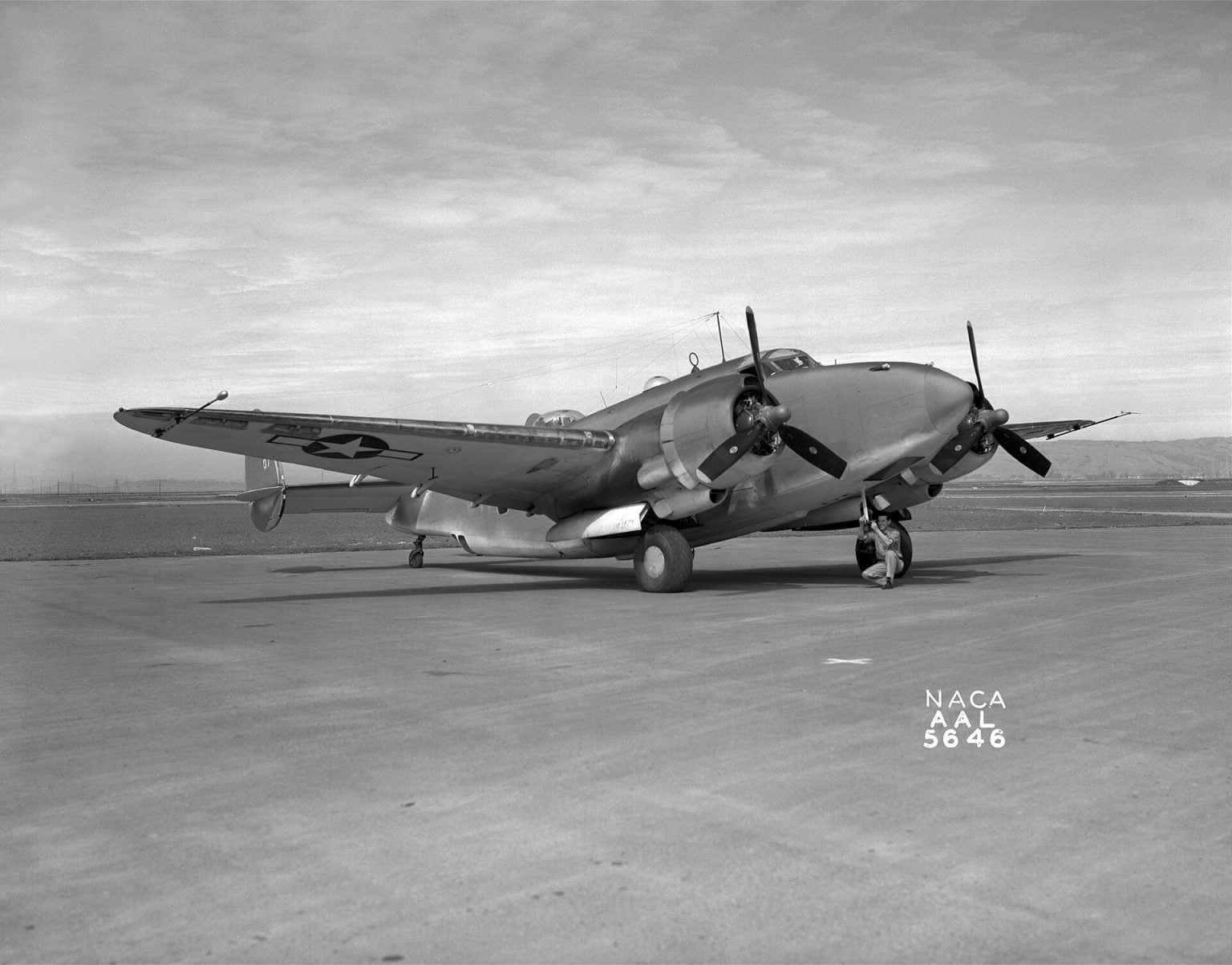
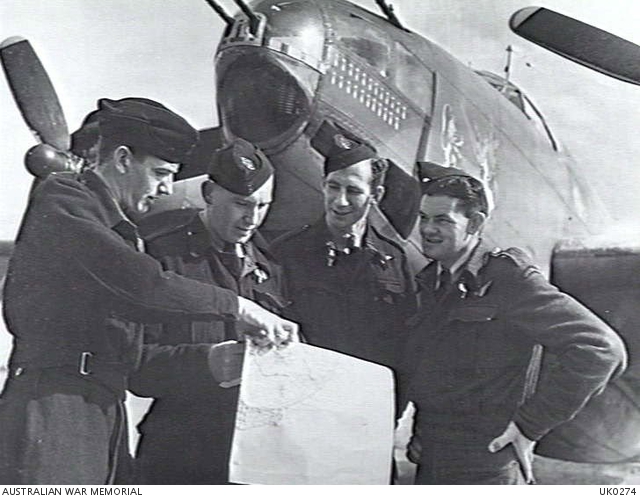
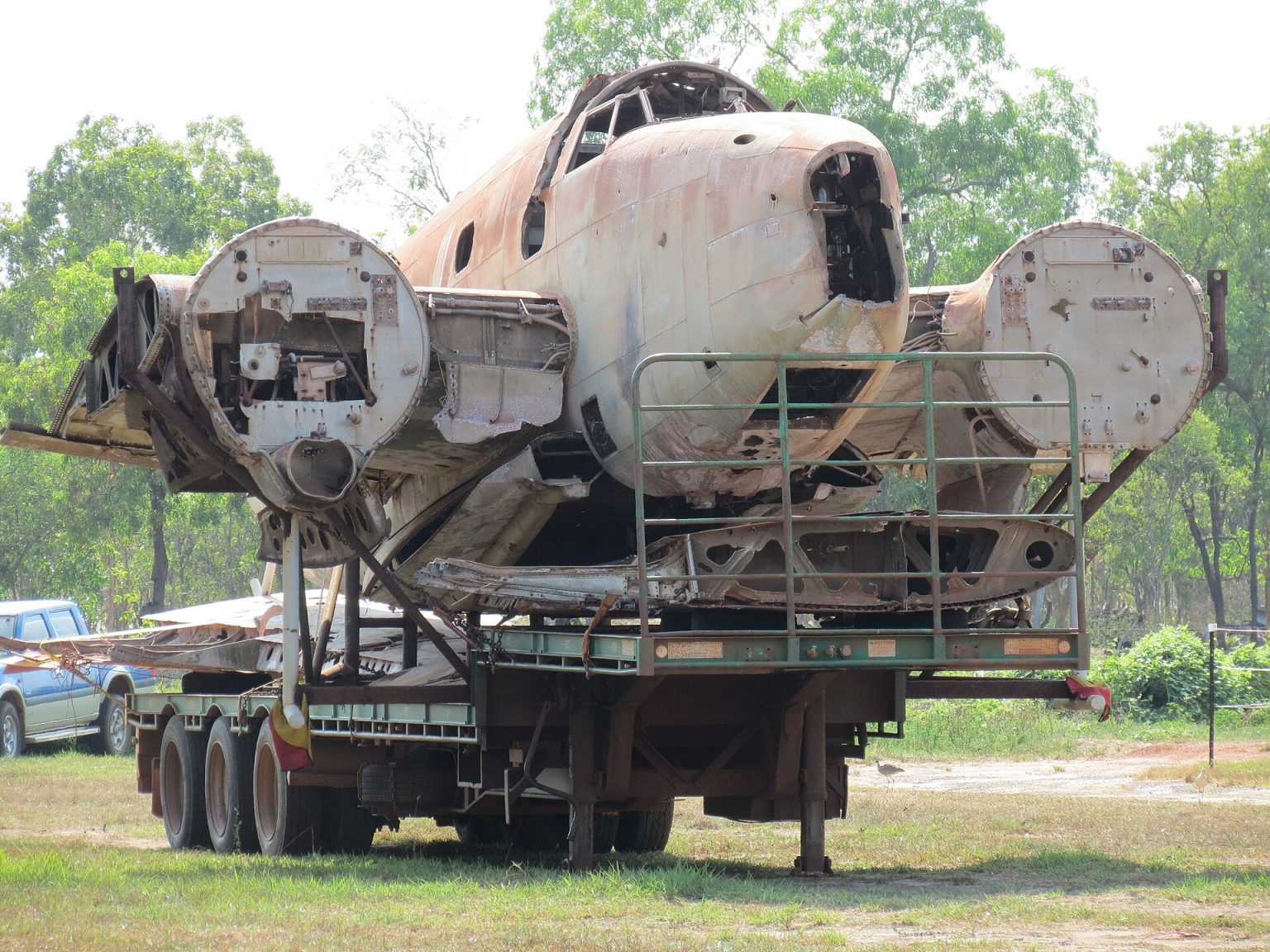
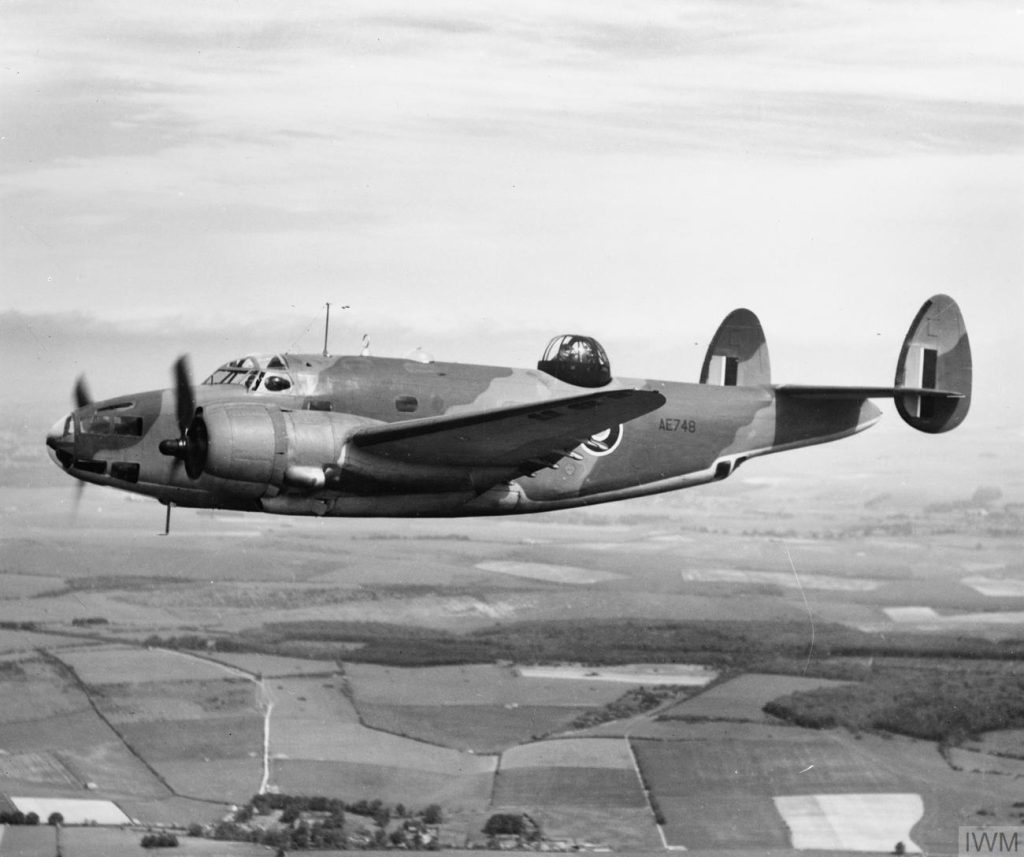
Wartime and museum photographs of the Ventura, PV-1 and PV-2 Harpoon, each credited to its source and licence. Click any photo to enlarge.
On Film
The Lockheed Ventura on video: a documentary history
A documentary on the Ventura and its PV-2 Harpoon development — the bomber that failed and the patrol plane that succeeded.
“Lockheed Ventura & Harpoon — the patrol plane” by The Grand Archive (approx. 38,000 views at time of writing; running time ~25 minutes). A dedicated documentary covering the Ventura and Harpoon variants.
Operations Overview
Where the Lockheed Ventura flew: an operator map
Built in the United States, flown by the RAF and the Commonwealth and by the US Navy across the Atlantic, the Pacific and the Aleutians, with post-war service in Brazil, Portugal and beyond. Toggle the categories; hover or tap a country for detail. Figures are approximate and hedged.
Categories: Design & Manufacture (United States) · RAF & Commonwealth Operators (UK, Canada, Australia, New Zealand, South Africa) · Other Allied Operators (Brazil, Portugal) · Surviving Airframe (several survive, including airworthy PV-2 Harpoons in the USA). Operator list is approximate and hedged.
Service Record
The Ventura’s record: from bomber failure to patrol success
The Ventura’s story is written in the contrast between its costly daylight-bomber career and its long, effective service as an ocean-patrol aircraft.
Questions & Answers
Lockheed Ventura: your questions answered
Can I fly in a Lockheed Ventura?
No — there is no bookable Ventura or PV-2 Harpoon flight experience, and MiGFlug does not offer one. A number of the type survive in museums, and a small handful of PV-2 Harpoons remain airworthy in private and warbird hands, but these are rare, precious aircraft, not ride platforms. If what you actually want is the real thing — strapping into a genuine military aircraft and flying it — you very much can do that today in other types. MiGFlug arranges flights in real fighter jets and warbirds around the world. Start here: migflug.com/flights-prices.
Why was the Ventura called the “Flying Pig”?
RAF crews gave it the nickname because of its poor showing as a daylight bomber. Big, heavy and not manoeuvrable enough to evade modern fighters, the Ventura suffered heavy losses on daylight raids over occupied Europe, and unimpressed aircrew dubbed it the “Flying Pig”. The name reflected a genuine failure in the bomber role — one the aircraft later escaped by switching to maritime patrol.
What happened on the Amsterdam raid of 3 May 1943?
Twelve Venturas of No. 487 Squadron RNZAF attacked a power station in Amsterdam in daylight and met overwhelming German fighter opposition. Eleven of the twelve were shot down; only one, damaged, returned. The formation leader, Squadron Leader Leonard Trent, pressed on against hopeless odds, was shot down and captured, and was awarded the Victoria Cross after the war once returning survivors could testify to his conduct. It is one of the most famous single-operation losses in RAF history.
What is the difference between the Ventura, the PV-1 and the PV-2 Harpoon?
They are stages of the same design. “Ventura” was the original RAF bomber (Marks I and II); the US Army briefly used versions as the B-34 and B-37. The PV-1 Ventura was the US Navy’s dedicated patrol-bomber version. The PV-2 Harpoon was a substantially improved US Navy development with a larger wing, more fuel and range, and heavier armament — the most capable and best-remembered member of the family.
What was the Ventura’s real success?
Maritime patrol and anti-submarine warfare. Once withdrawn from daylight bombing, the Ventura proved an excellent long-range ocean-patrol aircraft, with the range, endurance, load and speed the role demanded. RAF Coastal Command, the Commonwealth air forces, the US Navy and others used it to watch the sea lanes, hunt U-boats and patrol the Pacific and Aleutians — the work in which the type genuinely excelled.
Who operated the Lockheed Ventura?
Many Allied air forces. The US Navy (PV-1 and PV-2) and USAAF flew it, as did the RAF and the Royal Canadian, Australian, New Zealand and South African air forces. Brazil operated it on South Atlantic anti-submarine patrol, and other nations including the Netherlands, France and Portugal flew it too — Portugal’s Harpoons serving into the 1970s.
How many Venturas were built, and do any survive?
Around three thousand or more were built across all variants (figures vary between sources). A reasonable number survive, helped by long post-war and civilian use — several PV-2 Harpoons are preserved in museums and a small number remain airworthy, making the Harpoon one of the more accessible surviving members of the family.
Was the Lockheed Ventura a good aircraft?
It depends on the role. As a daylight bomber it was a failure — too vulnerable, as the “Flying Pig” nickname and the Amsterdam raid made brutally clear. As a maritime patrol and anti-submarine aircraft it was very good, and the PV-2 Harpoon was a genuinely capable long-range patrol bomber. The Ventura is the classic case of an aircraft that was only as good as the match between it and its mission.
Fly For Real
You can’t book a Lockheed Ventura — but these, you can
Only a few Venturas and Harpoons survive, and none is a bookable ride. The urge behind it — to strap into a real military aircraft and actually fly — is very much still bookable. MiGFlug puts you in genuine fighters and warbirds around the world.
Fighter Jet Flights
Take the controls of a real ex-military jet with an experienced pilot.
Warbird experiences
Fly in a genuine piston-engined warbird from the Ventura’s era.
All flights are operated by MiGFlug’s vetted partners with professional pilots. Browse every option and current pricing at migflug.com/flights-prices. MiGFlug does not operate Lockheed Ventura flights — no bookable example exists.
Related Aircraft
If the Lockheed Ventura interests you, explore these
Sources & Further Reading
Where this Lockheed Ventura history comes from
Note on figures: dimensions, performance and production numbers for the Ventura vary between sources and by variant, and are hedged here as approximate. Cost fields are listed as not reliably recorded because trustworthy wartime Lend-Lease cost data is not available. Several Venturas and PV-2 Harpoons survive in museums, and a small number of Harpoons remain airworthy.