
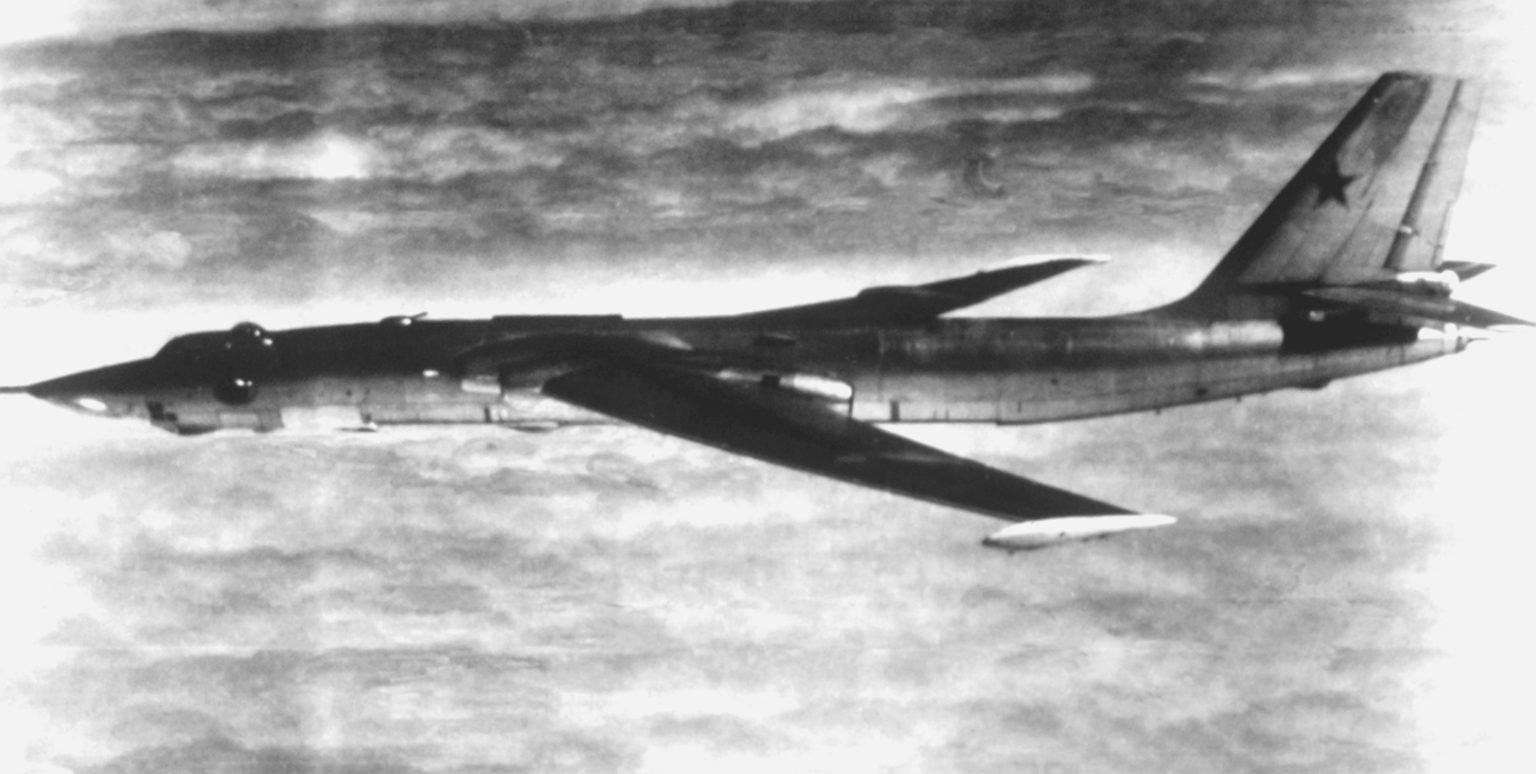
Myasishchev M-4 / 3M
“Bison”
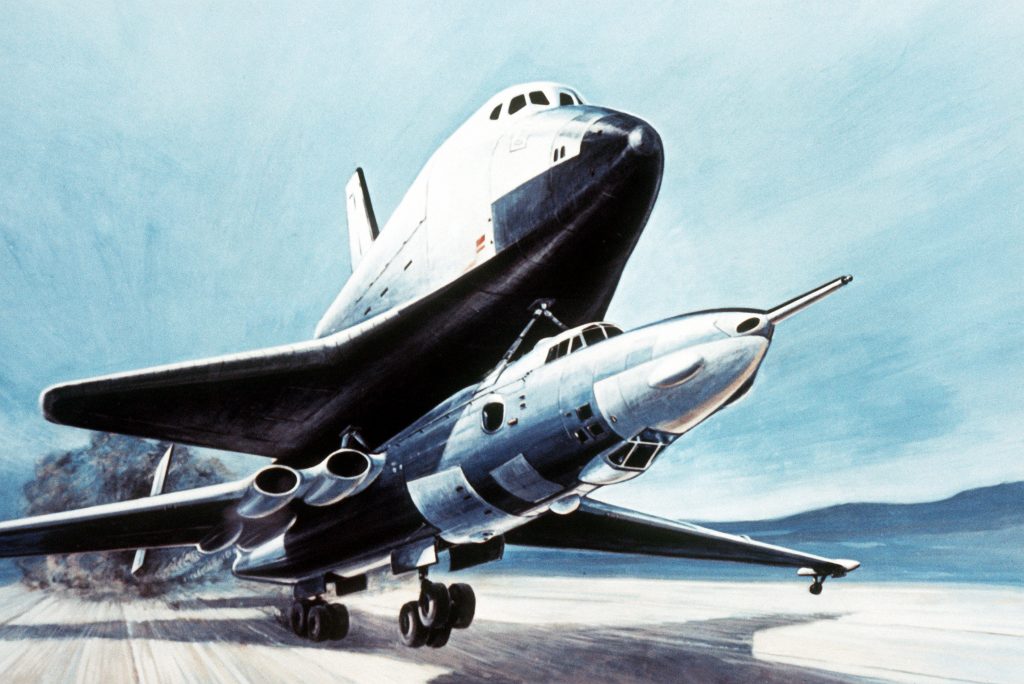
The Soviet Union’s first four-jet strategic bomber — built to reach the United States, yet it fell short of true intercontinental range. Most were rebuilt as aerial tankers, and a handful were later modified to carry the Buran space shuttle on their backs.
The bomber built to reach America — that couldn’t quite
In the early 1950s the Soviet Union had no aircraft able to strike the continental United States and return. The task fell to a design bureau newly re-formed under Vladimir Myasishchev, which was ordered to build a four-jet strategic bomber on a famously short timescale. The prototype, known in the West as the M-4 “Bison,” first flew on 20 January 1953 and entered service in 1955 — making it the Soviet Union’s first four-engined jet strategic bomber, roughly contemporary with America’s Boeing B-52.
Its central problem became apparent almost at once. The M-4 was designed for an intercontinental radius of action, but in practice its range fell well short of what was needed to reach American targets and come home — figures commonly cited put its range at around 8,000–9,500 km against a requirement of 11,000–12,000 km. As a pure nuclear bomber aimed at the United States it was, by most accounts, a strategic disappointment. The improved 3M variant (Soviet designation Molot, “Hammer”), re-engined and fitted for aerial refuelling, closed much of the gap but never fully solved it.
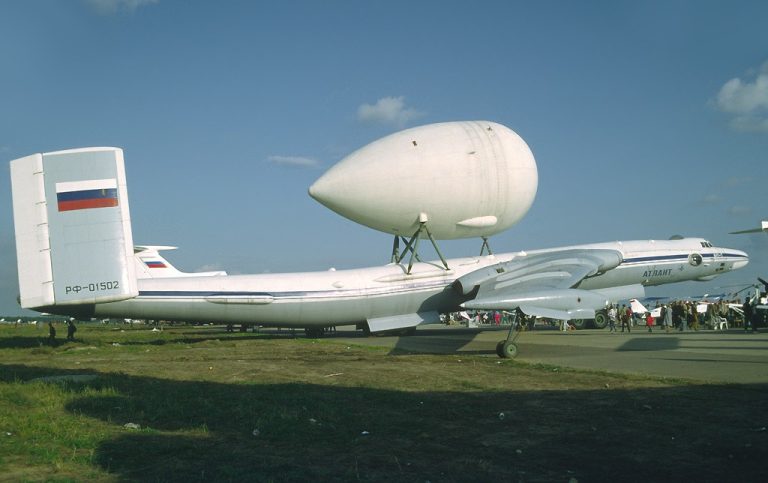
So the type found its lasting value elsewhere. Large numbers were converted into aerial tankers to refuel other aircraft, including other Bisons, and into reconnaissance platforms. The design also earned a strange place in aviation history twice over: in 1955 a flypast of Bisons helped convince Western observers that the USSR was mass-producing long-range bombers — feeding the “bomber gap” scare — and decades later a small number of rebuilt airframes, the VM-T Atlant, ferried Buran space-shuttle and Energia rocket components across the Soviet Union on their backs.
01The Myasishchev M-4 Bison and the “bomber gap”: how a 1955 flypast fooled the West
On 3 July 1955, at the Soviet Aviation Day display at Tushino near Moscow, Western military attachés watched a stream of M-4 Bisons pass overhead and concluded the USSR was already fielding long-range jet bombers in quantity. By the most widely repeated account, the impression of numbers was exaggerated: a group of aircraft flew past, circled out of sight, and passed over again, so the same machines were counted more than once. Whether this was a deliberate deception or a misreading by observers is still debated, but the effect was real.
Combined with later intelligence, the display helped drive the American perception of a “bomber gap” — a belief that the Soviet Union was out-producing the United States in strategic bombers. That perception influenced US defence spending and bomber procurement in the mid-1950s. In reality the Bison was built only in modest numbers — on the order of ninety aircraft — and the gap, as later reconnaissance including U-2 flights showed, did not exist in the form feared.
What makes the M-4 Bison special
The USSR’s first four-jet strategic bomber
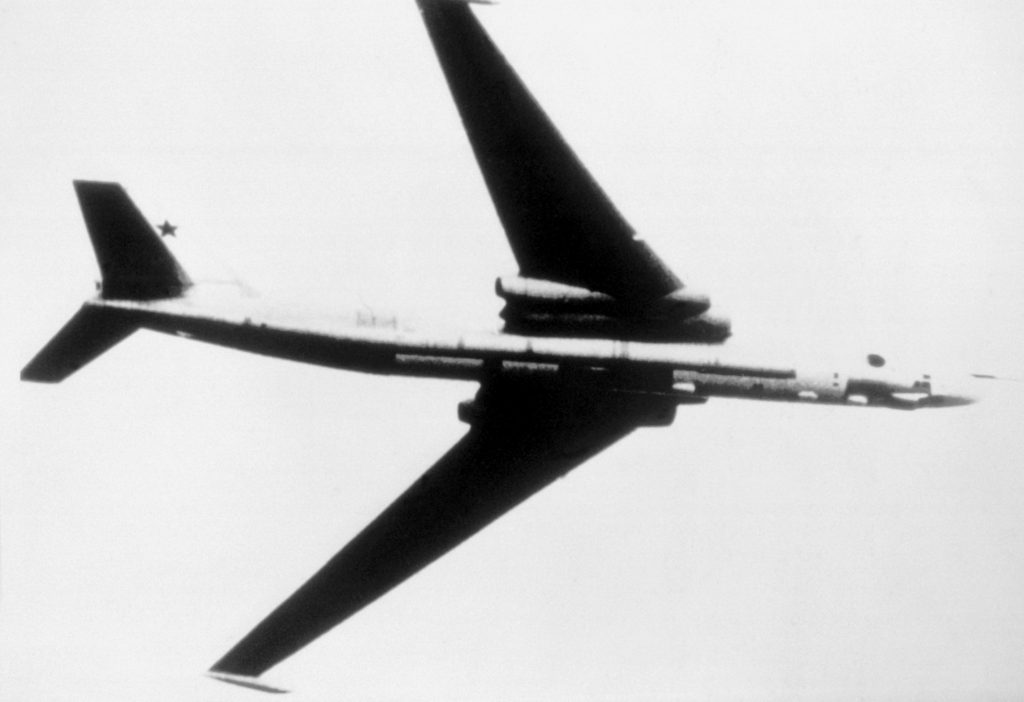
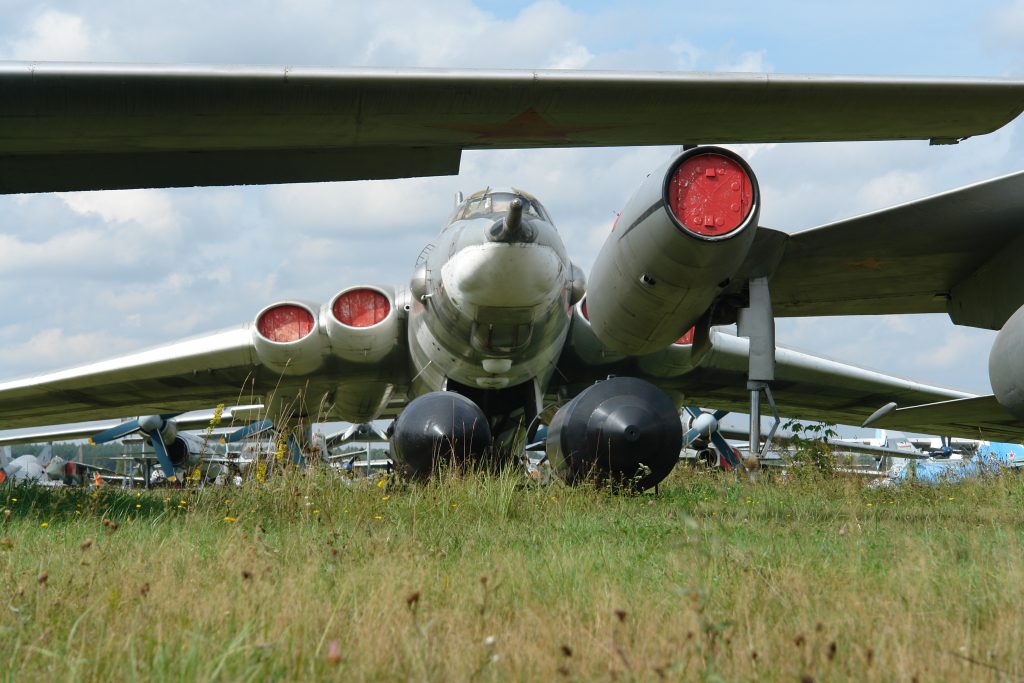
The M-4 paired a high, swept wing with four large turbojets buried in the wing roots, close to the fuselage — the same basic layout later seen on the British Victor and, in spirit, the American B-52. Early M-4s used four Mikulin AM-3 engines; the improved 3M switched to more efficient Dobrynin VD-7 units. It was the first Soviet aircraft to bring a genuine four-engined jet bomber into service.
Bicycle landing gear
To keep the thin, fuel-filled wing clear of heavy undercarriage, Myasishchev used a bicycle (tandem) main gear — two main units in line under the fuselage, with small outrigger wheels near the wingtips for balance. The forward truck was designed to help the aircraft rotate for take-off. It was an elegant solution to a hard packaging problem, but it demanded long, wide runways.
The range shortfall — and the refuelling fix
The Bison never reached the range its strategic mission required. The response was an aerial-refuelling programme: bombers were fitted to take on fuel in flight, and many airframes were rebuilt as dedicated tankers with identical performance so they could refuel one another. This tanker role, more than the bomber role, is what kept the type in service for four decades.
02The M-4 Bison’s range problem: why it never became a true intercontinental bomber
The requirement was blunt: reach the United States, deliver a nuclear weapon, and return — an unrefuelled radius that implied a total range of roughly 11,000–12,000 km. The M-4’s thirsty early engines and aerodynamics fell short, with cited ranges commonly around 8,000–9,500 km. That was enough to threaten parts of the globe but not to carry out the round-trip mission against American targets it had been designed for. The re-engined 3M improved fuel efficiency and, with in-flight refuelling, extended reach considerably — but the type is still generally regarded as having under-delivered on its original intercontinental promise, which is precisely why so many were converted to other roles.
03The Myasishchev VM-T Atlant: how a failed bomber ended up carrying the Buran space shuttle
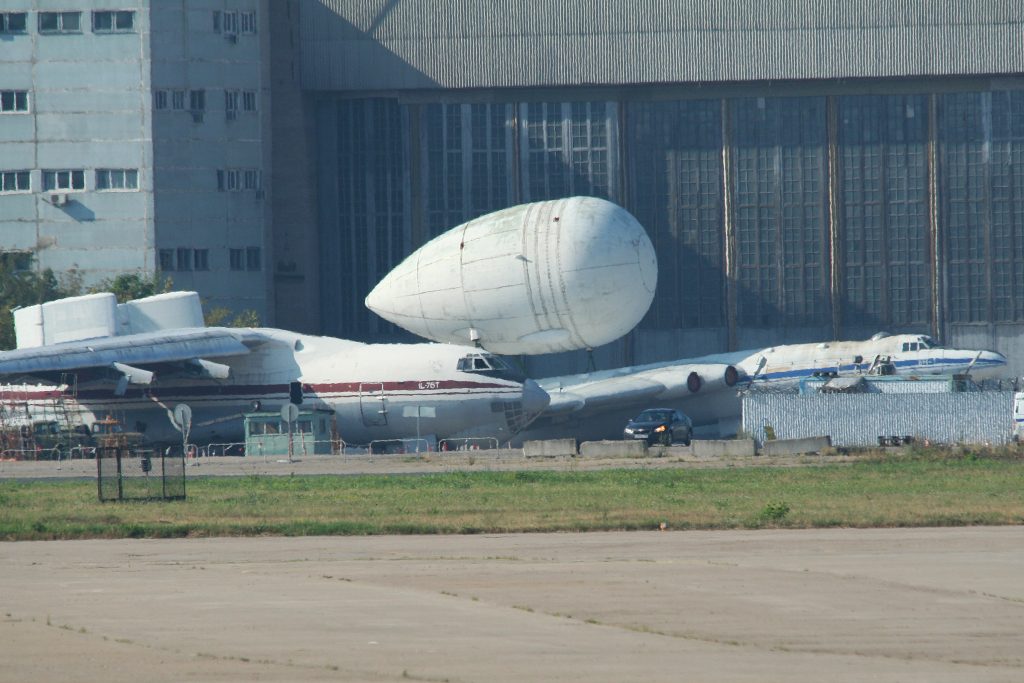
In the late 1970s the Soviet space programme needed a way to move oversized Energia rocket stages and the Buran orbiter from their factories to the Baikonur Cosmodrome. The answer was to rebuild a small number of surplus 3M airframes into the VM-T Atlant, a heavy-lift transport that carried its cargo on top of the fuselage on struts. The conversion added a distinctive twin tail to cope with the turbulence of the external load and extended the rear fuselage. Sources differ on the exact count — commonly given as two operational aircraft (a third airframe was also modified) — and together they are reported to have flown more than 150 delivery flights, carrying loads including the roughly 45-tonne Buran orbiter with its fin removed. It was an improbable second career for a Cold War bomber.
Myasishchev 3M Bison full specifications
Figures below are for the improved 3M; the earlier M-4 was slightly smaller and lighter. Many published values vary between sources and should be read as representative.
Baseline note: the figures below describe the 3MD of 1960 — the last, best-finished and shortest-lived bomber of the family, with four Dobrynin VD-7B in the wing roots, the lengthened pointed nose carrying the Rubin-1 radar and the in-flight refuelling probe, and six 23 mm AM-23 in three twin mountings. Deltas for the original M-4 of 1954 (Bison-A, Mikulin AM-3A engines), for the 3MS and 3MN production bombers of 1956–59 and for the VM-T Atlant transport conversion are given in grey. Four cautions apply before a single number below is quoted. First, the NATO names do not map onto the Soviet ones the way most English tables imply: M-4 is Bison-A, the 3M, 3MS and 3MN are all Bison-B, and only the 3MD is Bison-C, so a page that calls the whole 3M line Bison-C is wrong. Second, the two families are different aeroplanes, not marks of one: the 3M has a wing of greater span and area, a lighter structure, one crew station fewer in the redesigned nose and an empty weight some three tonnes below the M-4, so mixing M-4 and 3M rows in one column produces an aircraft that never existed. Third, published range figures for this type are a minefield — the same table will print a with-refuelling ferry figure beside an unrefuelled combat figure without saying which is which, and the whole point of the aeroplane turns on that distinction. Fourth, production totals genuinely disagree: 93, 116, 123 and 125 all appear in reputable sources, and the arithmetic that reconciles them is set out in the variants section below.
Dimensions & weights
- Crew
- 8 — two pilots side by side, a navigator/bombardier in the lower nose station, a radar navigator, a flight engineer, a radio operator and gunners for the dorsal and ventral mountings, plus a tail gunner in his own pressure cabin. Russian accounts of the 3M redesign say the crew was cut by one when the nose was rearranged, so seven also appears in the literature; eight is the figure in the 3MD data table
- Length
- 49.20 m (161 ft 5 in) for the 3MD, whose nose was lengthened and sharpened around the new radar. The 3M and 3MN measure 48.76 m (160 ft 0 in); the M-4 is 47.67 m (156 ft 4 in) without the refuelling probe it was later given
- Wingspan
- 53.14 m (174 ft 4 in) — the 3M wing, new from the root out, with no kink in the trailing edge and a new tip aerofoil. The M-4 spans 50.53 m (165 ft 9 in). For comparison a B-52G spans 56.39 m and a Tu-95 50.10 m
- Height
- 14.00 m (45 ft 11 in); 14.10 m (46 ft 3 in) on the M-4 and 3MN
- Wing area
- 370.00 m² (3,983 sq ft) on the 3MD, which gained area at unchanged span. The 3MN has 351.78 m² (3,786 sq ft), the M-4 326.35 m² (3,513 sq ft)
- Wing sweep
- 35° at quarter chord — the figure worked out at TsAGI for the MiG-15 and Tu-16 and then reused across the industry. Myasishchev pushed past it during design work because 35° alone would not buy the required speed, and paid for it in take-off and landing behaviour
- Wing structure
- Two-spar torsion box, deliberately flexible — the "safely deformable" wing pioneered on the B-47, adopted here over loud objections from TsAGI and VIAM specialists. The tips were calculated to oscillate through some 2 m in flight and were deflected 5 m from neutral on the static rig. The alloys were the high-strength V-65 and V-95 rather than D16T: stiffer at the same density, and worse in fatigue
- Empty weight
- 76,800 kg (169,300 lb) for the 3MD; 75,740 kg (167,000 lb) for the 3MN and 79,700 kg (175,700 lb) for the M-4. The M-4 was designed to come out at 70 tonnes and did not; on the second prototype the bureau paid a bounty of 50 roubles for every kilogramme removed
- Normal take-off weight
- 145,600 kg (321,000 lb); 140,000 kg (308,600 lb) on the 3MN and 138,500 kg (305,300 lb) on the M-4
- Maximum take-off weight
- 193,000 kg (425,500 lb) for all 3M variants; 181,500 kg (400,100 lb) for the M-4, which was at its limit for both thrust and structure at that figure. The VM-T conversion was cleared to 210,000 kg (463,000 lb)
- Internal fuel
- ~123,600 litres (~27,190 imp gal) in bladder cells, most English sources saying eighteen of them. Russian structural descriptions of the M-4 count fourteen bags in the centre section and undercarriage bays plus six in the rear fuselage, with provision for two more in the bomb bay; the 3M added two 6,500-litre (1,430 imp gal) underwing tanks. The tilde is honest: no two accounts agree on the tankage
- Bomb load
- 9,000 kg normal, ~18,000 kg maximum (19,840 lb / ~39,680 lb) on the 3M and 3MD. The M-4 was rated at 24,000 kg (52,900 lb), twice the Tu-95 figure; the ceiling came down when the 6-tonne bombs it had been sized around were withdrawn from the inventory
- Wing loading
- 394 kg/m² at normal weight, 522 kg/m² at maximum (80.6 and 106.8 lb/sq ft) for the 3MD. The M-4 works out at 424 and 556 kg/m² on the smaller wing, which is a large part of why it was the harder aeroplane to fly
Performance
- Maximum speed
- 970 km/h (603 mph, 524 kn) at altitude for the 3MD — the fastest of the family. The 3MN is quoted at 925 km/h (575 mph, 499 kn) and the M-4 at 947 km/h (588 mph, 511 kn); state trials on the first prototype recorded 950 km/h (590 mph) at 6,700 m
- Maximum speed at sea level
- 600 km/h (373 mph, 324 kn) for the 3M in the comparative table published by the VM-T design team. Loaded, the Atlant was restricted to 450 km/h (280 mph) at low level
- Service ceiling
- 12,000 m (39,400 ft) for the 3MD; 12,500 m (41,000 ft) for the 3MN, 11,000 m (36,100 ft) for the M-4 in service, although a lightly loaded M-4 prototype reached 12,300 m (40,350 ft) on trials. The original specification asked for cruise at 12,000 to 13,000 m, on the reasoning that fighters of 1951 could not follow
- Operating altitude
- 8,000 to 11,000 m (26,250 to 36,100 ft) — the height band in which squadron and regiment formations actually flew their routes. From the late 1960s crews also trained for low and very low level penetration, which the flexible Myasishchev wing tolerated better than the Tu-95 airframe did
- Range, unrefuelled
- 10,950 km (6,800 miles) for the 3MD; 9,400 km (5,840 miles) for the 3MS, roughly 15 per cent more for the 3MN on its thriftier VD-7B, and 8,100 km (5,030 miles) for the M-4 in service. The M-4 was required to fly 12,000 km (7,460 miles) and managed 9,500 km (5,900 miles) on state trials. That gap is the whole story of this aeroplane
- Range with one refuelling
- 13,600 km (8,450 miles) for the 3MD. The ferry figure of 15,400 km (9,570 miles) printed for the 3MN in Russian tables is a refuelled number; quoting it beside an unrefuelled American one is the commonest error made about the type
- Combat radius
- ~5,000 to 5,600 km (~3,100 to 3,480 miles) on internal fuel, depending on mark, profile and load. From Engels this covered central and northern Canada and no more; reaching targets in the United States meant staging through the forward fields at Šiauliai and Ukrainka, and reaching the southern American nuclear sites meant refuelling both ways or not coming back
- Endurance
- 17 h 25 min with one refuelling — the full-radius sortie flown by Major Bulavin’s crew in June 1960. In summer 1965 Lieutenant-Colonel Bulavin flew over 21 hours with two refuellings. A test flight on 8 February 1957 covered 14,500 km (9,010 miles) in 17 hours with two refuellings and satisfied the customer that the system worked
- Take-off and landing run
- 1,470 m and 2,610 m (4,820 ft and 8,560 ft) for the M-4, the landing figure with the three-canopy brake parachute streamed. The heavier 3M held the same take-off run through better aerodynamics and more thrust
- Lift-to-drag ratio
- 18.5 for the 3M — a genuine world record for a heavy aircraft when it was measured, against 17.45 on the M-4, 17.25 for the B-47, 17.0 for the Vulcan and about 14 for the Tu-16. Nothing beat 19 until the variable-geometry B-1B and Tu-160. The aerodynamics were never the problem; the engines were
- Records
- 1959 payload-to-height marks — a 3M, entered under the cover designation 201M, lifted 10,000 kg to 15,317 m (50,250 ft) and 55,220 kg (121,740 lb) to 2,000 m (6,560 ft), among other class records. The Soviet Union used the record book to advertise an aircraft it could not otherwise show
- Load factor
- 2.0 maximum operational on the M-4. Myasishchev argued the standing heavy-aircraft strength norms of 2.5 manoeuvring and 3.0 in turbulence were excessive and won the argument, which is how the structure came out light enough to fly at all
Propulsion & systems
- Engines
- 4 × Dobrynin VD-7B turbojets, 9,500 kgf (93.2 kN, 20,940 lbf) each on the 3MN and 3MD. The full-rated VD-7 gave over 11,000 kgf (107.9 kN), but dangerous flutter of the first-stage compressor blades at take-off power was cured the blunt way, by limiting rpm and throwing away 2,000 kgf
- Alternative engines
- 4 × RD-3M-500A, 9,500 kgf on the 3MS — the Mikulin AM-3M renamed after Mikulin was removed from his post. The M-4 flew on AM-3A of 8,750 kgf (85.8 kN, 19,290 lbf), later RD-3M-500. About half the 3M airframes got the new engine and half the old one, purely because Ufa could not build VD-7Bs fast enough
- Fuel consumption
- 0.73 to 0.8 kg/kgf·h in cruise on the VD-7 against as much as 1.03 on the AM-3. That single figure is why the 3M existed: the airframe was already efficient, and the AM-3’s thirst was what kept the M-4 out of the United States
- Engine life
- 200 hours on production VD-7B — six and a half times less than the RD-3M-500, with worse reliability and no emergency rating. Ground crews changed engines, in the phrase used at Engels, like gloves. A number of 3MNs were re-engined with RD-3M-500 during the 1960s, trading range for the ability to fly at all
- Engine installation
- Buried in thickened wing roots, hard against the fuselage — no nacelles and no pylons, so the wing stayed aerodynamically clean and the jet efflux acted as a fillet over the wing-body junction. The price was that the wing carried no relieving weight outboard and that an engine bay fire was a fire in the wing root
- Undercarriage
- Bicycle, with wingtip outriggers — two four-wheel bogies on the fuselage centreline fore and aft of the bomb bay, plus small free-castoring twin-wheel supports at the wingtips. The leading pair of wheels on the forward bogie steered for taxiing; the rear bogie carried the brakes and an anti-skid unit no Western aircraft of the day had. All units retracted forward. It saved a great deal of weight and kept the wing clean, and it made the aeroplane very hard to land and effectively impossible to modify: the bomb bay could not be enlarged and the ground clearance ruled out semi-recessed missiles, which is why the Tsar Bomba was dropped by a Tu-95 and not by an M-4
- Rotation mechanism
- Hydraulic "rearing" jack in the forward bogie — a bicycle aircraft cannot rotate, so as lift built up a ram extended and tilted the forward bogie until only its rear wheel pair touched, pitching the nose up and flying the aeroplane off with almost no input from the pilot. Crews from Tu-4s hated it and pulled back anyway, which killed the crew of Pronin and Kokkinaki when the aircraft pitched up past the stall on take-off; elevator travel was afterwards more than halved and a graduated scale was painted in the cockpit so the captain could set the exact deflection for weight, wind and temperature
- Flight controls
- Irreversible hydraulic boosters with spring feel — a first at this scale in the Soviet Union. The main control system alone weighed about 1,500 kg and needed new shops, new rigs and new standards of cleanliness at Plant No. 23. It remained the least reliable system on the aircraft, ahead even of the electronics: booster dropouts from sudden pressure loss, with warnings that did not always come on time
- Crew escape
- Ejection seats for every crew member, firing downwards — designed in-house by OKB-23, and useless below a few hundred metres, which is where most of the accidents happened
- Refuelling system
- Konus probe and drogue, by S. M. Alekseyev’s OKB-918 — a hose and heavy drogue trailed from the tanker, the receiver flying the "active" role and shooting a telescopic probe into it from about a metre. The complete refuelling unit (KAZ) sat in the bomb bay of the tanker with the transfer tanks. A converted Bison could pass up to 40,000 kg (88,180 lb) of fuel at 2,250 litres a minute, which made it the most capable tanker in the world until the American KC-10
- Radar and avionics
- RBP-4 bombing radar on early M-4, Rubin-1 on the 3MD — with the NBA navigation and bombing computer, later the OPB-112 optical sight, the RSBN-2S Svod short-range navigation set, the DISS-1 Doppler drift and groundspeed meter and the RSDN-3S long-range chain. The early RBP-4 failed constantly and optical bombing accuracy was several times worse than from a Tu-4
- Electronic warfare
- SPS-2 jammers, later Azaliya, plus chaff — the fleet’s weakest area. When OKB-23 was dissolved in 1960 there was no design authority left to fit new countermeasures, so the aircraft went on carrying the obsolete SPS-2, which did not cover much of the centimetric band, for another decade
04The M-4 Bison’s operating costs: why no reliable price exists
The M-4 and 3M were Soviet state products, built at Moscow’s Plant 23 and never sold on an open market, so no meaningful flyaway unit price or cost-per-flight-hour figure exists in the public record. The type’s real cost story is one of value rather than dollars: a bomber that did not fully meet its strategic mission but was cheap to keep useful once rebuilt as a tanker, extending the service life of a fleet the Soviet air forces had already paid for. Any precise dollar figure attached to the Bison should be treated as guesswork.
Armament & payload
The M-4 could lift twice the bomb load of a Tu-95, and the only weapon that ever mattered was one hydrogen bomb it could not deliver and come home
On paper the offensive fit was the best in Soviet service: a 24-tonne maximum load on the M-4, a bomb bay long enough for stores of 500 to 9,000 kg, naval mines, and a defensive battery of six 23 mm cannon in three twin mountings covering the whole sphere — where the Tu-95 had a blind cone below the nose and the B-52 had nothing but a tail turret. The primary weapon was the thermonuclear izdeliye 37D of about three megatons, with the earlier RDS-series fission bombs of 20 to 60 kilotonnes as the alternative. None of it was ever used. Neither the M-4 nor the 3M dropped a weapon in anger, and the only nuclear releases were test drops over Novaya Zemlya.
The gun fit deserves its reputation and its scepticism in equal measure. Three remotely aimed twin mountings with a spherical field of fire was genuinely advanced for 1954, and the ammunition supply — 1,100 rounds each for the dorsal and ventral mountings and 2,000 for the tail — was generous. But the whole scheme was sized against interceptors carrying half-inch guns and unguided rockets with a firing range of about a kilometre. By the time the fleet was operational it was facing F-102s and F-104s, Bomarc and Nike, and the calculation had already been lost. The Soviet answer everywhere else was to hang a stand-off missile on the bomber; the Bison never got one, and that failure decided how the political and military leadership thought about the aircraft for the rest of its life.
What the airframe did carry, in the end, was fuel for other people’s aeroplanes. From 1958 the surviving M-4s became M-4-2 tankers, and through the 1970s and 1980s most of the 3M fleet followed as 3MS-2 and 3MN-2. Fits varied sharply by mark and by role: early M-4s are credited in some sources with as many as nine NR-23 in a larger set of mountings, later aircraft standardised on six AM-23 in three; and every tanker conversion had its guns, sights and bombing gear stripped out entirely, so a photograph of a Bison proves very little about what that particular airframe was carrying.
Gun
- 6 × 23 mm Afanasyev-Makarov AM-23, 1,250 rounds a minute each, in three twin mountings: DB-33 dorsal, DB-34 ventral and a tail mounting
- Dorsal and ventral mountings aimed remotely from sighting stations in the forward pressure cabin; the tail mounting worked by its own gunner in a separate pressure cabin at the back of the aeroplane
- Ammunition 1,100 rounds for each of the dorsal and ventral mountings and 2,000 for the tail in Russian sources; English tables give a different split of 400 rounds per gun in the tail and 300 in the barbettes, and the discrepancy is unresolved
- Early M-4s are quoted with 23 mm NR-23 rather than AM-23, and with more mountings than the three later standardised; two of the original barbettes were deleted to save weight
- From the late 1960s the belts included special rounds intended to jam the radar and infrared seekers of surface-to-air and air-to-air missiles — a decoy dispenser dressed as a cannon shell
Air-to-air
- None. No Soviet bomber of this generation carried a defensive missile, and no variant of the M-4 or 3M was ever fitted with one
- The cannon were the air-to-air armament, and the tactical doctrine was mutual support: squadron and regiment formations were to beat off interceptors by concentrating fire, with routes planned around known air-defence fields
- The assumption behind that doctrine — interceptors with machine guns and rockets closing to about 1,000 m — was obsolete within five years of the aircraft entering service
- The one countermeasure that did work was formation geometry: crews learned to fly pairs and flights so tightly that a ground radar returned a single blip for the whole group
Air-to-surface guided
- None in service, on any variant, in forty years. This is the central fact about the type and the reason it was written off politically while the Tu-95 was rebuilt as a missile carrier
- The reason was structural, not doctrinal: bicycle undercarriage gave the aircraft very little ground clearance, so a large missile could not be carried semi-recessed in the bomb bay the way the Tu-95K carried the Kh-20. The "MK" project of the mid-1950s got as far as wooden mock-ups before the Tu-95K flew and made it pointless
- The 3MD was built as the carrier aircraft for two K-14 missiles on pylons under the wing roots — and the K-14 was cancelled, leaving ten new bombers without the weapon that justified them
- 3M-5, converted from a 3MN in 1973, carried the KSR-5 (280 km range, about Mach 3, high-explosive shaped-charge or nuclear warhead) and passed its state trials in 1975. No fleet conversion followed; the air force had lost interest by then
- The UAB-2000F guided bomb appears in the original weapons nomenclature for the M-4, and there is no record of it being used operationally
Bombs
- Primary weapon: the thermonuclear izdeliye 37D of about 3 Mt, capable of destroying a city or an industrial district, carried on the single-weapon strategic sortie
- Secondary nuclear stores: RDS-1, RDS-1i, RDS-1m, RDS-3, RDS-4 and RDS-5 of 20 to 60 kt. Only the RDS-4 existed in dozens; the rest were built in handfuls, which says more about the real state of the deterrent in 1955 than any bomber count does
- Conventional: free-fall bombs from 500 kg to 9,000 kg, including heavy blast and armour-piercing weapons of 3,000 to 9,000 kg meant for warships. A late conventional fit was 28 × FAB-500M54 (13,280 kg) or 52 × FAB-250M54 (12,640 kg)
- Maximum load 24,000 kg on the M-4, reduced to about 18,000 kg on the 3M and 3MD once the six-tonne weapons were withdrawn from the inventory
- The one nuclear release from a 3M was a bomb of the ten-megatonne class over Novaya Zemlya in 1962, after crews had been sent to the range in 1961 to watch a 250 kt drop from a Tu-16 and feel what the real thing was like
Rockets
- None, on any variant, at any time. The M-4 and 3M carried no unguided rockets, offensive or defensive
- This was deliberate rather than an oversight: the aeroplane was designed as a high-altitude nuclear bomber with an internal bay, and unguided rockets are a weapon for an aircraft that can see and dive at its target
- When the fleet did train for tactical work in the Vietnam years, the ground-attack weapon practised was the cannon, fired at surface targets, together with bombing from low and very low level
- Even the tankers kept a residual bombing capability of a sort — two bombs of up to 500 kg could be hung in the bay — but nothing rocket-armed
Pods & other stores
- Naval mines, treated as a major role and exercised constantly; mining was regarded as a defensive weapon to be used before and even outside open war. Torpedoes were studied on paper only, their run being too short to be worth the risk
- Fuel: two auxiliary tanks in the bomb bay, and on the 3M two underwing tanks of 6,500 litres each on Der5-48 locks
- The KAZ hose-drum refuelling unit and its transfer tanks, filling the bomb bay of every M-4-2, 3MS-2 and 3MN-2 tanker — the store that defined the fleet for its last thirty years
- Reconnaissance cameras and a photoflash bay in the rear fuselage, jammers, chaff dispensers, a life-raft container and a three-canopy brake parachute
- On the VM-T, the fittings above the fuselage for four outsize loads: the Buran airframe, the Energia hydrogen tank with its fairings, the oxygen tank with instrument and engine bays, and the returning fairing container
Three typical loadouts
- Strategic nuclear sortie, 3MD, early 1960s
- One izdeliye 37D of about 3 Mt in the bay, full internal fuel, bay sealed and stamped by the armourers before the crew arrived, a probe fitted for one refuelling outbound. Route planned around air-defence fields at 8,000 to 11,000 m, formation broken up over the target area, return by the shortest track on the assumption that the defences would already be in ruins. Where the target lay beyond radius — and many of the interesting ones did — the plan was to fly on, ditch the crew into a designated stretch of ocean and have a submarine collect them.
- Maritime reconnaissance and strike, 3M, mid-1960s
- No nuclear weapon; cameras, jammers and full guns, sixteen hours airborne over the Atlantic hunting American carrier groups, with one or two refuellings from an M-4-2. The alternative anti-ship fit was heavy free-fall bombs of 3,000 to 9,000 kg or a bay of naval mines. This is the work the fleet actually did once the Tu-95 and later the Tu-22M took over the strike role.
- Tanker sortie, 3MN-2, 1980s
- Guns, sights and bombing gear removed, bomb-bay doors largely riveted over with a small hatch for the hose, KAZ unit and transfer tanks in the bay, up to 40,000 kg of fuel to give away at 2,250 litres a minute. Customers by the mid-1980s numbered more than 500 aircraft: 3M bombers, every mark of Tu-95, Tu-22, the Tu-126 radar picket, Tu-142s, and later Su-24Ms and MiG-31s.
Sourcing caveat: weapon nomenclature for this aircraft comes almost entirely from Russian-language monograph literature — Moroz, Yakubovich, Rigmant, the Aviatsiya i Vremya and Aviakollektsiya articles — and from Gordon’s Red Star volume in English. Ammunition loads, the early NR-23 fit and the exact composition of the nuclear inventory carried by squadron aircraft differ between them; where they conflict, both figures are given above rather than an average. Nothing here is drawn from Cold War Western estimates, which were wrong about this aeroplane for over a decade.
Variants
Myasishchev built a bomber that could not reach America, and the Soviet Union spent the next forty years finding better uses for it
The line divides cleanly. Two prototypes and 32 production M-4s were built at Plant No. 23 at Fili in 1954–56, and they were not good enough: short of range, short of reliability, and grounded fleet-wide for more than a year in 1958 after a run of accidents. Then came 74 production 3Ms in 1956–59 with a new wing, a lighter structure and better engines, split between 3MS with old Mikulin engines and 3MN with new Dobrynin ones according to what Ufa could deliver, and finally ten 3MDs in 1960. Total output at Fili is given as 123 or 125 aircraft including prototypes; 116 entered service; the frequently quoted figure of 93 counts only part of the family and should be treated with care.
The record of that service is harsh and worth stating plainly. Of the 116 aircraft that reached the units, 27 were lost in accidents and crashes, with at least three more destroyed before delivery — a quarter of the whole fleet. Nearly 63 per cent of those losses were M-4s. The pitch-up on take-off, the narrow band of acceptable landing attitudes, the booster failures, the burst tyres and the fires were all real, and at Engels in the 1950s the wives of the aircrew walked onto the airfield and stopped flying. Yet crews who flew the 3M for years speak of it with affection as a light, sweet-handling aeroplane, and every one of those problems belonged to the first decade rather than the last.
The most famous thing about the family happened on the ground and in Washington. At the Soviet Aviation Day display at Tushino in July 1955, American observers counted what they took to be 28 Bisons in two groups. The standard account, and the one repeated in both Western and Russian sources, is that ten aircraft flew past, went out of sight, turned and came back with eight more, so that the same ten were counted twice. What is documented beyond argument is the count, the extrapolation from it — the CIA reckoning on some 800 Bisons by 1960, and NIE 11-4-57 predicting 150 to 250 by 1958 and over 600 by the mid-1960s — and the consequence, a "bomber gap" that helped buy thousands of B-47s and B-52s. What is not documented is a Soviet order to stage the deception: no published directive shows intent, and historians differ over whether Tushino was a trick or simply a rehearsed programme flown by everything available. U-2 flights from 1956 and satellite imagery from 1960 dismantled the estimate; the West went on mistaking the 3M for the M-4 until about 1961.
- "M" / izdeliye 25 and "DM" (1953–54, 2 built plus a static airframe)
- Prototypes. The first flew from Zhukovsky on 20 January 1953 under Fyodor Opadchy, without brake parachute, most of the armament or the rearing mechanism. The second, "DM", was a metre shorter, lighter and fully equipped, and flew in January 1954.
- M-4 (Bison-A, 1954–56, 32 built)
- The production bomber: four AM-3A, glazed nose bombardier station, 24-tonne maximum load. Shown over Red Square on May Day 1954 — a single prototype, not the eighteen aircraft some English sources claim — and first delivered to Engels on 28 February 1955.
- M-4-2 (M-4-II) (from 1958, most survivors)
- Tanker conversion with the Konus hose-drum unit and transfer tanks in the bomb bay. After the 1958 grounding it was decided to convert every M-4 still in the line; conversion was reversible in principle, and the tankers formed two squadrons nicknamed "Normandie" at Šiauliai and "Bats" at Ukrainka.
- 3M / 3MS-1 / 3MN-1 (Bison-B, 1956–59, 74 built)
- The real aeroplane: new wing of greater span and area, three tonnes lighter, radar moved to the nose, refuelling probe standard from the fifteenth batch. 3MS-1 with RD-3M-500A, 3MN-1 with de-rated VD-7B; the suffixes stand simply for "old engines" and "new engines". Prototype flown by Mark Gallai on 27 March 1956, a flight that very nearly ended in a stall on climb-out.
- 3MD (Bison-C, 1959–60, 9 or 10 built)
- The refined bomber: lengthened pointed nose with Rubin-1 radar and probe, modernised wing, smaller rudder, Svod-Vstrecha navigation, and pylons under the wing roots for two K-14 missiles that were never delivered. The best-looking of the family; the units called them "dandies" and used them as commanders’ aircraft.
- 3ME (1959–60, 1 converted)
- High-altitude missile carrier with revised avionics, autopilot AP-15 and Rubin-1, converted from a production 3M. Flown thirteen times, then destroyed on the ground at Zhukovsky when the M-50 prototype broke its chocks during an engine run and rammed it.
- 3MS-2 and 3MN-2 (1962–early 1980s, most of the 3M fleet)
- Tanker conversions of the 3MS and 3MN, done at repair plant No. 360 at Ryazan. Brezhnev promised Ford twenty conversions with the probes removed and the bomb bay riveted over; most conversions in fact retained the possibility of reversal. Up to 40,000 kg transferred per sortie, and until the American KC-10 appeared these were the most capable tankers in the world.
- 3MR / 3M-5 (1964 and 1973–75)
- 3MR, the long-range maritime reconnaissance version taken on by naval aviation in 1964. 3M-5, one aircraft rebuilt as a carrier for the KSR-5 missile with new sights, jammers and secure communications; state trials passed in 1975, no production ordered.
- VM-T Atlant (3M-T) (1979–1990, 2 flown from 3MN-2 tankers plus 1 static airframe)
- The outsize-cargo conversion for the Energia and Buran programme, when the An-124 was not yet ready and slinging loads under Mi-26s had proved lethal. The rear fuselage was replaced by a new section 4.7 m longer, angled upward to clear the runway; the swept fin gave way to twin endplate fins on a new straight tailplane of much greater area and dihedral, to survive the buffet that had troubled the Boeing 747 Shuttle carrier; the wing, cabin and bicycle main gear were untouched, the outriggers rebuilt for the higher loads. Four loads: the Buran airframe without its fin at 45.3 tonnes, the Energia hydrogen tank at 31.5 tonnes and 7.78 m in diameter on a fuselage 3.5 m across, the oxygen tank assembly, and a returning fairing container. Maximum lift-to-drag fell by 30 to 35 per cent. The name came from repainting the 3 of "3M-T" into a V after a security officer objected to a bomber designation on an Aeroflot-liveried aircraft.
- Projects (none built)
- M-29 / M-6P airliner for 80 to 200 passengers and its military transport version; 3M-A with two nuclear turbojets and a reactor in the bomb bay; 3M-M flying boat refuelled at sea by submarine, with a claimed 25,000 km on two refuellings; 3MP and 3M-T convertible tanker schemes; the "MK" Kh-20 carrier. All died with OKB-23, which was dissolved in 1960 and handed to Chelomei’s missile work.
Disposition: the type is extinct in service. The 3M bombers were cut up in the first half of the 1980s in a scrapping campaign presented as arms reduction, the surviving 3MDs being spared and mothballed near Engels; the tankers flew on past the end of the country that built them, and the last flight by any aircraft of the family was a 3MN-2 ferried from Ryazan to Engels by Major V. Gur on 21 March 1994. The remainder were broken up under post-Cold War arms-limitation agreements — the START-era cuts rather than a single treaty clause, and the mid-1980s cull that preceded them. Four original airframes are usually listed as surviving: 3MD "30 Red" (c/n 6302831) at the Central Air Force Museum, Monino; M-4 "60 Red" (c/n 0301804) at the Long Range Aviation museum at Dyagilevo, Ryazan; M-4 "63 Red" (c/n 5301518) at Ukrainka in Amur Oblast; and 3MS-2 "14 Red" (c/n 7300805) at Engels-2. A further airframe is now displayed at the UMMC museum complex at Verkhnyaya Pyshma in the Urals. Both flying VM-T Atlants survive as well: one at the 360th aircraft repair plant airfield at Dyagilevo, preserved and stored indefinitely, and one at the Myasishchev EMZ at Zhukovsky, which was rolled out for the static park at the MAKS shows of 2013, 2015, 2017, 2019 and 2021. There are no reproductions and no flyable examples; every aircraft listed above is an original airframe.
From intercontinental hope to shuttle-carrier
Bureau re-formed
Vladimir Myasishchev’s design bureau is re-established and tasked with a four-jet strategic bomber able to reach the United States.
First flight
The M-4 prototype makes its maiden flight on 20 January 1953, reaching about 947 km/h in testing.
Enters service & the flypast
Series production begins at Plant 23; on 3 July a Tushino flypast of Bisons feeds the Western “bomber gap” scare.
The 3M / Molot
The re-engined 3M, with VD-7 engines and aerial refuelling, enters service to address the M-4’s range shortfall.
Production ends
Around 93 aircraft have been built across the M-4 and 3M variants before the line closes.
The tanker years
Many airframes are converted to aerial tankers and reconnaissance aircraft — the roles that keep the type in service.
Atlant and Buran
Rebuilt 3M airframes, the VM-T Atlant, ferry Energia rocket stages and the Buran orbiter to Baikonur on their backs.
Retirement
Bomber versions are withdrawn or scrapped under arms-control agreements; the last tankers serve into the mid-1990s.
Twelve stories about the M-4 Bison
A bomber against the clock
Myasishchev’s bureau was ordered to build an intercontinental jet bomber on a famously tight schedule.
Read the full story
“Bison” and “Molot”
The West called it Bison; the Soviets called the improved version Molot, the Hammer.
Read the full story
The flypast that fooled the West
A 1955 Tushino display convinced Western observers the USSR had a large bomber fleet it did not have.
Read the full story
The range that never came
The Bison could not reliably reach American targets and return — its central strategic weakness.
Read the full story
Turning bombers into tankers
Unable to fix the range in the airframe alone, the Soviets turned many Bisons into flying fuel stations.
Read the full story
Weight-lifting records
Bisons set a series of payload-to-altitude records in the late 1950s and 1960s.
Read the full story
The Atlant is born
In the late 1970s, surplus 3M airframes were rebuilt to carry rockets and a space shuttle.
Read the full story
A shuttle on its back
The VM-T Atlant carried the Buran orbiter, fin removed, slung above its fuselage.
Read the full story
Why the Atlant grew a second fin
The huge external loads forced a complete redesign of the aircraft’s tail.
Read the full story
How many delivery flights
The small Atlant fleet flew more than 150 missions to Baikonur.
Read the full story
Four decades in Soviet skies
Though a strategic disappointment, the Bison served the USSR for around forty years.
Read the full story
What the Bison left behind
A bomber that missed its mission still shaped the Cold War and the Space Age.
Read the full story
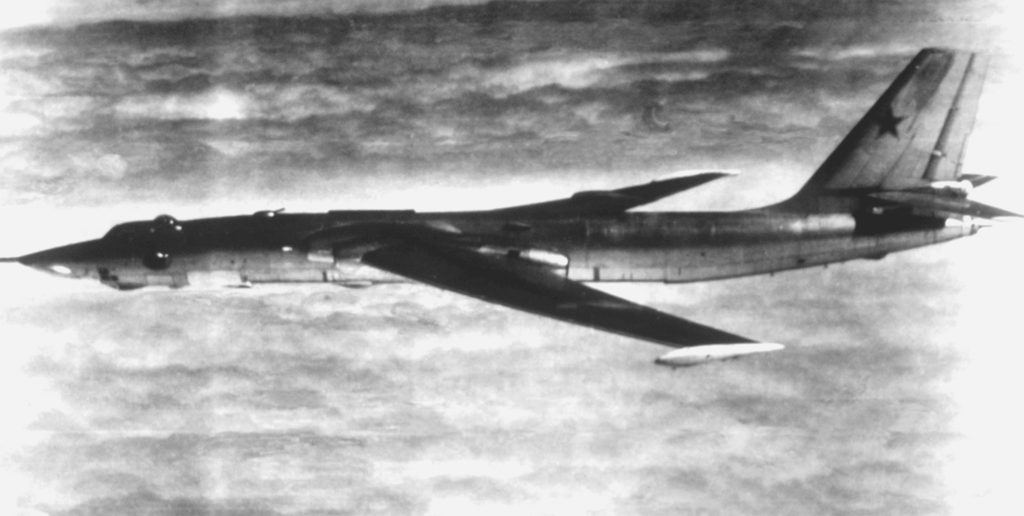
The Bison in pictures
Where the Bison flew
The record that defines it
The M-4 Bison never dropped a bomb in anger. It was a strategic-deterrent aircraft, and its story is one of capability and perception rather than air-to-air combat. Its significance lies in three things: it was the Soviet Union’s first four-jet strategic bomber; it fell short of the intercontinental range its mission demanded, and so was largely re-tasked as a tanker; and it briefly frightened the West into believing in a bomber fleet that did not exist. Every one of its roughly 93 airframes served a single operator — the USSR.
Compare the combat record of every military aircraft. Figures as of July 2026.
Everything people ask about the M-4 Bison
Can I fly in an M-4 Bison?
Why is the M-4 Bison considered a disappointment?
What was the “bomber gap”?
Did the M-4 Bison really carry the Buran space shuttle?
How fast was the M-4 Bison?
Who operated the M-4 Bison?
Is the M-4 Bison still in service?
You can’t fly the M-4.
These, you can.
Some legends only live in museums — others are fuelled and waiting. MiGFlug has put civilians in real military jet cockpits since 2004.
 Fly the L-39 AlbatrosThe world’s most-flown jet trainer — aerobatics included
 Fly the F-104 Starfighter“The missile with a man in it”
 Fly the MiG-21The Cold War’s most-produced jet
 Fly the T-33 Shooting StarAmerica’s first jet trainer
 Fly the DH VampireA piece of early jet history
 Fly the S.211Agile Italian jet trainer
 Fly the MB-326The classic Aermacchi jet
 Fly the MiG-15The Soviet legend of the Korean War
Continue the tour
Every fact, checked
- GlobalSecurity.org — Myasishchev M-4 / 3M MolotDevelopment, range shortfall, tanker conversion and production numbers.
- GlobalSecurity.org — 3M-T / VM-T AtlantThe Buran and Energia transport role, twin-tail conversion and flight tally.
- Buran-Energia.com — VM-T Atlant descriptionDetailed account of the shuttle-carrier conversion and its delivery flights.
- The Aviation Geek Club — The 1955 Bison flypastThe Tushino deception and the American “bomber gap” response.
- Plane Historia — Myasishchev M-4Service history, variants and the four decades of Bison operations.
- MilitaryFactory — Myasishchev M-4 (Bison)Specification baseline, dimensions and engine data.
- The National Interest — The M-4 BisonThe strategic-disappointment narrative and the bomber-gap context.
- National Museum of the US Air ForceReference for Cold War Soviet strategic bomber context.