
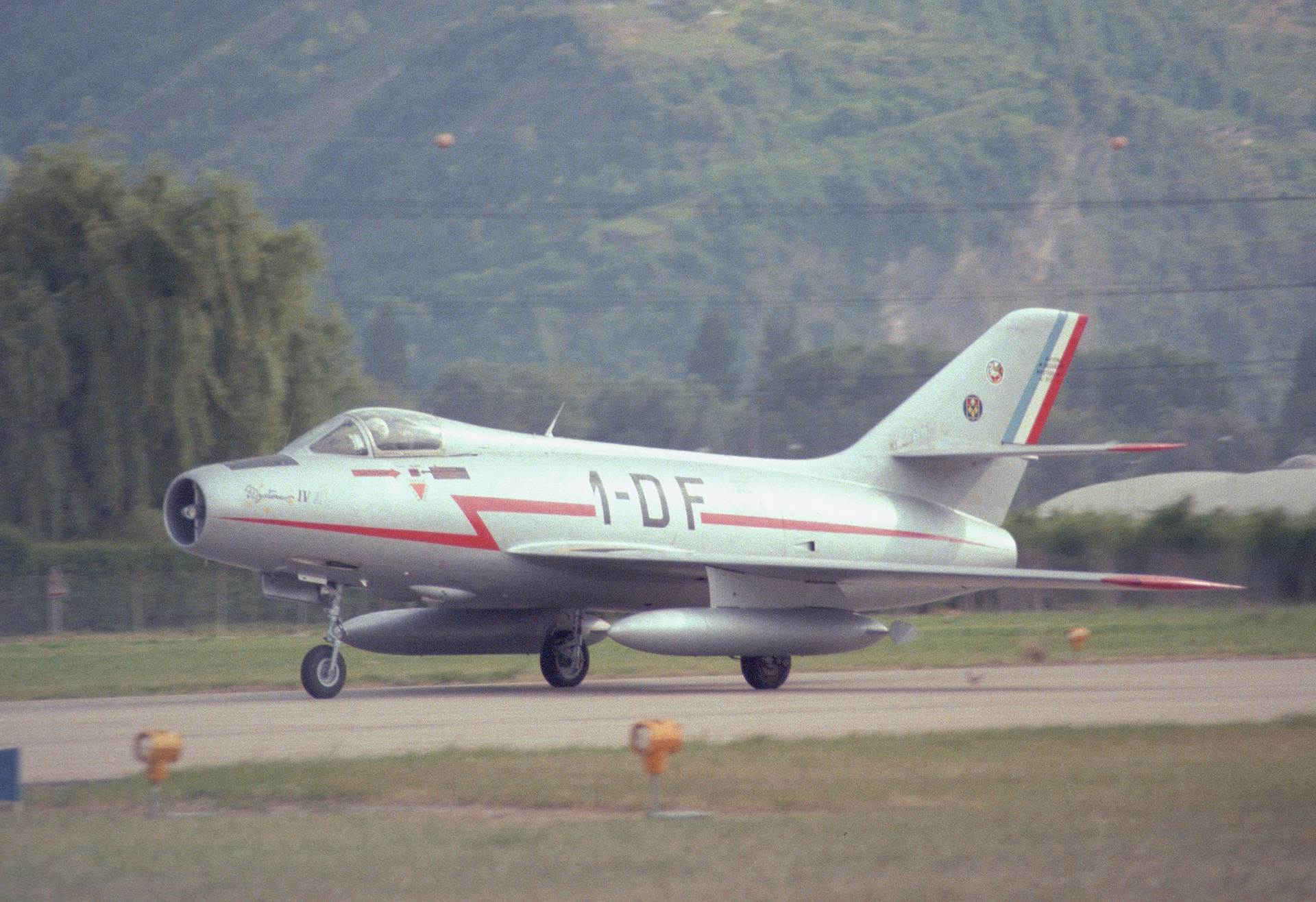
Dassault Mystère IV
France’s first transonic fighter
The swept-wing jet that carried France back into the front rank of fighter design — and then went to war in other people’s skies, from the Sinai in 1956 to the plains of the Punjab in 1965.
France gets its swept wing
When jet combat arrived, France was starting almost from zero. The occupation had gutted its aircraft industry, and Marcel Dassault’s first jet — the straight-winged MD.450 Ouragan of 1949 — was solid but already a generation behind the swept-wing MiG-15 and F-86 Sabre. The answer came in stages: the swept-wing Mystère II, and then a far more refined machine that was effectively a clean-sheet redesign — the MD.454 Mystère IV.
The prototype first flew on 28 September 1952. With a thinner, more sharply swept wing, a new oval-section fuselage and a redesigned tail, the Mystère IV looked a lot like the Sabre it was chasing — and it flew like a thoroughbred, becoming the first transonic aircraft to enter French Air Force service around 1955. Impressed, the United States funded a large batch through NATO’s offshore-procurement programme, paying for aircraft that equipped French squadrons.
The Mystère IV never fired its guns in French colours in a real war. Its combat record was written abroad — by Israel, which took it into the 1956 Suez campaign and the 1967 Six-Day War, and by India, whose Mystères became feared ground-attack aircraft in the 1965 war with Pakistan. At home the type was the stepping-stone to the supersonic Super Mystère, the first Western European fighter able to break Mach 1 in level flight.
01How the Mystère IV grew out of the Ouragan and Mystère II
Dassault’s post-war climb was fast and pragmatic. The straight-winged Ouragan (first flight 1949) gave France a home-built jet fighter and an export success. Bolting a swept wing onto that lineage produced the Mystère II, which in 1954 became the first French aircraft to exceed the speed of sound — in a dive. But the Mystère II was troublesome, and Dassault had already moved on.
The Mystère IV shared little more than a name with it. A thinner wing with greater sweep, a stronger fuselage, power controls and a French-built Hispano-Suiza Verdon turbojet turned an awkward transonic experiment into a genuinely capable fighter. It was this aircraft — not the II — that became the workhorse, and that pointed straight at the supersonic Super Mystère that followed.
What makes the Mystère IV special
A true swept wing at last
The Mystère IV’s wing was thin and swept back around 38 degrees — a decisive break from the straight-winged Ouragan. That geometry let it push right up to the edge of the sound barrier, cruising near Mach 0.9 and going supersonic in a dive. It made the Mystère IV the first transonic aircraft in French service and gave Dassault the aerodynamic confidence that led, within a few years, to the Mirage.
The Hispano-Suiza Verdon turbojet
The first 50 aircraft flew on the British Rolls-Royce Tay; the rest used the French-built Hispano-Suiza Verdon 350, a licensed and uprated development delivering about 34 kN (3,500 kgp) of thrust. Building the engine at home mattered as much as the airframe — it re-established a French supersonic-capable powerplant industry that the Atar would soon carry forward into the Mirage age.
Fighter one day, bomb-truck the next
Two 30 mm DEFA cannon made it a hard-hitting gun-fighter, while four underwing pylons could carry up to roughly 900–1,000 kg of bombs and rockets, plus a retractable pack of air-to-air rockets. That versatility is exactly why Israel and India valued it: it could dogfight when it had to, but it truly earned its reputation in the mud-moving ground-attack role.
02The Mystère IV and the F-86 Sabre: cousins, not copies
Line the two up and the family resemblance is obvious: nose intake, swept wing, bubble canopy. But the Mystère IV was its own design, and in several respects a harder-hitting one. Where most Sabres relied on six 0.50-cal machine guns, the Mystère carried two 30 mm DEFA cannon — far heavier punch per hit. In Israeli hands over Sinai in 1956, and in Indian hands against Pakistan’s Sabres in 1965, the type repeatedly proved it could hold its own against the American fighter it superficially resembled.
03Why America paid for a French fighter
In the early 1950s, NATO wanted its European members re-armed quickly, and the United States was willing to pay. Under the Mutual Defense Assistance Program and its offshore-procurement contracts, Washington ordered large numbers of European-built aircraft for European air forces — keeping local industries alive while filling out the alliance. The Mystère IV was a prime beneficiary: a substantial share of French production was bought with American dollars. Exact totals vary between sources, but the order ran into the low hundreds of aircraft.
Full specifications
Airframe & Performance
- Crew
- 1
- Length
- ~12.85 m
- Wingspan
- 11.12 m
- Height
- ~4.6 m
- Wing area
- ~32 m²
- Empty weight
- ~5,870 kg
- Max takeoff weight
- ~9,500 kg
- Max speed
- ~1,120 km/h · just under Mach 1
- Service ceiling
- ~15,000 m
- Range
- ~915 km clean · ~2,280 km ferry
Propulsion, Armament & Programme
- Engine
- 1 × Hispano-Suiza Verdon 350 (early: R-R Tay)
- Thrust
- ~34 kN (3,500 kgp)
- Guns
- 2 × 30 mm DEFA cannon
- External load
- ~900–1,000 kg bombs/rockets + rocket pack
- First flight
- 28 September 1952 (prototype)
- Service entry
- ~1955 (France)
- Built
- ~421 Mystère IVA
- Unit cost
- No reliable public figure (NATO-funded)
04The Mystère IV’s cost: why there is no clean price tag
Because much of the Mystère IV run was bought through NATO’s mutual-aid machinery rather than sold on an open market, there is no single reliable flyaway price in the public record, and no credible cost-per-flight-hour figure survives for a 1950s French jet. Contemporary accounts put unit costs in the order of a few hundred thousand mid-1950s US dollars, but any precise number should be treated as an estimate. What is well documented is that the United States funded a large portion of production through offshore procurement — so for France, a big share of the fleet effectively arrived without a domestic bill.
From comeback fighter to foreign wars
The Ouragan
Dassault’s straight-winged MD.450 gives France its first home-built jet fighter — the ancestor of the Mystère line.
Mystère IV first flight
The MD.454 prototype flies on 28 September, a clean-sheet swept-wing design far ahead of the earlier Mystère II.
America pays the bill
The United States orders a large batch under NATO offshore procurement, funding aircraft for the French Air Force.
Enters French service
The Mystère IVA becomes the first transonic aircraft in French Air Force service, powered by the Hispano-Suiza Verdon.
Suez debut
Israeli Mystère IVAs fight over Sinai in the Suez campaign, tangling with Egyptian MiG-15s and Vampires.
India buys in
The Indian Air Force begins receiving around a hundred Verdon-powered Mystère IVAs for the strike role.
War over the Punjab
Indian Mystères hammer Pakistani armour in the Chhamb sector; Sqn Ldr A.B. Devayya famously downs an F-104 Starfighter.
Last battles, then retirement
Israeli Mystères fly ground attack in the Six-Day War (1967) and retire in 1971; France phases the type out by 1980.
From the cockpit: twelve Mystère IV stories
From Ouragan to swept wing
France rebuilt its fighter industry in a decade — the Mystère IV was the payoff.
Read the full story
The jet that looked like a Sabre
Nose intake, swept wing, bubble canopy — but the DEFA cannon hit far harder.
Read the full story
The fighter America bought
Washington funded a large share of Mystère IV production to re-arm NATO fast.
Read the full story
Combat debut over Sinai
Israeli Mystère IVAs went to war within months of delivery in Operation Kadesh.
Read the full story
The Vampire ambush
On 31 October two Mystères reportedly caught a formation of Egyptian Vampires.
Read the full story
More than a match for the MiG
Israeli pilots rated the Mystère IVA a genuine equal to Egypt’s MiG-15s.
Read the full story
Down in the mud
By 1967 the Mystère IV was a bomb-truck, pounding Arab armies as newer jets swept the skies.
Read the full story
The Chhamb strikes
Indian Mystères broke up Pakistani armour when it lunged toward Akhnoor.
Read the full story
Devayya versus the Starfighter
A Mystère pilot took on a Mach-2 F-104 — and both aircraft went down.
Read the full story
The Verdon at its heart
A French-built engine turned an imported design into a home-grown fighter.
Read the full story
A fighter for three flags
France, Israel and India between them flew every Mystère IVA built.
Read the full story
The road to Super Mystère
The IV’s success led straight to France’s first supersonic fighter.
Read the full story
The Mystère IV in pictures
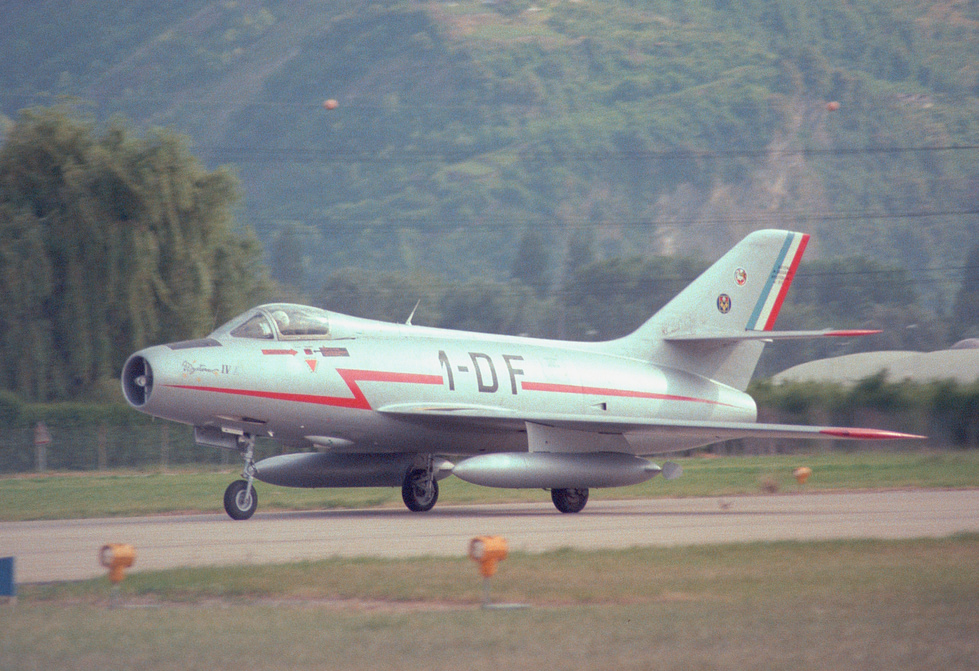
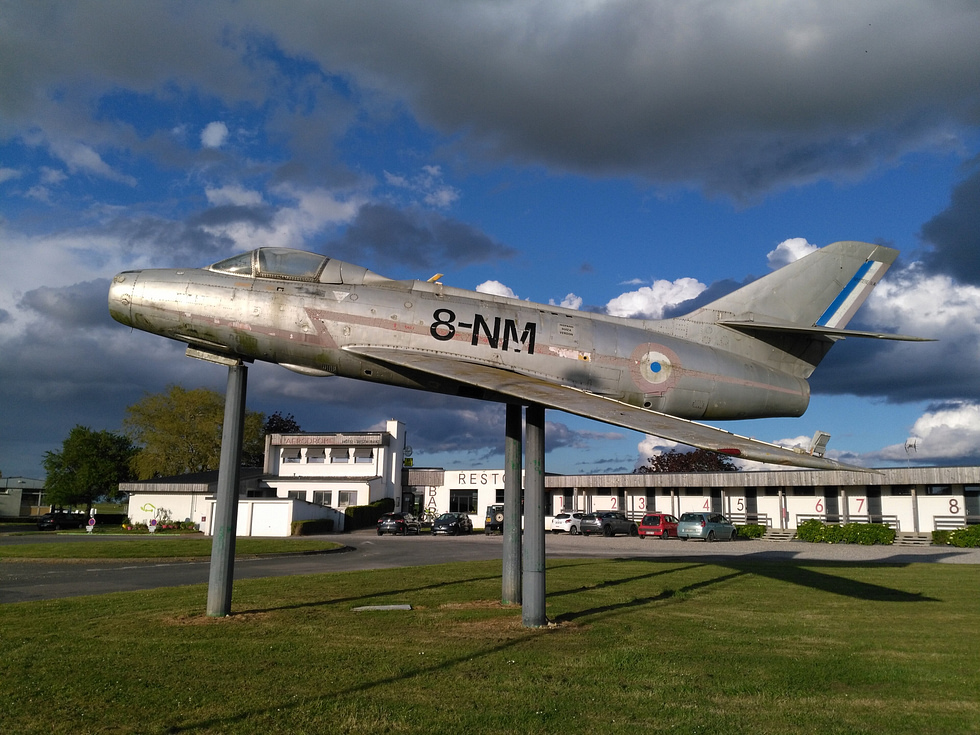
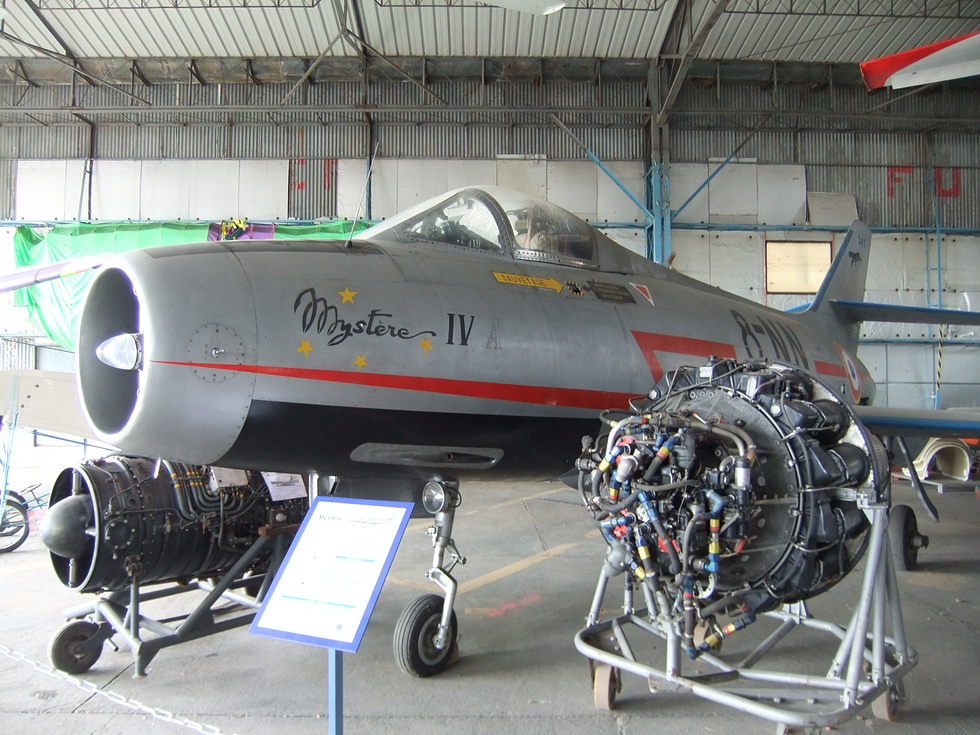
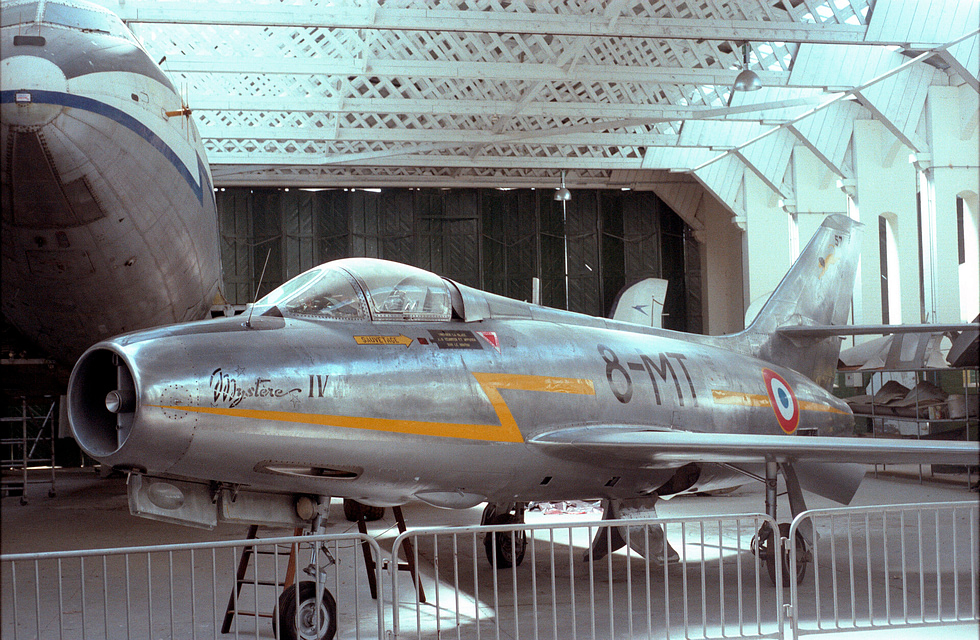
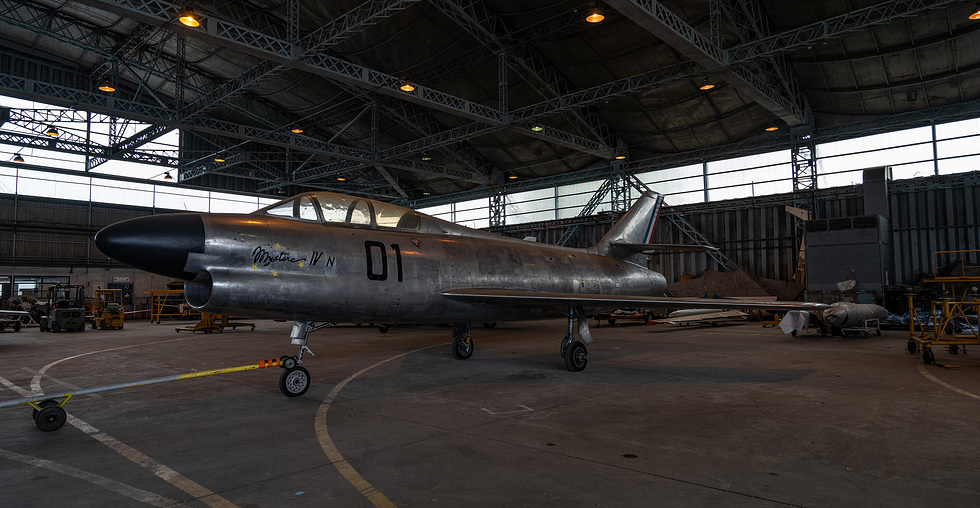
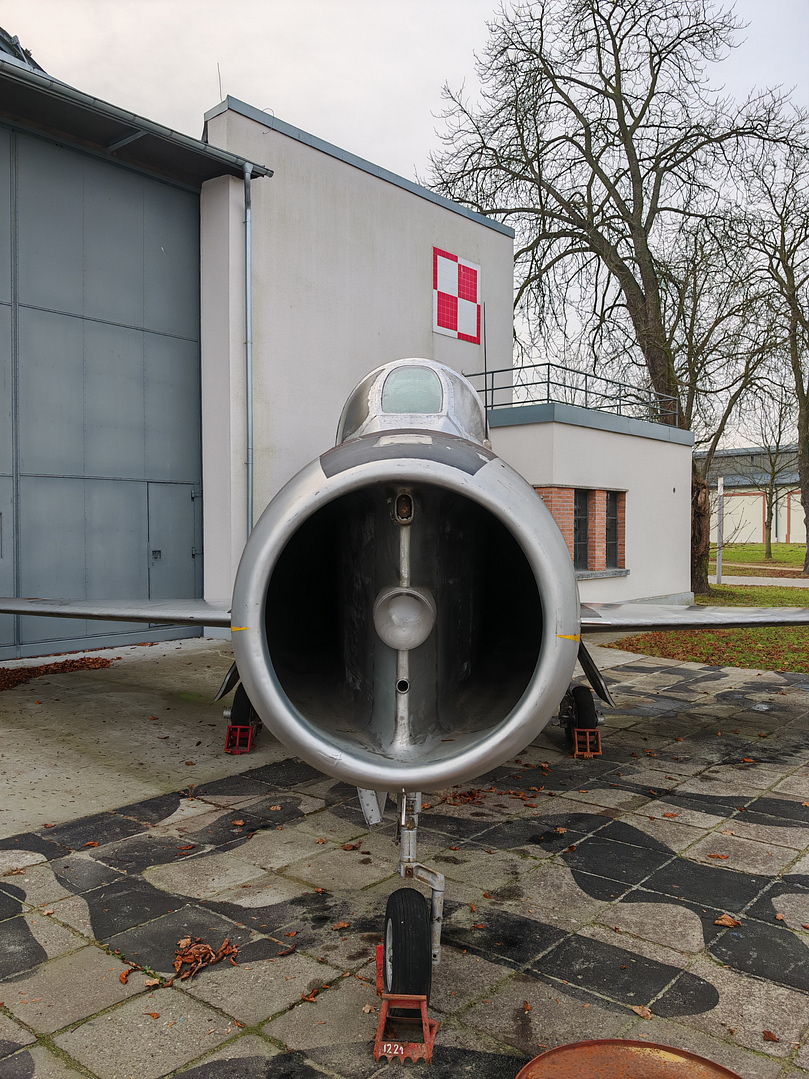
The Mystère IV in motion
A dedicated Mystère IV video feature is coming soon. In the meantime, explore the photo gallery above and the twelve stories from its combat career.
The Mystère IV in motion
Not A Pound For Air To Ground — one of the most-watched Mystère IV films on YouTube.
Where the Mystère IV flew
The wars it actually fought
Ironically, the Mystère IV never saw a real war in French service. Its combat reputation was earned entirely abroad — by Israel over Sinai and by India over the Punjab — where it proved a capable dogfighter and, above all, a rugged ground-attack aircraft. Air-combat tallies from these campaigns are contested and vary between national accounts; the figures below should be read as widely-cited claims rather than settled fact.
Compare the combat record of every military aircraft. Figures as of July 2026.
Everything people ask about the Mystère IV
Can I fly in a Mystère IV?
What was the Dassault Mystère IV?
How fast was the Mystère IV?
Did the Mystère IV see combat?
What engine did it use?
How many were built, and who flew it?
Did a Mystère really shoot down an F-104?
What replaced the Mystère IV?
You can’t fly the Mystère IV.
These, you can.
Some legends only live in museums — others are fuelled and waiting. MiGFlug has put civilians in real military jet cockpits since 2004.
 Fly the L-39 AlbatrosThe world’s most-flown jet trainer — aerobatics included
 Fly the F-104 Starfighter“The missile with a man in it”
 Fly the MiG-21The Cold War’s most-produced jet
 Fly the T-33 Shooting StarAmerica’s first jet trainer
 Fly the DH VampireA piece of early jet history
 Fly the S.211Agile Italian jet trainer
 Fly the MB-326The classic Aermacchi jet
 Fly the MiG-15The Soviet legend of the Korean War
Continue the tour
Every fact, checked
- Dassault Aviation — Mystère IVThe manufacturer’s own history, origins and performance data for the type.
- AirVectors — The Dassault Ouragan, Mystère & Super MystèreDetailed development and service history of the whole Mystère family.
- Military Factory — Dassault MD.454 Mystère IVSpecifications, armament and operator summary.
- Vintage Aviation NewsThe 1952 first flight and the aircraft’s place in Dassault history.
- Bharat Rakshak — Indian Air Force HistoryIndian Mystère operations in 1965, the Chhamb strikes and the Devayya action.
- Skytamer — Dassault MD-454 Mystère IVAAirframe data and variant reference.
- Israeli Air ForceReference for Israeli Mystère service in 1956 and 1967.