
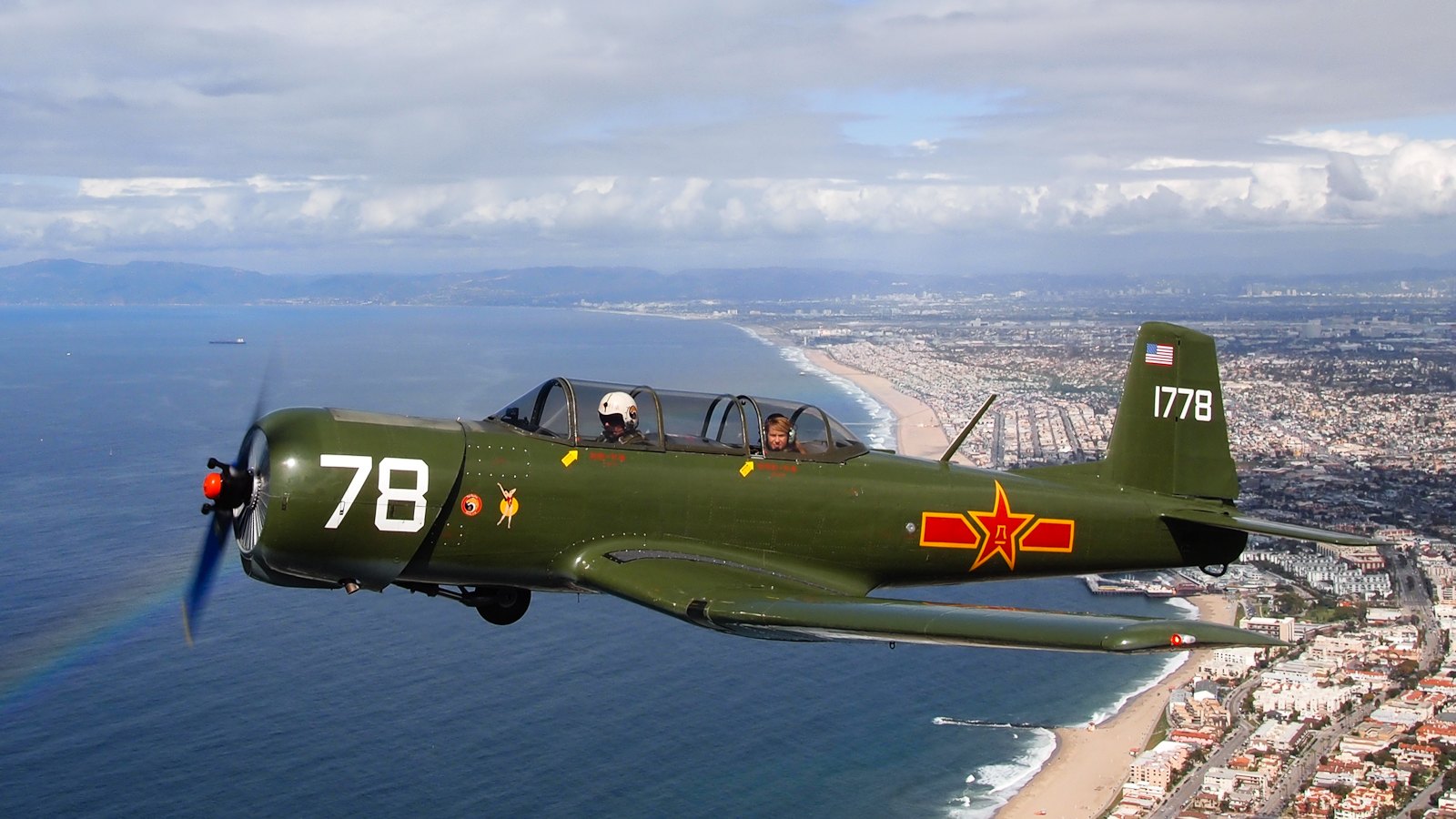
Nanchang CJ-6 / PT-6
China’s Radial Trainer
China’s first home-grown aircraft design to enter mass production: a tough radial-engined trainer that taught PLAAF pilots for six decades, logged some ten million flying hours, and became a Western warbird favourite.
The CJ-6: how China’s first own design trained an air force
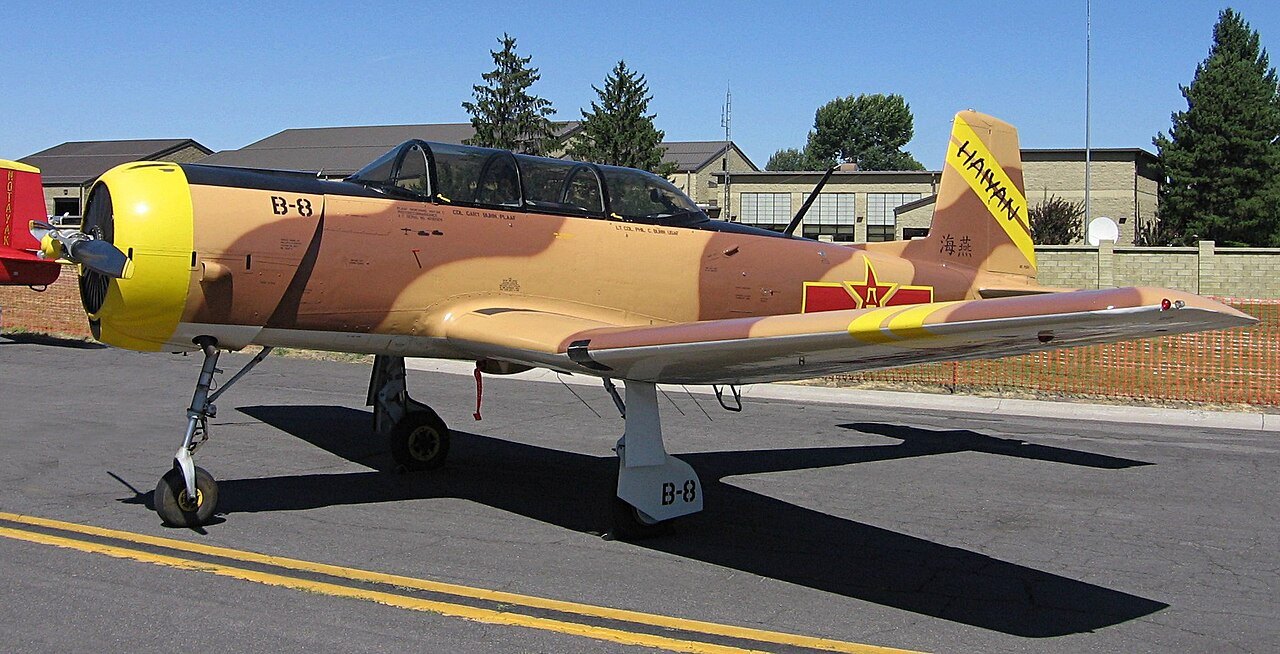
In the late 1950s China’s pilots began their flying on the CJ-5, a licence-built copy of the Soviet Yak-18. The PLAAF was not satisfied. Its engineers judged that even the improved Yak-18A would not meet Chinese needs: it wanted more power, better aerobatic performance and an aircraft that prepared students properly for jets. In late 1957 a team led by Cheng Bushi and Lin Jiahua began a new design at Shenyang. In May 1958 the programme moved to the Nanchang Aircraft Factory, where chief engineer Gao Zhenning took it into production. Although the CJ-6 looks like a Yak-18A, it is an entirely new aircraft: an all-metal semi-monocoque fuselage with flush riveting, a new wing with pronounced outer-panel dihedral, an angular fin and a retractable tricycle undercarriage.
The prototype flew on 27 August 1958, with Lu Maofan and He Yinxi at the controls. It used a Czech flat engine that proved badly underpowered, and the early trials disappointed. A revised aircraft with the Huosai HS-6, a Chinese-built copy of the Soviet Ivchenko AI-14 nine-cylinder radial, flew on 18 July 1960, according to Australian reference Aeropedia, and the type entered service in the early 1960s. In 1965 the engine was uprated to 285 hp as the HS-6A, producing the CJ-6A, the definitive version. An armed border-patrol variant, the CJ-6B, followed in small numbers, and the export name became PT-6. Nanchang, later renamed Hongdu, would go on to build jets, but for decades the radial-engined CJ-6 was the aircraft that kept its production line busy.
More than 2,000 were built, and some estimates run higher. Virtually every PLAAF pilot of the following decades took his first military flights in one, and the type was exported to Albania, Bangladesh, Cambodia, North Korea, Sri Lanka, Tanzania and Zambia. According to AVIC, by 2019 the CJ-6 had flown about ten million hours without a fatal accident attributed to design or manufacturing faults. From 1990 surplus aircraft began reaching the West, where their tough radials and low price made them popular with private owners and formation teams. In February 2019, sixty years after its first flight, the CJ-6 received a Chinese civil type certificate, opening a second career in Chinese general aviation.
01The CJ-6’s development: from Yak-18 copy to Chinese design
The CJ-5 was a straightforward licence-built Yak-18 with tailwheel undercarriage and a modest radial. By 1957 the PLAAF had concluded that it, and the Soviet Yak-18A that replaced it in the USSR, would not be good enough for a fast-expanding jet air force. The new trainer had to teach tricycle-gear handling, offer full aerobatics and carry enough power for training at higher altitudes.
Design work began at Shenyang in late 1957 under Cheng Bushi and Lin Jiahua, and the programme moved to Nanchang in May 1958, as Shenyang concentrated on jet fighters. The first prototype flew on 27 August 1958 but was disappointing, largely because its Czech horizontally opposed engine lacked power. The solution was the HS-6, a locally built copy of the Soviet AI-14R radial, which transformed the aircraft. A revised prototype flew in 1960 and series production followed. It was a significant moment for Chinese industry. Up to this point China’s factories had built Soviet designs under licence; the CJ-6 was the first indigenous design to go into large-scale production and stay there for decades.
02The CJ-6 in the West: from PLAAF surplus to warbird favourite
When China began releasing surplus CJ-6s around 1990, Western private pilots discovered a cheap, robust, fully aerobatic ex-military trainer. According to Aeropedia, more than 60 were imported into Australia from October 1990, and 42 were on the Australian civil register by mid-2007. The type also appears on civil registers in the United States, the United Kingdom, Canada, New Zealand and South Africa.
Owners value the CJ-6 for exactly the qualities the PLAAF wanted: a strong airframe, a reliable nine-cylinder radial, pneumatic systems that are simple to maintain, and benign handling. Formation flying became its hallmark. In Australia the Russian Roolettes flew CJ-6s and Yak-52s in display formations, and in North America the Red Star Pilots Association serves as the type club, running formation training for CJ-6 and Yak owners. Used examples have typically sold for around US$75,000 to 85,000, a fraction of the cost of a North American T-6, which is a large part of the appeal.
What makes the CJ-6 special
A radial from the Yak-52’s family
The CJ-6’s HS-6 engine is a Chinese-built development of the Soviet Ivchenko AI-14, the same family that produced the Vedeneyev M-14P used in the Yak-52 and Su-26. In the CJ-6A it delivers 285 hp, and the armed CJ-6B used a 300 hp HS-6D. A nine-cylinder air-cooled radial is heavy and thirsty compared with a flat engine, but it is very tolerant of rough handling, dust and heat, which suited training fleets operating from basic airfields across China.
Air power, not hydraulics
Like the Yak-18 and Yak-52, the CJ-6 relies on an extensive pneumatic system. Compressed air, charged by an engine-driven compressor and stored in bottles, starts the engine and operates the retractable undercarriage, flaps and brakes. It is simple, light and easy for ground crews to maintain, and it means the aircraft can be started without external power. The undercarriage retracts forward and leaves the wheels partly exposed, which reduces damage in a wheels-up landing, a sensible feature in a trainer flown by students.
Built for students
The CJ-6 seats student and instructor in tandem under a long sliding canopy with full dual controls. Its tricycle gear prepared pilots for the jets they would fly next, unlike the tailwheel CJ-5 it replaced. The wing has a flat centre section and strongly dihedralled outer panels, giving stability for the novice while remaining crisp enough for loops, rolls and spins. Western owners consistently describe it as sturdy, forgiving and reliable, and AVIC credits it with some ten million hours in Chinese service.
03The CJ-6’s variants: trainer, gunship and crop-sprayer
- CJ-6: initial production with the 260 hp HS-6.
- CJ-6A: from 1965, with the 285 hp HS-6A; the most common version and the one most often seen in civil hands.
- CJ-6B: armed variant for border patrol and light attack, built in small numbers in the mid-1960s, with a 300 hp HS-6D, two 7.62 mm machine guns and underwing rockets or bombs.
- PT-6 / PT-6A: export designations, used by Bangladesh, Sri Lanka and others.
- Haiyan: agricultural and general-aviation derivatives.
- Civil CJ-6: type-certificated by the Civil Aviation Administration of China on 28 February 2019.
Nanchang CJ-6A specifications
Specifications
- Crew
- 2 (tandem)
- Length
- 8.46 m (27 ft 9 in)
- Wingspan
- 10.22 m (33 ft 6 in)
- Height
- 3.30 m (10 ft 10 in)
- Empty weight
- 1,095 kg (2,414 lb)
- Max take-off weight
- 1,400 kg (3,086 lb)
- Powerplant
- 1 × Huosai HS-6A 9-cylinder air-cooled radial, 213 kW (285 hp)
- Maximum speed
- about 300 km/h (186 mph, 162 kt)
- Never-exceed speed
- 370 km/h (230 mph)
- Range
- 700 km (435 mi)
- Service ceiling
- 6,250 m (20,500 ft)
- Armament
- None on the trainer; CJ-6B: 2 × 7.62 mm machine guns, rockets or light bombs
Costs & production
- Used price
- Typically about US$75,000 to 85,000 for a civil CJ-6A in the United States (recent listings)
- Cost per flight hour
- Estimate only: roughly US$300 to 500 for a private owner, based on avgas burn of a 285 hp radial plus engine and maintenance reserves; well below a T-6 Texan
- Production
- More than 2,000 built at Nanchang (Hongdu) from about 1960; some sources give over 3,000
- Programme
- Indigenous design begun 1957; civil type certificate 2019
04The CJ-6’s operating costs: a cheap radial warbird
No military operator publishes CJ-6 costs, so the useful guide is civil ownership. Western owners buy the type because it is one of the cheapest ways to fly an aerobatic ex-military aircraft: used CJ-6As have been advertised at around US$75,000 to 85,000, and Flying magazine notes its lower operating costs than larger warbirds such as the North American T-6.
Our estimate of roughly US$300 to 500 per hour combines fuel for a 285 hp radial at aerobatic and cruise power with reserves for engine overhaul and airframe maintenance. Actual costs depend heavily on how hard the aircraft is flown, the availability of HS-6 spares and whether the owner does his own maintenance, and should be treated as a range rather than a figure.
The CJ-6 from Shenyang drawing board to civil certificate
Design begins
Cheng Bushi and Lin Jiahua start work at Shenyang on a trainer to replace the CJ-5.
Move to Nanchang
The programme transfers to the Nanchang Aircraft Factory in May under chief engineer Gao Zhenning.
First flight
The prototype flies on 27 August, flown by Lu Maofan and He Yinxi, but is underpowered.
Radial-engined prototype
A revised CJ-6 with the HS-6 radial flies on 18 July.
Into service
The CJ-6 enters PLAAF service, according to AVIC.
CJ-6A
The uprated 285 hp HS-6A engine produces the definitive CJ-6A.
To the West
Imports to Australia begin in October; more follow to North America and Europe.
Australian fleet
42 CJ-6s are on the Australian civil register by mid-year.
Civil type certificate
CAAC certificates the CJ-6 for civil use on 28 February at Nanchang’s Yaohu airport.
Sri Lankan crash
A Sri Lanka Air Force PT-6 crashes at China Bay on 7 August, killing two officers.
Stories & eyewitnesses: the CJ-6 in service
The engineers who said no to the Yak-18A
Cheng Bushi and Lin Jiahua designed China’s first own trainer.
Read the full story
A first flight that was not enough
The 1958 prototype flew, but lacked the power to be a useful trainer.
Read the full story
Ten million hours
AVIC credits the CJ-6 with an extraordinary training record.
Read the full story
The armed CJ-6B
A border-patrol gunship version was built in small numbers.
Read the full story
A military trainer with a civil certificate
In 2019 China’s aviation authority certificated a sixty-year-old design.
Read the full story
The Russian Roolettes
Australia took dozens of CJ-6s and flew them in formation.
Read the full story
Red Star formation
In North America the type club teaches owners to fly in close formation.
Read the full story
Tragedy at China Bay
A 2023 crash led Sri Lanka to ground its PT-6 fleet.
Read the full story
The PT-6 abroad
China exported the trainer to Asia and Africa.
Read the full story
The CJ-6 in pictures
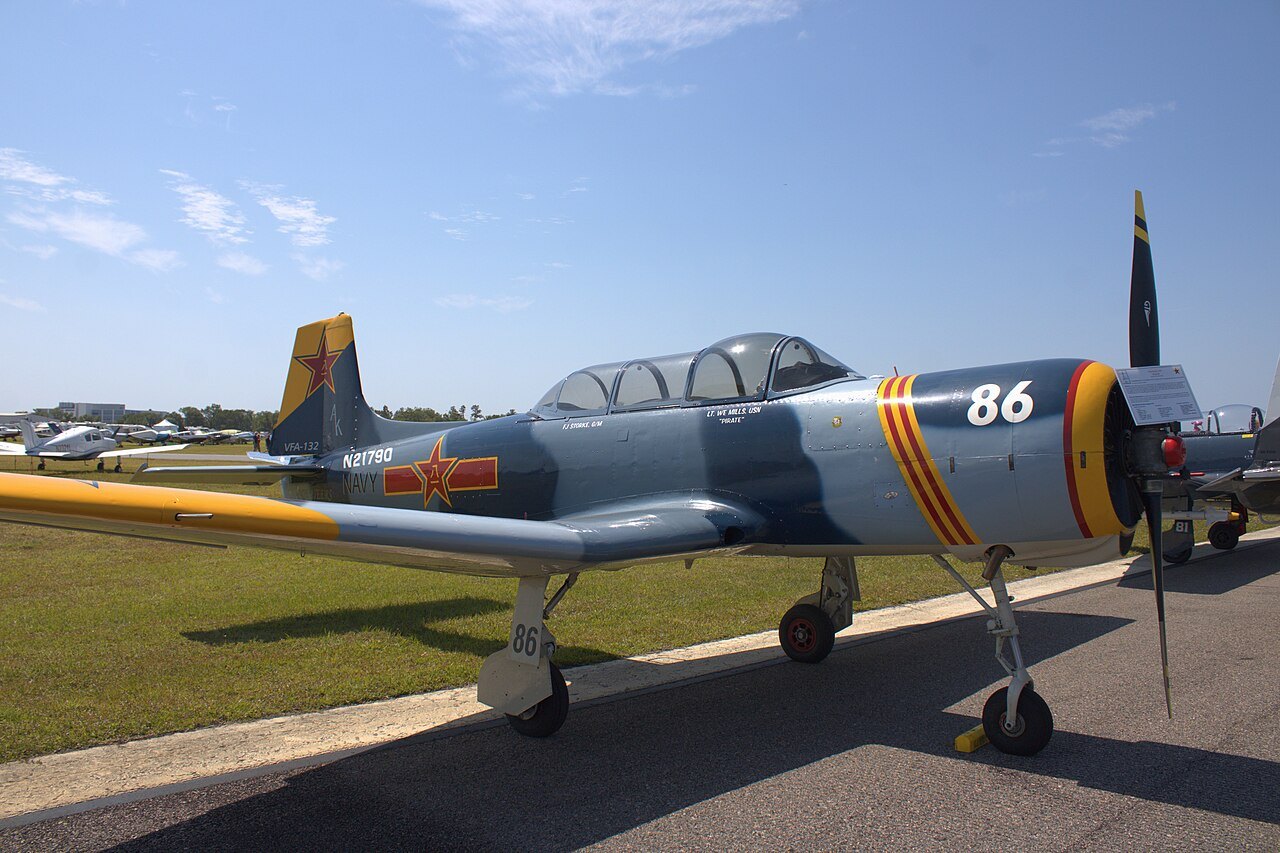
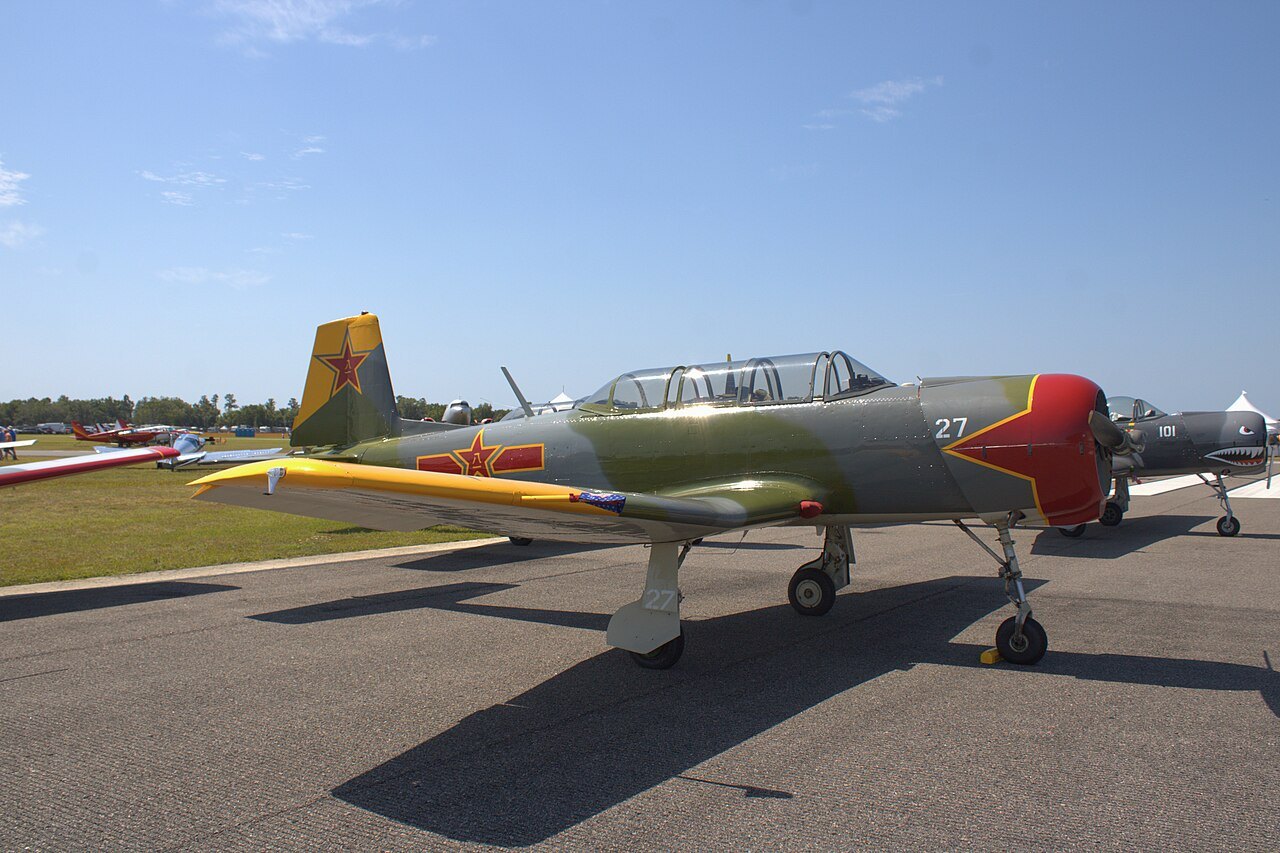
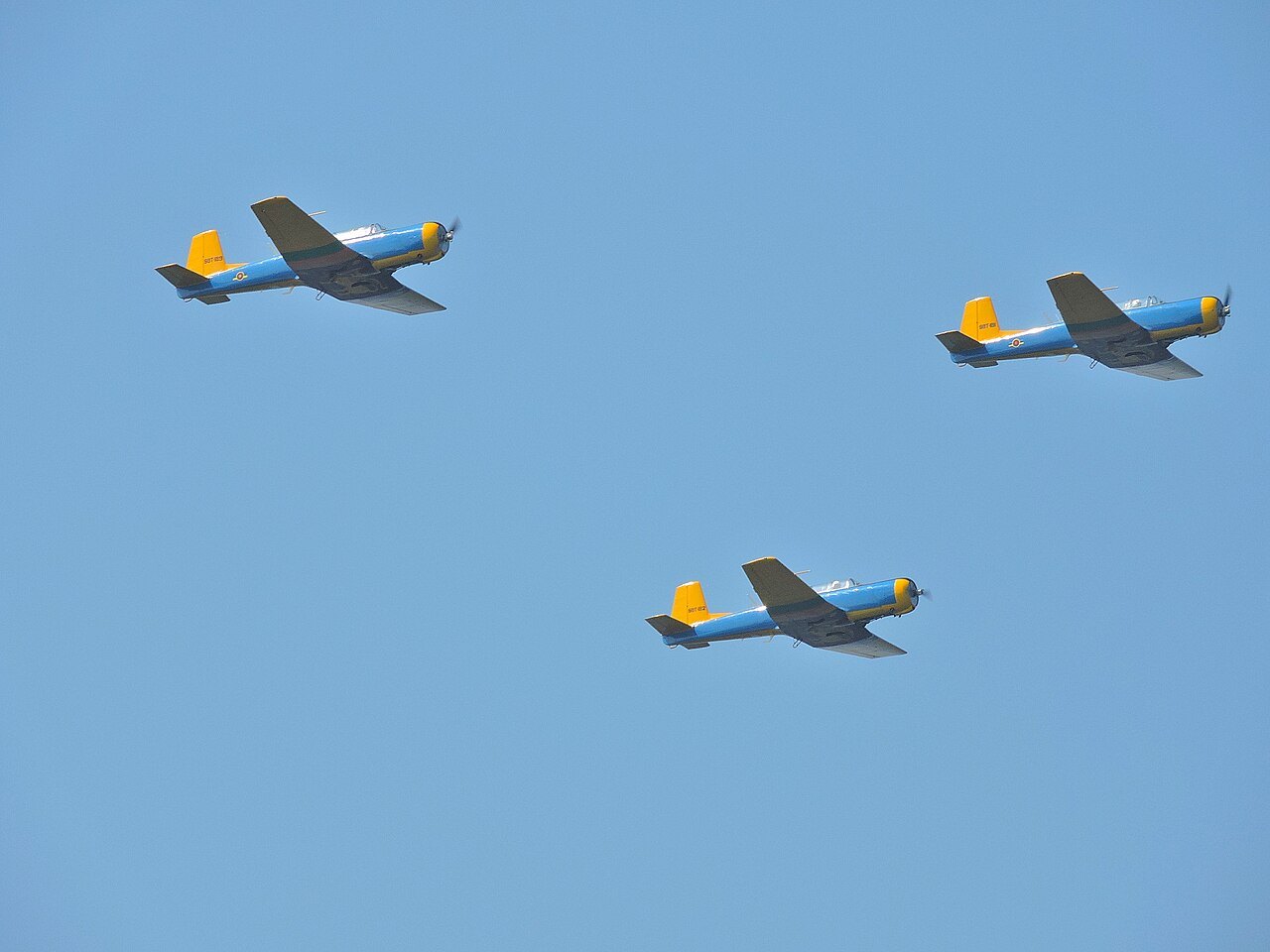
Where the CJ-6 flies and flew
The CJ-6’s record
The CJ-6 is overwhelmingly a training aircraft with no significant combat record; the armed CJ-6B was built for border patrol in small numbers. Its achievement is its scale and longevity as China’s primary trainer for six decades.
See how training and combat types compare in the military aircraft statistics database. Figures are approximate.
Everything people ask about the CJ-6
Can I fly in a Nanchang CJ-6?
Is the CJ-6 a copy of the Yak-18?
What engine does the CJ-6 use?
How many CJ-6s were built?
What is the difference between the CJ-6 and PT-6?
How much does a CJ-6 cost?
Is the CJ-6 still in service?
You can’t fly the CJ-6.
These, you can.
Most of this museum you can only look at. These genuine military jets you can fly yourself with MiGFlug — with aerobatics and time on the controls.
 Fly the L-39 AlbatrosThe world’s most-flown jet trainer — aerobatics included
 Fly the F-104 Starfighter“The missile with a man in it”
 Fly the MiG-21The Cold War’s most-produced jet
 Fly the T-33 Shooting StarAmerica’s first jet trainer
 Fly the DH VampireA piece of early jet history
 Fly the S.211Agile Italian jet trainer
 Fly the MB-326The classic Aermacchi jet
 Fly the MiG-15The Soviet legend of the Korean War
Continue the tour
Every fact, checked
- China’s CJ-6 trainer aircraft gets civil airworthiness approval (People’s Daily, 2019)Civil certificate, service entry, ten million hours, CAAC quote.
- Nanchang CJ-6 (Aeropedia Australia)Development dates, exports, Australian imports and registrations.
- Commie Thunder (Vintage Wings of Canada)CJ-6A engine, CJ-6B, North American owners in formation.
- This 1967 Nanchang CJ-6A is an AircraftForSale top pick (Flying)Used price, operating category, Red Star Pilots Association.
- Nanchang CJ-6 (Aircraft Pilots)CJ-6 as an original design distinct from the Yak-18A.
- Formation education (AOPA, 2014)Red Star formation clinics.
- More details revealed on SLAF personnel killed in China Bay aircraft crash (Ada Derana, 2023)7 August 2023 PT-6 accident.
- CJ-6 civil certification (GlobalSecurity)Reprint of the 2019 certification report.