
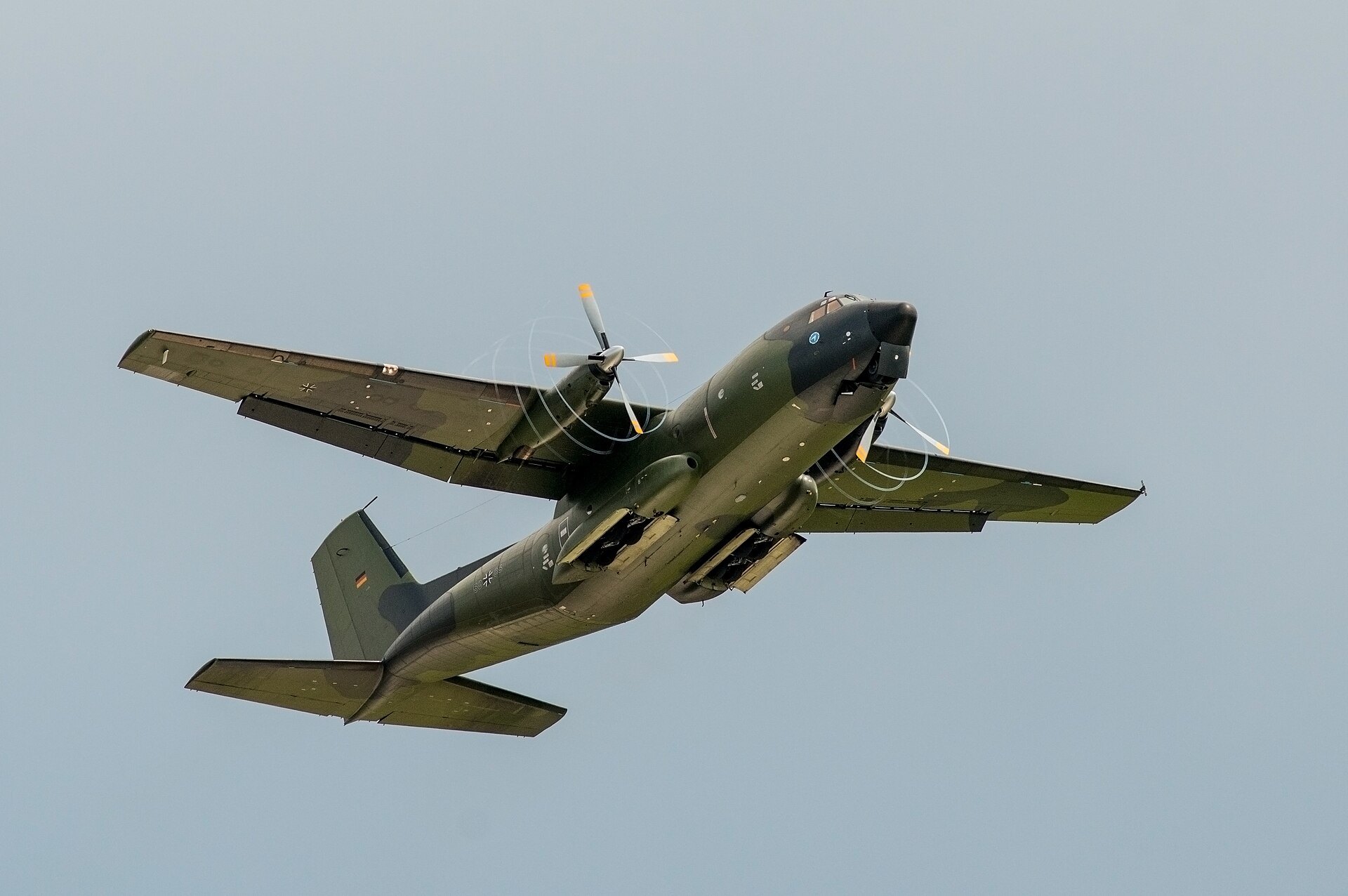
Transall C-160
The Franco-German Workhorse
The Franco-German twin turboprop that carried paratroops into Kolwezi, flew bread to famine-hit Ethiopia and ran the gauntlet into besieged Sarajevo, serving for more than half a century.
The Transall C-160: how two former enemies built one airlifter
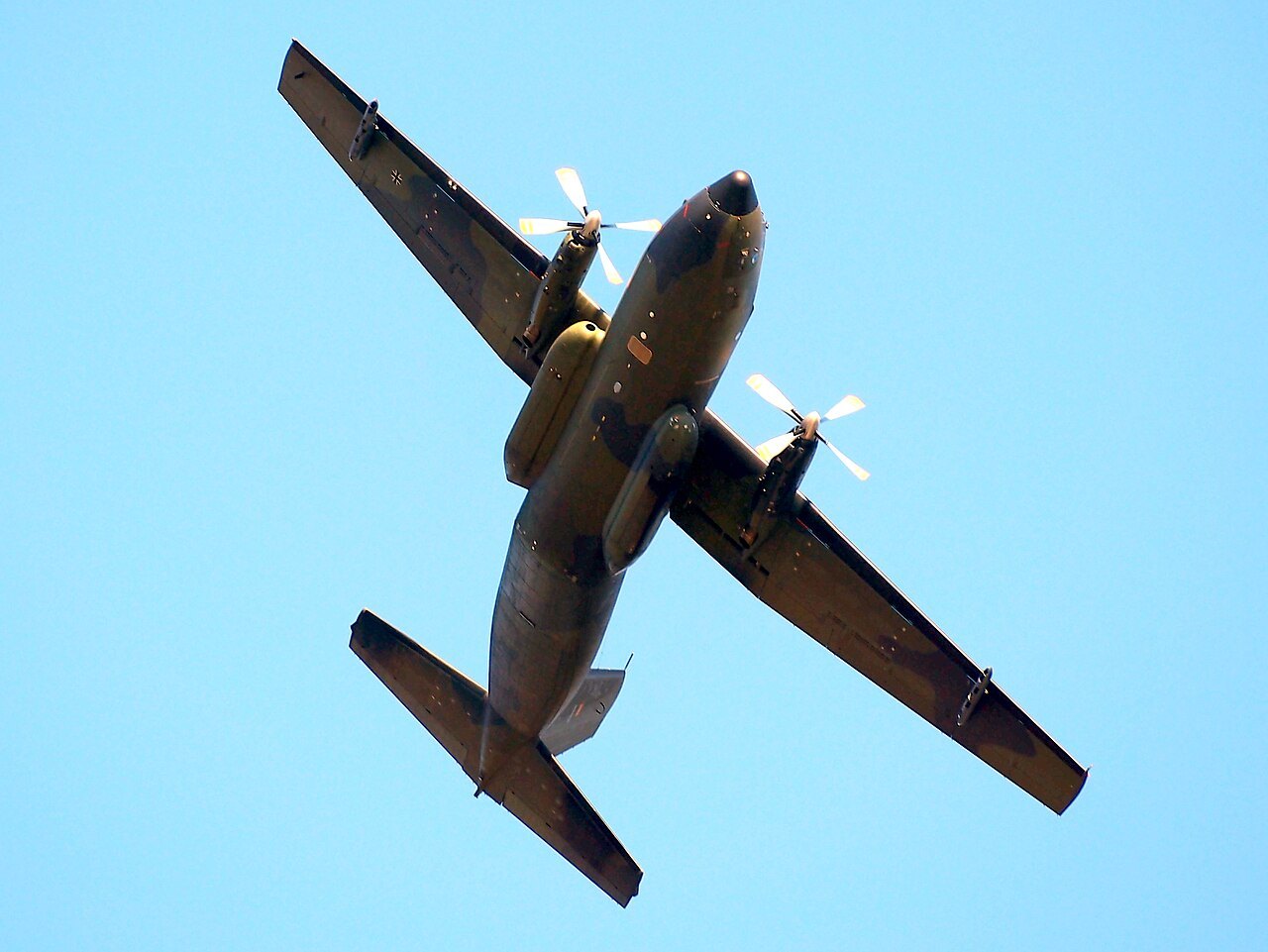
In the late 1950s both France and West Germany flew the Nord Noratlas, a piston twin-boom transport that Germany had built under licence. Both needed something bigger and faster, and both governments wanted to keep the industrial partnership going. On 28 November 1957 they agreed to develop a successor together, and in January 1959 Nord Aviation, Weser Flugzeugbau and Hamburger Flugzeugbau formed the consortium Transporter Allianz, shortened to Transall. The requirement was demanding: 16 tonnes over 1,720 km, or 8 tonnes over 4,540 km, from semi-prepared strips. The answer was a high-wing twin with a rear ramp under an upswept tail, powered by two 6,100 shp Rolls-Royce Tyne turboprops, sized to fit European railway loading gauges.
The Nord-built prototype flew on 25 February 1963, followed by German-built prototypes from Lemwerder and Hamburg. Lockheed tried hard to sell the C-130 Hercules to Bonn instead, but in September 1964 a contract was signed for 160 aircraft: 110 C-160Ds for the Luftwaffe and 50 C-160Fs for the Armée de l’Air. South Africa bought nine more. Production was shared by contribution, with three assembly lines in two countries, and deliveries began in 1967. In 1977 France ordered a second-generation batch, the C-160NG, with an extra wing fuel tank and a refuelling probe; built on a single line in Toulouse, it flew in 1981, and half of the French NGs could also act as tankers.
Over the next half-century the Transall became the backbone of French and German airlift and a fixture of humanitarian relief. It carried Legionnaires to Kolwezi, grain to Ethiopia, aid to Sarajevo, troops to Somalia and supplies across Afghanistan and the Sahel. Turkey flew it into Cyprus in 1974, South Africa used it in the Border War, and France turned it into a signals intelligence platform and a relay station for its nuclear submarines. The Luftwaffe retired its last Transall in December 2021 and France followed in May 2022, both replacing it with the Airbus A400M and the C-130J. In total 214 were built, and few European military aircraft have been so widely seen, or so fondly remembered, by the people they helped.
01The Transall’s Sarajevo years: an airlift under fire
From 4 July 1992 German Transalls joined the international airlift that kept besieged Sarajevo supplied during the Bosnian war. It was the Luftwaffe’s longest humanitarian operation and, for many crews, their first experience of being shot at. In September 1992 an Italian Air Force G.222 was shot down on approach to Sarajevo, and the German aircraft were hastily fitted with Kevlar armour around the cockpit and missile countermeasures. Crews developed a steep, tight descent from altitude, later known simply as the Sarajevo approach, to reduce their time within range of guns and shoulder-launched missiles.
German records cited by the historian Ahrens count 277 incidents during the German participation, 205 judged hostile, with up to 22 in a single month. Alongside the Sarajevo landings, Transalls flew night airdrops of food over enclaves such as Srebrenica. French C-160s flew the same routes. The experience reshaped the German fleet: a permanent self-protection suite with the AN/AAR-54 missile warning system, operated by a tactical systems officer in the former radio operator’s seat, became standard for aircraft sent into danger, from the Balkans to Afghanistan.
02The Transall in Africa: Kolwezi, famine relief and the Sahel
Africa defined the Transall’s career. In April 1976 twelve French C-160s airlifted Moroccan troops and equipment to Zaïre in Operation Verveine, and in May 1978 French Transalls dropped Foreign Legion paratroopers over Kolwezi during the hostage rescue there. French C-160s, and later the tanker NGs, sustained French bases and interventions across sub-Saharan Africa for decades, through Chad and on to Operation Serval in Mali in 2013, where German Transalls also flew in support.
For the Luftwaffe, Africa meant relief work. In 1974–75 aircraft of Air Transport Wing 63 flew aid into Ethiopia, Sudan and Chad, and ten years later they returned for the Ethiopian famine of 1984–85. There crews perfected what German airmen called the Afrika-Verfahren: sacks of grain dropped without parachutes from about 20 ft, the aircraft flown nose-high so the load slid out over the open ramp. Further missions followed in Mauritania, Mali and Niger, to Somalia in 1993, to Mozambique’s floods in 2000 and to the Congo in 2003.
What makes the Transall special
Kneeling on the ground
The Transall’s main undercarriage can be partially retracted on the ground, lowering the fuselage so that vehicles can be driven into the hold without climbing a steep ramp. The cargo floor sits at truck-bed height, and the hold, 17.2 m long, 3.15 m wide and 2.98 m high, is pressurised and air-conditioned. That feature mattered in South Africa, where a C-160 was chosen over the C-130 to fly a captured SA-8 missile vehicle out of Angola because of its larger hold and lowering fuselage.
Two Tynes, not four engines
Where the Hercules used four engines, the Transall had two Rolls-Royce Tyne turboprops of about 4,549 kW (6,100 shp) each, driving four-bladed propellers 5.49 m across. The designers chose two engines for lower purchase and operating cost, lower weight and fuel burn, and simpler maintenance. Each engine drove its own generator and hydraulic system, and a small jet APU powered the aircraft on the ground. The trade-off was less margin in hot and high conditions, a problem crews felt keenly in Afghanistan.
Short-field habits
The C-160 was designed for semi-prepared strips. It could descend at angles of up to 20 degrees and land on airstrips as short as about 400 m, according to a 1979 Flight International description, and later aircraft could carry 8.5 tonnes 5,000 km. It could drop up to 88 paratroopers or carry 93 equipped troops or 62 stretchers. Crews in Ethiopia used its slow-flight handling for the parachute-free grain drops that became a Luftwaffe signature.
03The Transall’s variants: from C-160D to Astarté
- V1–V3: prototypes built by Nord, VFW and HFB, first flown 1963–64.
- C-160A: six stretched pre-production aircraft.
- C-160D: 110 for the Luftwaffe; 20 went to Turkey in 1971 as the C-160T.
- C-160F: 50 for the French Air Force; four converted to C-160P night mail aircraft flown in Air France colours for the French postal service.
- C-160Z: nine for the South African Air Force.
- C-160NG: second-generation French aircraft from 1981 with an extra wing tank, refuelling probe and new avionics; about half could act as tankers.
- C-160R: French F and NG aircraft upgraded from 1994 with new avionics and countermeasures.
- C-160G Gabriel: two signals intelligence aircraft, introduced in 1989, replacing Noratlas Gabriels; one flew in the 1991 Gulf War.
- C-160H Astarté: four NGs converted as airborne relay stations to communicate with France’s submerged ballistic missile submarines, 1988 to 2001.
Transall C-160 specifications
Specifications
- Crew
- 3 flight crew plus loadmasters
- Capacity
- 93 troops, 61–88 paratroopers, 62 stretchers or 16,000 kg (35,270 lb)
- Length
- 32.40 m (106 ft 4 in)
- Wingspan
- 40.00 m (131 ft 3 in)
- Height
- 11.65 m (38 ft 3 in)
- Wing area
- 160 m² (1,722 sq ft)
- Empty weight
- 27,782 kg (61,250 lb), equipped
- Max take-off weight
- 51,000 kg (112,436 lb)
- Powerplant
- 2 × Rolls-Royce Tyne RTy.20 Mk 22 turboprops, 4,549 kW (6,100 shp) each
- Maximum speed
- 513 km/h (319 mph; 277 kn) at 4,875 m (16,000 ft)
- Range
- 1,853 km (1,151 mi) with 16,000 kg payload
- Service ceiling
- 8,230 m (27,000 ft)
- Climb rate
- 6.6 m/s (1,300 ft/min)
- Armament
- None
Costs & production
- Cost per flight hour
- No official figure published. A hedged estimate of several thousand euros per hour, broadly in the range of US$5,000–10,000, by analogy with C-130H-class turboprop transports; ageing-fleet maintenance pushed real costs higher in the type’s final years
- Production
- 214 built 1965–1985: 169 first-generation aircraft (1965–72) and a second series built in Toulouse from 1981
- Programme
- Franco-German agreement 1957; consortium formed 1959; first flight 1963; around 2,000 modifications by 1999; Luftwaffe fleet passed one million flight hours in 2011
04The Transall’s life extension: keeping a 1960s airlifter flying
Because the Airbus A400M arrived years late, the Transall had to fly much longer than planned. Germany ran a series of life extension programmes known as LEDA: LEDA I and II from 1984 focused on the wings, and LEDA III in the 1990s raised the structural life from 8,000 to 12,000 flights and added new avionics and a self-protection system. By 1999 about 2,000 modifications had been incorporated across the fleet, according to a NATO technical paper by P. Blumschein. France upgraded all its aircraft to C-160R standard between 1994 and 1999 and in 2009 announced a further modernisation to keep them flying.
Those programmes, plus GPS, laser inertial navigation, Kevlar armour, missile warning and collision avoidance systems, kept the type useful but made it expensive to run in its final decade. In 2015 Germany pushed the retirement date back from 2018 to 2021, keeping a shrinking group of protected aircraft for missions that needed their self-defence suite.
The Transall from 1957 to its last flight
Agreement
France and West Germany agree on 28 November to develop a Noratlas successor together.
First flight
The Nord-built prototype flies on 25 February.
Order signed
France and Germany order 160 aircraft, rejecting Lockheed’s C-130 offer.
Into service
Deliveries begin; French squadron ET 1/61 Touraine is first in November.
Cyprus
Turkish C-160s drop paratroopers and carry troops during the invasion of Cyprus.
Kolwezi
French Transalls drop Foreign Legion paratroopers in the Zaïre hostage rescue.
New generation
The first C-160NG flies, with extra fuel and a refuelling probe.
Ethiopia famine relief
Luftwaffe Transalls fly food aid and perfect low-level drops without parachutes.
Sarajevo airlift
German and French Transalls begin flying aid into the besieged Bosnian capital.
Afghanistan
German Transalls deploy to Termez, later to Mazar-e Sharif, supporting ISAF until 2014.
German farewell
The last Luftwaffe Transall lands at Hohn on 14 December; Air Transport Wing 63 disbands.
French farewell
The Armée de l’Air et de l’Espace retires the C-160 at Évreux on 20 May.
Stories & eyewitnesses: the Transall in action
Kolwezi, May 1978
Legionnaires jumped from French Transalls into a hostage crisis.
Read the full story
The Africa procedure
Grain sacks dropped from 20 feet, no parachutes.
Read the full story
The Sarajevo approach
A steep dive into a besieged city became a German tactic.
Read the full story
Cyprus, July 1974
Turkey’s Transalls on the first day.
Read the full story
A captured SA-8 goes south
Why South Africa chose the Transall for one secret load.
Read the full story
Talking to submarines
France’s Astarté aircraft linked the president to the deterrent.
Read the full story
Night mail in Air France colours
Four Transalls carried France’s post.
Read the full story
Crete, February 1975
The worst Transall accident.
Read the full story
Somalia, 1993
Germany’s first armed deployment abroad since 1945 began with a Transall.
Read the full story
The last landing at Hohn
The Luftwaffe’s Transall era ends after 53 years.
Read the full story
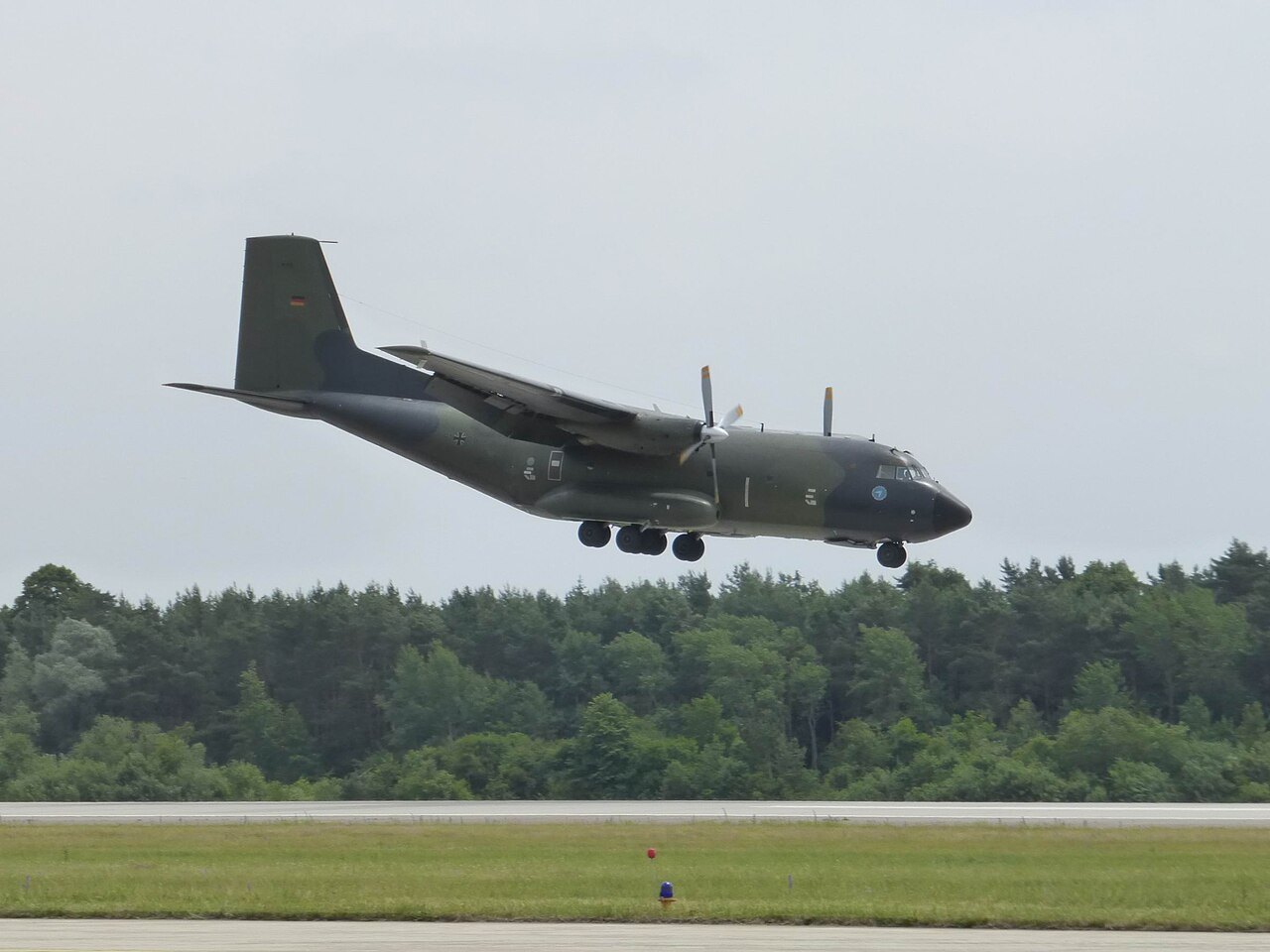
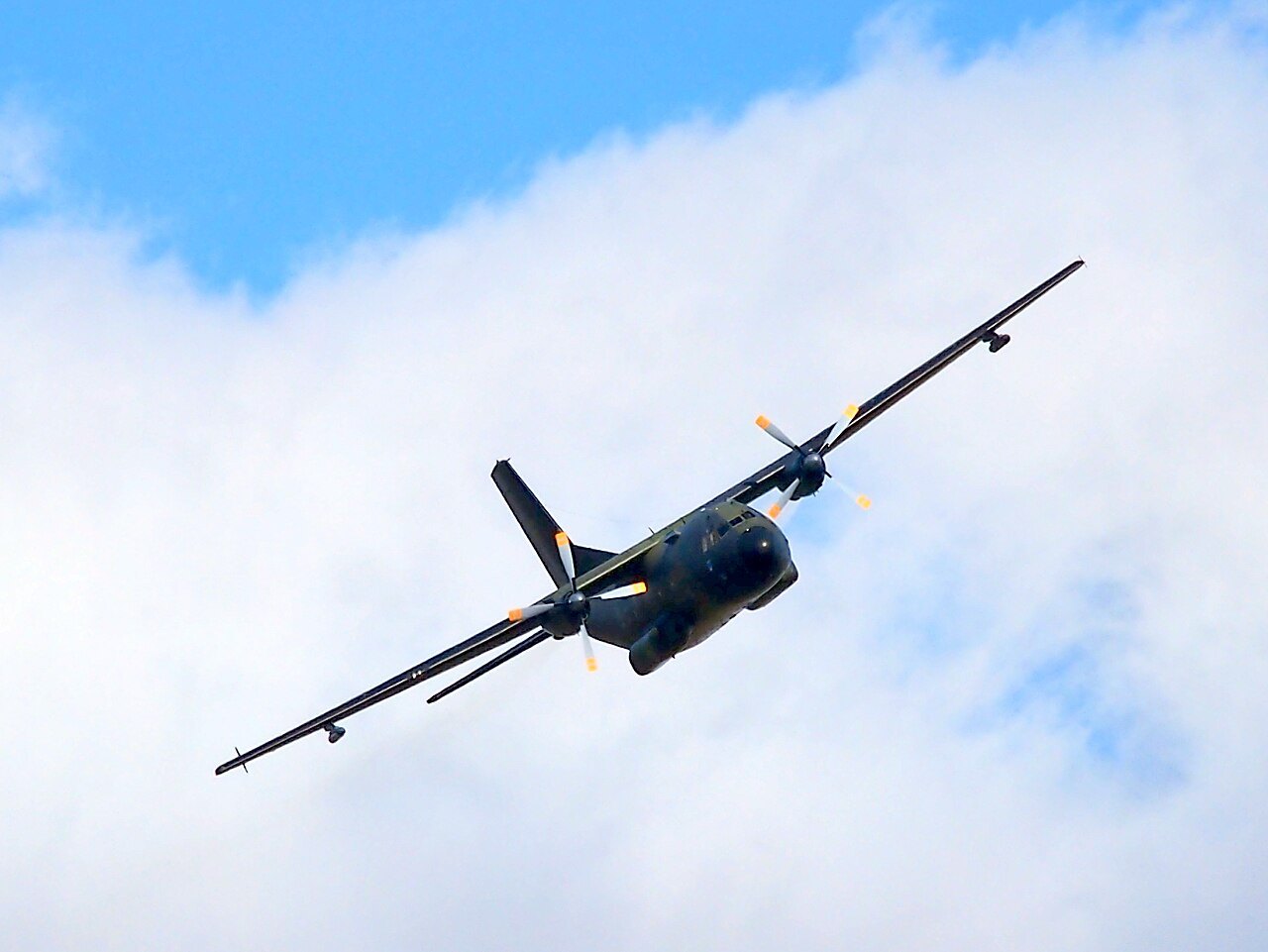
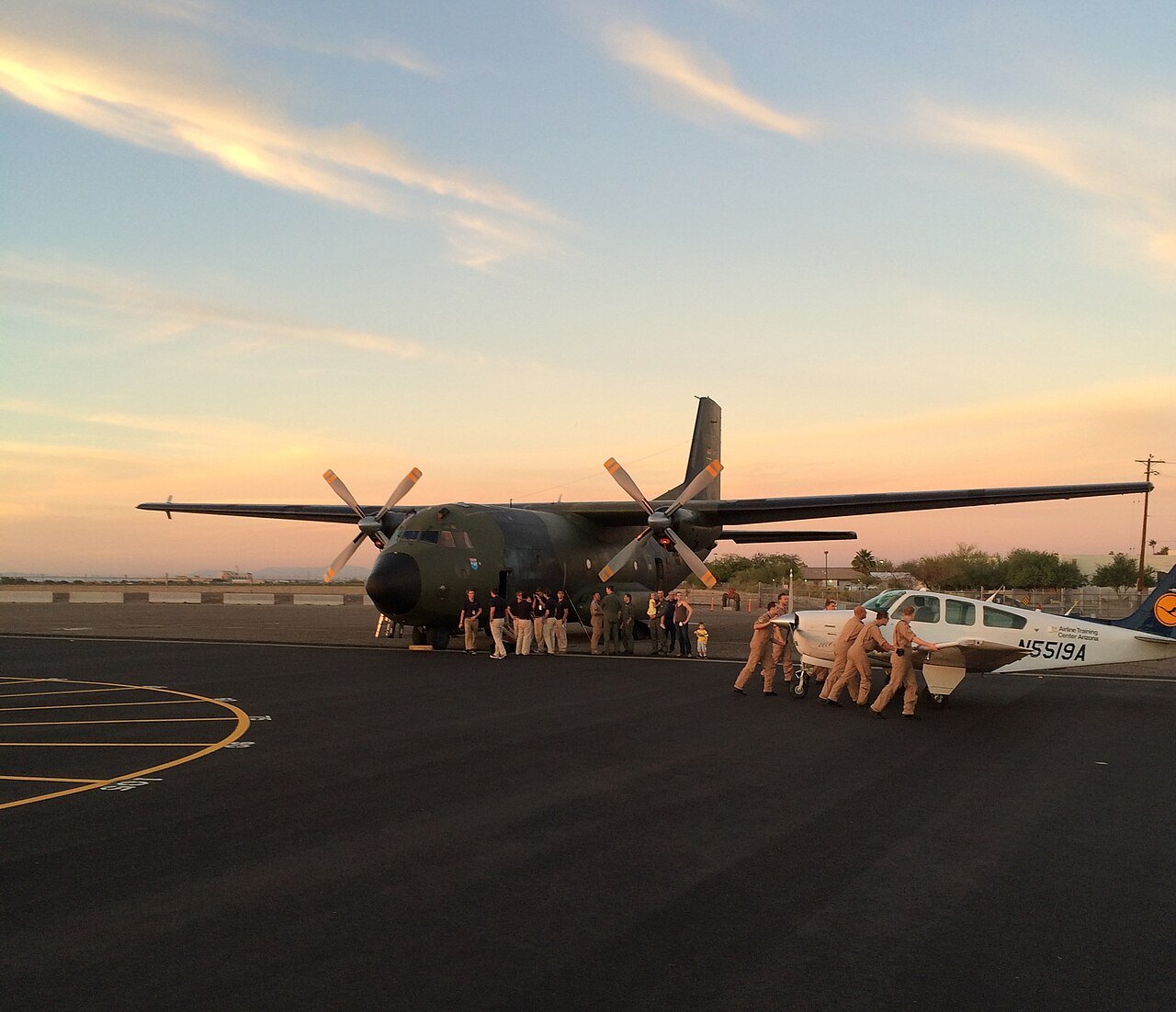
The C-160 in pictures
Where the C-160 flies and flew
The Transall’s record
The Transall was never an attack aircraft, but it flew into war zones for five decades: Cyprus, Kolwezi, Angola, Bosnia, Somalia, Afghanistan and Mali. Its greatest legacy is humanitarian, from famine relief in Ethiopia to the Sarajevo airlift.
See how training and combat types compare in the military aircraft statistics database. Figures are approximate.
Everything people ask about the C-160
Can I fly in a Transall C-160?
What does Transall stand for?
How many Transall C-160s were built?
When was the Transall retired?
What replaced the Transall?
Why does the Transall have only two engines?
Can the Transall refuel other aircraft?
You can’t fly the C-160.
These, you can.
Most of this museum you can only look at. These genuine military jets you can fly yourself with MiGFlug — with aerobatics and time on the controls.
 Fly the L-39 AlbatrosThe world’s most-flown jet trainer — aerobatics included
 Fly the F-104 Starfighter“The missile with a man in it”
 Fly the MiG-21The Cold War’s most-produced jet
 Fly the T-33 Shooting StarAmerica’s first jet trainer
 Fly the DH VampireA piece of early jet history
 Fly the S.211Agile Italian jet trainer
 Fly the MB-326The classic Aermacchi jet
 Fly the MiG-15The Soviet legend of the Korean War
Continue the tour
Every fact, checked
- Transall ist nun Geschichte: LTG 63 aufgeloestFlug Revue (2021) on the end of Luftwaffe Transall operations
- Abschied vom Lufttransportgeschwader 63 in HohnBundeswehr-Journal on the last German Transall flight, December 2021
- French postal Transalls: getting the mail throughKey.Aero on the C-160P night mail aircraft
- C-160Z TransallSouth African Air Force Museum page on the C-160Z (archived)
- Transall C-160 Life Extension and Avionics Upgrade ProgramsNATO RTO MP-44 paper (P. Blumschein, 1999) on LEDA programmes and modifications
- UN relief plane reported downed on Bosnia missionNew York Times (1992) on the G.222 shoot-down that drove Transall self-protection upgrades
- L’adieu au vénérable C160 TransallFrench Air and Space Force on the May 2022 retirement at Evreux
- Flight International, 1979: Transall short-field performanceFlight archive page on steep approaches and 400 m landings