
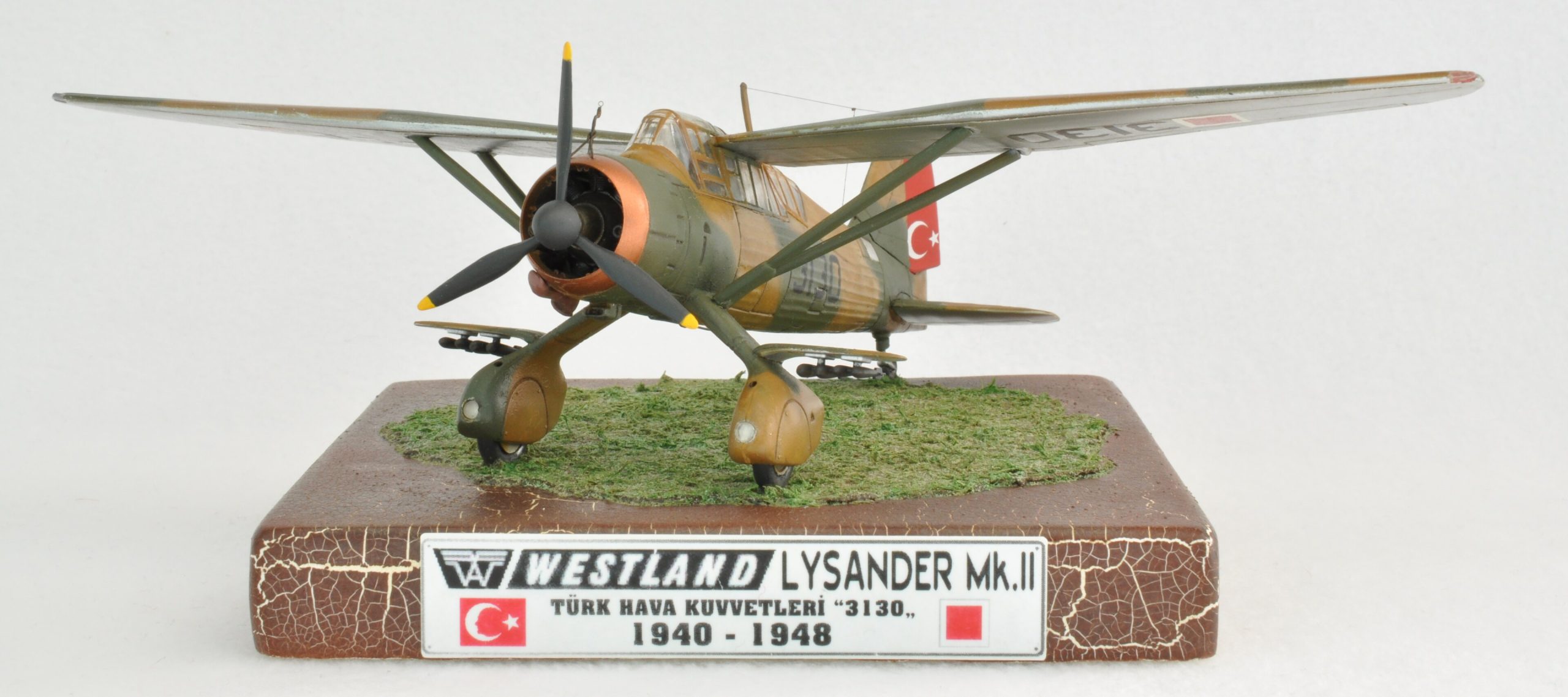
Westland Lysander
The RAF’s ungainly “Lizzie” — an army co-operation aircraft that failed in the daylight of 1940, then found immortality landing secret agents in occupied France by moonlight.
At a Glance
Westland Lysander: key facts
The Story
The Westland Lysander: the aircraft that failed by day and triumphed by night
In 1934 the British Air Ministry issued Specification A.39/34 for a new army co-operation aircraft — a machine to work directly with ground forces, spotting for the artillery, carrying messages, and photographing the battlefield. Westland’s design team, led by the young Arthur Davenport under the direction of the brilliant W.E.W. “Teddy” Petter, went about the problem differently from everyone else. Instead of asking how fast the aircraft could fly, they asked how slowly it could fly, and how short a field it could use.
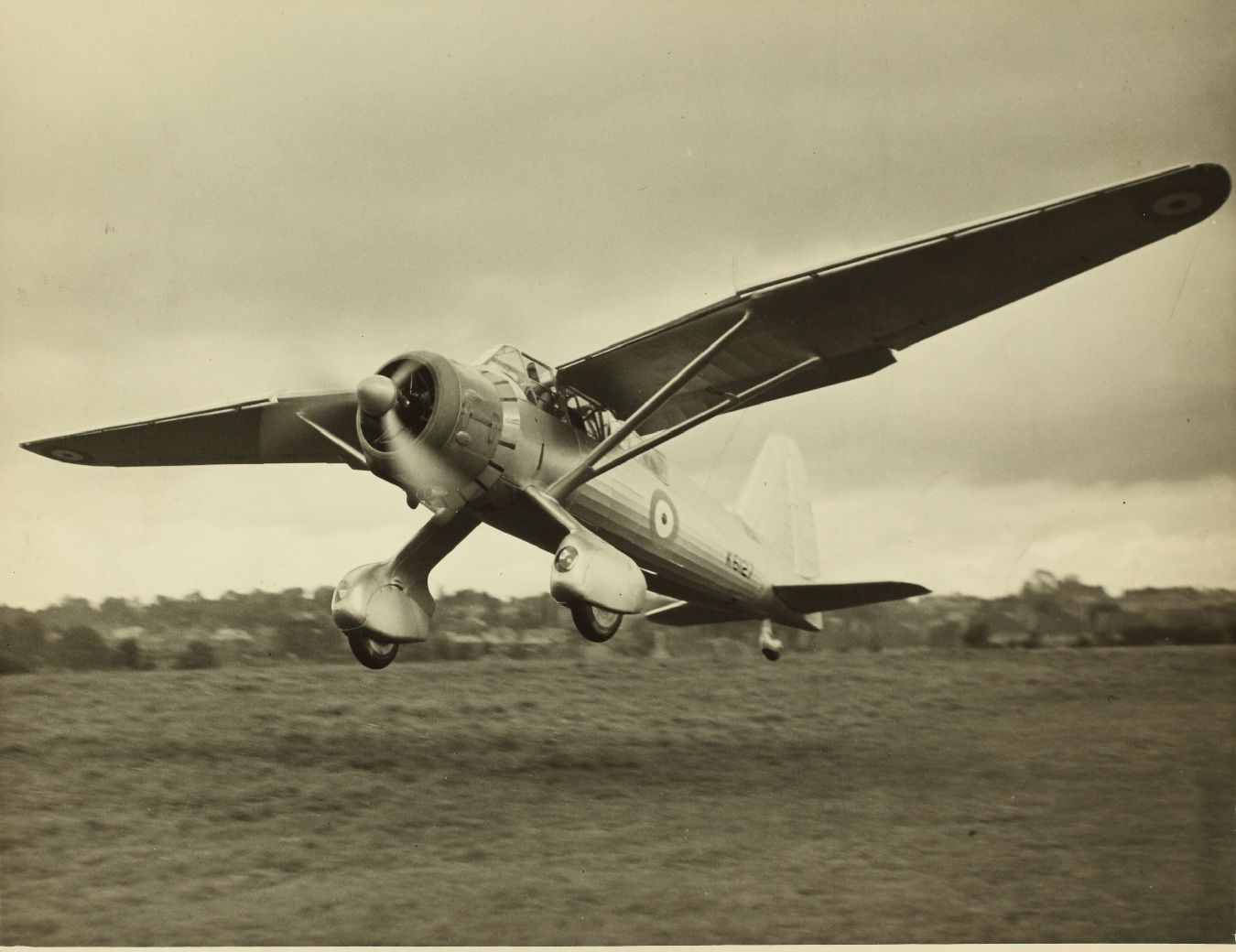
The result, first flown on 15 June 1936, was one of the most distinctive aeroplanes of its generation. High-winged, with a deep single-strut undercarriage and great trousered spats over the wheels, the Lysander looked ungainly on the ground and only slightly less so in the air. But that ugliness hid real cleverness: full-span automatic slats along the wing’s leading edge, linked to slotted flaps, gave the aircraft astonishing low-speed manners. It could be flown under complete control at well under 100 km/h and put down in a few hundred yards.
Named for the Spartan admiral Lysander — Westland kept up its tradition of “L” names from classical antiquity — the aircraft entered RAF service in 1938 and was quickly nicknamed “Lizzie.” By the outbreak of war in 1939 it equipped the army co-operation squadrons sent to France with the British Expeditionary Force.
Then came 1940, and a brutal lesson. The whole concept of a slow, lightly armed aircraft loitering over the front line belonged to a war that no longer existed. Sent out over the advancing German columns in daylight, Lysanders were cut down by flak and by Messerschmitt fighters. The losses were severe and are remembered honestly by the aircraft’s own custodians: the RAF Museum records that of the Lysanders committed to the Battle of France, a large majority did not come back.
For an aircraft that could so easily have been quietly retired, what happened next is one of the great second acts in aviation. The Lysander’s greatest weakness in a stand-up fight — its slowness — was exactly the quality needed for a mission nobody had designed it for: flying secret agents into and out of occupied Europe under cover of darkness.
From 1941 the RAF’s special duties squadrons, above all No. 161 Squadron, took specially modified black-painted Lysanders and used them as clandestine air taxis for the Special Operations Executive and the secret intelligence services. Painted matt black, fitted with a huge belly fuel tank and a fixed ladder over the port side, the “Lysander SD” could slip across the Channel by moonlight, find a improvised landing strip marked by three or four hand-held torches, land, exchange its passengers in minutes and be gone.
The pilots who flew these sorties — men such as Hugh Verity, who later wrote the classic account We Landed by Moonlight — navigated by map, moon and river-shine, often alone, deep inside enemy territory. The agents they carried included some of the most important figures of the French Resistance. It is this role, not its intended one, that made the Lysander famous.
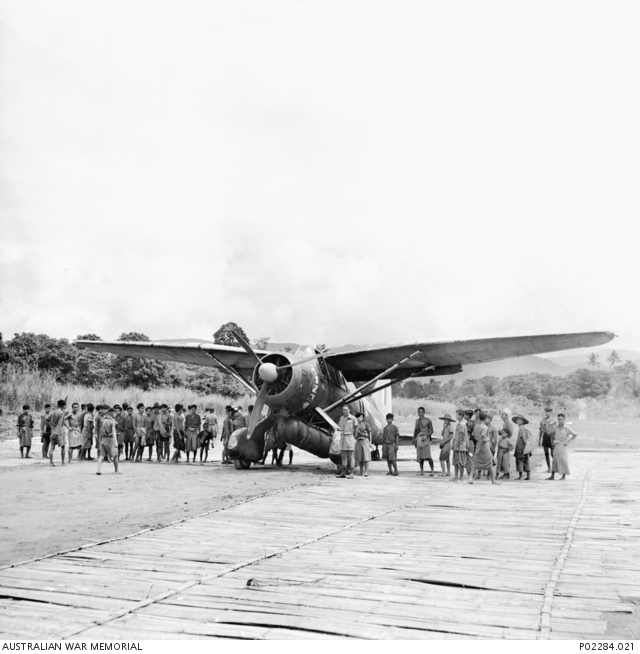
Away from the secret war the Lysander found other useful work. It towed targets for gunnery training, dropped supplies and lifebuoys as an air-sea rescue aircraft, and served across the Empire — in the Western Desert, East Africa, and on the Burma front against the Japanese. Canada built the type under licence, and it was exported to Ireland, Finland, Turkey, Portugal and others.
There were other uses too. Lysanders trained the gunners of the future by towing their targets, carried senior officers and urgent despatches, and equipped the air arms of a dozen nations from Ireland to Finland to Egypt. Few aircraft of the period wore so many hats.
To understand why one aircraft could span roles this different, you have to go back to that wing. Almost everything remarkable about the Lysander — and almost everything that made its strange career possible — flows from Westland’s decision, in 1934, to build an aeroplane around the problem of flying slowly and safely from tiny fields, rather than around speed or firepower. Solve that problem completely, as Petter and Davenport did, and you end up with a machine that is useless in one kind of war and irreplaceable in another.
Judged only by its intended purpose, the Lysander was a failure that arrived a war too late. Judged by what it actually did, it is one of the most quietly remarkable aircraft of the Second World War — the plane that, more than any other, carried the war of shadows on its back.
01The Westland Lysander’s origins: designing for slow, not fast+
Specification A.39/34 asked for an army co-operation aircraft with excellent low-speed handling and short-field performance, good downward visibility and the ability to operate from rough strips near the front. Westland’s Arthur Davenport and Teddy Petter approached it as an exercise in aerodynamic slow flight rather than raw speed.
Their answer combined a thick, high-set wing with full-span automatic leading-edge slats and slotted flaps that deployed together. The slats opened by themselves as the airflow slowed, delaying the stall and letting the aircraft mush along under control at speeds that would have dropped a conventional design out of the sky. The Lysander could take off in a couple of hundred yards and land almost as short.
Petter went on to design the English Electric Canberra and Lightning; the Lysander was his first production aircraft, and its obsession with a single design problem — solved completely — is recognisably the work of the same restless engineering mind.
02How the “Lizzie” got its name and its reputation+
Westland followed a house tradition of naming aircraft after figures from classical antiquity beginning with the letter L — hence Lysander, after the Spartan commander who won the Peloponnesian War at sea. To the airmen who flew it the classical grandeur quickly gave way to the affectionate “Lizzie.”
The reputation cut both ways. Ground crews and pilots admired the Lysander’s docility, its huge flaps and its ability to get into and out of tiny fields. But as a combat aircraft over a modern battlefield it was hopelessly vulnerable, and the men who flew it in 1940 knew it. The nickname carried both fondness and a certain gallows humour.
03Why the Battle of France nearly ended the Lysander’s story+
In May and June 1940 army co-operation Lysanders were thrown against the German breakthrough, attacking columns and spotting for guns in daylight and without effective fighter escort. Against modern flak and Bf 109s the losses were catastrophic; the RAF Museum notes that only a fraction of the Lysanders dispatched to France returned.
The disaster discredited the whole pre-war doctrine of the slow army co-operation aircraft loitering over the front. The Royal Air Force turned instead to fast fighters like the Mustang for tactical reconnaissance. The Lysander’s front-line career as designed was effectively over within weeks — which makes its later fame all the more improbable.
Design & Engineering
How the Westland Lysander was built to land anywhere
Almost every unusual feature of the Lysander flows from one requirement: to fly slowly and safely, and to use fields no other aircraft of its size could touch. The airframe is best read as a machine built around its wing.
A wing that would not stall
Full-span automatic slats along the leading edge opened as speed fell, feeding air over slotted flaps that ran almost the entire trailing edge. Slats and flaps were mechanically linked, so the wing reconfigured itself for low-speed flight without pilot workload. The Lysander could be held under control at a walking-pace crawl.
A radial and a rugged undercarriage
A single Bristol Mercury (or, on the Mk II, a Bristol Perseus sleeve-valve) radial of around 870–900 hp gave ample power for the light airframe. The fixed, heavily spatted undercarriage was immensely strong and sprung for rough ground — and the spats could carry small stub wings for light bombs or supply containers.
The Special Duties conversion
For clandestine work the Lysander III was stripped of armament, painted matt black, and fitted with a large jettisonable belly fuel tank for range and a fixed external ladder so an agent could scramble in or out in seconds. These changes turned an army co-operation aircraft into a purpose-built moonlight taxi.
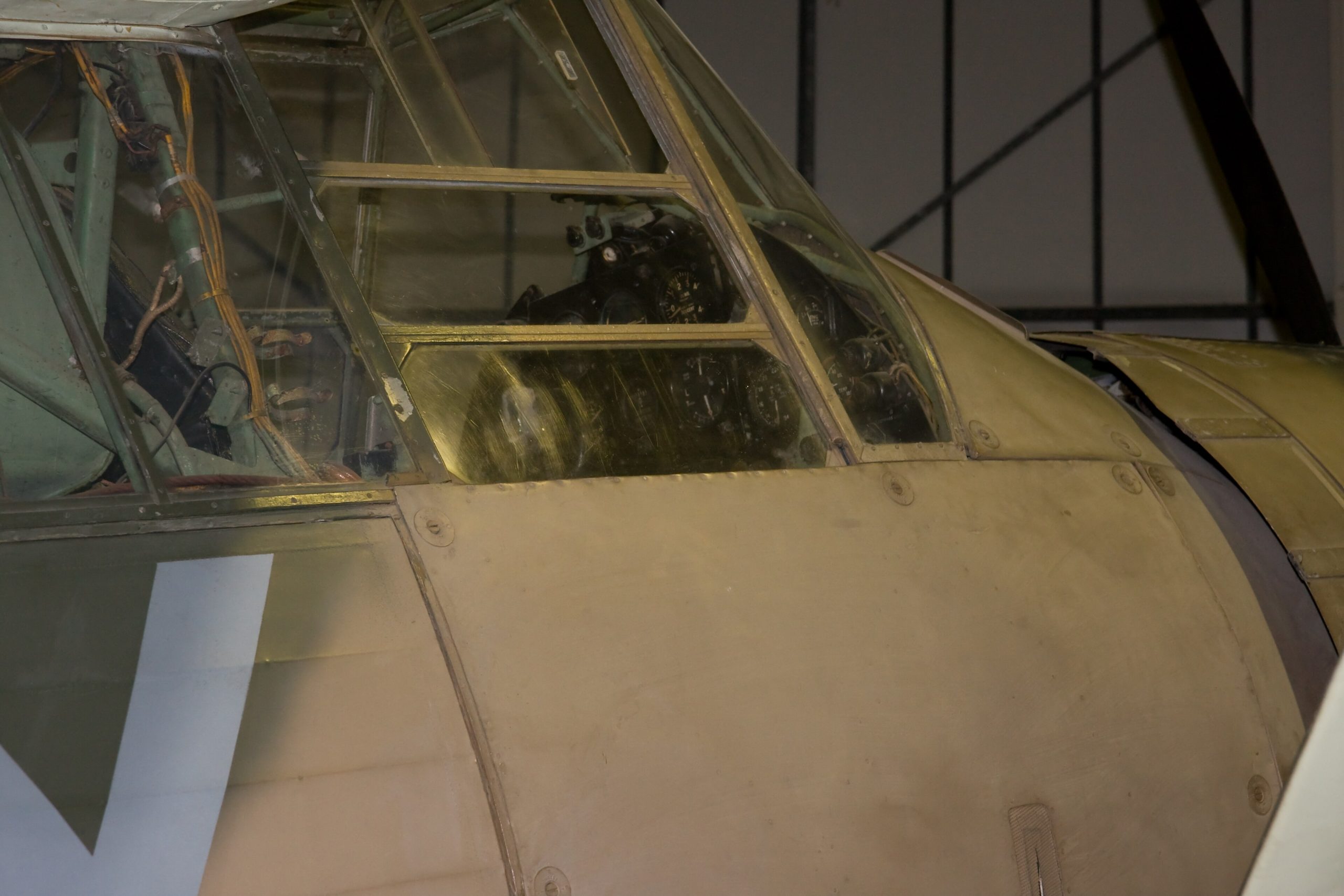
04The Westland Lysander’s STOL secret: slats, slots and slotted flaps+
The wing carried automatic Handley Page-type slats along its full span. As the angle of attack increased and airflow slowed, suction opened the slats automatically, re-energising the boundary layer and delaying the stall well beyond the point at which a plain wing would have let go.
Linked to the slats were large slotted flaps. Deployed together, the two devices transformed the wing’s lift at low speed. Test pilots reported the Lysander could be flown fully controlled at around 55–65 mph, and its landing run — critical for the secret fields of occupied France — could be held to a few hundred yards on grass.
This is why an aircraft with unremarkable top speed became irreplaceable: no other Allied aircraft combined two seats, useful range and the ability to reliably use an unlit farm field the size of a couple of football pitches.
05Guns, bombs and the Lysander’s modest teeth+
As an army co-operation aircraft the Lysander was lightly armed: two fixed .303 in Browning machine guns firing forward, one mounted in each wheel spat, plus one or two .303 in guns on a flexible mount for the observer in the rear cockpit.
Small stub wings could be attached to the undercarriage spats to carry light bombs or supply containers, and message pick-up and drop gear was fitted for liaison work. None of this made the Lysander a serious combat aircraft — against fighters the armament was token — but it was adequate for policing and colonial duties, where the type served for years.
The contrast with the special-duties machines is telling. On the SD Lysanders the guns and racks were simply deleted: in the role that made the aircraft famous, its only real weapon was invisibility — matt-black paint, a moonless approach, low speed and the ability to be on the ground and gone before anyone could react. It is a rare aircraft whose most celebrated version carried no weapons at all.
Full Specifications
Westland Lysander Mk III — specifications
Figures are for the Mk III, the most numerous mark and the one used for special duties. Where sources disagree — as they do on top speed and total production — the range is shown and flagged rather than hidden.
Baseline: the Lysander Mk III / Mk IIIA of 1940–42, the marks built in the largest numbers, the ones Canada made under licence and the airframes from which every Special Duties conversion was drawn. Deltas for the Mercury-engined Mk I of 1938, the sleeve-valve Mk II that took the type to France, the unarmed Mk III (SD) and the target-tug TT marks are in grey. Four cautions before the figures. First, the production total is not settled: 1,786 is the most-quoted number, but a mark-by-mark tally of published batches — 2 prototypes, 187 Mk I, 442 Mk II and 367 Mk III from Westland, 75 Mk II and 150 Mk III from National Steel Car, 347 Mk IIIA and 100 purpose-built TT Mk IIIA — comes to about 1,670, and the Canadian Warplane Heritage Museum publishes 1,652. Second, maximum speed depends entirely on which mark and which altitude: 341 km/h at 1,520 m for the Mk III and 352 km/h at 3,050 m for the Mk I are both correct, and the 369 km/h figure that circulates is a Mk I number from a different source. Third, the Special Duties aircraft were field and works conversions rather than a production standard, so their weights and ranges are indicative, not tabulated. Fourth, this aeroplane's numbers flatter it in the wrong places: the interesting figures are the stalling speed and the take-off distance, not the top speed.
Dimensions & weights
- Crew
- 2 — pilot and observer/gunner Special Duties aircraft flew with the pilot alone and no navigator; the rear cockpit was cleared for two passengers on the nominal fit, and three or four were carried when the reception committee had more people than the schedule allowed
- Wingspan
- 15.24 m (50 ft 0 in) the Smithsonian records its Canadian-built Mk IIIA at 49 ft 2 9/16 in, a measured airframe rather than a drawing-office figure
- Length
- 9.30 m (30 ft 6 in)
- Height
- 4.42 m (14 ft 6 in) tall for its size because the undercarriage legs are long and the wing sits on a pylon above the fuselage
- Wing area
- 24.15 m² (260 sq ft) enormous for a 2,900 kg aeroplane, and the single design decision that everything else follows from
- Aerofoil
- RAF 34
- Empty weight
- 1,980 kg (4,365 lb)
- Maximum take-off weight
- 2,871 kg (6,330 lb) a Special Duties aircraft with a full belly tank, three passengers and their baggage was flown above this, deliberately and routinely
- Wing loading
- 118.8 kg/m² (24.3 lb/sq ft) at maximum weight a Hurricane I sat near 121 kg/m² and a Bf 109E near 155. The Lysander was carrying a fighter's wing loading on a third of the power, which is why it climbed and cruised so poorly and landed so well
- Power loading
- 3.30 kg/hp (7.28 lb/hp) at maximum weight on 870 hp
- Wing and high-lift system
- cranked, tapered high wing carried on a fuselage pylon and braced by faired V-struts down to the undercarriage legs rather than to the fuselage. Full-span automatic leading-edge slats, the inboard pair mechanically coupled to slotted trailing-edge flaps, with air dampers to govern how quickly they deployed. The pilot had no flap lever — only a lock to hold the flaps down once the aeroplane had lowered them for him
- Fuselage and structure
- welded steel-tube and light-alloy primary structure, fabric-covered over most of the airframe, wooden and fabric wing surfaces. The wheel spats contained what was at the time the largest Elektron magnesium-alloy extrusion ever made, a single piece carrying each wheel; Canadian production could not make it and used a fabricated substitute
- Undercarriage and stub wings
- fixed, spatted, wide-track main legs with a tailwheel. Detachable stub wings bolted to the spats carried bomb racks, supply canisters or, on the 1940 anti-invasion trials, cannon. Fixed gear was the right answer for a machine expected to work from ploughed fields and unmown grass
Performance
- Maximum speed
- 341 km/h (212 mph) at 1,520 m (5,000 ft) Mk I with the Mercury XII: 352 km/h (219 mph) at 3,050 m (10,000 ft). A Bf 109E did 570 km/h. Nothing about the Lysander's speed was ever going to be adequate over a contested battlefield
- Stalling speed
- 105 km/h (65 mph) with slats and flaps fully deployed the number the whole design exists to produce, and the reason the type outlived its own doctrine by five years
- Approach speed, Special Duties
- about 100 km/h (55 kn) over the hedge, lightly loaded, at night, on to unlit grass
- Time to 3,050 m
- 8 min 0 s to 3,050 m (10,000 ft) Mk I: 6 min 54 s. The lighter, higher-rated early mark climbed appreciably better than the Mk III that replaced it
- Service ceiling
- 6,550 m (21,500 ft) Mk I: 7,925 m (26,000 ft). Irrelevant to the job either way; artillery observation was flown at a few hundred metres and pick-ups were flown lower still
- Take-off distance to 15 m
- 279 m (915 ft) from a hard surface at normal weight. The relevant comparison is a Blenheim, which needed roughly three times the ground
- Landing distance
- touchdown to standstill inside 320 m (350 yd), with pilots on Special Duties work reporting touchdown to turn-round in as little as 137 m (150 yd) these are operational reports, not a test establishment's measured figures, and were achieved by men with strong reasons not to overrun
- Range, standard
- 970 km (600 miles) on internal fuel
- Range, Special Duties
- ~1,850 km (~1,150 miles) round trip with the belly tank this is what put Lyon, Clermont-Ferrand and the Saône valley inside reach of a single-engined aeroplane flying from the south coast of England
- Endurance, Special Duties
- over 8 hours with the belly tank, one pilot and two passengers eight hours alone in an open-cockpit-derived aeroplane, navigating by torch, map and compass, with no autopilot and nobody to spell you
- Field requirement, pick-up operations
- a firm, level, obstruction-free strip of roughly 600 m (650 yd), marked by a torch flarepath in an inverted L. Mud, not length, was the recurring killer: bogged Lysanders were burned by their reception committees more than once
Propulsion & systems
- Engine, Mk III and Mk IIIA
- one Bristol Mercury XX or Mercury 30, nine-cylinder air-cooled poppet-valve radial, 649 kW (870 hp)
- Engine, Mk I
- one Bristol Mercury XII, 664 kW (890 hp) the most powerful engine the type ever carried in service, fitted to the first and lightest mark
- Engine, Mk II
- one Bristol Perseus XII sleeve-valve radial, 675 kW (905 hp) adopted partly to relieve Mercury supply, and the mark that equipped most of the squadrons destroyed over France in May 1940
- Propeller
- three-blade metal airscrew
- Internal fuel
- tankage in the wing centre section. Published capacities for the standard aircraft are inconsistent and are omitted here rather than guessed; the 970 km still-air range is the reliable derived figure
- Long-range tank, Special Duties
- ~682 l (150 imp gal, 180 US gal) in a large fixed tank slung under the belly, giving the aircraft its unmistakable Special Duties silhouette and roughly doubling its radius
- Slat and flap actuation
- no hydraulics and no pilot input. Inboard slats were linked to the flaps and to an air damper in the port wing that set the rate of deployment; the outboard slats ran free, each with its own damper. The system worked, but it also meant the aeroplane changed configuration by itself in a steep turn, which took some getting used to
- Tailplane
- variable-incidence, trimmable in flight to cope with the large pitching moments produced when the flaps deployed
- Mission equipment, army co-operation
- message pick-up hook and message-dropping gear, camera mountings, and a rear cockpit laid out for an observer to work maps and a radio. This was the aircraft as specified in 1934, and the part of it that became obsolete fastest
- Mission equipment, Special Duties
- all armament and armour stripped, a fixed metal ladder permanently bolted to the port side so three people could be aboard in well under a minute, matt black finish, and a cabin light for the passengers. Navigation was map, compass, watch and moonlight
- Mission equipment, target towing
- drogue winch and stowage, wind-driven generator, and the black-and-yellow diagonal striping that is now the most common surviving Lysander colour scheme, because target towing is what most of them actually did
Armament & payload
The Lysander was armed like a 1918 aeroplane, and its most valuable load turned out to be two people and a suitcase
As designed to Specification A.39/34 the Lysander carried two fixed .303 in Brownings in the wheel spats, one or two flexible rifle-calibre guns in the rear cockpit, and up to 227 kg of small bombs on detachable stub wings bolted to the undercarriage fairings. That was a respectable army co-operation fit in 1935 and an irrelevance by 1940: over France the guns could not save the aeroplane and the bombs could not be delivered without flying straight and level in front of light flak. The one attempt to give it real hitting power — a 20 mm cannon on each wheel fairing, tested in 1940 against the threatened German invasion — never left the trials stage. What the airframe was genuinely good at carrying was people and canisters into places nothing else could reach, and the Special Duties conversions took the logical step of removing every gun in the aircraft. Gun fits are reported inconsistently mark by mark: several standard references give the Mk III twin Brownings in the rear cockpit and the later Mk IIIA twin Lewis guns, which is the wrong way round from what one would expect, and the discrepancy is not resolved in the published sources.
Gun
- Two fixed .303 in (7.7 mm) Browning machine guns, one buried in each wheel spat, firing forward outside the propeller disc and aimed by the pilot with a simple ring or reflector sight
- Rear cockpit, Mk I: one pintle-mounted .303 in Lewis or Vickers K gas-operated gun on a Fairey-type mounting, fired by the observer over the tail
- Rear cockpit, Mk III and Mk IIIA: a twin .303 in installation — Brownings on the Mk III and Lewis guns on the Mk IIIA as most commonly published — doubling the volume of fire without changing the calibre, which was the problem
- Anti-invasion trial, 1940: at least one aircraft flown with a single 20 mm cannon on each wheel fairing in place of the stub wings, intended for strafing beachheads and light armour. This is the so-called tank-buster conversion; it is thinly documented, was never a production standard, and equipped no squadron
- Special Duties aircraft carried no guns at all. The fixed guns, the rear mounting, the armour and the ammunition all came out, and the weight went into fuel.
Air-to-air
- No air-to-air weapon beyond the guns above, and no pretence of one. The rear gun was defensive and the forward pair were for ground strafing and for the odd shot at an observation aircraft
- Lysander crews were credited with a small number of German aircraft over France and Belgium in May and June 1940. The claims are poorly documented and the exchange ran overwhelmingly the other way
- The scale of that failure is the type's defining statistic. Of roughly 175 Lysanders committed to France with Nos. 2, 4, 13, 16, 26 and 613 Squadrons, 118 were lost in six weeks; a second widely cited breakdown gives 88 shot down and 30 destroyed on the ground out of 174, with about 120 aircrew lost and only 50 aircraft flown home
- Air Marshal Sir Arthur Barratt's verdict on the type in that campaign was that it was "quite unsuited to the task" and that a faster, less vulnerable aircraft was required. He was right, and the RAF acted on it within months
- No guided air-to-air weapon existed anywhere during the Lysander's service life; this card records what the aeroplane did with guns in the air, not a missing missile fit.
Air-to-surface guided
- None, on any mark, in any air force. Nothing of the kind was in RAF service during the type's front-line career
- The nearest the Lysander came to a dedicated anti-armour weapon was the 1940 wheel-fairing cannon experiment, which was unguided, untried in action and abandoned once the invasion scare passed
- By the time the RAF had a serious anti-tank aircraft in the rocket-armed Hurricane IID and Typhoon, the Lysander had been off operational squadrons in Europe for two years
- Recorded here as a genuine absence rather than a deficiency peculiar to this design.
Bombs
- Detachable stub wings bolted to the wheel spats, each carrying a small rack; a total bomb load of up to 227 kg (500 lb) is the figure most often published
- Typical load was small anti-personnel bombs of 9 kg (20 lb) class, with four more sometimes carried under the rear fuselage
- Used in earnest over France in May and June 1940 against German columns, and in the Western Desert and Greece in 1940–41 against Italian forces, where the absence of serious fighter opposition briefly made the aeroplane useful
- The same racks and stub wings carried supply canisters, which is how the type resupplied cut-off troops and, later, Chindit and SOE ground parties
- Published bomb loads vary between 227 kg total and a simple count of eight 20 lb bombs; the racks were changed more than once and no single figure covers every mark.
Rockets
- None. No Lysander in any air force carried air-to-ground rockets operationally
- This was not for want of an era: the RAF's 3-inch RP-3 was in wide service from 1943, by which time surviving Lysanders were towing drogues over gunnery schools in Alberta and Manitoba
- The stub-wing attachments could probably have been adapted, and nobody bothered, because by then the aircraft had two roles left and neither of them involved shooting
- A rocket-armed Lysander appears in no production, trials or squadron record traced for this entry.
Pods & other stores
- Message pick-up hook and message-dropping gear — the equipment the aeroplane was actually specified around, for snatching written messages from a line strung between poles at an army headquarters
- Air-sea rescue fit: dinghies, survival packs and smoke floats dropped to ditched aircrew. Fourteen squadrons and flights were formed for this work in 1940–41, and it saved more Allied lives than the type's gunnery ever cost the enemy
- Special Duties fit: the ~682 l (150 imp gal) belly tank and a fixed ladder on the port side, plus a cabin light and stowage for the passengers' luggage and radio sets
- Target-towing fit: drogue winch, drogue stowage and a wind-driven generator; roughly 400 existing airframes were converted to TT standard and a further 100 were built as target tugs from new
- Smoke-laying apparatus was fitted or projected for anti-invasion work in 1940, as an alternative to the cannon installation on the same wheel-fairing attachment points
Three typical loadouts
- Tactical reconnaissance, France, May 1940
- Pilot and observer, two fixed .303 in Brownings with full ammunition, one flexible rear gun, camera and message-dropping gear, no external stores. Flown at low level over the Meuse crossings in daylight; the squadrons that flew this profile lost roughly two-thirds of their aircraft in six weeks.
- Anti-invasion strike, southern England, autumn 1940
- Pilot and gunner, fixed and flexible guns, stub wings fitted with small bombs to a nominal 227 kg, and on trials aircraft a 20 mm cannon on each spat instead. The plan was to attack landing beaches at first light. It was never tested, and it would have been very costly if it had been.
- Special Duties pick-up, Tangmere to central France, 1943
- One pilot, no guns, no armour, no radio operator. Belly tank full, ladder fixed to the port side, matt black overall, two outbound agents and their cases, three or four bodies squeezed in for the return. Eight hours, single-engined, over occupied territory, with the whole navigation solution being a strip map, a compass, a watch and the moon.
Sourcing: gun and bomb fits are compiled from the standard published variant lists, which do not always agree with each other and rarely distinguish between what was specified, what was fitted at the factory and what squadrons actually flew with. The 20 mm cannon conversion in particular rests on brief secondary accounts of a 1940 trial rather than on a documented service installation.
Variants
Four marks, two engines, a great many target tugs, and one conversion that made the aeroplane famous
The Lysander's mark numbers track its engine rather than its role: Mercury XII for the Mk I, Perseus XII sleeve-valve for the Mk II, Mercury XX or 30 for the Mk III and Mk IIIA. Everything genuinely interesting about the type happened outside that sequence, in conversions — target tugs, air-sea rescue aircraft, the unarmed Special Duties machines, and one aerodynamic experiment that turned a Lysander into a tandem-wing turret fighter.
Production was split between Westland at Yeovil and National Steel Car at Malton, Ontario, which delivered its first aircraft in 1939 and built 225 in all before the line closed in September 1942. Britain also transferred 104 of its own aircraft to Canada. The consequence for anyone looking at a Lysander today is that most of them are Canadian, and most Canadian ones spent the war towing targets over the British Commonwealth Air Training Plan schools rather than doing anything the type is remembered for.
The Special Duties aircraft, by contrast, were never a variant in the manufacturing sense. They were a small number of Mk III and Mk IIIA airframes stripped, tanked and modified for one job, operated by one flight of one squadron, and the designations attached to them — Mk III (SD), Mk IIIA (SD), Mk III SCW — are used loosely and interchangeably in the literature.
- Lysander Mk I (1938; 187 built)
- Bristol Mercury XII of 890 hp; two fixed .303 in Brownings in the spats, one flexible rear gun, stub-wing bomb racks. Entered service with No. 16 Squadron in June 1938 and was the fastest-climbing mark the type ever had.
- Lysander Mk II (1939; 442 by Westland, 75 by National Steel Car)
- Bristol Perseus XII sleeve-valve radial of 905 hp, adopted partly to spread engine supply. This was the principal mark in France in May 1940 and the mark exported to Turkey and Ireland.
- Lysander Mk III (from July 1940; 367 by Westland, 150 by National Steel Car)
- Bristol Mercury XX or 30 of 870 hp, twin guns in the rear cockpit. Slightly slower and slower-climbing than the Mk I, but the engine was available in quantity, which by mid-1940 mattered more.
- Lysander Mk IIIA (1941–42; 347 built)
- Final combat mark: Mercury 20, twin flexible rear guns, floor and side armour added, and the obsolete army co-operation equipment progressively deleted. The mark from which most Special Duties aircraft were drawn.
- Lysander Mk III (SD) and Mk IIIA (SD) (1941–44; small number converted, also styled Mk III SCW)
- All armament and armour removed, a fixed ~682 l belly tank, a permanent ladder on the port side, matt black finish. This is the aircraft of the moon squadrons, and there were never more than a handful on strength at once.
- Lysander TT Mk I, TT Mk II and TT Mk III (1941 onward; roughly 400 conversions)
- Existing airframes of all three earlier marks converted to target towing with a drogue winch and wind-driven generator. Numerically this is what the Lysander mostly was.
- Lysander TT Mk IIIA (1942; 100 built as such)
- The last hundred aircraft off the line, completed as target tugs from new rather than converted, in black and yellow striping.
- Lysander Mk III cannon conversion (1940; at least one aircraft)
- The tank-buster: a 20 mm cannon mounted on each wheel fairing in place of the stub wings, for strafing an invasion beachhead. Trials only; it was never adopted and no unit received it.
- Westland P.12 Delanne Lysander (flown 1941; one aircraft)
- A Lysander airframe rebuilt with a Delanne tandem-wing layout — a large lifting rear wing and twin fins — to carry a four-gun Nash and Thompson power turret where the tail had been, as a low-level anti-invasion turret fighter. It flew, the turret was never more than a mock-up, and the idea died with the invasion threat.
- Export and licence designations (1939–42)
- Turkey took 36 Mk II, Egypt 20, India 22, Ireland 6 Mk II, Portugal 8 Mk IIIA, Finland 4 Mk I and 9 Mk III, the Free French 24, and the USAAF 25 for liaison and target work. Canadian-built aircraft carried RCAF serials rather than a separate mark number.
Survivors: roughly fourteen airframes are accounted for worldwide, and the striking fact is how few are British-built. Canadian National Steel Car aircraft account for RCAF 1589 at the Indian Air Force Museum, Palam; RCAF 2346 at the Steven F. Udvar-Hazy Center, Chantilly, Virginia, displayed in the night finish of No. 138 Squadron; RCAF 2349, uncovered, at the Canadian Museum of Flight, Langley, British Columbia; RCAF 2363 at the Canadian Warplane Heritage Museum, Hamilton, restored to fly in 2009 and now in storage in target-tug stripes; RCAF 2365, airworthy with Vintage Wings of Canada at Gatineau since 2010; RCAF 2442, bought by The Fighter Collection at Duxford in December 2024; RCAF 2445 in storage at the Reynolds-Alberta Museum, Wetaskiwin; a composite rebuilt from three airframes in 1967 at the Canada Aviation and Space Museum, Ottawa; and one shipped from Canada to the Portuguese air museum in 2003. Genuinely Westland-built survivors are fewer: R9125 at the RAF Museum London, V9312 flying at IWM Duxford since August 2018, V9552 airworthy with the Shuttleworth Collection at Old Warden in all-black Special Duties markings, V9673 at Duxford in No. 161 Squadron colours and associated with Hugh Verity, V9545 at the Florida Air Museum on loan from Fantasy of Flight, and T1562 restored as V9562 at the Royal Museum of the Armed Forces in Brussels. Two cautions. First, several airframes flying with British serials are Canadian-built machines rebuilt to a British identity, so a serial on a fin is not proof of a birthplace. Second, no aircraft in the world is known to survive as an original, unrebuilt Special Duties Lysander: every black-painted example represents that role rather than having flown it. There are no reproductions in the list above — every one of these is an original airframe or a composite of originals — but a composite of three wrecks is not the same thing as a single surviving aeroplane, and the Ottawa machine is honest about being one.
Reference Data
The Westland Lysander against other army-cooperation aircraft
Every combatant fielded a slow-flying aircraft to watch and work the battlefield. The Lysander sat at the faster, heavier, longer-ranged end of that spectrum — which is exactly why it, and not its lighter rivals, could be turned into a deep clandestine transport.
| Aircraft | Origin | Max speed | Role |
|---|---|---|---|
| Westland Lysander III | UK | ~340 km/h | Army co-op / special duties |
| Fieseler Fi 156 Storch | Germany | ~175 km/h | Liaison / STOL |
| Stinson L-1 Vigilant | USA | ~200 km/h | Observation / liaison |
| Taylorcraft Auster | UK | ~200 km/h | Air observation post |
| Range | Longer than most contemporaries, and extendable with a belly tank — the key to deep penetration. |
|---|---|
| Crew & capacity | Two seats and useful load, enough to carry agents and mail rather than just an observer. |
| Short-field ability | Automatic slats and slotted flaps gave reliable use of small unlit fields. |
| Trade-off | Heavier and less extreme at very low speed than the Storch — but faster and longer-legged. |
Powerplant & Heritage
Engines, marks and the Lysander’s place in history
Across its life the Lysander was fitted with two families of Bristol radial engine, and its airframe was adapted for a startling range of duties — from artillery spotting to secret-agent transport.
06Mercury and Perseus: the engines of the Westland Lysander+
The Mk I used the Bristol Mercury XII, a proven nine-cylinder poppet-valve radial of about 890 hp. The Mk II switched to the Bristol Perseus XII, one of Bristol’s sleeve-valve radials, of roughly 905 hp. The definitive Mk III returned to the Mercury family with the Mercury XX or 30 of around 870 hp.
All were air-cooled radials well suited to a rugged field aircraft: simple to maintain, tolerant of rough handling and forgiving of the dust and grass strips the Lysander was built to use. The relatively modest power was more than enough for such a light, high-lift airframe.
07From the drawing board of a future jet-age genius+
The Lysander was the first production design associated with W.E.W. “Teddy” Petter, who would go on to lead the design of the English Electric Canberra jet bomber and the Lightning interceptor, and later the Folland Gnat.
Seen in that light the Lysander is a fascinating first statement: an aircraft that solves one clearly defined problem — controlled slow flight from tiny fields — more thoroughly than any contemporary. The single-mindedness that produced its self-adjusting wing is the same quality that later produced some of Britain’s most distinctive jets.
25The name “Lysander” and Westland’s classical habit+
Westland had a settled tradition of naming its aircraft after figures from classical antiquity whose names began with the letter L: Widgeon and Wapiti gave way to Lysander, and later designs continued the theme. Lysander himself was the Spartan admiral whose naval victory finally ended the Peloponnesian War — an odd, grand namesake for a slow-flying army spotter.
There is a small irony in it. The aircraft named for a great naval commander earned its fame not in any battle but in a stealthy, unarmed transport role its designers never imagined. The classical name endures, but it is the humble RAF nickname — “Lizzie” — that captures how the airmen actually felt about the machine.
26What the Lysander left behind+
The Lysander did not found a dynasty of aircraft; its specific niche — the fixed-wing army co-operation machine — was swept away by fast reconnaissance fighters and, decisively, by the helicopter. In that sense it was a technological dead end, the last and finest of a line rather than the first of a new one.
But its influence on memory is enormous. The Lysander fixed in the public imagination the very idea of the clandestine air pick-up — the lone aircraft on the moonlit field — that later special-operations aviation, from the Second World War to the present, would repeat in other forms. Every time a special-forces aircraft slips into hostile territory to land or lift a team by night, it is flying, in spirit, a mission the black Lysanders of 161 Squadron pioneered.
Variants
Every major Westland Lysander mark
| Lysander Mk I | Bristol Mercury XII; initial production army co-operation version, from 1938. |
|---|---|
| Lysander Mk II | Bristol Perseus XII sleeve-valve engine; otherwise similar to the Mk I. |
| Lysander Mk III | Bristol Mercury XX/30; the most numerous mark and the basis of the special-duties conversions. |
| Lysander Mk IIIA | Improved Mk III with detail changes; also built in Canada. |
| Lysander III (SD) | “Special Duties” conversion: matt black, belly fuel tank, fixed ladder, armament removed — the SOE agent taxi. |
| Lysander T.T. | Target-towing conversions for gunnery training. |
| Lysander (ASR) | Air-sea rescue aircraft carrying dinghies and supply containers. |
| Canadian-built | Assembled under licence by National Steel Car, Ontario, for the RCAF and training. |
| Total production | Commonly given as ~1,786 including Canadian assembly; some references cite lower totals around 1,650. Treat as approximate. |
|---|---|
| Engine family | Mercury (Mk I, III) and Perseus (Mk II) Bristol radials. |
| Defining feature | Automatic full-span slats + slotted flaps for STOL performance. |
| Best-known role | No. 161 Squadron special-duties moonlight landings in occupied France, 1941–1944. |
| Other roles | Artillery spotting, liaison, message pick-up, target towing, air-sea rescue, colonial policing. |
Notable Operations
The Westland Lysander in action
Four very different careers, sometimes running at the same time: the doomed army co-operation aircraft of 1940, the secret taxi of the Resistance war, the humble rescue and target tug, and the colonial workhorse.
The Battle of France, 1940
Committed to daylight tactical work over the German breakthrough, army co-operation Lysanders suffered devastating losses to flak and fighters. Handled honestly by historians and by the RAF Museum, the campaign exposed the obsolescence of the slow front-line spotter and nearly ended the type.
The moon squadrons, 1941–1944
From 1941 specially modified black Lysanders of No. 161 Squadron (and earlier No. 138) flew SOE and secret-service agents into and out of occupied France, landing by moonlight on improvised fields marked with a handful of torches. This clandestine role is what the Lysander is remembered for.
Air-sea rescue & target towing
Lysanders dropped dinghies and supplies to airmen down in the sea and towed targets for gunnery training — unglamorous but valuable second-line work that kept the type in service long after front-line days.
Empire & overseas fronts
Lysanders served in the Western Desert, in the East African campaign against Italian forces, and on the Burma front against Japan — as well as with Commonwealth and exported air arms from Canada to Finland.
These four careers were not neatly sequential. Even as the last army co-operation squadrons were absorbing the lessons of France, other Lysanders were already towing targets over gunnery ranges and searching the Channel for downed airmen; and while the moon squadrons flew their secret sorties over France, yet more Lysanders were fighting an entirely different war against the Japanese in Burma. The type’s versatility — and its sheer availability, once the front-line role collapsed — meant it turned up almost everywhere the RAF and its allies operated.
If there is a thread linking them all, it is the aircraft’s field-capability and docility. Whether dropping a dinghy to a man in the sea, snatching a message from between two poles, or feeling for a torch-lit strip in occupied France, the Lysander was doing versions of the same thing it had always done best: operating low, slow and from unprepared ground, in situations where a faster, less forgiving aircraft simply could not have coped.
In Context
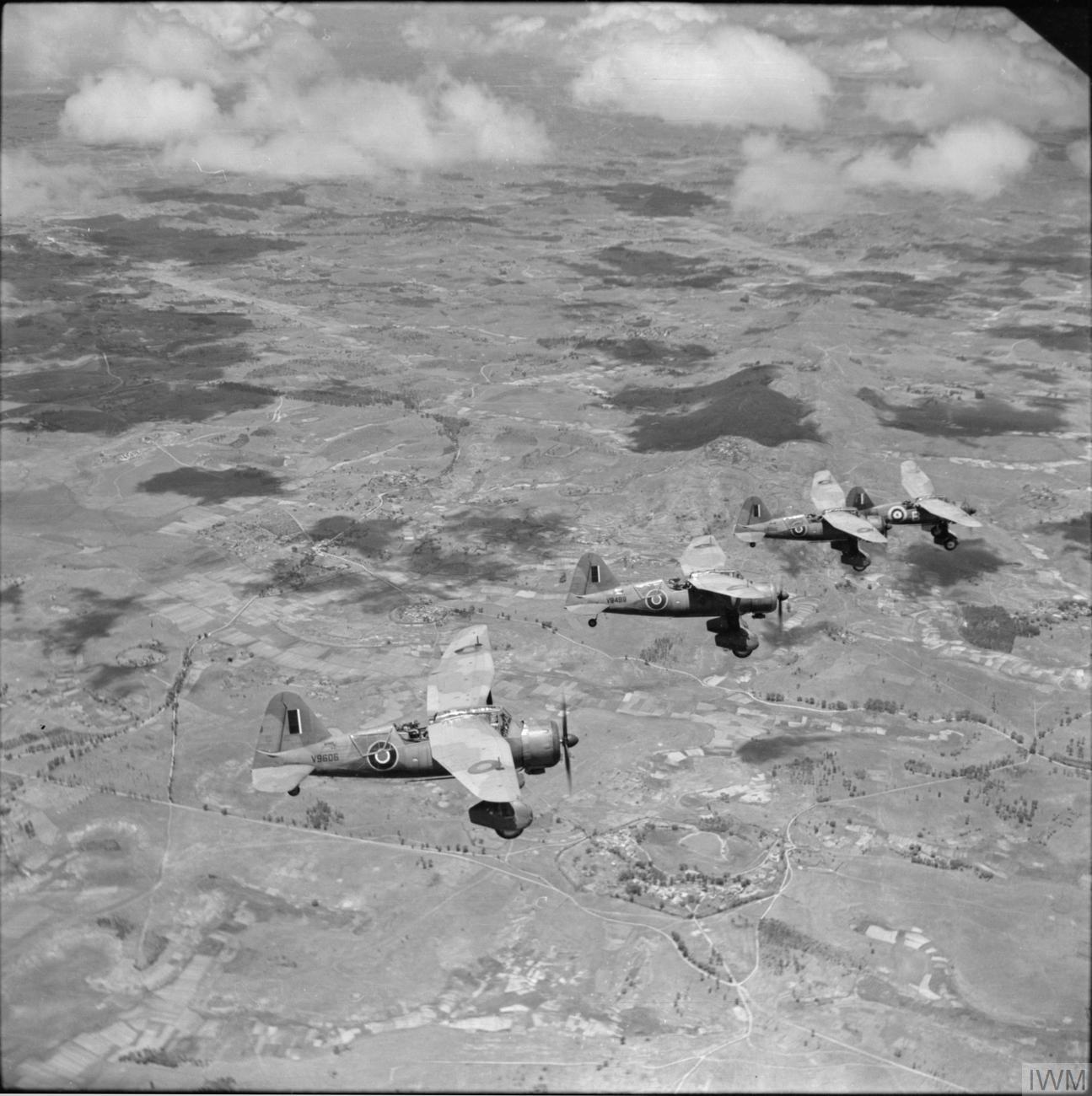
The Westland Lysander among its contemporaries
Every major army had its slow-flying eyes over the battlefield. What set the Lysander apart was less the idea than the engineering — and, later, the mission it was quietly re-tasked to fly.
The Lysander’s closest conceptual rival was the German Fieseler Fi 156 Storch, an even more extreme STOL machine that could land in almost no distance at all and became the Wehrmacht’s battlefield taxi and liaison aircraft. The Storch was lighter and could out-perform the Lysander at the very lowest speeds; the Lysander was heavier, faster and carried more, which mattered for its later long-range clandestine work.
American equivalents such as the Stinson L-1 Vigilant and later the light Grasshopper types filled the same liaison and observation niche for the US Army. Like the Lysander’s intended role, most of these aircraft were eventually overtaken by two trends: fast fighters doing tactical reconnaissance, and the helicopter taking over battlefield liaison and rescue after the war.
Where the Lysander stands alone is in its second career. No Storch or Vigilant became the signature aircraft of a secret war. The combination of two crew, a useful bomb-bay-sized belly tank for range, and a wing that could reliably use an unlit field made the Lysander the one aircraft the SOE could rely on to physically land an agent in occupied territory and bring another home — a capability that gives it a place in history quite separate from its specifications.
It is also worth noting how quickly the whole category the Lysander belonged to disappeared. Within a few years of the war’s end the battlefield liaison, observation and rescue jobs that aircraft like the Lysander, Storch and Auster had performed were being handed to the helicopter, which could do them from anywhere without needing even a short strip. The Lysander thus belongs to the very end of an era — the last generation of fixed-wing aircraft designed to work hand-in-hand with the army from improvised fields.
Set against that backdrop, the Lysander’s clandestine reinvention looks less like a lucky accident and more like the natural destiny of a superb short-field design that outlived the doctrine it was built for. When the front-line role vanished, the aircraft’s real quality — its ability to use a field — found the one wartime mission that valued it above all else.
Combat Record
The Westland Lysander’s losses, and an honest reckoning
Any fair account of the Lysander has to sit with the cost of 1940. The army co-operation squadrons in France were asked to do, in the face of the Blitzkrieg, precisely what pre-war doctrine had prepared them for — and precisely what that doctrine had got wrong. Loitering over a fast-moving front in a slow, lightly armed aircraft, without the speed to escape a fighter or the armour to shrug off flak, the Lysander crews paid a heavy price. The RAF Museum records that of the Lysanders committed to the campaign, only a minority came home.
It would be easy, and wrong, to blame the aircraft. The Lysander did what it was designed to do; the doctrine was the failure. The right response — which the RAF eventually reached — was to stop asking slow aircraft to survive over a modern battlefield, and to give tactical reconnaissance to fast fighters that could see and run. The army co-operation Lysander was a casualty of a change in the character of war itself.
The special-duties operations carried their own, quieter toll. Flying alone and unarmed, deep inside occupied territory, navigating by moonlight to fields watched by the enemy, was inherently dangerous work; aircraft were lost, and pilots and agents with them. That the loss rate was as low as it was is a tribute both to the crews’ skill and to the aircraft’s forgiving handling. But the moon flights were never safe, and the courage they demanded, night after night, should not be softened by the romance of the story.
The honest reckoning, then, is a double one. The Lysander was a poor combat aircraft that got men killed in a role it should never have been given, and it was a superb special-duties aircraft that saved lives and carried the Resistance war on its back. Both are true. Remembering only the second, without the first, would flatter the aircraft; remembering only the first, without the second, would do it a serious injustice.
Timeline
The Westland Lysander: a service record
Stories & Eyewitnesses
The Westland Lysander in sixteen stories
Designing for slow flight
Teddy Petter and Arthur Davenport built the Lysander around one question: how slowly can it fly?
Read more
Rather than chase speed, Westland’s team pursued controllability at the bottom of the envelope. The self-opening slats and linked slotted flaps were the result — a wing that reconfigured itself for slow flight without adding to the pilot’s workload.
The disaster of 1940
In the Battle of France the Lysander met a war it was never designed for.
Read more
Sent over the advancing German columns in daylight, Lysanders were shot down in numbers by flak and Bf 109s. The RAF Museum records that of the aircraft dispatched to France, only a minority returned — a loss rate that ended the pre-war army co-operation doctrine.
A second life in the dark
The type’s slowness, useless in a dogfight, was perfect for a job nobody had imagined.
Read more
From 1941 black-painted Lysanders began flying agents into occupied France by moonlight. The very qualities that had doomed the aircraft in daylight — low speed and short-field ability — were exactly what a clandestine landing required.
The fixed ladder
A small external ladder became one of the Lysander’s most famous features.
Read more
Bolted to the port side of the fuselage, the fixed ladder let an agent climb into or out of the rear cockpit in seconds. On a field deep in enemy territory, with the engine running and only minutes on the ground, every second saved mattered.
The belly tank
Range was the difference between a short hop and a deep penetration.
Read more
A large jettisonable fuel tank slung under the fuselage extended the Lysander’s range far enough to reach targets deep inside France and return on one moonlit night, transforming an army co-operation aircraft into a long-range special-duties machine.
Landing by moonlight
A handful of torches marked the secret strips.
Read more
Reception committees on the ground laid out an L-shaped flare path with three or four shielded torches. The pilot, navigating alone by map, river-shine and the moon, would spot the tiny pattern, land, turn, exchange passengers and take off — often in under five minutes.
Hugh Verity and the moon pilots
The men who flew the sorties left a vivid record.
Read more
Squadron Leader Hugh Verity, a leading special-duties pilot, later wrote We Landed by Moonlight, the classic first-hand account of the Lysander pick-up operations. Pilots such as Peter Vaughan-Fowler and John “Bunny” Rymills flew repeatedly into occupied territory, alone and unarmed.
Passengers of the Resistance
The Lysander’s cabin carried some of the war’s key figures.
Read more
Agents of the Special Operations Executive and leaders of the French Resistance were flown in and out by Lysander. For many, the cramped rear cockpit reached by that fixed ladder was the difference between capture and escape.
Air-sea rescue
Not every Lysander mission was secret.
Read more
Fitted to carry dinghies and supply containers, air-sea rescue Lysanders searched for airmen down in the Channel and North Sea, dropping survival gear to men in the water until a boat could reach them.
War in the East
Lysanders served far from Europe.
Read more
On the Burma front, Lysanders flew army co-operation and light-strike sorties against Japanese forces, while in the East African campaign they supported the advance against Italian forces — rugged, field-capable and useful where better aircraft were scarce.
Built in Canada
The Lysander crossed the Atlantic in more ways than one.
Read more
National Steel Car in Ontario built the Lysander under licence for the Royal Canadian Air Force, where the type served in training, coastal and target-towing roles. Several Canadian survivors — including airworthy examples — keep the story alive today.
The only surviving SD Lysander
One airframe carries the whole secret history.
Read more
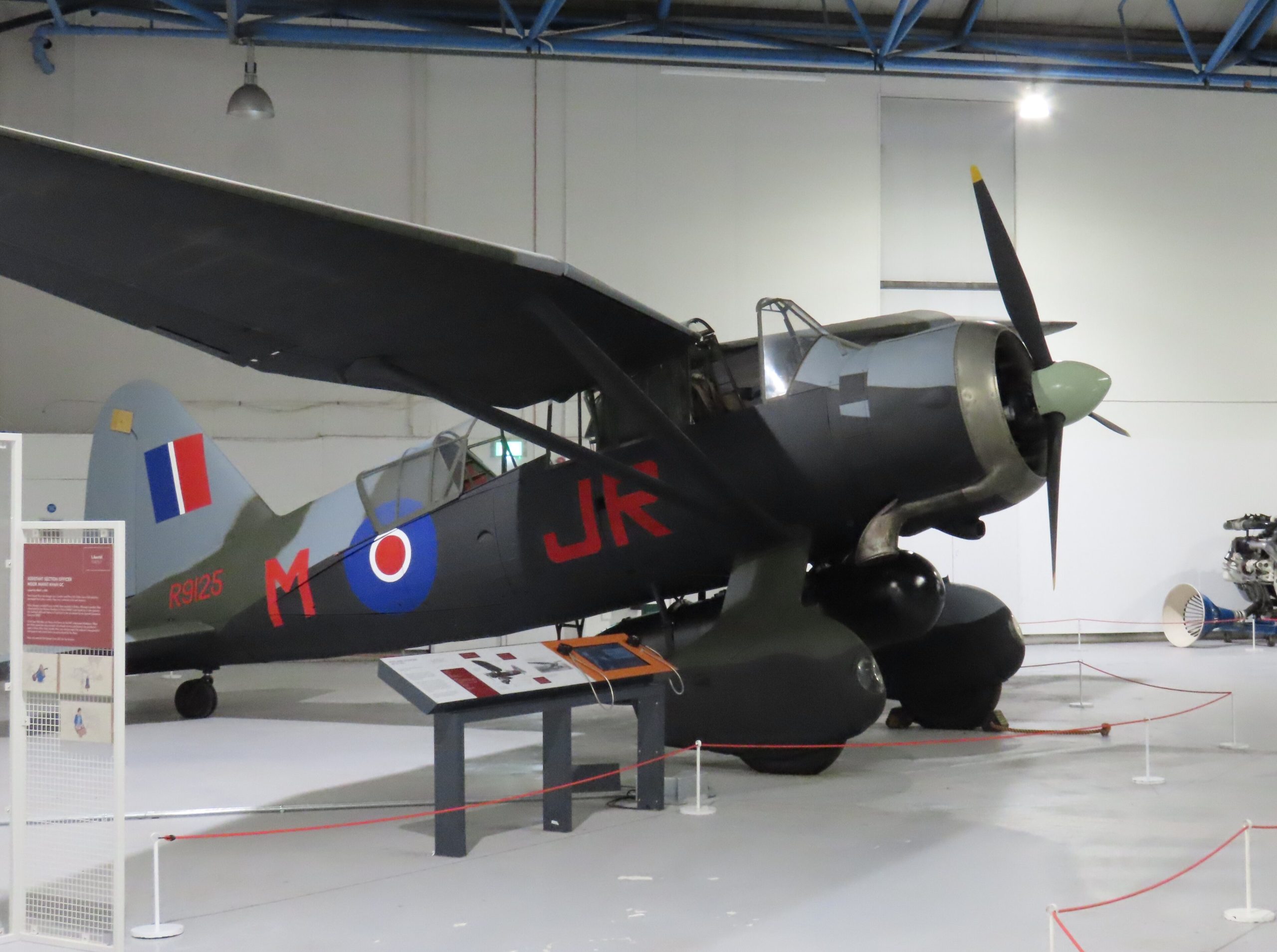
The RAF Museum’s Lysander (serial R9125), which served with No. 161 Squadron, is described by the Museum as the only surviving Special Duties variant of its type, and is displayed in the black No. 161 Squadron special operations colour scheme.
Aircraft like R9125 are why the secret war has a physical shape today. Standing in front of the black fuselage, the fixed ladder and the great belly tank, a visitor can read the whole improbable mission in the metal — an army co-operation aircraft rebuilt, quietly, into the most important taxi of the Resistance.
Storch versus Lysander
Britain and Germany each fielded a battlefield STOL aircraft — and they were very different machines.
Read more
The German Fieseler Fi 156 Storch could land and stop in almost no distance and became the Wehrmacht’s liaison and rescue aircraft — the machine that famously flew Mussolini off a mountain. It was lighter and slower than the Lysander and even more extreme at the bottom of the speed range.
The Lysander was heavier, faster and carried more, and crucially could be given the range for deep clandestine penetration. Where the Storch was the perfect short-range battlefield runabout, the Lysander became the long-range secret-agent transport — the same broad idea taken in a different, and historically decisive, direction.
The message pick-up
Before radio was universal, the Lysander could snatch a message from the ground without landing.
Read more
Army co-operation Lysanders carried a message pick-up hook and could be rigged to collect written messages strung between two poles as the aircraft flew low overhead, as well as to drop weighted message bags to troops below.
It was a very pre-war way of communicating with ground forces, and it captures what the Lysander was originally for: an aerial link between the general and the front, in an age before the battlefield filled with reliable two-way radio. That the same airframe ended up linking London to the Resistance is one of history’s neater ironies.
Training, targets and communications
Not every Lysander story is dramatic — and that is part of the point.
Read more
Huge numbers of Lysanders spent the war on unglamorous but essential second-line duties: towing targets for anti-aircraft and air-gunnery training, flying communications and liaison runs between headquarters, and serving in flying schools.
This quiet utility is exactly why so many airframes survived to be re-tasked. An aircraft too vulnerable for the front line but rugged, docile and cheap to run found endless work behind it — and kept the type in service, and in production, long enough for its secret second career to begin.
The Lysander in memory
The “moon squadron” story has outlived almost everyone who flew it.
Read more
The image of a black Lysander settling onto a moonlit French field, engine running, an agent scrambling down a ladder into the dark, has become one of the enduring pictures of the secret war — recurring in memoirs, histories, documentaries and film.
It endures because it is true, and because it is human: no radar, no computers, just a lone pilot, a map, the moon and three torches. The Lysander is remembered less as a piece of engineering than as the stage on which some of the bravest and most secret work of the war was carried out.
The Lysander in Depth
The Westland Lysander: tactics, technology and legacy
08How a Lysander moonlight pick-up actually worked+
A special-duties sortie began with a coded BBC message confirming the operation to the reception committee in France. The pilot flew alone, navigating by dead reckoning and by recognisable rivers, coastlines and moonlit landmarks, since there were no navigation aids over enemy territory.
At the field the committee laid out a small flare path: three torches in an L, sometimes a fourth, switched on only when the aircraft was heard. The pilot landed along the long arm of the L, turned at the corner and taxied back. Outgoing and incoming passengers — and mail, and packages — were exchanged in minutes with the engine running, and the Lysander was airborne again before any German patrol could react.
It was flying of extraordinary precision and nerve, and the Lysander’s docile slow-speed handling was what made it survivable at all.
09Why the Lysander failed as a combat aircraft+
The army co-operation concept assumed a permissive sky: an aircraft could loiter over the front line, spot for the guns and drop messages because enemy fighters and flak were manageable. By 1940 that assumption was dead.
A Lysander over the battlefield was slow, unarmoured and lightly armed, an easy target for the Bf 109 and for concentrated light flak. No amount of clever slow-flight engineering could change that. The lesson — that tactical reconnaissance needed speed and the ability to escape — pushed the RAF towards fast types like the Mustang for the role.
10The Special Duties squadrons: 138, 161 and Tempsford+
Clandestine flights to occupied Europe were run from RAF Tempsford in Bedfordshire, with Lysander operations flying forward to RAF Tangmere on the south coast to shorten the Channel crossing. No. 138 Squadron pioneered the work; in February 1942 No. 161 Squadron formed and took over the Lysander pick-up role.
No. 138 concentrated increasingly on parachuting agents and supplies from larger aircraft such as the Halifax and Whitley, while No. 161’s Lysander flight specialised in the physical landings and pick-ups. Together they formed the RAF’s aerial link to the Resistance.
11The Westland Lysander’s operating costs: what the numbers do — and don’t — say+
No reliable unit cost or cost-per-flight-hour figure survives for the Lysander in the way it does for post-war types: wartime procurement was not accounted or published the same way, and any single number would be misleading.
What can be said is that the Lysander was cheap by the standards of front-line combat aircraft — a light airframe with a single medium-powered radial — which is part of why it could be diverted to secondary roles rather than scrapped. As a rough, clearly flagged illustration, operating a preserved radial-engined warbird of this size today is often estimated in the region of £2,000–4,000 or more per flying hour once maintenance, insurance and fuel are counted; that is a modern warbird estimate, not a historical figure.
12Legacy: the aircraft that carried the war of shadows+
The Lysander’s place in history rests almost entirely on its second career. It is remembered not as a successful army co-operation aircraft — it was not — but as the machine that physically connected Britain to the Resistance, night after night, at enormous personal risk to its pilots.
That legacy is why a genuine special-duties airframe is preserved in No. 161 Squadron black, why the story recurs in books and films about the secret war, and why the ungainly “Lizzie” is remembered with a respect its specifications alone would never have earned.
More on the Lysander
The Westland Lysander: crew, colours and the craft of the moon flights
13The observer’s war: eyes for the army+
In the army co-operation role the Lysander was a two-seater for a reason. Behind the pilot sat an observer whose job was to read the battlefield — to spot enemy movements, register targets for the artillery, take photographs and pass corrections back to the guns.
The high wing and deep glazed rear cockpit gave that observer an excellent downward view, and the whole airframe was arranged around his task. When the type was re-tasked to special duties the rear cockpit changed its purpose entirely, carrying not an observer but the agents and mail that made the Lysander famous — but the roomy, well-sighted back seat that made both roles possible was the same.
14Matt black and no markings: the look of a Special Duties Lysander+
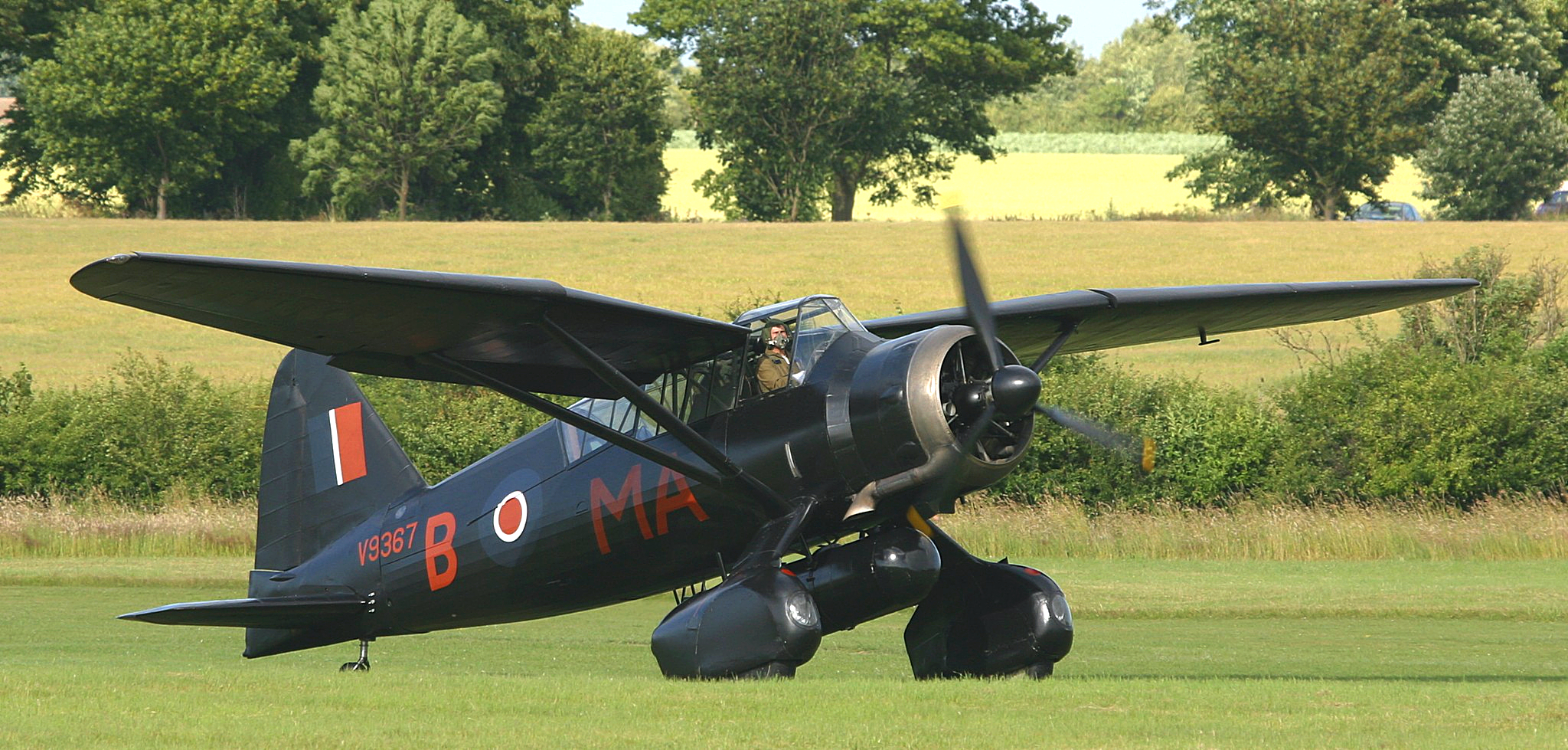
The special-duties Lysanders were painted overall matt black to disappear against the night sky, with subdued or minimal markings. The clean, unarmed airframe carried the large jettisonable belly tank and the external boarding ladder that are the visual signatures of the type.
It is a striking transformation. The standard Lysander, in day camouflage with its guns and stub-wing bomb racks, looks every inch the 1930s army co-operation aircraft. The SD machine, black and stripped and fitted for range, looks like exactly what it was: a purpose-built instrument of the secret war.
15Finding a field in the dark+
The navigation problem of the moon flights was formidable. There were no radio beacons over occupied France and nothing to give away the aircraft’s position, so the pilot navigated by dead reckoning — heading, speed and time — corrected against features he could actually see by moonlight: coastlines, the silver of rivers, the shapes of towns and woods.
Operations were flown only around the full moon, which is why the special-duties squadrons were nicknamed the “moon squadrons.” Even then, finding a specific small field marked by a few shielded torches, on a single pass, deep in enemy territory and alone, was flying of a very high order — and the reason so few aircraft could have done the job at all.
16What the passengers remembered+
For the agents, the Lysander was often the most frightening and the most hopeful moment of a mission — the point at which they physically crossed into or out of occupied Europe. The climb up the fixed ladder into the cramped rear cockpit, the few minutes on the ground with the engine running, the sudden lift into the dark: these are the details that recur in the memoirs of those who were carried.
That human dimension is why the Lysander’s fame has lasted. It is remembered not as a machine but as a lifeline — the aircraft that came, against the odds, on the right night, and took you home.
The Secret War in Detail
The Westland Lysander and the mechanics of the moon flights
17A pick-up operation, step by step+
First came confirmation. An agent in the field would request a pick-up through wireless traffic to London; if approved, the operation was signalled back — famously, sometimes via a coded phrase in the BBC French service broadcasts — telling the reception committee which night to expect the aircraft.
On the night, the Lysander flew forward from Tempsford to Tangmere to top up fuel and shorten the sea crossing, then set out alone across the Channel. Over France the pilot navigated to the map reference by moonlight. The reception committee, hearing the engine, switched on an L of shielded torches and flashed a recognition letter in Morse.
The pilot answered, landed along the flare path, taxied back to the corner and held the aircraft with the engine running. Passengers climbed down and up the fixed ladder, packages were swapped, and within a few minutes the Lysander was accelerating back into the dark. Everything depended on speed, silence and the aircraft’s ability to use the field at all.
18Tempsford and Tangmere: the home of the moon squadrons+
RAF Tempsford in Bedfordshire was one of the most secret airfields in Britain, home to the special-duties squadrons that supplied the Resistance. Disguised and heavily guarded, it was the base from which agents and stores left for occupied Europe.
For the Lysander pick-ups, aircraft staged forward to RAF Tangmere near the south coast, where a small cottage served as the operations base for the moon-period sorties. From there the Channel crossing was as short as possible, leaving the maximum fuel and darkness for the deep work over France.
19The Lysander in Canada and across the Commonwealth+
Canada was more than an operator: National Steel Car in Ontario built the Lysander under licence, and the Royal Canadian Air Force used the type at home for training, coastal patrol and target towing. That production line is why several of the best-preserved and airworthy Lysanders today are Canadian.
Across the Commonwealth the Lysander turned up wherever a rugged, field-capable liaison and army co-operation aircraft was useful: with Australian and South African forces, on the Burma front with British and Indian units, and in the skies over East Africa and the Western Desert. It was rarely the decisive aircraft, but it was reliably a useful one.
20Myths, films and the honest record+
The moon-squadron story has been retold so often, in memoir and film, that it can slide into legend. The honest record is more impressive than any myth: real pilots, flying a real and rather ordinary aircraft, made hundreds of clandestine landings in occupied territory and brought people home.
It is worth being equally honest about the other end of the story — the slaughter of the army co-operation Lysanders in 1940. Holding both truths together, the failure and the triumph, is the only fair way to remember the type. The Lysander was not a wonder-weapon; it was an aircraft that found, almost by accident, the one job in the world it was perfectly suited to do.
Equipment & Operations
The Westland Lysander: how it was flown and equipped
As delivered, the army co-operation Lysander was equipped for a very specific job: working with troops on the ground. It carried cameras for photo-reconnaissance, message pick-up and drop gear for liaison with units that might have no radio, and light bombs or supply containers on the little stub wings that could be fitted to its undercarriage spats. Its two forward-firing .303 guns and the observer’s flexible gun were meant for self-defence and ground strafing, not air combat.
The special-duties conversion swept most of this away. Guns and racks came off; the airframe was lightened and cleaned up; the great belly tank went on for range; and the fixed ladder was added so a passenger could board or leave in seconds. What remained was the one thing that mattered — the high-lift wing that could use a field — now wrapped in matt black and fitted for a mission of a completely different kind.
Operationally, the two lives of the Lysander could hardly have been more different. In 1939–40 it flew by day, in formation, close to friendly troops, doing a job that pre-war planners had thought would be survivable and were proved wrong about within weeks. From 1941 it flew by night, alone, hundreds of miles inside enemy territory, doing a job nobody had planned for it at all — and doing it better than any other aircraft could. The same wing, the same docile handling, served both; only the war around it had changed.
Behind every flight stood the ground crews who kept the radials running and the reception committees in France who marked the fields and guarded the agents. The Lysander is rightly remembered for its pilots, but the moon operations were a team effort spanning two countries and the whole apparatus of the secret war — and the aircraft sat, quite literally, at the centre of it.
Anatomy
The Westland Lysander, part by part
21The trousered undercarriage and its hidden guns+
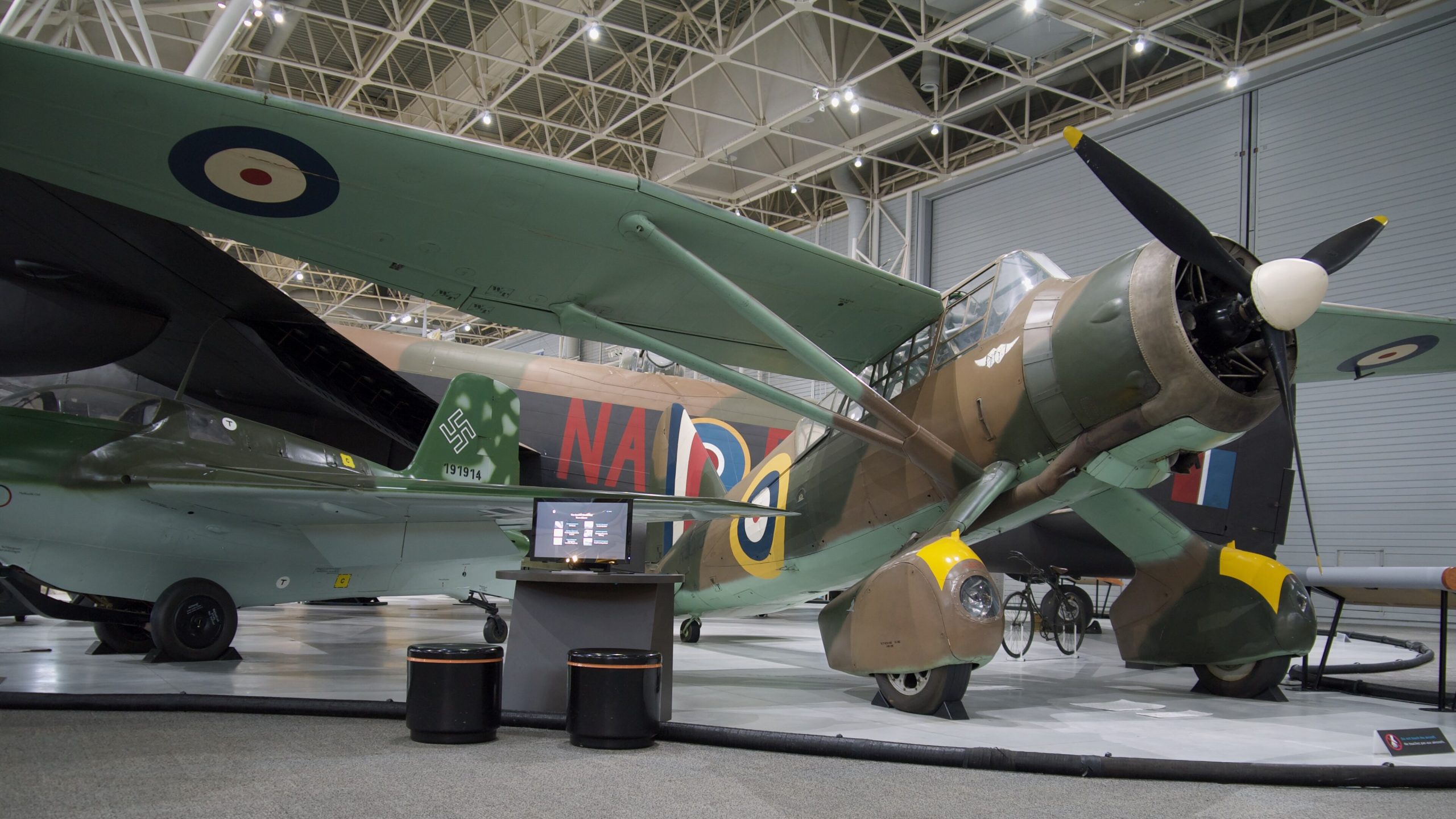
The Lysander’s most instantly recognisable feature is its heavy, fixed, deeply spatted undercarriage — the “trousers” that enclosed each mainwheel. Far from being mere fairings, the spats were structural and immensely strong, sprung to soak up the punishment of repeated landings on rough grass and farm fields.
Cleverly, each spat also housed one of the aircraft’s two forward-firing .303 in Browning machine guns, and could carry a small stub wing for light bombs or supply containers. It is a neat piece of design: the same structure that made the Lysander rugged enough for its field role also carried its modest armament and stores.
22The high wing and the pilot’s view+
The wing was set high and braced to the fuselage, a layout chosen deliberately for the army co-operation role: it gave both crew members an excellent downward view, essential for spotting, photography and artillery observation. The distinctive reverse-tapered planform, broad at the root, housed the full-span slats and the linked flaps.
For the pilot, the combination of a high wing, a tall undercarriage and a nose-up ground attitude took some getting used to, but the reward was superb visibility over the side and down — and, when the flaps and slats were deployed, a docile, floating approach that made the short, precise landings of the secret war achievable.
23Cockpit, controls and crew comfort+
The Lysander seated its two crew in tandem under a long glasshouse canopy: the pilot forward, the observer or gunner behind with his flexible gun and, later in special-duties aircraft, the space that carried agents. The cockpit was roomy by the standards of the day and reasonably warm, a real consideration on long night flights across the Channel.
Controls were conventional but the aircraft’s slow-flight behaviour was anything but ordinary: pilots had to learn to trust the slats and flaps and to fly approaches far slower than instinct suggested. Once mastered, the Lysander was widely liked — forgiving, stable and honest, exactly the qualities you want in an aircraft you must land in the dark on a strange field.
24Production, serials and survival+
Lysanders were built at Westland’s Yeovil works and, under licence, by National Steel Car in Ontario, with total production commonly given as around 1,786 across all marks — a figure that varies between sources and should be treated as approximate.
Attrition, scrapping and the passage of time have left only a modest number of survivors, which is what makes the handful of preserved and airworthy examples so valuable. The single most significant is the RAF Museum’s R9125, a genuine special-duties airframe; between it, the Shuttleworth machine and the Canadian survivors, enough of the type remains for each generation to see, in metal, the aircraft behind the legend.
Photo Gallery
The Westland Lysander in photographs
On Film
The Westland Lysander on film
A concise, well-sourced documentary on the Lysander and its clandestine “spy taxi” role, from an established aviation-history channel.
“Westland Lysander — The British Spy Taxi Aircraft of WWII,” DroneScapes. An established aviation-history documentary channel; roughly 46,000 views with a strong like ratio (about 620 likes to 16 dislikes) at the time of writing.
Operations Map
Where the Westland Lysander served
British-designed and British-built, the Lysander was flown by the RAF and Commonwealth air forces, exported to a handful of other nations, and survives today in museums and a few airworthy examples. Toggle the categories to explore.
By the Numbers
The Westland Lysander by the numbers
Where to See One
Surviving Westland Lysanders on display
A number of Lysanders survive around the world, and a small handful remain airworthy — appearing occasionally at airshows rather than as any kind of bookable ride. The most historically important survivor is the RAF Museum’s R9125, a genuine No. 161 Squadron aircraft displayed in special-duties black and described by the Museum as the only surviving Special Duties variant of its type.
The Shuttleworth Collection at Old Warden holds Lysander V9552, restored and painted as the black 161 Squadron machine V9367; it was flown for many years, and like all elderly warbirds its display status varies with its restoration and maintenance cycle. In Canada, the Canada Aviation and Space Museum in Ottawa preserves a Lysander, and Canadian warbird collections have kept examples in airworthy condition — a legacy of the type’s wartime production at National Steel Car in Ontario. Further airframes are preserved in the United States and at the Royal Military Museum in Brussels, among others.
If you want to see a Lysander fly, the answer is to follow the airshow calendars of the collections that operate them, not to look for a passenger flight — the Lysander is a museum and heritage aircraft, not a commercial experience.
Legacy
Remembering the Westland Lysander
It is easy to file the Lysander under “failures” — the slow, ugly army co-operation aircraft slaughtered over France in 1940. But that reading misses almost everything that matters about it. The Lysander’s importance was never going to be measured in kills or speed records. It was measured in the agents who reached France and the agents who came home.
Night after night, unarmed and alone, its pilots put an aeroplane down on a stranger’s field in occupied Europe, guided by three torches and the moon, and lifted people out of the reach of the Gestapo. No other aircraft did that job so reliably, because no other aircraft combined the range, the two seats and the wing that could use those fields. The “Lizzie” earned its place in history not by winning battles but by carrying the secret war on its back.
There is a lesson in the Lysander that outlasts the aircraft itself. Value is contextual. The same qualities that made it a liability in one war made it indispensable in another; the “failure” and the “triumph” were the very same aeroplane, unchanged in all but paint and fittings. When we remember the Lysander, we are really remembering the men who found the right use for it — and who flew it, at appalling risk, to the places that mattered.
Stand today in front of a preserved “Lizzie” — the black RAF Museum machine, or a survivor in Canada — and the ungainly shape resolves into something quietly moving: a small, slow, honest aircraft that did more than its designers ever dreamed, in the dark, for the people who needed it most.
Questions & Answers
Westland Lysander: your questions answered
Can I fly in a Westland Lysander?
No — MiGFlug does not offer flights in a Westland Lysander, and there is no commercial passenger ride in the type anywhere. A small number of genuine Lysanders remain airworthy (notably in Canada, and historically with the Shuttleworth Collection) but they are heritage aircraft that appear at airshows, not bookable rides. If you want to actually fly in a real military aircraft today, you can — MiGFlug puts civilians in the cockpit of genuine jets, from trainers to supersonic fighters. See migflug.com/flights-prices.
Why is the Westland Lysander famous?
For its second career. After failing in daylight combat in 1940, the Lysander was re-tasked from 1941 as a clandestine special-duties aircraft, flying SOE and secret-service agents into and out of occupied France by moonlight. That role — the “moon squadron” pick-ups — is what the aircraft is remembered for, far more than its intended army co-operation work.
What happened to the Lysander in the Battle of France?
It suffered badly. Sent over the advancing German army in daylight, the slow, lightly armed army co-operation Lysanders were cut down by fighters and flak. The RAF Museum records that of the aircraft dispatched to France, only a minority returned. The campaign discredited the whole pre-war doctrine of the slow front-line spotter.
How could the Lysander land in such small fields?
Through its wing. The Lysander had full-span automatic leading-edge slats linked to slotted flaps that ran almost the whole trailing edge. Together they let the aircraft fly under full control at very low speed and land in only a few hundred yards on grass — the STOL performance that made secret landings in occupied territory possible.
What engine did the Westland Lysander use?
A Bristol radial. The Mk I used the Bristol Mercury XII (~890 hp), the Mk II the Bristol Perseus sleeve-valve radial (~905 hp), and the definitive Mk III the Bristol Mercury XX/30 of around 870 hp — all air-cooled radials well suited to a rugged field aircraft.
How many Westland Lysanders were built?
Approximately 1,786 across all marks, including aircraft assembled under licence in Canada — though sources vary, and some references give a lower figure around 1,650. It is best treated as an approximate total.
Which squadrons flew the special-duties Lysanders?
Chiefly No. 161 Squadron, which formed in February 1942 and took over the moonlight pick-up role, operating from RAF Tempsford with a forward base at RAF Tangmere. No. 138 Squadron pioneered the clandestine work before concentrating on parachute drops from larger aircraft. Pilots such as Hugh Verity, who wrote We Landed by Moonlight, flew these sorties.
Are there any surviving Westland Lysanders?
Yes. Several survive worldwide, including the RAF Museum’s R9125 — a genuine No. 161 Squadron special-duties airframe — the Shuttleworth Collection’s V9552, examples at the Canada Aviation and Space Museum and in Canadian warbird collections, and airframes in the United States and Brussels. A few remain airworthy.
What does the nickname “Lizzie” mean?
It is simply RAF slang derived from the name Lysander. Westland named the aircraft after the Spartan admiral Lysander, following its tradition of classical “L” names; airmen shortened and softened this to the affectionate “Lizzie.”
Was the Westland Lysander a good aircraft?
It depends on the yardstick. As the army co-operation aircraft it was designed to be, it was a failure — too slow and vulnerable for a modern battlefield. As a slow-flying, short-field special-duties machine it was superb, and irreplaceable in its clandestine role. The honest verdict is that it was the wrong aircraft for its first job and exactly the right one for its second.
How did the Lysander land agents in occupied France?
By moonlight, on improvised fields. Flown only around the full moon, a lone pilot navigated across the Channel by dead reckoning and visible landmarks to a field marked by a reception committee with three or four shielded torches in an L pattern. He landed along the long arm of the L, turned, and exchanged passengers and mail in minutes with the engine running before taking off again — the whole ground time often under five minutes.
What was the Lysander’s STOL performance like?
Exceptional for its size. Thanks to full-span automatic slats and slotted flaps, it could be flown under full control at around 55–65 mph and land in only a few hundred yards on grass. That short-field ability, useless in a dogfight, is precisely what made clandestine landings on small farm fields possible.
Who designed the Westland Lysander?
It was designed at Westland by Arthur Davenport under the direction of W.E.W. “Teddy” Petter, the aircraft’s first production design. Petter went on to lead the design of the English Electric Canberra and Lightning, making the humble Lysander an early work by one of Britain’s most important jet-age engineers.
You can’t fly the Westland Lysander. These, you can.
The Lysander is a museum piece and a memorial — but the thrill of flying a real military aircraft is not out of reach. MiGFlug puts you in the cockpit of genuine jets, from trainers to supersonic fighters.
Fighter Jet Flights
Take the controls of a real ex-military jet with an experienced fighter pilot.
See flights & pricesL-39 Albatros
The classic jet trainer — aerobatics and low-level fun, in several countries.
See flights & pricesRelated Aircraft
More from the Aircraft Museum
 Vickers WellingtonThe geodetic-framed night bomber that carried Bomber Command through the early war.
 Bristol BlenheimThe fast light bomber that was briefly quicker than the fighters it would face.
 Handley Page HalifaxThe four-engined heavy that shared the night offensive — and dropped SOE agents by parachute.
Sources & Further Reading