
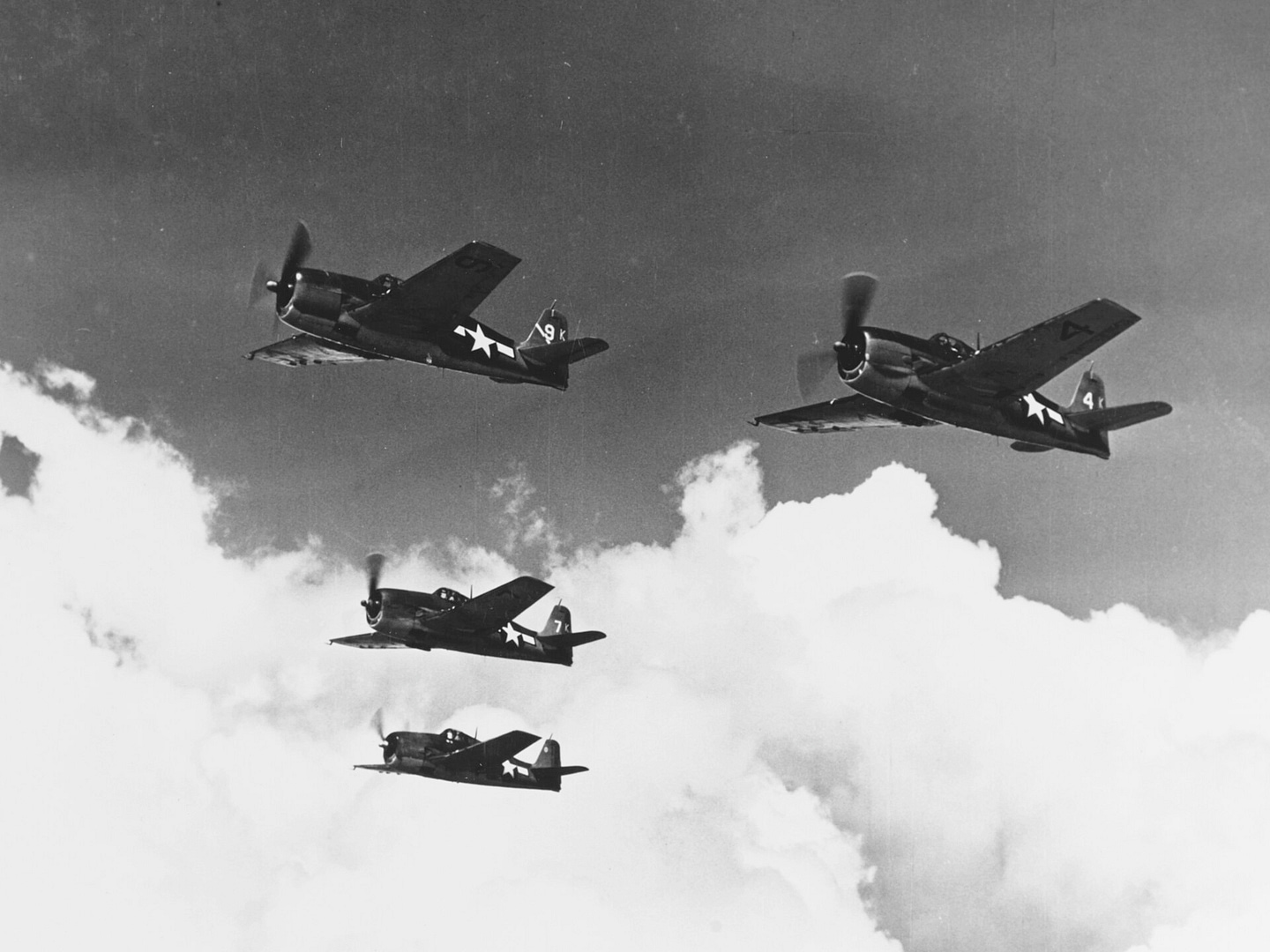
Grumman F6F
“Hellcat”
The rugged Grumman carrier fighter built to beat the A6M Zero — and the aircraft that broke Japan’s naval air power, from Marcus Island to the Marianas Turkey Shoot.
The Hellcat: built to beat the Zero
When the Pacific war began, the US Navy had no fighter that could reliably beat the Mitsubishi A6M Zero. The nimble Japanese fighter out-turned and out-climbed the Navy’s early F4F Wildcats, and American pilots survived by teamwork and tactics rather than raw performance. Grumman’s answer was not a dogfighter but a heavyweight: the F6F Hellcat, a rugged, heavily armed carrier fighter built around the massive Pratt & Whitney R-2800 Double Wasp radial.
The prototype XF6F-1 first flew on 26 June 1942, and after switching to the more powerful R-2800 the type was rushed into production. Hellcats entered combat with squadron VF-5 during the Marcus Island raid on 31 August 1943, and within a year they had swept Japanese air power from the skies over the central Pacific. Grumman built 12,275 Hellcats in barely two years — a rate that reflected both the airframe’s simplicity and the Navy’s desperate need for carrier fighters.
The Hellcat’s reputation rests on numbers as impressive as they are debated. Navy records credit F6F pilots with roughly 5,100 to 5,270 enemy aircraft destroyed — about three-quarters of the Navy’s air-to-air victories in the Pacific — and the type is routinely quoted with a kill-to-loss ratio of about 19 to 1. That figure should be read as a wartime claim rather than an audited fact: victory counts across every air force were inflated, and the exact ratio depends on how losses are counted. What is not in doubt is that the Hellcat produced more US Navy aces than any other fighter, and that its blend of power, armour, self-sealing tanks and forgiving handling let ordinary pilots survive their first fights and become veterans.
01The F6F Hellcat versus the A6M Zero: how Grumman beat Japan’s carrier fighter
The Zero could out-turn the Hellcat at low speed, so Grumman and the Navy fought a different battle. Hellcat pilots used the R-2800’s power and their aircraft’s superior dive and high-speed handling to attack from above, fire a heavy burst from six .50-calibre guns, and climb away before the lighter Zero could respond. The cardinal rule — never turn with a Zero — was reinforced by lessons from a captured example and by hard experience. Combined with armour and self-sealing tanks the Zero lacked, it turned the Pacific air war decisively in America’s favour from late 1943.
What makes it special
A rugged airframe around the R-2800 Double Wasp
The Hellcat was built around the 18-cylinder Pratt & Whitney R-2800 Double Wasp, a twin-row radial delivering roughly 2,000 hp — up to about 2,200 hp with water injection in the F6F-5’s -10W engine. Grumman wrapped it in a famously tough structure: cockpit armour plate, a bullet-resistant windscreen and self-sealing fuel tanks. Pilots repeatedly brought home Hellcats riddled with battle damage.
A carrier fighter designed to beat the Zero
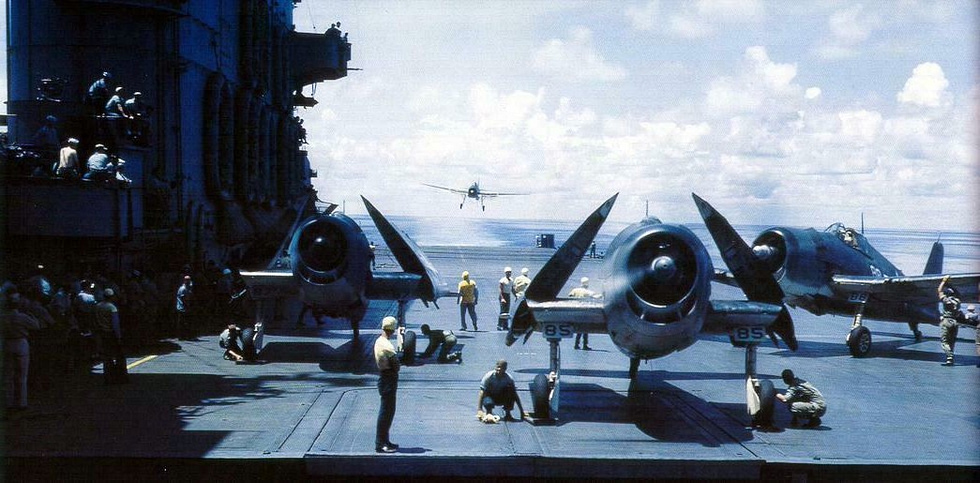
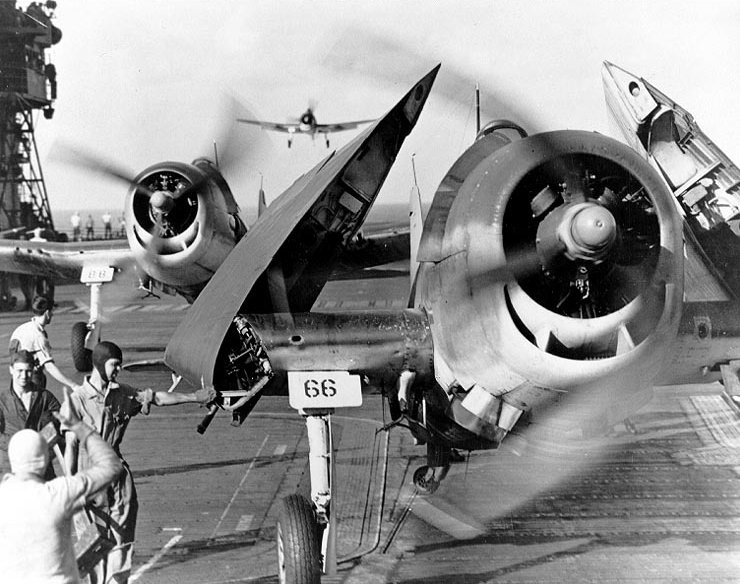
Unlike the lightweight Zero, the Hellcat was engineered for the brutal realities of carrier war. Grumman’s space-saving “Sto-Wing” folding wings let carriers pack more fighters aboard, and a wide-track undercarriage made deck landings forgiving. The design was set in 1941 — before a flyable Zero was captured — so the popular idea that the Hellcat was ‘built from’ the Zero is a myth; the captured fighter mainly refined tactics.
Six .50-calibres and forgiving handling
The Hellcat carried six wing-mounted .50-calibre M2 Browning machine guns — a hard-hitting battery ideal for the short firing passes its tactics demanded. Some late night-fighters swapped two guns for 20 mm cannon. Just as important was the aircraft’s stable, predictable handling: it tolerated rough landings and let relatively inexperienced pilots hold their own, a decisive edge as the Navy expanded rapidly.
02The F6F Hellcat and the Akutan Zero: what the captured fighter really taught America
In June 1942 a Zero flown by Petty Officer Tadayoshi Koga crash-landed almost intact on Akutan Island in the Aleutians. Recovered and test-flown that autumn, it exposed the Zero’s real weaknesses — stiff ailerons above about 200 knots and an engine that cut out under negative-G. Popular history says the Hellcat was designed from it, but the timeline debunks that: Grumman’s specification was dated February 1941 and the prototype flew before the captured Zero was airworthy. Its true value was tactical — telling US pilots exactly how to fight the Zero.
03The F6F Hellcat’s night-fighters: radar Hellcats after dark
Grumman built dedicated radar night-fighters — the F6F-3N and -3E, and the later F6F-5N (roughly 1,189 of the latter) — carrying an AN/APS-6 radar pod on the starboard wing, some with 20 mm cannon replacing two machine guns. Flying from carriers and island strips, they countered night intruders and torpedo attacks and extended fleet air defence around the clock in 1944–45.
Full specifications
Airframe & Performance (F6F-5)
- Crew
- 1
- Length
- 10.24 m (33 ft 7 in)
- Wingspan
- 13.06 m (42 ft 10 in)
- Height
- 3.99 m (13 ft 1 in)
- Empty weight
- ~4,190 kg
- Max takeoff weight
- ~6,990 kg
- Max speed
- ~610–625 km/h (~380–390 mph)
- Range
- ~1,500 km with drop tank (varies by source)
- Service ceiling
- ~11,370 m (37,300 ft)
Propulsion, Armament & Programme
- Engine
- 1 × Pratt & Whitney R-2800-10W Double Wasp
- Power
- ~2,000 hp (up to ~2,200 hp with water injection)
- Armament
- 6 × .50-cal M2 Browning (some -5N: 2×20 mm + 4×.50)
- Ordnance
- Up to ~1,800 kg bombs & HVAR rockets
- First flight
- 26 June 1942 (XF6F-1)
- Built
- 12,275 (all marks, 1942–1945)
- Unit cost
- ~US$35,000 (WWII, approximate)
- Cost per flight hour
- No reliable public figure
04The F6F Hellcat’s cost: what a wartime carrier fighter was worth
A Hellcat is often quoted at around US$35,000 in wartime dollars, but that figure is poorly documented and should be treated as approximate — some cost tables list higher numbers, and mass production drove unit prices down over time. No reliable cost-per-flight-hour figure exists for a 1940s piston fighter operated in wartime conditions, so any precise modern ‘per-hour’ number you see attached to the type is an estimate rather than a sourced fact.
From drawing board to Turkey Shoot — and beyond
Design begins
Grumman’s XF6F specification is dated February 1941 and the Navy contract follows on 30 June 1941 — before Japan’s Zero was captured intact.
First flight
The prototype XF6F-1 flies at Bethpage, New York, on 26 June 1942; Grumman soon standardises on the R-2800 Double Wasp.
Into combat
Hellcats enter combat with VF-5 at Marcus Island on 31 August 1943 and quickly become the Navy’s main carrier fighter; Britain’s Fleet Air Arm also begins flying them.
The Marianas Turkey Shoot
At the Battle of the Philippine Sea, 19–20 June 1944, Hellcats help destroy the bulk of Japan’s carrier aircraft in a lopsided air battle.
McCampbell’s nine
On 24 October 1944, David McCampbell downs nine aircraft in a single mission — a US record that earns him the Medal of Honor.
Production ends
Grumman completes the 12,275th and last Hellcat in November 1945, after barely three years of building.
France in Indochina
The French Aeronavale flies F6F-5 Hellcats in the First Indochina War, including strikes from the carrier Arromanches in the Gulf of Tonkin.
Hellcat drones
Surplus F6F-5K drones serve as targets and, over Korea, as television-guided attack drones launched from USS Boxer.
From the cockpit: twelve Hellcat stories
Built to beat the Zero
Grumman’s brief: out-power and out-tough Japan’s agile carrier fighter, not out-turn it.
Read the full story
The Akutan Zero
A captured Zero shaped US tactics — not the Hellcat’s fundamental design, despite the legend.
Read the full story
The Great Marianas Turkey Shoot
19–20 June 1944: Japanese naval air power collapses in a single lopsided air battle.
Read the full story
Bring the pilots home
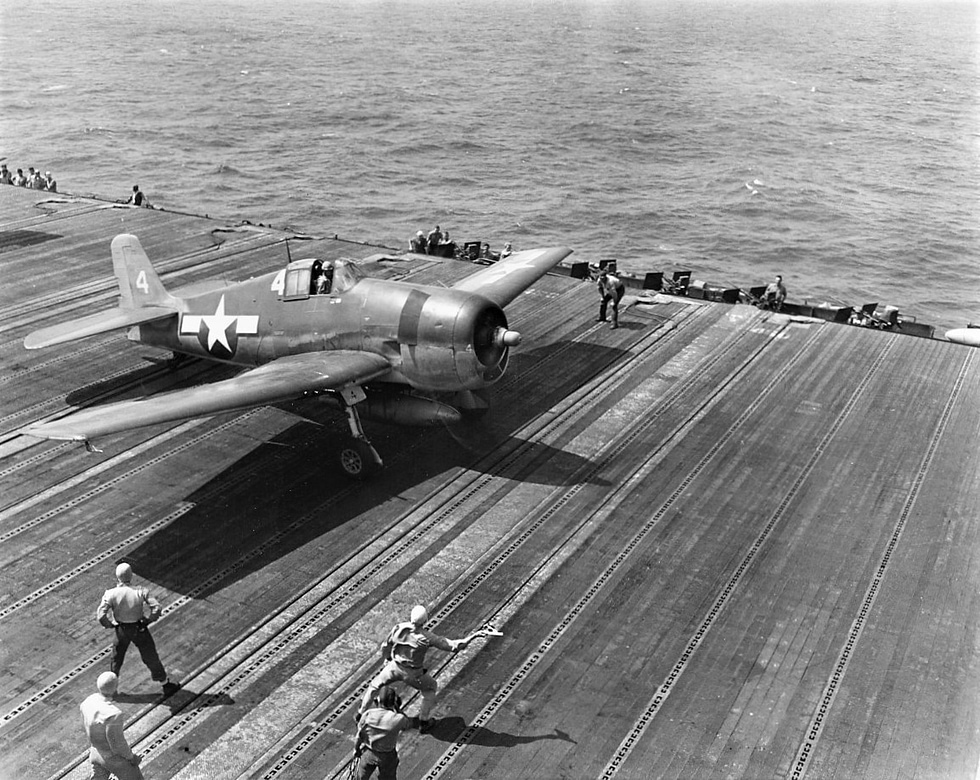
Battle-torn Hellcats routinely returned to the carrier and trapped aboard safely.
Read the full story
David McCampbell — the Navy’s top ace
34 career victories, including a record nine enemy aircraft downed in one mission.
Read the full story
The great ace-maker
The Hellcat produced more US Navy aces than any other fighter of the war.
Read the full story
Radar Hellcats after dark
Wing-mounted AN/APS-6 radar turned the Hellcat into a nocturnal hunter in 1944–45.
Read the full story
Hellcats in the Fleet Air Arm
Britain’s Royal Navy flew roughly 1,200 Lend-Lease Hellcats from 1943.
Read the full story
The Double Wasp story
Pratt & Whitney’s R-2800 gave the Hellcat — and the Thunderbolt and Corsair — its muscle.
Read the full story
The 19:1 claim
A famous kill ratio — but a wartime claim, not an independently audited fact.
Read the full story
Hellcat drones
Surplus F6Fs became target drones — and TV-guided attack aircraft over Korea.
Read the full story
French Hellcats over Vietnam
The Aeronavale flew F6F-5s in the First Indochina War in the early 1950s.
Read the full story
The Hellcat in pictures
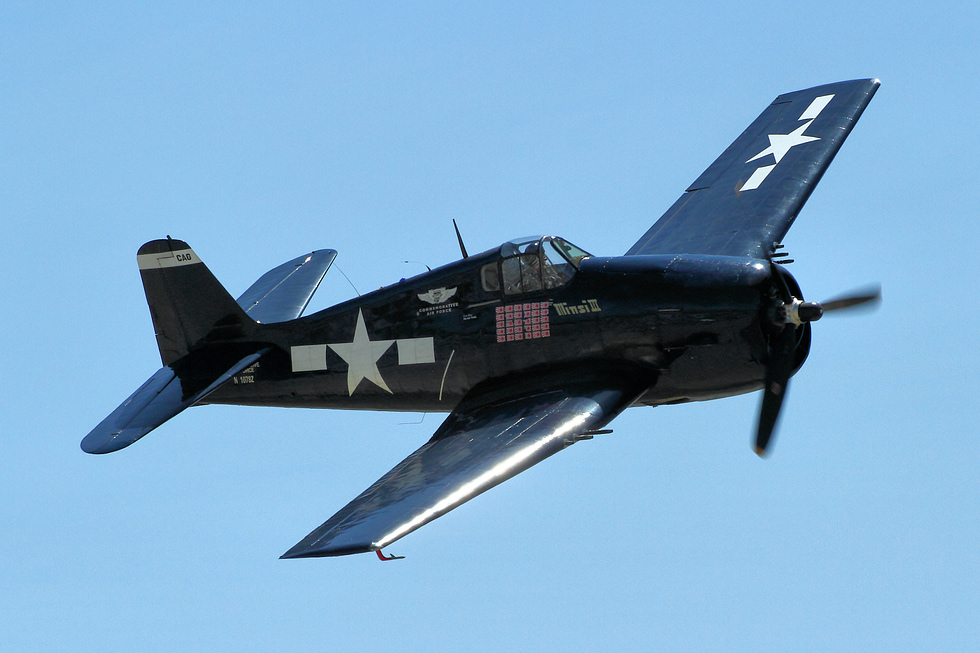
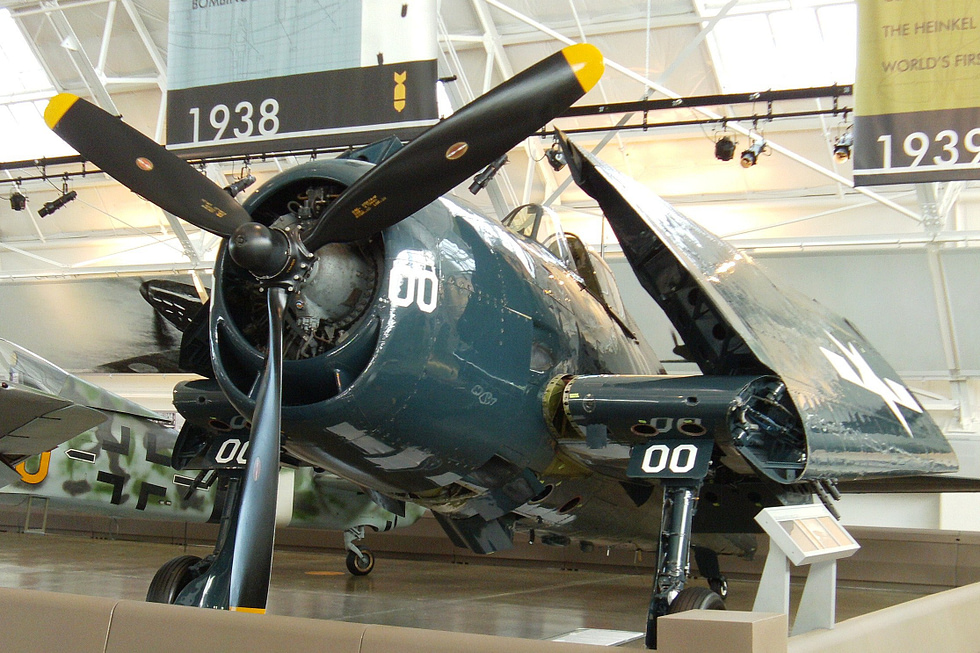
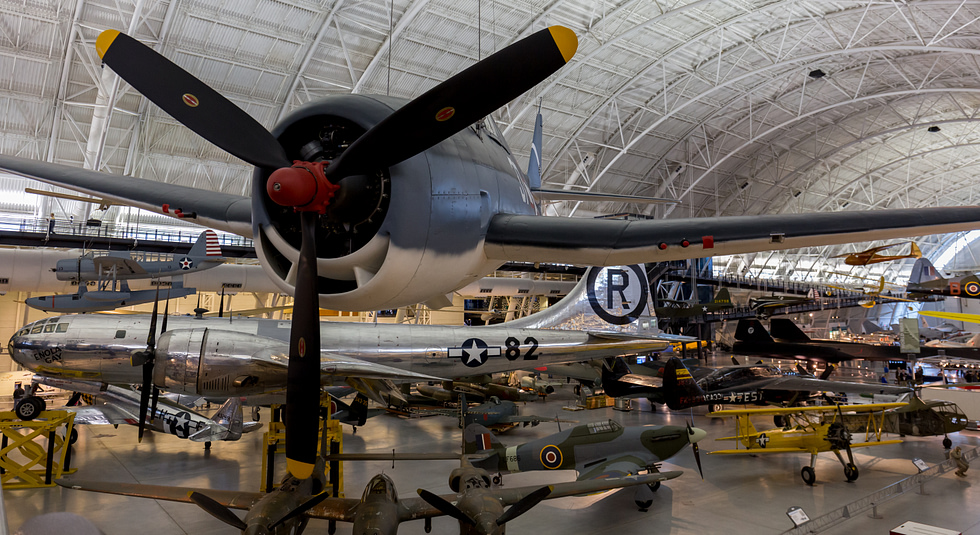
The Hellcat in motion
A dedicated Hellcat video feature is coming soon. In the meantime, explore the photo gallery above and the interactive operations map below.
Where the Hellcat flew
The score that defines it
The Hellcat’s record is written in the destruction of Japanese carrier air power. Navy records credit F6F pilots with the large majority of the Navy’s Pacific air-to-air kills, and the type produced more aces than any other American naval fighter. The famous figures below are genuinely dominant — but the wartime claims behind them should be read with the usual caution.
Compare the combat record of every military aircraft. Figures as of July 2026.
Everything people ask about the F6F Hellcat
Can I fly in an F6F Hellcat?
How many aircraft did the Hellcat shoot down, and what was its kill ratio?
What engine did the Hellcat use?
What was the Marianas Turkey Shoot?
Did the British use the Hellcat?
How many Hellcats were built?
Is the Hellcat still flying?
You can’t fly the Hellcat.
These, you can.
Some legends only live in museums — others are fuelled and waiting. MiGFlug has put civilians in real military jet cockpits since 2004.
 Fly the L-39 AlbatrosThe world’s most-flown jet trainer — aerobatics included
 Fly the F-104 Starfighter“The missile with a man in it”
 Fly the MiG-21The Cold War’s most-produced jet
 Fly the T-33 Shooting StarAmerica’s first jet trainer
 Fly the DH VampireA piece of early jet history
 Fly the S.211Agile Italian jet trainer
 Fly the MB-326The classic Aermacchi jet
 Fly the MiG-15The Soviet legend of the Korean War
Continue the tour
Every fact, checked
- Naval History and Heritage Command — F6F-5 HellcatPrimary source for F6F-5 dimensions, weight, engine, speed, ceiling, armament, 12,275 built and the kill figures.
- Naval History and Heritage Command — F6F-3 HellcatFirst flight and service dates, first combat at Marcus Island, night-fighter numbers and the “75% of Navy victories” figure.
- Vintage Aviation News — First Flight of the F6F HellcatConfirms the 26 June 1942 first flight, the engine transition and Bethpage production.
- U.S. Naval Institute — “The Hellcat-Zero Myth”Debunks the Akutan-Zero design myth using the 1941 specification and contract timeline.
- The Aviation Geek Club — The Story of Koga’s ZeroWhat the captured Zero actually contributed — tactics rather than the core airframe.
- Congressional Medal of Honor Society — David McCampbellMedal of Honor citation: nine kills on 24 October 1944, seven on 19 June 1944.
- Tailspin Topics — F6F DronesPostwar F6F-5K target drones and the TV-guided attack drones launched from USS Boxer over Korea, 1952.
- Britannica — Battle of the Philippine SeaIndependent figures for the “Turkey Shoot”: 200+ Japanese aircraft lost on 19 June, ~130 US losses over two days.