
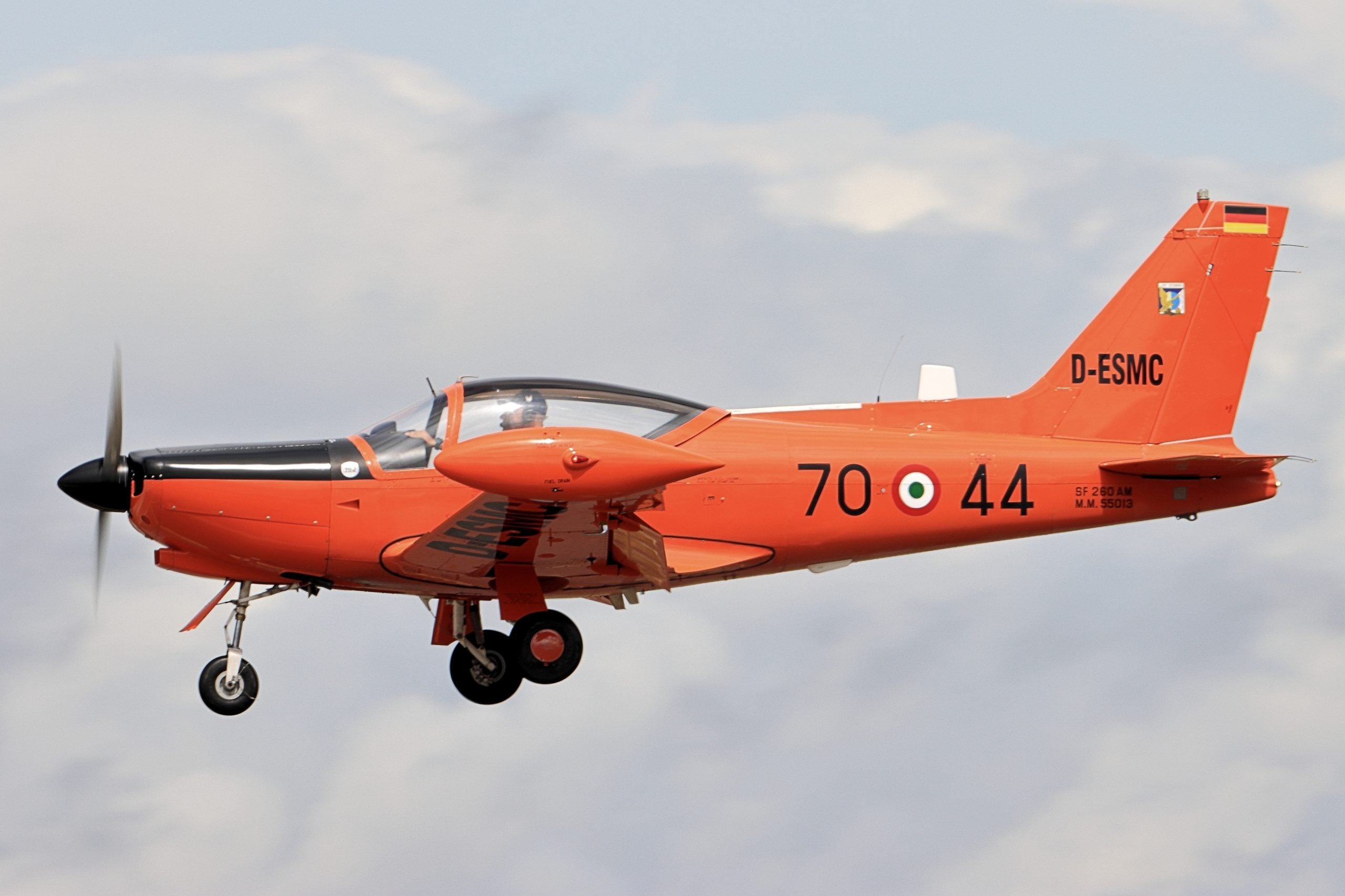
SIAI-Marchetti SF-260
The trainer that flies like a fighter
A sleek Italian piston single from the drawing board of Stelio Frati — fully aerobatic, jet-like in the hands, and flown by more than two dozen air forces as a primary trainer and, in armed form, a light-attack aircraft.
A light aircraft with a fighter’s soul
The SIAI-Marchetti SF-260 began not as a military machine but as the elegant idea of one man. Stelio Frati, Italy’s great post-war light-aircraft designer, wanted a fast, beautiful, fully aerobatic tourer. Built first under the Aviamilano name as the F.250 and then, with a bigger engine, the F.260, the prototype first flew on 15 July 1964. Production was soon taken over by SIAI-Marchetti, and the aircraft found its true calling not in the hands of wealthy tourers but on the flight lines of air forces.
What made the SF-260 special was how it flew. With a single 260-horsepower Lycoming flat-six, a slender laminar-flow wing and neat wingtip tanks, it was quick, responsive and stressed for aerobatics to +6 and −3 g. Instructors and students alike described handling closer to a fighter than a trainer — crisp, honest, and demanding enough to teach real airmanship, yet forgiving when flown well. That combination made it an ideal screening and primary trainer: cheap to run, but able to prepare pilots for fast jets.
From Belgium’s first military order in 1969, the type spread across the world. More than two dozen air forces — across Europe, Africa, Asia and Latin America — adopted it, and over 900 were eventually built. Many were simple trainers, but SIAI-Marchetti also built teeth into the airframe: the armed SF-260W Warrior carried gun pods, rockets and light bombs, and the later SF-260TP replaced the piston engine with an Allison turboprop. In those forms the little Italian trainer went to war — flying counter-insurgency and light-strike missions in conflicts from the Philippines and Sri Lanka to Chad and the Horn of Africa.
Six decades on, the SF-260 is still in production under Leonardo and still in front-line training service. Hundreds also fly in civilian hands, prized by warbird and aerobatic pilots for exactly the qualities Frati built in. Few light aircraft have led such a double life — gentle enough to teach a first solo, sharp enough to fly a combat sortie.
01The SIAI-Marchetti SF-260’s origins: how Stelio Frati’s aerobatic tourer became the world’s favourite trainer
Stelio Frati designed for beauty and balance. His F.250 of 1964 was a three-seat, all-metal tourer with the clean lines of a racer; fitted with a 260-hp Lycoming it became the F.260, and the design passed to SIAI-Marchetti, who put it into series production as the SF-260. Air forces quickly recognised what private owners had — that a fast, aerobatic, inexpensive single was the perfect machine to grade and train new pilots before they moved to jets. Belgium ordered the SF-260M in 1969 and became the launch military customer; a long line of nations followed. The same qualities that sold it as a trainer — power, agility, low cost — later made it a natural light-attack platform once hardpoints were added.
What makes it special
Frati’s aerodynamic wing
The SF-260’s signature is its slim, low-set wing with wingtip fuel tanks. Stelio Frati gave it a clean, near-laminar profile that made the aircraft genuinely fast on modest power and beautifully harmonised in the controls. The tip tanks freed the wing of fuselage tankage and gave the type its unmistakable silhouette, while contributing to its long range and stability.
One flat-six, fighter-like manners
Power comes from a single Lycoming O-540 air-cooled flat-six of about 260 hp, driving a constant-speed propeller. Modest by military standards, yet the light, clean airframe turned it into brisk, aerobatic performance stressed to +6 / −3 g. Pilots consistently describe crisp, honest, jet-like handling — the reason it screens future fast-jet aircrew so well.
From trainer to Warrior
SIAI-Marchetti armed the design as the SF-260W Warrior, adding underwing hardpoints for gun pods, rocket launchers and light bombs. Cheap to buy and operate, it let smaller air forces fly counter-insurgency, armed reconnaissance and light-strike sorties from short, rough strips — a “combat trainer” that could teach in the morning and patrol in the afternoon.
02The SIAI-Marchetti SF-260TP: the turboprop that reinvented the trainer
From 1980 SIAI-Marchetti offered the SF-260TP, replacing the Lycoming piston with an Allison (later Rolls-Royce) 250-B17 turboprop of roughly 350 shaft horsepower. The turbine brought more power, smoother running, easier hot-and-high performance and jet-fuel logistics — a meaningful step up in capability while keeping the airframe’s low cost and friendly handling. Several air forces, including Sri Lanka and a number of African and Asian operators, chose the TP for both training and light-attack work, where its extra power made a real difference carrying ordnance.
03The SIAI-Marchetti SF-260 in combat: the little trainer that went to war
Because it was cheap, rugged and could carry a useful load, the SF-260 saw far more combat than most trainers. The Philippine Air Force flew armed SF-260s with its 15th Strike Wing for decades of counter-insurgency in the southern islands. Sri Lanka used SF-260TP light-attack aircraft against the Tamil Tigers. In the Chad–Libya conflict, Libyan SF-260Ws were destroyed and captured on the ground, and armed examples appeared in a string of African and Central American conflicts. Reports of specific actions vary in reliability, but the pattern is clear: in the hands of smaller air forces the SF-260 was a genuine, if lightweight, combat aircraft.
Full specifications
Baseline: the SF.260W Warrior and the closely related SF.260C/M of the 1970s — a Lycoming O-540-E4A5 flat-six of 260 hp, two seats side by side with a third bench seat behind them, permanently fitted wingtip tanks, and on the Warrior two or four underwing pylons. Deltas for the fuel-injected SF.260D/E/F/EA and for the SF.260TP turboprop are in grey. Three cautions before reading the numbers. First, the type has two maximum weights that are routinely conflated: 1,200 kg for the trainer and 1,300 kg for the armed Warrior. Quoting the trainer's climb and ceiling next to the Warrior's weapon load, as many tables do, describes an aeroplane that does not exist. Second, the SF.260 is fully aerobatic only with the rear seat unoccupied and the tip tanks dry, which cuts endurance to roughly an hour and a half — the aerobatic limits and the 1,650 km range figure cannot both apply to the same sortie. Third, published tables mix civil SF.260C data with Warrior data freely, and several print the height as 8 ft 11 in, an arithmetic slip for 2.41 m.
Dimensions & weights
- Crew
- 2, side by side on dual controls under a one-piece canopy, with an optional third seat on a bench behind them — the side-by-side layout is the single most consequential design choice in the aeroplane, and the reason air forces that wanted a tandem cockpit bought a Pilatus or a Beech instead
- Length
- 7.10 m (23 ft 4 in) the SF.260TP's turbine installation lengthens the nose; published turboprop lengths vary between sources and are not reproduced here
- Wingspan
- 8.35 m (27 ft 5 in) over the wingtip tanks, which are structural and not removable — the tanks are part of the wing, not an option
- Height
- 2.41 m (7 ft 11 in) several reference works and websites print 8 ft 11 in in this row; it is a conversion error, not a variant
- Wing area
- 10.10 m² (108.7 sq ft) — small even for a light aircraft, and the root of both the type's crisp handling and its unforgiving approach speed
- Aspect ratio
- 6.3:1
- Empty weight
- 755 kg (1,664 lb) for the SF.260C an armed Warrior with pylons, sight and military radio fit is nearer 830 kg (1,830 lb)
- Gross weight
- 1,140 kg (2,513 lb)
- Maximum take-off weight, trainer
- 1,200 kg (2,646 lb) — the weight at which the aeroplane is a fully aerobatic trainer cleared to +6 / −3 g
- Maximum take-off weight, armed
- 1,300 kg (2,866 lb) for the SF.260W with external stores, outside the aerobatic envelope
- Internal fuel
- 235 litres (62 US gal, 52 imp gal usable) in wing and wingtip tanks — the tip tanks must be empty for aerobatics, so the fuel that gives the aeroplane its long legs is exactly the fuel it cannot carry while doing the thing it was designed for
- External load
- ~300 kg (~661 lb) on two or four underwing pylons on the SF.260W and armed SF.260M/TP — a quarter of the aeroplane's empty weight, and less than a single Mk 82 plus its rack on a fast jet
- Wing loading
- 119 kg/m² (24.3 lb/sq ft) at trainer weight, rising to 129 kg/m² (26.4 lb/sq ft) armed
- Power loading
- 4.6 kg/hp (10.2 lb/hp) at 1,200 kg, 5.0 kg/hp (11.0 lb/hp) at 1,300 kg — competitive with any piston trainer of its generation, and the reason a 260 hp tourer could be sold as a military basic trainer at all
Performance
- Maximum level speed
- 333 km/h (207 mph, 180 kt) at sea level for the SF.260C the armed SF.260W is generally quoted at 305 km/h (190 mph, 165 kt)
- Cruising speed
- 300 km/h (186 mph, 162 kt) at 75 per cent power at 1,500 m (4,900 ft) — fast for a 260 hp aeroplane, and the figure that sold it to civil flying schools
- Never-exceed speed
- 436 km/h (271 mph, 235 kt)
- Stalling speed
- 126 km/h (78 mph, 68 kt) with flaps and undercarriage down — high for a basic trainer, and the number behind the SF.260's long-standing reputation for punishing a sloppy circuit
- Rate of climb
- 7.6 m/s (1,500 ft/min) at sea level
- Service ceiling
- 4,700 m (15,420 ft) for the SF.260C 4,480 m (14,700 ft) for the armed Warrior; the aeroplane is unpressurised and normally flown without oxygen, so the practical ceiling is lower still
- Range
- 1,650 km (1,030 miles, 890 nm) with two crew and maximum fuel the Warrior is credited with 1,715 km (1,066 miles, 926 nm) on maximum fuel with no stores; both figures assume full tip tanks and therefore no aerobatics
- Endurance, aerobatic configuration
- about 1 hour 30 minutes with tip tanks empty — short enough that a full aerobatic training syllabus needs many more sorties than a turboprop trainer would
- Take-off run
- 384 m (1,260 ft)
- Landing run
- 345 m (1,132 ft) — short-field figures that let armed Warriors work from dirt strips in Chad, Rhodesia and Mindanao
- Load factors
- +6 / −3 g at aerobatic weight, with spinning cleared — genuinely aerobatic, not merely stressed for it, which is what a civil competition aeroplane brings to a military syllabus
- Combat radius, armed
- no manufacturer figure has ever been published. Operationally the type was flown as a short-radius aeroplane working from a strip close behind the fighting, not as an interdiction platform
Propulsion & systems
- Engine
- 1 × Lycoming O-540-E4A5 six-cylinder air-cooled horizontally opposed piston engine, 190 kW (260 hp) — the same class of engine found in a Piper Comanche, which is precisely the point: spares and overhauls came from the general aviation supply chain rather than a military one
- Aerobatic engine
- Lycoming AEIO-540-D4A5, fuel-injected with inverted fuel and oil systems, on the SF.260D, E, F and the Italian SF.260EA — the change that finally made sustained inverted flight legal rather than merely survivable
- Turboprop
- 1 × Allison (later Rolls-Royce) Model 250-B17D free-turbine turboprop flat-rated at 350 shp (261 kW) in the SF.260TP — 35 per cent more power, a lighter installation and a fuel the same air force already bought for its helicopters
- Propeller
- Hartzell HC-C2YK-1BF/8477-8R two-blade constant-speed unit of 1.93 m (6 ft 4 in) diameter on the piston marks; a three-blade propeller on the SF.260TP
- Fuel system
- 235 litres in wing tanks and two permanently fitted wingtip tanks, gravity-assisted and simple enough to be serviced by conscript ground crew — with the caveat that tip fuel and aerobatics are mutually exclusive
- Structure
- all-metal, flush-riveted stressed skin. This was Stelio Frati's first all-metal design; the F.8 Falco, F.14 Nibbio and F.15 Picchio that preceded it were wooden, and the SF.260 carries their shapes into aluminium almost unchanged
- Undercarriage
- retractable tricycle gear with a steerable nosewheel, cleared for grass and prepared dirt — unusual robustness for a machine that began life as a civil tourer
- Cockpit protection
- none. No ejection seats, no armour, no self-sealing tanks, on any variant including the armed ones. A Warrior hit by rifle fire over Chad or Mindanao had exactly the protection of a Cessna
- Weapons provision
- two or four underwing pylons with a fixed reflector sight and mechanical release — no weapons computer, no ballistic solution, no laser designator, no data bus. Aiming is the pilot's arithmetic
- Avionics
- civil-standard VHF communication and navigation to customer specification; no radar, no radar warning receiver, no countermeasures dispenser and no night-attack provision
- Certification
- civil aerobatic category throughout, which is why the military and civil airframes are essentially identical and why an SF.260 leaving Sesto Calende unarmed was, legally, a light aeroplane rather than war material
04The SIAI-Marchetti SF-260’s operating costs: why it stayed a bargain
The SF-260 sold precisely because it was cheap. A piston single burning avgas, it costs a fraction of a jet trainer to buy and to run: civilian operators today commonly quote operating costs in the low hundreds of dollars per flight hour, an order of magnitude below a jet. Exact military figures are not published and vary widely with variant, fuel and country, so any single number should be read as an estimate. The turboprop SF-260TP costs more to run than the piston version but still far less than a jet — which is the whole economic case for the aircraft. Treat every precise dollar figure here as an order-of-magnitude guide, not a sourced quotation.
Armament & payload
The SF.260W Warrior carries about 300 kg on four small pylons, and that modest load has been enough to make a civil tourer a combat aeroplane in half a dozen wars
The SF.260 has no internal gun and has never been cleared for a guided weapon of any kind. The armed marks — the SF.260W Warrior of 1972, the Libyan SF.260WL, the armed SF.260M variants and the later SF.260TP — carry two or four underwing pylons and roughly 300 kg of external stores: podded machine guns, unguided rocket launchers and light iron bombs, released through a fixed reflector sight by a pilot with no ballistic computer and no armour behind him. That is the entire weapon system.
It has nonetheless been used, repeatedly and in earnest. Libyan SF.260WLs struck Faya-Largeau in northern Chad in February 1978 and flew ground attack and training sorties throughout the Chadian conflicts of the 1980s, including the Toyota War from December 1986, losing aircraft to man-portable missiles and small-arms fire. Rhodesian SF.260Ws flew light strike and army co-operation from Thornhill during the Bush War. Philippine Air Force machines have flown close air support against the Moro Islamic Liberation Front, Abu Sayyaf and the New People's Army for four decades. The pattern is consistent: an air force with no air opposition, an opponent with rifles and occasionally shoulder-launched missiles, and an aeroplane cheap enough to fly every day.
The limits of that arrangement are not abstract. On 31 May 2017, during the battle of Marawi, a Philippine SF.260 delivering close air support over militant positions dropped a bomb onto a Philippine Army unit, killing eleven soldiers and wounding seven. Unguided ordnance, a fixed sight and an urban target produce that result eventually. Store fits vary enormously between operators and generations, and no public Leonardo document lists cleared stores for the type; many specific weapon identifications below rest on journalism and photographic evidence rather than on a manufacturer's clearance sheet.
Gun
- No internal gun on any variant, civil or military. All gun armament is podded on the underwing stations and is a customer option rather than standard fit
- 7.62 mm machine-gun pods are the fit most consistently described on armed SF.260s, with 12.7 mm heavy machine-gun pods reported on some operators' aircraft
- The gun is fixed, unstabilised and aimed by pointing the aeroplane through a reflector sight. Against an opponent with no air defence it is lethal; against anything else it requires a run-in that a rifleman can see coming for a mile
- Belgian, Italian and most European SF.260s have never carried a gun of any kind; their pylons, where fitted at all, have only ever held practice stores
- Pod model numbers quoted in secondary sources for the SF.260 are inconsistent and often inferred from an operator's other equipment rather than observed. Treat any specific designation as unverified.
Air-to-air
- None. No SF.260 variant has been integrated with an air-to-air missile, and the aircraft has no radar, no radar warning receiver and no missile approach warning
- Its only conceivable air-to-air weapon is a podded machine gun against a helicopter or a light aeroplane, and no such engagement is reliably documented
- In practice the SF.260 has always been the target rather than the shooter: Libyan aircraft were lost over Chad to ground fire and MANPADS, and a Chadian SF.260W delivered by Libya was shot down on its first mission on 28 November 2006
- The absence of any air-to-air capability is worth stating plainly because armed-trainer marketing has often implied otherwise. This is a machine that cannot defend itself against anything faster than itself
- This card is retained rather than removed because the category matters: the SF.260's complete lack of air combat capability is a defining fact about how it has been used and how it has been lost.
Air-to-surface guided
- None. No laser-guided bomb, guided rocket or anti-armour missile has been integrated on any SF.260, including the turboprop SF.260TP
- There is no targeting pod, no laser designator, no electro-optical turret and no weapons data bus. The aircraft has no means of generating a designation or accepting one
- This is the sharp technical line between the SF.260 and the armed turboprops that took over its light-attack market — the Embraer A-29 Super Tucano and the Beechcraft AT-6, both of which carry precision weapons and the sensors to use them
- Every documented combat sortie by an SF.260, in every war it has fought, was flown with unguided ordnance
- Leonardo has consistently marketed the surviving SF.260 line as a trainer rather than an attack aircraft. The absence of guided weapons is a commercial and design decision, not an omission.
Bombs
- Light general-purpose and practice bombs within the ~300 kg total external load — in practice weapons in the 50 kg to 120 kg class, and at the extreme a single 250 lb Mk 81 on a strengthened pylon
- Libyan SF.260WLs bombed Chadian positions from February 1978 onwards and were still doing so through the Toyota War of 1986–87
- Philippine aircraft have dropped bombs in support of ground troops in Mindanao and Sulu, including during the 2017 Marawi siege, where one such attack killed eleven friendly soldiers
- Loading bombs costs the SF.260 everything that made it attractive: it leaves the aerobatic envelope, loses climb and ceiling, and becomes a slow, unarmoured aeroplane over a defended target
- Bomb types are rarely specified in the sources for individual operators; the Mk 81 and Mk 82 appear in reporting on Libyan-supplied airframes and their conversions, not in any manufacturer documentation.
Rockets
- Unguided rocket pods are the SF.260's characteristic weapon: seven-tube and six-tube launchers for 2.75 in (70 mm) folding-fin rockets, and 68 mm launchers on European-supplied aircraft
- Two pods on the inboard stations, guns or bombs outboard, is the fit shown in most photographs of armed Warriors in Rhodesian, Libyan and Philippine service
- Rockets suit the aeroplane better than bombs: they are light, they can be ripple-fired from a shallow dive, and they do not push the airframe to its weight limit
- They are also area weapons fired by eye, which is the reason armed-trainer operations against irregulars in populated country have the record they have
- Launcher designations differ between operators and are frequently reported as generic "rocket pods" in the sources; the tube counts above are the fits most often photographed rather than a cleared-stores list.
Pods & other stores
- Reconnaissance and supply containers on the same pylons, plus camera installations — the armed marks were sold as much for armed reconnaissance and border patrol as for strike
- The one-off SF.260SW Sea Warrior was configured for coastal patrol and fishery protection, the only maritime derivative the family produced
- No external fuel tanks: the wingtip tanks are structural and permanent, and there is no provision for drop tanks or air-to-air refuelling of any kind
- No targeting pod, no jamming pod, no chaff or flare dispenser as standard on any variant
- Individual operators have fitted local equipment — radios, sights, occasionally hardpoints on aircraft delivered without them, as in the Chadian conversions carried out by outside contractors — and these fits are not reflected in any manufacturer standard.
Three typical loadouts
- Basic training sortie
- Clean wing, no pylons or empty ones, tip tanks dry, rear seat unoccupied. Instructor and pupil side by side, +6 / −3 g available, about ninety minutes of fuel. This is what the overwhelming majority of the 976 airframes built have done for their entire lives.
- Armed reconnaissance and border patrol
- Two rocket pods inboard, tip tanks full, a camera or observer in the third seat. Several hours of endurance at economical cruise, no aerobatic margin, and the ability to put rockets down within seconds of seeing something. The Libyan, Chadian and Philippine patrol pattern.
- Close air support against irregular forces
- Two 7.62 mm gun pods and two light bombs or four rocket pods, near the 1,300 kg limit, flown from a strip close behind the fighting. Shallow dive attacks through a fixed sight, usually in a pair. This is the Warrior configuration of Rhodesia in 1978 and Mindanao in 2017, and it is the configuration in which the type has killed both enemies and friendly troops.
Sourcing caveat: SIAI-Marchetti, Agusta, Aermacchi and Leonardo have never published a cleared-stores list for the SF.260W. Weapon identifications rest on photographs, operator statements and journalism, and figures for maximum external load vary between 250 kg and 300 kg depending on the source and the mark. The 300 kg figure used here is the one most consistently quoted for the Warrior.
Variants
One 1964 three-seat tourer became a military trainer for more than thirty air forces, a counter-insurgency aeroplane and, eventually, a turboprop
Stelio Frati (1919–2010) designed the SF.260 as a private aeroplane. It was his first all-metal design, drawn after a career of beautiful wooden machines — the F.8 Falco of 1955, the F.14 Nibbio, the F.15 Picchio — and it inherited their proportions almost intact. The prototype, designated F.250 for its 250 hp Lycoming O-540, first flew on 15 July 1964 and was destroyed in a crash at Sestri Ponente near Genoa on 7 November 1965. Two F.260 prototypes with the 260 hp O-540-E4A5 followed. Aviamilano built the first examples; SIAI-Marchetti acquired the rights and the type certificate, and the aeroplane took the name it has carried ever since.
What happened next was not planned. A fast, expensive, slightly demanding tourer turned out to be exactly what a small air force wanted for ab initio training: aerobatic, all-metal, maintained from the general aviation spares chain, and a fraction of the cost of a turboprop. The militarised SF.260M of 1970 and the armed SF.260W Warrior of 1972 opened a market that ran for four decades and more than thirty air forces, and the national suffixes tell the story on their own — MB for Belgium, MC for Zaire, MP for the Philippines, MS for Singapore, MT for Thailand, MZ for Zambia, ML and WL for Libya.
Two operators shaped the type more than any other. Belgium has flown it at Beauvechain since the end of the 1960s and still does, longer than any other air force and longer than most of its pilots have been alive. Libya bought 240, the largest single order ever placed for the type, of which about 60 were built in Italy and the remainder shipped as knock-down kits for assembly at Sebha — and then handed airframes on to Nicaragua, Uganda, Burundi and Chad, which is how a Milanese tourer came to fly combat sorties on three continents.
- Aviamilano F.250 (1964, 1 prototype)
- Frati's original three-seat tourer with a 250 hp Lycoming O-540-A1D; first flight 15 July 1964, destroyed in a crash near Genoa on 7 November 1965.
- F.260 / SF.260 (1965 onwards, 2 prototypes then production)
- Re-engined with the 260 hp O-540-E4A5; production passed from Aviamilano to SIAI-Marchetti, which held the type certificate thereafter.
- SF.260A / B / C / D / E / F (1966–1990s, civil marks)
- The civil line, progressively improved: the B of 1974 absorbed the military airframe's strengthening, the C of 1977 was built to military structural standards, the D of 1985 added aerodynamic clean-up, and the E and F of 1991 introduced the fuel-injected AEIO-540 with inverted systems.
- SF.260M (from 1970, national suffixes MB, MC, MP, MS, MT, MZ, ML)
- The militarised trainer: strengthened airframe, military equipment fit, and the version that made the type's career. Belgium (MB), Zaire (MC), the Philippines (MP), Singapore (MS, 14 from 1971), Thailand (MT, 18 from 1973, locally designated B.F.15) and Zambia (MZ) all took national marks.
- SF.260W Warrior (from 1972)
- The armed version: two or four underwing pylons, about 300 kg of stores, otherwise the SF.260M airframe. Ireland took ten in 1977, Rhodesia fourteen the same year, Singapore twelve in 1979 and 1981, Bolivia six, Brunei two.
- SF.260ML / SF.260WL (1970s–1980s, 240 for Libya)
- The largest order the type ever received. About 60 were completed in Italy and the remainder delivered as knock-down kits for assembly at Sebha; surplus airframes were later passed to Nicaragua (at least seven, 1984–85), Uganda, Burundi and Chad.
- SF.260SW Sea Warrior (1 built)
- A single coastal patrol and fishery protection conversion; the only maritime derivative and a commercial dead end.
- SF.260TP (from 1980)
- Allison 250-B17D turboprop flat-rated at 350 shp in place of the Lycoming. Sold to Sri Lanka (six in 1985, later expanded and used against the LTTE), the United Arab Emirates (six in 1983), Haiti (six in 1992), Ethiopia and the Philippines, where the 1996 Project Layang programme converted eighteen existing piston SF.260M/W airframes to TP standard.
- Turkish licence assembly (1990 order, 40 aircraft)
- Six built in Italy and 34 assembled by Turkish Aerospace Industries, serving with the 123rd Basic Training Squadron at İzmir — the type's only true licence production line.
- SF.260EA and SF.260F, late production (2005–2017)
- Thirty SF.260EA for the Italian Air Force from 2005, eighteen SF.260F for the Philippines assembled locally by Aerotech Industries and completed in 2011, and 25 SF.260E for Mexico from 2019 — the last deliveries of a design that first flew when Kennedy had been dead nine months.
Production totalled 976 aircraft including prototypes, built between 1964 and 2017 by Aviamilano, SIAI-Marchetti, Agusta and finally Aermacchi, which absorbed SIAI-Marchetti's fixed-wing business in 1997 and became part of Leonardo. Roughly 180 of the total were civil aircraft; the rest were military. Sources differ on the total — figures of about 900 are widely quoted and older references give "over 700 by 1993" — and the discrepancy is largely a matter of whether Libyan kit-assembled airframes and unbuilt kits are counted. Substantial numbers survive in civil hands, particularly in the United States and Europe, where ex-military SF.260M and W airframes are prized aerobatic warbirds.
Operators today
Sixty years after the F.250 first flew, the SF.260 still teaches ab initio pilots on four continents and still flies armed sorties over Mindanao
The SF.260 is not a museum piece. Belgium, Italy, Turkey, Mexico and the Philippines all run it as their first military aeroplane, the machine on which a cadet learns to fly before anything else, and the Philippine fleet still flies armed. That is a remarkable position for a design conceived as a private tourer in the early 1960s, and it rests on the same economics that sold it in the first place: a general aviation engine, a civil-certificated airframe and running costs a fraction of any turboprop trainer.
The figures below are of uneven vintage and uneven quality, and they should be read as orders of magnitude rather than serviceable counts. Only the Belgian number is a current in-service figure; the Turkish, Italian, Mexican and Philippine entries are delivered totals, and the Chadian and Libyan entries are the last credible reports rather than present-day strength. Zimbabwe's fleet, descended from the Rhodesian aircraft acquired in 1977, is still flying — the evidence for which is unfortunately a run of fatal training accidents, the most recent in September 2025.
These are estimates, and their bases differ row by row. Belgium: 18 SF.260D/M+ in service with 5th and 9th Squadrons of the Basic Flying Training School at Beauvechain. Turkey: 40 delivered from the 1990 order, six Italian-built and 34 assembled by Turkish Aerospace Industries, of which the currently serviceable number is certainly lower. Philippines: 18 SF.260TP and 18 SF.260F delivered, flown by the 15th Strike Wing and the training establishment, less unrecorded attrition. Italy: 30 SF.260EA delivered from 2005. Mexico: 25 SF.260E delivered from 2019. Chad: nine SF.260WL reported in 2012. Libya: at least six reported flying with the post-2011 air force on patrol work. Zimbabwe: six SF.260F ordered in 1997 and delivered from 1998, alongside surviving earlier airframes. Many aircraft counted on paper are stored, in deep overhaul, or not operational. Sources: IISS The Military Balance and FlightGlobal World Air Forces as reported in the reference literature; entries that could not be corroborated — among them Venezuela, Uruguay, Burkina Faso, Zambia and Ethiopia, all of which have operated the type — are omitted rather than guessed at.
Six decades of the Italian trainer
First flight
Stelio Frati’s design flies on 15 July as the Aviamilano F.260, developed from the earlier F.250.
Certification & production
SIAI-Marchetti takes over the design, certifies it and begins series production of the SF-260.
Belgium leads the way
The Belgian Air Force orders the SF-260M and becomes the launch military customer; many nations follow.
Global export & the Warrior
Air forces across Europe, Africa, Asia and Latin America adopt the type; the armed SF-260W Warrior appears.
The turboprop SF-260TP
An Allison 250 turboprop version enters the range, boosting power for training and light attack.
Into combat
Armed SF-260s fly counter-insurgency and light-strike missions in the Philippines, Sri Lanka, Chad and elsewhere.
Still teaching
Production continues under Aermacchi and then Leonardo; the SF-260 remains a front-line primary trainer.
Trainer and warbird
Air forces still fly it while hundreds of civilian SF-260s delight aerobatic and warbird pilots worldwide.
From the flight line: twelve SF-260 stories
A racer that became a soldier
Stelio Frati drew the SF-260 as a fast, beautiful tourer — not a warplane.
Read the full story
“It flies like a little fighter”
Pilots consistently describe jet-like, honest handling that punishes sloppiness and rewards skill.
Read the full story
The launch customer
Belgium ordered the SF-260M in 1969 and flew it for decades, including with the Red Devils display team.
Read the full story
The 15th Strike Wing
The Philippine Air Force turned the trainer into a hard-working counter-insurgency aircraft.
Read the full story
Turboprop at war
SF-260TP light-attack aircraft flew strike missions against the Tamil Tigers.
Read the full story
Warriors on both sides
In the Chad–Libya conflict SF-260s were destroyed and captured on the ground.
Read the full story
The Irish Air Corps
Ireland flew the SF-260 as a primary trainer for a generation of pilots.
Read the full story
Home-service trainer
The Italian Air Force flew SF-260AM and EA variants for basic and screening training.
Read the full story
Those wingtip tanks
The SF-260’s tip tanks are part of its look — and its long legs.
Read the full story
Display-team favourite
Beyond the Red Devils, SF-260s have flown with civilian aerobatic teams worldwide.
Read the full story
Still in production
Six decades on, the SF-260 is still being built and still teaching.
Read the full story
Warbird for the people
Hundreds of civilian SF-260s keep the type flying and loved.
Read the full story
The SF-260 in pictures
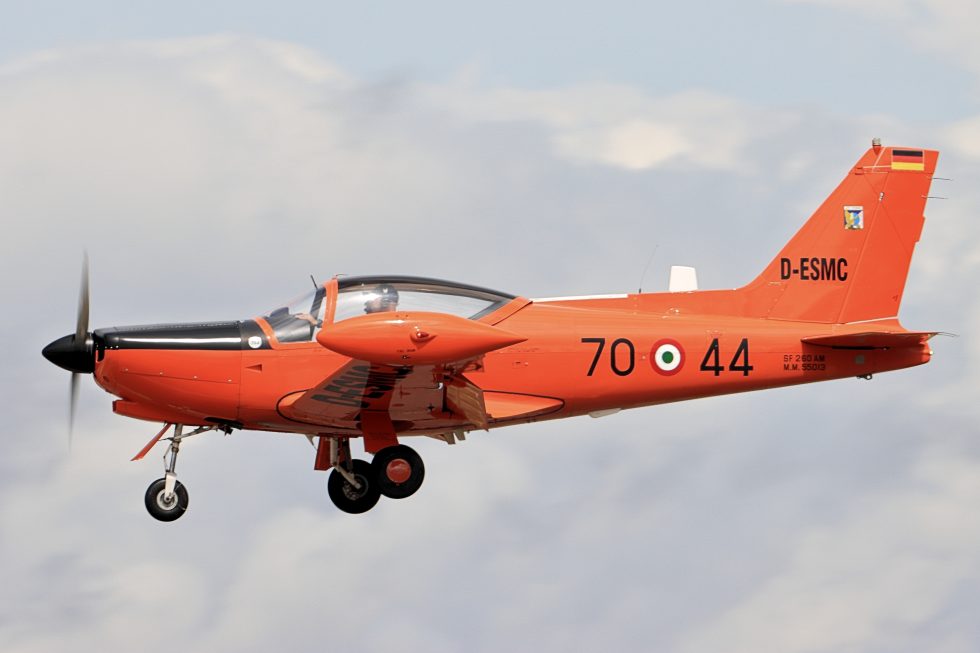
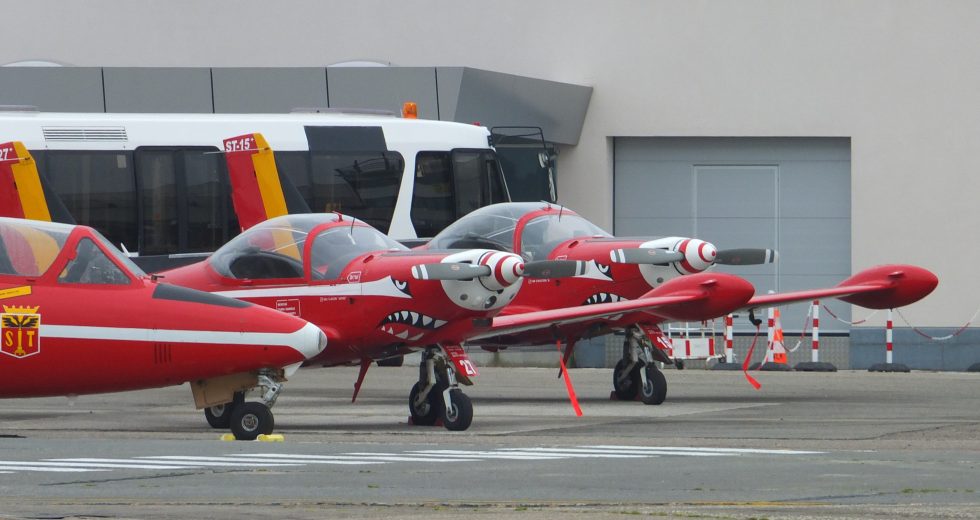
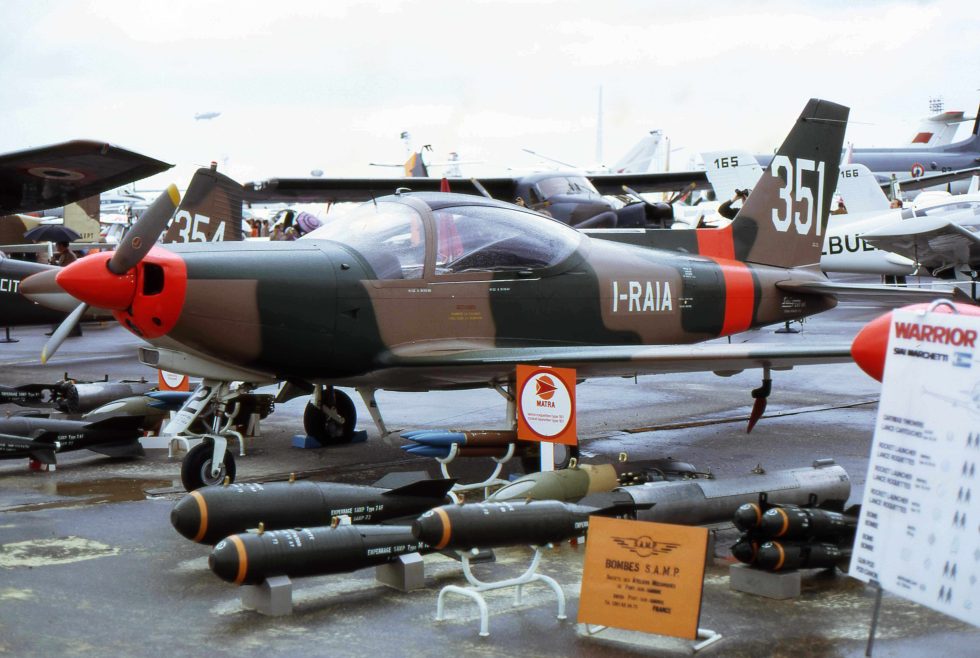
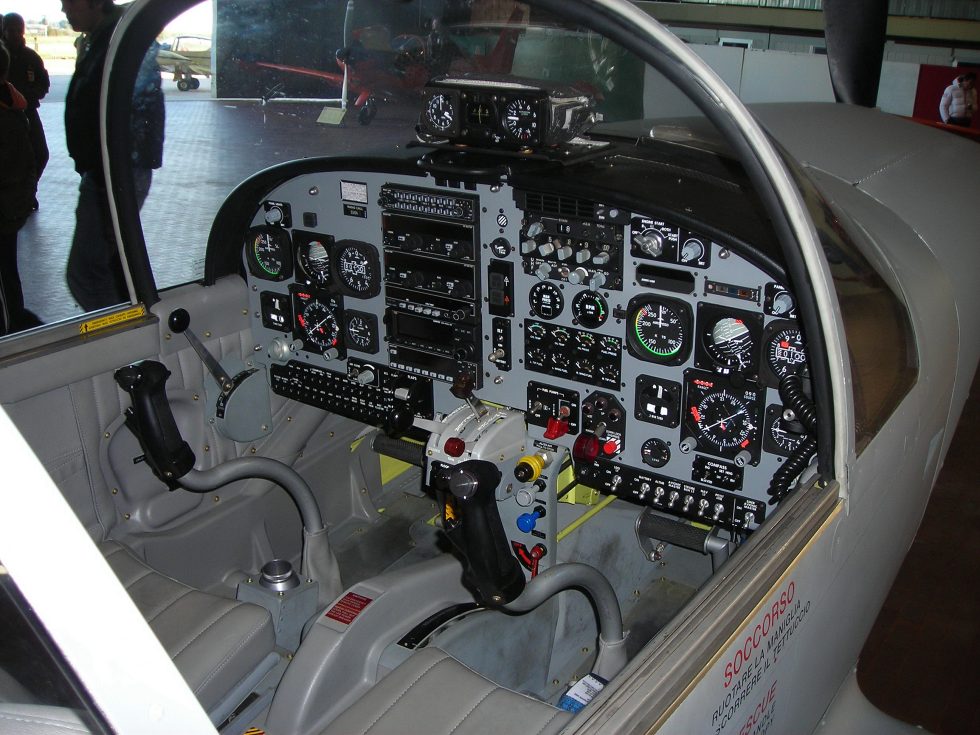
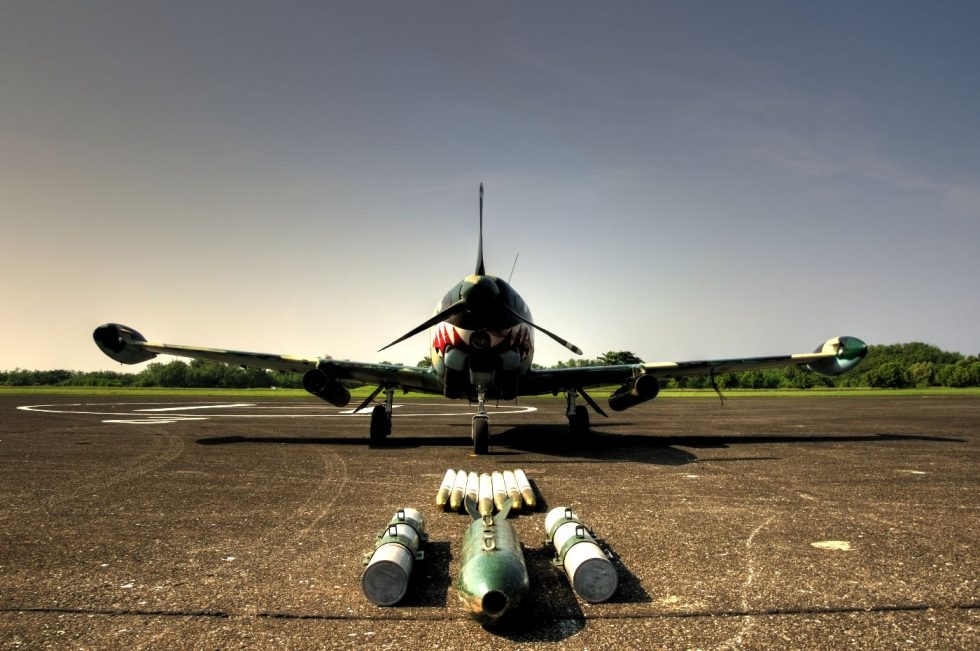
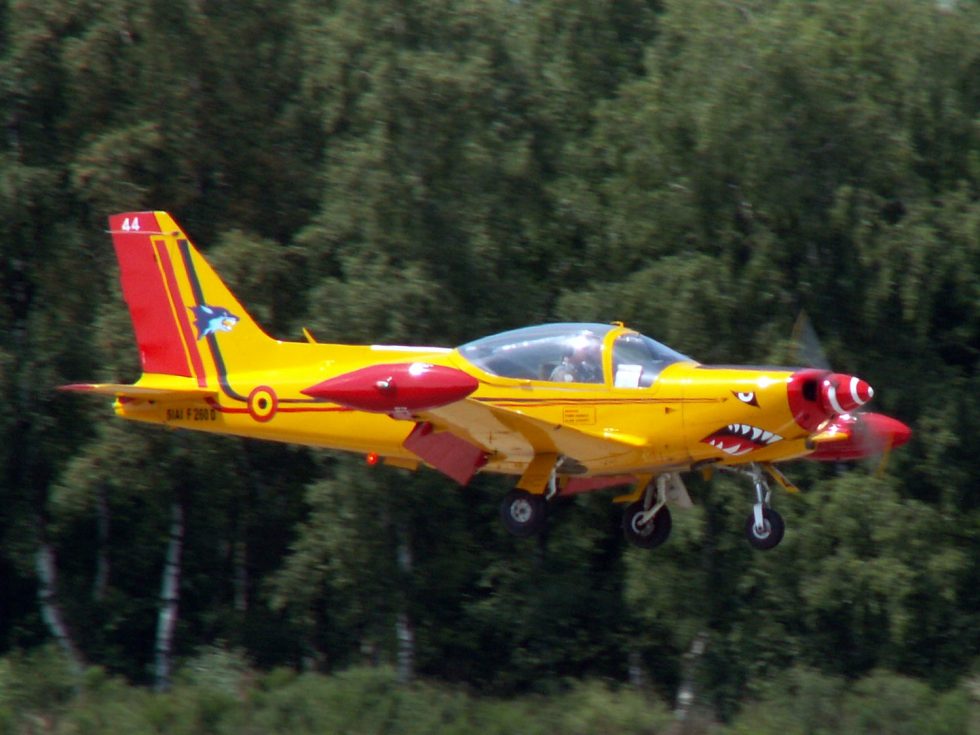
The SF-260 in motion
A synchronised aerobatic display on the SF-260 by Team Niebergall — a clean demonstration of the crisp, fighter-like handling that made Stelio Frati’s design such a prized trainer and airshow mount.
Where the SF-260 flew
The trainer that also went to war
The SF-260 was built to teach, but its low cost and useful load turned it into a real light-attack aircraft for smaller air forces. It never fought for air superiority — its record is written in counter-insurgency, armed reconnaissance and light strike, flown from short strips in conflicts on three continents.
Compare the combat record of every military aircraft. Combat attributions for light-attack types like the SF-260 are often incomplete; figures here are indicative.
Everything people ask about the SIAI-Marchetti SF-260
Can I fly in a SIAI-Marchetti SF-260?
Who designed the SF-260 and when did it first fly?
What engine does the SF-260 use?
Was the SF-260 ever used in combat?
How many SF-260s were built and who flew them?
Is the SF-260 still in production?
Why do pilots say it flies like a fighter?
You can’t book the SF-260 with us.
These, you can.
Some legends only live in museums — others are fuelled and waiting. MiGFlug has put civilians in real military jet cockpits since 2004.
 Fly the L-39 AlbatrosThe world’s most-flown jet trainer — aerobatics included
 Fly the F-104 Starfighter“The missile with a man in it”
 Fly the MiG-21The Cold War’s most-produced jet
 Fly the T-33 Shooting StarAmerica’s first jet trainer
 Fly the DH VampireA piece of early jet history
 Fly the S.211Agile Italian jet trainer
 Fly the MB-326The classic Aermacchi jet
 Fly the MiG-15The Soviet legend of the Korean War
Continue the tour
Every fact, checked
- Leonardo S.p.A.Manufacturer heritage for the SIAI-Marchetti / Aermacchi SF-260 line, still in production.
- Airforce Technology — SF-260Overview of the trainer / light-attack variants, roles and operators.
- Military Factory — SF.260Development history, variants and production figures.
- flugzeuginfo.net — SF.260 dataDimensions, weights and performance figures for the piston SF-260.
- SIAI-Marchetti.nl — military customersCountry-by-country list of military operators and combat use.
- European Airshows — SF.260 first flightFirst-flight date and Aviamilano / Frati origins.
- Belgian Aviation History AssociationReference for the Belgian Air Force SF-260M and the Red Devils.
- Philippine Air ForceReference for SF-260 service with the 15th Strike Wing.