
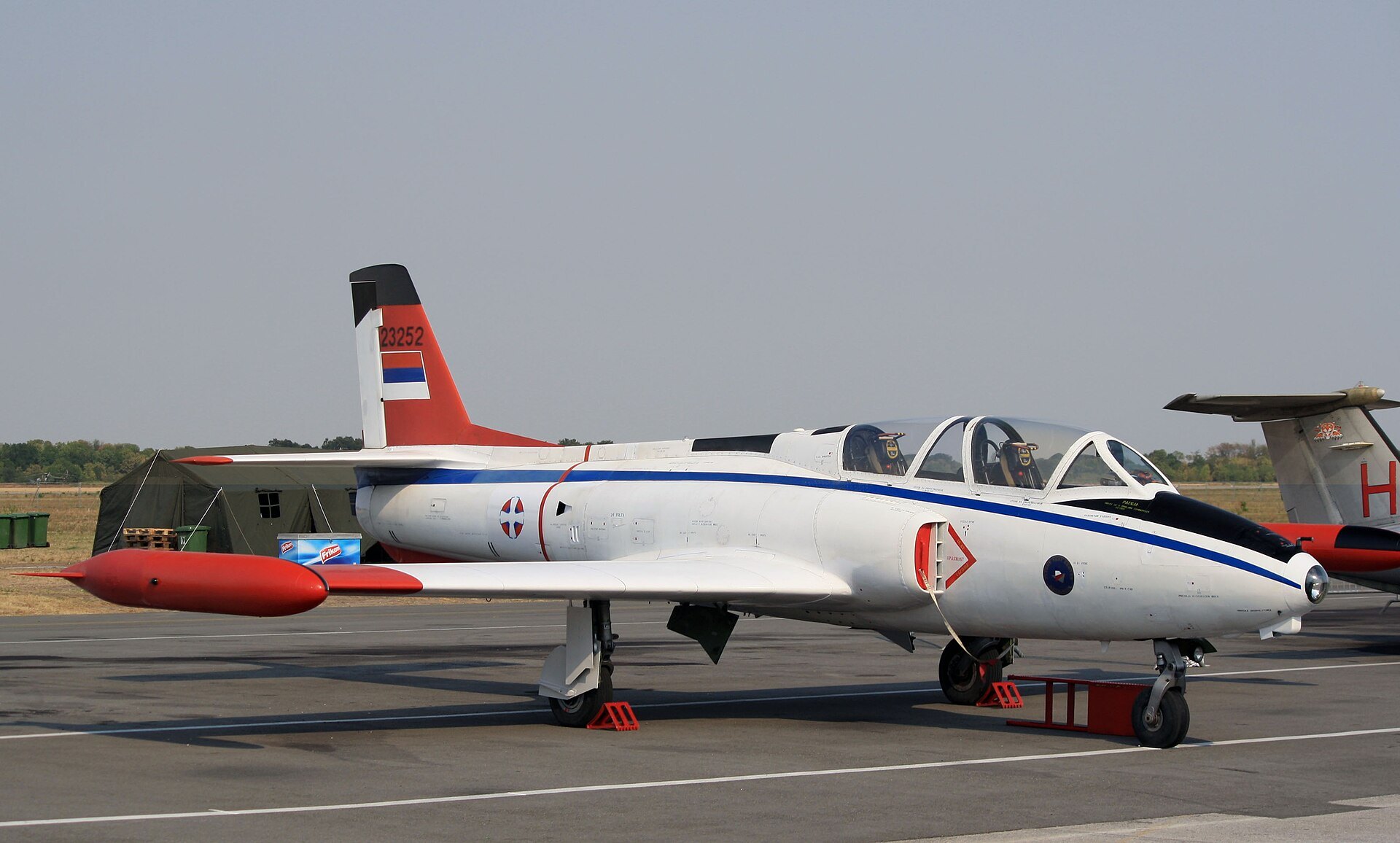
Soko G-2 Galeb
Yugoslavia’s First Jet Trainer
The first jet Yugoslavia designed and built in series: a tough, Viper-powered trainer that taught some thirty generations of pilots, flew ground attack in two civil wars and still flies today.
The Soko G-2 Galeb: how Yugoslavia built its own jet school
On 3 July 1961 Captain Ljubomir Zekavica lifted a slim, straight-winged jet off the runway on its first flight. The prototype, serial 23001, was the product of a programme begun in 1957 at the Aeronautical Technical Institute (VTI) in Žarkovo near Belgrade, with a design team led by Dr Zlatko Rendulić. Tito’s Yugoslavia sat between the blocs and wanted its own aviation industry rather than total dependence on either superpower. A home-built jet trainer was the obvious place to start: it would teach pilots, keep engineers busy and could be sold abroad. The answer was the G-2 Galeb (“Seagull”), the first jet aircraft designed in Yugoslavia to enter series production.
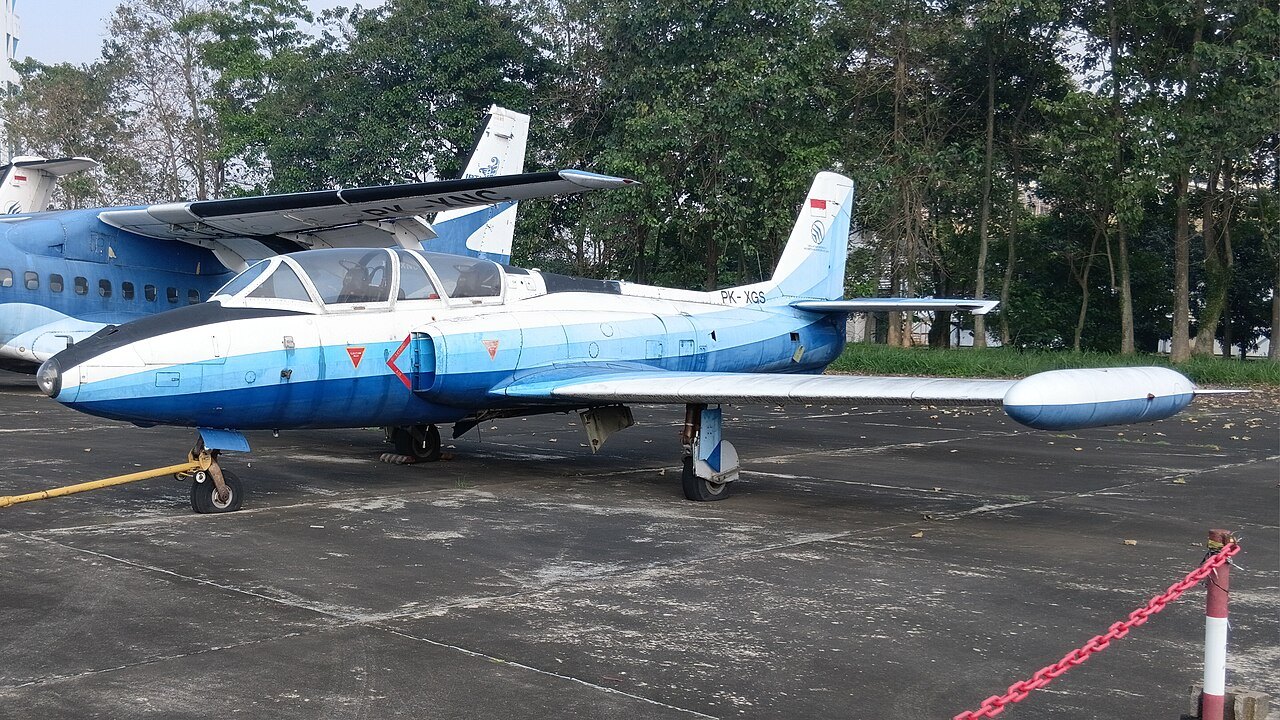
The recipe was conservative and sensible. A low, straight wing with tip tanks, tandem seats for student and instructor, wing-root intakes and a single British Viper turbojet of about 2,500 lb (11.1 kN) thrust. More than half of the aircraft’s production value, by one Serbian estimate, was British-sourced. The Galeb was shown abroad at the 1963 Bourges air show, and production began at the Soko factory in Mostar, Herzegovina, with the first aircraft taken on charge by the air force in 1965. It was rugged enough to operate from grass and was cleared to +8 g, so it could teach weapons delivery as well as circuits and aerobatics. Two 12.7 mm guns in the nose and four underwing hardpoints made it a light-attack aircraft in all but name.
Between 1965 and 1985 Soko built 248 Galebs. Around 132 went to the Yugoslav Air Force Academy, which used them to turn out the great majority of the country’s military pilots; most of the rest went to Libya, with a handful to Zambia. The airframe also fathered the single-seat J-21 Jastreb attack aircraft and, later, the swept-wing G-4 Super Galeb. When Yugoslavia broke apart, Galebs flew ground-attack sorties over Croatia and Bosnia; in Libya, one was destroyed by a French Rafale in 2011. Many more found their way to private owners in the United States, Britain, Australia and Serbia, where the type is still displayed in the air, more than sixty years after the prototype first flew.
01The G-2 Galeb’s origins: a non-aligned air force builds its own trainer
Yugoslavia’s post-war air force flew a mixture of Soviet piston types, then American jets supplied under military aid in the 1950s, including the T-33. After the break with Stalin in 1948 and a later cooling with Washington, Belgrade wanted an industrial base of its own. The Aeronautical Technical Institute at Žarkovo was given the task of a jet trainer in 1957, and the Soko works in Mostar began building prototypes in 1959.
The choice of engine shaped the aircraft. The Bristol Siddeley (later Rolls-Royce) Viper was a simple, light turbojet already powering trainers such as the Jet Provost and the Aermacchi MB-326. Buying it in Britain gave Yugoslavia a proven powerplant and kept the programme out of the Soviet supply chain. The resulting Galeb was not radical, but it did not need to be: it gave the air force a modern jet trainer built at home, and it gave Soko the experience it would later use on the Jastreb, the Super Galeb and the J-22 Orao.
The first prototype reached 812 km/h in testing. A second prototype and a pre-series followed, and the type was formally taken into the air force inventory on 30 July 1965. Yugoslav service designations used the name Galeb; the export model for Libya and Zambia, offered from the mid-1970s, was the G-2A-E.
What makes the Soko G-2 Galeb special
One Viper, no frills
The Galeb is powered by a single Viper 11 Mk 22-6 turbojet of about 2,500 lb thrust, fed by intakes in the wing roots. The Viper was designed as a short-life engine for target drones and grew into a dependable trainer powerplant: simple to start, tolerant of rough handling and easy to change. In the Galeb it gives a top speed of around 812 km/h at altitude and a climb to 9,000 m in a little over ten minutes, modest by fighter standards but brisk for a student fresh from piston aircraft.
Built for grass and gunnery
The straight wing, sturdy tricycle undercarriage and low wing loading let the Galeb operate from grass strips, with take-off runs commonly quoted around 490 m on grass. Yugoslav doctrine expected aircraft to disperse to secondary fields and roads in war, and the trainer was built with that in mind. Two 12.7 mm machine guns in the nose and four underwing hardpoints for bombs and rockets meant the same aircraft that taught circuits could also teach air-to-ground weapons delivery.
A forgiving classroom
Tandem seating puts the instructor behind the student, and the airframe is stressed to +8 / −4 g. Galeb instructors remember it as easy to learn: retired Colonel Mile Nežić, one of the first pilots to ferry the type into service in 1965, told an anniversary gathering in 2021 that students went solo in about eight hours on the Galeb, against around thirty on the types he had trained on before. Wing-tip tanks extend endurance to around two and a half hours.
02The G-2 Galeb’s family: Jastreb, Galeb 3 and Super Galeb
The Galeb airframe proved adaptable. Soko developed a single-seat light-attack derivative, the J-21 Jastreb, with a more powerful Viper, extra guns and heavier underwing loads; it served Yugoslavia and Libya alongside the Galeb. A two-seat Jastreb trainer followed. In 1970 a single Galeb 3 prototype flew, exploring an improved version that did not enter production.
The real successor was the G-4 Super Galeb, a swept-wing, higher-performance advanced trainer that flew in 1978 and gradually took over the advanced stage of Yugoslav training. The Galeb carried on as the basic jet trainer through the 1980s, and Soko delivered the last examples to the Yugoslav Air Force in January 1981 and to export customers until the mid-1980s.
Soko G-2 Galeb specifications
Specifications
- Crew
- 2 (tandem)
- Length
- 10.34 m (33 ft 11 in)
- Wingspan
- 11.62 m (38 ft 1 in) over tip tanks; 10.47 m (34 ft 4 in) without
- Height
- 3.28 m (10 ft 9 in)
- Wing area
- 19.43 m² (209 sq ft)
- Empty weight
- 2,620 kg (5,776 lb) equipped
- Max take-off weight
- about 3,374 to 4,300 kg (7,438 to 9,480 lb), depending on configuration
- Powerplant
- 1 × Rolls-Royce (Bristol Siddeley) Viper 11 Mk 22-6 turbojet, 11.1 kN (2,500 lbf)
- Maximum speed
- 812 km/h (505 mph) at 6,200 m; 756 km/h (470 mph) at sea level
- Range
- about 669 km (416 mi) at 9,000 m with full tip tanks
- Endurance
- about 2 h 30 min at 7,000 m
- Service ceiling
- 12,000 m (39,400 ft)
- Climb rate
- 22.8 m/s (4,490 ft/min); 9,000 m in about 10 min 12 s
- g limits
- +8 / −4 g
- Armament
- 2 × 12.7 mm machine guns (80 rounds each); 4 underwing hardpoints, about 300 kg (660 lb) of bombs or rockets
Costs & production
- Production
- 248 built at Soko, Mostar, 1965 to 1985
- Programme
- Designed from 1957 at VTI Žarkovo; prototype first flight 3 July 1961
- Cost per flight hour
- No official figure published; for a privately operated Galeb, roughly US$2,500 to 4,000 per hour is a reasonable estimate, based on the fuel burn of a Viper-class turbojet and typical civil jet-warbird maintenance
03The G-2 Galeb’s variants: from prototype to export model
- Galeb (G-2) prototypes: two prototypes, the first (23001) flying on 3 July 1961.
- G-2A: main production version for the Yugoslav Air Force, armed with two 12.7 mm guns and underwing stores; about 132 delivered.
- G-2A-E: export model offered from the mid-1970s with updated equipment; the bulk went to Libya, with two to Zambia.
- G-2Š: unarmed trainer version.
- Galeb 3 (G-3): single improved prototype, first flown in August 1970; not produced.
04The G-2 Galeb’s operating costs: cheap jet time for private owners
Neither Soko nor the Yugoslav Air Force published per-hour costs, so any figure is an estimate. The Viper is a thirsty engine by modern standards, and a Galeb in civil hands typically burns several hundred litres of jet fuel an hour; add engine reserves, airframe inspections and insurance and a private owner is plausibly spending US$2,500 to 4,000 per flying hour. That still made the Galeb one of the cheaper ways into private jet ownership after the late 1980s, when warbird dealers bought at least a dozen from Yugoslavia, and it explains why Serbian civil operators can still afford to display the type.
The G-2 Galeb from the Žarkovo drawing office to today
Design work begins
The Aeronautical Technical Institute at Žarkovo starts work on a jet trainer, led by Dr Zlatko Rendulić.
First flight
On 3 July Captain Ljubomir Zekavica flies prototype 23001.
Shown abroad
The Galeb is exhibited at the Bourges air show in France.
Enters service
The first production Galebs join the Yugoslav Air Force; the type is entered on the register on 30 July.
Galeb 3 flies
A single improved prototype flies in August but does not go into production.
Export model
The G-2A-E is offered for export; Libya becomes by far the largest foreign customer.
Last Yugoslav delivery
Soko hands over the final Galeb for the Yugoslav Air Force in January; export production continues to the mid-1980s.
War in Croatia
Academy Galebs fly ground-attack sorties around Zadar as Yugoslavia breaks up.
Destroyed on the ground
Stored Galebs at Golubovci in Montenegro are hit during NATO’s air campaign.
Misrata
On 24 March a French Rafale destroys a Libyan Galeb that had just landed at Misrata in breach of the no-fly zone.
Sixty years on
Former Galeb pilots and the Belgrade aviation museum mark the anniversary of the first flight at Ečka airfield.
Stories & eyewitnesses: the G-2 Galeb in war and peace
First flight at Žarkovo’s doorstep
On 3 July 1961 Yugoslavia flew its first home-designed jet destined for series production.
Read the full story
Solo in eight hours
A pioneer Galeb pilot remembered just how quickly students took to the jet.
Read the full story
Thirty generations from Zemunik
The Air Force Academy near Zadar ran its jet course on Galebs for a quarter of a century.
Read the full story
Zadar, 1991
When Yugoslavia broke apart, the trainers went to war over their own training ground.
Read the full story
Seen leaving Udbina
UN observers in Croatia logged Galebs on the move in the mid-1990s.
Read the full story
Killed on the runway at Misrata
In 2011 a Libyan Galeb became one of the first casualties of the no-fly zone.
Read the full story
Mercenaries at Gbadolite
In Zaire’s collapse, a lone Galeb flew for Mobutu with Serbian pilots.
Read the full story
From Mostar to Texas
Late in the Cold War, Galebs started to appear on the American civil register.
Read the full story
The Stars of Novi Sad
Civilian Galebs still fly formation aerobatics in Serbia.
Read the full story
A seagull in the movies
The Galeb has a minor Hollywood credit.
Read the full story
The G-2 Galeb in pictures
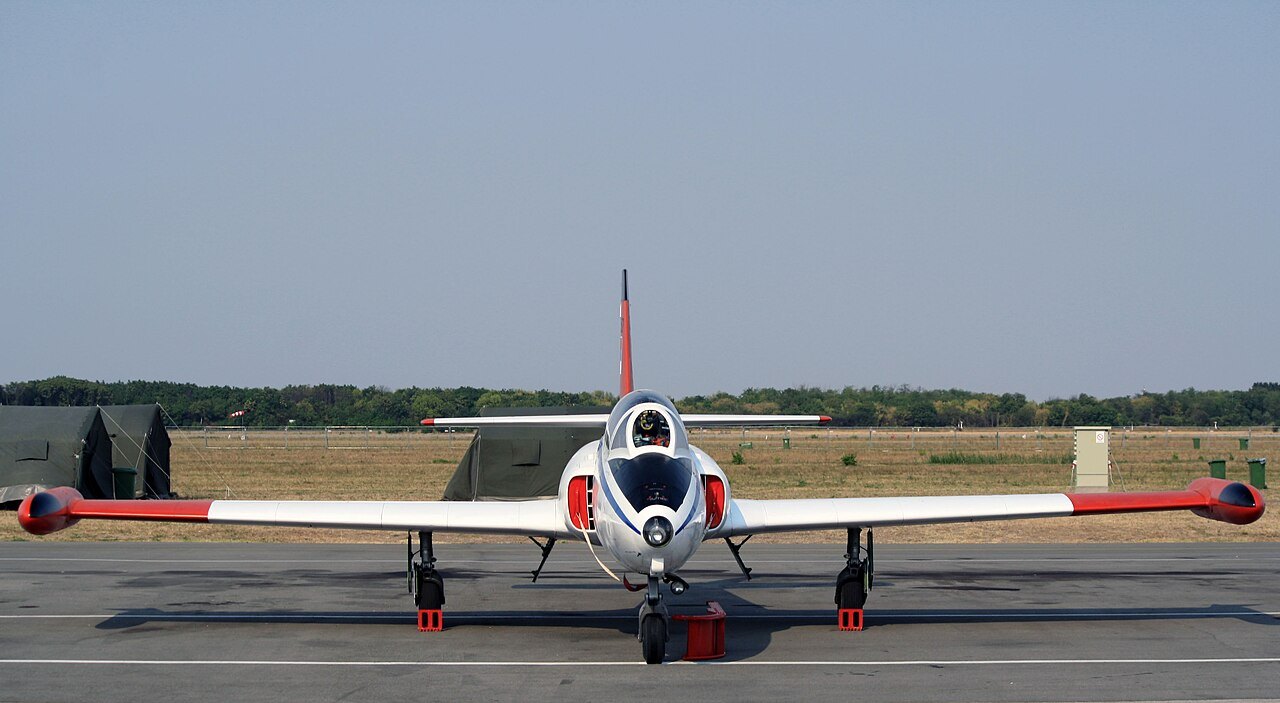
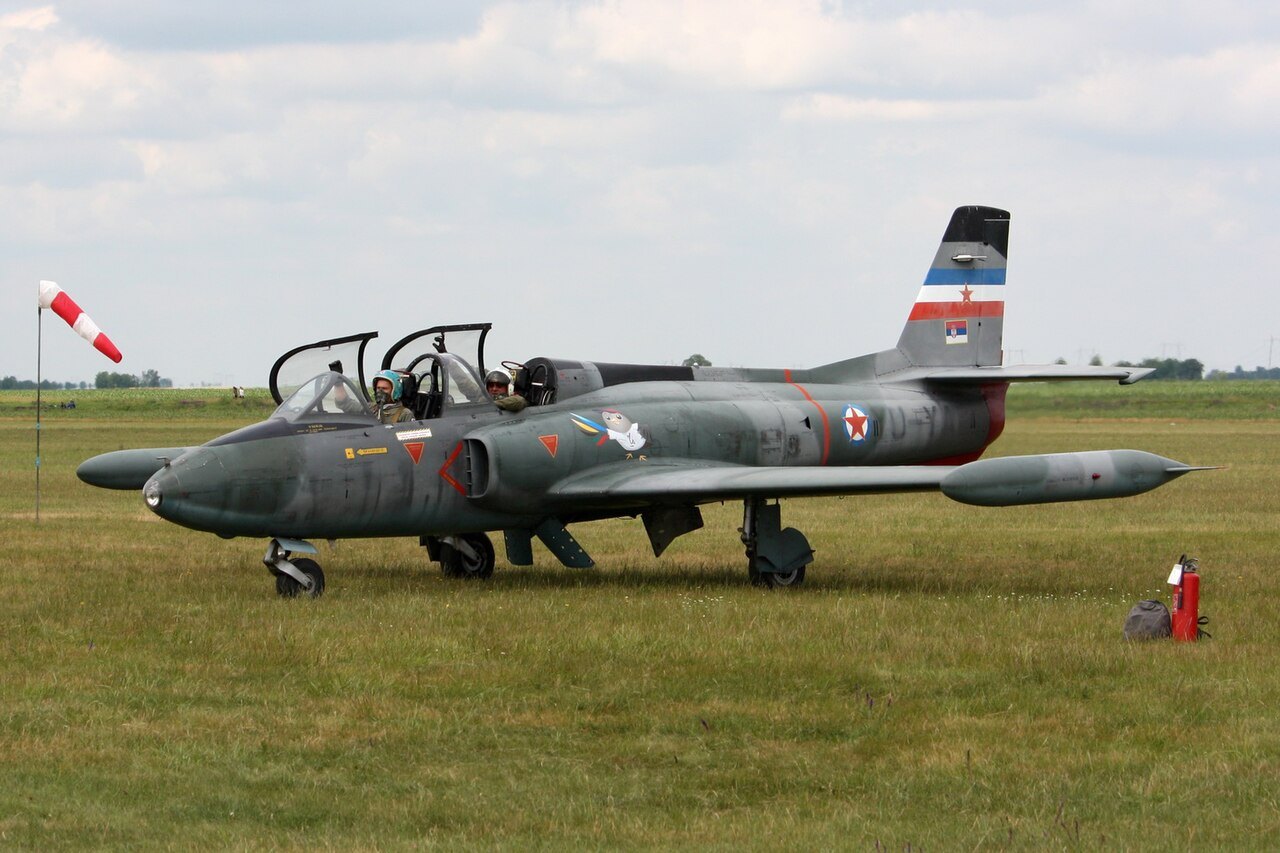
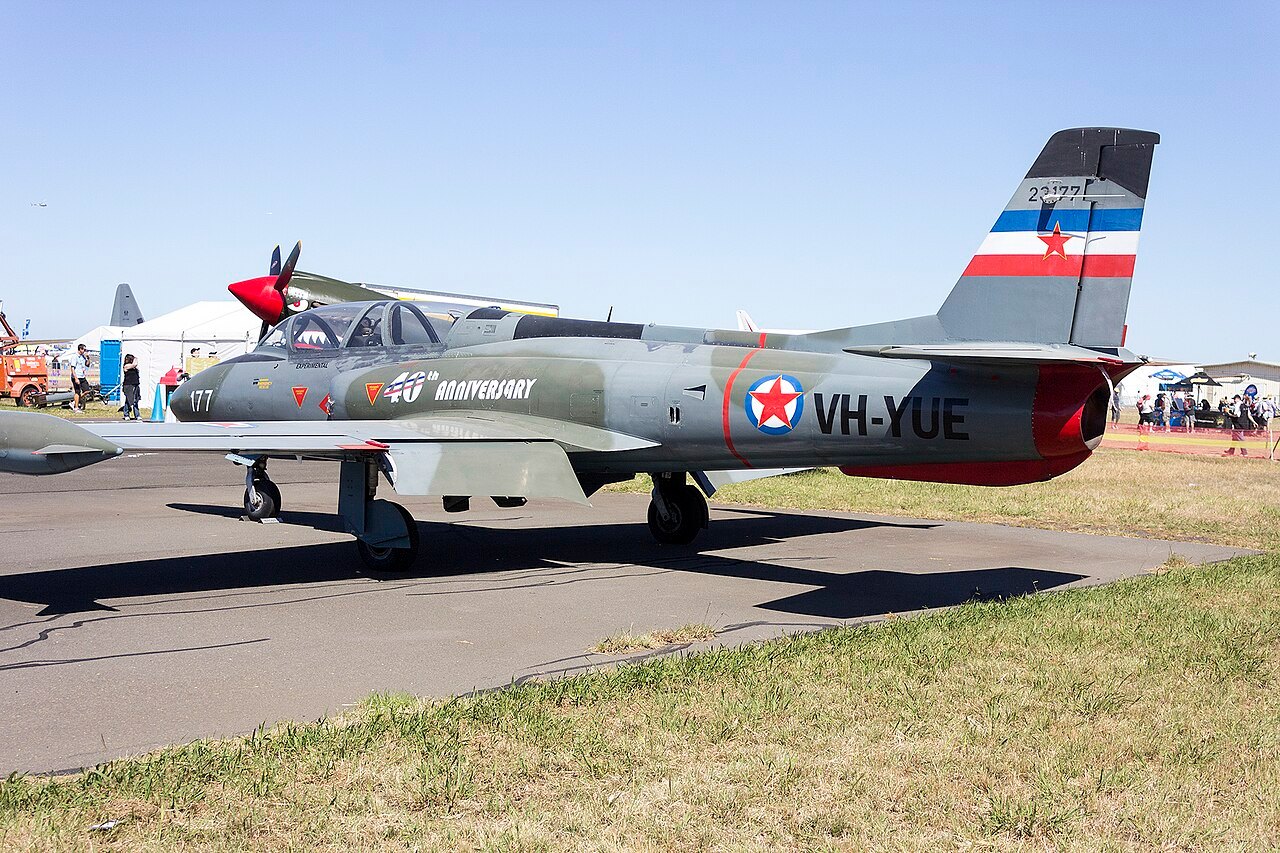
Where the G-2 Galeb flies and flew
The G-2 Galeb’s record
The Galeb’s main achievement was training: it produced most of Yugoslavia’s military pilots for a quarter of a century. It also flew ground-attack missions in the Yugoslav wars, in Libyan service from the 1980s to the 2011 civil war and briefly in Zaire, though it never claimed an air-to-air victory.
See how training and combat types compare in the military aircraft statistics database. Figures are approximate.
Everything people ask about the G-2 Galeb
Can I fly in a Soko G-2 Galeb?
What does Galeb mean?
When did the G-2 Galeb first fly?
How many G-2 Galebs were built?
What engine does the Galeb use?
Did the G-2 Galeb see combat?
Are any Galebs still flying?
You can’t fly the G-2 Galeb.
These, you can.
Most of this museum you can only look at. These genuine military jets you can fly yourself with MiGFlug — with aerobatics and time on the controls.
 Fly the L-39 AlbatrosThe world’s most-flown jet trainer — aerobatics included
 Fly the F-104 Starfighter“The missile with a man in it”
 Fly the MiG-21The Cold War’s most-produced jet
 Fly the T-33 Shooting StarAmerica’s first jet trainer
 Fly the DH VampireA piece of early jet history
 Fly the S.211Agile Italian jet trainer
 Fly the MB-326The classic Aermacchi jet
 Fly the MiG-15The Soviet legend of the Korean War
Continue the tour
Every fact, checked
- Soko G-2 GalebAeronautical Museum Belgrade: first flight, production 1965-1985, Bourges 1963, 6,000-hour museum airframe
- Galeb od pola vekaVreme (Belgrade): design team, British content, Zadar 1991, Golubovci 1999, Stars team
- Sest decenija od prvog leta legendarnog jugoslovenskog aviona GalebN1: 2021 anniversary at Ecka, Col. Mile Nezic on eight-hour solos, production 248
- Galeb Kill not Air-to-AirDefense Tech: French statement on the Misrata strike
- Operation Odyssey Dawn explained (Day 6)The Aviationist: context of the Rafale strike on 24 March 2011
- Accident SOKO G-2A-E Galeb, 24 March 2011Aviation Safety Network record of the Misrata loss
- Warbirds Directory: Soko G-2 GalebGeoff Goodall: civil survivors and registrations worldwide
- Bill Gunston, The Encyclopedia of Modern Warplanes (1995)Book: specifications and variant data
- Per Erik Solli, UN and NATO Air Power in the Former Yugoslavia (1996)Book/study: no-fly-zone violations including Udbina