
HAL HJT-16 Kiran
India’s First Jet Trainer
The first turbojet aircraft of wholly Indian design, the Kiran has taught roughly 10,000 Indian pilots to fly jets since 1968 and is still flying more than six decades after its first flight.
The Kiran: how India built its own jet classroom
On 4 September 1964, at Bangalore, Group Captain Suranjan Das took the first HJT-16 Kiran into the air. The aircraft was modest to look at: a straight-winged, side-by-side two-seater with a single Rolls-Royce Viper turbojet buried in the fuselage, superficially similar to Britain’s Jet Provost. Its significance lay elsewhere. Development had begun at Hindustan Aeronautics in 1958 under Dr V. M. Ghatage, and the Kiran, Sanskrit for “ray of light”, became the first turbojet-powered aircraft of exclusively Indian design. The Indian Air Force needed a jet trainer to bridge the gap between its piston basic trainers and front-line fighters such as the Gnat, Hunter and MiG-21, and it wanted that aircraft built at home. The Kiran answered both needs, and the design experience fed directly into HAL’s more ambitious HF-24 Marut.
Pre-production Kirans reached the IAF in March 1968, and the type soon became, in the words of test pilot and author Kapil Bhargava, “the mainstay of IAF’s intermediate level training of new pilots.” Production ran until 1989 in three main versions. The Kiran Mk I was a pure trainer; the Mk IA added underwing hardpoints for weapons training; and the Kiran Mk II, flown in 1976 and delivered from the early 1980s, swapped the Viper for a more powerful Orpheus turbojet, gained four hardpoints and twin nose machine guns, and could double as a light counter-insurgency aircraft. Sources give totals of between about 250 and 258 built, the large majority for the Indian Air Force and a smaller batch for the Indian Navy.
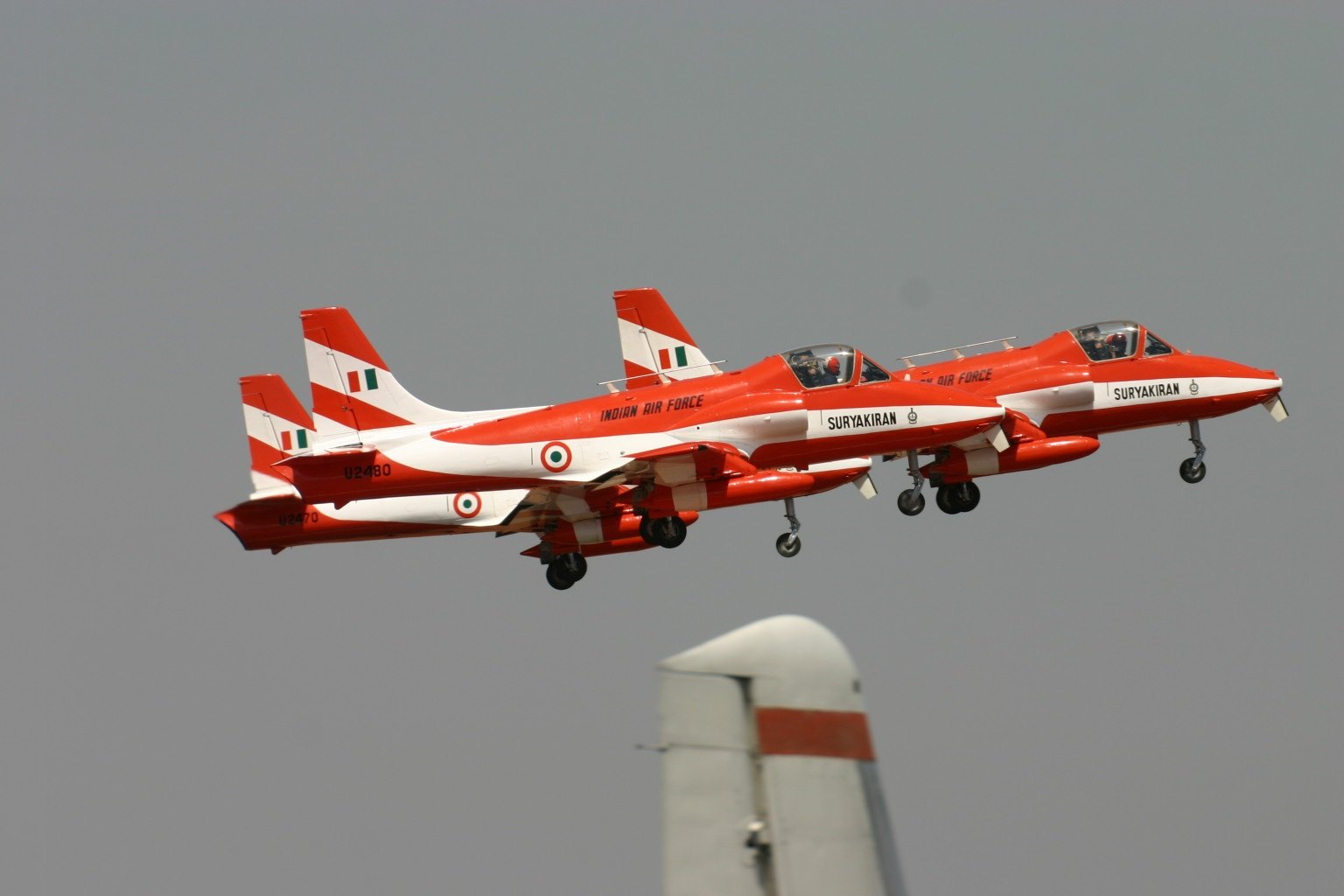
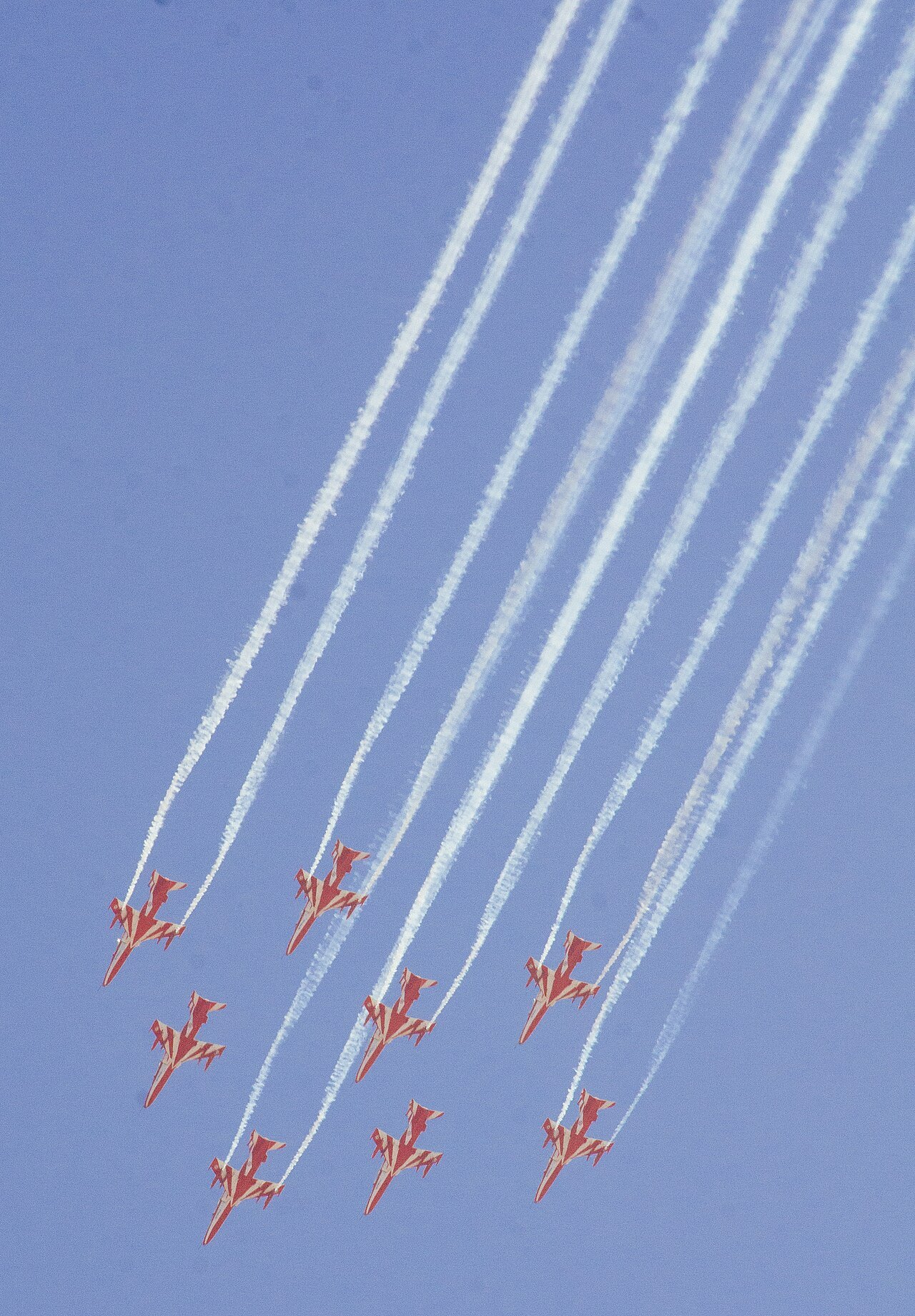
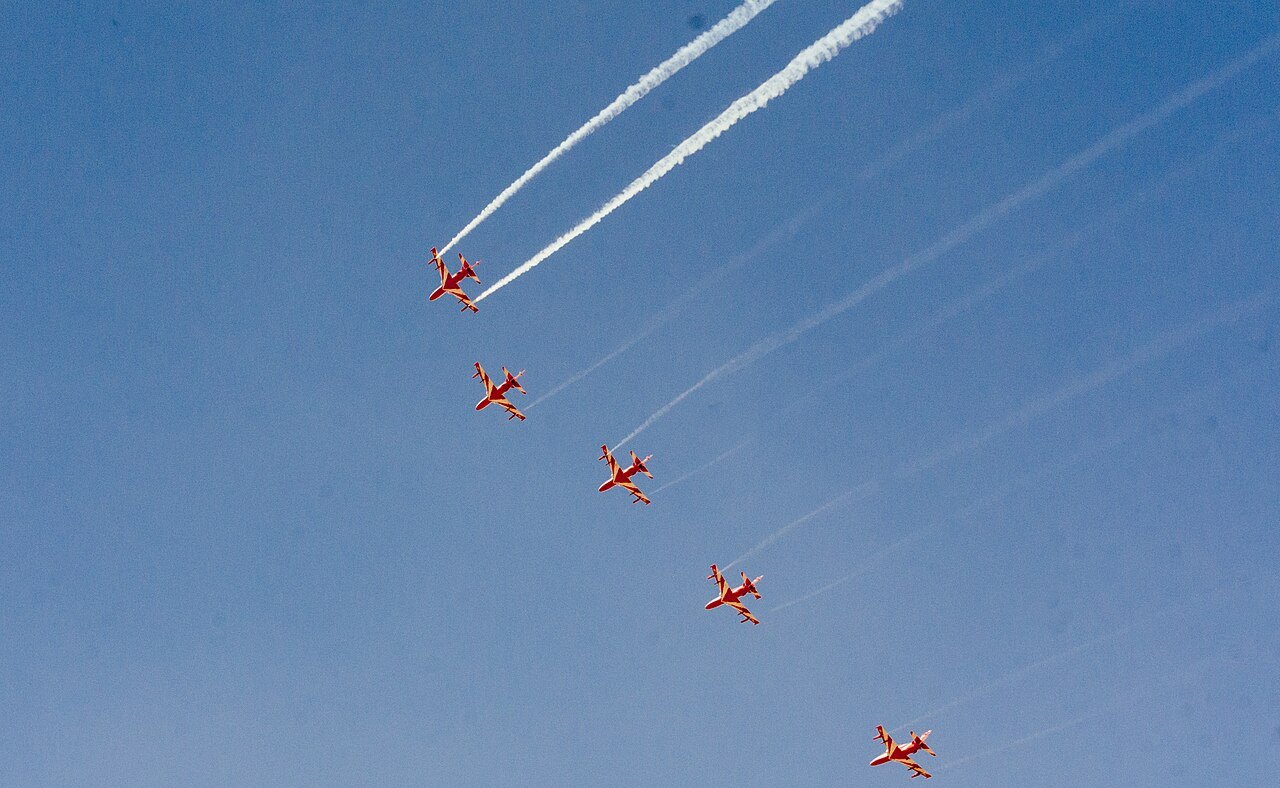
For more than half a century almost every Indian military jet pilot has passed through a Kiran cockpit, at the Air Force Academy at Dundigal, at Hakimpet and Bidar, and with the Navy in Goa. HAL credits the type with training about 10,000 pilots in some 1.2 million flying hours. From 1996 the Kiran Mk II also flew with the IAF’s Surya Kiran aerobatic team, and the Navy formed its own Sagar Pawan team on the type. The cost of that long service has been high, with many airframes lost in accidents, and the planned indigenous successor, the HJT-36 Sitara, has suffered long delays. The result is a trainer that, in 2026, is still flying with Indian squadrons more than six decades after its first flight.
01The Kiran’s long goodbye: why a 1960s trainer is still flying
The Kiran was meant to be replaced decades ago. Its intended successor, HAL’s HJT-36 Sitara intermediate jet trainer, has been in development since the late 1990s but has been slowed by accidents during testing and extensive redesign, and Indian defence press reports in 2026 described it as many years behind schedule. In the meantime the IAF bought the British BAE Systems Hawk, built under licence by HAL from 2008, for advanced jet training, but the Hawk was never a like-for-like intermediate trainer.
The Kiran fleet was squeezed further in 2009, when the HPT-32 Deepak piston basic trainers were grounded. Kirans that had been flying with the Surya Kiran display team were diverted to train new pilots, and in February 2011 the team was disbanded. Only with the arrival of the Pilatus PC-7 Mk II from 2013 did basic training return to a propeller aircraft.
By 2026 only the Kiran Mk II remains active. The IAF has set 2027 as a retirement target, but an official quoted in the Indian press that year said that if it did not happen in 2027 it might be 2030. A Kiran has also been reported in use as a surrogate test aircraft for systems development, which could extend its life further still. Few training aircraft anywhere have served one air force for so long.
What makes the Kiran special
Side by side, like a fighter briefing
Unlike tandem trainers, the Kiran seats student and instructor side by side on ejection seats under a single canopy. Instructors can see exactly where a student is looking and what their hands are doing, which suits the intermediate stage, when pilots are learning instrument flying, navigation and formation at jet speeds for the first time. The layout follows the Jet Provost school of thought and gives the aircraft its broad, rounded nose, instantly recognisable on Indian air bases.
Viper first, Orpheus later
The Mk I and Mk IA used the Rolls-Royce Viper 11, rated at about 2,500 lbf (11.1 kN), a small, reliable turbojet that suited an intermediate trainer. For the Mk II, HAL fitted the Bristol Siddeley Orpheus 701, commonly given as about 4,200 lbf (18.7 kN), the same engine family as the HAL-built Gnat and Ajeet. The extra thrust allowed heavier weapon loads and gave the Mk II the performance for a nine-ship aerobatic display team, at the cost of higher fuel burn.
A trainer that could carry weapons
From the 119th aircraft, the Mk IA gained two underwing hardpoints so students could practise bombing and rocket attacks before reaching operational squadrons. The Mk II took this further with four hardpoints and two 7.62 mm machine guns in the nose. Loads could include 500 lb bombs, SNEB rocket pods, gun pods or drop tanks. It was designed to give the Kiran a secondary counter-insurgency role, although no documented combat use has been found.
02The Kiran’s variants: Mk I, Mk IA and Mk II
- HJT-16 prototypes: first flight 4 September 1964, Rolls-Royce Viper 11.
- Kiran Mk I: unarmed intermediate trainer; deliveries from March 1968.
- Kiran Mk IA: two underwing hardpoints for weapons training, introduced from the 119th aircraft.
- Kiran Mk II: Orpheus 701 engine, four hardpoints, twin 7.62 mm nose guns, improved hydraulics and avionics; prototype first flown 30 July 1976, deliveries from the 1980s.
Sources give production totals between 251 and 258. One tally gives 224 for the Indian Air Force and 12 for the Indian Navy; Bharat Rakshak gives 190 for the Mk I and IA together. A handful were donated to Myanmar in December 2018.
HAL HJT-16 Kiran specifications
Specifications
- Crew
- 2 (side by side)
- Length
- 10.60 m (34 ft 9 in)
- Wingspan
- 10.70 m (35 ft 1 in)
- Height
- 3.64 m (11 ft 11 in)
- Wing area
- 19.0 m² (205 sq ft)
- Empty weight
- 2,560 kg (5,644 lb)
- Max take-off weight
- 4,235 kg (9,337 lb)
- Powerplant
- Mk II: 1 × Bristol Siddeley Orpheus 701 turbojet, about 18.7 kN (4,200 lbf); Mk I/IA: Rolls-Royce Viper 11, 11.1 kN (2,500 lbf)
- Maximum speed
- 695 km/h (432 mph) at sea level (Mk II)
- Cruise speed
- 324 km/h (201 mph)
- Range
- 615 km (382 mi)
- Endurance
- 1 hour 45 minutes
- Service ceiling
- 9,150 m (30,000 ft)
- Armament
- Mk II: 2 × 7.62 mm nose machine guns; up to four hardpoints for 500 lb bombs, SNEB 68 mm rocket pods, gun pods or drop tanks (Mk IA: two hardpoints)
Costs & production
- Cost per flight hour
- No official figure has been published. An honest estimate is in the low thousands of US dollars per hour, based on the fuel burn and maintenance of comparable small turbojet trainers such as the Jet Provost and L-29 in civil operation; the IAF’s own costs are not public
- Production
- About 250 to 258 built by HAL at Bangalore, 1968 to 1989
- Programme
- Development from 1958; first flight 1964; service entry 1968; retirement targeted for 2027 to 2030
03The Kiran’s operating costs: an old jet in a modern budget
HAL and the IAF have not published a cost per flying hour for the Kiran. Any figure is therefore an estimate. Comparable straight-wing turbojet trainers of the same era, such as the Jet Provost and Aero L-29 Delfín, are typically run by civil operators for somewhere in the low thousands of US dollars per hour once fuel, engine reserves and maintenance are counted, and the Orpheus-powered Kiran Mk II is thirstier than either. In Indian service the bigger cost is age: spares support for an out-of-production airframe and engine, structural life extensions and a high accident rate. Indian defence press reports in 2026 claimed that roughly half of all Kirans built had been lost in accidents over six decades, a figure that should be treated with caution but shows why the IAF is anxious to retire the type.
The Kiran from Bangalore to the 2020s
Design begins
HAL starts work on an intermediate jet trainer under Dr V. M. Ghatage.
First flight
Group Captain Suranjan Das flies the HJT-16 prototype on 4 September.
Into service
Pre-production Kirans are delivered to the Indian Air Force in March.
Shown at Farnborough
The Kiran appears at the Farnborough Air Show.
Kiran Mk II flies
The Orpheus-powered Mk II prototype makes its first flight on 30 July.
Production ends
HAL completes the last Kirans after more than two decades of production.
Surya Kiran formed
The IAF forms the Surya Kiran aerobatic team on the Kiran Mk II, later based at Bidar.
Hyderabad tragedy
A Sagar Pawan Kiran crashes during a display at India Aviation 2010, killing both pilots.
Surya Kiran grounded
The team is disbanded in February so its Kirans can train new pilots after the HPT-32 grounding.
Surya Kiran returns on Hawks
The team is revived on the BAE Hawk Mk 132, ending the Kiran’s display career with the IAF.
Myanmar
India donates a handful of Kirans to Myanmar in December.
Still flying
The Kiran Mk II remains in IAF service with retirement targeted for 2027 to 2030.
Stories & eyewitnesses: the Kiran in Indian skies
Ghatage’s ray of light
India’s first indigenous jet began on a drawing board in 1958.
Read the full story
First flight at Bangalore
Group Captain Suranjan Das took the Kiran aloft in September 1964.
Read the full story
Ten thousand pilots
Almost every Indian military jet pilot has flown the Kiran.
Read the full story
Surya Kiran: rays of the sun
The IAF’s nine-ship team made the Kiran famous.
Read the full story
Sagar Pawan: the Navy’s team
The Indian Navy built its own display team on the Kiran.
Read the full story
Hyderabad, 3 March 2010
A display manoeuvre ended in the streets of Bowenpally.
Read the full story
From display team to classroom
When the basic trainer was grounded, the Kiran took its place.
Read the full story
An armed trainer that never fought
The Mk II was built to carry guns and rockets.
Read the full story
The Mk II prototype at Bangalore
U784 now stands where the Kiran was born.
Read the full story
Sixty-two years and counting
The Kiran is the oldest combat-capable type in the IAF.
Read the full story
The Kiran in pictures
Where the Kiran flies and flew
The Kiran’s record
The Kiran has no documented combat record. Its achievement is in training: since 1968 it has prepared about 10,000 Indian Air Force and Indian Navy pilots for jet flying, while the armed Mk IA and Mk II taught generations of students to deliver weapons.
See how training and combat types compare in the military aircraft statistics database. Figures are approximate.
Everything people ask about the Kiran
Can I fly in a HAL HJT-16 Kiran?
What does Kiran mean?
When did the Kiran first fly?
How many Kirans were built?
Was the Kiran based on the Jet Provost?
Did the Kiran see combat?
Is the Kiran still in service?
You can’t fly the Kiran.
These, you can.
Most of this museum you can only look at. These genuine military jets you can fly yourself with MiGFlug — with aerobatics and time on the controls.
 Fly the L-39 AlbatrosThe world’s most-flown jet trainer — aerobatics included
 Fly the F-104 Starfighter“The missile with a man in it”
 Fly the MiG-21The Cold War’s most-produced jet
 Fly the T-33 Shooting StarAmerica’s first jet trainer
 Fly the DH VampireA piece of early jet history
 Fly the S.211Agile Italian jet trainer
 Fly the MB-326The classic Aermacchi jet
 Fly the MiG-15The Soviet legend of the Korean War
Continue the tour
Every fact, checked
- Kapil Bhargava, Bharat Rakshak Monitor Vol. 2(4), 2000Test pilot account; Suranjan Das first flight
- Johan Visschedijk Collection, 1000 Aircraft Photos: HAL HJT-16 KiranDesign origins under V. M. Ghatage; variants; production split
- Vintage Aviation News: First flight of the HAL HJT-16 KiranDates, engines, variants
- Deccan Herald: Prolonging Surya Kiran’s lifePilots trained, flying hours, Ramesh Rai quote
- The Tribune: IAF revives aerobatics team after four yearsSurya Kiran disbandment and Hawk revival
- Vayu Aerospace Review: The IAF’s Suryakiran Aerobatic TeamTeam formation in 1996 and Kiran years
- Honourpoint: Commander Suresh MauryaSagar Pawan crash, 3 March 2010
- IDRW: 62 years on, IAF’s Kiran trainer still flies2026 status, retirement target, IJT delay
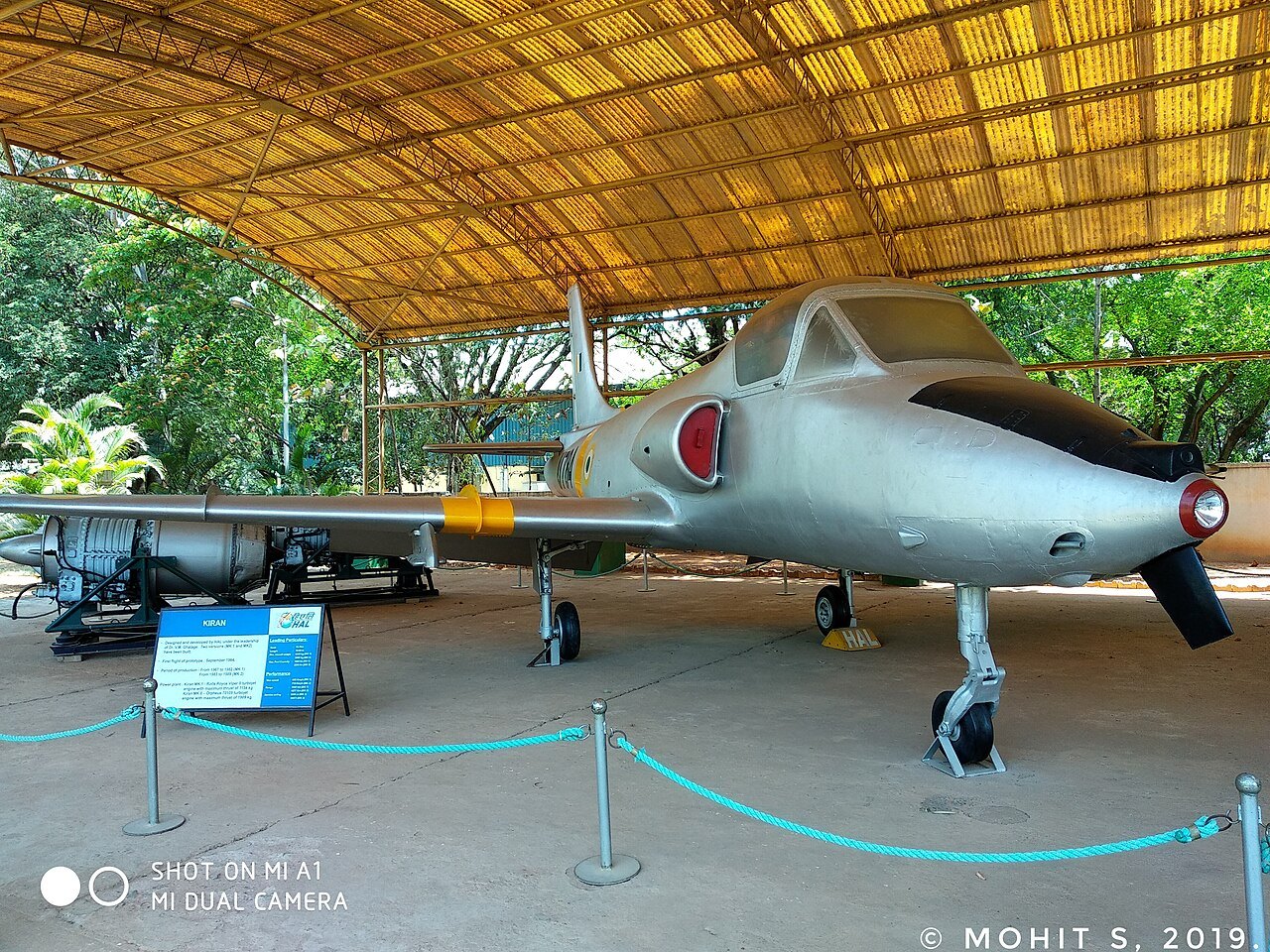
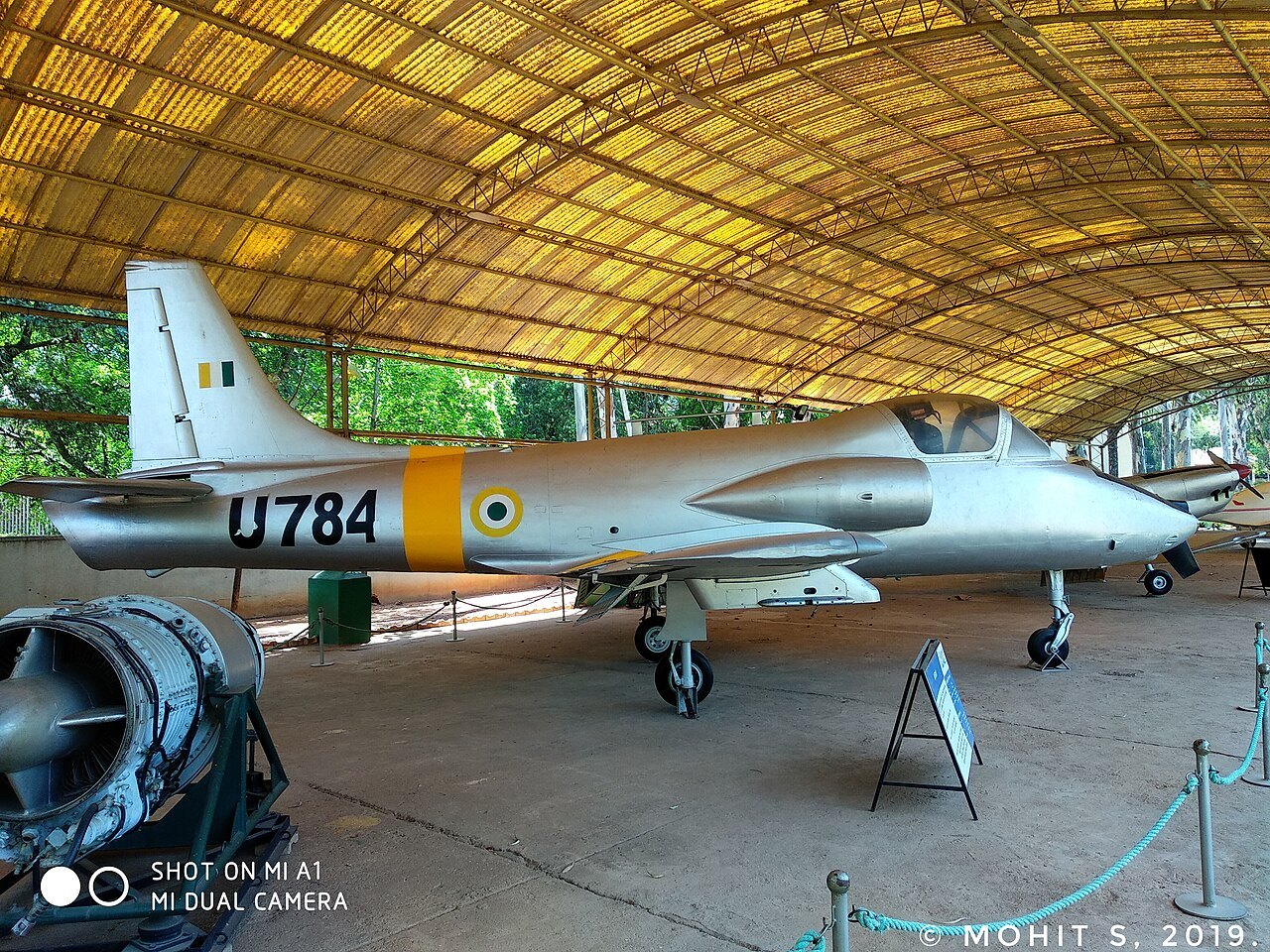
- Flugzeuginfo.net: HAL Heritage Centre museum galleryKiran Mk II prototype U784 on display