
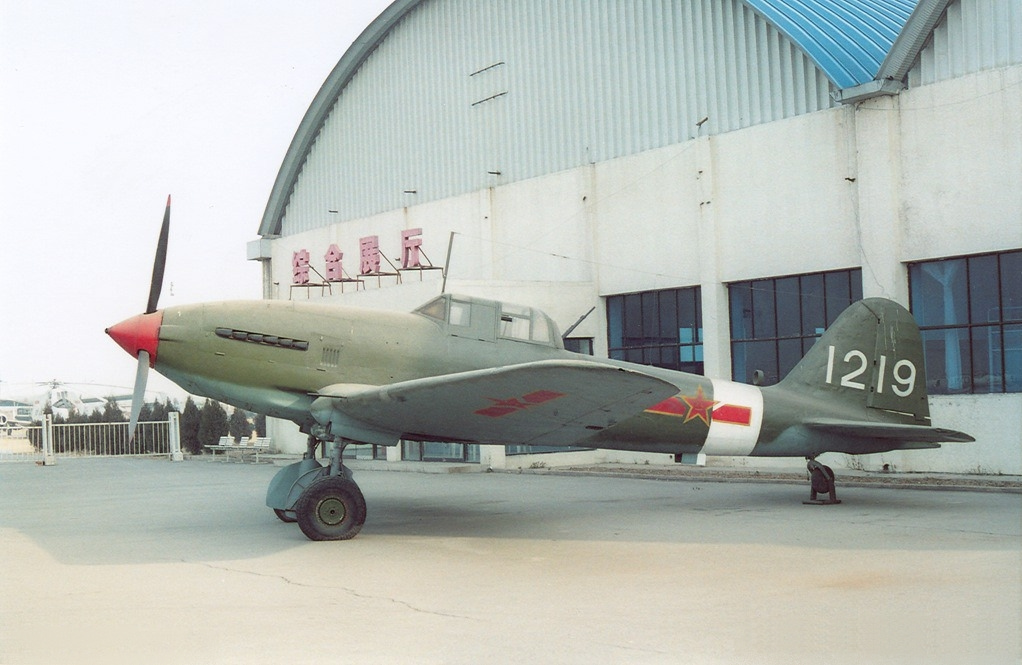
Ilyushin Il-10
“Beast”
The Sturmovik perfected — an all-metal redesign of the legendary Il-2 that flew faster, hit harder and arrived just in time for the last battles of 1945, then fought on into the jet age over Korea.
The Ilyushin Il-10: the Sturmovik, perfected
The Ilyushin Il-2 Sturmovik was the most-produced combat aircraft in history and the flying symbol of the Red Army’s ground war — but it was also slow, heavy and, in its early single-seat form, murderously vulnerable from behind. Even as Il-2s poured off the production lines, Sergei Ilyushin’s design bureau was hunting for something better: a Sturmovik that kept the armour but flew like a real aeroplane.
The answer grew out of an unlikely place — the Il-1, a single-seat armoured fighter Ilyushin drew up in 1943. Reworked into a two-seat attack aircraft, it emerged in early 1944 as the Il-10: an all-metal machine with a cleaner, more aerodynamic airframe, the engine radiators tucked inside the armoured shell, and a far more powerful Mikulin AM-42 engine of roughly 2,000 hp. The result flew at about 550 km/h — well over 100 km/h faster than the Il-2 — while carrying comparable armour and firepower. It was that rare thing: a wartime redesign that gave more of everything at once.
First flown on 18 April 1944, the Il-10 was rushed into production that autumn and reached front-line regiments in the opening months of 1945. Its combat debut came on 15 April 1945 with the 571st Assault Aviation Regiment, and it flew over the final battles for Berlin and Prague before the war in Europe ended — only a handful of regiments saw action in time. It arrived, in effect, for the last act. In August 1945 Il-10s also struck Japanese forces in Manchuria and Korea.
Its real career was the peace that followed. The Il-10 became the standard Soviet and Warsaw Pact attack aircraft of the late 1940s, was license-built in Czechoslovakia as the Avia B-33, and equipped air forces from Poland to China. Then, in 1950, North Korean Il-10s opened the Korean War as effective ground-attack aircraft — until American fighters shot them out of the sky within weeks.
01The Ilyushin Il-10 versus the Il-2 Sturmovik: what actually changed
From a distance the Il-10 looked like a tidier Il-2, and it did the same job — but almost everything was new. The airframe was all-metal and aerodynamically refined, where early Il-2s used a wooden rear fuselage. The wing was smaller and cleaner, the undercarriage retracted more neatly, and the cooling radiators were moved inside the armoured hull rather than hanging in the airflow. Combined with the ~2,000 hp AM-42, that cut drag and lifted top speed from roughly 410 km/h to about 550 km/h.
Protection stayed comparable — the armoured “bathtub” shielding engine, pilot and gunner — and the rear defensive gun was upgraded to a hard-hitting 20 mm cannon. The price was complexity: the Il-10 was harder to build and its new engine needed sorting out. It also arrived so late that the Il-2 fought the vast majority of the war. But as a design, the Il-10 was the Sturmovik idea brought to full maturity.
What makes the Ilyushin Il-10 special
An all-metal armoured “flying tank”
Like the Il-2, the Il-10 was built around an armoured shell — the load-bearing structure itself was armour plate, wrapping the engine, cockpit and rear gunner. But where early Sturmoviks mixed wood and metal, the Il-10 was all-metal and far cleaner aerodynamically, trading none of the protection for a great deal less drag.
The Mikulin AM-42 — power for speed
At its heart sat the Mikulin AM-42, a liquid-cooled V-12 of roughly 2,000 hp at takeoff. It gave the Il-10 the performance the Il-2 always lacked — about 550 km/h — though the engine was troublesome in early service and took time to make reliable.
Cannons, rockets and a real tail gun
The Il-10 carried two (later four) 23 mm cannon in the wings, plus rockets and up to roughly 500–600 kg of bombs. Crucially, the rear gunner got a proper 20 mm cannon in a powered mounting — a far better answer to attacking fighters than the Il-2’s rifle-calibre gun.
02The Ilyushin Il-10’s engine: the Mikulin AM-42 and its troubled start
The AM-42 was a development of the Mikulin V-12 family, tuned for low-altitude ground-attack work and rated at roughly 2,000 hp for takeoff (sources also quote a lower nominal figure of around 1,770 hp, reflecting continuous rather than takeoff power). Feeding a big engine inside an armoured hull created real cooling and reliability headaches: early Il-10s suffered engine failures, and a good part of the type’s first year in service was spent making the AM-42 dependable. Once sorted, it gave the Sturmovik the speed it had always wanted — the single biggest reason the Il-10 outperformed the Il-2 it replaced.
03The Ilyushin Il-10’s armament and armour: a better-defended Sturmovik
Forward firepower came from wing-mounted 23 mm cannon — the VYa-23 on early aircraft, later the NS-23, with some blocks carrying four — backed by machine guns, RS-82 and RS-132 rockets, and a bomb load commonly cited at up to about 500–600 kg. The most meaningful change from the Il-2 was at the back: the rear crewman operated an Il-KU-8 mounting with a 20 mm cannon (a 12.7 mm machine gun on some aircraft), where the Il-2’s gunner had only a rifle-calibre weapon and almost no protection. German pilots had learned to attack the Il-2 from dead astern; the Il-10 made that a much more dangerous thing to try. Exact armament fits varied by production block and year — treat any single loadout as one of several.
Ilyushin Il-10 full specifications
Baseline note: the figures below describe a standard production Il-10 as it left State Aircraft Factories No. 1 and No. 18 at Kuibyshev in the spring of 1945 — Mikulin AM-42, two 23 mm VYa-23 and two 7.62 mm ShKAS in the wing, one 12.7 mm UBT in the rear position, and an all-metal airframe with the armoured shell built in as primary structure. Deltas for the 1947-standard aircraft with four NS-23, for the Il-10M of 1951, and for the Il-2 Type 3 that the Il-10 was built to replace are given in grey. Two cautions apply. Ceiling is the single most contradictory figure in the literature: Russian tables give 7,250 m, while the table in Green and Swanborough’s Air Enthusiast study of the type (1980), widely reproduced in English, prints 5,500 m, which is almost certainly a combat ceiling at full load rather than an absolute one, and both are shown below rather than averaged. And the production total is not settled either — the usual headline of 6,166 comes from 4,966 Soviet-built plus 1,200 Czechoslovak-built, but the year-by-year components most often quoted (about 4,600 Il-10 in 1944–49, 280 Il-10U trainers, 146 Il-10M in 1953–54, 1,200 Avia B-33 and CB-33) add to roughly 6,230. The honest statement is "a little over 6,100".
Dimensions & weights
- Crew
- 2 — pilot and rear gunner, seated back to back and, unlike the Il-2, both of them inside the armoured shell; on the Il-2 the gunner sat behind the armour on a canvas strap with a single plate at his back, and died at several times the pilot’s rate
- Length
- 11.06 m (36 ft 3 in) — 0.59 m shorter than the Il-2 Type 3; the Il-10M grew to 11.87 m (38 ft 11 in)
- Wingspan
- 13.40 m (44 ft 0 in) — against 14.60 m (47 ft 11 in) on the Il-2; the Il-10M went back out to 14.00 m (45 ft 11 in)
- Height
- 4.18 m (13 ft 9 in), tail up; 4.24 m (13 ft 11 in) on the Il-10M
- Wing area
- 30.00 m² (322.9 sq ft) — 8.5 m² less than the Il-2’s 38.50 m² (414.4 sq ft). This is the single most consequential number on the aeroplane: it bought speed and cost field performance. The Il-10M put it back to 33.00 m² (355.2 sq ft) precisely because the loss hurt
- Structure
- All-metal stressed skin throughout, with the armoured shell forming the load-bearing forward fuselage rather than being carried as a separate bath — the Il-2 retained a wooden rear fuselage on most of its production run, and wooden outer wing panels on a great many aircraft, because Soviet duralumin was scarce in 1942
- Empty weight
- 4,680 kg (10,318 lb); the Il-10M rose to 5,570 kg (12,280 lb)
- Normal take-off weight
- 6,335 kg (13,966 lb) — within 25 kg of the two-seat Il-2 Type 3 at 6,360 kg, which is the point: the Il-10 bought its performance from cleanliness and power, not from being lighter. The Il-10M went to 7,100 kg (15,653 lb)
- Maximum take-off weight
- 6,535 kg (14,407 lb)
- Armour weight
- 994 kg (2,191 lb) — close to 16 per cent of normal take-off weight, against roughly 700 kg (1,540 lb) on the Il-2. The Il-10 carried more armour, better placed, on a smaller and faster aeroplane
- Armour thickness
- 4 to 8 mm plate (0.16 to 0.31 in), thickest beneath the engine; 64 mm (2.5 in) of laminated armour glass in the windscreen
- Wing loading
- 211 kg/m² (43.2 lb/sq ft) at normal take-off weight — against about 165 kg/m² (33.8 lb/sq ft) for the Il-2. Approach and landing speeds rose accordingly, and so did the accident rate on rough forward strips
- Internal fuel
- ~747 litres (~164 imp gal, ~197 US gal) in protected tanks within the armoured section
- Bomb load
- 400 kg normal, 600 kg maximum (880 lb / 1,320 lb) — identical to the Il-2, and the clearest limitation of the whole design: five years of development beyond the Il-2 bought speed, protection and handling, and not one extra kilogramme of ordnance
Performance
- Maximum speed at altitude
- 551 km/h (342 mph, 298 kn) at 2,800 m (9,190 ft); Russian factory tests quote up to 555 km/h
- Maximum speed at sea level
- 507 km/h (315 mph, 274 kn) — the number that mattered, because this aeroplane worked below 1,000 m
- Cruising speed
- 310 km/h (193 mph, 167 kn) at 500 m (1,640 ft)
- Time to 3,000 m
- 5.0 min (to 9,840 ft)
- Rate of climb
- about 10 m/s (1,970 ft/min) at low level, derived from the climb time above rather than separately published
- Service ceiling
- 7,250 m (23,790 ft) — the figure in most Russian and German reference tables
- Ceiling quoted at full combat load
- 5,500 m (18,000 ft) — the competing figure; see the baseline note. Academic either way, since assault regiments almost never went above 1,500 m
- Combat range
- ~800 km (~500 miles, ~430 nmi) at 500 m; the Il-10M managed ~1,070 km (~665 miles)
- Power loading
- 3.17 kg/hp (6.98 lb/hp) at normal take-off weight on take-off power
- Gain over the Il-2 Type 3
- +141 km/h at altitude, +116 km/h at sea level (+88 mph and +72 mph) — the Il-2 managed 410 km/h at 1,500 m and about 391 km/h on the deck. Below 2,000 m the Il-10 was within a whisker of a Bf 109G-2 or an Fw 190A-4, which is why it could be escorted by fewer fighters and sometimes by none
- Il-10M performance
- 512 km/h at altitude, 476 km/h at sea level (318 mph / 296 mph), ceiling 7,000 m (22,970 ft) — slower than the aircraft it replaced, the price of a bigger wing, heavier guns and more equipment. The Il-10M was bought for handling and all-weather capability, not for speed
Propulsion & systems
- Engine
- 1 × Mikulin AM-42, liquid-cooled 60-degree V-12 of about 46.7 litres, a low-altitude development of the AM-38F supercharged for a single low rated altitude, because nothing in the assault regiments’ work happened high up
- Take-off power
- 1,500 kW (2,000 hp) — against 1,280 kW (1,720 hp) from the Il-2’s AM-38F
- Continuous rated power
- 1,320 kW (1,770 hp)
- Engine reliability
- The AM-42 was rushed and it showed — of the handful of Il-10s lost in the first weeks of combat in April and May 1945, roughly as many went to engine failures as to German flak. Bearing and supercharger troubles dogged the type into 1946 and were a standing complaint of the postwar regiments
- Propeller
- AV-5L-24 three-blade constant-speed, 3.60 m (11 ft 10 in) diameter
- Cooling installation
- Water and oil radiators moved inside the armoured centre section and fed through inlets in the wing centre-section leading edge, with the exhaust ducted out above the wing — on the Il-2 the radiator sat in an armoured tunnel under the nose, a large and draggy lump. This change is the biggest single contributor to the Il-10’s near-halving of drag, and it protected the coolant as a by-product
- Undercarriage
- Retractable tailwheel gear; the mainwheels rotated 86 degrees as the legs folded aft so that the wheels lay flat and fully enclosed within the wing — the Il-2’s wheels retracted into bulged fairings that stood proud of the wing and never fully covered them
- Gunner’s installation
- VU-8 enclosed mounting inside the rear armour of the shell, with armour glass and a proper seat — postwar aircraft used the VU-9M with the 20 mm B-20T, and the Czechoslovak B-33 the BU-9M with the B-20ET. The gunner’s survivability is the least glamorous and most important improvement in the whole programme
- Radio and navigation
- A single HF set and intercom as standard on wartime aircraft — the Il-10M added a radio compass, marker receiver and blind-flying instruments, giving what the Soviet air force described as partial all-weather capability rather than the real thing
- Czechoslovak-built powerplant
- Avia M-42, a licence AM-42 built in Czechoslovakia from 1952 — the first B-33s of 1951 flew on imported Soviet engines
- Fuel and oil protection
- Self-sealing tanks inside the armour, with inert exhaust gas fed into the ullage space — a system carried over from late Il-2 practice and one of the reasons Shturmoviks so often came home burning nothing
04The Ilyushin Il-10’s operating costs: why no reliable price exists
The Il-10 was a Soviet state product built in the 1940s and 50s, never traded on an open market, so no credible flyaway unit price or cost-per-flight-hour figure exists in the public record — and none should be invented. Production was measured in factory output and state plans, not dollars. What we can say is that it was designed to be affordable in quantity: like the Il-2 before it, the Il-10 was meant to be built and expended in enormous numbers, which is exactly what happened — roughly six thousand were produced across the Soviet Union and Czechoslovakia. Any precise cost figure attached to the type today is an estimate at best.
Armament & payload
The Il-10 carried the Il-2’s bomb load faster, and killed its own gunners far less often
Nothing about the Il-10’s offensive load was new. Two wing bomb bays in the centre section and two underwing racks took 400 kg normally and 600 kg at a stretch, exactly as on the Il-2, and the wing guns were at first the same VYa-23 and ShKAS combination the Il-2 had carried since 1942. What changed was everything around the ordnance: the aeroplane arrived over the target 100 to 140 km/h faster, spent less time inside the flak envelope, and could manoeuvre after the release instead of wallowing away in a shallow turn. Soviet analysis after Kursk had found that 60 to 65 per cent of all Il-2 combat losses came from anti-aircraft fire rather than fighters, and the Il-10 was designed against that statistic specifically.
The rear gun tells the same story from the other end. On the Il-2 the gunner sat outside the armoured bath, protected by one 6 mm plate, firing a 12.7 mm UBT through an open slot; his loss rate ran several times the pilot’s and regiments filled the seat with mechanics and volunteers. The Il-10 enclosed him in the shell, gave him armour glass, a real seat and the VU-8 mounting, and from 1947 replaced the heavy machine gun with a 20 mm B-20T cannon. From the 1947 production standard the wing battery became four 23 mm NS-23, dropping the rifle-calibre guns entirely and roughly doubling the weight of fire against soft targets and trucks. Ammunition and fit varied more than any table admits: wartime aircraft, 1947-standard Soviet aircraft, Il-10Ms and Czechoslovak B-33s carried four different combinations of wing and rear guns, and export aircraft were re-armed locally.
Gun
- 2 × 23 mm VYa-23 in the outer wing, 150 rounds per gun, plus 2 × 7.62 mm ShKAS with 750 rounds per gun — the wartime fit, inherited unchanged from the Il-2
- 4 × 23 mm NS-23 in the wing, 150 rounds per gun — the 1947 production standard; a lighter, faster-firing gun than the VYa, and the rifle-calibre pair was deleted
- 1 × 12.7 mm Berezin UBT in the VU-8 rear mounting, 150 rounds — replaced from 1947 by 1 × 20 mm B-20T in the VU-9M
- Il-10M: 4 × 23 mm NR-23 in the wing with 600 rounds total, and 1 × 20 mm B-20EN aft
- Avia B-33: 4 × 23 mm NS-23RM in the wing and 1 × 20 mm B-20ET in the BU-9M mounting — the Czechoslovak aircraft were built to the late Soviet standard from the start
Air-to-air
- No guided air-to-air weapon existed in Soviet service in this aircraft’s lifetime; the card is kept because the Il-10 did fight in the air, and won occasionally
- The wing cannon were the air-to-air battery in practice. An Il-10 crew of the 571st Assault Aviation Regiment shot down a Focke-Wulf Fw 190 in April 1945, and a second was claimed damaged
- The rear 12.7 mm UBT, and later the 20 mm B-20T, was a genuinely useful defensive weapon now that the gunner was armoured and could aim without being shot out of his strap
- Against jets it was hopeless. On 27 June 1950 four North Korean Il-10s were shot down near Kimpo by F-80C Shooting Stars of the USAF — the first aerial victories in history for jet fighters
Air-to-surface guided
- None, at any point, in any variant. The Il-10 was retired from Soviet front-line service in 1956, several years before Soviet guided air-to-surface weapons reached assault units
- Everything the aeroplane delivered was unguided and aimed by pointing the aircraft: gunsight, dive angle, stopwatch and judgement
- The nearest thing to a precision weapon it carried was the PTAB hollow-charge bomblet, which substituted saturation for accuracy
- The Il-10M’s added navigation kit improved the crew’s ability to find a target in poor weather, not to hit it more precisely once found
Bombs
- 400 kg normal, 600 kg maximum, split between two internal bays in the wing centre section and two underwing racks
- FAB-50 and FAB-100 general-purpose bombs; the usual internal load was four FAB-100
- 2 × FAB-250 on the underwing racks for the maximum-load case, at a real cost in speed and climb
- PTAB-2.5-1.5 hollow-charge anti-tank bomblets loaded loose into the two centre-section bays — the weapon that made the Shturmovik genuinely dangerous to armour from 1943 onwards
- AO-25 fragmentation and ZAB incendiary bombs for troops, transport and rail targets
Rockets
- 4 × RS-82 or RS-132 unguided rockets on underwing rails — some sources give eight RS-82 on early aircraft
- Later ARS-82 and ARS-132 rockets on ORO-82 and ORO-132 tube launchers, standard on the Il-10M and the Avia B-33
- Czechoslovak-built B-33s were cleared for additional rocket types beyond the Soviet range, one of the few genuine armament differences of the licence aircraft
- Accuracy was poor by any modern measure; rockets were fired in salvo at area targets, lorry columns and rail yards rather than at individual vehicles
Pods & other stores
- DAG-10 rear-firing dispenser with ten AG-2 aerial grenades on small parachutes, released into the path of a pursuing fighter — more a morale weapon than a killing one, but it was carried
- No gun pods and no external cannon packs: the Il-10’s guns were all internal, and the pylons were for bombs and rockets only
- No drop tanks in Soviet service. Polish B-33s were modified to carry external fuel, which is why Polish range figures sometimes exceed Soviet ones for the same airframe
- A vertical camera installation was fitted to some aircraft for post-strike assessment
Three typical loadouts
- Close support, Berlin and Prague, April to May 1945
- 2 × VYa-23 and 2 × ShKAS with full ammunition, 4 × FAB-100 in the centre-section bays, 4 × RS-82 underwing, 150 rounds for the rear UBT. Flown at 300 to 600 m in regimental strength, in a shallow-dive circle over the target.
- Anti-armour strike
- Both centre-section bays filled with PTAB-2.5-1.5 hollow-charge bomblets, wing cannon loaded for the strafing pass, rockets on the outer rails. Released in a shallow dive from about 100 m in a single scattering run, which was the only way the weapon worked.
- Anti-shipping, Pacific Fleet aviation, August 1945
- 2 × FAB-250 on the underwing racks with a light internal load, full cannon ammunition, no rockets. Flown by the 26th Assault Aviation Regiment against Japanese shipping in the northern Korean ports, from over water and at very low level.
Sourcing caveat: the armament figures come from the Soviet type descriptions reproduced by Green and Swanborough in Air Enthusiast (1980), airwar.ru and airpages.ru. Round counts in particular should be treated as nominal. Soviet armourers routinely loaded short to save weight on hot days and short strips, and the 1947 four-gun aircraft, the Il-10M and the Avia B-33 are frequently conflated in Western tables that print a single armament line for the type.
Variants
The Il-10 began life as a fighter, ended as a Czechoslovak export, and outlived the Soviet air force’s interest in it by fifteen years
The lineage starts in a place nobody expects. In 1943 Ilyushin drew the Il-1, a heavily armoured single-seat fighter meant to destroy German bombers and transports. The VVS looked at it, decided an armoured fighter would never be fast enough to catch anything worth catching, and told Ilyushin to make it an attack aircraft instead. Renumbered Il-10 in early 1944 because odd numbers were reserved for fighters, it first flew on 18 April 1944, beat both Ilyushin’s own Il-8 and the arguably better Sukhoi Su-6 in the state trials that finished in early June, and was ordered into production by the State Defence Committee on 23 August 1944.
What followed was a long, awkward postwar career. Soviet production ran to 1949 at Kuibyshev and finished at Factory No. 64 at Voronezh; the type was withdrawn from Soviet front-line service in 1956, by which time it had been obsolete for at least six years and everyone involved knew it. The Il-10M of 1951 was a genuine attempt to fix the handling that the small wing had cost, and it worked, at the price of speed. The real second life was Czechoslovak: Avia took the licence in 1951 and built more B-33s than the Soviet Union built Il-10Ms by an order of magnitude, and it was Czechoslovak-built aircraft that equipped most of the Warsaw Pact and went to Yemen and Indonesia.
- Il-1 (1943–44, 1 prototype)
- Armoured single-seat fighter-interceptor; rejected in that role and reworked into the two-seat attack aircraft that became the Il-10.
- Il-10 (1944–49, about 4,600)
- Initial production standard: AM-42, two VYa-23 and two ShKAS in the wing, one 12.7 mm UBT in the VU-8 rear mounting. Built at Factories No. 1 and No. 18, Kuibyshev, and latterly No. 64, Voronezh.
- Il-10, 1947 armament standard (from 1947)
- Not a separate designation but a distinct aeroplane: four 23 mm NS-23 in the wing replacing the mixed battery, and a 20 mm B-20T aft. Most surviving photographs and most museum aircraft show this fit.
- Il-10U / UIl-10 (1945–47, 280)
- Dual-control operational trainer with a second cockpit in place of the gunner’s position, reduced armament and armour.
- Il-16 (1945–46, 2 or 3 prototypes)
- Scaled-down, lighter Il-10 on the 2,268 hp Mikulin AM-43NV, intended to be faster still. The engine was never made to work and the programme was cancelled in the summer of 1946.
- Il-10M (1951–54, 146)
- The definitive rebuild: longer fuselage, larger-span wing of 33 m² with new profile, enlarged control surfaces and a ventral fin, four NR-23 cannon and navigation equipment for partial all-weather work. First flew 2 July 1951; all but ten were built at Factory No. 168, Rostov-on-Don.
- Avia B-33 (1951–56, 1,200 including CB-33)
- Czechoslovak licence-built Il-10 to the four-NS-23RM standard with a B-20ET in the BU-9M rear mounting. First flight 26 December 1951; Soviet engines at first, then the Czechoslovak-built Avia M-42 from 1952.
- Avia CB-33 (1953–56, included in the 1,200)
- Czechoslovak two-seat dual-control trainer equivalent to the Il-10U, built alongside the combat aircraft and exported with them — Romania alone took 16.
- Il-10 turboprop testbed (China, 2 converted)
- Chinese conversions with a turboprop in place of the AM-42, flown as engine and airframe research rather than as a service proposal.
- Polish long-range B-33 (Poland, 1950s, modification)
- Polish B-33s modified to carry additional external fuel, extending an endurance that Soviet crews had always found marginal.
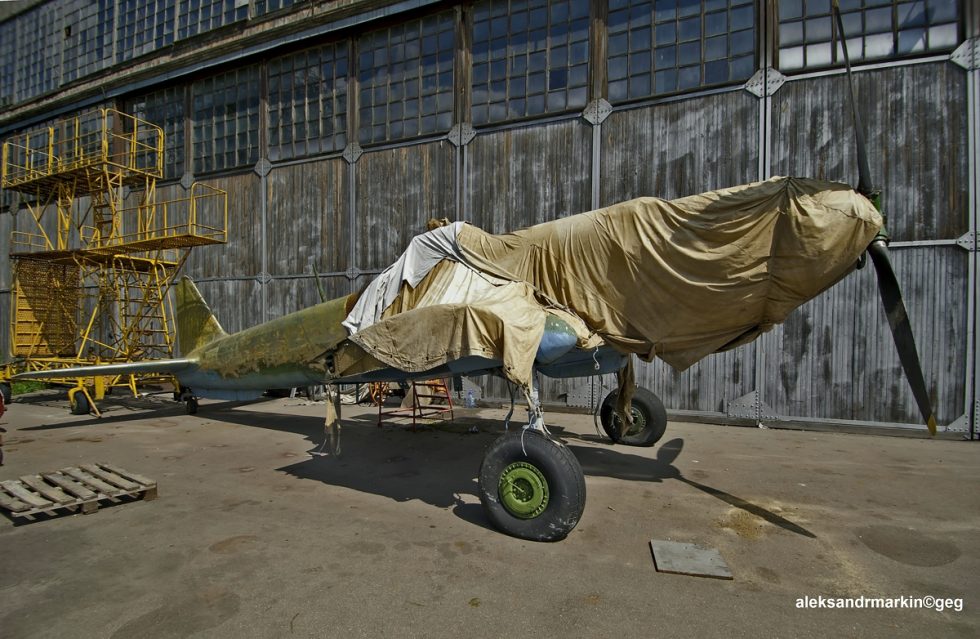
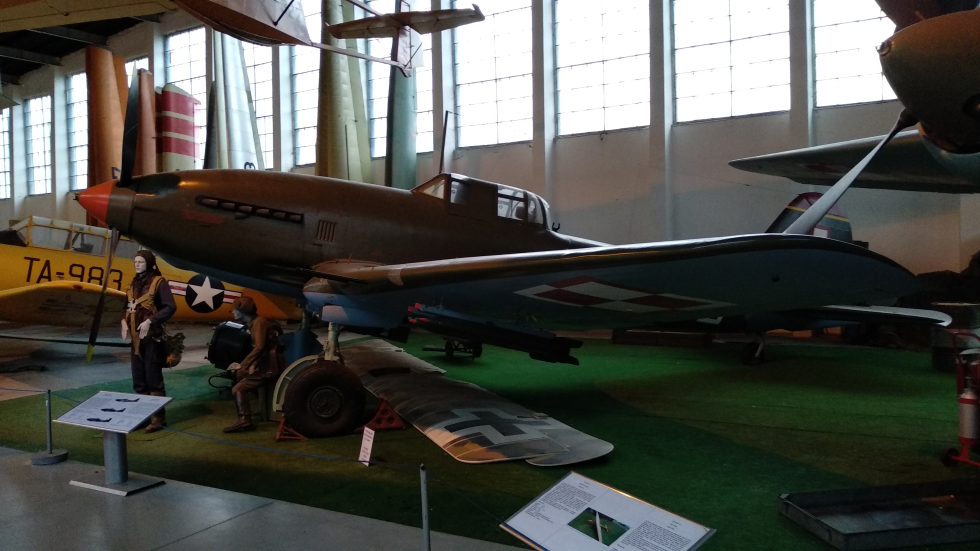
Survivors, counted carefully, because the two types are almost impossible to tell apart on a plinth: eight airframes are generally accepted to exist, and the split is four to four. Four are Soviet-built Il-10s — the Central Air Force Museum at Monino, the China Aviation Museum at Datangshan near Beijing, the Museum of the Polish Army in Warsaw, and the National Museum of Romanian Aviation in Bucharest. Four are Czechoslovak Avia B-33s — the Polish Aviation Museum in Kraków, which catalogues its aircraft explicitly as an Avia B.33 rather than an Il-10, the Lubuskie Military Museum at Drzonów in Poland, the Aviation Museum at Kbely in Prague, and a gate-guard airframe beside road E371 at Nižný Komárnik in Slovakia. Not one is airworthy and no reproductions are known. Treat every museum label with suspicion: many surviving Warsaw Pact airframes wear Soviet markings and are described as Il-10s when they left the Avia works at Čakovice, and the Monino aircraft in particular has been questioned on those grounds. Where an airframe’s works number has not been published, the safest statement is that it is an Il-10 pattern aircraft of unrecorded origin.
The Ilyushin Il-10: from 1945 to the jet age
The Il-1 seed
Ilyushin designs the single-seat armoured Il-1 fighter — the concept that would be reworked into the two-seat Il-10.
First flight
The Il-10 prototype flies on 18 April 1944: all-metal, faster and cleaner than the Il-2, with the powerful Mikulin AM-42.
Into production
Rushed onto the lines that autumn; conversion training begins and the first regiments start to re-equip.
Combat debut
On 15 April 1945 the 571st Assault Aviation Regiment takes the Il-10 into action; it fights over Berlin and Prague in the war’s final weeks.
War against Japan
In August, Il-10s strike Japanese shipping and transport during the Soviet offensive in Manchuria and northern Korea.
Korean War
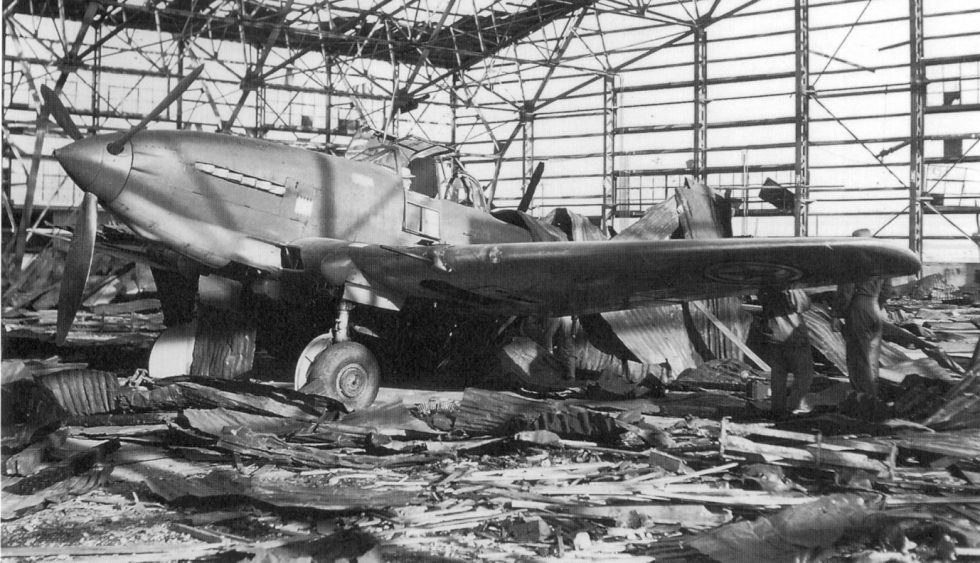
North Korean Il-10s open the war as effective ground-attack aircraft — then suffer heavy losses to US F-51 and F-80 fighters within weeks; examples are captured at Kimpo.
The Il-10M
An improved Il-10M flies with a redesigned wing and heavier cannon armament; about 146 are built in 1953–54.
Warsaw Pact & Avia B-33
License-built in Czechoslovakia as the Avia B-33 and flown across the Eastern bloc and China; withdrawn from Soviet service by the mid/late 1950s, lingering with some operators into the 1960s.
From the front: twelve Ilyushin Il-10 stories
From fighter to attacker
The Il-10 began life as the Il-1, a single-seat armoured fighter.
Read the full story
A hundred km/h, almost for free
The all-metal Il-10 flew far faster than the Il-2.
Read the full story
The last-act warbird
The Il-10 reached combat only in April 1945.
Read the full story
Manchuria, August 1945
Il-10s struck Japanese forces in the Soviet Far East offensive.
Read the full story
A nasty surprise from behind
The Il-10’s rear 20 mm cannon punished fighters attacking from astern.
Read the full story
Taming the AM-42
Early Il-10s were plagued by engine failures.
Read the full story
The Avia B-33
Czechoslovakia license-built around 1,200 Il-10s as the Avia B-33.
Read the full story
Opening the war
Around 93 North Korean Il-10s spearheaded the June 1950 invasion.
Read the full story
Shot from the sky
American fighters gutted the North Korean Il-10 force in weeks.
Read the full story
Captured on the ground
Abandoned Il-10s at Kimpo gave the West its best look at the type.
Read the full story
One more revision
A redesigned Il-10M flew in 1951 with a new wing.
Read the full story
The last piston Sturmovik
The Il-10 closed the line of great piston-engined attack aircraft.
Read the full story
The Ilyushin Il-10 in pictures
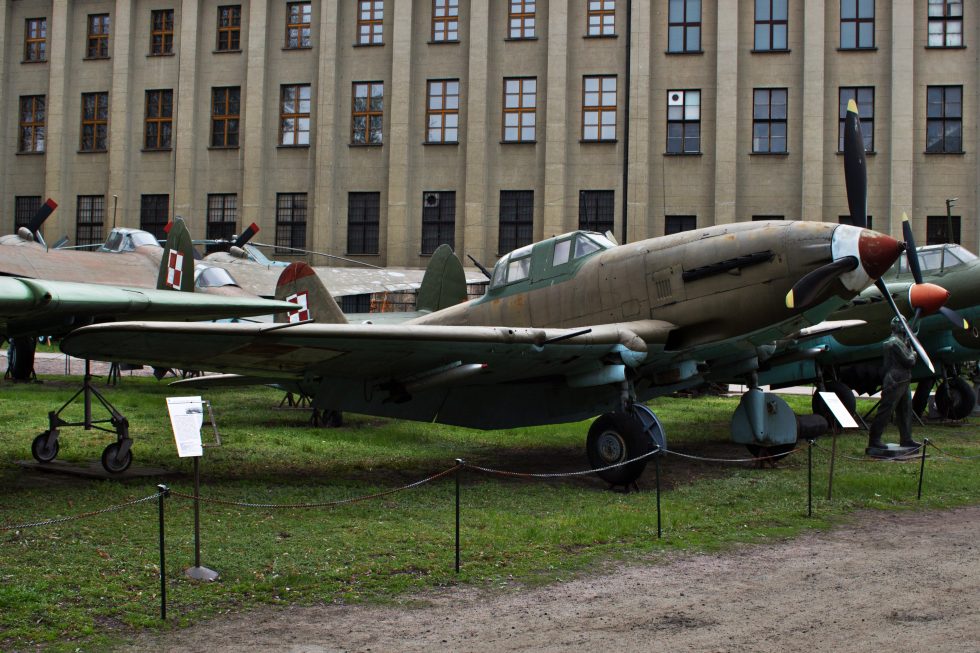
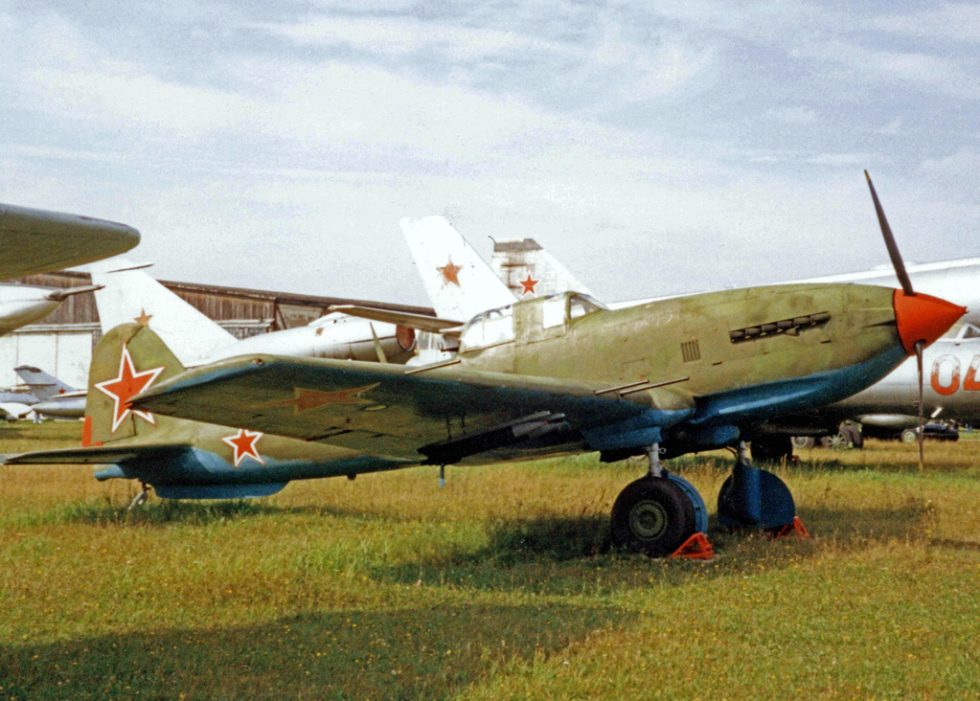
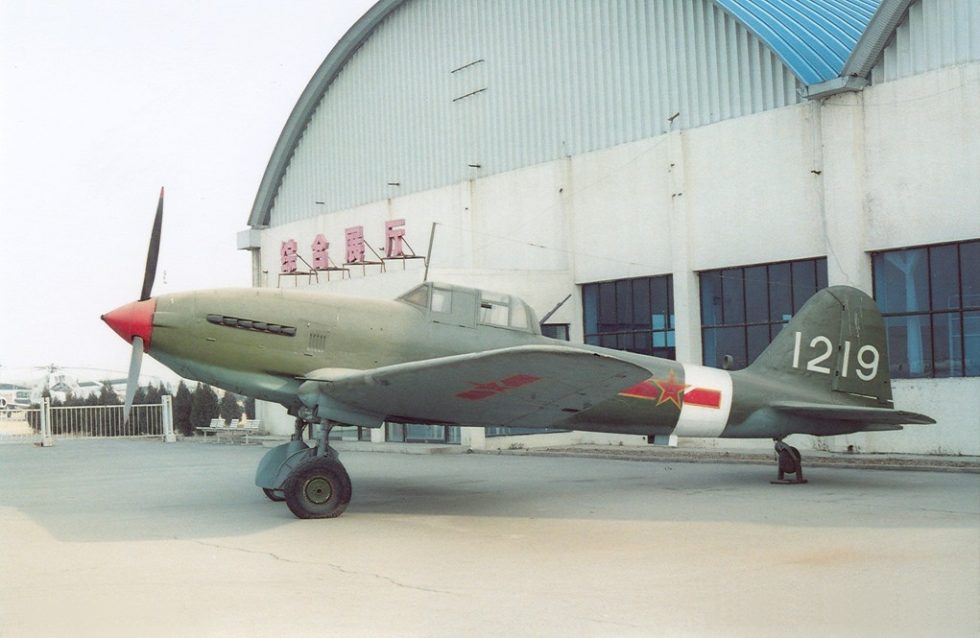
The Ilyushin Il-10 on film
Ed Nash’s Military Matters: Ilyushin’s Armoured Fighters — the Il-1, Il-2I and Il-10. A concise, well-sourced history of the armoured-fighter experiments that led directly to the Il-10, from an established aviation-history channel.
Where the Ilyushin Il-10 served
The Ilyushin Il-10 in combat
The Il-10 was an attack aircraft, not a dogfighter, and its record is written in ground strikes rather than air-to-air kills. Where the Il-2 had fought for years, the Il-10 reached the front only in April 1945 and left a small mark on WWII. Its most vivid combat came in 1950, when North Korean Il-10s opened the Korean War as effective ground-attack aircraft — and were then destroyed within weeks once American fighters took control of the sky.
Compare the combat record of every military aircraft. Figures as of 2026.
Everything people ask about the Ilyushin Il-10
Can I fly in an Ilyushin Il-10?
What was the Ilyushin Il-10?
How was the Il-10 different from the Il-2?
Did the Il-10 fight in World War II?
Was the Il-10 used in the Korean War?
What is the Avia B-33?
How many Il-10s were built?
Are any Ilyushin Il-10s still flying?
You can’t fly the Ilyushin Il-10.
These, you can.
Some legends only live in museums — others are fuelled and waiting. MiGFlug has put civilians in real military jet cockpits since 2004.
 Fly the L-39 AlbatrosThe world’s most-flown jet trainer — aerobatics included
 Fly the F-104 Starfighter“The missile with a man in it”
 Fly the MiG-21The Cold War’s most-produced jet
 Fly the T-33 Shooting StarAmerica’s first jet trainer
 Fly the DH VampireA piece of early jet history
 Fly the S.211Agile Italian jet trainer
 Fly the MB-326The classic Aermacchi jet
 Fly the MiG-15The Soviet legend of the Korean War
Continue the tour
Every fact, checked
- Vintage Aviation News — First flight of the Ilyushin Il-10Origin story, production totals and the Avia B-33 licence programme.
- Military Factory — Ilyushin Il-10Dimensions, weights, performance and armament reference.
- The Aviation Geek ClubIl-2 to Il-10 development and early Cold War service history.
- Imperial War MuseumsContext for the air war over Korea, 1950–53.
- National Museum of the U.S. Air ForceF-51 Mustang and F-80 Shooting Star operations against North Korean aircraft.
- Polish Aviation Museum, KrakówReference for a preserved Avia B-33 (licence-built Il-10).
- Smithsonian National Air and Space MuseumBackground on the Soviet Sturmovik concept and the Il-2 lineage.
- War in the Skies — Ilyushin Il-10Detailed operational record, regiments and Korean War service.