
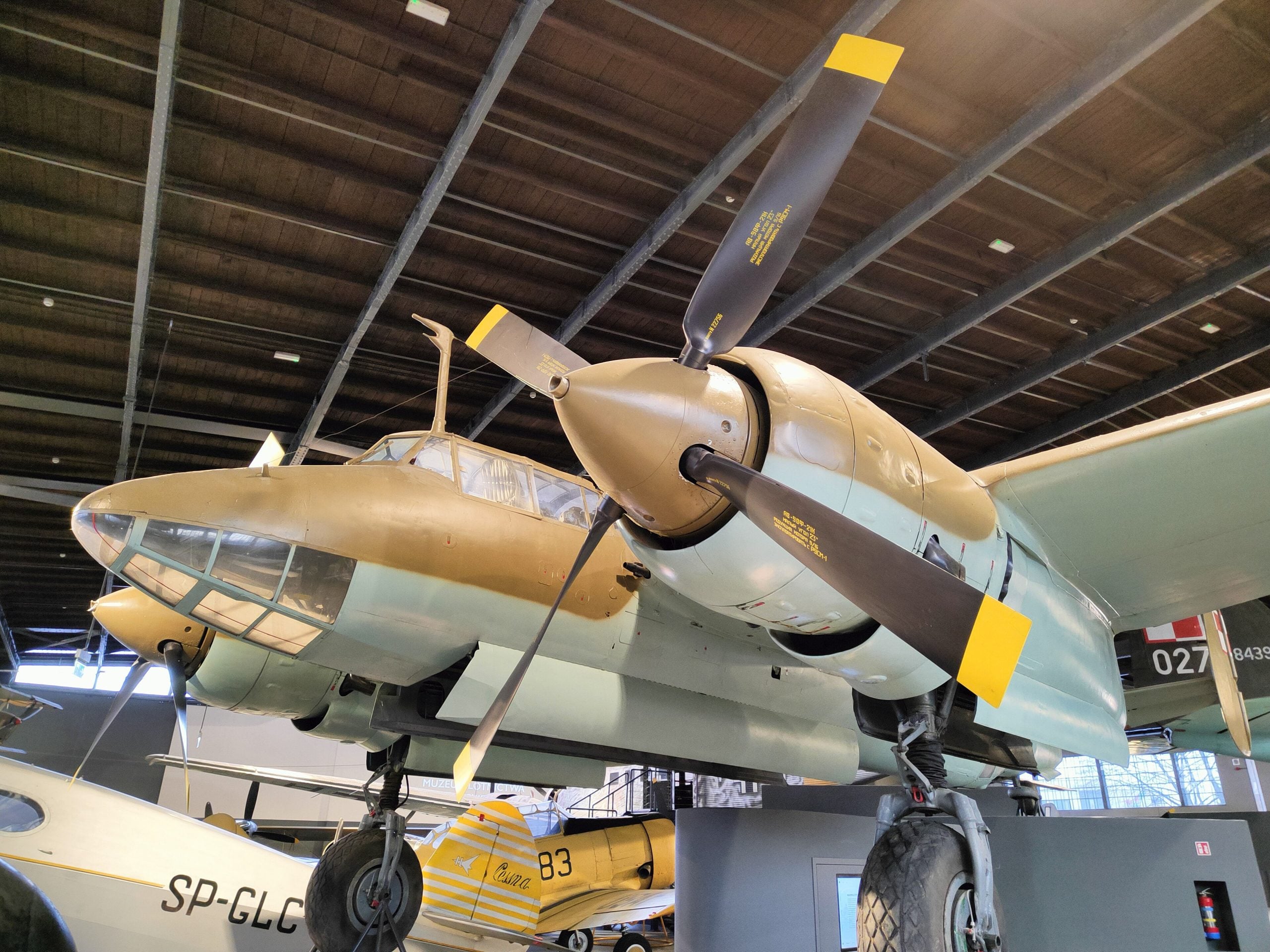
Tupolev Tu-2
“Bat”
The Soviet fast medium bomber that could outrun fighters — designed by Andrei Tupolev while he was a prisoner of the very state he was building it for.
Tupolev Tu-2: the fast bomber designed behind bars
In 1937, at the height of Stalin’s purges, the Soviet Union arrested its most brilliant aircraft designer. Andrei Tupolev was charged with absurdities — sabotage, selling secrets to Germany — and swept into the Gulag. Yet the state still needed his mind. Tupolev was set to work in a sharashka, a prison design bureau known as TsKB-29, where jailed engineers drew warplanes under guard. The aircraft he sketched there, “Samolyot 103,” would become the Tu-2 — one of the finest bombers of the Second World War, created by a man the regime had branded a traitor.
The design that emerged was fast. Powered in its definitive form by two big Shvetsov ASh-82 air-cooled radials of about 1,850 hp each, the Tu-2 could reach roughly 521 km/h — quicker than many contemporary fighters and far faster than the Petlyakov Pe-2 it was meant to complement. It carried a heavy bomb load, could dive-bomb accurately, bristled with cannon and machine guns, and gave its four-man crew a rugged, well-liked aircraft. First flown on 29 January 1941, it looked like a war-winner from the start.
But its path to the front was tortuous. When Germany invaded in June 1941, Soviet industry was thrown into chaos and evacuated east; priority went to cheaper, simpler types, and Tu-2 production was actually halted in 1942 in favour of fighters. Only a handful reached combat units at first. It was 1944 before the aircraft was built in real numbers and became a mainstay of Soviet bomber regiments in the last year of the war, pounding German positions from Belorussia to Berlin. Tupolev himself was released and eventually rehabilitated — the bomber conceived in a prison cell outlived the war that made it.
Postwar, the Tu-2 had a long second life. The USSR passed hundreds to the new People’s Republic of China and to North Korea, and the type saw combat again in the Korean War and in China’s offshore-island campaigns of the 1950s. NATO gave it the reporting name “Bat.” Reliable, fast and adaptable, it soldiered on into the 1950s — and, in Chinese hands, right up to about 1982. Around 2,257 were built, though counts run higher once postwar production is included.
01The Tupolev Tu-2’s prison origins: how a jailed designer built a war-winner
TsKB-29 was one of Stalin’s sharashki — secret design bureaus staffed by imprisoned specialists. Behind its walls sat some of the greatest names in Soviet aviation, all of them prisoners: Andrei Tupolev, Vladimir Petlyakov, and Robert Bartini among them. Petlyakov’s team there produced the Pe-2; Tupolev’s produced the “103,” the future Tu-2. The engineers were told that a successful design might buy their freedom.
It worked. The quality of the Tu-2 helped win Tupolev his release during the war and, in time, full rehabilitation, a Stalin Prize and the highest honours of the state that had jailed him. It is one of history’s strangest aircraft pedigrees: a front-line bomber, admired by its crews, drawn up by convicts who did not know whether the work would end in freedom or a firing squad.
What makes the Tu-2 special
A bomber drawn in a Gulag design bureau
The Tu-2 was conceived inside TsKB-29, a prison design office where jailed engineers worked under guard. Its lead designer, Andrei Tupolev, was a convict when he laid out the aircraft. The result was no makeshift — it was among the most capable medium bombers of the war, and its success ultimately bought its creator his freedom.
Two Shvetsov ASh-82 radials — and fighter-like speed
Early prototypes used liquid-cooled AM-37 engines, but shortages forced a switch to the reliable, plentiful Shvetsov ASh-82 air-cooled radial of roughly 1,850 hp. Far from a compromise, it made the Tu-2 quick: about 521 km/h, enough to outpace some of the fighters sent to stop it.
Level bomber, dive bomber and scout in one
The Tu-2 was unusually versatile. It could bomb from level flight or in a dive, carried up to about 3,000 kg of bombs between an internal bay and external racks, and defended itself with two 20 mm ShVAK cannon and several machine guns. Reconnaissance and torpedo-carrying versions followed.
02The Tupolev Tu-2’s engines: from the AM-37 to the ASh-82 radial
The “103” prototype flew in 1941 on Mikulin AM-37 liquid-cooled V12s, which promised high performance but were troublesome and in short supply as the war disrupted Soviet industry. The design was reworked around the air-cooled Shvetsov ASh-82 radial — the same family that powered the La-5 fighter — which was rugged, available and easy to maintain. The change delayed the programme but saved it: the radial-engined Tu-2S became the definitive version and the one built in the thousands.
03The Tupolev Tu-2 in the Korean War: North Korean and Chinese bombers over the front
By the Korean War the Tu-2 was obsolescent, but China and North Korea flew it in anger. On 30 November 1951, in an action American airmen dubbed “Black Tuesday,” a formation of Tu-2s escorted by MiG-15s and piston fighters was intercepted by USAF F-86 Sabres near Namsi; several Tu-2s were shot down. It was a stark lesson that a fast wartime bomber had become vulnerable in the jet age — yet the type kept flying in Chinese service for three more decades.
Tupolev Tu-2 full specifications
Baseline note: the figures below are for the Tu-2S — the ASh-82FN production aircraft ordered back into manufacture by GKO decree No. 3754 of 17 July 1943, the version that equipped the wartime regiments and the one that almost every Tu-2 in a museum actually is. This matters because the specification most often republished in English is not the Tu-2S at all: 521 km/h at altitude and 444 km/h at sea level, empty weight 7,601 kg, ceiling 9,000 m, come from the NII VVS state-test report on Tu-2 2M-82 No. 100308, one of the eighty aircraft built at Omsk in 1942 with the carburetted M-82. The 528 km/h figure printed in many reference works is the same aeroplane, rounded differently. Deltas for the AM-37 prototypes "103" and "103U", for the 1942 M-82 machines and for the postwar Tu-2R and Tu-2T are given in grey. Weights are as-tested, not as-advertised.
Dimensions & weights
- Crew
- 4 (pilot, navigator-bombardier, radio operator-gunner, gunner; the "103" prototype flew with three, and the fourth man was added on the "103U" after the Ju 88 was studied)
- Length
- 13.80 m (45 ft 3 in)
- Wingspan
- 18.86 m (61 ft 11 in) — the Tu-2R reconnaissance conversion stretched this to about 22.2 m (72 ft 10 in) for extra fuel
- Height
- 4.55 m (14 ft 11 in); 4.13 m (13 ft 7 in) is quoted for the 1942 Omsk aircraft
- Wing area
- 48.80 m² (525 sq ft)
- Wing incidence, dihedral
- 2° incidence, 7° dihedral
- Empty weight
- 7,474 kg (16,477 lb); 7,601 kg (16,757 lb) for the 1942 M-82 aircraft
- Normal loaded weight
- 10,360 kg (22,840 lb)
- Maximum take-off weight
- 11,360 kg (25,040 lb); the 1942 machine was cleared to 11,768 kg (25,940 lb)
- Wing loading
- 212 kg/m² (43.5 lb/sq ft) at normal weight
- Fuel
- Normal load 1,000 kg; overload 2,200 kg; total tank capacity ~3,000 litres (660 imp gal, 793 US gal)
- Bomb load
- 1,000 kg normal (2,205 lb), 2,000 kg in overload, rack capacity to 3,000 kg (6,614 lb)
- Propeller diameter
- 3.80 m (12 ft 6 in)
Performance
- Maximum speed, altitude
- 547 km/h (340 mph) at 5,400 m (17,720 ft)
- Maximum speed, sea level
- 482 km/h (300 mph)
- Speed of the 1942 M-82 aircraft
- 521 km/h (324 mph) at altitude, 444 km/h (276 mph) at sea level — the figures usually misattributed to the Tu-2S
- Speed of the "103" prototype
- 635 km/h (395 mph) at 8,000 m (26,250 ft) on two AM-37s — fighter speed, and the reason the type survived its production disaster
- Rate of climb
- 526 m/min (1,726 ft/min)
- Service ceiling
- 9,500 m (31,170 ft); 9,000 m (29,530 ft) for the 1942 aircraft
- Range
- 2,100 km (1,305 mi)
- Ferry range
- 2,200 km (1,367 mi) on full tanks, about 6 h 6 min in the air
- Take-off run
- 530 m (1,740 ft) at 11,500 kg
- Landing run
- 545 m (1,790 ft) at 11,500 kg
- Dive attack
- Cleared for sustained dives at 55–75° with an electric dive-recovery automat driving the elevator trim
- Handling note
- Early aircraft swung at the end of the landing run; the brake system was redesigned on the American pattern used on the Li-2 before the fault was cured
Propulsion & systems
- Engines
- 2 × Shvetsov ASh-82FN, 14-cylinder two-row air-cooled radial with direct fuel injection (the 1942 aircraft had the carburetted M-82; the "103" and "103U" prototypes had liquid-cooled Mikulin AM-37 V-12s, cancelled to free capacity for the Il-2’s AM-38F)
- Power
- 1,850 hp (1,380 kW) each for take-off (1,330 hp / 990 kW at 5,500 m on the earlier M-82)
- Propellers
- AV-5V-167A, three-blade, constant-speed, 3.80 m diameter, 23–53° pitch range
- Fuel injection pump
- NB-3U / NB-3FA — the change from carburettors to direct injection is the whole difference between the 1942 aircraft and the Tu-2S
- Bombsights
- OPB-1R optical sight in the navigator’s floor for level bombing; PBP-1 reflector sight for the pilot, used for dive bombing and for the wing cannon
- Bomb release
- ESBR-6 electro-pyrotechnic sequencing release, backed by an ASBR-103 mechanical emergency jettison
- Radio
- RSB-3bis transmitter, replaced from the 41st production series by RSB-3bisA with a wider short-wave band
- Radio compass
- RPK-10, replaced by RPKO-10M from the 28th series
- Oxygen
- KPA-3bis, replaced by KP-12 from the 20th series and KP-14 from the 39th
- Bomb handling
- Two BL-4 hand winches; PDK-2 cassette beam in the bay for small-calibre bombs
- First flight
- 29 January 1941, aircraft "103" (ANT-58), Mikhail Nyukhtinov at the controls, from Shchyolkovo
- Service entry
- Combat debut with 132 BAP over Velikiye Luki, November 1942; the Tu-2S reached units in strength from spring 1944, first equipping all three regiments of 334 BAD
- Number built
- 2,540 by factory records (Factory 23 Moscow 1,776; Factory 166 Omsk 303; Factory 39 Irkutsk 218; Factory 82 Moscow 25; plus 84 Tu-2R and 134 Tu-2U). Competing totals of 2,257 and about 2,460 are in wide circulation and appear to count different sub-types or different end dates.
- Unit cost
- Not reliably published for the Tu-2S; wartime Soviet aircraft costs fell sharply year on year and single-figure quotations are rarely comparable.
04The Tupolev Tu-2’s cost: why no dollar price exists
The Tu-2 was a wartime Soviet state product, built to plan and never sold on an open market, so a firm flyaway unit price simply does not exist in the public record — and no credible cost-per-flight-hour figure exists for the type either. Costs were counted in rubles, labour and scarce materials inside a command economy under siege, not in dollars. Any precise price you see attached to a Tu-2 is, in practice, a modern estimate rather than a sourced historical figure.
Armament & payload
The Tu-2S carried cannon in the wing roots and a heavy machine gun at every defensive station, which is not what most English sources say
The production Tu-2S was armed with two 20 mm ShVAK cannon firing forward from the wing roots, 300 rounds between them, and three 12.7 mm Berezin UBT machine guns covering the rear hemisphere: one in the navigator’s blister behind the cockpit canopy, one on the radio operator’s dorsal mount, one firing down and aft through a ventral hatch. A great many Western references give the defensive armament as three 7.62 mm ShKAS. That is correct for exactly one aeroplane — the "103V" prototype — and partly correct for the eighty carburetted machines Omsk built in 1942, which mixed a UBT blister, a ShKAS dorsal mount and a UBT hatch gun. From 1944 the rifle-calibre guns were gone. The bomb load was a tonne normally, two tonnes in overload, and up to three tonnes of rack capacity with the bay full and two FAB-1000s hung under the centre section. Mounts changed repeatedly through the production run — BUSH-1 to VUS-1 at the 48th series, VUB-2M to VUB-68 partway through the 50th, the Pe-2 hatch mounting to LU-68 at the 49th — so a given airframe’s fit depends on when it left the shop.
Gun
- 2 × 20 mm ShVAK cannon, fixed, forward-firing in the wing roots, 300 rounds total. Aimed on the pilot’s PBP-1 reflector sight.
- 1 × 12.7 mm UBT in the navigator’s blister, 195 rounds — BUSH-1 mounting to the 48th series, VUS-1 after.
- 1 × 12.7 mm UBT on the radio operator’s dorsal mount, 250 rounds — VUB-2M to the 44th series, VUB-68 from the 21st aircraft of the 50th.
- 1 × 12.7 mm UBT in the ventral hatch, 300 rounds, the gunner lying prone facing aft — LU-Pe-2 mounting borrowed from the Pe-2 until the 49th series, LU-68 after.
- Not ShKAS. The 7.62 mm guns belong to the "103V" prototype and to part of the 1942 Omsk batch, and are the single most persistent error in English writing about this aircraft.
Air-to-air
- None as a bomber. The three UBTs were the aircraft’s only air-to-air weapons, and by 1944 standards a 12.7 mm gun in every quadrant was a serious deterrent rather than a token.
- Aircraft "104" was a Tu-2S converted to the interceptor role; the Tu-1 (ANT-63R) took the idea further as a three-seat night fighter.
- The Tu-2S RLS PNB-4 night-fighter prototype, developed under an NKVD special section, carried Gneiss-5 radar and two 45 mm NS-45 cannon.
- Nothing of this entered service; the Tu-2 fought the war as a bomber and defended itself with machine guns.
Air-to-surface guided
- None carried. Guided air-to-surface weapons did not exist in Soviet frontline service during the Tu-2’s operational career.
- Postwar, Tu-2LL flying laboratories were used to test the first Soviet turbojets and, in one conversion, air-launched missile test articles for OKB-52.
- Two Tu-2 Paravan aircraft were built with balloon-cable cutters and deflectors, which is the closest the type came to a specialised air-to-ground device.
- The Tu-2RShR prototype substituted a 57 mm cannon in the nose, and Tu-2Sh trials fitted a 76 mm gun, a battery of 88 PPSh-41 submachine guns firing forward at 30°, and later NS-37 and NS-45 cannon. All were dead ends.
Bombs
- Normal 1,000 kg (2,205 lb); overload 2,000 kg; total rack capacity to 3,000 kg (6,614 lb). Asymmetric loading was permitted.
- 1 × FAB-1000 or BRAB-1000, 2 in overload; 2 × FAB-500 or BRAB-500, 3 in overload; 4 × FAB-250, 6 in overload.
- 9 × FAB-100 or FAB-50TT, internal carriage only, on a PDK-2 cassette beam in the bay.
- BRAB armour-piercing bombs of 1,000, 500 and 220 kg — the dive-bombing role against hard targets was in the specification from the beginning.
- Up to three ABK-P-500 cluster containers, one internal and two external, each an 85 kg empty shell in FAB-500 dimensions holding up to 189 AO-2.5 fragmentation bombs, 108 ZAB-2.5 incendiaries or 136 AZh-2 incendiary ampoules.
Rockets
- 10 × RO-132 launch rails for RS-132 rockets on the 1942 Omsk aircraft.
- Deleted on the Tu-2S. The weight-saving and simplification campaign that turned the 1942 machine into a producible aeroplane took the rails with it.
- The Tu-2 was never a rocket-armed ground-attack type in service, whatever the 1942 specification sheet implies.
- Its dive-bombing accuracy, not rockets, was what made it useful against point targets.
Pods & other stores
- Torpedoes on the Tu-2T: two 45-36AN aerial torpedoes with AN-42 stabilisers on external torpedo racks, released singly or as a salvo by pilot or navigator, with a torpedo sight in the navigator’s station.
- Cameras on the Tu-2R and Tu-6: daylight and night-capable installations in the bomb bay, with the wing extended for extra fuel.
- ABK-P-500 containers doubled as chemical and incendiary dispensers via the AZh-2 ampoule load.
- Ground-start equipment from the 15th series, letting the engines be started on a gas-petrol mixture from a ground generator — a small thing that mattered enormously in a Russian winter.
Three typical loadouts
- Frontal dive attack, 1944
- 4 × FAB-250 internal, 2 × 20 mm ShVAK with 300 rounds, three UBTs manned. Approach at altitude, dive at 55–75° on the PBP-1, release on the automat, recover on trim. This is what a Tu-2S regiment did over the Belorussian and Vistula–Oder offensives.
- Maximum load, short radius
- 1,000 kg internal plus 2 × FAB-1000 on the external centre-section racks, to the full 3,000 kg rack capacity, with take-off weight at 11,360 kg. Range collapses accordingly; this was a load for targets close behind the line, not for the deep raid the aircraft was originally meant to fly.
- Anti-shipping, Tu-2T, 1945
- 2 × 45-36AN torpedoes with AN-42 stabilisers, defensive armament unchanged, bomb-bay racks retained so the aircraft could revert to bombing or reconnaissance between sorties. Tested February to March 1945 and issued to Soviet Naval Aviation.
Sourcing caveat: gun fits, ammunition counts and mounting changes above are taken from the 1946 and 1951 Soviet service manuals for the Tu-2 with ASh-82FN engines, which record the changes by production series. Where an English reference disagrees, it is usually describing the 1942 M-82 aircraft or the "103V" prototype without saying so.
Variants
The Tu-2 began as a four-engined pressurised bomber meant to attack the Royal Navy at Scapa Flow, and was designed by a prisoner
Andrei Tupolev was arrested on 21 October 1937 on a fabricated charge of wrecking, spent about a year in Butyrka prison, and in the autumn of 1938 was delivered to TsKB-29, the aviation sharashka run by the Fourth Department of the NKVD. His first brief there, recalled by his deputies Leonid Kerber and Sergei Yeger, was a dive bomber capable of reaching British naval bases from Soviet territory and returning: 5,000–6,000 km range, 10,000 m operating altitude, pressurised crew compartments, four turbocharged M-105TK engines, and the ability to dive at high speed so that the bomb spent as little time as possible in the air over a manoeuvring warship. The aircraft was the PB-4, also carried as ANT-57, and its design radius was set by Scapa Flow in the Orkneys.
The technical project was finished in September 1939, by which time the international situation that had prompted it had inverted, and the whole thing was cancelled at a joint meeting with the VVS. What survived was the aerodynamic and structural work, which Tupolev’s brigade redirected into a twin-engined frontal bomber, the "FB", given the factory code "103". It flew on 29 January 1941 and reached 635 km/h — the speed of a contemporary fighter.
Then came the production disaster. Factory 166 at Omsk built eighty aircraft across seven series in 1942 before the line was turned over to Yakovlev fighters and Tupolev’s design bureau went back to Moscow. Serial production of the definitive machine had to be restored by GKO decree No. 3754 of 17 July 1943, and the Tu-2S did not reach units in numbers until spring 1944. A bomber that was ready in 1941 fought most of its war in 1944 and 1945.
- PB-4 / ANT-57 (1938–1939, project only)
- Four-engined pressurised high-altitude dive bomber for use against British capital ships. Cancelled September 1939; its structural and aerodynamic work became the basis of everything that followed.
- "103" / ANT-58 (1940–1941, 1 built)
- Three-seat prototype on two Mikulin AM-37 V-12s. First flight 29 January 1941; 635 km/h at 8,000 m. Recommended for production as a multi-role bomber and fighter, but never built as such.
- "103U" / ANT-59 (1941, 1 built)
- Redesigned for a four-man crew after study of the Junkers Ju 88, adding a gunner for the upper hemisphere. Top speed fell to 610 km/h. This, not the "103", is the layout that went into production.
- "103V" / ANT-60 (1941–1942, 1 prototype)
- Reworked for air-cooled Shvetsov M-82 radials after the AM-37 was abandoned so that engine capacity could go to the Il-2. Defensive armament of three 7.62 mm ShKAS — the source of a persistent error about the whole family. Renamed Tu-2 by GKO decree No. 1498 of 26 March 1942.
- Tu-2 (Omsk, 1942, 80 built)
- The carburetted M-82 production aircraft: 521 km/h at altitude, ceiling 9,000 m, ten RO-132 rocket rails, mixed ShKAS and UBT defensive fit. Its state-test report is the source of most of the numbers wrongly printed as Tu-2S figures.
- Tu-2S / ANT-61, "izdeliye 61" (1943–1948, the bulk of 2,540)
- The definitive aircraft. ASh-82FN with direct injection, systematically lightened and simplified for production, hydraulics and wiring cut back, all-12.7 mm defensive battery. Restored to production by GKO decree of 17 July 1943.
- Tu-2D / ANT-62 (from October 1944)
- Long-range version with increased span and a five-man crew, intended for ASh-83 engines. The lineage runs on through the Tu-2DB (ANT-65) high-altitude reconnaissance bomber and the Tu-8 (ANT-69).
- Tu-2R / Tu-6 / ANT-63 (1945–1948, 84 built)
- Photo-reconnaissance conversion with the span stretched to about 22.2 m for extra tankage and cameras in the bomb bay. Served into the mid-1950s.
- Tu-2T / ANT-62T (tested February–March 1945)
- Torpedo bomber for Soviet Naval Aviation: two 45-36AN torpedoes on external racks, bomb and reconnaissance capability retained so a squadron could switch role between sorties.
- Tu-2U and UTB-2 (1946–1949, 134 Tu-2U built)
- Trainers. The UTB, designed by the Sukhoi bureau in 1946, substituted low-powered ASh-21 engines for cheap crew training; 33 UTB-2 and 29 Tu-2U went to China at the end of 1949.
- Tu-12 / Tu-77 (1947, 5 built)
- A Tu-2 airframe on two Rolls-Royce Nene-derived turbojets: the first Soviet jet bomber, and a straightforward admission of how good the basic aeroplane was.
Closing caveat: the Tu-2’s worst day came long after the war it was built for. On 30 November 1951 the PLAAF 8th Bomber Division sent nine Tu-2s against Taehwa-do off the Korean west coast, escorted by 16 La-11s and reinforced by MiG-15s; F-86s of the 4th Fighter-Interceptor Wing claimed eight of the nine bombers, three La-11s and a MiG-15, three of the Tu-2s to Major George Davis alone. Chinese accounts record 19 aircrew killed, which implies fewer bombers lost than the American claim, but they agree on the consequence: the PLAAF attempted no further daylight bombing raids in the Korean War. China nonetheless kept the type longer than anyone, retiring its last 30 Tu-2s in 1982. No Tu-2 is airworthy today. Survivors are on static display at the China Aviation Museum, the Beijing Air and Space Museum and the Military Museum in Beijing; at the Polish Aviation Museum in Kraków and the Museum of the Polish Army in Warsaw; at the Central Air Force Museum at Monino; at the Bulgarian aviation museum at Plovdiv; and at the War Eagles Air Museum in New Mexico, with a further airframe stored at Fantasy of Flight in Florida.
From prison drawing board to Korean War
Tupolev arrested
Andrei Tupolev is swept up in Stalin’s purges and put to work in the TsKB-29 prison design bureau.
First flight
The “103” prototype — the future Tu-2 — makes its maiden flight on 29 January, weeks before the German invasion.
Stalled by war
A few reach the front, but production is halted as Soviet industry concentrates on cheaper fighters.
Radial rebirth
Re-engined with Shvetsov ASh-82 radials, the definitive Tu-2S is readied and production restarts.
Mass production
The Tu-2 finally reaches Soviet bomber regiments in numbers and becomes a front-line mainstay.
On to Berlin
Tu-2s support the final Soviet offensives into Germany in the closing months of the war.
Black Tuesday
Chinese and North Korean Tu-2s fight in Korea; on 30 November USAF F-86 Sabres down several near Namsi.
The last Bats
China finally retires its Tu-2s, ending some four decades of service for a bomber begun in a cell.
From the front: twelve Tu-2 stories
Designed in a prison
The Tu-2 was drawn inside TsKB-29, a design bureau staffed by imprisoned engineers.
Read the full story
“Aircraft 103”
Before it was the Tu-2, the design was known simply by its bureau number, the “103.”
Read the full story
Faster than the fighters
The 1941 prototype impressed everyone with speed few expected from a bomber.
Read the full story
The production that was cancelled
In 1942 the Tu-2’s production was actually stopped in favour of fighters.
Read the full story
Radials to the rescue
Swapping troublesome V12s for ASh-82 radials saved the whole programme.
Read the full story
1944: the Tu-2 goes to war for real
After years of delay, the bomber finally reached the front in force.
Read the full story
A medium bomber that could dive
Unusually, the Tu-2 could attack in a steep dive as well as from level flight.
Read the full story
Over the Reich
Tu-2 regiments supported the final drive into Germany.
Read the full story
The convict becomes a Hero
The Tu-2’s success helped turn its imprisoned designer into a decorated hero of the state.
Read the full story
Hundreds of Bats for Beijing
The USSR handed large numbers of Tu-2s to the new People’s Republic of China.
Read the full story
Black Tuesday
On 30 November 1951 US Sabres shattered a Tu-2 formation over Korea.
Read the full story
The bomber that outlived Stalin
Begun under Stalin’s purges, the Tu-2 flew on for decades after his death.
Read the full story
The Tu-2 in pictures
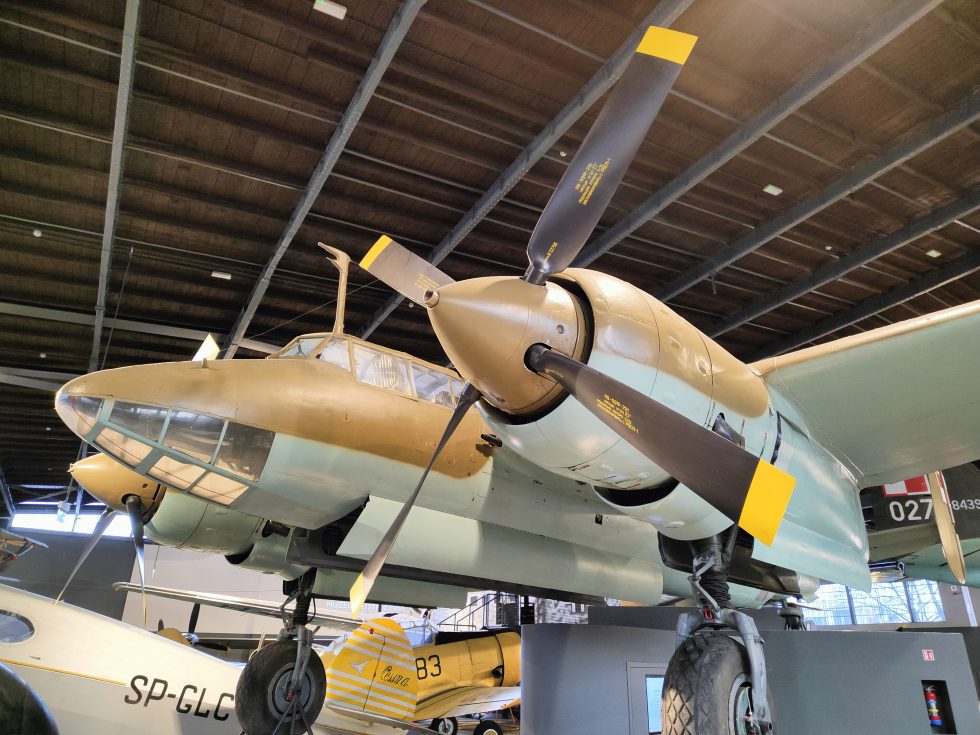
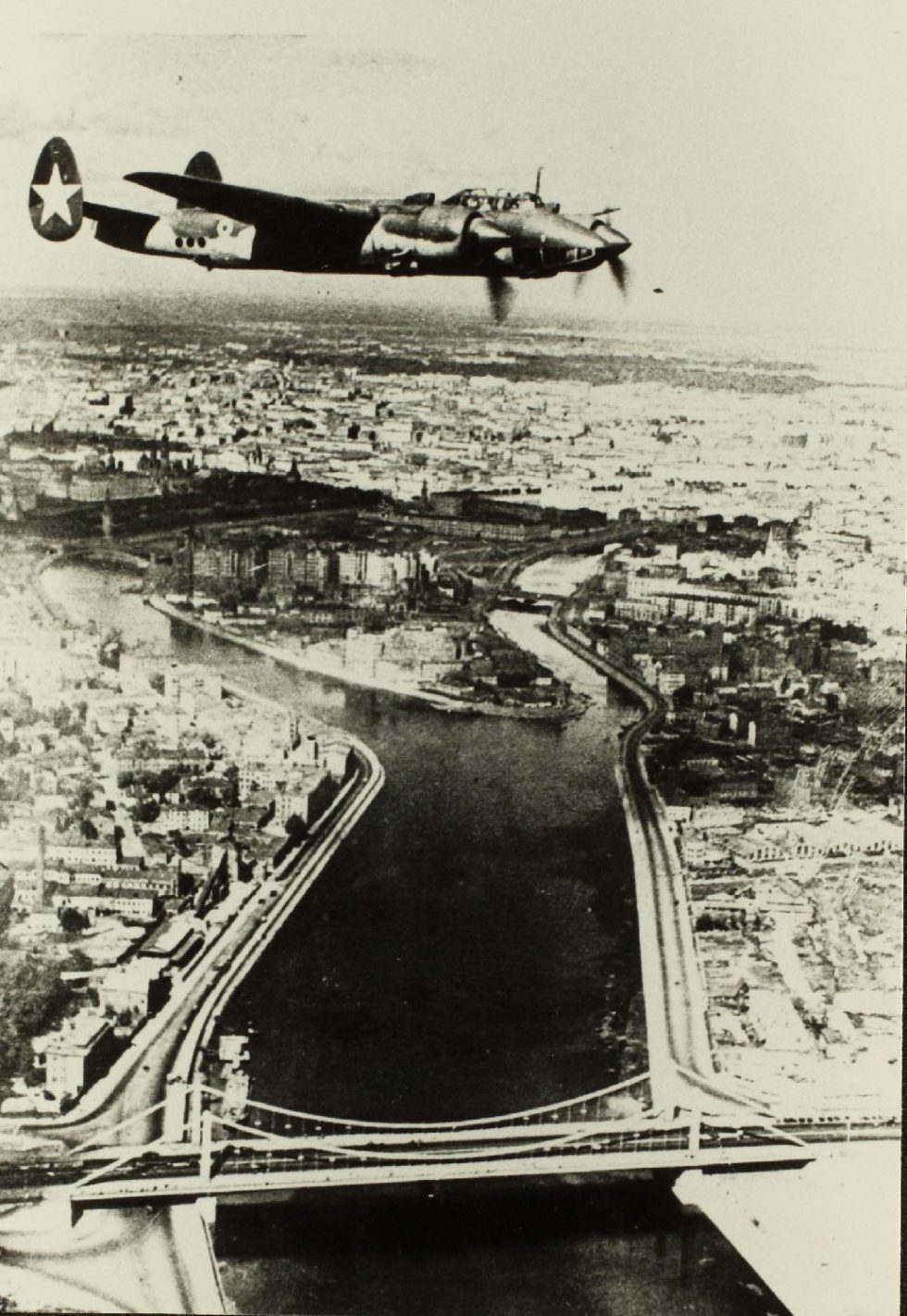
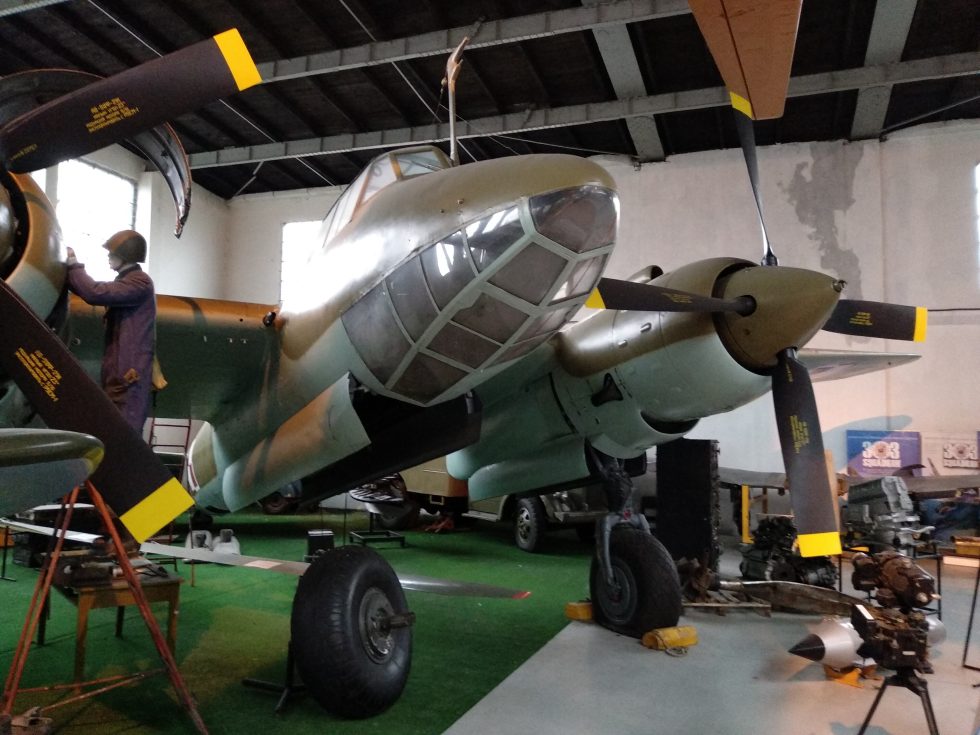
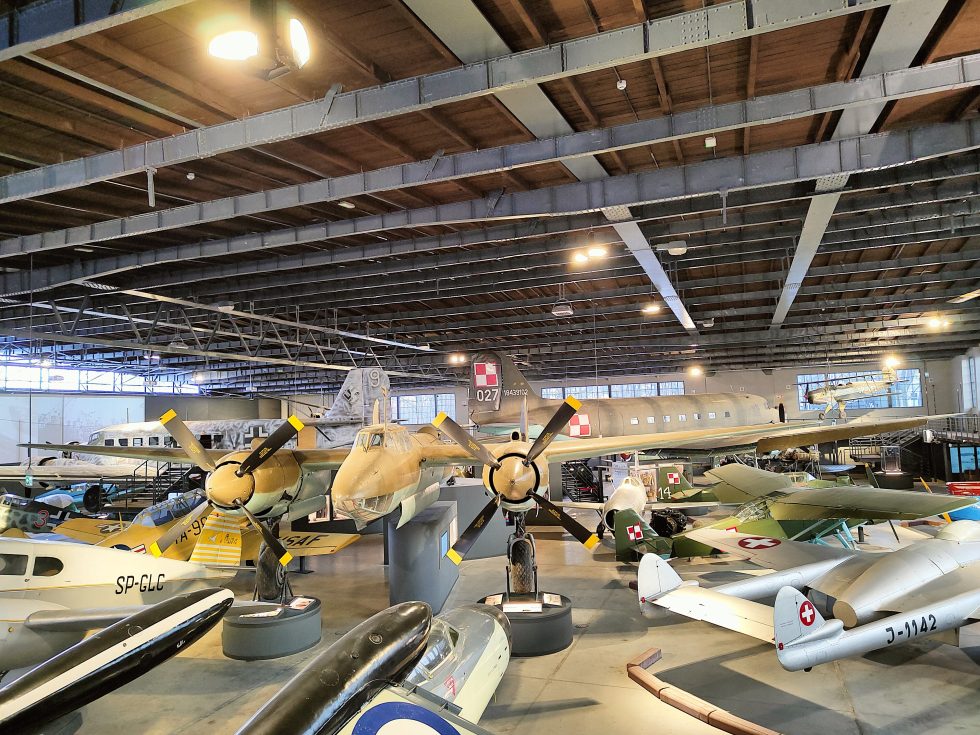
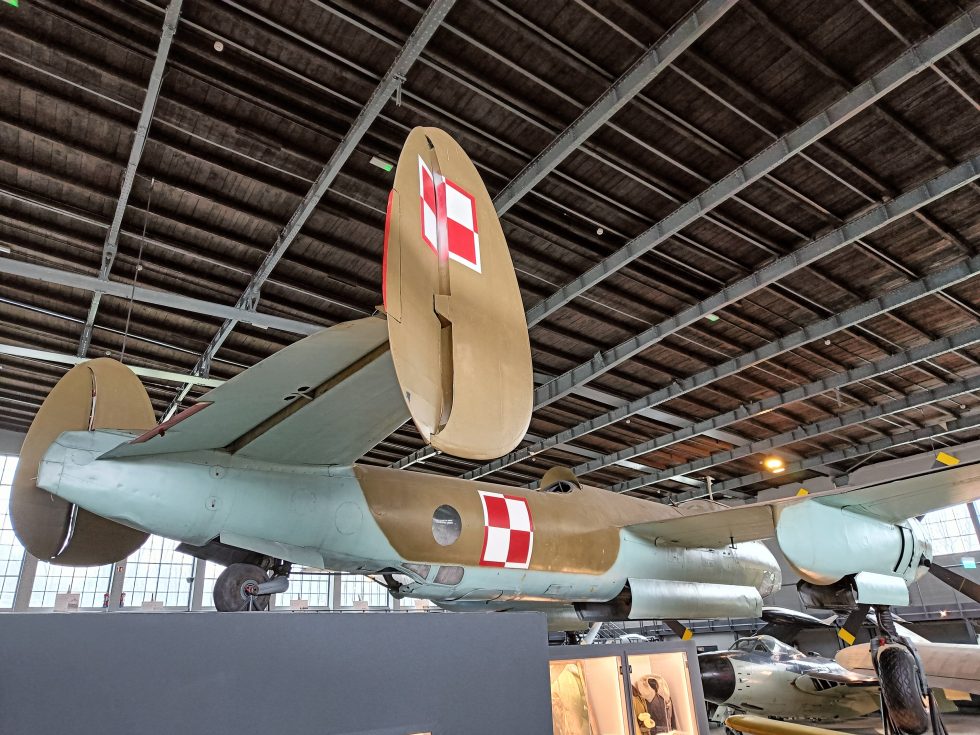
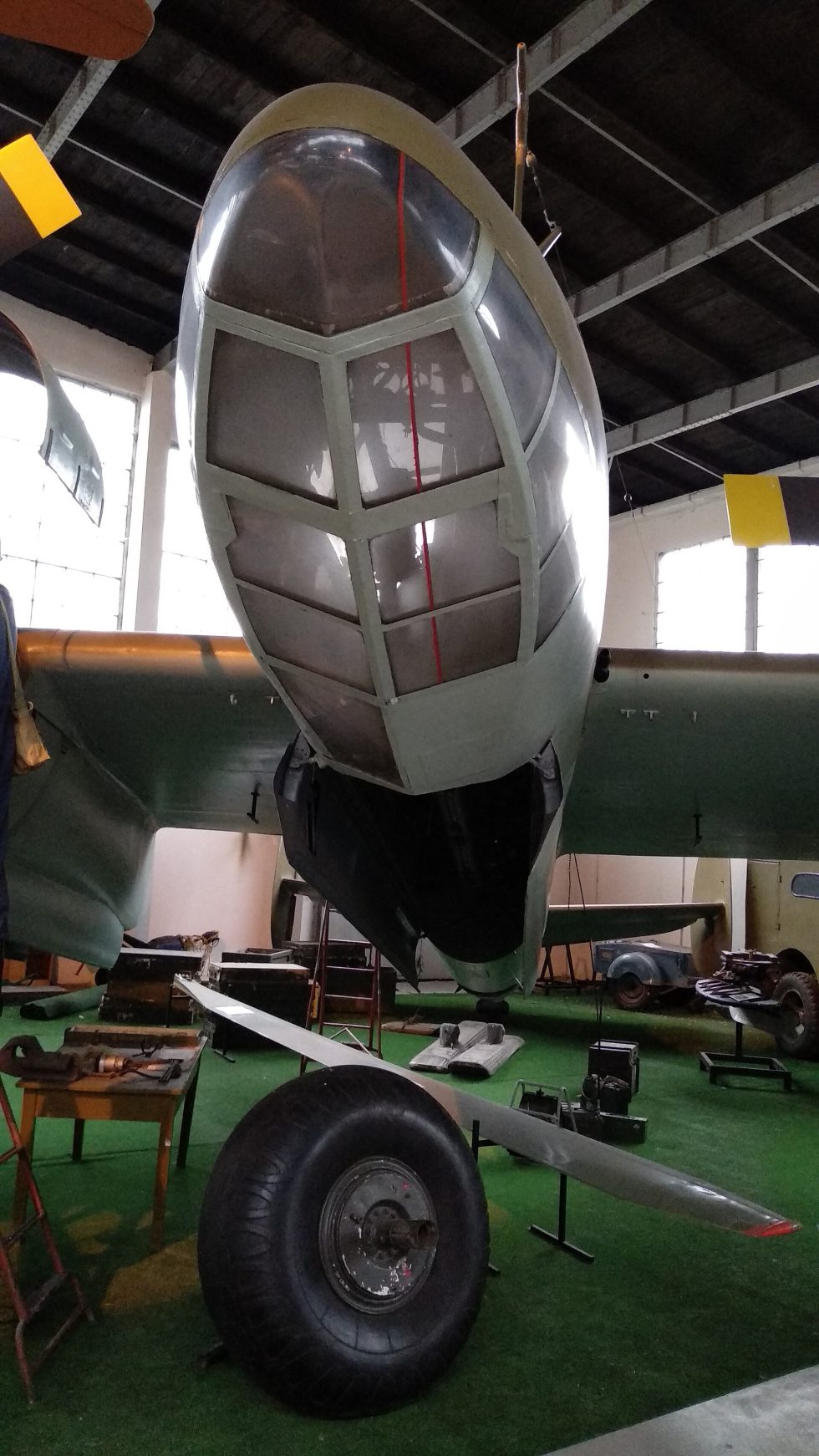
The Tupolev Tu-2 up close
OFF TRACK PLACES: a detailed 4K walk-around of a preserved Tu-2S, taking in the cockpit, glazed nose, ASh-82 engines and defensive gun positions — a close look at a genuinely rare aircraft.
Where the Tu-2 flew — and fought
Tupolev Tu-2: the combat record
The Tu-2 came to the war late but hit hard. In the last year of WWII it was one of the Soviet Union’s most effective bombers; postwar, in Chinese and North Korean hands, it fought on through the Korean War and China’s coastal campaigns — until jet fighters made a piston bomber’s work deadly.
Compare the combat record of every military aircraft. Figures as of August 2026.
Everything people ask about the Tupolev Tu-2
Can I fly in a Tupolev Tu-2?
Who designed the Tupolev Tu-2?
How fast was the Tu-2?
What engines did the Tu-2 use?
How many Tu-2s were built?
Did the Tu-2 fight in the Korean War?
What was the Tu-2’s NATO reporting name?
Are any Tu-2s still around?
You can’t fly the Tupolev Tu-2.
These, you can.
Some legends only live in museums — others are fuelled and waiting. MiGFlug has put civilians in real military jet cockpits since 2004.
 Fly the L-39 AlbatrosThe world’s most-flown jet trainer — aerobatics included
 Fly the F-104 Starfighter“The missile with a man in it”
 Fly the MiG-21The Cold War’s most-produced jet
 Fly the T-33 Shooting StarAmerica’s first jet trainer
 Fly the DH VampireA piece of early jet history
 Fly the S.211Agile Italian jet trainer
 Fly the MB-326The classic Aermacchi jet
 Fly the MiG-15The Soviet legend of the Korean War
Continue the tour
Every fact, checked
- Military Factory — Tupolev Tu-2 (Bat)Specifications, production total and the operator list used here.
- Vintage Aviation News — First Flight of the Tupolev Tu-2Development history and the 29 January 1941 first flight.
- World War II Database — Tu-2 medium bomberWartime service history and variants.
- Muzeum Lotnictwa Polskiego (Polish Aviation Museum)Home of the preserved Tu-2S photographed for this exhibit.
- Yefim Gordon & Vladimir Rigmant — Tupolev Tu-2 (Red Star series)Detailed design and service monograph on the type.
- Bill Gunston — Tupolev Aircraft since 1922The TsKB-29 sharashka origins and Tupolev’s imprisonment.
- National Museum of the US Air ForceF-86 Sabre operations over Korea and the “Black Tuesday” context.
- The Aviation Geek ClubRetrospectives on Korean-War Tu-2 operations.